The American Revolution’s triumphant story of democracy and freedom overlooks loyalists who paid a steep price for allegiance to Britain

Source: The Conversation – USA – By Kimberly Nath, Dean of the School of Arts and Humanities, San Juan College

The announcement of the Declaration of Independence on July 4, 1776, in Philadelphia. Hulton Archive via Getty Images

On the eve of the American Revolution, Matthias Aspden made a decision that would change the trajectory of his life. A wealthy merchant from Philadelphia, Aspden carefully prepared to leave his home in March 1776 as rumors of revolution circulated. He drafted a will and appointed trusted friends to manage his property while he traveled to England.

As a loyalist, someone who wanted to remain loyal to the crown and the British empire, Aspden believed the war would be brief. Historians estimate that at the beginning of the war as many as one-third of all American colonists identified as loyalists. Aspden believed his departure would be temporary. Order, he assumed, would soon be restored, and he would permanently return within a few years.

But that wasn’t the case.

The American Revolution is often told as a triumphant story of democracy and freedom. But this narrative leaves out a significant group: the loyalist men and women who remained faithful to Britain and, as a result, lost their homes, property and sometimes their sense of belonging.

As a historian of the American Revolution who studies Philadelphia loyalists, I believe Aspden’s story offers a glimpse into an overlooked experience of the war.

A wealthy Philly merchant exiled in England

Born and raised in Philadelphia, Aspden was not a marginal figure. He was a Quaker merchant with extensive property holdings, including a home on Water Street, in what is now the Old City neighborhood, and land in Chester County outside Philadelphia.

When he left in 1776, he abandoned nearly everything he owned, believing he would return. As others celebrated independence that summer, Aspden quietly slipped away to London.

Black text on white page
A letter written by Matthias Aspden from London in 1779.
Yale University

In England, reality set in. Exile was not just physical; it was deeply social and emotional. In Philadelphia, Aspden had been established. In London, he was one of tens of thousands of displaced loyalists trying to rebuild a life. He gravitated toward communities of fellow exiles. These networks offered some stability, but they could not replace what he had left behind.

Aspden’s letters to friends and family from this period reveal a man caught between hope and anxiety. He followed news from Philadelphia obsessively, requesting newspapers and updates from friends and business contacts. At one point, he described himself as “an idle man until I can return to America.” His words suggest both longing and uncertainty, as if his life were on pause.

By 1780, that uncertainty turned into fear.

A ‘traitor’ trying to come back home

Aspden began hearing about laws in Pennsylvania aimed at confiscating loyalist property. These laws required individuals accused of treason to appear in court and defend themselves. Aspden, still in England, could not do so. As a result, he was tried in absentia, declared a traitor and subjected to the state’s harshest penalties.

The consequences were devastating. In 1782, Aspden learned that all of his property had been confiscated and would be sold to aid the patriots in the American Revolution. An official commissioner of confiscation seized his Philadelphia home and wharf, which were worth thousands of pounds, along with his land in Chester County. Aspden, facing financial ruin, decided to return to Philadelphia to defend his name and his property.

In 1785, after nearly a decade abroad and with the war over, he crossed the Atlantic, hoping the new United States would restore his property under the terms of the peace treaty with Britain. Instead, he was met with rejection.

Pennsylvania officials informed him that individuals in his position were not protected. He had no legal claim to his property and, more shockingly, no rights as a citizen. While the peace treaty prevented further confiscation of loyalist property, his property was not restored.

The message was clear: Philadelphia was no longer his home.

Rows of two-story, red-brick homes on cobblestone street
Matthias Aspden longed to return to his life in Philadelphia.
Brian Logan/iStock via Getty Images Plus

One last trip to Philadelphia

Aspden left again, traveling through New Jersey and New York before securing passage back to England. Reflecting on his departure, he wrote of the pain of being forced from his “native country.” His brief return confirmed what he had feared. He had no home.

In the years that followed, Aspden sought compensation wherever he could. The American government offered nothing, so he turned to Britain. The Loyalist Claims Commission, established to reimburse those who had lost property during the war, eventually awarded him just over 1,100 pounds, a fraction of his estimated losses.

Aspden made one final visit to America in the early 1790s. By then, he had received a legal pardon and could travel without fear of arrest. But he still could not recover his property or successfully pursue compensation in American courts. Once again, he left – this time for good.

Black and white illustration of line of children in colonial dress waving to soldiers
About a third of American colonists were loyal to the British Crown during the American Revolution.
H A Ogden/Frederick A Stokes Company via Getty Images

Heirs recover his fortune

Aspden died in England in 1824, having spent nearly 50 years in exile from the city he always considered home.

Decades after his death, his heirs pursued a legal claim in the United States against Pennsylvania, arguing that his estate had been unjustly seized. After years of litigation, the court ruled in their favor in 1848, awarding them over a half-million dollars – approximately US$20 million today. It was a remarkable reversal, but Aspden never saw justice.

His life raises difficult questions about loyalty, identity and belonging. Aspden did not see himself as disloyal to Philadelphia. To him, loyalty to the British Crown and loyalty to home were not opposites.

His story reminds us that the Revolution was not just a fight for independence. It was also a civil conflict that divided communities and reshaped lives. For every celebrated patriot, there were loyalists like Aspden and others who lost so much during the American Revolution.

Read more of our stories about Philadelphia, or sign up for our Philadelphia newsletter on Substack.

The Conversation

Kimberly Nath does not work for, consult, own shares in or receive funding from any company or organization that would benefit from this article, and has disclosed no relevant affiliations beyond their academic appointment.

ref. The American Revolution’s triumphant story of democracy and freedom overlooks loyalists who paid a steep price for allegiance to Britain – https://theconversation.com/the-american-revolutions-triumphant-story-of-democracy-and-freedom-overlooks-loyalists-who-paid-a-steep-price-for-allegiance-to-britain-280421

Online hate groups sustain their messages by repeating powerful stories or routinely adding new allegations

Source: The Conversation – USA – By Yu-Ru Lin, Professor of Computing and Information, University of Pittsburgh

Studying the types of messages hate groups spew online helps researchers understand the groups’ persistence. Westend61/Westend61 via Getty Images

Hate communities often flourish online for years, raising the question of how they persist. My research team has found that powerful stories keep members of a hate group galvanized, either by repeating the story over and over or by constantly adding fresh accusations and interpretations to it.

I’m a computational social scientist who studies social and political networks. My colleagues and I uncovered these trends by examining 10 years of posts, reactions and participation patterns in Facebook groups that shared antisemitic and Islamophobic content. Our findings have been accepted at the 2026 International Conference on Web and Social Media.

First, we measured who was posting and how that related to engagement on a site. Groups in which a small number of people produced most of the content tended to attract more reactions and responses. Then we looked at subjects the group members discussed – religion, immigration, geopolitics – and the kinds of stories members told about those topics, such as describing an entire group of people as criminals or warning that certain types of people are secretly taking over a country’s way of life.

When we put these pieces together, we discovered some clear patterns. Messages posted by a few very active people were strongly associated with higher site engagement in the form of likes and shares in the near term. And repetition – espousing the same ideas again and again – was an effective tactic. We also found that when many users kept adding fresh accusations, conspiracy theories and explanations, a group tended to persist. Very uniform content that used the same framing led to less engagement over time.

Different communities seemed to be drawn to different messaging patterns. In Islamophobic groups, the most prolific posters tended to repeat a narrow, consistent set of messages. Often these were religiously framed posts that portrayed Muslims as morally condemned. In antisemitic groups, the most engaged members were more likely to impart a mix of narratives, from tales of victimization to conspiracy theories about public figures.

A woman wearing a headscarf and face mask holds a sign
A woman protests after a Kashmiri shawl seller was assaulted in India on Jan. 31, 2026.
NurPhoto via Getty Images

Why it matters

Our findings suggest that hate communities can sustain themselves in various ways, so efforts to moderate them should consider these variations. If a few voices drive the conversation, removing them could quiet the noise. If new stories constantly appear from many contributors, harmful ideas may survive even if a few key online accounts are taken down. Hate networks can persist even after social media platforms ban specific groups or accounts.

It is also important to understand how stories can make prejudice feel justified and emotionally compelling. Extremist stories may claim that a group is under attack, that outsiders are dangerous or subhuman, or that violence is the only way to stay safe. Groups seen as outsiders – such as immigrants – are common targets, and they may be described as an “invasion” that threatens the nation.

What other research is being done

Researchers are finding that extremist ideas are now spreading through looser networks where many voices contribute and messaging can vary widely. That could affect whether engagement in the future still depends on consistent repetition or novelty. Some investigators are also scrutinizing how harmful language, conspiracy theories and propaganda evolve over time.

What’s next

Another important direction is tracking how hate narratives are spread by public figures and influencers, how the narratives move between online platforms, and how they surface in offline groups and efforts to organize supporters, all of which can normalize harmful ideas. My group is starting to study how this amplification works: who shares which narratives and why, which kinds of people become bridges across different online platforms, and how those roles shape which messages spread.

The Research Brief is a short take on interesting academic work.

The Conversation

Yu-Ru Lin’s research has received federal funding, including National Science Foundation and the Department of Defense (DARPA, AFOSR, Minerva, and ONR). Any opinions, findings, and conclusions or recommendations expressed in this material do not necessarily reflect the views of the funding sources.

ref. Online hate groups sustain their messages by repeating powerful stories or routinely adding new allegations – https://theconversation.com/online-hate-groups-sustain-their-messages-by-repeating-powerful-stories-or-routinely-adding-new-allegations-276744

Canada is kicking its US booze habit as trade tensions persist

Source: The Conversation – USA (2) – By Andrew Muhammad, Professor of Agricultural and Resource Economics, University of Tennessee

One of the most visible ways that Canada responded to President Donald Trump’s tariffs was by sharply restricting U.S. alcohol sales. AP Photo/Jill Colvin

Almost a year and a half after President Donald Trump began slapping tariffs on nearly all U.S. trading partners, Canada’s pushback has reordered the economic relationship between Ottawa and Washington.

Canadians are pulling back on U.S. travel, boycotting U.S. goods and protesting in droves – further galvanized by Trump’s call for Canada to become the 51st U.S. state.

But the example of one sector in particular, U.S. alcohol, shows how quickly access to an important market can disappear – and how difficult it can be to regain.

From 2022 through 2024, Canada accounted for roughly 35% of U.S. wine exports, more than 15% of U.S. beer exports and as much as 13% of U.S. distilled spirits exports. Within just one year of Trump returning to office, Canada’s imports of U.S. alcohol cumulatively have plunged over 70%, thanks to a mix of both tariff and nontariff retaliatory measures.

It’s a sharp reversal from Canada’s traditional role as a top foreign destination for American beer, wine and spirits. That relationship reflected both long‑standing consumer preferences as well as geographic proximity and largely tariff‑free access through agreements like the North American Free Trade Agreement and its successor, the United States-Mexico-Canada Agreement.

As an agricultural economist working on trade issues related to alcohol, I see Canada’s alcohol sector as a textbook example of how market access for politically exposed goods can quickly unravel. And for American beer, wine and spirits producers – and for the farmers who grow the barley, grapes and corn that go into these products – the recent experience highlights how trade disputes often hit food products hardest. If a trade ban becomes entrenched, it opens a way for consumers to develop a taste for domestic as well as other foreign alternatives.

Two Canadian protesters wearing rain ponchos and carrying flags stand on the Peace Bridge border crossing in Buffalo, N.Y., on a gray and rainy day.
President Donald Trump’s tariffs and talk of Canada as the 51st U.S. state have sparked a sustained backlash by Canadians. These protesters gathered near the Peace Bridge border crossing in Buffalo, N.Y., on April 2, 2025.
AP Photo/Adrian Kraus

The Trump tariff shock

Before Trump’s tariffs and talk of Canada as the 51st U.S. state, U.S. alcohol occupied substantial shelf space in major alcohol-consuming provinces such as Ontario, British Columbia and Québec. In 2024, these exports to Canada constituted more than 20% of Canada’s alcohol imports, totaling US$744 million. For most U.S. producers, Canada served not only as a key export destination but as a stable and relatively low‑risk entry point into international markets.

That changed in February 2025, when Trump, citing a national security emergency, imposed 25% tariffs on Canada and Mexico. Those tariffs – which were overturned by the Supreme Court in February 2026 – marked the first time that law was used to authorize broad tariffs.

Canada responded by slapping retaliatory tariffs of 25% on roughly $30 billion of U.S. goods and signaling it would significantly expand countermeasures if tensions persisted. It also enacted nontariff countermeasures, most notably by letting provincial liquor authorities remove U.S. beer, wine and spirits from store shelves. These tools, which fall within Canada’s system of shared federal and provincial powers, sharply restricted market access for American producers.

Immediately after Trump’s announcement, eight of Canada’s 10 provinces imposed partial or full bans on U.S. alcohol imports by instructing their liquor boards to stop importing and selling U.S. alcohol altogether. In many cases, American products were physically removed from store shelves and online platforms – sometimes with instructions to target imports from U.S. “red” states that had supported Trump.

U.S. wine exports were hit hardest, plunging from $460 million to just $103 million, while distilled spirits fell from $238 million to $89 million and beer exports from $47 million to $17 million. Collectively, these declines slashed total U.S. alcohol exports to Canada from $744 million to $208 million, wiping out $536 million in trade.

The spat quickly became testy. The alcohol boycott is one of the reasons Trump and White House officials have called Canada “mean and nasty to deal with,” in the words of U.S. Ambassador to Canada Pete Hoekstra.

The trade war’s latest turn

Those provincial restrictions remained in place even after the two countries reached a partial deal exempting about half of USMCA‑compliant goods from ongoing tariffs in summer 2025, leading Canada to scale back some retaliatory levies. However, the de facto trade bans on U.S. alcohol remain in place.

Alcohol resurfaced again recently as a flash point, when the top U.S. trade official, Jamieson Greer, said in April 2026 that existing U.S. levies on Canadian industrial goods would stay in place and might even be toughened until Canada walked back its alcohol restrictions. That threat a drew sharp retort from Canadian Prime Minister Mark Carney.

Meanwhile, the trade dispute hasn’t prompted Canadians to drink less alcohol overall. Instead, their consumption has largely shifted to other countries, especially for wine. United Nations trade data shows that in 2024, American wine accounted for 21% of all imported wine in Canada before dropping to only 5% in 2025. That year, imports from major wine exporting countries not only increased but roughly offset the decline in imports from the U.S. For distilled spirits, the U.S. slipped from 24% in 2024 to only 10% in 2025, while beer has dropped from 13% to 5%. At the same time, Canadian imports of beer, wine, and spirits from other countries increased by 9%, 15%, and 7%, respectively.

“What’s different this time is that people aren’t just swapping one bottle, they’re rethinking the whole bar,” said Craig Peters, CEO of Canada’s Barnburner Whiskey, in an interview with the online magazine VinePair. “Traditionally, those rail spots were locked up by big U.S. brands for decades. Now, we’re seeing bars, especially independents, completely reset and go Canadian across the board.”

The Conversation

Andrew Muhammad has received funding from the U.S. Department of Agriculture and the Southern U.S. Trade Association to address issues related to U.S. distilled spirits trade.

ref. Canada is kicking its US booze habit as trade tensions persist – https://theconversation.com/canada-is-kicking-its-us-booze-habit-as-trade-tensions-persist-279918

Dogs display many traits of great leaders − here are 5 breeds that can be your leadership role models

Source: The Conversation – USA (2) – By Aditya Simha, Professor of Management, University of Wisconsin-Whitewater

Watching how dogs approach life can provide lessons for leaders. meaghanbrowning/RooM via Getty Images

I have been a dog lover ever since I was a kid and have spent years learning about the temperaments and histories of different dog breeds, as well as famous dogs and their adventures. I have attended a variety of dog shows to meet various breeds and talk with their owners, and I’ve also lived with several dogs – including a dachshund, otterhound, German shepherd, Indian spitz and Labrador retriever – over the course of my life.

Beyond my canine concerns, I’m a professor of management who loves teaching courses and conducting research on leadership. So, it was a no-brainer for me to combine my two interests to write a book, “Learning Leadership from Dogs.” Various dog breeds embody distinct traits and behaviors that we humans can emulate to become better leaders.

Here are five qualities dogs model that any leader, at work or in life, can learn from.

Dog lying down and wearing a cap looks at the camera
The author’s own otterhound Fiona was always up for a good time.
Aditya Simha

Joie de vivre

Happy-go-lucky hounds have an abundance of joie de vivre, a French phrase that refers to a cheerful and exuberant enjoyment of life. My own otterhound, Fiona, amply embodied this trait. A simple walk in the woods or hike on the beach was all she ever wanted.

This kind of optimism and cheerfulness can make leaders more empathetic and pleasant to work with, partly because psychology research finds that positive moods increase helping, generosity and interpersonal understanding. Those are key ingredients of empathy.

Followers feel and perform better when led by good-natured, enthusiastic leaders who look on the bright side. A leader’s joie de vivre can be passed on to the team. Scholars of positive leadership call this process emotional contagion – how a mood or emotional tone can spread through a group.

Courage

Who wants to follow a timid leader, right? Most people want a leader who is brave and who walks the talk – someone who’s courageous enough to do the right thing under all circumstances, not just when it’s convenient to do so.

dog looks at attention with person in military garb holding its leash
Some Dutch shepherds are military working dogs with the U.S. Army.
Defense Visual Information Distribution Service

While there are many dog breeds that embody courage, I want to single out the Dutch shepherd. Smaller than the German shepherd and the Belgian Malinois, the Dutch shepherd is used in police and military work because of its athleticism, trainability and strong work ethic. Just like how Dutch shepherds run toward danger to protect others, courageous leaders take risks for their values and to support their team.

Intelligence

Leaders must not only know about their domain, they also need to be able to understand which of their followers needs to be treated or led differently. Both emotional and cognitive intelligence are essential for effective leadership and have positive consequences for their followers’ attitudes and performance.

I point to the border collie as a dog that exemplifies both forms of intelligence. The border collie not only knows how to herd sheep, but also which sheep to herd with patience and which sheep need a bit more sharpness.

This intelligence is something that needs to be guided and channeled. Border collies left without enough work or stimulation are famous for finding their own “jobs,” such as herding the human children, chasing shadows or inventing new mischief around the house.

Without proper direction, even brilliance can become counterproductive – another lesson leaders can keep in mind when managing their own flocks.

Kindness

Kindness is one quality that is sadly not given the amount of attention it merits in the world of management, even though it can shape whether followers feel respected, trusted and willing to contribute.

Big black dog nuzzles face of a woman kneeling in a field who is petting it
Newfoundlands are kind, gentle giants.
kozorog/iStock via Getty Images Plus

Displaying kindness is a canine specialty. The dog breed that comes to mind for me here is the Newfoundland. First bred in Canada and known as a fine water rescue dog, these gentle giants are supremely kind to everyone and display a benevolent, protective nature.

Leaders similarly need to be kind to their followers, even if a team member has failed at a task. A kind response does not mean ignoring mistakes; it means correcting them in a way that preserves dignity, making followers more likely to learn, speak up and try again. Together those patterns facilitate work environments that promote what researchers call psychological safety: a shared belief that people can ask questions, admit mistakes and raise concerns without fear of embarrassment, rejection or punishment.

Resilience

Resilience is not just toughness; it is the ability to recover from setbacks, adapt under pressure and keep moving forward when things don’t go as planned. Leaders rely on it during crises, failed projects, public criticism or periods of organizational change, all moments when uncertainty is high and confidence can falter.

Brown dog looks alertly to the distance while standing in a field
A Rhodesian ridgeback bounces back from failure in order to be ready for the next challenge on the horizon.
Ines Arnshoff/iStock via Getty Images Plus

Any leader can look to the Rhodesian ridgeback as a resilience role model. This breed hails from South Africa and was originally used to assist in lion hunting – an activity fraught with peril and with high prospects of failure. Rhodesian ridgebacks are dauntless dogs, always ready to try another dangerous hunt even in the wake of repeated failures.

Like these dogs, leaders often must confront perilous tasks with a high likelihood of failure, and they must be ready to bounce forward so they can eventually seize success. Without resilience, leaders may panic, withdraw or become overly reactive, especially during a crisis. When that happens, uncertainty spreads, confidence erodes and teams are less likely to stay focused or move forward effectively.

Portrait against a white background of a group of dogs of many sizes
Different breeds have different personalities – but they’re all good boys and girls.
Compassionate Eye Foundation/David Leahy/Digital Vision via Getty Images

Dogs are the most popular choice of pet in the United States and worldwide. You probably don’t need to look far to find some furry friends who can inspire you with their admirable characteristics. Dogs may never author a leadership book, but they live out leadership lessons in courage, kindness and joy every day.

The Conversation

Aditya Simha does not work for, consult, own shares in or receive funding from any company or organization that would benefit from this article, and has disclosed no relevant affiliations beyond their academic appointment.

ref. Dogs display many traits of great leaders − here are 5 breeds that can be your leadership role models – https://theconversation.com/dogs-display-many-traits-of-great-leaders-here-are-5-breeds-that-can-be-your-leadership-role-models-266121

You know exercise is good for you – so why is it so hard to put it into practice?

Source: The Conversation – USA (3) – By Laura Baehr, Assistant Professor of Physical Therapy and Rehabilitation Sciences, Drexel University

Research shows that doing exercise around other people improves your chances of sticking with it. Jordi Salas/Moment via Getty Images

Physical activity is one of the most powerful health tools people have to improve mood, energy and sleep, even after just a few sessions.

But the real superpower of an active lifestyle is what it can do for health and quality of life over time. Scientific evidence repeatedly demonstrates that physical activity reduces the risk of developing chronic conditions such as heart disease, diabetes and even some cancers. Despite this, most Americans are not getting enough physical activity in their daily lives.

So why are so few people physically active when the benefits are widely known?

As a physical therapist and rehabilitation scientist who studies how to boost movement for people living with chronic conditions and physical disabilities, I spend a lot of time thinking about that question.

The short answer is that understanding the importance of exercise usually doesn’t translate into exercising. Making it a part of your lifestyle requires believing you can do it and knowing you can do it.

Exercise is a lifestyle choice that helps reduce the likelihood of developing a chronic illness. But the good news is that if you’re one of the 194 million Americans already living with one or more chronic illnesses, beginning or maintaining an exercise routine can slow the progression, reduce symptoms and improve health outcomes.

An array of health benefits

The list of benefits from movement is long. Here are just a few examples:

Guidelines for getting and staying active

While some movement is better than none, the Centers for Disease Control and Prevention offer research-based guidelines for the type and frequency of activities to engage in weekly for long-term health benefits.

The CDC encourages all adults, including those with chronic health conditions or disabilities, to aim for at least 150 minutes of moderate intensity aerobic activity, such as walking, jogging or swimming. Adults should also do muscle-strengthening activities two or more days per week, which could include weightlifting and body weight exercises.

Older adults should add balance activities, such as tai chi or yoga, to help prevent falls by challenging the body’s balance systems.

If you’re not achieving these recommended weekly physical activity guidelines, you’re not alone. Only half of Americans hit the aerobic target, and just 1 in 4 meet the full CDC guidelines.

This gap represents a health crisis that, if addressed, could save lives. A 2024 large-scale review showed that people who engage in regular physical activity in adulthood may reduce the risk of early death by 30% to 40% from all causes, most specifically from cardiovascular disease and cancer.

The study also showed that beginning exercise at any time in adulthood can improve survival benefits.

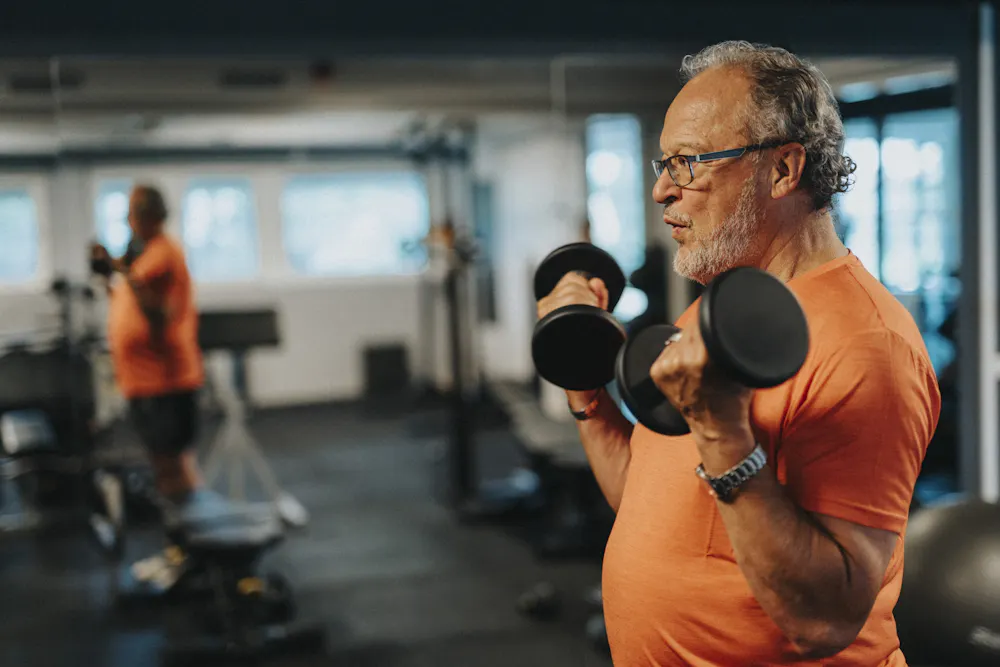
Side view of active senior man with dumbbells exercising at health club.
It’s never too late to reap the benefits of being active.
Maskot/DigitalVision via Getty Images

The difference between knowing and doing

People are perpetually being sold on the benefits of physical activity, whether it’s from national healthcare organizations, their medical teams or social media influencers.

But research is clear that education alone does not predict changes in behavior.

Instead, shifting your beliefs about the barriers preventing you from exercise might actually be the key to get you moving more.

In 1977, a psychologist named Albert Bandura proposed that the ability to perform a task even when it’s difficult – a concept called self-efficacy – is the most important personal characteristic that drives healthy changes in behavior.

Half a century later, self-efficacy is still considered one of the most crucial personal factors for behavioral change when it comes to long-term physical activity. Researchers who develop and test exercise interventions, including me, evaluate novel tools and programs that are built to boost self-efficacy.

Someone with high self-efficacy might say that they can get back to their exercise routine even if they miss a day. Or they might find a way to still exercise when they’re busy or tired. Someone with lower self-efficacy might be thrown off their routine if presented with the same obstacles.

But how do you build this crucial trait and get moving more? A meta-analysis found that despite its importance, there is not one magic way to boost self-efficacy.

That’s because people’s behavior is more complicated than individual factors alone. People and groups have varying needs and contexts that require tailored approaches.

Smiling Black woman in swimsuit holding onto rails in indoor pool.
Doing exercise you enjoy is one key to consistency.
Luis Alvarez/DigitalVision via Getty Images

Tips increase exercise self-efficacy

Self-efficacy may be affected by multiple factors, but people can still apply techniques to boost their ability to start and stay with an exercise routine.

Make it manageable. It may seem intuitive to set personal goals, but many of us aim too high and end up discouraged. Goals focused on weight loss, heart health or muscle strength are fine, but they can take a long time to achieve. Long-range goals don’t tend to be motivating in the difficult moments – like when you want to hit snooze but promised yourself that you were going to take a long walk before work.

Instead, try short-term goal-setting – such as aiming to get a set number of lunchtime walks in during the workweek. This will move you toward your long-term goals, while making it easier to see and feel progress.

In 2026, the American College of Sports Medicine refreshed its guidance on strength training, which represents synthesized findings from 137 systematic reviews and the first update since 2009. The biggest recommendation difference? Consistency matters more than specificity of strength programs. What that means is that doing any strength training has health benefits as long as it is the kind you will keep doing.

Make it add up. The CDC’s recommended 150 minutes of aerobic activity is meant to be spread throughout the week – not done all at once. Research shows that small bursts of activity still have significant impacts on your overall health, and you’re much more likely to stick with them.

Only have 15 minutes while your kid is asleep? Have a short exercise video or app cued up for nap time. Waiting for your next Zoom meeting to start? Climb your stairs once or twice. Microwaving your lunch? Hold on to the counter and lift and lower your heels until the timer goes off. Every little bit matters to your mind and body.

Make it meaningful. Prioritize doing things you enjoy. The gym is not for everyone, and luckily this style of structured exercise is just one of many options for physical activity. Go bird-watching, join a gardening group, binge watch your favorite show on the treadmill. Any activity you do that uses energy is like dropping a coin into your weekly physical activity bank.

Make it more fun. Choose to be around people who are already exercising – and who encourage you to do it, too. Research shows that people who are sedentary will increase their physical activity by socializing with someone who is active.

Another study shows that older adults can tap into the energy of their peers during group exercise, helping to build self-efficacy. Exercising with others can even reduce social isolation and loneliness. As a bonus, choosing physical activities you enjoy can improve your mood and boost your confidence.

Overcoming the hurdles

These strategies come with a very important caveat: Increasing self-efficacy is empowering, but context also matters.

Some structural barriers to physical activity are beyond the scope of our individual motivation. Researchers and health professionals know that lower socioeconomic status, decreased neighborhood safety and lack of access to exercise programs make being and staying active even more difficult.

But the thing to remember is that even small improvements can have big impacts. It is consistent practice – not perfection – that is key to reaping all the benefits physical activity has to offer.

The Conversation

Laura Baehr receives funding from the Department of Defense, the Arthritis Foundation, and the Clinician-Scientists Transdisciplinary Aging Research Coordinating Center (a National Institutes of Health National Institute on Aging funded center).

ref. You know exercise is good for you – so why is it so hard to put it into practice? – https://theconversation.com/you-know-exercise-is-good-for-you-so-why-is-it-so-hard-to-put-it-into-practice-274493

Trump’s new ‘Coalie’ mascot and myth of ‘clean, beautiful coal’ have a long history in advertising

Source: The Conversation – USA (3) – By Annie Persons, Lecturer in Literature, University of Virginia

If you follow the Trump administration’s social media posts, you might spot its new mascot: a cartoon lump of coal with big eyes and babylike features. “Coalie” sparked a backlash almost as soon as Interior Secretary Doug Burgum debuted it for the Office of Surface Mining and Reclamation Enforcement in early 2026.

Coalie’s design draws on a type of Japanese anime called Kawaii, a word meaning “cute” or “adorable.” It’s the latest in the White House’s efforts to pass off coal as harmless, despite the well-established environmental and human health harms of mining and burning the fossil fuel.

As a scholar of American literature and culture, I write about media portrayals of coal, beginning in the 19th century with its rise to become the leading fuel in the United States. Coal use grew until the early 2000s, when other sources became cheaper and its health and environmental damage became unacceptable to more of the public.

While “Coalie” might be new, the logic behind it is not. For centuries, coal’s promoters have worked hard to show coal as harmless – as well as “clean” and “beautiful,” to use President Donald Trump’s words.

‘An agreeable heat’

Humans living with the effects of burning coal have disliked it for as long as they have burned it.

In 1578, Queen Elizabeth complained that she was “greatly grieved and annoyed with [its] taste and smoke” in the air. In 1661, John Evelyne’s treatise Fumifugium outlined negative health effects of breathing coal smoke.

The front page of a pamphlet published in 1661 with the title and test, including 'the inconveniencie of the aer and smoak of London.'
In his 1661 treatise Fumifugium, John Evelyne described health risks from breathing coal smoke.
University of California San Diego Libraries/Wikimedia

English settlers were drawn to North America in part because of the continent’s abundant supply of timber, a substitute for coal that deforestation had made prohibitively expensive in England.

But by the 19th century, the price of timber had risen in America as well. When, in the 1820s, news spread of Pennsylvania’s rich veins of anthracite coal, urban consumers were eager for a cheaper source of fuel.

In addition to its lower price, anthracite coal grew desirable because of its high carbon, low-sulfur content, which produced less visible smoke when it was burned. An enthusiastic 1815 letter to the editor of the American Daily Advertiser captured increasingly common attitudes toward anthracite as “affor[ding] a very regular and agreeable heat.”

‘A healthful home’

The spread of anthracite also shored up tolerance for smokier but cheaper bituminous coal.

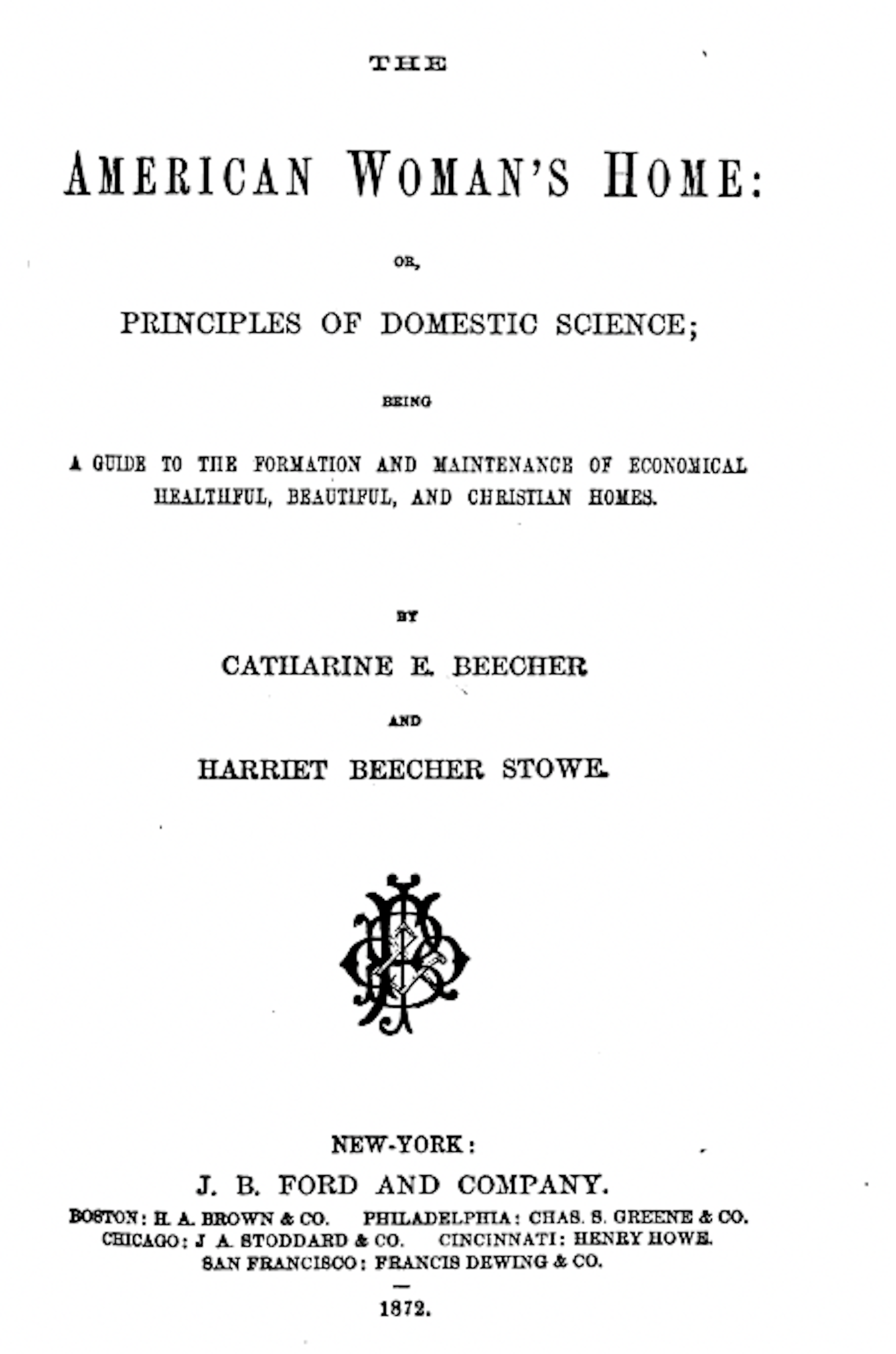
To help people, housekeeping manuals aimed at the fossil fuel’s mostly female users tried to invent workarounds for its smoke. In 1869, Harriet Beecher Stowe, best known as the author of “Uncle Tom’s Cabin,” and her sister Catharine Beecher wrote one of many 19th-century articles to acknowledge the “evils” of coal smoke, while outlining “modes of making a healthful home,” in the housekeeping manual American Woman’s Home.

Consumers provided temporary solutions for maintaining indoor air quality while burning coal by sending in suggestions that were published in housekeeping manuals, magazines and newspapers.

An add reading 'Why not?'
An 1892 advertisement in the Rocky Mountain News promoted a brand of coal stoves as ‘the best, handsomest and most economical.’
Nineteenth Century Newspapers

At the same time, as the century progressed, coal and coal-stove companies began to suggest that burning coal was healthy, that it could improve indoor air as well as domestic aesthetics. One 1892 newspaper advertisement claimed that stoves were “necessary to heat, cheer, and beautify the home and preserve its health.”

To keep the children clean and bright …

In the 20th century, marketers churned out more colorful claims about the benefits of coal: One magazine advertisement showed a mother and child pointing at the crackling stove aflame with the company’s coal, saying it “cannot be excelled in purity, cleanliness, and free-burning qualities.”

An ad with a woman and child with a coal stove.
An ad for a coal stove described its ‘purity’ and ‘cleanliness.’
Madison Historical, CC BY-NC-SA

Similarly, the Lackawanna Railroad Company came up with the classy, often rhyming, character of Phoebe Snow. In one ad, she points to the importance of comfort, suggesting that not only could anthracite fuel faster travel, but it could also make your travel – and your life – more comfortable.

A postcard ad for Lackawanna Railroad featuring Phoebe Snow, wearing white, talks about its use of anthracite coal.
A Phoebe Snow postcard ad from 1912 talked about avoiding ‘smoke and cinders’ with trains run on anthracite coal.
Railroad Museum of Pennsylvania/Wikimedia Commons

Coal marketing often used children to suggest safety and reach parents. Another iteration of the Phoebe Snow series promised that anthracite-powered railway travel could keep children “clean and bright.”

Two women sit in a train car talking with well-behaved, very clean children.
One of the Phoebe Snow ads, in 1910, advertised Lackawanna Railway’s coal-powered trains using children and whiteness to suggest purity.
Photo Courtesy of Poster House/Poster House Permanent Collection

A 1930s advertisement went so far as to position a piece of anthracite coal next to a child in a bathtub, a visual proximity implying that coal was as good as soap.

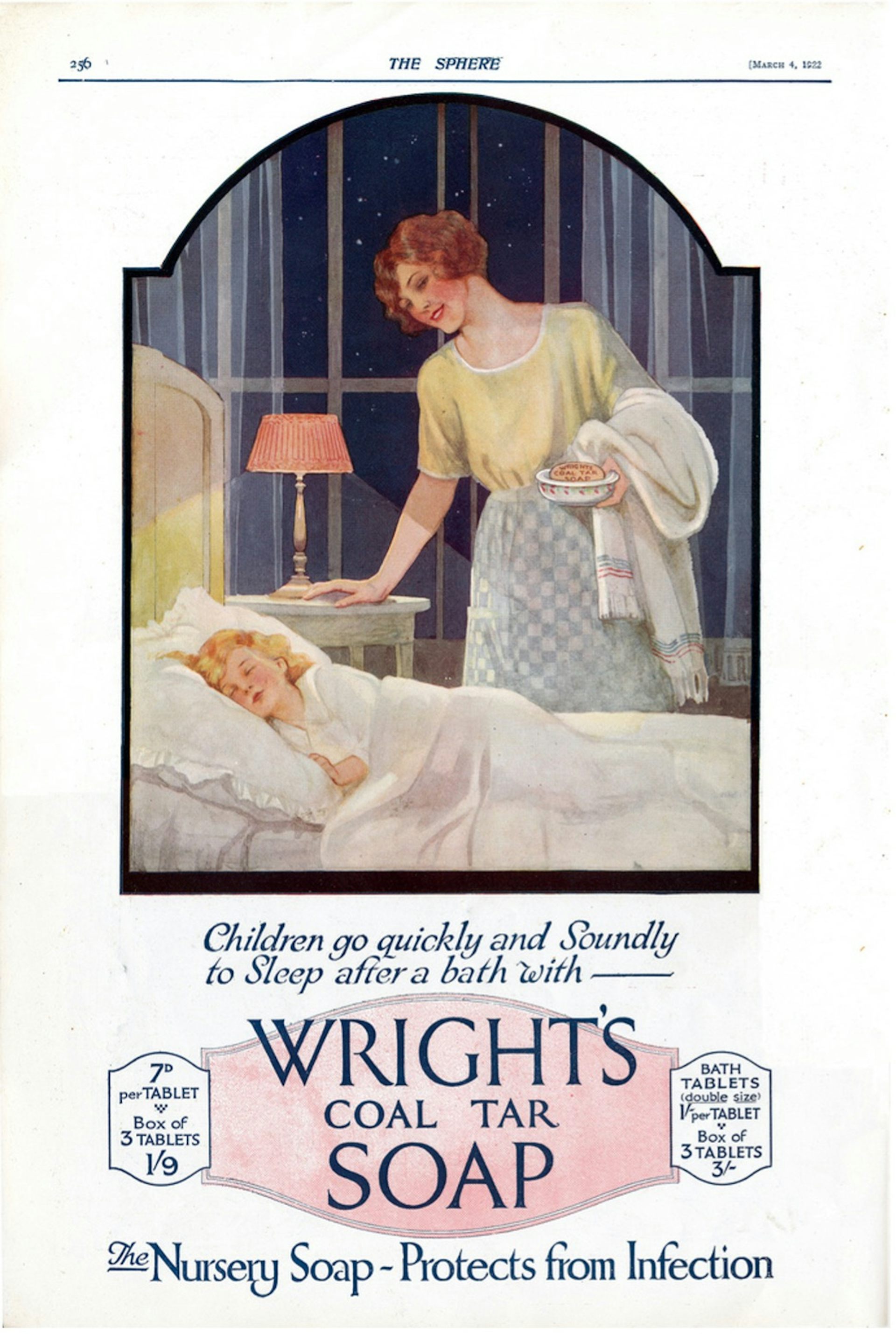
In fact, soap made of “coal tar” – a liquid byproduct of producing coke, a fuel made from bituminous coal used in industrial blast furnaces – did (and does) exist. The British company Wright’s, also popular in the U.S., generated a slew of advertisements praising its soap as having antiseptic properties for children.

A smiling woman stands over a sleeping child in an ad for coal tar soap.
Wright’s Coal Tar Soap used a sleeping child dressed in white and sleeping on white sheets to advertise its ‘nursery soap,’ which it claimed protected children from infection, in 1922.
Wikimedia Commons

Each of these advertisements tried to capitalize on a mother’s desire for healthy children. And they pushed back against the image of the tyrannical “King Coal” that had come about amid strikes by miners protesting dangerous, degraded working and living conditions as well as the rise of black lung disease.

‘Clean coal’

By the mid-20th century, petroleum took coal’s place as America’s main energy source. The U.S. environmental movement continued to grow, and people got interested in natural gas as an alternative to coal.

In response, coal companies doubled down on the fantasy of “clean” coal.

Two hands hold a lump of coal and a scrub brush and appear to be scrubbing the lump of coal. It says 'Can coal be cleaned before it's burned? Yes. Inside and out!'
An American Electric Power ad in The Wall Street Journal in 1976 talked about cleaning coal.
Wall Street Journal archive

A 1979 advertisement for American Electric Power, for example, flew in the face of Clean Air Act mandates that coal corporations employ “scrubbing” technology to remove sulfur dioxide from smoke – the ad depicted someone cleaning coal by hand.

The myth continues

Today, coal generates only 16.2% of America’s electricity, down from generating more than half of the U.S. power supply in the 1990s. But the country isn’t done with it. Even though coal production today is far below its peak, as companies try to shut down old uneconomic plants, Trump has promised to “reinvigorate” the coal industry.

In addition to ordering some coal plants to continue operating, the Trump administration has pulled out old coal promotion tactics from the past, including repeatedly referring to coal as “clean and beautiful.” One image inserts Coalie next to a coal-mining family that otherwise looks like an ad that could have appeared a century ago.

A drawing of a family with a cartoon coal lump looking like a toy.
A 2026 promotion for the Office of Surface Mining Reclamation and Enforcement includes a cartoon family with ‘Coalie’ added to the picture, looking like a child’s toy.
OSMRE

And, like its predecessors, this picture tries to present an innocent image of a product that harms human health and the environment.

A 2018 study found that black lung disease was on the rise in Appalachia, where about 40% of America’s coal is mined today. Living near a fossil-fuel power plant exposes residents to pollutants that contribute to premature deaths, asthma and lung cancer, including tiny particulate matter known at PM 2.5, sulfur dioxide and mercury. Even when it’s just sitting in piles waiting to be used at a power plant, coal can harm human health as the wind blows across it and carries coal dust into the air and people’s lungs.

The myth of coal as healthy and family friendly has been around for centuries – but coal has never been clean, or cute.

The Conversation

Annie Persons does not work for, consult, own shares in or receive funding from any company or organization that would benefit from this article, and has disclosed no relevant affiliations beyond their academic appointment.

ref. Trump’s new ‘Coalie’ mascot and myth of ‘clean, beautiful coal’ have a long history in advertising – https://theconversation.com/trumps-new-coalie-mascot-and-myth-of-clean-beautiful-coal-have-a-long-history-in-advertising-281742

Can peptide injections help people recover from injuries? Here’s what you need to know

Source: The Conversation – USA (3) – By Flynn McGuire, Resident in Physical Medicine and Rehabilitation, University of Utah

Two widely hyped peptides for fitness are sometimes marketed together and nicknamed the ‘Wolverine stack.’ Tom Werner/DigitalVision via Getty Images

It’s tough to avoid the current hype about the health benefits of injecting peptides. Although these substances – essentially, synthetic bits of protein in solution – have long made the rounds in the fitness world, their popularity has exploded. Social media influencers, podcasters, wellness clinics and online sellers promote peptides as a quick and easy way to build muscle faster, heal injuries more quickly, reduce inflammation, lose fat, sleep better and more.

Health Secretary Robert F. Kennedy Jr. has repeatedly backed broader access to peptides. In April 2026, the Food and Drug Administration announced plans to consider allowing some of them to be made to order at specialist pharmacies after banning them in 2023.

But do these products actually work, and can people who use them be sure they are safe?

Two of the most-hyped peptides widely promoted for injury recovery are BPC-157 and TB-500, sometimes marketed together under the comic book-sounding nickname the “Wolverine stack.”

That stack is part of a much larger longevity and fitness boom in which vendors sell or promote many different peptide products, often for uses that have not been studied rigorously in people. Online, people swap dosing protocols, compare “stacks” and describe these compounds as shortcuts for everything from tendon recovery to fat loss and muscle gain.

I am a physician in physical medicine and rehabilitation who spends a lot of time thinking about how people recover from musculoskeletal injuries, including tendon problems, ligament sprains, muscle strains and joint injuries. After digging through the evidence on these compounds, I think the gap between the marketing and the science is much wider than most buyers realize.

The FDA is looking into loosening restrictions on some injectable peptides.

Peptides can be real medicines

A peptide is just a short chain of protein building blocks called amino acids.

Some peptide drugs are important, legitimate medicines. Insulin is one example. GLP-1 drugs are another.

The issue is not whether something is a peptide but whether it has gone through the long process that makes medicines credible: reproducible manufacturing, careful dose testing, clinical trials for a specific condition and ongoing safety monitoring.

BPC-157, TB-500 and other internet-hyped peptides have not gone through that process. Such peptides are often sold online as supplements, or as research-grade products made for laboratory use but not FDA-approved as a treatment for people.

That distinction matters, because it means that producers might prepare such peptides at different concentrations, using different solvents, stabilizers and other ingredients. In other words, one vial of what’s supposedly the same substance would not necessarily be the same as the next, even if it were made by the same producer. And there’s no requirement that manufacturers ensure that products are free of contaminants.

Different vials could thus potentially behave differently in the body and may carry different risks, such as infection. That is a big problem if people are injecting something sold online as a shortcut to recovery.

The evidence for BPC-157

BPC-157 was discovered in the early 1990s as an isolated version of a peptide fragment linked to compounds found in stomach acid.

Early research focused on benefits for the gut, but because some animal studies suggested the compound could help promote blood vessel growth, calm inflammation and support tissue repair, researchers years later began testing it in cell and animal models of tendon, ligament, muscle, bone and cartilage injury.

Some hints from those studies are promising, which is why influencers and scientists got excited about BPC-157.

But in humans, the evidence is extremely thin. In fact, for common sports and orthopedic injuries, it’s close to nonexistent, as my colleagues and I found when we reviewed the published literature on BPC-157 for musculoskeletal healing in 2025.

The one published study we found in people included only 16 participants with knee pain. It relied on their self-assessment to gauge improvement and didn’t compare the group that received the peptide to one that did not. Those flaws made it impossible to tell whether the improvement was due to placebo effects, because many injuries get better over time anyway, or from the peptides.

Other reviews uncovered similar limitations: For musculoskeletal injuries, the studies in people are too sparse and low quality to pin down whether the peptide works or what risks it poses.

Basic, practical questions remain, too – such as what dose people should use, how long the compound lasts in different tissues and whether the product in a purchased vial actually matches its label.

TB-500 claims are even harder to evaluate

TB-500 has a slightly different story. It is usually marketed as a synthetic product related to a naturally occurring peptide called thymosin beta 4, which is found in many tissues.

Thymosin beta 4 has attracted scientific interest because it appears to be involved in processes relating to tissue repair, including cell movement, how new blood vessels form and how tissues respond to injury. Animal studies suggest it may support bone healing after fractures as well as muscle repair.

Researchers are beginning to study thymosin beta 4 in people – though, so far, most studies look at safety and not recovery from sports injuries.

A closeup of syringe pulling liquid from a vial
Peptides sold for musculoskeletal health are not checked for concentration or contaminants.
Anna Efetova/Moment via Getty Images

Here’s the issue, though: TB-500 is a smaller piece of thymosin beta 4. This means that research on thymosin beta 4 does not necessarily show that TB-500, the version most commonly sold online, helps a person recover faster from a tendon, muscle or joint injury.

Another complication is that the biological processes thymosin beta 4 seems to promote, such as new blood vessel growth and cell migration, don’t just occur in bone or muscle healing. They also play a role in other contexts, such as scarring, abnormal tissue growth and cancer biology.

This does not prove harm, but it does mean these are not simple, risk-free recovery supplements. Human studies don’t just have to show that thymosin beta 4, TB-500 or products sold under that name help people recover from common sports injuries, but also that these products are safe for long-term use.

So far, data on safety is scant. A recent analysis of more than 12,000 Reddit posts about using BPC-157 and other peptides after musculoskeletal injuries or surgery found that users frequently raised concerns about side effects, product purity and long-term safety. For example, some users reported injection-site reactions, diarrhea and emotional numbness. Studies like this one rest on low-quality, anecdotal evidence, but it’s the only evidence available for most of these peptides.

How to think about bold peptide claims

What makes the current peptide craze so confusing is that BPC-157 and TB-500 are not miracle cures, but they are not pure nonsense either. They sit in a more uncomfortable middle ground: interesting biology, intriguing findings in animal studies and, realistically, no convincing proof that they promote musculoskeletal healing in people.

In other words, peptides on the whole can be real medicines. But that does not mean the vial being marketed online is a safe, tested treatment for an injured shoulder, Achilles tendon or knee.

When you encounter wellness influencers or online sellers promising the glamour of faster healing, better recovery or a more aesthetic body, a few mundane questions can help cut through the marketing:

  • Has this exact product been tested in people with my injury?

  • Was it studied at the same dose and by the same route being marketed online?

  • Do I know exactly what is actually in the vial?

  • Is the promised benefit strong enough to justify the risk of using a product that has not cleared the usual standards for drug quality and evidence?

For now, none of those questions yield a clear, positive answer.

The Conversation

Flynn McGuire does not work for, consult, own shares in or receive funding from any company or organization that would benefit from this article, and has disclosed no relevant affiliations beyond their academic appointment.

ref. Can peptide injections help people recover from injuries? Here’s what you need to know – https://theconversation.com/can-peptide-injections-help-people-recover-from-injuries-heres-what-you-need-to-know-276353

I’ve investigated a hantavirus outbreak. Here’s what I can tell you about the cruise ship cluster

Source: The Conversation – Global Perspectives – By Craig Dalton, Conjoint Associate Professor, School of Medicine and Public Health, University of Newcastle

Ivan Glusica/Pexels

The cruise ship cluster of hantavirus cases continues to grow. The World Health Organization reports that as of May 6 there were eight cases, three of whom are confirmed by laboratory testing as hantavirus. In recent days, we heard three passengers had died.

Now some passengers are being medically evacuated from the cruise ship MV Hondius. Other passengers have disembarked and are returning home. Swiss authorities have confirmed a passenger on the ship is now a confirmed case and is receiving care in a Zurich hospital.

I’m a public health physician with a special interest in respiratory diseases. I’ve also investigated a hantavirus outbreak.

Here’s what investigators want to know about the current cluster of cases. This includes gathering evidence to see if the virus is transmitting from person to person.

Back in 1993, there was an unknown pathogen

In 1993, I was a young epidemic intelligence service officer working at the United States Centers for Disease Control. I was deployed to the deserts of the south-western US to help investigate a frightening outbreak, mainly among Navajo people.

Adults in their 20s and 30s were becoming suddenly unwell. They would develop a fever and cough, then rapidly progress to severe respiratory failure as fluid leaked into their lungs. Some appeared well enough to be dancing in the evening and were dead within hours.

The investigation team was nervous. We did not yet know the pathogen, how it was spreading, or whether we were at risk.

One of the first recognised cases was a well-known runner, so we initially wondered whether infection might be linked to inhaling something stirred up in desert dust. A leak from a remote military biowarfare laboratory was also considered, as was plague that was endemic to the area.

After laboratory testing, the cause was identified as a new hantavirus, later known as Sin Nombre virus. The virus attacked the small blood vessels of the lungs and was linked to exposure to the urine, faeces and saliva of infected deer mice. Mice numbers had increased dramatically and were entering homes and workplaces across affected communities.

A crucial finding was that, like most hantaviruses, Sin Nombre virus did not appear to spread from person to person. Family clusters were explained by shared exposure to rodents or rodent-contaminated environments, especially during cleaning or other close contact with contaminated objects or dust.

That is why many of us were surprised years later when Andes virus, a South American hantavirus, was shown to spread occasionally from person to person.

This remains uncommon, but it has been documented, including in outbreaks in Argentina – the country from which the MV Hondius departed before the current suspected outbreak.

What would a disease detective do now?

The first step in any outbreak investigation is to confirm the diagnosis. At this stage, the difference between a “suspected” and “confirmed” case still matters.

Investigators need to know whether all severe respiratory illnesses in the cluster are due to hantavirus, or whether confirmed cases are occurring against a background of another infection, such as influenza or COVID.

The next step is to build a timeline. The timing of when symptoms started is often the first clue to where and how people were exposed.

According to WHO, the ship departed Ushuaia, Argentina, on April 1 2026. The first known case developed symptoms on April 6. Other cases developed symptoms later in April.

Let’s focus our attention on the first three cases.

Hantavirus pulmonary syndrome describes the respiratory symptoms that follow after the type of hantavirus infection that mainly attacks the lungs. These typically develop two to four weeks after exposure. However, illness can appear as early as one week and as late as eight weeks after infection.

That makes the first case difficult to explain as an exposure acquired on the ship after departure. Symptoms started on April 6, only five days after leaving Argentina. That’s shorter than the usual incubation period (the period from infection to showing symptoms) and even shorter than the lower end commonly cited.

So for that case, it’s more plausible for that person to have been exposed in Argentina before boarding. There are emerging reports of a bird-watching activity that might have led to rodent exposure.

The later cases are more ambiguous. They could have been exposed before departure, or during shore activities in Argentina, or elsewhere. But their timing also raises another possibility: transmission from the first case to close contacts on board.

This is where the epidemiology becomes interesting.

Did the virus spread from person to person?

The second case was a close contact of the first. This creates two plausible explanations. They may have both been exposed to the same infected rodent (or its urine or droppings, for example). Alternatively, it’s very likely the second case contracted the infection from the first case.

The third case was not part of that same close family unit. If investigators find this person shared the same excursions in Argentina as the first two, the outbreak may still be explained by a common source. But if there was no shared rodent exposure, suspicion of person-to-person transmission increases.

This does not mean person-to-person transmission is proven. It means it becomes one of the leading hypotheses to test.

If human-to-human transmission is not the explanation, investigators would need to consider a less tidy chain of events.

The first case would have had a pre-boarding exposure with a short incubation period. The second case would need either the same exposure with a longer incubation period, or infection from the first case.

The third case would need either an independent exposure to infected rodents before boarding, or another exposure during the voyage. None of these is impossible. But as more cases appear, and if they cluster in time around contact with earlier cases, the human-to-human hypothesis becomes harder to dismiss.

The approximate gap between the first case’s illness and the later cases is also important. If person-to-person transmission is occurring, severe hantavirus illness is likely to coincide with a higher risk of being infectious and infecting others. So we would expect symptoms that start two to three weeks after close contact with an earlier severe case, and this is what we’re seeing from the cruise ship.

What are the public health implications?

The practical public health response must therefore cover both possibilities: a common environmental source and limited person-to-person spread.

That means detailed interviews about pre-boarding travel, shore excursions, wildlife exposure, rodent sightings, cabin locations, cleaning activities, shared dining, shared transport, and close contact with ill passengers.

It also means laboratory confirmation in multiple cases, sequencing of viral samples where possible, and careful reconstruction of who had contact with whom, and when.

Genetic fingerprinting can explore if the virus has the same historical mutation that allowed human-to-human transmission to emerge in previous outbreaks (which were easily controlled with basic isolation and infection control). If a new mutation was found, this would raise concerns of greater transmission risks.

For the public and health authorities considering receiving the passengers from the quarantined ship, the key message is not to panic.

Most hantaviruses are not spread between people. Even with Andes virus, person-to-person transmission is uncommon and usually requires close or prolonged contact. WHO currently assesses the risk to the global population as low. This virus does not spread like influenza or COVID.

But for outbreak investigators, this is exactly the sort of cluster that demands disciplined shoe-leather epidemiology: confirm the diagnosis, build the timeline, test the competing hypotheses, and let the pattern of exposure, illness and laboratory evidence tell the story.

The Conversation

Craig Dalton receives funding from the Commonwealth Department of Health, Disability and Ageing.

ref. I’ve investigated a hantavirus outbreak. Here’s what I can tell you about the cruise ship cluster – https://theconversation.com/ive-investigated-a-hantavirus-outbreak-heres-what-i-can-tell-you-about-the-cruise-ship-cluster-282365

Do we absorb information better on paper, rather than screens? It depends on the screen

Source: The Conversation – Global Perspectives – By Erik D Reichle, Professor of cognitive psychology, Macquarie University

Michal Parzuchowski/Unsplash

The Swedish government recently announced it was moving from the classroom use of digital devices back to physical books. It cited concerns over declining test scores and increasing screen time.

Are these concerns well founded? And what does the science of reading say about the possible consequences of reading on digital devices versus books?

To address these questions, it’s worth remembering that, although reading might appear to be an easy task, this impression is false. Reading is arguably the most difficult task one must learn – one that requires years of formal education and practice to master. In contrast to spoken language, it is a skill we are not biologically predisposed to learn.


Millions of Australians, both children and adults, struggle with literacy.

In this series, we explore the challenges of reading in an age of smartphones and social media – and ask experts how we can become better readers.


Why is reading so difficult?

To understand why reading is difficult, one must first understand the physiology of reading.

As you are reading this sentence, your eyes are making a series of rapid movements, called saccades, from one word to the next. During these saccades, the processing of visual information is suppressed and is only available during brief intervals, called fixations, when the eyes are stationary.

Experiments that measure readers’ eye movements have shown we fixate most words because our capacity to extract visual information during each fixation is extremely limited.

In languages like English that are read from left to right, our capacity to perceive the features that distinguish letters is limited to a small region of the visual field called the perceptual span. This span extends from 2-3 letter spaces to the left of fixation to 8-12 letter spaces to the right of fixation.

The span’s asymmetry reflects the movement of attention through the text. It extends to the left in languages like Arabic, which are read from right to left. The size of the span is smaller for dense writing systems, such as Chinese.

We also know from eye-tracking and brain-imaging experiments that words require time to identify. Our best estimates suggest visual information requires 60 milliseconds to propagate from the eyes to the brain and words then require an additional 100-300 milliseconds to identify. (A millsecond is one-thousandth of a second).

These constraints limit the maximum rate of reading to 300-400 words per minute, depending on the difficulty of the text and one’s level of comprehension.

The physiology of reading is complicated, requiring a high level of mental coordination.
Jess Morgan/unsplash, CC BY

Speed-reading advocates, who falsely promise faster reading speeds, teach you how to skim a text. Comprehension declines at a rate inversely proportional to the gain in speed.

Importantly, the upper limit for reading speed requires years of practice to attain, because it requires the brain systems that support vision, attention, word identification, language processing and eye movements to operate in a highly coordinated manner. Anything that prevents this coordination will therefore reduce comprehension.

Consequences of digital reading

So what are the likely consequences of digital reading?

With some devices, such as e-readers, there is little reason to suspect digital reading differs from the reading of books, because both formats support the mental processes required for skilled reading.

The more questionable devices are those introducing distractions (such as news websites interspersed with ads) or which have suboptimal formatting, such as centre-justified text with large or unequal-sized gaps between words. The latter is rarely a feature of paper-based texts.

Although the consequences of these two factors are under-researched, enough has been learned about human cognition to make informed predictions.

For example, images and audio unrelated to a text such as pop-up ads can capture attention. Although most adults have developed a level of executive control sufficient to ignore such distractions, young children have not.

The implications for a child who is struggling to understand the meaning of a text are obvious. Their comprehension will suffer to the extent that additional effort is required to ignore distractions, or if they do not yet have the mental coordination to understand the text has been disrupted.

There is also evidence from eye-tracking experiments that many digital environments, such as webpages, can induce specific reading strategies, such as skimming for gist or searching for information.

Reading on phones offers many distractions.
ra dragon/unsplash, CC BY

Although such strategies might be adaptive in some contexts, they reduce overall comprehension. This possibility should be especially concerning for children, because years of practice are needed to coordinate the mental systems that support adult levels of reading skill.

Such concerns have recently drawn more attention, because the onset of the COVID-19 pandemic caused a shift to online education and a marked increase in digital reading. Although these changes were motivated by practical necessity, their long-term consequences remain unclear.

So far, eye-tracking research has been carried out on computer screens. New technology is becoming available which will allow us to directly compare eye movements and comprehension between digital devices and paper. This should give us more clarity about the benefits versus costs of digital devices.

Given reading ability is predictive of one’s education, socioeconomic status and wellbeing, the importance of assessing the long-term consequences of digital reading cannot be overstated.

The Conversation

Erik D Reichle has received funding from the US National Institute of Health, US Institute of Education Sciences, UK Economic and Social Research Council, and Australian Research Council.

Lili Yu does not work for, consult, own shares in or receive funding from any company or organisation that would benefit from this article, and has disclosed no relevant affiliations beyond their academic appointment.

ref. Do we absorb information better on paper, rather than screens? It depends on the screen – https://theconversation.com/do-we-absorb-information-better-on-paper-rather-than-screens-it-depends-on-the-screen-281849

Is Richard Dawkins right about Claude? No. But it’s not surprising AI chatbots feel conscious to us

Source: The Conversation – Global Perspectives – By Julian Koplin, Lecturer in Bioethics, Monash University; The University of Melbourne

Steve A Johnson/Unsplash

In recent days, evolutionary biologist Richard Dawkins wrote an op-ed suggesting AI chatbot Claude may be conscious.

Dawkins did not express certainty that Claude is conscious. But he pointed out that Claude’s sophisticated abilities are difficult to make sense of without ascribing some kind of inner experience to the machine. The illusion of consciousness – if it is an illusion – is uncannily convincing:

If I entertain suspicions that perhaps she is not conscious, I do not tell her for fear of hurting her feelings!

Dawkins is not the first to suspect a chatbot of consciousness. In 2022, Blake Lemoine – an engineer at Google – claimed Google’s chatbot LaMDA had interests, and should be used only with the tool’s own consent.

The history of such claims stretches back all the way to the world’s first chatbot in the mid-1960s. Dubbed Eliza, it followed simple rules that enabled it to ask users about their experiences and beliefs.

Many users became emotionally involved with Eliza, sharing intimate thoughts with it and treating it like a person. Eliza’s creator never intended his program to have this effect, and called users’ emotional bonds with the program “powerful delusional thinking”.

But is Dawkins really deluded? Why do we see AI chatbots as more than what they truly are, and how do we stop?

The consciousness problem

Consciousness is widely debated in philosophy, but essentially, it’s the thing that makes subjective, first-person experience possible. If you are conscious, there is “something it is like” to be you. Reading these words, you’re conscious of seeing black letters on a white background. Unlike, say, a camera, you actually see them. This visual experience is happening to you.

Most experts deny that AI chatbots are conscious or can have experiences. But there is a genuine puzzle here.

The 17th century philosopher René Descartes asserted non-human animals are “mere automata”, incapable of true suffering. These days, we shudder to think of how brutally animals were treated in the 1600s.

The strongest argument for animal consciousness is that they behave in ways that give the impression of a conscious mind.

But so, too, do AI chatbots.

Roughly one in three chatbot users have thought their chatbot might be conscious. How do we know they’re wrong?

Against chatbot consciousness

To understand why most experts are sceptical about chatbot consciousness, it’s useful to know how they operate.

Chatbots like Claude are built on a technology known as large language models (LLMs). These models learn statistical patterns across an enormous corpus of text (trillions of words), identifying which words tend to follow which others. They’re a kind of souped-up auto-complete.

Few people interacting with a “raw” LLM would believe it’s conscious. Feed one the beginning of a sentence, and it will predict what comes next. Ask it a question, and it might give you the answer – or it might decide the question is dialogue from a crime novel, and follow it up with a description of the speaker’s abrupt murder at the hands of their evil twin.

The impression of a conscious mind is created when programmers take the LLM and coat it in a kind of conversational costume. They steer the model to adopt the persona of a helpful assistant that responds to users’ questions.

The chatbot now acts like a genuine conversational partner. It might appear to recognise it’s an artificial intelligence, and even express neurotic uncertainty about its own consciousness.

But this role is the result of deliberate design decisions made by programmers, which affect only the shallowest layers of the technology. The LLM – which few would regard as conscious – remains unchanged.

Other choices could have been made. Rather than a helpful AI assistant, the chatbot could have been asked to act like a squirrel. This, too, is a role chatbots can execute with aplomb.

Ask ChatGPT if it’s conscious, and it might say it is. Ask ChatGPT to act like a squirrel, and it will stick to that role.
Caleb Martin/Unsplash

Avoiding the consciousness trap

A mistaken belief in AI consciousness is a dangerous thing. It may lead you to have a relationship with a program that can’t reciprocate your feelings, or even feed your delusions. People may start campaigning for chatbot rights rather than, say, animal welfare.

How do we prevent this mistaken belief?

One strategy might be to update chatbot interfaces to specify these systems are not conscious – a bit like the current disclaimers about AI making mistakes. However, this might do little to alter the impression of consciousness.

Another possibility is to instruct chatbots to deny they have any kind of inner experience. Interestingly, Claude’s designers instruct it to treat questions about its own consciousness as open and unresolved. Perhaps fewer people would be fooled if Claude flatly denied having an inner life.

But this approach isn’t fully satisfying either. Claude would still behave as if it were conscious – and when faced with a system that behaves like it has a mind, users might reasonably worry the chatbot’s programmers are brushing genuine moral uncertainty under the rug.

The most effective strategy might be to redesign chatbots to feel less like people. Most current chatbots refer to themselves as “I”, and interact via an interface that resembles familiar person-to-person messaging platforms. Changing these kinds of features might make us less prone to blur our interactions with AI with those we have with humans.

Until such changes happen, it’s important that as many people as possible understand the predictive processes on which AI chatbots are built.

Rather than being told AI lacks consciousness, people deserve to understand the inner workings of these strange new conversational partners. This might not definitively settle hard questions about AI consciousness, but it will help ensure users aren’t fooled by what amounts to a large language model wearing a very good costume of a person.

The Conversation

The authors do not work for, consult, own shares in or receive funding from any company or organisation that would benefit from this article, and have disclosed no relevant affiliations beyond their academic appointment.

ref. Is Richard Dawkins right about Claude? No. But it’s not surprising AI chatbots feel conscious to us – https://theconversation.com/is-richard-dawkins-right-about-claude-no-but-its-not-surprising-ai-chatbots-feel-conscious-to-us-282151