Who thinks Republicans will suffer in the 2026 midterms? Republican members of Congress

Source: The Conversation – USA – By Charlie Hunt, Associate Professor of Political Science, Boise State University

House Speaker Mike Johnson will have to defend a narrow majority in the 2026 elections. A near-record number of retiring Republicans won’t make that task easier. J. Scott Applewhite/AP

The midterm elections for Congress won’t take place until November, but already a record number of members have declared their intention not to run – a total of 43 in the House, plus 10 senators. Perhaps the most high-profile person to depart, Republican Rep. Marjorie Taylor Greene of Georgia, announced her intention in November not just to retire but to resign from Congress entirely on Jan. 5 – a full year before her term was set to expire.

There are political dynamics that explain this rush to the exits, including frustrations with gridlock and President Donald Trump’s lackluster approval ratings, which could hurt Republicans at the ballot box.

Rather than get swept away by a prospective “blue wave” favoring Democrats – or possibly daunted by the monumental effort it would take to survive – many Republicans have decided to fold up the beach chair and head home before the wave crashes.

As of now, two dozen Republican House members have either resigned from the House or announced their intent to not run for reelection in 2026. With only two exceptions – Republicans in 2018 and 2020 – this is more departures from either party at this point in the election calendar than any other cycle over the past 20 years.

There is also growing concern within the House Republican caucus that Greene’s announcement is a canary in the coal mine and that multiple resignations will follow.

As a political scientist who studies Congress and politicians’ reelection strategies, I’m not surprised to see many House members leaving ahead of what’s shaping up to be a difficult midterm for the GOP. Still, the sheer numbers of people not running tells us something about broader dissatisfaction with Washington.

Why do members leave Congress?

Many planned departures are true retirements involving older and more experienced members.

For example, 78-year-old Democratic congressman Jerry Nadler is retiring after 34 years, following mounting pressure from upstart challengers and a growing consensus among Democrats that it’s time for older politicians to step aside. Nancy Pelosi, the former speaker who will turn 86 in March, is also retiring.

Sometimes, members of Congress depart for the same reasons other workers might leave any job. Like many Americans, members of Congress might find something more attractive elsewhere. Retiring members are attractive hires for lobbying firms and corporations, thanks to their insider knowledge and connections within the institution. These firms usually offer much higher salaries than members are used to in Congress, which may explain why more than half of all living former members are lobbyists of some kind.

Nancy Pelosi, the former House speaker, gestures at a news conference.
Democrat Nancy Pelosi, who was first elected in 1986, will step down at the end of this Congress.
Jose Luis Magana/AP

Other members remain ambitious for elective office and decide to use their position in Congress as a springboard for another position. Members of the House regularly retire to run for a Senate seat, such as, in this cycle, Democratic Rep. Haley Stevens of Michigan. Others run for executive offices, including governor, such as Republican Rep. Nancy Mace of South Carolina.

But some are leaving Congress due to growing frustration with the job and an inability to get things done. Specifically, many retiring members cite growing dysfunction within their own party, or in Congress as a whole, as the reason they’re moving on.

In a statement announcing his departure in June, Sen. Thom Tillis, R-N.C., mused that “between spending another six years navigating the political theater and partisan gridlock in Washington or spending that time with my family,” it was “not a hard choice” to leave the Senate.

What’s unique about 2026?

In addition, there are a few other factors that can help explain why so many Republicans in particular are heading for the exits leading up to 2026.

The shifting of boundaries that has come with the mid-decade redistricting process in several states this year has scrambled members’ priorities. Unfamiliar districts can drive incumbents to early retirement by severing their connection with well-established constituencies.

In Texas, six Republicans and three Democrats – nearly a quarter of the state’s entire House delegation – are either retiring or running for other offices, due in part to that state’s new gerrymander for 2026.

All decisions about retirement and reelection are sifted through the filter of electoral and partisan considerations. A phenomenon called “thermostatic politics” predicts that parties currently in power, particularly in the White House, tend to face a backlash from voters in the following election. In other words, the president’s party nearly always loses seats in midterms.

In 2006 and 2018, for example, Republican members of Congress were weighed down by the reputations of unpopular Republican Presidents George W. Bush and Trump. Republicans had arguably even greater success in midterm elections during Barack Obama’s presidency.

Currently, 2026 looks like it will present a poor national environment for Republicans. Trump remains highly unpopular, according to polls, and Democrats are opening up a consistent lead in the “generic ballot” question, which asks respondents which party they intend to support in the 2026 midterms without reference to individual candidates.

Democrats have already been overperforming in special elections, as well as the general election in November in states such as New Jersey and Virginia, which held elections for governor. Democrats are on average running 13 points ahead of Kamala Harris’ performance in the 2024 election.

As a result, even Republicans in districts thought to be safe for their party may see themselves in enough potential danger to abandon the fight in advance.

Retirement vs. resignation

One final, unique aspect of this election cycle with major consequences is not an electoral but an institutional one.

House conservatives are quietly revolting against Speaker Mike Johnson’s leadership style. That members may be frustrated enough not just to retire but resign in advance, leaving their seats temporarily vacant, is a notable sign of dysfunction in the U.S. House.

This also could have a major impact on policy, given how slim the Republicans’ majority in the lower chamber is already. Whatever the outcome of the midterms in November, these departures clearly matter in Washington and offer important signals about the chaos in Congress.

The Conversation

Charlie Hunt does not work for, consult, own shares in or receive funding from any company or organization that would benefit from this article, and has disclosed no relevant affiliations beyond their academic appointment.

ref. Who thinks Republicans will suffer in the 2026 midterms? Republican members of Congress – https://theconversation.com/who-thinks-republicans-will-suffer-in-the-2026-midterms-republican-members-of-congress-271285

Resolve to network at your employer’s next ‘offsite’ – research shows these retreats actually help forge new connections

Source: The Conversation – USA (2) – By Madeline Kneeland, Assistant Professor of Management, Babson College

Getting to know new colleagues over a short period of time can pay off later on. Tom Werner/DigitalVision via Getty Images

What do you do when an announcement about an “offsite” hits your work inbox? Chances are you might sigh and begrudgingly add the event to your calendar.

These events, also called retreats, bring colleagues together for a mix of structured activities and free time – freeing them from their regular work obligations. For one or two days, employees take a mandatory break from their normal routines at work and at home. Participants spend a lot of that time making small talk with colleagues, as well as engaging in structured interactions that may include awkward icebreakers.

Although networking is one of these events’ main purposes, some people find that networking for the purpose of meeting professional goals can feel transactional, uncomfortable or even dirty. Unsure about whether it will be worth the time and effort, you might ask: What’s in it for me?

We are management professors who study how professional networks help information and resources move across organizations and create opportunities. Our research findings suggest participating in an offsite could be well worth the time and hassle.

And it might quietly reshape your working relationships in unexpected ways.

Taking time and costing money

While these gatherings have become relatively common, we were surprised to learn how little research there is on whether they work. In particular, few scholars have dug into their effectiveness in helping people forge new connections.

Offsites can help with strategic planning, team development and goal setting. They’re often held once or twice a year. The timing varies from one employer to the next. But the period from December through March is becoming more popular.

They tend to bring people together who rarely interact through their work – particularly at large employers with offices spread across the country or even the world, and in organizations with remote-first work arrangements.

Retreats help people get better acquainted in many informal ways, whether it’s sharing meals, exchanging ideas or chatting in hallways. Those interactions and the more structured ones, such as brainstorming exercises conducted in previously assigned groups, make it easier to connect with colleagues.

After years of remote work when people mainly gathered over Zoom, employers continue to look for ways to rebuild connections and to address a surge in disengagement.

These retreats for professionals have apparently become more popular following the COVID-19 pandemic, as part of the larger rebound in business-related travel. A survey of 2,000 full-time employees from a range of industries found that the percentage of companies hosting no offsites at all fell to 4% in 2024, from 16% in 2019.

Further, many companies are allocating larger budgets for offsites and budgeting more time during off-site retreats for social purposes, the same survey found.

Off-site retreats require planning to make sure there’s time for colleagues to make new connections.

Mapping a law firm’s networking patterns

When we spoke with managers from several large firms about their off-site practices, we were surprised that they simply assumed collaboration was an inevitable outcome.

To test whether that was true, we studied the working relationships of more than 700 partners in a large U.S. law firm, which we agreed not to name to access its data. Over eight years, from 2005 to 2012, these partners attended – or skipped – the firm’s annual retreats.

We tracked the partners’ attendance and their collaborative work for the firm’s clients before and after the offsites. Because lawyers at this firm – and elsewhere – record their work in 6-minute increments, it was possible to analyze billing records for the partners’ collaboration on client projects.

The results of this mapping exercise surprised us. And they may change your feelings about whether retreats are worth your time and energy.

Helping partners get noticed

We found that after participating in an offsite, partners were more likely to reach out to other partners whom they had not worked with previously.

To our surprise, we found that even workers who didn’t attend an offsite acted more collaboratively afterward. Having received the message that collaboration is important to the firm, they made up for missing out by finding other ways to start collaborating with more colleagues.

But building a successful career also depends on something harder to control than whether you reach out to new colleagues and clients: You need your colleagues to think of you when opportunities arise. And that likelihood can increase when you participate in offsites.

Getting 24% more requests to collaborate

We found an increase in newly formed connections across the law firm after these events. New collaborations on billable work increased, generating more revenue for the firm. And the targets of these new collaborations tended to be the people who took part in the offsite.

The partners who attended the offsite became more visible and had 24% more new requests to collaborate on work for a client in the two months following the retreat than those who did not. Importantly, these relationships were not superficial. Almost 17% of these new working relationships continued over the next two years.

While we analyzed only the relationships that formed shortly after the offsite, it is likely that colleagues remember those they meet at these events. The people who attend them continue to reap network-based benefits beyond what we found in the data.

We also found that offsites helped attorneys forge connections with lawyers in the firm’s other practice groups more than with those on their own team.

Overall, lawyers who went to an offsite made more new connections – about one per month – after an offsite than the ones who didn’t go.

Bridging silos at work

In the course of day-to-day work, people tend to interact most with the colleagues they already know.

This pattern seems to be even stronger in remote work. Offsites helped to break that pattern by giving professionals opportunities to engage with colleagues they don’t know. Sometimes, they end up eager to collaborate with people they meet this way.

These more distant connections can help people obtain diverse information, resources and perspectives and create opportunities to productively brainstorm.

When you work for a big employer, it can be hard to meet colleagues on other teams. Offsites may provide a significant opportunity to build networks and stand out among peers.

While offsites may never be your favorite way to spend a few days, our research shows that they can serve an important function for employers and employees alike.

The Conversation

Madeline Kneeland received funding for this research from The Strategic Management Society.

Adam M. Kleinbaum does not work for, consult, own shares in or receive funding from any company or organization that would benefit from this article, and has disclosed no relevant affiliations beyond their academic appointment.

ref. Resolve to network at your employer’s next ‘offsite’ – research shows these retreats actually help forge new connections – https://theconversation.com/resolve-to-network-at-your-employers-next-offsite-research-shows-these-retreats-actually-help-forge-new-connections-270762

Midlife weight gain can start long before menopause – but you can take steps early on to help your body weather the hormonal shift

Source: The Conversation – USA (3) – By Vinaya Gogineni, Obesity Medicine Fellow, Vanderbilt University

Hormone changes that begin years before menopause can cause gradual muscle loss and increased insulin resistance. Morsa Images/DigitalVision via Getty Images

You’re in your mid-40s, eating healthy and exercising regularly. It’s the same routine that has worked for years.

Yet lately, the number on the scale is creeping up. Clothes fit differently. A bit of belly fat appears, seemingly overnight. You remember your mother’s frustration with the endless dieting, the extra cardio, the talk about “menopause weight.” But you’re still getting your periods. Menopause should be at least half a decade away.

So what’s really going on?

We are a primary care physician with expertise in medical weight management and an endocrinologist and obesity medicine specialist. We hear this story nearly every day. Women doing everything “right” suddenly feel like their bodies are working against them.

And while lifestyle choices still matter, the underlying cause isn’t willpower. It’s physiology.

Most women expect the weight struggle to begin after menopause. But research suggests the real metabolic shift happens years earlier. During the multiyear transition to menopause, women’s bodies begin processing sugar and carbs less efficiently, while their metabolism slows down at rest. That can drive weight gain – especially around the midsection – even if a person’s habits haven’t changed much.

There are physiological processes that begin long before menopause itself, but weight gain around the menopause transition isn’t necessarily inevitable. Recognizing this early window makes it possible to intervene while your body is still adaptable.

The silent shift before menopause

Menopause is officially defined as 12 months without a period. But the body’s hormonal transition, which comes from changes in signaling between the brain and ovaries, begins years earlier during a stage called perimenopause. This phase is when estrogen and progesterone start to fluctuate unpredictably.

Those hormonal shifts ripple through nearly every metabolic system. Estrogen helps regulate fat distribution, muscle repair and insulin sensitivity. When levels swing wildly, the body begins storing fat differently, moving it from the hips and thighs to the abdomen. Muscle protein synthesis also slows down.

The result is gradual muscle loss and increased insulin resistance, even when habits haven’t changed. At the same time, these hormonal changes can disrupt sleep, influence cortisol levels and alter appetite.

Just as those physiological changes are revving up, intensive caregiving and other demands are often increasing too, leaving less time for exercise, sleep and other basic self-care.

What’s most striking isn’t the number on the scale, but rather the change in body composition. Even if weight stays the same, women often lose muscle and gain belly fat. This deeper fat surrounds vital organs and is linked to inflammation and a higher risk of type 2 diabetes, heart disease, liver disease and sleep disorders.

Why perimenopause is the real turning point

A study called the Study of Women’s Health Across the Nation has been tracking women of different backgrounds in many parts of the U.S. since 1994 to investigate the physiological changes that occur throughout a woman’s midlife years. One of its key findings was that fat mass begins increasing and lean muscle declines during perimenopause, long before periods stop.

A group of women doing kettlebell swings during class in gym
The 30s and 40s can be an opportunity to build metabolic resilience.
Thomas Barwick/DigitalVision via Getty Images

Once this accelerated redistribution plateaus during menopause, reversal becomes much harder, though not impossible.

That’s why perimenopause should be viewed as a window of metabolic opportunity. The body is still adaptable; it’s responsive to strength training, high-quality nutrition and better sleep routines. With the right strategies, women can offset these hormonal effects and set themselves up for a healthier transition through menopause and beyond.

Unfortunately, most health care approaches to the menopause transition are reactive. Symptoms like hot flashes or sleep issues are addressed only after they appear. Rarely are women told that metabolic risk reduction starts years earlier, during this hidden but critical phase of life.

What most women haven’t been told

The usual advice of “eat less, move more” misses the point for women in their 40s. It oversimplifies biology and ignores hormonal context.

For example, for exercise, cardio alone is insufficient for weight management and optimal metabolic health. Strength training, which is too often overlooked, becomes essential to preserve lean muscle and maintain insulin sensitivity. Adequate protein intake supports these changes as well.

Sleep and stress regulation are equally vital. Estrogen fluctuations can disrupt cortisol rhythms, leading to cravings, fatigue and nighttime awakenings. Prioritizing sleep-hygiene practices such as limiting screen time before bed, getting morning sunlight, avoiding late-night eating and exercising earlier in the day helps regulate these hormonal rhythms.

Understanding why these habits matter gives important context for strategizing sustainable modifications that fit each person’s lifestyle.

How women can take action early

The decades of one’s 30s and 40s don’t need to be a countdown to decline, but instead, an opportunity to build metabolic resilience. With awareness, evidence-based strategies and proactive care, women can navigate perimenopause and the menopause transition with confidence and strength. Here are a few strategies to start with:

Lift weights. Aim for two to three sessions of resistance or strength training per week to preserve muscle and boost metabolism. Work on progressive overload, which refers to the gradual increase in stress placed on your muscles.

Prioritize protein. Include adequate protein in every meal to support muscle, increase satiety and stabilize blood sugar. There is a growing body of evidence indicating a need for a higher protein requirement than the current Recommended Dietary Allowance guidelines. Aim for 0.55 to 0.73 grams of protein per pound (1.2 to 1.6 grams of protein per kilogram) of body weight daily to reduce the risk of age-related muscle loss.

Sleep smarter. Sleep hygiene and stress management help regulate cortisol and appetite hormones. Aim for between seven and eight hours of quality sleep each night.

Ask different questions. During annual checkups, talk to your clinician about body composition and metabolic health, not just weight. And preemptively discuss the risks and benefits of menopause hormone therapy.

Your metabolism isn’t broken; it’s adapting to a new stage of your life. And once you understand that, you can work with your body, not against it.

The Conversation

The authors do not work for, consult, own shares in or receive funding from any company or organization that would benefit from this article, and have disclosed no relevant affiliations beyond their academic appointment.

ref. Midlife weight gain can start long before menopause – but you can take steps early on to help your body weather the hormonal shift – https://theconversation.com/midlife-weight-gain-can-start-long-before-menopause-but-you-can-take-steps-early-on-to-help-your-body-weather-the-hormonal-shift-271070

Apongo was a rebel leader in Jamaica – a diary entry sheds light on his west African origins

Source: The Conversation – Africa – By Devin Leigh, Lecturer, Global Studies, University of California, Berkeley

For over three centuries, between 1526 and 1866, at least 10.5 million Africans were forcibly trafficked to the Americas in the transatlantic slave trade. Over half of them (with known places of departure) left from a 3,000km stretch of the west African coast between what are today Senegal and Gabon.

Scholars trying to uncover the lives of these diasporic Africans are forced to work with historical records produced by their European and American enslavers. These writers mostly ignored Africans’ individual identities. They gave them western names and wrote about them as products belonging to a set of supposedly distinct “ethnic” brands.

Now, however, the curious biography of an 18th-century Jamaican rebel confounds this inherited language. The rebel in question is Apongo, also known as Wager. His biography is a 134-word handwritten passage in the diary of an 18th-century enslaver named Thomas Thistlewood.

As a historian of the Atlantic World in the 1700s, I use the life stories and archives of British enslavers to better understand these times.

My recent study uses Thistlewood’s biography of Apongo as a window into the origins of enslaved west Africans, particularly those from what are today the nations of Ghana and Benin.

Apongo’s story offers an opportunity to better understand the complexities of west African identity and to put a more human face on those enslaved.

Who was Apongo, aka Wager?

Like many enslaved Africans, Apongo had two names. Unfortunately, neither of them completely unlocks his backstory. “Apongo” is probably the rendering of his African name into English script according to how it sounded to his enslavers’ ears. “Wager” is a name Apongo was given by his white “master”. It had nothing to do with his African origins. In fact, it was the name of his enslaver’s ship.

Thistlewood was an English migrant to Jamaica who thought of himself as a gentleman scholar. According to one of his diary entries, Apongo led an extraordinary life defined by twists of fate. He was the prince of a west African state that paid tribute to a larger kingdom called “Dorme”. After subjugating the peoples around him, the king of Dorme seems to have sent Apongo on a diplomatic mission to Cape Coast Castle in what is today Ghana. At the time it was the headquarters of Great Britain’s trading operations on the African coast.

While there, Apongo was apparently surprised, enslaved, and trafficked to Jamaica. At the time, Jamaica was the British Empire’s most profitable colony. This was due to its sugar plantation complex based on racial slavery.

Once in Jamaica, Apongo reunited with the governor he had visited at Cape Coast. He tried to obtain his freedom but, after failing for a number of years, led and died in an uprising called Tacky’s Revolt.

Unfolding over 18 months from 1760 and named after another one of its leaders, Tacky’s Revolt left 60 Whites and over 500 Blacks dead. Another 500 Blacks were deported from the island. It was arguably the largest slave insurrection in the British Empire before the 19th century.

The mystery in the diary

To appreciate why Thistlewood’s diary entry is so valuable, we must know something about the lack of biographical information on enslaved Africans. Almost all came from societies with oral rather than literary traditions. They were then almost universally prohibited from learning to read and write by their European and American “masters”.

Enslavers almost never recorded enslaved people’s birth names. Instead, they gave them numbers for the transatlantic passage and westernised names after they arrived. Rather than recording the specific places they came from, they lumped them together into groups based on broad zones of provenance. For example, the British tended to call Africans who came from today’s Ghana “Coromatees”. Those from today’s Republic of Benin were known as “Popo”. So, despite being just one paragraph long, Thistlewood’s diary entry on Apongo is among the most detailed biographical sketches historians have of a diasporic African in the 1700s.

But it also contains a mystery. The word Thistlewood used to describe Apongo’s origins, “Dorme” or perhaps “Dome”, is unfamiliar. Since 1989, when historian Douglas Hall first wrote about Apongo, scholars have assumed it was a reference to Dahomey. This was a militarised west African kingdom in the southern part of today’s Benin.

Yet scholars never defended that assumption. Recently, it was called into question by historian Vincent Brown in Tacky’s Revolt, the first book-length study of the slave uprising Apongo helped lead. Enslaved people from what is today Ghana have a well-documented history of leading slave revolts in the Americas, particularly in British Jamaica. Brown suggested that it made more sense if “Dorme” referred to an unidentified state in that region.

Now, in my study, I have built on this work to make two related arguments. Uncovering three contemporary texts that use variant spellings of the word “Dorme” to refer to Dahomey, I argue that Thistlewood’s term was, indeed, a contemporary word for “Dahomey” in 18th-century Jamaica and that Dahomey was almost certainly the kingdom he had in mind. Moreover, I demonstrate that it was both possible and reasonable for a diplomatic mission to have taken place between Dahomey and Cape Coast in Apongo’s time. In fact, such a mission actually did take place in 1779, when King Kpengla of Dahomey sent one of his linguists to Cape Coast as an emissary.

But none of this resolves the central question. The evidence of “Coromantee” involvement in Tacky’s Revolt and other Jamaican slave rebellions – including the presence of Ghanaian names among rebels and the statements of historians at the time – is overwhelming. Additionally, although Africans from Dahomey made the trip to Cape Coast Castle during the 18th century, visitors from states in today’s Ghana were certainly much more common.

Ultimately, to argue that Apongo had origins in Dahomey, one must explain how a subject of that kingdom came to be a general in a rebellion largely characterised by Ghanaian leadership.

A question of origins

What are we to make of Apongo’s origins? One answer is that Thistlewood was wrong. Apongo was “Coromantee” and we should think of him as Ghanaian. Thistlewood merely associated him with Dahomey because that was the militarised African kingdom best known to Europeans at the time.

Another possibility is that Thistlewood was correct. Apongo was “Popo” and so we should write about him as Beninese. Thistlewood simply relayed a fact of Apongo’s life and was unconcerned with questions that now preoccupy us, such as how Apongo came to lead a rebellion that appears characterised by “Coromantee” leadership.

A third answer is that Apongo’s identity was more complex than this inherited “ethnic” language allows. Perhaps he was someone who traversed and was fluent in the cultural and political worlds of both Ghana and Benin. If that’s the case, then perhaps his story reminds us that at least these two adjacent regions were not as distinct as early-modern writers claimed and later colonial and national borders supposed.

The search for Apongo is just a small part of historians’ larger, ongoing, and collaborative work to recreate the lives of Africans taken in the transatlantic slave trade.

While asking these questions requires us to work with sources written by enslavers, we do so in the hope that we can ultimately see beyond them. Our reward is better understanding how Africans’ forgotten perspectives shaped the history of our world.

The Conversation

Devin Leigh does not work for, consult, own shares in or receive funding from any company or organisation that would benefit from this article, and has disclosed no relevant affiliations beyond their academic appointment.

ref. Apongo was a rebel leader in Jamaica – a diary entry sheds light on his west African origins – https://theconversation.com/apongo-was-a-rebel-leader-in-jamaica-a-diary-entry-sheds-light-on-his-west-african-origins-268014

Looted African belongings must be returned: is it repatriation or restitution? The words we use matter

Source: The Conversation – Africa – By Victoria Gibbon, Professor in Biological Anthropology, Division of Clinical Anatomy and Biological Anthropology, University of Cape Town

Museums and universities around the world hold vast collections of cultural artefacts, artworks, objectified belongings and even ancestral remains. Many were not freely given but taken during colonial times, through force, manipulation, theft or violence. For decades, they have sat in storerooms and display cases, classified into categories like anthropology, natural history or ethnology, separated from the people and communities to whom they once belonged.

In recent years, there has been growing recognition that these collections carry painful legacies.

Calls for their return have become part of a global conversation about decolonisation, justice and healing. In 2018 French president Emmanuel Macron produced a report which called for a new ethics of humanity, setting off a new willingness to return African artworks and material culture. But African calls for restitution were made at least five decades earlier following former president of the Democratic Republic of the Congo Mobutu Sese Seko’s address to the UN.

In all these engagements, two words are often used: repatriation and restitution.

At first glance they may seem to mean the same thing, and both involve the return of something. But as South African scholars, working in the fields of history, museum studies and human biology, we argue that the difference between these terms is not just semantic. The choice of word reflects deeper politics of justice, recognition and repair.

In our recent article we explained how we see this difference, and why the work of restitution restores people’s power over their future, and gives them a sense of agency. We argue that, for its part, repatriation has come to represent something less concerned with community restoration and has more to do with an administrative and logistical exercise.

We argue that, unlike repatriation, restitution speaks directly to justice.

Repatriation: the language of return

The word repatriation comes from the Latin patria, meaning “fatherland”. Traditionally, it refers to the return of a person or their remains to their country of origin. Governments often use this term for the logistical and legal transfer of people, artworks, or ancestral remains across national borders.

In countries that were settled by colonisers, like the US, Canada, Australia and New Zealand, repatriation has become the dominant language. This is partly due to specific laws and frameworks. In the US, for example, the Native American Graves Protection and Repatriation Act requires museums to return human remains and cultural items to Indigenous communities in a proactive manner.

In New Zealand, the national museum Te Papa plays a central role in repatriating Māori and Moriori ancestral remains from overseas institutions before returning them to local communities. In Australia, the choice of repatriation by activists, communities and scholars also sought strategically to draw a connection with the return of the remains of fallen soldiers.

In these contexts, repatriation is often framed as a process of giving back. States or museums take the lead, and communities receive.

Some Indigenous scholars and activists have challenged this framing, pointing out its patriarchal and statist overtones. They have introduced the concept of “rematriation”, signalling a return to “Mother Earth” rooted in Indigenous feminist perspectives, spirituality and community balance.

In South Africa, too, the term repatriation has been used, especially when the state arranged for the return of remains from abroad, as in the case of the return of Sarah Baartman from France.

Baartman was a 19th century Khoe (Indigenous South African) woman put on display in freak shows in Europe. Her body was later dissected by scientists within the realm of racial science and made to enter the systems of collecting and exhibition at the Musée de l’Homme in Paris. After being turned into an international symbol of the oppression of black women, Baartman also became a focus of claims for return made by Khoe and other activists and social movements in South Africa.

Repatriation has also been used for the return of the remains of ex-combatants and other patriots.

But unease began to grow. Was this language adequate for the deep work of justice and healing that communities were calling for? Or was it more concerned with national prestige than with community restoration?

Restitution: politics of justice beyond the transaction

Restitution is about returning something to its rightful owner, not simply as a transfer of property, but as an act of recognition, repair and healing.

Restitution is not just an event, like handing over an artefact in a ceremony. It is a process, time-consuming, emotional, and often painful. It involves research into how items were acquired, conversations with descendant communities, and decisions about how to care for or honour what has been returned. It recognises that the belongings taken were not just curiosities or objects, but were tied to community, and to language, ceremony and identity.


Read more:
Looting of African heritage: a powerful new book explores the damage done by colonial theft


In many cases, ancestral remains were classified and objectified as human remains and specimens, stripping them of their humanity. Restitution, by contrast, restores them as ancestors with dignity and agency.

Restitutionary work: healing and reconnection

Our research uses the phrase “restitutionary work” to describe the labour involved. This work goes far beyond diplomacy, logistics and transport. It includes:

  • Acknowledgment of injustice: Recognising that items were wrongly taken, whether through violence, coercion, or theft.

  • De-objectification: Treating ancestral remains and cultural belongings not as human remains and museum objects but as ancestors or cultural treasures.

  • Community involvement: Ensuring that descendant groups and local communities decide what happens after return, in conversation with museums and national governments.

  • Healing processes: Creating spaces for mourning, ceremony and closure.

  • New futures: Seeing restitution not just as recovering the past but as opening pathways for cultural renewal and social justice.


Read more:
San and Khoe skeletons: how a South African university sought to restore dignity and redress the past


For example, South Africa’s land restitution programme has shown that restitution is not simply about restoring what once was. It is about creating conditions for justice today and possibilities for tomorrow.

Similarly, cultural restitution is less about putting things “back where they came from” and more about empowering communities to reconnect with their heritage in ways that matter today.

Why words matter

The distinction between repatriation and restitution is not academic nitpicking. Words shape power. If return is framed as repatriation, the emphasis is often on the giver, the returner, in the form of the state or museum, granting something back. If it is framed as restitution, the emphasis shifts to the claimant, to the community asserting rights and demanding justice.

Restitution is not about recovering a lost past. That past cannot be restored exactly as it was. Instead, it is about creating new futures built on justice, dignity and respect. For communities around the world still living with the legacies of colonial dispossession, that distinction matters deeply.

The Conversation

Victoria Gibbon receives funding from the South African National Research Foundation. Opinions expressed and conclusions arrived at are those of the authors and not necessarily attributed to the NRF.

Ciraj Rassool receives funding from the Volkswagen Foundation, and has previously received funding from the Andrew W. Mellon Foundation and the Open Society Foundations. Opinions expressed and conclusions arrived at are those of the authors.

ref. Looted African belongings must be returned: is it repatriation or restitution? The words we use matter – https://theconversation.com/looted-african-belongings-must-be-returned-is-it-repatriation-or-restitution-the-words-we-use-matter-268710

Tattoos, toxins and the immune system – what you need to know before you get inked

Source: The Conversation – UK – By Manal Mohammed, Senior Lecturer, Medical Microbiology, University of Westminster

ViDI Studio/Shutterstock

From minimalist wrist designs to full sleeves, body art has become so common that it barely raises an eyebrow. But while the personal meaning of a tattoo may be obvious, the biological consequences are far less visible. Once tattoo ink enters the body, it does not stay put. Beneath the skin, tattoo pigments interact with the immune system in ways scientists are only just beginning to understand.

Tattoos are generally considered safe, but growing scientific evidence suggests tattoo inks are not biologically inert. The key question is no longer whether tattoos introduce foreign substances into the body, but how toxic those substances might be and what that means for long-term health.

Tattoo inks are complex chemical mixtures. They contain pigments that give colour, liquid carriers that help distribute the ink, preservatives to prevent microbial growth, and small amounts of impurities. Many pigments currently in use were originally developed for industrial applications such as car paint, plastics and printer toner, rather than for injection into human skin.

Some inks contain trace amounts of heavy metals, including nickel, chromium, cobalt and occasionally lead. Heavy metals can be toxic at certain levels and are well known for triggering allergic reactions and immune sensitivity.

Tattoo inks can also contain organic compounds, including azo dyes and polycyclic aromatic hydrocarbons.

Azo dyes are synthetic colourants widely used in textiles and plastics. Under certain conditions, such as prolonged exposure to sunlight or during laser tattoo removal, they can break down into aromatic amines. These chemicals have been linked to cancer and genetic damage in laboratory studies.

Polycyclic aromatic hydrocarbons, often shortened to PAHs, are produced during incomplete burning of organic material and are found in soot, vehicle exhaust and charred food. Black tattoo inks, commonly made from carbon black, may contain these compounds, some of which are classified as carcinogenic.

Coloured inks, particularly red, yellow and orange, are more frequently associated with allergic reactions and chronic inflammation. This is partly due to metal salts and azo pigments that can degrade into potentially toxic aromatic amines.

Tattooing involves injecting ink deep into the dermis, the layer of skin beneath the surface. The body recognises pigment particles as foreign material. Immune cells attempt to remove them, but the particles are too large to be fully cleared. Instead, they become trapped inside skin cells, which is what makes tattoos permanent.

Tattoo ink does not remain confined to the skin. Studies show that pigment particles can migrate through the lymphatic system and accumulate in lymph nodes. Lymph nodes are small structures that filter immune cells and help coordinate immune responses. The long-term health effects of ink accumulation in these tissues remain unclear, but their central role in immune defence raises concerns about prolonged exposure to metals and organic toxins.

Tattoos and the immune system

A recent study suggests that commonly used tattoo pigments can influence immune activity, trigger inflammation and reduce the effectiveness of certain vaccines. Researchers found that tattoo ink is taken up by immune cells in the skin. When these cells die, they release signals that keep the immune system activated, leading to inflammation in nearby lymph nodes for up to two months.

The study also found that tattoo ink present at a vaccine injection site altered immune responses in a vaccine-specific way. Notably, it was associated with a reduced immune response to the COVID-19 vaccine. This does not mean tattoos make vaccines unsafe. Rather, it suggests tattoo pigments can interfere with immune signalling, the chemical communication system immune cells use to coordinate responses to infection or vaccination, under certain conditions.

At present, there is no strong epidemiological evidence linking tattoos to cancer in humans. However, laboratory and animal studies suggest potential risks. Certain tattoo pigments can degrade over time, or when exposed to ultraviolet light or laser tattoo removal, forming toxic and sometimes carcinogenic byproducts.

Many cancers take decades to develop, making these risks difficult to study directly, especially given how recently widespread tattooing has become.

The most well-documented health risks of tattoos are allergic and inflammatory reactions. Red ink is particularly associated with persistent itching, swelling and granulomas. Granulomas are small inflammatory nodules that form when the immune system attempts to isolate material it cannot remove.

These reactions can appear months or years after a tattoo is applied and may be triggered by sun exposure or changes in immune function. Chronic inflammation has been linked to tissue damage and increased disease risk. For people with autoimmune conditions or weakened immune systems, tattoos may pose additional concerns.

Infection risks

Like any procedure that punctures the skin, tattooing carries some risk of infection. Poor hygiene can lead to infections such as Staphylococcus aureus, hepatitis B and C and, in rare cases, atypical mycobacterial infections.

One of the biggest challenges in assessing tattoo toxicity is the lack of consistent regulation. In many countries, tattoo inks are regulated far less strictly than cosmetics or medical products, and manufacturers may not be required to disclose full ingredient lists.

The European Union has introduced stricter limits on hazardous substances in tattoo inks, but globally, oversight remains uneven.

For most people, tattoos do not cause serious health problems, but they are not risk-free. Tattoos introduce substances into the body that were never designed for long-term residence in human tissue, some of which can be toxic under certain conditions.

The main concern is cumulative exposure. As tattoos become larger, more numerous and more colourful, the total chemical burden increases. Combined with sun exposure, ageing, immune changes or laser removal, this burden may have consequences that science has not yet fully uncovered.

Tattoos remain a powerful form of self-expression, but they also represent lifelong chemical exposure. While current evidence does not suggest widespread danger, growing research highlights important unanswered questions about toxicity, immune effects and long-term health. As tattooing continues to rise worldwide, the case for better regulation, transparency and sustained scientific investigation becomes increasingly difficult to ignore.

The Conversation

Manal Mohammed does not work for, consult, own shares in or receive funding from any company or organisation that would benefit from this article, and has disclosed no relevant affiliations beyond their academic appointment.

ref. Tattoos, toxins and the immune system – what you need to know before you get inked – https://theconversation.com/tattoos-toxins-and-the-immune-system-what-you-need-to-know-before-you-get-inked-271503

How displacement reshapes refugees’ gut health

Source: The Conversation – UK – By Manal Mohammed, Senior Lecturer, Medical Microbiology, University of Westminster

akramalrasny/Shutterstock

Refugee health is often discussed in terms of crises such as disease outbreaks, malnutrition and psychological distress. But some of the most serious effects of displacement are harder to see. One example is how forced migration can change the bacteria in the gut that support immunity and long-term health.

The human gut contains trillions of bacteria, viruses and fungi, together known as the gut microbiome. These microbes help digest food, support the immune system and protect against illness. A healthy gut microbiome is usually diverse and balanced, with plenty of beneficial bacteria that help protect against infection and inflammation.

Studies show that refugees often have gut microbiomes that look different from those of people who have not experienced displacement. Researchers describe distinct gut microbiome profiles, typically with fewer types of microbes and changes in which bacteria are most common. These differences are not genetic. Instead, they reflect the extreme conditions many refugees face before, during and after displacement.

Understanding these differences can help improve healthcare for refugees, but it also shows how social inequality can become physically embedded in the body over time.

One common finding is higher levels of harmful bacteria and antibiotic-resistant organisms in refugee gut microbiomes. Antibiotic-resistant bacteria can survive medicines designed to kill them, making infections harder to treat and easier to pass on.

Poor sanitation and contaminated environments play a major role. Many refugees come from, or travel through, areas affected by conflict or disaster, where access to clean water and toilets is limited. Drinking unsafe water or eating contaminated food increases the chance that disease-causing bacteria will settle in the gut and multiply, a process known as colonisation.

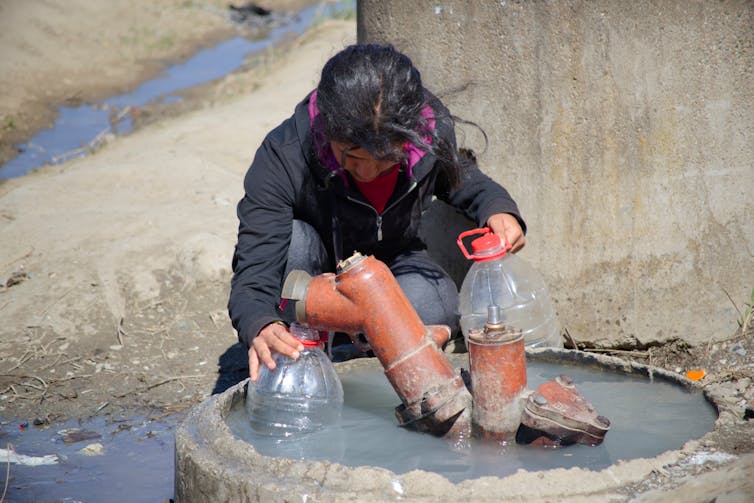
A girl filling a five litre bottle at a water station in a refugee camp
Refugees often live in challenging conditions, including limited access to clean water, adequate sanitation and healthcare services.
stu.dio/Shutterstock

Common examples include E coli, Salmonella and Shigella. These bacteria can cause diarrhoea, vomiting and fever, and in severe cases may lead to dehydration, blood infection, poor growth in children or long-term digestive problems.

Repeated stomach and bowel infections, especially in crowded places with poor sanitation, disturb the normal balance of gut microbes. Over time, harmful species can take over, while the overall range of microbes shrinks. Having fewer different types of gut bacteria is widely recognised as a sign of poor gut health.

Chronic stress makes these problems worse. Refugees are often exposed to prolonged stress linked to war, violence, forced movement, separation from family and ongoing uncertainty. Rates of mental health challenges are high, and stress affects physical health through the gut–brain axis, the communication system between the brain and the digestive system.

Long-term stress alters immune responses, hormone levels and the gut lining. These changes increase inflammation and make it easier for harmful microbes to grow, while reducing beneficial bacteria such as Lactobacillus and Bifidobacterium.

Antibiotic use is another major factor driving poor gut health and antibiotic resistance. In low-resource or conflict settings, antibiotics are often used frequently because infections are common and access to testing is limited. Refugees may receive multiple courses without a clear diagnosis or follow-up. While these medicines can save lives, repeated or unnecessary use allows resistant bacteria to survive and spread.

Antibiotics also destroy helpful microbes that keep the gut healthy. Repeated courses reduce the number and variety of beneficial bacteria, weakening the gut’s ability to protect itself.

As a result, antibiotic-resistant strains such as E coli that can neutralise antibiotics can become established in the gut, making infections much harder to treat.

Poor conditions and malnutrition

Living conditions during displacement further increase the risk of gut infection and the spread of antibiotic-resistant bacteria. Refugees camps and temporary shelters are often overcrowded and lack basic hygiene facilities, allowing infectious diseases to spread easily.

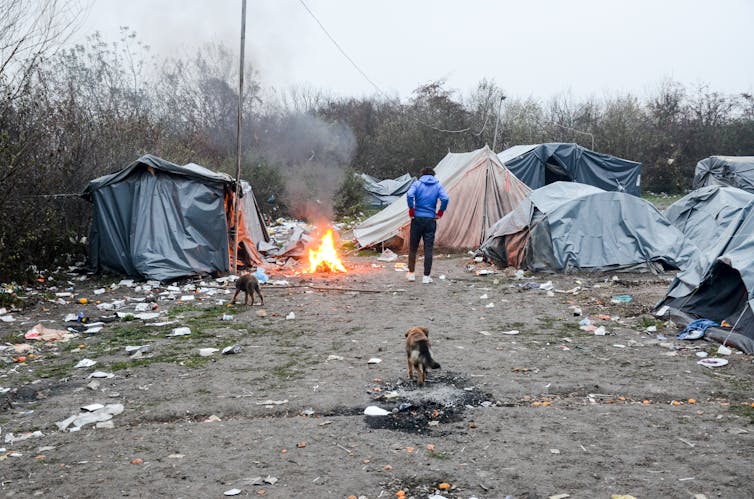
Photo showing terrible conditions in refugee camp
Infectious diseases can spread rapidly in refugee camps where overcrowding and limited sanitation increase transmission risk.
Ajdin Kamber/Shutterstock

Dietary disruption also affects gut health. Sudden shifts from traditional diets rich in fibre to emergency food aid high in refined carbohydrates deprive beneficial gut bacteria of fuel. Low-fibre diets weaken gut defences and allow harmful bacteria to thrive.

Malnutrition further increases vulnerability, especially in children, whose gut microbiomes are still developing.

After resettlement, refugees may still carry antibiotic-resistant bacteria picked up earlier. Barriers to healthcare can slow recovery. Language barriers, limited access to culturally appropriate healthcare and delayed treatment can lead to antibiotics being prescribed as a precaution rather than based on confirmed diagnosis. This sustains cycles of microbiome disruption rather than recovery.

The spread of harmful and antibiotic-resistant bacteria in refugee populations is a public health issue, not a personal one. Addressing them requires coordinated public health interventions, including improved sanitation, careful antibiotic use, stress-aware care and nutritional support that helps restore a healthy gut.

Understanding how all these factors interact is essential for developing humane, effective healthcare strategies that protect both refugee communities and wider public health.

The Conversation

Manal Mohammed does not work for, consult, own shares in or receive funding from any company or organisation that would benefit from this article, and has disclosed no relevant affiliations beyond their academic appointment.

ref. How displacement reshapes refugees’ gut health – https://theconversation.com/how-displacement-reshapes-refugees-gut-health-271997

How Hannah Arendt can help us understand this new age of far-right populism

Source: The Conversation – UK – By Christopher J. Finlay, Professor in Political Theory, Durham University

Sales of Hannah Arendt’s The Origins of Totalitarianism (1951) rocketed when Donald Trump won the 2016 US presidential election. Nearly a year into the second Trump administration – and 50 years since Arendt’s death in December 1975 – it seems like an apposite time to revisit the book and see what light it sheds on 2025.

The book is brilliant but difficult, combining history, political science and philosophy in a way that can be very disorientating. So what might we, as democratic citizens, gain from reading it?

Born to a secular German Jewish family in 1906, Arendt studied philosophy under Martin Heidegger and Karl Jaspers before turning to Zionist activism in Berlin in the early 1930s. After a brush with the gestapo, she fled to France, and in 1941 left Europe for the US. So when she began researching Origins in the early 1940s, she was no stranger to totalitarianism.

Totalitarianism, she argued, was a radically new form of government distinguished by its ideological conception of history. For the Nazis, history was a clash of races; for Stalinism, it was class war. Either way, totalitarian leaders sought to execute historical “laws” by forcibly reshaping the humans they ruled.

Humanity, Arendt said, is distinguished by its infinite variability – no person can ever entirely substitute for another. Totalitarianism aimed to destroy this. It isolated individuals, dissolving the bonds through which they unite and empower each other, and sought to extinguish human personhood.

The concentration camps’ total domination did so by reducing each inmate to “a bundle of reactions that can be liquidated and replaced” before killing them. With everyone ultimately subject to this threat, totalitarianism rendered the human person as such, superfluous.

Rather than pursuing stability, totalitarianism was always a movement, constantly instigating change. When its propaganda collided with facts, it brutalised reality until the facts conformed. Its ideal subjects not only believed its lies: they no longer found the distinction between truth and falsehood meaningful. This was “post-truth politics” at its most extreme.

Common sense won’t save us

Comparing today’s politics to fully fledged totalitarianism can be illuminating. But if it’s all we do, we risk overlooking Arendt’s subtler lessons about warning signs that can help us gauge threats to democracy.

The first is that political catastrophe isn’t always signposted by great causes, but arises when sometimes seemingly trivial developments converge. The greatest example for Arendt was political antisemitism. During the 19th century, only a “crackpot” fringe embraced it. By the 1930s, it was driving world politics.

This resonates with hard-right and far-right ideology today. Ideas widely seen as eccentric 20 years ago have increasingly come to shape democratic politics. Anti-immigrant sentiment and xenophobia penetrate the political mainstream. Alongside growing Islamophobia, antisemitism is on the rise again too.

The mainstreaming of previously marginal views helps explain a second warning sign that politics is increasingly driven by what Arendt described as “forces that cannot be trusted to follow the rules of common sense and self-interest”.

A simplistic politics of ideological fantasy and paranoia takes over instead. It appeals most to the isolated and lonely, people lost in society who have given up hope that anyone will ever address their real interests and concerns. Perpetually frustrated by reality, they seek escape in conspiracy theories instead.

Arendt’s story resonates with There Is Nothing For You Here, Fiona Hill’s account of the “left-behind” in communities of de-industrialised regions in the US, UK, Russia, and Germany – regions where the far right has grown.

In early 20th-century Europe, similar experiences of powerlessness spread alongside the imperialist embrace of what Arendt called “the limitless pursuit of power after power”. When colonial violence boomeranged back to its European source, the powerless were drawn to leaders who exemplified the violent pursuit of power for power’s sake.

New wine in old bottles

The neo-imperialist flex of a US government executing civilian boat crews in international waters while deploying regular armed forces domestically to fight crime looks like an appeal to the same instincts Arendt was writing about.

But perhaps Origins’ most important lesson is about trying to understand something radically new using outdated concepts – “interpreting history by commonplaces” as Arendt called it. Faced with a jarringly new style of politics, there is a temptation to explain it away as mere nationalistic excess, for instance. Or as an understandable expression of economic disappointment and one readily addressed with economic remedies.

Origins tells instead the story of something much greater than the sum of its parts taking on a terrible life of its own. By trying to reduce it to familiar terms, Arendt said, “the impact of reality and the shock of experience were no longer felt” and people failed to resist when they most needed to.

But this lesson also applies to the idea of totalitarianism itself. It helped Arendt understand the 1940s, but we shouldn’t assume that it will apply directly to 2025. The term totalitarianism could itself distract, rather than mobilising people.

For example, if claiming that Trumpian populism is already totalitarian seems excessively alarmist, then deciding that it isn’t might be excessively reassuring. Either could diminish people’s ability to respond to the demands of the moment.

What we urgently need instead is what Arendt described as “the unpremeditated, attentive facing up to, and resisting of, reality – whatever it may be”. Origins’ greatest lesson is in showing us what that looks like.

The main lesson for 2025 is as much about what Arendt was doing in the 1940s as about what she was saying: actively thinking in the now, and trying to grasp an emergent “something” on its own terms – a threat that is taking shape, but which hasn’t yet fully revealed itself.

This article features references to books that have been included for editorial reasons, and may contain links to bookshop.org; ff you click on one of the links and go on to buy something, The Conversation UK may earn a commission.


Looking for something good? Cut through the noise with a carefully curated selection of the latest releases, live events and exhibitions, straight to your inbox every fortnight, on Fridays. Sign up here.


The Conversation

Christopher J. Finlay has previously received funding from the British Academy and from the Leverhulme Trust.

ref. How Hannah Arendt can help us understand this new age of far-right populism – https://theconversation.com/how-hannah-arendt-can-help-us-understand-this-new-age-of-far-right-populism-269626

How young adult literature and philosophy can help provide better role models for masculinity

Source: The Conversation – UK – By Adrianna Zabrzewska, Senior Research Fellow (Postdoc), Edinburgh Napier University

Toxic masculinity doesn’t stop at marginalising women and LGBTQ+ people. It harms straight men by discouraging emotional expression, tenderness, and connection.

As the TV show Adolescence demonstrated, the troubling anxiety and rage surrounding what it means to “be a man” can arise early in life. What Adolescence also reminds us, though, is that framing boys as potential threats is not the way to go.

So how do we reach boys before they radicalise in dangerous ways? How can we do this without reducing them to stereotypes?

While the effects of literature on empathy might not be straightforward, taking children’s literature seriously and looking into representations of masculinity in young adult fiction could be part of the solution.

In my research, I drew on feminist philosophy to propose three concepts for rethinking masculinity: relationality, vulnerability, and inclination. There are books that already feature these ideals, like Two Boys Kissing by David Levithan or Rick Riordan’s action-packed urban fantasy series Magnus Chase and the Gods of Asgard.

The concept, inclination, relates to fostering a caring, curious orientation toward difference, a willingness to “lean in” rather than stand aloof. Or, to paraphrase the Italian feminist philosopher Adriana Cavarero, it is the courage to fall down the “slippery slope” of love, friendship and emotional bonds. In my interpretation, inclination is the drive that motivates people to connect with the world and care for various vulnerable others.

Inclination can be seen in Magnus Chase and the Gods of Asgard, which combines exciting adventures with emotional depth. Magnus is a teenage male hero who is sweet, caring, and driven by love for his friends.

With a diverse cast of characters, from deaf elves to Muslim American female warriors and genderfluid pottery artists, the series offers an engaging lesson in intersectionality, which refers to the fact that everyone is part of multiple social categories.

Riordan’s other boy protagonists – including Percy Jackson or Jason Grace (also from the world of Percy Jackson) – rely on friends of all genders and are not threatened by independent women.

They bravely display their own vulnerability while respecting the vulnerability of others. And if they don’t – like the protagonist of The Trials of Apollo – it’s because they’re written as caricatures of self-aggrandising, hyper-individualistic masculinity.

Redefining masculinity through queer fiction

The concept of relationality is the idea that we are formed not in isolation but through relationships. It acknowledges the diverse contexts we inhabit, and emphasises that our differences should be respected, not ignored. Ideally, a person who sees themselves as relational would focus on fostering an ethical commitment to honour, rather than exploit, the vulnerabilities of others.

This can be seen in Two Boys Kissing, which follows several queer teenage protagonists as they explore friendship, love, and identity. What makes the novel remarkable is its chorus of narrators: a collective voice of gay men whose lives were lost during the HIV/Aids epidemic.

The narrators watch over the living boys with tenderness and urgency. They become a vigilant, caring presence that transcends time and space. They provide a sense of continuity between generations and individuals, showing that relationships matter, not only in our immediate circles but also in the larger tapestry of life.

Vulnerability refers to the shared human condition of being a body born from another body. We are all finite and fragile, susceptible to harm, loss, and injustice. Through our fragility and dependence, vulnerability can be transformed into resilience and connection. This is especially true when we recognise the diverse experiences of disenfranchisement that we each face.

In Two Boys Kissing, the chorus of narrators celebrate imperfect bodies, both cis-gendered and trans, that defy unrealistic beauty standards. They whisper encouragement to a lonely teen contemplating suicide and agonise over his pain. They affirm that care, intimacy and affection are not signs of weakness but of strength. Through these voices, Levithan’s readers learn that self-acceptance comes not from independence or dominance but from reaching out to others.

When strategically integrated into stories, educational practices and daily interactions, vulnerability, relationality, and inclination can help us sketch new ethical horizons, and not only for masculinity but for gendered existence as a whole.

Of course, literature will not solve our problems. It will not turn us into better people overnight (if at all). But stories are powerful cultural tools. They can show boys that being strong doesn’t mean being unfeeling, and that caring for others is not a betrayal of masculinity but its renewal.


Looking for something good? Cut through the noise with a carefully curated selection of the latest releases, live events and exhibitions, straight to your inbox every fortnight, on Fridays. Sign up here.


The Conversation

Adrianna Zabrzewska does not work for, consult, own shares in or receive funding from any company or organisation that would benefit from this article, and has disclosed no relevant affiliations beyond their academic appointment.

ref. How young adult literature and philosophy can help provide better role models for masculinity – https://theconversation.com/how-young-adult-literature-and-philosophy-can-help-provide-better-role-models-for-masculinity-271888

Top climate books to look out for in 2026 – recommended by experts

Source: The Conversation – UK – By Dominic O’Key, Leverhulme Early Career Fellow, Sheffield Animal Studies Research Centre, University of Sheffield

Rumka Vodki/Shutterstock

From compelling stories to non-fiction, books can spark ideas that help us navigate the climate crisis. As part of The Conversation’s ongoing Climate Storytelling strand, we asked climate research and creative writing experts to review some of the best new and upcoming titles to look out for in 2026. We’d love to know which ones you enjoy – share your thoughts in the comments below.

Surviving Climate and Chaos: What Dinosaurs Teach Us About Climate Change and Resilience by Evan Jevnikar (December 2025)

Surviving Climate and Chaos offers a refreshing take on dinosaur narratives. While far from the first to guide readers through Mesozoic menageries, Evan Jevnikar contributes a deftly woven history of palaeo-climates alongside the chronological history of the dinosaurs.

yellow book cover with black dinosaur folssils, surviving climate and chaos title

Yellow Pear Press, CC BY-NC-ND

Jevnikar shows how dinosaur evolution was intrinsically linked to Earth’s ever-changing climate. Throughout the Mesozoic Era – the “age of reptiles”, which lasted from 252 to 66 million years ago – we see them rise, adapt, and diversify. This was thanks to the way their metabolism and physiology were suited to the warmer, carbon-rich climates of the Triassic period (between 250 and 201 million years ago) and the Jurassic period (201 to 145 million years ago). But the rapid climate change triggered by a fateful asteroid strike (66 million years ago) outpaced the ability of highly specialist dinosaurs (particularly non-flying species) to adapt to a colder and sparser world.

Jevnikar notes how human-influenced climate changes mimic prehistoric catastrophes. Key examples include comparisons between the rising intensity of modern storms and the monsoons of the Triassic period, as well as parallels between carbon-dense volcanic activity throughout Earth’s history and the contemporary mass release of carbon dioxide by people burning fossil fuels.

Jevnikar’s inclusion of actionable solutions is reassuring, though: far from prophesying apocalypse, he couples objective warnings about the influences of climate on ecosystems with remedial steps that humanity can take to reverse some of the damage it has caused. These include reforestation initiatives, carbon capture technology and personal acts of climate consciousness.

Backed by scientific evidence yet communicated clearly enough for people who are not palaeo-climatologists, Jevnikar contemplates our roles as climate stewards in an entertaining and accessible way.

Nathan Bramald is a PhD candidate researching the scientific communication of dinosaurs in literature

Called By the Hills: A Home in the Himalaya by Anuradha Roy (January 2026)

For the past 25 years, novelist and publisher Anuradha Roy has called the Himalaya her home and her world. In Called by the Hills, she invites us up and into the Ranikhet hillside of northern India?, where oxygen fizzes like champagne, leopards stalk the forests and langur monkey troops dance on roofs.

Roy’s absorbing book offers a personal panorama of the region: here is the oak tree I planted, she says, that is where the internet cafe was. Throughout, she tends to her sentences with patience and personality, the same way she tends to her Himalaya-facing garden.

The UK edition, smartly presented by Daunt, includes Roy’s adoring watercolours of the dogs who found their way into her home. A book of wildflowers and kafal berries, Called by the Hills stands as both a gardening memoir and a love letter to an endless forest that now faces an ending, as climate change begins to muddle the seasons.

Dominic O’Key is an English-teaching associate

Despite it All: a Handbook for Climate Hopefuls by Fred Pearce (February 2026)

Journalist and writer Fred Pearce argues that climate action is already underway and that defeatism only narrows our imagination. He does not claim to be writing an academic text, yet he provides clear explanations, with careful sourcing and suggestions for further reading that draw the reader into a wider conversation.

His writing on inequity is particularly strong, especially the Enough for a Decent Life section, which confronts the fact that the wealthiest 10% have driven two-thirds of global warming since 1990. It asks how we meet the basic needs of 8 billion people while protecting the systems that support life.

Pearce’s treatment of technology and geopolitical action is thoughtful, using the global response to the stratospheric ozone hole to show that coordinated action can shift outcomes when it is taken seriously. The book focuses on collective work rather than individual lifestyle tweaks.

His examples illustrate what genuine progress looks like, from Indigenous stewardship to eco-restoration projects. The result is a sustained case for cautious optimism that feels earned rather than wishful.

Sam Illingworth is a professor of creative pedagogies


The climate crisis has a communications problem. How do we tell stories that move people – not just to fear the future, but to imagine and build a better one? This article is part of Climate Storytelling, a series exploring how arts and science can join forces to spark understanding, hope and action.


Frontierlands by Hazel Sheffield (February 2026)

The UK has one of the most concentrated forms of land ownership in the world. People are denied access to thousands of derelict properties, boarded up after factories close or landlords raise rents. Hazel Sheffield calls these unused buildings and properties Britain’s “frontiers”.

Documenting the tremendous obstacles to bringing them into productive use again, yet refusing pessimism, she follows artists, community organisers, bricklayers and car repair people who build with a new ethos. They propose collective ownership and neighbourhood co-production of crafts, festivals, healthy food options, together with affordable, low-carbon retrofitting.

In Frontierlands, Sheffield offers countless ideas for increasing our resilience in the face of late-stage capitalism. She also advocates for building neighbourhoods with better protection against a wetter and hotter climate. It’s a convincing argument: these initiatives will improve the nation’s health as well as its infrastructure.

Stephanie Palmer is a senior lecturer in the school of social sciences

The Beginning Comes After the End: Notes on a World of Change by Rebecca Solnit (March 2026)

Rebecca Solnit’s latest work is a powerful meditation on transformation in turbulent times. This slim volume situates today’s polarisation, authoritarian resurgence and reaction against progressive values within a broader historical arc.

The book opens with a moving land-return ceremony to Indigenous Americans and continues with examples of progress achieved through resistance and activism. Through vivid metaphors – caterpillars becoming butterflies, the labour pains of a new world — Solnit argues that the current turmoil signals the dying throes of patriarchy and colonialism.

At its heart, this book is a rallying call for all those who yearn for a just, sustainable and flourishing society. Solnit tells us not to give up hope, reassuring us that these struggles mark the shedding of the old and the birth of a new civilisation. As a sustainability academic, writer and climate-anxious activist myself, it’s just what I needed to hear.

Denise Baden is a professor of sustainable business

Elemental: How We Will Live on a Warming Planet by Arthur Snell (March 2026)

With more than 25 years’ experience in conflict zones and fragile states, Arthur Snell travels from the heat of the Sahel to the Arctic Circle to show how
climate change is coinciding with a breakdown in geopolitical order,
increasing conflict, military spending and violence.

“This is not a book of predictions … [it] is a guide to the future,” he writes. Snell uses the four elements – earth, air, fire and water – to frame climate change as a force reshaping present-day global politics. Drawing on history and current affairs, he paints a picture of climate change as more than “just” an environmental challenge. He outlines how it is reshaping national security, economic stability and even sovereignty.

He connects drought and the scramble for critical minerals to food insecurity, reminding readers that land remains central to survival. Rising temperatures and air quality pressures drive migration, while wildfires and the “pyrocene” expose vulnerabilities in fossil fuel-dependent economies. Water, meanwhile, links floods in Asia to Arctic ambitions.

Snell’s analysis is rigorous yet human, resisting fatalism and emphasising how outcomes depend on governance and cooperation: choices we make today. Elemental is an interdisciplinary masterclass on power and responsibility in the 21st century.

Mary Johnstone-Louis is a sustainable business researcher.

The Given World by Melissa Harrison (May 2026)

The Given World is a novel rooted in nature. Set in the fictional English village of Lower Eodham, bird song and wildlife are observed in fine detail, interwoven with a well-paced plot. The narrative skips about characters, with each chapter (except the last) focusing on a different village inhabitant or visitor.

Somewhat sparse dialogue gives space to focus on the inner world of these people, with hints at their lives and the connections between them. There is a slightly dark tone, with mysteries we need to wait to understand about difficulties the characters have experienced or may in the future.

Set in post-COVID, modern day life, climate change is an undertone from the start. There are references to wildfires on the news, as well as the consumerist or anti-consumerist leanings of different characters. Mention of the now-closed wholefood vegetarian restaurant chain Cranks made me smile, remembering visits with my father before veganism went mainstream.

The Given World is a thoughtful and thought-provoking story which will resonate with those interested in our reliance on, and complex relationship with, the natural world.

Rosie Robison is a professor of social sustainability

My Body is a Meadow by Bethany Handley (May 2026)

I went through various emotions reading My Body is a Meadow – from angry and amused through to ashamed and annoyed. This reflects the author’s own journey to “radical acceptance” of being Disabled. Disabled like the environment is. Disabled like the flora and fauna that inhibit it are.

The book is at times a painfully honest assessment of how the damage done to Disabled people mirrors that being done to the environment, the barriers both encounter and in turn how these barriers could be overcome.

Handley is also a poet, which is reflected in the many beautiful turns of phrase that litter the book. Some of the points seem a little over worked – but perhaps necessarily so. This is a message that needs to germinate, take root and be planted in people’s minds in order for people and the planet to flourish.

Maria Kett is a professor of humanitarianism and social inclusion


Don’t have time to read about climate change as much as you’d like?

Get a weekly roundup in your inbox instead. Every Wednesday, The Conversation’s environment editor writes Imagine, a short email that goes a little deeper into just one climate issue. Join the 47,000+ readers who’ve subscribed so far.


This article features references to books that have been included for editorial reasons, and may contain links to bookshop.org. If you click on one of the links and go on to buy something from bookshop.org The Conversation UK may earn a commission.

The Conversation

The authors do not work for, consult, own shares in or receive funding from any company or organisation that would benefit from this article, and have disclosed no relevant affiliations beyond their academic appointment.

ref. Top climate books to look out for in 2026 – recommended by experts – https://theconversation.com/top-climate-books-to-look-out-for-in-2026-recommended-by-experts-270105