The 17th-century Pueblo leader who fought for independence from colonial rule – long before the American Revolution

Source: The Conversation – USA (3) – By Peter C. Mancall, Andrew W. Mellon Professor of the Humanities, USC Dornsife College of Letters, Arts and Sciences

Po’pay’s statue in the U.S. Capitol, representing the state of New Mexico, was dedicated in 2005. Chris Maddaloni/Roll Call/Getty Images

The U.S. Capitol’s Statuary Hall Collection contains 100 sculptures: two luminaries from each state. They include many familiar figures, such as Helen Keller, Johnny Cash, Ronald Reagan and Amelia Earhart. There are a few from the Colonial era, including founders such as Samuel Adams and George Washington.

Some will also be represented in the Garden of American Heroes that the Trump administration plans to build. The monument will eventually have 250 statues, and the administration has proposed a list of names. Among the figures in the Capitol who did not make the cut is Po’pay, a 17th-century Native American leader from what is now New Mexico. The inscription on his statue in the Capitol identifies him as “Holy Man – Farmer – Defender.”

As a historian of early America, I see Po’pay’s absence in the to-be-built shrine as unfortunate – but not surprising. After all, he led the Pueblo Revolt of 1680: the most successful Indigenous rebellion against colonization in the history of what became the United States. He and his followers sought political independence and religious freedom, issues central to Americans’ sense of themselves.

Spanish conquest of New Mexico

Religious movements and figures played a central role in early American history. For example, as I have frequently written, Thanksgiving is linked to Protestant religious dissenters we call Pilgrims and Puritans. American myth tells us that those hearty souls braved an ocean crossing and a contest with the “wilderness,” in the words of the Plymouth colony’s governor, William Bradford. They did so, according to our legends, to pursue their faith – though the historical record reveals that economics also drove their decision to migrate.

Po’pay, a Tewa religious leader born around 1630, did not have to cross an ocean to prove his commitment to his faith. Instead, in the face of oppression, he wanted to restore the traditions and practices of his homeland: Ohkay Owingeh, which Spanish colonizers renamed San Juan Pueblo, in what is now New Mexico. The Tewa are one of many Pueblo peoples living in the Southwest.

Pueblo lands had witnessed spasms of brutal violence since Spanish colonizers arrived at the end of the 16th century. In 1598, a group of Spanish soldiers arrived in Acoma, a famous Pueblo city known to the Spanish through earlier reports from the explorer Francisco Coronado. The oldest settlement within the territorial boundaries of the United States, Acoma has been occupied almost continuously since the 12th century.

A photo shows a rocky mesa with a cluster of stone or adobe homes on top.
Acoma Pueblo has been inhabited for almost a millennium.
Scott Catron/Flickr via Wikimedia Commons, CC BY-SA

At the end of the 16th century, conflict erupted when residents of Acoma refused the soldiers’ demands for food. Locals killed the commander and around a dozen others. In response, the provincial governor, Juan de Oñate, consulted with Franciscan priests and then ordered a counterattack.

The Spanish killed at least 800 residents – 300 women and children and 500 men – and perhaps as many as 1,500. In a subsequent trial, the colonizers ruled that the people of Acoma had violated their “obligations” to the Spanish king. Judges sold almost 600 survivors into slavery and amputated one foot from each man 25 or over.

In the years that followed, Spanish soldiers captured Indigenous people across the Southwest and sold them into slavery, too. For Pueblos and other Indigenous peoples, the intertwined military, political and spiritual invasions threatened seemingly every aspect of their lives.

For crown and cross

The violence at Acoma did not dissuade Spaniards eager to migrate. Around 1608, horse- and oxen-drawn carriages traveled into the territory to build a new capital, which the Spanish called Santa Fe. In addition to ferrying soldiers and farming families, those wagons also carried Franciscan friars, crucifixes, Bibles and other items the brothers needed to promote Catholicism among those they deemed to be heathens.

Over the ensuing decades, periodic conflicts pitted Indigenous peoples of various pueblos against the colonizers. Nevertheless, Spaniards erected churches in Native communities, and Franciscans often claimed that many Indigenous people welcomed their presence.

Like other Christian missionaries in the Western Hemisphere, Franciscans of the day argued that Indigenous peoples needed to abandon their traditional religions as part of the process of conversion. But many in New Mexico retained older ways. They continued to pray in chambers known as “kivas” and communicate with their deities: Pos’e yemu, for example, whom Tewas believed had the power to bring rain.

A large wooden ladder with three poles, painted white, leans against an adobe wall under a bright blue sky.
A ladder in Acoma leads up to the entrance to a ‘kiva,’ a space often used for spiritual activities.
Ian McKeller/Flickr via Wikimedia Commons, CC BY-SA

In 1675, colonial authorities accused Indigenous religious leaders of killing Franciscans with sorcery. They rounded up suspects, executed three and beat others. They also destroyed kivas. Among those imprisoned and then released was Po’pay.

Pueblo Revolt

The sting of the lash scarred more than human flesh in Pueblo communities. It fed resentment against colonists. Many of the Pueblos focused their animosity on the clerical authorities who justified the brutality of the Spanish conquest.

As the decade came to a close, the region was gripped in a drought that reduced supplies of food and water, pushing Indigenous communities’ frustrations to a tipping point. Po’pay led a rebellion that reached across Pueblo communities, saying that he was following guidance from Pos’e yemu.

On Aug. 11, 1680, Po’pay and his followers unleashed a reign of terror against Spanish soldiers, colonial farmers and Catholic churches. They systematically destroyed religious buildings, whipped statues and crucifixes, abused priests before killing them, and rendered mission bells silent by removing their clappers or drowning them in water. Far outnumbering their opponents, the Pueblos chased the colonizers to Santa Fe and then drove them out of the region.

Po’pay, according to a Native witness named Josephe, reveled in the moment, saying, “Now the God of the Spaniards, who was their father, is dead.” Historians believe that the attack killed at least 400 colonists and soldiers, or about 1 in 6 Spaniards in New Mexico. There had been 33 friars in the province before the uprising. Only 12 survived.

Against kings and coercion

In the aftermath of the Pueblos’ military victory, Po’pay led an effort to eradicate the last vestiges of Catholicism in New Mexico. He ordered that Natives who had converted needed to scrub themselves with yucca branches to remove the stain of baptism. While some churches survived, including San Estevan del Rey Mission Church at Acoma, most of the Spanish friars who had led services in them lay dead.

A black and white photograph of a large adobe building with towers.
An Ansel Adams photograph, taken in the 1930s or ’40s, of the San Estevan del Rey Mission Church in Acoma.
U.S. National Archives and Records Administration via Wikimedia Commons

From 1675 to 1680, the European colonial project came under dire threat across North America. In New England, Metacom’s, or King Philip’s, War – waged between Indigenous groups and English settlers – destroyed scores of communities in one of the most destructive conflicts, measured on a per capita basis, in American history. In Virginia, a dissident hinterland landowner named Nathaniel Bacon led a revolt by aggrieved Colonists that torched the English provincial capital at Jamestown.

In this violent era, as I describe in a forthcoming book, Po’pay became one of the most consequential figures on the continent – and the embodiment of the American idea that people should be free from oppressive rulers and free, too, to practice their faith as they see fit.

Po’pay died in 1688. Four years later, Spanish colonizers returned to New Mexico and once again set out to bring the vast desert and its determined residents back under their control.

But they never erased the legacy of Po’pay, who remains a cultural hero for his defiant stand against king and cross.

The Conversation

Peter C. Mancall does not work for, consult, own shares in or receive funding from any company or organization that would benefit from this article, and has disclosed no relevant affiliations beyond their academic appointment.

ref. The 17th-century Pueblo leader who fought for independence from colonial rule – long before the American Revolution – https://theconversation.com/the-17th-century-pueblo-leader-who-fought-for-independence-from-colonial-rule-long-before-the-american-revolution-270361


Why the Pittsburgh Post-Gazette’s closure exposes a growing threat to democracy

Source: The Conversation – USA – By Victor Pickard, C. Edwin Baker Professor of Media Policy and Political Economy, University of Pennsylvania

The Pittsburgh Post-Gazette announced it will shut down on May 3. AP Photo/Gene J. Puskar

The Pittsburgh Post-Gazette announced on Jan. 7, 2026, that it will cease all operations effective May 3. The daily newspaper, founded in 1786, has been the city’s paper of record for nearly a century and is one of the oldest newspapers in the country.

Block Communications, the company that owns the Post-Gazette, says the paper has lost “hundreds of millions of dollars” during the past two decades. The shuttering of the Post-Gazette comes after a three-year strike by newspaper employees who were asking management for better wages and working conditions. The strike ended in November 2025 after an appellate court ruled in favor of the union workers. The Post-Gazette was found to have violated federal labor law by cutting health care benefits and failing to bargain in good faith. Then, on Jan. 7, the U.S. Supreme Court ruled against the paper, stating that the Post-Gazette was required to adjust its health insurance coverage for union members. Hours later, Block Communications announced that the paper would shut down.

Victor Pickard, an expert on the U.S. media and its role in democracy, was born and raised just outside Pittsburgh. He talked to Cassandra Stone, The Conversation U.S. Pittsburgh editor, about what the closing means for local journalism and democracy.

Newspapers have been in decline for decades. How significant is this closure?

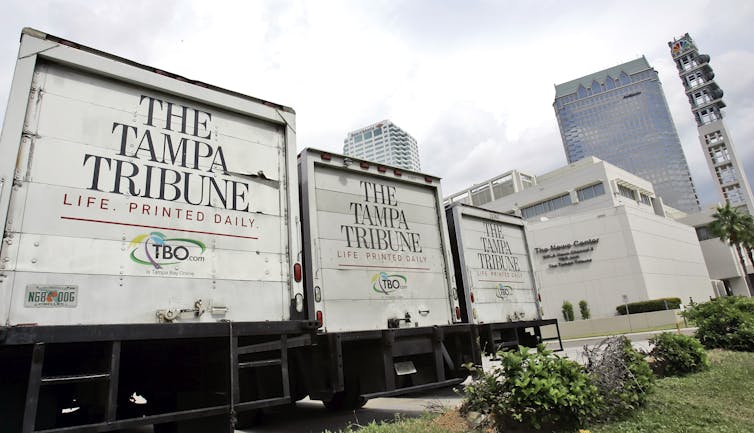
The Pittsburgh Post-Gazette has long been a vital part of the local community throughout western Pennsylvania. This would be the first major metropolitan newspaper closing since the Tampa Tribune shut its doors in 2016, and it’s a devastating blow to residents in that entire area of the state. Block Communications also closed down the Pittsburgh City Paper, which is an alt-weekly newspaper in Pittsburgh, in January 2026. The loss of the Post-Gazette will likely create a major gap in local news coverage.

Two women hug in foreground while people stand around desks in background
Pittsburgh Post-Gazette employees celebrate in 2019 after it was announced that the paper’s staff coverage of the shooting at the Tree of Life Synagogue was awarded the Pulitzer Prize for Breaking News Reporting.
AP Photo/Gene J. Puskar

How much did the labor strike from 2022-2025 affect the newspaper’s profitability?

I wouldn’t pin the Pittsburgh Post-Gazette’s loss of profitability on the strike – which was legitimate and did have a profound impact – as much as on the structural forces affecting nearly all local newspapers at this time.

Throughout the country, local journalism increasingly is no longer a profitable enterprise. The core business model of being reliant on advertising revenue has irreparably collapsed, and subscriptions rarely generate enough financial support.

Since the early 2000s, the U.S. has lost about 40% of its local newspapers and about 75% of the jobs in newspaper journalism, according to a 2025 report from the Medill School of Journalism at Northwestern University. A study published last year by Rebuild Local News and Muck Rack shows that in 2002, there were roughly 40 journalists per 100,000 people in the United States. Today, it’s down to about eight journalists.

This evisceration of local journalism leads to ever-expanding news deserts across the country, where tens of millions of Americans are living in areas with little or no local news media whatsoever.

How might this affect local civic engagement and democracy in Pittsburgh?

Democracy requires a free and functional press system. When a local newspaper closes, fewer people vote and get involved in local politics, and corruption and polarization increase.

Without local news outlets, people often turn to national news or even “pink slime” news sites. These sites masquerade as official local media institutions but in fact are often propagandistic outlets that amplify misinformation and disinformation.

With the retreat of newspapers, people are receiving less high-quality news and information. This means that people living in these areas are less knowledgeable about politics. They often don’t know who’s running for office in their communities, or what their political platforms are, and there’s just less civic engagement in general.

Backs of three trucks printed with 'The Tampa Tribune'
The Tampa Tribune closed abruptly on May 3, 2016, after covering the city for 123 years.
AP Photo/Chris O’Meara

Most Americans have 24/7 access to unlimited news and information through their social media feeds, including local news influencers. Does this counteract the loss of local reporting?

I think an important distinction needs to be made between carefully reported and fact-checked articles and what seems like a glut of information at our fingertips at all times. Beyond the surface-level appearance of countless news sites, social media reports offer relatively few new facts that have been borne out of rigorous reporting.

You could say that Americans are living in a new golden age of political discourse, where we constantly see a churn of social media-based forms of expression. But that’s not necessarily journalism.

When we’re talking about the collapse of newspapers and fewer newspaper journalists working their beats, it would be an entirely different story if that journalism were being replaced by other institutions, by influencers, by podcasters. But many of those outlets are amplifying opinion-based commentary and punditry.

That’s not the same thing as reporting that adheres to journalistic norms and introduces new information into the world. Losing this kind of knowledge production hurts communities everywhere – from small towns and rural areas to major cities like Pittsburgh.

The Conversation

Victor Pickard does not work for, consult, own shares in or receive funding from any company or organization that would benefit from this article, and has disclosed no relevant affiliations beyond their academic appointment.

ref. Why the Pittsburgh Post-Gazette’s closure exposes a growing threat to democracy – https://theconversation.com/why-the-pittsburgh-post-gazettes-closure-exposes-a-growing-threat-to-democracy-272992

Superheavy-lift rockets like SpaceX’s Starship could transform astronomy by making space telescopes cheaper

Source: The Conversation – USA – By Martin Elvis, Senior Astrophysicist, Smithsonian Institution

SpaceX’s Starship rocket launches in August 2025. Ronaldo Schemidt/AFP via Getty Images

After a string of dramatic failures, the huge Starship rocket from SpaceX had a fully successful test on Oct. 13, 2025. A couple more test flights, and SpaceX plans to launch it into orbit.

A month later, a rival rocket company, Blue Origin, flew its almost-as-large New Glenn rocket all the way to orbit and sent spacecraft on their way to Mars.

While these successful flights are exciting news for future missions to the Moon as well as other planets, I’ve argued for several years that these superheavy-lift rockets can also boost research in my own specialty, astronomy – the study of stars and galaxies far beyond our solar system – to new heights.

Comparing the sizes of the world’s rockets.

Taking the broad view

Why do I say that? Astronomy needs space. Getting above the atmosphere allows telescopes to detect vastly more of the electromagnetic spectrum than visible light alone. At these heights, telescopes can detect light at much longer and shorter wavelengths, which are otherwise blocked by Earth’s atmosphere.

To get an idea of how that has enriched astronomy, imagine listening to someone play the piano, but only in one octave. The music would sound much richer if they used the full keyboard.

With the broader spectrum in view, astronomers can see objects in the sky that are much colder than stars, but also objects that are far hotter.

How much cooler and hotter? The hottest stars you can see in visible light are about 10 times hotter than the coolest. With the whole infrared-to-X-ray spectrum, the temperatures that come into view can be 1,000 times colder or 1,000 times hotter than regular stars.

Scientists have had nearly 50 years of access to the full light spectrum with sets of increasingly powerful telescopes. Alas, this access has come at an ever-increasing cost, too. The newest telescope is the spectacular James Webb Space Telescope, which cost about US$10 billion and detects a portion of the infrared spectrum. At that forbidding price, NASA can’t afford to match Webb across the spectrum by building its full infrared and X-ray siblings.

A diagram showing the electromagnetic spectrum and which regions of it Hubble, the decomissioned Spitzer and Webb were designed to detect. Hubble detects some UV, visible and IR light, while Webb detects most of the IR spectrum and Spitzer detected about half of the IR spectrum
NASA’s Great Observatories were designed to detect different regions of the electromagnetic spectrum. Spitzer was decommissioned in 2020, a year before Webb launched.
NASA, ESA, CSA, Joseph Olmsted (STScI)

We’ll have to wait a long time even for one more. The estimated date to launch the next “Great Observatory” is a distant 2045 and may be later. The range of notes astronomers can play will shrink, along with our views of the universe.

Escaping the trap with heavy-lift vehicles

These new rockets give us a chance to escape this trap. For the same cost, they can send about 10 times more mass to orbit, and they have bodies about twice as wide, compared with the rockets that have been in use for decades.

Mass matters because telescopes contain heavy mirrors, and the bigger the mirror, the better they work. For example, building Webb’s large mirror meant finding a way to make a superb mirror that was 10 times lighter in weight per square meter than the already lightweight Hubble mirror. The engineers found a solution that was technically sweet but financially costly.

A diagram showing seven rockets lined up. The tallest are SpaceX's Starship and China's Long March 9.
Superheavy-lift rockets like SpaceX’s Starship and NASA’s Space Launch System can carry heavier payloads than smaller rockets, like SpaceX’s Falcon 9 and the European Space Agency’s Ariane V, the latter of which brought the Webb telescope into space.
Holly M. Dinkel and Jason K. Cornelius, CC BY-ND

Similarly, the size of the rocket’s body matters because to fit Webb’s 21-foot-diameter mirror (6.5 meters) into the 13-foot-diameter body (4 meters) of its ride, the Ariane V rocket, it had to fold up like origami for launch. Normally, space missions try to avoid any moving parts, but for Webb they had no choice.

Again, the result was a technical triumph, but the complexity introduced over 300 places where one mistake could have ended the mission. Each one of the over 300 locations had to be 300 times less likely to fail than if there had been only one, pumping up the design, manufacturing and testing requirements – and inflating the cost.

The larger, wider Starship and New Glenn rockets mean that building a Webb-like space telescope today could be done with none of the origami-like folding and unfolding, with their attendant risks, and so be much cheaper.

To deploy, the James Webb Space Telescope’s large, complex mirror had to unfold.

New ideas

This opportunity is being seized by at least three teams. First, a proposed deep infrared telescope called Origins would take advantage of superheavy lift. Scientists at Caltech are studying a potential smaller version called Prima.

Second, an X-ray telescope that can take pictures as sharp as Webb – with a sensitivity to match – would likely use thicker and heavier mirrors than imagined just a few years ago.

And third, a study published in 2025 proposes a very low-frequency radio telescope, GO-LoW, that also takes advantage of using more mass. GO-LoW would be made of 100,000 tiny telescopes, so mass production savings kick in too.

All three of these telescopes would be easily 100 times more sensitive than their predecessors and at least comparable to Webb in their own bands of the spectrum.

It would be ideal if engineers could get these telescopes down to half the cost of a large observatory like Webb. Then, for the same price, NASA could fly two new Great Observatories instead of resigning itself to building one. If it could get the cost down to a third, it could potentially fly a full spectrum-spanning set.

Big challenges, big payoff

Of course, a lot could go wrong. For one thing, these rockets may not perform as advertised, either in capability or cost. Still, investing in a few starting studies won’t cost much and will likely have a big payoff.

For another, like the poet Goethe on his deathbed, we astronomers will always be asking for “more light.” But if we call for yet bigger and more complex telescopes than the already awesome Great Observatories recommended by the National Academies 2020 Astronomy Survey, then we will bring back all the costly issues faced by the Webb designers.

Space agencies have the challenge of keeping the astronomers’ endless desires under strict control – building to cost must come first.

But if agencies can keep astronomers’ ambitions from becoming too astronomical, while taking full advantage of the new design space opened up by the superheavy-lift rockets, then our understanding of the universe could advance beyond imagination in just a decade or so.

The Conversation

Martin Elvis does not work for, consult, own shares in or receive funding from any company or organization that would benefit from this article, and has disclosed no relevant affiliations beyond their academic appointment.

ref. Superheavy-lift rockets like SpaceX’s Starship could transform astronomy by making space telescopes cheaper – https://theconversation.com/superheavy-lift-rockets-like-spacexs-starship-could-transform-astronomy-by-making-space-telescopes-cheaper-270001

Meth inflames and stimulates your brain through similar pathways – new research offers potential avenue to treat meth addiction

Source: The Conversation – USA – By Habibeh Khoshbouei, Professor of Neuroscience, University of Florida

Meth, also known as ice, is as addictive as it is damaging. FlashMovie/iStock via Getty Images Plus

Methamphetamine doesn’t just spike levels of the pleasure-inducing hormone dopamine in the reward pathways of the brain – it also provokes damaging brain inflammation through similar mechanisms.

Meth is addictive because it increases dopamine levels in the brain. While researchers know that meth triggers brain inflammation, whether the immune system also affects the brain’s reward system during drug use has been unclear.

Our work focuses on how dopamine is regulated in the body and the reward pathways of the brain. Dopamine shapes motivation, movement, learning and cognition, and its disruption is linked to a range of neurological and neuropsychiatric disorders, including substance use disorders, ADHD, autism and Parkinson’s disease.

By identifying that meth elevates levels of a key immune molecule that drives both neuroinflammation and dopamine release, our recent findings offer a potential target to treat meth addiction and reduce relapse.

Close-up of a pile of crystal meth
The pleasure of meth comes at a steep cost for body and brain.
James C Hooper/Moment via Getty Images

Dopamine and inflammation

To study how meth and the immune system interact and regulate dopamine levels, we measured the electrical and chemical activity of dopamine neurons in mouse brain specimens treated with either meth or an immune molecule called TNF-α. This molecule is known to induce inflammation in the body.

We found that meth and TNF‑α converge in a part of the brain called the ventral tegmental area, a key reward hub that produces dopamine. In this area of the mouse brain, TNF‑α increased dopamine levels and neuronal activity in similar ways as meth.

These effects depended on two proteins that act as gatekeepers to control the activity of dopamine neurons and dopamine levels. Blocking these gatekeepers disrupted the effects of TNF-α and meth on dopamine neurons.

Diagram of cross-section of brain, with the front area colored blue and two small middle segments colored purple and orange
The ventral tegmental area (orange, near the center of the brain) releases dopamine through multiple pathways.
Casey Henley/Foundations of Neuroscience, CC BY-NC-SA

Our team’s 2025 review of the research on this field adds broader context to our findings: Meth elevates TNF‑α in the brain and the body, and TNF‑α is known to weaken the blood‑brain barrier that regulates which substances can access the brain. If TNF‑α loosens the blood-brain barrier, inflammatory molecules from the blood – as well as disease-causing pathogens – may have increased access to the reward circuitry of the brain, potentially worsening neuronal damage and dysfunction over time.

Importantly, we found that blocking TNF‑α can reduce dopamine release and blunt meth’s effects on dopamine neurons.

Improving treatments for addiction

There is currently no medication for meth addiction that is approved by the Food and Drug Administration. Our findings highlight the role of the immune system in the brain’s reward circuitry, pointing to new drug targets that could potentially lead to better treatments.

This direction of research is especially compelling because multiple therapies targeting TNF‑α are already FDA‑approved for use to treat inflammatory diseases such as rheumatoid arthritis and Crohn’s disease. But these drugs can have serious side effects and require careful study before they can be repurposed for addiction.

It’s unclear whether modulating TNF-α levels can change drug-seeking, craving and relapse‑like behaviors. Further research on the molecular mechanisms behind how TNF-α affects dopamine and the immune system can offer new treatment strategies for meth addiction.

The Conversation

Habibeh Khoshbouei receives funding from NIH grants.

Marcelo Febo receives funding from NIH.

ref. Meth inflames and stimulates your brain through similar pathways – new research offers potential avenue to treat meth addiction – https://theconversation.com/meth-inflames-and-stimulates-your-brain-through-similar-pathways-new-research-offers-potential-avenue-to-treat-meth-addiction-272484

Americans have had their mail-in ballots counted after Election Day for generations − a Supreme Court ruling could end the practice

Source: The Conversation – USA – By Amanda Klekowski von Koppenfels, Honorary Reader in MIgration and Politics, University of Kent

An active service member used this election war ballot cover to mail in a vote in the 1944 presidential election. National Postal Museum, Smithsonian Institution

What is an election and when is it completed?

That’s the legal question at the heart of Watson v. Republican National Committee, the mail-in ballot case the U.S. Supreme Court took up in November 2025. The court will most likely hand down a ruling before the midterm elections in 2026.

Mississippi law, similar to that of 15 other states, allows for mail-in ballots postmarked by Election Day to be received by election officials up to five days later, then counted.

But the Republican National Committee is arguing in the Watson case, which was brought against the state of Mississippi in January 2024, that this procedure is not legal. An election, the argument goes, includes the receipt of ballots; therefore, all ballots must be in hand at the close of Election Day – the congressionally established “Tuesday after the first Monday” in November.

President Donald Trump’s March 2025 executive rrder 14248 similarly calls for ballots to be received no later than Election Day if they are to be counted, saying that doing otherwise “is like allowing persons who arrive 3 days after Election Day, perhaps after a winner has been declared, to vote in person at a former voting precinct, which would be absurd.”

The Supreme Court’s decision on mail-in ballots could have major consequences for the 47.6 million Americans who voted by mail in 2024, as well as more than 900,000 overseas military and civilian voters covered under the Uniformed and Overseas Citizens Absentee Voting Act. More than 28 million of the 47.6 million domestic mail-in votes and nearly 800,000 of the 900,000 votes cast and counted under the uniformed and overseas citizens act were from states that allow for return of mail-in ballots after Election Day.

As a political scientist and scholar of migration, I have conducted research for over 20 years on military service members and civilian U.S. citizens living overseas.

Currently, 16 states plus the District of Columbia allow domestic absentee ballots that are postmarked by Election Day to be counted if they arrive after Election Day; 29 states extend that right to military and civilian voters living overseas, recognizing that international mail often delays ballot return.

According to the U.S Constitution, states administer elections. Under the equal protection clause, however, the federal government can pass legislation to prevent inequalities in access to voting. This includes facilitating the right to vote of military service members and civilian U.S. citizens living overseas.

The Supreme Court will decide whether federal law overrides state election administration in determining whether ballots that are postmarked by Election Day but arrive later can be counted.

A 250-year history

The history of absentee, or mail-in, ballots in U.S. elections stretches back 2½ centuries.

Soldiers first voted by mail during the American Revolution, when men from the town of Hollis, New Hampshire, wrote their town leaders asking to have votes counted in local elections.

Pennsylvania passed the first law allowing soldiers to vote absentee in the War of 1812, a right expanded in the Civil War when 19 Union and seven Confederate states allowed soldiers to vote absentee.

Yellowed postmarked envelope with state election and tally-sheet labels and a clerk-of-the-court address
Civil war soldiers who were away from their home state during the 1864 Ohio state election voted on tally sheets that were mailed in envelopes like this one.
National Postal Museum, Smithsonian Institution

Absentee voting for soldiers from all states was codified in federal law in 1942. A 1944 amendment specified that ballots that were postmarked by Election Day and arrived within two weeks after Election Day could be counted.

Some civilians residing overseas, including civilian government employees and spouses and dependents of military and civilian employees, gained absentee ballot voting rights with the 1955 Federal Voting Assistance Act. All overseas U.S. citizens were enfranchised with the 1975 Overseas Citizens Voting Act. The 1986 Uniformed and Overseas Citizens Absentee Voting Act consolidated military and civilian voting rules. Later laws addressed electronic communications.

Over 1,000 military service members requested an absentee ballot in Mississippi’s 2024 election, along with nearly 1,000 civilian overseas voters. Nationally, more than 900,000 people voted in 2024 under the uniformed and overseas citizens act.

Many of these U.S. citizens would be affected by a ballot receipt deadline on Election Day. Their votes, coming from around the world, are often not able to be counted because of late arrival.

Yellowed ballot titled Official Federal War Ballot with instructions and write-in boxes
The Official Federal War Ballot, issued in 1944, allowed U.S. armed forces members stationed outside the country to vote.
National Postal Museum, Smithsonian Institution

Under the magnifying glass in Florida

Overseas absentee military and civilian ballots came to widespread notice in Florida in the 2000 presidential election. That election – and ultimately the presidency — centered on state election law being waived by canvassing boards under pressure from the Republican Party to count military and civilian absentee ballots received after Election Day.

The Supreme Court decided in December 2000 to stop further counting of mail-in ballots received after Election Day because of tight certification deadlines, with the Electoral College meeting just six days later.

Congress was concerned about the unequal treatment of ballots at home and abroad in the 2000 election. To move toward addressing these concerns, Congress passed the Help America Vote Act in 2002, which includes measures to facilitate overseas voting.

Ensuring that everyone gets a vote

Increasing mail-in voting has been a question of making sure everyone who qualifies to vote can do so. Oregon was the first state, in 1998, to offer mail-in voting. Surveys have shown that more Democrats than Republicans voted by mail in 2020. Sending ballots to all voters reduces that gap.

By 2020, 33 states offered “no excuse” domestic absentee voting, with others expanding or facilitating mail-in voting during the COVID-19 pandemic that year.

The Federal Voting Assistance Program is charged with making it easier for overseas voters to vote. It continues to find obstacles, including problems in returning ballots on time. Meanwhile, Florida election supervisors in November 2025 requested that Florida officials reinstate a checkbox that was dropped from Florida absentee ballots in 2021. The checkbox allowed the voter to request an absentee ballot for the next election.

Mail-in ballot security

Following concerns about the security of mail-in ballots in the 2000 election in Florida, the 2002 Help America Vote Act required that all states have a minimum security requirement.

The multiple levels of scrutiny include signature comparison, ballot tracking and penalties for malfeasance from the moment of registration to ballot request, to ballot receipt. With these layers of security there were only an estimated four fraudulent votes cast for every 10 million mail-in ballots in the 2016, 2018, 2020 and 2022 U.S. general elections.

Mail-in voting elsewhere

The United States is one of 32 countries worldwide that allow mail-in voting for at least some of its citizens. These include the United Kingdom since 1945 and Germany since 1957.

In Germany’s federal elections in 2025, 37% of all voters, or 18.5 million citizens, cast a ballot by mail. German citizens who are eligible to vote automatically receive ballots. In the United Kingdom’s 2024 election, just under 5%, or nearly 1.3 million citizens, applied for mail-in ballots.

The bottom line

The Supreme Court case could reshape the voting landscape in the United States, potentially affecting 47 million people, including some 5 million military and civilian voters living abroad. Watson v. Republican National Committee could also affect laws in 29 states. The outcome of the case has the potential to make voting more difficult for millions of civilian and military voters at home and abroad.

The Conversation

Amanda Klekowski von Koppenfels does not work for, consult, own shares in or receive funding from any company or organization that would benefit from this article, and has disclosed no relevant affiliations beyond their academic appointment.

ref. Americans have had their mail-in ballots counted after Election Day for generations − a Supreme Court ruling could end the practice – https://theconversation.com/americans-have-had-their-mail-in-ballots-counted-after-election-day-for-generations-a-supreme-court-ruling-could-end-the-practice-267409

Live healthier in 2026 by breathing cleaner air at home

Source: The Conversation – USA (2) – By Katelyn Richard, Ph.D. Candidate in Analytical Chemistry, Colorado State University

It’s not hard to breathe easy at home. Milan Markovic/E+ via Getty Images

I have a health goal for the new year that doesn’t require me to get out of bed earlier or eat fewer cookies. I am an atmospheric chemist and will be committing to clean air at home.

People in the U.S. spend as much as 90% of their lives indoors. Overall, air pollution is responsible for approximately 135,000 premature deaths per year in the U.S. And levels of some chemicals can be two to five times higher in indoor air than outdoors.

Fortunately, there are some straightforward ways to improve your home’s air quality this year, in three major categories of activity.

Cooking

Cooking is a major source of indoor air pollution.

A person stirs vegetables in a frying pan on a gas stove.
It looks delicious, but what are you breathing?
Grace Cary/Moment via Getty Images

Not all chemicals that cooking produces are bad, but some react to form other chemicals that like to clump together to form particulate matter. When inhaled, these particles enter the lungs and can then pass into the bloodstream, increasing people’s risk of heart disease and decreasing lung function.

The amount of particulate matter produced from your cooking depends on the food type, oil used and cooking temperature. High-fat-content foods, such as cheese, pork and bacon, emit the most particles, especially when cooked at high temperatures. Sunflower oil produces the least amount of particulate matter, followed by vegetable oil and then olive oil.

Cooking with a gas stove produces more particulate matter than with an electric stove, and the gas stove also emits other hazardous chemicals such as nitrogen dioxide and benzene.

Two simple and effective measures to keep kitchen air clean and prevent particulate matter from spreading through the home are using your range hood fan and opening nearby windows while cooking. The suction will move harmful chemicals out of your home and away from your lungs, and the fresh air will dilute what remains.

Personal care

In large cities such as Los Angeles and New York City, there are enough volatile organic chemicals from consumer products – paints, adhesives and personal care products – in the outdoor air to rival those produced by traffic and industry. Many of those products are first used indoors before they escape outside.

A person takes clothes out of a washing machine and holds them to her face.
Are your laundry detergent and fabric softener helping pollute your home?
PonyWang/E+ via Getty Images

Government regulations limit the amount of chemicals allowed in some kinds of consumer products, such as adhesives and construction materials, because of their contribution to smog, but personal care products that contain fragrances remain largely unregulated.

Many common options for shampoo, conditioner, mousse, body wash, deodorant, lotion, laundry detergent and dryer sheets contain fragrance mixes composed of several chemicals, with the sole purpose of providing a pleasant aroma to consumer products. Fragrances release volatile organic compounds such as limonene, linalool, galaxolide, eugenol and diethyl phthalate that can react to form particulate matter. In addition to health risks from particulate matter formation, strong fragrances can trigger headaches, difficulty breathing, skin irritation and other physical responses that warrant concern.

I’m not suggesting you be smelly or live an unscented life. But consider whether you could choose perhaps three products that have your very favorite scents, and for the others buy fragrance-free versions when you need to resupply. That would reduce the volatile organic compounds and the ensuing potential for particulate matter formation without really changing how you smell.

Cleaning

Cleaning your home can improve indoor air quality by temporarily reducing the amount of chemicals on surfaces that can find their way back into the air. For example, oleic acid from cooking, squalene from human skin and bisphenol A from hard plastics can remain on surfaces for years if undisturbed.

A person wearing yellow gloves holds a bucket of cleaning supplies.
What’s in those bottles, and is it bad for your lungs?
Nanci Santos/iStock/Getty Images Plus

But there’s a caveat: Cleaners are made of strong chemicals, designed to disinfect, degrease and eliminate odors, that may do more harm for air quality than good. To that end, the healthiest option may be found by carefully choosing the right cleaner for the job. For less intensive tasks like dusting or cleaning crumbs off the counter, consider avoiding strong disinfectants like bleach, hydrogen peroxide and a category of chemicals called quaternary ammonium compounds that can often be found in disinfectants, hair products and fabric softeners.

However, if you are cleaning the bathroom or a forgotten, moldy leftovers container, you may prefer a stronger disinfecting product. Be aware that studies have found bleach cleaners can produce harmful chlorinated byproducts, such as chloroform and carbon tetrachloride, which are possible carcinogens and worth avoiding altogether.

Still, nearly all commercially available cleaning products contain volatile organic compounds – like limonene for citrus scent, lactic acid for limescale and bacteria removal, and 2-phenoxyethanol for product preservation – that will increase chemical and particulate matter concentrations in the immediate area.

In this case, dilution is key to limiting your exposure. Increase ventilation while using these products by running the bathroom fan, opening windows while you clean, and using only as much of a cleaning product as is really required to do the job.

Overall improvements

Opening windows is an effective and often overlooked solution to improve indoor air quality. Chemicals that may be harmful to you in a closed space, where they are more concentrated, become less harmful when they are diluted and spread throughout the massive outdoor atmosphere. But avoid opening windows when smog, ozone or wildfire smoke levels are high outside, which would create an opportunity for outdoor air pollution to come indoors.

Luckily, your city or your neighbors are likely collecting outdoor air quality data that is publicly available to you, so you can track whether to open your windows.

A box fan sits on top of a square of air filters.
A Corsi-Rosenthal box is an inexpensive and very effective homemade air filter.
Festucarubra via Wikimedia Commons, CC BY-SA

If air pollution is too high outside, an indoor air cleaner may be a better option. And you don’t have to shell out big bucks, either. Air quality engineers have shown that a homemade air cleaner using a box fan, four air filters and duct tape – all commonly available at hardware stores or online – can cost under $70 and be as effective at cleaning the air as factory-made appliances.

Overall, the best way to improve air quality is to put fewer harmful chemicals into the air in the first place. While scientists and policymakers can measure and regulate outdoor air quality, it’s up to us all to keep the air in our own homes clean and healthy.

The Conversation

Katelyn Richard does not work for, consult, own shares in or receive funding from any company or organization that would benefit from this article, and has disclosed no relevant affiliations beyond their academic appointment.

ref. Live healthier in 2026 by breathing cleaner air at home – https://theconversation.com/live-healthier-in-2026-by-breathing-cleaner-air-at-home-271474

‘Shared decision-making’ for childhood vaccines sounds empowering – but it may mean less access for families already stretched thin

Source: The Conversation – USA (3) – By Y. Tony Yang, Endowed Professor of Health Policy and Associate Dean, George Washington University

Pediatricians often spend at least 10 minutes of an already-short visit discussing vaccines. Heather Hazzan, SELF Magazine

When federal health officials announced on Jan. 5, 2026, that they were taking six out of 17 vaccines off the childhood immunization schedule, they argued that the move would give parents and caregivers more choice.

Instead of all U.S. children routinely receiving them, these six vaccines are now optional – available to families who request them after consulting a clinician, through a process called shared clinical decision-making, officials said. All six – hepatitis A, hepatitis B, influenza, rotavirus, meningococcal disease and COVID-19 – will still be covered by federal programs such as Medicaid and the Vaccines for Children program, and by private insurers, at least through 2026.

I’m a health policy researcher and the co-author of the book “Vaccine Law and Policy.” I’ve spent years studying how vaccine laws and regulations affect uptake – and who gets left behind when policies change.

Shared decision-making sounds straightforward: a patient and their doctor putting their heads together to make an informed choice. But when applied to routine childhood vaccines, the concept shifts the burden of deliberation onto already-stretched clinicians and parents.

What is shared decision-making?

Shared decision-making is an approach doctors use when there’s genuinely more than one reasonable choice – say, weighing two cancer treatments with different side effects – and the “right” answer depends on what matters most to the patient. The idea is that doctor and patient talk it through together to help make the decision that feels right for that patient.

The Centers for Disease Control and Prevention uses this term for vaccines that aren’t automatically recommended for everyone but that might make sense for some people after a conversation with their doctor.

The key difference is what happens if no conversation takes place. For routine vaccines, the default is yes. Children get the shot unless there’s a medical reason not to. For shared clinical decision-making vaccines, there’s no default. If the conversation doesn’t happen, neither does the vaccine.

That distinction matters because the federal vaccine advisory committee has historically reserved shared decision-making for narrow situations. One example is the HPV vaccine for adults 27 to 45. Most people in that age group have already been exposed to HPV, so the vaccine helps some individuals but won’t change infection rates overall. In that case, a conversation with your doctor makes sense: The benefit depends on your personal circumstances.

Childhood vaccines against rotavirus and hepatitis B are different. They’re not for a small subset of people who might benefit – they prevent tens of thousands of hospitalizations a year.

On Jan. 5, 2026, federal health officials cut six vaccines from the childhood immunization schedule.

When a vaccine is routine, it pops up as an alert in a child’s medical records and becomes part of the clinic’s standard workflow. The nurse draws it up, the doctor gives a heads-up to the parent, and the shot happens before the family leaves. Parents and other caregivers typically encounter it as part of normal pediatric care rather than as a separate decision to weigh.

That’s important because even in well-resourced practices, pediatricians already have limited time to cover many priorities – growth, feeding, sleep, development, safety and any questions the family may have. For lower-income families, who often face even shorter appointments and have fewer options for follow-up visits, that limitation can get magnified.

Studies have found that many low-income families do not receive all recommended care, in part because their time with the doctor during routine visits is so short.

What this looks like for a family coming in for a checkup

Even before this policy change, lower-income children in the U.S. were falling behind on vaccines. From 2011 to 2021, kids in higher-income families got more of their shots on time, while kids in lower-income families didn’t keep pace – and that gap kept widening.

Here’s how the new policy could make things harder:

A mother brings her 2-month-old to a clinic that serves mostly low-income families – the kind of practice that sees 25 or 30 kids a day for well-child visits. Under the old schedule, the visit runs on rails: The nurse pulls up the baby’s chart, sees that six vaccines are due, draws them up, and the doctor gives them during the exam. By the time Mom is buckling the car seat, the shots are done. The whole vaccine portion takes a few minutes.

Under the new policy, two of those vaccines – rotavirus and hepatitis B – are no longer automatic. Now, the doctor has to stop and have a conversation to explain what rotavirus and hepatitis B are, walk through the risks and benefits of each vaccine and ask what the parent wants to do.

That’s fine if there’s time. But this visit is 15 minutes long, and the doctor still has to check the baby’s growth, ask about their feeding and sleep habits and make sure development is on track. If the mother has questions or feels unsure, the clinic might ask her to come back or wait for a phone call. But she took two hours off her shift to get here and she doesn’t have paid leave. There may not be a next visit.

Now multiply that by every baby on the schedule that day. And this is just the 2-month visit. The same thing will happen at other ages when other vaccines that moved out of the “routine” category come due. Something has to give. Often, it’s the vaccines that no longer happen automatically.

Why more ‘choice’ can mean less access

Talking with families about vaccines already takes time. According to the American Academy of Pediatrics, more than half of pediatricians report spending from 10 to 19 minutes counseling parents about vaccines, and nearly 1 in 10 spend more than 20 minutes – often several times per day.

Shared decision-making takes even longer. When vaccines are routine, the system does most of the work. When they require shared decision-making, that work lands on the doctor and parent in an already-packed appointment. The doctor must walk through the disease and the vaccine’s benefits and risks, ask what concerns the parent has, make sure they understand, and then document the whole conversation.

That’s one more barrier to vaccination, and one that won’t fall evenly. Getting medical care can take more time for families with fewer resources. When a policy change adds steps, those families feel it most.

The data might end up showing that some parents “chose” not to vaccinate. But for many families, it won’t really be a choice – it will be a reflection of who had time to come back, and who didn’t.

The Conversation

Y. Tony Yang does not work for, consult, own shares in or receive funding from any company or organization that would benefit from this article, and has disclosed no relevant affiliations beyond their academic appointment.

ref. ‘Shared decision-making’ for childhood vaccines sounds empowering – but it may mean less access for families already stretched thin – https://theconversation.com/shared-decision-making-for-childhood-vaccines-sounds-empowering-but-it-may-mean-less-access-for-families-already-stretched-thin-272815

4 pivotal elections around the world that will pose a test to democracy in 2026

Source: The Conversation – Global Perspectives – By Jean-Nicolas Bordeleau, Research Fellow, Jeff Bleich Centre for Democracy and Disruptive Technologies, Flinders University

Amid increasing polarisation, disinformation and economic anxieties, the health of representative democracies will be tested in elections across all continents in 2026.

There are four pivotal elections that will either reinforce democratic norms or risk further eroding confidence in free and fair processes.

1. US midterms: a referendum on Trump

Scheduled for November 3, the US midterm elections will see all 435 seats in the House of Representatives up for grabs, as well as a third of the 100 Senate seats.

Historically, the party controlling the White House tends to lose ground in the midterms. This makes the 2026 elections a high-stakes moment for President Donald Trump. Current polling indicates the Republicans could lose control of the House and see their Senate majority winnowed down to two or three seats.

Trump has taken advantage of a pliant Congress to pass his legislation (such as the “big, beautiful bill”), get his judicial appointments approved and escape the usual oversight of his executive branch.

So, if Trump loses one or both chambers, it will likely lead to legislative gridlock. And, if the first Trump administration serves as an example, a Democrat-controlled House could mean trouble for the president.

More crucially, the 2026 midterms will be a test of the US democratic spirit two years into Trump’s second term. With persistent concerns over electoral integrity and democratic backsliding, the midterms will determine whether the Democrats in Congress have the ability to finally hold Trump to account.

2. Brazil: a return to normalcy?

Brazilians will go to the polls on October 4 to elect a new president, the National Congress, and state governors and legislators. The 79-year-old incumbent president, Luis Inácio Lula da Silva, is seeking an unprecedented fourth term.

Lula has had a topsy-turvy political career thus far. In 2017, he was convicted of corruption and money laundering and began serving a 12-year sentence. This disqualified him from running in the 2018 general election.

Lula was freed in 2019 and his conviction was nullified two years later, paving the way for him to return to office in a narrow win over then-incumbent Jair Bolsonaro.

Lula’s third term in office started with a failed coup in early 2023 orchestrated by Bolsonaro and his allies. Bolsonaro has now been sentenced to 27 years in jail for his role in the attempted coup.

Meanwhile, Lula has had mixed reviews from voters, with recent polling showing just a third of Brazilians think he has done an excellent job and a third believe he’s been poor. The rest are in the middle.

With Jair Bolsonaro’s eldest son, Flavio, confirming his intention to run, the election will be a test of whether Bolsonarismo – Jair’s right-wing political movement – can survive under a new leader.

The election will also determine if Brazil can move beyond its recent history of polarisation and instability and safeguard its democracy.

3. Bangladesh: a major opportunity for Gen Z

Bangladesh’s February general election offers something the country has not seen in more than 15 years: a genuine opportunity for citizens – especially young people – to participate in a free, fair and competitive vote.

For the Gen Z activists who helped oust Prime Minister Sheikh Hasina’s autocratic government in 2024, this moment is consequential.

After the student uprising toppled Hasina, the power vacuum was filled with an interim government led by Nobel Peace Prizer winner Muhammad Yunus. It was tasked with repairing the institutions that had been hollowed out by one-party rule.

More than a year on, the administration has tried to restore the independence of the judiciary, election commission and media – essential foundations for any credible transition of power.

Youth leaders are now trying to use this momentum to enter the political system through their new National Citizens Party (NCP). However, they remain wary of reforms without firm legal guarantees.

Their emergence on the political scene signals a remarkable bottom-up transition in a country where nearly 40% of the population is under 18.

What happens in February will reverberate beyond Dhaka. A credible vote could anchor democratic norms and regional stability in South Asia. A compromised one risks squandering the youth-driven revival that made this election possible.

4. Quebec: renewed push for independence?

The Quebec general election, scheduled for October 5, presents a different kind of democratic challenge. This election will be rooted in identity and the ongoing question of national belonging within the Canadian federation.

This contest comes on the heels of the incumbent government’s controversial new laws mandating the use of the French language and expanding state secularism.

These issues will inevitably dominate the campaign and bring with it existential questions related to Quebec’s sovereignty.

The 2026 election is poised to be a battle for the hearts of Francophone voters, particularly between the governing centre-right Coalition Avenir Québec, the Liberal Party of Quebec and the resurgent Parti Québécois (PQ).

The PQ, which is currently leading in opinion polls, is openly committed to holding a third independence referendum.

While support for independence may not yet be at a majority level, a strong mandate for the PQ could reignite the sovereignty debate. This would bring significant constitutional tensions within Canada – and could very well shape the future of the country.

The Conversation

Rodrigo Praino receives funding from the Department of Defence, the Australian Research Council, and Defence Innovation Partnership.

Intifar Chowdhury and Jean-Nicolas Bordeleau do not work for, consult, own shares in or receive funding from any company or organisation that would benefit from this article, and have disclosed no relevant affiliations beyond their academic appointment.

ref. 4 pivotal elections around the world that will pose a test to democracy in 2026 – https://theconversation.com/4-pivotal-elections-around-the-world-that-will-pose-a-test-to-democracy-in-2026-270882

Dry January, T-breaks and the myth of willpower: An alternative reset in the New Year

Source: The Conversation – Canada – By Eric Andrew Collins, Assistant Professor in the School of Health Studies, Western University

Many Canadians start the new year with attempts to abstain from alcohol and cannabis for the month of January. However, this all-or-nothing approach to a healthier lifestyle may be unsustainable for many due to complex biological and psychosocial drivers that trigger substance use in the first place. Fear not, abstinence isn’t the only option.

Moderation-management techniques such as alternating alcoholic drinks with mocktails and harm-reduction strategies, such as opting for light beers, light seltzers and cannabis strains with a higher CBD-to-THC ratio, are evidence-based options.

Please note, this article is intended for individuals who use substances regularly or heavily on special occasions and not for individuals who meet the criteria for a substance use disorder.

As a health and rehabilitation scientist and assistant professor, I have spent 15 years researching the complexities of substance use and recovery. But my insights aren’t just academic. I have lived this reality for over two decades.

My career and auto-ethnographic research, including Cocaine Confessions, have taught me that transforming one’s relationship with substances is not a matter of character, morality or willpower. It requires a precise, deep understanding of the biological, psychosocial and environmental factors that influence this behaviour.

Chronic substance use and the brain

According to a recent report, more than half of Canadians exceed Canada’s Low-Risk Alcohol Drinking Guidelines of no more than two standard drinks per week. Another government report revealed that six per cent of Canadians exceed Canada’s Lower-Risk Cannabis Use Guidelines, which recommend occasional use of no more than one to two puffs of 10 per cent THC or lower.

For many Canadians who exceed low-risk use guidelines, New Year’s Day marks an opportunity for self-improvement through initiatives like “Dry January” or embarking on a cannabis tolerance break or “T-break.” Though well-intentioned, abstinence-based resolutions often lead to higher rates of relapse because these approaches reduce complex human behaviour to an on-off switch that can presumably be controlled with the power of choice, discipline or selecting a safe environment.

Heavy or chronic substance use disrupts the prefrontal cortex, which is the part of the brain responsible for exercising willpower and impulse control. Think of this part of the brain as the brakes of a car; if someone consumes substances in a way that exceeds Canada’s guidelines, these brakes begin to wear out. At the same time, this type of use hyperactivates the brain’s reward system, which is like keeping the gas pedal pressed to the floor.

As a result, attempting abstinence is essentially asking the driver to stop their speeding car with worn-out brakes. In other words, quitting substances “cold turkey,” even for a month, requires a compromised brain to work perfectly, which is an enormous task.

Transforming the relationship with alcohol or cannabis

The sociocultural environment is responsible for shaping social norms and individual behaviour. It affects behaviour change by strongly influencing an individual’s values, beliefs, attitudes and access to resources. While Dry January and T-breaks normalize abstinence, they create a pass-fail binary for those struggling to quit “cold turkey.”

Alcohol and cannabis are deeply woven into the fabric of Canadian culture, frequently appearing at social gatherings such as first dates, sporting events, concerts and birthdays. The presence and consumption of these substances in these settings can create social pressure and triggers for those attempting to abstain. Abstinence-based initiatives can inadvertently stigmatize individuals who “relapse” or “slip up,” fostering feelings of shame and failure for these people.

Consequently, these individuals may resort to social isolation, a response that often unintentionally reinforces the desire to consume substances. While abstinence is a worthy long-term goal for many, starting with evidence-based moderation-management techniques and harm-reduction strategies offers practical and sustainable approaches for individuals to begin transforming their relationship with alcohol or cannabis.

Effective behaviour change

Effective and sustainable behaviour change strategies are backed by rigorous scientific research, which means they have a proven track record of producing lasting, positive results in real-world settings. Moderation-management techniques focus on when you use and how much you use. For both alcohol and cannabis, some of these strategies include limiting frequency of use to occasional consumption (for example, weekends only) and logging the time, place and amount of substance consumed.

Harm-reduction strategies focus on how you use to minimize damage. For both alcohol and cannabis, some of these strategies include avoiding mixing substances and consuming smaller quantities of lower potency products (for example, beer and lemonade cocktail, and cannabis strains with a CBD:THC ratio of 20:1, 10:1 or 5:1).

Initiatives like Dry January and T-breaks have good intentions, but these all-or-nothing approaches are oversimplified and can inadvertently result in overconsuming at the end of the month or triggering a cycle of shame if someone “relapses” or “slips up.” Instead, making incremental changes and practical shifts in when and how you consume alcohol or cannabis offers a sustainable alternative and can help you create a healthier relationship with these substances.

The Conversation

Eric Andrew Collins does not work for, consult, own shares in or receive funding from any company or organisation that would benefit from this article, and has disclosed no relevant affiliations beyond their academic appointment.

ref. Dry January, T-breaks and the myth of willpower: An alternative reset in the New Year – https://theconversation.com/dry-january-t-breaks-and-the-myth-of-willpower-an-alternative-reset-in-the-new-year-272612

New US dietary guidelines recommend more protein and whole milk, less ultraprocessed foods

Source: The Conversation – USA (3) – By Cristina Palacios, Professor and Chair of Dietetics and Nutrition, Florida International University

The Dietary Guidelines for Americans shape nutrition policy in the U.S. and abroad. Liudmila Chernetska/iStock via Getty Images Plus

Every five years, the U.S. government releases an updated set of recommendations on healthy eating. This document, called the Dietary Guidelines for Americans, has served as the cornerstone of nutrition policy for almost half a century.

On Jan. 7, 2026, the Department of Health and Human Services and the Department of Agriculture released the 2025-2030 edition of the guidelines. The updated guidelines recommend that people consume more protein and fat, and less ultraprocessed foods.

These guidelines are the foundation for governmental nutritional programs – for example, they are used to determine which foods are covered by the Supplemental Nutrition Assistance Program, or SNAP, as well as how school lunches are prepared. Eldercare centers and child care centers use them when providing meals, as do clinical nutritionists working with patients to help them achieve a healthy diet. And because the guidelines are so scientifically rigorous, many countries around the world base their own nutritional guidelines on them.

I’m a nutrition scientist specializing in developing interventions for preventing obesity. Between 2022 and 2024 I served on the scientific advisory committee tasked with assessing the best available evidence on a wide range of topics in nutrition in order to inform federal officials in updating the guidelines.

But most of the committee’s recommendations were ignored in developing the latest dietary guidelines.

On the surface, these guidelines share a lot of similarities with the previous version, published in 2020, but they also have a few important differences. In my view, the process followed was different from the norm.

Grocery store shelves laden with packaged foods
Previous versions of the Dietary Guidelines for Americans have not referred to ultraprocessed foods by name, but mounting evidence links consuming such foods with chronic diseases.
Noel Hendrickson/Stone via Getty Images

How are the Dietary Guidelines for Americans developed?

For each update, HHS and USDA establish a scientific advisory committee like the one I served on. Members with expertise in different aspects of nutrition are carefully selected and vetted. They then spend two years reviewing the latest scientific studies to assess evidence about specific nutrition-related questions – such as the relationship between saturated fats in foods and cardiovascular disease and what strategies are most effective for weight management.

For each question, the committee first prepares a protocol to answer it, identifies the most rigorous studies and synthesizes its findings, discussing the evidence extensively. It then produces specific recommendations about the topic for the HHS and USDA. At each step, the public and the scientific community are invited to provide comments, which the committee considers.

All this scientific information is put together in a massive report, which the federal agencies then use to create the updated guidelines, translating the expert recommendations for the public and health professionals.

A departure from the norm

The advisory committee I served on functioned as usual – our report was published in December 2024.

But the dietary guidelines released on Jan. 7 were mainly not based on that report. Instead, they were based on a different scientific report that was also published on Jan. 7. That report drew some material from ours but went through a completely different process.

It was created by a group of people who were not vetted in the usual way, and although they repeated some of the same questions we did, they also explored other topics that were chosen with no input from the wider community of nutrition researchers or from the public. It was not based on a publicly available protocol, with no input from the scientific community, and it’s unclear how and to what degree it was peer-reviewed.

The updated dietary guidelines were developed through a different process compared with the established methodology that’s been used to assess nutrition science behind the guidelines for many years.

What’s new in the 2025-2030 guidelines

Many of the recommendations in the 2020 guidelines and the ones released on Jan. 7 are broadly the same: that Americans should consume three servings of vegetables, two servings of fruits and three servings of dairy products per day, as well as replacing refined grains with whole grains, and limiting intake of sugar and sodium.

The main differences relate to recommendations about protein and dairy products.

The 2020 guidelines recommended that Americans focus on protein such as poultry and other lean meats, seafood, eggs, legumes, nuts and seeds. The updated version instead emphasizes eating protein at every meal from different protein sources – not specifically lean ones.

The most recent guidelines also recommend a higher amount of protein – specifically 1.2 to 1.6 grams of protein per kilogram of body weight per day, up from 0.8 grams per kilogram of body weight recommended in the Dietary Reference Intakes for the U.S, the official guidelines for nutrient recommendations. Recommending a higher protein intake goes beyond the mission of the dietary guidelines.

Also, the updated dietary guidelines now recommend full-fat dairy products, rather than low-fat ones as they did previously. But in my view, this recommendation isn’t practical, because it doesn’t raise the level of recommended saturated fat, which remains at 10%. To understand how this would work in practice, I roughly translated these recommendations into a typical menu based on my weight and calorie requirements. These changes would raise my saturated fat consumption well above this limit, so the messages are inconsistent.

The 2025-2030 Dietary Guidelines for Americans recommend more protein and suggest consuming full-fat rather than low-fat dairy – a departure from previous versions.

Naming ultraprocessed foods

Another difference is that the new recommendations specifically call out avoiding ultraprocessed foods. The previous guidelines did not explicitly name ultraprocessed foods but instead recommended consuming nutrient-dense foods, which means foods that have a lot of nutrients while also having relatively few calories. That is, in essence, less processed or whole foods.

Food scientists still lack a solid definition of ultraprocessed foods. Our committee actually spent a long time discussing this, and the Food and Drug Administration is currently working on creating a clear definition of the term that can guide research and policy.

Also, solid research on ultraprocessed foods has been limited. Most studies available for our review took a snapshot of people’s eating habits but didn’t track their effects over a long time or compare groups in randomized controlled trials, the gold-standard research method.

That’s changing, however. The committee did its assessment two years ago, but evidence linking ultraprocessed foods to chronic diseases is getting stronger.

Can Americans trust the science behind the 2025-2030 guidelines?

In my view, some of the changes in the 2025-2030 guidelines, such as limiting ultraprocessed foods, are beneficial. But the problem is that it’s not possible to determine whether the necessary scientific rigor was applied in developing them.

Much of the research on saturated fat consumption is still unsettled and controversial. That’s why it’s important to have a systematic and transparent process for evaluating the research, with input from experts with multiple perspectives who review the entire body of research published about a particular topic.

If you don’t do it properly, you can select the evidence that you prefer. That makes it easy for bias to creep in.

This article was updated to more accurately reflect the author’s views.

The Conversation

Cristina Palacios has received funding from NIH, USDA, RCMI and RTRN, the Robert Wood Johnson Foundation, the Children’s Trust, Caplan Foundation, and National Dairy Council for various research projects. She was part of the 2025 Dietary Guidelines Advisory Committee from 2022-2024. She has also been a consultant for the World Health Organization in several of their guidelines. Currently, she is part of the Scientific Advisory Committee for the Latin American Dairy Nutrition Congress.

ref. New US dietary guidelines recommend more protein and whole milk, less ultraprocessed foods – https://theconversation.com/new-us-dietary-guidelines-recommend-more-protein-and-whole-milk-less-ultraprocessed-foods-272990