From a new flagship space telescope to lunar exploration, global cooperation – and competition – will make 2026 an exciting year for space

Source: The Conversation – USA – By Grant Tremblay, Federal Astrophysicist and External Relations Lead at the Smithsonian Astrophysical Observatory, Smithsonian Institution

The U.S. is planning a crewed flight around the Moon in 2026. AP Photo

In 2026, astronauts will travel around the Moon for the first time since the Apollo era, powerful new space telescopes will prepare to survey billions of galaxies, and multiple nations will launch missions aimed at finding habitable worlds, water on the Moon and clues to how our solar system formed.

Together, these launches will mark a turning point in how humanity studies the universe – and how nations cooperate and compete beyond Earth. Coming from one of the world’s largest astrophysical research institutes, I can tell you, the anticipation across the global space science community is electric.

Mapping the cosmos at unprecedented scales

Several of the most ambitious missions slated for launch in 2026 share a common goal: to map the universe on the largest possible scales and reveal how planets, galaxies and the largest cosmic structures evolved over billions of years.

The centerpiece of this effort is NASA’s Nancy Grace Roman Space Telescope. Construction completed on the Roman telescope in December at NASA’s Goddard Space Flight Center, and if all goes well, it could launch as early as fall 2026.

What makes Roman more special than NASA’s other flagship space telescopes is not just what it will see, but how much of the sky it can see at once. Its 300-megapixel camera can capture regions of sky about 100 times larger than the Hubble Space Telescope’s field of view while maintaining comparable sharpness – like switching from studying individual tiles to surveying the entire mosaic at once.

During its five-year primary mission, Roman is expected to discover more than 100,000 distant exoplanets, map billions of galaxies strewn across cosmic time and help scientists probe dark matter and dark energy – the invisible scaffolding and mysterious forces that together account for 95% of the cosmos.

Roman also carries a coronagraph, a pathfinder instrument that can block out a star’s blinding light to directly photograph planets orbiting around it. The technology could pave the way for future missions, like NASA’s planned Habitable Worlds Observatory, capable of searching for signs of life on Earth-like worlds.

Two engineers in a clean room wearing protective suits looking at the mirror of the assembled Roman space telescope
NASA’s Nancy Grace Roman Space Telescope is now fully assembled following the integration of its two major segments on Nov. 25, 2025, at the agency’s Goddard Space Flight Center in Greenbelt, Md. The mission is slated to launch by May 2027, but the team is on track for launch as early as fall 2026.
NASA/Jolearra Tshiteya

Over in Europe, the European Space Agency’s PLATO mission, short for PLAnetary Transits and Oscillations of stars mission, is scheduled to launch in December 2026 aboard Europe’s new Ariane 6 rocket. PLATO will monitor about 200,000 stars using an array of 26 cameras, searching for small, rocky planets in their stars’ habitable zones, while also determining the stars’ ages.

For China, 2026 is expected to mark a milestone of a different kind: the launch of its first large flagship space telescope dedicated to astrophysics. The Xuntian space telescope, also known as the Chinese space station telescope, is currently expected to launch in late 2026. Xuntian will survey enormous regions of the sky with image quality comparable to Hubble’s, but with a field of view more than 300 times larger.

Like NASA’s Roman Space Telescope, Xuntian is designed to tackle some of modern cosmology’s biggest questions. It will hunt for dark matter and dark energy, survey billions of galaxies and trace how cosmic structure evolved over time. Uniquely, Xuntian will co-orbit with China’s Tiangong space station, allowing astronauts to service and upgrade it and, potentially, extending its life for decades.

An illustration of a space telescope, which looks like a metal cylinder with two solar panels attached to either side.
A recent rendering of China’s Xuntian space station telescope, which is on track to launch in late 2026.
China National Space Administration

Together with the new Vera C. Rubin Observatory on the ground, which will repeatedly scan the entire southern sky to capture how the universe changes over time, the Roman, PLATO and Xuntian space telescopes will study the cosmos not just as it is but as it evolves.

Global milestones in human spaceflight

While robotic observatories quietly expand our view of the cosmos, 2026 will also mark a major step forward for human spaceflight.

NASA’s Artemis II mission, now readying for launch as early as April 2026, will send four astronauts on a 10-day journey around the Moon and back. It will be the first time humans have traveled beyond low Earth orbit since Apollo 17 in December 1972.

Across the globe, India is preparing to reach a similarly historic milestone. Through its Gaganyaan program, the Indian Space Research Organisation is planning a series of uncrewed test flights in 2026 as it works toward sending astronauts to space. If that happens, India would become only the fourth nation to achieve human spaceflight on its own – a significant technological and symbolic achievement.

Meanwhile, China will continue regular crewed flights to its Tiangong space station in 2026, part of a broader effort to build the experience, infrastructure and technologies needed for its planned human missions to the Moon later in the decade.

In parallel, NASA is relying increasingly on commercial spacecraft to carry astronauts to and from the International Space Station, freeing the agency to focus its own human spaceflight efforts on deep-space missions beyond Earth.

Together, Artemis II, Gaganyaan and China’s ongoing crewed space station missions reflect a renewed global push toward human exploration beyond Earth orbit – one in which governments and commercial partners alike are laying the groundwork for longer missions and a sustained human presence in space.

The origin and geology of the Moon and Mars

Another set of 2026 missions focuses on a more grounded question: how rocky worlds – and the resources they contain – came to be.

Japan’s Martian Moons eXploration mission, slated to launch in late 2026, will travel to Mars, spend three years studying both of its small, potato-shaped moons – Phobos and Deimos – and collect a surface sample from Phobos to bring back to Earth by 2031.

Scientists still debate whether these moons originated as captured asteroids or debris from an ancient giant impact with Mars. Returning pristine material from Phobos could finally settle that question and reshape our understanding of how the inner solar system evolved.

China’s Chang’e 7 mission, expected to launch in mid-2026, will head to the Moon’s south pole, a region of intense scientific and strategic interest. The mission includes an orbiter, lander, rover and a small flying “hopper” designed to leap into permanently shadowed craters, where sunlight never reaches. These craters are thought to harbor water ice, a resource that could one day support astronauts or be converted into rocket fuel for deeper-space missions.

The Chinese and Japanese missions both highlight how planetary science and exploration are becoming increasingly intertwined, as understanding the geology of nearby worlds also informs future human activity.

It’s the Sun’s solar system, we’re just living in it

In 2025, powerful solar storms forced airlines to reroute and ground flights, disrupted radio communications and pushed vivid auroras far beyond their usual polar haunts – lighting up skies as far south as Florida. These events are reminders that space is not a distant abstraction: Activity on the Sun can have immediate consequences here on Earth.

Not all of 2026’s major missions look outward into deep space. Some are focused on understanding the dynamic space environment that surrounds our own planet.

In a notable example of international cooperation, the solar wind magnetosphere ionosphere link explorer, SMILE – a joint mission between the European Space Agency and the Chinese Academy of Sciences – is scheduled for launch in spring 2026.

SMILE will provide the first global images of how Earth’s magnetic field responds to the constant stream of charged particles flowing from the Sun. That interaction drives space weather, including solar storms that can disrupt satellites, navigation systems, power grids and communications.

Understanding those interactions is critical not only for protecting modern infrastructure on Earth but also for safeguarding astronauts and spacecraft operating beyond the planet’s protective magnetic shield.

At a time of growing geopolitical tension in space, the mission also stands out as a rare and consequential example of sustained scientific cooperation between Europe and China.

The global stakes

These missions unfold against a complex geopolitical backdrop. The United States and China are both racing to return humans to the Moon by the end of the decade.

Yet for all the competition, space science remains profoundly collaborative. Japan’s Martian Moons eXploration mission carries instruments from NASA, ESA and France. International teams share data, expertise and the sheer wonder of discovery. The universe, after all, belongs to no one nation.

Having spent my career studying the universe, I see 2026 as a year that reflects both the rivalries and the shared ambitions of space exploration today. Competition is real, but so is cooperation at a scale that would have been hard to imagine a generation ago. From the search for habitable worlds around distant stars to plans for returning humans to the Moon, the work is global – and the sky is shared by all.

The Conversation

Grant Tremblay receives funding from the National Aeronautics and Space Administration (NASA)

ref. From a new flagship space telescope to lunar exploration, global cooperation – and competition – will make 2026 an exciting year for space – https://theconversation.com/from-a-new-flagship-space-telescope-to-lunar-exploration-global-cooperation-and-competition-will-make-2026-an-exciting-year-for-space-272010

There’s an intensifying kind of threat to academic freedom – watchful students serving as informants

Source: The Conversation – USA (2) – By Austin Sarat, William Nelson Cromwell Professor of Jurisprudence and Political Science, Amherst College

Approximately 58% of faculty interviewed in a national survey in 2024 reported self-censoring. PM Images/iStock/Getty Images

Texas A&M University told philosophy professor Martin Peterson in early January 2026 that he could not teach some of Greek philosopher Plato’s writings that touch on “race and gender ideology.”

The university’s local chapter of the American Association of University Professors, an organization of professors and academics in the U.S., quickly denounced this requirement.

Peterson, in response to his university’s direction, replaced the Plato readings with material on free speech and academic freedom.

Silencing a professor from teaching a certain subject fits within what experts have long recognized as encroaching on academic freedom.

In another high-profile incident at Texas A&M in September 2025, a student filmed an exchange with an English literature professor, Melissa McCoul, who was talking about gender identity.

The student said that McCoul was violating President Donald Trump’s January 2025 executive order that recognized “women are biologically female, and men are biologically male.” As a result, the student told her professor, as seen in her video, “I’ve already been in touch with the president of A&M, and I have a meeting with him in person to show all of my documentation tomorrow.” Her video went viral.

This represents a growing threat to academic freedom: Students who act as informants and police their classes and professors for signs of political incorrectness.

A 2023 study found that 75% of college students feel free to report their professors if they say something objectionable. Self-identified liberal students were more likely than conservative students to report their professors to the administration.

As someone who teaches politically charged subjects, I am very much aware of the need to teach in inclusive ways and respect the diversity of student views. I have also written about how academic freedom is changing, given new external threats and political realities. I recognize that students will play an important role in determining the future of academic freedom.

A college campus is seen with broad sidewalks and tall, green trees.
Two high-profile incidents at Texas A&M University show different forms of threats to academic freedom.
Kailynn.Nelson/Wikimedia

Academic freedom is not the same as free speech

Academic freedom is a complex concept that is often confused with freedom of speech.

The American Association of University Professors offers one definition: Academic freedom is focused on ensuring that professors can say, teach, discuss and write about any issue within their field, without “interference from administrators, boards of trustees, political figures, donors, or other entities.”

As law professor Stanley Fish has argued, freedom of speech – meaning the right to express oneself without restrainthas no place in college classrooms.

As Fish notes, college classrooms are about the pursuit of truth.

In Fish’s view, this is true in both public and private colleges and universities, even though the Supreme Court has held that free speech applies in any public higher education institution.

I believe that Christopher Eisgruber, president of Princeton University, made a mistake when he said in November 2025, “Colleges get free speech right through millions of conversations … that take place in dorm rooms or dining hall tables or at public events or classrooms in colleges and universities across the U.S. every year.”

Dorms, dining halls, public events, yes. Classrooms, no.

As the American Association of University Professors’ preamble says, higher education institutions depend “upon the free search for truth and its free exposition.” It goes on to say, “Academic freedom is essential to these purposes and applies to both teaching and research.”

While that statement is not legally binding, it establishes a set of standards that are widely endorsed throughout higher education.

The September 2025 incident at Texas A&M is so worrisome because it suggests that faculty are being required to adhere to a political ideology, rather than allowed to pursue the truth as they see it.

Self-censorship on the rise

Despite most colleges and universities embracing academic freedom, a rising number of college professors are today censoring themselves in their classrooms.

Approximately 58% of faculty interviewed in a national survey in 2024 reported “regularly self-censoring in … conversations with students outside of class and in classroom conversations.”

In addition, a 2024 study done at Harvard University found that “Many Harvard faculty members and instructors … reported reluctance to discuss controversial subjects inside and outside the classroom.”

Such pervasive fear has a clear chilling effect in controlling what professors teach and say.

Meanwhile, a 2024 report from the American Enterprise, a conservative think tank, explains that faculty self-censorship “increases when faculty engage with students who could record and circulate words, in or out of context, to the world in a matter of seconds.”

Students’ rights to record classroom discussions

The legal landscape concerning the rights of students to record what happens in a college classroom is complex.

In some states, like Alabama and Maine, people can record someone without their consent, if they are directly part of the conversation being documented. In other states, like California and Massachusetts, all people part of the conversation need to consent to being recorded.

Many universities have their own rules regarding recording. Some limit it in classes, except as necessary to accommodate students with particular disabilities.

Harvard, for example, prohibits any member of a course from posting identifiable classroom statements on social media without people’s written consent.

Protecting academic freedom

The September Texas A&M controversy resulted in the university firing McCoul. Texas A&M President Mark A. Welsh III also stepped down from his position in September.

In November, a faculty committee then determined that the university did not have good reason to fire McCoul – though she has not been reinstated to her position.

I believe that colleges, universities and groups like the American Association for University Professors need to think about academic freedom differently than they did in 1940, when the association first adopted its academic freedom statement.

This will require colleges and universities to take steps to protect faculty from direct attempts by the government, or outside groups, to punish them for saying something that the government or others deem controversial.

But protecting faculty is also about establishing new norms to govern the classroom.

Adopting the think tank Chatham House’s rules, which say that people during meetings cannot attribute anything said to a specific speaker without their consent, is a possible path.

I have gone one step further. I now begin my classes by discussing my own classroom compact that covers academic freedom, academic integrity and the values that will inform and guide the work we will do.

Students are also required to pledge that they will not post anything about my class, or anything said in it, on social media with or without attribution. And I remind them that Massachusetts legally requires the consent of all people part of a conversation when it comes to recording.

Helping students understand the meaning and value of academic freedom and enlisting them to help protect it is not an easy task. However, the future of that value may depend on it.

The Conversation

Austin Sarat does not work for, consult, own shares in or receive funding from any company or organization that would benefit from this article, and has disclosed no relevant affiliations beyond their academic appointment.

ref. There’s an intensifying kind of threat to academic freedom – watchful students serving as informants – https://theconversation.com/theres-an-intensifying-kind-of-threat-to-academic-freedom-watchful-students-serving-as-informants-273182

India shows how urban forests can help cool cities – as long as planners understand what nature and people need

Source: The Conversation – UK – By Dhanapal Govindarajulu, Postgraduate Researcher, Climate Adaptation, University of Manchester

Chennai, India. Oybek Ostanov/Shutterstock

For many years, I lived in the Indian city of Chennai where the summer temperatures can reach up to 44°C. With a population of 4.5 million, this coastal city is humid and hot.

Its suburbs are home to 600 Hindu temples and there’s a wildlife reserve called Guindy national park in the heart of the city. Trees line some of the streets but green parks are few and far between – as is the shade.

As urbanisation accelerates across India and the rest of the developing world, urban forests become more vital. These clusters of trees in parks, gardens, public spaces and along roads and rivers in urban areas have multiple benefits – from cooling the surrounding air to providing homes for wildlife and creating space for people to enjoy nature. Yet they are often overlooked by city developers.

My research shows that, in Chennai, there are 26 square miles of tree and other vegetation cover, mainly accounted for by formal green spaces such as Guindy wildlife reserve. On the outskirts of this city, an area of nine square miles of unused land is ideally suited to creating more urban forest. Similarly, there is more potential space for urban forests in other fast urbanising Indian cities like Coimbatore and Tiruchirapalli.

Global urban planning guidelines recommend having at least 30% tree cover in urban areas. The World Health Organization suggests that cities should allow for nine square metres of urban tree cover per person. Most Indian cities don’t meet this requirement.

Improving urban forests in India has been a challenge for many years due to high land prices, lack of urban planning and little public participation in tree-planting initiatives.

Policies introduced by the Indian government to “green” urban areas often
equate tree planting with cooling cities and building climate resilience. But it’s not that simple. The success of urban forests depends on factors such as rainfall, understanding interactions with local wildlife and people’s needs.

A recent study warns that in hot, dry cities with limited water availability like Chennai, trees slow the cooling process by water evaporation from leaves and instead contribute to urban heat. Urban heat comes from the reflection and absorption of sunlight by buildings and land surfaces. This is particularly high in growing smaller Indian cities with populations of 1 to 5 million.

Planting trees with the sole aim of cooling cities could negatively affect wildlife too. Not all birds, bugs and mammals depend on trees for food or shelter. A study from researchers in Bengaluru, India, shows that non-native tree species contribute little to bird richness. Meanwhile, urban grasslands and marshlands that are often misclassified as “waste land” support wildlife and help regulate flooding.

In India, cities and villages have open “common” land where people graze their cattle or harvest fuelwood from trees that grow naturally there – tree-planting initiatives in these open land areas can displace poorer communities of people who rely on open lands for grazing and fuel wood collection.


Read more:
Climate change is making cities hotter. Here’s how planting trees can help


elaborate Hindu temply, blue sky, green tree in foreground
Parthasarathy Temple in Chennai, India.
so51hk/Shutterstock

Design with nature

Urban forests can be planned to meet the needs of people, birds and other wildlife.

In 1969, Ian McHarg, the late Scottish landscape architect and urban planner came up with the concept of “design with nature”, where development has a minimal negative effect on the environment. His idea was to preserve existing natural forests by proposing site suitability assessments. By analysing factors such as rivers and streams, soil type, slope and drainage, McHarg’s approach still helps planners to identify which areas suit development and which are best preserved for nature.

This approach has advanced with new technology. Now, geographic information systems and satellite imagery help planners integrate environmental data and identify suitable areas for planting new trees or conserving urban forests.

Using the principles of landscape ecology, urban planners can design forest patches in a way that enhances the connectivity of green spaces in a city, rather than uniformly planting trees across all open spaces. By designing these “ecological corridors”, trees along roads or canals, for example, can help link fragmented green spaces.

Planting native tree species suited to dry and drought-prone environments is also crucial, as is assessing the local community’s needs for native fruit-bearing trees that provide food.


Read more:
India was a tree planting laboratory for 200 years – here are the results


Growing urban forests

By 2030, one-third of India’s electricity demand is expected to come from cooling equipment such as air conditioning. Increasing urban forests could help reduce this need for more energy.

National-level policies could support urban forest expansion across India. In 2014, the government of India released its urban greenery guidelines and flagship urban renewal programmes such as the Smart Cities Mission have tried to increase tree cover. But guidelines often overlook critical considerations like ecological connectivity, native species and local community needs.

In 2020, the government of India launched Nagar Van Yojana (a scheme to improve tree cover in cities) with a budget of around US$94 million (£70 million). It aims to create urban forests through active participation of citizens, government agencies and private companies. But there is little evidence that urban forest cover has improved.

Urbanisation reduced tree cover in most Indian cities, and much of it was rather unplanned. But by protecting and planting more trees, citizens can live in greener, cooler cities. By shifting urban forest policy from counting trees to designing landscapes, plans that enhance climate resilience, nature conservation and social equity can be put into practice.


Don’t have time to read about climate change as much as you’d like?

Get a weekly roundup in your inbox instead. Every Wednesday, The Conversation’s environment editor writes Imagine, a short email that goes a little deeper into just one climate issue. Join the 47,000+ readers who’ve subscribed so far.


The Conversation

Dhanapal Govindarajulu does not work for, consult, own shares in or receive funding from any company or organisation that would benefit from this article, and has disclosed no relevant affiliations beyond their academic appointment.

ref. India shows how urban forests can help cool cities – as long as planners understand what nature and people need – https://theconversation.com/india-shows-how-urban-forests-can-help-cool-cities-as-long-as-planners-understand-what-nature-and-people-need-273061

Why people believe misinformation even when they’re told the facts

Source: The Conversation – UK – By Kelly Fincham, Programme director, BA Global Media, Lecturer media and communications, University of Galway

Alina Kolyuka/Shutterstock

When you spot false or misleading information online, or in a family group chat, how do you respond? For many people, their first impulse is to factcheck – reply with statistics, make a debunking post on social media or point people towards trustworthy sources.

Factchecking is seen as a go-to method for tackling the spread of false information. But it is notoriously difficult to correct misinformation.

Evidence shows readers trust journalists less when they debunk, rather than confirm, claims. Factchecking can also result in repeating the original lie to a whole new audience, amplifying its reach.

The work of media scholar Alice Marwick can help explain why factchecking often fails when used in isolation. Her research suggests that misinformation is not just a content problem, but an emotional and structural one.

She argues that it thrives through three mutually reinforcing pillars: the content of the message, the personal context of those sharing it, and the technological infrastructure that amplifies it.

1. The message

People find it cognitively easier to accept information than to reject it, which helps explain why misleading content spreads so readily.

Misinformation, whether in the form of a fake video or misleading headline, is problematic only when it finds a receptive audience willing to believe, endorse or share it. It does so by invoking what American sociologist Arlie Hochschild calls “deep stories”. These are emotionally resonant narratives that can explain people’s political beliefs.

The most influential misinformation or disinformation plays into existing beliefs, emotions and social identities, often reducing complex issues to familiar emotional narratives. For example, disinformation about migration might use tropes of “the dangerous outsider”, “the overwhelmed state” or “the undeserving newcomer”.

2. Personal context

When fabricated claims align with a person’s existing values, beliefs and ideologies, they can quickly harden into a kind of “knowledge”. This makes them difficult to debunk.

Marwick researched the spread of fake news during the 2016 US presidential election. One source described how her strongly conservative mother continued to share false stories about Hillary Clinton, even after she (the daughter) repeatedly debunked the claims.

The mother eventually said: “I don’t care if it’s false, I care that I hate Hillary Clinton, and I want everyone to know that!” This neatly encapsulates how sharing or posting misinformation can be an identity-signalling mechanism.

A woman angrily shouting at an ipad
What’s driving you to share that post?
Ekateryna Zubal/Shutterstock

People share false claims to signal in-group allegiance, a phenomenon researchers describe as “identity-based motivation”. The value of sharing lies not in providing accurate information, but in serving as social currency that reinforces group identity and cohesion.

The increase in the availability of AI-generated images will escalate the spread further. We know that people are willing to share images that they know are fake, when they believe they have an “emotional truth”. Visual content carries an inherent credibility and emotional force – “a picture is worth a thousand words” – that can override scepticism.

3. Technical structures

All of the above is supported by the technical structures of social media platforms, which are engineered to reward engagement. These platforms create revenue by capturing and selling users’ attention to advertisers. The longer and more intensively people engage with content, the more valuable that engagement becomes for advertisers and platform revenue.

Metrics such as time spent, likes, shares and comments are central to this business model. Recommendation algorithms are therefore explicitly optimised to maximise user engagement. Research shows that emotionally charged content – especially content that evokes anger, fear or outrage – generates significantly more engagement than neutral or positive content.

While misinformation clearly thrives in this environment, the sharing function of messaging and social media apps enables it to spread further. In 2020, the BBC reported that a single message sent to a WhatsApp group of 20 people could ultimately reach more than 3 million people, if each member shared it with another 20 people and the process was repeated five times.

By prioritising content likely to be shared and making sharing effortless, every like, comment or forward feeds the system. The platforms themselves act as a multiplier, enabling misinformation to spread faster, farther and more persistently than it could offline.


Read more:
The dynamics that polarise us on social media are about to get worse


Factchecking fails not because it is inherently flawed, but because it is often deployed as a short-term solution to the structural problem of misinformation.

Meaningfully addressing it therefore requires a response that addresses all three of these pillars. It must involve long-term changes to incentives and accountability for tech platforms and publishers. And it requires shifts in social norms and awareness of our own motivations for sharing information.

If we continue to treat misinformation as a simple contest between truth and lies, we will keep losing. Disinformation thrives not just on falsehoods, but on the social and structural conditions that make them meaningful to share.

The Conversation

Kelly Fincham does not work for, consult, own shares in or receive funding from any company or organisation that would benefit from this article, and has disclosed no relevant affiliations beyond their academic appointment.

ref. Why people believe misinformation even when they’re told the facts – https://theconversation.com/why-people-believe-misinformation-even-when-theyre-told-the-facts-271236

Heated Rivalry matters in a sporting culture that still sidelines queer men

Source: The Conversation – UK – By Joe Sheldon, Postgraduate Researcher, Department of Sociology, Social Policy, and Criminology, University of Liverpool

Heated Rivalry, the HBO TV adaptation of the second book in Rachel Reid’s Game Changers series, rounded out 2025 as a surprise, word-of-mouth success. It captures the relationship between Shane (Hudson Williams) and Ilya (Connor Storrie), two professional male hockey players, over the course of almost a decade. Along the way the pair negotiate their feelings for each other against the backdrop of internal conflict, homophobia and a manufactured public-facing rivalry.

Heated Rivalry’s unexpected success has helped it to become discussed in mainstream media, including US talk shows and sports podcasts, and has earned it a much-anticipated release in the UK (via Sky and Now TV).

Heated Rivalry is not the first gay male love story to see critical success on TV in recent years. Though other successes (including the Netflix Originals Heartstopper and Young Royals) have been less explicit and tended to be aimed at younger audiences. What is particularly unique about Heated Rivalry’s story, however, is its setting within the popular but hyper-masculine space of a men’s professional sporting league.

My PhD research focuses on the experience of football fandom in the face of oppressive and difficult conditions. The project is a passion of mine, and I adore the chance I get to speak with supporters from all backgrounds. However, despite loving football (soccer) to my bones, I – like many other queer sports fans – often feel that the experiences of sports fandom can be unrepresentative of my own community.


No one’s 20s and 30s look the same. You might be saving for a mortgage or just struggling to pay rent. You could be swiping dating apps, or trying to understand childcare. No matter your current challenges, our Quarter Life series has articles to share in the group chat, or just to remind you that you’re not alone.

Read more from Quarter Life:


Despite much stronger LGBTQ+ representation across women’s sports, male professional leagues still frequently remain dogged by homophobia, both in the stands and the changing rooms. As a result, in the imaginaries of fans – the way that fans interpret their role and experiences in the complex social, economic and cultural life of sport – queer fans can so frequently feel “othered” (actively treated as alien to a social group).

Social imaginaries are a shared (sometimes unconscious) set of beliefs, values and symbols that help a community to understand itself in the world. They often form the basis of laws or institutions. Critical research, including my own, uses imaginaries of how people understand their place in the modern economy to analyse people navigating the complexities of modern economic life.

These imaginaries are important – they help researchers make sense of how fans understand who sport is for and why they may feel this way. The manner in which people see their own place in their world tells us just as much as an analysis of the systems of capital, social relations and prejudice they are experiencing.

Gay and bisexual players in these leagues certainly exist. German footballer Thomas Hitzlsperger, for example, made his sexuality public following his retirement. Moreover, in 2020, an anonymous gay Premier League player penned a public letter explaining his hesitancy to share his sexuality, describing his day-to-day existence as an “absolute nightmare”.

These experiences, and the lack of subsequent representation within professional male sporting spaces, can frequently lead to fans feeling excluded from this arena of social life. The lack of openly gay players may be both caused and exacerbated by the prejudice experienced by supporters, with one 2018 study of football supporters finding that 63% of LGBTQ+ fans experienced homophobia and transphobia at games.

The trailer for Heated Rivalry.

The cultural success of Heated Rivalry helps demonstrate it is not that people from LGBTQ+ communities are naturally averse to wanting to participate in these spaces. There is something incredibly important about a story so confident in its masculinity, so assured of its legitimacy as a sports romance story, taking off in the way that this adaptation has.

Hudson Williams, one of Heated Rivalry’s lead actors, has revealed that he has been contacted by closeted male professional players from different sports following the show’s release. The significance of such an impact is not to be understated. Emboldening LGBTQ+ professionals to feel represented will be good for male sports, players and fans.

Already renewed for a second season, which will cover Reid’s follow-up book, The Long Game, Heated Rivalry demonstrates that the imaginaries of queer fans in male sports can be changed.

Leagues and clubs have an imperative to ensure that the work of real cultural change is undertaken to begin this process, learning from the success of the show.


Looking for something good? Cut through the noise with a carefully curated selection of the latest releases, live events and exhibitions, straight to your inbox every fortnight, on Fridays. Sign up here.


This article features references to books that have been included for editorial reasons, and may contain links to bookshop.org. If you click on one of the links and go on to buy something from bookshop.org The Conversation UK may earn a commission.

The Conversation

Joe Sheldon does not work for, consult, own shares in or receive funding from any company or organisation that would benefit from this article, and has disclosed no relevant affiliations beyond their academic appointment.

ref. Heated Rivalry matters in a sporting culture that still sidelines queer men – https://theconversation.com/heated-rivalry-matters-in-a-sporting-culture-that-still-sidelines-queer-men-273143

Whether or not US acquires Greenland, the island will be at the centre of a massive military build-up in the Arctic

Source: The Conversation – UK – By Caroline Kennedy-Pipe, Professor of War Studies, Loughborough University

Donald Trump is clearly in a hurry to dominate the political narrative in his second term of office. He began 2026 with strikes in Syria against Islamic State groups, the kidnapping of Venezuelan president Nicolás Maduro, threats to intervene in Iran and the declaration that the US would take control of Greenland – by hook or by crook.

Of all these the plan to add Greenland to the US either by negotiation or by force is easily the most controversial as it could lead to the break-up of the Nato alliance.

Greenland, the world’s largest island and a part of the kingdom of Denmark, has an abundance of critical minerals offering wealth and business opportunities. But the US president is also making a big deal out of the need to secure Greenland for US national security. He has repeatedly stated the danger from Russia and China, whose ships, he says, stalk the island’s waters.

Publicly, at least, Russia has no problems with Trump’s ambitions in Greenland. Vladimir Putin has declined to criticise the Trump administration’s acquisitive comments, saying that the US has long had plans to incorporate Greenland and that the island’s future has “nothing to do with us”.

Russia’s vision doesn’t rule out the possibility of economic cooperation with America in the Arctic. After Putin and Trump met in August 2025 in Alaska, Russia mooted the idea of a “Putin-Trump tunnel” across the Bering Sea, a vision to which Trump responded favourably.

The Chinese, meanwhile, are not happy about Trump’s designs on Greenland. They tend to see the Arctic as a global commons in which non-Arctic states have an equal stake. So they are unhappy at the notion of any sort of arrangement that involves US or Russian spheres of influence in the Arctic.

The US has been trying to acquire Greenland since 1867 when, fresh from buying Alaska from Russia, the secretary of state William Seward unsuccessfully raised the idea of purchasing Greenland and Iceland from Denmark. Harry Truman offered US$100 million (£74 million) for Greenland in 1946, but Denmark refused. Instead the two countries agreed a treaty in 1951 giving the US considerable latitude to deploy thousands of US troops and install the weather stations and early warning systems that characterised cold war politics.

But when the Soviet Union collapsed, heralding an end to the cold war, Greenland was relegated in importance. The US presence in Greenland went from more than 10,000 personnel on 50 bases to a single settlement at Pituffik space base (formerly Thule air base) with about 150-200 people.

But the Ukraine war, increased assertiveness from Russia and China in the region and the steady melt caused by climate change have reinvigorated US interest in the Arctic region. And in the US president’s view, Greenland is a strategic vulnerability.

Russia’s threat

Greenland sits at the western perimeter of what is called the GIUK (Greenland–Iceland–United Kingdom) gap, which is vital to Nato defence of Europe. From here, submarines from Russia’s Northern Fleet in Murmansk can traverse into the North Atlantic, threatening targets on America’s east coast. In a crisis, Russian naval forces would move into both the GIUK gap and Norwegian waters, deterring American vessels from pushing north and effectively isolating Nato allies in the region.

Map of the GIUK gap.
Th GIUK gap is a strategically vital waterway protected by Green;and to the west, the UK to the south and Scandinavia to the northeast.
Wikimedia Commons

Many of Russia’s missile sites and nuclear air bases in the region are sited on the Kola peninsula, on the eastern edge of Scandinavia, which is also home to its Northern Fleet navy and submarines. From the Kola peninsula, the shortest direct flights route from Russia to targets on the American East Coast lies across Greenland.

Russia’s Arctic facilities have been significantly upgraded over the past decade, even as the bulk of its defence budget has been directed towards its war in Ukraine. Seasonal air bases have been coverted for all-year-round operations and extended to allow the use of even the heaviest of its nuclear bomber fleet at locations in the Far North such as Nagurskoye in Alexandra Land which is part of the Franz Josef Land and Temp on Kotelny Island in the New Siberian Islands.

At present, Russian combat aircraft and strategic bombers, such as the Mikoyan Mig-31, Sukhoi Su-35, and the Tupolev Tu-95, can operate from these bases and potentially neutralise Pituffik. The space base is at present the key US defence establishment in the region, able to detect enemy ballistic missiles as soon as they take off.

Joint Russian and Chinese air patrols now regularly operate in the region, raising concerns about the defence readiness of Alaska. Many of their weapons are what is called “stand-off”, which means they can operate out of the range of the defensive weapons arrayed against them.

Map of the Arctic region showing Greenland (Denmark), Svalbard (Norway) and Franz Josef Land (Russia).
PeterHermesFurian/Shutterstock

If Russia (or for that matter, China) did occupy parts of Greenland, it could mean foreign stand-off weapons sitting just 1,300 miles from the US. Whoever is in the White House, this would be considered as unthinkable for US security.

US response

In June 2025, US Northern Command took over responsibility for Greenland, integrating it into homeland defence. This, said Sean Parnell, chief spokesperson for the Pentagon, would be contributing to a “more robust defense of the western hemisphere and deepening relationships with Arctic allies and partners”.

Trump has derided the exiting European defence effort in Greenland, insisting that only the US can defend the US. His perspective can only have been emboldened the success of the recent Operation Absolute Resolve, the raid which snatched Maduro from Caracas. US combined forces demonstrated effective suppression of enemy air defences, knocking out both the Chinese JY-27A radar system and the Russian S-300 and Buk-M2 air defence systems.

Whether or not Trump gets his wish to actually acquire Greenland for the US, there seems little doubt that Greenland will once again play host to a strong American presence on the island and that the Arctic in general will become a showcase for the latest military technology they have in their armouries.

The Conversation

Caroline Kennedy-Pipe does not work for, consult, own shares in or receive funding from any company or organisation that would benefit from this article, and has disclosed no relevant affiliations beyond their academic appointment.

ref. Whether or not US acquires Greenland, the island will be at the centre of a massive military build-up in the Arctic – https://theconversation.com/whether-or-not-us-acquires-greenland-the-island-will-be-at-the-centre-of-a-massive-military-build-up-in-the-arctic-273301

Evidence for link between digital technology use and teenage mental health problems is weak, our large study suggests

Source: The Conversation – UK – By Qiqi Cheng, Quantitative Research Associate, School of Environment, Education and Development, University of Manchester

PeopleImages/Shutterstock

For years, the narrative surrounding teenagers’ use of digital technology has been one of alarm.

Time spent scrolling through TikTok or playing video games is widely seen to be driving the current crisis in youth mental health, fuelling rising rates of anxiety and depression.

But our recent study suggests that this simple story of cause and effect is not supported by the evidence.

After following more than 25,000 young people in Greater Manchester over three school years, we found little evidence that self-reported time spent on social media or frequent gaming causes mental health problems in early-to-mid adolescence. Instead, the relationship between digital technology use and teenagers’ wellbeing is far more nuanced than simple cause and effect.

While many previous studies have looked at a single snapshot in time, we used a longitudinal approach: observing the same young people over an extended period of time. We did this through the #BeeWell programme, which surveys young people annually. We tracked the same pupils across three annual waves, from year eight (when they were aged 12-13) to year nine (aged 13-14) to year ten (aged 14-15).

Another crucial point is that our analysis separated “between-person” effects from “within-person” effects. In other words, rather than just comparing the mental health of heavy users of social media or gaming to that of light users, we looked at whether a specific teenager’s mental health worsened after they started spending more time on social media (or gaming) than they usually did.

Child alone on swing with phone
It’s easy to assume that social media causes low mood.
caseyjadew/Shutterstock

When we applied this rigorous method, the supposed link between digital technology use and later “internalising symptoms” – worry, low mood – largely vanished. For both boys and girls, an increase in time on social media or gaming frequency did not predict a later rise in symptoms.

How teens use social media

A common theory is that how we use social media matters more than how long we spend on it. Some argue that “active” use, like posting photos and chatting, is better than “passive” use, such as endless scrolling.

However, our sensitivity analyses found that even when we distinguished between these two types of online behaviour, the results remained the same. Neither active nor passive social media use was a significant driver of later mental health problems in our sample.

While we found no evidence of digital technology use causing later mental health issues, we did find some interesting differences in how boys and girls navigate their digital lives over time.

Girls who spent more time gaming in one year tended to spend less time on social media the following year. This suggests that for girls, gaming and social media may compete for the same limited free time.

Boys who reported higher levels of internalising symptoms (like low mood) in one year went on to reduce their gaming frequency the next. This suggests boys may lose interest in hobbies they previously enjoyed when their mental health declines. This is known as “anhedonia”.

The gap between headlines and research

If the evidence is so weak, why is the concern so strong? Part of the issue is a reliance on simple correlations. If you find that anxious or depressed teens use more social media, it is easy to assume the social media caused their difficulties.

But it is just as likely that the mental health problems came first, or that a third factor, such as school stress or family difficulties, is driving both. By using a large, diverse sample and controlling for factors like socio-economic background and special educational needs, our study provides a clearer view of the real-world impact (or lack thereof) of teenagers’ digital technology use.

Our findings do not mean that the digital world is without risks. Our study looked at year-on year trends, so it does not rule out the possibility of negative effects of social media or gaming in the shorter-term – such as immediately after use. Furthermore, issues like cyberbullying, sleep disruption or exposure to harmful content remain serious concerns.

However, our findings suggest that limiting the hours spent on consoles and apps or measures such as banning social media for under 16s is unlikely to have an effect on teenagers’ mental health in the long term. Policymakers should take note. Worse, such blanket bans may obscure the real risk factors by offering a simple solution to a complex problem.

Instead, it’s important to look at the broader context of a young person’s life, including the factors that may lead to both increased digital technology use and internalising symptoms. If a teenager is struggling, technology use is rarely the sole culprit. By moving away from the predominant “digital harm” narrative, we can focus on the real, complex factors that drive adolescent wellbeing.

The Conversation

Neil Humphrey receives funding from various bodies including The National Lottery Community Fund to conduct research on young people’s wellbeing

Qiqi Cheng does not work for, consult, own shares in or receive funding from any company or organisation that would benefit from this article, and has disclosed no relevant affiliations beyond their academic appointment.

ref. Evidence for link between digital technology use and teenage mental health problems is weak, our large study suggests – https://theconversation.com/evidence-for-link-between-digital-technology-use-and-teenage-mental-health-problems-is-weak-our-large-study-suggests-273386

Why the world’s central bankers had to speak up against Trump’s attacks on the Fed

Source: The Conversation – Global Perspectives – By John Hawkins, Head, Canberra School of Government, University of Canberra

Central bankers from around the world have issued a joint statement of support for US Federal Reserve Chair Jerome Powell, as he faces a criminal probe on top of mounting pressure from US President Donald Trump to resign early.

It is very unusual for the world’s central bank governors to issue such a statement. But these are very unusual times.

The reason so many senior central bankers – from Australia, Brazil, Canada, Europe, New Zealand, South Africa, South Korea, the United Kingdom and other countries, as well as the central banks’ club the Bank for International Settlements – have spoken up is simple. US interest rate decisions have an impact around the world. They don’t want a dangerous precedent set.

Over the course of my career as an economist, much of it at the Reserve Bank of Australia and the Bank for International Settlements, I have seen independent central banks become the global norm in recent decades.

Allowing central banks to set interest rates to achieve inflation targets has avoided a repeat of the sustained high inflation which broke out in the 1970s.

Returning the setting of monetary policy to a politician, especially one as unpredictable as Trump, is an unwelcome prospect.

What’s happened

Trump has repeatedly attacked the US Federal Reserve (known as the Fed) over many years. He has expressed his desire to remove Powell before his term as chair runs out in May. But legislation says the president can only fire the Fed chair “for cause”, not on a whim. This is generally taken to mean some illegal act.

The Supreme Court is currently hearing a case about whether the president has the power to remove another Fed board member, Lisa Cook.

And this week, Powell revealed he had been served with a subpoena by the US Department of Justice, threatening a criminal indictment relating to his testimony to the Senate banking committee about the US$2.5 billion renovations to the Fed’s historic office buildings.

Trump has denied any involvement in the investigation.

But Powell released a strong statement in defence of himself. He said the reference to the building works was a “pretext” and that the real issue was:

whether the Fed will be able to continue to set interest rates based on evidence and economic conditions – or whether monetary policy will be directed by political pressure or intimidation.

US Federal Reserve Chair Jerome Powell’s statement addressing the investigation.

On Tuesday, more than a dozen of the world’s leading central bankers put out a statement of support:

We stand in full solidarity with the Federal Reserve System and its Chair Jerome H Powell. The independence of central banks is a cornerstone of price, financial and economic stability in the interest of the citizens that we serve. It is therefore critical to preserve that independence, with full respect for the rule of law and democratic accountability.

Another statement of support came from leading US economists – including all the living past chairs of the Fed. This included the legendary central bank “maestro” Alan Greenspan, appointed by Ronald Reagan and reappointed by George HW Bush, Bill Clinton and George W Bush.

This statement warned undermining the independence of the Fed could have “highly negative consequences” for inflation and the functioning of the economy.

Why it matters for global inflation

Trump has said he wants the Fed to lower interest rates dramatically, from the current target range of 3.5–3.75% down to 1%. Most economists think this would lead to a large increase in inflation.

At 2.8% in the US, inflation is already above the Fed’s 2% target. The Fed’s interest rate would normally only drop to 1% during a serious recession.

A clear example of the dangers of politicised central banks was when the Fed lowered interest rates before the 1972 presidential election. Many commentators attribute this to pressure from then president Richard Nixon to improve his chances of re-election. This easing of monetary policy contributed to the high inflation of the mid-1970s.

A more recent example comes from Turkey. In the early 2020s, President Recep Tayyip Erdoğan leaned on the country’s central bank to cut interest rates. The result was very high inflation, eventually followed by very high interest rates to try to get inflation back under control.

Trump should be careful what he wishes for

What will happen if Trump is able to appoint a compliant Fed chair, and other board members, and if they actually lower the short-term interest rates they control to 1%? Expected inflation and then actual inflation would rise.

This would lead to higher long-term interest rates.

If Trump gets his way, US voters may face a greater affordability problem in the run-up to the mid-term elections in November. This could then be followed by a recession, as interest rates need to rise markedly to get inflation back down.

And as over a dozen global central bank leaders have just warned us, what happens in the US matters worldwide.

The Conversation

John Hawkins was formerly a senior economist at the Reserve Bank of Australia and the Bank for International Settlements.

ref. Why the world’s central bankers had to speak up against Trump’s attacks on the Fed – https://theconversation.com/why-the-worlds-central-bankers-had-to-speak-up-against-trumps-attacks-on-the-fed-273450

Why Iran can’t afford to shut down the internet forever – even if the world doesn’t act

Source: The Conversation – Global Perspectives – By Dara Conduit, ARC DECRA Fellow, The University of Melbourne

As citizens around the world prepared to welcome the new year, Iranians began taking to the streets to protest their country’s deepening economic crisis. Spurred by the continued devaluation of the Iranian currency against the US dollar, as well as crippling inflation, the unrest is the latest in years of economic pain and protest.

The Iranian regime initially acknowledged the legitimacy of the protesters’ concerns, distributing hopelessly inadequate cash vouchers worth only US$7 to help with the cost of living.

But it’s since taken a much heavier hand. According to the regime’s own figures, as of today, at least 2,000 people have been killed. Protesters bravely continue to take to the streets.

Like clockwork last Thursday, the regime rolled out one of its most potent tools of population control: internet shutdowns. In the six days since, Iranians have been almost entirely cut off from the internet, with alternative means of access, such as smuggled Starlink terminals, proving unreliable because of satellite jamming.

As the world waits to see if US President Donald Trump follows through on his threats of “very strong action” if Iran hangs protesters, the truth is that even without international action, the regime can’t afford to keep Iran’s internet offline indefinitely.


Read more:
The use of military force in Iran could backfire for Washington


Why the regime blocks the internet

The Iranian regime has used internet shutdowns since the Green Movement protests following the disputed 2009 presidential election. They’re a powerful tool that stops citizens from communicating with the outside world and each another.

This limits opposition organising, because people can’t join protests if they don’t know where they are. It also isolates individuals, preventing them from seeing violent crackdowns outside their neighbourhood. Internet shutdowns also obscure the international gaze, allowing the regime to crack down on protesters in the dark.

Shutdowns have become so synonymous with political unrest that the non-government digital rights organisation Article 19 declared in 2020 “protests beget Internet shutdowns in Iran”.

Internet shutdowns are costly

But it would be a mistake to think the Iranian regime has an endless capacity to shut down the internet. Each shutdown comes at a high economic and political cost.

As well as blocking instant messengers and social media sites, internet shutdowns in Iran have often blocked work applications such as Slack, Skype, Google Meet and Jira. These are central to ordinary businesses’ operations.

Similarly, the regime’s efforts to block virtual private networks (VPNs) and secure HTTPS connections can wreak havoc on corporate payment systems, multi-factor authentication and even corporate email.

Global internet monitor Netblocks estimates internet shutdowns cost the Iranian economy more than US$37 million a day. That’s more than US$224 million in the past six days alone.

As I wrote in a recent journal article, we’ve already seen how bad the economic impacts of internet shutdowns can be in Iran.

During the 2022-23 protests following the death-in-custody of the Kurdish-Iranian woman Mahsa “Jina” Amini, internet shutdowns had far-reaching implications.

One source claimed the volume of online payments inside Iran halved in the first two weeks of the protests alone.

Iran has a vibrant e-commerce sector. An estimated 83% of its online businesses use social media platforms such as Instagram, WhatsApp and Telegram to generate sales. All three were blocked during the 2022-23 unrest. A report later found Instagram blocking and periodic internet disruptions in the 17 months after the protests cost the Iranian economy US$1.6 billion.

The regime has been working hard for decades to build a domestic internet that could alleviate some of this damage, but so far it has failed.

The regime’s enormous technology needs – for surveillance, but also to power a modern economy for around 92 million people – has led to the emergence of a large semi-private information and communications (ICT) sector in Iran. This includes internet service providers, cell network operators and a large IT sector.

Just six weeks into the 2022 protests, the cellphone operator RighTel’s chief executive penned an open letter to the ICT minister, Issa Zarepour, complaining the digital crackdown was crippling his business. He noted RighTel had upheld the regime’s “security priorities and requirements” during the shutdowns, and demanded compensation or RighTel may be forced to withdraw from the market.

These demands were echoed in letters privately written (but later leaked) by other communications providers.

These were not natural regime critics. Indeed, internet shutdowns were creating a dangerous dynamic in which even those close to the regime were being alienated, generating a new class of potential protesters who could one day join those marching in the streets.

Why the current shutdown can’t last forever

This is why the current internet shutdown is a risky strategy. While the regime is succeeding in concealing the worst of its bloody crackdown, it risks further provoking the country’s already struggling economic class.

In 2022-23, the shutdowns were implemented in a targeted manner, taking place for the most part in certain cities, or at specific times of day when protests were expected. In contrast, the current shutdown is countrywide.

Only 1% of internet connections in Iran are online today (which is how the supreme leader is still able to freely use X to spout propaganda). This means the economic and political impacts of this current shutdown, if it continues, could easily dwarf those of 2022-23.

Given Iran’s economic woes are the driving force of the current unrest, a sustained internet blackout could motivate more people to take to the streets. The regime is only too aware of this risk.

The Conversation

Dara Conduit receives funding from the Australian Research Council.

ref. Why Iran can’t afford to shut down the internet forever – even if the world doesn’t act – https://theconversation.com/why-iran-cant-afford-to-shut-down-the-internet-forever-even-if-the-world-doesnt-act-273454

The World Trade Organization is on life support. Will Trump’s new rules finish it off?

Source: The Conversation – Global Perspectives – By Jane Kelsey, Emeritus Professor of Law, University of Auckland, Waipapa Taumata Rau

Chip Somodevilla/Getty Images

The United States has now withdrawn from 66 international organisations, conventions and treaties, illegally invaded Venezuela, and promoted an “America First” agenda in its new National Security Strategy.

This all signals the collapse of a global system that has operated for the past 60 years. The old world order – driven by hyper-globalisation and US hegemonic power – is in its death throes, but a new era is yet to be born.

We now face a deepening ideological, strategic and military conflict over what shape it will take. The global “free trade” regime, overseen by the World Trade Organization (WTO), is one such battleground.

Largely designed to serve its strategic and corporate interests, the US now sees the WTO as a liability because of the economic ascendancy of China and a domestic populist backlash against globalisation and free trade.

But US antipathy to the current multilateral trade regime is not exclusive to the Trump administration. America has long resisted binding itself to the trade rules it demands other countries obey.

Congress reserved the power to review US membership when it authorised joining the WTO in 1994. Since then, both Republican and Democrat administrations have undermined its operation by:

  • calling for an end to the Doha Round of negotiations launched in 2001

  • breaking the WTO dispute mechanism by defying rulings that go against it, and refusing to appoint judges to the WTO Appellate Body so it is now moribund (effectively allowing rules to be breached)

  • and starving the WTO’s budget during the latest US review of international organisation memberships.

To date, Trump has not withdrawn the US from the WTO. But his administration seeks instead to reinvent it in a form it believes will restore US geostrategic and economic ascendancy.

Rewriting the rulebook

In December 2025, the newly-arrived US Ambassador to the WTO warned its General Council:

If the WTO does not reform by making tangible improvements in those areas that are central to its mission, it will continue its path toward irrelevancy.

“Reform” in this context means abandoning the cornerstone most-favoured-nation rule that requires all WTO members to be treated equally well, which is the bedrock of multilateralism.

The US wants to reinterpret the WTO’s “security exceptions” (which apply to arms trade, war and United Nations obligations to maintain peace and security) to allow countries absolute sovereignty to decide when the exception applies – effectively neutralising the rules at will.

The WTO would also cease to address issues of “oversupply” and “overcapacity”, “economic security” and “supply chain resilience”, which the US believes have enabled China’s growing economic dominance, leaving the way open for unilateral action outside the WTO.

In the stripped-down WTO, decision-making by consensus would be abandoned and multilateral negotiations replaced by deals that are driven by more powerful players on cherry-picked topics.

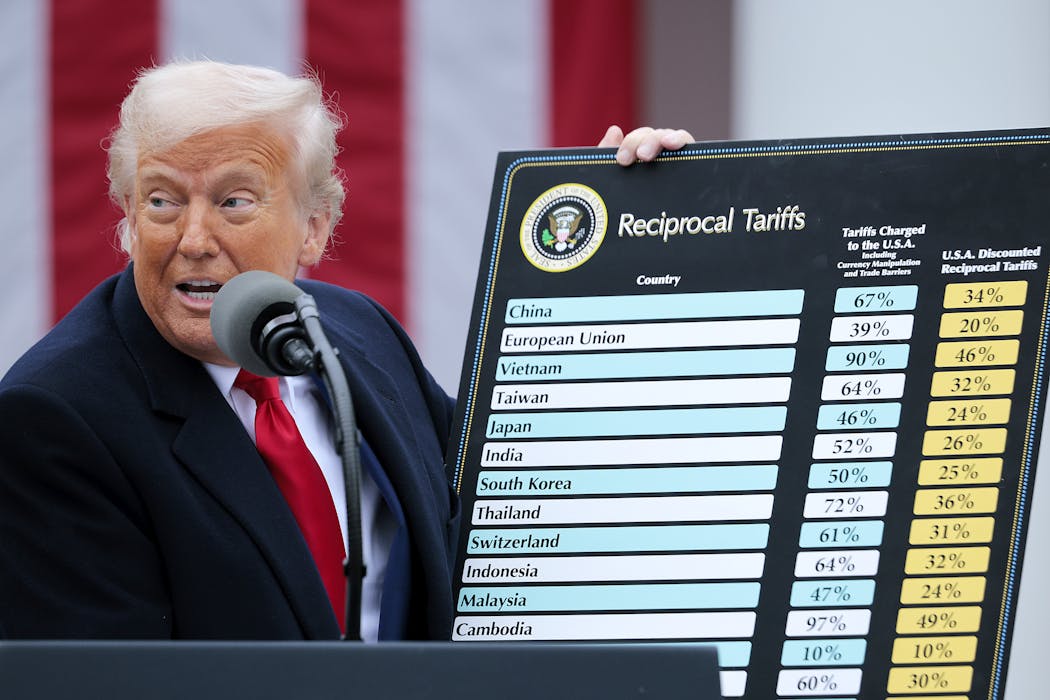
Unilateral action is not an idle threat. Trump has imposed arbitrary and erratic tariffs on more than 90 countries for a variety of “national and economic security” reasons, demanding concessions for reducing (not removing) them.

Those demands extend way beyond matters of trade, and impinge deeply on those countries’ own sovereignty. There is nothing the WTO can do.

Weaponising tariffs is also not a new strategy. President Joe Biden maintained the tariffs imposed on China during the first Trump presidency, triggering WTO disputes which remain unresolved.

But Trump’s embrace of raw coercive power strips away any chimera of commitment to multilateralism and the model that has prevailed since the 1980s, or to the development of Third World countries that have been rule-takers in that regime.

Where now for the WTO?

Some more powerful countries have bargained with Trump to reduce the new tariffs. China’s retaliation generated an uneasy one-year truce. Brazil held firm against Trump’s politically-motivated tariffs at considerable economic cost. Australia made a side-deal on critical minerals.

The European Union remains in a standoff over pharmaceutical patents and regulating big tech. India has diversified to survive relatively unscathed, ironically forging closer ties with China.

Less powerful countries are much more vulnerable. Among other obligations, the full texts of “reciprocal trade agreements” with Malaysia and Cambodia, signed in October, require them to:

  • replicate US foreign policy and sanctions on other countries

  • consult the US before negotiating a new free trade agreement with a country that “jeopardises US essential security interests”

  • promise to make potentially crippling investments in and purchases from the US

  • involve the US in regulating inward investment and development of Malaysia’s rare earth elements and critical minerals (Malaysia has large unmined repositories, an alternative to China)

  • and not tax US tech giants, regulate their monopolies or restrict data flows.

If implemented, these agreements risk creating economic, fiscal, social and political chaos in targeted countries, disrupting their deeply integrated supply chains, and requiring they make impossible choices between the US and China.

In return, the 2025 tariffs will be reduced, not reversed, and the US can terminate the deals pretty much at will.

This poses an existential question for WTO members, including New Zealand and Australia, at the 14th ministerial conference in Cameroon in late March: will members submit to US demands in an attempt to keep the WTO on life support?

Or can they use this interregnum to explore alternatives to the hyper-globalisation model whose era has passed?

The Conversation

Jane Kelsey is affiliated with a number of international NGOs that monitor and advise on developments in international trade law and the WTO.

ref. The World Trade Organization is on life support. Will Trump’s new rules finish it off? – https://theconversation.com/the-world-trade-organization-is-on-life-support-will-trumps-new-rules-finish-it-off-273216