Côte d’Ivoire’s elections have already been decided: Outtara will win and democracy will lose

Source: The Conversation – Africa (2) – By Sebastian van Baalen, Associate Senior Lecturer, Uppsala University

Even before the ballot, the 25 October presidential polls in Côte d’Ivoire can already be described as a loss to democracy and democratic values. Incumbent president Alassane Ouattara is running for a fourth term. With his two main contenders barred from participating, the president will most likely win by a landslide.

Ouattara has previously claimed three electoral victories. The first, in 2010, was marred by widespread violence and a re-escalation of armed conflict that led to the loss of more than 1,500 lives.

His second electoral victory, in 2015, was carried on the back of a broad coalition that later broke apart. The third, in 2020, ended in a violent opposition boycott.

Accusations of constitutional capture by the incumbent have only increased since then. In this way, the otherwise divided political opposition is unanimous in condemning the president’s fourth-term bid.

Ouattara announced his candidacy for a fourth five-year term in office in August 2025. The political opposition has condemned the announcement and the international community has remained silent.

Ouattara and his supporters argue that he is eligible because the 2016 constitutional revision has reset the count and allows him a second term. His opponents insist that the constitutional limit is of one five-year term renewable once, and that Ouattara’s third and fourth-term bids are constitutional coups, which have precedents across the continent.

Undermining democracy

Regardless of the legal reasoning, Ouattara’s fourth-term bid is a loss for democracy at the hands of a politician who, in the run-up to the 2020 election, himself insisted that Ivorian politics was in dire need of a generational change.

In addition to the principle of adhering to a two-term mandate limit, the 2025 election undermines Ivorian democracy because the contest is heavily tilted in the incumbent’s favour. In September, the constitutional council confirmed that the two main opposition candidates, Tidjane Thiam and Pascal Affi N’Guessan, would be excluded from contesting the election on technical grounds.

Thiam is the new leader of the country’s oldest party, the Democratic Party of Ivory Coast – African Democratic Rally (PDCI), and was expected to give Ouattara a run for his money. He was excluded on the grounds that his renouncement of his French citizenship was finalised too late.

N’Guessan inherited the second major opposition party, the Ivorian Popular Front, from the polarising former president Laurent Gbagbo when the latter was indicted at the International Criminal Court in the Hague. This was for his alleged role in crimes against humanity in the wake of the 2010 elections.

Gbagbo, and his long-time collaborator Charles Blé Goudé, were both acquitted of all charges in 2021, and they have both gone on to found new political parties in Côte d’Ivoire, despite being ineligible due to criminal rulings against them in the Ivorian courts.

N’Guessan has been unable to mend the fractures within his party – between Gbagbo-loyal hardliners and his own support base of Ivorian Popular Front moderates – but with Thiam out of the race, he could have been a serious contender. N’Guessan was excluded because he allegedly lacked the number of patron signatures needed to support his candidacy.

Whether these technical knock-outs of the two main opposition candidates were due to negligence on their part or due to bureaucratic foul play by the regime is secondary to the fact that the absence of the two main opposition candidates casts a worrying shadow over the 2025 election.

The political climate is already polarised and rife with conspiracy theories about Ouattara’s corruption and more genuine allegations of his political divisiveness. The amputated political contest only serves to deepen the fault lines between the government and the opposition and spur further voter disillusionment. Such polarisation and disillusionment may also trigger violence, a serious risk in a country where elections are regularly marred by violence.

To complete the autocratic hat-trick, the National Security Council has banned public gatherings, citing concerns over public safety. It seems likely that the authorities were acting preemptively in light of the 2020 election, during which the political opposition called on its supporters to engage in street protests and “civil disobedience”. Those events left at least 83 people dead and 633 people injured in clashes between protesters and security forces and between rivalling communities.

Banning protests may easily backfire as opposition supporters take to the streets anyway. The opposition has called for daily protests during the brief official electoral campaign.

Silence from the international community

Despite this threefold blow to democracy playing out ahead of the 25 October vote, international reactions have been muted at best. Ouattara is a favourite among international partners such as France and the EU. Since coming to power, he has presided over continent-leading economic growth rates large-scale infrastructure investments, and an unlikely victory in the Africa Cup of Nations on home soil.

His popularity in Europe has been further galvanised by the virtual collapse of French influence in its other former colonies. Ouattara is now one of the few west African leaders still pursuing its diplomatic relations with Paris in a “business as usual” manner.

Afraid of rattling anti-French sentiment in yet another former colony, the French government has remained silent on Ouattara’s slow deconstruction of Ivorian democracy. The rest of the EU follows suit, as it has yet to establish a position in the sub-region independent of France’s unspoken leadership.

Both France and the EU are losing further credibility by lending support to Ouattara’s constitutional capture. Accusations of double standards and hypocrisy when insisting on democratic norms are central to the anti-French rhetoric of leaders such as Burkina Faso’s junta leader Ibrahim Traoré. By remaining silent on the slow death of democracy in Côte d’Ivoire, western leaders undermine their own position in the sub-region.

A similar impasse characterises the regional economic community, Ecowas, which is still coming to terms with the withdrawal of the three Sahelian states currently under military rule. With Côte d’Ivoire and Nigeria the most important Ecowas members still insisting on its relevance and credibility, the regional bloc is unlikely to take a strong stand on Ouattara’s fourth-term bid or electoral foul play.

What the future hold

Much is still unknown with regard to Côte d’Ivoire’s upcoming election. Coalitions are forming among the opposition candidates left in the race.

Some of the excluded candidates are joining forces in a “common front” to call for street protests and demand their inclusion on the electoral list. And street protests are growing. More than 200 protestors were arrested on 11 October during a peaceful rally in Abidjan.

While street protests failed to sway the incumbent’s anti-democratic tendencies in 2020, recent events in Madagascar and Kenya indicate that governments ignore the popular appetite for change at their own peril.

Regardless of how the final days of the electoral campaign play out, democracy has already suffered a loss in Côte d’Ivoire. The most pressing question may not be about the outcome of the vote but about the more enduring marks on Ivorian electoral politics.

The incumbent, the opposition and the international community all share a responsibility to pave the way for a peaceful and constitutional transfer to a post-Ouattara era. We hope that democracy can recover, and a younger generation can gain more genuine influence.

The Conversation

Sebastian van Baalen receives funding from the Swedish Research Council (grant VR2020-00914, VR2020-03936, and VR2024-00989. He is a member of the Conflict Research Society steering council, a not-for-profit academic organization.

Jesper Bjarnesen receives funding from the Swedish Research Council (grant VR2024-00989).

ref. Côte d’Ivoire’s elections have already been decided: Outtara will win and democracy will lose – https://theconversation.com/cote-divoires-elections-have-already-been-decided-outtara-will-win-and-democracy-will-lose-267798

Raila Odinga: the Kenyan statesman who championed competitive politics and accountability

Source: The Conversation – Africa (2) – By John Mukum Mbaku, Professor, Weber State University

Raila Amolo Odinga, who died on 15 October 2025, aged 80, ran five times for the Kenyan presidency but didn’t win. Yet he became a statesman of enormous influence, whose political and humanitarian achievements surpassed those of many African heads of state. He will be remembered as one of the most important figures in the struggle for multiparty democracy.

In this, he was like his father, Jaramogi Oginga Odinga – who was the country’s first post-independence vice-president. Oginga was a patriot, a nationalist, and one of a small number of Kenyans who were instrumental in the struggle against colonialism. In 1960, Oginga turned down an opportunistic offer from British colonialists to become Kenya’s first prime minister. He argued that there could not be a meaningful transition to an independent Kenya while the popular Jomo Kenyatta was still imprisoned.

Odinga first captured national attention stage in 1982 when he was linked to a failed coup plot by a group of air force officers. From then on he was in and out of political detention and exile until 1992. He achieved much over the next three decades, but in my view, four things stand out in his rich political legacy:

1. Strong belief in the power of the people

His political career, which lasted over three decades, was driven by a strong belief in the ability of ordinary citizens to determine their own political and economic destiny.

This belief was evidenced by his lifelong support for and defence of multiparty democracy. To this statesman, competitive politics represented the most effective way for ordinary Kenyans to participate in the governing of their country. It was the means by which poor rural farmers, and families eking out a living on the margins of rich industrial centres like Nairobi, could force their governors to be accountable to them and the constitution.

Throughout his political career, Odinga exhibited trust and confidence in the ability of ordinary Kenyans to think for themselves. He extolled their capacity to choose their own leaders and to ensure that these leaders would not act only in their own self-interest.

It’s my argument that Odinga’s political philosophy was shaped and informed by what he learned from his father’s struggles and his own experiences with Kenya’s authoritarian political and opportunistic economic elites. Kenyans cannot and must not forget his eight years of imprisonment under the authoritarian regime of Daniel arap Moi (1982–1991); nor should they underestimate his support for the 2010 constitution, which transformed Kenya into a modern democracy.

2. Entrenching competitive politics

The early 1990s were a time of turmoil, not just in Kenya. Throughout Africa many grassroots movements were fighting for better governance. These included, among others, the anti-apartheid movement in South Africa and the struggle against Nigeria’s brutal military dictatorship. In Kenya, a political movement – in which Odinga would play no small part – was underway to end decades of a repressive single-party system.

Odinga challenged one-party rule and fought for Kenya’s transition to a competitive political system. He saw this as a system in which politicians regularly renew the mandate granted them through free, credible and competitive elections. Through this process, Kenyans have been able to exercise their right to hold their leaders accountable.

The battle was won when arap Moi agreed to the first multi-party election in 1992. But the broader war for democratic governance, political accountability and respect for human rights had only begun. In this, Odinga would play an even bigger part.

It is no accident that he was vilified by a political elite that saw him as an agitator and threat to their political fortunes. Yet, it was that threatening political personality that contributed to the modernisation of political economy in Kenya and the rise of the country as a beacon of democracy in Africa.

3. A new constitution, less political conflict

The brutality that Odinga suffered under the Moi dictatorship shaped his belief in competitive politics, respect for human rights and passion for accountable governance.

This passion placed him at the centre of Kenya’s quest for a new constitution. The quest began in the mid-2000s but crystallised after the 2007-8 post-election violence.

Among other progressive changes, Kenya’s 2010 constitution introduced an independent judiciary. Courts were empowered to peacefully resolve conflicts, including those arising from contested elections. Odinga’s several petitions to the Supreme Court alleging election malpractices have, in my opinion, helped improve, entrench and deepen democracy in the country.

The petitions also gave the judiciary the opportunity to affirm and enhance its independence. Thanks to the reforms made to the independent electoral commission, the 2022 elections were transparent, peaceful and credible. The results were transmitted in record time. The changes in the electoral system made in response to the court’s ruling enhanced the courts’ role in the peaceful resolution of conflict in a democracy.

4. Spirit of political dialogue

Odinga spent more than three decades fighting to bring democracy, pluralism, social justice and peaceful coexistence to a country torn apart by violent ethnic rivalries for scarce resources. He taught Kenyans that, through dialogue and the help of democratic institutions, they could coexist peacefully. They could create a society in which governance and economic development would be people-centred.

Odinga fully understood the nature of democratic competition and peaceful coexistence. Even as a fierce political competitor, Odinga was always willing to seek compromise with his rivals in order to advance the interests of Kenya and Kenyans. This is seen in his decision to shake Kenyatta’s hand in the aftermath of the 2017 election.

Most recently, he surprised Kenyans by seeking reconciliation with President William Ruto after the competitive 2022 election. Observers believe this illustrates Odinga’s political philosophy: in politics, a door never shuts completely.

In a nutshell

Odinga contributed significantly to Kenya’s transformation into a modern democratic state. He was also one of Africa’s most important transformative leaders. A pan-Africanist who saw continental integration as an achievable goal, Odinga believed strongly in self-reliance and the need for Africans to manage their own affairs.

The Conversation

John Mukum Mbaku does not work for, consult, own shares in or receive funding from any company or organisation that would benefit from this article, and has disclosed no relevant affiliations beyond their academic appointment.

ref. Raila Odinga: the Kenyan statesman who championed competitive politics and accountability – https://theconversation.com/raila-odinga-the-kenyan-statesman-who-championed-competitive-politics-and-accountability-267640

Banning Prince Andrew, paring down royal causes – what a modern monarchy might look like under William

Source: The Conversation – UK – By Francesca Jackson, PhD candidate, Lancaster Law School, Lancaster University

In a recent interview with actor Eugene Levy, Prince William stated that “change is on [the] agenda” when he becomes king. His pivotal role in the decision to remove Prince Andrew’s titles has given a glimpse into what these changes might be.

Announcing that Andrew would no longer use his official titles, Buckingham Palace stated that the Prince of Wales had been “consulted” on the decision. But news reports suggest that it may have been William, rather than Andrew or the king, who was the real driving force behind the decision.

William has already made it clear he takes a dim view of his uncle, for example by banning him from walking in the Order of the Garter procession. It has been reported that as king, William will ban Andrew from public and private royal events, including his coronation.


Read more:
Why Prince Andrew is still a prince – and how his remaining titles could be removed


The 19th-century commentator Walter Bagehot, whose 1867 work The English Constitution provides the classic account of constitutional monarchy in the UK, described the monarchy as the “dignified” part of the constitution, whose opulence and grandeur inspired “awe”, “reverence” and “deference” from its people. He suggested that the monarchy needed to maintain “mystery and theatre” in order to project this image of dignity.

Bagehot warned against the monarchy playing an “efficient” role in the constitution – seeking to solve problems that the country might be facing. But, as a poll from 2024 found, people now want the royal family to talk more about the “social issues and challenges facing the country”, rather than simply looking regal on a throne.

Whereas Andrew arguably embodied Bagehot’s outdated, entitled view of monarchy, William represents a more efficient one. He wants to be out in society, playing a hands-on role to help inspire policy shifts on key issues.

It is clear that William wants to change how the monarchy lives and works day-to-day. But how much change can one man – even a king – make?

Constitutional obligations

As head of state, there are certain constitutional functions and duties which, as king, William must perform. For example, he will have to deliver the king’s speech each year during the extravagant state opening of parliament. This grand display of pomp and ceremony seems at odds with any pared-down vision for monarchy.

But William’s future role also gives him the chance to inspire the sorts of changes he wants to see. The monarch enjoys the right to be consulted by, and the rights to encourage and warn, the government of the day. These rights are known as the tripartite convention. William has previously stated that he wants to “engage governments” on issues he cares about, and this constitutional convention gives him the vehicle to do so.

This is something we are already seeing William’s father, King Charles, do, using his influence to encourage the government to take action on issues important to him. He encouraged the government to launch the Coalition to Tackle Knife Crime. And Keir Starmer explicitly stated that the king’s vision for sustainable, eco-friendly homes had “inspired” government policy on housing.

William has chosen to focus much of his work as Prince of Wales on issues with a social purpose, such as climate change, homelessness and mental health. This is work which he wants to continue as king, stating that what excites him most about his future role is to create “a world … that actually does impact people’s lives for the better”.

He has already tried to use his influence to encourage government support for these issues. In 2023, he spent weeks courting support from ministers for his anti-homelessness initiative, Homewards.

But in the weekly audiences with the prime minister that he will have as king, he will be able to have direct conversations at the highest level of government.

Of course, he will need to remain politically neutral, another inescapable constitutional obligation. Bagehot warned that “constitutional royalty under an active king is one of the worst of governments” and described a political king as a “meddling fool”.

But Charles is already treading the political boundary as king – and so far seems to be avoiding criticism. This is likely because there is largely support in society to see progress on issues like reducing knife crime. To balance his desire to initiate change with his constitutional obligations, William will have to stick to relatively uncontroversial issues on which there is broad shared consensus, like the need to end homelessness.

William can also modernise the monarchy when it comes to cost. Rather than, in his own words, having hundreds of patronages and “loads of causes that you sort of turn up and keep an eye on”, he wants the monarchy to focus on a handful of core projects. This would entail a smaller number of working royals doing fewer engagements, which should mean fewer staff and reduced costs for the taxpayer.

Bagehot suggested that the royal family should “dazzle” people with displays of its “showy wealth”. But William’s recent decision to move his family into Forest Lodge – a relatively modest-sized residence by royal standards – suggests his vision for monarchy is more aligned with that of the European “bicycling monarchies”. This informal style of monarchy with fewer working members is popular in countries where people – including the royals themselves – often bicycle. And they are just as, if not more popular, than the UK’s monarchy.

This, along with William’s approach to his uncle, suggests that he is acutely aware of the royal family’s outward appearance. He is understood to be concerned at the message that Andrew’s continued presence at family events sends to victims of sexual abuse.

William knows that the monarchy has to solve problems, rather than create them, in order to survive. In this vision for monarchy, there is no place for a liability like Andrew.

The Conversation

Francesca Jackson does not work for, consult, own shares in or receive funding from any company or organisation that would benefit from this article, and has disclosed no relevant affiliations beyond their academic appointment.

ref. Banning Prince Andrew, paring down royal causes – what a modern monarchy might look like under William – https://theconversation.com/banning-prince-andrew-paring-down-royal-causes-what-a-modern-monarchy-might-look-like-under-william-268021

Donald Trump’s deal to end the war in Gaza ignores two fundamental requirements for a lasting peace

Source: The Conversation – UK – By Ambra Suriano, Marie Curie post-doctoral fellow, Lancaster University

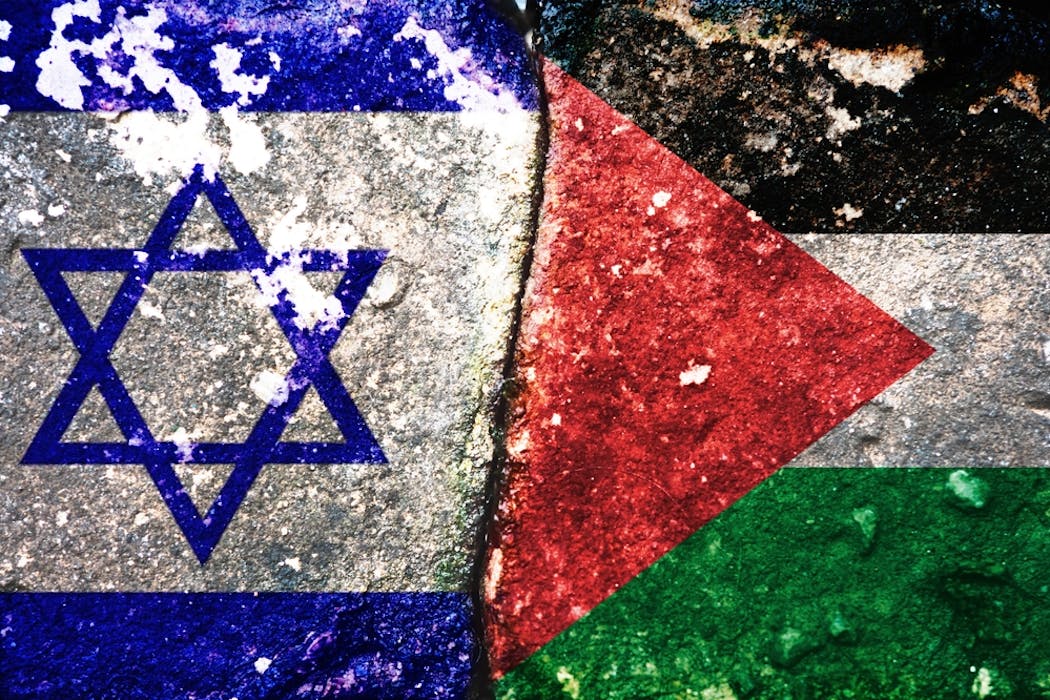
Until both sides can rid themselves of mutual emnity and deal on equal terms, a lasting peace looks like a pipe dream. OMG_Studio/Shutterstock

Donald Trump’s 20-point proposal to bring peace in Gaza covers some essential points for reaching a long-awaited ceasefire. But the release of Israeli hostages and the distribution of humanitarian aid in Gaza are only the first steps. Some vital factors that will be needed if Israelis and Palestinians are to build a lasting peace are still missing.

The US president’s plan calls for a “dialogue between Israel and the Palestinians to agree on a political horizon for peaceful and prosperous co-existence”. But there are significant stumbling blocks to this.

First is the hatred and lack of trust on both sides. The Trump Declaration for Enduring Peace and Prosperity signed by world leaders on October 13 noted their “determination to dismantle extremism and radicalisation in all its forms”. It went on to say that: “No society can flourish when violence and racism are normalised, or when radical ideologies threaten the fabric of civil life.”


Read more:
The 5 big problems with Trump’s Gaza peace plan


There can be no denying that extremism and racism have profoundly affected both Palestinian and Israeli societies, and are deeply ingrained in the education system on both sides. Palestinians criticise the Israeli school curriculum for failing to acknowledge the Nakba, the disastrous consequences of the mass displacement of Palestinian people during the 1948 Arab-Israeli war and the lasting trauma it caused. Meanwhile, Israeli authorities point out that Palestinian textbooks often omit any reference to the Holocaust and to Israel as a legitimate state.

This lack of acknowledgement of each other’s suffering has become deeply entrenched over time, leading to mutual dehumanisation which has created the atmosphere in which violence can flourish. There is plenty of evidence that Palestinian antisemitism has become what Itamar Marcus, the director of Palestinian Media Watch, told the US Congress in June 2023: “A systematically disseminated ideology that is by now deeply ingrained in the Palestinian national and political identity.”

In Israel, the growing rhetoric of dehumanisation towards Palestinians has taken shape through violence and a troubling fusion of religion and politics. A recent United Nations report, which concluded that Israeli troops were committing genocide in Gaza, highlighted the former defence minister, Yoav Gallant, referring to Palestinians as “human animals”.

The same report quoted the prime minister, Benjamin Netanyahu, using a biblical story to justify the killing of Palestinians. In a letter to Israeli troops on the eve of the assault on Gaza, he wrote: “Remember what Amalek did to you.” This is a reference to the story from the book of Samuel in which God tells the Israelites to destroy their mortal enemies, the Amelekites: “Now go and attack Amalek, and utterly destroy all that they have; do not spare them, but kill both man and woman, child and infant, ox and sheep, camel and donkey.”

This sort of rhetoric is all the more concerning given that it comes from official voices of a recognised state based, at least formally, on democratic principles.

Unequal partners

Another massive stumbling block that Trump’s plan fails to acknowledge is the lack of equivalence between the two peoples. The plan insists that “lasting peace will be one in which both Palestinians and Israelis can prosper with their fundamental human rights protected, their security guaranteed, and their dignity upheld”.

But Israel exists as a sovereign state, with all that entails. It has a powerful military. It is deeply embedded in global financial and diplomatic systems. In contrast, despite their statehood being recognised by 157 out of 193 UN members, Palestinians enjoy little of the rights that statehood should confer.

For a start, much of Palestine’s territory remains under Israeli occupation. Neither the Trump’s declaration nor the 20-point ceasefire plan include any practical action to dismantle Israeli military occupation in the West Bank. Nor do they attempt to formulate any realistic programme for Palestinian self-determination.

As it stands, the US president’s plan envisions a fragmented, non-independent Palestine to be administered under the supervision of an external “Board of Peace”, with himself as the chair and former UK prime minister Tony Blair in some sort of executive role.

‘Othering’ the enemy

Netanyahu has said he will resist any moves towards a two-state solution. In September, he told the UN general assembly: “Giving the Palestinians a state one mile from Jerusalem after October 7th is like giving Al-Qaeda a state one mile from New York City after September 11th.”

This “othering” of Palestinians is a thread through Israeli politics which makes mutual empathy impossible. Under these conditions, the well-intentioned international goals of fostering interfaith dialogue between Israelis and Palestinians, full recognition of human rights and security for both sides remains a pipe dream which one side strenuously opposes.

A lasting peace should first lead both peoples to recognise each others’ basic human rights. Only then can traumas be healed, ideologies deradicalised and bridges built. Until then, all the declarations and peace plans of a well-meaning world will come to nothing.

The Conversation

Ambra Suriano receives funding from the European Union, through the Horizon program.

ref. Donald Trump’s deal to end the war in Gaza ignores two fundamental requirements for a lasting peace – https://theconversation.com/donald-trumps-deal-to-end-the-war-in-gaza-ignores-two-fundamental-requirements-for-a-lasting-peace-267564

Antidepressants: physical side-effects vary depending on the drug type – new research

Source: The Conversation – UK – By Toby Pillinger, Doctor and Clinical Researcher, King’s College London

Not all antidepressants are the same when it comes to their physical side-effects. Kmpzzz/ Shutterstock

Millions of people worldwide take antidepressants. While these drugs can be very effective in treating mental health conditions such as depression and anxiety, they can also cause a range of physical side-effects – including weight gain, heart rate changes and altered blood pressure.

But not all antidepressants are equal when it comes to the physical effects they can have on the body, a new analysis published by myself and my colleagues has revealed. We found clear and meaningful differences between the drugs, with some causing greater effects on weight, heart rate, cholesterol levels and blood pressure. For the millions of people who take these prescription drugs, these differences matter.

Our study brought together 151 randomised trials which contained data on 58,534 people and looked at 30 different antidepressants. Each study had recorded routine physical measures you’d see in a clinic such as blood pressure, body weight and heart rate. Most of the studies lasted about eight weeks.

We then used a method called network meta-analysis that lets you compare multiple treatments against each other simultaneously. This approach gives a sort of “league table” of treatments, ranking them from best to worst for each physical health outcome.

We found that even after only eight weeks of treatments, the physical effects of the various different antidepressants were not subtle.

Weight effects varied markedly between drugs. For example, people taking the antidepressant agomelatine lost around 2.5kg on average, whereas those on maprotiline gained nearly 2kg.

Heart rate effects also varied widely. The antidepressant fluvoxamine actually lowered heart rate by about eight beats per minute, while nortriptyline raised it by around 14 – a difference of more than 20 beats per minute between drugs.

Systolic blood pressure saw a more than 11mmHg spread between the antidepressant doxepin and nortriptyline.

And for cholesterol and blood sugar levels, several antidepressants – including paroxetine, venlafaxine, desvenlafaxine and duloxetine – were associated with higher total cholesterol. Duloxetine was also associated with higher blood sugar levels.

It’s important to note that the analysis only focused on antidepressant treatment that lasted for around eight weeks. Since many people take antidepressants for a longer period than this, real-world, long-term physical effects could be greater. This is one reason why routinely monitoring patients taking antidepressants is essential.

We also only included objective outcomes that are consistently collected in trials. Some important physical problems, such as sexual side-effects, are not routinely measured in research so were not included in the analysis due to a lack of data – not a lack of importance. It will be important for future studies to investigate such outcomes.

A young woman has her blood pressure checked by a female doctor.
Blood pressure readings were one of the physical side-effects that differed between antidepressant types.
antoniodiaz/ Shutterstock

The results also should not be read as a list of “good” and “bad” antidepressants. Rather, they illustrate how different drugs can have different physical effects. The aim with our research is to show why it’s important to tailor prescribing to each patient.

Peronalised prescribing

For years, debates about antidepressants have been framed as “do they work?” or “are side-effects real?” Our findings suggest a more useful question: which drug suits which person, given their physical health and priorities?

The data shows that antidepressants are not interchangeable. For someone with obesity, diabetes or hypertension, choosing an antidepressant that has a more neutral effect on weight, blood sugar and blood pressure is sensible. But for an underweight person with low blood pressure, the trade-off may be different. The right answer will depend on the patient.

In light of our recent findings, it’s more important than ever that doctors work closely with patients to understand their priorities and match them with the correct antidepressant.

Of course, this is a challenge in and of itself for doctors, who would need to consider two dozen different antidepressants and their many potential side-effects. So alongside the analysis we performed, we also previously developed a freely-available tool that doctors and patients can use together to decide on the right antidepressant.

The tool allows doctors and patients to select the side-effects the patient most wants to avoid and set how important each one is. The tool then integrates those preferences with side-effect databases, then produces a personalised table of options which ranks antidepressants based on which best fits the patient’s preferences.

Antidepressants are effective for many people. Our study does not change that. But what it does show is that not all antidepressants are the same. We now have high-quality evidence that their effects on weight, blood pressure, heart rate and blood sugar differ in clinically meaningful ways.

Rather than argue for or against antidepressants as a group, we should focus on matching the medicine to the person, with shared decisions being made between doctor and patient.

Tools such as the one we’ve built make this possible, so that patients can be prescribed antidepressants that are safer for them and better-tolerated.

The Conversation

Toby Pillinger has received speaker or consultancy fees from Boehringer Ingelheim, Bristol Myers Squibb, Recordati, Lundbeck, Otsuka, Janssen, CNX Therapeutics, Sunovion, ROVI Biotech, Schwabe Pharma, and Lecturing Minds Stockholm AB; he receives book royalties from Wiley Blackwell; and he co-directs a company that designs digital resources to support treatment of mental illness.

ref. Antidepressants: physical side-effects vary depending on the drug type – new research – https://theconversation.com/antidepressants-physical-side-effects-vary-depending-on-the-drug-type-new-research-268010

The Celebrity Traitors: how star status changes the game

Source: The Conversation – UK – By Dan Baumgardt, Senior Lecturer, School of Psychology and Neuroscience, University of Bristol

The Traitors and a resplendent, though funereal, Claudia Winkleman are back on screens in the UK – and you could cut the tension with a poison-laced dagger.

This time, both intermingled faithful and traitors are not civilians – they’re celebrities. The cast is diverse, featuring actors, comedians, singers, athletes and presenters. Each has their own particular expertise, motives, character and fan club.

They all play for a share of the jackpot for their nominated charity. But how could this new celebrity dynamic affect the state of play? Can neuroscience and psychology foretell what sorts of mind games, alliances, betrayals and downright cunning could go down in the name of completely unmissable entertainment?

It’s going to be another addictive game of smoke and mirrors. No spoilers, I promise!

The prominent status of our celebs means viewers have preconceived ideas about them. But what matters more within the castle walls are the everyday impressions, even before they’re divided into tribes – most as faithfuls whose job it is to catch a few hidden traitors.

The skillsets

Each cast member is a celebrity for a reason, and a professional in their own field. Actors like Celia Imrie and Mark Bonnar may be skilled in reading emotions in others, and have distinct advantages in performance.

The ability to be able to feign upset or distress, plead innocence, or indeed lie convincingly, could prove a distinct asset. Especially since research has suggested that how you act or present yourself is a stronger predictor of being judged credible than the actual truth of your statement.

But acting prowess could be spotted as cover, and prove a disadvantage if cross-examined. Equally, misjudged overreactions or poor acting may also quickly raise suspicion and doubt.

Athletes such as Tom Daley and Joe Marler possess strength and agility, allowing them to excel in physical challenges. This training could facilitate trust, or signal a dominance which might highlight them as leaders.

Athletes have also honed abilities to focus the mind in the face of competition. They know how to repress and conceal signs of anxiety or adrenaline – sweating, shaking, flushing, and the like – that could otherwise manifest as telltale symbols of lying.

Meanwhile, comedians like Joe Wilkinson and Lucy Beaumont are both charming and disarming. We know deception and humour are interrelated social phenomena. Humour can be used for deception but it can also lighten the atmosphere and defuse tense situations. But ill-timed comedy could likewise inflame it, or be seen as attempts at deflection.

All these traits may help paint someone as trustworthy, or equally Machiavellian. Machiavellianism, which involves acting unscrupulously to gain power, is one of the traits encompassing what psychologists refer to as “the Dark Triad”. This could position them as either untouchable, or potential targets – ripe to be murdered or banished.

Pre-existing relationships

Many of the celebs have entered the game already knowing each other. Paloma Faith and Alan Carr are real-life friends. This dimension is not necessarily limited to the celebrity version. In previous series, some relationships were established before entering the castle – mother and son, siblings, and even contestants dating.

With our stars, these prior relationships are already out in the open for all to see. As broadcasters, Clare Balding and Kate Garraway share common ground, as do writers like Stephen Fry and David Olusoga, and singers Charlotte Church and Cat Burns. Such relationships will be taken into account by those playing the game.

As psychology also tells us, birds of a feather flock together – a concept known as homophily. This might lead to the formation of natural alliances and strong pacts. But it may equally lead to stronger feelings of betrayal, if or when they become ruptured.

What of the relative unknowns – Niko Omilana and Ruth Codd – who arrived knowing nobody? Research shows us that our brains rapidly make judgements, within milliseconds, about unfamiliar faces. Whether they can be considered trustworthy or not appears to depend upon independent variables, including facial dimensions, age, sex and personality. Notably female gender and positive social interactions tend to lead to more favourable judgments.

Fame may also be a problem when it comes to tactics. A contestant from the last civilian series with an English accent decided to adopt a Welsh burr instead. It was because they judged a Welsh accent more trustworthy.


Read more:
The Traitors: how trustworthy is a Welsh accent? A sociolinguist explains


Star status makes tactics like these impossible. And with details of their working or private lives potentially under the spotlight, celebrities may find themselves more vulnerable in this game.

Playing for charity

What’s more, playing for oneself versus playing for charity creates another really interesting dynamic. You could argue that ultimately nobody will lose in this game since the jackpot is undoubtedly heading toward a good cause. But it also boils down to a variation in altruism between individuals.

This variation is evident in the brain itself. Research from neuroscience shows distinct cerebral activity patterns are responsible for driving behaviour associated with winning and losing money in a given task. This research also uncovered stronger reactions when winning for oneself versus for charity, but this could vary between individuals.

We’ve also got to look at the desire to win for glory, which is perhaps more evident in athletes and those in business. Public image matters. And it raises the question – how much are these celebrities happy to risk theirs?

It’s remarkable how the concept of The Traitors can give us a glimpse into the psyche, illuminating sides of people we’ve not seen before. Whatever the outcome, this is going to prove another fascinating psychological experiment. Hope you’ve got your popcorn and (non-poisoned) chalice at the ready.

The Conversation

Dan Baumgardt does not work for, consult, own shares in or receive funding from any company or organisation that would benefit from this article, and has disclosed no relevant affiliations beyond their academic appointment.

ref. The Celebrity Traitors: how star status changes the game – https://theconversation.com/the-celebrity-traitors-how-star-status-changes-the-game-267648

Ireland’s presidential election race now down to two women

Source: The Conversation – UK – By Gail McElroy, Professor in Political Science, Trinity College Dublin

Voters across the Republic of Ireland will head to the polls on October 24 to elect a new head of state to replace Michael D. Higgins. His replacement will be Ireland’s tenth president since the role of president was established in the 1937 constitution.

Once considered largely ceremonial and “above politics,” the presidency has evolved significantly in recent years. Since Mary Robinson’s landmark election in 1990, campaigns have become increasingly political, combative and unpredictable. This year is no exception. Jim Gavin, one of the three candidates, has already withdrawn from the race – although his name will still be listed on the ballot.

Even before nominations closed, the electorate was entertained for months by speculation about who might or might not run. Names frequently mentioned included celebrities such as mixed martial artist Conor McGregor and dancer Michael Flatley, alongside various politicians such as former Taoiseach Bertie Ahern.

However, securing a place on the presidential ballot is not easy. Candidates must have the backing of at least 20 members of the Oireachtas (currently there are 174 members of the Dáil and 60 members of the Seanad) or the support of four of the 31 city or county councils. In the end, only three candidates managed to secure nominations, the lowest number in a contested election since 1990.

Friday’s contest is now effectively a showdown between the leftwing independent candidate Catherine Connolly and Fine Gael’s Heather Humphreys. Interestingly, Fine Gael, a centre-right party that has been in power since 2011, has never held the presidency. Gavin was nominated by the party of the current prime minister, Fianna Fáil. A former Air Corps officer and highly successful manager of the Dublin senior Gaelic football team, Gavin ended his campaign on October 5 after it emerged that he has owed €3,300 (£2,873) to a former tenant since 2009. The tenant was, coincidentally, the deputy editor of a leading tabloid newspaper, The Sunday World.


Read more:
A Protestant candidate has added a twist to Ireland’s presidential race


Polls indicate an almost unassailable lead for Connolly, who has received endorsements from all the major left-leaning parties, including Sinn Féin, the Labour Party, the Greens and the Social Democrats. However, Irish presidential elections are renowned for their unpredictability. In 2011, the frontrunner, Séan Gallagher, saw his double-digit poll lead evaporate in the campaign’s final days, following a challenging TV debate watched by over a quarter of the electorate.

The role of the president

Ireland is a parliamentary republic, so the presidential role is largely ceremonial, even if the constitution grants the president certain formal powers. Direct election of the president does, however, give the role soft influence and a measure of moral authority. Higgins has been more politically outspoken than any of his predecessors, occasionally criticising government policy and, in doing so, reshaping perceptions of the office. Nonetheless, the president does not play any role in government formation or initiating and vetoing legislation. While technically responsible for appointing key figures – such as the attorney general and judges – these appointments are all made on the government’s advice.

The two main powers of the Irish president are the ability to refuse the Taoiseach’s request to dissolve the Dáil and the power to withhold their signature from a bill, referring it, instead, to the Supreme Court to test its constitutionality. No president has ever formally refused a Dáil dissolution, and the referral power has been used sparingly – only 16 times since 1938.

Ultimately, the Irish presidential election functions as a second-order contest, with leftwing opposition parties eagerly seizing on the opportunity to stage an informal referendum on the governing centre-right coalition this year.

However, even a decisive victory should not be taken as evidence of majority support for a change in government. In 2018 Higgins retook the presidency for the Labour party with an impressive 56% of first-preference votes, yet his party gained no momentum from this victory in the general elections that followed.

Reflecting the second order nature of these elections, turnout is expected to be quite depressed, and, if very low, could prove crucial to the outcome. Nearly half of respondents in recent polls say they do not feel represented by the slate of candidates on offer. That suggests participation may fall short of even 2018 levels, when it hit a historic low of just under 44%. It remains to be seen if young voters, who favour Connolly heavily, will match their enthusiasm with action.

The Conversation

Gail McElroy is a member of the National Election and Democracy Study Management Board of An Coimisiún Toghcháin (the Irish Electoral Commission).

ref. Ireland’s presidential election race now down to two women – https://theconversation.com/irelands-presidential-election-race-now-down-to-two-women-268024

The politics of milk: how a simple drink got caught up in power, culture and identity

Source: The Conversation – UK – By JC Niala, Head of Research, Teaching and Collections, History of Science Museum, University of Oxford

Milk is one of the most familiar things in the world – comforting, wholesome, ordinary. But beneath this common perception lies something far more complicated.

Examining the UK and Kenya, our project Milking It! explores the deep cultural, historical and emotional attachments to milk, and how these collide with the realities of industrialised production, environmental pressure and its colonial past.

We’ve spoken with dairy farmers caught between economic survival and public expectation, traced milk’s heritage through museum collections and archives, and listened to personal stories where milk evokes intimacy, memory and loss.

We’ve found that milk is never just milk. It’s saturated with meaning, emotion and contradiction. People can feel intensely about it: it stirs strong responses, its history is revealing, and it helps us rethink care, identity and sustainability.

Milk is a powerful subject for thinking about the politics of food; a near-universal food shared across cultures, landscapes and histories. It carries with it ideas about who belongs, who provides care, and what constitutes a good life.

In times of climate anxiety and shifting food politics, milk helps reveal how personal our relationship with food really is, and how these relationships are shaped by histories of power, production and belief.

As our research has progressed, we have found that milk is emotionally charged, politically loaded, and, at times, profoundly symbolic of how people understand themselves and the world they live in. Important to these politics is the tension between the idea of milk as home – part of our intimate everyday – and milk as global industry.

Dairy and its colonial past

Understanding global dairy means reckoning with its colonial past. From the late 19th century, European colonial administrations promoted dairy not just as a foodstuff, but as a marker of civilisation, symbolising perfect nutrition, purity and modernity.

Cattle breeds were imported, dairy farms established and milk consumption encouraged among settler and indigenous populations alike, often through coercive propaganda. These efforts laid the groundwork for globalised industrial food systems, where milk became both a commodity and a cultural ideal.

These histories still shape the modern dairy landscape. Smallholder farmers in both the UK and Kenya operate within systems that were designed to favour large-scale, export-oriented production. Despite their radically different contexts, both face strikingly similar pressures: the need to intensify, standardise and compete in volatile markets.

While global dairy is pushing farmers towards highly technical and mechanised systems, these are largely hidden from consumers. Milk advertising has played a crucial role in this, summoning a pastoral ideal. Black and white Daisy in her field of fresh green grass: clean air, contented cows, local milk. It arrives in our homes as reliable nourishment and familiar care.

Milk’s paradox

But here lies the paradox: in the minds of many, milk continues to symbolise home, rural heritage and connectedness, even as the conditions of its production become more alienated from those very values. But milk has also been co-opted into much larger political and economic projects.

From state-run free school milk schemes in both Kenya and the UK, to British Home Front campaigns promoting milk as a national duty during the second world war, this everyday drink has long played a role in shaping ideas of citizenship, health and belonging.

Today, farmers struggle to survive on the prices they’re paid. Processing and distribution are increasingly controlled by large conglomerates, with ever less of the final profit reaching those who care for the animals and land.

Maintaining the idea that milk is a necessary staple – part of our national and natural heritage – is unavoidably political. In contexts where having a cow in your backyard is common, a glass of milk is but a squeeze away. Having a two-litre carton of disposable fridge milk is, however, an entirely different thing; keeping milk available and cheap is hard work.

The gap between how milk is imagined and how it is made is widening. Once the milk leaves the cow, it moves through an industrial chain that involves rapid cooling, bulk transport, pasteurisation, homogenisation, packaging and refrigerated distribution. Our ordinary pint arrives in our fridges through a complex, but hidden, energy-intensive system.

While domestic production of milk in the UK has grown by 14% since 1975, there are significantly fewer cows. This is because the amount of milk you can get from a single cow has grown by 100%, from an average of 4,100 litres to 8,200 litres over her lifetime.

These cows are no Daisys. They are part of a global industrial system with high levels of intervention (antibiotics, artificial feed, keeping cows indoors) to ensure reliable year-round yield, at low cost.

By looking at milk as a cultural and political idea, as much as it is a natural product, we are beginning to understand and trace the logics that underpin global dairy today. That past helped entrench large-scale, standardised dairy systems, from the UK to Kenya. These competitive systems reward intensification and scale, over knowing where milk comes from.

However farmers who work with cows are party to an intimacy that we, as consumers, do not often see. Many are seeking systems of their own. Whether through processing milk on-site by making cheese, or using local networks to establish consumer trust, dairy producers are adapting old logics that meet modern needs.

In Milking It! we explore how everyday foods can hold much larger stories: about changing food systems, colonialism, identity, loss of tradition and survival. We’re continuing these conversations through our podcast Milk on the Move, and we invite others to join us in rethinking what milk is as a cultural force.


Looking for something good? Cut through the noise with a carefully curated selection of the latest releases, live events and exhibitions, straight to your inbox every fortnight, on Fridays. Sign up here.


The Conversation

JC Niala receives funding from the UKRI Arts and Humanities Research Council for this project.

Johanna Zetterström-Sharp receives funding from the UKRI Arts and Humanities Research Council for this project.

ref. The politics of milk: how a simple drink got caught up in power, culture and identity – https://theconversation.com/the-politics-of-milk-how-a-simple-drink-got-caught-up-in-power-culture-and-identity-263476

A Supreme Court showdown looms for Trump’s tariffs. Will it limit presidential power?

Source: The Conversation – Global Perspectives – By David Smith, Associate Professor in American Politics and Foreign Policy, US Studies Centre, University of Sydney

On November 5 the US Supreme Court will begin hearing arguments about the legality of President Donald Trump’s tariffs. As important as the tariff issue is, the stakes are much higher than that.

Trump has been claiming vast powers, at the expense of other branches of government, on the grounds of various “emergencies”. He has used these claims to justify sending troops to US cities and deporting non-citizens without due process under a law dating from 1798.

Trump imposed sweeping global tariffs under the auspices of the International Emergency Economic Powers Act (IEEPA) of 1977. Most legal experts agree, and so far three lower courts have ruled, that this act gives him no such power.

This case now presents an important test of the Supreme Court’s willingness to impose limits on Trump’s emergency powers.

The powers Trump is claiming

The US Constitution gives Congress, not the president, the power to set tariffs. Since the 1930s, Congress has passed a series of laws granting presidents the authority to adjust existing tariffs and deploy them to protect industries that are crucial to US national security.

The tariffs Trump has imposed this year go beyond the powers any previous president has had.

Some of Trump’s tariffs on goods in specific sectors such as steel and aluminium are authorised under Section 232 of the Trade Expansion Act because of their importance to military industries.

But to justify blanket tariff rates on entire countries, regardless of the goods involved, Trump has turned to the International Economic Emergency Powers Act (IEEPA).

This allows the president to block economic transactions and freeze assets after declaring an emergency. These actions usually target hostile powers or individuals. An emergency is an “unusual and extraordinary threat” to the US, originating “in whole or substantial part outside the United States”.

Trump originally claimed tariffs against Canada, Mexico and China were necessary to force those countries stop the traffic in fentanyl, which causes more than 70,000 overdose deaths in the US every year. Yet less than 1% of the fentanyl that enters the US comes from Canada.

For the “liberation day” tariffs affecting every other country in the world, Trump declared the annual US trade deficit in goods constituted “an unusual and extraordinary threat to the national security and economy of the United States”.

This trade deficit has been running since 1976, and it widened during Trump’s first administration.

The court case

The Trump administration is being sued by a group of small businesses that have been hurt by the 2025 tariffs, and which claim Trump had no right to impose them. They are supported by a bipartisan group of legal scholars.

A small business owner suing Trump over tariffs explains his decision.

Two federal courts and the US Court of International Trade have so far ruled IEEPA does not give the president the power to set tariffs.

The IEEPA was an amendment to the 1917 Trading with the Enemy Act, which the then president Richard Nixon used to impose 10% import tariffs during a trade crisis in 1971. The Trump administration has argued that because those tariffs were upheld by courts, Trump’s are also valid.

But the IEEPA, passed in 1977 following post-Watergate reforms of emergency powers, was intended to limit executive power, not expand it.

In the words of a report from the House Committee on International Relations that underpinned the reforms, “emergencies are by their nature rare and brief, and are not to be equated with normal ongoing problems”.

What will the Supreme Court do?

The weakness of the administration’s legal arguments is reflected in Trump’s public statements about why the Supreme Court must uphold his tariffs. These statements increasingly read like blackmail notes. He has said striking down the tariffs would “literally destroy the United States of America”.

As well as bringing in billions of dollars in revenue, Trump claims five of the eight wars he has supposedly ended were thanks to tariff leverage, and “if they took away tariffs, then they’ve taken away our national security”.

Striking down tariffs could be economically disruptive. It would weaken US leverage in trade negotiations, and raise the possibility of large tariff refunds.

These threats may persuade conservative Supreme Court justices who already take an expansive view of executive power, and who have so far enabled Trump’s accumulation of it.

However, the one area where Supreme Court conservatives might be willing to limit Trump’s powers is where they interfere with economic orthodoxy.

In a ruling allowing Trump to fire commissioners of some small, independent agencies, the court also appeared to protect members of the US central bank, the Federal Reserve, because of its “distinct historical tradition”.

The Supreme Court has since temporarily blocked Trump’s attempt to fire one of the Federal Reserve governors, Lisa Cook. The judges may also decide that allowing a president to impose unlimited new taxes is a step too far.

Even if the Supreme Court does strike down the IEEPA tariffs, Trump is unlikely to abandon tariffs as a policy tool. They are a core part of his identity.

The administration has already vowed that if it loses in the Supreme Court, it will find other ways to impose tariffs under different laws that “have the same effect”.

The significance of the Supreme Court’s decision may not be about the tariffs themselves, but about whether it recognises any limit to presidential power.

The Conversation

David Smith does not work for, consult, own shares in or receive funding from any company or organisation that would benefit from this article, and has disclosed no relevant affiliations beyond their academic appointment.

ref. A Supreme Court showdown looms for Trump’s tariffs. Will it limit presidential power? – https://theconversation.com/a-supreme-court-showdown-looms-for-trumps-tariffs-will-it-limit-presidential-power-267630

Will the ‘military sleep method’ really help me fall asleep in 2 minutes?

Source: The Conversation – Global Perspectives – By Dean J. Miller, Senior Lecturer, Appleton Institute, HealthWise Research Group, CQUniversity Australia

LightFieldStudios/Getty

Has a camouflaged athlete running on a dirt road ever shouted health advice through your phone? Sometimes these videos are motivational and get you off the couch to start exercising; sometimes they’re educational. But can their advice help us civilians?

Let’s look at what it means to follow the “military sleep method”. There are various versions circulating on social media, including claims it can help you drop off in two minutes.

It certainly sounds appealing.

I research sleep and the body clock. And in field work, I have been part of several high-performance environments, helping athletes and military personnel counter fatigue and jet lag, and to get better sleep.

Here’s why the military sleep method might work for soldiers. But could it also work for you?

Just 3 steps to sleep?

The military sleep method, as the name suggests, is meant to help military personnel prime their body for sleep, regardless of the environment.

The first mention of the method is credited to a sports performance book called Relax and Win.

Reports of the military sleep method can vary slightly depending on the source. But three key components remain consistent:

  1. progressive muscle relaxation: contracting and relaxing the muscles of the face, then the shoulders and arms, before moving down through the chest and legs

  2. controlled breathing: breathing is slowed and controlled, emphasising longer exhalations

  3. visualisation: imagining a calm environment, such as floating on calm water or lying in a quiet field.

Is this science or folklore?

As you may expect, the militaries of the world are not publishing their sleep techniques in open access journals. So there are no specific validations of the military sleep method in mainstream science.

So, let’s compare it to the recommended first-line treatment for insomnia, known as cognitive behaviour therapy for insomnia, or CBT-I.

This involves several key components:

  1. cognitive therapy: challenging unrealistic beliefs and worries about sleep

  2. stimulus control: strengthening the bed–sleep connection by avoiding non-sleep activities in bed and only lying down when sleepy

  3. sleep restriction: initially limiting time in bed to build sleep pressure

  4. sleep hygiene: maintaining healthy routines and environments, such as limiting caffeine and alcohol, keeping a consistent schedule, and making the bedroom a relaxing space, not associated with other activities

  5. relaxation techniques: using techniques such as mindfulness, progressive muscle relaxation, or breathing, to reduce arousal and help you fall asleep.

Sounds familiar?

Notice the similarities between the military sleep method and CBT-I? Some context is also similar. For instance, soldiers may be sleep deprived, and sleep restriction is part of CBT-I. They have also been trained to have strong control of their thoughts, and CBT-I uses cognitive therapy.

Differences between the two also relate to the high-performance military environment. For instance, defence personnel will have no control of their sleep hygiene.

In other words, think of the military sleep method as sharing aspects of CBT-I, but tailored to defence personnel and focusing on three things they can control.

Can you really fall asleep in 2 minutes?

Based on these similarities, it is entirely possible the steps outlined in the military sleep method can help most of us fall asleep faster. But do we really need to fall asleep in two minutes?

In an unfortunate hit to the ego, most of us are not high-performance personnel. It is unlikely we experience the psychological and physiological demands the military sleep method was intended for. So for civilians, falling asleep in two minutes is an unrealistic goal.

As a general guideline, consistently falling asleep within eight minutes is considered unusual, and consistently falling asleep within five minutes can be a sign of excessive daytime sleepiness.

For civilians working nine-to-five and maintaining a regular schedule, falling asleep within ten to 20 minutes is considered normal.

But if you are a shift-worker, new parent, or have a diagnosed sleep disorder, these numbers may not apply.

So, should I sleep like a soldier?

Soldiers are trained extensively on how their physiology functions in challenging environments. The aim of this training is to give them as much control over their bodies as possible, including how best to fall asleep.

The military sleep method is a catchy way to package healthy sleep techniques. In practice it’s a blend of tools already grounded in sleep science (relaxation, breathing and visualisation).

It won’t harm your sleep to try it, but shift the goalposts away from the two-minute target.

If you’re fixated on falling asleep within two minutes, and start worrying when you don’t, that very worry can make it harder to sleep.


If you’re having ongoing problems with your sleep, or suspect you may have a sleep disorder, see a medical professional, such as your GP, for advice and assessment. If needed, they’ll refer you to a sleep specialist.

The Conversation

Dean J. Miller does not work for, consult, own shares in or receive funding from any company or organisation that would benefit from this article, and has disclosed no relevant affiliations beyond their academic appointment.

ref. Will the ‘military sleep method’ really help me fall asleep in 2 minutes? – https://theconversation.com/will-the-military-sleep-method-really-help-me-fall-asleep-in-2-minutes-265193