How political leanings affect views on academic freedom – new research

Source: The Conversation – UK – By Steven David Pickering, Honorary Professor, International Relations, Brunel University of London

Gorodenkoff/Shutterstock

Academic freedom is often described as a cornerstone of democratic society. Politicians regularly claim to defend it, universities invoke it in mission statements and most members of the public say they support it in principle.

So why does it provoke such intense disagreement once it becomes concrete? At first glance, these disputes look like arguments about universities. But our research suggests something else is going on. Public disagreements over academic freedom are not simply about campus policy. They reflect deeper divides over political ideology and trust in expertise.

Debates about academic freedom have become increasingly prominent in the UK. New free speech legislation to protect academic freedom in universities was introduced in 2025. Disputes over offensive research, controversial speakers or international partnerships routinely make headlines.

Similar tensions exist elsewhere, even if they are less visible. In Japan, for example, academic freedom is formally protected in article 23 of the constitution, but scholars often report subtle pressures to avoid politically sensitive topics.

In a new study, we surveyed over 3,300 people in the UK and Japan to examine how citizens understand academic freedom when it is presented in concrete terms rather than abstract slogans.

Instead of asking whether people support “academic freedom” in general, we asked how much they agreed or disagreed with specific scenarios. These included whether universities should protect research that causes offence, and whether academics should be free to publish controversial findings. We also asked whether universities should collaborate with multinational corporations or political regimes accused of human rights abuses.

This approach matters. In surveys, people often express strong support for free inquiry in the abstract. But once academic freedom is tied to real-world trade-offs, such as offence, harm, reputation or political controversy, agreement tends to fracture.

Across both countries, political ideology emerged as one of the strongest predictors of attitudes toward academic freedom.

Right-leaning respondents were consistently more supportive of academic freedom. They were more likely to oppose restrictions on offensive research and more likely to agree that academics should be protected even when their work provokes controversy. This pattern appeared not only in the UK, where universities are deeply entangled in culture-war debates, but also in Japan, where such disputes are less visible in public life.

Left-leaning respondents, by contrast, were more likely to emphasise accountability. They tended to support limits on research perceived as offensive or harmful, reflecting greater concern for social sensitivity and the potential impact of academic work on marginalised groups.

These differences suggest that academic freedom is not a single, universally understood value. Instead, people interpret it through broader political worldviews. For some, it primarily means freedom from interference. For others, it is inseparable from social responsibility.

Trust in scientists matters

Trust also plays a crucial role. In both countries, people who trusted scientists more strongly were more likely to support academic freedom, particularly when asked whether researchers should be protected regardless of whether their findings cause offence.

Trust appears to act as a kind of permission structure. When people believe scientists are acting in good faith, they are more willing to tolerate controversial outcomes.

Two scientists in lab
Levels of trust in scientists affects views on academic freedom.
YAKOBCHUK VIACHESLAV/Shutterstock

This effect was especially pronounced in Japan. There, trust in scientists was one of the strongest predictors of support for academic freedom across multiple scenarios. This likely reflects Japan’s institutional culture. Deference to expertise remains relatively high and political conflict over universities is more muted than in the UK.

In Britain, by contrast, trust in scientists mattered most when academic freedom was framed as protection for individual researchers, but less so when questions involved partnerships with controversial regimes. In those cases, trust was more conditional. This suggests that even trusted experts are expected to exercise judgement about ethical boundaries.

Taken together, these findings point to a deeper pattern. Public attitudes toward academic freedom are structured by two competing logics.

One emphasises autonomy. This is the idea that scholars must be insulated from political and social pressure in order to pursue knowledge freely. The other emphasises accountability: the belief that universities, as publicly funded institutions, should be responsive to social norms and moral concerns.

Most people do not fully embrace one logic or the other. Instead, they shift between them depending on the issue at hand. Many support free research in principle but draw lines when offence, ethics or international politics enter the picture.

This helps explain why debates over academic freedom so often feel polarised and unresolved. They are not simply disputes about policy details. They are disagreements about which values should take priority when liberal principles collide.

These findings have important implications.

First, they suggest that appeals to “academic freedom” alone are unlikely to persuade sceptics. Because people understand the concept differently, arguments that assume a shared meaning often talk past their audience.

Second, they highlight the importance of trust. Where confidence in scientists and universities is high, support for academic autonomy is more resilient. Where trust erodes, demands for oversight and restriction grow stronger.

Finally, disputes over academic freedom reflect broader tensions within democratic societies between liberty and accountability. These tensions are not new, but they are becoming more visible as universities sit at the centre of political and cultural change.

Rather than asking whether academic freedom is under threat, a better question may be this: how can institutions sustain public trust while defending the autonomy that makes academic inquiry possible in the first place?

The Conversation

Steven David Pickering received funding from the Japan Society for the Promotion of Science (JSPS, grant reference JPJSJRP 20211704) and the UK Research and Innovation’s Economic and Social Research Council (UKRI-ESRC, grant reference ES/W011913/1).

Yosuke Sunahara receives funding from Japan Society for the Promotion of Science (grant reference JPJSJRP 20211704.

Martin Ejnar Hansen does not work for, consult, own shares in or receive funding from any company or organisation that would benefit from this article, and has disclosed no relevant affiliations beyond their academic appointment.

ref. How political leanings affect views on academic freedom – new research – https://theconversation.com/how-political-leanings-affect-views-on-academic-freedom-new-research-273408
US hospitality and tourism professors don’t mirror the demographics of the industry they serve

Source: The Conversation – USA (2) – By Michael D. Caligiuri, Assistant Professor of Organizational Behavior, California State Polytechnic University, Pomona

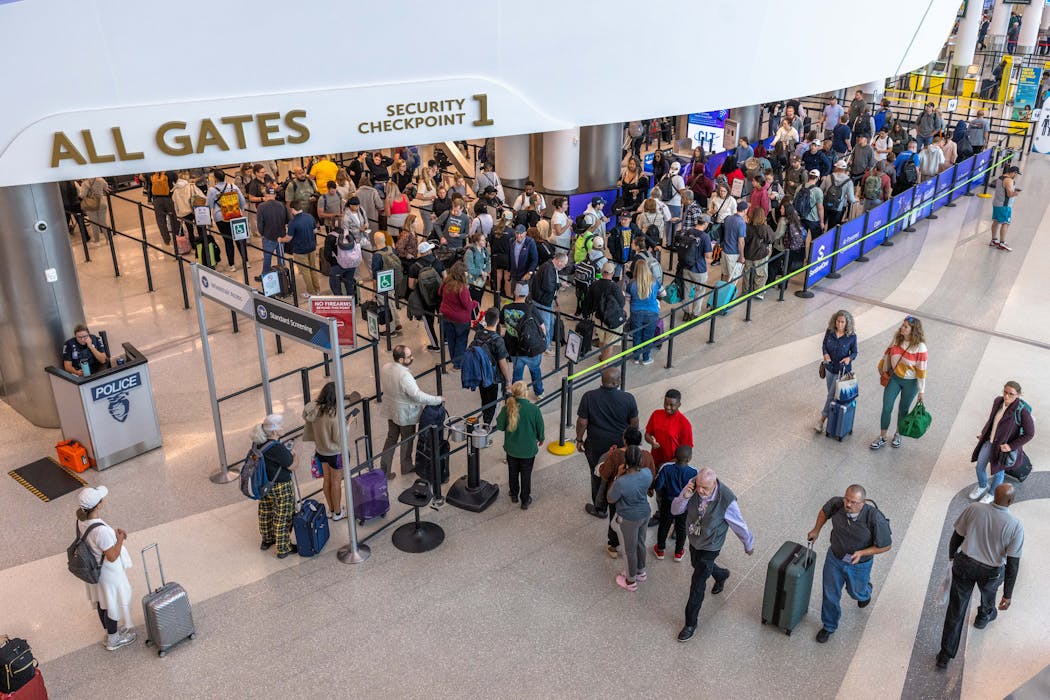
Tourists are diverse. Are tourism professors? Grant Baldwin/Getty Images

White and male professors continue to dominate U.S. hospitality and tourism education programs, our new research has found, even as the industry is growing increasingly diverse. This imbalance raises questions about who shapes the future of hospitality and whose voices are left out of the conversation.

Our analysis of 862 faculty members across 57 of the top U.S. college hospitality programs found that nearly three-quarters of these professors were white, and more than half were male. White men alone represented 43.5% of all faculty, showing persistent overrepresentation.

By comparison, only 3.7% of faculty identified as Black, far below the 14.4% share of the U.S. population that identifies as Black. Asian faculty accounted for 22.5% – significantly more than the Asian share of the U.S. population, with slightly more Asian women than men represented.

Because publicly available data did not allow us to reliably identify faculty from Hispanic or Indigenous backgrounds, our analysis focuses on representation among Black and Asian professors.

Our findings are based on a review of online faculty directories for every U.S. hospitality and tourism program included in the Academic Ranking of World Universities for 2020. We coded each faculty member by gender, race and academic rank using publicly available information gathered through university websites, LinkedIn and other professional profiles.

While this approach cannot capture the full complexity of individual identity, it reflects how representation is typically perceived by students and prospective faculty. For example, when a student browses a university’s website or sits in a classroom, they notice who looks like them and who does not.

Our results point to a stark imbalance. The people teaching, researching and preparing the next generation of hospitality leaders do not mirror the demographics of either the workforce or the student population.

Despite growing institutional attention to fairness and belonging across higher education, the tourism and hospitality field has been slow to evolve.

Why it matters

Representation in higher education isn’t just a matter of fairness. It affects student outcomes and the long-term sustainability of the field. Researchers have found that when students see role models who share their racial or ethnic identity, they report stronger connections to their academic community, higher retention rates and greater academic confidence.

For hospitality programs, which emphasize service, empathy and cultural understanding, these effects are especially meaningful. The hospitality workforce is one of the most diverse in the United States, spanning global hotels, restaurants, events and tourism operations. Yet the lack of variety among those teaching hospitality sends a conflicting message. Diversity is valued in the workforce, but it remains underrepresented in the classrooms training future leaders.

Major employers such as Marriott, Hyatt and IHG have invested heavily in programs that promote access and belonging, creating leadership pipelines for underrepresented groups. Meanwhile, academic programs that prepare these future leaders have not made comparable progress.

The absence of representation among hospitality and tourism academia also shapes the kinds of research questions that get asked. When faculty from underrepresented backgrounds are missing, issues such as racialized guest experiences, workplace bias and equitable career advancement may be overlooked.

What still isn’t known

Our study provides a snapshot, rather than a complete picture of faculty representation in U.S. hospitality and tourism programs. Because the sample focused on research-intensive universities, it excluded many historically Black universities and teaching-focused institutions, which may have more professors of color.

The research also relied on publicly available photographs and institutional profiles to identify race and gender. While this method mirrors how students visually perceive representation, it cannot fully capture multiethnic or intersectional identities.

We believe that future studies should track how faculty composition evolves over time and explore the lived experiences of educators from underrepresented backgrounds. Understanding the barriers that prevent these scholars from entering or staying in academia is essential for creating environments where all faculty can thrive.

The Research Brief is a short take on interesting academic work. Abigail Foster, admissions specialist at the University of the District of Columbia’s David A. Clarke School of Law, contributed to this article.

The Conversation

The authors do not work for, consult, own shares in or receive funding from any company or organization that would benefit from this article, and have disclosed no relevant affiliations beyond their academic appointment.

ref. US hospitality and tourism professors don’t mirror the demographics of the industry they serve – https://theconversation.com/us-hospitality-and-tourism-professors-dont-mirror-the-demographics-of-the-industry-they-serve-273345

Rebirth of the madman theory? Unpredictability isn’t what it was when it comes to foreign policy

Source: The Conversation – Global Perspectives – By Andrew Latham, Professor of Political Science, Macalester College

🎶 When the madman flips the switch, the nuclear will go for me 🎶 Columbia Pictures, CC BY-SA

Tariffs are on, until they are not. Military force is an option … and then it’s off the table.

Erratic behavior and unpredictability is having a moment in foreign policy circles. In the White House and elsewhere, it is seemingly being viewed as a strategic asset rather than a weakness.

But it is far from a new strategy. Wild threats, sudden policy reversals and intentionally confusing language have long been used to keep adversaries off balance and gain leverage.

In fact, the concept has its own name in international relations: “madman theory.” As outlined by Cold War strategists Daniel Ellsberg and Thomas Schelling, it holds that projecting a readiness to take extreme action can shape an opponent’s calculations by heightening fears of escalation.

While the theory was meant to be explanatory, in the sense that observers used it to explain apparently irrational behavior, it has sometimes been used in a prescriptive way, as an approach consciously adopted by leaders.

The 3 conditions for madman success

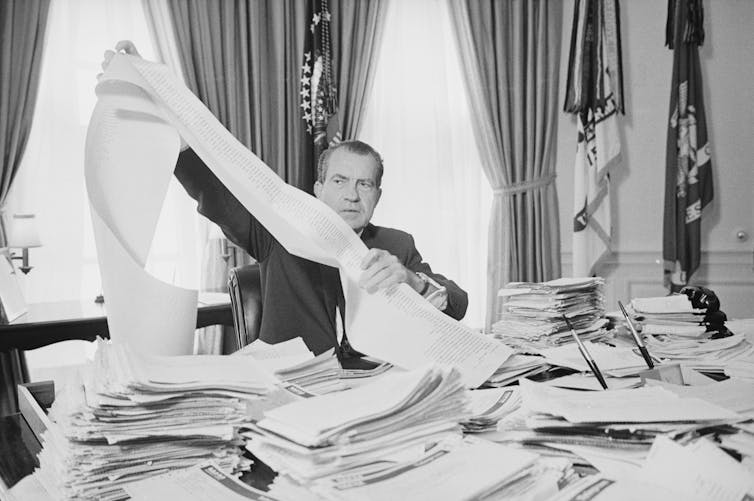
The madman theory has historical roots going back to Machiavelli, but it is most closely associated with Richard Nixon, who, as incoming president, reportedly used the term to explain his approach to trying to force North Vietnam’s surrender in the Vietnam War.

Historians see evidence of the theory’s limited applicability in episodes such as Nixon’s 1969 placing of the U.S. military on nuclear alert, which appeared to have reinforced Soviet caution even if it did not bring about an end of the Vietnam War.

A man holds a long scroll of paper.
President Richard Nixon is closely associated with the ‘madman theory.’
Bettmann/Getty Images

The theory was more applicable in Nixon’s era because of three background conditions that were in place.

The first was information scarcity. During the Cold War, signals traveled more slowly than they do today and through narrow channels. Messages were filtered by professional diplomats, intelligence analysts and military officers.

Ambiguity could be sustained. A country’s leader could appear possibly unhinged without being instantly decoded, contextualized or publicly dissected. “Madman” signaling depended on this controlled opacity.

The second condition was a stable adversary with a shared notion of risk. Nixon’s gambit worked, when it worked at all, because Soviet leaders were deeply conservative risk managers operating inside a rigid hierarchy. They feared miscalculation because they believed it could lead to the Soviet Union’s fall — or at least their fall within it.

The third condition was credibility built through restraint elsewhere. The madman pose only works if it is exceptional. Nixon appeared dangerous to adversaries precisely because the American system normally appeared controlled. His apparent erratic behavior was exceptional in a context of bureaucratic orderliness.

But the world of those three conditions is gone.

Threats today are tweeted, clipped, reframed, leaked, mocked and talked about in real time. Unpredictability doesn’t have time to breathe public fear into existence. Rather, it can devolve into noise.

And nations such as Iran, Russia and China operate in a world they already regard as unstable and unjust. Volatility does not frighten them; it is the environment they expect. In such conditions, apparent irrationality can invite probing, hedging or reciprocal escalation.

Meanwhile, erratic behavior is no longer exceptional or unexpected.

Many a madman would struggle today

Unpredictability only works if it’s strategic rather than designed on the fly. Trump has blustered, contradicted himself publicly, ramped-up rhetorically and then backed down, mostly without receiving obvious concessions.

The more this happens, the more predictability he creates about unpredictability.

And once unpredictability becomes expected, it loses its coercive force.

This dynamic is evident in Trump’s handling of both Iran and Greenland. In the Iranian case, pressure — including military strikes — has been applied without clearly defining where escalation would end.

With Greenland, coercive threats aimed at an ally only strained NATO without producing compliance.

In neither instance did unpredictability translate into durable leverage. Instead, it generated uncertainty about objectives and limits.

A man in a suit and red tie stands.
Is Donald Trump’s unpredictability becoming predictable?
Samuel Corum/Getty Images

A bigger problem for any leader wishing to adopt a madman strategy is that today’s international order and media ecosystem are more inured to volatility. Threats no longer freeze opponents into caution.

Friendly nations hedge their bets. For example, faced with U.S. threats over tariffs, India strengthened ties with China.

Meanwhile, enemies test boundaries. Russia, for example, has treated Trump’s ambiguous signaling on Ukraine as little more than a green-light for it to continue its campaign to conquer the Donbas region.

Does the madman have a future?

There are still limited circumstances in which ambiguity can serve a strategic purpose.

Limited uncertainty about specific responses can reinforce deterrence by keeping adversaries cautious. U.S. strategic ambiguity toward Taiwan, for example, leaves it unclear whether Washington would intervene militarily in the case of an attack by Beijing, discouraging the locking of any side into automatic escalation.

That part of the madman approach remains effective. But what no longer works is volatility untethered from clear objectives and visible limits.

The madman theory was built for a rigid, rule-bound world. It is least effective precisely where today’s politics feels most chaotic.

This article is part of a series explaining foreign policy terms commonly used but rarely explained.

The Conversation

Andrew Latham does not work for, consult, own shares in or receive funding from any company or organization that would benefit from this article, and has disclosed no relevant affiliations beyond their academic appointment.

ref. Rebirth of the madman theory? Unpredictability isn’t what it was when it comes to foreign policy – https://theconversation.com/rebirth-of-the-madman-theory-unpredictability-isnt-what-it-was-when-it-comes-to-foreign-policy-274098

Grains of sand prove people – not glaciers – transported Stonehenge rocks

Source: The Conversation – Global Perspectives – By Anthony Clarke, Research Associate, School of Earth and Planetary Sciences, Curtin University

Ask people how Stonehenge was built and you’ll hear stories of sledges, ropes, boats and sheer human determination to haul stones from across Britain to Salisbury Plain, in south-west England. Others might mention giants, wizards, or alien assistance to explain the transport of Stonehenge’s stones, which come from as far as Wales and Scotland.

But what if nature itself did the heavy lifting in transporting Stonehenge’s megaliths? In this scenario, vast glaciers that once covered Britain carried the bluestones and the Altar Stone to southern England as “glacial erratics”, or rocks moved by ice, leaving them conveniently behind on Salisbury Plain for the builders of Stonehenge.

This idea, known as the glacial transport theory, often appears in documentaries and online discussions. But it has never been tested with modern geological techniques.

Our new study, published today in Communications Earth and Environment, provides the first clear evidence glacial material never reached the area. This demonstrates the stones did not arrive through natural ice movement.

While previous research had cast doubt on the glacial transport theory, our study goes further and applies cutting-edge mineral fingerprinting to trace the stones’ true origins.

A clear mineral fingerprint

Giant ice sheets are messy, leaving behind piles of rock, scratched bedrock and carved landforms.

However, near Stonehenge, these tell-tale clues are either missing or ambiguous. And because the southern reach of ice sheets remains unclear, the glacial transport idea is open to debate.

So, if no big and obvious clues are present, could we look for tiny ones instead?

If glaciers had carried the stones all the way from Wales or Scotland, they would also have left behind millions of microscopic mineral grains, such as zircon and apatite, from those regions.

When both minerals form, they trap small amounts of radioactive uranium – which, at a known rate, will decay into lead. By measuring the ratios of both elements using a technique called U–Pb dating, we can measure the age of each zircon and apatite grain.

Because Britain’s rocks have very different ages from place to place, a mineral’s age can indicate its source. This means that if glaciers had carried stones to Stonehenge, the rivers of Salisbury Plain, which gather zircon and apatite from across a wide area, should still contain a clear mineral fingerprint of that journey.

Searching for tiny clues

To find out, we got our feet wet and collected sand from the rivers surrounding Stonehenge. What we discovered was striking.

Despite analysing more than seven hundred zircon and apatite grains, we found virtually no mineral ages that matched the bluestone sources in Wales or the Altar Stone’s Scottish source.

Zircon is exceptionally tough: grains can survive being weathered, washed into a river, buried in rocks, and recycled again millions of years later. As such, zircon crystals from Salisbury Plain rivers span an enormous stretch of geological time, covering half the age of the Earth, from around 2.8 billion years ago to 300 million years ago.

However, the vast majority fell within a tight band, spanning between 1.7 and 1.1 billion years old. Intriguingly, Salisbury River zircon ages match those from the Thanet Formation, a blanket of loosely compacted sand that covered much of southern England millions of years ago before being eroded.

This means zircon in river sand today is the leftovers from ancient blankets of sedimentary rocks, not freshly delivered sand from glaciers during the last Ice Age 26,000 to 20,000 years ago.

Apatite tells a different story. All grains are about 60 million years old, at a time when southern England was a shallow, subtropical sea. This age doesn’t match any potential source rocks in Britain.

Instead, apatite ages reflect the squeezing and uplifting caused by distant mountain-building in the European Alps, causing fluids to move through the chalk and “reset” apatite’s uranium-lead clock. In other words, the heating and chemical changes erased the mineral’s previous radioactive signature and started the clock ticking again.

Much like zircon, apatite isn’t a visitor brought in by glaciers but is local and has been sitting on Salisbury Plain for tens of millions of years.

A new piece of the Stonehenge story

Stonehenge sits at the crossroads of myth, ancient engineering and deep-time geology.

The ages of microscopic grains in river sand have now added a new piece to its story. This gives us further evidence the monument’s most exotic stones did not arrive by chance but were instead deliberately selected and transported.

The Conversation

Anthony Clarke receives funding from the Australian Research Council.

Chris Kirkland does not work for, consult, own shares in or receive funding from any company or organisation that would benefit from this article, and has disclosed no relevant affiliations beyond their academic appointment.

ref. Grains of sand prove people – not glaciers – transported Stonehenge rocks – https://theconversation.com/grains-of-sand-prove-people-not-glaciers-transported-stonehenge-rocks-271310

Shooting of Alex Pretti in Minneapolis has put America’s gun lobby at odds with the White House

Source: The Conversation – UK – By Andrew Gawthorpe, Lecturer in History and International Studies, Leiden University

Another US citizen has allegedly been killed by immigration agents in Minnesota, raising tensions between state and federal governments. The actions of the federal agencies involved has drawn fierce criticism not only from former Democratic presidents Barack Obama and Bill Clinton, but also America’s powerful pro-gun lobby, the National Rifle Association (NRA).

If you were to think it unusual that the people named in the previous sentence appear to be on the same side over this issue, you’d be right. But these aren’t usual times in America.

Video footage taken at the scene reportedly shows agents of the US Customs and Border Protection (CBP) – working with the Immigration and Customs Enforcement Agency (ICE) in Minnesota to detain people they suspect of being illegal migrants – tackling 37-year-old nurse, Alex Pretti.

The footage reportedly shows they wrestled him to the ground, beat him and apparently removed a handgun from a holster he was wearing, before firing ten shots at him.

Since his killing a lot of attention has focused on his gun. Carrying a handgun, whether openly or holstered, is legal in Minnesota, and Pretti had a license for his gun. So he was perfectly within his rights to be carrying it. And there is nothing to suggest from the footage that he attempted to draw it or use it while being tackled by the ICE agents.

Of course, in the United States, the right to keep and bear arms – the second amendment – is a pretty big deal to a lot of people, especially conservatives. So when various figures in the Trump regime suggested that CBP agents had been justified in shooting Pretti because he was carrying a holstered weapon, they provoked outrage from gun rights activists. And, significantly, many of these people are usually on the same page as the White House about pretty much anything.

First there was FBI director Kash Patel, who told Fox News: “You cannot bring a firearm loaded with multiple magazines to any sort of protest that you want.” Dead wrong, replied the Minnesota Gun Owners Caucus and the group Gun Owners of America – you’re legally entitled to bring a gun to a protest.

Then a Trump-appointed district attorney waded in, arguing: “If you approach law enforcement with a gun, there is a high likelihood they will be legally justified in shooting you.”

This drew a rebuke from the NRA, one of the most prolific and important right-wing groups in America and a big donor to Trump’s campaigns, which replied that: “This sentiment … is dangerous and wrong. Responsible public voices should be awaiting a full investigation, not making generalizations and demonizing law-abiding citizens.”

The problem that the Trump regime has is that it appears from abundant video evidence that Pretti was not handling his gun irresponsibly. He wasn’t waving it around, he wasn’t threatening anyone, in fact he wasn’t even touching it. He didn’t approach the federal agents – they appeared to pile on him. And he was disarmed of his holstered weapon by one of them before he was killed.

Second amendment vs tyrannical government

The reason that this touches such a raw nerve, even with many people who usually support Trump’s agenda, is that this cuts to the core of what the second amendment is about. In the eyes of the right, the amendment’s whole legitimacy rests on the idea that it allows the populace to arm in order to protect itself against a tyrannical government.

This means that Pretti was doing exactly what second amendment advocates say they need guns for. And while some gun rights advocates may have been willing to keep quiet while federal agents were trampling on the rights of migrants and brown-skinned citizens, the murder of Pretti is a bridge too far.

That’s not to say that the gun lobby is turning on the Trump administration – at least, not yet. But it is notable that ICE’s outrages (and those of the related Customs and Border Protection Agency) are becoming so hard to ignore that they’re increasingly drawing opposition not just from the left but also from traditionally right-wing groups.

The NRA is not about to flip and start fundraising for the next Democratic party presidential candidate. But its willingness to call out the regime is unusual to say the least. And it increases pressure on Trump to change course and damages the credibility of key people in the regime among conservatives.

The whole sequence of events also reveals something more concerning – the fact that more and more people in America on both left and right are carrying weapons. The idea of arming for self-defense has been quietly gaining ground in left-wing circles for around a decade.

Gun clubs have sprung up to serve LGBTQ+ people, black people, white liberals – anyone who fears they might one day be a target of violence from the Trump-ified federal authorities or right-wing militia. Nearly one-third of self-identified liberals now live in a gun-owning household.

And while it’s hard to find fault with their fears, this is another reason why America’s knife-edge politics is so terrifying. What happens when things fall apart in a country in which hatred and fear have driven so many people to arm themselves?

Let’s hope that Alex Pretti’s death serves as a reminder of the importance of stepping back from the brink rather than pushing the country closer to it.


A version of this article also appears on the author’s Substack series, America Explained.

The Conversation

Andrew Gawthorpe is affiliated with the Foreign Policy Centre, a London-based think tank.

ref. Shooting of Alex Pretti in Minneapolis has put America’s gun lobby at odds with the White House – https://theconversation.com/shooting-of-alex-pretti-in-minneapolis-has-put-americas-gun-lobby-at-odds-with-the-white-house-274343

Ontario’s Bill 33 raises serious concern about campus equity and student rights

Source: The Conversation – Canada – By Aasiya Satia, Doctoral candidate, Higher Education Leadership, Western University

Ontario’s Bill 33, passed in November 2025, could change how post-secondary admissions decisions are made, as well as how student fees are managed and what campus services they fund.

Each year, tens of thousands of university and college applicants come from communities that are historically underrepresented in higher education.

These policy changes could shape who gains access to programs, supports and opportunities for success.

The Council of Ontario Universities (COU) and many other educational groups and advocates and students have raised serious concerns about how the bill reaches into educational affairs. Some note that the bill comes at a time when there are ongoing public debates about institutional independence and decision-making.


Read more:
Ontario’s Bill 33 expands policing in schools and will erode democratic oversight


The provincial government says Bill 33, which it termed the Supporting Children and Students Act, will make education more transparent and consistent. The law affects school boards, colleges and universities.

For us as scholars whose combined expertise spans strategic planning, equity, anti-oppressive forms of education and learning accessibility, the bill’s reach into admissions raises serious concerns about equity and student rights.

Discussion of ‘merit’

A section of the bill “requires colleges of applied arts and technology and publicly assisted universities to assess applicants based on merit and to publish the criteria and process to be used for assessment into programs of study.”

Greater transparency in admissions is positive. But if merit is defined too narrowly, it could block diverse pathways to post-secondary admissions that recognize different kinds of achievement, leaving out students from marginalized communities.

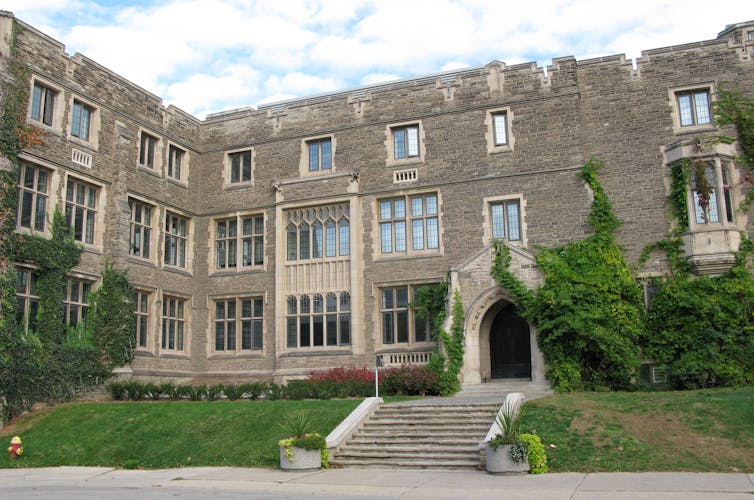
Steps leading up to an archway.
If merit is defined too narrowly, it could block diverse pathways to post-secondary admissions.
(Saforrest/Wikimedia Commons), CC BY-SA

Studies in professional and medical education show that relying only on grades can miss other signs of potential, like life experience, community work and meeting the needs of society.


Read more:
Resisting the backlash against equity in medicine will improve health outcomes for all


Grades seem objective, but they depend on many factors like family income and access to school and community resources — along with teacher and parent expectations and how much time students have to study while balancing work, family, community and other responsibilities.

Students from low-income, Black, Indigenous, rural or otherwise marginalized communities often face big challenges even before applying to college or university. These challenges reflect longstanding gaps in income and education.

Bill 33 doesn’t explain what “merit” means. Without a clear definition, admissions could end up favouring students who already have advantages. New rules will soon define how merit is measured, and these rules will be very important. If they don’t protect equity-focused pathways, the law could make existing gaps even worse.

Student fees and risk to campus services

Fair admissions are only part of the story. Bill 33 also changes how student fees are handled. These changes could harm students from marginalized communities.

Student groups have raised strong concerns about how Bill 33 could affect ancillary fees and the services they fund.

According to the Ontario Undergraduate Student Alliance, “ancillary fees are democratically approved by students, for students.” These are extra student fees that fund essential services such as food banks, wellness centres, accessibility programs, cultural programs, transportation and safety programs. These services could be at risk if the province gains more control over how fees are defined and charged.

In 2019, student groups successfully challenged Ontario’s Student Choice Initiativ. Through this measure, the province tried to limit ancillary fees but the court ruled it didn’t have the legal authority to do so at the time. Bill 33 responds to that ruling by changing the law itself, giving the province clear authority to regulate student fees.

The Canadian Federation of Students in Ontario has warned that focusing on fee oversight may distract from deeper problems in higher education, including chronic underfunding and high tuition costs.

Could weaken student-led supports, harm equity

Under Bill 33, the government can decide which fees can be charged and under what rules. Most universities clearly list how ancillary fees are used. For example, at McMaster University, these fees help fund transit passes, wellness services, career supports and refugee student programs.

How fees are managed is closely linked to the government’s broader oversight of universities, linking financial decisions to questions of accountability, governance and whose voices are heard in decision-making.

Student groups have long played a key role in raising equity concerns and ensuring local needs are addressed. If more decisions are made at the provincial level, student voices could carry less weight unless students are clearly included in new rules and decision-making processes.

Looking ahead: Equity is not automatic

As universities begin to apply Bill 33, students and faculty may notice changes in how admissions decisions are explained, how student fees are handled and how transparency rules are used.

These changes will not look the same at every campus. Their impact will depend on how the rules are interpreted and whether universities make equity a clear priority in their policies.

While the law may seem neutral, its real impact will depend on how it is put into practice and whose experiences are considered.

Ensuring equitable access to higher education requires careful planning, enough funding and meaningful input from students, faculty and communities most affected by these changes.

Equity will not happen by chance. It will depend on the choices universities and policymakers make now, and on whose voices are heard in those decisions.

The Conversation

The authors do not work for, consult, own shares in or receive funding from any company or organisation that would benefit from this article, and have disclosed no relevant affiliations beyond their academic appointment.

ref. Ontario’s Bill 33 raises serious concern about campus equity and student rights – https://theconversation.com/ontarios-bill-33-raises-serious-concern-about-campus-equity-and-student-rights-272548

Uganda’s boda-boda drivers: the digital economy hasn’t been the route to formal work and better protection – research

Source: The Conversation – Africa – By Rich Mallett, Research Associate and Independent Researcher, ODI Global

Digital labour platforms – like fast food delivery and cab hailing services – are having a dramatic impact on people’s labour rights and working conditions around the world.

In western countries like the UK and the US, their rise has intensified a process of labour casualisation already several decades in the making. Under the guise of “flexibility”, platforms have heralded a return to insecure, temporary forms of employment that offer few rights or benefits to workers.

But in “less developed” countries like Uganda, the growth of the digital gig economy is often considered a boon. Across the global south, it has been claimed that platforms are not only creating millions of new jobs, but they are actually helping to formalise an informal economy so vast it accounts for an estimated 70% of total employment in low- and middle-income countries.

Existing research suggests that by guiding informal workers towards compliance with registration and licensing requirements or making them more visible to state authorities, digital labour platforms are capable of “counteracting informal economic activity”.

But is it all as straightforward as it seems?

In a new research paper I put this claim to the test through a case study of moto-taxi work in the Ugandan capital city, Kampala.

Moto-taxi (or boda boda) work is a hugely important source of income in Uganda, providing livelihoods for an estimated 350,000 people in the capital alone. Over the past decade, ride-hail platforms have descended upon this vast industry, claiming to offer safer, better paid work and a step towards formality.

Drawing on 112 interviews, 370 driver surveys and scans of relevant media, my research reaches a different conclusion. Despite shifting online, digital moto-taxi drivers remain as they always were – informal workers in an unprotected labour market.

This raises fundamental questions about the capacity of digital labour platforms to bring about positive transformations in the global informal economy.

Fallacies of ‘plat-formalisation’

As the new paper shows, moto-taxi workers’ inclusion within the new platform economy brings them no closer to formal labour status in any meaningful way.

This is illustrated by three key insights from my findings.

First, despite early collaborative engagement with state actors, Uganda’s ride-hail companies have tended to operate in unilateral, platform-specific ways that undermine prospects for sectoral standardisation. Each platform enforces its own rules over drivers, and these do not always line up with government legislation.

Take driver licensing, for example. While some companies insist that drivers must have a valid driving permit before working through their apps, others bypass this requirement completely. Market leader SafeBoda, for instance, instead chooses to enrol new drivers in road safety training at a purpose-built “academy”. Though a positive step towards safer driving standards, this is not the same as formalisation.

Second, Uganda’s ride-hail platforms accept zero legal responsibility for the welfare and safety of those using their apps, including cases of “bodily injuries, death, and emotional distress and discomfort”. Despite claiming to help regulate the industry, these companies’ designation of informal moto-taxi workers as independent “gig workers” keeps drivers distanced from state labour regulation.

And third, my findings indicate corporate reluctance to share data with government. According to one city planner I talked with, while the platforms tended to talk positively about public-private collaboration, when push came to shove they would often “withhold their data”. Recent evidence suggests this is continuing to happen, further highlighting the limits of private data ownership and non-binding agreements around data sharing. Without access to this information, it is difficult for governments to register workers, tax them effectively and extend labour protections.

Profiting from informality

Ride-hailing may not have led to better, more formalised work for Uganda’s moto-taxis. But what is has done is open up new revenue streams for the various local and international companies involved. The result: a formalisation not of drivers’ labour but of their wealth.

As detailed in the paper, some of the techniques here include:

  • Commissions. Drivers regularly lose 15%-20% of their trip fares in the form of company commission fees. With digital technology, these are increasingly being captured via cashless payment systems that deduct fees and other equipment-related debts automatically.

  • Equipment. Many companies operate by selling drivers the gear they need to function in the ride-hail economy. SafeBoda, for instance, regularly charges new riders somewhere in the region of US$140 for a smartphone, crash helmets and branded uniforms. Drivers often take this on as debt and pay it back incrementally over time, only to later discover that this does not, in all cases, entitle them to actual ownership. As one former employee at the company told me:

The helmet itself is a business. It’s on the side, you can’t see it. The phone is a business. It’s about business besides riders. It’s all about getting commission on things.

  • Corporate tie-ins. Through a series of funding relationships and “private-private partnerships”, Uganda’s ride-hail platforms make drivers visible and accessible to a whole host of banks, insurance agencies and alternative credit lenders. These financial actors are all keen to find lucrative new markets at the “bottom of the pyramid”. Ride-hailing is simply the vehicle for this.

The formalisation agenda remains important. It is central to achieving better working conditions and stronger labour protections for hundreds of millions of workers around the world.

But for private digital platforms operating across Africa’s informal economies, the bottom line is often not about “counteracting informal economic activity” at all. It is about profiting from it.

The Conversation

This article draws on doctoral research, for which the author received funding from the UK’s Economic and Social Research Council (ESRC).

ref. Uganda’s boda-boda drivers: the digital economy hasn’t been the route to formal work and better protection – research – https://theconversation.com/ugandas-boda-boda-drivers-the-digital-economy-hasnt-been-the-route-to-formal-work-and-better-protection-research-270993

Crime-fighting in Lagos: community watch groups are the preferred choice for residents, but they carry risks

Source: The Conversation – Africa (2) – By Adewumi I. Badiora, Senior Lecturer, Department of Urban and Regional Planning, Olabisi Onabanjo University

Criminal activities have developed into a security crisis in Nigeria. Alongside the responses of security agencies such as the police and military, there has been a huge local response, with community groups mobilising in the face of criminal attacks.

For example, communities in Zamfara State, north-west region, repelled a bandit attack, causing the death of 37 bandits in August 2024. In Sokoto State, north-west region, residents rescued kidnapped individuals and recovered the body of the deceased village head in August 2024. In Kwara state, north-central region, community groups rescued people from their abductors in December 2025.

But how effective are these community-organised interventions?

I’m an urban and community safety researcher who has studied various aspects of insecurity in Nigeria, particularly in the country’s south-west, for more than a decade now.

In a recent paper I sought to answer this question in relation to Lagos. As Nigeria’s largest city with an estimated population exceeding 20 million, Lagos faces severe, complex crime challenges driven by rapid, poorly managed urbanisation and high unemployment rates. I surveyed 62 stakeholders in a bid to evaluate community-driven crime prevention strategies. Respondents included residents, members of the state and community groups who were playing important roles in the city’s security processes. This was qualitative research.

Many respondents expressed little or no trust in formal security agencies. Their expectations that the police could protect them were low.

A resident interviewed for the study said that while people like politicians got police protection, ordinary citizens did not:

That is why everyone has devised ways to protect themselves and family.

My research found that these commmunity-organised interventions have emerged in different forms. The commonest is community vigilante groups. These are self-appointed resident security volunteers who take it upon themselves to confront criminals in their neighbourhood. This is common in low-income neighbourhoods of Lagos because they have to deal with crime but feel they can’t rely on the police to patrol, unlike elite neighbourhoods.

A successful urban security strategy

Lagos community vigilante groups range from small groups of volunteers on streets, and informal neigbourhood watches, to well structured local community bodies. Community vigilante members are mostly men. But women are not explicitly excluded, and they are an important source of information.

The groups were using local knowledge to help the police. They compiled information on crimes, suspicious activity and criminal suspects in their area and provided it to the police as needed. In some cases, they joined the police intelligence response team to raid hideouts of criminals in their areas.

A resident interviewed for the study said:

We are local people. We know our community very well. We can easily spot strangers and suspicious movements. This local knowledge is what we have, that the police do not have. So, we complement their efforts by providing dependable intelligence for their work. Beyond that, we also escort police patrol, and our presence has helped them to penetrate streets they would not have been able to navigate by themselves.

The relationship between the police and community groups was “semi-formal”. Arrangements were made by the communities with little or no intervention by the state. The collaborations were owned, structured and sustained by residents.

Some of those involved in the groups were remunerated through financial contributions by residents. However, they “occasionally” received financial support from the local government authorities, individual local politicians and donors.

Successes

My research showed there had been some positive results. Residents confirmed that the collaborations brought safety to their community and had helped to reduce crime and insecurity, particularly where the police were lacking.

A resident interviewed for the study said:

Things are a little better. Before now, it was dreadful as criminals and hoodlums operate openly. Although there is still a long way to go, there has been a commendable level of improvements in our security in the last five years.

Some ongoing issues

Despite its success, several concerns were raised in my study.

First, community vigilante groups are a patchwork of isolated groups. Organisations are fragmented and weak. This could be dangerous because it creates unaccountable groups that can easily change from being protectors to being a threat. That can be seen in the Bakassi Boys (south-east Nigeria), Yan Sakai (north-west Nigeria) and global examples like Mungiki (Kenya) and Autodefensas (Mexico).

Second is the question of the legality of community groups in terms of the provisions of the Nigerian constitution, the Police Act and the Public Order Act. Their legal status is “complex” as they operate in a grey area. Most of them do not have the backing of the federal government, which has the constitutional authority to manage policies regarding them.

Third, while community vigilante groups fill security gaps created by an under-resourced police force, their activities sometimes lead to conflicts because they act as judge, jury and executioner.

A police officer interviewed for the study said:

The activities of vigilantes are usually unlawful in the way and manner they deal with suspected criminals … The lawful thing for them is to report suspected criminals to the police, but many times, they take law into their own hands.

Still, residents view the groups as legitimate because of their perceived effectiveness, deep local knowledge, community ties and quick action.

Fourth, relationships between community groups and the police range from amiable and collaborative to distrustful and hostile. Mutual distrust risks escalating violence rather than reducing it.

A member of a vigilante group put it this way:

We cannot totally entrust suspects and our community to the police. We have situations where suspects were released without any investigation and prosecution. Not only that, corrupt police officers do give hints to these suspects about key vigilante members behind their arrests, and these criminals go all-out for them after their unlawful freedom from the police custody.

Moving forward

To overcome the challenges, the following steps should be taken:

  • reform of Nigeria’s security governance, allowing states to create their own police forces

  • formal recognition and support of community groups

  • adopting policies to curb the proliferation of the groups

  • working more closely with community groups to deal with some of the underlying reasons for insecurity. These include political negligence, youth unemployment, poverty and inequality.

The Conversation

Adewumi I. Badiora does not work for, consult, own shares in or receive funding from any company or organisation that would benefit from this article, and has disclosed no relevant affiliations beyond their academic appointment.

ref. Crime-fighting in Lagos: community watch groups are the preferred choice for residents, but they carry risks – https://theconversation.com/crime-fighting-in-lagos-community-watch-groups-are-the-preferred-choice-for-residents-but-they-carry-risks-273667

Why too much phosphorus in America’s farmland is polluting the country’s water

Source: The Conversation – USA (2) – By Dinesh Phuyal, Postdoctoral Associate in Soil, Water and Ecosystem Sciences, University of Florida

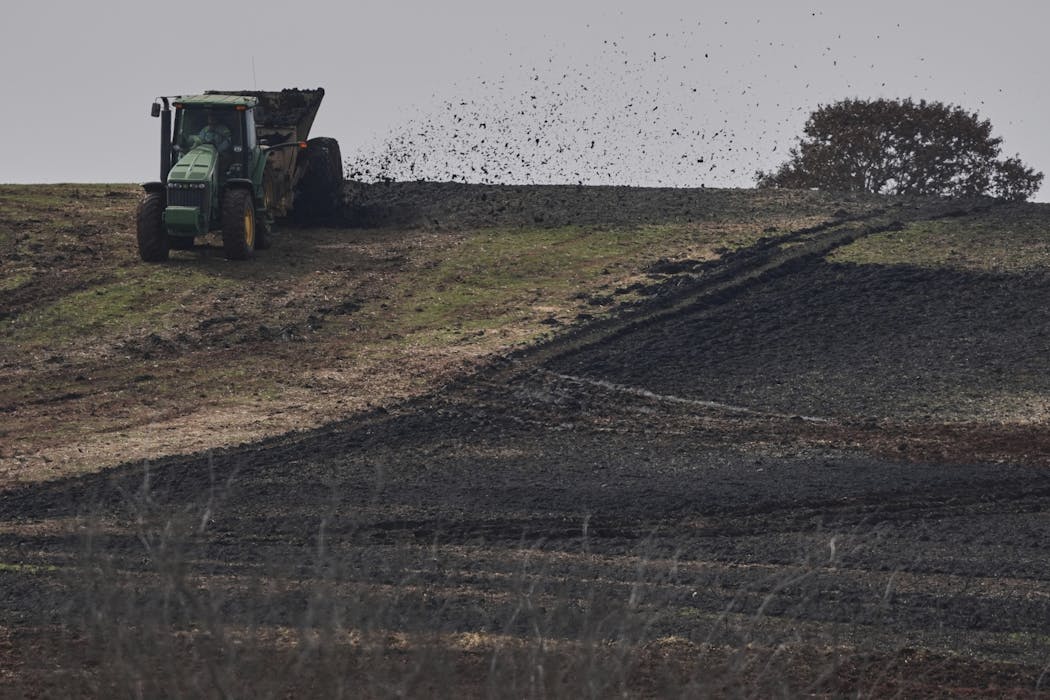
A spreader sprays sewage sludge, which is rich in phosphorus, across a farm in Oklahoma. AP Photo/Joshua A. Bickel

When people think about agricultural pollution, they often picture what is easy to see: fertilizer spreaders crossing fields or muddy runoff after a heavy storm. However, a much more significant threat is quietly and invisibly building in the ground.

Across some of the most productive farmland in the United States, a nutrient called phosphorus has been accumulating in the soil for decades, at levels far beyond what crops actually require. While this element is essential for life-supporting root development and cellular chemistry to grow food, too much of it in the wrong places has become a growing environmental liability.

I’m part of a research effort to figure out how much phosphorus is already in the soil, to then determine how much more, if any, to add to particular fields.

Why farmers add phosphorus in the first place

Small dark pellets.
Pellets of monoammonium phosphate fertilizer.
AP Photo/Paul Sancya

Phosphorus is one of the three primary nutrients plants require for growth, along with nitrogen and potassium. Without enough phosphorus, crops struggle and production suffers.

For decades, applying phosphorus fertilizer has been a kind of insurance policy in American agriculture. If farmers weren’t sure how much was already in the soil, adding a little extra seemed safer than risking a shortfall. Fertilizer was relatively inexpensive, and the long-term consequences were poorly understood.

Unlike nitrogen, which easily escapes from soil into the air or groundwater, phosphorus sticks to soil particles. Once it’s added, it tends to remain in place. That trait made phosphorus seem environmentally benign.

However, phosphorus can still be carried off fields when rain or irrigation water erodes phosphorus-rich soil, or some of the built-up phosphorus dissolves into runoff.

Years of application have led to something no one initially planned for: accumulation.

How much phosphorus has built up?

Since the mid-20th century, farmers across the United States have applied hundreds of millions of tons of phosphorus fertilizer. From 1960 to 2007, phosphate fertilizer consumption in the U.S. increased from approximately 5.8 million metric tons per year to over 8.5 million metric tons annually.

In more recent decades, fertilizer use has continued to rise. In corn production alone, phosphorus applications increased by nearly 30% between 2000 and 2018. Crops absorb some of that phosphorus as they grow, but not all of it. Over time, the excess has piled up in soils.

In many regions across the United States, soil phosphorus levels are now far higher than what crops actually require. In parts of Florida, for example, some agricultural soils contain phosphorus concentrations more than 10 times above levels considered sufficient for healthy plant growth.

Scientists call this buildup “legacy phosphorus.” It’s a reminder that today’s environmental challenges are often the result of yesterday’s well-intentioned decisions.

Green algae float on the surface of water.
Algae float on the surface of Lake Erie.
AP Photo/Paul Sancya, File

When soil phosphorus becomes a water problem

If phosphorus stayed locked in the soil, farmers would have wasted money on fertilizer they didn’t need. And excess phosphorus in soil can hinder the uptake of essential plant micronutrients and alter the soil microbial community, reducing diversity that is important for good soil health.

Unfortunately, phosphorus doesn’t always remain in place. Rainfall, irrigation and drainage can transport phosphorus – either dissolved in water or attached to eroded soil particles – into nearby canals, streams, rivers and lakes. Once there, it becomes food for algae.

The result can be explosive algal growth, known as eutrophication, which turns clear water a cloudy green. When these algae blooms die, their decomposition consumes oxygen, sometimes creating low-oxygen “dead zones” where fish and other aquatic life struggle to survive. This process is primarily driven by phosphorus leaching, as seen in the Florida Everglades.

Another prime example is the largest dead zone in the United States, covering about 6,500 square miles (16,835 square kilometers), which forms each summer in the Gulf of Mexico. Cutting back on nitrogen without lowering phosphorus can worsen eutrophication.

Some algal blooms also produce toxins that threaten drinking water supplies. Communities downstream may be told not to drink or touch the water, and face high treatment costs and lost recreational opportunities. National assessments document toxins associated with algal blooms in many states, particularly where warm temperatures and nutrient pollution overlap.

Rising global temperatures are exacerbating the problem. Warmer waters hold less oxygen than colder waters, increasing the likelihood that phosphorus pollution will trigger eutrophication and dead zones.

A small white box sits in a field of grass, with a solar panel behind it.
A phosphorus monitor operates next to a small stream near an agricultural field in Ohio.
AP Photo/Joshua A. Bickel

Flawed testing hid the problem

Given the risks, a natural question arises: Why don’t farmers simply stop adding phosphorus where it isn’t needed?

Part of the answer lies in how the amount of phosphorus in the soil is measured. Most soil tests used today were developed decades ago and were designed to work reasonably well across many soil types. But soils are incredibly diverse. Some are sandy; others are rich in organic matter formed from centuries of decayed plants.

And those traditional soil tests use acids to extract phosphorus from the soil, delivering inaccurate findings of how much phosphorus plants can actually access. For instance, in soils that have more than 20% organic matter, like those found in parts of Florida and other agricultural regions, the tests’ acids may be partially neutralized by other compounds in the soil. That would mean they don’t collect as much phosphorus as really exists.

In addition, the tests determine a total quantity of phosphorus in the soil, but not all of that is in a form plants can take up through their roots. So soil where tests find high phosphorus levels may have very little available to plants. And low levels can be found in soil that has sufficient phosphorus for plant growth.

When farmers follow the recommendations that result from these inaccurate tests, they may apply fertilizer that provides little benefit to crops while increasing the risk of pollution. This isn’t a failure of farmers. It’s a mismatch between outdated tools and complex soils.

Three plastic containers show different levels of different chemicals.
Soil testing determines levels of various nutrients, but the results don’t always line up with what’s available to plants.
Wayan Vota via Flickr, CC BY-NC-SA

A smarter way forward

The solution isn’t to eliminate phosphorus fertilization. Crops still need it, and many soils genuinely require additional nutrients. The challenge is knowing when enough is truly enough.

Researchers, including me, are developing improved testing methods that better reflect how plants actually interact with soil. Some approaches mimic plants’ root behavior directly, estimating how much phosphorus crops can realistically take up from any given field or type of soil – rather than only measuring how much exists chemically.

Other tests look at the amount of phosphorous a field’s soil can hold before releasing excess nutrients into waterways. These approaches can help identify fields where farmers can use less phosphorus or pause it altogether, allowing crops to draw down the legacy phosphorus already present.

The phosphorus problem is a slow-moving one, built over decades and hidden below ground. However, its effects are increasingly visible in the form of algal blooms, fish kills and contamination of drinking water supplies. Farmers can measure and manage soil nutrients differently and reduce pollution, save money and protect water resources without sacrificing agricultural productivity.

The Conversation

Dinesh Phuyal does not work for, consult, own shares in or receive funding from any company or organization that would benefit from this article, and has disclosed no relevant affiliations beyond their academic appointment.

ref. Why too much phosphorus in America’s farmland is polluting the country’s water – https://theconversation.com/why-too-much-phosphorus-in-americas-farmland-is-polluting-the-countrys-water-273326

Marine protected areas aren’t in the right places to safeguard dolphins and whales in the South Atlantic

Source: The Conversation – USA (2) – By Guilherme Maricato, Pós-doutorando no Programa de Pós-Graduação em Ecologia, UFRJ

Whales have become increasingly common in regions such as the northern coast of São Paulo, which also has heavy ship traffic. Julio Cardoso/Projeto Baleia à Vista

The ocean is under increasing pressure. Everyday human activities, from shipping to oil and gas exploration to urban pollution, are affecting the marine environment. Extensive research shows how this combination of stressors represents one of the greatest threats to marine wildlife, potentially affecting biodiversity on a global scale.

To protect the ocean, one of the primary tools we have is marine protected areas. But are they truly protecting species in the most critical locations?

In an attempt to answer this question in Brazil, we conducted a comprehensive study focusing on two key species: the Bryde’s whale, a nonmigratory species, and the bottlenose dolphin, found in coastal and oceanic waters around the world. We chose these species because they do not migrate and stay in the same areas all year long, where they are exposed to harmful human activities.

bottlenose dolphins swim with a ship in the background.
Bottlenose dolphins swim off the coast of Rio de Janeiro, an area with intense maritime activity.
Guilherme Maricato

The news is unfortunately not good: Our findings, recently published in Marine Pollution Bulletin, show that the areas critical for these species’ survival are also the most threatened.

Where whales and dolphins eat and play

Through spatial analysis, specifically species distribution models, we uncovered these animals’ preferences. We cross-referenced thousands of occurrence records for Bryde’s whales and bottlenose dolphins with environmental data that can influence their presence. This included factors such as water temperature, depth and even food availability.

Two Bryde's whales swimming.
Two Bryde’s whales off the coast of Cabo Frio, Rio de Janeiro.
Israel Maciel

From this data, we created a map showing the most suitable habitats for these species. The results strongly indicated that southeastern Brazil is their “preferred area.” On the continental shelf, these areas are located in shallower waters rich in nutrients, often associated with colder waters and steep seabed slopes that bring food to the surface.

The problem with overlap

The preferred areas we identified, however, are not exclusive to whales and dolphins. Southeastern Brazil is also an economically vital marine region for the country, driven by activities in the Santos and Campos basins, where a new oil reserve was recently discovered.

In the second stage of our research, we overlaid our map of the most suitable habitats for these species with a map of human activity. This included the presence of ports, areas of oil and gas exploration, and various shipping routes.

The result is a near-perfect overlap. The areas where Bryde’s whales and bottlenose dolphins are most frequently found coincide exactly with where human activity is most intense.

Why protected areas aren’t helping them

Brazil has expanded its conservation coverage in recent years by creating four large marine protected areas, which we think is excellent news. However, the crux of the matter lies in the quality of that protection.

In 2024, we also participated in a global collaborative effort to evaluate marine protected area effectiveness, the results of which were published in Marine Policy. The findings revealed that the vast majority of Brazil’s designated protected areas actually permit activities that are incompatible with biodiversity conservation.

This quality gap was also evident in our study. Most marine protected areas in southeastern Brazil, even the most effective ones, are coastal. They do not encompass the suitable habitats for Bryde’s whales and bottlenose dolphins, which are more heavily affected by oil and gas exploration.

And what about the oceanic protected areas Brazil created?

For the most part, they are located in areas that are either not the most suitable for these two species or lack significant conflicts with human activity. There is an ongoing debate about whether governments are protecting the right places or leaving the most critical biodiversity hot spots and conflict zones unprotected.

The real impacts of the conflict

The risk of ship strikes is constant. Whales and dolphins must come to the surface to breathe, and in areas of heavy traffic such as southeastern Brazil, the risk of being hit by vessels is high. Meanwhile, constant noise – from both ship engines and oil and gas exploration – interferes with the navigation, communication and foraging of these animals.

Additionally, there is the risk of entanglement in fishing nets, particularly in areas with intense fishing activity, resulting in bycatch, the incidental capture of nontarget species. Finally, pollution from ports along with potential spills can degrade the health of these animals and weaken their immune systems.

a map of Brazil shows lots of overlap between offshore animal habitats and human activity, particularly in the south and southwest
How the preferred habitats of Bryde’s whales, left, and bottlenose dolphins, right, overlap with human activity. Dark colors indicate a higher exposure index.
Guilherme Maricato

A road map for the future

Our findings serve as a critical warning: Simply creating marine protected areas is not enough. They must be placed in the right locations, protecting species where they are most vulnerable. We have shown that there is an urgent need to rethink conservation strategies in Brazil.

In addition to strengthening the network of marine protected areas, our findings suggest the need for specific management actions to reduce conflicts. While reducing ship speeds can protect whales from collisions, establishing fishing exclusion zones and using acoustic deterrents can prevent dolphins from becoming entangled in nets.

Most importantly, however, we believe these actions must be applied in the areas of highest exposure for conservation to be truly effective. Protecting biodiversity while maintaining economic activity is a complex challenge, but we now have a map to begin this conversation.


This project was funded by the Foundation for Research Support of the State of Rio de Janeiro (Faperj), Brazilian Federal Agency for Support and Evaluation of Graduate Education (Capes) and the National Council for Scientific and Technological Development (CNPq). We also acknowledge the support of the Marine Ecology and Conservation Lab (ECoMAR-UFRJ), Brazilian Humpback Whale Project, Ilhas do Rio Project, Cetacean Monitoring Project, Marine Mammal Monitoring Support System, Marine Conservation Institute and Coral Vivo Project. The publication of this article was also supported by Capes.

The Conversation

Maria Alice S. Alves receives research funding from the National Council for Scientific and Technological Development and the Carlos Chagas Filho Foundation for Research Support of the State of Rio de Janeiro.

Rodrigo Tardin receives funding from the Young Scientist of Our State program of FAPERJ.

Clinton N. Jenkins and Guilherme Maricato do not work for, consult, own shares in or receive funding from any company or organization that would benefit from this article, and have disclosed no relevant affiliations beyond their academic appointment.

ref. Marine protected areas aren’t in the right places to safeguard dolphins and whales in the South Atlantic – https://theconversation.com/marine-protected-areas-arent-in-the-right-places-to-safeguard-dolphins-and-whales-in-the-south-atlantic-274256