Air pollution crosses borders, and so must the policies aimed at tackling it

Source: The Conversation – Canada – By Harshit Gujral, Ph.D. Student, Department of Computer Science, University of Toronto

Parts of India, including the capital Delhi, were once again covered in thick smog recently as toxic pollution from industry and crop-burning engulfed the region. Even though India’s National Clean Air Programme has advanced clean air action, air pollution remains a reoccurring problem.

Reliably protecting public health will require tighter co-ordination across orders of governments and departments. Air pollution is shaped by different economic sectors, weather, geography and siloed institutions. Single-sector fixes alone, like pausing construction or banning older vehicles, are unlikely to deliver system-wide change.

That’s why our team conducted a study to map air quality governance in India as an interconnected system, linking the parts that determine what gets measured, what gets enforced, what gets funded and what persists beyond city boundaries.

In addition to the authors of this article, our research team included Christoph Becker and Teresa Kramarz from the University of Toronto, Om Damani and Anshul Agarwal at the Indian Institute of Technology Bombay and Ronak Sutaria from the environmental consultant Respirer Living Sciences.

Our goal was to identify leverage points in current governance where shifts could deliver the greatest pollution-related health benefits.

If we want clean air to be a public service, we need pathways for communities to participate meaningfully. Our research argues for steady funding and training to build community monitoring literacy so accountability and action persist beyond political cycles.

Developing hyper-local monitoring

One hopeful example comes from the city of Bengaluru in the south of the country.

In this case, community groups installed monitors near schools and hospitals, using the data to spotlight the problem and seek court-mandated enforcement — underscoring the need for clear pathways to use community-generated data in enforcement.

The efforts by the communities aren’t meant to be a substitute for government enforcement. The point is to empower communities and give them a real choice in a system where they have very little voice.

The government monitors air pollution to track pollution levels over time and across locations, and to evaluate whether policies and enforcement are improving air quality.

Although India does need to scale monitoring capacities and make them equitable, we already have enough data streams from satellite observations, reference-grade monitors and low-cost sensors.

The real governance gap is in how these data streams can be used for action: standards for calibration in local conditions, quality assurance and control, and protocols for integrating evidence into enforcement and planning.

We recommend certification and quality assurance and control protocols for hyper-local monitoring so agencies can rely on the data for decisions and enforcement.

Cities elsewhere in the world have treated hyper-local monitoring as more than an awareness tool. In London, the Breathe London programme deployed hundreds of sensors alongside existing reference-grade monitors under a defined quality-assurance framework.

This data played a critical role in identifying street-level pollution hotspots, evaluating traffic interventions and assessing the impacts of policies such as the city’s Ultra Low Emission Zone. Indian governments can learn from this example.

When data is standardized for defined-decision contexts, it enables decision-making.

Governing the airshed

Air pollution does not respect regional or city boundaries. Yet, the National Clean Air Programme often assigns actions to cities, even when cities cannot control a large share of the pollution they face. For example, even when Delhi tightens local restrictions of cars or construction, at least a dozen coal-fired power plants near the city continue to operate without key pollution filters.

This is why we need governance at the airshed scale. An airshed is a region where local weather and geography, such as mountains, influence how air and pollutants move.

Governments must look at how air pollution spreads in an area, then develop rules for co-ordinating across jurisdictions. That means setting out clear roles for different departments, establishing shared data standards and creating dispute-resolution mechanisms so co-ordinated efforts can address the issue effectively.

Right now, the Clean Air Programme is centred on cutting the level of particulate matter in the air by roughly 20-30 per cent. A more actionable approach is figuring out which sectors are driving the airshed pollution — namely transport, construction, industry, power, waste and household fuels — and what sector-specific targets and timelines would actually lead to healthier air.

India’s Commission for Air Quality Management (CAQM), for example, was created specifically to put airshed-level management into practice across state and jurisdictional boundaries under the National Clean Air Programme.

The hardest part is assigning enforceable responsibilities across ministries (like power, transport, agriculture, industry, urban development) at the national, state and local levels, as well as across states.

For instance, agencies like CAQM (and NCAP more broadly) can take airshed-wide pollution inventories (estimates of how much pollution comes from different sources and sectors across an airshed) and translate them into short-term, sector-by-sector targets for each ministry, with deadlines and clear accountability.

Rewrite the objective to protect health

In our paper, we recommend expanding regulatory goals to include public health protection, in addition to meeting particulate matter targets. Putting health at the centre can shape governmental priorities, pushing agencies to focus first on the sources people are most exposed to.

As Ronak Sutaria, the founder and CEO of Respirer Living Sciences and a co-author of our study, told us:

“Air pollution isn’t an environmental statistic; it’s a public-health emergency that shows up in asthma, heart disease and hospital admissions. When we map air quality at the neighbourhood level and link it to health outcomes, clean air can move from a promise to a right — because communities can see what they’re breathing and what it means for their health, and that changes what polluters can get away with.”

A health-first objective also pushes governance toward equity, because exposure burdens are unevenly distributed across different segments of the population.

This an opportunity to align clean-air action with climate goals, while the up-front costs for mitigation are almost always offset by avoided health costs and higher productivity.

Airsheds differ, and so must actions to clean up the air. The value of systems thinking is that it offers a common way to understand what is limiting progress locally and design governance that fits local realities.

The Conversation

The authors do not work for, consult, own shares in or receive funding from any company or organisation that would benefit from this article, and have disclosed no relevant affiliations beyond their academic appointment.

ref. Air pollution crosses borders, and so must the policies aimed at tackling it – https://theconversation.com/air-pollution-crosses-borders-and-so-must-the-policies-aimed-at-tackling-it-273094

Geopolitics will cast a long shadow over the 2026 Milan Cortina Winter Olympic Games

Source: The Conversation – Canada – By Noah Eliot Vanderhoeven, PhD Candidate, Political Science, Western University

This winter’s Olympic games will not be a normal international sporting event. A cloud of geopolitical tension looms over the Milan Cortina Winter Olympics, as well as the upcoming FIFA Men’s World Cup.

The tension escalated after Prime Minister Mark Carney’s speech at the World Economic Forum, where he spelled out his vision for a new world order for middle powers. It stood out starkly against United States President Donald Trump’s own speech at Davos, where he continued expressing his interest in acquiring Greenland from Denmark.

As a result, the 2026 Winter Olympics will likely disrupt the International Olympic Committee’s stated goal of sport bringing the world together under one banner in unique ways. Rather than muting political conflict, the Games may amplify it.

The politics behind Olympic host nations

The unifying mission of the Olympics already sits uneasily alongside previous debates over the morality of hosting the Games in repressive states. For decades, critics have argued that such regimes use the Games to improve their global image and advance their political and economic goals.

International sports events provide widespread media coverage and brand exposure. That spotlight is particularly attractive for authoritarian and repressive regimes seeking legitimacy on the world stage.

Access to a western audience provides these states with the opportunity to “sportswash” their legitimate authority through a carefully curated image.


Read more:
How repressive regimes are using international sporting events for nation-building


Repressive regimes have increasingly pursued this strategy. Research shows that the share of international sporting events hosted by autocracies fell from 36 per cent in 1945-88 to 15 per cent in 1989-2012, but has rebounded to 37 per cent since 2012.

Sportswashing and the Olympic bargain

Sportswashing involves the use of sport to redirect public attention away from unethical conduct. In the case of international sporting events, the aim is typically to improve the reputation of the host nation by using the immense popularity of sport to “wash” away scrutiny linked to human rights abuses or democratic backsliding.

Sportswashing can also work to establish broader global acceptance of repressive regimes, particularly when western institutions accept their wealth and acquiesce to their goals.

International sporting organizations also stand to gain from this arrangement as well. Authoritarian hosts are more likely to acquiesce to demands to build costly, single-use sport facilities, as they do not face the kind of democratic backlash that could arise after using public funds for an event that carries little public benefit.

In some cases, these regimes have even been willing to bribe officials to gain the votes necessary to win bids to host these sporting events.

From sportswashing to nationalism

There is often a symbiotic relationship between repressive regimes and international sporting organizations. However, the Milan–Cortina Games are unlikely to serve up the sportswashing narratives we have seen recently. Instead, the political stories of the 2026 Winter Olympics are likely to be more explicitly nationalist.

Sport is a powerful vehicle for national rhetoric. It can reinforce a person’s social identity or how they see themselves in relation to others by encouraging people to see themselves as a member of a team or country, and celebrating victory as a collective success or interpreting defeat as a symbolic loss.

Sport also possesses powerful symbolism that can be exploited to great affect in forming a coherent national identity. In this way, sporting events can reinforce national identity as an objective symbol that connects to primitive forms of national ideology.

Political tensions heading into Milan Cortina

In the lead-up to the 2026 Winter Olympics, a series of geopolitical flashpoints has intensified political tensions surrounding the Games. These include the U.S. invasion of Venezuela, Trump’s desire to annex both Greenland and Canada and his ongoing trade disputes with traditional allies.

Whether it’s tension between the European Union and the U.S. or between Canada and the U.S., there are many story lines that can serve as galvanizing moments for nationalist rhetoric.

The 4 Nations Face-Off, won by Canada a year ago, demonstrated how quickly Canada and the U.S. can mobilize Canadian nationalism amid tense trade negotiations. Any Olympic ice hockey matchup between the two countries will feed into the national imagination of both countries and their political leaders.

Denmark and the U.S. are also in the same group in the men’s ice hockey tournament, meaning they are guaranteed to play each other in the round-robin phase.

The men’s ice hockey tournament at the 1980 winter Olympics in Salt Lake City, Utah, served as a pivotal moment in the Cold War. When the underdog U.S. beat the favoured Soviet Union Red Army team, it was deemed the “Miracle on Ice.”

Given Trump’s threats against Greenland, a Danish territory, the Olympics matchup between the two teams could serve as Denmark’s own “miracle on ice” moment.

A medal table ripe for political spin

Beyond ice hockey, this is shaping up to be a Winter Olympics the U.S. is likely to perform quite well in. Traditional winter powerhouses Norway and Russia are both facing scandals or exclusion.

Norway, the all-time leader in medals in Winter Olympics history, is facing a massive cheating scandal in ski jumping but is generally a powerhouse in the nordic sports and skiing events. Russian athletes remain barred from competing under their national flag due to the war in Ukraine and are only permitted to participate as vetted Individual Neutral Athletes.

Trump is likely to make a big deal about any strong American performance, framing any success in contrast to both the EU and Canada.

During his second term in office, Trump has welcomed numerous athletes to the White House and publicly linked sporting success to national strength. He celebrated American participation at the Ryder Cup golf tournament and the 4 Nations Face-off, even when those contests ended in U.S. defeats.

A successful Winter Olympics could therefore provide political capital at a sensitive moment. Amid his attack on Venezuela and stated goal of acquiring Greenland, major soccer countries and EU powerbrokers — including France and Germany — have started to tentatively reconsider their participation in the 2026 Men’s World Cup, hosted in large part by the U.S.

But first, the 2026 Winter Olympics will serve up a menu of matchups that stand to serve the nationalist goals of Trump, Carney and leaders across the European Union.

The Conversation

Noah Eliot Vanderhoeven does not work for, consult, own shares in or receive funding from any company or organisation that would benefit from this article, and has disclosed no relevant affiliations beyond their academic appointment.

ref. Geopolitics will cast a long shadow over the 2026 Milan Cortina Winter Olympic Games – https://theconversation.com/geopolitics-will-cast-a-long-shadow-over-the-2026-milan-cortina-winter-olympic-games-273764

Greenland’s Inuit have spent decades fighting for self-determination

Source: The Conversation – USA – By Susan A. Kaplan, Professor of Anthropology, Director of Peary-MacMillan Arctic Museum and Arctic Studies Center, Bowdoin College

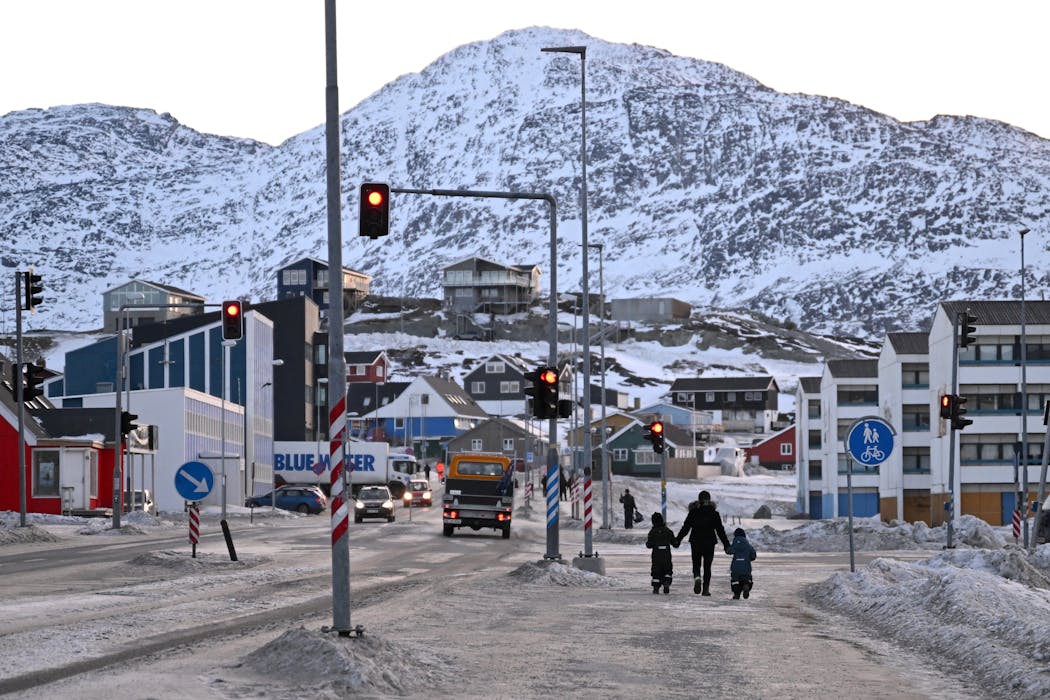
People walk along a street in Nuuk, the capital of Greenland. Ina Fassbender/AFP via Getty Images

Amid the discussion between U.S. President Donald Trump and Danish and European leaders about who should own Greenland, the Inuit who live there and call it home aren’t getting much attention.

The Kalaallit (Inuit of West Greenland), the Tunumi (Inuit of East Greenland) and the Inughuit (Inuit of North Greenland) together represent nearly 90% of the population of Greenland, which totals about 57,000 people across 830,000 square miles (2.1 million square kilometers).

We are Arctic anthropologists who work in a museum focused on the Arctic and its people. One of the areas we study is a land whose inhabitants call it Kalaallit Nunaat, or land of the Kalaallit. Known in English as Greenland, it is an Indigenous nation whose relatively few people have been working for decades to reclaim their right to self-determination.

Arrivals from the west

For nearly 5,000 years, northwestern Greenland – including the area that is now the U.S. Space Force’s Pituffik Space Base, formerly known as Thule Air Force Base – was the island’s main entry point. A succession of Indigenous groups moved eastward from the Bering Strait region and settled in Siberia, Alaska, Canada and Greenland.

Approximately 1,000 years ago, the ancestors of the Inuit living in Greenland today arrived in that area with sophisticated technologies that allowed them to thrive in a dynamic Arctic environment where minor mishaps can have serious consequences. They hunted animals using specialized technologies and tools, including kayaks, dog-drawn sleds, complex harpoons, and snow goggles made from wood or bone with slits cut into them. They dressed in highly engineered garments made from animal fur that kept them warm and dry in all conditions.

Their tools and clothing were imbued with symbolic meanings that reflected their worldview, in which humans and animals are interdependent. Inughuit families who live in the region today continue to hunt and fish, while navigating a warming climate.

Local people fish from a small boat by an iceberg with an ice cave, near Ilulissat, in 2008.
Bryan Alexander, courtesy of the Peary-MacMillan Arctic Museum, Bowdoin College, CC BY-NC-ND

Arrivals from the east

At Qassiarsuk in south Greenland, around the time Inuit arrived in the north, Erik the Red established the first Norse farm, Brattahlíð, in 986, and sent word back to Iceland to encourage others to join him, as described in an online exhibit at the Greenland National Museum. Numerous Norse families followed and established pastoral farms in the region.

As Inuit expanded southward, they encountered the Norse farmers. Inuit and Norse traded, but relations were sometimes tense: Inuit oral histories and Norse sagas describe some violent interactions. The two groups maintained distinctly different approaches to living on the land that rims Greenland’s massive ice sheet. The Norse were very place-based, while the Inuit moved seasonally, hunting around islands, bays and fjords.

As the Little Ice Age set in early in the 14th century, and temperatures dropped in the Northern Hemisphere, the Norse were not equipped to adjust to the changing conditions. Their colonies faltered and by 1500 had disappeared. By contrast, the mobile Inuit took a more flexible approach and hunted both land and marine mammals according to their availability. They continued living in the region without much change to their lifestyle.

A center of activity

In Nuuk, the modern capital of Greenland, an imposing and controversial statue of missionary Hans Egede commemorates his arrival in 1721 to establish a Lutheran mission in a place he called Godthåb.

In 1776, as trade became more important, the Danish government established the Royal Greenland Trading Department, a trading monopoly that administered the communities on the west coast of Greenland as a closed colony for the next 150 years.

By the 19th century some Kalaallit families who lived in Nuuk/Godthåb had formed an educated, urban class of ministers, educators, artists and writers, although Danish colonists continued to rule.

Meanwhile, Kalaallit families in small coastal communities continued to engage in traditional economic and social activities, based on respect of animals and sharing of resources.

On the more remote east coast and in the far north, colonization took root more slowly, leaving explorers such as American Robert Peary and traders such as Danish-Greenlandic Knud Rasmussen a free hand to employ and trade with local people.

The U.S. formally recognized Denmark’s claim to the island in 1916 when the Americans purchased the Danish West Indies, which are now the U.S. Virgin Islands. And in 1921, Denmark declared sovereignty over the whole of Greenland, a claim upheld in 1933 by the Permanent Court of International Justice. But Greenlanders were not consulted about these decisions.

People gather outdoors carrying red and white flags.
People protest President Donald Trump’s desire to own Greenland outside the U.S. consulate in Nuuk, Greenland, in January 2026.
AP Photo/Evgeniy Maloletka

The world arrives

A 1944 ad urging U.S. customers to buy shortwave radios touts contact with the people of Greenland as one benefit.
Courtesy of the Peary-MacMillan Arctic Museum, Bowdoin College, CC BY-NC-ND

World War II brought the outside world to Greenland’s door. With Denmark under Nazi control, the U.S. took responsibility for protecting the strategically important island of Greenland and built military bases on both the east and west coasts. The U.S. made efforts to keep military personnel and Kalaallit apart but were not entirely successful, and some visiting and trading went on. Radios and broadcast news also spread, and Kalaallit began to gain a sense of the world beyond their borders.

The Cold War brought more changes, including the forced relocation of 27 Inughuit families living near the newly constructed U.S. Air Force base at Thule to Qaanaaq, where they lived in tents until small wooden homes were built.

In 1953, Denmark revised parts of its constitution, including changing the status of Greenland from a colony to one of the nation’s counties, thereby making all Kalaallit residents of Greenland also full-fledged citizens of Denmark. For the first time, Kalaallit had elected representatives in the Danish parliament.

Denmark also increased assimilation efforts, promoting the Danish language and culture at the expense of Kalaallisut, the Greenlandic language. Among other projects, the Danish authorities sent Greenlandic children to residential schools in Denmark.

In Nuuk in the 1970s, a new generation of young Kalaallit politicians emerged, eager to protect and promote the use of Kalaallisut and gain greater control over Greenland’s affairs. The rock band Sumé, singing protest songs in Kalaallisut, contributed to the political awakening.

Sumé, a rock band singing in Kalaallisut, the Greenlandic language, helped galvanize a political movement for self-determination in the 1970s.

In a 1979 Greenland-wide referendum, a substantial majority of Kalaallit voters opted for what was called “home rule” within the Danish Kingdom. That meant a parliament of elected Kalaallit representatives handled internal affairs, such as education and social welfare, while Denmark retained control of foreign affairs and mineral rights.

However, the push for full independence from Denmark continued: In 2009, home rule was replaced by a policy of self-government, which outlines a clear path to independence from Denmark, based on negotiations following a potential future referendum vote by Greenlanders. Self-government also allows Greenland to assert and benefit from control over its mineral resources, but not to manage foreign affairs.

Today, Nuuk is a busy, vibrant, modern city. Life is quieter in smaller settlements, where hunting and fishing are still a way of life. While contemporary Greenland encompasses this range of lifestyles, Kalaallit are unified in their desire for self-determination. Greenland’s leaders have delivered this message clearly to the public and to the White House directly.

The Conversation

Susan A. Kaplan has received funding from NSF, NEH, IMLS, SSHRC and private foundations to pursue anthropological and archaeological research in Nunatsiavut, NL, Canada; and offer Arctic-focused outreach programs, museum exhibits and conferences.

Genevieve LeMoine receives funding from the National Science Foundation, Office of Polar Programs, the National Geographic Society, and the Social Sciences and Humanities Research Council of Canada. She has conducted fieldwork in Avannaata Kommunia, Kalaallit Nunaat in collaboration with Nunatta Katersugaasivia Allagaateqarfialu/Greenland National Musuem and Archives and the University of California, Davis.

ref. Greenland’s Inuit have spent decades fighting for self-determination – https://theconversation.com/greenlands-inuit-have-spent-decades-fighting-for-self-determination-274268

US cash, sponsored shirts and TV deals: how money took over English football

Source: The Conversation – UK – By Robin Ireland, Honorary Research Fellow, University of Glasgow

Creativa Images/Shutterstock

It’s almost too easy to make the case that men’s football in England has become overly commercial. At the start of this season, one Premier League striker cost £125 million. And with an annual TV broadcasting deal worth £1.25 billion, more money is flying around the top level of the sport every year.

But it hasn’t always been this way. So how has the sport become so dominated by commerce?

This was what I wanted to find out when I started looking into the history of the club I have supported ever since I was a young student in the 1970s. And it turns out that Norwich City is a good example of a side which has tackled the various economic factors that have transformed English football over the past five decades.

In the 1970s for example, those factors were often a challenge for businesses and households, with high inflation, high unemployment and slow economic growth.

Football clubs were not immune, and it was not an easy task to keep them going as sustainable businesses (especially when hooliganism and violence were lurking outside – and sometimes even inside – the stadium).

It was during that decade (April 1977) that Norwich City employed its first ever commercial manager, Nigel Mackay, who was fully aware that the existence of his very role was potentially upsetting to football purists. But it turned out to be a well-timed appointment.

Two years later, the Football Association allowed clubs to put sponsors’ names on players’ shirts. Four years after that, in July 1983, a meeting of Football League chairmen agreed a television deal with the BBC and ITV which allowed shirt advertising to appear on TV screens for the first time.

Norwich City’s first shirt sponsorship dealwas a three-year contract with a local double-glazing company, worth £50,000 a year, which was considered a milestone in the Norfolk club’s history.

Other clubs were a little more ambitious. And as football clubs continued to try to maximise their income, Tottenham Hotspur FC became the first club to be floated on the stock market in 1983.

A league of their own

The 1980s was a decade which saw a series of football related tragedies, including the Bradford fire in May 1985 which led to 56 deaths, and the deaths of 39 fans at Heysel in Brussels just 18 days later.

At the end of the decade, the horror of the Hillsborough disaster in April 1989, when 97 Liverpool fans died, proved a turning point both in how football was perceived, and how it was governed.

In 1991, the Football Association proposed all-seater stadiums for safety reasons, and a radical transformation of the sport to enable it to develop its commercial potential while leaning towards more affluent consumers.

And while Margaret Thatcher had been deposed as leader of the Conservative party in November 1990, her legacy of free market expansion and the sale of national assets to private investors was mirrored in the world of football.

The decision to allow the top 22 clubs to break away to form a new elite league in 1992 was a victory for those who sought to exploit and commodify football.

That year the “new” top division of English football launched its inaugural season in a fizz of colour and noise. The whole entertainment extravaganza borrowed much from American sport including exciting camera angles, trenchant pundits and new kick-off times to suit television audiences and advertisers.

And the US idea of mixing up television, commercial sponsorship and sport was clear to see as the media mogul Rupert Murdoch acquired the broadcasting rights to live coverage of the Premier League – using it to build his global audience for paid-for satellite television.

There were, of course, also increased ticket prices for those fans still wanting to attend matches at their local ground.

Winners and losers

Remarkably (it seems now), Norwich City were the unlikely leaders of the Premier League for the majority of its first season, before being deposed by Alex Ferguson’s Manchester United. And as others have mentioned, the financial reality in today’s game is that clubs like Norwich, Leeds United, Burnley and Ipswich Town are unlikely to match their successes of the past.

For its part, Norwich City, like many other English clubs, ended up turning to American ownership.

Before that, it was the famous TV cook Delia Smith and her husband who helped to bail their local club out of one of their periodic financial crises in 1997. The couple remained majority shareholders on the club’s board for more than 25 years, and probably never originally planned to hand over their beloved club to a US consortium in March 2025.

In many ways they were bowing to the inevitable. For the English Premier League, with its huge broadcasting revenues and sponsorship income, looks more like an exclusive club with every season that passes.

Fans have been transformed into consumers of a global entertainment product, at the expense of the competition and excitement which the new Premier League had promised. Success is now fundamentally bought with the vast riches generated by television, commercial income and the deep pockets of billionaires.

The result has pros and cons. As Delia Smith said herself: “There’s two ways to look at it. One is that the Premier League is the best in the world and everybody lauds us and our competition, but in another way we’ve lost so much of what football is. I think that’s a bit sad.”

The Conversation

Robin Ireland is affiliated with the Health Equalities Group (registered charity) as Director of Research (Honorary).

ref. US cash, sponsored shirts and TV deals: how money took over English football – https://theconversation.com/us-cash-sponsored-shirts-and-tv-deals-how-money-took-over-english-football-266416

Too many students drop out of A-levels – here’s how to help them pick a course they’ll stick with

Source: The Conversation – UK – By Nigel Newton, Lecturer in Education, Cardiff Metropolitan University

Dmytro Zinkevych/Shutterstock

You can probably remember at least one education choice you regret. You don’t have to be lazy or naive to pick the wrong subject, just lacking in information about what you will actually have to study on the course.

In England, this problem is concentrated at age 16. Young people are expected to choose a small set of subjects – three or four A-levels, or just one T-level, for example – that will shape not just their next two years but potentially how they succeed in the future.

In theory, there is lots of support: open evenings, prospectuses, taster sessions, careers platforms, guidance interviews. Yet disengagement and drop-out remain familiar features of post-16 education. One reason is that the system often treats course choice as a question of career opportunity, while leaving something oddly under-discussed: the curriculum itself.

That matters because students aren’t just choosing “qualifications”. They are choosing to spend hundreds of hours studying – reading, writing, experimenting, analysing – and then to be assessed in particular ways.

In a recently published study, I analysed an unusual dataset: what students thought about the A-level courses they were taking before they began them, and then, later, how well they did in those courses.

The study followed 191 students in a school sixth form who completed 674 questionnaires across 24 A-level subjects. The questionnaires were based on the specific curriculum topics and assessment practices that students would need to engage with on the courses offered in that sixth form.

The questionnaires asked how interested the teenagers would be in studying DNA, including what it is and how it works for A-level biology, for instance, or how much they’d enjoy learning about the management and conservation of coastlines for A-level geography. The questionnaires also asked how they viewed courses in relation to their future career aspirations and progression to university.

Across the subjects with enough data, students who reported higher interest in the content of a course were significantly more likely to complete their courses. But whether a student thought an A-level was valued by future employers, or that would help their progression to university, appeared less likely to affect their chances of completing the course.

This doesn’t mean careers don’t matter to course choice, but it does suggest career aspirations may not be enough to keep students motivated through the weekly pressures of course study.

Schools and colleges go to great lengths to provide guidance. But more information is not the same as meaningful engagement with what a course involves. Previous research suggests students often don’t rely on the course information they’re given to make decisions.

Choice overload

Linked to this is what psychologists call choice overload. Although we value having options, more choice can increase anxiety, reduce satisfaction and encourage us to take shortcuts when making decisions. It’s one reason students simplify decisions by picking subjects they think they know from GCSE, or those their friends are taking.

And for young people from backgrounds affected by disadvantage, choices can narrow towards what seems most likely to lead to employment, even where other interests exist.

Students looking at information on paper
Choice overload can affect decision-making.
gonzagon/Shutterstock

And there’s another layer too: the environment of choice is shaped by competition. Research has shown that sixth forms are using open evenings just as much to market themselves to students as to provide information on what their courses cover.

For instance, in the competitive post-16 marketplace, a school may feel it is risky to recruitment efforts to dwell on the reality that their A-level history focuses on religion in the Tudor period rather than the saucier intrigues of the royal court. “Selling” and “informing” don’t always align.

Education policy implicitly assumes young people are to treat post-16 choices as an optimisation problem: maximise exchange value, keep doors open, choose strategically. This can reduce study to a trade-off: endure now, benefit later. For some learners, that works.

For many, it doesn’t, especially when their attention is already being pulled in multiple directions and when anxiety about their future is high.

But interest in what they are actually studying should not get lost. Interest sustains attention and effort. If we don’t know students’ levels of interest in course content to begin with, it becomes difficult to tell whether later underperformance reflects a poor fit between student and course, or limitations in how teaching and assessment are supporting that engagement.

Curriculum-first guidance is needed, making curriculum and assessment visible early and central to sixth forms and colleges’ offers to students. This should be at the heart of how they support teenagers making choices about their post-16 education.

There’s an additional benefit. If curriculum-specific interests can be measured reliably, this could help schools and colleges evaluate mismatches between course provision, the learners’ interests, and outcomes, creating a new way of thinking about “quality” in post-16 education.

It’s not only about who drops out, or whether GCSE results predict how well students do, but whether sixth forms and colleges are building on students’ intrinsic interests in curriculum disciplines.

It may not be impossible to avoid all regrets about choices in education. But if we start by asking learners what knowledge they would enjoy engaging with and acquiring over the next two years, we may go a long way in reducing those course choice doubts and improving the odds that their motivation survives the first difficult term.

The Conversation

Nigel Newton does not work for, consult, own shares in or receive funding from any company or organisation that would benefit from this article, and has disclosed no relevant affiliations beyond their academic appointment.

ref. Too many students drop out of A-levels – here’s how to help them pick a course they’ll stick with – https://theconversation.com/too-many-students-drop-out-of-a-levels-heres-how-to-help-them-pick-a-course-theyll-stick-with-273406

Saipan: Roy Keane World Cup drama is a highly entertaining slice of Irish football history

Source: The Conversation – UK – By Laura O’Flanagan, PhD Candidate, School of English, Dublin City University

In the summer of 2002, a dispute inside the Republic of Ireland’s football camp spiralled into a national controversy. Few sporting rows have lodged themselves in the Irish imagination as stubbornly as Keane v McCarthy in Saipan, culminating in Keane’s departure from the Irish World Cup squad.

Directed by Glenn Leyburn and Lisa Barros D’Sa, Saipan takes a deliberately narrow focus of the saga, centring on the breakdown of the relationship between Ireland captain Roy Keane and manager Mick McCarthy, framing it as an intimate power struggle. This choice grounds the film and keeps it from slipping into nostalgia or easy hero worship.

Roy Keane (Éanna Hardwicke) is all coiled intensity. The film captures his sense of grievance and moral rigidity without smoothing over the damage it causes. Keane’s frustrations centre on what he sees as a lack of professionalism within the Irish setup in Saipan, from inadequate training facilities to a broader culture of complacency and indulgence.


Read more:
Saipan: the story behind Roy Keane’s World Cup walkout on Ireland’s football team


Keane is a man driven by standards that feel absolute, and the film is careful to show how those standards inspire as much as they alienate. Hardwicke’s terrific performance sits in the space between principle and obsession. He never softens Keane into a misunderstood martyr, nor does he paint him as a simple villain.

Steve Coogan plays Mick McCarthy with a quiet, pained restraint, but the portrayal is far from generous. His McCarthy is isolated and increasingly evasive, a man struggling to assert authority while appearing overwhelmed by events of his own making. He is framed as a figure losing control, unable or unwilling to meet Keane’s demands head on. Coogan avoids outright caricature, but the balance of sympathy is clear, and Saipan’s version of events leans decisively in Keane’s favour.

Saipan also addresses Keane’s questioning of McCarthy’s Irishness, a move that shifts the dispute beyond football and into the terrain of identity. The film does not endorse this line of attack, instead pointedly setting it against the legacy of Jack Charlton (Ireland manager from 1986 to 1995), another English-born figure, but one whose leadership was rarely challenged. (Charlton is one of only 11 honorary Irish citizens.)

McCarthy was born in Barnsley in Yorkshire, but is one of many second-generation Irish players who qualified for the team through their Irish parents. By framing his criticism in these terms, Keane attempts to undermine McCarthy’s legitimacy, using Irishness as a tool in a conflict about standards and authority, and gesturing towards the complexity of Ireland’s relationship with Englishness.

Celtic Tiger excess

When the film shifts its focus to the Football Association of Ireland, its patience wears thin. Saipan portrays an administration steeped in Celtic Tiger excess, treating the 2002 World Cup as a jolly rather than a professional obligation.

In the film version, brown envelopes are slipped out with ease, camp followers hover with no clear purpose, and champagne bottles appear in saunas as preparation drifts into farce. The depiction is unmistakable: this was an organisation cushioned by boom-time arrogance, insulated from consequence, and wholly unprepared for a player who demanded standards it had little interest in meeting.

Balancing the drama, there are scenes of unexpected humour, particularly in scenes involving the squad, where downtime, routines and shared spaces are closely observed. Visually and tonally, these moments recall Taika Waititi’s Next Goal Wins, with comedy in proximity and rhythm rather than punchlines. That lightness is always shadowed by the dangerous edge of Keane’s disapproval, which hangs over the group and gives even the quietest scenes a sense of latent threat.

The film’s use of archival footage and music leans heavily into nostalgia, situating Saipan firmly within its early-2000s moment. The opening notes of Oasis’ Acquiesce land purposefully, a song built around unity and defiance, and sung by two brothers whose own feud would become legendary. It is an on-the-nose choice, particularly coming from an English band with a strong Irish heritage, but an effective one, framing the film around themes of loyalty, fracture and unresolved conflict before a word is spoken.

Saipan is a highly entertaining slice of both Irish and football history. This fallout was never really about one training session or one confrontation. It was about standards colliding with systems, and a country watching itself argue in public. That the dispute still provokes such certainty and division is part of the film’s point. Some rows are simply never settled.

The Conversation

Laura O’Flanagan does not work for, consult, own shares in or receive funding from any company or organisation that would benefit from this article, and has disclosed no relevant affiliations beyond their academic appointment.

ref. Saipan: Roy Keane World Cup drama is a highly entertaining slice of Irish football history – https://theconversation.com/saipan-roy-keane-world-cup-drama-is-a-highly-entertaining-slice-of-irish-football-history-274346

Muscle twitches: why they happen and what they mean

Source: The Conversation – UK – By Adam Taylor, Professor of Anatomy, Lancaster University

Toa55/Shutterstock.com

You’re relaxing on the sofa when suddenly your eyelid starts twitching. Or perhaps it’s a muscle in your arm, your leg, or your foot that begins to spasm – sometimes for a few seconds, sometimes for hours or even days. It’s an unsettling sensation that affects about 70% of people at some point in their lives.

Muscle twitches fall into two main types. There’s myoclonus, where a whole muscle or group of muscles twitch or spasm. Then there’s fasciculation, where single muscle fibres twitch – often too weak to move a limb but visible or sensed beneath the skin.

Many factors can trigger both types of twitching, but people often fear the worst. Some fear it could signal multiple sclerosis – a condition that requires extensive testing, including a lumbar puncture to look for inflammation and MRI scans to detect brain changes.

For many people, however, twitching is simply an annoyance. Once doctors rule out serious causes, everyday features of modern life often turn out to be the trigger.

Too much caffeine, for instance, can cause muscle twitching. As a stimulant, it affects both skeletal and cardiac muscle, increasing heart rate and having a similar effect on skeletal muscle in areas such as the arms and legs. It slows down the time it takes for muscles to relax and increases the amount of calcium ions released within muscles, disrupting normal muscle contraction patterns.

Other stimulants such as nicotine, cocaine and amphetamines can cause similar muscular twitching. These substances interfere with the neurotransmitters that control or influence muscle function.

Some prescription medications can also trigger twitching. Antidepressants and anti-seizure drugs, blood pressure medicines, antibiotics and anaesthetics can all cause muscular side-effects.

When minerals run low

Twitching isn’t only caused by what you consume, it can also stem from what your body lacks. Hypocalcaemia, a drop in the amount of calcium in the body, is associated with twitching, particularly in the back and legs.

Calcium is fundamentally important in helping muscle cells rest and remain stable between contractions. When calcium levels fall, sodium channels open more easily. Sodium floods in and, as a result, nerves become hyperactive and muscles contract when they shouldn’t.

There are recognised twitching areas associated with hypocalcaemia, including the Chvostek sign, which is seen in the face and can be triggered by tapping the skin of the cheek just in front of the ear.

Chvostek sign.

Magnesium deficiency can also cause muscle twitching. Some causes of magnesium deficiency are a poor diet or poor absorption in the gut, usually due to conditions such as coeliac disease or other gastrointestinal conditions.

Some medications, particularly when taken over a long period, can cause a drop in magnesium levels in the body. Proton pump inhibitors used to treat reflux and stomach ulcers are recognised for this effect.

Low potassium is another mineral that can cause muscle twitching. Potassium helps muscle cells rest. It’s usually at high levels inside the cell and lower outside, but when potassium levels outside the cell fall, the electrical balance shifts, making muscle cells unstable and prone to misfiring, causing muscle spasms.

If you have no underlying gastrointestinal conditions, eating a healthy, balanced diet is usually enough to ensure you have enough of each of these minerals for normal muscle function.

A healthy water intake is important too, as dehydration affects the balance of sodium and potassium, resulting in abnormal muscle function, such as twitching and spasms. This is even more important during exercise, where overexertion can cause the same phenomenon.

The brain plays a role as well. Stress and anxiety can cause muscles to twitch as a result of overstimulation of the nervous system by hormones and neurotransmitters such as adrenaline.

Adrenaline increases the “alertness” of the nervous system, meaning it’s ready to trigger muscle contraction. It also increases the amount of blood flow and changes the tension of the muscles, which when a surge of energy arrives – or if the muscle is held in suspense for long periods – can result in twitching.

Adrenaline can also result in the nervous system responding to altered levels of neurotransmitters, causing muscle movement when the body is actually at rest.

Infectious agents can cause muscle twitching and spasms, too. The most commonly known is probably tetanus, which causes a phenomenon called lockjaw, where the neck and jaw muscles contract to the point where it becomes difficult to open the mouth and swallow. Lyme disease, from ticks, can also cause muscle spasms.

Many different infections can affect either the nerves or the muscles and can lead to twitching. Cysticercosis, toxoplasmosis, influenza, HIV and herpes simplex have all been linked to muscle twitching.

When doctors rule out these causes, some people receive a diagnosis of benign fasciculation syndrome – involuntary muscle twitching with no identifiable underlying disease.

It’s unknown how common it is, but it’s believed to affect at least 1% of the healthy population. It can persist for months or years, and for many, although benign, it doesn’t resolve completely.

For many people, muscle twitches remain a manageable annoyance rather than a sign of disease. But for others, a healthcare professional may need to rule out more serious causes.

The Conversation

Adam Taylor does not work for, consult, own shares in or receive funding from any company or organisation that would benefit from this article, and has disclosed no relevant affiliations beyond their academic appointment.

ref. Muscle twitches: why they happen and what they mean – https://theconversation.com/muscle-twitches-why-they-happen-and-what-they-mean-269556

Stone baby: the rare condition that produces a calcified foetus

Source: The Conversation – UK – By Adam Taylor, Professor of Anatomy, Lancaster University

Miridda/Shutterstock

For some women, pregnancy is a time of profound loss. Not all pregnancies progress as expected. One serious complication is ectopic pregnancy, a condition in which a fertilised egg implants somewhere other than the uterus.

The uterus is the only organ designed to stretch, supply blood and safely support a developing pregnancy. When implantation occurs elsewhere, the pregnancy cannot develop normally and poses significant risks to the mother.

In a very small number of cases, implantation occurs within the abdominal cavity. This is known as an abdominal pregnancy and means the embryo attaches to structures such as the bowel or abdominal lining rather than reproductive organs, often undetected.

There are rare reports of such pregnancies continuing into late gestation and, in extraordinary circumstances, a baby being born healthy. Far more often, however, the outcome is one of the strangest phenomena documented in medicine.

This outcome is known as a lithopaedion, a term derived from Greek that translates literally as “stone baby”. Fewer than 350 to 400 cases have been described in the medical literature, making it exceptionally rare.

In these cases, a woman usually experiences at least the early stages of pregnancy. Some reach full term and even go through labour; the body initiates the physical process of childbirth, but no baby is delivered. In some instances, particularly where access to healthcare is limited, a pregnancy may go entirely unnoticed.

The foetus in these cases has sadly died. After approximately three months of gestation, the foetal skeleton begins to ossify into bone. Ossification is the normal biological process by which soft cartilage turns into hardened bone. Once this has occurred, the foetal remains are too large and structurally complex for the body to break down and absorb.

During a typical pregnancy, the placenta plays a crucial role in regulating the exchange of nutrients and immune signals between mother and foetus. At the same time, the maternal immune system enters a state of immune tolerance: it is partially suppressed to prevent it from attacking the genetically distinct foetus. When the foetus is no longer viable, these protective mechanisms disappear. The immune system then recognises the foetal tissue as foreign and potentially dangerous.

To protect itself from infection or inflammation, the body may respond by calcifying the foetus. Calcification involves the gradual deposition of calcium salts around tissue, effectively isolating it. This process seals the foetus off from surrounding organs, preserving it in place and preventing further harm.

Calcification as a defensive response is not unique to pregnancy. The process of dystrophic calcification occurs when calcium deposits form in dead or damaged tissue. Calcium binds to phospholipids, which are fat-based molecules that make up the outer structure of cells and help hold cell membranes together, stabilising the area and limiting injury. A similar biological mechanism contributes to calcium build-up in blood vessels during atherosclerosis, a condition associated with heart disease.

Lithopaedion formation has also been observed in other species, including rabbits, dogs, cats and monkeys. One of the earliest recorded human cases dates back to 1582, involving a 68-year-old French woman who carried a lithopaedion for 28 years.

Another widely reported case describes a woman in China who carried one for over 60 years. Some lithopaedions have been reported to weigh more than two kilograms, roughly the weight of a full-term newborn. In one exceptionally rare case, a woman was found to have twin lithopaedions.

Symptomless cases

Some women carry a lithopaedion without symptoms for many years. Others develop complications caused by its presence in the abdomen. These include pelvic abscesses, which are collections of infected fluid, twisting or obstruction of the intestines that interfere with digestion, fistula formation – meaning abnormal connections between organs – and other abdominal symptoms such as pain or swelling.

Cases without symptoms are often discovered postmortem – after death during examination. When symptoms do occur, surgical removal is usually required. Because lithopaedions develop outside the uterus, they may attach to nearby organs such as the bowel or bladder.

Each case must therefore be carefully assessed. Surgery may be performed laparoscopically, using small incisions and a camera to minimise recovery time, or may require a more extensive open abdominal procedure.

Diagnosis almost always relies on medical imaging. This often occurs incidentally while investigating other symptoms. Calcified foetal bones can be identified using X-rays, ultrasound or CT scans. CT scans are particularly useful because they provide detailed cross-sectional images that clearly show both bone and surrounding soft tissue.

Lithopaedion cases are now exceptionally rare, likely even more so in modern medicine due to accurate pregnancy testing, early ultrasound scanning and routine antenatal care. Although these cases are medically unusual, they highlight both the vulnerability and resilience of the human body. Whether supporting new life or responding when pregnancy ends unexpectedly, the body works to protect the person carrying the pregnancy, sometimes in ways that continue to surprise medicine centuries later.


Strange Health is hosted by Katie Edwards and Dan Baumgardt. The executive producer is Gemma Ware, with video and sound editing for this episode by Sikander Khan. Artwork by Alice Mason.

In this episode, Dan and Katie talk about a social media clip from tonsilstonessss on TikTok.

Listen to Strange Health via any of the apps listed above, download it directly via our RSS feed or find out how else to listen here. A transcript is available via the Apple Podcasts or Spotify apps.

The Conversation

Adam Taylor does not work for, consult, own shares in or receive funding from any company or organisation that would benefit from this article, and has disclosed no relevant affiliations beyond their academic appointment.

ref. Stone baby: the rare condition that produces a calcified foetus – https://theconversation.com/stone-baby-the-rare-condition-that-produces-a-calcified-foetus-274178

Why Heineken’s zero-alcohol London Underground campaign fell flat

Source: The Conversation – UK – By Jonatan Sodergren, Lecturer in Marketing, Bristol University Business School, University of Bristol

Brewing giant Heineken’s advertising campaign promoting its zero-alcohol beer on the London Underground forced its way into the public conversation. By temporarily altering signs and renaming stops to things like Oxf0.0rd Circus and Waterl0.0, the 0.0 brand placed itself inside one of the UK’s most recognisable public institutions.

The Heineken stunt reflects a wider return of offline brand “activations” – when marketers look for the type of presence that can’t be scrolled past in crowded digital environments. These campaigns, from Netflix’s “experiences” to promote the new season of Stranger Things to live events like Red Bull’s Flugtag, which turn stunts into shareable spectacles.

The Dutch brewer’s campaign was designed to mark dry January; but whether the visibility translated into impact is another matter.

The reasoning behind it was clear. London Underground is famous for its unwritten rules – stand on the right, avoid eye contact and under no circumstances strike up a conversation with a stranger. But Heineken 0.0 attempted to turn it into a hub for connection, using its temporary rebranding of the Bakerloo line to encourage commuters to rediscover real-world socialising. Without alcohol, of course.

As part of the promotion, Heineken was also handing out free 0% beer at Waterloo station over a couple of days in January. The company said it hoped the move would encourage Tube users to make small talk with a stranger after its own data showed 63% of passengers said they were “very unlikely” ever to do this.

Younger generations are drinking less alcohol than their predecessors, and zero-alcohol products are increasingly in the public eye. Campaigns like the Heineken one show how non-alcoholic drinks can be marketed in ways that grab attention and remain culturally relevant.

My research into zero-alcohol marketing focuses on how brands use visual and textual strategies to communicate responsibility and reshape social norms around drinking.

But from that perspective, the Heineken 0.0 campaign reveals some notable shortcomings.

1. Accessibility

Heineken 0.0’s temporary rebranding drew criticism from disability advocates. Campaign group Transport for All warned that altering station names and navigation signage could create confusion for passengers, particularly those with visual impairments, learning disabilities, neurodivergence or fatigue.

Transport for London (TfL), which runs London Underground, pointed out that the changes were limited to certain platform signs and and assessed to ensure they didn’t negatively affect services, staff or customers. But nonetheless, critics hit back that even subtle rebranding risks turning routine journeys into stressful or unsafe experiences for vulnerable commuters.

2. Station mix-up

Heineken 0.0’s campaign for dry January included an unfortunate error: some signs displayed stations out of sequence. While the rebranding was intended as a playful stunt, the mistake risked confusing passengers who rely on accurate station information. TfL told The Conversation it was a printing error and that the signage was corrected, but apologised to customers for any confusion.

3. Implicit assumptions

Although the aim was to promote alcohol-free socialising, the campaign could inadvertently reinforce the idea that beer – or alcohol more broadly – is a prerequisite for connection. By pairing interaction on the Tube with the act of drinking, even a zero-alcohol beer, the campaign relies on familiar cultural tropes that link social environments with alcohol.

For commuters already wary of public interaction, this may undercut the message of inclusive, alcohol-free connection. The campaign’s playful intent is clear, but its execution subtly leans on entrenched assumptions about alcohol and sociability. This limits its potential to challenge norms.

4. Out of place

Heineken said its campaign was “playful” and meant to encourage socialising, but it feels out of step with the reality of commuting. Alcohol has been banned on TfL services since 2008, and most passengers are simply on their way to or from work, focused on their phones, schedules or morning coffee. They aren’t generally thinking about a beer, even when it is alcohol-free.

The activation makes a bold visual and social statement, but it doesn’t fully fit the context. A promotion tied to everyday routines, like coffee or snacks, would have felt more natural in this environment. The stunt sparks conversation, but the setting remains a mismatch.

Campaigns of this type should focus on settings that are actually designed for social connection. For example, a pop-up at a music festival or airport lounge could offer zero-alcohol tastings alongside prompts (so called because they gently cue participation and spark interaction without requiring commitment).

Prompts could include trivia games, mini challenges or small plates of food. These could even be curated to reflect the destination and create a memorable pre-flight experience – paired with a celebratory clink of 0.0 glasses, of course.

These experiences make interaction effortless and enjoyable, reinforcing the idea that socialising doesn’t require alcohol. By embedding responsibility, relevance and context into both strategy and execution, zero-alcohol campaigns can get people talking, while also making zero-alcohol socialising feel aspirational.

There’s no doubt that Heineken 0.0’s London Underground stunt grabbed attention, but the criticisms reveal how it could have been stronger. Accessibility must be central, ensuring that the campaign doesn’t obstruct, exclude or make everyday travel more difficult. And precision matters too. After all, mistakes only reflect badly on the brand.

The Conversation

Jonatan Sodergren does not work for, consult, own shares in or receive funding from any company or organisation that would benefit from this article, and has disclosed no relevant affiliations beyond their academic appointment.

ref. Why Heineken’s zero-alcohol London Underground campaign fell flat – https://theconversation.com/why-heinekens-zero-alcohol-london-underground-campaign-fell-flat-273543

The cold war maps that can help us rethink today’s Arctic conflict

Source: The Conversation – UK – By James Cheshire, Professor of Geographic Information and Cartography, UCL

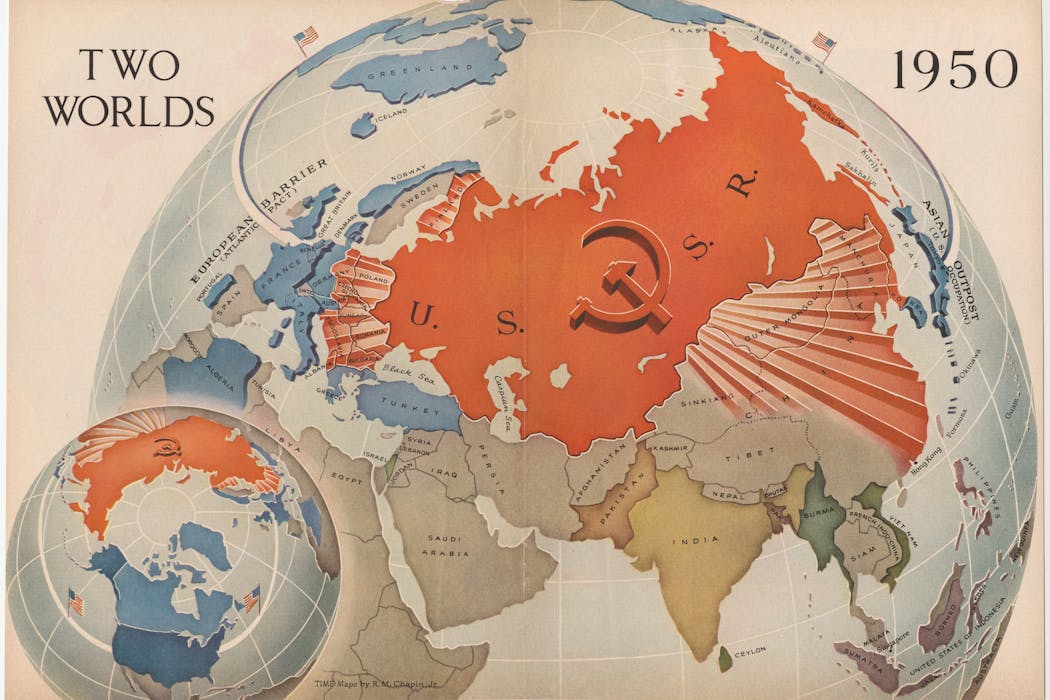
A US view of the cold war world, 1950, showing the fearsome power of the USSR. Cornell University – PJ Mode Collection of Persuasive Cartography.

The late 1940s and early 1950s were a golden age for polar mapmaking in the US. Major magazines such as Time, Life and Fortune commissioned a generation of famous cartographers – who had come of age in the second world war – to explain the new geopolitics to a mass audience that was highly engaged after the catastrophic global conflict they had just lived through.

Their maps were large, dramatic and designed to be spread across kitchen tables and classroom desks. And they also offered a very different perspective to the mainstream maps we have become accustomed to today.

I’ve spent the past four years unearthing maps from the late 1940s and early 1950s to research a book about a largely forgotten map library at my university, and I am always struck by how consequential they feel to the global arguments of their era. Not least because they invited debate from their readers who were asked to become global strategists by discussing the next moves in the game of geopolitics.

These maps didn’t just illustrate the world – they implored people to think about it differently. As the world enters a new period of international relations and global tensions, it’s worth considering the different perspectives maps can offer us.

With each new US foreign policy intervention – such as the US president’s current preoccupation with taking over Greenland – I have often wondered if these maps of global adversaries could have percolated into a young Trump’s mind. The world must have seemed a menacing place and it is shown on these maps as a series of threats and opportunities to be gamed, with the “Arctic arena” as a major venue.

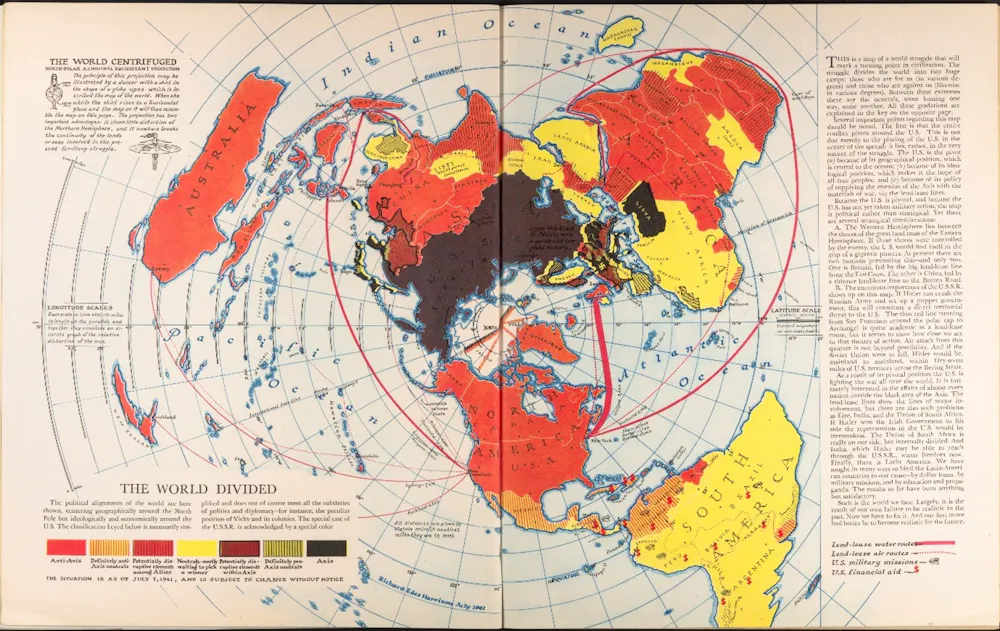
A map showing the political alignments as they were in 1941
The World Divided is an iconic map showing the geoopolitical situation at the height of the second world war. It was created by Richard Edes Harrison and published by Fortune Magazine in August 1941.
Cornell University – PJ Mode Collection of Persuasive Cartography.

The consensus encouraged by the maps was that of alliances, most notably Nato, and US opinion tended to endorse what Henry Luce, the influential owner of Time and Life magazines, called the “American century” in which the US would abandon isolationism and take on a global role.

a map using the North Polar Azimuthal Equidisant Projection
Published in 1950, this map introduces the Azimuthal Equidistant Projection to Time Magazine’s readers.
Time Magazine

Whatever one thinks of that worldview, it was frequently framed in terms of collective responsibility rather than individual dominance. Luce argued that the “work” of shaping the future “cannot come out of the vision of any one man”.

As we can now see with Greenland, Trump has taken the geography of threats and opportunity shown on these influential maps but reached a very different conclusion: an “America first”, resulting from the vision of the US president himself.

Dawning of the ‘air age’

The skilful of the cartographers of the era played with a range of map projections that offered different perspectives of geopolitical arenas. The master of this was Richard Edes Harrison who is described by the historian Susan Schultern as “the person most responsible for sensitizing the public to geography in the 1940s. [The public] tore his maps out of magazines and snatched them off shelves and, in the process, endowed Harrison himself with the status of a minor celebrity.”

Edes Harrison adopted many projections in his work – but for maps of the Arctic, he alighted on the azimuthal equidistant projection. While this creates maps that distort the shapes of countries, it enables the correct distances to be shown from the centre point of the map.

The projection became widely used in the 1940s and 1950s (and was indeed adopted for the UN flag in 1946) because it proved effective at demonstrating the wonder of the burgeoning “air age” as commercial flights followed great circle routes over the Arctic.

World map centered on London 1945
The Air Age Map of The World, 1945 (centered on London).
The Library of Lost Maps

This contrasted with the roundabout routes that needed to be followed by ships and it also mapped the countries that bordered and occupied the Arctic with a much greater sense of proximity and threat.

Missiles and bombers were just as able to travel over the top of Earth as were holidaymakers – and this created a juxtaposition exploited by cartographers. Rand McNally, a renowned map publisher, for example, published a collection of maps entitled Air Age Map of the Global Crisis in 1949.

These set out “the growing line-up of countries and peoples behind the two rival ways of life competing for power in the 20th Century” – that is capitalism as embodied by the US and Soviet and Chinese communism.

Those who bought it were told: “Keep this map folder! It may have great historic significance a generation from now.”

Magazine insert from 1950s with a series of geopolitical maps.
This 1950s map published by Rand McNally was produced as part of a marketing campaign for Airwick air freshener, but also sought to inform the US public about the spread of communism.
Rand McNally

New world order

Donald Trump’s return to office has revived talk of a world moving beyond the assumptions of the postwar order — weakening alliances, acting unilaterally, treating territory as leverage. At the same time, maps remain one of the most trusted forms of evidence in public life.

A Mercator-shaped worldview, widely used by digital maps can distort reality – for example, making Greenland much larger than it is.

Cartographers have long known the strengths and limitations of Mercator, but Trump’s approach to foreign policy is a further reminder of the perspective we lose when we depend on the standardised views of Earth that digital maps encourage (some have also speculated that Mercator’s exaggeration of Greenland’s area heightens its real estate appeal to Trump).

Maps are powerful things and in times of crisis, or rapid change, we turn to them to help explain events and locate ourselves within them. But they can be just as much about arguments as they are facts – and Trump knows this.

The maps of the 1940s and 1950s were about a fresh (American) perspective to create a new world order. They instilled Trump’s generation with a sense of the geopolitical rivalries that tend to get washed out of generic digital maps that are most widely consumed today.

Nearly 80 years on, this order may be creaking – but the maps are still there to remind us of what’s at stake.

The Conversation

James Cheshire receives funding from the Economic and Social Research Council.

ref. The cold war maps that can help us rethink today’s Arctic conflict – https://theconversation.com/the-cold-war-maps-that-can-help-us-rethink-todays-arctic-conflict-274058