Ali Smith’s Glyph is an exhilarating and excoriating follow-up to Gliff

Source: The Conversation – UK – By Sarah Annes Brown, Professor of English Literature, Anglia Ruskin University

White Horse in a Green Meadow by Edvard Munch (1917) and the cover for Glyph. Munch Museum/Penguin

Ali Smith’s Glyph is the companion novel to her earlier novel, Gliff (2024). Gliff was set in a surreal near-future dystopia. Glyph, meanwhile, is set in the present. But like Smith’s earlier Seasonal Quartet, it offers the reader an uncanny version of our world, haunted by ghostly voices from the past.

The novel focuses on two sisters, Petra and Patricia (aka Patch). The action moves between scenes from their childhood in the 1990s and their present-day estrangement.

Two chance family anecdotes of wartime tragedy have a shaping influence on their imaginative lives. One is the story of a first world war soldier who deserted the army, fleeing with a blinded horse he wished to save. We learn that he was eventually court-martialled and executed.

The other is the curious account of how a female agent, travelling under cover through France in the second world war, discovered a mysteriously flattened corpse on the road.

When young Patch becomes distressed by the fate of the flattened man, Petra pretends that she can communicate with him in the afterlife. Episodes from his life are presented in vivid detail, and the reader is invited to speculate that the ghost may be real.

Smith teasingly draws attention to the different levels of reality at work in the novel. The image of a flattened corpse becomes a metaphor for other kinds of flattening, including that of characters in fiction. At one point the narrating voice, with apparent authorial detachment, refers to “the flat character / literary device called Patricia”.

It is then revealed that Patricia herself is narrating this section. And the ghost of the flattened man – who may simply be Petra’s invention – remembers reading a book in which books are described as “flattened flowers at best”.

The novel also asserts a powerful link between stories and ghosts: “Story, however. It is haunting. Everything tells it.”

Glyph v Gliff

Although it can be read as a standalone work, Glyph inevitably invites the reader to explore its relationship with Gliff (2024), adding yet a further dimension to this multilayered novel.


Read more:
Ali Smith’s new novel Gliff is a dystopian nightmare with flashes of fairytale enchantment


In many ways Petra and Patch’s relationship mirrors that between Gliff’s siblings, Briar and Rose. Both younger sisters share a fondness for puns and sly malapropisms. And the soldier’s doomed escape with the horse seems to echo the mysterious disappearance of Rose on the back of a horse she rescued from being slaughtered.

Smith adds a further complication into the mix when it is revealed that the novel Gliff exists in the world of Glyph. A brief discussion of its merits (and weaknesses) between Petra and Patch offers a humorous reflection of real-world reader responses to Gliff: “A bit too dark for me. A bit too clever-clever, a bit too on the nose politically, for a novel.”

The presence of Gliff within Glyph also complicates the meaning of some of the links between the two novels. Petra is sure she is being haunted by the blind horse of family legend. But Patch suggests that this is a delusion sparked by reading Gliff. The duology forms a kind of textual Möbius strip – a mind-bending twisted loop with just one side – perhaps nodding back to the double strands of Smith’s 2014 novel How to be Both.

Alongside all this playful twistiness sits a passionate commitment to a more just society. Billie, Patch’s teenage daughter, is central to this element of the novel. She resembles young Florence in Ali Smith’s earlier novel Spring (2019). Both are charismatically exuberant Greta Thunberg-style campaigners for social justice.

The future world of the earlier novel Gliff seemed horrifyingly absurd in its unfairness. Viewed through Smith’s bitterly satirical lens in Glyph, our own present world seems little less surreal in its destructiveness, its attacks on creativity, freedom and the environment, and its addiction to war and violence.

Like all of Smith’s works, Glyph is multifaceted. She is equally adroit at capturing the emotional nuances of family life, mapping out the larger political landscape, or beguiling the reader with joyfully witty metafictional and linguistic games.

Readers often feel pulled in two directions when reading her novels. There is so much to pause on, so many startling turns of phrase or clues to hidden mysteries. Yet there is also an irresistible compulsion to turn the pages, to find out what happens next.


Looking for something good? Cut through the noise with a carefully curated selection of the latest releases, live events and exhibitions, straight to your inbox every fortnight, on Fridays. Sign up here.


This article features references to books that have been included for editorial reasons, and may contain links to bookshop.org. If you click on one of the links and go on to buy something from bookshop.org The Conversation UK may earn a commission.

The Conversation

Sarah Annes Brown does not work for, consult, own shares in or receive funding from any company or organisation that would benefit from this article, and has disclosed no relevant affiliations beyond their academic appointment.

ref. Ali Smith’s Glyph is an exhilarating and excoriating follow-up to Gliff – https://theconversation.com/ali-smiths-glyph-is-an-exhilarating-and-excoriating-follow-up-to-gliff-274075

US abandons Syria’s Kurds, risking regional turmoil and an IS resurgence

Source: The Conversation – UK – By Kamran Matin, Associate Professor of International Relations, University of Sussex

Kurdish fighters of the all-female Women Protection Units (YPJ) stand in formation. Kurdishstruggle / Wikimedia Commons, CC BY-SA

Many Kurdish people will be feeling betrayed by the US after the Syrian army, backed by the US and armed by Turkey, launched an offensive against the Kurdish-led Syrian Democratic Forces (SDF) in early January. The SDF has long been hailed as the west’s most effective partner against the Islamic State (IS) terrorist organisation.

Led by Ahmed al-Sharaa, the Syrian president who was formerly an al-Qaeda commander, the army initially targeted two Kurdish neighbourhoods in the city of Aleppo. Government forces then captured the SDF-held provinces of Deir ez-Zor and Raqqa further east before advancing on the Kurdish-majority regions of Hasakah and Kobani in the north-east corner of the country.

The Syrian army and the SDF are currently observing a fragile 15-day ceasefire, brokered by the US. But according to the UN, at least 134,000 Kurds have already been displaced. And many Kurdish civilians fear a repeat of the 2025 sectarian mass killings and widespread abuse against Syria’s Alevi and Druze communities.

Kobani, a city famous as the site of heroic Kurdish resistance against IS in 2014, is under siege with its water and electricity supplies cut off. And Elham Ahmad, a senior Kurdish official, claims the Syrian army has already executed hundreds of captured Kurdish fighters and civilians. She has characterised the actions of the state as a “war of extermination” against the Kurds.

Abandoning Kurdish allies

The geopolitical fulcrum of this upheaval is US regional strategy. Shortly after becoming Nato’s first secretary general in 1952, Lord Hastings Ismay said the organisation’s purpose was “to keep the Soviet Union out, the Americans in and the Germans down”. In a similar vein, the US strategy in Syria arguably seeks to keep America afar, Iran out and Israel and Turkey apart.

In line with the Trump administration’s 2025 national security strategy, Washington has sought to block Iranian influence in the Middle East. Keen to shift the burden for overseeing the region’s security away from the US, it has also looked to withdraw US forces from Syria after al-Sharaa’s Hay’at Tahrir al-Sham (HTS) coalition of Turkey-backed Islamist groups toppled longtime dictator Bashar al-Assad in December 2024.

A strong HTS-led Sunni Muslim state that is hostile to Iran and its Shia proxies in Iraq and Lebanon, under Turkish tutelage and supported by the Gulf states, was deemed the best option. Yet diverging Israeli and Turkish priorities have complicated this approach.

Israel viewed al-Sharaa’s al-Qaeda past and the inclusion of foreign jihadist fighters in the Syrian military as grave security threats. This helps explain why, immediately after Assad’s fall, Israel destroyed much of Syria’s strategic military infrastructure to prevent it from falling into Islamist hands.

Turkey, meanwhile, has long regarded the autonomy of Syrian Kurds (effective since 2012) as a threat, given the decades-long struggle of its own large Kurdish population for political and cultural rights. Washington sought to square these competing interests through a two-pronged approach.

First, it pushed Syria and Israel towards negotiating a security-economic deal, addressing Israeli concerns in return for sanctions relief and reconstruction aid for Syria. Seeking state consolidation, al-Sharaa accepted the de facto demilitarisation of Syria’s southern regions. He also signalled Syria’s readiness to join the Abraham accords, a series of agreements to normalise relations between Israel and Middle Eastern countries.

Second, the US pressured the Kurds to integrate their military and administrative institutions into the new Syrian state to address Turkish concerns. This led to an agreement between the SDF and Damascus in March 2025, with precise details left to be worked out by joint special working committees.

However, implementation soon stalled over Kurdish demands for local autonomy and integrating the SDF into the national army as a bloc to preserve its organisational coherence, akin to the Kurdish Peshmerga forces in Iraq. Spurred by Ankara, Damascus rejected Kurdish demands, producing a deadlock.

During US-mediated talks in Paris in early January 2026, the security-economic deal between Israel and Syria was agreed and will soon be finalised. At the same meeting, a Syrian government proposal for a limited operation to recapture SDF-held territory reportedly met no objections. And almost immediately thereafter, the Syrian army launched its offensive.

Another blowback in the making?

US policy in west Asia has repeatedly generated blowback – from support for the anti-Soviet Afghan jihad of the 1980s to the 2003 invasion of Iraq and the chaotic 2022 withdrawal from Afghanistan. Abandoning the Kurds in favour of an anti-Iranian government in Syria risks repeating this pattern.

Domestically, it could embolden al-Sharaa to forcibly subordinate Druze, Alawite, Assyrian and other minority groups. This would reproduce a centralised state sustained by repression, like Saddam Hussein’s Ba’athist Iraq, and risks renewed civil war.

Regionally, it destabilises neighbouring Iraq. Nouri al-Maliki, an influential politician who has been nominated for prime minister by dominant Shia factions in the Iraqi parliament following the October 2025 elections, has described al-Sharaa’s Syria as being governed by terrorists.

Indeed, alarmed by the handover of camps holding former IS fighters from the SDF to Damascus, the Iraqi government asked Washington to relocate thousands of IS detainees to Iraq. The US has accepted this request, despite having admitted Syria into the global anti-IS coalition only two months earlier.

Maliki is also closely aligned with Iran. Meanwhile, Iran-backed Shia militia groups in Iraq are concerned about the deployment of Syrian government forces on border crossings previously held by the SDF. Any US attack on Iran, as Donald Trump has threatened recently, could thus draw in Iraq.

Internationally, the danger of abandoning the Kurds is the return of IS terrorism to cities in the west. Reports suggest many IS detainees escaped from detention camps as SDF forces guarding them came under attack. And videos released by the SDF show what it claimed were IS members being broken out of a prison by armed “Damascus factions”.

Washington must honour its own conditions: support for Syria’s transitional government must be contingent on the creation of a genuinely democratic, plural and inclusive political order that constitutionally enshrines and protects minority rights – including those of the Kurds.

The Conversation

Kamran Matin is affiliated with Kurdish Peace Institute.

ref. US abandons Syria’s Kurds, risking regional turmoil and an IS resurgence – https://theconversation.com/us-abandons-syrias-kurds-risking-regional-turmoil-and-an-is-resurgence-274169

Small-scale farmers produce more of the rich world’s food than previously thought – new study

Source: The Conversation – UK – By Oliver Taherzadeh, Assistant Professor, Environmental Economics, Leiden University

Media Lens King/Shutterstock

Who grows our food? This seemingly simple question is getting harder to answer in a world where our food crosses borders to get to our plate.

As countries increasingly rely on food imports, the mention of distant countries on our food labels is commonplace. Today, only one in seven countries are food self-sufficient across key food groups. So to understand who farms our food, researchers like me need to take a global vantage point.

The contribution of small and industrial-scale farming to global food supply has attracted much attention and debate. Yet, my research shows we’ve been measuring the wrong thing – production and not consumption. Focusing only on national farming systems skews our perception of which farmers are feeding the world by ignoring the food – and farmers – that sustain our daily diets.

This approach also amplifies the assumption that industrial farming is the foundation of global security. But when we lift the lid on our globalised food system, the story is very different.

By studying production and trade patterns of 198 countries, I have found that it’s small-scale farms (typically smaller than 20 hectares), not huge industrial operations, that underpin our daily diets. My team’s research, published in Nature Food, reveals that small-scale farmers contribute a third of the food consumed in high-income nations such as the UK and the US.

This insight has been overlooked by previous studies that solely focused on food distribution from farmers within national borders. These small-scale farms are often unrecognisable from the mega-farms that have come to dominate rural landscapes in Europe, South America and the US.

Although concentrated in sub-Saharan Africa and across Asia, small farms play a key role in exporting fruit, vegetables, pulses, and root and tuber crops, to western countries. A few key cases stand out.

Despite small-scale farms making up less than 1% of Australian farms they supply around 15% of their food needs. In Canada and Europe, small farms contribute nearly 20% to national food needs, mostly from overseas. They also make up the majority of the food supply in 46 of the countries we studied, meeting the bulk of food needs for 5 billion people every day.

Agri-food export of food crops such as lentils and sweet potatoes from small-scale farms comes at a cost to low- and middle-income countries where these farming systems are dominant. These nations end up importing vast amounts of cereals and oil crops from high-income nations, to compensate for food and nutrition insecurity created by cash cropping and contract farming.

These dynamics bear the signature of colonial extractivism in the global agri-food system. They also signal a growing consolidation of food supply chains in low- and middle-income countries due to imports from industrial farms, a dependency that is set to grow with increased appetite for meat and processed food in rapidly industrialising countries.

stacks of crates of red apples and other colourful fruit
Fruit shipped around the world is often produced on relatively small-scale farms.
Dusan Petkovic/Shutterstock

Small-scale farms play a crucial role in creating global food security. But farmers of small farms often find themselves facing insecure land tenure, climate risk, unequal terms of trade and international trade regimes.

This new research, also reported in the latest State of Food and Agriculture report from the UN’s Food and Agriculture Organization, shows that such risks are not only contained to domestic food systems but will cross borders. Food and land insecurity for small-scale farmers means food insecurity for us all. Cuts to overseas aid from high-income nations makes this more likely, as support for climate-resilient farming dries up.

Safeguarding production from smallholders relies not only on domestic efforts to protect farmer livelihoods but transboundary measures to secure their land, rights and access to markets, such as land titles, small loans and living wages.

Subsidies, trade agreements and corporate consolidation erode these pillars of smallholder security and threaten the healthiest food on our plates – fruit, vegetables and pulses. Shining a light on the farmers hidden in national supply chains is a first step to ensure agri-food finance and regulation delivers sustainable livelihoods for all food producers.

This new study highlights the key role small-scale farmers play in meeting current food needs and hints to their importance in a sustainable food future. A plant-rich dietary transition, as called for by scientists, will rely on fruit, vegetable and pulse production, disproportionality produced by smaller farms, farms which typically produce more diverse food types than large-scale farms, higher yields and greater biodiversity. Now that we know who grows our food, we must give farmers equal priority in national farming policy, within and beyond our borders.


Don’t have time to read about climate change as much as you’d like?

Get a weekly roundup in your inbox instead. Every Wednesday, The Conversation’s environment editor writes Imagine, a short email that goes a little deeper into just one climate issue. Join the 47,000+ readers who’ve subscribed so far.


The Conversation

Oliver Taherzadeh receives funding from Horizon Europe.

ref. Small-scale farmers produce more of the rich world’s food than previously thought – new study – https://theconversation.com/small-scale-farmers-produce-more-of-the-rich-worlds-food-than-previously-thought-new-study-274057

Why Iran keeps turning off the internet during mass protests

Source: The Conversation – Canada – By Niloofar Hooman, PhD candidate, Communication Studies and Media Arts, McMaster University

What began on Dec. 28 in Iran as a revolt against economic hardship and the collapse of the national currency quickly spread across dozens of other Iranian cities and provinces. People from diverse socioeconomic, religious and ethnic backgrounds joined what has become the largest anti-regime protest since the 1979 revolution.

Chants of “death to the dictator” and “death to Khamenei” echoed far beyond Tehran’s Grand Bazaar. As a response, the government shut off all internet services, leaving roughly 92 million Iranians in a digital blackout since Jan. 8.

The protests are not an isolated eruption but the latest chapter in a continuous cycle of uprisings from the 1999 student movement, the Green movement of 2009, the protests of 2017 and the bloody November of 2019, the “uprising of the thirsty” in 2021 and the Woman, Life, Freedom uprising of 2022. Each was driven by different grievances but united by a deepening crisis of legitimacy and governance.

For authoritarian regimes, internet blackouts are a powerful political tool of repression that conceal state violence.

Violence justified for ‘security’

As the protests spread, the regime responded by unleashing lethal violence on the streets. Security forces fired live ammunition and pellet guns at demonstrators, deployed tear gas, carried out mass arrests and raided medical facilities where injured protesters were being treated, including hospitals in Illam and Tehran.

Arrests have surpassed 40,000, while estimates of the death toll vary widely, with reports suggesting that tens of thousands have been killed during the most intense days of repression. In cities such as Rasht, witnesses documented massacres as protesters attempted to flee security forces.

At the same time, state media outlets and senior political and judicial officials labelled protesters “terrorist agents” serving the United States and Israel, rhetoric that helped legitimize extreme violence in the name of national security.

The internet blackout as political strategy

Plunging millions of people into digital darkness was not a security precaution but a deliberate strategy used to disrupt collective action, prevent the documentation of state violence and control what both domestic and international audiences could see.

Mobile data, broadband connections and even phone lines were cut across the country, leaving families unable to contact loved ones, protesters cut off from one another and the outside world largely blind to events inside Iran. This was neither an unprecedented move nor a temporary security response. Iranian authorities have repeatedly restricted or disabled internet and telephone access during periods of sociopolitical unrest.

Under blackout conditions, the internet is not simply a space for expression, it is vital infrastructure that allows for information to flow.

By fragmenting connectivity, the state does not need to erase every image or silence every voice. It only needs to prevent a shared public record from forming. Violence becomes harder to document, deaths harder to count and accountability easier to evade.

Diaspora activism under blackout conditions

Outside Iran, this enforced silence prompted a wave of digital mobilization.

Iranians in the diaspora and their allies turned to platforms such as X and Instagram, circulating the hashtag #DigitalBlackoutIran to draw global attention to the shutdown and the escalating repression inside Iran. The hashtag became a way to make absence visible, revealing that the lack of images, videos and updates was itself the product of deliberate regime suppression and crackdown.

As the blackout continues, what’s at stake is not simply connectivity but the ability to bear witness. The struggle over internet access in Iran is therefore a deeply political one: it’s a struggle over who’s allowed to narrate, who’s allowed to be seen and whose suffering is allowed to register as real.

This use of #DigitalBlackoutIran didn’t emerge in vaccuum. It drew on previous movements and uprisings in Iran, where independent journalists are tightly restricted and repressed, public dissent is criminalized and uprisings are often followed by violent crackdowns and information blackouts.

When people cannot safely gather, publish or speak openly, and when documentation is actively disrupted, hashtags become a way of speaking out and of preserving what might otherwise disappear.

They allow dispersed users to find one another and construct a shared narrative of what’s happening. In this sense, hashtags function as a tool for mobilization and advocacy and as living archives of protest, keeping a record of repression and resistance alive when the state seeks to fragment, deny or erase it.

Yet the very visibility that gives hashtag activism its power also makes it vulnerable under authoritarian rule.


Read more:
What Iran’s latest protests tell us about power, memory and resistance


In Iran, the regime does not rely solely on blocking platforms or cutting access. It also actively manipulates online conversations from within. Alongside internet shutdowns, blocking social media platforms and filtering news websites, the state deploys co-ordinated networks of pro-regime accounts, often referred to as a “cyber army,” to disrupt protest hashtags.

These accounts flood hashtags with abusive and degrading language, disinformation and conspiracy narratives. The aim is to make participation emotionally, psychologically and socially costly.

This strategy reflects a broader shift in how autocratic regimes manage dissent online. Rather than silencing opposition, they increasingly seek to dominate digital spaces by overwhelming them, blurring truth with falsehood, intimidation with debate and visibility with noise.

The communications blackout and the disruption of online space point to the same reality in Iran: both operate as deliberate strategies of repression embedded in the regime’s broader architecture of control and discipline.

Under these conditions, the role of Iranians in the diaspora, along with sustained international media coverage, becomes critical not only in countering the silencing of dissent within Iran, but also in resisting the systematic erasure, distortion and fragmentation of the country’s ongoing history of defiance.

The Conversation

Niloofar Hooman does not work for, consult, own shares in or receive funding from any company or organisation that would benefit from this article, and has disclosed no relevant affiliations beyond their academic appointment.

ref. Why Iran keeps turning off the internet during mass protests – https://theconversation.com/why-iran-keeps-turning-off-the-internet-during-mass-protests-273793

Russia’s drone pipeline: How Iran helps Moscow produce an ever-evolving unmanned fleet

Source: The Conversation – Global Perspectives – By Amy McAuliffe, Visiting Distinguished Professor of the Practice, University of Notre Dame

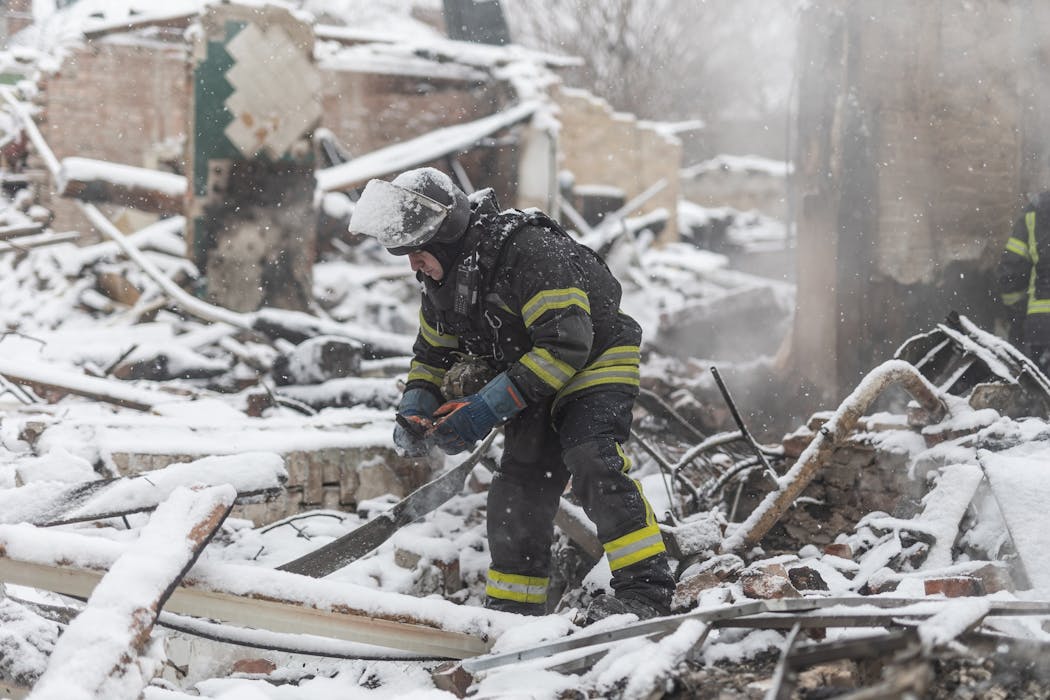
Ukrainian firefighters extinguish a fire in a house after it was hit by a Russian drone on Jan. 15, 2026. Diego Herrera Carcedo/Anadolu via Getty Images

With Russian ground troops bogged down in a grinding war of attrition, Moscow is striving to press home its advantage in the skies – through an ever-evolving army of drones, courtesy of Iran.

In early January, wreckage of a drone found in Ukraine hinted at a new high-speed model of drone being deployed by Russia in the conflict. It prompted Ukraine President Volodymyr Zelenskyy to air fears over failing to keep pace. “We produce (drones) at about 1,000 a day. We really produce them, but it’s not enough. It’s still not enough,” he told an audience of political business leaders at the World Economic Forum on Jan. 22, 2026.

Ukrainian intelligence suggests that Moscow, too, will also soon be pumping out 1,000 drone units a day, in large part thanks to the support and technical assistance of Iran. A central concern for Ukraine is Russia’s increasing production of long-range attack drones that it has used in mass attacks to strike targets in Ukraine.

Tehran’s role in supplying Russia with hundreds of long-range, kamikaze-style drones is long known. But what has gone largely unnoticed outside Ukraine is Iran’s central role in teaching Russia to produce these drones itself.

As an expert on weapons technology and former assistant director of the CIA for weapons and counterproliferation, I believe use of Iranian technology has helped Russia develop a fleet of sophisticated drones able to erode Ukrainian air defenses and strain the country’s resolve. By doing so, Moscow is able to preserve more expensive missiles for long-range precision strikes.

Designed in Iran, produced in Russia

Both Ukraine and Russia have ramped up drone production since the beginning of the current conflict in February 2022.

Russia was initially unable to produce large numbers of kamikaze drones, and the country’s military seemingly did not at first understand the decisive role long-range strike drones could play. Instead, Moscow invested in traditional battlefield weapons, such as missiles. It mainly thought of drones as carrying out the roles of intelligence, reconnaissance and surveillance.

Tehran had the expertise Russia needed. It also had an existing defense relationship with Russia. Moreover, faced with a cash-strapped economy due to yearslong sanctions, Iran needed money.

Since probably about early 2022, Tehran has been providing drones and drone technology to Russia for use in Ukraine. Later that year, Russia and Iran signed the agreement to set up a production plant in Russia for Iranian-designed attack drones.

With Iranian blueprints and technology, a production plant in Tatarstan in western Russia now produces large numbers of drones originally designed by Iran. At this factory, Russia manufactures the Geran-2, Moscow’s name for the Iranian Shahed-136 strike drone.

Easily identifiable by its delta-wing shape, the drone has optimized certain design features, such as range, endurance and weight capacity. It can carry an estimated 90 to 110 pounds of explosives hundreds of miles.

Meanwhile, the delta-wing design optimizes precision diving, helps prevent stalling at low speeds, and increases the drone’s stability during the attack phase.

These features enable targeting of strategic infrastructure at much less cost than long-range missiles.

Two men look over a winged aerial vehicle
Remains of a Russian drone in Vinnytsia Oblast on March 18, 2024.
National Police of Ukraine/Wikimedia Commons, CC BY-SA

Russia can now produce hundreds of one-way Geran-2 attack drones a day. It may soon be able to launch thousands in salvos.

Russia is also modifying and enhancing the drones with features such as precise navigation, heavier warheads and new engines.

Some reports claim Russia is testing telemetry and video links to fly drones remotely, a significant improvement over its current preprogrammed design that would improve accuracy and range. Iran also supplied Russia with technology to build a jet-powered drone variant based on the Shahed-238 that can fly faster.

Called the Geran-3, Russia has produced and used fewer of these drones, whose jet power makes them more challenging for Ukrainian air defense to detect and intercept. New generations of the drone – Geran-4s and Geran-5s – have since been rolled out and apparently deployed in the war with Ukraine.

Sanctions-busting procurement

Even with the blueprints and Iranian assistance, Russia is still reliant on Western and Chinese suppliers for some drone components, many of them commercial, off-the-shelf technology. These include the engine, fuel pump, GPS and navigation systems, semiconductors and components for antennas.

To assist Russia, Iran exploits its networks of brokers and companies in acquiring Western components to evade international sanctions.

A procurement network headed by the Iranian company Sahara Thunder used shipping firms in the UAE and India to sell Russia the original Iranian drones and components and to negotiate the deal for the production plant.

The U.S. Treasury Department has sanctioned this firm and others involved in the drone sales, but Iran set up new companies to help Moscow acquire components. Multiple studies and reports documenting the inclusion of foreign components in downed Geran-2s show Moscow’s continued acquisition of these parts, almost certainly with Iranian assistance.

A weapon of terror

Russia uses the Geran and other longer-range Iranian and Russian models to purposefully target civilians and civilian infrastructure in Ukraine, including residential housing in Ukrainian cities. Russia has even targeted first responders and humanitarian distribution points, according to a United Nations account.

In fact, the U.N. concluded in October 2025 that Russia’s use of short-range, unmanned aerial vehicles against civilians in southern Ukraine constituted a crime against humanity and a war crime.

An explosion is seen with smoke around it.
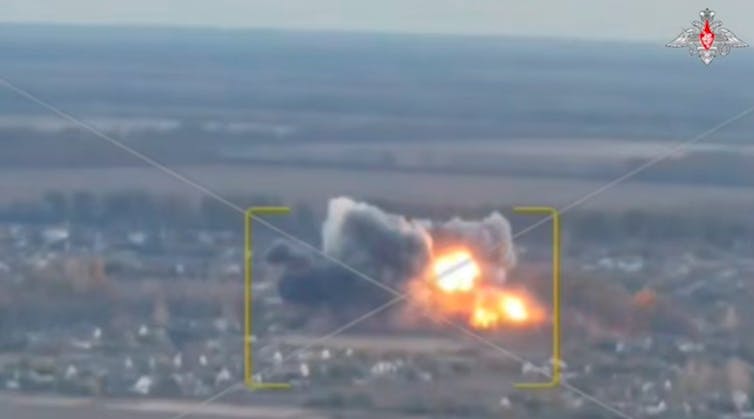
A screen grab from a video shows Russian strikes in the Kharkiv region of Ukraine on Dec. 23, 2025.
The Russian Ministry of Defense/Anadolu via Getty Images

A two-day attack in May 2025 on the Ukrainian cities of Kharkiv in the northeast and Odessa in the south highlights the destructive power and human cost of the drone attacks. According to accounts in the Kyiv Post, Russia launched over 100 drones. In Kharkiv, three blocks were burned down, including 90 shops, and two people were injured. In Odessa, the drones killed one person and damaged residential buildings.

Beyond psychologically tormenting the Ukrainian population, these drones have a profound effect on the battlefield.

Ukraine has responded to Russia’s battlefield success with the Iranian-designed drones by diversifying the types of drones it manufactures, attacking Russian infrastructure for manufacturing drones and developing counter-drone technologies.

A mutually beneficial arrangement

Iran also benefits from this terror campaign. Reeling from the economic impact of sanctions, Iran will make an estimated US$1 billion to $1.75 billion from the deal for drones and the production facility. Russia is reportedly paying Iran a portion of the bill in gold.

A screen shows flying vehicles.
Iranian families watch a video clip of Iranian-made unmanned aerial vehicles during a ceremony commemorating the 45th anniversary of the Iran-Iraq war in Tehran on Sept. 25, 2025.
Morteza Nikoubazl/NurPhoto via Getty Images

Iran is unlikely to stop its assistance anytime soon, given its own economic problems. Helping Moscow obtain drone components and even modify new versions of the Geran-2 will also benefit Iran militarily as it, too, learns to make the new drones and use them itself.

But the main beneficiary of this relationship is Moscow. Without Iranian support, Russia would face more difficult trade-offs on the battlefield. The lower-cost drones allow Russia to preserve its expensive advanced missiles for the most significant targets in Ukraine and to employ large swarms of drones to target Ukrainian infrastructure.

And with the ground offensive yielding little progress of late for Moscow, that could be crucial as the war enters its fifth year.

The Conversation

Amy McAuliffe does not work for, consult, own shares in or receive funding from any company or organization that would benefit from this article, and has disclosed no relevant affiliations beyond their academic appointment.

ref. Russia’s drone pipeline: How Iran helps Moscow produce an ever-evolving unmanned fleet – https://theconversation.com/russias-drone-pipeline-how-iran-helps-moscow-produce-an-ever-evolving-unmanned-fleet-272016

Tanzania is losing fertile land to soil erosion: what’s happening and what can be done

Source: The Conversation – Africa – By Maarten Wynants, Marie Curie Global Postdoctoral Fellow, Ghent University

Across large parts of northern Tanzania, gully erosion – soil erosion caused by flowing water – is cutting deep scars through fertile farmland, grazing areas, roads and even villages. These gullies grow faster every year and what was once a slow environmental process has accelerated into a humanitarian threat. It has serious consequences for food and livelihood security, infrastructure and biodiversity.

Soil erosion is a natural process. Rainfall breaks soil into particles, and flowing water transports them downslope into rivers and lakes. In Tanzania, however, erosion has intensified dramatically over the past 120 years.

The region’s steep terrain, highly variable rainfall and fragile volcanic soils make it naturally vulnerable. What has turned this into a crisis is the change in how people interact with the land.

The Jali Ardhi (Swahili for “Care for the Land”) programme is an international collaboration of scientists from several universities. We use interdisciplinary tools to investigate what’s causing increased soil erosion and how communities can restore the land. Results from multiple projects over a decade point to runaway gully erosion as a key driver of land degradation in Tanzania. Urgent and widespread restoration programmes are needed.


Read more:
Soil erosion is tearing DRC cities apart: what’s causing urban gullies, and how to prevent them


From fertile volcanic soils to runaway gully erosion

The Tanzanian highlands are blanketed by soils formed from volcanic basalt erupted over millions of years as the East African Rift opened. These volcanic soils are rich in fine clay minerals with high levels of exchangeable sodium and calcium. Contact with water after a dry period can cause them to rapidly disperse into fine particles in the water.

Normally, these soils are covered by a stable topsoil layer protected by plant cover, roots and soil organic carbon. But land clearing – the removal of natural vegetation for agricultural purposes – and overgrazing remove the natural protection of these soils and increase runoff. When intense rainfall follows, water rapidly flows downhill, concentrating in valleys and carving out gullies.

Indigenous land conservation practices such as seasonal grazing and shifting cultivation recognised this vulnerability by allowing the vegetation and soil to recover. However, these were gradually eroded by colonial and postcolonial governance, which prioritised formal land tenure and permanent settlement but paid little attention to soil productivity and protection from erosion. In the meantime, Tanzania’s population has been growing fast, doubling roughly every 25 years for the past century, and is now exceeding 70 million.

Large areas of natural forests and savannahs have been cleared for agriculture. Pastoralist groups, such as the Maasai, were forced into permanent settlements, replacing their traditional practice of moving livestock seasonally to follow rainfall and fresh pasture. Livestock densities have tripled over the past half century and areas that were once allowed to recover are now farmed and grazed year-round, leaving soils permanently exposed to the elements.

Rainfall in these regions is naturally erratic, alternating between dry spells and wet years. We have not observed a long-term change in rainfall but wet conditions following drought can trigger massive erosion events.

Together, these pressures pushed the landscape past a critical threshold. Once gullies form in these volcanic soils, they are difficult to stop. Like a boulder pushed downhill, erosion accelerates once it starts. Gullies can continue growing even if the original trigger, such as deforestation or overgrazing, has ended. They form highly connected channels that quickly remove rainfall, nutrient-rich topsoil, and seeds away from the land. This makes it difficult for vegetation to recover and the landscape to stabilise.

The cost of losing land

We calculated that the erosion rates in Tanzania are about 20 times higher than they were a century ago. Over 50% of the total area of Tanzania is experiencing rapid land degradation. It is one of the fastest degrading areas in the world.

When land is lost to erosion, so too is food and income. Since roughly 70% of Tanzanians are smallholder farmers and they produce most of the country’s food intake, over 50% of the population has already experienced moderate to severe food insecurity. The consequences are potentially disastrous.

To make matters worse, we saw from repeat visits and photographs that these mega gullies undercut roads and bridges as quickly as a decade after construction. This is an enormous loss in a country working to develop basic services. Farmers tell us that they are cut off from market access and are forced to grow less-perishable or subsistence crops such as maize and beans, instead of higher-value agricultural production. This reinforces low-income and low-investment cycles.

The effects do not stop here, though.

Eroded sediments fill reservoirs and lakes, threatening water availability, fisheries, biodiversity and tourism. We found that Lake Manyara National Park, a Unesco Man and Biosphere Reserve, is filling up due to the enormous amounts of sediment coming from its catchment. This places pressure on an ecosystem that supports more than 350 bird species as well as iconic wildlife such as elephants and lions.

Working together to join the cracks

Despite the scale of the problem, solutions do exist. Across east Africa, communities have long used indigenous techniques such as earth bunds (banks), stepwise terraces, leaky dams, and re-establishment of grasses and trees. These work with natural processes and materials to slow water flow and capture soil.

NGOs such as the LEAD foundation and Justdiggit are revitalising these community-led approaches. We set up a soil and gully monitoring network combining scientific sampling and sensor technology with citizen science approaches to evaluate the evolution of gullies and success of restoration approaches.

In some cases, collective community action has successfully stabilised small gullies and improved soil quality. But many mega gullies are now too large for resource-poor communities to address alone. While the Tanzanian government has committed to the United Nations Convention to Combat Desertification’s Land Degradation Neutrality initiative, long‑term investment and action plans are lacking. This is partly due to the mismatch between national politics and local action needs.


Read more:
Key insights into land degradation from seven African countries


Ultimately, erosion control cannot be treated as a solely environmental problem. Halting this crisis will require coordinated and large-scale land restoration investment, while simultaneously addressing socio-economic issues linked to poverty, corruption, education and economic development. More than half of Tanzanians are under 18, growing up on landscapes already under strain. Whether these systems can continue to support a growing population will require action before the cracks in the earth widen any further.

The Conversation

Maarten Wynants receives funding from the European Union Marie Sklodowska Curie Fellowship – AsFoRESEEN – 101109315, and from the VLIR-UOS short initiative ‘From Monitoring to Managing Soil and Water Degradation in Tanzanian Gullies’.

ref. Tanzania is losing fertile land to soil erosion: what’s happening and what can be done – https://theconversation.com/tanzania-is-losing-fertile-land-to-soil-erosion-whats-happening-and-what-can-be-done-273283

Trump’s framing of Nigeria insurgency as a war on Christians risks undermining interfaith peacebuilding

Source: The Conversation – USA (3) – By Aili Mari Tripp, Vilas Research Professor of Political Science, University of Wisconsin-Madison

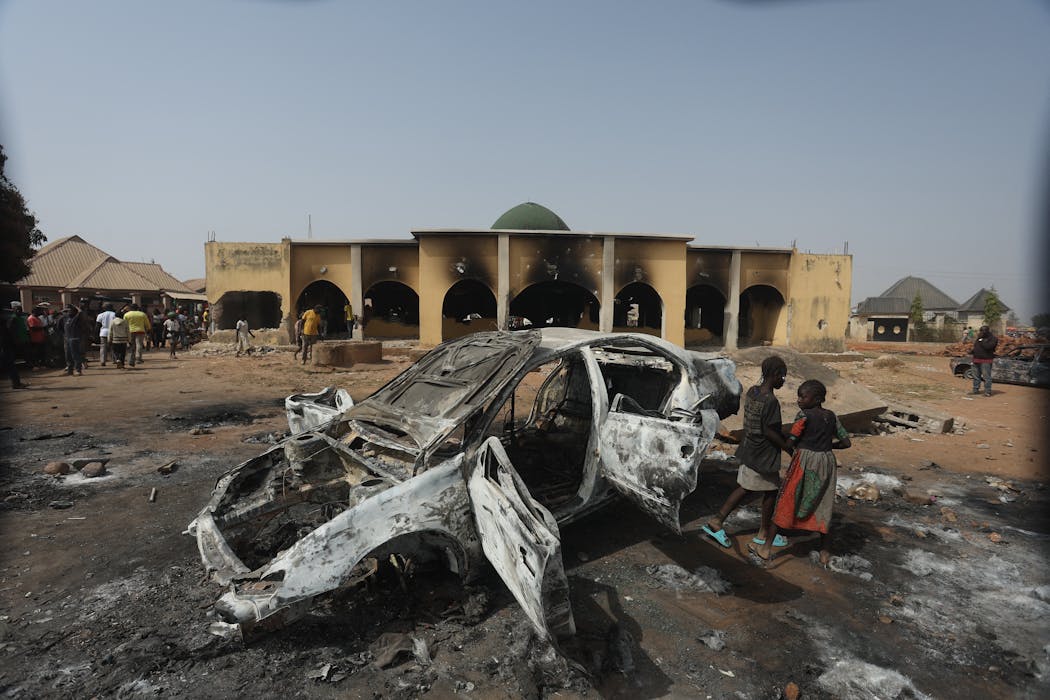
Mosques, as well as churches, in Nigeria are targets of insurgent groups.
Kola Sulaimon/AFP via Getty Images

Nigeria “must do more to protect Christians,” a senior U.S. State Department official demanded on Jan. 22, 2026, during a high-level security meeting in the African nation’s capital, Abuja.

The comment followed an attack just days earlier in which more than 160 worshipers were kidnapped from three churches in Nigeria’s northern Kaduna state.

The security meeting came a month after the United States, in cooperation with the Nigerian government, launched an airstrike from a U.S. Navy ship in the Gulf of Guinea on the northwest Sokoto state. During the Christmas Day incident, 16 Tomahawk missiles costing around US$32 million hit several locations the U.S. claimed were being used by extremist groups.

There were no verifiable casualties, although the strike did send a signal that the U.S. administration is willing to take military action when it is deemed necessary. President Donald Trump heralded the attack a “Christmas present” to Christians and later warned that there would be more strikes if the killings of Christians continued.

As a scholar of African politics, I know that calling the insurgency in Nigeria a persecution of Christians – as the U.S. administration has repeatedly done – is simplistic and ill-informed. Yes, Christians have been killed and kidnapped as part of the prolonged terrorism campaign by Boko Haram and other extremist groups. But so too have other groups in the country, including Muslims. Moreover, the religious identity of the victims masks other motives of the militant groups involved.

I recently carried out interviews in Maiduguri, Borno State – the epicenter of Boko Haram activities in northeast Nigeria – as part of research into interfaith efforts to counter threats from Islamic extremists. For many of those interviewed, the insurgency and violence have often served to unite Nigerians with different religious identities against a common enemy: the groups making their life a misery. The danger of Trump’s narrative of this being a war on Christians is that it could undermine such efforts to build cross-community trust.

A complex conflict

Since 2009 there have been 54,000 deaths related to the violence in Nigeria and the surrounding Lake Chad region, according to independent violence monitor ACLED.

The Christmas airstrike by the U.S. was in northwest Nigeria, targeting a small group of Lakurawa militants. But 85% of all incidents related to Islamic fighters in 2025 were in northeast Nigeria, according to ACLED.

Northern Nigeria is primarily populated by Muslims, in contrast to the whole of the country, whose 240 million people are split roughly 56%-43% between Muslims and Christians.

Many of those killed and abducted in the insurgency in the north have been Christian. But the exclusive focus on Christians by the U.S. administration overlooks the complex realities behind the violence in Nigeria, which incorporates not just extremist groups but also farmer-herder tensions, land and water disputes exacerbated by climate change, ethnic rivalries, poverty and organized criminal gangs referred to as “bandits.”

Boko Haram, which regards the Nigerian state as its main target, has killed both Christians and Muslims, as has the Ansaru, an al-Qaida affiliate. The Islamic State – West Africa Province, another major insurgency group, targets state forces and Christians.

While the most recent high-profile attacks have been on churches, Boko Haram also targets markets, mosques and homes. They are opportunistic attacks that don’t discriminate between Muslims and Christians.

To be sure, the Nigerian government’s response to the insurgency has been inadequate. But again, the reasons are complex and the result of a confluence of factors, including corruption in the security sector, negligence and the difficulty of targeting groups that employ guerrilla tactics outside of government control, which make them especially elusive. Political factors may also be at play, since elements within the Nigerian government may be complicit with northern politicians backing some of the land-grabbing and kidnapping bandits.

Even with these barriers, some progress has been made. According to the Africa Center for Strategic Studies, Boko Haram attacks have declined by 50% since 2014-2016, when they were most active, although rates have been increasing again since 2023.

Interfaith efforts

The Nigerian government itself has welcomed assistance from the U.S. targeting insurgents, but with the proviso that Nigeria’s sovereignty and territorial integrity be respected.

The concern is that military action on the part of the U.S. under the guise of protecting Christians in Nigeria could make matters worse. It risks exacerbating tensions within the country and giving credence to those in Nigeria and abroad who focus only on the killing of Christians for their own narrow purposes.

At the same time, it could undermine the efforts of civil society organizations and women’s associations, in particular, that have worked hard to build interfaith trust between Muslims and Christians to tackle the insurgency threat.

Some of these organizations, such as the Women of Faith Peacebuilding Network, have been at the forefront of the fight against militant groups. An interfaith movement founded in 2011, it now comprises over 10,000 Christian and Muslim women. It carries out vocational training and promotes interfaith dialogue and strategies to reduce conflict.

People stand in a street.
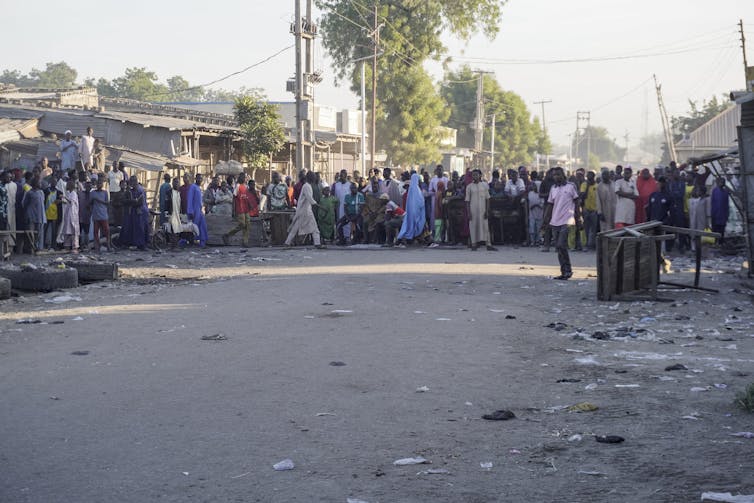
Residents gather near the scene of the explosion at a mosque in the Gamboru market in Maiduguri on Dec. 25, 2025.
Audu Marte/AFP via Getty Images

Following the abduction of over 300 schoolgirls by Boko Haram in Chibok, Borno State, in 2014, a coalition of women’s rights organizations – comprising both Christian and Muslim members – mobilized to protest the kidnappings.

The Federation of Muslim Women’s Associations in Nigeria, or FOMWAN, is another organization that is actively engaged in interfaith initiatives nationwide. In a January 2024 interview, a FOMWAN member based in Maiduguri told me that the Boko Haram crisis has united women across religious divides more than ever before.

Maryam, whose name I have changed along with other interviewees to protect their identity, explained: “FOMWAN has been in existence for many years before the insurgency. And in our activities we had been teaching our Muslim women religious tolerance in Borno. But the insurgency has made us put more efforts into making sure there is religious tolerance among Muslims and Christians.”

A Christian evangelist preacher, Mary, told me that working together had significantly reduced the mutual fear and mistrust between Muslims and Christians. Before the rise of Boko Haram, interfaith collaboration between the two groups was low. But today, she noted, it is far higher.

“We came to understand that this set of people doing this killing are neither Christian nor Muslim. They’re working for selfish interests, not for religious interests. We now strategize and come together to work as one. The key issue to (the conflict) is poverty. The only solution is for us is to speak with one voice. That’s the only way for us to survive.”

‘Each other’s keeper’

The U.S. administration would, I believe, do well to listen to the voices of these Christian and Muslim peacebuilders in northern Nigeria who live with the daily threat of violence.

Their lived experience has informed an approach to Nigeria’s insurgency based on shared purpose that cuts across religious divides.

In the words of activist Mama Pro, when asked why she was so keen to build interfaith bridges in Northern Nigeria: “We are always each other’s keeper.”

The Conversation

Aili Mari Tripp receives funding from National Science Foundation.

ref. Trump’s framing of Nigeria insurgency as a war on Christians risks undermining interfaith peacebuilding – https://theconversation.com/trumps-framing-of-nigeria-insurgency-as-a-war-on-christians-risks-undermining-interfaith-peacebuilding-272418

Not all mindfulness is the same – here’s why it matters for health and happiness

Source: The Conversation – USA (3) – By Ronald S. Green, Professor and Chair of the Department of Philosophy and Religious Studies, Coastal Carolina University

Mindfulness practices can take many forms, depending on tradition and intention. Dingzeyu Li dingzeyuli via Wikimedia Commons, CC BY

Over the past two decades, the concept of mindfulness has become hugely popular around the world. An increasingly ubiquitous part of society, it’s taught everywhere from workplaces and schools to sports programs and the military.

On social media, television and wellness apps, mindfulness is often shown as one simple thing – staying calm and paying attention to the moment.

Large companies like Google use mindfulness programs to help employees stay focused and less stressed. Hospitals use it to help people manage pain and improve mental health. Millions of people now use mindfulness apps that promise everything from lowering stress to sleeping better.

But as a professor of religious studies who has spent years examining how mindfulness is defined and practiced across different traditions and historical periods, I’ve noticed a surprising problem beneath the current surge of enthusiasm: Scientists, clinicians and educators still don’t agree on what mindfulness actually is – or how to measure it.

Because different researchers measure different things under the label “mindfulness,” two studies can give very different pictures of what the practice actually does. For someone choosing a meditation app or program based on research findings, this matters.

The study you’re relying on may be testing a skill like attention, emotional calm, or self-kindness that isn’t the one you’re hoping to develop. This makes it harder to compare results and can leave people unsure about which approach will genuinely help them in daily life.

From ancient traditions to modern science

Mindfulness has deep roots in Buddhist, Hindu, Jain, Sikh and other Asian contemplative lineages. The Buddhist “Satipatthana Sutta: The Foundations of Mindfulness” emphasizes moment-to-moment observation of body and mind.

The Hindu concept of “dhyāna,” or contemplation, cultivates steady focus on the breath or a mantra; Jain “samayika,” or practice of equanimity, develops calm balance toward all beings; and Sikh “simran,” or continuous remembrance, dissolves self-centered thought into a deeper awareness of the underlying reality in each moment.

In the late 20th century, teachers and clinicians began adapting these techniques for secular settings, most notably through mindfulness-based stress reduction and other therapeutic programs. Since then, mindfulness has migrated into psychology, medicine, education and even corporate wellness.

It has become a widely used – though often differently defined – tool across scientific and professional fields.

Why scientists disagree about mindfulness

In discussing the modern application of mindfulness in fields like psychology, the definitional challenge is front and center. Indeed, different researchers focus on different things and then design their tests around those ideas.

Some scientists see mindfulness mainly in terms of emphasizing attention and paying close attention to what’s happening right now.

Other researchers define the concept in terms of emotional management and staying calm when things get stressful.

Another cohort of mindfulness studies emphasizes self-compassion, meaning being kind to yourself when you make mistakes.

And still others focus on moral awareness, the idea that mindfulness should help people make wiser, more ethical choices.

These differences become obvious when you look at the tests researchers use to measure mindfulness. The Mindful Attention Awareness Scale, or MAAS, asks about how well someone stays focused on the present moment. The Freiburg Mindfulness Inventory – FMI – asks whether a person can notice thoughts and feelings as they come and accept them without judgment. The Comprehensive Inventory of Mindfulness Experiences – CHIME – adds something most other tests leave out: questions about ethical awareness and making wise, moral choices.

As a result, comparative research can be tricky, and it can also be confusing for people who want to be more mindful but aren’t sure which path to take. Different programs may rely on different definitions of mindfulness, so the skills they teach and the benefits they promise can vary a lot.

This means that someone choosing a mindfulness course or app might end up learning something very different from what they expected unless they understand how that particular program defines and measures mindfulness.

Why different scales measure different things

John Dunne, a Buddhist philosophy scholar at the University of Wisconsin–Madison, offers a helpful explanation if you’ve ever wondered why everyone seems to talk about mindfulness in a different way. Dunne says mindfulness isn’t one single thing, but a “family” of related practices shaped by different traditions, purposes and cultural backgrounds.

Three women sit on yoga mats, eyes closed, palms resting over their hearts in meditation.
Mindfulness isn’t just one thing, and that is why its practice can look different.
FG Trade Latin/E+ via Getty Images

This explains why scientists and people trying to be mindful often end up talking past each other. If one study measures attention and another measures compassion, their results won’t line up. And if you’re trying to practice mindfulness, it matters whether you’re following a path that focuses on calming your mind, being kind to yourself, or making ethically aware choices.

Why this matters

Because mindfulness isn’t just one thing, that affects how it’s studied, practiced and taught. That’s important both at the institutional and individual level.

Whether for places like schools and health care, a mindfulness program designed to reduce stress will look very different from one that teaches compassion or ethical awareness.

Without clarity, teachers, doctors and counselors may not know which approach works best for their goals. The same rough idea applies in business for organizational effectiveness and stress management.

Despite the disagreements, research does show that different forms of mindfulness can produce different kinds of benefits. Practices that sharpen attention to the moment are associated with improved focus and workplace performance.

Approaches oriented towards acceptance tend to help people better manage stress, anxiety and chronic pain. A focus on compassion-based methods can support emotional resilience. Programs that emphasize ethical awareness may promote more thoughtful, prosocial behavior.

These varied outcomes help explain why researchers continue to debate which definition of “mindfulness” should guide scientific study.

For anyone practicing mindfulness as an individual, this is a reminder to choose practices that fit your needs.

The Conversation

Ronald S. Green does not work for, consult, own shares in or receive funding from any company or organization that would benefit from this article, and has disclosed no relevant affiliations beyond their academic appointment.

ref. Not all mindfulness is the same – here’s why it matters for health and happiness – https://theconversation.com/not-all-mindfulness-is-the-same-heres-why-it-matters-for-health-and-happiness-264096

Life in fossil bones: what we can learn from tiny traces of ancient blood chemicals

Source: The Conversation – Africa (2) – By Timothy G. Bromage, Professor, New York University

Blood tests are useful tools for doctors and scientific researchers: they can reveal a lot about a body’s health. Usually, a blood sample is taken to get a picture of the large molecules that are present, such as cholesterols, lipids and proteins. This is called a metabolic profile.

For more specific information, another kind of blood test looks at the tiny traces of chemical processes taking place at tissue, organ, and even cellular levels. This fine-scale kind of test, metabolomics, studies metabolites – the by-products of metabolism (the body’s way of producing energy and recycling chemicals).

You’d never think this kind of test could be done for animals that lived millions of years ago. But what was very recently science fiction is now reality: it’s called “palaeometabolomics”.

Why would anyone want to know about the metabolites of long-dead creatures?

Metabolites are a way for scientists like me (a biological anthropologist) to learn more about the health, diet, environment and evolution of those creatures – including early humans.

What makes this possible is the way bones are formed: by special cells secreting a soft matrix – mainly collagen – that later crystallises and hardens into a porous material.

Metabolites in the blood that leak from blood vessels during bone formation are so tiny that they become trapped inside the bone matrix (the material that makes up bone) as it hardens. The spaces where they are trapped are so small (nanometre in scale) that bacteria and fungi, which are much bigger, can’t always get in there. Not even in a million years. And because bone mineral structures at these fine scales contain minute traces of water, metabolites are preserved there in fossils.

Studying the metabolites in animal fossils has given us a new way to discover more about the environment at sites where early humans evolved.

My colleagues and I looked at rodent fossils from Olduvai Gorge in Tanzania (about 1.8 million to 1.7 million years old); elephant tooth fossil material from the Chiwondo Beds in Malawi (2.4 million years old); and an antelope bone fossil from Makapansgat in South Africa (about 3 million years old). Fossils of ancient relatives of humans (species of Australopithecus, Paranthropus, and early Homo) have also been found at these sites.

For 100 years, scientists have devised methods for reconstructing the environment that early humans lived in and adapted to. Until now, these methods depended mainly upon geological clues and the kinds of animal and plant fossils found at a site. Now, by performing palaeometabolomics – especially by analysing the chemical traces left in animal bones by the plants that the animals ate – we have established a “molecular ecological” approach for describing ancient habitats.

This new method can add very specific information to other kinds of reconstructions. The metabolites allow us to describe soil pH, minimum and maximum rainfall and temperature, the type of tree cover, and elevations above sea level of plants.

We also made a surprising finding about the relationship between soil and living things.

How to give a fossil a blood test

To perform palaeometabolomics, we established a method to dissolve bits of bone no larger than a pea in a tube containing weak acid. The acid is strong enough to slowly pass the mineral into a solution, but weak enough not to degrade the metabolites. This take several days. We then let the large proteins sink to the bottom of the tube and spin it at high speed in a centrifuge, which leaves the smallest and lightest molecules at the top. We inject the metabolite “soup” into a mass spectrometer, a piece of equipment designed to measure the weights of all small molecule compounds, and refer these to a library of known masses. That’s how we identify the metabolites.

The ones generated within the body – “endogenous” metabolites – offer clues about the health and well-being of an animal. That’s interesting enough, but it’s not the full picture.

All living organisms produce metabolites, including plants. Plants also have metabolisms reflecting their physiological adaptations to the environment. If an animal eats a plant, metabolites of that plant circulate through the animal’s bloodstream and are also trapped at developing bone surfaces. These are called “exogenous” metabolites, and they tell us about the diet of the animal.

What was just interesting now becomes remarkable, because if we can identify the plant that a metabolite came from, we should also be able to reconstruct the environment the plant was adapted to.

What the body says about the bigger picture

The endogenous metabolites we identified from our fossils depict a variety of normal mammalian biological functions and disease states. The exogenous metabolites provide evidence of the environment in the distant past.

For instance, some of our fossil samples had a metabolite derived from the parasite that causes sleeping sickness in humans after a bite from an infected tsetse fly. Wild animals are tsetse fly reservoirs for the parasite. Tsetse flies have very specific environmental conditions, so that helped our reconstructions.


Read more:
Tooth enamel provides clues on tsetse flies and the spread of herding in ancient Africa


We also identified plant metabolites which implied that the Tanzanian and South African sites were wetter than they are now. Minimum temperatures were warmer, and the landscape contained more forest shade. It seems to have been a mixed, seasonally dry and wet tropical habitat. The reconstructed conditions of the Malawi site indicate a wetter environment, also with wet and dry seasons.

Reading the soil

There was one particularly interesting surprise.

Going into this study, we assumed that metabolites from ancient soils surrounding the fossils – known as palaeosols – should be considered contaminants and be disregarded from our analyses. But when we analysed metabolites of modern animals of the same fossil species living near the sites, whose bones never touched the soil, we found that both the modern and fossil animals shared large percentages of the palaeosol metabolites.

This means that the palaeosol reflects the lives of all the organisms living there. Once plants and animals live on that soil, their metabolites become a part of the soil matrix. The animals and the soil are completely connected by shared metabolites, which represent the flow of materials that sustain the habitat. They are not contaminants to be disregarded.

Our biomolecular approach – using metabolites from fossil bones and teeth as a way to reconstruct ancient environments – is a new one. It might one day make it possible to describe past habitats as precisely as we can describe modern ones.

The Conversation

Timothy G. Bromage receives funding from The Leakey Foundation.

ref. Life in fossil bones: what we can learn from tiny traces of ancient blood chemicals – https://theconversation.com/life-in-fossil-bones-what-we-can-learn-from-tiny-traces-of-ancient-blood-chemicals-273906

The end of ‘Pax Americana’ and start of a ‘post-American’ era doesn’t necessarily mean the world will be less safe

Source: The Conversation – USA – By Peter Harris, Associate Professor of Political Science, Colorado State University

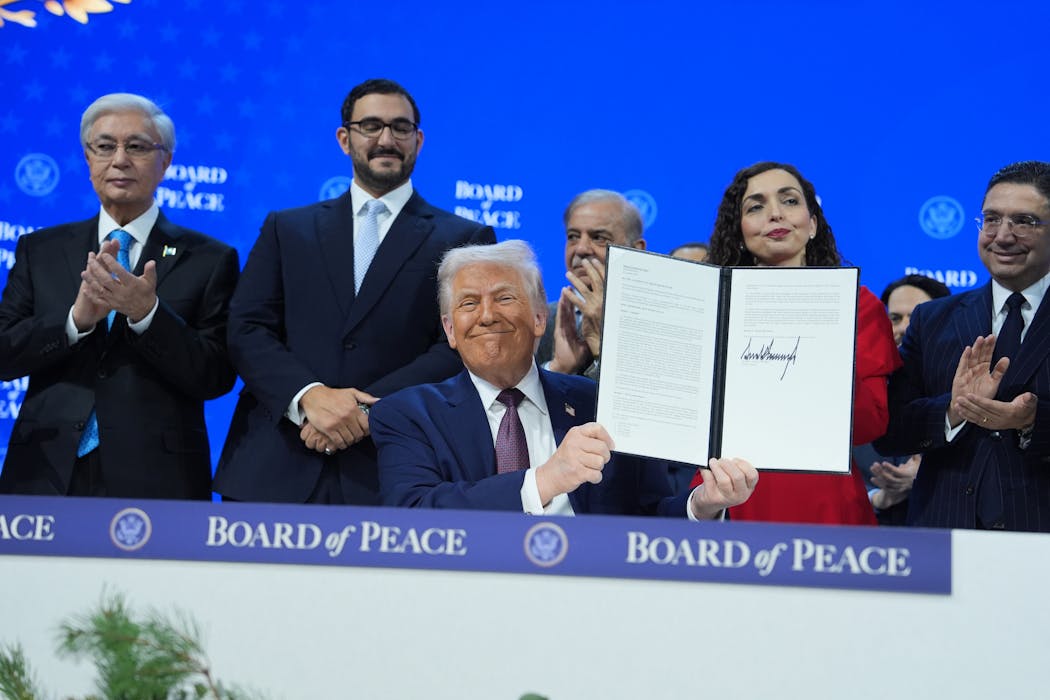
President Donald Trump’s America First policies have reshaped the nation’s stance regarding global security and trade. AP Photo/Evan Vucci

America’s role in the world is changing. If this wasn’t obvious before, it should be now, following President Donald Trump’s efforts to take over Greenland and his visibly strained relations with traditional allies in Europe and elsewhere.

But how much will the world change if America’s stance is different?

Some scholars of international relations argue that because Washington has been central to global governance for so long, Trump’s “America First” turn – suggesting isolationism on some issues and unilateral action on others – spells the end of the international order as we’ve known it.

The most pessimistic analysts caution that the era of “Pax Americana,” or the long period of relative world calm since World War II due to U.S. leadership, is coming to a close. They forecast a turbulent transition to a more chaotic world.

This view may well prove correct in the long run. But it is too early to say with confidence. As a scholar who studies U.S. foreign policy, I see some grounds for optimism. The world can become a more just, stable and secure place despite the diminishment of American leadership.

For the remaining three years of Trump’s presidency, all bets are off. Trump is famously difficult to predict. That world leaders genuinely believed in recent weeks that the United States could invade Greenland – and still might – should give pause to anyone who thinks they can foretell the remainder of Trump’s second term.

The unprecedented raid on Venezuela and Trump’s oscillation between threatening Iran and calling for negotiations with Tehran provide additional examples of Trump’s volatile foreign policy maneuvers.

But the long-term trends are clear: The United States is losing its enthusiasm (and capacity) for global leadership. The rest of the world can assume that, after Trump, there will continue to be a decline in America’s participation in world affairs. His recent actions suggest America’s security guarantees to others will become more dubious, its markets will become less accessible to foreigners, and its support for international institutions will weaken.

Does this mean a cascade of disorder for smaller nations? Perhaps – but not necessarily.

Are US allies more vulnerable?

Certainly U.S. foreign policy and its wars and other actions abroad have sparked criticism over the past few decades. Still, the prospect of U.S. retrenchment understandably causes anxiety for those who have long sheltered under America’s security umbrella.

Once U.S. forces, spread throughout the globe, have decamped to the continental United States, the argument goes, there won’t be much stopping large countries such as Russia and China from steamrolling their vulnerable neighbors in Europe and East Asia.

This is an overly pessimistic assessment, in my view. It must be remembered that America’s alliance commitments and vast military deployments date from the early Cold War of the 1950s, an era that bears few similarities with the present day. Back then, U.S. forces were needed to deter the Soviet Union and China from attacking their neighbors, who were almost uniformly weak and impoverished following the Second World War.

Today, the European members of NATO and America’s allies in Asia are among the world’s wealthiest countries. These governments are easily rich enough to afford the sort of national militaries needed to deter potential aggressors and uphold stability in their respective regions. Indeed, they can likely do a better job of securing themselves than the United States presently manages on their behalf.

Preserving free trade

Will the world become poorer and perhaps more dangerous if global economic integration falls by the wayside?

This is a reasonable concern given the standard view that free trade leads to economic growth and, in turn, that economic growth can help foster world peace.

But again, it is wrong to assume that the worst will happen. Instead of accepting that globalization is irreversibly in retreat, there is every chance that governments will relearn the benefits of economic integration and defend an open world economy, even absent U.S. leadership. After all, Trump’s trade wars have visibly harmed U.S. firms and consumers, as well as caused friction with America’s allies. Future leaders in Washington and around the world will presumably learn from such fallout.

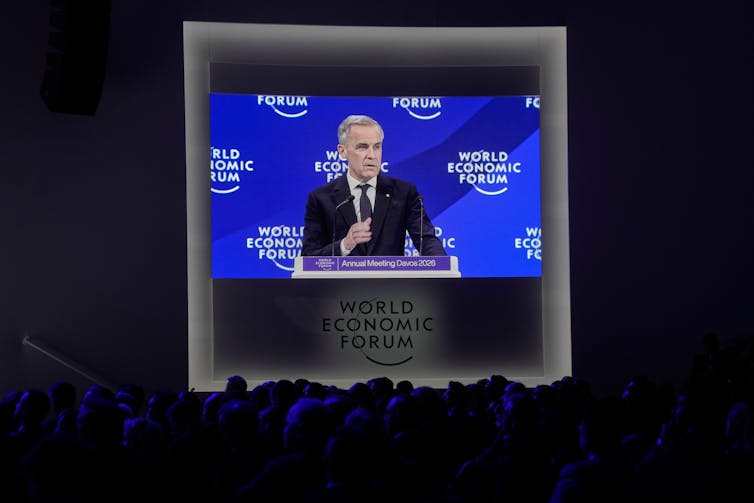
Finally, there is no reason to conclude that global governance must collapse in the absence of strong U.S. leadership. As Canadian Prime Minister Mark Carney proposed at the recent Davos conference in Switzerland, so-called middle powers, such as Australia, Brazil and Canada itself, have the capacity to rescue the world’s most vital international organizations for the benefit of future generations, and to create new institutions as necessary.

A video screen shows Canadian Prime Minister Mark Carney as he addresses the audience at Davos.
Canadian Prime Minister Mark Carney gave a speech at Davos that suggested possible outlines for a post-American world.
AP Photo/Markus Schreiber

Nations such as Canada, Japan, Australia and the members of the European Union obviously lack the overwhelming military power and economic clout of the United States. But they could choose instead to implement a more collective approach to global leadership.

No safe bets

There are obviously no guarantees that the post-Pax Americana era will be an unbridled success. There will be war and suffering in the future, just as there has been war and suffering under U.S. leadership. The idea of Pax Americana has always rung hollow to some people, including citizens of countries that have been attacked by the United States itself.

The question is whether the international system will become any more violent and unstable in the absence of U.S. leadership and military dominance than it has been during America’s long period of global dominance. It well might, but the international community shouldn’t resign itself to fatalism.

The United States has lost influence. The silver lining is that more countries – including America’s friends and allies – might rediscover their own capacity to shape world affairs.

The post-American era is therefore up for grabs.

The Conversation

Peter Harris is a Non-Resident Fellow with Defense Priorities.

ref. The end of ‘Pax Americana’ and start of a ‘post-American’ era doesn’t necessarily mean the world will be less safe – https://theconversation.com/the-end-of-pax-americana-and-start-of-a-post-american-era-doesnt-necessarily-mean-the-world-will-be-less-safe-274354