Finding stillness in motion: how riding a motorcycle can teach us mindfulness

Source: The Conversation – UK – By Judith Roberts, Lecturer in Psychology, Aberystwyth University

Speeding along an open road on my motorcycle, flanked by the great outdoors, the engine hums and the noise in my mind disappears. Riding a motorcycle demands total presence. Focus isn’t optional. It’s a matter of survival. After all, a wandering mind could lead to disaster.

But it’s not fear or panic that sharpens my attention. It is something else entirely. As a clinical psychologist, I understand fear well. I know how danger activates the fight-or-flight response. And yet, paradoxically, it is on my motorcycle that I feel most calm. This is where I experience the greatest joy. It is where I find what I would describe as a state of mindfulness.

Mindfulness is the practice of paying attention to the present moment, on purpose and without judgment. In psychological therapy, it is usually cultivated through meditation. People are encouraged to sit quietly, focus on the breath and observe thoughts and sensations as they arise.

Mindfulness is not an “in the moment” technique to reduce immediate distress. It is a skill developed through regular practice. Research shows that it activates brain areas involved in emotional regulation and focused attention. Studies also suggest mindfulness can improve emotional health, reduce symptoms of depression, anxiety and stress, and help people respond to difficult situations more thoughtfully rather than reacting on impulse.

Mindfulness can be practised in many ways. Some approaches rely on stillness, such as body scans and breathing exercises. Others involve movement, including yoga, tai chi and walking meditation. What unites them is deliberate attention to the here and now.

Because mindfulness is accessible, cheap and relatively easy to learn, it has spread far beyond therapy rooms. It now appears everywhere, from healthcare settings to social media reels and YouTube tutorials promising calm in minutes. This popularity is not necessarily a problem. But mindfulness is not without its limits.

Mindfulness is not a cure for serious mental illness. It cannot resolve structural problems such as poverty, trauma or unsafe environments. For some people, particularly those with a history of trauma or certain mental health conditions, sitting still with their thoughts can be distressing. Mindfulness practices can sometimes intensify intrusive or triggering thoughts rather than soothe them.

As with all types of psychological therapy, there is no one-size-fits-all approach. That is why it is worth broadening how we think about attention, emotional regulation and mental wellbeing.

Attention under pressure

Motorcycling offers one such alternative. It’s a mentally and physically demanding activity. The bike itself is heavy and a rider needs strength and balance, particularly when riding at slow speeds and when stopping. Core muscles are engaged when manoeuvring and all limbs are engaged in braking, clutch control and gear changes.

Mentally, the demands are even greater. Riders must remain continuously alert to road conditions, traffic, weather and the unpredictable actions of other road users. Decisions often need to be made in seconds, like when to brake, when to accelerate, how to navigate a bend, how to respond to an unexpected hazard. All of this takes place knowing that the rider’s protection is limited to their clothing.

These demands may explain why riding a motorbike can feel so absorbing. Research supports this. A study exploring the mental and physical effects of motorcycling showed improvements in focused attention, sensory awareness and the ability to ignore distractions.

Riders become better at scanning their environment and predicting what might happen next. This is a skill known as “situational awareness”. Many riders also report these benefits in their own accounts of riding motorbikes.

Perhaps most strikingly, despite motorcycling being a high-risk activity, research found reductions in stress hormones while riding. The proposed explanation is that the intense concentration required leaves little room for ruminating on everyday worries. Attention is fully captured by the task at hand.

A motorcyclist against a blurred background.
Finding stillness in motion.
O_Zinchenko/Shutterstock

Rethinking mindfulness

Unlike traditional mindfulness practice, motorcycling does not require deliberate non-judgment of thoughts or sensations. There is no effort to observe the mind. The activity itself does the work. Similar effects have been observed in other high-demand pursuits, such as rock climbing and athletic performance.

Clinically, this matters. While traditional mindfulness practices may not be suitable or achievable for everyone, there are alternatives. Activities which demand full engagement – mentally and physically – may offer similar psychological benefits. Purposeful, absorbing activities can help regulate emotions, sharpen attention and reduce stress over time.

For some people, stillness is not the route to being present. Sometimes, mindfulness is found not by slowing down, but by moving – fully, deliberately and with purpose.

The Conversation

Judith Roberts does not work for, consult, own shares in or receive funding from any company or organisation that would benefit from this article, and has disclosed no relevant affiliations beyond their academic appointment.

ref. Finding stillness in motion: how riding a motorcycle can teach us mindfulness – https://theconversation.com/finding-stillness-in-motion-how-riding-a-motorcycle-can-teach-us-mindfulness-272396

Rethinking Troy: how years of careful peace, not epic war, shaped this bronze age city

Source: The Conversation – UK – By Stephan Blum, Research Associate, Institute for Prehistory and Early History and Medieval Archaeology, University of Tübingen

Imagine a city that thrived for thousands of years, its streets alive with workshops, markets and the laughter of children, yet that is remembered for a single night of fire. That city is Troy.

Long before Homer’s epics immortalised its fall, Troy was a place of everyday life. Potters shaped jars and bowls destined to travel far beyond the settlement itself, moving through wide horizons of exchange and connection.

Bronze tools rang in busy workshops. Traders called across the marketplace and children chased one another along sun‑warmed footpaths. This was the real heartbeat of Troy – the story history has forgotten.

Homer’s late eighth‑century BC epic poems, the Iliad and the Odyssey, fixed powerful images in western cultural memory: heroes clashing, a wooden horse dragged through city gates, flames licking the night sky. Yet this dramatic ending hides a far longer, far more remarkable story: centuries of cooperation embedded in everyday social organisation. A story we might call the Trojan peace.

This selective memory is not unique to Troy. Across history, spectacular collapses dominate how we imagine the past: Rome burning in AD64, Carthage razed in 146BC and the Aztec capital Tenochtitlán falling in AD1521. Sudden catastrophe is vivid and memorable. The slow, fragile work of maintaining stability is easier to overlook.

The Trojan peace was not the absence of tension or inequality. It was the everyday ability to manage them without society breaking apart, the capacity to absorb pressure through routine cooperation rather than dramatic intervention.

When catastrophe outshines stability

Archaeology often speaks loudest when something goes catastrophically wrong. Fires preserve. Ruins cling to the soil like charcoal fingerprints. Peace, by contrast, leaves no single dramatic moment to anchor it.

Its traces survive in the ordinary: footpaths worn smooth by generations of feet; jars repaired, reused and handled for decades, some still bearing the drilled holes of ancient mending. These humble remnants form the true architecture of long‑term stability.

Troy is a textbook example. Archaeologists have identified nine major layers at the site, some of which are associated with substantial architectural reorganisation. But that isn’t evidence of destruction. Rather it simply reflects the everyday reality of a settlement’s history: building, use, maintenance or levelling, rebuilding and repetition.

Instead, I argue that Troy’s archaeological record reveals centuries of architectural continuity, stable coastal occupation and trade networks stretching from Mesopotamia to the Aegean and the Balkans – a geography of connection rather than conflict.

The only evidence for truly massive destruction that can be identified dates to around 2350BC. Against the broader archaeological backdrop, this stands out as a rare, fiery rupture – one dramatic episode within a much longer pattern of recovery and continuity.

Whether sparked by conflict, social unrest or an accident, it interrupted only briefly the long continuity of daily life – more than a thousand years before the events portrayed by the poet Homer in his tale of the Trojan war were supposed to have taken place.


Read more:
Fall of Troy: the legend and the facts


But what actually held Troy together for so long? During the third and second millennia BC, Troy was a modest but highly connected coastal hub, thriving through exchange, craft specialisation, shared material traditions and the steady movement of ideas and goods.

The real drivers of Troy’s development were households, traders and craftspeople. Their lives depended on coordination and reciprocity: managing water and farmland, organising production, securing vital resources such as bronze and negotiating movement along the coast. In modern terms, peace was work, negotiated daily, maintained collectively and never guaranteed.

When crises arose, the community adapted. Labour was reorganised, resources redistributed, routines adjusted. Stability was restored not through force, but through collective problem solving embedded in everyday practice.

This was not a utopia. Troy’s stability was constrained by environmental limits, population pressure and finite resources. A successful trading season could bring prosperity; a failed harvest could strain systems quickly. Peace was never about eliminating conflict, but about absorbing pressure without collapse.

Satellite image of the bronze age citadel of Troy.
Satellite image of the bronze age citadel of Troy. Over more than two millennia, successive phases of construction accumulated at the same location, forming a settlement mound rising over 15 metres above the surrounding landscape.
University of Çanakkale/Rüstem Aslan, CC BY


Read more:
Troy’s fall was partly due to environmental strain – and it holds lessons for today


Archaeologically, this long-term balance appears as persistence: settlement layouts maintained across generations, skills refined and passed down, and gradual expansion from the citadel into what would later become the lower town. These developments depended on negotiation and cooperation, not conquest, revealing practical mechanisms of peace in the bronze age.

Why we remember the war

Stories favour rupture over routine. Homer’s Iliad was never a historical account of the bronze age, but a poetic reflection of heroism, morality, power and loss. The long, quiet centuries of cooperation before and after were too distant – and too subtle – to dramatise.

Modern archaeology has often followed the same gravitational pull. Excavations at Troy began with the explicit aim of locating the battlefield of the Trojan war. Even as scholarship moved on, the story of war continued to dominate the public imagination. War offers a clear narrative. Peace leaves behind complexity.

Reexamining Troy through the lens of peace shifts attention away from moments of destruction and towards centuries of continuity. Archaeology shows how communities without states, armies, or written law sustained stability through everyday practices of cooperation. What kept Troy going was not grand strategy, but the quiet work of living together, generation after generation.

The real miracle of Troy was not how it fell – but for how long it endured. Rethinking the cherished narrative of the Trojan war reminds us that lasting peace is built not in dramatic moments, but through the persistent, creative efforts of ordinary people.


Looking for something good? Cut through the noise with a carefully curated selection of the latest releases, live events and exhibitions, straight to your inbox every fortnight, on Fridays. Sign up here.


This article features references to books that have been included for editorial reasons, and may contain links to bookshop.org. If you click on one of the links and go on to buy something from bookshop.org The Conversation UK may earn a commission.

The Conversation

Stephan Blum does not work for, consult, own shares in or receive funding from any company or organisation that would benefit from this article, and has disclosed no relevant affiliations beyond their academic appointment.

ref. Rethinking Troy: how years of careful peace, not epic war, shaped this bronze age city – https://theconversation.com/rethinking-troy-how-years-of-careful-peace-not-epic-war-shaped-this-bronze-age-city-272833

Why it would be a big mistake for the US to go to war with Iran

Source: The Conversation – UK – By Bamo Nouri, Honorary Research Fellow, Department of International Politics, City St George’s, University of London

Reports of a growing US naval presence in the Gulf have prompted speculation that the US could be preparing for another Middle East war, this time with Iran.

The US president, Donald Trump, has warned of “serious consequences” if Iran does not comply with his demands to permanently halt uranium enrichment, curb its ballistic missile program and end support for regional proxy groups.

Yet, despite the familiar language of escalation, much of what is unfolding appears closer to brinkmanship than preparation for war.

The US president’s own political history offers an important starting point for understanding why this is. Trump’s electoral appeal, both in 2016 and again in 2024, has rested heavily on a promise to end America’s “forever wars” and to avoid costly overseas interventions.

And Iran represents the very definition of such a war. Any all-out conflict with Tehran would almost certainly be long and drag in other countries in the region.

It would also be hard to achieve a decisive victory. For a president whose political brand is built on restraint abroad and disruption at home, a war with Iran would contradict the central logic of his foreign policy narrative.

Meanwhile Iran’s strategic posture is rooted in decades of preparing for precisely this scenario. Since the 1979 revolution, Tehran’s military doctrine and foreign policy have been shaped by survival in the face of potential external attack.

Rather than building a conventional force able to defeat the US in open combat, Iran has invested in asymmetric capabilities: ballistic and cruise missiles, the use of regional proxies, cyber operations and anti-access strategies (including missiles, air defences, naval mines, fast attack craft, drones and electronic warfare capabilities). Anyone who attacks Iran would face prolonged and escalating costs.

This is why comparisons to Iraq in 2003 are misleading. Iran is larger, more populous, more internally cohesive and far more militarily prepared for a sustained confrontation.

An attack on Iranian territory would not represent the opening phase of regime collapse but the final layer of a defensive strategy that anticipates exactly such a scenario. Tehran would be prepared to absorb damage and is capable of inflicting it across multiple theatres – including in Iraq, the Gulf, Yemen and beyond.

With an annual defence budget approaching US$900 billion (£650 billion), there is no question that the US has the capacity to initiate a conflict with Iran. But the challenge for the US lies not in starting a war, but in sustaining one.

The wars in Iraq and Afghanistan offer a cautionary precedent. Together, they are estimated to have cost the US between US$6 and and US$8 trillion when long-term veterans’ care, interest payments and reconstruction are included.

These conflicts stretched over decades, repeatedly exceeded initial cost projections and contributed to ballooning public debt. A war with Iran – larger, more capable and more regionally embedded – would almost certainly follow a similar, if not more expensive, trajectory.

The opportunity cost of the conflicts in Iraq and Afghanistan were potentially greater, absorbing vast financial and political capital at a moment when the global balance of power was beginning to shift.

As the US focused on counterinsurgency and stabilisation operations, other powers, notably China and India, were investing heavily in infrastructure, technology and long-term economic growth.

That dynamic is even more pronounced today. The international system is entering a far more intense phase of multipolar rivalry, characterised not only by military competition but by races in artificial intelligence, advanced manufacturing and strategic technologies.

Sustained military engagement in the Middle East would risk locking the US into resource-draining distractions just as competition with China accelerates and emerging powers seek greater influence.

Iran’s geographic position compounds this risk. Sitting astride key global energy routes, Tehran has the ability to disrupt shipping through the Strait of Hormuz.

Even limited disruption would drive oil prices sharply higher, feeding inflation globally. For the US, this would translate into higher consumer prices and reduced economic resilience at precisely the moment when strategic focus and economic stability are most needed.

There is also a danger that military pressure would backfire politically. Despite significant domestic dissatisfaction, the Iranian regime has repeatedly demonstrated its ability to mobilise nationalist sentiment in response to external threats. Military action could strengthen internal cohesion, reinforce the regime’s narrative of resistance and marginalise opposition movements.

Previous US and Israeli strikes on Iranian infrastructure have not produced decisive strategic outcomes. Despite losses of facilities and senior personnel, Iran’s broader military posture and regional influence have proved adaptable.

Rhetoric and restraint

Trump has repeatedly signalled his desire to be recognised as a peacemaker. He has framed his Middle East approach as deterrence without entanglement, citing the Abraham Accords and the absence of large-scale wars during his presidency. This sits uneasily alongside the prospect of war with Iran, particularly the week after the US president launched his “Board of Peace”.

The Abraham Accords depend on regional stability, economic cooperation and investment. A war with Iran would jeopardise all of these. Despite their own rivalry with Tehran, Gulf states such as Saudi Arabia, the UAE and Qatar have prioritised regional de-escalation.

Recent experience in Iraq and Syria shows why. The collapse of central authority created power vacuums quickly filled by terrorist groups, exporting instability rather than peace.

Some argue that Iran’s internal unrest presents a strategic opportunity for external pressure. While the Islamic Republic faces genuine domestic challenges, including economic hardship and social discontent, this should not be confused with imminent collapse. The regime retains powerful security institutions and loyal constituencies, particularly when framed as defending national sovereignty.

Taken together, these factors suggest that current US military movements and rhetoric are better understood as coercive signalling rather than preparation for invasion.

This is not 2003, and Iran is neither Iraq nor Venezuela. A war would not be swift, cheap or decisive. The greatest danger lies not in a deliberate decision to invade, but in miscalculation. Heightened rhetoric and military proximity can increase the risk of accidents and unintended escalation.

Avoiding that outcome will require restraint, diplomacy and a clear recognition that some wars – however loudly threatened – are simply too costly to fight.

The Conversation

Bamo Nouri does not work for, consult, own shares in or receive funding from any company or organisation that would benefit from this article, and has disclosed no relevant affiliations beyond their academic appointment.

ref. Why it would be a big mistake for the US to go to war with Iran – https://theconversation.com/why-it-would-be-a-big-mistake-for-the-us-to-go-to-war-with-iran-274592

People who survive cancers are less likely to develop Alzheimer’s – this might be why

Source: The Conversation – UK – By Justin Stebbing, Professor of Biomedical Sciences, Anglia Ruskin University

Dragon Images/Shutterstock.com

Cancer and Alzheimer’s disease are two of the most feared diagnoses in medicine, but they rarely strike the same person. For years, epidemiologists have noticed that people with cancer seem less likely to develop Alzheimer’s, and those with Alzheimer’s are less likely to get cancer, but nobody could explain why.

A new study in mice suggests a surprising possibility: certain cancers may actually send a protective signal to the brain that helps clear away the toxic protein clumps linked to Alzheimer’s disease.

Alzheimer’s is characterised by sticky deposits of a protein called amyloid beta that build up between nerve cells in the brain. These clumps, or plaques, interfere with communication between nerve cells and trigger inflammation and damage that slowly erodes memory and thinking.

In the new study, scientists implanted human lung, prostate and colon tumours under the skin of mice bred to develop Alzheimer‑like amyloid plaques. Left alone, these animals reliably develop dense clumps of amyloid beta in their brains as they age, mirroring a key feature of the human disease.

But when the mice carried tumours, their brains stopped accumulating the usual plaques. In some experiments, the animals’ memory also improved compared with Alzheimer‑model mice without tumours, suggesting that the change was not just visible under the microscope.

The team traced this effect to a protein called cystatin‑C that was being pumped out by the tumours into the bloodstream. The new study suggests that, at least in mice, cystatin‑C released by tumours can cross the blood–brain barrier – the usually tight border that shields the brain from many substances in the circulation.

Once inside the brain, cystatin‑C appears to latch on to small clusters of amyloid beta and mark them for destruction by the brain’s resident immune cells, called microglia. These cells act as the brain’s clean‑up crew, constantly patrolling for debris and misfolded proteins.

In Alzheimer’s, microglia seem to fall behind, allowing amyloid beta to accumulate and harden into plaques. In the tumour‑bearing mice, cystatin‑C activated a sensor on microglia known as Trem2, effectively switching them into a more aggressive, plaque‑clearing state.

Surprising trade-offs

At first glance, the idea that a cancer could “help” protect the brain from dementia sounds almost perverse. Yet biology often works through trade-offs, where a process that is harmful in one context can be beneficial in another.

In this case, the tumour’s secretion of cystatin‑C may be a side‑effect of its own biology that happens to have a useful consequence for the brain’s ability to handle misfolded proteins. It does not mean that having cancer is good, but it does reveal a pathway that scientists might be able to harness more safely.

The study slots into a growing body of research suggesting that the relationship between cancer and neurodegenerative diseases is more than a statistical quirk. Large population studies have reported that people with Alzheimer’s are significantly less likely to be diagnosed with cancer, and vice versa, even after accounting for age and other health factors.

An elderly lady and her carer, outside in a park.
People with Alzheimer’s are significantly less likely to get cancer, and vice versa.
Halfpoint/Shutterstock.com

This has led to the idea of a biological seesaw, where mechanisms that drive cells towards survival and growth, as in cancer, may push them away from the pathways that lead to brain degeneration. The cystatin‑C story adds a physical mechanism to that picture.

However, the research is in mice, not humans, and that distinction matters. Mouse models of Alzheimer’s capture some features of the disease, particularly amyloid plaques, but they do not fully reproduce the complexity of human dementia.

We also do not yet know whether human cancers in real patients produce enough cystatin‑C, or send it to the brain in the same way, to have meaningful effects on Alzheimer’s disease risk. Still, the discovery opens intriguing possibilities for future treatment strategies.

One idea is to develop drugs or therapies that mimic the beneficial actions of cystatin‑C without involving a tumour at all. That could mean engineered versions of the protein designed to bind amyloid beta more effectively, or molecules that activate the same pathway in microglia to boost their clean‑up capacity.

The research also highlights how interconnected diseases can be, even when they affect very different organs. A tumour growing in the lung or colon might seem far removed from the slow build up of protein deposits in the brain, yet molecules released by that tumour can travel through the bloodstream, cross protective barriers and change the behaviour of brain cells.

For people living with cancer or caring for someone with Alzheimer’s today, this work will not change treatment immediately. But the study does offer a more hopeful message: by studying even grim diseases like cancer in depth, scientists can stumble on unexpected insights that point towards new ways to keep the brain healthy in later life.

Perhaps the most striking lesson is that the body’s defences and failures are rarely simple. A protein that contributes to disease in one organ may be used as a clean‑up tool in another, and by understanding these tricks, researchers may be able to use them safely to help protect the ageing human brain.

The Conversation

Justin Stebbing does not work for, consult, own shares in or receive funding from any company or organisation that would benefit from this article, and has disclosed no relevant affiliations beyond their academic appointment.

ref. People who survive cancers are less likely to develop Alzheimer’s – this might be why – https://theconversation.com/people-who-survive-cancers-are-less-likely-to-develop-alzheimers-this-might-be-why-274304

Welcome to the ‘Homogenocene’: how humans are making the world’s wildlife dangerously samey

Source: The Conversation – UK – By Mark Williams, Professor of Palaeobiology, University of Leicester

Pigeons are well-suited to urban living, and are outcompeting distinctive local species around the world. Wirestock Creators / shutterstock

The age of humans is increasingly an age of sameness. Across the planet, distinctive plants and animals are disappearing, replaced by species that are lucky enough to thrive alongside humans and travel with us easily. Some scientists have a word for this reshuffling of life: the Homogenocene.

Evidence for it is found in the world’s museums. Storerooms are full of animals that no longer walk among us, pickled in spirit-filled jars: coiled snakes, bloated fish, frogs, birds. Each extinct species marks the removal of a particular evolutionary path from a particular place – and these absences are increasingly being filled by the same hardy, adaptable species, again and again.

One such absence is embodied by a small bird kept in a glass jar in London’s Natural History Museum: the Fijian Bar-winged rail, not seen in the wild since the 1970s. It seems to be sleeping, its eyes closed, its wings tucked in along its back, its beak resting against the glass.

A flightless bird, it was particularly vulnerable to predators introduced by humans, including mongooses brought to Fiji in the 1800s. Its disappearance was part of a broad pattern in which island species are vanishing and a narrower set of globally successful animals thrive in their place.

It’s a phenomenon that was called the Homogenocene even before a similar term growing in popularity, the Anthropocene, was coined in 2000. If the Anthropocene describes a planet transformed by humans, the Homogenocene is one ecological consequence: fewer places with their own distinctive life.

It goes well beyond charismatic birds and mammals. Freshwater fish, for instance, are becoming more “samey”, as the natural barriers that once kept populations separate – waterfalls, river catchments, temperature limits – are effectively blurred or erased by human activity. Think of common carp deliberately stocked in lakes for anglers, or catfish released from home aquariums that now thrive in rivers thousands of miles from their native habitat.

Meanwhile, many thousands of mollusc species have disappeared over the past 500 years, with snails living on islands also severely affected: many are simply eaten by non-native predatory snails. Some invasive snails have become highly successful and widely distributed, such as the giant African snail that is now found from the Hawaiian Islands to the Americas, or South American golden apple snails rampant through east and south-east Asia since their introduction in the 1980s.

Homogeneity is just one facet of the changes wrought on the Earth’s tapestry of life by humans, a process that started in the last ice age when hunting was likely key to the disappearance of the mammoth, giant sloth and other large mammals. It continued over around 11,700 years of the recent Holocene epoch – the period following the last ice age – as forests were felled and savannahs cleared for agriculture and the growth of farms and cities.

Over the past seven decades changes to life on Earth have intensified dramatically. This is the focus of a major new volume published by the Royal Society of London: The Biosphere in the Anthropocene.

The Anthropocene has reached the ocean

Life in the oceans was relatively little changed between the last ice age and recent history, even as humans increasingly affected life on land. No longer: a feature of the Anthropocene is the rapid extension of human impacts through the oceans.

This is partly due to simple over-exploitation, as human technology post-second world war enabled more efficient and deeper trawling, and fish stocks became seriously depleted.

lionfish on coral reef
Lionfish from the Pacific have been introduced in the Caribbean, where they’re hoovering up native fish who don’t recognise them as predators.
Drew McArthur / shutterstock

Partly this is also due to the increasing effects of fossil-fuelled heat and oxygen depletion spreading through the oceans. Most visibly, this is now devastating coral reefs.

Out of sight, many animals are being displaced northwards and southwards out of the tropics to escape the heat; these conditions are also affecting spawning in fish, creating “bottlenecks” where life cycle development is limited by increasing heat or a lack of oxygen. The effects are reaching through into the deep oceans, where proposals for deep sea mining of minerals threaten to damage marine life that is barely known to science.

And as on land and in rivers, these changes are not just reducing life in the oceans – they’re redistributing species and blurring long-standing biological boundaries.

Local biodiversity, global sameness

Not all the changes to life made by humans are calamitous. In some places, incoming non-native species have blended seamlessly into existing environments to actually enhance local biodiversity.

In other contexts, both historical and contemporary, humans have been decisive in fostering wildlife, increasing the diversity of animals and plants in ecosystems by cutting or burning back the dominant vegetation and thereby allowing a greater range of animals and plants to flourish.

In our near-future world there are opportunities to support wildlife, for instance by changing patterns of agriculture to use less land to grow more food. With such freeing-up of space for nature, coupled with changes to farming and fishing that actively protect biodiversity, there is still a chance that we can avoid the worst predictions of a future biodiversity crash.

But this is by no means certain. Avoiding yet more rows of pickled corpses in museum jars will require a concerted effort to protect nature, one that must aim to help future generations of humans live in a biodiverse world.

The Conversation

The authors do not work for, consult, own shares in or receive funding from any company or organisation that would benefit from this article, and have disclosed no relevant affiliations beyond their academic appointment.

ref. Welcome to the ‘Homogenocene’: how humans are making the world’s wildlife dangerously samey – https://theconversation.com/welcome-to-the-homogenocene-how-humans-are-making-the-worlds-wildlife-dangerously-samey-274092

Did a tsunami hit the Bristol Channel four centuries ago? Revisiting the great flood of 1607

Source: The Conversation – UK – By Simon Haslett, Pro Vice-Chancellor and Professor of Physical Geography, Bath Spa University; Swansea University

People living on the low-lying shores of the Bristol Channel and Severn estuary began their day like any other on January 30 1607. The weather was calm. The sky was bright.

Then, suddenly, the sea rose without warning. Water came racing inland, tearing across fields and villages, sweeping away the homes, livestock and people in its path.

By the end of the day, thousands of acres were underwater. As many as 2,000 people may have died. It was, quite possibly, the deadliest sudden natural disaster to hit Britain in 500 years.

More than four centuries later, the flood of 1607 still raises a troubling question. What, exactly, caused it?

Most early explanations blamed an exceptional storm. But when my colleague and I began examining the historical evidence more closely in 2002, we became less certain that this was the full picture. For one, eyewitness accounts tell a more unsettling story.

The flood struck on January 30 1607 – or January 20 1606, according to the old Julian calendar, which was still in use at that time. The flood affected coastal communities across south Wales, Somerset, Gloucestershire and Devon, inundating some areas several miles inland. People at the time were no strangers to storms or high tides – but this was different.

Churches were inundated. Entire villages vanished. Vast stretches of farmland were ruined by saltwater, leaving communities facing hunger as well as grief. Memorial plaques in local churches and parish documents still mark the scale of the catastrophe.

Much of what we know about how the event unfolded comes from chapbooks, which were cheaply printed pamphlets sold in the early 17th century. These accounts describe not just the damage, but the terrifying speed and character of the water itself.

One such pamphlet, God’s Warning to His People of England, describes a calm morning suddenly interrupted by what witnesses saw approaching from the sea:

Upon Tuesday 20 January 1606 there happened such an overflowing of waters … the like never in the memory of man hath been seen or heard of. For about nine of the morning, many of the inhabitants of these countreys … perceive afar off huge and mighty hilles of water tombling over one another, in such sort as if the greatest mountains in the world had overwhelmed the lowe villages or marshy grounds.

Our interest in the event arose from reading that account. It gives a specific time for the inundation – around nine in the morning – and emphasises the fair weather and sudden arrival of the floodwaters.

From a geographer’s perspective, this description is striking. Sudden onset, wave-like forms and an absence of storm conditions are not typical of storm surges. To us, the language was reminiscent of eyewitness accounts of tsunamis elsewhere in the world. This suggested a tsunami origin for the flood should be evaluated.

Until the early 2000s, few researchers seriously questioned the storm-surge explanation. But as we revisited the historical sources, we began to ask whether the physical landscape might also preserve clues to what happened in 1607. If an extreme marine inundation had struck the coast at that time, it may have left geological evidence behind.

In several locations around the estuary, we identified a suite of features with a chronological link to the early 17th century: the erosion of two spurs of land that previously jutted out into the estuary, the removal of almost all fringing salt marsh deposits, and the occurrence of sand layers in otherwise muddy deposits

These features point to a high-energy event. The question was what kind?

Testing the theory

To explore this further, we undertook a programme of fieldwork in 2004. We examined sand layers and noted signatures of tsunami impact such as coastal erosion, and analysed the movement of large boulders along the shoreline. Boulder transport is particularly useful, as it allows estimates of the wave heights needed to move them.

Some fieldwork was filmed for a BBC documentary broadcast in April 2005, which featured other colleagues too. It included an argument for a storm, but also another suggesting it isn’t fanciful to consider that an offshore earthquake provided the trigger.

Our results were published in 2007, coincidentally the 400th anniversary of the flood. In parallel, colleagues published a compelling model supporting a storm surge. The scientific debate, rather than being resolved, intensified.

An updating of wave heights based on boulder data using refined formula was published in 2021, suggesting a minimum tsunami wave height of 4.2 metres is required to explain the coastal features – whereas, according to the calculations, storm waves of over 16 metres would be required. This is perhaps unlikely within the relatively sheltered Severn estuary.

The low-lying coasts around the Bristol Channel remain vulnerable to flooding. Storm surges occur regularly, though usually with more limited effects. Climate change is now increasing the risk through rising sea levels and more intense weather systems.

Tsunamis, by contrast, are rare. A report by the UK government’s Department for Environment, Food & Rural Affairs found it unlikely that the 1607 flood may have been caused by one. However, it also noted that offshore southwest Britain is among the more credible locations for a future tsunami, triggered by seismic activity or submarine landslides.

This distinction matters. Storm surges can usually be forecast. Tsunamis may arrive with little or no warning.


Read more:
From Noah’s flood to Shakespeare’s storms, what literature reveals about our changing relationship with the weather


Scholarly and public interest in the flood has not waned. In November 2024, a Channel 5 documentary brought together several strands of recent research, concluding that the jury is still out on the flood’s cause.

That uncertainty should not be seen as a failure. Evaluating competing explanations is essential when trying to understand extreme events in the past – especially when those events have implications for present-day risk.

Whether the flood of 1607 was driven by storm winds, unusual tides or waves generated far offshore, its lesson is clear. Coastal societies ignore rare disasters at their peril.

The sea has come in before. And it will do so again.

The Conversation

Simon Haslett does not work for, consult, own shares in or receive funding from any company or organisation that would benefit from this article, and has disclosed no relevant affiliations beyond their academic appointment.

ref. Did a tsunami hit the Bristol Channel four centuries ago? Revisiting the great flood of 1607 – https://theconversation.com/did-a-tsunami-hit-the-bristol-channel-four-centuries-ago-revisiting-the-great-flood-of-1607-274135

Artemis II: The first human mission to the moon in 54 years launches soon — with a Canadian on board

Source: The Conversation – Canada – By Gordon Osinski, Professor in Earth and Planetary Science, Western University

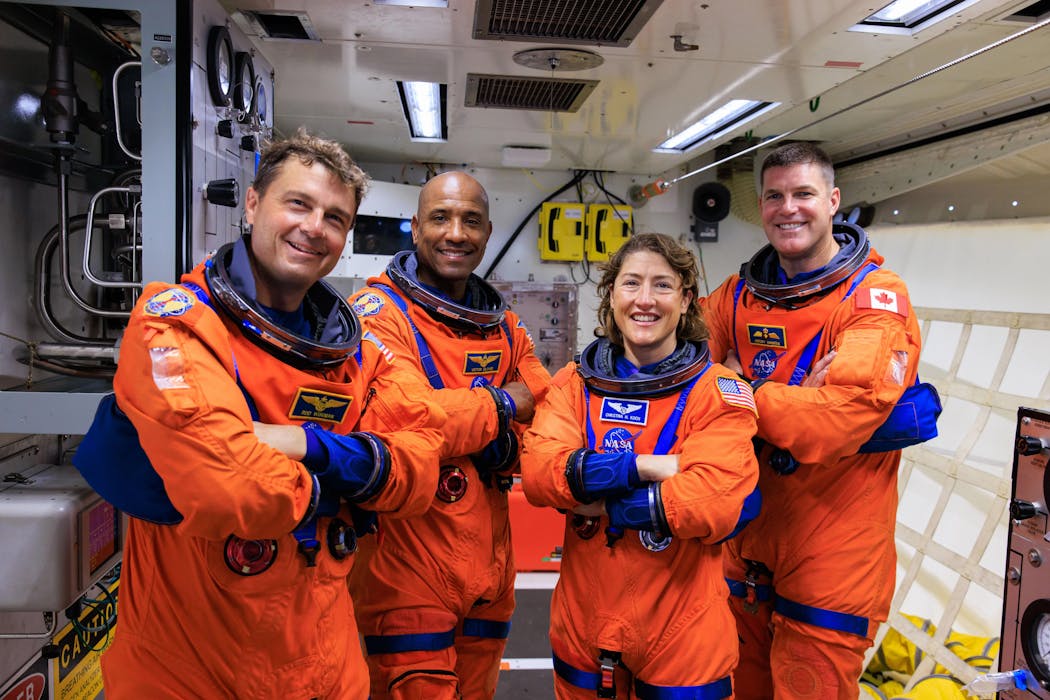
The crew of the new NASA moon rocket Artemis II at the Kennedy Space Center, including Jeremy Hansen of the Canadian Space Agency, on the far right. From left: Reid Wiseman, Victor Glover and Christina Koch. (NASA)

It’s been 54 years since the last Apollo mission, and since then, humans have not ventured beyond low-Earth orbit. But that’s all about to change with next week’s launch of the Artemis II mission from the Kennedy Space Center in Florida.

This is the first crewed flight of NASA’s Artemis program and the first time since 1972 that humans have ventured to the moon. Onboard is Canadian astronaut Jeremy Hansen, who will be the first non-American to fly to the moon and will make Canada only the second country in the world to send an astronaut into deep space.


Read more:
Canada’s space technology and innovations are a crucial contribution to the Artemis missions


I am a professor, an explorer and a planetary geologist. For the past 15 years, I have been helping to train Hansen and other astronauts in geology and planetary science. I am also a member of the Artemis III Science Team and the principal investigator for Canada’s first ever rover mission to the moon.

a rocket in a launcher at night
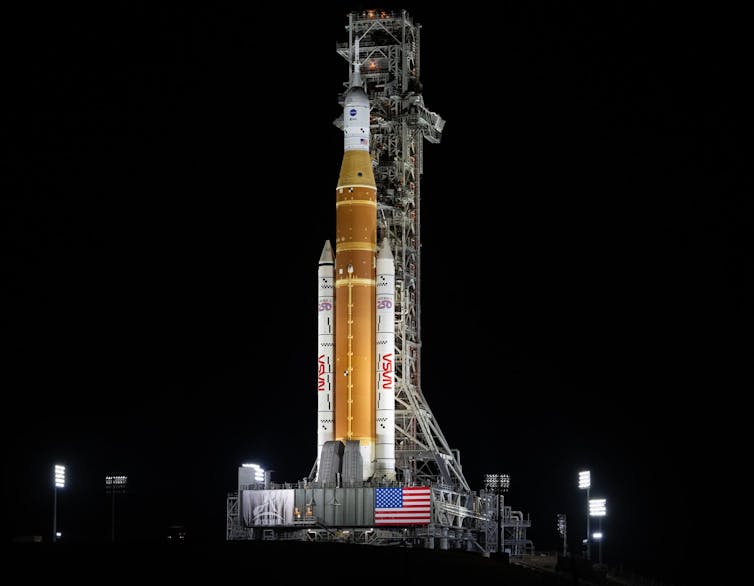
NASA’s Artemis II SLS rocket and Orion spacecraft secured to the mobile launcher at NASA’s Kennedy Space Center in Florida.
(NASA)

What will the mission achieve?

NASA’s Artemis program, launched in 2017, has the ambitious goal to return humans to the moon and to establish a lunar base in preparation for sending humans to Mars. The first mission, Artemis I, launched in late 2022. Following some delays, Artemis II is scheduled for launch as early as a week from now.

Onboard will be Hansen, along with his three American crew-mates.

This is an incredibly exciting mission. Artemis II is the first time humans have launched on NASA’s huge SLS (Space Launch System) rocket, and the first time humans have flown in the Orion spacecraft.

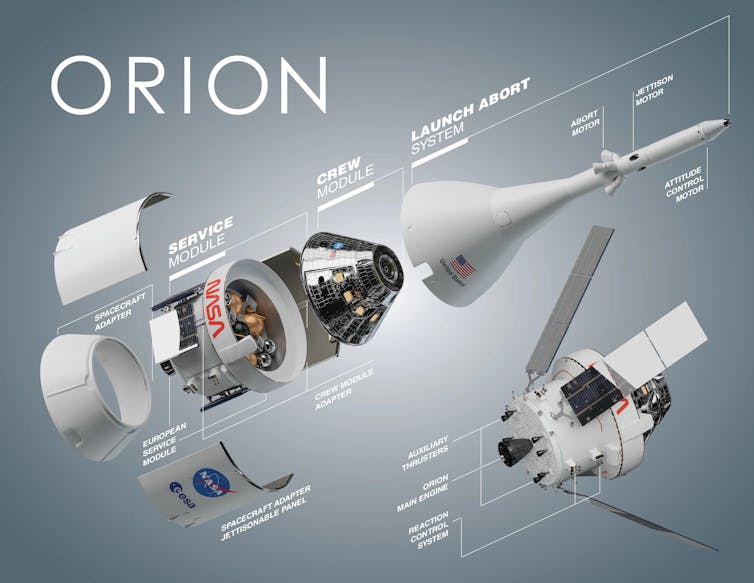
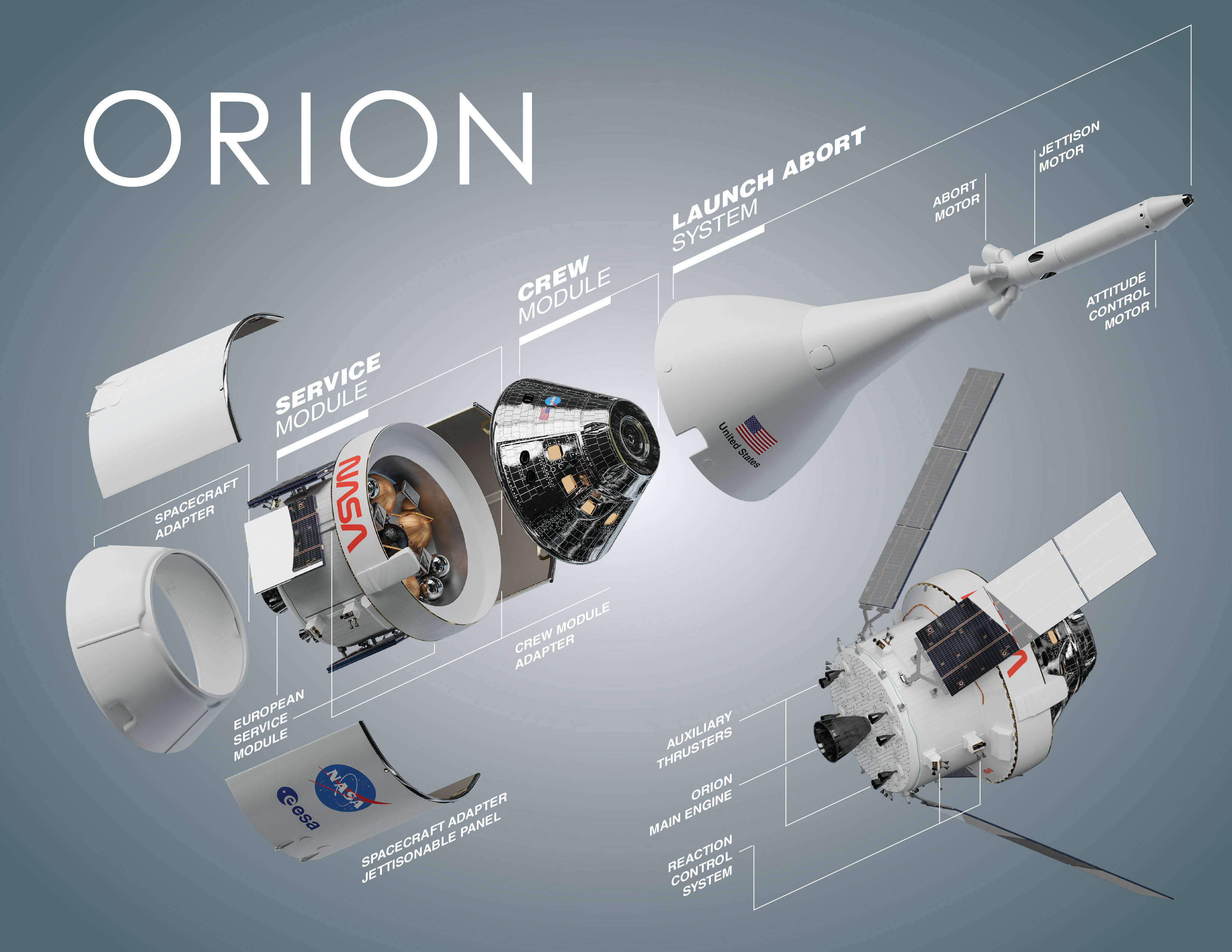
SLS is the most powerful rocket NASA has ever built, with the capability to send more than 27 metric tonnes of payload — equipment, instruments, scientific experiments and cargo — to the moon. The Orion spacecraft sits at the very top and is the crew’s ride to the moon. The Artemis II crew named their Orion capsule Integrity, a word they say embodies trust, respect, candour and humility.

an infographic illustrates a spacecraft
An infographic produced by NASA showing the different parts of the Orion spacecraft.
(NASA)

What will Artemis II crew do in space?

Following launch, the crew will carry out tests of Integrity’s essential life-support systems: the water dispenser, firefighting equipment, and, of course, the toilet. Did you know there was no toilet on the Apollo missions? Instead, the crews used “relief tubes.”

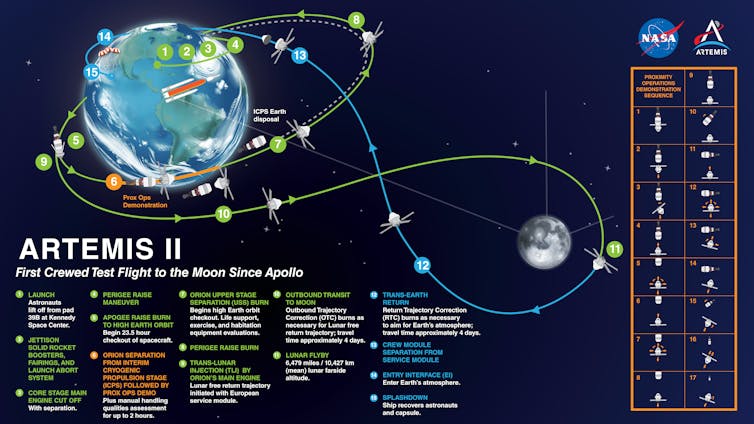
If everything looks good, the Artemis II will ignite what’s known as the Interim Cryogenic Propulsion Stage — part of the SLS rocket still connected to Integrity — to elevate the spacecraft’s orbit. If things are still looking good, the Orion spacecraft and its four human travellers will spend 24 hours in a high-Earth orbit up to 70,000 kilometres away from the planet.

For comparison, the International Space Station orbits the Earth at a mere 400 kilometres.

Following a series of tests and checks, the crew will conduct one of the most critical stages of the mission: the Trans-Lunar Injection, or TLI. This is the crucial moment that changes a spacecraft from orbiting the Earth — where the option to quickly return home remains — to sending it on its way to the moon and into deep space.

an infographic shows the trajectory of a spacecraft
The Artemis II mission’s 10-day ‘figure-eight’ trajectory.
(NASA)

Once the Integrity is on its way to the moon after TLI, there is no turning back — at least, not without going to the moon first. That’s because Artemis II — like the early Apollo missions — enters what’s called a “free-return trajectory” after the TLI. What this means is that even if Integrity’s engines fail completely, the moon’s gravity will naturally loop the spacecraft around it and aim it towards Earth.

After the three-day journey to the moon, the crew will carry out perhaps the most exciting stage of the mission: lunar fly-by. Integrity will loop around the far side of the moon, passing anywhere from 6,000 to 10,000 kilometres above its surface — much farther than any Apollo mission.

To quote Star Trek, at that most distant point, the Artemis II crew will have boldly gone where no (hu)man has gone before. This will be, quite literally, the farthest from Earth that any human being has ever travelled.

International effort to explore the moon

That a Canadian astronaut is part of the crew of Artemis II is a testament to the collaborative international nature of the Artemis program.

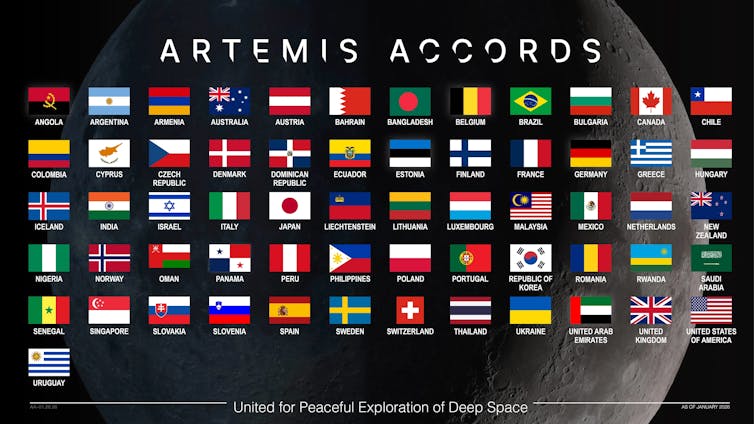
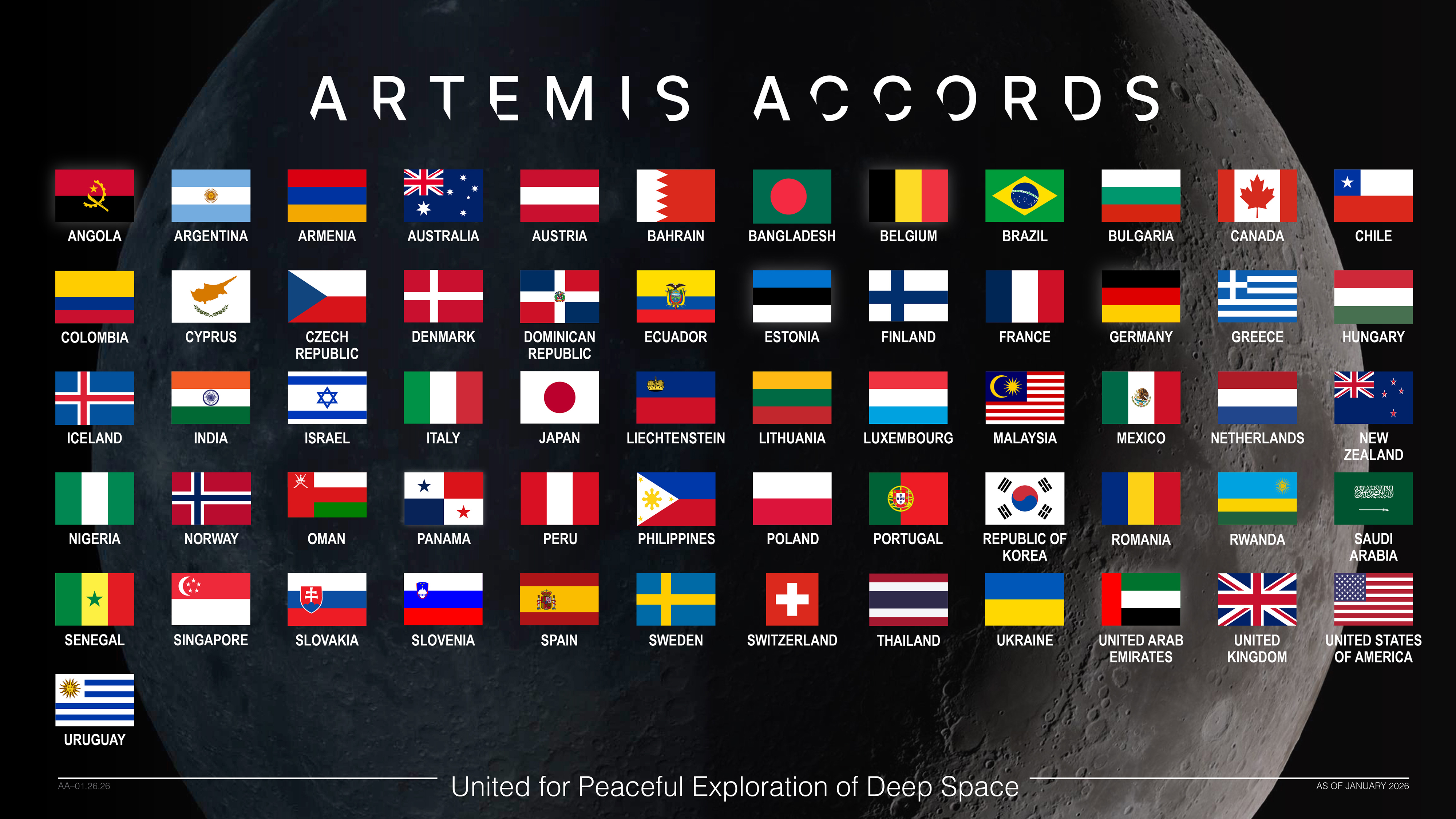
While NASA created the program and is the driving force, there are now 60 countries that have signed the Artemis Accords.

an infographic shows all the artemis accords signatories
On Jan. 26, 2026, Oman became the 61st nation to sign the Artemis Accords.
(NASA)

The foundation for the Artemis Accords is the recognition that international co-operation in space is intended not only to bolster space exploration but to enhance peaceful relationships among nations. This is particularly necessary now — perhaps more than any other time since the Cold War.

I truly hope that as Integrity returns from the moon’s far side, people around the world will pause — at least for a few moments — and be united in thinking of a better future. As American astronaut Bill Anders, who flew the first crewed Apollo mission to the moon, once said:

“We came all this way to explore the moon, and the most important thing is that we discovered the Earth.”

The Conversation

Gordon Osinski founded the company Interplanetary Exploration Odyssey Inc. He receives funding from the Natural Sciences and Engineering Research Council of Canada and the Canadian Space Agency.

ref. Artemis II: The first human mission to the moon in 54 years launches soon — with a Canadian on board – https://theconversation.com/artemis-ii-the-first-human-mission-to-the-moon-in-54-years-launches-soon-with-a-canadian-on-board-273881

Submarine mountains and long-distance waves stir the deepest parts of the ocean

Source: The Conversation – Global Perspectives – By Jessica Kolbusz, Research Fellow, School of Biological Sciences, The University of Western Australia

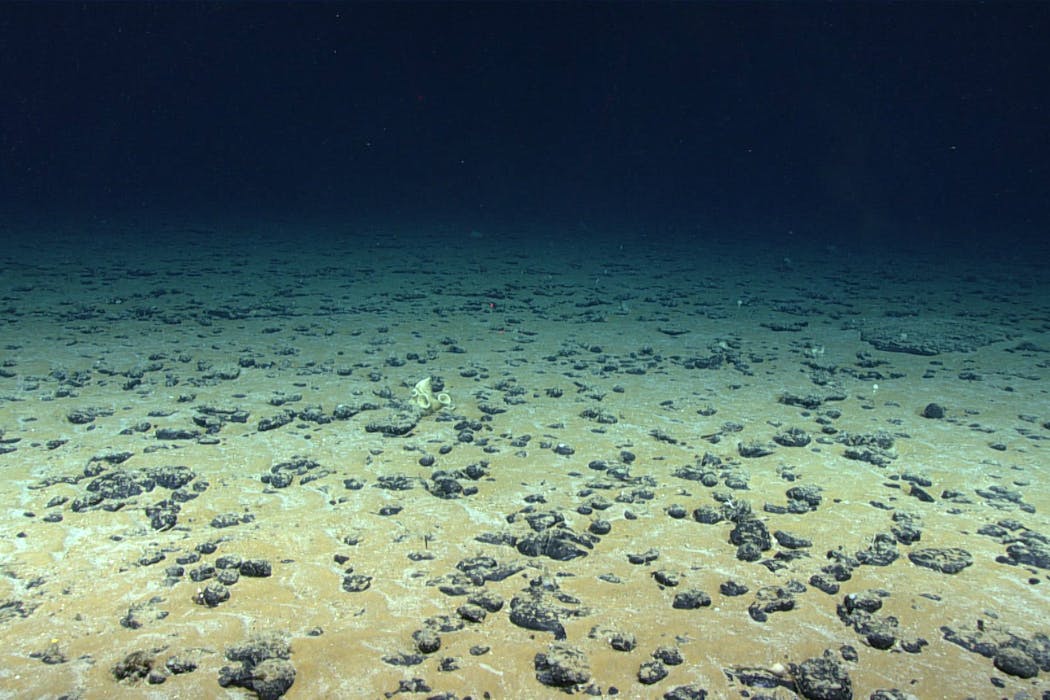
NOAA Office of Ocean Exploration and Research, 2019 Southeastern U.S. Deep-sea Exploration

When most of us look out at the ocean, we see a mostly flat blue surface stretching to the horizon. It’s easy to imagine the sea beneath as calm and largely static – a massive, still abyss far removed from everyday experience.

But the ocean is layered, dynamic and constantly moving, from the surface down to the deepest seafloor. While waves, tides and currents near the coast are familiar and accessible, far less is known about what happens several kilometres below, where the ocean meets the seafloor.

Our new research, published in the journal Ocean Science, shows water near the the seafloor is in constant motion, even in the abyssal plains of the Pacific Ocean. This has important consequences for climate, ecosystems and how we understand the ocean as an interconnected system.

Enter the abyss

The central and eastern Pacific Ocean include some of Earth’s largest abyssal regions (places where the sea is more than 3,000 metres deep). Here, most of the seafloor lies four to six kilometres below the surface. It is shaped by vast abyssal plains, fracture zones and seamounts.

It is cold and dark, and the water and ecosystems here are under immense pressure from the ocean above.

Just above the seafloor, no matter the depth, sits a region known as the bottom mixed layer. This part of the ocean is relatively uniform in temperature, salinity and density because it is stirred through contact with the seafloor.

Rather than a thin boundary, this layer can extend from tens to hundreds of metres above the seabed. It plays a crucial role in the movement of heat, nutrients and sediments between the pelagic ocean and the seabed, including the beginning of the slow return of water from the bottom of the ocean toward the surface as part of global ocean circulation.

Observations focused on the bottom mixed layer are rare, but this is beginning to change. Most ocean measurements focus on the upper few kilometres, and deep observations are scarce, expensive and often decades apart.

In the Pacific especially, scientists have long known that cold Antarctic waters flow northward, along topographic features such as the Tonga-Kermadec Ridge and the Izu-Ogasawara and Japan Trenches.

But the finer details of how these waters interact with seafloor features in ways that intermittently stir and reshape the bottom layer of the ocean has remained largely unknown.

A bright pink, soft coral attached to a grey seafloor mount.
Deep sea ecosystems are under immense pressure from the ocean above.
NOAA Photo Library

Investigating the abyss

To investigate the Pacific abyssal ocean, my colleagues and I combined new surface-to-seafloor measurements collected during a trans-Pacific expedition with high-quality repeat data about the physical features of the ocean gathered over the past two decades.

These observations allowed us to examine temperature and pressure all the way down to the seafloor over a wide range of latitudes and longitudes.

We then compared multiple scientific methods for identifying the bottom mixed layer and used machine learning techniques to understand what factors best explain the variations in its thickness.

Rather than being a uniform layer, we found the bottom mixed layer in the abyssal Pacific varies dramatically. In some regions it was less than 100m thick; in others it exceeded 700m.

This variability is not random; it’s controlled by the seafloor depth and the interactions between waves generated by surface tides and rough landscapes on the seabed.

In other words, the deepest ocean is not quietly stagnant as is often imagined. It is continually stirred by remote forces, shaped by seafloor features, and dynamically connected to the rest of the ocean above.

Just as coastal waters are shaped by waves, currents and sediment movement, the abyssal ocean is shaped by its own set of drivers. However, it is operating over larger distances and longer timescales.

Underwater mounts on the seafloor covered in gold minerals.
Topographic features of the seafloor intermittently stir and reshape the bottom layer of the ocean.
NOAA Photo Library

Connected to the rest of the world

This matters for several reasons.

First, the bottom mixed layer influences how heat is stored and redistributed in the ocean, affecting long-term climate change. Some ocean and climate models still simplify seabed mixing, which can lead to errors in how future climate is projected.

Second, it plays a role in transporting sediment and seabed ecosystems. As interest grows in deep-sea mining and other activities on the high seas, understanding how the seafloor environment changes, and importantly how seafloor disturbances might spread, becomes increasingly important.

Our results highlight how little of the deep ocean we actually observe.

Large areas of the abyssal Pacific remain effectively unsampled, even as international agreements such as the new UN High Seas Treaty seek to manage and protect these regions.

The deep ocean is not a silent, static place. It is active, connected to the oceans above and changing. If we want to make informed decisions about the future of the high seas, we need to understand what’s happening at the very bottom in space and time.

The Conversation

Jessica Kolbusz receives funding from the marine research organisation Inkfish LLC. The funder was not involved in the study design, collection, analysis, interpretation of data, the writing of this article, or the decision to submit it for publication.

ref. Submarine mountains and long-distance waves stir the deepest parts of the ocean – https://theconversation.com/submarine-mountains-and-long-distance-waves-stir-the-deepest-parts-of-the-ocean-274124

What the ‘mother of all deals’ between India and the EU means for global trade

Source: The Conversation – Global Perspectives – By Peter Draper, Professor, and Executive Director: Institute for International Trade, and Director of the Jean Monnet Centre of Trade and Environment, Adelaide University

The “mother of all deals”: that’s how European Commission President Ursula von der Leyen described the new free trade agreement between the European Union and India, announced on Tuesday after about two decades of negotiations.

The deal will affect a combined population of 2 billion people across economies representing about a quarter of global GDP.

Speaking in New Delhi, von der Leyen characterised the agreement as a “tale of two giants” who “choose partnership, in a true win-win fashion”.

So, what have both sides agreed to – and why does it matter so much for global trade?

What has been agreed

Under this agreement, tariffs on 96.6% of EU goods exported to India will be eliminated or reduced. This will reportedly mean savings of approximately €4 billion (about A$6.8 billion) annually in customs duties on European products.

The automotive sector is the big winner. European carmakers – including Volkswagen, BMW, Mercedes-Benz and Renault – will see tariffs on their vehicles gradually reduced from the current punitive rate of 110% to as little as 10%.

The reduced tariffs will apply to an annual quota of 250,000 vehicles, which is six times larger than the quota the UK received in its deal with India.

To protect India’s domestic manufacturers, European cars priced below €15,000 (A$25,500) will face higher tariffs, while electric vehicles get a five-year grace period.

India will almost entirely eliminate tariffs on machinery (which previously faced rates up to 44%), chemicals (22%) and pharmaceuticals (11%).

Wine is particularly notable – tariffs are being slashed from 150% to between 20–30% for medium and premium varieties. Spirits face cuts from 150% to 40%.

In return, the EU is also opening up its market. It will reduce tariffs on 99.5% of goods imported from India. EU tariffs on Indian marine products (such as shrimp), leather goods, textiles, handicrafts, gems and jewellery, plastics and toys will be eliminated.

These are labour-intensive sectors where India has genuine competitive advantage. Indian exporters in marine products, textiles and gems have faced tough conditions in recent years, partly due to US tariff pressures. That makes this EU access particularly valuable.

What’s been left out

This deal, while ambitious by India standards, has limits. It explicitly excludes deeper policy harmonisation on several fronts. Perhaps most significantly, the deal doesn’t include comprehensive provisions on labour rights, environmental standards or climate commitments.

While there are references to carbon border adjustment mechanisms (by which the EU imposes its domestic carbon price on imports into their common market), these likely fall short of enforceable environmental standards increasingly common in EU deals.

And the deal keeps protections for sensitive sectors in Europe: the EU maintains tariffs on beef, chicken, dairy, rice and sugar. Consumers in Delhi might enjoy cheaper European cars, while Europe’s farmers are protected from competition.

An auction takes place at a busy seafood market.
India’s seafood exporters stand to benefit from the deal.
Elke Scholiers/Getty

Why now?

Three forces converged to make this deal happen. First, a growing need to diversify from traditional partners amid economic uncertainty.

Second, the Donald Trump factor. Both the EU and India currently face significant US tariffs: India faces a 50% tariff on goods, while the EU faces headline tariffs of 15% (and recently avoided more in Trump’s threats over Greenland). This deal provides an alternative market for both sides.

And third, there’s what economists call “trade diversion” – notably, when Chinese products are diverted to other markets after the US closes its doors to them.

Both the EU and India want to avoid becoming dumping grounds for products that would normally go to the American market.

A dealmaking spree

The EU has been on something of a dealmaking spree recently. Earlier this month, it signed an agreement with Mercosur, a South American trade bloc.

That deal, however, has hit complications. On January 21, the European Parliament voted to refer it to the EU Court of Justice for legal review, which could delay ratification.

This creates a cautionary tale for the India deal. The legal uncertainty around Mercosur shows how well-intentioned trade deals can face obstacles.

The EU also finalised negotiations with Indonesia in September; EU–Indonesia trade was valued at €27 billion in 2024 (about A$46 billion).

For India, this deal with the EU is considerably bigger than recent agreements with New Zealand, Oman and the UK. It positions India as a diversified trading nation pursuing multiple partnerships.

However, the EU–India trade deal should be understood not as a purely commercial breakthrough, but also as a strategic signal — aimed primarily at the US.

In effect, it communicates that even close allies will actively seek alternative economic partners when faced with the threat of economic coercion or politicised trade pressure.

This interpretation is reinforced by both the deal’s timing and how it was announced. The announcement came even though key details still need to be negotiated and there remains some distance to go before final ratification.

That suggests the immediate objective was to deliver a message: the EU has options, and it will use them.

What does this mean for Australia and India?

For Australians, this deal matters more than you might think. Australia already has the Australia-India Economic Cooperation and Trade Agreement, which came into force in late 2022.

Australia has eliminated tariffs on all Indian exports, while India has removed duties on 90% of Australian goods by value, rising from an original commitment of 85%.

This EU-India deal should provide impetus for Australia and India to finalise their more comprehensive Comprehensive Economic Cooperation Agreement, under negotiation since 2023.

The 11th round of negotiations took place in August, covering goods, services, digital trade, rules of origin, and – importantly – labour and environmental standards.

The EU deal suggests India is willing to engage seriously on tariff liberalisation. However, it remains to be seen whether that appetite will transfer to the newer issues increasingly central to global trade, notably those Australia is now trying to secure with Indian negotiators.

Chasing an Australia-EU deal

Australia should take heart from the EU’s success in building alternative trading relationships.

This should encourage negotiators still pursuing an EU–Australia free trade agreement, negotiations for which were renewed last June after collapsing in 2023.

These deals signal something important about the global trading system: countries are adapting to American protectionism not by becoming protectionist themselves, but by deepening partnerships with each other.

The world’s democracies are saying they want to trade, invest, and cooperate on rules-based terms.

The Conversation

Nathan Howard Gray receives funding from Department of Foreign Affairs and Trade.

Mandar Oak and Peter Draper do not work for, consult, own shares in or receive funding from any company or organisation that would benefit from this article, and have disclosed no relevant affiliations beyond their academic appointment.

ref. What the ‘mother of all deals’ between India and the EU means for global trade – https://theconversation.com/what-the-mother-of-all-deals-between-india-and-the-eu-means-for-global-trade-274515

Monumental ambitions: the history behind Trump’s triumphal arch

Source: The Conversation – Global Perspectives – By Garritt C. Van Dyk, Senior Lecturer in History, University of Waikato

Getty Images

Donald Trump took time out this week from dramatic events at home and abroad to reveal three new design concepts for his proposed “Independence Arch” in Washington DC.

All three renderings resemble the famous Arc de Triomphe in Paris, although one features gilded livery not unlike Trump’s chosen adornments to the Oval Office in the White House.

Commissioned in preparation for the 250th anniversary of the signing of the Declaration of Independence on July 4, the triumphal arch draws on a long history of celebrating military conquest, from Roman emperors to Napoleon Bonaparte.

As such, it aligns seamlessly with Trump’s foreign policy and his stated mission for the United States to control the western hemisphere – as he has dubbed it, the “Donroe Doctrine”.

But as many have been asking, while the design is a copy of an iconic monument, is a personal tribute necessarily the best way to mark the anniversary of America’s break with absolute rule and the British monarchy?

The ‘Arc de Trump’

When Trump first displayed models of the proposed arch last October, a reporter asked him who it was for. Trump replied “Me. It’s going to be beautiful.”

In a December update, the president said the new arch “will be like the one in Paris, but to be honest with you, it blows it away. It blows it away in every way.”

There was one exception, he noted: “The only thing they have is history […] I always say [it’s] the one thing you can’t compete with, but eventually we’ll have that history too.”

The president clearly believes his arch will be part of creating that history. “It’s the only city in the world that’s of great importance that doesn’t have a triumphal arch,” he said of Washington DC.

Set to be located near Arlington National Cemetery and the Lincoln Memorial, the site would put the new structure in a visual conversation with many of the most famous landmarks in the national capital.

This also aligns with other projects that will leave Trump’s mark on the physical fabric of Washington: changes to the White House last year that included paving over the famous Rose Garden, decorating the Oval Office in rococo gold, and demolishing the East Wing for a US$400 million ballroom extension.

The “Arc de Trump” (as it has been branded) is now the “top priority” for Vince Haley, the director of the Domestic Policy Council for the White House.

Triumph and design

The Arc de Triomphe in Paris, located at the top of the Champs-Élysées, was commissioned by Napoleon Bonaparte in 1806 to honour the French imperial army following his victory at the Battle of Austerlitz. It was not finished until 1836, under the reign of King Louis Philippe I.

Architects for the project, Jean-François Thérèse Chalgrin and Jean-Arnaud Raymond, drew on classical arches for inspiration, with Rome’s Arch of Titus (circa 85 CE) as the main source. It was built by Emperor Domitian (51–96 CE), a cruel and ostentatious tyrant who was popular with the people but battled with the Senate and limited its power to make laws.

Domitian commissioned the arch to commemorate the deification of his brother Titus, and his military victory crushing the rebellion in Judea.

Given its inspiration, Trump’s proposed arch doesn’t reference any uniquely American design features. But the neoclassical style recalls earlier monuments that also reference antiquity.

The Washington Monument, for example, is built in the form of an Egyptian obelisk. A four-sided pillar, it tapers as it rises and is topped with a pyramid, a tribute to the sun god Ra.

But it also incorporated an element that was meant to symbolise American technological advancement and innovation – a pyramid cap made of aluminium.

When the obelisk was completed in 1884, aluminium was rare because the process for refining it had not been perfected. The top of the monument was the largest piece of cast aluminium on the planet at that time.

‘Truth and sanity’

Trump’s triumphal arch is likely destined to join a long debate about the merits of public monuments and what they represent.

During the Black Lives Matter movement, many statues of historical figures were removed from public display because they were seen as celebrations of racism and imperialism.

Trump has since restored at least one Confederate statue toppled during that time, and his desire to add a new monument to himself should come as little surprise.

During the Jim Crow era of racial segregation and throughout the civil rights movement, there was a sharp spike in the number of monuments erected to Confederate soldiers and generals.

Just as tearing down those statues was a statement, so is the creation of a new memorial to promote Trump’s positive interpretation of the nation’s past. It is also consistent with his administration’s declared mission of “restoring truth and sanity to American history”.

Maybe the more immediate question is whether the Independence Arch can even be built by Independence Day on July 4, a tall order even for this president. As for its reception, history will have to be the judge.

The Conversation

Garritt C. Van Dyk has received funding from the Getty Research Institute.

ref. Monumental ambitions: the history behind Trump’s triumphal arch – https://theconversation.com/monumental-ambitions-the-history-behind-trumps-triumphal-arch-273567