Private credit rating agencies shape Africa’s access to debt. Better oversight is needed

Source: The Conversation – Africa – By Daniel Cash, Senior Fellow, United Nations University; Aston University

Africa’s development finance challenge has reached a critical point. Mounting debt pressure is squeezing fiscal space. And essential needs in infrastructure, health and education remain unmet. The continent’s governments urgently need affordable access to international capital markets. Yet many continue to face borrowing costs that make development finance unviable.

Sovereign credit ratings – the assessments that determine how financial markets price a country’s risk – play a central role in this dynamic. These judgements about a government’s ability and willingness to repay debt are made by just three main agencies – S&P Global, Moody’s and Fitch. The grades they assign, ranging from investment grade to speculative or default, directly influence the interest rates governments pay when they borrow.

Within this system, the stakes for African economies are extremely high. Borrowing costs rise sharply once countries fall below investment grade. And when debt service consumes large shares of budgets, less remains for schools, hospitals or climate adaptation. Many institutional investors also operate under mandates restricting them to investment-grade bonds.


Read more:
Africa’s development banks are being undermined: the continent will pay the price


Countries rated below this threshold are excluded from large pools of capital. In practice it means that credit ratings shape the cost of borrowing, as well as whether borrowing is possible at all.

I am a researcher who has examined how sovereign credit ratings operate within the international financial system. And I’ve followed debates about their role in development finance. Much of the criticism directed at the agencies has focused on: their distance from the countries they assess; the suitability of some analytical approaches; and the challenges of applying standardised models across different economic contexts.

Less attention has been paid to the position ratings now occupy within the global financial architecture. Credit rating agencies are private companies that assess the likelihood that governments and firms will repay their debts. They sell these assessments to investors, banks and financial institutions, rather than working for governments or international organisations. But their assessments have become embedded in regulation, investment mandates and policy processes in ways that shape public outcomes.

This has given ratings a governance-like influence over access to finance, borrowing costs and fiscal space. In practice, ratings help determine how expensive it is for governments to borrow. This determines how much room they have to spend on public priorities like health, education, and infrastructure. Yet, credit rating agencies were not created to play this role. They emerged as private firms in the early 1900s to provide information to investors. The frameworks for coordinating and overseeing their wider public impact – which grew long after they were established – developed gradually and unevenly over time.

The question isn’t whether ratings should be replaced. Rather, it’s how this influence is understood and managed.

Beyond the bias versus capacity debate

Discussions about Africa’s sovereign ratings often focus on two explanations. One is that African economies are systemically underrated, with critics pointing to rapid downgrades and assessments that appear harsher than those applied to comparable countries elsewhere.

Factors often cited include the location of analytical teams in advanced economies, limited exposure to domestic policy processes in the global south, and incentive structures shaped by closer engagement with regulators and market actors in major financial centres.

The other explanation emphasises macroeconomic fundamentals, the basic economic conditions that shape a government’s ability to service debt, such as growth prospects, export earnings, institutional strength and fiscal buffers. When these are weaker or more volatile, borrowing costs tend to be more sensitive to global shocks.

Both perspectives have merit. Yet neither fully explains a persistent pattern: governments often undertake significant reforms, sometimes at high political and social costs, but changes in ratings can lag well behind those efforts. During that period, borrowing costs remain high and market access constrained. It is this gap between reform and recognition that points to a deeper structural issue in how credit ratings operate within the global financial system.

Design by default

Credit ratings began as a commercial information service for investors. Over several decades, from the 1970s to the 2000s, they became embedded in financial regulation. United States regulators first incorporated ratings into capital rules in 1975 as benchmarks for determining risk charges. The European Union followed in the late 1980s and 1990s. Key international bodies followed.

This process was incremental, not the result of deliberate public design. Ratings were adopted because they were available, standardised and widely recognised. It’s argued that private sector reliance on ratings typically followed their incorporation into public regulation. But in fact markets relied informally on credit rating assessments long before regulators formalised their use.

By the late 1990s, ratings had become deeply woven into how financial markets function. The result was that formal regulatory reliance increased until ratings became essential for distinguishing creditworthiness. This, some have argued, may have encouraged reliance on ratings at the expense of independent risk assessment.

Today, sovereign credit ratings influence which countries can access development finance, at what cost, and on what terms. They shape the fiscal options available to governments, and therefore the policy space for pursuing development goals.

Yet ratings agencies remain private firms, operating under commercial incentives. They developed outside the multilateral system and were not originally designed for a governance role. The power they wield is real. But the mechanisms for coordinating that power over public development objectives emerged later and separately. This created a governance function without dedicated coordination or oversight structures.

Designing the missing layer

African countries have initiated reform efforts to address their development finance challenge. For instance, some work with credit rating agencies to improve data quality and strengthen institutions. But these efforts don’t always translate into timely changes in assessments.

Part of the difficulty lies in shared information constraints. The link between fiscal policy actions and market perception remains complex. Governments need ways to credibly signal reform. Agencies need reliable mechanisms to verify change. And investors need confidence that assessments reflect current conditions rather than outdated assumptions.


Read more:
Africa’s new credit rating agency could change the rules of the game. Here’s how


While greater transparency can help, public debt data remains fragmented across databases and institutions.

A critical missing element in past reform efforts has been coordination infrastructure: dialogue platforms and credibility mechanisms that allow complex information to flow reliably between governments, agencies, investors and multilateral institutions.

Evidence suggests that external validation can help reforms gain market recognition. In practice, this points to the need for more structured interaction between governments, rating agencies, development partners and regional credit rating agencies around data, policy commitments and reform trajectories.

One option is the Financing for Development process. This is a multistakeholder forum coordinated by the United Nations that negotiates how the global financial system should support sustainable development. Addressing how credit ratings function within the financial system is a natural extension of this process.

Building a coordination layer need not mean replacing ratings. Or shifting them into the public sector. It means creating the transparency, dialogue and accountability structures that help any system function more effectively.

Recognising this reality helps explain how development finance actually works. As debt pressures rise and climate adaptation costs grow, putting this governance layer in place is now critical to safeguarding development outcomes in Africa.

The Conversation

Daniel Cash is affiliated with UN University Centre for Policy Research.

ref. Private credit rating agencies shape Africa’s access to debt. Better oversight is needed – https://theconversation.com/private-credit-rating-agencies-shape-africas-access-to-debt-better-oversight-is-needed-274858
Data centers told to pitch in as storms and cold weather boost power demand

Source: The Conversation – USA (2) – By Nikki Luke, Assistant Professor of Human Geography, University of Tennessee

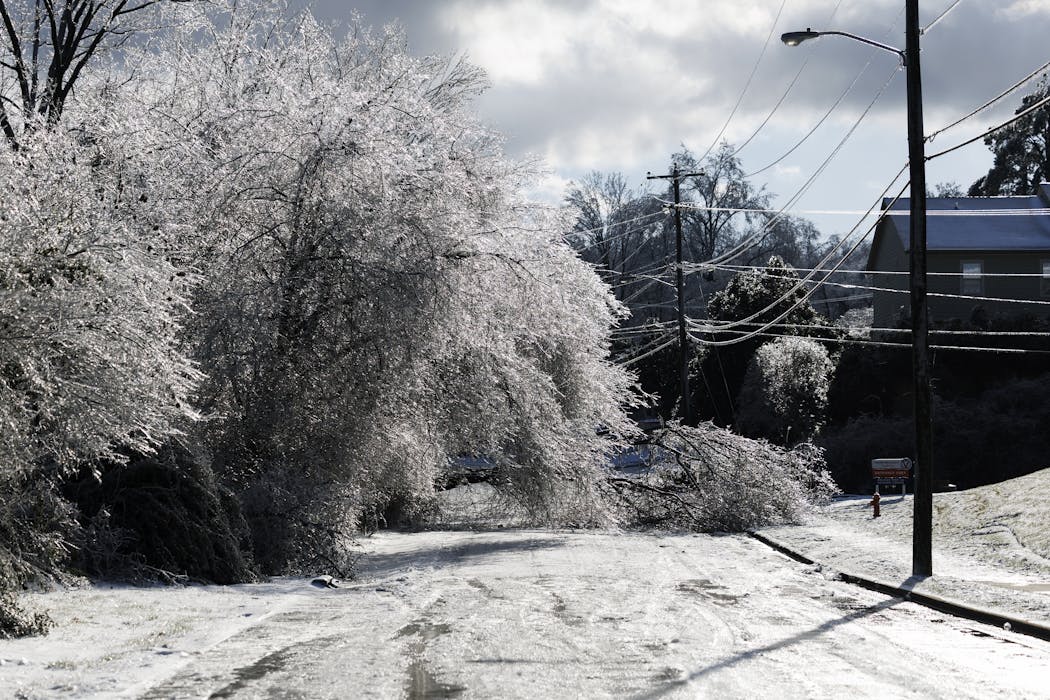
During winter storms, physical damage to wires and high demand for heating put pressure on the electrical grid. Brett Carlsen/Getty Images

As Winter Storm Fern swept across the United States in late January 2026, bringing ice, snow and freezing temperatures, it left more than a million people without power, mostly in the Southeast.

Scrambling to meet higher than average demand, PJM, the nonprofit company that operates the grid serving much of the mid-Atlantic U.S., asked for federal permission to generate more power, even if it caused high levels of air pollution from burning relatively dirty fuels.

Energy Secretary Chris Wright agreed and took another step, too. He authorized PJM and ERCOT – the company that manages the Texas power grid – as well as Duke Energy, a major electricity supplier in the Southeast, to tell data centers and other large power-consuming businesses to turn on their backup generators.

The goal was to make sure there was enough power available to serve customers as the storm hit. Generally, these facilities power themselves and do not send power back to the grid. But Wright explained that their “industrial diesel generators” could “generate 35 gigawatts of power, or enough electricity to power many millions of homes.”

We are scholars of the electricity industry who live and work in the Southeast. In the wake of Winter Storm Fern, we see opportunities to power data centers with less pollution while helping communities prepare for, get through and recover from winter storms.

A close-up of a rack of electronics.
The electronics in data centers consume large amounts of electricity.
RJ Sangosti/MediaNews Group/The Denver Post via Getty Images

Data centers use enormous quantities of energy

Before Wright’s order, it was hard to say whether data centers would reduce the amount of electricity they take from the grid during storms or other emergencies.

This is a pressing question, because data centers’ power demands to support generative artificial intelligence are already driving up electricity prices in congested grids like PJM’s.

And data centers are expected to need only more power. Estimates vary widely, but the Lawrence Berkeley National Lab anticipates that the share of electricity production in the U.S. used by data centers could spike from 4.4% in 2023 to between 6.7% and 12% by 2028. PJM expects a peak load growth of 32 gigawatts by 2030 – enough power to supply 30 million new homes, but nearly all going to new data centers. PJM’s job is to coordinate that energy – and figure out how much the public, or others, should pay to supply it.

The race to build new data centers and find the electricity to power them has sparked enormous public backlash about how data centers will inflate household energy costs. Other concerns are that power-hungry data centers fed by natural gas generators can hurt air quality, consume water and intensify climate damage. Many data centers are located, or proposed, in communities already burdened by high levels of pollution.

Local ordinances, regulations created by state utility commissions and proposed federal laws have tried to protect ratepayers from price hikes and require data centers to pay for the transmission and generation infrastructure they need.

Always-on connections?

In addition to placing an increasing burden on the grid, many data centers have asked utility companies for power connections that are active 99.999% of the time.

But since the 1970s, utilities have encouraged “demand response” programs, in which large power users agree to reduce their demand during peak times like Winter Storm Fern. In return, utilities offer financial incentives such as bill credits for participation.

Over the years, demand response programs have helped utility companies and power grid managers lower electricity demand at peak times in summer and winter. The proliferation of smart meters allows residential customers and smaller businesses to participate in these efforts as well. When aggregated with rooftop solar, batteries and electric vehicles, these distributed energy resources can be dispatched as “virtual power plants.”

A different approach

The terms of data center agreements with local governments and utilities often aren’t available to the public. That makes it hard to determine whether data centers could or would temporarily reduce their power use.

In some cases, uninterrupted access to power is necessary to maintain critical data systems, such as medical records, bank accounts and airline reservation systems.

Yet, data center demand has spiked with the AI boom, and developers have increasingly been willing to consider demand response. In August 2025, Google announced new agreements with Indiana Michigan Power and the Tennessee Valley Authority to provide “data center demand response by targeting machine learning workloads,” shifting “non-urgent compute tasks” away from times when the grid is strained. Several new companies have also been founded specifically to help AI data centers shift workloads and even use in-house battery storage to temporarily move data centers’ power use off the grid during power shortages.

An aerial view of metal equipment and wires with a city skyline in the background.
Large amounts of power move through parts of the U.S. electricity grid.
Joe Raedle/Getty Images

Flexibility for the future

One study has found that if data centers would commit to using power flexibly, an additional 100 gigawatts of capacity – the amount that would power around 70 million households – could be added to the grid without adding new generation and transmission.

In another instance, researchers demonstrated how data centers could invest in offsite generation through virtual power plants to meet their generation needs. Installing solar panels with battery storage at businesses and homes can boost available electricity more quickly and cheaply than building a new full-size power plant. Virtual power plants also provide flexibility as grid operators can tap into batteries, shift thermostats or shut down appliances in periods of peak demand. These projects can also benefit the buildings where they are hosted.

Distributed energy generation and storage, alongside winterizing power lines and using renewables, are key ways to help keep the lights on during and after winter storms.

Those efforts can make a big difference in places like Nashville, Tennessee, where more than 230,000 customers were without power at the peak of outages during Fern, not because there wasn’t enough electricity for their homes but because their power lines were down.

The future of AI is uncertain. Analysts caution that the AI industry may prove to be a speculative bubble: If demand flatlines, they say, electricity customers may end up paying for grid improvements and new generation built to meet needs that would not actually exist.

Onsite diesel generators are an emergency solution for large users such as data centers to reduce strain on the grid. Yet, this is not a long-term solution to winter storms. Instead, if data centers, utilities, regulators and grid operators are willing to also consider offsite distributed energy to meet electricity demand, then their investments could help keep energy prices down, reduce air pollution and harm to the climate, and help everyone stay powered up during summer heat and winter cold.

The Conversation

Nikki Luke is a fellow at the Climate and Community Institute. She receives funding from the Alfred P. Sloan Foundation. She previously worked at the U.S. Department of Energy.

Conor Harrison receives funding from Alfred P. Sloan Foundation and has previously received funding from the U.S. National Science Foundation.

ref. Data centers told to pitch in as storms and cold weather boost power demand – https://theconversation.com/data-centers-told-to-pitch-in-as-storms-and-cold-weather-boost-power-demand-274604

Climate change threatens the Winter Olympics’ future – and even snowmaking has limits for saving the Games

Source: The Conversation – USA (2) – By Steven R. Fassnacht, Professor of Snow Hydrology, Colorado State University

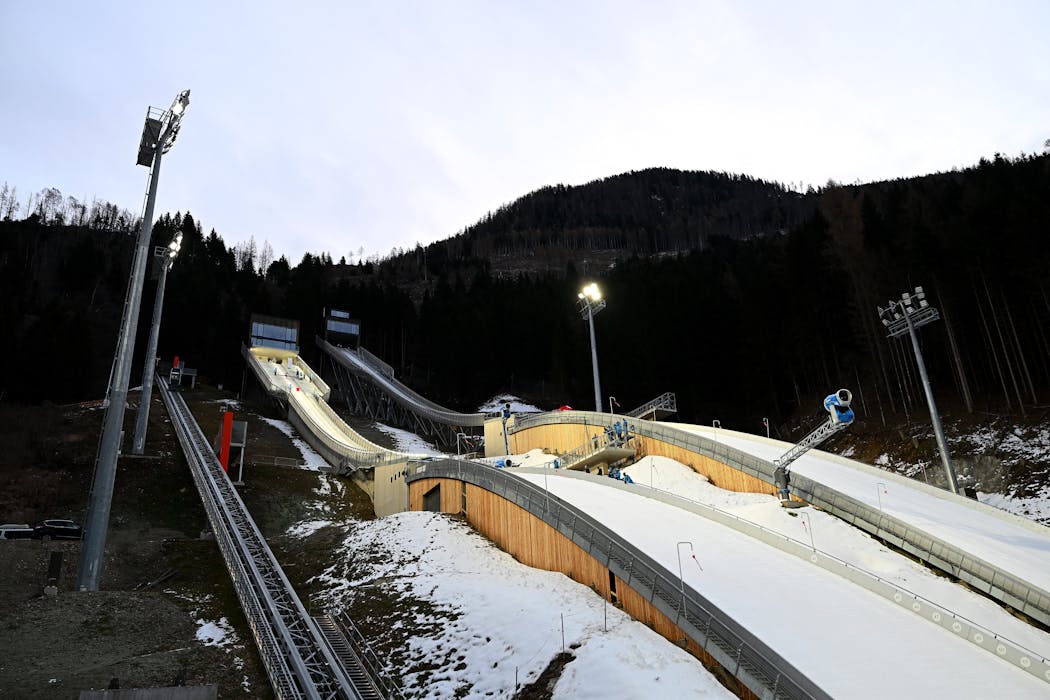
Italy’s Predazzo Ski Jumping Stadium, which is hosting events for the 2026 Winter Olympics, needed snowmaking machines for the Italian National Championship Open on Dec. 23, 2025. Mattia Ozbot/Getty Images

Watching the Winter Olympics is an adrenaline rush as athletes fly down snow-covered ski slopes, luge tracks and over the ice at breakneck speeds and with grace.

When the first Olympic Winter Games were held in Chamonix, France, in 1924, all 16 events took place outdoors. The athletes relied on natural snow for ski runs and freezing temperatures for ice rinks.

Two skaters on ice outside with mountains in the background. They are posing as if gliding together.
Sonja Henie, left, and Gilles Grafstrom at the Olympic Winter Games in Chamonix, France, in 1924.
The Associated Press

Nearly a century later, in 2022, the world watched skiers race down runs of 100% human-made snow near Beijing. Luge tracks and ski jumps have their own refrigeration, and four of the original events are now held indoors: figure skaters, speed skaters, curlers and hockey teams all compete in climate-controlled buildings.

Innovation made the 2022 Winter Games possible in Beijing. Ahead of the 2026 Winter Olympics in northern Italy, where snowfall was below average for the start of the season, officials had large lakes built near major venues to provide enough water for snowmaking. But snowmaking can go only so far in a warming climate.

As global temperatures rise, what will the Winter Games look like in another century? Will they be possible, even with innovations?

Former host cities that would be too warm

The average daytime temperature of Winter Games host cities in February has increased steadily since those first events in Chamonix, rising from 33 degrees Fahrenheit (0.4 Celsius) in the 1920s-1950s to 46 F (7.8 C) in the early 21st century.

In a recent study, scientists looked at the venues of 19 past Winter Olympics to see how each might hold up under future climate change.

A cross-country skier falls in front of another during a race. The second skier has his mouth open as if shouting.
Human-made snow was used to augment trails at the Sochi Games in Russia in 2014. Some athletes complained that it made the trails icier and more dangerous.
AP Photo/Dmitry Lovetsky

They found that by midcentury, four former host cities – Chamonix; Sochi, Russia; Grenoble, France; and Garmisch-Partenkirchen, Germany – would no longer have a reliable climate for hosting the Games, even under the United Nations’ best-case scenario for climate change, which assumes the world quickly cuts its greenhouse gas emissions. If the world continues burning fossil fuels at high rates, Squaw Valley, California, and Vancouver, British Columbia, would join that list of no longer being a reliable climate for hosting the Winter Games.

By the 2080s, the scientists found, the climates in 12 of 22 former venues would be too unreliable to host the Winter Olympics’ outdoor events; among them were Turin, Italy; Nagano, Japan; and Innsbruck, Austria.

In 2026, there are now five weeks between the Winter Olympics and the Paralympics, which last through mid-March. Host countries are responsible for both events, and some venues may increasingly find it difficult to have enough snow on the ground, even with snowmaking capabilities, as snow seasons shorten.

Ideal snowmaking conditions today require a dewpoint temperature – the combination of coldness and humidity – of around 28 F (-2 C) or less. More moisture in the air melts snow and ice at colder temperatures, which affects snow on ski slopes and ice on bobsled, skeleton and luge tracks.

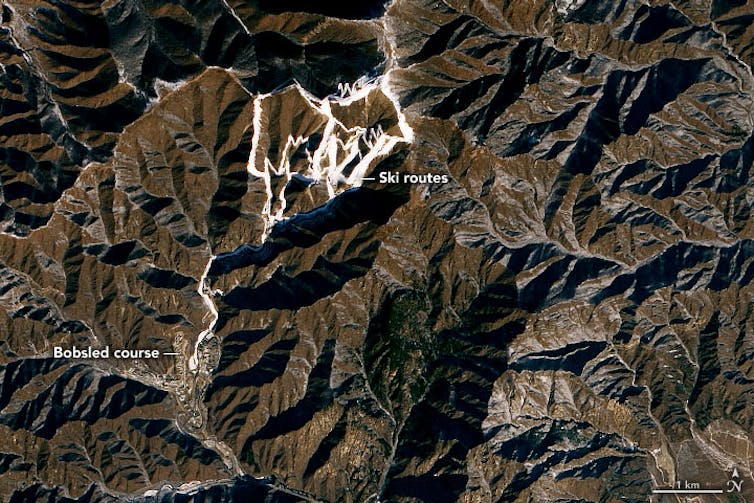
Stark white lines etched on a swath of brown mountains delineate ski routes and bobsled course.
A satellite view clearly shows the absence of natural snow during the 2022 Winter Olympics. Beijing’s bid to host the Winter Games had explained how extensively it would rely on snowmaking.
Joshua Stevens/NASA Earth Observatory
A gondola passes by with dark ground below and white ski slopes behind it.
The finish area of the Alpine ski venue at the 2022 Winter Olympics was white because of machine-made snow.
AP Photo/Robert F. Bukaty

As Colorado snow and sustainability scientists and also avid skiers, we’ve been watching the developments and studying the climate impact on the mountains and winter sports we love.

Conditions vary by location and year to year

The Earth’s climate will be warmer overall in the coming decades. Warmer air can mean more winter rain, particularly at lower elevations. Around the globe, snow has been covering less area. Low snowfall and warm temperature made the start to the 2025-26 winter season particularly poor for Colorado’s ski resorts.

However, local changes vary. For example, in northern Colorado, the amount of snow has decreased since the 1970s, but the decline has mostly been at higher elevations.

Several machines pump out sprays of snow across a slope.
Snow cannons spray machine-made snow on a ski slope ahead of the 2026 Winter Olympics.
Mattia Ozbot/Getty Images

A future climate may also be more humid, which affects snowmaking and could affect bobsled, luge and skeleton tracks.

Of the 16 Winter Games sports today, half are affected by temperature and snow: Alpine skiing, biathlon, cross-country skiing, freestyle skiing, Nordic combined, ski jumping, ski mountaineering and snowboarding. And three are affected by temperature and humidity: bobsled, luge and skeleton.

Technology also changes

Developments in technology have helped the Winter Games adapt to some changes over the past century.

Hockey moved indoors, followed by skating. Luge and bobsled tracks were refrigerated in the 1960s. The Lake Placid Winter Games in 1980 in New York used snowmaking to augment natural snow on the ski slopes.

Today, indoor skiing facilities make skiing possible year-round. Ski Dubai, open since 2005, has five ski runs on a hill the height of a 25-story building inside a resort attached to a shopping mall.

Resorts are also using snowfarming to collect and store snow. The method is not new, but due to decreased snowfall and increased problems with snowmaking, more ski resorts are keeping leftover snow to be prepared for the next winter.

Two workers pack snow on an indoor ski slope with a sloped ceiling overhead.
Dubai has an indoor ski slope with multiple runs and a chairlift, all part of a shopping mall complex.
AP Photo/Jon Gambrell

But making snow and keeping it cold requires energy and water – and both become issues in a warming world. Water is becoming scarcer in some areas. And energy, if it means more fossil fuel use, further contributes to climate change.

The International Olympic Committee recognizes that the future climate will have a big impact on the Olympics, both winter and summer. It also recognizes the importance of ensuring that the adaptations are sustainable.

The Winter Olympics could become limited to more northerly locations, like Calgary, Alberta, or be pushed to higher elevations.

Summer Games are feeling climate pressure, too

The Summer Games also face challenges. Hot temperatures and high humidity can make competing in the summer difficult, but these sports have more flexibility than winter sports.

For example, changing the timing of typical summer events to another season can help alleviate excessive temperatures. The 2022 World Cup, normally a summer event, was held in November so Qatar could host it.

What makes adaptation more difficult for the Winter Games is the necessity of snow or ice for all of the events.

A snowboarder with 'USA' on her gloves puts her arms out for balance on a run.
Climate change threatens the ideal environments for snowboarders, like U.S. Olympian Hailey Langland, competing here during the women’s snowboard big air final in Beijing in 2022.
AP Photo/Jae C. Hong

Future depends on responses to climate change

In uncertain times, the Olympics offer a way for the world to come together.

People are thrilled by the athletic feats, like Jean-Claude Killy winning all three Alpine skiing events in 1968, and stories of perseverance, like the 1988 Jamaican bobsled team competing beyond all expectations.

The Winter Games’ outdoor sports may look very different in the future. How different will depend heavily on how countries respond to climate change.

This updates an article originally published Feb. 19, 2022, with the 2026 Winter Games.

The Conversation

The authors do not work for, consult, own shares in or receive funding from any company or organization that would benefit from this article, and have disclosed no relevant affiliations beyond their academic appointment.

ref. Climate change threatens the Winter Olympics’ future – and even snowmaking has limits for saving the Games – https://theconversation.com/climate-change-threatens-the-winter-olympics-future-and-even-snowmaking-has-limits-for-saving-the-games-274800

Clergy protests against ICE turned to a classic – and powerful – American playlist

Source: The Conversation – USA (3) – By David W. Stowe, Professor of Religious Studies, Michigan State University

Clergy and community leaders demonstrate outside Minneapolis-St. Paul International Airport on Jan. 23, 2026, amid a surge by federal immigration agents. Brandon Bell/Getty Images

On Jan. 28, 2026, Bruce Springsteen released “Streets of Minneapolis,” a hard-hitting protest against the immigration enforcement surge in the city, including the killings of Renee Good and Alex Pretti. The song is all over social media, and the official video has already been streamed more than 5 million times. It’s hard to remember a time when a major artist has released a song in the midst of a specific political crisis.

Yet some of the most powerful music coming out of Minneapolis is of a much older vintage. Hundreds of clergy from around the country converged on the city in late January to take part in faith-based protests. Many were arrested while blocking a road near the airport. And they have been singing easily recognizable religious songs used during the Civil Rights movement of the 1950s and ‘60s, like “Amazing Grace,” “We Shall Overcome, and ”This Little Light of Mine.“

I have been studying the politics of music and religion for more than 25 years, and I wrote about songs I called “secular spirituals” in my 2004 book, “How Sweet the Sound: Music in the Spiritual Lives of Americans.” Sometimes called “freedom songs,” they were galvanizing more than 60 years ago, and are still in use today.

But why these older songs, and why do they usually come out of the church? There have been many protest movements since the mid-20th century, and they have all produced new music. The freedom songs, though, have a unique staying power in American culture – partly because of their historical associations and partly because of the songs themselves.

‘We Shall Overcome’ was one of several songs at the 1963 March on Washington.

Stronger together

Some of protest music’s power has to do with singing itself. Making music in a group creates a tangible sense of community and collective purpose. Singing is a physical activity; it comes out of our core and helps foster solidarity with fellow singers.

Young activists working in the Deep South during the most violent years of the Civil Rights Movement spoke of the courage that came from singing freedom songs like “We Shall Overcome” in moments of physical danger. In addition to helping quell fear, the songs were unnerving to authorities trying to maintain segregation. “If you have to sing, do you have to sing so loud?” one activist recalled an armed deputy saying.

And when locked up for days in a foul jail, there wasn’t much else to do but sing. When a Birmingham, Alabama, police commissioner released young demonstrators he’d arrested, they recalled him complaining that their singing “made him sick.”

Test of time

Sometimes I ask students if they can think of more recent protest songs that occupy the same place as the freedom songs of the 1960s. There are some well-known candidates: Bob Marley’s “Get Up, Stand Up,” Green Day’s “American Idiot” and Public Enemy’s “Fight the Power,” to name a few. The Black Lives Matter movement alone helped produce several notable songs, including Beyonce’s “Freedom,” Kendrick Lamar’s “Alright and Childish Gambino’s ”This Is America.“

But the older religious songs have advantages for on-the-ground protests. They have been around for a long time, meaning that more people have had more chances to learn them. Protesters typically don’t struggle to learn or remember the tune. As iconic church songs that have crossed over into secular spirituals, they were written to be memorable and singable, crowd-tested for at least a couple of generations. They are easily adaptable, so protesters can craft new verses for their cause – as when civil rights activists added “We are not afraid” to the lyrics of “We shall overcome.”

A black-and-white photo shows a row of seated women inside a van or small space clapping as they sing.
Protesters sing at a civil rights demonstration in New York in 1963.
Bettmann Archive/Getty Images

And freedom songs link the current protesters to one of the best-known – and by some measures, most successful – protest movements of the past century. They create bonds of solidarity not just among those singing them in Minneapolis, but with protesters and activists of generations past.

These religious songs are associated with nonviolence, an important value in a citizen movement protesting violence committed by federal law enforcement. And for many activists, including the clergy who poured into Minneapolis, religious values are central to their willingness to stand up for citizens targeted by ICE.

Deep roots

The best-known secular spirituals actually predate the Civil Rights Movement. “We Shall Overcome” first appeared in written form in 1900 as “I’ll Overcome Some Day,” by the Methodist minister Charles Tindley, though the words and tunes are different. It was sung by striking Black tobacco workers in South Carolina in 1945 and made its way to the Highlander Folk School in Tennessee, an integrated training center for labor organizers and social justice activists.

It then came to the attention of iconic folk singer Pete Seeger, who changed some words and gave it wide exposure. “We Shall Overcome” has been sung everywhere from the 1963 March on Washington and anti-apartheid rallies in South Africa to South Korea, Lebanon and Northern Ireland.

“Amazing Grace” has an even longer history, dating back to a hymn written by John Newton: an 18th-century ship captain in the slave trade who later became an Anglican clergyman and penned an essay against slavery. Pioneering American gospel singer Mahalia Jackson recorded it in 1947 and sang it regularly during the 1960s.

Mahalia Jackson sings the Gospel hymn ‘How I Got Over’ at the March on Washington.

Firmly rooted in Protestant Christian theology, the song crossed over into a more secular audience through a 1970 cover version by folk singer Judy Collins, which reached No. 15 on the Billboard charts. During Mississippi Freedom Summer of 1964, an initiative to register Black voters, Collins heard the legendary organizer Fannie Lou Hamer singing “Amazing Grace,” a song she remembered from her Methodist childhood.

Opera star Jessye Norman sang it at Nelson Mandela’s 70th birthday tribute in London, and bagpipers played it at a 2002 interfaith service near Ground Zero to commemorate victims of 9/11.

‘This little light’

Another gospel song used in protests against ICE – “This little light of mine, I’m gonna let it shine” – has similarly murky historical origins and also passed through the Highlander Folk School into the Civil Rights Movement.

It expresses the impulse to be seen and heard, standing up for human rights and contributing to a movement much larger than each individual. But it could also mean letting a light shine on the truth – for example, demonstrators’ phones documenting what happened in the two killings in Minneapolis, contradicting some officials’ claims.

Like the Civil Rights Movement, the protests in Minneapolis involve protecting people of color from violence – as well as, more broadly, protecting immigrants’ and refugees’ legal right to due process. A big difference is that in the 1950s and 1960s, the federal government sometimes intervened to protect people subjected to violence by states and localities. Now, many Minnesotans are trying to protect people in their communities from agents of the federal government.

The Conversation

David W. Stowe does not work for, consult, own shares in or receive funding from any company or organization that would benefit from this article, and has disclosed no relevant affiliations beyond their academic appointment.

ref. Clergy protests against ICE turned to a classic – and powerful – American playlist – https://theconversation.com/clergy-protests-against-ice-turned-to-a-classic-and-powerful-american-playlist-274585

A UK climate security report backed by the intelligence services was quietly buried – a pattern we’ve seen many times before

Source: The Conversation – UK – By Marc Hudson, Visiting Fellow, SPRU, University of Sussex Business School, University of Sussex

Last autumn, a UK government report warned that climate-driven ecosystem collapse could lead to food shortages, mass migration, political extremism and even nuclear conflict. The report was never officially launched.

Commissioned by Defra – the Department for Environment Food and Rural Affairs – and informed by intelligence agencies including MI5 and MI6, the briefing assessed how environmental degradation could affect UK national security.

At the last minute the launch was cancelled, reportedly blocked by Number 10. Thanks to pressure from campaigners and a freedom of information request, a 14-page version of the report was snuck out (no launch, not even a press release) on January 22.

That report says: “Critical ecosystems that support major food production areas and impact global climate, water and weather cycles” are already under stress and represent a national security risk. If they failed, the consequences would be severe: water insecurity, severely reduced crop yields, loss of arable land, fisheries collapse, changes to global weather patterns, release of trapped carbon exacerbating climate change, novel zoonotic disease and loss of pharmaceutical resources.

In plainer terms: the UK would face hunger, thirst, disease and increasingly violent weather.

An unredacted version of the report, seen by the Times, goes further. It warns that the degradation of the Congo rainforest and the drying up of rivers fed by the Himalayas could drive people to flee to Europe (Britain’s large south Asian diaspora would make it “an attractive destination”), leading to “more polarised and populist politics” and putting more pressure on national infrastructure.

The Times describes a “reasonable worst case scenario” in the report, where many ecosystems were “so stressed that they could soon pass the point where they could be protected”. Declining Himalayan water supplies would “almost certainly escalate tensions” between China, India and Pakistan, potentially leading to nuclear conflict. Britain, which imports 40% of its food, would struggle to feed itself, the unredacted report says.

The report isn’t an outlier, and these concerns are not confined to classified briefings. A 2024 report by the University of Exeter and think-tank IPPR warned that cascading climate impacts and tipping points threaten national security – exactly the risk outlined in the Defra report.

River flows through jagged mountains
Melting glaciers in remote mountains ultimately pose a security threat for the UK, say intelligence services.
Hussain Warraich / shutterstock

The government has not publicly explained why the launch was cancelled. In response to the Times article, a Department for Environment, Food and Rural Affairs spokesperson said: “Nature underpins our security, prosperity and resilience, and understanding the threats we face from biodiversity loss is crucial to meeting them head on. The findings of this report will inform the action we take to prepare for the future.”

Perhaps there are mundane reasons to be cautious about a report linked to the intelligence services that warns of global instability. But the absence of any formal briefing or ministerial comment is itself revealing – climate risks appear to be treated differently from other risks to national security. It’s hard to imagine a report warning of national security risks from AI, China or ocean piracy getting the same treatment.

This episode is not even especially unusual, historically. Governments have been receiving warnings about climate change – and downplaying or delaying responses – for decades.

Decades of warnings

In January 1957, the Otago Daily Times reported a speech by New Zealand scientist Athol Rafter under the headline “Polar Ice Caps May Melt With Industrialisation”. And Rafter was merely repeating concerns already circulating internationally, including by a Canadian physicist whose similar warning went around the world in May 1953. Climate change first went viral more than seven decades ago.

By the early 1960s, scientists were holding meetings explicitly focused on the implications of carbon dioxide build-up. In 1965, a report to the US president’s Science Advisory Council warned that “marked changes in climate, not controllable though local or even national efforts, could occur”.

Senior figures in the UK government were aware of these discussions by the late 1960s, while the very first environment white paper, in May 1970, mentions carbon dioxide build-up as a possible problem.

But the story we see today was the same. Reports are commissioned, urgent warnings are issued – and action is deferred. When climate change gained renewed momentum in the mid-1980s, following the discovery of the ozone hole and the effects of greenhouse gases besides carbon dioxide, the message sharpened: global warming will come quicker and hit harder than expected.

Margaret Thatcher finally acknowledged the threat in a landmark 1988 speech to the Royal Society. But when green groups tried to get her to make specific commitments, they had little success.

Since about 1990, the briefings have barely changed. Act now, or suffer severe consequences later. Those consequences, however, are no longer theoretical.

Why does nothing happen?

Partly, it’s down to inertia. We have built societies in which carbon-intensive systems are locked in. Once you’ve built infrastructure around, say, the private petrol-powered automobile, it’s hard for competitors to offer an alternative. There’s also a mental intertia: it’s hard to let go of assumptions you grew up with in a more stable era.

Secrecy plays a role too. As the Defra report illustrates, uncomfortable assessments are often softened, delayed or buried. Then, if you do accept the need for action, you are then up against the problem of responsibility being fragmented across sectors and institutions, making it hard to know where to aim your efforts. Meanwhile, social movements fighting for climate action find it hard to sustain momentum for more than three years.

Here’s the final irony. Conspiracy theorists and climate deniers insist governments are exaggerating the threat. In reality, the evidence increasingly suggests the opposite. Official assessments tend to lag behind scientific warnings, and the most pessimistic scenarios are often confined to technical or classified documents.

The situation is not better than we are told. It’s actually far worse.


Don’t have time to read about climate change as much as you’d like?

Get a weekly roundup in your inbox instead. Every Wednesday, The Conversation’s environment editor writes Imagine, a short email that goes a little deeper into just one climate issue. Join the 47,000+ readers who’ve subscribed so far.


The Conversation

Marc Hudson was employed as a post-doctoral researcher on various industrial decarbonisation projects. He runs a climate histories website called All Our Yesterdays. http://allouryesterdays.info

ref. A UK climate security report backed by the intelligence services was quietly buried – a pattern we’ve seen many times before – https://theconversation.com/a-uk-climate-security-report-backed-by-the-intelligence-services-was-quietly-buried-a-pattern-weve-seen-many-times-before-274325

Why do our joints crack, pop and crunch and should we worry about it?

Source: The Conversation – UK – By Clodagh Toomey, Physiotherapist and Associate Professor, School of Allied Health, University of Limerick

New Africa/Shutterstock

Many of us have noisy joints. Knees crack on the stairs, necks pop when we stretch, and knuckles seem to crack almost on demand. These sounds can be startling and are often blamed on ageing, damage or the looming threat of arthritis.

As a physiotherapist and researcher of chronic joint pain, I am frequently asked whether joint noises are something to worry about. The reassuring answer is that, in most cases, they are not.

One reason joint sounds cause anxiety is that we tend to treat them as a single phenomenon. Clinically, they are not.

The familiar “crack” from knuckles, backs or necks is usually caused by a process called cavitation. Joints are surrounded by a capsule filled with synovial fluid, a thick lubricant that contains dissolved gases such as oxygen, nitrogen and carbon dioxide. When a joint is stretched beyond its usual range, pressure inside the capsule drops. A gas bubble forms and collapses, producing the popping sound.

This is why you cannot crack the same joint repeatedly. It typically takes around 20 minutes for the gas to dissolve back into the fluid.

Other noises are different. Snapping sounds often come from tendons moving over bony structures. Grinding, crunching or creaking noises, known as crepitus, are particularly common in the knees. These are thought to arise from movement between cartilage and bone surfaces and are often felt as well as heard.

Knees are especially prone to crepitus because of how they work. The kneecap sits in a groove at the front of the thigh bone and is guided by muscles above and below it. If those muscles pull unevenly, because of strength imbalances, tightness or foot and hip mechanics, the kneecap can track slightly off centre. This can increase the crunching or grinding sensation.

Noise on its own is rarely a problem. What matters clinically is whether it comes with other symptoms. Pain, swelling, locking of the joint or a noticeable reduction in function are the things that warrant further assessment.

Does cracking joints cause arthritis?

There is no strong evidence that cracking or popping joints causes osteoarthritis.

Research in this area is challenging, as it requires following people over many years and accurately tracking their habits. The studies that do exist, including retrospective and cross-sectional research, have not found a meaningful link between habitual joint cracking and arthritis.

Some studies have explored other outcomes, such as grip strength or joint laxity, which refers to how loose or flexible a joint is and how much it can move beyond its typical range. Findings have been mixed and inconsistent. Overall, there is no convincing evidence that cracking joints causes damage to joint structures, strength or long-term joint health.

Many people report that joint cracking feels satisfying or relieving. This makes sense. Stretching a joint to the point of cavitation can temporarily increase range of motion and reduce muscle tension. There is also a neurological effect, as nerve endings are stimulated during the movement, sending a reflex signal to the brain which causes local muscle relaxation in the area. The audible pop itself can provide a calming, satisfying sensation which may lead to developing that habitual self-soothing mechanism for tension that annoys your family members and friends.

The key point is that these effects are short lived. Joint cracking does not fix underlying mechanical issues or provide lasting improvements in mobility. If relief only comes from repeated cracking, the underlying cause has not been addressed.

Spinal manipulation

Spinal manipulation, whether performed by physiotherapists, chiropractors or other practitioners, relies on the same cavitation mechanism. There is evidence that it can provide short-term pain relief and reduce muscle tension for some people.

However, it is important to be cautious, particularly with the neck. The cervical spine protects the spinal cord and major blood vessels supplying the brain. Rare but serious complications, including stroke, have been reported following neck manipulation. Anyone considering this type of treatment should ensure it is carried out by a properly trained professional and understand that it targets symptoms rather than underlying causes.

Joint noises do tend to become more common with age. Cartilage changes over time, and muscles and ligaments may lose some of their strength and elasticity. These changes can increase the likelihood of noise during movement.

People who have joint conditions such as knee osteoarthritis and have noisy joints tend to report slightly more pain and reduced function compared to people with osteoarthritis and no crepitus. It may be reassuring to know that there is no difference in tests like walking speed or muscle strength between groups, pointing to a potential psychological impact of noisy knees.

Crucially, noise alone is not a reason to stop being active. Some people reduce their physical activity because they fear they are “wearing out” their joints. In fact, the opposite is true. Movement is essential for joint health. Cartilage relies on regular compression and release to receive nutrients, as it has very limited blood supply.

Exercise is a cornerstone of joint health and is recommended as the first treatment to try in national and international clinical guidelines for conditions such as osteoarthritis. Consistency matters more than the specific type of exercise. The best exercise is the one you will keep doing.

There is no evidence that supplements such as collagen or fish oils reduce joint noise. Large studies show limited effects on pain and function at a population level, although some people report benefits. These supplements are generally safe, but if they do not help, they are unlikely to be worth the cost.

Joint noises are usually harmless. They are worth assessing if they are accompanied by pain, swelling, locking, or reduced function, or if they are limiting your confidence to move. Staying active is one of the best things you can do for your joints, whether they crack, pop, crunch or stay silent.


Strange Health is hosted by Katie Edwards and Dan Baumgardt. The executive producer is Gemma Ware, with video and sound editing for this episode by Sikander Khan. Artwork by Alice Mason.

In this episode, Dan and Katie talk about a social media clip from loryalien via TikTok.

Listen to Strange Health via any of the apps listed above, download it directly via our RSS feed or find out how else to listen here. A transcript is available via the Apple Podcasts or Spotify apps.

The Conversation

Clodagh Toomey receives funding from the Health Research Board Ireland. She is affiliated with the non-profit Good Life with osteoArthritis Denmark (GLA:D).

ref. Why do our joints crack, pop and crunch and should we worry about it? – https://theconversation.com/why-do-our-joints-crack-pop-and-crunch-and-should-we-worry-about-it-274161

Medieval women used falconry to subvert gender norms

Source: The Conversation – UK – By Rachel Delman, Heritage Partnerships Coordinator, University of Oxford

Hawks are taking cinematic flight. In two recent literary adaptations, they are entwined with the lives and emotions of their respective protagonists – Agnes Shakespeare (née Hathaway) and Helen Macdonald.

Birds of prey and their symbolism are explored in Hamnet, Chloé Zhao’s adaptation of Maggie O’Farrell’s 2020 novel, and H is for Hawk, based on Macdonald’s 2014 memoir. In these films, hawks become complex and multifaceted figures, articulating gendered relationships to grief, nature, humanity and selfhood.

Hamnet is set in the Elizabethan period, and H is for Hawk in the modern day. However, the relationship between women and birds of prey has an even longer history. My research shows that in the medieval period, too, that relationship was multilayered. Far more than fashionable accessories, hawks offered women both real and symbolic means to express gender, power and status within a male-dominated world.

The mirror case from the British Library collection.
The Trustees of the British Museum, CC BY-NC

In the middle ages, the process of training hawks, with its delicate dance of control and release, was popularly associated with the game of courtship between men and women.

Falconry’s romantic connotations are emphasised in art, objects and literature from the time. Images of men and women hunting together with birds of prey feature across a wide range of medieval material culture, from tapestries for castle walls to decorative cases used to contain and protect hand-held mirrors.

The largest of four fifteenth-century tapestries, known collectively as the Devonshire Hunting Tapestries, takes falconry as its subject. Lovers are depicted strolling arm-in-arm as their birds hunt prey.

On a smaller scale, two fourteenth-century mirror cases from the collections of the British Museum and the Metropolitan Museum of Art show scenes of lovers riding on horseback, each holding falcons. The mirrors may have been gifted as love tokens. Literary texts are also filled with references to women with, and even as, hawks.

The trope of the woman as a hawk needing to be tamed and controlled, however, was not a straightforward one of female submission. Falconry and its symbolism offered elite medieval women mastery and autonomy.

Defining themselves

Where high-status medieval women had the opportunity to represent themselves through visual culture, they often chose to include birds of prey. This is most obviously seen in seals, which were used by a wide range of medieval people to authenticate legally binding documents. Seals represented the sealer’s endorsement, identity and status.

The iconography of seals, and the matrices or moulds used to create them, provides important evidence of how women of status wished to be perceived and remembered. Elizabeth of Rhuddlan, the youngest daughter of King Edward I and Eleanor of Castile, chose the most popular motif among 13th-century women as the matrix for her personal (privy) seal. It shows a woman standing upright, her body tilted towards an obedient bird of prey in her left hand.

In another seal-matrix from the same century, Elizabeth, Lady of Sevorc is shown in a more energetic pose. She rides side-saddle, a falcon in one hand and a large eagle’s claw in the other.

Through their seals, medieval women showed their mastery over their birds of prey and affairs, and their belonging to a fashionable and powerful female collective.

Medieval image of a woman and a hawk
A lady observing her hawk fly towards a duck, from the Taymouth Hours.
British Library

Beyond imagery, records show that queens and noblewomen created and managed parks and hunting grounds. They also hawked together, trained birds of prey, and even gave them as gifts.

Smaller birds, such as merlins, were considered appropriate for women. In the film adaption of H is for Hawk, Claire Foy’s Helen refuses to settle for a merlin, dismissing it as a “lady’s bird”. It seems that medieval women similarly refused to be limited by the options conduct manuals offered them.

Henry VIII’s paternal grandmother, Margaret Beaufort, had many birds of prey. These included merlins and lannerets as well as larger species such as goshawks and lanners.

The deer park Beaufort created at her palace at Collyweston in Northamptonshire, with its terraces, ponds and water meadows, was ideally suited to falconry. Her daughter-in-law, Queen Elizabeth of York, who had her own room at the palace, hunted with goshawks.

In some cases, women appear to have been recognised as authorities on falconry-related matters. The Taymouth Hours, an illuminated 14th century book likely produced for a queenly reader, shows women with billowing headdresses hunting mallards with large birds of prey. The women adopt authoritative stances, demonstrating their skill, command and control over the birds.

In the following century, Dame Juliana de Berners, a prioress from Sopwell Priory, is thought to have authored at least part of the Boke of St Albans, which contains treatises on hunting and hawking.

medieval drawing of a lady observing her hawk bringing down a duck
A lady observing her hawk bringing down a duck in the Yates Thompson manuscript.
British Library

Research by English Heritage has identified that women could even make a living from their expertise in training hawks. In the mid-13th century, a woman named Ymayna was the keeper of the Earl of Richmond’s hawks and hounds at Richmond Castle. In exchange for her expertise, she and her family were permitted to hold land nearby.

Ymayna stands out as a woman in a male-dominated profession, but her example suggests that there were probably other women like her, whose names are unidentified or absent from the historical record.

Women falconers may have been among the owners and users of knives, the handles of which survive in museum collections across Europe. An exquisitely carved example from the 14th century, now displayed in the Ashmolean Museum in Oxford, takes the form of a noble lady with a tiny bird of prey clutched close to her heart.

Literary texts reveal that falconry offered opportunities for female socialisation and bonding. In the Middle English poem Sir Orfeo, Orfeo spies a collective of 60 women on horseback, each with a hawk in hand.

medieval illustration of a lady hawking for a hare i
A lady hawking for a hare in the Yates Thompson manuscript.
British Library

In Hamnet, Agnes tells her husband William Shakespeare that her falconry glove was a gift from her mother. Medieval and early-modern women certainly gave gifts to one another, including gloves. My research, however, suggests that birds of prey were more commonly gifted between women and men.

Margaret Beaufort gave and received birds of prey to and from male relatives and associates, including her young grandson, the future Henry VIII. Birds of prey were considered suitable gifts for special occasions and life milestones. Margaret Pole, Countess of Salisbury, gave her nephew, Henry Courtenay, three falcons to mark his elevation to the title of Marquess of Exeter in 1525.

That powerful women landowners participated in rituals of gift exchange with men suggests falconry was not a straightforwardly feminine expression of power and status. Through their ownership of parks and the giving and receiving of birds of prey as gifts, women also used the culture of falconry to show their belonging to a masculine world of hunting and lordly largesse.


Looking for something good? Cut through the noise with a carefully curated selection of the latest releases, live events and exhibitions, straight to your inbox every fortnight, on Fridays. Sign up here.


This article features references to books that have been included for editorial reasons, and may contain links to bookshop.org. If you click on one of the links and go on to buy something from bookshop.org The Conversation UK may earn a commission.

The Conversation

Rachel Delman received funding from the Arts and Humanities Research Council (2013-2016) and the Leverhulme Trust (2019-2022).

ref. Medieval women used falconry to subvert gender norms – https://theconversation.com/medieval-women-used-falconry-to-subvert-gender-norms-274374

Not an artefact, but an ancestor: why a German university is returning a Māori taonga

Source: The Conversation – UK – By Michael La Corte, Research Associate, Curation and Communication, University of Tübingen

Restitution debates – the question of whether a cultural object should be returned from a museum or other collection to a person or community – often begin with a deceptively simple question: who owns an object?

In colonial contexts, this question rarely has a clear answer. Histories of acquisition are often incomplete, disputed and overwhelmingly recorded from European perspectives. Legal documentation, where it exists at all, usually reflects unequal power relations rather than mutual consent. As a result, many restitution claims cannot be resolved through law alone.

This raises a fundamental question: should the spiritual, social and ancestral significance of an object for its community of origin outweigh unresolved legal arguments about possession?

The case of the Hinematioro pou, which is now being returned from the University of Tübingen to the Māori community Te Aitanga-a-Hauiti on the east coast of New Zealand’s north island, illustrates a restitution process grounded in cultural values. It shows what happens when decisions are guided primarily by spiritual meaning and relational responsibility, rather than by legal uncertainty surrounding colonial acquisition.

A pou is a carved wooden pillar that acts as a marker for tribal boundaries, stories or ancestors. The Hinematioro pou is an early carved panel depicting a standing ancestral figure.

For the Te Aitanga-a-Hauiti, the pou is neither a historical artefact nor a work of art in the western sense. It is the material presence of an ancestor, Hinematioro, who was an ariki (high-ranking leader). The pou is part of a living social order, not a testimony to a distant past.

Within Māori cultural logic, such an object is a taonga: a treasure that carries not only material, but also spiritual, social and genealogical value. Taonga possess mana and mauri – agency and life force – and require ritual relationships as well as responsibility.

This meaning became clear when the pou returned in 2019, for the first time in over 250 years, to Ūawa (Tolaga Bay). It was met with a formal pōwhiri (welcome ceremony) with singing, speeches, tears and embraces – as if a long-absent relative had come home.

Witnessing this special moment made us and many others who were part of the event understand that the question of the pou’s future location is not a museological one for the community, but an existential one. It is not about possession, but about relationship.

How the taonga came to Germany

It is not possible to conclusively reconstruct how the taonga came to Europe. What is certain is that, in October 1769, it was taken from Ūawa to Europe aboard the HMS Endeavour during James Cook’s first Pacific voyage.

The panel is widely regarded as one of the earliest surviving carved pou associated with Māori chiefly genealogies to have entered European collections. This occurred within a colonial context of profound power asymmetries.

sketch of a cove
The Watering Place in Tolaga Bay, Ōpoutama, Cooks Cove sketch by James Cook 1769.
British Museum, London

It is also not possible to establish how the pou was transferred. A range of possibilities exists, including gifting, coerced handover, exchange or theft. European sources provide no clear evidence, and perspectives from the source community are not sufficiently recognised in Europe. Therefore, a lack of documented violence cannot be taken as evidence of a voluntary transfer.

The object’s later path to Tübingen can only be partially traced. It may have circulated through several 19th-century scientific and collecting networks connected to the Cook expedition.

What is certain is that, in 1937, the pou entered the Ethnological Collection of the University of Tübingen through Emma von Luschan (1864–1941, wife to the anthropologist, explorer, archaeologist and ethnographer, Felix von Luschan) when their collection was curated by the anthropologist and ethnologist Augustin Krämer.

A turning point came in the 1990s, when the panel was identified using a drawing from the Cook expedition held at the British Library. What proved decisive, however, was the establishment of direct relationships with the Hauiti Iwi (tribe or people).

In the following years, close cooperation developed between the University of Tübingen and the Hauiti Iwi. In 2019 the pou was loaned back to the Māori. A jointly curated exhibition Te Pou o Hinematioro (2025–26) at Hohentübingen Castle back in Germany followed – an expressions of a partnership in which trust could grow. The restitution of the pou is therefore not the outcome of conflict, but the result of a long-term relationship that deepened during the exhibition process.

From a legal perspective, the university was not obliged to return the object. Under German civil law, the pou is considered university property, and no binding restitution framework exists for colonial contexts.

Nevertheless, political approaches to colonial collection material in Germany have shifted in recent years. Recent national guidelines encourage transparency, provenance research, dialogue with source communities and restitution as a possible outcome. This reflects a shift away from narrow legal ownership toward acknowledging colonial power imbalances in collection histories.

Decisions about restitution are primarily political and institutional in nature. These decisions raise questions of responsibility: what obligations do present-day collections have towards the circumstances in which their holdings were acquired, and what role do institutions wish to play in global debates on heritage, memory and justice? Universities, with their extensive collections and deep involvement in colonial knowledge production, are particularly affected by these issues.

Where legal histories are inconclusive – as they often are in colonial contexts – restitution cannot be decided by ownership alone. For source communities to be genuine partners, their social, spiritual and ancestral relationships with heritage must be recognised. Otherwise, restitution debates risk perpetuating the very hierarchies it aims to dismantle.


Looking for something good? Cut through the noise with a carefully curated selection of the latest releases, live events and exhibitions, straight to your inbox every fortnight, on Fridays. Sign up here.


The Conversation

The authors do not work for, consult, own shares in or receive funding from any company or organisation that would benefit from this article, and have disclosed no relevant affiliations beyond their academic appointment.

ref. Not an artefact, but an ancestor: why a German university is returning a Māori taonga – https://theconversation.com/not-an-artefact-but-an-ancestor-why-a-german-university-is-returning-a-maori-taonga-274071

Is cracking your neck bad? And why can it feel so good to crack your back, knuckles and knees?

Source: The Conversation – UK – By Katie Edwards, Commissioning Editor, Health + Medicine and Host of Strange Health podcast, The Conversation

Andrey_Popov/Shutterstock

Joint cracking is one of those habits most of us acquire without thinking about it. A knuckle popped mid-sentence. A back twisted as we stand up. A neck gently crunched while the kettle boils. It is common, oddly satisfying and, for anyone sitting nearby, faintly alarming.

It is also surprisingly divisive.

Some people wince at the sound of a knuckle pop or a neck crunch. Others swear by it, twisting, stretching and cracking joints throughout the day in search of relief.

In the third episode of The Conversation’s Strange Health podcast, we turn our attention to one of the body’s most common and least understood noises. Knuckles, backs, knees and necks all feature, along with the enduring warning many of us grew up with: “Stop cracking your joints, you’ll get arthritis.” Is there any truth in it? And why can cracking feel so strangely satisfying?

We turned to this week’s podcast expert guest, Clodagh Toomey, a specialist in musculoskeletal injury and chronic lifestyle-related diseases such as osteoarthritis, to give us the science behind the myths. As she explains in our interview, the familiar popping sound is not bones grinding together. It is caused by a process known as cavitation. Most joints are filled with synovial fluid, which lubricates and cushions movement. When a joint is stretched or twisted, pressure inside it drops suddenly, allowing dissolved gases to form a bubble. The rapid formation or collapse of that bubble creates the cracking noise.

Imaging studies have shown this happening in real time, and decades of research have found no convincing link between habitual knuckle cracking and arthritis. Allergist Donald Unger won the 2009 Ig Nobel Prize in medicine, which recognises quirky research that initially seems trivial or absurd but ends up offering real scientific insight, for his long-running self-experiment. Over decades, he cracked the knuckles on one hand every day and left the other alone, finding no difference between them. Just to prove his mother wrong. You can’t fault his dedication.

So why does it feel good? Part of the answer lies in muscle tension. Stretching a joint stimulates receptors that briefly reduce stiffness and discomfort. Movement also activates sensory nerves that can dampen pain signals, similar to rubbing a sore area after a knock. There may even be a small reward response in the brain, which helps explain why cracking can become habitual.

Neck and back cracking, however, deserves more care. Gentle stretching that produces an occasional crack is usually harmless. Forceful or repeated manipulation, especially by someone untrained, carries more risk. Rare but serious injuries have been linked to damage to blood vessels supplying the brain. These events are uncommon, but they are enough to make aggressive spine cracking a bad idea.

The key message is context. Painless cracking without swelling, locking or loss of movement is usually nothing to worry about. Cracking accompanied by persistent pain, warmth, swelling or a recent injury is a different matter and should be checked out.

Listen to Strange Health to understand why for most people, bone cracking is not a sign of damage or degeneration. It is simply one of the many odd noises the body makes as it moves through the world. Just maybe warn the people sitting next to you first.


Strange Health is hosted by Katie Edwards and Dan Baumgardt. The executive producer is Gemma Ware, with video and sound editing for this episode by Sikander Khan. Artwork by Alice Mason.

In this episode, Dan and Katie talk about a social media clip from loryalien via TikTok.

Listen to Strange Health via any of the apps listed above, download it directly via our RSS feed or find out how else to listen here. A transcript is available via the Apple Podcasts or Spotify apps.

The Conversation

Katie Edwards is a health and medicine editor at The Conversation in the UK. Clodagh Toomey receives funding from the Health Research Board (Ireland) for research in the area of osteoarthritis. She is affiliated with non-profit initiative GLA:D(r) (Good Life with osteoArthritis Denmark).

Dan Baumgardt does not work for, consult, own shares in or receive funding from any company or organisation that would benefit from this article, and has disclosed no relevant affiliations beyond their academic appointment.

ref. Is cracking your neck bad? And why can it feel so good to crack your back, knuckles and knees? – https://theconversation.com/is-cracking-your-neck-bad-and-why-can-it-feel-so-good-to-crack-your-back-knuckles-and-knees-274865

What’s the point of a space station around the Moon?

Source: The Conversation – Global Perspectives – By Berna Akcali Gur, Lecturer in Outer Space Law, Queen Mary University of London

The Lunar Gateway is planned space station that will orbit the Moon. It is part of the Nasa‑led Artemis programme. Artemis aims to return humans to the Moon, establishing a sustainable presence there for scientific and commercial purposes, and eventually reach Mars.

However, the modular space station now faces delays, cost concerns and potential US funding cuts. This raises a fundamental question: is an orbiting space station necessary to achieve lunar objectives, including scientific ones?

The president’s proposed 2026 budget for Nasa sought to cancel Gateway. Ultimately, push back from within the Senate led to continued funding for the lunar outpost. But debate continues among policymakers as to its value and necessity within the Artemis programme.

Cancelling Gateway would also raise deeper questions about the future of US commitment to international cooperation within Artemis. It would therefore risk eroding US influence over global partnerships that will define the future of deep space exploration.

Gateway was designed to support these ambitions by acting as a staging point for crewed and robotic missions (such as lunar rovers), as a platform for scientific research and as a testbed for technologies crucial to landing humans on Mars.

It is a multinational endeavour. Nasa is joined by four international partners, the Canadian Space Agency, the European Space Agency (Esa), the Japan Aerospace Exploration Agency and the United Arab Emirates’ Mohammed Bin Rashid Space Centre.

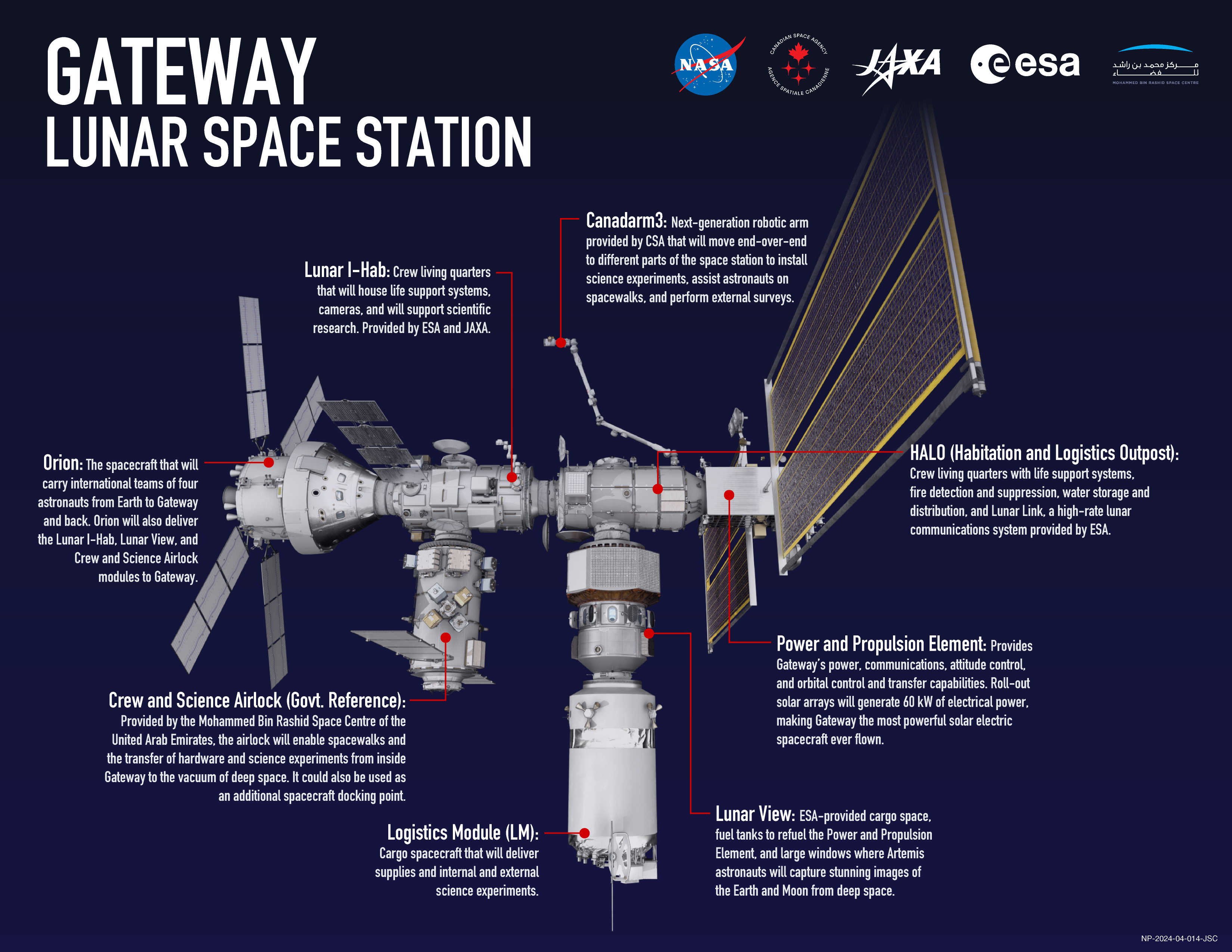
Schematic of the Lunar Gateway.
The Lunar Gateway.
Nasa

Most components contributed by these partners have already been produced and delivered to the US for integration and testing. But the project has been beset by rising costs and persistent debates over its value.

If cancelled, the US abandonment of the most multinational component of the Artemis programme, at a time when trust in such alliances is under unprecedented strain, could be far reaching.

It will be assembled module by module, with each partner contributing components and with the possibility of additional partners joining over time.

Strategic aims

Gateway reflects a broader strategic aim of Artemis, to pursue lunar exploration through partnerships with industry and other nations, helping spread the financial cost – rather than as a sole US venture. This is particularly important amid intensifying competition – primarily with China.

China and Russia are pursuing their own multinational lunar project, a surface base called the International Lunar Research Station. Gateway could act as an important counterweight, helping reinforce US leadership at the Moon.

In its quarter-century of operation, the ISS has hosted more than 290 people from 26 countries, alongside its five international partners, including Russia. More than 4,000 experiments have been conducted in this unique laboratory.

In 2030, the ISS is due to be succeeded by separate private and national space stations in low Earth orbit. As such, Lunar Gateway could repeat the strategic, stabilising role among different nations that the ISS has played for decades.

However, it is essential to examine carefully whether Gateway’s strategic value is truly matched by its operational and financial feasibility.

It could be argued that the rest of the Artemis programme is not dependant on the lunar space station, making its rationales increasingly difficult to defend.

Some critics focus on technical issues, others say the Gateway’s original purpose has faded, while others argue that lunar missions can proceed without an orbital outpost.

Sustainable exploration

Supporters counter that the Lunar Gateway offers a critical platform for testing technology in deep space, enabling sustainable lunar exploration, fostering international cooperation and laying the groundwork for a long term human presence and economy at the Moon. The debate now centres on whether there are more effective ways to achieve these goals.

Despite uncertainties, commercial and national partners remain dedicated to delivering their commitments. Esa is supplying the International Habitation Module (IHAB) alongside refuelling and communications systems. Canada is building Gateway’s robotic arm, Canadarm3, the UAE is producing an airlock module and Japan is contributing life support systems and habitation components.

Gateway’s Halo module at a facility in Arizona operated by aerospace company Northrop Grumman.
Nasa / Josh Valcarcel

US company Northrop Grumman is responsible for developing the Habitat and Logistics Outpost (Halo), and American firm Maxar is to build the power and propulsion element (PPE). A substantial portion of this hardware has already been delivered and is undergoing integration and testing.

If the Gateway project ends, the most responsible path forward to avoid discouraging future contributors to Artemis projects would be to establish a clear plan to repurpose the hardware for other missions.

Cancellation without such a strategy risks creating a vacuum that rival coalitions, could exploit. But it could also open the door to new alternatives, potentially including one led by Esa.

Esa has reaffirmed its commitment to Gateway even if the US ultimately reconsiders its own role. For emerging space nations, access to such an outpost would help develop their capabilities in exploration. That access translates directly into geopolitical influence.

Space endeavours are expensive, risky and often difficult to justify to the public. Yet sustainable exploration beyond Earth’s orbit will require a long-term, collaborative approach rather than a series of isolated missions.

If the Gateway no longer makes technical or operational sense for the US, its benefits could still be achieved through another project.

This could be located on the lunar surface, integrated into a Mars mission or could take an entirely new form. But if the US dismisses Gateway’s value as a long term outpost without ensuring that its broader benefits are preserved, it risks missing an opportunity that will shape its long term influence in international trust, leadership and the future shape of space cooperation.

The Conversation

Berna Akcali Gur does not work for, consult, own shares in or receive funding from any company or organisation that would benefit from this article, and has disclosed no relevant affiliations beyond their academic appointment.

ref. What’s the point of a space station around the Moon? – https://theconversation.com/whats-the-point-of-a-space-station-around-the-moon-274765