Why athletes at the 2026 Winter Olympics are finally being given more power to monetise their performances

Source: The Conversation – UK – By Andy Miah, Chair in Science Communication & Future Media, University of Salford

Grindstone Media Group/Shutterstock

The 2026 Winter Olympics have come at a turning point in sport in terms of how Olympians are allowed to monetise their performances. In December, the governing body the International Olympic Committee (IOC) announced that, for the first time, Olympians would have access to footage from their competitions to use for their personal branding and promotion.

In this pilot phase, the material will not be from these Milan Cortina Winter Olympics, but from the previous Games in Beijing in 2022. According to the new Olympian Highlights Programme, athletes who competed in China can have access to 60 seconds of their competition to use on their personal channels to celebrate their achievements during these Games.

But what does this mean, why does it matter, and why is it happening now?

While the permission might not sound like a big deal, the moving image of Olympic competition is the most valuable asset of the entire Olympic movement. It is highly protected due to the exclusive television rights agreements around the world, which have secured the economic fortunes of the Olympic industry for decades.

Today, the rights to the video content of the Games competitions is what makes money for the Olympic movement. The billions of pounds they generate contribute both to the Olympic programme, and also to schemes like Olympic Solidarity supporting federations and nations around the world. But this was not always the case.

In the early years of Olympic competition, broadcasters had free rein to cover the Games. This was seen as a great opportunity to share the Olympic message with the world. The sport then was treated more like news, whereas now it is predominantly entertainment, commercialised and exploited to grow the Olympic industry.

Tightly controlled media content remains the most effective way to monetise the Olympic programme. But this meant athletes could not use video material from their competitions, for fear that this could compromise the exclusivity agreed between the IOC and broadcasters.

Athletes’ frustrations

Similarly, Olympians have been severely restricted in what they can share from their Olympic experience, especially during Games time itself. The IOC Olympic Charter sets out these limitations to avoid things like ambush marketing (when a potential sponsor tries to use the Games period to promote their product in a way that undermines an official sponsor).

For Olympians with a personal sponsor, it means limiting the exposure of this affiliation during Games time, instead prioritising their official team partnership.

Loosening controls on competition videos is an important step to letting Olympians leverage their celebrity status at a time when they’re in the spotlight. Yet it also reflects a changing set of circumstances around media culture. For 20 years, there has been a steady transition of audience habits away from living room TVs towards mobile phones and social media.

This transition had caused the industry anxiety over whether it would hit viewing figures and reduce the value of rights deals. And so Olympic organisers have monitored web traffic and sent warnings to anyone infringing upon their intellectual property.

Torvill and Dean’s 1984 gold-medal winning performance was watched by around 24 million people in the UK alone. But Rowan Atkinson as Mr Bean at the London 2012 opening ceremony has had 142 million views on the Olympics YouTube channel.

Today, that mindset is different. There is a recognition that social media amplifies the opportunity to monetise Olympic assets. Video tracking technology can intervene directly when something is posted and limit exposure of unapproved content shares. Or it can simply monetise it with adverts. These capabilities are expanding – and becoming more complicated – with the rise of artificial intelligence (AI).

Provisions for social media sharing for athletes and others with accreditation have been evolving over recent Games. At the London 2012 Olympics, IOC social media guidelines did not allow any video from Olympic venues to be posted. In contrast, for Paris 2024, athletes were allowed to share video of their Olympic journey (but not their performance) with up to two minutes from each competition venue.

The guidance for Milan Cortina goes even further to encourage sharing. But it still prohibits athletes from posting this premium video content between one hour before competition and within one hour after, the crucial window for broadcasters.

Ultimately, giving permission to use video from the Games events is also about recognising the athletes’ own ability to attract audiences. On the days leading to Paris 2024, behind-the-scenes footage from athletes often became prominent social media posts, including viral footage of the athletes’ cardboard beds.

This showed candid moments from athletes before the TV coverage began. Audiences appeared to love this – and leaning into it is crucial for the Olympic movement in these changing times.

For decades, the IOC has shouted about how far the Olympic message travels during each Games, articulating this in terms of television hours watched across the world. Yet, television has changed too. After Rio 2016, there was a shift in the IOC’s language, moving from “television” to “live-streamed” hours, to reflect the new ways in which audiences are exposed to the Olympic Games.

The economic direction of international sport and the growing importance of non-traditional partnerships, such as those with Airbnb, Uber and Alibaba, show that the future of the Olympic Games is wedded to the technological culture of the time. While the technology of the 20th century was television, now sport is intimately connected to the rise of AI. Its integration within social media will be key to how users create and consume Olympic content.

In this way, 60 seconds of footage from a previous Olympic competition is not just a move towards empowering athletes. It is also a step towards safeguarding the future of the Olympic Games at a time of remarkable change in the media. The influencer economy is becoming the new unit of audience attraction and it’s crucial that the Olympic movement embraces this.

The Conversation

Andy Miah does not work for, consult, own shares in or receive funding from any company or organisation that would benefit from this article, and has disclosed no relevant affiliations beyond their academic appointment.

ref. Why athletes at the 2026 Winter Olympics are finally being given more power to monetise their performances – https://theconversation.com/why-athletes-at-the-2026-winter-olympics-are-finally-being-given-more-power-to-monetise-their-performances-275185

Epstein files: who decides what information is released to the public?

Source: The Conversation – UK – By Matthew Mokhefi-Ashton, Lecturer in Politics and International Relations, Nottingham Trent University

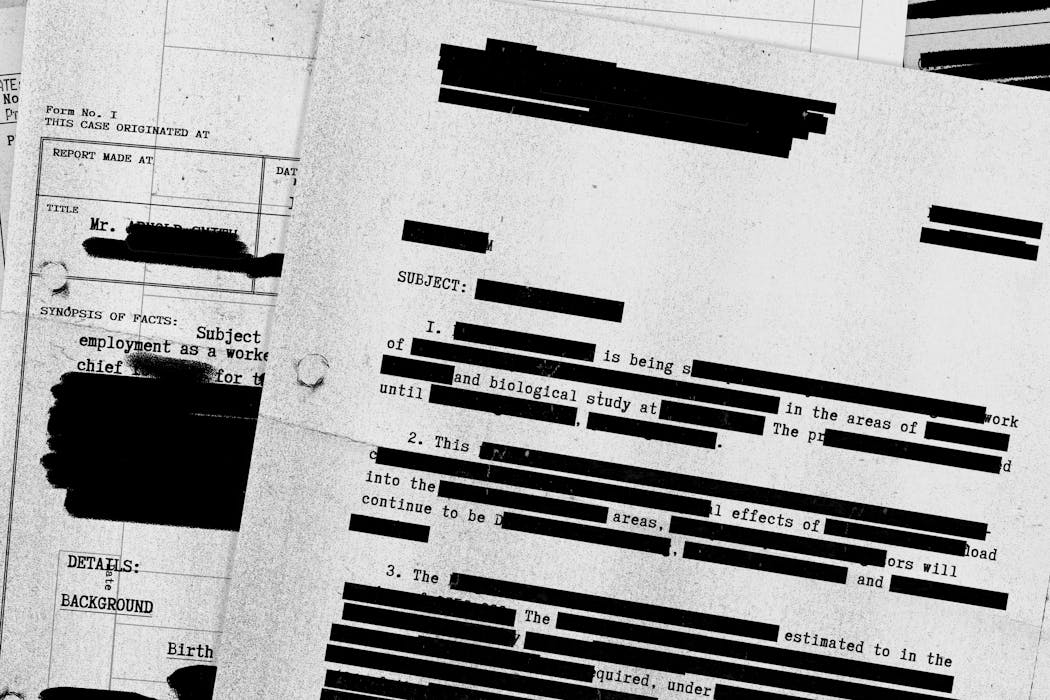
Critics say that the many of the documents released as part of the Epstein files have been heavily redacted. Reddavebatcave/Shutterstock

One of the hardest tasks of any government in a democracy is balancing the right to know against the need to know. Just because the public wants to know something doesn’t necessarily mean that they should. But without this access to information, how can voters make informed choices and the powerful be held to account? This debate is now central to the release and redaction of the Epstein files.

For the past decade or so the Epstein files have been used by Democrats and Republicans as a political stick with which to beat each other. In the meantime, speculation has run rife online with a global guessing game of what these files contain and who is or isn’t named in them.

This is the dilemma facing the Trump administration at the moment. On the one hand there is justifiable public anger that they have not been told the truth, and that some of the richest and most powerful people in the world may have committed terrible crimes with impunity. This fury – and its political implications – is the chief reason why the US Congress voted in November 2025 to release the Epstein files.

What is often missed in this discussion is the fact that the files are not a single set of documents. Instead, these are multiple packages of information including files gathered by the FBI investigation, court records and grand jury documents. This distinction is extremely important legally.

Of the documents that have been made available so far, many of these have been heavily redacted with black bars covering names, addresses, emails and photos. In some cases, it is clear why this had happened. In others, the absence of any reason for the redaction has simply added fuel to the fire, with spectators filling in the blanks themselves.

The US has long prided itself on being one of the freest societies on Earth. Since the Watergate scandal seriously dented public confidence in government integrity, various pieces of landmark legislation have been passed to make sure government files can be made available to the public. These include the Freedom of Information Act (FOIA) of 1966, the Electronic FOIA Amendments of 1996, and the FOIA Improvement Act of 2016.

These acts cover the federal government – including the FBI and Department of Justice, which have been overseeing the Epstein case. But there has also been legislation that has limited what can be released. This includes the Privacy Act of 1974. This legislation was designed to ensure that random members of the public do not have their names released and their reputations damaged.

Given the number of government agencies that can be involved, this process has not always been consistent. One agency might redact one part of a document, while another might redact a separate part. In some cases, documents might be redacted despite the fact that they are already publicly available.

Because the process is so legally and politically complicated, the work is normally done by civil servants in the federal bureaucracy. But it should also be remembered that some files and information are not covered by the freedom of information laws. The two most significant are probably court and grand jury records. These records can only be released by judges – and due to the separation of powers, Congress has no jurisdiction here.

The freedom of information acts give several important reasons for why files might be redacted. The trouble is that without explanation it’s difficult to know which ones apply. The first and most obvious is national security. If an agency feels that the release of any particular information might damage America’s reputation, they have sweeping powers to withhold information.

This applies even if the information doesn’t mention specific things such as the names of undercover agents, details of troop movements or programmes that could be harmed, but does include important information on how agencies operate. Other information can be redacted if it includes financial data or patents.

Perhaps the most significant are redactions covered by the Privacy Act of 1974. These can include third parties (people simply cc’d into emails or in the background of photos who are of no relevance to the investigation), addresses, phone numbers and – crucially in this case – the names of victims and witnesses.

In the case of the Epstein files, this means that, rightly, a lot of information has been blacked out (although there are reports that a few of the victims have been named and in some cases their addresses and even photos have been published).

Striking a balance

Critics have argued that the public needs to be given greater context about the redactions. Namely, who gets to decide what is redacted and why. Whether, for example, a person whose name is blacked out is a potential perpetrator, a crucial witness or an innocent third party.

The issue is made more complicated by the fact that, for law enforcement reasons, court cases resulting from some of this information are likely to proceed. So it’s important not to release information that could compromise investigations or future trials.

All of this is impossible to challenge without knowing the background details.

Because Epstein was such a prominent figure and seemed to know everyone in positions of power, it’s possible that information is being redacted for all of these reasons.

Assuming good faith on all sides (not always easy in today’s political climate in the US) this leaves government officials with a dilemma. While justice demands that innocent people’s reputations are protected, it equally demands that the public’s right – and need – to know is properly served. All of which must be balanced by the need to ensure that the right people, no matter how powerful or influential, involved in any wrongdoing revealed in the files are held accountable.

At this stage it seems likely that the debate over what should be made public and what should remain secret will run on indefinitely.

The Conversation

Matthew Mokhefi-Ashton does not work for, consult, own shares in or receive funding from any company or organisation that would benefit from this article, and has disclosed no relevant affiliations beyond their academic appointment.

ref. Epstein files: who decides what information is released to the public? – https://theconversation.com/epstein-files-who-decides-what-information-is-released-to-the-public-275141

Why raising NHS spending on new drugs by 25% is the wrong decision – health economist’s view

Source: The Conversation – UK – By Rhiannon Tudor Edwards, Professor of Health Economics, Bangor University

A quiet policy change on NHS drug pricing could have big consequences for patients and prevention. Stephen Barnes/Shutterstock

For nearly three decades, decisions about which medicines the NHS pays for have not been made by ministers, but by the National Institute for Health and Care Excellence, known as Nice. Its job has been powerful: to act as a check on the pharmaceutical industry by demanding evidence that new drugs are clinically effective and worth the price, protecting NHS budgets from spiralling costs.

That independence has helped to shape how NHS money is spent in England and Wales, and, just as importantly, what it is not spent on. Nice does not exist to block new medicines, but to make sure limited public funds are used where they deliver the greatest benefit.

The Nice cost-effectiveness threshold for approving new medicines is currently £20,000 to £30,000 per additional year of good quality life (measured as “quality adjusted life years”). The UK government now plans to take control of this threshold from Nice and raise it to £25,000–£35,000 per quality adjusted life year from April 1. The result will be less money available for existing NHS services and medicines, and, most worryingly, for public health and prevention.

Trade pressure and US drug companies

This change has come from wider government concerns over protecting UK-based pharmaceutical manufacturing, and now from pressure to open up the UK market to US drug companies. Shifting the decision-making power to ministers rather than Nice represents a far-reaching structural change, not just an administrative one.

Ministers have agreed to lift UK health service spending on new medicines by 25% as part of a deal with the US to avoid the tariffs threatened by President Donald Trump. This will apply to all new medicines, not just those manufactured by US-based companies. They have told Nice to change its rules to achieve the terms of this agreement. Nice will continue to evaluate evidence on new drugs but will be subject to the new threshold set by ministers.

This uplift to the threshold is the first since Nice was set up in 1999. We already have an imbalance in spending between prevention and treatment that heavily favours treatment. A further threat to this imbalance would be that the pharmaceutical industry presses in future for further increases to the threshold in line with inflation.

So much of the ill health and premature death in the UK population is down to lifestyle and, for example, smoking, harmful alcohol use, poor diet, lack of exercise and declining mental health.

A person stands at a pharmacy counter.
Nice has decided which medicines the the NHS can afford for more than 20 years.
Photo Nature Travel/Shutterstock

Focusing attention and budgets on new expensive branded drugs, many of them from the US, will draw attention away from tackling the underlying causes of premature ill health and death, which are often linked to poverty and inequality.

Nice’s chief executive, Jonathan Benger, recently told the Financial Times that further increases in the price at which drugs are judged cost-effective would deliver diminishing returns. He said there are better ways to support life sciences investment in the UK.

The US deal is expected to cost the NHS around £3 billion, largely through paying higher prices for branded medicines. If that £3 billion were instead invested in public health prevention, it could generate an estimated 618,000 quality adjusted life years, according to research from York University. That is around three times more than could be achieved through treatment alone.

This plan to raise the Nice threshold directly contradicts the direction set out in the UK government’s NHS 10 Year Health Plan for England, which prioritises neighbourhood health care, prevention and reducing inequality.

What the international evidence shows

In 2022 the Organisation for Economic Co-operation and Development (OECD) called on countries to spend more on preventing illness, rather than treating it. The report suggested increasing the share of national income – gross domestic product (GDP) – devoted to prevention by around 1.4 percentage points.

The warning was clear. Health systems focused on treatment alone are less prepared for future pandemics. Resources should be spent to take account of the fact that around 80% of chronic conditions such as heart disease, stroke and diabetes are at least partly preventable.

Three-quarters of public health interventions assessed by Nice fall well below the current cost-effectiveness threshold, meaning they offer good value for money. There is evidence that if governments want better value from the NHS, the cost-effectiveness threshold should be lower and closer to £13,000 per quality adjusted life year. This would make it possible to increase spending on prevention, which currently accounts for just 5% of total NHS spending.

To fund the planned 25% increase in drug spending, the government will need to raise taxes or cut spending elsewhere. If those cuts fall on public health or on areas such as housing, transport, employment or access to green space, the long-term damage to population health will be severe.

Investment in those areas supports healthier lives and reduces preventable illness and premature death. If public money is not available for this prevention, the government will be forced to look for novel ways to fund it, such as public-private partnerships and social outcomes contracting (which is when payments are linked to specific outcomes rather than merely delivering activities).

Any short-term boost to economic growth from US drug trade deals is unlikely to outweigh the long-term costs of an ageing population living with preventable ill health, and the pressure that puts on health and social care.

The Conversation

Rhiannon Tudor Edwards does not work for, consult, own shares in or receive funding from any company or organisation that would benefit from this article, and has disclosed no relevant affiliations beyond their academic appointment.

ref. Why raising NHS spending on new drugs by 25% is the wrong decision – health economist’s view – https://theconversation.com/why-raising-nhs-spending-on-new-drugs-by-25-is-the-wrong-decision-health-economists-view-273952

Bad Bunny is a controversial pick for the Super Bowl – and that’s the point

Source: The Conversation – UK – By Belinda Zakrzewska, Assistant Professor of Marketing, University of Birmingham

After the NFL chose triple Grammy winner Bad Bunny as the halftime headliner for the upcoming Super Bowl on February 8, a backlash erupted among Donald Trump supporters and conservative commentators. The president criticised the entertainment lineup last week and said he would not attend the event.

Much of the backlash focused on the Puerto Rican rapper’s identity and politics. As the first solo Latino artist set to headline the Super Bowl halftime show, he was accused by critics of “not being an American artist” despite Puerto Rico being a US territory. Others took aim at his outspoken criticism of the Trump administration, arguing that such views had no place at this prestigious occasion.

The Super Bowl functions as a spectacle to promote ideas of US unity and patriotism through ritualised displays such as the national anthem, military flyovers and televised tributes to troops, visually linking sport to nationhood. Set against this backdrop, Bad Bunny’s selection becomes even more striking. Why would the US’s most important stage give space to an artist who so directly questions its dominance?

Bad Bunny made history with his recent album Debí Tirar Más Fotos which became the first predominantly Spanish-language release to win album of the year at the 68th Grammy Awards. He is also Spotify’s most streamed global artist for the fourth time in five years.

Bad Bunny’s rise is inseparable from his activism, which is woven into his artistic choices, television appearances and live performances. This commitment was on full display last Sunday at his most recent Grammy appearance, where he took the stage with the message “ICE out”.

His Debí Tirar Más Fotos album addresses Puerto Rico’s colonial history and ongoing struggles, a direct critique of US imperial power. The song Lo Que Pasó en Hawaii draws parallels between Puerto Rico and Hawaii, another land colonised by the US. These lyrics refuse to treat colonial harm as historical and instead frame it as ongoing and systemic.

Likewise, his NUEVAYoL music video stands as one of his most direct pro-immigrant provocation. Released on July 4 last year – Independence Day – it reimagines the Statue of Liberty draped in a Puerto Rican flag, recasting the monument as a site where liberation is actively reclaimed rather than merely symbolised. A Trump-like voiceover apologising to Latinos and recognising America as a continent, further sharpens the critique of the ongoing immigration crackdown, exposing the gap between US ideals and people’s realities.

More fundamentally, Debí Tirar Más Fotos grounds its anticolonial message in historically marginalised musical traditions. Bomba, plena, and salsa are genres rooted in Afro-Caribbean struggles and Black cultural traditions, but for a long time they were dismissed due to colonial attitudes. By putting these genres at the centre of his work, Bad Bunny protects Puerto Rican culture and reclaims its history, making it visible to the world.

Bad Bunny further intensified controversy recently by excluding the US from his world tour. He cited concerns about immigration enforcement around venues, particularly the risk posed to undocumented fans.

The decision framed safety as more important than profit. Critics questioned why he would play the Super Bowl while skipping US tour dates, while supporters argued the broadcast lets Latino people watch safely from home without risking detention or harassment.

Why is the NFL choosing BB?

Super Bowl entertainment decisions ultimately serve a clear goal: maximising profit and viewership. The NFL understands that controversy fuels conversation, and conversation fuels ratings. This strategy is not new.

Beyoncé’s 2016 performance referenced the Black Panthers and Black Lives Matter, igniting a backlash while dominating media coverage. Kendrick Lamar’s 2025 halftime show similarly confronted themes of systemic oppression and racial injustice.

Looking at the broader 2026 lineup, the NFL has paired Bad Bunny with Green Day, a pointed choice given conservative calls for an “All American” alternative. Green Day, in contrast, fit comfortably within the US cultural canon: white, English-speaking punk veterans embedded in rock history. Yet their recent performances, such as Coachella 2025, included overt political jabs at Trump and Maga.

Last week, Trump publicly criticised the lineup stating: “I think it’s a terrible choice. All it does is sow hatred. Terrible.”

Overall, selecting artists who generate cultural debate helps the NFL reach younger, more diverse audiences while dominating media cycles for months. This strategy acknowledges demographic shifts in US culture: the growing political and economic importance of Latino audiences, the changing nature of patriotism itself, and the reality that not all Americans view the Super Bowl through the same lens of national unity.

Risky business

When artists take clear political stances, they risk alienating segments of their audience. Public opposition to Trump, for example, frequently triggers coordinated boycotts, social media backlash, and online harassment. But late-night hosts like Jimmy Kimmel have shown how political commentary can ignite national debates while boosting attention and ratings.

For Bad Bunny, these risks appear deliberate, reflecting an authenticity that aligns his political stances with his artistic vision and public persona. His critiques of US colonialism, immigration policy and cultural erasure are inseparable from his music and performances, making his activism a central part of his identity rather than a marketing tactic.

By embracing these positions on the Super Bowl stage, he challenges traditional expectations of entertainment neutrality while amplifying underrepresented voices, particularly within the Latino community. This approach underscores a commitment to cultural and political truth, even when it invites controversy and threatens mainstream approval.

The Conversation

Flavia Cardoso received funding from the Chilean Government (Fondecyt 2016) and the Luksic Foundation in 2022.

Belinda Zakrzewska and Jannsen Santana do not work for, consult, own shares in or receive funding from any company or organisation that would benefit from this article, and have disclosed no relevant affiliations beyond their academic appointment.

ref. Bad Bunny is a controversial pick for the Super Bowl – and that’s the point – https://theconversation.com/bad-bunny-is-a-controversial-pick-for-the-super-bowl-and-thats-the-point-274477

Riz Ahmed’s British south-Asian Hamlet is a moody tale of grief and shady family business

Source: The Conversation – UK – By Elizabeth Schafer, Professor of Drama and Theatre Studies, Royal Holloway, University of London

For Shakespeare’s Hamlet “the world is out of joint”. In screen writer Michael Lesslie’s collage of Shakespeare’s play, directed by Aneil Karia, Riz Ahmed’s intense, grief-wrecked Hamlet pays a high price as he tries to “set it right” in a corrupt corporate world.

This Hamlet is a radical adaptation that mostly uses Shakespeare’s words but relocates to contemporary, uber-wealthy south-Asian London. Hamlet has had a south-Asian makeover before now, most famously in Haider; a 2014 action packed Hindi film set in 1990s Kashmir. Karia’s Hamlet, however, is far moodier, more muted and uneven. Some of it is brilliant, some less so. But there is a stunning pay off at the end.

The recent film Hamnet repositioned Hamlet as a response to Shakespeare’s son’s death. Ahmed’s prince also returns the focus to fathers – after all Shakespeare’ father died around the time Hamlet was written. The film asks the audience: whom can we trust?

The opening has Hamlet performing Hindu funeral rites on his father’s body, guided by his concerned uncle Claudius (Art Malik).

Within moments of the coffin going into the furnace and the lavish wake beginning, Hamlet is taken into a side room where Claudius announces he will marry his brother’s poised and pragmatic widow, Gertrude (Sheeba Chadha). This will protect Elsinore, the ruthless family business of developers and builders.

With Hamlet in shock from this announcement, his friend Laertes (Joe Alwyn) takes him off to the drug-fuelled sensory overload of a night club. Laertes and his sister Ophelia (Morfydd Clark) in this film take on the role traditionally played by Horatio, becoming close friends and confidantes.

Ophelia, like Hamlet, is disgusted by corporate corruption although, as the daughter of Claudius’s chief adviser, Polonious (Timothy Spall), she benefits from Elsinore’s rapacious deals. But as Laertes tells the pair, she is no bride for the future head of Elsinore. An arranged marriage within his culture and one that is advantageous for Elsinore is assumed to be in store for Hamlet.

Overwhelmed by the nightclub music, dance and drugs, Hamlet flees out into the night and a decaying London, with skyscrapers on the horizon and walls graffitied with anti-Elsinore slogans. It is here that Hamlet encounters the ghost of his father, King Hamlet (Avijit Dutt).

The existence of the ghost of King Hamlet is witnessed in Shakespeare’s play by several characters other than Hamlet, including the sensible Horatio. However, in this film only Ahmed’s Hamlet sees this ghost. Is the ghost real?

Hamlet follows his father to the top of a half-built skyscraper. Speaking in Hindi, with no subtitles provided, King Hamlet tells his son that he was murdered by his brother, Claudius. Or at least that is what audiences familiar with the play might infer.

The play-within-a-play, The Murder of Gonzago, which Hamlet stages in order to confirm his uncle’s guilt is here presented as a blistering south-Asian dance at Gertrude and Claudius’s splendid wedding banquet. The dance depicts Gonzago’s murder by poison, leading to his wife’s hasty remarriage – a clear parallel to Hamlet’s situation. As in Shakespeare’s play, Ahmed’s Hamlet believes that Claudius’s reaction proves he murdered his father. However, this where the film begins to diverge from Shakespeare’s story.

The brilliant choreography (by classical Kathak dancer Akram Khan) reads, within the logic of this film’s narrative, as a direct threat of violence towards Claudius. The dancers’ fists create a funnel for poisoned wine to be tipped into the dancer Gonzago’s ear while Hamlet, apparently deranged by grief, watches eagerly.

After his nephew has caused maximum embarrassment at the wedding, Claudius’s subsequent attempts to dispose of Hamlet make sense. The dance delivered a warning to Claudius and the long term future of Elsinore is at stake. But crucially, while Shakespeare shows Claudius subsequently trying to pray, and explicitly acknowledging his guilt, Karia’s film cuts this confession.

The risk to others as Hamlet works through his grief is clear. “To be or not to be” is delivered as Hamlet drives at manic speed in a high-performance car on the wrong side of the road towards an oncoming lorry, briefly lifting both hands off the steering wheel. While the audience may still believe in Hamlet, mesmerised by the intense closeups on Ahmed’s anguished face, they might also start questioning his judgment as he enacts his revenge.

Spurts of blood fly everywhere as Timothy Spall’s Polonius has his throat slashed after responding to Gertrude’s cries for help when a manic Hamlet corners her. Disposing of the body, Hamlet encounters a statue of Ganesh, the remover of obstacles.

It seems, however, that the god might not be totally on his side when one of Claudius’s thugs attempts to dispose of Hamlet by staging his suicide, forcing him to slash his own wrists. Luckily, he is rescued by Fortinbras, the leader of a band of homeless tent-dwellers, all dispossessed by Elsinore. Shocked by their misery, Hamlet decides to give it all away and signs over his shares in Elsinore to Fortinbras.

After divesting himself of his stake in the business, Hamlet heads home seeking revenge. When Claudius flees into the garden of the palatial family residence, he stops and waits for a dying Hamlet to catch him up. This is puzzling.

As his nephew sticks a broken bottle into his guts, Claudius states with his very last breath, “I loved my brother”. Prince Hamlet unravels. The ghost is, like the witches in Macbeth, untrustworthy. In grief, Hamlet has, he acknowledges, become “bewitched”. King Hamlet was part of the corruption and so now is his son.


Looking for something good? Cut through the noise with a carefully curated selection of the latest releases, live events and exhibitions, straight to your inbox every fortnight, on Fridays. Sign up here.


The Conversation

Elizabeth Schafer does not work for, consult, own shares in or receive funding from any company or organisation that would benefit from this article, and has disclosed no relevant affiliations beyond their academic appointment.

ref. Riz Ahmed’s British south-Asian Hamlet is a moody tale of grief and shady family business – https://theconversation.com/riz-ahmeds-british-south-asian-hamlet-is-a-moody-tale-of-grief-and-shady-family-business-275056

Victims have told us the worst of Epstein’s crimes for decades – and they are still being ignored

Source: The Conversation – UK – By Lindsey Blumell, Lecturer in Journalism, City St George’s, University of London

As the US Department of Justice published 3.5 million pages of the Epstein files, deputy US attorney Todd Blanche indicated that the deluge of documents wouldn’t lead to additional criminal charges. Victims want “to be made whole”, he said, but that “doesn’t mean we can just create evidence or that we can just kind of come up with a case that isn’t there”.

Given the scale of the revelations, and the fact that millions of files haven’t been released, that statement seems incredible. But beyond this, survivors of Jeffrey Epstein’s abuse have come forward for years to tell their stories, and have not received justice.

In an interview in September 2025, six Epstein survivors stated that the Department of Justice had not contacted them in the process of reviewing the files.

Not only have Epstein survivors been shut out from the process, the department revealed the identities and personal information of survivors in the publicly released 3.5 million pages. Survivor Danielle Bensky told news outlets she found her name and personal information in the files. Such an error is gross negligence and incompetence that silences and endangers victims.

Of course, not all people named in the files sexually abused or were complicit in the sexual abuse of girls and young women. But this moment is an echo of how authorities have reacted to Epstein’s survivors for 30 years.

As the political and financial scandals emerge, politicians have called for a “victim-centred” approach. But as people react with shock to the revelations in the files, it’s clear that the voices and experiences of the victims are still being ignored.

Decades of evidence

Survivors of Epstein’s abuse had been speaking out for years before the public became fascinated by Epstein’s crimes and the famous men in his network.

In 1996, Maria Farmer reported to the New York Police Department and the FBI that Epstein and Ghislaine Maxwell had violently groped her. She was 25 at the time, and later found out her 16-year-old sister Annie had also been violated by Epstein. The FBI failed to investigate, and abuse of girls continued.

Victims’ rights lawyer Brad Edwards has represented over 200 of Epstein’s survivors. In 2008, Edwards told a federal judge that Epstein might be the “most dangerous sexual predator in US history”.

That same year, Epstein was handed a sweetheart deal of being charged with solicitation of prostitution only, instead of child sexual abuse or trafficking. This resulted in a 13-month stint at a minimum security facility, which he left 12 hours per day on most days to “work” at his foundation. He was required to register as a sex offender, though not tried as one.

In Florida, child sexual abuse cases can recommend up to life imprisonment for guilty convictions. Human sex trafficking in Florida can result in up to 30 years imprisonment. Of course, convictions can be complicated – but both child sexual abuse and human sex trafficking are serious crimes associated with extended prison sentences.

The latest files showed that many powerful people in Epstein’s network – Peter Mandelson, for example – were not deterred by him registering as a sex offender in 2008.

At the time, the New York Times headlined its story “Financier Starts Sentence in Prostitution Case”. While factually correct, such an approach arguably downplayed Epstein’s sexual abuse of girls and young women.

Few journalists were courageous enough to explicitly name Epstein’s crimes for what they were. One exception was a 2006 opinion piece by journalist Eliza Cramer of The Palm Beach Post, who wrote: “He was over 50. And they were girls. 14, 15, 16, 17-year-old-girls. That should count for something – the difference between prostitution and pedophilia.”

By 2009, at least a dozen civil lawsuits had been filed against Epstein. In 2010, flight logs obtained through the suits showed several high-powered men, including politicians, celebrities, academics and CEOs, flying on Epstein’s jets.

Justice denied

It took another nine years and many more civil suits before Epstein was arrested on July 6 2019 for sex trafficking and sex trafficking conspiracy. He faced up to 45 years in prison if convicted.

Survivors again came forward publicly to tell their stories, like Courtney Wild, Virginia Roberts Giuffre and Jennifer Araoz, who were 14 and 15 when first recruited to “massage” Epstein. All three came from difficult backgrounds, and all three claimed to have eventually been raped by Epstein. They were adults by the time they finally saw their abuser behind bars.

Survivors were denied justice once again when Epstein was found dead in his jail cell in August 2019. But that didn’t stop them from speaking out in 2021 during Ghislaine Maxwell’s trial, which ended in a 20-year sentence for sex trafficking girls.

The fallout from the latest revelations has again put survivors secondary to the actions of powerful men. Mandelson, who maintained a friendship with Epstein after his 2008 conviction, initially declined to apologise to Epstein’s victims and distance himself from any knowledge of the financier’s sex crimes.

Andrew Mountbatten-Windsor, who in 2022 settled a civil sexual assault case from Giuffre without an admission of liability, has only in the last few months lost his royal titles. And only with this latest batch of revelations has finally left his royal residence.

Giuffre’s memoir was released October 2025, months after she died. A line in her book sums up our responsibility to stop ignoring the survivors: “I know this is a lot to take in. The violence. The neglect. The bad decisions. The self-harm. Imagine if a trauma reel like this played in your head all the time, as it does mine … but please don’t stop reading.”

The sexual abuse and sex trafficking of girls and young women detailed by the survivors is harrowing. Removing a few titles or losing a job will never be adequate justice for the crimes committed, nor for the sidelining of victims for so many years.

The Conversation

Lindsey Blumell does not work for, consult, own shares in or receive funding from any company or organisation that would benefit from this article, and has disclosed no relevant affiliations beyond their academic appointment.

ref. Victims have told us the worst of Epstein’s crimes for decades – and they are still being ignored – https://theconversation.com/victims-have-told-us-the-worst-of-epsteins-crimes-for-decades-and-they-are-still-being-ignored-275137

George Orwell called for a new way of thinking about science

Source: The Conversation – UK – By Robert Colls, Professor Emeritus of History, De Montfort University

In October 1945, George Orwell responded to a letter from Mr J. Stewart Cook in the leftwing weekly newspaper Tribune calling for more science education.

The call can hardly have come as a surprise. War had brought science and engineering to the fore – from the Spitfire fighter plane and radar to Bletchley Park’s codebreakers – and now that war was over, many thought it was time to build a brave new world. Science had won the war; the view was that it should build the peace.

Only the week before, in the same newspaper, Orwell had warned of the dangers posed by the atomic bomb. He was not a pacifist – far from it. But he started off by saying how likely it was that the world would “be blown to pieces by it within the next five years”, and ended with a stark warning against big science.

The bigger and more scientific the weapons, Orwell argued, the bigger and more authoritarian the state. And the bigger and more authoritarian the states that held those weapons, the greater the likelihood that an unstable stand-off between them would run and run, until the unthinkable happened.

Given this scenario, which he was the first to call a “cold war”, Orwell wanted to know exactly what Mr Cook meant by asking for more science education: did he want more scientists in laboratories, or did he want more people in general trained to think more scientifically?

If it was a call for more scientists in lab coats, Orwell pondered whether there was any plausible reason for expecting it to be in the public interest. Chemists might think so, clearly, but what about the rest of us? Why more chemists over more historians, say, or more writers, or philosophers, or economists?

In Orwell’s view, scientists at war had shown themselves to be just as self-interested, just as nationalist, just as Nazi, and just as politically illiterate and mistaken as everybody else. A few million more was not going to make things better – and maybe worse.

He wrote: “The fact is that a mere training in one or more of the exact sciences, even combined with very high gifts, is no guarantee of a humane or sceptical outlook. The physicists of half a dozen great nations, all feverishly working away at the atom bomb, are a demonstration of this.”

On the other hand, more science as a way of thinking had Orwell’s full support. In his Tribune response (republished in the third volume of his collected essays), he defined this as “a rational, sceptical, experimental habit of mind”.

Only, Orwell averred, you don’t have to be a scientist to think like this. And away from the test tubes and reactors, a scientist might not think like this. An illiterate peasant could be just as rational, just as sceptical and just as experimental, in his own domain at least. Yet no one, least of all a fellow of the Royal Society, was going to call him a “scientist”.

The whole argument, Orwell feared, might end up dropping the notion of more scientific thinking across the population, and “simply boil down to” more physics, less literature, and a narrowing of thought all round.

Orwell leaves it there. Not very profound, you might think, but in the best Orwellian manner, designed to catch your sleeve and make you think.

The blessings of science

When he was at Eton, Orwell wrote a short story for the school magazine called A Peep into the Future. In it, a mad professor takes over the school to impose a reign of terror based on the “blessings of science”.

Until, that is, one Sunday morning in chapel, a mighty proletarian woman – “massive hands on her hips” – comes striding down the aisle to take a swipe that relieves the professor of his dignity and his position. “A good smackin’ is what you want,” she said. And a good smackin’ is what he got. “He was never seen again … the reign of science was at an end.”

There might be shades of Big Brother in this schoolboy story, except that Orwell’s novel Nineteen Eighty-Four, published in 1949, is not about the reign of science but a reign of terror devoted to the complete eradication of science.

The whole point of the ruling party “Ingsoc” (a left-fascist totalitarian regime) is the destruction of the concept of objective truth, discoverable in nature. Instead of experimentation, there is only manipulation. Instead of reasoning, there is only fear. Instead of facts, there are only lies. It is axiomatic that two plus two equals five and always will, so long as the party says so.

Winston Smith’s interrogator, an intelligent man by most other measures, tells Winston that he (the interrogator) could identify as a soap bubble if he wanted to, and float off. And nobody was going to say he couldn’t. Winston tries and has his brain reprogrammed for the effort.

Seeing things ‘as they are’

Orwell’s fiction was more concerned with essences than probabilities. As for his non-fiction, although he rarely invoked statistics or empirical research, he operated as near to the general scientific method as possible, given the human condition.

Getting it right, seeing things “as they are”, was one of his four reasons for writing. Orwell is forever at pains to establish the facts, to reason in plain sight, to show due caution, and to experiment in the only way politico-literary criticism can experiment – by imagining the alternatives.

With or without Donald Trump, there are always alternative facts, and writers must search them out. Thomas Hobbes’s view of man in a state of nature is not the same as fellow philosopher Jean-Jacques Rousseau’s, and the facts are legion on both sides.

Orwell’s personal library contained a few popular science volumes but was mainly literary. He adhered to the scientific method like the “illiterate peasant” he was at heart – a man who was at his happiest in his garden, eyeing the weather and measuring the soil by instinct and experience.

Let Orwell find a problem, and he would bring the full width of his reasoning to bear. But in the end, words are an art not a science, and there are no rules except a pitch for the truth.

This article includes references to books included for editorial reasons, and links to bookshop.org. If you click a link and go on to buy something from bookshop.org, The Conversation UK may earn a commission.

The Conversation

Robert Colls does not work for, consult, own shares in or receive funding from any company or organisation that would benefit from this article, and has disclosed no relevant affiliations beyond their academic appointment. His new book, George Orwell: Life and Legacy, is published by Oxford University Press.

ref. George Orwell called for a new way of thinking about science – https://theconversation.com/george-orwell-called-for-a-new-way-of-thinking-about-science-274447

PE can boost children’s health and education – let’s make it central to the curriculum

Source: The Conversation – UK – By David Grecic, Professor of Sport and Physical Education, University of Lancashire

BearFotos/Shutterstock

The benefits of physical activity for children are enormous. As researchers of physical education (PE) – and ex-PE teachers – we know evidence shows it can have a positive impact on mental and physical health, social relationships, emotional control and confidence, as well as on academic performance. Why not make movement the framework that the rest of the school day is built upon?

But funding PE in England’s schools remains a low priority, it seems, after a report emerged that two government departments – the Department of Health and Social Care and the Department for Education – had both proposed cutting the money allocated to school physical education.

The Department for Health and Social Care has now reportedly walked back on this plan. The Department of Education’s cuts were intended to come in before a new system comes into force, which will establish links between schools and expert sports organisations, and introduce a national requirement for two hours of physical activity per week.

For those familiar with the recent history of PE, though, this is hardly revolutionary. It very closely resembles the school sport partnerships of old.

PE could be so much more than two hours wrenched from a curriculum focused on meeting academic milestones.


Read more:
London’s Olympic legacy: research reveals why £2.2 billion investment in primary school PE has failed teachers


Other countries, such as Canada, China, Germany, Denmark, Finland and Turkey, are placing much more importance upon PE’s role under the United Nations’ umbrella of Quality Physical Education. Their intention is to holistically develop physically literate children who have the competence, confidence, knowledge and motivation to take ownership over their lifelong physical activity and wellbeing.

Despite the research evidence on the benefits PE can have – including setting children up for a lifetime of healthy physical activity – the subject, in its current format in England, is not having the impact on the lives of children that it could.

So, what is needed? Firstly, we need a new visionary aspiration to change society for the better, one that places children’s voices at the heart. Their experiences at school are critical. PE and physical movement at school should be something that brings children joy and helps them learn. This means it’s important to hear what they like and don’t like about school PE, and what they would want it to be in the future.

Changing the game

Physical activity could be placed at the centre of the timetable, with all other subjects arranged around around it. Children would take part in physical education every day, with additional optional opportunities before and after school and at break times.

These activities would be delivered by qualified PE specialists at every education level who are respected and supported by pupils, parents and fellow teachers. PE should be meaningful to children, individual to their needs, and help them develop the skills and motivation to be physically active for life – as well as bring them cognitive and social benefits.

Children would be empowered to choose activities that enable them to learn the knowledge and skills to make healthy life choices. A multitude of activities would be available for every child in every school, and all would be valued equally and equally resourced.

This vision of course would need to be appropriately funded at a level representative of importance placed upon it by the government. And the school day as a whole could value physical activity – with opportunities for movement during lessons, or in between, as students transfer from one subject to another.

Children doing stretching exercises in class
The school day could be arranged around movement.
BearFotos/Shutterstock

Some children may only get the opportunity to be active while at school due to demands beyond their control, such as poverty and caring duties.

Many theories, concepts and frameworks are available for teachers to follow.

PE as it is, though, is simply not working. The current sport-based curriculum offers a narrow vision for what PE could be. It reduces its appeal for the many children who are not interested in competitive sport. Issues such as limited resources, poor subject status, and a lack of respect for PE teachers also need to be addressed.

The proposed funding, strategy and curriculum review do not go far enough. PE must permeate every day of a child’s school life.

As adults we may look back on our own experiences of PE, or listen to the stories our children bring back from school and form a very negative view of the subject. We need to stop thinking of PE as it was or is, but rather of what PE can be, and how it could empower future generations.

The Conversation

The authors do not work for, consult, own shares in or receive funding from any company or organisation that would benefit from this article, and have disclosed no relevant affiliations beyond their academic appointment.

ref. PE can boost children’s health and education – let’s make it central to the curriculum – https://theconversation.com/pe-can-boost-childrens-health-and-education-lets-make-it-central-to-the-curriculum-274642

Twinless: a sweet, funny and uplifting portrayal of male friendship

Source: The Conversation – UK – By Louis Bayman, Associate Professor in Department of Film Studies, University of Southampton

Twinless is a classic comedy, in that no matter how much you laugh, you can never shake the feeling that the essence of the situation is tragic.

Roman is grieving the death of his identical twin brother Rocky in a traffic accident. He finds solace in a new friend, Dennis, whom he meets at a support group for people whose twin has died. Dennis provides the missing half Roman grieves for, and accompanies him as he shops for groceries, folds laundry and goes to hockey games.

Roman is stereotypically straight, and is also drawn to Dennis because, like Rocky, Dennis is gay. Dennis is talkative where Roman is taciturn, worldly where Roman is naive, and seems to have been able to move on while Roman remains grief-stricken. But Dennis harbours a shameful secret that threatens not only his friendship with Roman, but his own safety.

Twinless is likely to be the sleeper hit of the year, a great piece of entertainment that takes on life’s absurdities and its mundanities.

Not a single detail is out of place in its observational humour, from the grief support group leader who yearns to do stand-up, to the defensive office manager whose response to receiving a surprise birthday cake is to complain that her workmates have brought her personal life into the workplace.

It is the latest in a spate of films that includes Saltburn, Friendship and Lurker, which depict male friendship as at once intense and alienating. In each of these films, the protagonist’s attraction to his potential friend is motivated more by a need for self-validation than genuine interest in the other person. Friendship here becomes narcissistic, and is won through deception rather than a desire for genuine connection.

What gives these films their pathos is the context of the so-called epidemic of male loneliness. US data show that the number of men with six close friends or more has dropped from 40% in 1990 to 15% in 2021, while the number of men who report no close friends at all rose in the same period from 3% to 15%.

Such loneliness can be exploited by misogynists such as Andrew Tate, whose fantasies of domination present masculinity as a rigid hierarchy.

This finds its alternative in the so-called incel community, an identity whose novelty is its own definition as unwanted. Donald Trump won a majority of males in the 2024 US presidential election not through conventional campaign methods of slick messaging, but by showing them he had time for them, in events like his three-hour podcast “hang” with Joe Rogan.

Exploring masculinity in film

There is nothing new in saying that ideas of masculinity sit uneasily with those of friendship. Competition, self-reliance and – horror! – the implication of homosexuality load male relationships with the potential for anxiety. One way of overcoming these anxieties is found in the buddy movie, a genre in which the joyous energies of comedy-action provide a licence for regression to boyhood.

The buddy movie’s negative counterpart is the gothic figure of the double or doppelganger, whose terror is that the masculine virtues of individualism may be less stable than they seem. What these twin possibilities leave out is any positive model of what it looks like to be adult, male and friends.

This more recent spate of films combines comedy and threat, buddy and double. Rather than contrast joyous sociability with anxious individuality, it is sociability itself that is the source of anxiety. This speaks perhaps to a more insecure contemporary desire, one where self-affirmation is achieved by gaining a public. We are already long past the point where social media redefined the very meaning of the word “friend”.

Such distanced intimacy offers the classic comic potential of incongruity, between an image of suave assurance and a reality of bumbling pettiness. But it also foreshadows a tragic fate that our contemporary times might hold up as especially acute: that one might simply be a nobody.

Where Twinless differs from Saltburn, Friendship and Lurker is that its combination of comic absurdities and potential danger contains also a deep heart. In his friendship with Dennis, grief-stricken Roman depicts something that our culture usually finds very difficult to imagine: an image of straight masculinity that is actually lovely.

Roman may be monosyllabic, reactive, basic and naive – but he is also caring, uncritical, open and warm. Most exceptionally of all for a depiction of masculinity, he listens to others, and this listening helps him grow.

This recent cycle of black comedies dramatises how dangerous it can be when masculinity remains stuck in the view that social validation means winning a fight. Twinless touchingly, funnily and even beautifully at times demonstrates the transformative potential of what it might mean if masculinity were also to be seen as being a friend.


Looking for something good? Cut through the noise with a carefully curated selection of the latest releases, live events and exhibitions, straight to your inbox every fortnight, on Fridays. Sign up here.


The Conversation

Louis Bayman does not work for, consult, own shares in or receive funding from any company or organisation that would benefit from this article, and has disclosed no relevant affiliations beyond their academic appointment.

ref. Twinless: a sweet, funny and uplifting portrayal of male friendship – https://theconversation.com/twinless-a-sweet-funny-and-uplifting-portrayal-of-male-friendship-274674

As the climate changes, what does the future hold for the Winter Olympic and Paralympic Games?

Source: The Conversation – Canada – By Daniel Scott, Professor and Strategic Director for Climate Change Education in Environment, University of Waterloo

The 25th Winter Olympic Games are upon us, with Italy set to host the Games for the fourth time. The schedule at the 2026 Milano Cortina Winter Olympics is set to look similar to previous iterations of the event: a mix of snow and ice sports held on what is meant to be mountainous, wintry terrain.

Except the snowy cold winter that comes to mind when you picture the Olympic Games may not be tenable for much longer. Climate change is reshaping winter sport worldwide. In the Northern Hemisphere, the winter season has shortened over the last 50 years, with low elevation regions warming at twice the rate of global warming, leading to widespread declines in snowpack.

Snow sport athletes are experiencing these changes firsthand. In recent years, several International Ski and Snowboard Federation World Cup events have been cancelled due to poor snow and unsafe conditions.

In 2023, nearly 300 concerned athletes sent a letter to the federation demanding more action on climate change and a “geographically reasonable” race schedule aligned with evolving weather realities.

A 2021 survey of 339 professional and Olympic winter athletes and coaches from 20 countries found 90 per cent were concerned about how climate change will affect the future of winter sports.

For the Winter Olympic and Paralympic Games, climate change could fundamentally impact where the Games can be held in the future. In 2022, the International Olympic Committee delayed the selection of the 2030 host city so that it could obtain a clearer understanding of the climate risk of potential future host locations.

Our 2024 study of 93 potential host locations — those with the necessary infrastructure in place to host such a spectacle — found that even with advanced snowmaking, a significant number would no longer have reliable snow in future. By the 2050s, the pool of potential Olympic hosts halved, and worryingly, few (17 to 31) had viable conditions to host the Paralympics.

Olympic and Paralympic peril

a map of the world highlighting potential sites for the games
A map highlighting the potential climate reliability of Winter Olympics host sites in the by 2050s.
(Author provided)

Our recent study explores a wide range of strategies to mitigate the risks posed by climate change to the Winter Olympics and Paralympics. Each strategy requires careful evaluation by Olympic and Paralympic committees, host cities and sport federations. Many involve trade-offs that can impact the ability of communities to host the games, the athlete and spectator experience, and potentially, the sustainability of the Games.

For example, the location of snow sports venues further away from the main host city where the indoor events are held could enhance climate reliability. However, that would increase travel times and emissions, as well as reduce the ability of spectators to see some competitions.

At this year’s Milano Cortina Games, venues are dispersed between sites across northern Italy. That will make it more challenging for athletes and fans to mingle, a setback to team unity and spirit. Several more athletes than usual won’t be able to attend the opening or closing ceremonies because they’ll be competing several hundred kilometres away.

Changing the schedule

Given that the Paralympics are held after the Olympics, they are especially at risk due to climate change. The “one bid, one city” agreement, which requires a host city to stage both Games at the same venues, may need to be reconsidered.

This agreement has elevated para sport to new levels of visibility and excellence. However, our research suggests that it cannot survive climate change, and losing the Paralympics would be a devastating setback for winter sport.

The solution? Adjust the schedule so the the Paralympics can be held earlier.

a map of the world highlighting potential sites for the games
A map highlighting the potential climate reliability of Winter Paralympics host sites in the by 2050s.
(Author provided)

Our analysis revealed that holding the Winter Olympics and Paralympics three weeks earlier in the year has tremendous potential to increase the number of climate reliable hosts.

Moving the Olympics so the Games begin in late January or the first week of February, and the Paralympics in late February or the first week of March, nearly doubled the number of climate-reliable host locations for the Paralympics. That would help safeguard the “one bid, one city” arrangement through the mid-century and into the late century, if the Paris Climate Agreement’s goals are achieved.

Other options that ensure snow reliability include having the two events overlap, alternating the years the Games are hosted or putting the events in two separate locations in the same year. But each of these introduces political and logistics challenges.

What about snowmaking?

The increased reliance on snow-making has drawn criticism, particularly after the 2022 Beijing Games used nearly 100 per cent machine-made snow. Snow-making has been used at every Winter Olympics since 1980 in Lake Placid, and will be increasingly integral in the future.

Our analysis found that without snow-making, the snow sports program of the Winter Games as we currently know it is simply not possible. In the absence of snow-making, the number of climate-reliable potential hosts for the Olympic Games declines to four or less by 2050.

There are important sustainability concerns that must be addressed when it comes to snow-making, like how to reduce the energy and water demands of the practice and how to reduce the impacts on local biodiversity. Snow-makers are putting effort into improving the technology to reduce negative environmental impact, but more work is needed to make the practice more efficient.


Read more:
What Olympic athletes see that viewers don’t: Machine-made snow makes ski racing faster and riskier – and it’s everywhere


While it has its drawbacks, without snow-making, the Games would increasingly become unfair and unsafe for athletes. Events and competitions would need to be cancelled, and eventually, it would become impossible to include snow sports in the Winter Games.

While no outdoor sport will escape the consequences of accelerating climate change, snow sports are the canary in the coal mine. The global sports community must work together to advocate for strong climate action to achieve the goals of the Paris Climate Agreement, protect the safety of future Olympians and Paralympians and preserve the cultural heritage of this global celebration of sport for generations to come.

The Conversation

Madeleine Orr receives funding from the Social Science and Humanities Research Council of Canada.

Daniel Scott and Robert Steiger do not work for, consult, own shares in or receive funding from any company or organisation that would benefit from this article, and have disclosed no relevant affiliations beyond their academic appointment.

ref. As the climate changes, what does the future hold for the Winter Olympic and Paralympic Games? – https://theconversation.com/as-the-climate-changes-what-does-the-future-hold-for-the-winter-olympic-and-paralympic-games-274921