Trump says climate change doesn’t endanger public health – evidence shows it does, from extreme heat to mosquito-borne illnesses

Source: The Conversation – USA (3) – By Jonathan Levy, Professor and Chair, Department of Environmental Health, Boston University
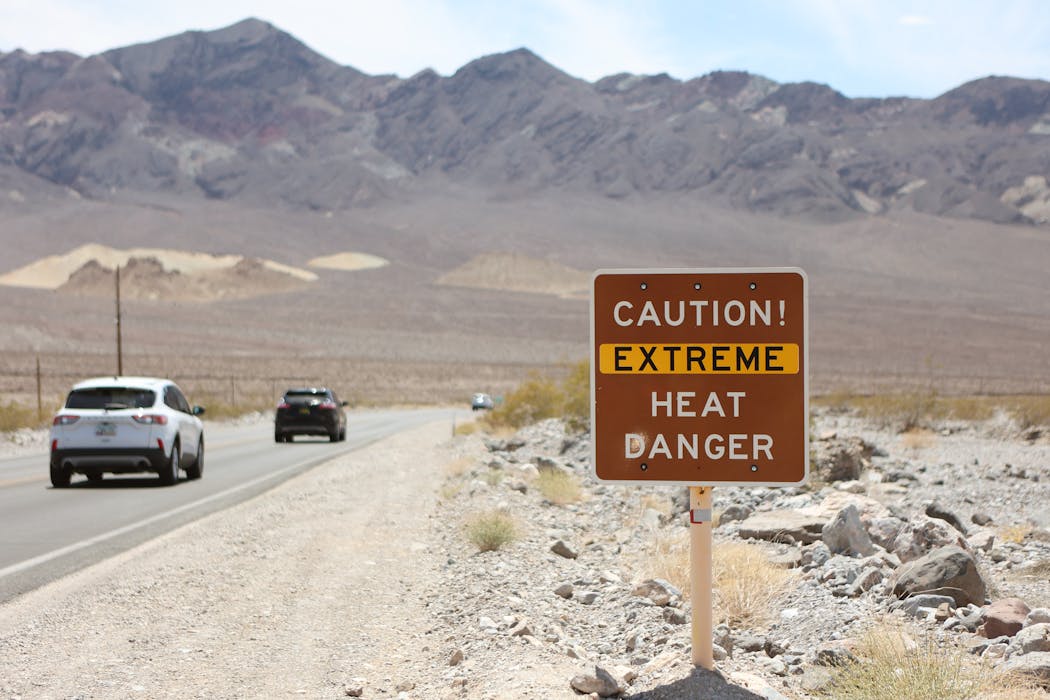
Rising global temperatures are increasing the risk of heat stroke on hot days, among many other human harms. Ronda Churchill/AFP via Getty Images

The Trump administration took a major step in its efforts to unravel America’s climate policies on Feb. 12, 2026. It moved to rescind the 2009 endangerment finding, a formal determination that greenhouse gas emissions, such as carbon dioxide and methane from burning fossil fuels, endanger public health and welfare. But the administration’s arguments in dismissing the health risks of climate change are not only factually wrong, they’re deeply dangerous to Americans’ health and safety.

As physicians, epidemiologists and environmental health scientists, we’ve seen growing evidence of the connections between climate change and harm to people’s health.

Here’s a look at the health risks everyone face from climate change.
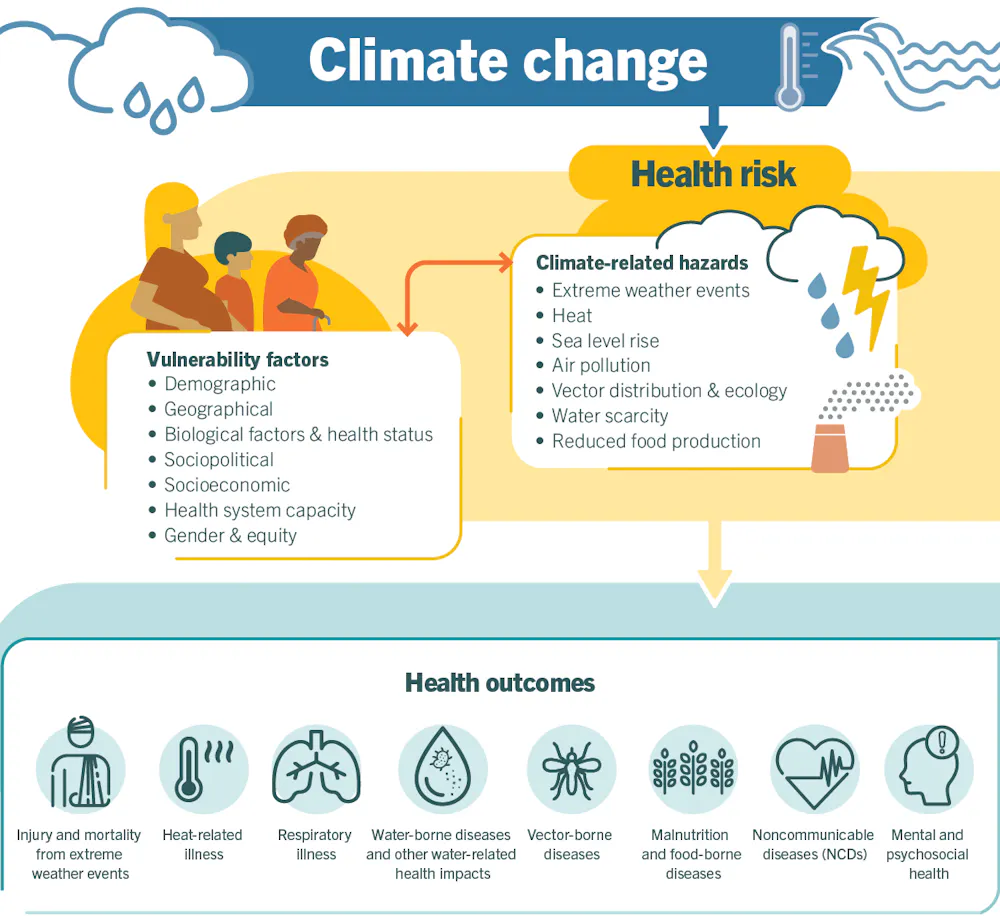
Health risks and outcomes related to climate change.
World Health Organization

Extreme heat

Greenhouse gases from vehicles, power plants and other sources accumulate in the atmosphere, trapping heat and holding it close to Earth’s surface like a blanket. Too much of it causes global temperatures to rise, leaving more people exposed to dangerous heat more often.

Most people who get minor heat illnesses will recover, but more extreme exposure, especially without enough hydration and a way to cool off, can be fatal. People who work outside, are elderly or have underlying illnesses such as heart, lung or kidney diseases are often at the greatest risk.

Heat deaths have been rising globally, up 23% from the 1990s to the 2010s, when the average year saw more than half a million heat-related deaths. Here in the U.S., the 2021 Pacific Northwest heat dome killed hundreds of people.

Climate scientists predict that with advancing climate change, many areas of the world, including U.S. cities such as Miami, Houston, Phoenix and Las Vegas, will confront many more days each year hot enough to threaten human survival.

Extreme weather

Warmer air holds more moisture, so climate change brings increasing rainfall and storm intensity and worsening flooding, as many U.S. communities have experienced in recent years. Warmer ocean water also fuels more powerful hurricanes.

Increased flooding carries health risks, including drownings, injuries and water contamination from human pathogens and toxic chemicals. People cleaning out flooded homes also face risks from mold exposure, injuries and mental distress.

A man carries boxes out of a house that flooded up to its second story.
Flooding from hurricanes and other extreme storms can put people at risk of injuries during the cleanup while also triggering dangerous mold growth on wet wallboard, carpets and fabric. This home flooded up to its second flood during Hurricane Irma in 2017.
Sean Rayford/Getty Images

Climate change also worsens droughts, disrupting food supplies and causing respiratory illness from dust. Rising temperatures and aridity dry out forests and grasslands, making them a setup for wildfires.

Air pollution

Wildfires, along with other climate effects, are worsening air quality around the country.

Wildfire smoke is a toxic soup of microscopic particles (known as fine particulate matter, or PM2.5) that can penetrate deep in the lungs and hazardous compounds such as lead, formaldehyde and dioxins generated when homes, cars and other materials burn at high temperatures. Smoke plumes can travel thousands of miles downwind and trigger heart attacks and elevate lung cancer risks, among other harms.

Meanwhile, warmer conditions favor the formation of ground-level ozone, a heart and lung irritant. Burning of fossil fuels also generates dangerous air pollutants that cause a long list of health problems, including heart attacks, strokes, asthma flare-ups and lung cancer.

Infectious diseases

Because they are cold-blooded organisms, insects are directly influenced by temperature. So with rising temperatures, mosquito biting rates rise as well. Warming also accelerates the development of disease agents that mosquitoes transmit.

Mosquito-borne dengue fever has turned up in Florida, Texas, Hawaii, Arizona and California. New York state just saw its first locally acquired case of chikungunya virus, also transmitted by mosquitoes.

A world map shows where mosquitos are most likely to transmit the dengue virus
As global temperatures rise, regions are becoming more suitable for mosquitoes to transmit dengue virus. The map shows a suitability scale, with red areas already suitable for dengue transmissions and yellow areas becoming more suitable.
Taishi Nakase, et al., 2022, CC BY

And it’s not just insect-borne infections. Warmer temperatures increase diarrhea and foodborne illness from Vibrio cholerae and other bacteria and heavy rainfall increases sewage-contaminated stormwater overflows into lakes and streams. At the other water extreme, drought in the desert Southwest increases the risk of coccidioidomycosis, a fungal infection known as valley fever.

Other impacts

Climate change threatens health in numerous other ways. Longer pollen seasons increase allergen exposures. Lower crop yields reduce access to nutritious foods.

Mental health also suffers, with anxiety, depression and post-traumatic stress following disasters, and increased rates of violent crime and suicide tied to high-temperature days.

A older man holds a door for a woman at a cooling center.
New York and many other cities now open cooling centers during heat waves to help residents, particularly older adults who might not have air conditioning at home, stay safe during the hottest parts of the day.
Angela Weiss/AFP via Getty Images

Young children, older adults, pregnant women and people with preexisting medical conditions are among the highest-risk groups. Lower-income people also face greater risk because of higher rates of chronic disease, higher exposures to climate hazards and fewer resources for protection, medical care and recovery from disasters.

Policy-based evidence-making

The evidence linking climate change with health has grown considerably since 2009. Today, it is incontrovertible.

Studies show that heat, air pollution, disease spread and food insecurity linked to climate change are worsening and costing millions of lives around the world each year. This evidence also aligns with Americans’ lived experiences. Anybody who has fallen ill during a heat wave, struggled while breathing wildfire smoke or been injured cleaning up from a hurricane knows that climate change can threaten human health.

Yet the Trump administration is willfully ignoring this evidence in proclaiming that climate change does not endanger health.

Its move to rescind the 2009 endangerment finding, which underpins many climate regulations, fits with a broader set of policy measures, including cutting support for renewable energy and subsidizing fossil fuel industries that endanger public health. In addition to rescinding the endangerment finding, the Trump administration also moved to roll back emissions limits on vehicles – the leading source of U.S. carbon emissions and a major contributor to air pollutants such as PM2.5 and ozone.

It’s not just about endangerment

The evidence is clear: Climate change endangers human health. But there’s a flip side to the story.

When countries work to reduce the causes of climate change, they help tackle some of the world’s biggest health challenges. Cleaner vehicles and cleaner electricity mean cleaner air – and less heart and lung disease. More walking and cycling on safe sidewalks and bike paths mean more physical activity and lower chronic disease risks. The list goes on. By confronting climate change, we promote good health.

To really make America healthy, in our view, the nation should acknowledge the facts behind the endangerment finding and double down on our transition from fossil fuels to a healthy, clean energy future.

This article includes material from a story originally published Nov. 12, 2025.

The Conversation

Jonathan Levy receives funding from the National Institutes of Health, the Federal Aviation Administration, the City of Boston, the Masschusetts Office of the Attorney General, and the Mosaic Foundation.

Howard Frumkin has no financial conflicts of interest to report. He is a member of advisory boards (or equivalent committees) for the Planetary Health Alliance; the Harvard Center for Climate, Health, and the Global Environment; the Medical Society Consortium on Climate Change and Health; the Global Consortium on Climate and Health Education; the Yale Center on Climate Change and Health; and EcoAmerica’s Climate for Health program, and chairs the National Academy of Medicine Committee on the Roadmap for Transformative Action to Achieve Health for All at Net-Zero Emissions—all voluntary unpaid positions.

Jonathan Patz receives funding from the National Institutes of Health. He is affiliated with the Medical Society Consortium for Climate and Health, and its affiliate Healthy Climate Wisconsin.

Vijay Limaye is affiliated with the Natural Resources Defense Council.

ref. Trump says climate change doesn’t endanger public health – evidence shows it does, from extreme heat to mosquito-borne illnesses – https://theconversation.com/trump-says-climate-change-doesnt-endanger-public-health-evidence-shows-it-does-from-extreme-heat-to-mosquito-borne-illnesses-275619


Ukraine: if elections are held this spring, who might be the next president?

Source: The Conversation – UK – By Jennifer Mathers, Senior Lecturer in International Politics, Aberystwyth University

Ukraine’s president, Volodymyr Zelensky, is under intense pressure from the US to take his country to the polls as early as this spring. Donald Trump is demanding elections as a condition for American security guarantees for Ukraine against any future Russian invasion.

Zelensky has faced persistent calls from Russian president, Vladimir Putin, and at times from Trump as well, to hold an election. His term expired in 2024, but the country’s constitution forbids elections during wartime. So to schedule a poll will also mean a constitutional change to enable it.

But if the US president gets his way and elections are held later this year, whoever wins and becomes Ukraine’s next president will be faced with the task of managing a country at war and perhaps steering the nation towards an uncertain peace.

It is hard to predict who might stand for the presidency – under the current circumstances, no one is declaring their candidacy. But it’s reasonable to assume that Zelensky would put himself forward for a second term. If so, he cannot be expecting to coast to victory as he did in 2019 when he won more than 74% of the popular vote.

While Zelensky has been celebrated in the west as a hero for his wartime leadership, his popularity has been damaged by a series of corruption scandals. In November 2025, several government officials and business leaders with close connections to Zelensky – including the justice minister and a former prime minister – were accused of stealing US$100 million (£73 million) from Ukraine’s energy sector by Ukraine’s anti-corruption agencies.

Just a few months earlier, in July, widespread protests erupted against a new law that would place those same anti-corruption agencies under the control of an official appointed by Zelensky. This move was widely seen as an attempt to enable the president to stop any inconvenient investigations in their tracks and shield his associates from prosecution.

Zelensky acted quickly to distance himself from both of these scandals. He reversed the controversial legislation in the summer and has called for the resignation of serving officials named in the energy corruption investigation. But these events have tarnished his reputation at home.

According to surveys conducted by the Kyiv International Institute of Sociology, trust in Zelensky dropped from 74% in May 2025 to 59% in December. Although incumbents in other countries might look with envy at these figures, only 26% “completely” trust him and would like to see him continue as president. The rest indicated that they would prefer a change at the top of Ukraine’s political leadership. That said, a recent poll had his support at 30.9%, with only one other potential candidate within touching distance.

That potential candidate is Valerii Zaluzhnyi, whose is often described as a potential leader and whose support was measured at 27.7% in the poll mentioned above. Currently Ukraine’s ambassador to the UK, Zaluzhnyi owes his high profile to his former position as head of Ukraine’s armed forces. He served in that role from 2021 until Zelensky replaced him in February 2024.

The official reason Zelensky gave for the dismissal was the need for new ideas in the military, but there was a suspicion that Zaluzhnyi, widely regarded as a war hero for leading the resistance to Russia’s mass invasion, was becoming too popular. Indeed, a poll conducted in July 2025 found that 73% of Ukrainians said they trusted him, making him the country’s most trusted public figure. Zaluzhnyi has refused to be drawn on whether he might stand for the presidency, but there is widespread speculation that he is simply biding his time.

Another possible candidate whose reputation was built by his wartime leadership is Kyrylo Budanov. Recently appointed by Zelensky as his chief of staff, Budanov led Ukraine’s military intelligence since 2020 and is credited with its effective use of drones to strike targets deep into Russian territory as well as Russian-occupied Ukraine. Like Zaluzhnyi, Budanov has not indicated that he would stand for elected office. Unlike Zaluzhnyi, Budanov has not made a breakthrough in the polls.

Veteran political rivals

A few veterans of past presidential campaigns might throw their hats into the ring again, although neither is likely to be a front runner.

Petro Poroshenko was Ukraine’s president before Zelensky, serving from 2014 until 2019. Since 2021 he has been fighting charges of treason and, more recently, has been placed under sanction by Zelensky.

Charges against him focus on alleged pro-Russian political and economic interests, such as his connection with the now-banned Party of the Regions and his slowness to sell off his assets in Russia and Russian-occupied Ukraine. He denies any wrongdoing and has called the sanctions “politically motivated” and “unconstitutional”.

Yulia Tymoshenko was a leading figure in Ukraine’s 2004 Orange Revolution. She is a former prime minister, leader of the “Fatherhood” political party and a populist politician who has a strong following among rural voters, especially older women.

But she has recently been charged with offering bribes to lawmakers in what has been reported as an attempt to undermine the ruling Servant of the People Party. She denies the charges. She is only polling in the single digits.

Problems with a wartime election

It is important to remember that Moscow demands fresh elections in Ukraine as a condition of any peace deal. It is unlikely that Russia expects a pro-Russian candidate to be successful and take the country in a more Russia-friendly direction. But the entire process of holding fair elections in Ukraine anytime soon is fraught with difficulties that would offer opportunities for Russia to exploit.

For example, the organisational challenge of creating accurate electoral registers that include the millions of displaced Ukrainians – many of them living abroad – would invite challenges to the fairness of the election and the legitimacy of the results.

The political divisions that inevitably come to the surface during election campaigns would provide ideal grounds for stirring up dissension and dissatisfaction – a well-established practice undertaken by the Russian security services – and thereby undermining the solidarity of Ukrainian society.

So regardless of who becomes Ukraine’s next president, if the election goes ahead in the coming months as Donald Trump is demanding, the winner in a broader sense may be Russia.

The Conversation

Jennifer Mathers does not work for, consult, own shares in or receive funding from any company or organisation that would benefit from this article, and has disclosed no relevant affiliations beyond their academic appointment.

ref. Ukraine: if elections are held this spring, who might be the next president? – https://theconversation.com/ukraine-if-elections-are-held-this-spring-who-might-be-the-next-president-275702

FDA rejects Moderna’s mRNA flu vaccine application – for reasons with no basis in the law

Source: The Conversation – USA (3) – By Ana Santos Rutschman, Professor of Law, Villanova University

In December 2025, Moderna submitted an application to the FDA to approve the first mRNA-based flu vaccine. Catherine Falls Commercial/Moment via Getty Images

The Food and Drug Administration has refused to review an application from the biotech company Moderna to approve its mRNA-based flu vaccine.

The agency’s decision, which Moderna announced in a press release on Feb. 10, 2026, is the latest step in efforts by federal health officials under Health and Human Services Secretary Robert F. Kennedy Jr. to disrupt longstanding public health practices relating to vaccine access and approval, as well as to reshape the public’s perception of vaccine safety.

Vaccines based on mRNA came to the forefront in the early days of the COVID-19 pandemic, but researchers are now using the technology to create other vaccines, as well as treatments for diseases such as cancer and autoimmune disorders. The Nobel Prize-winning technology may be especially promising for flu because vaccines can be developed rapidly each season to match mutating influenza strains.

However, Kennedy and other federal health officials, including at the FDA, have expressed particular skepticism toward mRNA-based vaccines, raising safety concerns while providing no credible data on their health risks, and defunding research on their development.

The Conversation asked Ana Santos Rutschman, a Villanova University law professor and vaccine policy expert, to explain the significance of the FDA’s decision and how it fits into the rapidly changing landscape of public health policy.

What exactly did the FDA do, and why is it unusual?

In December 2025, Moderna submitted an application to the FDA to approve an mRNA flu vaccine for adults age 50 and older. The vaccine had been tested in clinical trials including more than 40,000 people. In response to the application, the agency sent Moderna a “refusal-to-file” letter, dated Feb. 3, 2026. This is a type of notice the regulator sends to companies when it deems a new drug or vaccine’s application to be incomplete.

Because companies developing new products meet with the FDA early in the process to agree on requirements for approval, it’s rare for the agency to take this action. What’s more, there have been very few occasions in which the FDA has diverged significantly from other major drug regulators around the world. But in this case, drug regulators in Canada, Europe and Australia accepted Moderna’s application for review.

Especially concerning is that several FDA scientists and other staff have confirmed that they expected to review Moderna’s application. The director of the FDA’s Office of Vaccines Research and Review, David Kaslow, wrote a memo recommending it be reviewed. But Vinay Prasad, who directs the center that oversees the vaccine research office, overruled the decision.

Directors rarely overrule agency scientists, especially regarding vaccines. But this is at least the fourth time Prasad has done so since being appointed to the FDA in 2025.

What reasons did the FDA give for its decision?

Moderna took the unusual step of announcing the FDA’s refusal and releasing the agency’s letter. The letter states that Moderna did not conduct an “adequate and well-controlled” study because it had not compared patients receiving its vaccine to patients receiving what the agency claimed to be “the best-available standard of care.”

An older woman sneezing into a tissue
Moderna’s flu vaccine would be the first one using mRNA technology, but Robert F. Kennedy Jr. and other federal health officials have been skeptical about the safety of mRNA based vaccines.
PixelVista/E+ via Getty Images

In the U.S., standard-dose flu vaccines are approved for everyone over 6 months of age, but health authorities recommend that adults over 65 receive a more potent dose. Moderna’s announcement quoted the language the FDA used when approving the company’s clinical trial protocol in 2024. The agency had originally suggested that for people age 65 and older, the company compare the efficacy of its vaccine to the more potent dose. But after reviewing Moderna’s protocol, the FDA deemed the standard vaccine “acceptable.”

Besides the fact that the FDA agreed to the trials Moderna conducted, I believe the agency’s claim that the company didn’t use “the best-available standard of care” is problematic because it does not reflect the legal requirements for vaccine approval. Although this phrase sounds official, it is nowhere to be found in FDA law or guidance for companies developing vaccines.

Instead, FDA law requires a company to provide data from “adequate and well controlled studies” and using standard dose flu vaccines aligns with the requirement because they are widely used across age groups.

Shortly after Moderna announced the refusal, the health news outlet STAT quoted an unnamed FDA official stating that if Moderna were to “show some humility,” the agency might still review the application, but only for people under 65. Imposing this restriction after refusing to review the application has no basis in the law because FDA approves clinical trial parameters early on, in consultation with companies.

From a legal perspective, the FDA’s decision could potentially meet what’s called the “arbitrary and capricious” standard, because the agency seems to have altered its position without a valid reason for that change. If a court makes such a determination, it could invalidate the FDA’s decision. That process, however, would take time.

Does the FDA’s decision reflect a change in vaccine policy?

This is the first time that the FDA has tried to preclude the review of a vaccine for reasons that do not have to do with safety or efficacy. The move, which ties into a broader strategy by federal health officials under Kennedy, signals an escalation in the agency’s efforts to intervene in established procedures for testing vaccines.

In April 2025, Kennedy announced that new vaccines would require additional clinical trials. In November 2025, Prasad released an internal FDA memo claiming that mRNA-based COVID-19 vaccines had killed children. Although he provided no evidence, he said that in response to the alleged deaths, large-scale changes to requirements for vaccine approval were coming.

The FDA’s refusal of Moderna’s application appears to be Prasad’s policy in action.

What might this mean for vaccines going forward?

On a practical level, the fact that the FDA is now articulating requirements that are nowhere to be found in the law creates major uncertainty for companies with pending or upcoming vaccine applications. That’s because manufacturers now have reason to worry that they might invest resources in the lengthy process of developing a vaccine, only to receive similarly unpredictable refusals.

More broadly, with so many areas in vaccine law and policy in turmoil, incentives for vaccine manufacturers to bring vaccines to market are shrinking. In January 2026, even before the flu vaccine refusal, Moderna’s chief executive officer said the company was scaling back on vaccine development .

Finally, the FDA’s move risks fueling further mistrust in vaccines, aligning with a wider push from federal health officials to question long-settled science.

The Conversation

Ana Santos Rutschman does not work for, consult, own shares in or receive funding from any company or organization that would benefit from this article, and has disclosed no relevant affiliations beyond their academic appointment.

ref. FDA rejects Moderna’s mRNA flu vaccine application – for reasons with no basis in the law – https://theconversation.com/fda-rejects-modernas-mrna-flu-vaccine-application-for-reasons-with-no-basis-in-the-law-275771

How Indigenous athletes challenge simple ideas of national unity at the Olympics

Source: The Conversation – Canada – By Taylor McKee, Assistant Professor, Sport Management, Brock University

As the 2026 Winter Olympics in Milan Cortina unfold, the world is once again turning its gaze to the podium. But for most nations, the importance of the Olympics extends well beyond medals.

The Games are a place where nations tell stories about themselves: who belongs, who represents them and how secure that nation feels in the world. National sporting events offer a way to make abstract ideas like sovereignty and belonging visible.

As humanities scholar Homi K. Bhabha argues in his book on nationhood, nations are not fixed entities, but are continually retold, like stories. The Olympics provide one of the most visible stages for nations to shape narratives about themselves.

At a time when Canada and other countries are feeling pressure about their sovereignty, the Olympic Games are taking on heightened symbolic meaning.

But Indigenous athletes, in particular, reveal the limits of using sport to perform national unity, and show how multiple sovereignties continue to exist within “Team Canada.”

Forging a nation through sport

One of the earliest Canadian sports stories ever told was explicitly about forging something new under the weight of empire. In 1867, days after Confederation, a working-class crew from Saint John, New Brunswick, competed in rowing at the Paris Exhibition, a world’s fair held in France.

Black and white photo of four men rowing in a row boat across a body of water
An 1871 photo of the Paris Crew.
(National Archives of Canada)

The “Paris Crew” quickly became a national symbol, not just because they won, but because the victory felt like a young country holding its own against an older imperial world. It became a story of Canadians carving out space on an international stage that was not designed with them in mind.

Over time, what it meant to see Canada represented in sport started to change. By the early 2000s, a familiar insecurity lingered.

This sentiment did not survive Canada’s exceptional performance at Vancouver 2010 when the country won a historic 14 gold medals.

In the lead-up to those Olympics, the federal government invested heavily in a high-performance system built to deliver medals. Even the name of the initiative — Own the Podium — put it plainly. Excellence was no longer a wish for Canada, but the standard, and the resources followed.

When sovereignty feels unsettled again

Today, the ground feels less stable again. Canada’s relationship with its closest ally, the United States, is under intense strain due to ongoing tariff disputes and repeated threats to Canadian sovereignty from the American president.

Canadians are testing their mettle by discerning whether they have the skills and endurance to publicly defend and perform sovereignty on the national stage.

Sport is an ideal forum for this because it’s already built as a competition among national units, even when lived reality is far more regional and local.

This renewed attention to sovereignty can feel like a throwback to the Paris Crew moment, when defeating bigger powers looked like a form of self-determination.

Dual narratives

The effort to balance the complexities of national pride and sovereignty under a colonial shadow takes on even more complexity through the participation of Indigenous athletes.

Following Alwyn Morris and Hugh Fisher’s 1000-metre sprint kayak gold medal at the 1984 Summer Olympics, Morris gave an eagle feather salute to his grandfather. This moment is widely remembered as a positive example of Indigenous resurgence through sport, and a reclaiming of cultural space.

At the same time, as Morris himself has explained, the gesture was a reminder that Indigenous identity does not dissolve into “Team Canada,” even during moments many Canadians want to read as uncomplicated unity.

That is why Morris’s salute still matters. It shows how representation can hold two truths at once. Morris was awarded gold while wearing red and white, but he claimed his win as one for “the other part of who [he] is,” showing how Indigenous sport stories cannot be reduced to a single national storyline.

Indigenous resistance through sport

Perhaps the longest-running example of Indigenous resistance through sport is the Haudenosaunee Nationals lacrosse team, which competes internationally as a sovereign nation.

Contemporary lacrosse reflects a version of the sport that is much different than what Haudenosaunee People have traditionally revered as a “medicine game.” In the late 1800s, when “The Creator’s Game” was colonized and rebranded as “Canada’s National Game,” Indigenous peoples were barred from competition.

Today, the Haudenosaunee Nationals are the only sports organization in the world to compete in international competitions while representing an Indigenous confederacy as a sovereign nation.

Representing the Haudenosaunee, the Nationals embody Indigenous reclamation and resurgence. With lacrosse returning to the 2028 Summer Olympics, the Haudenosaunee’s claim for sovereignty is once again on the line.

Canada’s national story

For most Canadians, international sport is the easiest place to feel the nation in real time. A flag goes up. An anthem plays. A medal table is refreshed. In a few minutes of speed, grace and accuracy, complicated questions about history, economy and belonging collapse into a simple narrative.

Through these articulations of Indigenous sovereignty, representation and resurgence, Indigenous athletes have reminded “Team Canada” why this narrative isn’t as simple as it feels. For Indigenous Canadian athletes, participation is about representing the communities that came together to believe in them.

It’s about celebrating family strength, healing inter-generational trauma and leading a new path. It’s about resisting threats to sovereignty and reclaiming what was taken away.

That is exactly why sport becomes so charged when Canadians feel our sovereignty is under pressure, whether that pressure is literal, symbolic or both. In sport, athletes are asked to do more than win medals — they are asked to stand in for Canada itself and to reassure audiences that the country is coherent, respected and capable of protecting what is considered ours.

The Conversation

Taylor McKee receives funding from the Social Sciences and Humanities Research Council of Canada

Janelle Joseph receives funding from the Social Sciences and Humanities Research Council.

Lucas Rotondo does not work for, consult, own shares in or receive funding from any company or organisation that would benefit from this article, and has disclosed no relevant affiliations beyond their academic appointment.

ref. How Indigenous athletes challenge simple ideas of national unity at the Olympics – https://theconversation.com/how-indigenous-athletes-challenge-simple-ideas-of-national-unity-at-the-olympics-274408

Epstein files: why the Trump administration is taking a big gamble by releasing millions of documents

Source: The Conversation – UK – By Katie Pruszynski, PhD Candidate, Department of Politics and International Relations, University of Sheffield

The death of Jeffrey Epstein in 2019 was never going to be the end of his menacing presence in the American political orbit. More than six years later, the Department of Justice (DoJ) has now released millions of the “Epstein files” to a hungry and impatient audience.

But the DoJ’s conduct has set new questions in motion, this time about its own agenda in protecting powerful figures, including – according to his political opponents – the US president, Donald Trump. The unfolding saga reveals unsettling truths about elite power networks and our own ability to critically assess information in an era of extreme overload.

The Epstein Files Transparency Act compelled the DoJ to release the files to the fullest extent possible. The content is harrowing and shocking. But there are also a number of troubling implications in the DoJ’s actions in the build up to, and since, the release of the files, as well as in the manner in which sensitive information was handled.

Despite a statutory deadline of December 19 2025, the DoJ only began drip-feeding documents on the deadline day itself, drawing widespread criticism. And while an initial DoJ report identified 6 million “responsive” documents, the deputy attorney-general, Todd Blanche, claimed on January 30 that the cumulative release of 3.5 million documents met all legal obligations. This leaves 2.5 million documents effectively missing.

There were, predictably, accusations of a cover up. At the very least, in stalling the release of the files and then turning a trickle into a flood, the DoJ could reasonably be accused of malicious compliance; trying to bury damaging needles in mountainous haystacks.

Beyond the missing files, congressional oversight has been throttled. Secure “reading rooms” were established where sitting members, without staff, were able to review unredacted pages taking only hand-written notes. Quite the task with 3.5 million documents.

Most disturbingly, the DoJ’s redaction process appeared inverted. According to Democrat lawmaker, Ro Khanna, who has scrutinised unredacted versions of the files, high-profile names were shielded, yet the full names and contact details of 43 victims were published alongside graphic photographs of young women and potentially minors.

The DoJ acknowledged these “mistakes”, but in combination with the delayed release and the missing files, alarm bells are ringing that this, too, forms part of a more sinister strategy to divert attention away from the content of the files themselves through chaos.

Gambling on the attention economy

The DoJ appears to be making two significant gambles on the attention economy of the digital age. The first relies on information and crisis exhaustion. Releasing a massive data dump creates a triage and narrative challenge that few journalists or activists can meet.

This is not necessarily new: the practice, known in the US as “backing up the truck”, which involved the government when asked to divulge sensitive public documents, releasing a truckload of documents in which they hid the sensitive ones, is a time-honoured and devious tactic well known to journalists.

In a world where attention is a commodity, the Trump administration appears to be betting that the public simply lacks the bandwidth to process the Epstein revelations amid a sea of manufactured and organic distractions.

Consider the current pulls on even a mildly engaged citizen in the US. Since the start of the year, ICE and other immigration agencies have escalated their activities in US cities, most notably in Minnesota where they have killed two Americans without, critics say, probable cause or likely sanction.

The US captured the leader of Venezuela in a legally dubious military raid, and implied other Latin American leaders could face the same demise. Trump ramped up his threats to annex Greenland.

Meanwhile millions of Americans have seen their health insurance premiums soar as a result of Republicans declining to extend healthcare subsidies.

It is little wonder that there have been observations in US media outlets that the public response to the Epstein revelations has seemed muted in comparison to audiences in the UK and elsewhere. With “perma-crisis” as the baseline, the administration appears to be betting that public focus will be dragged away by the next trending issue.

The partisan shield

Americans are, in fact, responding to the revelations. And while there has been an unusually bipartisan horror at the content of the files, this issue, as with so many others, has served to entrench divisions and resentment towards the partisan “other”.

This is at the heart of the administration’s second gamble. Research demonstrates that increasingly, our partisan identity forms a crucial part of our whole social identity. In effect, who we support defines a large part of how we see ourselves in the world. So strong is the connection, that challenges to our partisan beliefs feel like an existential threat to who we are.

Confronted with such a threat, we are more likely to double down on those beliefs, even in the face of contradictory evidence. So much so, that in extreme cases, people are able to see any contrary views as evidence of a conspiracy against them, their peers and their leaders. Trump has long understood this hold he has over his base.

The Maga community produced the loudest calls for the Epstein files, believing they would expose a “deep state” paedophile ring involving the Clintons and Hollywood elites. Indeed, Bill Clinton is in the files, mentioned multiple times, although he denies any wrongdoing and there has been nothing published to suggest he has been involved in any.

But to maintain their cognitive consistency, supporters must convince themselves that while the files condemn their enemies, the more than 30,000 references to Donald Trump are part of a broad conspiracy to defenestrate their leader.

Looming on the horizon to focus minds are the 2026 midterm elections in November. Republicans and the Trump White House may be gambling once more on the attention economy having long since consigned Epstein to history. Democrats will have to fight to maintain focus on Trump’s behaviour both in the files and about the files while tackling the barrage of injustices that, in reality, feel much more relevant to Americans in their day-to-day lives.

The other names in the files, those of the victims, remain much further away from any kind of justice.

The Conversation

Katie Pruszynski does not work for, consult, own shares in or receive funding from any company or organisation that would benefit from this article, and has disclosed no relevant affiliations beyond their academic appointment.

ref. Epstein files: why the Trump administration is taking a big gamble by releasing millions of documents – https://theconversation.com/epstein-files-why-the-trump-administration-is-taking-a-big-gamble-by-releasing-millions-of-documents-275827

Some glaciers can suddenly surge forward – with dangerous consequences

Source: The Conversation – UK – By Harold Lovell, Senior Lecturer, Glaciology, University of Portsmouth

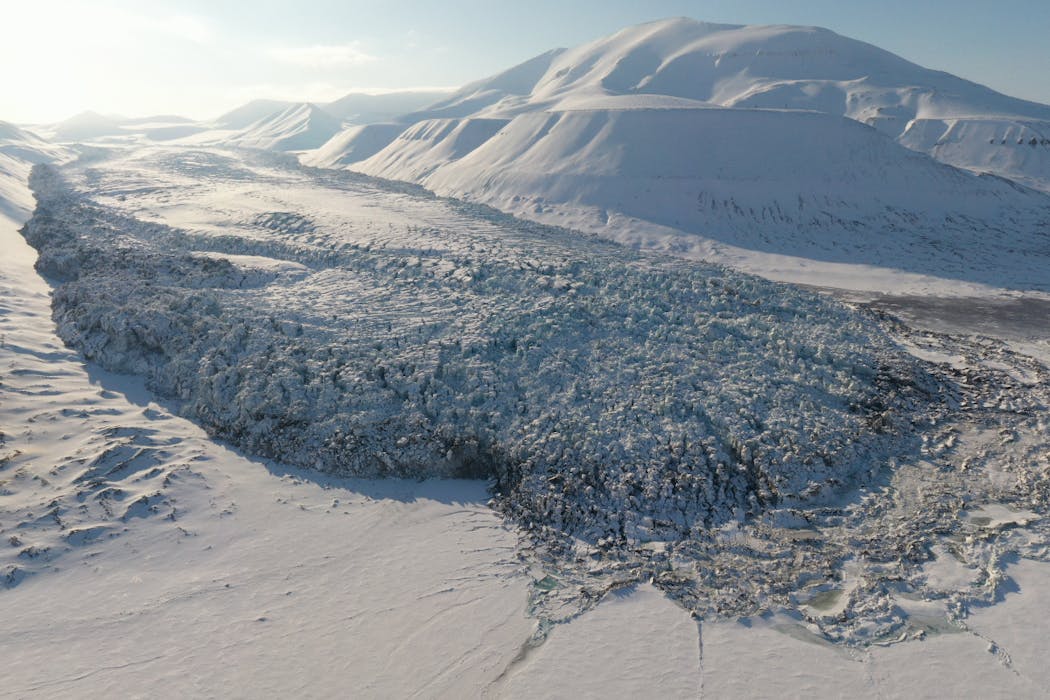
The surging Scheelebreen glacier in Svalbard advances into the frozen fjord, April 2022. Erik Schytt Mannerfelt, CC BY

It’s difficult to forget standing in front of a glacier that is advancing towards you, towering ice pillars constantly cracking as they inch forward. The motion is too slow to see in real time, but obvious from one day to the next.

One of us (Harold) experienced this during fieldwork in 2012 at Nathorstbreen on the Arctic archipelago of Svalbard, which was moving forwards more than 10 metres per day.

Encounters like this are rare. Most of the world’s glaciers are retreating rapidly as the climate warms, and thousands are likely to disappear altogether within the next few decades.

However, a small fraction of glaciers do the opposite, and repeatedly speed up and advance for months or years after a long period of stagnation and retreat. This is known as glacier surging, and it has long puzzled scientists.

It might be tempting to view advancing ice as an antidote to the gloomy picture of disappearing glaciers, but the polar opposite is true. Surges can accelerate ice loss, make glaciers more vulnerable to climate change, and create serious hazards for people living downstream of them.

We have just published a global study of over 3,000 surging glaciers to find out what’s causing them to move like this. Our work also summarises, for the first time, the hazards caused by these glaciers, and how surging is being affected by climate change.

Why some glaciers surge

During surges, glaciers accelerate from a slow crawl to tens of metres per day – sometimes within weeks. The fastest phase, when ice can flow at over 60 metres a day, typically lasts a year or more – although some glaciers have surged for up to 20 years. The return to low speeds and even stagnation can happen abruptly over days, or over several years.

Nathorstbreen dramatically advanced more than 15 kilometres in roughly a decade during its surge, which began in 2008 – transforming the entire landscape in a matter of years.

Field investigations at the surging front of Nathorstbreen, Svalbard in July 2012.
Harold Lovell

The onset of surging is thought to be controlled by changes beneath the glacier. In surge-type glaciers, water generated by melting ice does not immediately drain away, but gathers at the bottom of the glacier. This reduces friction between ice and the ground, making it easier for ice to slide faster.

When that water eventually drains, the glacier slows again. Some glaciers experience repeated surges separated by years or decades of low ice flow – but the exact timing of surges is hard to predict.

The sound of surging ice at Vallåkrabreen, Svalbard in May 2023. Erik Schytt Mannerfelt.
Erik Schytt Mannerfelt, Author provided (no reuse)1.63 MB (download)

Global hotspots of surging ice

Our study shows that at least 3,000 glaciers have surged at some point. That’s only about 1% of all glaciers in the world, but they tend to be large, so represent about 16% of the global glacier area.

Notably, they are found in dense geographical groupings across the Arctic, the Himalayas and other high mountains in Asia, and the Andes – but are largely absent elsewhere. This is primarily controlled by the climate: surges do not generally happen where conditions are currently too warm, such as in the European Alps or mainland Scandinavia, or too cold and dry, such as Antarctica.

Other factors such as size and underlying geology are also important for determining which glaciers surge in a region and which do not.

Some of the hotspots are found in populated regions, where surging glaciers can become hazards. The advancing ice can overrun infrastructure and farmland, and block rivers to form dangerous lakes that can release devastating floods when the ice breaks. An unstable lake formed by a surge of Shisper Glacier in the Karakoram mountain range drained multiple times from 2019 to 2022, causing extensive damage to the Karakoram Highway, a key connection between Pakistan and China.

A flood from a lake dammed by the surging Shisper Glacier destroys Hassanabad bridge on the Karakoram Highway in May 2022.

Fast-moving ice can cause deep cracks (crevasses) to form, affecting travel in regions such as Svalbard where glaciers provide highways between isolated human settlements. It also disrupts tourism and recreation activities, such as where climbers use glaciers to approach peaks. When glaciers surge into the sea, they release numerous icebergs in a short space of time that could present a risk to shipping and tourism.

Surging is changing as the climate warms

Climate warming is already reshaping how and when glaciers surge. In some regions, surges are becoming more frequent; in others, they are declining as glaciers thin and lose the mass needed to build towards a surge. Heavy rainfall, intense melt periods or other extreme weather have also been shown to trigger earlier-than-expected surges, and these factors may become more important in a warming climate.

Together, this paints a picture of the increasing unpredictability of glacier surges. Some regions might experience less surging as the world warms, while others might see an increase. It is feasible that glaciers that have never surged before may begin to, including in areas where there are no records of past surges, such as the fast-warming Antarctic peninsula.

Surging glaciers remind us that ice does not always respond to warming in simple and predictable ways. Understanding these exceptions, and managing the hazards they create, is critical in a rapidly changing world.

The Conversation

Harold Lovell receives funding from NERC.

Chris Stokes receives funding from the NERC.

ref. Some glaciers can suddenly surge forward – with dangerous consequences – https://theconversation.com/some-glaciers-can-suddenly-surge-forward-with-dangerous-consequences-273976

Three decades on from Wales’ biggest oil spill, how the Sea Empress disaster changed shipping

Source: The Conversation – UK – By Ian Williams, Professor of Applied Environmental Science, University of Southampton

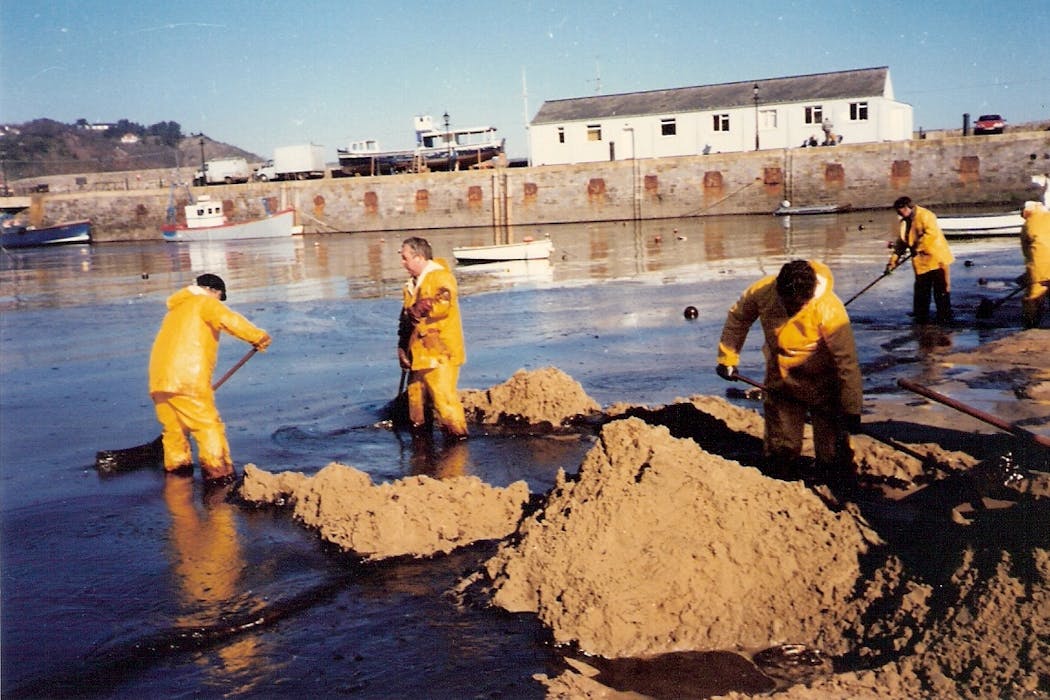
Volunteers cleaning Tenby’s Harbour Beach after the oil spill in 1996. Scott Grant, CC BY-NC-ND

I grew up on the beaches of Pembrokeshire in south-west Wales. Visits to Tenby were my family’s summer ritual: sand between our toes, paddling in rockpools, strawberry syrup on ice cream.

But 30 years ago, I vividly remember walking along Tenby’s North Beach with my mother and grandmother. No crowds. No laughter. Just the hush of waves sliding over dark, tar‑smudged sand. The holiday postcards had gone grey.

At about 8pm on February 15 1996, the Sea Empress oil tanker missed her tug escort into port by minutes. The ship veered inside the mouth of Milford Haven and struck rocks near St Ann’s Head.

Over the next stormy week, it grounded and re‑grounded many times, creating more damage to the hull each time. About 72,000 tonnes of North Sea crude oil were spilled. This was Britain’s worst coastal oil disaster in a generation.

The fightback was messy. Weather worsened. Control systems to manage the spill were strained. Nine separate releases of oil stained the sea as wind and tide shoved a wounded tanker around the edges of the Pembrokeshire Coast national park.

Aircraft spread dispersants to try to break up the oil spill. Rough seas helped break oil into smaller droplets. This kept oil suspended in the water (not just floating on the surface), which can increase exposure and toxicity for sea and plant life, even as the visible surface layer declined.

At the same time, because the spilled oil contained a lot of relatively volatile petrol components and the weather was windy and the sea choppy, an estimated 35-45% evaporated in the first two days.

people on beach with stream of black oil, tanker in distance
Oil from Tenby’s Harbour Beach is pumped into a tanker for removal in 1996.
Scott Grant, CC BY-NC-ND

In all, 11,000-16,000 tonnes of water-in-oil emulsion are estimated to have reached the shore – far less than the 72,000-120,000 tonnes of emulsion that could have beached. But even so, more than 120 miles (190km) of coastline were oiled. Birds, shellfish, marine and coastal habitats and the local tourism industry all took a hammering.

The UK government’s Marine Accident Investigation Branch found the immediate cause was pilot error – compounded by weak training, poor use of leading marks to help the tanker’s navigation, and no agreed master–pilot plan.

Salvage overseen by the Marine Pollution Control Unit (part of the UK Coastguard Agency) unfolded amid a stormy week. Muddled control was an issue alongside insufficient tug power and limited expert knowledge of the tidal streams. When big ships are in trouble, authority must be clear and tugs must be strong.

What’s changed since the disaster?

A lot has improved since the Sea Empress disaster.

The line of command is now much more direct. The UK created a single, empowered decision-maker – the secretary of state’s representative – to cut through competing interests in a major maritime emergency. The role dates from 1999 and exists because of lessons from the Sea Empress.

There’s also a clearer response plan in place. The national contingency plan for marine pollution incidents sets out who does what from the first call to the last waste bag. It links government, ports, regulators and science advisers, and outlines how to quickly set up a joint response centre for a coordinated approach to complex incidents.

Prevention of oil spills is high on the agenda. The UK government has identified marine environmental high-risk areas, including Pembrokeshire, to warn where a mistake can become a catastrophe.

Ships have also evolved to reduce the risk of big spills like this happening again. After the 1990s, single‑hull tankers were phased out under an amendment to international and national laws. New tankers had to be double‑hulled – designed with two completely watertight layers of steel – to reduce the risk of oil spills as the result of an accident.

By the mid‑2010s, single‑hull tankers were effectively gone from mainstream trade – a quiet revolution that prevented countless spills.

But not everything moved forward in a positive way.

In the 2000s, the UK stationed powerful government‑funded tugs around the coast. But in 2011, this fleet was axed on cost grounds, with a limited Scottish provision later restored and extended. A 2020 government‑commissioned study acknowledged that commercial towage hasn’t filled every gap, and that some sea areas are still at high risk of an oil disaster.

Risk has shifted, not vanished. Milford Haven is now one of Europe’s key liquefied natural gas (LNG) gateways. The South Hook and Dragon terminals, opened in 2009, can together meet up to a quarter of UK gas demand on peak days. That keeps homes warm and industry running. It also concentrates critical energy infrastructure in the same magnificent but exposed seascape that the Sea Empress scarred.

river with dark oil, brown boom stretches across width with boat, houses in background
An oil boom across Tenby Harbour tries to clean up the spill.
Scott Grant, CC BY-NC-ND

Lessons learnt

Three aspects of the handling of this disaster still guide my thinking as an environmental scientist today.

Hitting the oil hard at sea – and early on – can make a big difference. With the Sea Empress’s cargo of light crude in winter, rapid evaporation and dispersant‑aided dilution reduced shoreline oiling dramatically. It is often better to keep oil off beaches than have to scrape it off later – but you need surveillance, and then aircraft and trained people to be ready immediately.

crate of seabirds covered in black oil
Oiled seabirds wait to be cleaned after the Sea Empress spillage.
Scott Grant, CC BY-NC-ND

Coasts need to be cleaned in a methodical way, for as long as it takes. Buried oil re‑emerges. Heavy machinery can drive residues deeper if you rush. Quiet persistence beats flashy photo ops.

The government’s Sea Empress environmental evaluation programme found that, while many habitats recovered faster than feared, some wildlife communities – from limpets to cushion stars – needed continued protection.

Prevention always costs less than compensation. Fines, funds and court cases don’t restore trust or nature quickly. Investing upfront – in trained pilots, rehearsed joint command, powerful tugs in the right places, modern kit and transparent science – is cheaper than rebuilding a reputation for clean beaches, safe seafood and thriving wildlife. That was true in 1996. It is truer now.

Thirty years on, I still see Tenby’s empty beaches when they should have been busy. I can still picture the sad faces of Pembrokeshire’s people. Wales has deep ties to the sea: trade, holidays, food, fun.

With better ships, clearer command and smarter plans, the risk of major oil spills can be minimised. But complacency is a fair‑weather friend. LNG cargoes, bigger vessels, tighter budgets and busier coasts all raise the stakes. Anything can happen after dark in a gale, when radios crackle, information is scarce, and decisions must be made quickly.


Don’t have time to read about climate change as much as you’d like?

Get a weekly roundup in your inbox instead. Every Wednesday, The Conversation’s environment editor writes Imagine, a short email that goes a little deeper into just one climate issue. Join the 47,000+ readers who’ve subscribed so far.


The Conversation

Ian Williams receives funding from UK Research Councils, including the Engineering and Physical Sciences Research Council’s Impact Acceleration Account.

ref. Three decades on from Wales’ biggest oil spill, how the Sea Empress disaster changed shipping – https://theconversation.com/three-decades-on-from-wales-biggest-oil-spill-how-the-sea-empress-disaster-changed-shipping-274882

How Tate Modern is serving up Frida Kahlo – from canvas to cuisine

Source: The Conversation – UK – By Benedict Carpenter van Barthold, Lecturer, School of Art & Design, Nottingham Trent University

The forthcoming Tate Modern retrospective, Frida: The Making of an Icon, promises to go beyond the canvas to explore the construction of an artistic legend. At a recent breakfast press-briefing at KOL, a Mexican restaurant in London, co-curator Tobias Ostrander framed the exhibition as a study in how Frida Kahlo “constructed her own image and identity through her artwork and her appearance”.

The show, which arrives at Tate Modern this June following a debut at the Museum of Fine Arts, Houston (MFAH), invites visitors to peel back the layers of a mononymic (known by just one name) myth on par with Elvis. But as Kahlo’s face becomes increasingly synonymous with consumer goods, a question remains: if we continue to “eat her up”, will any of her radical substance be left?

Since Kahlo’s death in 1954, the curators noted, the artist has come to serve the feminist and gay rights movements as a “symbol of radical criticality and self-invention”. Her refusal to adhere to traditional gender norms either in her presentation or sexual conduct, and her carefully crafted adoption of traditional Tehuana clothing (through her mother’s heritage) are just part of the appeal.

Her path-breaking adoption of a confessional mode in art, sharing her biographical and biological trauma as the central subject of her work, seems to presage the way identity is performed on social media today. If her purpose is to serve as a signifier of active agency, then Kahlo’s time has come.

As a public icon, Kahlo is a strangely open symbol. Some of the uses to which her image has been put are incompatible with what we know of her convictions. Despite being a lifelong (if intermittent) communist, Kahlo is a hugely ubiquitous brand. Alongside 80 of her works, the Tate retrospective will feature an unconventional display of licensed “merch”, from shoes and bags, to tequila and sanitary pads. The latter is bitterly ironic, given Kahlo’s own struggles with reproductive health.

The MFAH gift shop offers visitors the opportunity to “shop the collection”, with a pick of Kahlo planters, Kahlo “secular candles”, tote bags and more. The most memorable item is a strikingly weird “Two Fridas” fridge magnet. This transforms one of the artist’s most visceral paintings into a kitschy bit of kitchen bling. This is the challenge of the Kahlo legacy: the more ubiquitous her image becomes, the more its original and liberating meaning risks being flattened.

A tale of two kitchens

The exhibition’s parallel gastronomic tie-ins offer a useful way of considering the tension between the particular and the spectacular. Le Jardinier, the MFAH’s restaurant, makes a practice of creating “Culinary Canvas” desserts to honour the artists that the gallery shows. For Kahlo, they created In Bloom, “a vibrant reflection of the flowers in Mexican culture and Kahlo’s artwork … layered with guava cream, pineapple compote and hibiscus gelée.” It looks the picture.

In contrast, Tate Eat’s partnership with Santiago Lastra, the Michelin-starred founder of KOL, suggests a more grounded approach to cultural translation. Like Kahlo, Lastra is a proud Mexican, but rather than relying on imported ingredients, his method is to reinterpret from the British terroir.

The flavour of lime is recreated by the tart British berry sea buckthorn. Floral mango is reimagined through tempered butternut squash. This research-intensive translation liberates his cuisine from poor quality air-freighted produce, and, arguably, gets the British diner closer to a true Mexican experience.

I had the opportunity to enjoy Lastra’s food, after which I asked him about the common points between his cooking and Kahlo’s art. He replied that his involvement was about “showcasing Mexican culture in the UK – I think Frida, well, taking your roots somewhere else really tests them, putting them into a global city is where it is tested, and that’s how you know it’s good”. He went on to say that his mission is to share “the high quality of Mexico in terms of craft”.

Creative translation, like Kahlo’s adoption of indigenous clothing, or Lastra’s cooking, is the key to maintaining a creative legacy.

There are more than 100 artworks by artists who have been inspired by Kahlo coming to the Tate this June. Among them is Mary McCartney’s portrait of Tracy Emin as Frida Kahlo. Emin’s practice explores personal trauma and defiant survival, like Kahlo’s, and it is both fitting and disarming to be confronted by this combination of the two personae.

This is where Kahlo’s legacy finds its breath. Just as Lastra translates the tart snap of a Mexican lime into a British berry, artists like Emin translate Kahlo’s radical essence into a modern context. Without this kind of reimagination, an artist’s legacy loses its relevance. It becomes less magnetic and more of a magnet, stuck to a fridge.


Looking for something good? Cut through the noise with a carefully curated selection of the latest releases, live events and exhibitions, straight to your inbox every fortnight, on Fridays. Sign up here.


The Conversation

Benedict Carpenter van Barthold does not work for, consult, own shares in or receive funding from any company or organisation that would benefit from this article, and has disclosed no relevant affiliations beyond their academic appointment.

ref. How Tate Modern is serving up Frida Kahlo – from canvas to cuisine – https://theconversation.com/how-tate-modern-is-serving-up-frida-kahlo-from-canvas-to-cuisine-275345

Snowball Earth wasn’t fully frozen: ice-free oases sheltered early life

Source: The Conversation – UK – By Chloe Griffin, Research Fellow, School of Ocean & Earth Science, University of Southampton, University of Southampton

Pablo Carlos Budassi, CC BY-NC-SA

To an astronaut today, the Earth looks like a vibrant blue marble from space. But 700 million years ago, it would have looked like a blinding white snowball. This seems an unlikely cradle for life, yet new evidence suggests the frozen ocean featured restricted ice-free oases that provided a lifeline for our earliest complex ancestors.

During the Cryogenian period, from 720 million to 635 million years ago, the Earth was buried by massive ice sheets that marched from the poles to the tropics. Surface temperatures were as low as -50°C.

Because the bright, white surface of the planet reflected (rather than absorbed) the Sun’s energy – a phenomenon known as the albedo effect – the Earth remained locked in this extreme climate state, dubbed “Snowball Earth”, for tens of millions of years.

Scientists have long thought that when the ocean is sealed under a kilometre-thick shell of ice, the usual connection between the atmosphere and oceans would be prevented, muting climate variability – short-term variations in temperature, precipitation, or wind patterns.

However, our new research, published in Earth and Planetary Science Letters, challenges this status quo. By forensically decoding ancient rocks, we’ve discovered that the climate became briefly more dynamic than normally expected on Snowball Earth: it even oscillated to a rhythm strikingly like our own today.

Decoding climate cycles

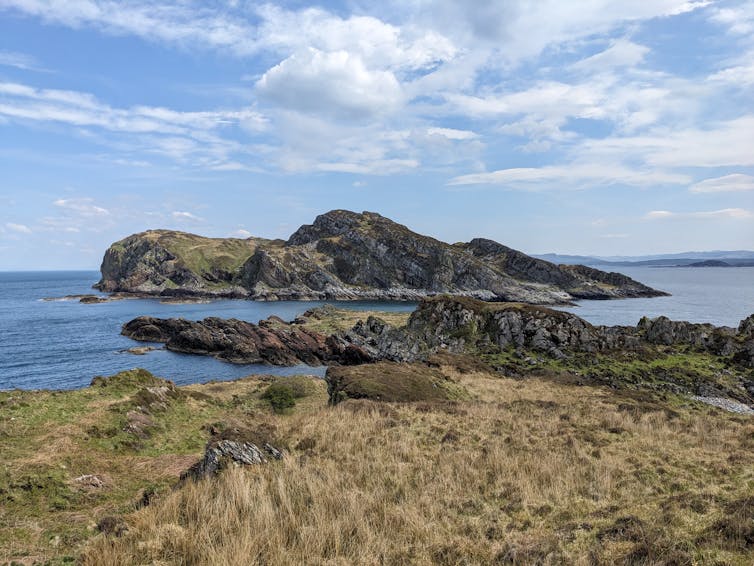
The breakthrough came from the Garvellach Islands off the west coast of Scotland. These rocks formed during the Sturtian glaciation (720–660 million years ago), the first of two Snowball Earth events; the second of which is the Marinoan (650–635 million years ago). The Scottish islands contain a unique exquisitely preserved archive of Snowball Earth, locking in the secrets of this weird ancient world.

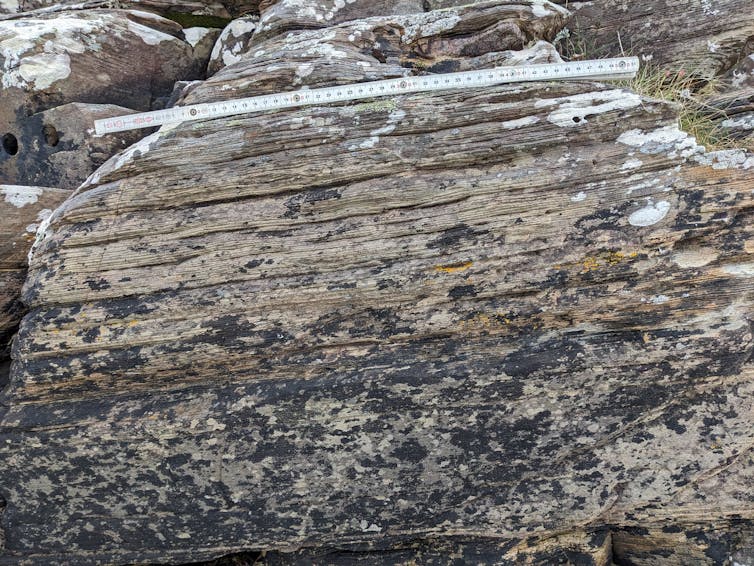
Specifically, laminated sedimentary rocks, or varves, act as natural data loggers. Picture a lake today: sediment settles quietly through the water column and on to the lake bed. Over time, these layers of sediment build up at the bottom of the lake. Thousands or millions of years later, geologists can use the physical, chemical and biological information trapped in the now ancient lake sediments to track how environmental conditions – including climatic ones – changed over time.

The remote Garvellach Islands off the west coast of Scotland.
Prof Thomas Gernon, University of Southampton

While modern sediments like this are easy to find, detailed climate archives from deep time are vanishingly rare – leaving us in the dark about how our planet’s climate behaved during Snowball Earth – until now.

We investigated a unique pile of rocks six metres thick, containing around 2,600 such varves, on the Garvellach Islands. What they revealed was, quite frankly, jaw-dropping. Microscopic and statistical analysis showed that these layers weren’t uniform, as you might expect locked in a Snowball state.

Instead, they conform to predictable cycles occurring over timescales of a few years to centuries. Perhaps yet more surprising is that almost the full suite of climate rhythms we know from today are preserved; from annual seasons to modern phenomena like El Niño (a climate pattern marked by warming of sea surface temperatures in parts of the Pacific Ocean), and longer-term cycles linked to solar activity lasting decades to centuries.

We certainly wouldn’t have expected El Niño cycles – a climate phenomenon that happens every two to seven years today – not least since this requires a seamless communication between the atmosphere and oceans, which is hard to envision on an ice-covered world.

A (partially) ice-free ocean?

The cycles in these ancient sediments do raise an intriguing possibility: could parts of the ocean have been ice-free during Snowball Earth? To get to the bottom of this, we used computer climate simulations to test different climate scenarios – put simply, seeing how changing the amount of ice on the oceans changes the patterns of surface temperature across the globe. We found that when the ocean was frozen completely solid, climate oscillations were largely suppressed.

Our simulations also show that vast areas of open water weren’t needed to restart these oscillations; if just a small fraction of the ocean surface was ice free – say, 15% or so – atmosphere ocean interactions could have resumed.

Comparing the simulated climate records to the patterns we decoded in the rock record, we think these sediments most likely document a patch of open water in the tropics, sometimes called an oasis. Such oases are used by many scientists to reconcile the survival of life with the near-global glaciation.

Close-up views of thin, repeating rock layers known as varves, each thought to represent a single year of sedimentation during Snowball Earth.
Prof Thomas Gernon, University of Southampton

Interestingly, several other lines of evidence suggest a partially ice-free ocean at roughly the same time. So, could our rocks provide evidence for temporary warming during Snowball Earth? While they confirm temporary patches of warmth in the surface ocean, these rocks represent a snapshot of around 3,000 years in a multi-million-year glaciation – likely a fleeting “Slushball” state within an otherwise frozen world. Another recent study even argues that liquid water could persist at -15°C, but only if it were extremely salty.

Crucially though, our new analysis shows that the climate system has an inherent tendency to oscillate, even under the most extreme conditions. Could these oases in the sea have been life-rafts for the earliest complex animals?

Perhaps the biggest paradox of Snowball Earth is that this hostile deep-freeze triggered a biological revolution. Around this time, the diversity and abundance of multicellular life exploded – an event fuelled by phosphorus-rich dust ground up by the very glaciers that threatened to extinguish it. Scientists think this happened during the warm interval between the two Snowball glaciations.

But for life to thrive after the ice, it first had to survive the second (Marinoan) glaciation. Our study offers a viable solution to this puzzle: if tropical oceans weren’t entirely frozen over, but held pockets of open water, these oases would have acted as habitable refuges.

Rather than a planet frozen solid, our work paints a picture of an “oscillating” world where thin cracks in the ice or more expansive patches of open water formed habitats that allowed, even encouraged, the colonisation of life.

By maintaining biodiversity during Earth’s most extreme ice age, these oases ensured that when the ice finally melted away, life was ready to bloom into the complex ecosystems we see today – eventually leading to us.

The Conversation

Thomas Gernon receives funding from the WoodNext Foundation, a fund of a donor-advised fund program. He is affiliated with the GFZ Helmholtz Centre for Geosciences, Potsdam, Germany.

Chloe Griffin does not work for, consult, own shares in or receive funding from any company or organisation that would benefit from this article, and has disclosed no relevant affiliations beyond their academic appointment.

ref. Snowball Earth wasn’t fully frozen: ice-free oases sheltered early life – https://theconversation.com/snowball-earth-wasnt-fully-frozen-ice-free-oases-sheltered-early-life-275240

Trust and ethics: the public and politicians no longer even agree on the basics

Source: The Conversation – UK – By Matt T. Clark, Visiting Research Fellow in Philosophy, University of Leeds

Just over 18 months ago, Keir Starmer said the “fight for trust is the battle that defines our age”. Now a scandal surrounding his former ambassador to Washington, Peter Mandelson, could end his political career, precisely because of the damage it could cause to public trust.

At the heart of the story are documents released by the US government showing that Mandelson continued to be friends with Jeffrey Epstein after his conviction for sex offences. The prime minister insists Mandelson lied about the depth of his friendship with Epstein, though he has acknowledged he knew that it continued after Epstein’s conviction.

Some reporting suggests that there was a view in Downing Street that the “risk” of appointing Mandelson as ambassador to the US – his past political career, his then publicly known relationship with Epstein – was less important than the benefit to the national interest. As Peter Kyle, secretary of state for business and trade, put it in September (before further files were released): “Britain needed someone with outstanding and singular talents”.

This implies a specific view of how politicians should behave. When the national interest is at stake, actions are acceptable that would otherwise be morally questionable. Some politicians seem to think political effectiveness can outweigh standards. Philosophers sometimes agree that politics makes “dirty hands” unavoidable. Machiavelli thought politicians should learn not to be good. To achieve important political ends, it can be necessary to act badly.

It’s striking that Downing Street might have thought that this extended to Mandelson’s alleged relationship with Epstein – and that even this could be traded off against improving the UK’s relationship with the White House.

Similar views appear to have been taken when it came to Boris Johnson. He was a man of whom high standards were not expected in office, but who could effectively deliver important political outcomes (an electoral victory, Brexit).

But a large majority the public believes standards should take priority over delivery in politics – according to research from UCL’s Constitution Unit.

This suggests the public and those in politics lack a common understanding of how the latter should behave. And that poses a problem for rebuilding trust. Philosophical perspectives suggest a common understanding of this kind is central if we are to be able to trust well.

What is trust?

When we talk about trust in politics, we often pass over what trust is. And it is frustratingly difficult to set out a clear definition. Researchers significantly disagree about how to conceptualise trust.

Philosophical views vary. Trust may be a demand to be ethically considered by others or to have a deep-rooted psychological need for attachment to others satisfied. It could be to rely on others acting out of goodwill towards you or your desire to do something overlapping with someone’s desire to do something else.

By failing to define what trust is when we aim to restore it, we may act counterproductively or misdiagnose the problems we face.

A growing family of views in philosophy share a central insight. Trust requires more than just expectations about how a person will behave – it also relates to expectations about how a person ought to behave. Philosophers call these “normative expectations”.

Peter Mandelson signing the White House guest book.
Mandelson pictured during his time as Ambassador to Washington.
Flickr/UKinUSA, CC BY-SA

I’m not trusting my partner to make dinner tonight simply because I think that he will. That’s just to rely on him. I trust him only if I think that there is a reason he ought to cook dinner tonight, and I think that he will act in line with this reason. Perhaps, I know he values fairness and that I cooked last night. Maybe he said he’d cook yesterday, and I know that I can take him at his word.

Philosophers debate exactly what these expectations are. Some think trust is concerned with commitments or obligations we should act in line with. Others think it’s that we expect a responsiveness to others counting on us.

All these views suggest a specific environment is required to allow us to trust well. We need some shared understanding of what we should do. If my partner recognises no reasons why he ought to cook me dinner tonight, he most likely won’t. If I come to trust him to do so and he doesn’t, then my normative expectation of him is likely to be wrong. My trust will be broken.

If that discrepancy about how we each think that we should behave grows, trust will be broken more often.

Misaligned politics

If we think about how politicians ought to behave, we can see how there might be a problem of trust.

The same Constitution Unit research shows that the public value standards like honesty and accountability. They think those in public life should behave in line with high standards.

Some politicians look at the same situation and see other reasons that suggest they ought to act differently. Where a relationship essential to Britain’s national security is at stake – or some other element of the national interest – then some politicians think they ought to overlook honesty and integrity.

This mismatch will lead to public trust being repeatedly broken.

Much discussion among politicians focuses on “delivery” as central to establishing trust. Actions will certainly matter. But more work should be done to ensure alignment between what the public expects of politicians and what they actually do. In a volatile world, a public conversation is needed on when – if ever – national need can outweigh these standards. Culture change in government and Downing Street will matter.

This is vital. Falling public trust in politics and distrust in politicians have been linked to voters switching off from politics and turning to protests or populist parties.

We need to align our expectations for high standards in public life. Then we need to require them of everyone, however useful they may be.


Want more politics coverage from academic experts? Every week, we bring you informed analysis of developments in government and fact check the claims being made.

Sign up for our weekly politics newsletter, delivered every Friday.


The Conversation

Matt T. Clark is a member of the Labour Party.

ref. Trust and ethics: the public and politicians no longer even agree on the basics – https://theconversation.com/trust-and-ethics-the-public-and-politicians-no-longer-even-agree-on-the-basics-275533