How sailing voyages can inspire the next generation of ocean scientists and advocates

Source: The Conversation – UK – By Pamela Buchan, Research Fellow, Geography, University of Exeter

Setting sail from the busy port of Plymouth in Devon, the tall ship Pelican of London takes young people to sea, often for the first time.

During each nine-day voyage, the UK-based sailing trainees, who often come from socio-economically challenging backgrounds, become crew members. They not only learn the ropes (literally) but also engage in ocean science and stewardship activities.

As marine and outdoor education researchers, we wanted to find out whether mixing sail training and Steams (science, technology, engineering, art, mathematics and sustainability) activities can inspire young people to pursue a more ocean-focused career, and a long-term commitment to ocean care.

Research shows that a strong connection with the ocean can drive people to be active marine citizens. This means they take responsibility for ocean health not only in their own lives but as advocates for more sustainable interactions with the ocean.

Over the past year, we have worked with Charly Braungardt, head scientist with the charity Pelican of London, to create a new theory of how sail training with Steams activities can change the paths that trainees pursue.

Based on scientific evidence, our theory of change models how Steams activities can cause positive changes in personal development and knowledge and understanding of the ocean (known as ocean literacy). It shows how the voyages can develop trainees’ strong connections with the ocean and encourage them to act responsibly towards it.

Tracking change

Surveys with the participants before and after the voyage, and six months later, measure any changes that occur – and how these persist. Through our evaluation, we’re exploring how combining voyages with Steams activities can go beyond personal development to produce deep, long-lasting effects.

Our pilot study has already shown how the sail training and Steams combination helps to develop confidence, ocean literacy and ocean connections.

For example, the boost to self-esteem and feelings of capability that occur on board help young people develop their marine identity – the ocean becomes an important part of a person’s sense of who they are. As one trainee put it: “I think the ocean is me and the ocean will and forever be part of me.”


Swimming, sailing, even just building a sandcastle – the ocean benefits our physical and mental wellbeing. Curious about how a strong coastal connection helps drive marine conservation, scientists are diving in to investigate the power of blue health.

This article is part of a series, Vitamin Sea, exploring how the ocean can be enhanced by our interaction with it.


As crew members, trainees access a world and traditional culture largely unknown to them before the voyage. They learn to live with others in a confined space, working together in small teams to keep watch on 24-hour rotas.

Trainees are encouraged to step out of their comfort zone through activities such as climbing the rigging and swimming off the vessel. Our pilot evaluation found the voyages built the trainees’ confidence and social skills, boosting self-esteem and feelings of capability.

One trainee said: “I’ve felt pretty disappointed in myself not committing to my education or only doing something with minimal effort. But after this voyage, I want to give it my all.”


Read more:
Five ways to inspire ocean connection: reflections from my 40-year marine ecology career


The Steams voyages encourage the development of scientific skills and ocean literacy through the lens of creative tasks at sea. These activities are led by a scientist-in-residence who provides mentoring and introduces research techniques.

The voyage gives trainees the opportunity to use scientific equipment, ranging from plankton nets and microscopes to cutting-edge technology such as remotely operated vehicles. The Steams activities introduce marine research as a potential career to these young people. One said they wanted to train as a marine engineer at nautical college following the voyage.

Ocean experiences provide a foundation for ocean connection. Trainees experience the ocean in sunshine and in gales, day and night, rolling with the waves and observing marine life in its natural environment.

Citizen science projects such as wildlife surveys and recorded beach cleans also develop their ocean stewardship knowledge and skills. One trainee explained how they have “become more interested [in] our marine life and creative ways to help protect it”.

Over the next 12 months, the information we collect from the voyages will help us to better understand the benefits and contribute to an important marine social science data gap in young people. It is important to understand how to develop young people’s relationships with the ocean, and the knowledge and skills that will empower the next generation of marine citizens.

As one trainee put it: “Being out on the Pelican showed me how vast and powerful the sea is – and how important it is to respect and care for it.”


Don’t have time to read about climate change as much as you’d like?

Get a weekly roundup in your inbox instead. Every Wednesday, The Conversation’s environment editor writes Imagine, a short email that goes a little deeper into just one climate issue. Join the 47,000+ readers who’ve subscribed so far.


The Conversation

Pamela Buchan received funding from Economic and Social Research Council for the research cited in this article. The sail training evaluation project received funding from Sail Training International. We would like to thank Charlotte Braungardt for her contribution to this project.

Alun Morgan is affiliated with the Pelican of London as an Ambassador for the organisation

ref. How sailing voyages can inspire the next generation of ocean scientists and advocates – https://theconversation.com/how-sailing-voyages-can-inspire-the-next-generation-of-ocean-scientists-and-advocates-273715
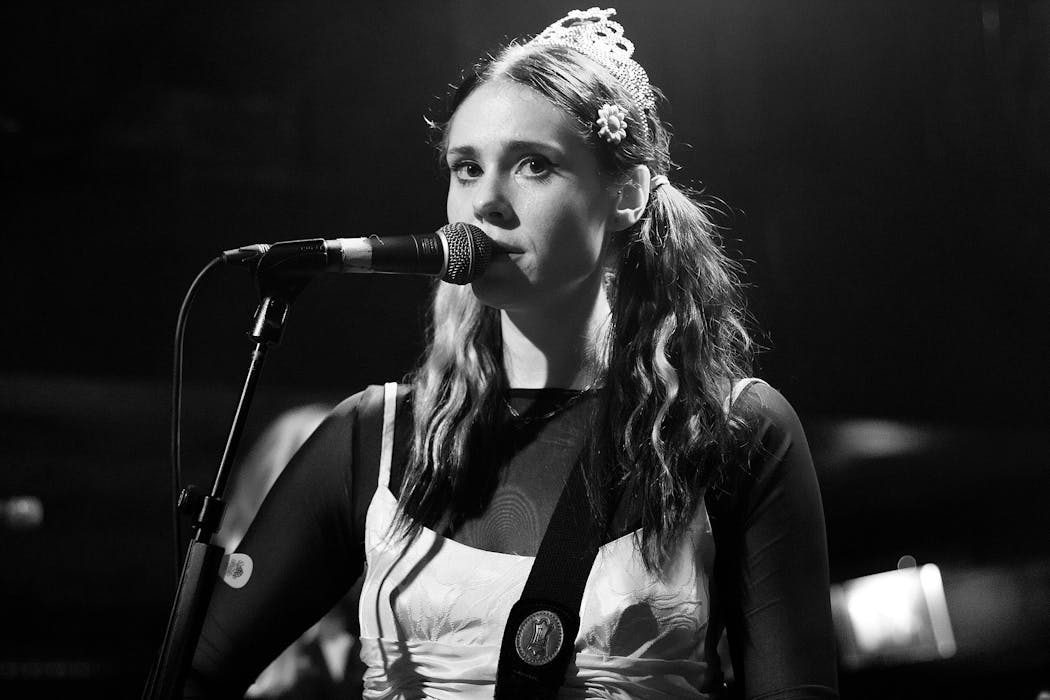
What Kate Nash’s grassroots music protest reveals about touring and streaming

Source: The Conversation – UK – By Paul G. Oliver, Lecturer in Digital Innovation and Entrepreneurship, Edinburgh Napier University

Kate Nash performing in Amsterdam in 2012. Wiki Commons, CC BY-SA

In November 2025, singer Kate Nash stood outside the London offices of Spotify and Live Nation with placards, arguing that the music economy no longer works for many working musicians.

The protest drew attention to the financial strain of touring at scale. In February 2026, she elaborated on these concerns in testimony before a UK parliamentary select committee, stating that she lost £26,000 on the European leg of her tour and covered those losses only by selling content on OnlyFans.

In her testimony, Nash criticised major industry players for what she called a “destructive influence” on artists’ finances. She warned that rising costs, including the complexities of post-Brexit touring, could limit both cultural reach and economic viability for UK performers.
Nash has been a well-known figure in British music for years, but her public frustration highlights a disconnect between visibility and a sense of security that many mid-career artists understand.

Streaming sits at the centre of this tension, as digital platforms pool subscription revenue and redistribute it based on a share of total listening. Critics argue that this structure concentrates income on global hits while leaving most artists with fractions of a penny per play. Artists increasingly describe having to juggle budgets that resemble household accounts, such as vans against fuel, hotels against sofa-surfing and merchandise against storage fees. One cancelled show can tip a tour from workable to loss-making.


Read more:
Why musicians are leaving Spotify – and what it means for the music you love


At the same time, data shows that grassroots music venues in the UK are struggling. Music Venue Trust’s 2025 report found that over the preceding year, more than half of these venues made no profit and dozens closed.

These small venues, often holding just a few hundred people, help sustain touring circuits and renew local music scenes. When they close, much of the cultural support for new talent disappears.

Who pays for live music?

Supporters of the live sector have proposed measures such as ticket levies on large shows to support smaller venues and planning protections for long-running clubs facing redevelopment. These ideas have been debated in Parliament and city-level cultural forums, including a UK government call for a voluntary arena and stadium ticket levy to protect grassroots venues.

Platforms and promoters resist the bleakest readings. Streaming services emphasise the sums they distribute and the global audiences they reach, while large promoters point to rising touring costs and the risks of softer ticket sales. At the same time, analyses of how streaming revenues are shared suggest that most artists receive only small fractions of subscription income. This is not a simple story of villains and victims, yet the distribution of rewards continues to trouble many performers.

Politicians have taken notice, reopening questions about streaming payments and transparency and examining how live music might be supported more broadly. A fan-led review of the live sector launched by MPs has invited evidence from artists, promoters and audiences about the pressures facing touring and small venues.

Similar debates are playing out at city level. The London Assembly has already backed a voluntary ticket levy on arena and stadium shows to help grassroots spaces. Campaign groups and commentators have also pushed for clearer contracts, including initiatives such as the Musicians’ Union’s “Fix Streaming” campaign, which calls on Parliament to support fairer streaming royalty distribution for all creators.

Some critics go further, arguing that the streaming model continues to channel a disproportionate share of revenue to the biggest acts and pressing for reforms to support a broader tier of working musicians, drawing on evidence from the UK Parliament’s inquiry into the economics of music streaming.

These problems have effects beyond money. As touring becomes more difficult and there are fewer venues, fewer acts are willing to take risks with new audiences. Local music scenes are shrinking, and young performers lack opportunities to try out new material, make mistakes, and improve. Audiences feel this too, when there are fewer shows, less variety and favourite bands stop touring.

Nash doesn’t claim to speak for everyone, and one protest can’t represent the whole industry. However, her choice to share frustrations usually kept private says something about today’s situation. Popular music has always mixed glamour with uncertain pay and long hours, but what’s new is how openly artists are now asking if the current system can support lasting careers.

If this middle ground continues to shrink, listeners might notice the change not in statistics but in daily life: fewer tours, closed local venues and bands quietly deciding that touring is no longer worth it.


Looking for something good? Cut through the noise with a carefully curated selection of the latest releases, live events and exhibitions, straight to your inbox every fortnight, on Fridays. Sign up here.


The Conversation

Paul G. Oliver does not work for, consult, own shares in or receive funding from any company or organisation that would benefit from this article, and has disclosed no relevant affiliations beyond their academic appointment.

ref. What Kate Nash’s grassroots music protest reveals about touring and streaming – https://theconversation.com/what-kate-nashs-grassroots-music-protest-reveals-about-touring-and-streaming-275717

How can Europe meet the challenge posed by the retreat of the US?

Source: The Conversation – UK – By Niall Oddy, Staff Tutor in History, The Open University

At the Munich security conference, US secretary of state Marco Rubio spoke more warmly about the transatlantic relationship than US vice-president J.D. Vance at the same venue last year. However, faced with the presidency of the erratic Donald Trump, the need for Europe to do more to protect its security remains urgent.

In a later speech in Munich Kaja Kallas, vice-president of the European Commission and the EU’s high representative for foreign affairs and security policy, spoke of the “need to reclaim European agency”.

Meanwhile, UK prime minister Keir Starmer announced he wants closer relations with Europe, a decade after Brexit, stating: “there is no British security without Europe, and no European security without Britain. That is the lesson of history, and is today’s reality as well.”

People often use the word “Europe” when they are referring to the European Union. Doing so overlooks non-EU countries, like the UK, that are also part of Europe and share an equal stake in the continent’s security.

Whereas the EU is a political body, Europe is an idea. It might be the name of a continent, but the word Europe rarely refers only to geography. When Giorgia Meloni, the Italian prime minister, stated that Europe has “lost itself”, and when Ursula von der Leyen, the president of the European Commission, spoke of the “European way of life”, they were referring to the people of Europe and the sense that they have customs and values in common that distinguish them from the rest of the world. French president Emmanuel Macron was doing the same when he used the phrase “European civilisation”.

What are these values that supposedly unite Europeans? In some quarters, the emphasis is on secularism. The 2007 Lisbon Treaty declared that the EU “is founded on the values of respect for human dignity, freedom, democracy, equality, the rule of law and respect for human rights”. However, the lack of mention of the continent’s Christian heritage was contested. Viktor Orbán, the prime minister of Hungary, is one of the most vocal advocates of the idea that European culture is Christian.

These different ideas about what Europe is and what constitutes European culture have long histories. When the Reformation of the 16th century divided Catholics and Protestants, shared hostility towards the Muslim Ottoman Empire, which controlled much of the Balkans and was continuing to expand, provided a sense of overarching unity.

The more secular understanding of Europe developed in the 17th and 18th centuries. The thirty years’ war (1618-48) ended with peace negotiations that did not involve the Pope, as had previously been the norm. Increasingly, Europe’s political culture, not just its religion, was regarded as its most distinctive feature. In the words of French philosopher Voltaire, Europe was “a kind of great republic” sharing “the same principle of public law and politics, unknown in other parts of the world”.

Even today’s tensions between national identities and Europeanism are nothing new. The 19th century was a period of national awakening, with the formation of a unified Italian state in 1861 and the unification of the state of Germany in 1871. At the same time, philosopher Friedrich Nietzsche argued that “Europeans are becoming more similar to each other” and French author Victor Hugo predicted a “united states of Europe”.

With the swift Nazi advances in western and eastern Europe in the early years of the second world war, the German press claimed in November 1941 that “the United States of Europe has at last become a reality”. After Nazi Germany’s defeat in 1945, this notion of the continent united under the domination of one nation was superseded by a commitment to cooperation. This led in 1951 to the formation of the European Coal and Steel Community and in 1957 to the European Economic Community, which eventually morphed into the European Union with its motto of “united in diversity”.

National interests and international alliances

Today it is people from non-EU countries who are often the most vigorous defenders of so-called “European values”. Since October 2024 Georgians have been protesting the authoritarianism of their government, carrying the EU flag alongside the national one and placards that read “we are Europe”. And while European leaders discuss how to respond to the threat posed by the Russian Federation, Ukrainians are fighting for their lives and strengthening European security by doing so.

Russia’s first attack on Ukraine – in Crimea in 2014 – came in the aftermath of former president Viktor Yanukovych’s downfall following protests triggered by his rejection of closer ties with the EU.

Through their actions, Ukrainians and Georgians emphasise national autonomy as part of a wider values-oriented European identity, rather than pitting nationhood against Europeanism.

If Europe is to face up to challenges and defend itself without the guarantee of US support, EU and non-EU countries must find ways to work together. For this we need a shared vision about what unites disparate nationalities and underpins European cooperation. Historically, ideas about what Europe is and what Europe stands for have been shaped in western and central Europe. It is time to look to lessons from the eastern borderlands where, as the examples of Ukrainian and Georgian resistance show, values of freedom and democracy are being lived in practice.

The Conversation

Niall Oddy does not work for, consult, own shares in or receive funding from any company or organisation that would benefit from this article, and has disclosed no relevant affiliations beyond their academic appointment.

ref. How can Europe meet the challenge posed by the retreat of the US? – https://theconversation.com/how-can-europe-meet-the-challenge-posed-by-the-retreat-of-the-us-274687

Are you a Dink, Alice or Henry? How social mobility is different for today’s young people

Source: The Conversation – UK – By Renaud Foucart, Senior Lecturer in Economics, Lancaster University Management School, Lancaster University

The carefree lifestyle of two Dinks. Opolja/Shutterstock

When your parents were in their 20s and 30s, they probably had a job, a house and financial security. A generation later, you get a variety of food they could not have imagined, low-cost air travel and a smartphone more powerful than the fastest supercomputers of the 1990s.

This new reality is leading to the resurgence of a different kind of class identification for young people. Middle class doesn’t look like it used to. Instead, you may consider yourself a “Dink” or a “Henry”.

Standing for “dual income and no kids”, Dink was coined in the 1980s to reflect the lifestyle of couples who chose the joys of technology, travel and restaurants over raising a family. As fertility rates fall worldwide, the term is making a comeback, with TikTok users showing off a life of boutique workouts, fancy brunches and wanderlust.

A woman born in England or Wales in 2007 is projected to have her first child at age 35 and to have an average of 1.52 children, compared with 2.04 for her mother’s generation.

The Dink lifestyle is attractive to some: more money and time for yourselves. But on the salary of an average UK household, you still won’t be able to buy an average house.

Why does it seem so much harder now? It’s not that this generation is poorer: on average, full-time employees between 18 and 21 years old make £499 a week. It rises fast: for those aged 22-29 the figure is £648, and £805 for 30-39.

For all age groups, salaries have barely increased since 2008, once you control for the fact that prices have risen by a lot. Still, compared with someone who entered the workforce 25 years ago, you will earn, on average, about 15% more even when adjusting for prices.

The key is that, while you earn more than your parents and grandparents, what’s cheap and what’s expensive has completely flipped.


No one’s 20s and 30s look the same. You might be saving for a mortgage or just struggling to pay rent. You could be swiping dating apps, or trying to understand childcare. No matter your current challenges, our Quarter Life series has articles to share in the group chat, or just to remind you that you’re not alone.

Read more from Quarter Life:


There are two kinds of things money can buy. There are things available only in fixed quantities – housing in a desirable location, a person’s time or social status. Then, there are things that technology can now produce in near-infinite quantities – a huge TV set, high-speed internet on a phone, or fresh fruits and vegetables from the other side of the world.

Compared with previous generations, you’re only richer in the latter. Since 2000, UK house prices have increased twice as fast as everything else. The share of young Brits who own their homes is 25% lower than in 1990. This might partly explain Dink logic – if you don’t have hope of affording a home, why not spend more on your lifestyle?

The tax brackets that define you

In this world where buying a house without family help has become the new luxury, the British tax system provides a handy guide of where you belong. Here’s how the figures break down.

You might not be a Dink, but an “Alice” – “asset-limited, income-constrained, employed” – part of the working poor who can’t even dream of saving for a deposit. Nearly 3 million people in the UK are working and receiving Universal Credit.

But once you start earning more than £684 a month, you hit the first trap of the tax system. For every additional £1 you earn from working, you lose 55p from the benefits you receive – so in effect, you only keep 45p up to the point where the amount of benefit you receive is zero.

If you escape this first trap and earn more, you may be able to afford a small house, or one in a cheaper region. Just not the same kind of place someone doing your job could buy 30 years ago.

If you climb up the income ladder, you’ll likely hit the second trap and become a Henry – “high earner, not rich yet”.

The moment you become part of the roughly 2 million taxpayers who earn £100,000 a year, your marginal tax rate becomes 60% – which means for each additional £1 you get, you only keep 40p. If you are young and went to university, you also pay an extra 9% on student loan repayment, meaning you only keep 31p for each additional £1.

And that’s only if you stay a Dink (or the single-equivalent Sink). If you have kids, you may actually lose money when you earn more, because you will lose the right to free childcare (you lost your child benefits back at £60,000). You may prefer to be a Dinkwad – a “Dink with a dog”.

Focus on a small dog, held by a young gay couple
The Dinkwad life.
Andrii Nekrasov/Shutterstock

The traditional middle class was defined by homeownership and financial security, both things you could achieve through professional work. What unites today’s Henrys, Alices and Dinks is they can enjoy consumption levels their parents in the same social class would never have imagined, but can’t buy the same house as them.

The solution to this is simple economics, but complex politics: if you want cheaper houses, you must build more of them. That means building in less desirable locations, turning individual houses into flats, or overcoming opposition from older homeowners who often resist new housing developments in their neighbourhoods.

So, when your judgmental uncle remarks that “if you ate fewer avocados and lattes, you’d be able to buy a house just like I did”, you may want to explain how the relative prices of an avocado and a house have changed over time. If you’re not saving for a deposit, buying avocados may simply be the most rational thing to do.

The Conversation

Renaud Foucart does not work for, consult, own shares in or receive funding from any company or organisation that would benefit from this article, and has disclosed no relevant affiliations beyond their academic appointment.

ref. Are you a Dink, Alice or Henry? How social mobility is different for today’s young people – https://theconversation.com/are-you-a-dink-alice-or-henry-how-social-mobility-is-different-for-todays-young-people-275129

From Harold Wilson to Liz Truss – what the fates of former prime ministers can teach Keir Starmer

Source: The Conversation – UK – By Martin Farr, Senior Lecturer in Contemporary British History, Newcastle University

Despite his name – honouring Keir Hardie, the first leader of the Labour party – Keir Starmer is not known to be a student of political history. This apparent incuriosity helps define an indistinct political identity.

Asked which premier inspires him, Starmer cites Harold Wilson, an unusual choice – Attlee is much more revered in Labour – and superficially surprising. No politician was more political than Wilson: the moment a camera appeared his usual cigar and brandy was replaced with a pipe and a pint. But recent events have demonstrated that Starmer has reason to choose the man who was Labour prime minister twice in the 1960s and 1970s.

Wilson had been soft left, but in Downing Street was non-ideological, tricksy, and reactive. This was partly why he was subject to frenzied speculation about being toppled in office. Labour’s performance in the May 1968 local elections was catastrophic. The following day The Daily Mirror – Labour’s champion – extraordinarily called for Wilson’s removal: he had “lost all credibility: all authority”. Wilson was thereafter beset by rumours of coups. He was a suspicious person, and with reason.

When Anas Sarwar, leader of Scottish Labour, extraordinarily called for Starmer’s removal, the similarities were uncanny. Wilson was defiant: “I know what is going on; I am going on.” Starmer, too, went on, if without the wit.

Resignations and defenestrations

There have been 26 prime ministers since 1900. Nine were removed by voters: Arthur Balfour 1905, Stanley Baldwin 1929, Winston Churchill 1945, Clement Attlee 1951, Ted Heath 1974, James Callaghan 1979, John Major 1997, Gordon Brown 2010, and Rishi Sunak in 2024. Heath is the last to have won and lost power through general elections alone.

The British constitution requires nothing of a premier other than, effectively, that they can command a majority in the House of Commons. A century ago, the prime minister’s constitution was the issue. The Marquess of Salisbury in 1902, Henry Campbell-Bannerman in 1908, and Andrew Bonar Law in 1923 retired on grounds of health: all died within a year. Standing down in 1935, Ramsay MacDonald survived for two. Anthony Eden in 1957, and Harold Macmillan in 1963, cited health but their infirmity was political. Both lived for decades.

David Cameron alone resigned on a point of principle (Brexit). Baldwin, who resigned in 1923 over trade policy, is the closest comparison (though he returned to No 10 twice, and, in 1937, was able to exercise that most rare act of political instrumentality and retire on his own terms). Part of Starmer’s definitional equivocacy is that it’s hard to imagine a point of principle on which he would resign.

Keir Starmer giving a speech.
Labour does not tend to topple its leaders – and Starmer has survived an attempt.
Number 10/Flickr, CC BY-NC-ND

Being toppled in office happened to Herbert Asquith in 1916, David Lloyd George in 1922, Neville Chamberlain in 1940, and Margaret Thatcher in 1990. Asquith and Chamberlain were casualties of wartime coalition politics (Conservatives would not serve under Asquith; Labour would not serve under Chamberlain; Asquith was the more upset).

The Conservatives simply withdrew from supporting Lloyd George. Their 1922 Committee, which was formed as part of this action, was in part, and in effect, an institutionalisation of toppling. These days MPs can submit letters of no confidence to the 1922 Committee, and a ballot is triggered when 15% of them have.

Thatcher, dominant for a decade, overnight was rendered mortal by the concerted action of discontented former colleagues. This failed but it provided the pretext for another – Michael Heseltine – to mount a challenge. Unlike Starmer’s Downing Street operation, Thatcher’s team was slow and complacent. She beat Heseltine, but too narrowly; she resigned.

John Major prevailed, and he, singularly, later invited toppling. After incessant speculation about his leadership of both party and country, in June 1995, he invited his critics to “put up or shut up”. They did the former but Major survived. Starmer is unlikely to repeat the escapade.

Major’s successor, Tony Blair, occupies an intermediate category, being pressured (by the unique power dynamic with his chancellor Gordon Brown) to offer a date – a year hence – when he would stand down. If political pressure becomes too great, this may be the precedent for Starmer. It offers the appearance of agency.

The era of short tenure

Toppling has of late become rather à la mode. Theresa May in 2019, Boris Johnson in 2022, Liz Truss 49 days later. Since Cameron no premier has lasted three years. Starmer looks unlikely to break that record. Yet although MPs are much more rebellious than they used to be, two factors increasingly act to discourage them from toppling.

The first is that Britain has a parliamentary, rather than a presidential, system. Prime ministers are not elected, as such. Oppositions always call for elections when the government changes leader – they chose not to do so when in office themselves (Baldwin again, in 1923, is the closest to an exception). But in an age of electoral disengagement, the idea of an MP moving into 10 Downing Street without the benediction of voters is becoming increasingly untenable.

The second factor is who chooses. There have been three stages as to which successor kisses the monarch’s hand: Asquith and Macmillan became prime minister merely by general party assent; Callaghan and Major after their MPs voted; today that decision ultimately is of party members. Thus Truss. Her experience – and the country’s – may act to concentrate the minds of MPs tempted to topple.

Labour, significantly, has never toppled a prime minister. It’s not in the culture of so cooperativist a party: there’s no equivalent of the 1922 Committee. And whenever it might have happened, the challenger blinked: Herbert Morrison with Attlee; Roy Jenkins with Wilson; David Miliband with Brown; Wes Streeting may have just joined the roster of the rueful. Wilson more than merely survived his near-death experience: he lived to lead Labour into three more general elections, winning two, before emulating Baldwin and retiring on his own terms, in 1976.

And so Starmer’s affinity becomes clearer. Above all, like Wilson, Starmer is dogged. There is however, a profound difference. Wilson, strategically ineffectual, was tactically brilliant. Starmer has demonstrated a propensity for only the former. May’s local elections are approaching. A Wilsonian prime minister aware of political history might know what the following day’s Mirror may reflect.

The Conversation

Martin Farr does not work for, consult, own shares in or receive funding from any company or organisation that would benefit from this article, and has disclosed no relevant affiliations beyond their academic appointment.

ref. From Harold Wilson to Liz Truss – what the fates of former prime ministers can teach Keir Starmer – https://theconversation.com/from-harold-wilson-to-liz-truss-what-the-fates-of-former-prime-ministers-can-teach-keir-starmer-276148

Whistle: Aztec death whistle horror is good fun, but offers few surprises

Source: The Conversation – UK – By Matt Jacobsen, Senior Lecturer in Film History in the School of Society and Environment, Queen Mary University of London

Horror cinema is enjoying a moment of mainstream recognition right now, with critically acclaimed films Sinners, Weapons and The Ugly Stepsister all receiving Oscar nominations from an academy that usually turns its nose up at the genre.

To my mind, the brilliant Sally Hawkins also deserved an Oscar nomination for her performance in the unmissable Bring Her Back, my personal favourite of an incredibly strong series of horror releases in 2025. Horror films generally come out around Halloween, but thanks to the current critical and public interest there’s a steady stream throughout 2026 – including Whistle.

A British-directed, Canadian-Irish co-production set in an American high school, Whistle is named for its focus on Aztec death whistles or ehecachichtli. Archaeologists believe these real objects were probably used in rituals to conjure the sound of the underworld. It is surprising that death whistles haven’t yet featured in a horror film, given their striking skull-shape designs and eerie shrieking sound.

Whistle is an example of the tried-and-tested sub-genre of horror films that has kids tinkering with supernatural artefacts they really should be leaving well alone. Think Talk to Me (2022), Ringu (1998) or Ouija: Origin of Evil (2016).

In this film, a group of American high school friends discover an Aztec death whistle and, for reasons best known to them, give it a blow at a party. This triggers the early deaths of those who hear the sound, killing them off in spectacular fashion. This is the main motivation for the film: the special effects team get to creatively imagine what it would look like for someone who, say, would have ultimately been hit by a train several years later suddenly and inexplicably exploding in a spray of gruesome injuries.

The bracing, disturbing Talk To Me used its story of high schoolers contacting the dead through a withered hand to engage meaningfully with themes of addiction and social media pressure. But Whistle shows little comparable interest in examining adolescence with nuance or empathy.

Whistle has no ambitions toward awards-season prestige or thematic complexity.
It is horror for its own sake, delivered with undeniable enthusiasm but lacking distinguishing qualities beyond imaginative CGI violence.

The trailer for Whistle.

The central characters are likeable, led by rising star Dafne Keen, best known for playing Lyra in the BBC adaptation of Philip Pullman’s His Dark Materials. Keen plays the new girl at school, who encounters the expected mix of jocks, geeks and misfits. She works hard to elevate a script that relies heavily on horror conventions.


Read more:
His Dark Materials: how the small-screen adaptation deals with the novel’s big ideas


Whistle’s British director Corin Hardy showed enormous promise in 2015 with his acclaimed first film The Hallow – an original, atmospheric story of deadly fairies in a deep, dark wood based on Irish folklore. The quality of this independent film led to a rapid move to the mainstream with a stint in Hollywood directing The Nun (2018), a bland and cliched spinoff of the popular The Conjuring series. After mixed reviews for his tenure as show-runner on the ultra-violent crime drama Gangs of London (2020), he returns here to a genre for which he has a clear passion.

There is obvious delight on the part of Hardy at the opportunity to make an American high school film in the manner of A Nightmare on Elm Street (1984), Scream (1996) or Final Destination (2000). Fellow Brit Nick Frost puts in a serviceable impression of the grouchy high school teacher archetype, named Mr Craven after the celebrated director Wes.

A packet of cigarettes falls to the floor featuring the fictional brand Cronenberg’s after Canadian horror pioneer David. Moments like this tell the audience that Whistle is carved with the very best intentions to celebrate the genre and to entertain a core of genre enthusiasts.

The American director Nia Dacosta brought a nuanced outside perspective to the British landscape in the brilliant, visionary sequel 28 Days Later: The Bone Temple (2025), and here we have a British director working in a distinctly American setting, paying tribute to the films that shaped his youth.

It is not clear that Hardy has found a new perspective or approach to this kind of material however, and the film follows a disappointingly familiar and well-trodden path. While Whistle admirably centres around a lesbian romance, its characters remain broadly drawn, with little effort to subvert archetypes or complicate expectations.

So while Whistle brims with an infectious puppy dog enthusiasm for the (much better) films that it reverently evokes, this chaotic, unfocused film fails to inject sufficient vitality or originality into well-worn genre tropes.


Looking for something good? Cut through the noise with a carefully curated selection of the latest releases, live events and exhibitions, straight to your inbox every fortnight, on Fridays. Sign up here.


The Conversation

Matt Jacobsen does not work for, consult, own shares in or receive funding from any company or organisation that would benefit from this article, and has disclosed no relevant affiliations beyond their academic appointment.

ref. Whistle: Aztec death whistle horror is good fun, but offers few surprises – https://theconversation.com/whistle-aztec-death-whistle-horror-is-good-fun-but-offers-few-surprises-275969

Heritage, desire and diplomacy: why China still values scotch whisky

Source: The Conversation – UK – By Qing Wang, Professor of Marketing and Innovation, Director, Marketing Innovation and The Chinese and Emerging Economies (MICEE) Network, Warwick Business School, University of Warwick

maeching chaiwongwatthana/Shutterstock

For more than a decade, China has been one of the most important growth engines for western luxury brands. From fashion and watches to fine wines and spirits, rising incomes and global exposure have fuelled an extraordinary appetite for premium products.

Scotch whisky has been a major beneficiary. Between 2019 and 2023, exports to China surged in value from under £90 million to more than £235 million. But sales have fallen for three consecutive years, while inflation, rising costs and trade tensions have squeezed margins. Now, exports may benefit once again after China halved tariffs on scotch from 10% to 5%.

The sales slowdown reflects a maturing market in which Chinese consumers are becoming more selective, more knowledgeable and more demanding. This is leading to a shift from volume to value, from older to younger consumers, and from conspicuous to considered consumption. These trends help explain both the recent downturn and the sector’s longer-term resilience.

After the height of the COVID pandemic, when economic confidence weakened in China, luxury consumption adjusted, with consumers buying fewer items but investing more carefully.

This pattern is clearly visible in whisky. While overall volumes have fallen, it continues to benefit from “premiumisation” – sustained interest in aged single malts, limited editions and iconic distilleries.

A young, educated whisky culture

Unlike western markets, where whisky has traditionally been associated with older drinkers, China’s core whisky consumers are young. The typical whisky drinker is gen Z: urban, affluent, well-educated and often well-travelled internationally.

A new generation has reframed whisky as a form of cultural capital, with tasting, collecting and investing in casks becoming increasingly common. Single-malt brands such as Glenfiddich and The Macallan have thrived in this environment, with data showing that their market share has tripled since 2019.

China is the ninth largest market for UK whisky exports. In 2024, the UK accounted for 85.6% of China’s whisky imports by value – most of this is scotch. For Chinese consumers, luxury has long been tied to authenticity and provenance. In premium spirits, this logic is particularly powerful.

In China, the value of most western luxury brands is underpinned by their history, heritage, craftsmanship and distinctive cultural narratives. Here, “country of origin” functions as a powerful source of authenticity and uniqueness.

This is especially pronounced in scotch whisky, where the product category is intimately associated with Scotland’s landscape, climate and production traditions. A stringent regulatory system legally defines where, how and under what conditions scotch can be produced, matured and bottled. For Chinese consumers seeking symbolic reassurance of quality and legitimacy, “Scottishness” itself operates as a brand asset.

Even as international firms invest in distilleries inside China, Chinese whisky has not displaced demand for imported scotch. Instead, it has sharpened distinctions between “original” and “localised” products. In business and social contexts, prestigious scotch still functions as a form of social currency, signalling trust, respect and global sophistication.

display cabinet in an airport duty free lounge of scottish single malt whiskies
Chinese consumer culture is changing – but Scottish single malts remain in demand.
TY Lim/Shutterstock

China’s wider luxury market has softened since 2023, with sales falling by up to 20% in some categories. Economic uncertainty exacerbated by geopolitics, a downturn in house prices and subdued consumer confidence have reshaped spending priorities for Chinese consumers.

At the same time, values are changing. Younger consumers are moving away from overt displays of wealth towards more subtle expressions of taste, focusing on experiences and cultural capital. In whisky, this is reflected in a “drink less, drink better” mindset. Consumers are trading down from ultra-premium bottles towards high-quality but more accessible options, mirroring broader shifts in China’s luxury landscape.

Whisky diplomacy

This recalibration of consumption is unfolding alongside renewed trade diplomacy. The deal to halve tariffs came during the UK prime minister Keir Starmer’s state visit to Beijing following nearly eight years of strained relations between the countries.

In premium alcohol markets, tariff changes like these are highly significant, directly affecting overall costs, distributor incentives and the price paid by the consumer.

But the visit mattered for more than economic reasons. For many Chinese consumers of British heritage brands, there is a strong emotional and cognitive appreciation of the country’s traditions, aesthetics and lifestyle – an expression of the UK’s soft power. However, political mistrust between the UK and China could chip away such “soft power” in the minds of Chinese consumers if it remains unresolved.

In this context, Starmer’s visit came to symbolise renewed mutual interest and long-term commitment. Such diplomatic signals can shape consumer sentiment, reinforcing perceptions of openness, legitimacy and stability. For British luxury brands, this symbolic reassurance may be almost as important as tariff reductions in sustaining the trust and loyalty of Chinese consumers.

More broadly, the agreement highlights why a constructive UK–China relationship matters for the scotch industry. Whisky supports distilling, agriculture, packaging, logistics, tourism and rural employment in the UK. Maintaining access to China’s premium segment is vital for sustaining investment and skills.

Following the boom years, China’s relationship with western luxury brands is entering a more stable and disciplined phase. For scotch whisky, rarity, provenance and authenticity remain powerful assets. As long as producers adapt to China’s more discerning consumers – and are supported by constructive trade relations – the long-term outlook looks positive. In a world of oversupply and shrinking margins, China’s cautious connoisseurs may yet prove to be among scotch’s most valuable allies.

The Conversation

Qing Wang does not work for, consult, own shares in or receive funding from any company or organisation that would benefit from this article, and has disclosed no relevant affiliations beyond their academic appointment.

ref. Heritage, desire and diplomacy: why China still values scotch whisky – https://theconversation.com/heritage-desire-and-diplomacy-why-china-still-values-scotch-whisky-275971

Ostarine: the performance-enhancing drug giving anti-doping agencies a headache

Source: The Conversation – UK – By Tom Bassindale, Head of School, Biosciences and Chemistry, Sheffield Hallam University

Shutterstock AI/Shutterstock.com

A drug designed to help cancer patients rebuild wasting muscles has become one of the most contentious substances in elite sport – and the scientist who discovered it now spends more time trying to stop people using it than encouraging its medical use.

James Dalton, who developed ostarine in the early 2000s, recently told the New York Times: “I spend more time now trying to stop people from using it than trying to get people to use it.” His frustration highlights a growing crisis in anti-doping, where even innocent athletes are testing positive for a drug that can be transferred through sweat or contaminated supplements.

Ostarine belongs to a class of drugs called selective androgen receptor modulators, or Sarms. Dalton and his team created these compounds as a safer alternative to traditional steroids for treating muscle wasting, osteoporosis, frailty and other conditions linked to ageing. Unlike steroids, which must be injected, Sarms can be taken as tablets or capsules, making them far easier to use.

The appeal was obvious. Traditional anabolic steroids do build muscle – the anabolic effect – but they also trigger unwanted male sexual characteristics. These include body hair growth, aggression, male pattern baldness, acne and breast tissue development in men. Women who abuse steroids can experience voice deepening and menstrual changes.

Sarms were meant to deliver only the muscle-building benefits without these side-effects. Ostarine, also known as enobosarm, showed particular promise for lung cancer patients losing muscle mass. More recently, researchers have investigated whether it could prevent muscle loss in people taking weight-loss drugs like Wegovy, where significant muscle is often lost alongside fat.

Despite this potential, no Sarm has passed the clinical trials needed for medical approval. There are concerns the drugs may cause liver damage, as reported in some users. Ostarine remains unapproved for human use more than two decades after Dalton’s initial research was published.

This hasn’t stopped it reaching athletes. When Dalton’s team published their work, the chemical structure became public knowledge. Black market manufacturers seized the opportunity, packaging ostarine as a sports supplement. Because selling Sarms as supplements is illegal, they’re often labelled “for research purposes” or “not for human consumption” – a transparent attempt to skirt regulations.

The World Anti-Doping Agency (Wada) recognised the abuse potential early, adding Sarms to its prohibited list in 2008. On the 2026 Wada prohibited list, ostarine appears under “S1.2 Other Anabolic Agents”, banned at all times in all sports.

Complicated and unfair

The problem has escalated dramatically. Over the past two years, ostarine has become the most commonly detected Sarm in Wada laboratories, appearing in 114 athlete samples. But here’s where things get complicated – and deeply unfair – for many athletes.

Sport operates under strict liability. Athletes are responsible for any banned substance found in their samples, regardless of how it got there. Even unintentional contamination can result in a ban.

The quality control of many supplements is poor, meaning products can contain traces of ostarine without declaring it on the label. The US Anti-Doping Agency maintains a list of high-risk supplements, with ostarine appearing undeclared in 19 products.

Athletes hoping to challenge a positive test must have kept the supplement and pay for independent testing – an expensive process with no guarantee of success. Sports authorities strongly recommend athletes only use supplements batch-tested by Informed Sport or NSF Certified for Sport – organisations that verify products are free from contamination.

Ostarine can also transfer between people. Athletes have successfully argued their positive tests resulted from sharing equipment. In one recent case, an athlete proved ostarine could transfer through a sweaty neoprene support shared with another athlete. Officials accepted the transfer explanation and dropped the charges.

Other cases have shown the drug can pass through bodily fluids like saliva.

This creates a profound dilemma for anti-doping authorities. Modern laboratory equipment is extraordinarily sensitive, capable of detecting minute quantities of drugs. But a urine test cannot distinguish between someone who deliberately took a large dose, someone who unknowingly consumed a contaminated supplement, or someone who absorbed traces through contact with another person’s sweat.

A sweating female athlete.
Ostarine can be transferred via sweat.
PeopleImages/Shutterstock.com

The burden of proof falls entirely on the athlete. They must explain why a banned substance is in their system, often at considerable personal expense. This same problem affects all Sarms, not just ostarine.

Dalton himself is now trying to solve the mess his discovery helped create. As co-chair of the Scientific Advisory Board of the Partnership for Clean Competition, he’s funding research into sports drug testing. The group’s priority is finding ways to differentiate between contamination and deliberate doping.

The hope is to identify marker compounds in urine that could definitively show whether a positive test resulted from intentional use or inadvertent contamination. Such a breakthrough would spare innocent athletes the ordeal of proving their innocence while still catching genuine cheaters.

Until then, a drug designed to help the sick continues to threaten the careers of athletes who may never have chosen to take it – and the scientist who created it remains caught in the middle, fighting against the unintended consequences of his own research.

The Conversation

Tom Bassindale does not work for, consult, own shares in or receive funding from any company or organisation that would benefit from this article, and has disclosed no relevant affiliations beyond their academic appointment.

ref. Ostarine: the performance-enhancing drug giving anti-doping agencies a headache – https://theconversation.com/ostarine-the-performance-enhancing-drug-giving-anti-doping-agencies-a-headache-275353

Curious kids: why don’t humans have tails?

Source: The Conversation – UK – By Mark Grabowski, Senior Lecturer of Biological and Environmental Sciences, Liverpool John Moores University

Natalia Deriabina/Shutterstock

Why don’t humans have tails anymore?

Olivia, 12 , the Netherlands.

Great question, and it gets to the heart of what we are as humans.

Think about your own family – do you have cousins? If so, you and your cousins share grandparents and these are your common ancestors.

Now imagine going back further in time. You and your more distantly related relatives also share common ancestors from longer ago, which you can see on your family tree. And when you look around the world, all living things also share a single common ancestor, which lived between 3 and 4 billion years ago.


Curious Kids is a series by The Conversation that gives children the chance to have their questions about the world answered by experts. If you have a question you’d like an expert to answer, send it to curiouskids@theconversation.com and make sure you include the asker’s first name, age and town or city. We won’t be able to answer every question, but we’ll do our very best.


Life on Earth is a really big family tree. That means dogs and cats are related, but also you and squirrels, you and fish, and you and the dinosaurs. Everything alive today and that ever was alive is descended from that same original ancestor.

Four billion years is not something we can really visualise in our heads. To give an idea of how long ago this was, a billion golf balls would fill a large train station. So think of four of these – that is a lot of golf balls, and a long time ago.

Zooming in to more recent times, we are apes. We share common ancestors with the other living apes – chimpanzees and gorillas, orangutans and gibbons. And while chimpanzees and gorillas have many features in common, chimpanzees and humans are sister species. This means we are more closely related to each other than any other living species.

This also means a lot has happened (evolution) in the human lineage since we shared this common ancestor. Our anatomy has changed substantially, allowing us to walk upright, use tools, speak, and other features that make us the successful species we are.

Monkey toy climbing a pillar.
Humans are closely related to monkeys.
Farewell love/Shutterstock

However, all apes including us are united by several features. All apes have large brains, for example, though ours is the largest. And all apes have a body plan that allows us to take an upright posture – our chests are much more vertical than a dog’s or even a monkey’s.

We also have a particular pattern of grooves in our lower molar teeth – the five bumps you can feel there are arranged in a Y-shape (known as Y-5 pattern). This is only found in apes.

Finally, all apes climb trees and suspend themselves from branches. We still have features of our arms and shoulders that allow us to do this safely.

We have these because we descended from a single common ape ancestor, probably around between 20 and 30 million years ago. Using
our golf ball image, a million golf balls would fit into a large bedroom, so imagine 30 large bedrooms of golf balls and you get some idea of how long ago that was.

Our current best evidence of what this common ancestor of apes looked like is based on fossils – the remains of once-living creatures that have been transformed into rock.

When we look at this current best evidence – such as in the extinct species Ekembo heseloni from Africa – we see a species that is actually fairly monkey-like. It climbed trees but may not have swung below branches – instead walking on top of them. This is quite surprising, as all living apes share features that allow us to swing from branches.

However, we know it was an ape because of two main features. First, it has that distinctive Y-5 pattern in its lower molars, just like you do. Second, it lacks a tail. Lacking a tail is a distinctive feature of all apes.

Why do all apes lack a tail?

We only have hypotheses (informed guesses) as to why our common ancestor didn’t possess a tail. This is because most other primate groups, both living and extinct, do have a tail.

Blond girl hangs from monkey bars.
The natural urge to monkey around.
Nataliabiruk/Shutterstock

One suggestion is that when the earliest apes shifted to more upright postures and other changes in the way they moved around in trees, their tail became less helpful. So perhaps evolution caused the muscles that had previously been used for tail attachments to instead become part of the pelvic floor.

The pelvic floor is made of the muscles at the base of the spine that help your internal organs resist gravity – keeping them inside your body rather than falling out. That is a pretty important function, as you can imagine.

Another suggestion is that tails disappeared from the earliest apes due to a genetic mistake. When a single short stretch of DNA found in humans and other apes, but not in other primates, was added to mice in a 2024 study, it caused the mice to develop only minimal or no tails.

So, despite how amazing having a tail would be to us now, our ancestors may have lost it due to them no longer needing it – or simply because of a chance mistake.

The Conversation

Mark Grabowski does not work for, consult, own shares in or receive funding from any company or organisation that would benefit from this article, and has disclosed no relevant affiliations beyond their academic appointment.

ref. Curious kids: why don’t humans have tails? – https://theconversation.com/curious-kids-why-dont-humans-have-tails-275716

You are covered in mites – and most of the time that’s completely normal

Source: The Conversation – UK – By Katie Edwards, Commissioning Editor, Health + Medicine and Host of Strange Health podcast, The Conversation

Close-up of a demodex folliculorum mite: your skin is alive with company Kalcutta/Shutterstock

You are not alone in your own skin. Millions of microscopic creatures live there too.

Our skin is home to entire ecosystems of microscopic life. Bacteria and fungi get most of the attention, but mites are there too. Among the most common are demodex mites, tiny eight-legged relatives of spiders that live inside hair follicles and pores, especially on the face. Almost all adults carry them.

Despite their reputation, they are not invaders. Scientists often describe them as symbionts, organisms that live alongside us as part of a shared biological system. They feed on skin oils and dead cells, spend most of their lives tucked inside pores and come out at night to move across the skin and mate before laying eggs.

Most people never notice them at all.

In the latest episode of the Strange Health podcast, we explore what these microscopic housemates are actually doing on our bodies and why the idea of them can feel so unsettling. If mites are normal, when do they become a problem?

To find out, we spoke to Alejandra Perotti, professor of invertebrate biology at the University of Reading, who studies the relationship between mites and humans.

As Perotti explains, the presence of mites is not a sign that something has gone wrong. Human skin is not a sterile barrier. It is a habitat. That balance can shift, though. In some people, demodex populations increase dramatically, particularly if the immune system is compromised or the skin barrier is disrupted. This has been linked to conditions such as rosacea and blepharitis, which can cause redness, irritation and inflamed eyelids. Even then, the mites themselves may not be the main driver. The immune response to them, or to the microbes associated with them, may be what produces symptoms.


Read more:
Invisible skin mites called Demodex almost certainly live on your face – but what about your mascara?


Other mites live alongside us in different ways. Dust mites, for example, inhabit bedding, clothing and carpets, feeding on fungi that grow on shed skin. They do not bite, but their waste products can trigger allergic reactions in some people, contributing to asthma, eczema and hay fever symptoms.

Then there are mites that cause disease. Scabies is caused by a species that burrows into the skin to lay eggs, triggering intense itching and inflammation. Cases have been rising in parts of the UK and Europe, particularly in places where people live in close contact such as care homes, schools and student accommodation.

Despite its reputation, scabies has nothing to do with cleanliness. It spreads through prolonged skin-to-skin contact and is treatable with prescribed creams and coordinated treatment of close contacts. The stigma attached to it often causes more distress than the condition itself.

Head lice are often grouped into the same conversation, but they are not mites at all. They are insects that spread through head-to-head contact and are common among children, regardless of hygiene.

So why does the idea of mites provoke such a visceral reaction? Partly because they trigger our disgust response, which evolved to help us avoid disease. But that instinct can blur the line between normal biology and genuine medical problems.

The reality is less dramatic. Humans are not solitary organisms but ecosystems. Most of the microscopic life on our skin is either harmless or beneficial. Only a small number of species cause disease, and when they do, the issue is medical rather than moral.

Listen to Strange Health to find out which mites are simply part of everyday biology, which ones cause real problems – and why understanding them matters more than fearing them.

Strange Health is hosted by Katie Edwards and Dan Baumgardt. The executive producer is Gemma Ware, with video and sound editing for this episode by Sikander Khan. Artwork by Alice Mason.

In this episode, Dan and Katie talk about a social media clip via TikTok from prettyspatricia.

Listen to Strange Health via any of the apps listed above, download it directly via our RSS feed or find out how else to listen here. A transcript is available via the Apple Podcasts or Spotify apps.

The Conversation

Katie Edwards is commissioning editor of health and medicine at The Conversation in the UK. Alejandra Perotti has received funding from BBSRC.

Dan Baumgardt does not work for, consult, own shares in or receive funding from any company or organisation that would benefit from this article, and has disclosed no relevant affiliations beyond their academic appointment.

ref. You are covered in mites – and most of the time that’s completely normal – https://theconversation.com/you-are-covered-in-mites-and-most-of-the-time-thats-completely-normal-275865