I’m a philosopher who tries to see the best in others – but I know there are limits

Source: The Conversation – USA (3) – By Mark Schroeder, Professor of Philosophy, USC Dornsife College of Letters, Arts and Sciences

Interpreting someone’s thoughts or actions can mean balancing their agency against the good. Kateryna Kovarzh/iStock via Getty Images

Understanding one another can be hard. There is a big difference between someone snapping at you out of contempt, and calling you out for a mistake because they believe in you and know you can do better. One of these cases calls for anger, but the other for humility or even embarrassment. Or maybe they are only snapping because they’re “hangry” – they might just need a Snickers bar.

And that’s just with people we know. What about strangers, people across the political divide, or even those with very different backgrounds and cultures than your own?

My field, philosophy, offers a tried-and-true answer to what we need to do in order to understand people and texts from very different backgrounds and cultural assumptions than our own. We need to be charitable.

Charity in this sense isn’t a matter of giving money to those who need it more. Instead, it’s seeing others in a favorable light – of seeing the best in them. In my work, I think of this as seeing other people as protagonists: characters who “do their best” with the predicament in which they find themselves. Interpreting someone charitably doesn’t require agreeing with them. But it does require doing our best to find merit in their point of view.

Of course, people and ideas don’t have unlimited merit. We can err by failing to see the merit of someone’s point of view – or we can err by finding merit that isn’t really there.

But the idea of charity is that it’s worse to make the first kind of error because it prevents us from getting along and learning from one another. By seeing the best in someone else and in their ideas, we can learn productively from engaging with them. Protagonists are people we can learn from and cooperate with.

Taking them seriously

It doesn’t take a genius to observe that we are all better at seeing the best in the people we agree with – and worse with those across the political divide. Political discussions on social media are often dominated by competing attributions of more and more insidious motives to people on the other side. We see them not as protagonists, but as antagonists.

By seeing the worst in someone else’s ideas, we let ourselves off easy. We dismiss them when instead we need to be taking them seriously.

So why, if charity requires seeing the best in others, are we so often tempted to see the worst in them?

A better understanding of charity provides the answer. Seeing the best and the worst in others are not opposite ways of interpreting someone, but simply two sides of the same coin. Here’s why:

A dark-haired man and woman stand as they seem to argue in a dining room, with the man clutching his temples.
Part of charity is sifting out the signal from the noise.
Maskot/Getty Images

Interpretation trade-offs

Interpreting someone isn’t all about figuring out their motives. Sometimes it’s about sorting out what is signal and what is noise. If I snap at you, you could spend a lot of time fixating over whether to be angry or embarrassed. But sometimes the right move is just to pass me a Snickers bar and move on. Our moods and actions are influenced by hunger, hormones, alcohol and lack of sleep, just to name a few. Overinterpreting a snap after I missed breakfast treats as signal what is really just noise.

Overlooking a thing or two when I am hangry can be the best way to see the best in me. When you interpret my snap as merely the result of missing a meal, you don’t really see it as coming from me, the protagonist; but as the result of my predicament. You will judge me, not by whether I am hangry, but by how I overcome that. Your interpretation sees me in a more positive light, by taking away some of my agency.

By “agency,” I mean the extent to which someone gets credit for what they do. You have greater agency over something that you do on purpose, and less if was a foreseen but accepted side effect of your plan. You have less agency if it was an accident, but more if the accident was negligent; less agency if you just snapped because you’re hangry, but more if you know you get hangry and chose to skip lunch anyway.

A perfect agent wouldn’t be affected by hormones and hunger. They would simply make rational choices that advance their goals. But humans aren’t like that. We are imperfectly embodied agents, at best. So interpreting one another well sometimes requires seeing the good in one another, at the cost of agency. In other words, it has to balance agency against the good, as I have argued in my recent work.

But you can’t find the best in someone by just ignoring more and more until all the bad things are trimmed away and only something good is left. Your interpretation has to fit with the facts of what they do and say.

And sometimes the trade-offs between agency and the good go the other way – we interpret each other in ways that attribute more agency but less good. If passing me a Snickers bar seems to calm me down, you might try it again the next time I snap. But one day you realize that you have started carrying extra Snickers bars everywhere you go in case you run into me, and a different interpretation presents itself: Maybe instead of being a decent but mood-challenged friend, I have just been using you for your candy bars.

A young bearded man in a yellow shirt grins as he holds up a chocolate bar and sits with his feet on an office table.
Truly angry, just hangry, or taking advantage of your chocolate supply?
Deagreez/iStock via Getty Images Plus

This creates tipping points for charitable interpretation. When we cross the tipping point, you switch from seeing someone as an imperfectly embodied protagonist to seeing them as an antagonist.

Charity without a cost

All of this is a way of arguing that it is sometimes right to see the worst in others. Sometimes other people really are the worst, and understanding them requires understanding their agency, not what is good about them. Protagonists and antagonists are just two sides of the same coin: The very same interpretive process can lead us in either direction.

Unfortunately, this means there is no simple test for when you are doing well enough at seeing the best in others. In particular, there is no test that we can agree about across our political differences. Interpreting someone charitably requires looking hard enough for good in them, but part of what we disagree with one another about is precisely what is good. So we are bound to disagree with one another about who is being sufficiently charitable.

But as a personal aspiration, a little more charity can go a long way. We can be generous not just with money, but in how we interpret others. But unlike giving money away, we don’t lose anything when we try harder to see the best in someone else.

The Conversation

Mark Schroeder does not work for, consult, own shares in or receive funding from any company or organization that would benefit from this article, and has disclosed no relevant affiliations beyond their academic appointment.

ref. I’m a philosopher who tries to see the best in others – but I know there are limits – https://theconversation.com/im-a-philosopher-who-tries-to-see-the-best-in-others-but-i-know-there-are-limits-273446

Trump administration axed nutrition education program that saved more money than it cost, even as government encourages healthier eating

Source: The Conversation – USA (2) – By Diane Cress, Associate Professor of Nutrition and Food Science, Wayne State University

If the government had found a way to save US$10 for every dollar it spent helping low-income people get healthier, wouldn’t it make sense for it to keep doing that?

Well, that’s exactly what the U.S. government did when it piloted the SNAP-Ed program in 1977. This U.S. Department of Agriculture program persisted for nearly 50 years until the Trump administration shuttered it in 2025.

SNAP-Ed served as the nutrition education arm of the Supplemental Nutrition Assistance Program, which helps more than 40 million Americans buy groceries.

SNAP-Ed complemented SNAP by teaching people who get those benefits how best to use that government assistance. It paid for nutrition educators to teach lessons at schools, community centers and university extension offices. The educators led grocery store tours, taught label reading and budget comparisons, and taught cooking classes. And they offered a mix of printed and online resources to support good nutrition in the home.

While the federal government fully funded the program, the states, along with Washington, D.C., and Puerto Rico, administered and implemented SNAP-Ed through local community programs, often partnering with nonprofits. It cost only one penny for every SNAP dollar spent, and it worked.

But as of Oct. 1, 2025, SNAP-Ed ceased to exist due to spending cuts that were part of the big tax reform and budget package President Donald Trump signed into law three months earlier.

Dealing with the aftermath

To see why focusing on teaching food preparation skills is so critical, imagine discovering a flat tire. Do you need someone to tell you to fix it or someone to show you how? Nutrition works the same way.

We’ve all left the doctor’s office with instructions to “eat better,” which is essentially useless without the tools to do so. SNAP-Ed taught people how to identify healthy food patterns, keep food safe and navigate a complex food environment.

It also taught low-income Americans how to improve their budgeting and planning for meals that balance cost and nutrition. It’s nearly impossible to meet your basic nutritional needs if you are relying on SNAP dollars alone to fill your grocery cart. Skills are required.

States are getting creative to find ways to preserve aspects of the SNAP-Ed program. In Georgia, alternative funding sources might keep programs running for about a year. In Wyoming, a less local, more regional model has helped allow for the continuation of some programs previously funded by the SNAP-Ed program.

In my own state, Michigan State University Extension, which served as Michigan’s statewide implementing partner for SNAP-Ed, lost over $10 million in federal support when SNAP-Ed was defunded. The extension’s staff is working to keep its curricula, lesson plans, recipes and other training materials available online to the public in an effort to sustain its work.

Educating 1.2 million people

Because SNAP-Ed funding has been eliminated, the programs it supported are disappearing or shrinking. As a result, every SNAP dollar may not be spent as wisely as before.

In 2025, SNAP spending was over $100 billion, while SNAP-Ed operated on a $536 million budget, educating over 1.2 million people on how best to spend their SNAP dollars and improve their health.

SNAP-Ed’s benefits persist today, but without continued training and support its impact will diminish, decades of trust built in communities will be lost, and the health of communities no longer served will suffer.

But for now, at least, SNAP-Ed’s online resources remain freely available.

The SNAP-Ed program explained.

Reducing diabetes risks

As a dietitian and a professor, I often conduct community-based participatory research aimed at improving health in low-income populations, especially those at risk for developing Type 2 diabetes.

In a pilot study my research team helped conduct in Detroit in 2018, we paired the Centers for Disease Control’s National Diabetes Prevention Program with Cooking Matters, a course funded by SNAP-Ed that taught meal planning, hands-on meal prep and food resource management.

We wanted to see whether SNAP-Ed skills training would amplify the benefits of the National Diabetes Prevention Program in a low-income community.

It did.

All 23 participants in this Detroit pilot lost weight and lowered their hemoglobin A1c, a key marker of diabetes risk.

All but one participant moved from prediabetic to nondiabetic sugar levels, effectively reversing prediabetes.

The National Diabetes Prevention Program often has trouble retaining study participants in low-income communities where Type 2 diabetes risk and health care costs are significant problems.

Not only did our findings show how SNAP-ED was boosting health in several at-risk communities, but they also provided evidence for the economic benefits of the program.

To estimate how much money the government saved through SNAP-Ed, the USDA compiled data from multiple studies like ours, finding that every dollar spent in community health education ultimately saved $10.64 in Medicaid spending by the government.

If a drugmaker invented a pill that cut diabetes risk by 40% and reduced a key diabetes marker like HbA1c by nearly one percentage point, I have no doubt that it would be hailed as a miracle.

Our study achieved exactly these outcomes through inexpensive, skills-based education. And yet the Trump administration ended the education program that funding this kind of work.

Conflicting with the administration’s own goals

The Make America Healthy Again movement has both embraced Trump and a core principle: Healthy habits prevent chronic disease. It doesn’t make sense to me, in light of that movement, for the Trump administration to stop funding SNAP-Ed.

The program has helped reduce the prevalence of many chronic diseases, and this could have been expected to yield up to $1 trillion in health care savings by 2030.

As the popular proverb goes: “Give a man a fish, and you feed him for a day. Teach a man to fish, and you feed him for a lifetime.” SNAP-Ed taught over 1.2 million people how to fish every year, all for a little more than the latest estimates of what it’s going to cost to build the White House ballroom.

The Conversation

Diane Cress previously received funding from Gleaners Community Food Bank.

ref. Trump administration axed nutrition education program that saved more money than it cost, even as government encourages healthier eating – https://theconversation.com/trump-administration-axed-nutrition-education-program-that-saved-more-money-than-it-cost-even-as-government-encourages-healthier-eating-272002

The Testament of Ann Lee – a gorgeous celebration of transcendence through joy and religious experience

Source: The Conversation – UK – By Catherine Wheatley, Lecturer in Film Studies, King’s College London

Mona Fastvold’s film about Ann Lee – the founder of the Shaker religious movement – is raw, intense and deeply physical. If you were to consult the leading critics of Christianity in film they would probably tell you that the best films in this genre are not like The Testament of Ann Lee at all.

These thinkers save their highest praise for films that are aesthetically minimal and grounded in reality, often using documentary filming techniques.

Tonally, these films are quiet and stripped back. They present a vision of faith that leans into quiet devotion and sufferance rather than the wild abandon of religious ecstasy. Think, for example, of Carl Theodor Dreyer’s Ordet (1955), Ingmar Bergman’s Winter Light (1963), Robert Bresson’s Au Hasard, Balthasar(1966) or, in more recent years, Paul Schrader’s First Reformed (2017).

The Testament of Ann Lee cuts through such male-dominated visions of religious experience. It offers a spectacle of transcendence, which is achieved not through restraint, but through a kind of carnal maximalism.

Shot by cinematographer William Rexer on 35mm, this is a richly textured, painterly film. At the centre of it is a performance of extreme physicality by Amanda Seyfried, best known to many viewers as the lovelorn gamine of Phyllida Lloyd’s 2008 Mamma Mia!

The Testament of Ann Lee is a very different sort of musical to Lloyd’s film, or indeed Tom Hooper’s Les Miserables (2012), in which Seyfried starred as Cosette. And Ann Lee is a very different type of heroine from those Seyfried has played before.

We first meet Ann as a young girl in 1770s Manchester, where she is an unwilling witness to her parents’ nightly conjugal rites. This embeds a deep-seated anxiety around sex that manifests as a series of baroque visions of Eden – a girthy snake insinuating its way across the screen and through Ann’s dreams.

Marriage to handsome blacksmith Abraham Standerin (Christopher Abbott), with his predilection for BDSM (bondage, discipline, dominance, submission, sadism, and masochism) and blowjobs, exacerbates her unease. Four gruelling, bloody births and four gutting losses of children before any has reached the age of one, tips her into celibacy.

She renounces the sins of the flesh entirely, and somewhat paradoxically (considering how humans are made) pronounces total abstinence as humanity’s only route to salvation. Her brother William (Lewis Pullman) is quick to follow her lead, giving up his male lover and following her to east coast America, where “Mother Ann” will found an entire community of like-minded souls, but lose her husband in the process.

With all this grief and death and self-denial, one might expect Fastvold’s film to tend towards bleakness. But relief comes in the form of the film’s musical numbers.
As a young woman, Lee is introduced to Jane and James Wardley (Stacy Martin and Scott Handy), “Shaking Quakers” who preach that Jesus’s second coming will be a woman and embrace impromptu song and dance as part of worship. The film’s ostensibly spontaneous moments of wild abandon are rearrangements of traditional Shaker hymns by composer Daniel Blumberg, who previously worked on The Brutalist (co-written by Fastvold and director husband Brady Corbett, who also has a writing a credit here). These songs are sung by Seyfried and British avant-garde jazz and free-improvising vocalist Phil Minton’s Feral Choir, with a rough, nonprofessional vigour.

Choreographer Celia Rowlson-Hall took inspiration from historical illustrations of Shaker dances, the contemporary rave scene and the sect’s famed craftmanship in architecture, woodworking and joinery. These facets came together in a style of movement that is “very rounded and defined … nothing jagged or anything sharp”.

The dances are trancelike, ecstatic, almost orgiastic, as if all the sexual energies of Lee and her fellow Shakers has been turned towards the heavens. At moments I was reminded of Paul Verhoeven’s lusty lesbian melodrama Benedetta (2021), in which Virginie Efira’s novice nun carves a homemade dildo from a statuette of the virgin Mary.

Indeed, there is a gentle strain of queerness that runs through Lee’s most tender and enduring relationship, with close friend Mary Partington (Thomasin MacKenzie). Partington is the film’s narrator and the closest thing to an audience proxy – the Nick Carraway to Lee’s Jay Gatsby. Her voiceover is taken in part from the real testament published after Lee’s death by her fellow Shakers.

Framing Lee’s story with this loving testimony to her enduring impact redoubles the film’s feminist bent. Yes, Lee suffers – terribly so. (Among other things, Fastvold’s film is, like The Brutalist, a critique of modern America; the spectres of racism, xenophobia and misogyny skitter around its edges.)

But what we bear witness to, along with Mary, is far from a depressing catalogue of miseries. Rather, The Testament of Ann Lee is a gorgeous, muscular celebration of transcendence through joy, of female solidarity and leadership, and of the power of film to make, rather than veil, religious experience spectacular.


Looking for something good? Cut through the noise with a carefully curated selection of the latest releases, live events and exhibitions, straight to your inbox every fortnight, on Fridays. Sign up here.


The Conversation

Catherine Wheatley does not work for, consult, own shares in or receive funding from any company or organisation that would benefit from this article, and has disclosed no relevant affiliations beyond their academic appointment.

ref. The Testament of Ann Lee – a gorgeous celebration of transcendence through joy and religious experience – https://theconversation.com/the-testament-of-ann-lee-a-gorgeous-celebration-of-transcendence-through-joy-and-religious-experience-276302

Could Andrew Mountbatten-Windsor’s arrest bring down the British monarchy?

Source: The Conversation – Global Perspectives – By Jo Coghlan, Associate Professor, Humanities, Arts and Social Sciences, University of New England

When a royal faces scrutiny, it can feel like a rupture with tradition. Yet across the ages, British royals have repeatedly fallen under suspicion. What makes the arrest of Andrew Mountbatten-Windsor so striking is that we have to reach back to the 17th century to find anything comparable.

The royals are by no means strangers to scandal, but allegations of law-breaking are another matter entirely. Mountbatten-Windsor’s fall from grace will have huge repercussions for the British royals, and it also gives us an insight into how the handling of the royals has changed since Queen Elizabeth’s death.

When the crown fell

This is not the first time the British royals have crossed paths with the law. In 1483, Richard III became associated with the disappearance of his nephews, the Princes in the Tower. The two princes were legitimate heirs and therefore direct threats to Richard’s claim to the throne. He was never tried in court, and historians still debate the evidence.

The most dramatic confrontation between monarchy and law came with Charles I. He was accused of treason during the English Civil War. He was arrested in 1649, tried and publicly executed. This act stunned Europe and shattered the belief royals were above the law.

As a consequence, England abolished the monarchy and became a republic under Oliver Cromwell. So the last time a member of the royal family was arrested and tried, the crown itself fell.

That precedent matters because it underscores how rare royal arrests are. For more than three centuries the monarchy has avoided that spectacle. The fact Andrew’s arrest forces comparison with Charles I reveals how rare the moment is.

Reputation as royal strategy

By the 19th century, the monarchy survived less through force and more through reputation. Under Queen Victoria (1837-1901), the crown cultivated domestic virtue and moral seriousness as a shield against instability. Respectability became a strategic defence against scandal.

However, fame and power inevitably lead to very high public interest, and scandals made their way into print culture and later mass media. Prince Albert Victor, the grandson of Queen Victoria, was accused of being Jack the Ripper. It’s a claim historians have largely rejected as conspiracy theory, yet it persists because it speaks to fears about royal cover-ups.

James II was removed from the throne in 1688 during the Glorious Revolution amid claims he undermined Protestantism laws and promoted Catholic officials. His perceived abuse of power, rather than a single prosecutable crime, cost him the throne.

In the 20th century, Edward VIII generated a different kind of unease. After his abdication in 1936, evidence emerged of his sympathy toward Nazi Germany followed by his 1937 meeting with Adolf Hitler in Germany. While there was no prosecution, it did cause serious damage to Edward’s standing and public trust.

The collapse of deference

For much of the 20th century, the monarchy operated within a culture of deference. The press refrained from reporting royals’ private lives and indiscretions were quietly managed. The arrangement insulated the royal family from sustained exposure. However, this began to change after a series of scandals in the 1990s. This eventually led Elizabeth II to call 1992 her annus horribilis.

The rise of tabloid journalism eroded old boundaries, and digital media dissolved them entirely. Silence now intensifies suspicion rather than calming it, as was the case with royal silence about the Princess of Wales’ health in early 2024, forcing them to go public with her cancer battle.

Influence, access and optics

Even before Andrew Mountbatten-Windsor’s arrest, the optics were damaging.

His arrest lands in this transformed landscape. During his tenure as the United Kingdom’s Special Representative for International Trade and Investment, he cultivated relationships with political leaders and wealthy business figures across the Middle East and Central Asia. Critics questioned whether he blurred the line between official trade promotion and private networking.

The 2010 “cash for access” episode involving Mountbatten-Windsor’s wife Sarah Ferguson deepened that perception. She was filmed offering introductions to Andrew in exchange for substantial payment. Although she apologised and Andrew denied involvement, the imagery of monetised proximity to the crown was corrosive.

In 2021, an undercover investigation suggested the queen’s cousin Prince Michael of Kent was prepared to use his royal status to assist a fictitious company in exchange for payment. He denied wrongdoing, but the harm was done.

A brand without insulation

Under Elizabeth II, longevity conferred authority and steadiness that often softened scandal. Under Charles II, the institution appears more exposed. Mountbatten-Windsor’s arrest disrupts and exposes the royal family to reputational damage. While he was later released, the scandal still has a long way to play out.

Charles is a constitutional monarch. He can’t interfere in police investigations or prosecutorial decisions without provoking a constitutional crisis. His authority is symbolic rather than executive.

But he can excise Andrew’s inner circle, including his daughters, further from public life. He has already stripped his brother of his royal titles and told him to leave his home, Royal Lodge.

Yet even that has limits. Charles’s power now rests less on control than on credibility. In a permanently watchful society, judgement is delivered not in private but in full view.

The precedent that lingers

The last time a reigning monarch was arrested, England abolished the monarchy and became a republic. The historical echo is impossible to ignore. It reminds us that when the crown becomes entangled with criminal process, the consequences resonate beyond the individual.

Mountbatten-Windsor’s arrest underscores how fragile that trust can be and how decisively it is shaped by the court that really matters, that of public opinion. While Andrew is not the king, the scandal may have been softened if his brother Charles acted more decisevly and sooner to remove him from the inner circles of the monarchy.

Royal scandals chip away at the sense of mystery that has long protected the crown. The monarchy survives not because it holds real political power, but because it represents stability, dignity and something slightly removed from everyday life.

When royals are caught up in scandal, that sense of distance collapses, and the institution can begin to feel more fragile than untouchable.

The Conversation

The authors do not work for, consult, own shares in or receive funding from any company or organisation that would benefit from this article, and have disclosed no relevant affiliations beyond their academic appointment.

ref. Could Andrew Mountbatten-Windsor’s arrest bring down the British monarchy? – https://theconversation.com/could-andrew-mountbatten-windsors-arrest-bring-down-the-british-monarchy-276508

Andrew’s arrest: will anything like this now happen in the US? Why hasn’t it so far?

Source: The Conversation – Global Perspectives – By Emma Shortis, Adjunct Senior Fellow, School of Global, Urban and Social Studies, RMIT University

The stunning arrest of Andrew Mountbatten-Windsor by UK police on suspicion of misconduct in public office must have chilled many powerful American men to the bone. They may now wonder: could something like this now happen in the US?

The former prince’s arrest is related to his association with dead sex offender Jeffrey Epstein and allegations he shared confidential material. Andrew has consistently denied wrongdoing and has been released under investigation.

To see UK police making arrests over allegations relating to Epstein contrasts strongly with the US where, so far, little has happened to further investigate those linked to the disgraced financier.

So, will we now see stronger Epstein-related investigative efforts and possibly even arrests in the US? And why haven’t we seen anything like that, so far?

Will this actually prompt stronger action in the US now?

It’s possible. The whole situation is fairly unpredictable, and there has been mounting pressure on people named in the Epstein files to resign or step aside, particularly in higher education.

In Congress, US lawmakers are pushing hard for accountability.

It’s important to remember the collapse of the rule of law in the US is far from inevitable.

The Epstein story still has a long way to play out yet, if only because of the weight of the documentary evidence that needs to be sorted through.

It’s also possible the arrest and potential prosecution of Mountbatten-Windsor (and others outside the UK) may end up revealing more from the Epstein story than has come out of the Department of Justice (DOJ) releases, which have been selective.

If the Mountbatten-Windsor case goes to trial – which is still far from certain – and as the scandal reverberates across Europe, that may end up circumventing efforts we have seen so far from the DOJ to slow-walk the release of Epstein-related documents and information.

Why haven’t big arrests like this happened in the US so far?

The most obvious reason is the stranglehold the Trump administration has on the DOJ.

The performance of the attorney-general, Pam Bondi, in the recent judiciary committee hearing is a fair indication of that.

To have the attorney-general – instead of being accountable and answering legitimate questions about the Epstein files – waxing lyrical about US President Donald Trump being the greatest president in American history tells you a lot about the political capture of that department.

Another extremely unsubtle sign of that capture is the large banner featuring Trump’s face that has just been slung across the Justice Department building.

All this tells you the DOJ is not an independent government department anymore. It has been captured and weaponised by the Trump administration.

It’s the same story at the FBI; instead of taking strong action over revelations appearing the Epstein files, the agency appears to be focused on investigating Trump’s claims about 2020 election “fraud” in Georgia.

That shouldn’t exactly be a surprise, given FBI Director Kash Patel wrote a series of children’s books depicting Trump as an unjustly wronged “king”.

The unfortunate truth is there’s no satisfactory answer as to why no significant arrests have been made in the US in relation to the Epstein files.

It’s partly the Trump administration’s capture of these agencies and departments.

But it’s also that the Epstein scandal implicates so many of the powerful in the US. These are enormous networks that span political divides, including some of the richest people in the world. And, of course, they’re very good at protecting themselves.

It’s also a marker of Trump’s capture of his political base. Viewed from the outside, it defies logic. You’d think a movement that coalesced around conspiracy theories there was a powerful cabal of paedophiles at work in the US would be loudly calling for arrests after the Epstein revelations.

The fact they’re not shows how ingrained their loyalty is, and the depth of the personality cult that has developed around Trump.

This base is far from a majority of the American people, but it is one that has – for now at least – largely captured the major levers of power in the US.

So following Andrew’s arrest, will anything happen in the US? It’s possible, but don’t hold your breath.

The other major news is it now looks increasingly likely Trump is about to start a war in Iran.

It’s common for people to say he does things like that to distract from the Epstein story.

But I see his efforts in Iran (and Venezuela, and elsewhere) as part of a concerted effort to radically reshape American society and the United States’ role in the world. It’s about the reassertion of American power – which Trump understands to mean his own power.

The president unilaterally declaring a war on Iran without the ascent of Congress would defy the law. This is all part of a broader pattern of the Trump administration’s attacks on rule of law and the institutions charged with implementing it.

Overall, Mountbatten-Windsor’s arrest throws into stark relief the state of the US compared to other democracies like the UK.

What’s happened in the UK shows the collapse of the rule of law is not inevitable. Institutions can hold, even if they they are slow and deeply flawed.

Perhaps we will one day see institutions in the US working as they are supposed to, too.

The Conversation

Emma Shortis is director of International and Security Affairs at The Australia Institute, an independent think tank.

ref. Andrew’s arrest: will anything like this now happen in the US? Why hasn’t it so far? – https://theconversation.com/andrews-arrest-will-anything-like-this-now-happen-in-the-us-why-hasnt-it-so-far-276512

Why has Andrew Mountbatten-Windsor been arrested, and what legal protections does the royal family have?

Source: The Conversation – Global Perspectives – By Francesca Jackson, PhD candidate, Lancaster Law School, Lancaster University

Andrew Mountbatten-Windsor has been arrested on suspicion of misconduct in public office. The arrest comes after the US government released files that appeared to indicate he had shared official information with financier and convicted child sex offender Jeffrey Epstein while serving as a trade envoy for the UK. But the police have not given details of exactly what they are investigating.

It is important to be clear that the arrest is not related to accusations of sexual assault or misconduct. In 2022, Mountbatten-Windsor reached a settlement with the late Virginia Giuffre for an undisclosed sum that did not include an admission of liability.

Being named in the Epstein files is not an indication of misconduct. Mountbatten-Windsor has previously denied any wrongdoing in his association with Epstein and and has previously rejected any suggestion he used his time as trade envoy to further his own interests.

What was Mountbatten-Windsor’s official role and why did he lose it?

In 2001, Tony Blair’s government made the then-prince the UK’s special representative for trade and investment. According to the government at the time, his remit was to “promote UK business internationally, market the UK to potential inward investors, and build relationships in support of UK business interests”. He did not receive a salary, but he did go on hundreds of trips to promote British businesses.

Members of the royal family are often deployed by the government on international missions to promote trade. When negotiating with other countries, particularly those which are also monarchies, sending a prominent figure like a royal may help seal the deal. Indeed, the then-government claimed that the former Duke of York’s “unique position gives him unrivalled access to members of royal families, heads of state, government ministers and chief executives of companies”.

It is not unusual for members of the royal family to be deployed by the government for diplomatic missions. Royals often host incoming state visits and lead similar visits abroad, and can be deployed to lead delegations on more specific missions.

However, Mountbatten-Windsor had an official role as trade envoy. He stepped down from this role in 2011 following reports about his friendship with Epstein, who was convicted of sex offences in 2011.


Read more:
What exactly is misconduct in public office and could Peter Mandelson be convicted?


Are royals protected from prosecution?

The monarch is protected by sovereign immunity, a wide-ranging constitutional principle exempting him from all criminal and civil liability. According to the leading 19th century constitutionalist Alfred Dicey, the monarch could not even be prosecuted for “shooting the Prime Minister through the head”. The Prince of Wales also enjoys immunity as Duke of Cornwall, which protects him from punishment for breaking a range of laws.

The State Immunity Act 1978, which confers immunity on the head of state, also extends to “members of the family forming part of the household”. However, this phrase has been interpreted narrowly to apply to a very tight circle of people and does not appear to apply to the monarch’s children in general. For example, in 2002 Princess Anne was prosecuted (though not arrested) for failing to control her dogs in Windsor Great Park after they bit two children.

Nevertheless, there has often been a perception that members of the royal family are held to a different standard when it comes to the law. In 2016 Thames Valley Police were criticised by anti-monarchy groups for not prosecuting the then-prince after newspaper reports alleged he had driven his car through the gates of Windsor Great Park. In 2019 the Crown Prosecution Service declined to prosecute Prince Philip for causing a car crash which injured two people.

The monarch also cannot be compelled to give evidence in court. For example, prosecutors were unable to summon the late queen to give evidence in the trial of Princess Diana’s former butler, who was accused of stealing her jewellery.

In response to Mountbatten-Windsor’s arrest, the king said: “What now follows is the full, fair and proper process by which this issue is investigated in the appropriate manner and by the appropriate authorities. In this, as I have said before, they have our full and wholehearted support and co-operation. Let me state clearly: the law must take its course.”

When was the last time a royal was arrested?

You have to go back quite a long way to find the last time that a member of the British royal family was arrested. This was during the English civil war, when Charles I was taken prisoner for treason before being found guilty and ultimately executed in 1649.

A number of royals, including Princess Anne, have committed driving-related offences, including speeding. But this arrest makes Mountbatten-Windsor the first member of the royal family to be arrested in modern times, though it should be noted that he is no longer a royal – he was stripped of all his official titles in October 2025 as his friendship with Epstein came under even more scrutiny.

What limits do police have on investigating royal estates?

Sovereign immunity also prevents police from entering private royal estates to investigate alleged crimes without permission. This can, theoretically, protect members of the royal family from arrest and prosecution. The Cultural Property (Armed Conflicts) Act 2017 also bans police from searching royal estates for stolen or looted artefacts.

In 2007, two hen harriers were illegally shot at Sandringham estate. However, Norfolk Police first needed to ask Sandringham officials for permission to enter the estate, by which time the dead birds’ bodies had been removed. Police questioned Prince Harry, but did not bring charges.

Other incidents have allegedly led to Sandringham being accused of becoming a wildlife crime hotspot, with at least 18 reported cases of suspected wildlife offences taking place between 2003-23 – yet only one resulting in prosecution.

Another longstanding legal precedent is that no one may be arrested in the presence of the monarch or within the precincts of a royal palace. It was thought that this rule could protect other members of the royal family and royal employees. However, Mountbatten-Windsor’s arrest at Sandringham suggests that this antiquated principle may no longer hold true today.

The Conversation

Francesca Jackson does not work for, consult, own shares in or receive funding from any company or organisation that would benefit from this article, and has disclosed no relevant affiliations beyond their academic appointment.

ref. Why has Andrew Mountbatten-Windsor been arrested, and what legal protections does the royal family have? – https://theconversation.com/why-has-andrew-mountbatten-windsor-been-arrested-and-what-legal-protections-does-the-royal-family-have-276466

SpaceX rocket left behind a plume of chemical pollution as it burnt up in the atmosphere

Source: The Conversation – Global Perspectives – By Robyn Schofield, Professor and Associate Dean (Environment and Sustainability in Faculty of Science), The University of Melbourne

A 30-second exposure taken from Collm, Saxony, showing a Falcon 9 upper stage re-entering the atmosphere above Berlin, Germany, on 19 February 2025. Gerd Baumgarten

Space junk returning to the Earth is introducing metal pollution to the pristine upper atmosphere as it burns up on re-entry, a new study has found.

Published today in the journal Communications Earth & Environment, the study was led by Robin Wing from the Leibniz Institute of Atmospheric Physics in Germany. Using highly sensitive lasers, he and his team of international researchers observed a plume of lithium pollution, tracking it back to the uncontrolled re-entry of a discarded Space X Falcon 9 rocket upper stage.

This is the first observational evidence that re-entering space debris leaves a detectable, human-caused chemical fingerprint in the upper atmosphere. This was also the first time a pollutant plume from a specific space junk re-entry event has been monitored from the ground.

With many more satellite launches planned for the future, this event won’t be the last. It highlights the urgent need for governments and the space industry to tackle this problem before it gets out of hand.

Three green laser beams, with the Milky Way in the background.
Researchers used highly sensitive lasers at the Leibniz Institute of Atmospheric Physics to detect pollution caused by space debris.
Eframir Franco-Diaz

A part of the atmosphere we barely understand

The region that comprises the upper stratosphere, mesosphere, and lower thermosphere (around 80 to 120 kilometres above Earth) is one of the least studied parts of the Earth system. It’s too high for balloons, too low for satellites, and too harsh for aircraft.

Yet this region is crucial for radio and GPS communications, upper atmospheric weather patterns, and stratospheric ozone.

The upper atmosphere is largely unpolluted by humans. But the new space age is injecting growing quantities of metals and other pollutants from satellites, rocket bodies and space debris.

The impact this will have on the stratospheric ozone layer, which is crucial to protecting life on Earth from harmful ultraviolet radiation, is as yet unquantified. But early findings are cause for concern.

For example, research from 2024 suggests aluminium and chlorine emissions related to rocket launches and re-entries may slow the ozone layer’s recovery.

Soot from rocket launches is also likely to cause warming in the upper atmosphere.

Finding lithium with lasers

For the new study, the researchers used a highly sensitive laser-based sensor to detect the fluorescence of trace metals in the mesosphere and lower thermosphere. This is not an off-the-shelf and readily available observation system, but it could be.

On February 20 2025, they captured a clear, sudden enhancement in lithium ions from lithium batteries and human-made metal casings used in satellites. These are quite distinct from natural meteor material.

Using atmospheric trajectory modelling, they traced the timing and altitude of the lithium plume directly to the re-entry path of a discarded Falcon 9 rocket stage as it burnt up through the lower thermosphere into the mesosphere over the Atlantic Ocean, west of Ireland.

Blue and green lasers shining out of the roof of a large building.
Lasers in operation at the Leibniz Institute of Atmospheric Physics.
Danny Gohlke

A rapidly escalating problem

The number of satellites in orbit has exploded from a few thousand a couple years ago to roughly 14,000 right now, driven largely by megaconstellations.

There are many more satellites planned. In fact, SpaceX has applied to launch a megaconstellation of up to one million satellites to power data centres in space. Every one of these satellites will eventually re-enter the atmosphere. So too will the rockets that launch them.

Current estimates suggest that by 2030, several tonnes of spacecraft material will burn up in the upper atmosphere every single day.

So far, there is no regulatory framework for these emissions, few monitoring options and limited scientific understanding of the likely impacts.

The new lithium detection demonstrates that pollutants from re-entry are measurable and can be traced back to individual re-entry events. This is an important step when it comes to holding companies involved in space accountable.

International regulatory bodies need to be set up to liaise with governments and scientists to establish monitoring networks and instruments to track changes to our atmosphere from this emerging threat.

As the space industry skyrockets, our efforts to understand, monitor and regulate upper-atmospheric emissions must keep pace.

The Conversation

Robyn Schofield receives funding from the Australian Research Council, Medical Research Future Fund, the Reef Restoration and Adaptation Program and Murujuga Rock Art Monitoring Program. She is an ACCESS-NRI board member, an expert advisory group member of The Safer Air Project, Australian Meteorological and Oceanographic Society expert chair of atmospheric and oceanographic composition and an Associate Investigator of the ARC Centre of Excellence for Weather of the 21st Century. From 2016-2024 she was also an elected member of the International Ozone Commission.

Robert George Ryan receives funding from the Reef Restoration and Adaptation Program and Murujuga Rock Art Monitoring Program. He has also received funding from the European Research Council to research upper tropospheric chemistry. He is an early career researcher member of the Australian Meteorological and Oceanographic Society (AMOS).

ref. SpaceX rocket left behind a plume of chemical pollution as it burnt up in the atmosphere – https://theconversation.com/spacex-rocket-left-behind-a-plume-of-chemical-pollution-as-it-burnt-up-in-the-atmosphere-276266

Russia tested NATO’s airspace 18 times in 2025 alone – a 200% surge that signals a dangerous shift

Source: The Conversation – Global Perspectives – By Frederic Lemieux, Professor of the Practice and Faculty Director of the Master’s in Applied Intelligence, Georgetown University

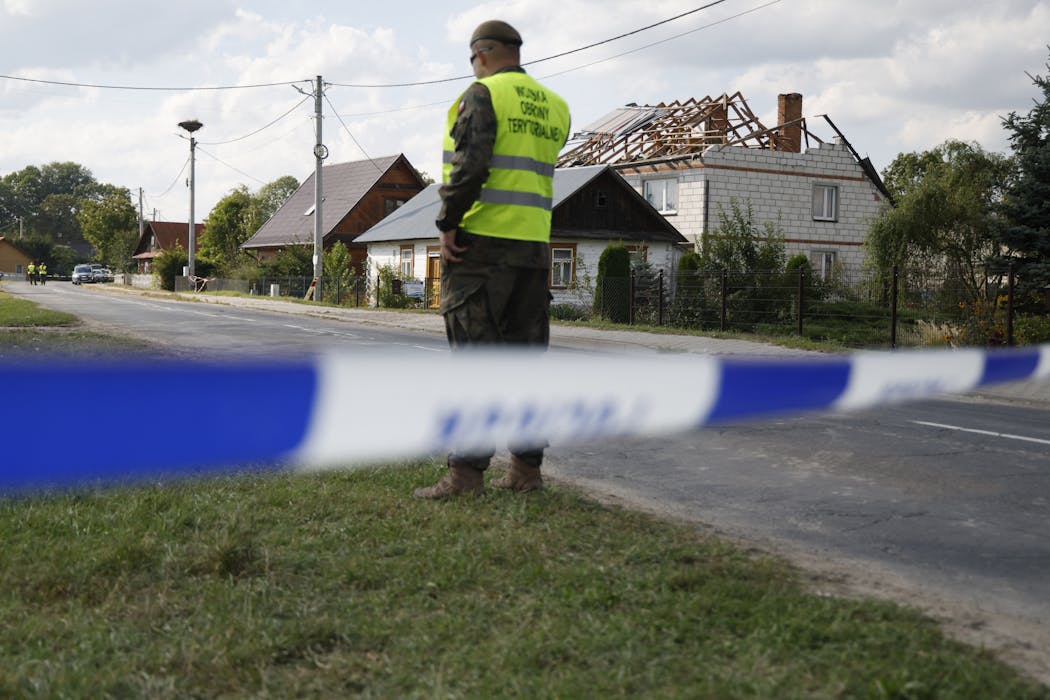
Police inspect damage to a house struck by debris from a shot down Russian drone in the village of Wyryki-Wola, eastern Poland, on Sept. 10, 2025. Wojtek Radwanski/AFP via Getty Images

Russian aircraft, drones and missiles have violated NATO airspace dozens of times since the full-scale invasion of Ukraine began in February 2022.

Individually, many of these incidents appear minor: a drone crash here, a brief fighter incursion there, a missile discovered only after the fact.

But taken together, I believe the numbers tell a far more troubling story.

To get a full picture of the scale of violations, I conducted a systematic review of Russian airspace violations against NATO members from 2022 through the end of 2025.

It reveals not just an increase but a sharp acceleration accompanied by rising severity and widening geographic scope. In 2025 alone, NATO members recorded 18 confirmed Russian airspace violations – three times as many as in 2024 and more than half of all incidents recorded over the four-year period. This was not a gradual escalation; it was a dramatic change.

Picking up pace

I identified airspace violations through a systematic review of international news media coverage, corroborated with official NATO press releases and cross-validated against operational assessments and geospatial reporting from the Institute for the Study of War. Included were violations of airspace by drones heavily suspected to be Russian but that could not be 100% confirmed.

Between 2022 and 2024, the annual number of violations rose steadily but modestly. There were four incidents in 2022, five in 2023 and six in 2024.

That corresponds to year-on-year increases of roughly 25% and 20%. In 2025, the count jumped from six to 18, a 200% increase in a single year. And that pace has continued into 2026 – as of Feb. 18 there have been at least two violations of NATO airspace by Russia.

Such a surge is statistically and strategically significant. It strongly suggests that Russian airspace violations are no longer episodic spillovers from the war in Ukraine, but part of a sustained pattern of pressure directed at NATO itself.

The character of these incidents has also changed. In 2022, all four violations were what I classify as low-intensity events: brief incursions into Swedish airspace by Russian fighters, the crash of an Orlan-10 reconnaissance drone in Romania and the later discovery of a Russian cruise missile in Poland. These incidents were serious but short-lived and geographically limited.

By 2023, violations had become more repetitive. Romania alone experienced multiple drone incursions and debris discoveries over several months, often triggering fighter scrambles. All five incidents that year fell into a midrange severity category: more persistent than before but still largely confined to border regions.

The transition toward higher-intensity incursions became clearer in 2024. Of the six violations that year, half involved high-severity characteristics such as deeper penetration of a NATO country or broader geographic exposure.

A Russian cruise missile crossed into Polish airspace, drones entered Romania on multiple consecutive nights, and a Russian drone crashed well inside Latvian territory. These incidents expanded both the depth and the geographic footprint of violations.

Then came 2025. Of the 18 violations recorded that year, a clear majority qualify as high-severity events. These include a Russian drone that penetrated nearly 60 miles (100 kilometers) into Polish territory before crashing near Osiny without prior radar detection; a drone that remained inside Romanian airspace for approximately four hours, crossing multiple counties before crashing in Vaslui; and a massive 21-drone swarm over Poland on Sept. 9-10 that forced the closure of major civilian airports in Warsaw, Rzeszów and Lublin.

Manned aircraft also returned in force. Russian MiG-31 interceptors flew over Estonia for about 12 minutes with transponders – onboard devices that automatically respond to radar signals by transmitting an aircraft’s identity and altitude, enabling air traffic control and air defense systems to track it – switched off. In October, a Russian Su-30 fighter accompanied by an Il-78 refueling tanker violated Lithuanian airspace – an unmistakable signal of endurance and deliberate mission planning.

In December, suspected Russian drones were shot down and later recovered in Turkey on multiple dates, indicating a persistent provocation rather than a one-off incursion.

Perhaps most strikingly, Western Europe was seemingly no longer exempt. On Dec. 4, 2025, five unidentified drones flew over France’s Île Longue naval base, home to the country’s nuclear ballistic missile submarines. French personnel reportedly fired at the suspected Russian drones.

Just weeks later, on Christmas Day, Polish fighters intercepted a Russian reconnaissance aircraft over the Baltic Sea.

Grey-zone tactics

Severity and frequency are not the only dimensions that changed. Geographical reach has, too.

In 2022, Russian violations affected three NATO members. By 2024, that number had grown to four. In 2025, it expanded to six: Romania, Poland, Estonia, Lithuania, Turkey and France.

Pressure was applied simultaneously in the Black Sea region, the Baltic states and Western Europe.

This widening scope matters because it undermines the idea that these incidents are localized accidents. Instead, they resemble a distributed pattern of Russia probing across NATO’s eastern and southern flanks and into its strategic core.

NATO’s political response reflects this shift. For the first time since the war began, members invoked Article 4 of the North Atlantic Treaty, the mechanism for collective consultation when a member feels its security is threatened.

Poland did so after the September 2025 drone swarm, and Estonia followed after the MiG-31 incursion later that month. Although only two of the 18 incidents triggered Article 4, their timing is revealing: No such invocations occurred in the previous three years combined.

From a strategic standpoint, the danger lies less in any single violation than in their cumulative effect. Airspace incursions sit in a grey zone between peace and open conflict. They impose operational and psychological costs, test air defense systems and provide valuable intelligence on NATO’s detection thresholds and response times, all while staying below the legal threshold of armed attack.

Testing NATO’s resolve

The data from 2025 and early 2026 show that this grey-zone activity has intensified dramatically. A threefold increase in one year, coupled with a shift toward deeper, longer and more disruptive incidents across multiple theaters, points to a deliberate campaign rather than accidental spillover.

For NATO, the implication is clear. Monitoring individual incidents is no longer sufficient. What now matters is the rate of acceleration, the severity profile and the geographic dispersion of violations.

If current trends persist as the war in Ukraine enters its fifth year, the alliance’s greatest challenge may not be responding to a single dramatic breach but managing the mounting pressure created by many smaller ones – each calibrated to test resolve without triggering open conflict.

The Conversation

Frederic Lemieux does not work for, consult, own shares in or receive funding from any company or organization that would benefit from this article, and has disclosed no relevant affiliations beyond their academic appointment.

ref. Russia tested NATO’s airspace 18 times in 2025 alone – a 200% surge that signals a dangerous shift – https://theconversation.com/russia-tested-natos-airspace-18-times-in-2025-alone-a-200-surge-that-signals-a-dangerous-shift-273318

Why has Andrew Mountbatten-Windsor been arrested, and what legal protections do the royal family have?

Source: The Conversation – Global Perspectives – By Francesca Jackson, PhD candidate, Lancaster Law School, Lancaster University

Andrew Mountbatten-Windsor has been arrested on suspicion of misconduct in public office. The arrest comes after the US government released files that appeared to indicate he had shared official information with financier and convicted child sex offender Jeffrey Epstein while serving as a trade envoy for the UK. But the police have not given details of exactly what they are investigating.

It is important to be clear that the arrest is not related to accusations of sexual assault or misconduct. In 2022, Mountbatten-Windsor reached a settlement with the late Virginia Giuffre for an undisclosed sum that did not include an admission of liability.

Being named in the Epstein files is not an indication of misconduct. Mountbatten-Windsor has previously denied any wrongdoing in his association with Epstein and and has previously rejected any suggestion he used his time as trade envoy to further his own interests.

What was Mountbatten-Windsor’s official role and why did he lose it?

In 2001, Tony Blair’s government made the then-prince the UK’s special representative for trade and investment. According to the government at the time, his remit was to “promote UK business internationally, market the UK to potential inward investors, and build relationships in support of UK business interests”. He did not receive a salary, but he did go on hundreds of trips to promote British businesses.

Members of the royal family are often deployed by the government on international missions to promote trade. When negotiating with other countries, particularly those which are also monarchies, sending a prominent figure like a royal may help seal the deal. Indeed, the then-government claimed that the former Duke of York’s “unique position gives him unrivalled access to members of royal families, heads of state, government ministers and chief executives of companies”.

It is not unusual for members of the royal family to be deployed by the government for diplomatic missions. Royals often host incoming state visits and lead similar visits abroad, and can be deployed to lead delegations on more specific missions.

However, Mountbatten-Windsor had an official role as trade envoy. He stepped down from this role in 2011 following reports about his friendship with Epstein, who was convicted of sex offences in 2011.


Read more:
What exactly is misconduct in public office and could Peter Mandelson be convicted?


Are royals protected from prosecution?

The monarch is protected by sovereign immunity, a wide-ranging constitutional principle exempting him from all criminal and civil liability. According to the leading 19th century constitutionalist Alfred Dicey, the monarch could not even be prosecuted for “shooting the Prime Minister through the head”. The Prince of Wales also enjoys immunity as Duke of Cornwall, which protects him from punishment for breaking a range of laws.

The State Immunity Act 1978, which confers immunity on the head of state, also extends to “members of the family forming part of the household”. However, this phrase has been interpreted narrowly to apply to a very tight circle of people and does not appear to apply to the monarch’s children in general. For example, in 2002 Princess Anne was prosecuted (though not arrested) for failing to control her dogs in Windsor Great Park after they bit two children.

Nevertheless, there has often been a perception that members of the royal family are held to a different standard when it comes to the law. In 2016 Thames Valley Police were criticised by anti-monarchy groups for not prosecuting the then-prince after newspaper reports alleged he had driven his car through the gates of Windsor Great Park. In 2019 the Crown Prosecution Service declined to prosecute Prince Philip for causing a car crash which injured two people.

The monarch also cannot be compelled to give evidence in court. For example, prosecutors were unable to summon the late queen to give evidence in the trial of Princess Diana’s former butler, who was accused of stealing her jewellery.

In response to Mountbatten-Windsor’s arrest, the king said: “What now follows is the full, fair and proper process by which this issue is investigated in the appropriate manner and by the appropriate authorities. In this, as I have said before, they have our full and wholehearted support and co-operation. Let me state clearly: the law must take its course.”

When was the last time a royal was arrested?

You have to go back quite a long way to find the last time that a member of the British royal family was arrested. This was during the English civil war, when Charles I was taken prisoner for treason before being found guilty and ultimately executed in 1649.

A number of royals, including Princess Anne, have committed driving-related offences, including speeding. But this arrest makes Mountbatten-Windsor the first member of the royal family to be arrested in modern times, though it should be noted that he is no longer a royal – he was stripped of all his official titles in October 2025 as his friendship with Epstein came under even more scrutiny.

What limits do police have on investigating royal estates?

Sovereign immunity also prevents police from entering private royal estates to investigate alleged crimes without permission. This can, theoretically, protect members of the royal family from arrest and prosecution. The Cultural Property (Armed Conflicts) Act 2017 also bans police from searching royal estates for stolen or looted artefacts.

In 2007, two hen harriers were illegally shot at Sandringham estate. However, Norfolk Police first needed to ask Sandringham officials for permission to enter the estate, by which time the dead birds’ bodies had been removed. Police questioned Prince Harry, but did not bring charges.

Other incidents have allegedly led to Sandringham being accused of becoming a wildlife crime hotspot, with at least 18 reported cases of suspected wildlife offences taking place between 2003-23 – yet only one resulting in prosecution.

Another longstanding legal precedent is that no one may be arrested in the presence of the monarch or within the precincts of a royal palace. It was thought that this rule could protect other members of the royal family and royal employees. However, Mountbatten-Windsor’s arrest at Sandringham suggests that this antiquated principle may no longer hold true today.

The Conversation

Francesca Jackson does not work for, consult, own shares in or receive funding from any company or organisation that would benefit from this article, and has disclosed no relevant affiliations beyond their academic appointment.

ref. Why has Andrew Mountbatten-Windsor been arrested, and what legal protections do the royal family have? – https://theconversation.com/why-has-andrew-mountbatten-windsor-been-arrested-and-what-legal-protections-do-the-royal-family-have-276466

‘It’s chronic disease, stupid!’ The central challenge facing health care

Source: The Conversation – Canada – By George A Heckman, Schlegel Research Chair in Geriatric Medicine, Associate Professor, University of Waterloo

The economy, stupid!” is an aphorism coined by James Carvill during Bill Clinton’s 1992 U.S. presidential campaign to keep workers focused on a key message. It has since been adapted countless times to refocus debates over challenging situations, and it can be applied to the central challenge facing health care: our ongoing failure to address the needs of people with chronic conditions. “It’s chronic disease, stupid!”

As a geriatrician with a research interest in models of care, and a cardiologist who studies rehabilitation and proactive disease management, we are immersed in this issue as both physicians and researchers.

A chronic condition is a health problem — physical, mental, developmental or age-related — that usually requires lifelong care, often causes disability, and sometimes shortens life expectancy. Symptoms may not be apparent for years, develop insidiously or arise abruptly. Chronic conditions are often unstable, and hospitalization may be required when symptoms are allowed to deteriorate significantly.

In contrast, acute conditions develop suddenly and usually resolve, such as infections, though some, such as a COVID-19 infection, may lead to chronic symptoms.

This distinction matters. Our health-care system was designed last century primarily to care for acute conditions. Back then, the population burden of chronic disease was low because treatments and survival were limited.

Advances in medical science have since resulted in better care for people with acute or chronic conditions, leading to better quality of life, delayed disability and greater life expectancy. Today, people with heart and lung disease, psychiatric and neurological conditions, and even some advanced cancers live far longer than their predecessors did only a generation ago.

Living longer comes at a cost. Age is a major risk factor for the development of chronic conditions. A person surviving a heart attack today may develop, years later, depression, heart failure and dementia. The acquisition of multiple chronic conditions is called multimorbidity.

The accumulation with age of additional deficits across all organ systems leads to frailty, and which renders affected individuals more vulnerable: a simple cold, easily withstood by a young person, can lead to pneumonia and hospitalization in a frail older person. Multimorbidity and frailty often lead to disability.

People living with complex chronic conditions are poorly served by our health-care system. Informal caregivers, aging spouses, friends or children, cannot fully compensate for health-care system gaps before they are overwhelmed by the severe and complex needs of their loved ones. The only option often remaining is best summarized by the typical message heard on physician phone lines: “If this is a medical emergency, hang up and call 9-1-1 or go to the nearest emergency department.”

The mismatch between health care designed for acute illness and the needs of patients with chronic conditions lies at the root of why hospitals are perpetually overflowing. Health care must be reconfigured to meet the needs, characteristics and health trajectories of people with chronic conditions.

Team-based primary care

People with chronic conditions need access to team-based primary care. Team composition and skills must reflect the needs of these people, and may include advanced practice nurses, clinical pharmacists, nurses, social workers, therapists or mental health workers, in addition to a primary care provider.

Highly-functioning teams have no professional hierarchies, promote interprofessional respect, communication and mutual accountability, allow all providers to exercise their full scope of practice, and place patients and caregivers first. Consultants, such as geriatricians, can be valuable team members, as shared and collaborative care provides opportunities for capacity-building, and greater quality and efficiency of care.

Having access to a team does not imply that a patient requires continuous care: the team’s role is to develop and implement a plan for patients to maintain stable and optimal health. For many, the intensity of engagement with the team will change over time.

For example, following a myocardial infarction, patients with coronary artery disease may require surgeries, risk factor modification with pharmaceuticals, diet and physical rehabilitation.

However, over time, their health will recover, they will resume more vigorous activity, and their reliance on the team will ebb to only need the expertise of their family doctor and their consultant. If new symptoms arise, the proactive and prepared team will be able to recognize these and take timely action to prevent complications and avoid hospitalization.

In other words, the degree of support needed from a team should be commensurate with, and responsive to, patient needs and the risk for adverse outcomes at a particular moment. Because the needs of patients with chronic conditions fluctuate, primary care must switch from a reactive stance to one characterized by team-based anticipatory surveillance and guidance.

Anticipating needs

Chronic conditions are predictably unpredictable. Most people hospitalized with heart failure had signs and symptoms weeks before calling 9-1-1. Suicide attempt survivors may have had mood symptoms for months. Most people with osteoporotic hip fractures had prior falls or fractures. These early warning signs should be detectable by proactive teams, which can then intervene quickly to prevent further deterioration.

Prevention remains important, even among people with chronic conditions. Astonishingly, fewer than half of Canadians who sustained a hip fracture are adequately treated for osteoporosis. Self-care coaching and case management from care teams can improve health and prevent hospitalizations of people with chronic conditions.

Self-care coaching helps patients and informal caregivers better understand how to care for chronic conditions, including recognizing early signs of deterioration, taking steps to stabilize their health and, if needed, seeking timely attention from their care team. As patients and caregivers master these skills, health improves, the risk of hospitalization and other poor outcomes decreases, and their reliance on their care team lessens.

Case management provides additional and tailored support and oversight to patients with the most complex needs.

Both modalities can be deployed interchangeably to support a patient and informal caregiver as their health fluctuates, including at the end of life. Yet, despite their demonstrated effectiveness, these availability of these interventions for complex conditions remains limited in primary care.

Integrating the health system into primary care

Even the most high-performing teams require external support from other consultants or programs, rehabilitation and exercise, home care, community paramedicine or other community support services. Typically, family physicians complete referral forms for these services, and accepted patients are placed on waiting lists. Communication between primary care and other providers is generally by fax or by letter, often with limited information and little opportunity for discussion.

Health system integration is a system-wide process towards seamless continuity of care through collaboration and co-ordination of providers. Evidence suggests that integrated care improves patient outcomes and reduces reliance on acute care.

In addition to interprofessional teams, integration requires an electronic standardized clinical information strategy to facilitate effective communication between providers and facilitate shared learning and quality improvement. Importantly, public investments are required to support the shared governance, administrative and scientifically robust electronic health record infrastructures for successful integration.

It’s still the economy, stupid!

A well-integrated interprofessional health-care system, rooted in primary care and configured to support patients with chronic conditions and their informal caregivers, has the potential to improve health outcomes, curb health-care spending and reduce reliance on hospital care.

However, this measure alone is insufficient to curb the population burden of chronic conditions, for which important root causes are socioeconomic: childhood poverty and undernutrition, low educational attainment and experience, food insecurity and precarious housing.

Population health and a healthy economy are inextricably linked. Government policies that fail to meaningfully support public health and social safety nets ultimately drive higher chronic disease rates and greater downstream health-care costs.

When it comes to health care and chronic conditions, Carvill’s aphorism still applies.

The Conversation

The authors do not work for, consult, own shares in or receive funding from any company or organisation that would benefit from this article, and have disclosed no relevant affiliations beyond their academic appointment.

ref. ‘It’s chronic disease, stupid!’ The central challenge facing health care – https://theconversation.com/its-chronic-disease-stupid-the-central-challenge-facing-health-care-275770