Michelangelo hated painting the Sistine Chapel – and never aspired to be a painter to begin with

Source: The Conversation – USA (2) – By Anna Swartwood House, Associate Professor of Art History, University of South Carolina
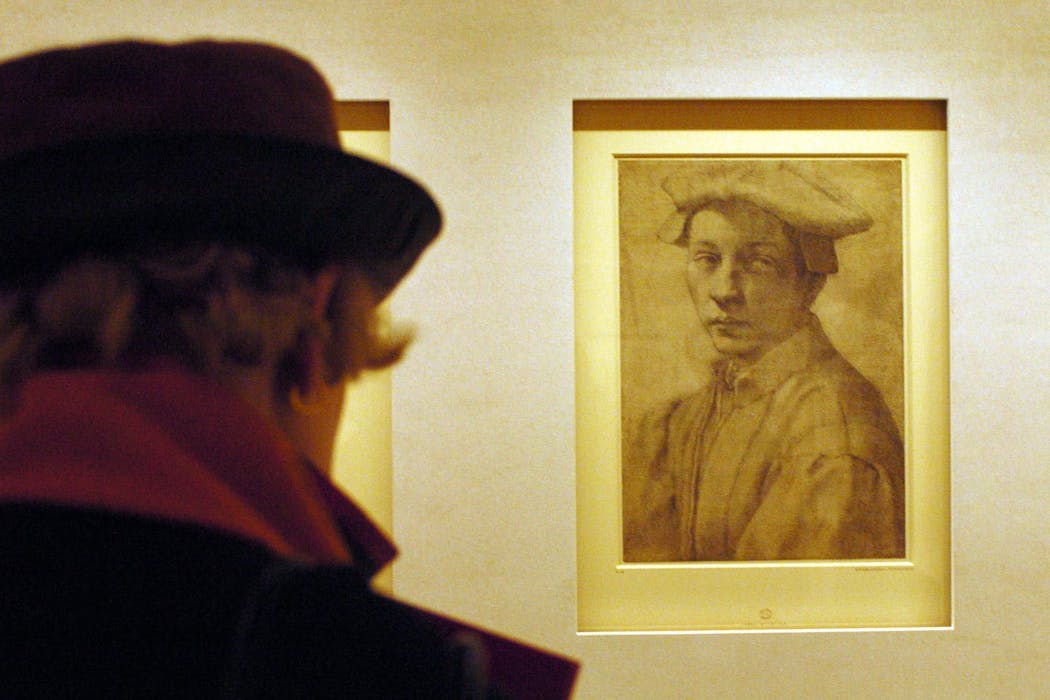
From a young age, Michelangelo prized drawing and sculpture above painting. Ian Nicholson/PA via Getty Images

When a 5-inch-by-4-inch red chalk drawing of a woman’s foot by Michelangelo sold at auction for US$27.2 million on Feb. 5, 2026, it blew past the $1.5 million to $2 million it was expected to receive.

Experts believe it to be a study for the figure of the Libyan Sibyl, a female prophet who appears on the ceiling of the Sistine Chapel in Rome. Michelangelo painted the iconic frescoes from 1508 to 1512, but he first sketched out the overall composition and details in a series of preparatory drawings. Only around 50 of these drawings survive today.

This was an exciting sale for reasons outside that eye-popping sum. Held in private collections for centuries, the drawing only came to light after the owner sent an unsolicited photo to Christie’s auction house. There, a drawings expert recognized it as one of the relatively few remaining studies for the Sistine frescoes.

As an art historian who specializes in the Italian Renaissance, I’m excited about the sale not because of the money it fetched, but because of the attention it has brought to Michelangelo’s lifelong devotion to drawing, a medium he prized over painting.

‘Not my art’

Art historians know a lot about Michelangelo through the letters and poems he penned, along with two biographies written in his lifetime by intimates Giorgio Vasari and Ascanio Condivi.

In 1506, Pope Julius II put Michelangelo’s sculpting work on a papal tomb at St. Peter’s Basilica on hold, redirecting the funds intended for the tomb to the renovation of the basilica itself.

Michelangelo responded by closing his studio. He ordered his workshop assistants to sell off its contents, abandoned 90 wagonloads’ worth of marble and left Rome in disgust.

In 1508, Julius and his intermediary, Cardinal Francesco Alidosi, were able to lure Michelangelo back to Rome with the promise of a 500-ducat payment and a contract to paint the Sistine. Despite accepting, the artist went on to complain relentlessly about his new commission. He wrote to his father that painting “is not my profession” and told the pope that painting “is not my art.”

Sculpture, not painting, was central to Michelangelo’s identity.

In the Condivi biography, which Michelangelo approved and helped shape, the artist is said to have abandoned painter Domenico Ghirlandaio’s workshop around 1490 to train in the Florence sculpture garden of powerful arts patron Lorenzo de’ Medici. Michelangelo would later joke that he became a sculptor as an infant, thanks to the breast milk of his wet nurse, who was the daughter of stonemasons.

Beyond his enthusiastic embrace of sculpture and resentment over the Sistine – what he called the “tragedy of the tomb” – Michelangelo found painting in fresco to be backbreaking work.

A yellowed piece of paper with text written in Italian and a doodle of a man straining to paint an image on a ceiling.
Michelangelo griped about painting the Sistine Chapel in a poem he sent to his friend Giovanni da Pistoia.
Wikimedia Commons

“I’ve grown a goiter from this torture,” he wrote to his friend Giovanni da Pistoia in an illustrated poem. “My stomach’s squashed under my chin, my beard’s pointing at heaven, my brain’s crushed in a casket, my breast twists like a harpy’s. My brush, above me all the time, dribbles paint so my face makes a fine floor for droppings!”

“My painting is dead,” he concludes. “I am not in the right place – I am not a painter.”

A grand design

The caricature that accompanies Michelangelo’s poem shows not only a cantankerous and restless mind, but also his use of drawing to reflect its inner workings.

The early 16th century witnessed a rise of drawing, with Michelangelo leading the way. Rather than simply copying or providing models for painting, drawing became understood as an important intellectual, exploratory and creative exercise

Michelangelo’s biographer Vasari famously used the term “disegno” to mean both a physical drawing and a work’s overall “design” or concept, giving the artist an almost godlike creative power.

This double meaning is reflected in the title of the hugely popular 2017 exhibition of Michelangelo’s drawings at the Metropolitan Museum of Art in New York”: “Michelangelo: Divine Draftsman and Designer.”

Michelangelo created many drawings for the Sistine that reflected the different meanings of “disegno.” There were his sketches of models, along with his architectural renderings and schemes to organize the huge space. Then there were the full-size “cartoons” he drew to transfer his designs directly onto the ceiling itself.

Sketches of architectural forms and human limbs from various angles.
Michelangelo’s scheme for the decoration of the vault of the Sistine Chapel, along with his studies of arms and hands.
© The Trustees of the British Museum, CC BY-SA

The good foot

Michelangelo also made many studies of individual body parts and gestures for the Sistine, including eyes, hands and feet.

In a drawing for the Sistine ceiling that’s now in the British Museum, various hands – perhaps modeled after his own – repeat across the right side of the page. Feet were especially important to the overall design of the human figure, and they stand at the intersection of Michelangelo’s interests in Classical art and human anatomy.

Contrapposto, or the Classical “counter-poise,” was the iconic stance for standing figures in paintings and sculptures. It features the trunk of the body centered over one leg with its foot planted, and the other bent with the foot perched on the toe. Michelangelo’s “David” stands in contrapposto, and even doctors today are impressed by the anatomical precision of the muscles and veins of each foot.

A white, marble-carved foot.
The relaxed left foot of Michelangelo’s ‘David.’
Franco Origlia/Getty Images

The Christie’s red chalk drawing of the foot was likely done from a live model, with Michelangelo showing the elegance of the Libyan Sibyl prophetess through her dramatically arched foot.

In the finished fresco, Sibyl’s body is a kind of elegant machine. The musculature of her extended arms, her coiled torso and her pointed toe all work in concert. This small drawing shows how the charged energy of a single body part could contribute to the overall “disegno” of the massive fresco.

While the process of painting the ceiling was arduous, the process of conceiving it through drawing was obviously rewarding for Michelangelo.

Colorful painting of a young woman posing from a seated position, twisting toward viewers while holding open a large book.
The finished fresco of the Lybian Sybil in the Sistine Chapel.
Wikimedia Commons

Drawing as the linchpin

Despite the popularity of the Sistine frescoes, Michelangelo rarely returned to painting after completing them. In 1534, Pope Clement VII commissioned him to paint the “The Last Judgment” on the altar wall of the Sistine Chapel. But only after Clement died later that year – and Clement’s successor, Pope Paul III, gave Michelangelo the extraordinary title of Chief Architect, Sculptor, and Painter to the Vatican Palace – did the artist begin work on the altar wall.

While many people today may think of the Sistine frescoes or Leonardo da Vinci’s “Mona Lisa” when they think of the Italian Renaissance, those artists did not think of themselves primarily as painters.

In a famous letter of introduction to the Duke of Milan, Ludovico Sforza, Leonardo elaborates on his many skills in creating fortifications, infrastructure and weaponry. He boasts about his ability to build bridges, canals, tunnels and catapults. Only after 10 paragraphs does he include a single sentence admitting that he, in addition, “can carry out sculpture in marble, bronze, or clay, and in painting can do any kind of work as well as any man.”

Like Michelangelo’s, Leonardo’s drawings show a voracious mind at work. They explore, rather than simply observe, everything from military machines to human anatomy. In 1563, Michelangelo would go on to be named master of the Accademia del Disegno in Florence, which aimed to teach drawing and design as the underlying skills necessary for sculpture, architecture and painting.

Drawing, it turns out, was the art that unified the many pursuits of the “Renaissance Man.”

The Conversation

Anna Swartwood House does not work for, consult, own shares in or receive funding from any company or organization that would benefit from this article, and has disclosed no relevant affiliations beyond their academic appointment.

ref. Michelangelo hated painting the Sistine Chapel – and never aspired to be a painter to begin with – https://theconversation.com/michelangelo-hated-painting-the-sistine-chapel-and-never-aspired-to-be-a-painter-to-begin-with-275788

Picky eating starts in the womb – a nutritional neuroscientist explains how to expand your child’s palate

Source: The Conversation – USA (3) – By Kathleen Keller, Professor of Nutritional Sciences, Penn State

Bitter vegetables can be an acquired taste. d3sign/Moment via Getty Images

It’s 5:45 p.m. and you’ve just arrived home after a long day at work. You’d like nothing more than a glass of pinot and to binge old episodes of your favorite show. Into the kitchen comes young Sally, your food-adventurous 8-year-old. “I’m hungry, what’s for dinner?”

Sally has never met a food she’s afraid to try. Visions of her savoring the tangy brine of an oyster and joyously slurping spicy ramen noodles dance in your head.

Before you can give her an answer, Billy, your 4-year-old picky eater, shouts, “Mac and cheese!” from the living room. Billy rotates between three entrées: macaroni and cheese from a box, chicken nuggets (only dino shaped) and pasta (only spaghetti).

You sigh and wonder how such diverse creatures ended up in the same family.

If this scenario rings a bell, you are not alone. As a nutritional neuroscientist and a parent, I have spent the better part of my professional and personal life thinking about why children eat the foods they do.

Understanding how food preferences develop can help parents teach kids to enjoy a diverse, varied and healthy diet.

Nature vs. nurture?

Are genes to blame in the case of picky eaters like Billy? While genes can have some influence, they often explain only a small part of the story.

People are born liking the taste of sweet and disliking the taste of bitter. These traits are thought to be protective in that they can help drive someone toward sources of calories – which are often sweet, such as fruits or breast milk – and away from potential toxins or poisons, which are often bitter. As an example of these innate preferences, one study found that pregnant moms who consumed sweet carrot capsules had babies who smiled on the ultrasound, while those who ingested bitter kale capsules had babies who grimaced for the camera, suggesting early on their dislike for bitter vegetables.

Child looking down at bowl of food with a frown, face propped up against hand on dinner table
Dinner was not a hit.
Milky Way/Moment via Getty Images

In addition to these innate responses, there are genes that affect your ability to taste bitter compounds. These compounds, called thioureas, are similar to those found in cruciferous vegetables. People who inherit genes that make them sensitive to these bitter compounds – about 70% of the U.S. population – tend to also be more sensitive to other bitter tastes in foods. Because of this, they may dislike foods such as raw broccoli, black coffee and grapefruit.

However, there are plenty of people who develop a liking for bitter foods, even though their first experience with them might have been unpleasant. Case in point, the growing popularity of bitter IPA beers.

Another gene that can influence food preferences is the gene that makes cilantro taste soapy. Those born with a version of this olfactory gene – up to 20% of the U.S. population – are sensitive to aldehyde compounds that tend to taste soapy. Because of this taste, they often dislike cilantro.

Pavlov and food preferences

While genes by themselves explain only a small part of taste, a person’s interactions with food in the environment are particularly influential when it comes to what they want for dinner.

Ivan Pavlov was a 19th-century experimental physiologist who showed that dogs could be taught to salivate at the sound of a bell. He put them through a conditioning period in which mealtime was repeatedly paired with the sound of a bell. Most pets have some ability to learn to associate environmental cues – such as a food bowl or the sound of their owners’ commands – with food.

In the early 1980s, psychologist Leann Birch conducted a series of studies showing that people develop food preferences using a process similar to Pavlov’s classical conditioning. When the taste of a food is associated with positive experiences – such as an influx of calories, release of reward chemicals in the brain or the pleasing tones of a mother’s voice – these positive experiences can enhance how much a person likes a food. On the other side of the coin, negative experiences, such as a painful stomachache or a punishment associated with eating a food – “You have to eat all of your vegetables or no screen time!”– can often decrease how much someone likes a food.

Babies even begin learning about food before they are born. In a classic study by biopsychologist Julie Mennella, pregnant moms who drank carrot juice four days a week during their pregnancy or while breastfeeding had babies who were more accepting of carrot-flavored cereal when it was first presented to them. Flavors that are passed through amniotic fluid to the developing fetus prime the future baby to accept the cuisine of the family.

Side profile of child nibbling on cracker from an open lunchbox in cafeteria
Supportive food environments can encourage kids to expand their palate.
Catherine Falls Commercial/Moment via Getty Images

Hope for picky eaters

The good news is that for most children, picky eating is a phase that tends to decline as they reach school age. And if children are growing at a healthy pace, it’s often not something to be too concerned about.

For parents who want to help their kids expand their palates, the most important thing you can do is give your child repeated opportunities to taste foods without pressuring or coercing them. Some children need 12 or more taste experiences with a new food before they will accept it. Some children will also be open to trying foods at school or day care, even if they won’t try them in front of you.

As for Sally and Billy, you’ve managed to get dinner on the table right on time. Your latest invention: kimchi mac and cheese and baked cauliflower, with extra Sriracha for Sally. You’re hoping the familiar shape of the boxed mac and cheese noodle might tempt Billy into taking a bite. And if not, there’s always tomorrow.

The Conversation

Kathleen Keller receives funding from The National Institutes of Health, The United States Department of Agriculture, Dairy Management Inc., McCormick Science Institute

ref. Picky eating starts in the womb – a nutritional neuroscientist explains how to expand your child’s palate – https://theconversation.com/picky-eating-starts-in-the-womb-a-nutritional-neuroscientist-explains-how-to-expand-your-childs-palate-275643

Meekness isn’t weakness – once considered positive, it’s one of the ‘undersung virtues’ that deserve defense today

Source: The Conversation – USA (3) – By Timothy J. Pawl, Professor of Philosophy, University of St. Thomas

Meekness used to be considered a positive trait – not being powerless, or a doormat. Halfpoint images/Moment via Getty Images

What do you envision when you think of meekness?

You probably see a mousy doormat, someone sheepishly acquiescing to the will of the stronger. When Jesus says, “Blessed are the meek, for they shall inherit the earth,” you might think that those wimps will hand it over without a whimper or word of objection to stronger, more ambitious people. The philosopher Friedrich Nietzsche called meekness “craven baseness.”

Indeed, one of the Oxford English Dictionary’s definitions is “inclined to submit tamely to oppression or injury, easily imposed upon or cowed, timid.” Meekness, then, is a weakness. Why would you ever want to be meek?

The same goes for docility, often characterized as a near neighbor of meekness. We can get a feel for its usage these days from the Corpus of Contemporary American English, where one finds that a docile person is slow, controllable, obedient, submissive, compliant, passive and under control.

Or consider condescension. You likely envision someone self-important looking down her nose at a service worker, or some insufferable prig unwilling to come off his high horse to mingle with the peasants. Being condescending, far from being a virtue, is universally acknowledged as a vice.

Meekness, docility and condescension: three traits with no cultural capital today. And yet, our ancestors typically understood these traits to be virtues. How in the world could that be?

As any philosopher will tell you, in a case of seeming disagreement, you need to settle the definitions of the words in play. How many arguments have been abruptly dissolved by someone saying, “Oh, that’s what you mean”? When we check the meaning of these three terms, I think we come to see that there’s been a switcheroo. As I’ve found in my philosophical research and teaching, some of the virtues that were most celebrated in yesteryear but now go undersung are traits that can help us lead good lives, even now.

Forgotten virtues

Consider meekness – but allow me to start with a little vignette.

In 2018, mixed martial-arts champion Matt Serra was having a family meal in a restaurant when a belligerent drunken man entered, threatening servers and patrons. Serra could have knocked him out cold. But instead, he calmly pinned him, waiting for security to arrive.

A similar trait is on display when exasperated parents react with control, harried teachers don’t rise to students’ provocations, and police de-escalate situations. In each case, they kept control of their emotions, especially their anger. One common feature of these stories is that the person wasn’t powerless; rather, it was precisely because they understood how much power they had that they used restraint.

Such a trait – excellence with respect to one’s anger – used to be called meekness. We hear an echo of this original meaning even today in horse training, where to “meek” a horse means training it to subjugate its great power to its master, not letting its passions take control. Likewise, meekness once meant not becoming weak, but subjugating power to reason – not letting anger take control.

A person rides a brown horse galloping across a field, with trees in the background.
‘Meeking’ a horse means more than subduing it.
Mint Images RF via Getty Images

In the Gospels, when Jesus calls himself meek, it is the same Greek word used for a meek horse: “praus.” A horse is not weaker on account of being meeked; no Greek warrior wanted a wimpy steed. The horse retains its strength, now safeguarded by self-control.

This is quite a different notion of meekness than we find in our contemporary lexicon. Yet in its traditional sense, the word names a trait almost everyone deeply values. No one wants her best friend, child, teacher, coach or deputy to be unable to control her anger.

Such control is an important character trait for living a good life, but we no longer have a concept for it. What term do people use today for being disposed to pick battles prudently, not letting anger cloud one’s judgment, not being easily baited into action they’ll come to regret – without being easily biddable or callous to real injustices? “Self-control,” a broad category that covers facing temptations, enduring difficulties and myriad things in between, is too broad a notion to do the work.

Nor do we have a word for someone excellent at receiving instruction and insights – but at the same time who’s unafraid to think for herself, to disregard the advice of a snake-oil salesman. That used to be called docility.

Condescension, the most surprising of the three, now suggests someone deigning to speak down from their lofty height. Yet it once described excellence at respecting people, regardless of their social status: easily connecting with those on a lower rung so they feel seen and valued, but without causing embarrassment or awkwardness. What term do we have now for inculcating such an important trait?

Why words matter

To be clear, I’m not here from the Language Reclamation League. I’m not necessarily advocating for a return to older language – and certainly not just because it is older. But without replacements for ethical concepts we’ve lost, we’re faced with a moral void, unable even to conceptualize the goodness that we want to see in ourselves and those we love.

Maybe you think that not much is lost. Bridges fall when engineers can’t distinguish varieties of physical strength; what’s lost if people can’t distinguish varieties of character strength?

An engineer in a yellow safety vest and white hard hat speaks into a walkie-talkie as he surveys a building site.
Precise language matters for character formation, too.
Tanison Pachtanom/E+ via Getty Images

To my mind, there are at least three reasons why it is important to have some term or other for these traits.

First, there’s good psychological evidence that goals of approach – “I want to get healthy,” “I want to get financially stable” – are a stronger motivation for us than avoidance goals – “I want to stop being sick,” “I want not to be poor.” Approach goals typically yield more effort, more satisfaction and more well-being. But they require naming the moral virtue you want to cultivate.

Second, the positive traits named by these old virtues are what you really want. You don’t merely want your loved ones to stop acting out of wrath. You want them to be able to restrain their power in the face of their anger. You are ignorant of your real goal if you don’t have a concept for it.

Third, consider the detriment caused by not having shared language for an ethical concept. The philosopher Miranda Fricker has written of the time before the term “sexual harassment” was coined in 1975. She provides multiple instances of women being wronged in the workplace, but being unable to articulate that wrong to those in power, owing to a lack of a shared label for it. And not only that, but the lack of an adequate concept prevented the victims from fully understanding the wrong themselves.

Having positive concepts for the traits we want to enable in ourselves and others is essential, then, to the moral life. The fact that we’ve let several go the way of “blatherskite” and “bumfuzzled” is telling.

We still have terms for a bloviating windbag or being bewildered, so we don’t need those archaic, though admittedly fun, words to express important truths. But when it comes to undersung virtues, we do need some way to highlight character traits that help form us into our best selves – even if the words of yesteryear no longer fit the bill.

The Conversation

Timothy J. Pawl received funding from The John Templeton Foundation for research on the topic of this article.

ref. Meekness isn’t weakness – once considered positive, it’s one of the ‘undersung virtues’ that deserve defense today – https://theconversation.com/meekness-isnt-weakness-once-considered-positive-its-one-of-the-undersung-virtues-that-deserve-defense-today-276360

Can African penguins be brought back from the brink? Better designed no-fishing zones could help

Source: The Conversation – Africa – By Jacqui Glencross, Seabird ecologist, University of St Andrews

South Africa is home to 88% of the world’s colonies of African penguins (Spheniscus demersus). The species is classified as Critically Endangered by the International Union for Conservation of Nature. This means there is a high risk the birds could go extinct in the wild following rapid population declines.

This species was once abundant along the coasts of South Africa and Namibia. But the population has fallen by about 78% over the last 30 years, driven by food scarcity, oil spills and climate-related shifts in the marine environment. African penguins mainly feed on anchovy and sardine. Changes in ocean conditions and overfishing have made it more difficult for the penguins to get enough food. In recent years, conservation organisations, scientists and government agencies have escalated efforts to halt this decline.

One of the most significant developments was a March 2025 court ruling that supported the introduction of improved no-fishing zones around key breeding colonies, to protect the penguins’ foraging grounds. Robben Island (11km north-west of Cape Town) is one of the colonies.

Protecting waters adjacent to breeding colonies is essential for the species’ long-term recovery. Food shortages in these areas, driven in part by competition with the purse-seine fishery (which uses a large net to surround schooling fish), have been directly linked to declining chick survival and the ongoing population collapse.

The court case (led by the organisations BirdLife South Africa and the Southern African Foundation for the Conservation of Coastal Birds) concluded that fish can no longer be caught within a 20km radius of Robben Island.

We are penguin researchers from the University of St Andrews, University of Exeter, the South African Department of Forestry, Fisheries and the Environment, and BirdLife South Africa.
Our work has examined the interactions between penguins and fishing operations in detail, and can offer insights to guide the management of their respective needs.

Overlap with the fishing industry

Previous research into the effects of fishing on penguin populations has mostly looked at metrics such as the amount of fish removed by the fishery. But technology to track fishing locations and animal movement now enables us to look at the picture on a fine spatial scale. We can see where and how intensely commercial fishing and penguins overlaps, helping us identify areas that should be protected.

Our recent research used tracking data from penguins on Robben and Dassen islands, in the Western Cape of South Africa. We measured population-level spatial overlap between penguins and the local fishery. A small proportion of penguins were tracked using GPS devices, then we were able to simulate where more of the colony were going.

Knowing where a large proportion of the penguin population is sharing a particular space with fishing vessels makes it easier to target which areas to protect and when. It provides benefits for the fishing industry (allowing fishing in areas which are of lower importance to the penguins) and for the penguins (limiting competition with the fishery during the breeding season).

We also developed a new metric, “overlap intensity”, which captures not only how much space penguins share with fishing vessels, but how many individual penguins are affected. Traditional measures of spatial overlap simply calculate the percentage of area shared between predators (penguins) and fishing vessels. But this can dramatically underestimate the actual degree of interaction, especially when only a few areas are shared but many animals use them.

It reveals insight into ecological pressure and competition that area overlap alone misses. For example, it suggests stronger competition for prey than spatial overlap metrics imply. This method can not only be expanded to other colonies but more broadly to other species and ecosystems.

Our findings show that overlap increases sharply in years when fish are scarce. During 2016, a year of low fish abundance, around 20% of penguins foraged in the same areas as active fishing vessels. In years with healthier fish stocks, however, overlap dropped to just 4%. This pattern indicates that competition between penguins and the fishery intensifies when prey is limited. It poses the highest risk during sensitive periods such as chick-rearing, when adults must forage efficiently to provide for their young.

A new tool for risk and management

By quantifying overlap intensity at the population level, our study offers a powerful new tool for assessing ecological risk and supporting ecosystem-based fisheries management. It also provides practical guidance for designing dynamic marine protected areas that respond to real-time changes in predator–prey interactions.

Our results further show that the new no-fishing zone around Robben Island will protect a key foraging area to the north-east of the colony. This was previously one of the regions with the highest overlap between penguins and fishing vessels.

Continued monitoring will be essential to determine how overlap changes in response to the new ten-year purse-seine closures around both colonies. Similar assessments should also be conducted at additional breeding sites, including other islands involved in the closures. Foraging ranges of the penguins and the areas covered by the no-take zones vary from colony to colony.

Meanwhile, over the past few years, weighbridges have been installed at some colonies (including Robben Island) collecting penguin weights when they leave to feed and when they return. Data from these large scales will tell us more about how the closures affect penguin foraging success.

The Conversation

Jacqui Glencross does not work for, consult, own shares in or receive funding from any company or organisation that would benefit from this article, and has disclosed no relevant affiliations beyond their academic appointment.

ref. Can African penguins be brought back from the brink? Better designed no-fishing zones could help – https://theconversation.com/can-african-penguins-be-brought-back-from-the-brink-better-designed-no-fishing-zones-could-help-271762

Could the experiences of twins help explain why we don’t trust politicians?

Source: The Conversation – UK – By Edmund Kelly, PhD candidate, Department Politics and International Relations, University of Oxford

Trust in politicians may relate to our formative experiences, which is why looking at twins can help explain it. Shutterstock/The Faces

In many democracies today, trust in politics is either very low or in decline.

This is a noteworthy development in its own right, but it may be especially important because trust is associated with several other important outcomes, for example, whether we vote and whether we comply with the law. The latter became particularly apparent during the pandemic, when it turned out that people who trusted politicians more were more likely to comply with lockdown rules.

Political scientists often think about trust as a dynamic concept. When politicians perform poorly, our trust falls. And there is plenty of evidence for this. When the economy performs badly or when politicians are embroiled in scandals, trust tends to be lower.

This way of thinking about trust is obviously helpful, but one problem is that it is hard to explain why people’s levels of political trust tend to be stable. Once people reach a level of trust in early adulthood, they don’t tend to change it very much afterwards. And people don’t always have as strong a reaction to events like political scandals as we might think – so it’s not a given that current performance is the only cause of low trust.

One explanation for this apparent contradiction is that trust might also be affected by our formative experiences. Of course, this doesn’t mean that trust never changes later, it obviously does. But on this view, each person would have a stable, base level of trust informed by their early experiences with the political system.

How our parents talked about politics when we were growing up, or how governments performed when we started paying attention to politics, might affect our base level of trust. We know that these experiences affect other aspects of our relationship with politics, for example, our voting behaviour, and our political values.

However, these ideas are difficult to prove. Academics generally study political attitudes by surveying a random sample of the population. These surveys ask about our opinions, and about things that might be influencing them (for example, our household income). But they rarely ask about our formative experiences. That’s partly because people can’t be expected to accurately remember experiences from many years ago. It’s also difficult to know which experiences to ask about. We obviously can’t ask about everything (that would be expensive and tedious), but that means we might miss things.

One way around this problem is to look at twins and siblings, because we know they largely share their formative experiences and traits formed early in life. That way, we can study those factors without having to directly measure them.

By comparing non-identical twins and siblings (who share lots of traits and experiences) with identical twins (who share almost all traits and experiences) we can estimate how important these are for our political attitudes. That’s what I’ve been doing in my own work, which suggests that a substantial proportion of our trust is explained by our early experiences – perhaps as much as 40%.

Early life and political trust

One possible explanation for this is that important traits formed early in life, like our personalities, might affect our ability to trust the political system. Some people are naturally more agreeable, for example, and it seems likely that they would also be more trusting.

This is one line of argument I’ve discussed in some of my own work, but the evidence for this is less clear. Instead, it seems likely that people who share similar personality profiles are similarly trusting because they grew up in environments which predisposed them toward those personality traits and also toward having more or less trust in the system.

Another, perhaps more plausible scenario is that the environmental conditions we experience early in life might affect whether we go on to have more or less trust in politics. For example, experiencing economic hardship early in life is associated with our ability to trust the system in the long run, especially if we think the government is to blame for our hardship. We might also expect that our educational experiences affect trust, for example, by giving us the knowledge about the system that can help us make more reasoned judgements about its trustworthiness.

The relationship between trust and voting might, therefore, not be due to trust causing voting, but instead due to our formative experiences affecting both. My work with colleagues suggests that this is likely to be the case. We tested whether differences in political trust within twin pairs predicted differences in how often they voted. That way, we know we’ve accounted for all relevant formative experiences shared by the twins. When we did that, we found that the relationship between how much we trust and how often we vote is much weaker.

Another reason that trust being partly caused by our formative experiences matters is because long-run changes in trust might be generational in nature, and difficult to reverse. In the UK, for example, gen Z tends to be particularly distrusting of institutions, including political ones.

If political trust is socialised when we are young, this has the concerning implication that it might stay that way, even if performance improves. We might then expect younger voters who grow up in a low-trust environment to remain distrusting in the long run.

The Conversation

Edmund Kelly receives funding from the Economic and Social Research Council (grant number ES/P000649/1).

ref. Could the experiences of twins help explain why we don’t trust politicians? – https://theconversation.com/could-the-experiences-of-twins-help-explain-why-we-dont-trust-politicians-274069

DNA study uncovers continental origins of Britain’s bronze age population

Source: The Conversation – UK – By Martin B. Richards, Research Professor in Archaeogenetics, Department of Physical and Life Sciences, University of Huddersfield

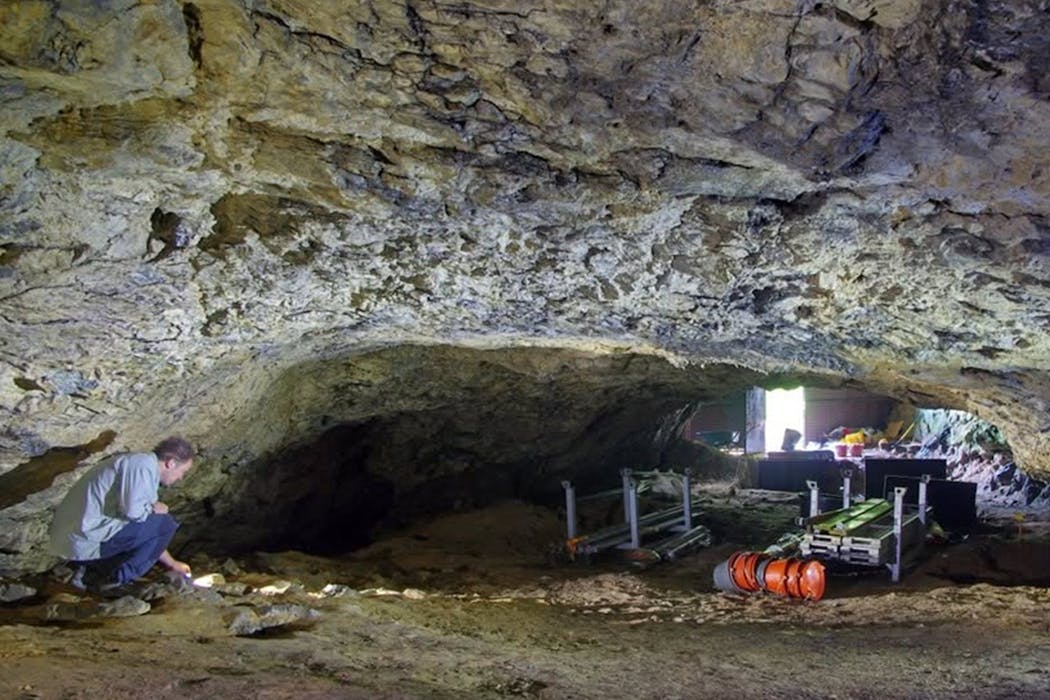
The researchers analysed genetic material from remains found at excavations across Belgium and the Netherlands. Monika Knul

When ancient DNA studies began to gain attention, little more than a decade ago, the view took hold among geneticists that everything we thought we knew about the peopling of Europe by modern humans was wrong. The story was simpler than anyone was expecting: Europe was settled in just three massive migrations from the east.

First came the hunter-gatherers, more than 40,000 years ago. Then, after 9,000 years ago, there was an expansion of farming people from Anatolia during the Neolithic age.

Finally, from 5,000 years ago, the Corded Ware people expanded out of the Russian steppe to inaugurate the European bronze age. The Corded Ware were named after the cord-like impressions in their pottery and carried a distinctive genetic signature previously absent from most of Europe. Genetically, most present-day Europeans have some of each.

This was always an over-simplification, however. Our new paper, produced with colleagues from the US and across Europe, has highlighted some of the more complex interactions between ancient populations that took place in north-west Europe.

Our research untangles the origins of prehistoric populations across Belgium and the Netherlands, as well as identifying the source population for a migration into Britain during the late Neolithic that seems to have led to a 90% replacement of Britain’s Neolithic farmers.

Ancient DNA research already suggested a much more nuanced picture. For example, when early Neolithic farmers first moved into Europe, they interacted little with the local hunter-gatherer people. As a result, although they now lived far from their homeland, their genomes still resembled those of their ancestors from Anatolia.

But by 1,000–2,000 years later, they had absorbed significant local ancestry. Their hunter-gatherer ancestry swelled from only 10% to 30–40% in some regions. Clearly the hunter-gatherers had not vanished as the farmers expanded.

Hunter-gatherer ancestry in populations across Europe between 4,500BC and 2,500BC.
Nature / University of Huddersfield

Northern wetlands

The new research takes us even further from the simple picture. Almost a decade ago, our research group at the University of Huddersfield began a collaboration with palaeoecologist Professor John Stewart from Bournemouth University and archaeologists at the Université de Liège, Belgium. We analysed the genomes of Neolithic human remains excavated along the River Meuse in Belgium, dating to around 5,000 years ago.

This work became part of a larger project, led by Professor David Reich and Dr Iñigo Olalde at Harvard University, involving geneticists and archaeologists from across western Europe. This widened the focus to further sites around the Lower Rhine–Meuse area – wetlands and coastal areas as well as rivers – spanning the late hunter-gatherer cultures to the bronze age.

The fertile soils south of the Rhine-Meuse wetlands had attracted pioneer Neolithic farmer-colonists as early as 5,500BC. However, the rich resources of the northern wetlands were more suited to the lifestyle practised by hunter-gatherers. Even so, the results, generated by our research student, Alessandro Fichera, in collaboration with Harvard, came as a big surprise.

The genomes of people from later Neolithic times in Belgium carried at least 50% local hunter-gatherer ancestry, alongside the expected Anatolian farmer ancestry. Discussing these results with our collaborators led to a “eureka” moment: the same pattern appeared at other sites situated in similarly water-rich environments across the region.

Notably, many of the earlier Neolithic Dutch samples from further north – such as the Swifterbant culture, well-known for maintaining a hunter-gatherer economy alongside some adoption of agriculture – carried close to 100% hunter-gatherer ancestry.

Women’s role in the spread of farming

We then compared the Y-chromosome and mitochondrial DNA, which track the male and female lines of descent, respectively. The Y chromosomes in the Belgian remains were all characteristic of hunter-gatherers, but three-quarters of the mitochondrial DNA lineages had come from Neolithic farmers living further south. The implication was clear: farming know-how had been imported into the “waterworld” hunter-gatherer communities by women.

Our findings support a version of the “frontier mobility” or “availability” model for the spread of the Neolithic, proposed by archaeologists Marek Zvelebil and Peter Rowley-Conwy in the 1980s. They envisioned a contact zone between pioneer farming groups arriving by “leapfrog colonisation” and hunter-gatherer areas.

In the model, the “availability” phase entailed contact and small-scale movements across the frontier, with trading relationships and marriage alliances, for example, forming gradually. This would be followed by a “substitution” phase where farming develops alongside foraging in the hunter-gatherer area, and eventually a “consolidation” phase, when farming predominates.

Our results suggest that the frontier was much more permeable to women than it was to men, and that it may have been marriage of Neolithic women into the forager communities that eventually helped the hunter-gatherers to adopt farming full time. After all, because of the predominance of farming across Europe, the likely alternative long-term was extinction.

Perhaps this kind of model might also apply to other parts of Europe where we lack evidence for how the increased hunter-gatherer ancestry in the later Neolithic came about. In any case, the fact that, here, the “more advanced” farming women married into hunter-gatherer groups, contrary to many archaeologists’ expectations that hunter-gatherer women would “marry up”, suggests that perceptions need to change.

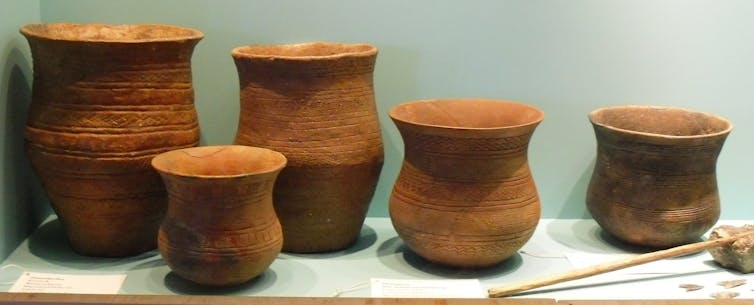
Pottery made by the Bell Beaker people, who created the bronze age of central Europe.
Alfons Åberg, CC BY-SA

Beakers, bronze age and Britain

Around 4,600 years ago, though, people were on the move again. A new wave of settlers – pastoralist-farmers hailing ultimately from the Russian steppe – began to infiltrate the Rhine area in the form of the Corded Ware culture. As growing numbers moved in from the east, they were transformed – we still don’t understand exactly how – into what is known as the Bell Beaker culture.

Within a few centuries, the genetic landscape of the Rhine-Meuse region, including the wetlands, was completely reshaped. Our colleagues found that, 4,400 years ago, less than 20% of the ancestry of the people living there traced back to the earlier farmers and hunter-gatherers. At least 80% of their ancestry was now from the steppe.

The Bell Beaker people rapidly expanded and rippled out further in all directions, creating the bronze age of central Europe. And not only central Europe – they also spread across the English Channel and throughout Britain, extending as far north as Orkney.

It looks as if the British farmers who had been building Stonehenge over the preceding centuries all but disappeared – again, for reasons which remain unclear.

But did they actually vanish? Perhaps this rather blunt picture might become more nuanced too, as we learn more fine-grained details of what happened from archaeology and ancient DNA.

The Conversation

Martin B. Richards has received funding from The Leverhulme Trust’s Doctoral Scholarship scheme.

Maria Pala has received funding from The Leverhulme Trust’s Doctoral Scholarship scheme.

ref. DNA study uncovers continental origins of Britain’s bronze age population – https://theconversation.com/dna-study-uncovers-continental-origins-of-britains-bronze-age-population-276540

Molecules found in Martian rock hint at ancient life – new study

Source: The Conversation – UK – By Kevin Olsen, UKSA Mars Science Fellow, Department of Physics, University of Oxford

A new study of carbon-based molecules in a Martian rock offers new hints about the possibility that the red planet once hosted life.

The researchers considered a range of possible processes that could have produced the molecules they found. They argue that high concentrations of large organic (carbon-based) compounds found in the rock cannot be fully explained by the non-biological processes they examined.

The team members say it is therefore possible that the organics were produced by living organisms. It is also feasible that molecules made by hydrothermal processes – where water is heated to high temperatures underground – also contributed to the organics found in the rock.

The scientists also believe that some of the organic compounds came from fatty acids, which are found in the cell walls of living organisms.

The complexity of the newly detected molecules is strikingly distinct. They require more complex methods for production, which helps scientists narrow down their source.

The discovery of the molecules was made with Nasa’s Curiosity rover, which examined a Martian rock named Cumberland. This is a sedimentary rock, meaning it was probably built up in layers in the presence of water billions of years ago. Curiosity has been exploring a site called Gale Crater on Mars since 2012.

The molecules include long chain alkanes in the form of decane (C₁₀H₂₂), undecane (C₁₁H₂₄), and dodencane (C₁₂H₂₆), much larger molecules than previously identified on Mars.

These measurements come from a pyrolysis experiment – where samples are heated to release gases that can then be analysed. This experiment broke down even larger molecules, and the assumption, from well-known chemistry, is that these may have been derived from carboxylic acids, or fatty acids. These are the kinds of compounds we recognise from our food.

The molecules were reported in a separate paper from March 2025. This new study, in the journal Astrobiology, considers the various ways they could have been made, both biological and non-biological.

Curiosity used its drill to extract a sample of rock from Cumberland.
Nasa/JPL/MSSS

The discovery of organics on Mars is critical to our understanding of whether the planet could have supported life (and whether it could today). Organic matter refers to molecules containing a bond between carbon and hydrogen. These comprise the essential building blocks for life as we know it.

The critical line of reasoning in the new paper is that because these long chains will break down under the ionising radiation in the harsh Martian environment (a combination of ultraviolet radiation from the Sun, heavier charged particles that don’t make it through Earth’s magnetic field, and cosmic radiation), the actual quantity of the carboxylic acids that we are measuring now must have been hundreds of times higher in the past.

Today, these molecules are present at 30–50 parts-per-billion in the rock. But the authors estimate this could have been around 120–7,700 parts-per-million before ionising radiation exposure.


Read more:
Signs of ancient life may have been found in Martian rock – new study


The authors examined several possible, but non-biological, sources for these fatty acids, such as delivery by interplanetary dust and meteorites, organic hazes in the ancient Martian atmosphere, and the act of serpentinisation – a geological process known to have occurred on Mars involving high heat and abundant liquid water.

The authors point out potential limitations with some of these processes that may make them less likely as sources for the organic molecules. For example, these limitations may relate to what we know about the ratio of simple organics, like methane, to the amount of CO₂ in the early Martian atmosphere, or where reactions like serpentinisation need to take place (underground) and how this matter could be transported to the surface.

Therefore, the authors argue, it is plausible that these carboxylic or fatty acids have a biological origin and may be remnants of an ancient, early Martian biosphere. They concede in their closing paragraph extraordinary claims require extraordinary evidence, as the scientist and author Carl Sagan once said, and downplay any attempt to claim evidence of life without intense scrutiny. However, it sets an optimistic tone for future projects – and there will be a busy future on Mars.

In September 2025, Nasa made a similar announcement using results from the Perseverance rover. They reported organic carbon-bearing mudstones that appeared to have participated in low temperature chemical reactions after they were deposited.

The researchers behind this study also looked at a variety of ways that the reactions could have taken place and were unable to explain them using known non-biological processes. The results hinted at the possible presence of microbial activity on Mars billions of years ago.

However, it will be impossible to say for sure whether the red planet hosted life until Martian rocks are delivered to Earth for analysis in laboratories. The findings published in September 2025 were largely seen as a rallying cry for the Mars Sample Return mission. This will gather up samples collected by the Perseverance rover and send them to our planet for examination.

Unfortunately, Mars Sample Return was effectively cancelled last month after years of being under-funded. Despite this, there remain big things ahead. The European Space Agency will send its Rosalind Franklin rover to Mars in 2028, featuring a drill that will search for signs of life up to two metres underground.

In 2026, Japan will attempt to retrieve a piece of the Martian moon Phobos with its Martian Moons Exploration mission. At the same time frame, follow-up missions from China and India are taking shape, with China also attempting to retrieve a sample from the surface.

The Conversation

Kevin Olsen does not work for, consult, own shares in or receive funding from any company or organisation that would benefit from this article, and has disclosed no relevant affiliations beyond their academic appointment.

ref. Molecules found in Martian rock hint at ancient life – new study – https://theconversation.com/molecules-found-in-martian-rock-hint-at-ancient-life-new-study-276241

Drug murders in France: how organised crime moves in and ruins communities

Source: The Conversation – UK – By Felia Allum, Professor of Comparative Organised Crime and Corruption, University of Bath

France has reached what has been called a “turning point” in its relationship with drugs cartels after Medhi Kessaci the innocent 20-year-old brother of anti-drug activist Amine Kessaci was shot dead in Marseille last November.

The murder was taken as a warning to Amine, who had lost another brother five years earlier. Brahim had been found burnt in a car, a casualty of internal drug rivalries and business. Amine has since been very outspoken about the need to understand what is happening in Marseille and in France.

But he continues to risk his life by being outspoken. He was recently evacuated from a meeting in Aix en Provence, after a threat was made on his life.

Between 2023 and 2024, 73 people were murdered in Marseille in crimes related to the drugs business. Many of them were young people freshly recruited on the internet to make easy money by selling drugs. Similar drug-related murders have taken place in Grenoble, Paris, Nimes, Montpellier, Nice and Lyon.

Experts and commentators have invented labels such as “narcobanditism”, “narcomurder”, “narcoterrorism”, “narcostate” and “narcocracy” to try to explain what is happening in France.

Marseille is emblematic of a state’s failure to understand how drug networks function, and their relationship with local communities and drug consumers. Although the current drug group dominating in France at the moment uses the term mafia in its name (Mafia DZ), it is still different from the mafia-type associations that have developed in Italy.

These waves of drug-related crime reflect the contemporary cosmopolitan and capitalist cities that our society, governments, value systems and economic systems have created. These are places where the welfare state, with its sense of belonging and collectivity, has been downgraded in favour of individualism, money, technology and bureaucracy.

Organised crime groups in their different forms, whether local drug lines, more sophisticated drug networks or traditional mafias, do not appear out of nowhere overnight. They do not become embedded in local communities against citizens’ will. They don’t develop links with local politicians and professionals for no apparent reason. These crime groups fill the gaps that the state and society should occupy because they offer jobs, support and votes.

We know that criminal organisations take hold through two different mechanisms.

In Italy, the US, Colombia, Albania and Russia, mafia and cartel structures have developed during major state transformations. These periods of upheaval create space and even vacuums, which can be filled by other non-state organisations and structures. The classic example of this is the US in the late 19th and early 20th centuries, when there was significant economic upheaval, rapid urbanisation and industrialisation, developing political institutions and changing social makeup. Another is Naples and Sicily during the 1860s, when Italy went from being a peninsula of kingdoms to a unified state.

In other cases, as has happened in the 20th century, the state has established itself but its capitalist structural conditions create the conditions for organised crime to thrive. Social, racial, educational and economic inequalities drive crime.

Political economist Susan Strange explained how the state’s authority has evaporated and how the markets now dictate terms. Communities are left with no safety net in the wake of the state’s retreat. Gangs seize on this vulnerability and propose an alternative model for young people. They offer instant and easy money to local people and enjoy visible respect in neighbourhoods where despair has become the daily background music. They dictate the law to their drug dealing employees and seek social consensus from the local community, which feels abandoned and has little option but to live with the violence.

This is not a French-only phenomenon – it is taking place in many liberal democratic systems where the welfare state is becoming a privatised, bureaucratic and technological state based on individualism and profit.

The French government has proposed new solutions such as police and judicial tools to tackle these drug groups. The French state has made some inroads in the past, but these groups just reorganise, often controlling operations from Dubai.

France hopes to learn from the Italian anti-mafia legislation of the 1990s. It is bringing in a new anti-organised crime directorate (PNACO), which includes 16 prosecutors who will tackle drug networks across France and Europe.

In addition, it wants to introduce a new state witness protection programme for former criminals to collaborate with the state to go with their new harsh prison conditions for drug bosses and laws on confiscation of assets.

It also wants to target the consumers and increase fines for drug possession and even take away people’s driving licences or jobs if they get caught with drugs.

But when states implement reactive and punitive measures of this kind, they aren’t dealing with the roots of the problem. As Amine Kessaci recently wrote in his book, ending drug trafficking isn’t just about combating the networks in Marseille. It’s about resisting a societal model that makes these networks desirable. It’s about promoting other values and offering an alternative to escape or downfall. It’s about giving the foot soldiers of the drugs trade a positive horizon other than a cell or a grave.

The Conversation

Felia Allum does not work for, consult, own shares in or receive funding from any company or organisation that would benefit from this article, and has disclosed no relevant affiliations beyond their academic appointment.

ref. Drug murders in France: how organised crime moves in and ruins communities – https://theconversation.com/drug-murders-in-france-how-organised-crime-moves-in-and-ruins-communities-274054

Anxiety in teenagers linked to sugary drinks – new research

Source: The Conversation – UK – By Chloe Casey, Lecturer in Nutrition and Behaviour, Bournemouth University

Teens who drank more sugary drinks had a higher levels of anxiety. Antonio Guillem/ Shutterstock

Anxiety affects an estimated one in five teenagers. The condition can seriously affect their social lives, school performance and overall wellbeing. And, worryingly, anxiety disorders that begin during adolescence often continue into adulthood.

Biological, genetic and environmental factors are all known to play a role in a person’s likelihood of developing anxiety. But a growing body of research suggests that diet may also influence mental health.

Some foods, such as fruits and vegetables and omega-3 fatty acids, have been linked to lower anxiety symptoms.

On the other hand, diets high in free sugar have been linked to poorer mental health in adolescents. Free sugars include sugar added to foods and drinks, as well as those normally present in honey, syrups and fruit and vegetable juices.

UK guidelines recommend that free sugars make up no more than 5% of our daily calorie intake. Adolescents typically consume the most free sugar of any age group, sometimes up to 20% of their daily total energy intake – much of it coming from sugary drinks.

Now, my colleagues and I have published new research showing that sugary drink consumption may be linked to higher levels of anxiety in adolescents.

This review combined data from several previous studies looking at the amount of sugary drink teenagers consume and how anxious they feel. Our research group pulled together findings from multiple studies published between 2000 and 2025. Of the nine studies included, seven found a clear link between sugary drink intake and anxiety.

The studies involved young people aged ten to 19. Sugary drink intake was usually measured through surveys. Sugary drinks included fizzy drinks, colas, sweetened fruit juices, sweetened milk drinks, energy drinks and sweetened tea or coffee.

The results of the study showed a significant positive association: teenagers who consumed high amounts of sugary drinks had 34% higher odds of being diagnosed with an anxiety disorder.

A group of three teens cheers their sugary iced drinks.
Some teens get up to 20% of their daily calorie intake from sugar.
razum/ Shutterstock

It’s important to remember that the included studies were observational. This means they can show patterns or associations, but they do not indicate that sugary drinks cause anxiety. It’s also possible that anxiety leads teenagers to consume more sugary drinks.

Other factors, such as education levels and family income, are known to influence both mental health and sugary drink intake.

The gut-brain axis, which is the network that links your brain to your gut, could also play a role in the connection between sugary drink consumption and anxiety. However, there are many things that affect gut health as well, including overall diet, stress levels and sleep – all of which have also been linked to anxiety.

Overall, our study suggests that reducing sugary drink consumption could be a helpful way to support adolescent mental health. While numerous studies have investigated the impact reducing sugary drink intake has on the physical health of adolescents, there is a need now to investigate whether this also has mental health benefits.

Reducing sugary drink intake

UK dietary guidelines recommend that adolescents and adults consume no more than 30 grams of sugar per day (approximately seven teaspoons). Given that a single can of fizzy drink can contain around 35 grams of sugar, cutting back on sugary drinks is an effective way to stay within this limit.

There are other practical ways of reducing intake of sugary drinks. This includes drinking sparkling or soda water with a slice of lemon, cucumber, berries or mint to get natural flavour without added sugar. Sugary drinks can be replaced with water, milk or sugar-free alternatives.

Another option is to switch to low-calorie, artificially-sweetened drinks (though these should only be consumed in moderation). Energy drinks can have a negative effect on sleep quality, academic performance and behaviour in adolescents so it’s a good idea to replace these with alternatives that contain less caffeine, such as tea or coffee.

With growing concerns about anxiety in teenagers, it’s becoming increasingly important to identify whether changing certain lifestyle factors can help reduce their risk of experiencing poor mental health. Although we still don’t fully understand how sugary drinks might influence anxiety, this study suggests they could play a role.

The Conversation

Chloe Casey does not work for, consult, own shares in or receive funding from any company or organisation that would benefit from this article, and has disclosed no relevant affiliations beyond their academic appointment.

ref. Anxiety in teenagers linked to sugary drinks – new research – https://theconversation.com/anxiety-in-teenagers-linked-to-sugary-drinks-new-research-275989

How climate scientists balance the tension between research and public protest – new study

Source: The Conversation – UK – By Samuel Finnerty, Senior Research Associate, Social Psychology, Lancaster University

From marches and demonstrations to civil disobedience, scientists are increasingly turning to climate protest. As a social psychologist, I’ve been investigating why researchers – who are trained to value scientific norms of objectivity and restraint – choose to engage in such public and sometimes disruptive action.

My study, just published in the journal PLOS Climate addresses this question by exploring scientists’ own experiences and decision-making. I spent two years observing, participating with, and interviewing scientists engaged in climate activism to understand their motivations.

Science and activism are very different. Scientific training emphasises restraint, uncertainty, narrow expertise, and objectivity. Activism demands urgency, moral clarity, and visibility. This tension often fuels the critique that scientists who protest have abandoned scientific norms in favour of ideology. Yet, a significant number of scientists engage in advocacy and activism. This marks a culture change in how scientists communicate.

So, how do scientists advocate without betraying what it means to be a scientist?

Most activism does not begin with actions that risk arrest such as blocking a road. Scientists typically become involved through roles aligned closely with their professional identity: public communication, giving talks, producing evidence summaries for social movements or acting as visible “scientist” figures within protest spaces. This reflects wider research showing that continuing to “feel like being a scientist” rather than stepping outside that role altogether, is critical for scientists’ engagement in activism.

six scientists in white lab coats standing outside building, holding blue white signs highlighting hazard of fossil fuels
Scientists for Extinction Rebellion protesting at Department for Business, Energy, and Industrial Strategy in 2022.
Andrea Domeniconi, CC BY-NC-ND

The white lab coat is one tool scientists use to manage this tension. In protest spaces, it serves as visible signal of expertise, collective identity and legitimacy. Lab-coated scientists can challenge expectations of what an activist looks like, while also helping participants feel united and reassured that they are still acting as scientists. This helps reconcile identities that might otherwise appear in conflict.

However, for some social scientists who do not wear lab coats in their everyday research, this approach risks reinforcing narrow ideas about what counts as “real science”, both in public perception and within activist spaces, discouraging some from participating.

Acting alongside other scientists helps normalise and legitimise activism, reduce anxiety and build confidence. Being part of a collective also mitigates concerns about reputation damage. Participants nevertheless described activism as emotionally demanding. Continued involvement therefore depended on feeling supported by others.

Escalating actions

Some scientists choose to take part in civil disobedience, a form of peaceful protest that involves deliberately breaking the law to draw attention to an issue, such as sitting in roads or attaching themselves to buildings.

Many scientists told me this move was driven by frustration with the limits of conventional science communication. Many had spent years publishing research, advising policymakers and engaging with the media, yet saw little meaningful political response. For some, civil disobedience felt like a last resort. They framed it not as abandoning science, but as acting on it, when producing and communicating evidence no longer felt sufficient.

As one scientist, arrested during a protest at the London headquarters of the Department for Business, Energy and Industrial Strategy, said: “As scientists, we have tried to warn the world as reasonably and as rationally as possible, […] But what is the point of doing it if it just gets ignored?”

scientists answering questions from public at outside protest, ask a scientist banner in background
Researchers answer questions from the public at the Ask a Scientist stand at The Big One, a climate action protest in 2023.
Crispin Hughes., CC BY-NC-ND

The challenges of advocating as a scientist

Once scientists appear in activist spaces, their identity is not always taken at face value. Wearing a lab coat or invoking scientific credentials can open conversations and signal trust. But it may also invite scepticism, heightened scrutiny, or unrealistic expectations that one person can speak for all of science. Participants described being questioned by members of the public, journalists and sometimes other scientists about whether they were “real scientists”, whether their research field counted, or whether they were qualified to speak at all.

Many scientists therefore found themselves balancing the need to speak with authority while remaining honest about the limits of their expertise. Research on scientist advocacy shows mixed effects on public trust, sometimes positive, sometimes negative, and often context-dependent.

Scientists in my study were acutely aware of this. They sought to manage how their activism was perceived by clarifying their expertise, acting alongside other scientists, and choosing forms of participation consistent with their professional values.

Looking at the wider picture, as political inaction, hostility towards climate activism, politicisation of science and misinformation grow, scientists face growing pressure not only to produce knowledge, but to decide how to visibly stand for it. The rise of scientist activism reflects this shifting terrain, and the difficult choices it brings.


Don’t have time to read about climate change as much as you’d like?

Get a weekly roundup in your inbox instead. Every Wednesday, The Conversation’s environment editor writes Imagine, a short email that goes a little deeper into just one climate issue. Join the 47,000+ readers who’ve subscribed so far.


The Conversation

Samuel Finnerty does not work for, consult, own shares in or receive funding from any company or organisation that would benefit from this article, and has disclosed no relevant affiliations beyond their academic appointment.

ref. How climate scientists balance the tension between research and public protest – new study – https://theconversation.com/how-climate-scientists-balance-the-tension-between-research-and-public-protest-new-study-274916