Body odour has a reputation problem. It is often treated as a hygiene failure or a social offence. In reality, it is biology at work, plus a big helping of culture.
Most body odour is not produced by sweat itself. Sweat is largely odourless. Smell develops when bacteria (and sometimes fungi) on the skin break down compounds in sweat and skin oils, producing pungent byproducts. That is why odour is often strongest in warm, moist areas with lots of sweat glands, such as armpits, feet and the groin. It is also why two people can smell very different after the same workout. Their skin chemistry and microbiomes differ.
In our latest episode of Strange Health, we spoke to Mats J. Olsson, a professor of experimental psychology at the Karolinska Institutet in Stockholm, who studies how humans perceive body odour.
One of his key points is easy to forget in a deodorant-saturated world: humans have the anatomy of a species built to smell. We have sweat and sebaceous glands in “strategic” places, and we have a sense of smell capable of picking up subtle cues. But in modern life, we also wash frequently and layer fragrances, which can mask those cues.
So what does body odour communicate, if anything? Olsson argues that for humans, smell often works as an “approach or avoid” signal. We might not always be able to describe odours clearly, but we register them quickly as pleasant, neutral or off-putting.
He also emphasises that much of what we label as “good” and “bad” smell is learned. Babies are not born with strong cultural disgust reactions. We acquire them, and different cultures acquire them differently.
His research also suggests smell can carry information about health. In one set of experiments, Olsson and colleagues temporarily activated participants’ immune systems using a safe method that mimics the early stages of illness (a short-lived inflammatory response).
Then they collected body odour samples from the armpits using cotton pads. When other people were asked to smell the samples, they rated the “sick” samples as slightly worse, often describing them as smelling more “sweaty”. Participants were not coughing or visibly unwell, which suggests our noses may pick up early, subtle shifts that we cannot easily put into words.
Olsson has also explored how disease cues affect us. In one study, exposure to disgusting odours was linked to a measurable immune response in the mouth, as if the body was preparing for potential pathogens. It is a reminder that smell is not just about social judgement. It can be part of a broader, protective system.
If odour bothers you, the practical aim is not to “eliminate” a natural human smell. It is to reduce the conditions that let odour-producing microbes thrive. Washing after sweating helps. Antiperspirants reduce sweat using aluminium salts that block sweat ducts. Deodorants mainly mask smells or reduce bacteria. Applying them to clean, dry skin often works best, commonly at night when sweating is lower.
Body odour, then, is not simply something to be “fixed”. It is a mix of microbiology and meaning: what your skin produces, and what your culture has taught you to feel about it.
Strange Health is hosted by Katie Edwards and Dan Baumgardt. The executive producer is Gemma Ware, with video and sound editing for this episode by Anouk Millet. Artwork by Alice Mason.
In this episode, Dan and Katie talk about a social media clip via YouTube from Alexandrasgirly.
Listen to Strange Health via any of the apps listed above, download it directly via our RSS feed or find out how else to listen here. A transcript is available via the Apple Podcasts or Spotify apps.
Katie Edwards works for The Conversation in the UK. Mats J. Olsson has received research funding from the Swedish Research Council.
Dan Baumgardt does not work for, consult, own shares in or receive funding from any company or organisation that would benefit from this article, and has disclosed no relevant affiliations beyond their academic appointment.
International policies to protect the environment are at a crossroads: bold targets coexist with fragmented priorities, threatening the agenda. The debate is often dominated by the least effective measures, while high-impact solutions struggle to gain space and resources. Funding streams show only a faint prioritisation of green objectives, eroding the consistency of environmental action. These dynamics become especially evident in sectors where emissions are high and policies are numerous, yet strategic alignment and assessment remain scarce.
The Agriculture, Forestry and Other Land Use (AFOLU) sector, responsible for over 20% of global emissions, continues to fall through the cracks of climate policy. In the European Union, it is often described as “the missing piece in climate policy.” Yet, it continues to be regulated with several national and local initiatives, while suffering from weak coordination at the macro level (e.g. EU, multilateral agreements).
Calls for policy efficiency and multilateral climate governance
Despite a wide range of local and national initiatives targeting emissions reductions in the AFOLU sector, there remains a striking lack of assessment studies evaluating their real-world effectiveness.
Russia’s invasion of Ukraine has triggered one of the largest increases in conflict-related food insecurity. The United Nations’ Food and Agriculture Organization (FAO) warns that, due to the war, millions of people could still be chronically undernourished by 2030. The crisis has pushed food security to the top of the political agenda, with the need to ensure food supply often putting environmental and climate priorities in the background.
On June 20 2025, the European Commission withdrew its Green Claims Directive, a planned crackdown on misleading environmental claims. In the EU Parliament, the move sparked strong criticism from Socialists and Liberals and marked a setback in the fight against greenwashing.
India’s plans for one, still remain to be seen. Described as the world’s fifth largest economy and third biggest emitter of global greenhouse gases, the country was closely watched at the UN meeting.
Highest emitting economies are on the UN’s radar
COP30 absentees included China’s President Xi Jinping and US President Donald Trump. China and the US are the two biggest emitters of planet-warming gases. At the summit China came under the closest scrutiny as the world’s second-largest economy and the biggest emitter of greenhouse gases. What alarms analysts is that China approved 11.29 gigawatts (GW) of new coal-fired power plants in the first three months of 2025, already surpassing the 10.34 GW approved in the first half of 2024. Reducing coal use is essential for China to meet its targets of peaking carbon emissions by 2030 and achieving carbon neutrality by 2060.
Meanwhile, last June, in the US, Donald Trump was already laying the groundwork to open up 58 million acres of national forest backcountry to road construction and development, rolling back protections that have been in place since 2001. In detail, the Trump administration announced plans to repeal the 2001 Roadless Rule (describing it as outdated) which had preserved the wild character of nearly one-third of the land in national forests across the United States.
These trends could ultimately be summed up in one sentence: a policy agenda whose attention toward the environment is slowly declining, despite the growing urgency of sustainability challenges.
The Environmental impact of agricultural policies: Beyond market instruments
The expectations on the debate about agriculture’s inclusion in the EU Emissions Trading System (ETS) may be exaggerated. Our research shows that similar policies (i.e. carbon taxes, emissions trading schemes, and subsidies) are barely effective and tend to reduce emissions by percentage as high as 9%.
Setting a price on emissions through a fair and balanced application of the polluter pays principle makes sense. It helps cleaner alternatives compete, raises money to support a fair transition, and makes polluters take financial responsibility for the damage they cause. But for a future agricultural ETS to truly work, it must be designed properly: it needs a strict emissions cap, no free pollution permits, and a fair and efficient use of the revenues.
In the current Common Agricultural Policy (CAP), the adoption of eco-scheme uptake has been poor. To make matters worse, CAP rules have been watered down, weakening several of the “good agricultural and environmental conditions” and giving EU member stateseven more flexibility in the approval process of their strategic plans. In this context, putting a price on pollution won’t change much if the rest of the system keeps supporting polluting practices. A carbon price only works if the broader framework stops rewarding emissions in the first place.
By co ntrast, non-market policies – i.e. Protected Areas (PA), Forest Management Programs (FMP), Payments for Environmental Services (PES), and Non-Tariff Measures (NTM) – often deliver better results, with stronger impacts on reducing emissions than market-based policies. PA, broadly adopted in Indonesia and Thailand, can achieve emission reductions of up to 60%, placing them among the most impactful policy instruments available. FMP and PES show encouraging results in land-use changes, such as the conversion of croplands into forests.
While non-market-based policies demonstrate strong effectiveness in reducing emissions, they continue to face significant challenges. The EU Deforestation Regulation (EUDR) is an example of this. Although the EUDR was introduced as a landmark effort to curb global deforestation by ensuring that products sold in the EU are deforestation-free, it is now facing significant political pushback. Eighteen EU member states have called on the European Commission to ease the regulation, arguing that it imposes disproportionate and costly administrative burdens even on countries with negligible deforestation risk. They warn that the law, in its current form, could hurt competitiveness, drive up production costs, and disrupt supply chains; pressures that have already led to the postponement of its enforcement and risk diluting its environmental ambition before it is fully implemented.
Effective agricultural policy vs current funding priorities
Of this, “The vast majority, around €283.9 billion, goes to direct payments and market measures through the European Agricultural Guarantee Fund (EAGF), primarily to support farmers’ incomes. Meanwhile, just €94.2 billion is allocated to rural development via the European Agricultural Fund for Rural Development (EAFRD), the branch of the CAP that funds environmental protection and biodiversity efforts, such as PA.”
In theory, the CAP aims to place environmental protection at the heart of its strategy. But when we follow the money, the picture is less balanced. Between 2021 and 2027, over €40 billion per year was directed to market-related expenditure and direct payments, while rural development, the pillar supporting green initiatives, receives less than half of that.
What’s the upshot?
Most of the funding still goes to policies that are least effective at protecting the environment, especially when it comes to cutting emissions, while the more impactful measures remain underfunded. It is a mismatch that risks undermining Europe’s climate and biodiversity ambitions.
This article was co-authored with Irene Maccarone, a Research Fellow at the University of Foggia (Italy).
A weekly e-mail in English featuring expertise from scholars and researchers. It provides an introduction to the diversity of research coming out of the continent and considers some of the key issues facing European countries. Get the newsletter!
Fabio G. Santeramo is also affiliated with the European University Institute.
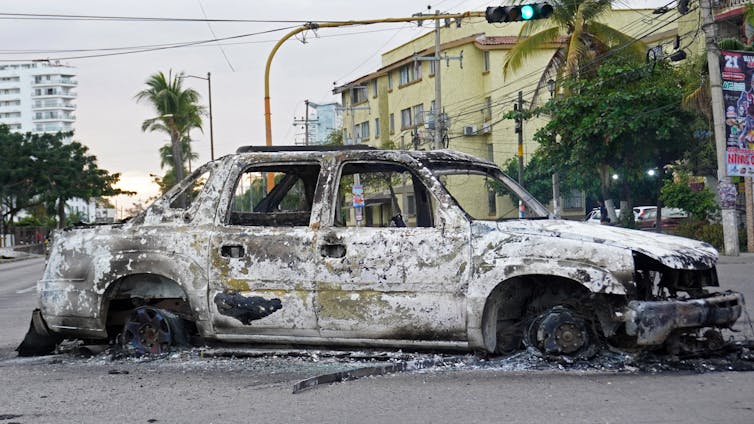
A soldier stands guard by a charred vehicle in Michoacán state, Mexico, on Feb. 22, 2026.AP Photo/Armando Solis
The death of a major cartel boss in Mexico has unleashed a violent backlash in which members of the criminal group have paralyzed some cities through blockades and attacks on property and security forces.
At least 73 people have died as a result of the operation to capture Nemesio Oseguera Cervantes, or “El Mencho.” The head of the Jalisco New Generation Cartel was seriously wounded during a firefight with authorities on Feb. 22, 2026. He later died in custody.
As an expert in criminal groups and drug trafficking in Latin America who has been studying Mexico’s cartels for two decades, I see the violent aftermath of the operation as part of a pattern in which Mexican governments have opted for high-profile hits that often lead only to more violence without addressing the broader security problems that plague huge swaths of the country.
Who was ‘El Mencho’?
Like many other figures involved in Mexico’s drug trafficking, Oseguera Cervantes started at the bottom and made his way up the ranks. He spent some time in prison in the U.S., where he may have forged alliances with criminal gangs before being deported back to Mexico in 1997. There, he connected with the Milenio Cartel, an organization that first allied, and then fought with, the powerful Sinaloa Cartel.
Most of the information available points to the Jalisco New Generation Cartel forming under El Mencho around 2010, following the killing of Ignacio “Nacho” Coronel Villarreal, a Sinaloa Cartel leader and main link with the Milenio Cartel.
Since 2015, Jalisco New Generation Cartel has been known for its blatant attacks against security forces in Mexico – such as gunning down a helicopter in that year. And it has expanded its presence both across Mexico and internationally.
In Mexico, it is said to have a presence in all states. In some, the cartel has a direct presence and very strong local networks. In others, it has cultivated alliances with other trafficking organizations.
Besides drug trafficking, the Jalisco New Generation Cartel is also engaged in oil theft, people smuggling and extortion. As a result, it has become one of the most powerful cartels in Mexico.
What impact will his death have on the cartel?
There are a few potential scenarios, and a lot will depend on what succession plans Jalisco New Generation had in the event of Oseguera Cervantes’ capture or killing.
In general, these types of operations – in which security forces take out a cartel leader – lead to more violence, for a variety of reasons.
Mexicans have already experienced the immediate aftermath of Oseguera Cervantes’ death: retaliation attacks, blockades and official attempts to prevent civilians from going out. This is similar to what occurred after the capture of drug lord Ovidio Guzmán López in Sinaloa in 2019 and his second capture in 2023.
Violence flares in two ways following such high-profile captures and killings of cartel leaders.
In the short term, there is retaliation. At the moment, members of the Jalisco New Generation Cartel are seeking revenge against Mexico’s security forces and are also trying to assert their regional authority despite El Mencho’s death.
These retaliatory campaigns tend to be violent and flashy. They include blockades as well as attacks against security forces and civilians.
Then there is the longer-term violence associated with any succession. This can take the form of those who are below Oseguera Cervantes in rank fighting for control. But it can also result from rival groups trying to take advantage of any leadership vacuum.
The level and duration of violence depend on a few factors, such as whether there was a succession plan and what kind of alliances are in place with other cartels. But generally, operations in which a cartel boss is removed lead to more violence and fragmentation of criminal groups.
Of course, people like Oseguera Cervantes who have violated laws and engaged in violence need to be captured. But in the long run, that doesn’t do anything to dismantle networks of criminality or reduce the size of their operations.
What is the current state of security in Mexico?
The upsurge in violence after Oseguera Cervantes’ killing occurs as some indicators in Mexico’s security situation seemed to be improving.
But other measures are appalling. Disappearances are still unsettlingly high. The reality that many Mexicans experience on the ground is one where criminal organizations remain powerful and embedded in the local ecosystems that connect state agents, politicians and criminals in complex networks.
Criminal organizations are engaged in what we academics call “criminal governance.” They engage in a wide range of activities and regulate life in communities – sometimes coercively, but sometimes also with some degree of legitimacy from the population.
In some states like Sinaloa, despite the operations to take out cartel’s leaders, the illicit economies are still extensive and profitable. But what’s more important is that levels of violence remain high and the population is still suffering deeply.
The day-to-day reality for people in some of these regions is still one of fear.
And in the greater scheme of things, criminal networks are still very powerful – they are embedded in the country’s economy and politics, and connect to communities in complex ways.
How does the El Mencho operation fit Mexico’s strategy on cartels?
The government of President Claudia Sheinbaum wanted a big, visible hit at a time when the U.S. is pushing for more militarized policies to counter Mexico’s trafficking organizations.
But this dynamic is not new. Most U.S. and Mexican policy regarding drug trafficking organizations has historically emphasized these high-profile captures – even if it is just for short-term gains.
Violence has flared in Mexico’s Jalisco state since the death of Nemesio ‘El Mencho’ Oseguera Cervantes. Arturo Montero/AFP via Getty Images
It’s easier to say “we captured a drug lord” than address broader issues of corruption or impunity. Most of the time when these cartel leaders are captured or killed, there is generally no broader justice. It isn’t accompanied with authorities investigating disappearances, murders, corruption or even necessarily halting the flow of drugs.
Captures and killings of cartel leaders serve a strategic purpose of showing that something is being done, but the effectiveness of such policies in the long run is very limited.
Of course, taking out a drug lord is not a bad thing. But if it does not come with a broader dismantling of criminal networks and an accompanying focus on justice, then the main crimes that these groups commit – homicides, disappearances and extortion – will continue to affect the daily life of people. And the effect on illicit flows is, at best, meager.
Angélica Durán-Martínez has received funding from the Harry Frank Guggenheim Foundation, the Social Science Research Funding and the United States Institute of Peace.
One of the largest known stars in the universe underwent a dramatic transformation in 2014, new research shows, and may be preparing to explode.
A study led by Gonzalo Muñoz-Sanchez at the National Observatory of Athens, published in Nature Astronomy today, argues that the enormous star WOH G64 has transitioned from a red supergiant to a rare yellow hypergiant – in what may be evidence of impending supernova.
The evidence suggests we may be witnessing, in real time, a massive star shedding its outer layers, shrinking as it heats up, and moving closer to the end of its short life.
A very special star
WOH G64 was first discovered in the 1970s as as star of interest in the Large Magellanic Cloud, a dwarf galaxy orbiting the Milky Way.
It turned out the star was not only extremely luminous, but also one of the biggest ever discovered: more than 1,500 times the radius of the Sun.
In 2024, WOH G64 was the first star beyond our galaxy ever photographed in detail, thanks to the Very Large Telescope Interferometer. The image showed a clear dusty cocoon around the central giant star, which confirmed it was losing mass as it aged.
From supergiant to hypergiant, big is big
WOH G64 is a young star in the grand scheme of the cosmos, with an estimated age of less than 5 million years old. Unlike our Sun (currently about 4.6 billion years old), WOH G64 is destined to live fast and die young.
WOH G64 was born big, forming from a huge cloud of gas and dust collapsing until the pressure made it ignite. Like our Sun, it would have burned hydrogen in its core by nuclear fusion.
Later it would have expanded and burned helium, becoming what is called a red supergiant.
Not all supergiants become hypergiants. It’s been theorised that hypergiants form when very large stars quickly burn and evolve from burning hydrogen to burning helium.
During this transition, these stars start to shed their outer layers, while their cores begin to shrink inwards. Once a star becomes a hypergiant, it is destined for a quick death in the fiery explosion of a supernova.
What has caused this change seen in WOH G64?
So what happened to WOH G64 in 2014? The new study proposes that a large part of the original supergiant’s surface was ejected away from the star.
This may have been due to interactions with a companion star, which the authors have confirmed exists by looking at the spectrum of light from WOH G64.
Another theory: the star is getting ready to explode. We know stars this big will inevitably go kaboom, but exactly when it will happen can be hard to determine in advance.
One possible scenario is that the transition we’re seeing is due to a pre-supernova “superwind” phase. This is theorised to occur due to strong internal pulsations as the fuel in the core is spent quickly.
Only time will tell
Most stars live for tens of millions or even tens of billions of years. It was never a given we would witness and be able to document so much transformation in a star, let alone one outside our galaxy.
If we are lucky, we will see the death of WOH G64 in our lifetimes – not only providing an incredible intergalactic spectacle but also helping scientists complete the puzzle of this fascinating star.
Sara Webb does not work for, consult, own shares in or receive funding from any company or organisation that would benefit from this article, and has disclosed no relevant affiliations beyond their academic appointment.
Source: The Conversation – Global Perspectives – By John (Eddie) La Marca, Senior Research Officer, Blood Cells and Blood Cancer, WEHI (Walter and Eliza Hall Institute of Medical Research)
If you’re feeling worn out or have suddenly lost some weight, your doctor might send you for a blood test.
Blood tests are a common way health-care professionals detect, diagnose, and monitor a range of medical conditions.
But can they help us detect more serious conditions such as cancer? Let’s dive into the research.
How do blood tests work?
Blood tests are a technique used in the field of pathology, which is the study of the nature and causes of disease.
Blood tests assess what cells, proteins, and molecules are present in the blood. Health-care professionals use them to monitor things like organ health, nutrition levels, immune system function, and the presence of some infections.
To test for anaemia, for example, you would take a blood test and count the number of red blood cells in that blood sample. Another example is blood sugar testing, which is used to measure the glucose levels of a patient with diabetes.
What can blood tests tell us about cancer?
Currently, we can’t reliably diagnose most cancers using a blood test. One major reason is it’s often difficult to distinguish between cancer cells and normal, healthy cells. This is especially true when it comes to early-stage tumours.
But blood test results can give us clues about whether certain cancers are present in the body. So how do they do this?
1. By revealing abnormalities in your blood
Blood cancers will often cause clear changes in the number and types of cells in the bloodstream. We can measure these changes using a complete blood count, also known as a “full blood examination”.
This type of blood test counts all the different types of cells present in the blood: red blood cells, white blood cells, platelets, and more. Blood cancers arise when your body produces an abnormal amount of any type of blood cell. White blood cells, which fight infection, are the most common example. So a high number of one or more of these cell types may suggest the presence of a blood cancer.
But complete blood counts aren’t enough to make a conclusive diagnosis of blood cancer. We need to perform other tests to confirm whether the problem is a cancer or a different disease. These tests may include a biopsy or imaging techniques such as an MRI, CT scan, or X-ray.
2. By identifying “tumour markers”
We can also use blood tests to detect specific proteins which cancer cells often produce in greater numbers. These proteins are known as “tumour markers”.
One example of a tumour marker is prostate-specific antigen. This antigen is a protein made exclusively by the prostate gland. A healthy male will have only a small amount of prostate-specific antigen in his blood. In contrast, a male with prostate cancer will often produce abnormally high levels of this antigen. In this way, the prostate-specific antigen can serve as a “marker” of prostate cancer.
There are many different tumour markers used to identify different cancers. However, measuring tumour markers is not a foolproof solution. This is because they can be influenced by other factors. For example, an injury to or inflammation of the prostate gland could cause prostate-specific antigen levels to increase. So your doctor may perform additional tests to confirm if a person has cancer.
For other types of cancer, blood tests can look for circulating tumour cells. Circulating tumour cells are produced when cancer cells break off from the original tumour and then enter the bloodstream. This usually only happens when a cancer reaches a more advanced stage and is metastatic, meaning it has spread to other parts of the body.
But this type of test is usually prognostic, rather than diagnostic. This means we can only use it to monitor the progression of a cancer which has already been diagnosed. So if a blood test does identify circulating tumour cells, it is best to conduct additional tests before proceeding with treatment.
So, are we close to creating a cancer-detecting blood test?
Unfortunately, we are yet to find a way to detect cancer with a single blood test. It’s a very difficult task, but researchers are making progress.
Circulating tumour DNA is a current topic of interest. These DNA molecules have mutations which distinguish them from healthy cells and can give information about the cancer they came from.
In one 2025 trial, Australian researchers measured the amount of circulating tumour DNA in 441 people with colon cancer to determine which patients would respond to chemotherapy. Another study from 2025 used circulating tumour DNA to monitor how 940 patients with lung cancer responded to different treatments.
One test did claim to successfully use circulating tumour DNA to detect more than 50 types of early-stage cancer. It’s known as the “Galleri test” and was first trialled in the UK in 2021. However, some experts have since raised concerns about the test’s effectiveness.
Researchers are also exploring other ways of using blood tests. In one 2025 study, Australian researchers adapted an existing test to use blood instead of tissue samples to identify known markers of ovarian cancer.
Another Australian study from 2025 investigated whether molecules other than proteins could serve as cancer markers. It found certain fats in blood can indicate if a patient with advanced prostate cancer will respond to treatment.
So, it looks like we’re still a while away from creating a cancer-detecting blood test. But with some time, effort, and robust research, it could be a possibility.
John (Eddie) La Marca receives funding from Cancer Council Victoria. He is affiliated with the Olivia Newton-John Cancer Research Institute and the Walter and Eliza Hall Institute of Medical Research.
Cameron Lewis receives funding from the University of Melbourne as part of a PhD scholarship. He is employed by Austin Health as a clinical haematologist.
Sarah Diepstraten receives funding from the National Health and Medical Research Council, Cure Cancer Australia and My Room Children’s Cancer Charity.
Primary care – the kind delivered by general practice (GP) clinics – is the backbone of every health system. When it works, we barely notice it.
It keeps people healthy, detects problems early, coordinates care and keeps people out of hospital.
But across many high-income countries, despite very different health systems, primary care is under unprecedented strain.
Our recently published paper presents case studies from the United Kingdom, the Netherlands, Canada, the United States, Australia and New Zealand.
All show governments are leaning on primary care to solve increasingly complex health needs. At the same time, bureaucracies are demanding more documentation, compliance, performance metrics and administrative work.
However, very little new investment is going into the four parts of primary care that matter most:
continuity: seeing the same health provider over time, rather than pinballing from one specialist to another
comprehensiveness: getting the whole family’s physical, mental and social health care from one place
coordination: ensuring all the different people and services involved in a patient’s care work together smoothly, information is shared and roles are clear, so patients don’t fall through the cracks
first-contact care: being able to get an appointment with a doctor or nurse you know, when you need it.
Ballooning administrative burdens
These are the core functions of effective primary care, and they are what reduce hospital visits. But across many countries, the GP workforce is shrinking or stagnating just as populations are ageing and multi-morbidity is increasing.
Medical graduates are turning away from general practice, citing high workloads, lower pay relative to other specialities, and the emotional weight of increasingly complex care.
Many GPs who stay in practice are reducing their hours, not because they lack commitment, but because the amount of unpaid work required outside of the consulting room makes full-time practice untenable.
Administrative burdens have ballooned. Electronic health-record systems generate endless inbox tasks. As hospitals push chronic care back into the community, GPs absorb more responsibility without receiving the resources to match.
The result is predictable: practices stop enrolling new patients, waiting times blow out, and people who cannot get timely care turn instead to emergency departments.
These alternatives are often far more expensive, lack continuity, and do not offer the long-term relationships that help detect disease early and manage chronic conditions effectively.
Quick wins, long-term losses
Many of the countries facing these problems spend less than 6% of their total health budget on primary care. For example, the US spends 4%, New Zealand 5.4% and Australia 6%. But how the money is allocated is as important as the amount itself.
Funding models in many countries fail to support team-based care – a collaborative, coordinated model of healthcare delivery in which multiple health professionals work together with patients and their families.
Governments often finance new roles – for example, physician assistants – in isolation, without ensuring practices have the infrastructure to integrate them safely and effectively. This creates inefficiencies and fragmentation.
Poorly designed “pay-for-performance” measures can make things worse. So, when funding is linked to disease-specific indicators rather than the core functions of high-quality primary care, clinicians end up spending more time on documentation and less on patients.
Continuity and comprehensiveness, the strongest predictors of better health outcomes, remain largely unmeasured and unrewarded.
The benefits of primary care investment accumulate slowly – fewer hospital admissions, better management of chronic disease, reduced premature mortality. But political cycles reward quick wins. Governments are tempted to fund initiatives that reduce waiting lists in months, not strengthen foundations for decades.
The result is a proliferation of short-term “solutions” that crowd out the long-term reforms primary care actually needs. The system that prevents downstream costs is neglected because its benefits are not immediately visible.
Toward a sustainable health system
Primary care is relationship-based. That continuity – knowing patients, their histories, their families and the context of their lives – is what allows efficient decision-making and prevents unnecessary interventions.
When investment flows into standalone or narrow services instead of strengthening general practice, care becomes episodic. This can result in poor followup and patients bouncing between providers who are working without shared information.
This fragmentation increases costs while reducing quality, even though each individual initiative may look beneficial in isolation. Once the foundation cracks, the entire system becomes more expensive to maintain but less effective.
The solutions are clear, and are strikingly consistent across countries. A whole-of-system approach is needed to:
set explicit investment targets for primary care
align funding, workforce planning and service delivery
invest in true multidisciplinary teams, not piecemeal roles
prioritise continuity, comprehensiveness, and first-contact access in funding models
and create long-term accountability structures that survive election cycles.
Countries that have strong primary care systems will spend less overall on health, have better population health outcomes, and enjoy greater equity. Those that neglect primary care pay for it many times over in hospital pressures, workforce burnout and widening inequities.
Strengthening primary care is not just another reform. It is the only path to a sustainable health system. Countries that fail to recognise this are already seeing the consequences.
Felicity Goodyear-Smith has received funding from the NZ Health Research Council, the Bill and Melinda Gates Foundation, the Ministry of Business, Innovation & Employment, and other NZ research funding bodies.
A baby macaque monkey named Punch has gone viral for his heart-wrenching pursuit of companionship.
After being abandoned by his mother and rejected by the rest of his troop, his zookeepers at Ichikawa City Zoo in Japan provided Punch with an orangutan plushie as a stand-in mother. Videos of the monkey clinging to the toy have gone viral worldwide.
But Punch’s attachment to his inanimate companion is not just the subject of a heartbreaking video. It also harks back to the story of a famous set of psychology experiments conducted in the 1950s by US researcher Harry Harlow.
The findings from his experiments underpin many of the central tenets of attachment theory, which positions the bond between parent and child as crucial in child development.
What were Harlow’s experiments?
Harlow took rhesus monkeys from birth, and removed them from their mothers. These monkeys were raised in an enclosure in which they had access to two surrogate “mothers”.
One was a wire cage shaped into the form of a “mother” monkey, which could provide food and drink via a small feeder.
The other was a monkey-shaped doll wrapped in terry towelling. This doll was soft and comfortable, but it didn’t provide food or drink; it was little more than a furry figure the baby monkey could cling to.
So, we have one option that provides comfort, but no food or drink, and one that’s cold, hard and wiry but which provides dietary sustenance.
These experiments were a response to behaviourism, which was the prevailing theoretical view at the time.
Behaviourists suggested babies form attachments to those who provide them with their biological needs, such as food and shelter.
Harlow challenged this theory by suggesting babies need care, love and kindness to form attachments, rather than just physical nourishment.
A behaviourist would have expected the infant monkeys to spend all their time with the wire “mother” that fed them.
In fact, that’s not what happened. The monkeys spent significantly more time each day clinging to the terry towelling “mother”.
Harlow’s 1950s experiments established the importance of softness, care and kindness as the basis for attachment. Given the opportunity, Harlow showed, babies prefer emotional nourishment over physical nourishment.
How did this influence modern attachment theory?
Harlow’s discovery was significant because it completely reoriented the dominant behaviourist view of the time. This dominant view suggested primates, including humans, function in reward and punishment cycles, and form attachments to whoever fulfils physical needs such as hunger and thirst.
Emotional nourishment was not a part of the behaviourist paradigm. So when Harlow did his experiments, he flipped the prevailing theory on its head.
The monkeys’ preference towards emotional nourishment, in the form of cuddling the furry terry towel-covered surrogate “mother”, formed the foundation for the development of attachment theory.
Attachment theory posits that healthy child development occurs when a child is “securely attached” to its caregiver. This is achieved by the parent or caregiver providing emotional nourishment, care, kindness and attentiveness to the child. Insecure attachment occurs when the parent or caregiver is cold, distant, abusive or neglectful.
Much like the rhesus monkeys, you can feed a human baby all they need, give them all the dietary nourishment they require, but if you don’t provide them with warmth and love, they’re not going to form an attachment to you.
What can we learn from Punch?
The zoo was not conducting an experiment, but Punch’s situation inadvertently reflects the controlled experiment Harlow did. So, the experimental setup was mimicked in a more natural setting, but the outcomes look very similar.
Just as Harlow’s monkeys favoured their terry towelling mother, Punch has formed an attachment to his IKEA plushie companion.
Now, what we don’t have with the zoo situation is the comparison to a harsh, physically nourishing option provided.
But clearly, that’s not what the monkey was looking for. He wanted a comforting and soft safe place, and that’s what the doll provided.
Were Harlow’s experiments ethical?
Most of the world now recognises primates as having rights that are, in some cases, equivalent to human rights.
Today, we would see Harlow’s experiments as a cruel and unkind thing to do. You wouldn’t take a human baby away from its mother and do this experiment, so we shouldn’t do this to primates.
It’s interesting to see people so fascinated by this parallel to an experiment conducted more than 70 years ago.
Punch the monkey is not just the internet’s latest animal celebrity – he’s a reminder of the importance of emotional nourishment.
We all need soft spaces. We all need safe spaces. Love and warmth are far more important for our wellbeing and functioning than physical nourishment alone.
Mark Nielsen receives funding from the Australian Research Council.
Source: The Conversation – Canada – By Charles Conteh, Professor of Public Policy and Administration, Department of Political Science, Brock University
The United States Supreme Court recently struck down President Donald Trump’s sweeping global tariffs imposed under the country’s International Emergency Economic Powers Act. The court stated that the law, intended for national emergencies, does not grant the government the authority to impose tariffs.
In early 2025, Trump invoked the act to impose tariffs on Canada, along with Mexico and China, claiming the countries failed to stop illicit drug trafficking into the United States.
The ruling is the latest episode in a political dust-up between Canada and its neighbour to the south which recently involved the Gordie Howe International Bridge linking Ontario and Michigan.
More than steel or stone, the bridge is a symbol of a shared destiny that both respects and transcends differences. Despite their historical, institutional and political differences, Canada and the United States have bonded economically as neighbours, generating shared prosperity over the past two centuries.
In 2023, I wrote a book chapter Canada and the United States: A Symbiotic Relationship or Complex Entanglement? In that chapter, I posed a question: What if the United States becomes more aggressive and even less open to working co-operatively with Canada? To answer that question, Canada can draw lessons from its centuries-long coexistence with an often erratic neighbour to successfully navigate the economic volatility of the present era.
While the recent Supreme Court ruling presents a setback for Trump, it is unlikely to stop him from using U.S. economic and military might as leverage against Canada and other countries. As Canada navigates this belligerent U.S. government, a lingering question is whether this history of interwoven reciprocity is deteriorating into a complex entanglement of vulnerability.
Two neighbours, different worlds
In the book chapter, I describe the Canada-U.S. relationship as a complex picture of deep interdependence, marked by significant power imbalances, and the creative ways Canada has learned to adapt and prosper.
The economic and political interests of the two countries have diverged and converged in undulating waves over the past 200 years. The two economies are inextricably intertwined across a range of sectors, from natural resources and agriculture to advanced manufacturing. Around 70 per cent of Canadian exports go to the U.S., and the share of Canada’s merchandise imports from south of the border was around 59 per cent in 2025.
But for Canada, the relationship is more than just economic interdependence. The U.S. has a population of about 342 million and a gross domestic product about 10 times larger than Canada’s. That sets the stage for an asymmetrical relationship whose threads are woven into the fabric of trade and geopolitics.
For Canada, this can sometimes feel like vulnerability. And that vulnerability is increasingly being exploited by the U.S., creating a general feeling of existential crisis and entrapment.
Nevertheless, Canada can draw from its centuries-long experience to navigate the current headwinds. While the smaller of the two neighbours, it is not entirely dependent on the U.S. for influencing global events or harnessing international opportunities.
Canada has been, and still is, an influential power on the international stage. As a G7 nation, Canada is one of the key pillars in the scaffolding of the global economy. This global standing and international influence give it some room to manoeuvre.
Navigating an existential crossroads
First, in the international arena, Canada must diversify economically and geopolitically to build strategic resilience. Prime Minister Mark Carney is already moving on this front by agreeing to ease mutual tariffs with China. With negotiations to renew the Canada-U.S.-Mexico Agreement (CUSMA) slated for this year, a diversified trading economy will give Canada much greater leverage to navigate the vulnerabilities of asymmetry.
Second, Canada should draw from its record of championing a rules-based order. In recent years, the country has had to skilfully navigate the crossroads of projecting and defending its global and liberal-democratic values during periods of U.S. flirtations with populism, isolationism and anti-international rhetoric. As a middle power, it derives its strength from the rule of law and by presenting a united front with like-minded nations. A wider set of partners means more buffers against trade policy whiplashes and geopolitical shocks from the U.S.
Third, domestically, loosening inter-provincial trade flows, updating anachronistic regulatory frameworks and pursuing digital data sovereignty strategies should be high priorities to fire the full engine of the economy.
Similarly, as I’ve previously argued, Canada should use its comparative advantages in natural resources to create a strong, well-connected critical minerals supply chain. This would give it significant strategic leverage in the global economy as the world shifts to electrification and renewable energy.
Over the past two centuries, Canada has mastered the complex dance of asymmetry. However, the current crisis takes on an existential proportion that will require new agility, courage and decisiveness. It is an inflection point that will mark a consequential shift for the next generation.
Canada’s nimbleness and agility in navigating this political moment could be an model for other countries that must manoeuvre a world where the old rules no longer apply. It can serve as an example for small and middle powers who must navigate a world where great powers are increasingly belligerent.
Charles Conteh receives funding from the Social Sciences and Humanities Research Council of Canada.
Source: The Conversation – Canada – By Joceline Andersen, Assistant Teaching Professor in Communication and English, Thompson Rivers University
In the lead-up to Oscar season, Josh Safdie, the director of Marty Supreme, has been elaborating on the many cameos in his film that build on real-world associations to create a rich cast of characters.
In Marty Supreme, Timothée Chalamet stars as an ambitious table tennis champion running away from his life as a shoe salesman in a largely Jewish slice of 1950s New York. Alongside this star are many other recognizable faces playing cameos.
Finding a famous face in an unexpected place is strangely thrilling. As some of my research has examined, this recognition is the allure behind cameos — small roles where famous and celebrated people play versions of themselves on screen. Cameos are full of contradictions: audiences are taken aback by famous people appearing in front of the camera. They proudly pick out celebrity faces in a crowd.
Writer Pico Iyer’s 2019 Ted Talk: What ping pong taught me about life.
While classic cameos like Jerry Lewis’s appearance in It’s a Mad, Mad, Mad, Mad World (1963) were filmed as cutaways that made for a flexible shooting schedule and assembly-line production, Iyer’s role involved shooting on two continents.
Safdie includes Iyer as a fastidious table tennis official, even though Iyer’s talk argues that ping pong transcends competition as the ultimate model for good diplomacy. Iyer’s TED Talk also sketches out the source material for an unusual minor character arc in Marty Supreme. Between the cameo, the New York Times article and the TED Talk, Safdie creates a maze for the viewer to follow outside of the viewing experience.
Stunt casting
Safdie is no stranger to stunt casting. He and his brother’s 2019 drama Uncut Gems starred Adam Sandler as a jeweller, and featured cameos from non-actors such as musical star the Weeknd and former NBA player Kevin Garnett.
In Marty Supreme, many cameos highlight local colour. John Catsimatidis, New York grocery tycoon and former mayoral candidate, plays a well-to-do speculator bankrolling a line of table tennis balls, the Marty Supreme, that gives the film its title.
Kevin O’Leary
Kevin O’Leary, the wealthy Canadian reality-TV investor angel of Dragon’s Den and Shark Tank fame, appears in a supporting role as the sadistic wealthy husband of a faded movie star played by Gwyneth Paltrow. Surrounded by an entourage of sycophants, he bribes Marty to throw a match to the reigning champion as part of a promotional event for his company.
As O’Leary expressed in Vanity Fair, Safdie was looking for an “asshole,” and he knows how to play that.
As a supporting actor who plays a pivotal plot role in Marty’s return to grace, O’Leary is hardly a cameoist. And yet, in his first acting role, O’Leary’s persona never fully disappears into the character of the cutthroat mid-century businessman.
Marty Supreme could be an episode of Dragon’s Den, with O’Leary sizing up another hopeful contestant for humiliation or a dream come true. The audience sketches out much of O’Leary’s performance from our own memories of similar viewing experiences, just like we do for other celebrities and movie stars.
Casting against type
After Kevin O’Leary’s appearance, the audience’s second cry of recognition at my local screen was for Marty’s mom: Fran Drescher, best known as the brash, colourful New Yorker from the 1990s sitcom The Nanny. During the filming of Marty Supreme, Drescher was the president of SAG-AFTRA, the union that represents screen actors in the U.S.
Safdie’s cameos were to feature people with what Drescher called the right “background”: New Yorkers, many of them Jewish, with local accents. According to Drescher, Safdie intrigued her with a promise to showcase her depth demonstrated during calls explaining labour negotiations. Like Iyer, Drescher was cast in this cameo against the type of her superficial sitcom character.
Labour, cultural contexts also shape cameos
Many cameos of the 1920s and 1930s relied on labour conditions where stars and former stars signed to restrictive contracts could be pulled out of the studio canteen to appear as little more than extras.
This wasn’t because extras were in short supply: according to Kate Fortmueller, who has researched film and TV labour histories, almost three per cent of Los Angeles residents in the 1920s were registered as extras. The unionization of movie actors emerged from a desire to give order to the wannabe actors flooding Hollywood.
Comparable concerns were behind the 2023 SAG-AFTRA strike — a key issue was compensation for actors as streaming media changed where audiences watch screens and convenient AI technology threatens real performers.
Marty Supreme commits to depicting the real New York through cameos that recreate the accents, dialects and unfiltered faces of famous New York actors, and these resonances beyond the screen are part of the film’s allure.
Joceline Andersen does not work for, consult, own shares in or receive funding from any company or organisation that would benefit from this article, and has disclosed no relevant affiliations beyond their academic appointment.
Source: The Conversation – Canada – By Alexandra R Harrington, Visiting Scholar, McGill University Faculty of Law, Centre for Human Rights and Legal Pluralism, McGill University
The United States federal government recently revoked a landmark scientific ruling by the Environmental Protection Agency that stated greenhouse gases are a threat to public health. U.S. President Donald Trump said the ruling was a “disasterous” policy that “severely damaged the American auto industry and massively drove up prices for American consumers.”
The revocation is the latest move by a U.S. administration that has framed action to tackle climate change as hampering the U.S. economy. In this context, trade has become a buzzword over the past year. With the focus on tariffs, it is easy to overlook the impacts of U.S. trade policies on the environment and the organizations tasked with bridging the two.
My areas of research focus on international law, specifically environmental law and the intersections between trade and international organizations.
The U.S. withdrawal highlights the importance of these issues at the regional level. It also provides an opportunity for other countries in the Americas to take action on climate change without the United States.
The Commission on Environmental Cooperation is charged with overseeing this agreement, while SEM is the process for dealing with claims that Canada, Mexico or the U.S. are not living up to their environmental commitments.
That process can lead to the creation of a “factual record”; an investigative report detailing the commission’s findings. Although not a legal decision, the factual record is a powerful evidentiary and fact-finding tool to generate reforms.
The SEM model was replicated in U.S. trade agreements with Central American states, Colombia, Panama and Peru. In each of these agreements, however, the U.S. was exempted from SEM jurisdiction because it was already under the jurisdiction of CUSMA.
Given the U.S. decision not to provide the core funding needed for these entities to function, it would be possible for the Central American states, as well as Colombia, Panama and Peru, to enter into a separate agreement regarding SEMs. The same would be true for Canada and Mexico under CUSMA.
A new generation of environmental accountability
The U.S. was a driving influence in the creation of the SEM process. And the U.S. retreat could be accepted as a way to end systems that have brought significant issues in national enforcement of environment law to light.
Examples include the failure to properly monitor implementation of environmental laws and standards, ranging from those intended to protect communities living near pollution discharge points to those intended to protect species on the edge of extinction.
Other countries in the Americas now have an opportunity to create a larger environmental oversight mechanism. This would demonstrate their ability to step into the governance gap left by the U.S. and generate stronger regional alliances. This would not only benefit the Americas. It would also provide a model for other international organizations as they face the loss of a powerful member state.
This alternative would entail creating a new SEM process, along with an equivalent to the Commission on Environmental Cooperation to oversee it, linking all members of the impacted agreements and any other interested countries in the Americas. The most comprehensive way to do this would be to negotiate a new multilateral agreement similar to current regional agreements but without the emphasis being on trade.
Similar to the current SEM process, individuals and groups could make submissions claiming that a member state is failing to fulfill its environmental obligations. Once a submission is received, the SEM unit would determine whether it meets basic requirements. If so, the submission would move on and, ultimately, a factual record could be developed.
This alternative framework would demonstrate the collective commitment of countries across the Americas to environmental protection. It would reflect the reality that the Americas face significant shared environmental threats that are also increasingly threats to national security and economic interests.
Such an agreement could mainstream the SEM process, building on provisions established in NAFTA, NAAEC and CUSMA. Existing regional offices could be maintained to ensure strong connections on the ground, and the procedures used could largely be unchanged.
At a time when many countries seem to be focusing on narrow self-interest and military spending rather than the environment, this is a challenging proposition.
However, integrating the SEM process into a new, broader, collective effort would allow American countries to assert hemispheric leadership without having to reinvent the wheel. It would also allow citizens the continued ability to bring claims and to have some accountability.
As the U.S. government withdraws from its international obligations, reconceiving international organizations that are under existential threat is now a necessity. Reconfiguring SEMs throughout the Americas would serve as a model for other organizations and as a way of shifting international organizations to be less dependent on any one state.
Alexandra R Harrington does not work for, consult, own shares in or receive funding from any company or organisation that would benefit from this article, and has disclosed no relevant affiliations beyond their academic appointment.