Who is Mojtaba Khamenei, Iran’s new supreme leader? And would he bring change – or more brutal suppression?

Source: The Conversation – Global Perspectives – By Mehmet Ozalp, Professor of Islamic Studies, Head of School, The Centre for Islamic Studies and Civilisation, Charles Sturt University

Morteza Nikoubazl/NurPhoto via Getty Images

The death of Iran’s supreme leader, Ali Khamenei, during the holy month of Ramadan marks one of the most consequential turning points in the history of the Islamic Republic of Iran.

His successor, his son Mojtaba Khamenei, represents both continuity and contradiction in the revolutionary system established after the Iranian Revolution in 1979.

At stake is not only who leads Iran, but what the Islamic Republic has become, nearly half a century after the revolution that promised an end to dynastic rule.

Who is Mojtaba Khamenei?

Mojtaba Khamenei is a cleric who has spent most of his career outside public office but close to power, working within the Office of the Supreme Leader. He was often seen as a gatekeeper and powerbroker rather than a public political figure with a formal portfolio.

At 17, he briefly served in the Iran–Iraq war. He only began attracting public attention in the late 1990s, by which time his father’s authority as supreme leader was firmly established.

Over time, his reputation has centred on two key features. The first is a close relationship with Iran’s security establishment, particularly the Islamic Revolutionary Guard Corps (IRGC), and its hardline networks.

The second is a strong opposition to reformist politics and Western engagement.

Critics have linked him to the suppression of protests following the disputed 2009 presidential election. He is also believed to have wielded influence over Iran’s state broadcasting organisation, giving him indirect control over parts of the country’s information landscape and state narrative.

In 2019, the first Trump administration sanctioned Mojtaba, accusing him of acting in an official capacity on behalf of the supreme leader despite holding no formal government position.

Mojtaba’s legitimacy as leader

Iran’s constitution dictates that the Assembly of Experts (an 88-member clerical body) selects the supreme leader.

The assembly lists the religious, political and leadership qualifications of possible candidates. But in practice, it is not a neutral electoral body. Candidates for the assembly itself are vetted through institutions ultimately shaped by the supreme leader’s orbit, and its deliberations are opaque.

This creates a familiar Iranian scenario – the constitution supplies the choreography, while the security-clerical establishment supplies the music.

That matters when assessing why Mojtaba is seen as a viable supreme leader amid critiques he lacks the senior religious standing traditionally associated with the office.

A mid-ranking cleric, he was only given the title ayatollah in 2022. The title is necessary to become supreme leader, so the promotion signalled he was being groomed to take over from his ageing and ill father.

The revolution’s founding myth was clearly anti-dynastic. After toppling the shah, the revolution’s leaders rejected hereditary rule.

To many Iranians, a son following his father as supreme leader looks like an ideological backslide. The regime appears more like a theocratic monarchy, less the famous “guardianship of the jurist”.

Yet, it is also important to be precise. Mojtaba cannot inherit the position by bloodline alone. The assembly must select him.

Still, political systems can become dynastic without rewriting constitutions. Dynastic outcomes emerge when informal power networks, such as family ties, political patronage, security ties, and control over the media, can make one candidate appear more natural, safe or inevitable.

That has essentially been the Mojtaba story in Iran for years: a man who built influence not by winning elections, but by managing the gate to the most powerful office in the country.

The circumstances of Ali Khamenei’s death add another layer of significance and, ironically, legitimacy to Mojtaba’s ascension.

For many Shi’a Muslims, being killed during Ramadan carries deep symbolic resonance. The first imam of Shi’ism, Ali ibn Abi Talib, was assassinated during the dawn prayer in Ramadan in 661 CE, an event still commemorated each year by Shi’ite Muslims.

Shi’ite historical memory places strong emphasis on martyrdom. In particular, the death of Husayn ibn Ali, a grandson of the Prophet Muhammad, at Karbala in 680 CE, symbolises the struggle between justice and oppression.

Because of this tradition, violent deaths of leaders in the past and today are framed within a broader narrative of sacrifice and resistance.

Iran’s revolutionary ideology has long drawn on these themes. If the state presents Khamenei’s death in this light, it could strengthen a narrative of martyrdom and defiance.

This, in turn, gives his son Mojtaba an aura of religious legitimacy that is very strong in the Shi’ite Muslim psyche.

How different would he be from his father?

This is the most consequential question for Iran. The answer is likely less different than many might expect.

Ali Khamenei was a figure of the revolutionary generation. His authority rested on ideological legitimacy, decades spent amassing and consolidating power, and his ability to arbitrate between competing factions. Over time, he became the system’s final referee.

Mojtaba Khamenei, by contrast, is often portrayed as a product of the security establishment, rather than a public theologian or statesman. He is known less for speeches or religious authority than for his influence and the networks he has built behind-the-scenes coordination.

If that assessment is correct, the shift would be from a leader who balanced institutions to one who may lean more heavily on the might of the IRGC. This would deepen an existing trend toward the securitisation of Iranian politics.

In a period of war and instability, regimes typically prioritise continuity and control. Mojtaba’s appeal to the establishment, therefore, appears to rest on several factors:

  • his close ties to the IRGC and intelligence networks
  • his long experience inside the supreme leader’s office
  • his ideological alignment with hardline positions sceptical of reform and Western engagement.

A figure trusted by the most powerful security institutions also reduces the chance of power struggles or fragmentation at the top.

What might this mean for the war?

A new supreme leader rarely produces an abrupt ideological shift, especially during a military conflict. Continuity is the more likely outcome.

Mojtaba Khamenei’s profile suggests a more security-centred style of leadership with three possible ways forward.

First, domestic control may harden. Given Mojtaba’s reported ties to the security establishment, unrest is more likely to be met with swift repression rather than political accommodation.

Second, the IRGC could expand its influence in regional affairs, given how closely aligned Mojtaba is with the guards.

Third, any negotiations with the West would likely be tactical rather than transformative. They would be framed as a strategic necessity rather than an ideological shift.

And given the fact his father was killed in US-Israeli airstrikes, this will only reinforce a more hardline posture toward both countries.

In short, Iran under Mojtaba Khamenei would likely remain confrontational in rhetoric, but pragmatic when regime survival is at stake.

The Conversation

Mehmet Ozalp is the Executive Director of ISRA Academy

ref. Who is Mojtaba Khamenei, Iran’s new supreme leader? And would he bring change – or more brutal suppression? – https://theconversation.com/who-is-mojtaba-khamenei-irans-new-supreme-leader-and-would-he-bring-change-or-more-brutal-suppression-277483

What pet cats can tell us about human cancer

Source: The Conversation – Canada – By Geoffrey Wood, Professor, Co-Director, Institute for Comparative Cancer Investigation, University of Guelph

Pet cats get cancer at a rate similar to humans and often develop the same types of cancer. (Unsplash/Andy Quezada)

They live in our houses, drink our water and even sleep in our beds. Cats have become an integral part of many households and share much of our lives.

They also share much of their biology with humans. Pet cats get cancer at a rate similar to humans and often develop the same types of cancer. Just like in humans, as health care and diets have improved, cats are living longer, which puts them at a higher lifetime risk of cancer.

a dark grey cat in a garden
Cats have become an integral part of many households and share much of our lives. They also share much of their biology with humans.
(Geoff Wood)

But how similar are cat cancers to human cancers at the genetic level? Research colleagues and I have conducted the largest-ever cancer DNA sequencing study of cat tumours. Our research reveals striking similarities between feline and human cancers, and the results reveal benefits for cats as well as humans.

Newly published work from our international collaboration studied the tumours of 500 cats, including 13 different tumour types. We isolated DNA from these tumours, and mapped the sequence of 1,000 genes that are often found mutated in human cancers.

Cat and human cancers

Overall, the most commonly mutated gene was a cancer protective gene called TP53, which is also the most commonly mutated gene in human cancers. Another example is the gene PIK3CA, which is mutated in about 40 per cent of human breast cancers and was found to be altered in about 50 per cent of cat mammary cancers.

There are drugs that have been specifically developed to work on human cancers with certain mutations like those in PIK3CA. Now that we know what mutations are common in cat cancers, there is an opportunity to test these drugs for treating cats.

How do we study cancer in cats? Since 2009, the Ontario Veterinary College’s Veterinary Biobank, part of the Institute for Comparative Cancer Investigation at the University of Guelph, has been banking samples of tumours from cats treated at the Animal Cancer Centre.

With owner consent, part of a cat’s tumour that is already being removed during surgery is saved and frozen for future studies. Also banked are blood samples, which serve as a resource for developing more non-invasive cancer tests using cancer-associated molecules found in blood.

Recently, the Veterinary Biobank has joined the Ontario Biobanks consortium of human biobanks to help facilitate more cross-species cancer studies. In addition, cancer clinical trials are being conducted in cat and dog patients to help translate research findings into better outcomes for pets with cancer, and to better inform us about human cancers as well.


Read more:
Treating pets for cancer can revolutionize care for humans


Cats can potentially teach us quite a lot about human cancer. There are several cancers or cancer subtypes that are common in cats but rare in humans. “Triple negative” breast cancer — which lacks estrogen receptors, progesterone receptors and a growth factor receptor called HER2 — is by far the most common subtype in cats. However, it accounts for only 15 per cent of human breast cancers.

This subtype tends to occur in younger women, Black women and women with an inherited genetic predisposition (BRCA1 gene mutation) and is particularly aggressive and hard to treat.

Another example is pancreatic cancer. The acinar subtype that cats get most commonly is relatively rare in humans. Studying these rare human subtypes is potentially easier to do in cats as there are more cases.

Our cat sequencing study also found a few differences in mutation patterns between cat and human cancers. About 25 per cent of human cancers have mutations in RAS genes, whereas RAS mutations are rare in cat cancers. Studying these cancers in cats can help us to understand the biology of RAS genes in cancer.

Cat and mouse genomes

Cancer charities and agencies that provide grants to study human health routinely support studies that use rodent models of human cancer, but studying cancer in other species has been a harder sell.

Rodent models are either genetically engineered to develop cancer or are engineered to have a severely deficient immune system so that they can host human cancer cells.

These models are very powerful for examining the molecular mechanisms of cancer but have a poor track record for developing cancer drugs. More than 90 per cent of new cancer treatments developed using mouse models fail in human cancer trials and are never approved for clinical use.

In stark contrast, cat cancers frequently develop spontaneously in the same environment as humans. They also often have many of the same underlying or co-occurring medical conditions as humans, such as obesity, autoimmune diseases, kidney disease, diabetes and various other endocrine disorders.

Cat and human genomes are much more similar than mouse and human genomes, and the organization of cat genomes (the order of genes on the chromosomes) is much closer between cats and humans than between dogs and humans.

The (human) Cancer Genome Atlas is a massive open-access resource of mutations found in different types of cancer. Until now, no such resource existed for cats.

The data from our recent publication is available through the Wellcome Sanger Institute and will serve as a fundamental — and free — resource for researchers studying cancer in cats and humans for the benefit of both species.

The Conversation

Geoffrey Wood receives funding from the Natural Sciences and Engineering Research Council of Canada, Pet Trust, and the Ontario Institute for Cancer Research.

ref. What pet cats can tell us about human cancer – https://theconversation.com/what-pet-cats-can-tell-us-about-human-cancer-276620

Budget cuts at Environment and Climate Change Canada threaten Arctic science

Source: The Conversation – Canada – By Roxana Suehring, Assistant Professor in Environmental Analytical Chemistry, Toronto Metropolitan University

The Arctic has been in the news a lot lately. Between the increased geopolitical interest in Greenland, claims over sovereignty, resource exploitation and the devastating impacts of climate change, the region has become a sentinel for global change.

But away from these headlines, a quieter crisis is unfolding that threatens Canada’s role in global environmental science, law and policy: the dismantling of research teams at the department responsible for Canada’s environmental policies and programs. The federal government’s plan to reduce the public service by 15 per cent over three years means that more than 800 positions at Environment and Climate Change Canada (ECCC) will be cut.

As an environmental scientist who has been involved in the Arctic Monitoring and Assessment Program (AMAP) since 2016 and an interdisciplinary legal scholar focused on water governance in Canada, we have seen how science can shape policy. For decades, ECCC research scientists have been integral to the work of AMAP, a working group that provides advice and assessments to the Arctic Council.

This intergovernmental group comprised of Indigenous Peoples, Arctic states and non-Arctic states with observer status is the major platform for protecting the environment and co-ordinating sustainable development initiatives in the Arctic.

Scientists at ECCC have played a leading role in more than 20 international reports on persistent organic pollutants and mercury. In fact, ECCC researchers have acted as the largest group of chapter leads in these global assessments since the 1990s.

Budget cuts at ECCC raise concerns about how governments will develop effective polices and laws that rely upon scientific research.

The risks from budget cuts

Many of the scientists who lead projects on the long-term trends of toxins in Arctic wildlife face cuts or might lose their jobs entirely. Scientists at ECCC are often the ones to identify and assess “chemicals of emerging Arctic concern” — newly discovered chemical threats to human and environmental health that scientists are only just beginning to understand.

Losing the scientists who lead and interpret contaminant data in Arctic wildlife will take much more from Canada than scientific expertise; we risk losing our ability to understand and effectively react to chemical threats and their potential environmental and health impacts.

Data collection for unique monitoring datasets spanning up to 50 years is at risk of being discontinued. Even more concerning is the potential loss of national tissue archives if monitoring and research projects are cut. Contaminant data in Canadian wildlife have been instrumental to the listing of toxins under the Stockholm Convention on Persistent Organic Pollutants, an international treaty to control the global production and use of particularly hazardous chemicals.

Similarly, monitoring for mercury in Arctic air and biota is an important part of the rationale for the Minamata Convention, a global treaty designed to protect human and environmental health from mercury contamination.

In many ways, these global agreements exist because Canadian data, produced by ECCC scientists, proved that chemicals used thousands of miles away end up in the bodies of Arctic wildlife and Indigenous Peoples who rely on healthy wildlife for food security, cultural identity and practices.

These international treaties set out the norms, legal principles and regulatory schemes that have been incorporated into Canadian law. They support the risk assessment and management of many toxic chemicals under the Canadian Environmental Protection Act.

Losing these samples and monitoring programs would set back Canadian and global contaminant research and reinforce criticisms that Canada is a laggard in environmental law and policy.

Risk for Indigenous communities

Budget cuts could also intimately impact the daily lives of those living in the Arctic and raise questions of environmental justice. Indigenous communities in the Arctic face higher exposure to many toxins than other Canadians due to their reliance on foods like fish, belugas and seals.

Despite global efforts, blood mercury levels in many Inuit communities remain higher than the general Canadian population. Furthermore, concentrations of per- and polyfluorinated alkyl substances, also known as “forever chemicals,” are consistently higher in these communities than in the south.

Without ongoing research, we risk creating a vacuum in environmental governance and law. Current legislation, like the Canadian Environmental Protection Act, aims to protect vulnerable populations and uphold the right to a healthy environment and environmental justice. But we cannot uphold these rights if we stop measuring how contaminants are impacting the health of the environment, food and water of the populations most affected by these chemicals.

Across Canada, the cuts undermine effective chemical management. Canada’s chemical management plan depends heavily on the expert assessment of government scientists. This expert-based risk assessment has enabled the discovery and monitoring of new chemical risks with comparatively few bureaucratic hurdles. However, it also means that the proposed cuts are particularly devastating to this program.

If we remove the scientists the regulatory system depends on, the system breaks. This means that these proposed cuts could not only cost jobs and reduce scientific excellence in Canada, but also leave the health of Canadians and our environment less protected.

The Conversation

Roxana Suehring receives funding from NSERC, Tri-Council, Mitacs, NCP, MECP, and ECCC.

Patricia Hania receives funding from SSHRC and NSERC.

ref. Budget cuts at Environment and Climate Change Canada threaten Arctic science – https://theconversation.com/budget-cuts-at-environment-and-climate-change-canada-threaten-arctic-science-276606

The tryptophan switch? Why exercise boosts your mood

Source: The Conversation – Canada – By Meghan McCue, Ph.D., Postdoctoral Fellow, Faculty of Health Sciences, McMaster University

One in five Canadians is living with mental health challenges such as anxiety and depression at any one time.

This number has climbed steadily in recent years, and while we have improved how we talk about mental health, significant stigma remains. In fact, people are almost three times less likely to report a mental illness than a physical one.

There are many effective mental health treatments available. However, access to diagnosis and treatment can take years. Sometimes prescriptions used to treat mood disorders have side-effects that can cause people to avoid or stop taking their medication. Traditional therapy can be costly and is not always covered by insurance or benefits.

Meanwhile, there is another tool — regularly prescribed for improving heart health and metabolic health — that can be an incredibly useful addition to mental health care and management. What tool could possibly treat so many conditions? Exercise!

Yes! Lifting weights does lift your mood

Many people have experienced the feeling of post-workout bliss, but
can hitting the gym actually help with depression and anxiety? The science says — absolutely!

Exercise has been proven to actually improve symptoms of anxiety and depression in both the short and long term. It can help with mood regulation, and in particular, emotional resilience to acute stress. While reports on improved mood following a workout can seem subjective, the benefits of exercise on mental health can actually be observed at the biochemical level.

You may have heard the term “runner’s high,” which stems from the feeling of bliss or euphoria many people experience following exercise. This is largely caused by an increase in what we call endocannabinoids and endorphins — hormones and molecules that make you feel happy or content.

‘Good’ and ‘bad’ tryptophan metabolites

There may also be another important molecule to thank, though — tryptophan.

Tryptophan is an essential amino acid that we absorb through our diet, and it plays many important roles within the human body. Tryptophan makes serotonin — often called the feel-good hormone — but it can also be broken down to produce molecules that have differing effects on the brain and body.

The main pathway responsible for breaking down tryptophan is called the kynurenine pathway. Some of the products from this pathway, like kynurenic acid, can be protective against inflammation, and good for brain health. Others, like quinolinic acid, can be associated with toxicity and inflammation.

In fact, many chronic conditions such as depression, Alzheimer’s disease and cancer have been associated with increased levels of “bad” kynurenine metabolites.

Given tryptophan’s association with both mental health and neurodegenerative conditions, researchers have started to investigate how we can generate more of the good molecules, and less of the bad. By influencing which route is taken in the kynurenine pathway, we may be able to switch towards a healthier, neuro-protective state.

Exercise seems to be a strong regulator of this switch.

An immediate return on investment

Studies have shown that working out can cause immediate and direct increases in brain-protective molecules like kynurenic acid, which have been measured within the blood and muscle following exercise. These beneficial changes have been found following endurance cycling, weight lifting and HIIT training.

Populations with additional metabolic conditions, like Type 2 diabetes, have also seen beneficial changes to tryptophan metabolites following a single exercise session.

Better yet, these improvements have been reported across different age groups, suggesting benefits for both younger and older populations.

So far, laboratory-based studies have largely used traditional exercise protocols like cycling and resistance training. However, being more physically active in general appears to improve your profile of these metabolites, meaning you don’t necessarily need to workout in a lab to see improvements.

While exercise shows a lot of promise as a source of mood enhancement and brain protection, research in this field is still growing. More work is required to understand the exact mechanisms at the molecular level that explain how and why exercise plays such an important role in regulating these metabolites.

Don’t sweat the small stuff; get sweaty!

Ultimately, exercise is a potent tool for contributing to improved mental health. There is strong evidence to support the use of exercise for stress management and production of extra feel-good hormones and metabolites which can aid in the management of mood disorders.

Exercise can also offer an important change of scenery, social outing or simply a dedicated distraction for a short period of time. These factors can be important for mental health. Group activities, like run clubs and pickle ball leagues, could serve as multipurpose mood enhancers.

So, while working out may feel like the very last thing you want to do, especially in the midst of a Canadian winter, the benefits are absolutely worth braving the cold for.

As with any factor of health, there is no “cure-all” approach. Exercise can be a powerful tool for the brain but may not be sufficient to manage complex mental health conditions. Decisions regarding treatment should always be made in consultation with a primary care provider. If you or someone you know needs mental health assistance please see the following resources.

The Conversation

Meghan McCue, Ph.D. received salary support as a post-doctoral researcher from a Canadian Institutes of Health Research (CIHR) project grant, and has previously received funding from the Canadian Cancer Society and the Canadian Partnership Against Cancer.

ref. The tryptophan switch? Why exercise boosts your mood – https://theconversation.com/the-tryptophan-switch-why-exercise-boosts-your-mood-275411

Digital media is using negativity to steal our attention — here’s how to reclaim it

Source: The Conversation – Canada – By Megan Shipman, Behavioural Neuroscientist and Fellow at the Cascade Institute, Royal Roads University

With the internet and its widespread accessibility, many of us have front-row seats to widespread suffering and death across the globe for the first time in history, even when we are not directly affected.

We’re living in what scholars describe as a “polycrisis” — a set of interconnected crises that compound and intensify one another. Climate change intensifies displacement and conflict, economic precarity fuels political extremism and public health emergencies expose structural inequality.

As a result, the future can feel more uncertain than ever. If you feel overwhelmed by the constant influx of bad news and find it difficult to focus on day-to-day tasks, that response is understandable.

But research in psychology and cognitive science suggests there are ways to fight back against this and reclaim your attention.


No one’s 20s and 30s look the same. You might be saving for a mortgage or just struggling to pay rent. You could be swiping dating apps, or trying to understand childcare. No matter your current challenges, our Quarter Life series has articles to share in the group chat, or just to remind you that you’re not alone.

Read more from Quarter Life:


The business model of outrage

Developing a critical awareness of how digital systems operate is an important first step. This sense of overwhelm is deliberately amplified by the way digital platforms and their profit-driven algorithms are designed.

Many of us go online to cope with stress or to escape, but the content that captures our attention most effectively often makes it worse.

Content that provokes anger, fear or moral outrage generates higher engagement. Negative headlines tend to attract more clicks than positive ones, creating incentives for media outlets to push content that increases engagement.

One study found that social media users are nearly twice as likely to share negative news articles that evoke strong negative emotions. Each interaction — a like, share or comment — signals to algorithms that similar content should be shown again. Increased engagement also reinforces users’ continued posting of negative material.

The result is a positive feedback loop in which emotionally charged content is amplified, often leading to the spread of misinformation and sowing of conflict.

Your brain in a 24/7 threat environment

Part of why we are so drawn to outrage lies in human neurobiology. Studies show that we choose to read more negative or cynically framed news stories even when positive stories are also available.

Much of this is just how humans have been wired: we evolved to pay attention to the most threatening stimuli. From a very early age, we show a biased attention toward spiders, snakes and threatening faces, which activate an acute stress response from the sympathetic nervous system and trigger a fight-or-flight response.


Read more:
Rage bait: the psychology behind social media’s angriest posts


However, we have only just recently started living in a world where negative stimuli are constantly at our fingertips. Digital media now intentionally uses these neural biases to hijack our attention for profit.

At the same time, we can only pay attention to so much at once. Our cognitive capacity is limited by what psychologists call our perceptual load.

If you’ve ever tried to work in an environment with many distractions — like in an office with construction next door — or attempted to juggle multiple tasks at once, you have experienced how quickly your attention can fragment. Multitasking typically results in poorer performance across tasks.

Doomscrolling and the stress spiral

This is where doomscrolling enters the picture. Doomscrolling refers to compulsive scrolling through negative news on digital platforms.

An unlimited stream of negative information that our brains must both react to (through sympathetic arousal) and sort through (perceptual load) can lead to information overload and chronic stress.

Stress and perceptual load interact to worsen our attention and diminish performance on certain attention-demanding tasks, suggesting that each utilize similar attentional resources.

You may find yourself in a vicious cycle: stress impairs your attention and task performance, leading to more stress, which then worsens your attention. You may then reach for your phone seeking distraction or relief, only to encounter more alarming content.

Research shows doomscrolling is more likely to cause psychological distress and worsen mental well-being, since the content that we are using to distract ourselves is often negative.

How to reclaim your attention

In the face of our current global polycrisis, the algorithmic manipulation of our emotions poses a serious challenge. If you want to interrupt this cycle, research suggests there are several practical steps you can take.

First, try to reduce time online. A particularly healthy time to be screen-free is before bed as screens can negatively impact sleep. Notably, poor sleep can lead to stress, and high stress can impair sleep.


Read more:
How a mindful hobby could help you break your after-work ‘doomscrolling’ habit


Second, replace screen time with new hobbies. Behavioural economics shows that reducing unwanted behaviour, such as drinking alcohol, may be easier when people engage with other activities they enjoy. Ride a bike, do a puzzle or take a cooking class.

Third, reduce stress through exercise, meditation or spending time with friends to break the negativity cycle. Form new, healthy habits that bring you joy.

But perhaps the most important step is simply becoming more aware of the behind-the-scenes forces vying for our attention that exploit our most visceral emotions. While we shouldn’t completely disengage from the news media, we need to better equip ourselves to defend against these threats to our attention and well-being.

The Conversation

Megan Shipman is affiliated with Cascade Institute

Zachary Pierce-Messick receives funding from The National Institute on Drug Abuse (NIDA) and is a postdoctoral research fellow (T32DA007209)

ref. Digital media is using negativity to steal our attention — here’s how to reclaim it – https://theconversation.com/digital-media-is-using-negativity-to-steal-our-attention-heres-how-to-reclaim-it-274101

Why we ignore the warnings that could save us

Source: The Conversation – Canada – By Brodie Ramin, Assistant Professor, Faculty of Medicine, L’Université d’Ottawa/University of Ottawa

You are driving fast, maybe too fast, on a highway at night. Maybe it’s snowing, or raining, or your eyes are glazing over as you feel the fatigue of a long day set in, or maybe your phone dings and you look down for an instant. Suddenly the car in from of you stops and you hit the brakes. You feel your tires skid and for a second, you are sure you have crashed.

But then: Nothing.

You stopped just in time. Heart pounding, you exhale. You are shaken but also impressed by your speedy reflexes. You think to yourself: No harm done.

But harm nearly done. And that’s the problem.

Near-misses like this often disappear from our minds as fast as they happen. But they are the most valuable safety information we have. People, organizations and societies often fail to prevent disasters, not for lack of warnings, but because they don’t take near misses seriously.

Safety scientist James Reason saw near misses as “immunizations” for a safety system, chances to detect and fix underlying vulnerabilities before real harm occurs. But too often, we waste these chances. We get lucky, and instead of investigating or analyzing what went wrong, we move on.

My interest in near-misses comes from practising medicine and from my research into the history of disasters and system failures, work that informed my book Written in Blood. Studying accidents across fields, from fires to transportation to health care, shows that warning signs are often visible long before catastrophe strikes.

Luck is not a strategy

Take something as mundane as your phone. In late 2025, Apple released iOS 26.1, a routine software update. Except it wasn’t routine. It patched multiple critical vulnerabilities that could have allowed attackers to seize control of iPhones. Had hackers succeeded, millions of users’ data and privacy could have been compromised. And while some phones probably had been hacked, for most people, the crisis was avoided.

In health care, near-misses are common: A medication nearly given to the wrong patient but caught in time, or a surgical tool counted incorrectly but found before the patient’s incision is closed. These are serious signals, but too often they go unreported. The majority of health-care workers fail to report near misses due to fear of blame, lack of feedback or the false belief that no harm means no problem.

Often, staff in health care don’t even realize a near-miss has occurred. If we’re not looking for near-misses, we are nearly guaranteed not to learn from them.

Transportation shows the same pattern. Near-collisions on icy highways. Trains braking just before overshooting a signal. Aircraft diverting after onboard systems detect a mechanical fault mid-flight. In aviation and rail, these close calls are treated as data. In many other sectors, they are dismissed as background noise. But the data is there.

A recent Canadian Automobile Association (CAA) study found that at just 20 monitored intersections, more than 610,000 “near-miss” incidents — close calls between vehicles and pedestrians or cyclists — were recorded from September 2024 to February 2025.

Our systems are sending signals. Every time we get lucky is a chance to learn — a chance to build better layers of defence; a chance to prevent the next tragedy. Near-misses aren’t false alarms. They’re the most honest feedback a system gives: The future, whispering in the present.

Our brains aren’t wired for prevention

So why don’t we learn from close calls?

Psychologists have long understood the human brain is terrible at processing invisible risks. We overreact to dramatic events but underreact to near-misses. We confuse luck with safety. And we discount what “almost” happened.

Three psychological traps are especially pernicious:

  1. Availability bias: We remember big disasters, but not the hundreds of times catastrophe was narrowly averted. This skews our risk radar.
  2. Confirmation bias: We assume a system is safe because it didn’t fail. But many systems survive not because they’re strong, but because nothing has lined up to break them — yet.
  3. Optimism bias: We know bad things happen to other people but assume our skill or luck will protect us.

Reason’s “Swiss cheese” model describes how disasters happen when weaknesses in multiple layers of defence align. A near miss is when they almost line up and something, often by chance, blocks the path. But unless we plug those holes, the next time, we might not be so lucky.

There are exceptions. Aviation, nuclear energy and air traffic control, so-called “high-reliability organizations,” understand this. Ideally, they treat every close call as a data point. They institutionalize reporting. They never forget to be afraid.

These organizations cultivate a chronic unease, a kind of productive paranoia. It’s not pessimism; it’s realism. They know that systems often drift toward failure unless they’re constantly corrected. That mindset is why they’re among the safest sectors in the world.

Imagine if we brought that mindset to more sectors — if every phishing text that almost fooled someone became a reason to upgrade security, if every minor medical error was reviewed like a crash. The price of ignoring near-misses is always paid eventually — in insurance claims, infrastructure failures, lawsuits and preventable grief.

What you can do now

If near-misses are warning flares, the simplest step is to stop ignoring them. When something almost goes wrong, the instinct is often to shrug it off as luck. But luck is data. It is evidence that a system came close to failing.

The real lesson of near-misses is that they allow us to learn without paying the full price of disaster. Aviation, nuclear power and other high-risk industries have built entire safety systems around studying these moments.

We should treat them the same way in everyday life: on the road, at home and at work. Notice them. Talk about them. Fix the conditions that made them possible.

Because the goal is not simply to avoid disaster. The goal is to learn from the moments when things almost go wrong.

The Conversation

Brodie Ramin does not work for, consult, own shares in or receive funding from any company or organisation that would benefit from this article, and has disclosed no relevant affiliations beyond their academic appointment.

ref. Why we ignore the warnings that could save us – https://theconversation.com/why-we-ignore-the-warnings-that-could-save-us-277356

Hunger crisis is set to get worse in west and central Africa – why and what to do about it

Source: The Conversation – Africa (2) – By Oliver Kiptoo Kirui, Research Fellow, International Food Policy Research Institute (IFPRI)

Countries in west and central Africa are facing a food crisis with multiple causes. Estimates in late December 2025 suggested that 41.8 million people were already in crisis or worse in October-December 2025. The number was expected to rise to 52.8 million in June-August 2026. Researchers Kirui Oliver Kiptoo and Chibuzo Nwagbosu explain how serious the situation is.

How severe is food insecurity in the region, and where are the hotspots?

Food insecurity has three aspects:

  • chronic hunger

  • constraints to food access

  • acute crises.

West Africa, the Sahel and Cameroon are in crisis, according to the World Food Programme. It is increasingly concentrated in conflict-affected corridors where markets fragment, farms are abandoned, and humanitarian access is constrained. Key areas include the Central Sahel/Liptako-Gourma region and the Lake Chad Basin.

The problem is strongly shaped by the global humanitarian financing squeeze. The World Food Programme has warned that funding shortfalls are forcing ration reductions in countries like Mali.

Between October and December 2025, it was estimated that 41.78 million people faced food insecurity. For the June-August 2026 lean season, it is projected 52.78 million are at risk. The Food and Agriculture Organisation’s January 2026 regional update aligns with this projection.

The World Food Programme, covering a broader “west and central Africa” framing, has warned that June-August 2026 could see 55 million people endure “crisis hunger or worse”.

What is driving the crisis?

The crisis is best understood as layered risk:

  • conflict and governance shocks create vulnerability

  • climate events and price spikes trigger acute deterioration

  • weak safety nets make recovery fragile.

Conflict, insecurity and governance fragmentation:

Conflict and insecurity are repeatedly identified in analysis as determinants. They shut down markets, restrict movement, displace households, and limit humanitarian reach.

The Democratic Republic of Congo and Central African Republic Integrated Food Security Phase Classification analysis clearly describes persistent crisis-level food insecurity. This is linked to conflict dynamics and associated economic stressors.

Governance shocks can amplify market disruption. Observations noted the role of border closures and disrupted financial flows linked to Ecowas sanctions on Niger. Political events can transmit into food access constraints.

Climate shocks and environmental stress:

Cadre Harmonisé (a regional framework used for the analysis and identification of areas at risk and populations affected by food and nutrition insecurity) flagged floods as determinants as early as the 2023 cycle. It noted heavy rains damaging crops in parts of Ghana, Niger and Chad. In a region where livelihoods remain heavily dependent on rainfed agriculture and pastoral systems, even “good production years” can coexist with acute food insecurity when insecurity blocks access to fields and markets.

Economic shocks, food price inflation and market disruptions:

The State of Food Security and Nutrition in the World (2025) highlights how elevated inflation undermines purchasing power and access to healthy diets. It emphasises that food price inflation is not just a macroeconomic variable but shapes nutrition and food security outcomes.

Displacement and disrupted livelihoods:

Displacement is both a symptom and a driver. It reduces household production and income, increases dependency, and strains host-community services and markets. The current displacement burden is massive across the region’s key hotspots. United Nations High Commissioner for Refugees operational data shows that the DRC has about 6.47 million internally displaced persons, Nigeria has 3.54 million, Cameroon 1.0 million and Niger 0.59 million.

What is the impact of a reduction in food aid?

In late 2024 and early 2025, several major humanitarian donors – including the United States and a number of European governments – announced reductions or delays in aid disbursements amid domestic fiscal pressures and competing global crises. The effects were immediate in the Sahel. By early 2025, only about 50% of the funding required for humanitarian operations in the region had been mobilised.

Funding shortages are no longer just a logistical problem for aid agencies. They are now directly contributing to rising hunger and malnutrition. When funding falls, fewer people are reached, food rations are reduced, and nutrition programs are interrupted, especially during predictable seasonal peaks when needs are highest peaks.

The World Food Programme’s evidence from the central Sahel is unusually explicit. It reports that in Mali, where rations have been reduced due to funding shortages, the population facing crisis-level hunger has surged by 64% since 2023. In areas where full rations were maintained, the population facing crisis-level or worse hunger declined by 34%.

This suggests aid makes a big difference.

Funding constraints also reduce the region’s ability to prevent malnutrition deaths. The World Food Programme warned in January 2026 that the region could see 13 million children suffering malnutrition and described how assistance and nutrition programming would have to be scaled down without urgent funding.

Unicef’s Burkina Faso situation reporting is similar. It notes that food is being delivered “despite funding constraints”, even as insecurity and displacement rise.

At the system level, UN Office for the Coordination of Humanitarian Affairs reporting illustrates that Sahel humanitarian operations have repeatedly run with major gaps. It notes that only about half of the required funding has been mobilised for targeted assistance. A Sahel regional needs overview for 2025 warned early in the year that only 8% of required funding had been received. This very low funding at the beginning of the year makes it more likely that food and nutrition supplies will run out before the lean season begins.

What should be done?

The evidence points to an approach that combines short-term emergency response, medium-term recovery measures, and long-term structural reform.

Short-term actions:

Governments and regional bodies should treat the lean season as a predictable hazard. They must allow markets to work and aid to reach people who need it.

Cadre Harmonisé repeatedly shows that crisis outcomes concentrate where markets are disrupted and movement is unsafe.

The World Food Programme has warned that without urgent funding, millions may lose assistance. Donors can make sure nutrition-specific support is delivered in addition to general food aid and cash transfers – not replaced by them. Wasting levels are already high in several hotspot countries.

NGOs should scale up cash transfers where markets still function, and shift to in-kind where conflict isolates areas.

Medium-term actions:

Governments should expand social protection that can increase quickly when prices spike or floods hit. This is key especially where most households have to buy (not grow) their food.

Regional bodies should ease trade across borders and issue early warnings. This can reduce policy uncertainty that unsettles prices.

Humanitarian and development actors should focus on livelihood recovery where people have been displaced. For example, land restoration investments can deliver large returns and reduce repeat emergency caseloads.

Long-term actions:

The long-term objective is to address three constraints that keep arising: insecurity; weak services; and limited resilience in climate-sensitive food.

First, national governments and regional security mechanisms must pursue durable stabilisation strategies. Agricultural recovery and market integration can’t happen where there is conflict.

Second, invest in human capital and basic services that directly reduce nutrition mortality. These include primary healthcare, safe water, and child feeding programmes. Unicef’s Burkina Faso reporting shows large caseloads of severe acute malnutrition treatment even when there isn’t talk of a “famine”.

Finally, build climate resilience. This can be done through water control, soil fertility and rangeland management, and diversified income strategies. Financing should reward prevention, not only response.

The Conversation

The authors do not work for, consult, own shares in or receive funding from any company or organisation that would benefit from this article, and have disclosed no relevant affiliations beyond their academic appointment.

ref. Hunger crisis is set to get worse in west and central Africa – why and what to do about it – https://theconversation.com/hunger-crisis-is-set-to-get-worse-in-west-and-central-africa-why-and-what-to-do-about-it-276798

A brief cinematic history of Frankenstein’s Bride as a feminist icon

Source: The Conversation – UK – By Polina Zelmanova, PhD Candidate in Film and Television Studies, University of Warwick

Frankenstein’s female creature, also known as “the Bride”, was the first female monster to appear on screen, in the 1935 Frankenstein sequel: The Bride of Frankenstein. An unruly and rebellious figure, she has inspired dozens of adaptations since.

Most recently, the Bride, as a dramatic character, has been part of a series of creative reimaginings through an explicitly feminist lens. For instance, the dark coming of age comedy, Lisa Frankenstein (2024). It imagined the Bride (Kathryn Newton) in the role of the scientist, who accidentally brings to life a young Victorian man (Cole Sprouse).

Released just a year earlier, Poor Things (2023) brought an even more complex exploration of power, agency and consent, set in a retro-futuristic Victorian era. In it, the female creature Bella (Emma Stone) negotiates what it means to be both a scientific object and creator (being created out of the pregnant body of a woman and the brain of the mother’s unborn baby). Bella does not abide by the rules and conventions of polite society, using her body against the purpose of her creator and causing several mental breakdowns for the male characters in the process.

The trailer for The Bride!

Now, a new movie directed by Maggie Gyllenhaal, The Bride!, brings the character to life in moody 1930s Chicago. Jessie Buckley plays the female creature brought back from the dead to be Frankenstein’s mate. But she is not the sort of creature that is inclined to serve someone else’s purpose. When Frankenstein (now the monster, not the scientist, and played by Christian Bale) calls her “the Bride of Frankenstein”, she replies: “No, just the Bride.”

Although the film promises a “Bonnie and Clyde” story – two lovers and rebels on the run from the law – this Bride refuses to belong to any man. Instead, gun in hand, she demands to be seen and heard on her own terms.

Reanimating the Bride from novel to screen

Since her inception, the Bride’s struggle has been for autonomy. She first appeared in Mary Shelley’s novel Frankenstein (1818), named after an egomaniac scientist who creates a creature from cadavers. In the novel, Dr Frankenstein begrudgingly agrees to make his male creature a companion, but destroys her before she can live. He is afraid she might reproduce or become even more powerful than the male creature.

Her destruction is the most violent episode in the novel and makes apparent the anxiety that her unruly female body causes to the mad scientist. The erasure of Shelley’s original female creation set the scene for the way she continues to be written out of most adaptations of the novel. This includes, most recently, Guillermo del Toro’s Frankenstein (2025).


Read more:
Guillermo de Toro’s Frankenstein: beguiling adaptation stays true to heart of Mary Shelley’s story


One hundred years on from Shelley’s novel, the Bride was finally brought to life in James Whales’ The Bride of Frankenstein and played by Elsa Lanchester. Although central to the film’s title, she appears only in the final five minutes. But that was more than enough time to establish her cinematic legacy.

The monster meets his bride in The Bride of Frankenstein (1935).

She stands tall, dressed in a white gown, her dark, voluminous hair streaked with lightning. Scars and stitches run around her face. She is both alive and dead, a bride and child, beautiful and monstrous, futuristic and otherworldly. Her appearance defies categorisation, not quite the demure wife she is meant to be.

Even more memorable is the Bride’s defiant scream when she rejects the male creature and the role assigned to her by the film’s title and her creator. Feminist scholars have read this as an assertion of sexual autonomy and agency, a rejection of patriarchal control and a refusal of the role of wife and mother. She is a powerful symbol of defiance, and both costume and voice become tools for future Brides to say no to their fate. Lanchester’s Bride, however, is not able to invent alternative possibilities for herself and is ultimately destroyed by the male creature, punished for her rebellion.

The limitations of patriarchy are made even clearer in later adaptations in which Brides who choose to end their lives, such as Frankenstein Created Woman (1967). Her limited options also show the constraints of a narrative in which she is made a mere character in someone else’s story.

The creature Lily (Billie Piper) in the television series Penny Dreadful (2014-2016) is another Bride who attempts to make her own path. But the memories of her body’s previous life as a sex worker have shown her that the world is rotten to the core – her only solution is to destroy it. Lily chooses destruction over radical change, and while she rejects both Frankenstein and the male creature, the man she does willingly choose ultimately betrays her.

The trailer for Poor Things.

For some Brides, power comes from reclaiming the role of creator. This can be seen in Lisa Frankenstein and Poor Things, but also in an earlier adaptation – the exploitation comedy Frankenhooker (1990). The film ends with the Bride taking revenge on her creator by attaching his head to female body parts.

Poor Things is one of the only films where the Bride is not only invested in radical social change, but also escapes the expectations put onto her body as a scientific and sexual object. Bella actively subverts these expectations by repurposing her body as one of personal scientific enquiry. This extends to the way she uses sex. It puts her in a complicated position in relation to exploitation and empowerment, where she is simultaneously both and neither. Instead, her actions sit somewhere on the outside of our current perceptions of both.

As Jessie Buckley’s new Bride graces our screens, she promises to follow in the footsteps of her rebellious predecessors – and a long horror tradition.

This article features references to books that have been included for editorial reasons, and may contain links to bookshop.org. If you click on one of the links and go on to buy something from bookshop.org The Conversation UK may earn a commission.

The Conversation

Polina Zelmanova receives funding from the Arts and Humanities Research Council to support the research undertaken as part of her PhD..

ref. A brief cinematic history of Frankenstein’s Bride as a feminist icon – https://theconversation.com/a-brief-cinematic-history-of-frankensteins-bride-as-a-feminist-icon-277294

War in Middle East brings uncertainty and higher energy costs to already weakening US economy

Source: The Conversation – USA (2) – By Michael Klein, Professor of International Economic Affairs at The Fletcher School, Tufts University

bk: michael, reminder to please fill our your disclosure when you have a second. it’s the red button at right

The “fog of war” refers to confusion and uncertainty on the battlefield and the attendant possibility of fatal error. This principle has a parallel when it comes to the economic consequences of wars as well, especially when they occur in a region that is a chokepoint for the production and shipment of one-fifth of the world’s oil and a third of its natural gas.

Although no one really knows how deeply the ripple effects of the joint U.S.-Israeli strikes on Iran will impair the global economy, the Gulf kingdom of Qatar issued a dire warning on March 6, 2026, that reflects those concerns: “This will bring down the economies of the world,” Qatar’s energy minister said.

As for the U.S. economy, it was already showing signs of weakness. Data released on March 6 showed an unexpected loss in jobs in February.

As an economist, I expect the biggest economic risks of this war to be inflationary pressures and slowing growth due to the rising price of oil. In addition, uncertainty from the “economic fog of war” could make consumers reticent to spend and businesses hesitant about hiring and investing. These conditions will make it challenging for policymakers to steer the economy.

Uncertainty and risks

There is currently, and likely to be for some time, great uncertainty about the length of the war in Iran, the range of countries involved and its costs. All of these factors will determine how much the war hurts economies in the U.S. and across the globe.

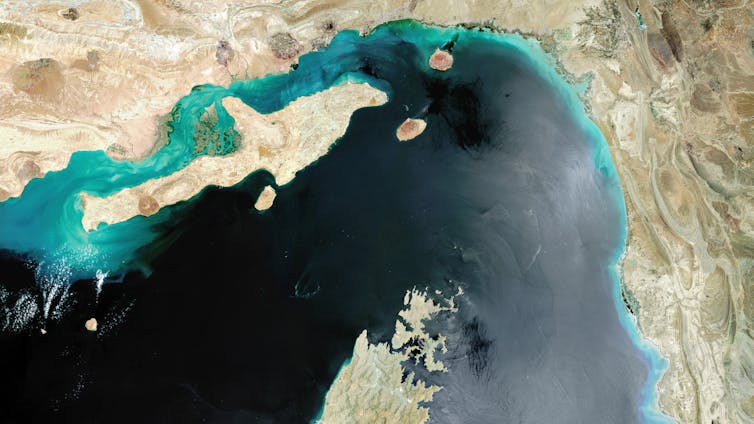
We do know there will be disruptions to the supply of oil and liquefied natural gas, which is difficult to ship through the Strait of Hormuz, and from the fiscal costs associated with this military action.

The price of crude oil has jumped by about 25% since the U.S. and Israel began bombing Iran on Feb. 28, which has driven up gasoline prices across the U.S. The majority of oil and liquefied natural gas produced in the Middle East travels through the Strait of Hormuz – but the threat of attack has made travel through this waterway uninsurable, which has brought shipping through this vital passage to a virtual halt.

This is also an expensive military campaign for the United States, which has already seen the loss of aircraft and a depletion of its stock of missiles. Early estimates of the cost of the war were nearly US$1 billion a day.

Challenges managing a supply shock

The 1979 Iranian Revolution also brought about a spike in the price of oil, which was an important contributing factor to the United States and Europe experiencing an economic phenomenon called “stagflation” – a portmanteau of stagnant growth and high inflation.

This is unlikely to be repeated to the same extent now. Economies are less dependent upon oil and natural gas than they were in the late 1970s and early ’80s. And the U.S. is not beginning the war with a previous decade of high inflation that made it more difficult to reduce price pressures, since expectations of inflation feed into actual inflation.

Still, supply shocks are challenging to address, as the world saw with the COVID-19 pandemic, and policymakers will likely have to make some difficult choices that involve hard trade-offs.

a satellite view of water flowing between two land masses
A fifth of the world’s oil goes through the Strait of Hormuz.
Gallo Images/Copernicus Sentinel 2017/Orbital Horizon via Getty Images

Trade-off between fighting inflation or recession

One of the questions arising from supply shocks is whether a central bank should raise interest rates to combat inflation or lower them to offset weakness in the economy and rising unemployment. Lifting rates brings down inflation by reducing demand for loans and curbing growth, while lowering rates has the opposite effect.

In both the late 1970s and during the onset of the pandemic, the Federal Reserve opted to keep rates low to help support the economy and the job market. In both cases, this led to a spike in inflation.

The inflation of the late 1970s and early ’80s was brought down by a strong reversal of monetary policy with high interest rates, causing a recession that was, at that time, the deepest since the 1930s. Notably, the reduction of inflation in the wake of COVID-19 did not require a similar economic downturn to achieve that goal. An important reason for that is the long history of low inflation in the decades before the 2020s and the “anchoring” of inflation expectations.

Risks on the horizon

But there are reasons to be concerned.

While the Fed now has a well-deserved anti-inflation reputation, its credibility with financial markets is at risk because of President Donald Trump’s attacks on Chairman Jerome Powell, the prosecution of Federal Reserve Board member Lisa Cook and the appointment of a new chair who many suspect will push for lower rates because that’s what the president wants.

Concerns that these actions could lead to higher inflation can become a self-fullfilling prophecy that brings about the very thing that people are worried about. Seeds of new inflation pressures may be falling on fertile soil.

Uncertainty triggered by the war is not the only negative economic signal. Tariff policy, cuts to government employment, rising federal debt and the possibility of financial vulnerabilities are all weighing on the U.S. economy. A spike in the price of oil could very well set off greater weakness, and even a recession, as consumers and businesses pull back from spending.

The Conversation

Michael Klein has received funding for EconoFact from the Annie E. Casey Foundation, the Alfred P. Sloan Foundation and the Smith Richardson Foundation. He is a Research Associate in the National Bureau of Economic Research.

ref. War in Middle East brings uncertainty and higher energy costs to already weakening US economy – https://theconversation.com/war-in-middle-east-brings-uncertainty-and-higher-energy-costs-to-already-weakening-us-economy-277809

Public health needs steady budgets – and federal funding uncertainty causes real harms, even if the money is later restored

Source: The Conversation – USA (3) – By Max Crowley, Professor of Human Development, Family Studies and Public Policy, Penn State

Communities rely on vaccination clinics, restaurant inspections and disease surveillance systems run by local and state public health departments. Sean Rayford/Stringer via Getty Images

Since early 2025, several large federal health grants to states have been suspended and then restored after legal challenges. On Feb. 13, 2026, for example, the federal government moved to suspend about US$600 million in public health grants to four states before a federal court temporarily blocked the action. Hundreds of millions of dollars that had already been allocated by Congress were briefly put on hold before the court intervened.

From the outside, these episodes may look like routine disputes between states and the federal government, as such cancellations do happen. But inside state agencies and in communities, they create something more consequential: uncertainty that interrupts crucial public health programs – even if states ultimately get the money.

As a scholar who studies how to build infrastructure for preventing human suffering, I’ve seen how instability – even when temporary – changes how agencies and the communities they serve plan, hire and invest.

Even when funding is eventually restored, repeated cycles in which funding is frozen and then temporarily reinstated, pending lawsuits, can disrupt how public health systems operate. This, in turn, erodes the public health infrastructure that federal funding helps build and maintain.

That infrastructure includes vaccination clinics, restaurant sanitation inspections, opioid response teams, school violence prevention, maternal health programs and disease surveillance systems, to name a few. Programs like this play a critical role in public health, but because they focus on preventing problems before they occur, many people aren’t away of the critical need for them until something goes wrong.

Most disruptions never make headlines, but they affect services communities rely on.

Public health depends on continuity

Despite the heavy media focus on emergency response during crises such as the COVID-19 pandemic, most public health work is long-term planning built around multiyear prevention strategies.

Federal grants support epidemiologists, prevention specialists, behavioral health providers and data analysts. They fund disease surveillance systems, maternal and child health initiatives, substance use prevention programs and partnerships with community organizations. These efforts operate on multiyear timelines. Each one requires hiring staff, bringing on outside contractors and service providers, and setting up systems to track outcomes.

Senior public health doctor talking to patient at temporary free outdoor clinic
Public health is less about emergency response and more about long-term planning and multiyear prevention strategies.
SDI Productions/E+ via Getty Images

When funding is suddenly paused or regulatory environments change, agencies cannot simply wait for clarity. Hiring slows. Leaders draft contingency plans in case the suspension becomes permanent. Many state and local employees begin exploring more stable employment opportunities.

National workforce surveys show that roughly 1 in 4 state public health employees report considering leaving their job within a year. In 2023, local health departments lost an average of 19% of their staff, reflecting how the COVID-19 pandemic strained the public health workforce. In a small county health department, where the entire staff may consist of only four to seven people, losing even a single nurse or disease investigator can significantly disrupt services.

If funding is later restored, as has occurred in several cases in 2025 and early 2026, agencies must reverse course. They reissue guidance, renegotiate contracts and reassure partners. But the disruption has already consumed time and public resources.

Some projects and communities may not fully recover. Volatility creates costs even when the money returns.

The financial and administrative cost of legal battles

Suing the federal government over funding suspensions is expensive. When states challenge federal decisions, state attorneys general devote staff time and legal resources. Health departments must coordinate with lawyers, compile documentation and model alternative budget scenarios. Senior leaders shift attention from program oversight to legal and fiscal risk management.

Those administrative hours are funded by taxpayers. They represent real expenditures, though they rarely appear in public debate. And while litigation proceeds – often for months – agencies must prepare for multiple possible outcomes.

The uncertainty itself shapes planning. Agencies may hesitate to launch new initiatives if funding could disappear midstream. They may shorten contracts, delay hiring or scale back expansion plans to reduce exposure. Over time, that caution can slow implementation and limit innovation.

The federal government in February 2026 moved to pull back $600 million in public health funding to four states, which quickly sued to get the money reinstated.

Instability extends beyond grant dollars

Suspended funding is not the only source of instability. The federal government has also announced structural changes within some health agencies, starting with a major reorganization of the Department of Health and Human Services in March 2025. These changes, too, inject uncertainty into how public health systems operate.

For example, federal health officials recently indicated they plan to significantly scale back the Office of Planning, Research and Evaluation within the Administration for Children and Families.

Since 1995, that office has studied the impact of programs serving families and children, including Head Start, the foster care system and Temporary Assistance for Needy Families. Independent research and policy organizations, including the Data Foundation and Results for America, warn that interrupting those studies could undermine states’ ability to assess and improve these programs.

Similarly, recent grant terminations and restructuring within the Substance Abuse and Mental Health Services Administration, which administers major behavioral health grants to states, have introduced uncertainty. When staff supported by grants are cut or funding terms shift abruptly, payments can be delayed, reporting guidance becomes unclear, and local treatment providers may struggle to plan. For communities trying to prevent opioid overdoses or rising mental health needs, even short-term disruption can be a matter of life or death.

Pausing or reorganizing such studies midstream disrupts the ability to understand what works and what doesn’t. Experienced staff may leave. Rebuilding that expertise can take years.

Prevention is especially vulnerable

Almost by definition, people take prevention for granted. If programs focused on vaccination, substance use treatment and youth mental health are effective, many people never experience the crises that might have occurred without them.

But prevention depends on continuity: sustained staffing, stable partnerships and consistent data collection. The effects of disruption are difficult to measure in a single budget cycle, but they influence how confidently agencies invest in long-term strategies. In that sense, funding instability can become a public health issue of its own.

Policy priorities will always evolve. Courts review executive actions. Congress revisits allocations. Change is part of governance. But if policymakers want stronger, more resilient public health infrastructure, stability is not simply administrative convenience. It is part of the foundation that makes prevention and preparedness possible.

The Conversation

Max Crowley does not work for, consult, own shares in or receive funding from any company or organization that would benefit from this article, and has disclosed no relevant affiliations beyond their academic appointment.

ref. Public health needs steady budgets – and federal funding uncertainty causes real harms, even if the money is later restored – https://theconversation.com/public-health-needs-steady-budgets-and-federal-funding-uncertainty-causes-real-harms-even-if-the-money-is-later-restored-276500