Managing conflict between baboons and people: what’s worked – and what hasn’t

Source: The Conversation – Africa – By Shirley C. Strum, Professor of the Graduate Division, School of Social Sciences and Emerita, Department of Anthropology, University of California, San Diego

Conflict between humans and baboons can tear communities apart. Shirley C. Strum has studied wild olive baboons in Kenya for more than 50 years. In that time she’s come to understand the species intimately. In this article she argues that humans have taken from nature (without asking) for too long. And that now it’s time for us to rethink this relationship.

What have you learnt about baboon behaviour and habits over the past 51 years?

During my studies I have found that baboons are smart and sophisticated, and they need each other to be successful because of an unwritten “golden rule” – “do unto others as you would have them do unto you”.


Read more:
Baboon bonds: new study reveals that friendships make up for a bad start in life


Baboons aren’t yet endangered, because they adapt to new human environments. Part of this adaptability includes flexible primate hands (not trunks or hooves), primate intelligence, and the combined knowledge of their social group.

My research over the decades has provided a great deal of evidence of this.

As far as conflict with wildlife is concerned, you can’t ignore the growth in human population everywhere. In 1972, when I started my research, Kenya’s population was 12 million. Now it is pushing 60 million people.

This rate of population growth means more land is used for infrastructure and food. Development has converted wildlife areas into rural, suburban and urban human environments over the last 50 years.

As a result, human-wildlife conflict has increased. In Kenya, most wildlife exists in parks, reserves and surrounding areas. Kenya Wildlife Service recorded 10,000 episodes in these areas in 2024.

My research demonstrated that the cost of raiding has to outweigh the benefits for the baboons. Once tasted, human foods, including field crops, are ideal. Baboons are a special case of conflict because they can outsmart most humans. And baboons can be very destructive when they lose their fear of humans as they have in some parts of Cape Town, South Africa.

How can baboons be stopped from raiding farms and homes?

This depends on both the context and the history of baboon troops in the area.

The best solution to resolving conflicts is to prevent them. Changing human behaviours is difficult. And preventing bad baboon behaviour – like raiding human foods – is easier than trying to change baboon behaviours once they occur.

But this is an increasingly rare opportunity today because of the humanisation of the landscape.

What approaches have been tried and which ones have been successful?

The Gilgil Baboon Project – after translocation it became the Uaso Ngiro Baboon Project – started on a 45,000 acre (18,000 hectare) cattle ranch with more wildlife than cattle. We tried many control techniques, old (guarding and chasing) and new (playback of baboon alarm calls, leopard scats and lithium chloride taste aversion).

The ranch was then sold to Gikuyu Embu Meru Association, which distributed land to its members. Baboons began enjoying the new foods, raiding crops regularly.

Research demonstrated that the costs of raiding had to outweigh the benefits for baboon to stop raiding. It might surprise you that baboons do not eat human food out of spite but because of deep evolutionary imperatives. Their foraging aim is always to get the most nutrition for the least expenditure of energy.

Once tasted, human foods are special. They are large packages of easy to digest fare, the equivalent of baboon fast food. This makes baboons very difficult to control given the benefit of eating human food.

Some observations about solutions.

Boundaries: To prevent baboons raiding, you must draw a line beyond which baboons cannot go and reinforce it frequently and consistently. Given how much a baboon has to gain, she or he can devote plenty of time to waiting for the right moment.

Because of the growth of human population, many places already have baboon raiders. In this case, fields must be guarded by people all the time, homestead doors and windows can’t be left open (unless window bars prevent baboons of any size getting in) and many other human time-consuming and costly coping behaviours have to be used to control baboon raiding.


Read more:
Fast, cheap calories may make city birds fat and sick


Remember, to control raiding the cost must exceed the benefit. You have to use up baboon time, forcing them to look for other things to eat. But harming a baboon doesn’t work unless it is directly linked to the raiding and in full view of the rest of the group.

If the baboon habit of eating human food has become a “tradition”, it is difficult to extinguish.

Translocation: If you have enough money and time, translocating the baboons might be an alternative. Translocation means moving them to a new place in their historical range. I pioneered translocation for primates in 1984 when I moved three troops from Kekopey Ranch near Gilgil, Kenya to a place where crops couldn’t grow, the Eastern Laikipia Plateau in Kenya.

Today, however, there are very few places left where baboons can’t get into trouble.

Killing: The final option is to remove the baboons. I call it “killing” because fancy names don’t hide the reality. However, it isn’t as easy as it sounds. You first need to understand baboons. Second, the baboons can’t be killed by a helicopter gunship or even professional hunters. They are too wily. Killing a whole baboon group has its challenges. Even if you succeed (which I doubt), removing one group from a population means another troop will soon take its place.

These are hard choices that I don’t take lightly. It is one thing to view wildlife from the safety of your home or vehicle but another to have baboons steal your food, take your livestock, or decimate your crops.

What needs to change?

Human views about baboons have changed over the last 50 years from positive to negative. Today, social media is rife with conflict between baboons and humans in southern Africa. Nature is real, but our ideas about nature are cultural and based on our experiences and attitudes.

We are faced with a difficult dilemma: humans cause the problem but wild creatures pay the price. Conflict between baboons and humans won’t change unless human behaviour and attitudes change.

Dr Strum has a new book published by Johns Hopkins University Press: Echoes of Our Origins: Baboons, Humans and Nature. It is available on Amazon US and Amazon UK.

The Conversation

Shirley C. Strum does not work for, consult, own shares in or receive funding from any company or organisation that would benefit from this article, and has disclosed no relevant affiliations beyond their academic appointment.

ref. Managing conflict between baboons and people: what’s worked – and what hasn’t – https://theconversation.com/managing-conflict-between-baboons-and-people-whats-worked-and-what-hasnt-264821

Kidnapping for ransom in the Sahel: analysis of 24 years of data shows a new trend

Source: The Conversation – Africa (2) – By Alexander M. Laskaris, Visiting Scholar, University of Florida

Kidnapping for ransom has a long history in the west African Sahel. In 1979, a rebel group led by Chad’s future president Hissène Habré kidnapped a French archaeologist and a German medical doctor in the north of the country. The kidnappers asked for the release of political prisoners, among other demands.

Over the decades kidnapping became an industry in the Sahel. Governments were willing to pay financial and political ransoms even if they denied it publicly. This industry fuelled the expansion of jihadist groups from Algeria to the Sahel (south of the Sahara) between the early 2000s and mid-2010s. The most spectacular of these kidnappings was the abduction of 32 European tourists in 2003. It was carried out by the Salafist Group for Preaching and Combat in the Algerian Sahara. A €5 million ransom was reportedly paid for the hostages.

Using conflict data from the Armed Conflict Location and Event Data Project, we examined the evolution of abductions and forced disappearances in 17 west African countries over the last 24 years. We are scholars with personal experience as a former ambassador to Chad and Guinea and a geographer.

We analysed nearly 58,000 violent events. These events have caused the death of more than 201,000 people from January 2000 through June 2024.

Our findings suggest that the kidnapping industry has experienced a major shift. We discovered that most of the victims of kidnappings for ransom were westerners until the end of the 2010s. Since then violent extremist organisations have turned to local civilians. Both western and local hostages represent lucrative resources that ultimately fuel insurgencies in the west African Sahel.

A lucrative industry

Armed groups have learned that seizing a western hostage is a low-risk and high-reward proposition. It leads to financial gain and political accommodation. The exact amount of money paid is difficult to assess due to the opacity of the negotiations and the number of intermediaries involved. An estimated US$125 million was paid by European countries to liberate hostages captured by al-Qaida and its affiliates in this region from 2008 to 2014.

These resources have fuelled the international development, training and arms purchases of armed groups. For example, in October 2025, the United Arab Emirates allegedly paid a US$50 million ransom. They also allegedly delivered military hardware to al-Qaida-affiliated militants for the release of Emirati hostages in Mali.

The revenues generated from ransom payments have facilitated the development of alliances between militant groups and local leaders. They have also made the recruitment of young combatants from Mali, Niger, Mauritania and Burkina Faso easier for extremist organisations, by offering significant financial incentives.

As security expert Wolfram Lacher explains, kidnapping for ransom was the most important factor behind the growth of al-Qaida in the Islamic Maghreb in northern Mali.

The common perception is that when a westerner is taken hostage in the Sahel, a mighty military apparatus is deployed to rescue them. However, there is little to suggest that western military pressure on terrorist or criminal networks contributes to hostage recovery. Indeed, the most likely outcome of an armed rescue operation has proven to be the death of the hostage. Most of the time, the reason for their release has been ransom and concessions negotiated by local partners.

Local civilians increasingly targeted

In the last decade, the number of foreigners living or travelling in the Sahel has plummeted. Due to terrorism and political unrest, travel to the region is strongly discouraged by western countries.

Jihadist militants have therefore turned to local targets and started abducting a growing number of civilians from the region. Our report reveals that abductions and forced disappearances have experienced a twenty-fold increase since Jama’at Nusrat al-Islam wal-Muslimin (JNIM) was formed in 2017.

Kidnappings tend to occur both along major transport corridors and in rural areas. There, jihadist groups have implemented a predatory economy based on looting and ransoming civilians. In the central Sahel, this kidnapping economy has spread to most rural areas. This includes the south of the Wagadou forest in Mali to the W National Park at the border between Burkina Faso, Benin and Niger.

The brutal local economics of kidnap for ransom is also vibrant in the Lake Chad region. Although the kidnapping of westerners is, on a per capita basis, far more lucrative in the Sahel, these groups are doing a brisk business of kidnapping civilians, as shown on the map below.

In late November 2025, for example, more than 300 children were kidnapped by unidentified gunmen in a Catholic school in western Nigeria. Our analysis shows that about a third of these events involve abductions of girls and women.

Civilians are usually released unharmed shortly after their motorbikes, food items, phones and animals have been taken, or ransom has been paid.

Should ransoms be paid?

The question of whether hostage situations should be resolved by paying a ransom depends on the parties involved.

For Sahelian governments, acceding to ransom demands weakens their political position and provides material support for those who threaten them. The same applies to foreigners in the Sahel – relief workers, missionaries, business people, tourists – for whom every ransom paid makes their position more precarious.

For western governments responsive to family, media and political pressure, however, bringing hostages home via ransom is always the easiest solution. Media coverage focuses on joyful reunions, not moral hazard.

In the United States, the 2020 Robert Levinson Hostage Recovery and Hostage-Taking Accountability Act reorganised the internal hostage response capacity of the government. By streamlining the process by which accommodations are made to the kidnappers, the act established clear lines of authority, while giving families both better support and access to decision-makers.

Left unresolved is the tension between the prohibition on paying ransom to terrorist organisations and the reality that, for kidnapping victims and their families, the best response is to pay. Given the vastness of the Sahel and the lack of any effective security response, caving to ransom demands is the best hope for a successful resolution.

We should not criticise families for demanding action from their governments, for acceding to terrorist organisations’ ransom demands, or for rejoicing when hostages are liberated. At the same time, however, one should also not be afraid to state the obvious: their joy leads inevitably to another westerner’s or African’s trauma.

The Conversation

The opinions and characterizations in this piece are those of the author and do not necessarily represent those of the U.S. government.

Olivier Walther receives funding from the OECD Sahel and West Africa Club.

ref. Kidnapping for ransom in the Sahel: analysis of 24 years of data shows a new trend – https://theconversation.com/kidnapping-for-ransom-in-the-sahel-analysis-of-24-years-of-data-shows-a-new-trend-270714

The surprising theology inside today’s Advent calendars

Source: The Conversation – Canada – By Matthew Robert Anderson, Adjunct professor, Theological Studies, Concordia University

It would be easy to conclude that Advent calendars — usually with 25 compartments that reveal a treat, image or scripture, used to count down the days from Dec. 1 to Christmas Eve — represent just another way Christmas is ruined by commercialization. They’ve strayed far from their beginnings as devotional aids for 19th-century German Lutheran families.

Far from only featuring little numbered flaps to open on each December day, these calendars are now hot-ticket items. They highlight everything from beer to beard oil, and Lego to luxury silk. But have they completely lost their way?

As I pointed out recently on CBC’s The Cost of Living, I don’t believe so.

From devotional tool to consumerist gift

The first commercially printed Advent calendars, created by German publisher Gerhard Lang at the dawn of the 1900s, had paper windows that tore away to reveal Bible verses and art depicting the Nativity, the story of the birth of Jesus arising from the gospels of Luke (2:1-20) and Matthew (2:1-12).

By the mid-20th century, Advent calendars had spread to England and North America. Some versions began to include toys or chocolates and to downplay Christian themes.

Now, a full century after those first printed versions, Advent calendars have evolved into a dizzying array of “must-have” seasonal gifts that, at the top end, can include caviar, cocktails and even cut diamonds. In response, some emphasize homemade, reusable Advent calendars, while villages and neighbourhoods experiment with becoming “living” Advent calendars — local tourist draws — unveiling volunteer window displays each successive day of December.

Yet no matter how non-religious they may appear, as a scholar studying the origins of Christianity, I see ancient meanings of Advent still reflected in two characteristics of today’s calendars: a stoking of expectation and a purpose-filled sense of time.

The power of stoking expectations

Anticipation is what drives the appeal of every Advent calendar. The child’s or adult’s question — “What’s behind the next window?” — echoes the original Latin term adventus, meaning coming or arrival. To the query: “What is the world so eagerly awaiting in the season of Advent?” the church’s answer has historically been: the coming of Christ.

But it’s complicated. What even many Christians may not realize is that the coming of Christ — which the season of Advent was originally designed to mark — is the Second Coming, known as the “Parousia.

Anticipation of this dates to the very beginning, with Paul and the first followers. The oldest complete Christian writing, 1 Thessalonians, buzzes with a kind of Advent expectation. It agonizes over Christ’s delayed return to end the march of time, abolish death and establish a new, justice-and-peace-filled reign of God over the Earth.

It’s not exactly children’s calendar material. For one thing, this Jesus was expected not as a meek and mild baby, but by at least some as a vengeful “end times” judge (2 Thessalonians 1:7-10).

In churches that still mark Advent, the readings of the first two Sundays are given over to a sense of “end times,” and “ultimate meaning” with themes of watchfulness and preparation.

Counting down to the final Window

The other ancient characteristic of even the most secular calendar is its focus on purpose-filled time and a “big day.” There would be no Advent calendar without the largest box or window, the one representing Christmas and holding the best Lego piece, chocolate, wine or picture.

When Advent first began to be marked in fourth-century Roman Gaul (modern-day France), it was meant to be a penitential season of preparation like Lent, culminating in baptism on the day of Epiphany. In the sixth century, Pope Gregory the Great shortened the season and focused it more tightly on Christmas.

Every Advent calendar, even those made with simple chalk marks in 19th-century Germany, starts with a “now,” builds energy and anticipation through a series of “not yet” days, and climaxes with a “finally” — a long-awaited Christmas Day conclusion. From the simplest hand-drawn chart to the Buy Canadian Okanagan Craft Distillery Advent Whisky Calendar, there must be a division of time building toward a climax.

Although the liturgical church year followed by mainline Christian churches, including Catholics, Anglicans, Lutherans, the United Church and the Orthodox, is cyclical, the season of Advent itself is resolutely linear.

A ‘taster’ of hope and transformation

It was only after its end-of-the-world emphasis that Advent became focused on the more socially acceptable and less eschatologically embarrassing Nativity stories. But the old themes stubbornly hold on in readings from Isaiah that reflect the hopes of ancient Israelites for a day when “the wolf shall live with the lamb, the leopard shall lie down with the kid, the calf and the lion and the fatling together, and a little child shall lead them (Isaiah 11:6).”

Here is another family resemblance between today’s Advent calendars and the ancient Mediterranean. Some companies hype their calendars as “teasers” or “tasters” for their full product lines.

In a similar way, Advent’s ultimate goal is to act as a “taster” for a world where justice is finally done, the poor can eat their fill and peace reigns supreme.

The Conversation

Matthew Robert Anderson does not work for, consult, own shares in or receive funding from any company or organisation that would benefit from this article, and has disclosed no relevant affiliations beyond their academic appointment.

ref. The surprising theology inside today’s Advent calendars – https://theconversation.com/the-surprising-theology-inside-todays-advent-calendars-270761

‘Are you married?’ Why doctors ask invasive questions during treatment

Source: The Conversation – USA (3) – By Jill Inderstrodt, Assistant Professor of Health Policy and Management, Indiana University

The demographic data collected at doctor’s visits is useful to medical researchers. MoMo Productions/DigitalVision via Getty Images

It’s a rare occasion when my worlds of biomedical informatics and serialized lesbian melodrama fandom collide.

But that’s exactly what happened earlier this summer when two of my favorite actresses appeared on a popular podcast. I was excited to hear them talk about their new book and their history of working together, so I was confused but delighted when their conversation took a turn toward my area of expertise – electronic health records.

One actress noted that on a recent trip to the optometrist, she was asked about her ethnicity. “And I was like, what difference does it make?” she said.

The host chimed in with her experience of being asked similarly personal questions before a mammogram. “Like, it doesn’t matter if I’m married or not. It doesn’t matter if I’m white or Asian, you know?” she remarked.

Listening to the host and actresses question a process that, to me, seems straightforward and purposeful served as a stark reminder of the chasm that often exists between how researchers like me use patient data and a patient’s actual experience of clinical data collection.

For those of us who use demographic data collected during health care encounters to conduct research and design interventions, it does matter whether patients answer their doctor’s demographic questions. But as a patient myself, I can see how these questions might seem unnecessary and even invasive.

So it may help to understand why your doctors collect this data, how researchers use it and what medical discoveries might be possible when we know more about who patients are.

patient sitting on table looks at doctor filling out form on clipboard
Your doctor’s questions might sometimes seem arbitrary and invasive.
Natalia Gdovskaia/Moment via Getty Images

Why your data matters

When you answer the demographic questions your doctor logs in your electronic health record, you’re doing more than disclosing personal information. You’re adding one small piece to a giant puzzle of data that allows researchers like me to see a bigger picture.

Your health information can help us understand who gets sick and why. It might even be used to design real health interventions.

As a researcher focused on improving health and health care for moms and their babies, I consider myself lucky to live in Indiana, a state with one of the nation’s most comprehensive health information exchanges. These exchanges are interconnected networks of hospital system electronic health record databases from all over the state that allow researchers like me to learn about how individuals and groups experience health and medical care.

For example, my colleagues and I in the Indiana University Better AI for a Strong Rural Maternal and Child Health Environment Lab use this data to train machine learning models that predict preeclampsia, a life-threatening condition of high blood pressure during pregnancy, before a mom gets really sick.

We could use only clinical data: diagnoses, labs and vital readings like blood pressure that contribute to the outcome of preeclampsia. But for conditions like preeclampsia, Black moms are diagnosed at higher rates than their white counterparts. Research shows that race and racism can be major contributing factors to this disparity.

In order to predict preeclampsia accurately and use these predictions to help doctors monitor, diagnose and treat the condition, my team needs to factor in other information that can illuminate these different outcomes, called social determinants of health.

Social determinants of health are the parts of ourselves and our environments that drive our health status. Race itself isn’t a social determinant of health, but racism is. This includes structural racism, like a ZIP code’s history of school segregation or redlining. If available, we also include information you might have given at your doctor’s visit, like if you haven’t had enough food to eat in the past month, or if you have a history of intimate partner violence or homelessness.

Because there is more variation within races than between them, race alone actually tells us very little. Including social determinants of health in our datasets provides added context as to how you move about the world, what resources you have access to and how your environment might shape your health.

Social determinants of health are the environmental and social conditions that can affect the health of individuals and communities.

Putting the pieces together

This is why your cardiologist asks about your marital status. Your response might help researchers understand why single moms are more likely to have cardiovascular disease than their married counterparts. And telling your optometrist your race is one of the only ways to learn what role race might play in patients using weight loss drugs experiencing vision loss.

Other researchers have used data from electronic records to determine how many people in a geographic area or of a certain demographic group have diabetes, to predict dementia and even to track gum disease.

During the COVID-19 pandemic, researchers used data from electronic health records to determine what types of people were getting sick. They investigated COVID-19 patients’ race, geography and insurance status. Researchers continue to use this data to track long COVID, a condition that health professionals still don’t completely understand.

Honoring patient privacy

Of course, these health information exchanges are careful about how and with whom they share patient data. The data is tailored to the needs of the study and shared in compliance with the Health Insurance Portability and Accountability Act, or HIPAA.

For instance, for my most recent preeclampsia study, the health care system sent a dataset that contained limited pieces of personal information, like the baby’s birth date, the mom’s birth date – since we often need to know how old she was when she gave birth – and their ZIP code so we can see trends in preeclampsia across geographic areas.

The data wasn’t allowed out of the health system’s virtual private network, so the data remains within our firewall. This ensures that the data remains safe. And all of this must be approved by our university’s institutional review board, a rigorous process that ensures our research can’t harm participants.

Improving health care for everyone – including you

All of this research drives innovation and serves as a basis for the programs, protocols and policies that improve health – from you as an individual all the way to the national and even global level.

Your doctor can use the information you provide to recommend services or therapies for you. For instance, if your doctor finds out through check-in questioning that you haven’t had enough food in the past month, they can refer you to a nutrition program, sometimes run by the hospital system itself. If you were married at your last appointment but now list your marital status as “separated,” your doctor can check in with you to see if you need any additional mental health or social services.

While it’s normal for these personal questions to feel a little uncomfortable, it helps to remember that there is a good reason your doctor is asking them. Your data can help move medical research forward.

The Conversation

Jill Inderstrodt receives funding from US Centers for Disease Control and Prevention and National Institutes of Health.

ref. ‘Are you married?’ Why doctors ask invasive questions during treatment – https://theconversation.com/are-you-married-why-doctors-ask-invasive-questions-during-treatment-268268

How one Florida program reduced preterm births – and how it could serve as a model for other communities

Source: The Conversation – USA (3) – By Loveline Chizobam Phillips, Ph.D. Candidate, George Mason University

Preterm birth is the second-leading cause of infant deaths. Pressmaster/iStock via Getty Images Plus

One in 10 babies in the U.S. – nearly 374,000 infants – were born preterm in 2023, meaning before 37 weeks of pregnancy. More than 15% were very preterm, meaning they were born before 32 weeks. A full-term pregnancy lasts 40 weeks.

Florida’s rate is slightly higher, at about 1 in 9 babies born preterm. In an average week, 456 of the 4,257 babies born in the state will be preterm, and 75 of those will be very preterm.

According to the March of Dimes, preterm birth and low birthweight-related health complications cause 37.5% of infant deaths nationwide. This makes preterm birth the second-leading cause of infant deaths, after birth defects. Preterm babies who survive infancy are susceptible to health complications later in life, including cerebral palsy and learning disabilities.

Preterm and low-birthweight babies – those weighing less than 5.5 pounds (2,500 grams) – are far more likely to go to the neonatal intensive care unit, or NICU. Very preterm infants tend to have the longest NICU stays, averaging around 43 days.

Beyond the emotional toll this takes on a family, preterm births and their resulting health complications carry substantial financial costs. The average NICU admission in 2021 cost around US$71,000. And economists estimated the lifetime societal cost of all preterm babies born in 2016, from birth to subsequent disability care, at $25.2 billion.

We are a public policy Ph.D. student and public policy researcher focusing on health policy and population health outcomes.

Recently, we were sifting through the data on preterm and low birthweight rates in the U.S., in search of places that are doing better than average at preventing preterm births. And that is what we found in the Central Hillsborough Healthy Start program, which serves a cluster of Tampa ZIP codes with roughly 177,000 residents.

In 2008, this program published records showing 30% lower preterm and low-birthweight rates among families at highest risk. Peer-reviewed evaluations link participation in the program to substantial reductions in preterm and low-birthweight outcomes.

These remarkable improvements remained consistent through 2020.

When we looked at what this program is doing, we found a set of practices that can serve as a model for other counties in Florida and around the U.S. to lower preterm birth rates, saving money and, more importantly, lives.

Screening for risk factors

The program does early screening for risk factors of preterm birth using Florida’s Healthy Start prenatal risk screen at the pregnant person’s first prenatal visit. This screening has been proven to correctly flag a good share of higher-risk pregnancies, while avoiding many false alarms, helping scarce services reach families who need them most.

This is key, because the risk of preterm birth isn’t spread out evenly across all pregnancies. The neighborhoods that Central Hillsborough Healthy Start serves include many young, Black, unmarried, low-income families that are eligible for Medicaid. All of these factors place them at high risk for preterm birth.

Early screening allows the Healthy Start program to identify mothers at highest risk and tailor its resources to assist them.

Measuring against the rest of the state

The Florida Healthy Start prenatal risk screen is available throughout the state. Florida created Healthy Start in 1991 precisely to reduce infant deaths and low birthweight through universal prenatal and infant risk screening, community coalitions and coordinated services.

While Florida’s preterm birth rate in 2023, the most recent year for which there is data, was 10.7%, Hillsborough County tracked slightly below the U.S. average of 10.4% at about 10.2% of the county’s 16,900 births.

That difference may seem small, but it represents 85 fewer preterm babies in Hillsborough County, and at the average rate of $71,000 per NICU admission, that’s about $6 million in hospital spending avoided in a single year.

Two nurses look at an infant lying in an incubator.
Infants born preterm must remain in the NICU until their organs develop enough to keep them alive without medical support.
andresr/E+ via Getty Images

In addition, statewide, 14.8% of Black infants were born preterm in 2023, slightly higher than the 14.65% average across the U.S. In Hillsborough County in the same year, it was 13.9%.

Among pregnant women without a partner, participation reduced very preterm births by 52% and halved the rate of very low-birthweight babies – that is, babies weighing less than 3.3 pounds (1,500 grams).

Obese mothers in the program had a 61% lower chance of extremely preterm birth, which means birth before 28 weeks of pregnancy, than comparable women elsewhere in Florida. Even exposure to air pollution, a known risk factor for preterm birth, was less harmful among women in the program.

So what has Central Hillsborough Healthy Start been doing differently?

The Central Hillsborough Healthy Start model

The model used by Central Hillsborough Healthy Start is practical and straightforward.

After early screening, nurses make home visits and help coordinate patient care for mothers in the program.

Central Hillsborough Healthy Start also provides prenatal education, depression screening and programs to help pregnant mothers improve their health and decrease harmful practices such as smoking or substance abuse. These programs are critical, because obesity, diabetes, hypertension and smoking during pregnancy are significant risk factors for preterm births.

The program also helps to connect patients to resources they may need during and after pregnancy by making personal introductions to community partners such as women and infant resource specialists in women, infants and children, or WIC, clinics.

Healthy Start workers also connect patients to interconception care for healthy birth spacing between pregnancies, which can help prevent future preterm births. Studies show that more than 30% of U.S. mothers who give birth preterm conceived their baby less than 18 months after having their previous child.

The Healthy Start staff use Florida’s coordinated intake and referral approach to track referrals and follow up across partners. This is vital to helping the program’s staff see who has been contacted, which services were delivered and whether referrals took place. They can then follow up if necessary.

Stability and sustainability

Central Hillsborough Healthy Start operates through a local nonprofit, REACHUP Inc., in partnership with the University of South Florida and the Hillsborough Healthy Start Coalition.

Its funding comes primarily from the federal government through the Health Resources and Services Administration’s national Healthy Start program. The program’s current federal funding extends into 2029. But proposed changes to the federal budget threaten to eliminate this funding altogether.

The program’s budget is supplemented by local partners, including Hillsborough County, which helps sustain operations despite federal uncertainty.

Locally, the Hillsborough coalition’s portfolio includes programs that work together like one team, sharing information so families keep getting help even when one grant ends. These partnerships with local community organizations allow the program to remain stable.

A model for others

Looking at the data, we believe Central Hillsborough Healthy Start has succeeded by using the same basic approach for everyone, then customizing. Everyone gets screened early and set up with nurse visits. Then, its adds what each family needs so that support fits real life.

The Central Hillsborough story shows that health disparities are not inevitable. And this model can serve as a feasible blueprint for other communities. With early identification, consistent support and sustained investment, the outcomes for mothers and babies can improve dramatically.

Read more stories from The Conversation focused on Florida.

The Conversation

The authors do not work for, consult, own shares in or receive funding from any company or organization that would benefit from this article, and have disclosed no relevant affiliations beyond their academic appointment.

ref. How one Florida program reduced preterm births – and how it could serve as a model for other communities – https://theconversation.com/how-one-florida-program-reduced-preterm-births-and-how-it-could-serve-as-a-model-for-other-communities-268058

Paddington The Musical: why the little bear from Peru is a hero in a very classical sense

Source: The Conversation – UK – By Emma Stafford, Professor of Greek Culture, University of Leeds

This year, fans of the tiny marmalade-loving bear from Peru can catch him on stage at London’s Savoy Theatre in the West End, in Paddington The Musical.

This is a stage adaptation of the first film in the most recent Paddington franchise, which began in 2014. While it features more than 18 new songs by Tom Fletcher (of the band McFly), it follows the film’s plot quite closely. It also shares its values of home, family and tolerance of difference – particularly relevant to current debates on immigration.

As an expert in ancient Greek culture, what struck me most was how this theatrical re-imagining casts Paddington as a hero in the tradition of Homeric epic.

Although there have been several iterations of the Paddington story since he was first introduced by Michael Bond in A Bear Called Paddington (1958), his journey has always been prompted by the destruction of his Peruvian home by an earthquake. His only surviving relative, Aunt Lucy, is too old to look after him, so he must find a new home. And so Paddington makes his way to London and to his new adopted family, the Browns.

This quest can be compared to Virgil’s epic poem the Aeneid. In this tale Aeneas flees the fall of Troy and wanders the Mediterranean until he eventually settles at the site of the future Rome. Arguably, both stories conform with American writer Joseph Campbell’s theory of the monomyth, or the “hero’s journey”, in which a quest is precipitated by a crisis. In this, the hero must overcome various challenges, often with the help of a mentor and some form of talisman or supernatural aid. In the end, he is victorious and reaches home transformed.

The quest for home and belonging is a popular theme in 21st-century film but it goes right back to Homer’s Odyssey. There the hero Odysseus has to overcome monsters, gods and men before finally achieving his nostos, his return home, with the help of the goddess Athene.

Such divine assistance may not be available to Paddington, but Aunt Lucy serves as his spiritual guide. In the musical, we never see her but her guidance is communicated by letter. As her words are read out, a bear-shaped constellation appears on the wall behind, giving her an almost magical quality.

Adversaries and talismans

Ancient and modern heroes alike must face monsters of one sort or another. Paddington’s adversaries are primarily human.

Opposition is briefly offered in act one by the splendidly bombastic Lady Sloane (Amy Booth-Steel) who is the leader of the Geographers’ Guild.

This institution originally sent the explorer Montgomery Clyde to Peru to collect dead animal specimens, but expelled him when came back empty handed, having instead befriended Paddington’s bear family. Lady Sloane is easily vanquished by Paddington’s superpower – his famous hard stare.

Paddington turns this withering look on people he thinks are behaving badly, making them feel hot under the collar and forcing them to realise the error of their ways. A whole musical number is dedicated to this small but mighty gesture.

In act two, the geographers reappear in pursuit of Paddington. Their song, The Geographer’s Guild, pays musical homage to Gilbert and Sullivan for whose light operas the Savoy Theatre was originally built. Its lyrics joke about the imperialist acquisitiveness of the geographers, who have already “collected” the Elgin marbles and now have their eye on the Statue of Liberty.

Foremost of his adversaries, however, is Millicent Clyde (Victoria Hamilton-Barritt), evil daughter of the sympathetic explorer Montgomery. She introduces herself with the magnificent number Pretty Little Dead Things in which she lists the animals she has subjected to taxidermy – many of which can be seen as part of the stage set.

Millicent is on a mission to complete what her father could not, and in the climactic scene, Millicent has taken Paddington to be stuffed at the Natural History Museum. These scenes wonderfully feature the distinct hind quarters of Dippy, the dinosaur skeleton-cast that, until recently, stood in the museum’s entrance, Hintze Hall.

If the hard stare is his superpower, Paddington’s talisman is undoubtedly that orange sticky substance. Act two opens with the ridiculously catchy song Marmalade, an extravagant fantasy in which the Brown’s cantankerous neighbour Mr Curry is won over by the taste of a marmalade sandwich, a fantasy into which the audience are drawn as they join in with the “ma-ma-ma-ma-marmalade” refrain.

While the marmalade sandwich kept in Paddington’s hat is a fundamental part of Michael Bond’s original character, it is pressed into service in the film as the secret weapon with which he escapes the clutches of Millicent Clyde. In the musical, it is likewise used to enlist the aid of Hank the Pigeon (voice/puppeteer Ben Redfern) and his fellow birds.

So Paddington is a hero, in the classical sense of the word. He is on a journey to find home after his was destroyed and is guided from afar by his Aunt Lucy. Along the way he must overcome evil and other obstacles. But with the help of his hard stare as his weapon and his trusty talisman, a marmalade sandwich, he triumphs.

This article features references to books that have been included for editorial reasons, and may contain links to bookshop.org. If you click on one of the links and go on to buy something from bookshop.org The Conversation UK may earn a commission.


Looking for something good? Cut through the noise with a carefully curated selection of the latest releases, live events and exhibitions, straight to your inbox every fortnight, on Fridays. Sign up here.


The Conversation

Emma Stafford does not work for, consult, own shares in or receive funding from any company or organisation that would benefit from this article, and has disclosed no relevant affiliations beyond their academic appointment.

ref. Paddington The Musical: why the little bear from Peru is a hero in a very classical sense – https://theconversation.com/paddington-the-musical-why-the-little-bear-from-peru-is-a-hero-in-a-very-classical-sense-271654

Why big shops are trying to sell you a glamorous Christmas

Source: The Conversation – UK – By Lorna Stevens, Senior Lecturer (Associate Professor) in Strategic Marketing, University of Bath

In the dark months of winter, the warm glow of Christmas fairy lights and flickering candles brings some welcome atmospheric respite. And that atmosphere is something many retailers try to capture as they tempt shoppers with their festive marketing campaigns.

The John Lewis Christmas advert for example, has become a seasonal staple, while rival Marks and Spencer has found success with its “Magic and Sparkle” campaign, which plays on the company’s brand name.

There are many more. Christmas is a vital period in the retail calendar, and the amount of festive advertising can seem overwhelming.

Many of those adverts will feature beautifully wrapped presents, happy faces and snowy streets. But there’s another marketing strategy which is widely employed at this time of year, and involves brands seeking to be associated with the idea of glamour.

Glamour can mean different things to different people. It’s a subjective term, with Scottish roots, and defined in the Oxford English Dictionary as something possessing “magic” and “enchantment” or “bewitching beauty and charm”. Others may associate glamour with luxury or celebrity.

For the author Nigel Thrift, glamour is an aesthetic that creates a more magical world. He notes that the appeal of sparkling surfaces, one of glamour’s most visible markers, goes far back in human history.

So glamour is a perfect match for Christmas – and a perfect tool for brands trying to enchant consumers.

The high street chain Oliver Bonas, for example, currently has a homeware range that offers “a hint of glamour and a touch of luxe” while its social media posts promote clothing with “daytime glamour”.

The fashion store Whistles hailed a recent winter collection which featured plenty of sequins and velvet as “new wave glamour”. Similarly, Mint Velvet uses the strapline “relaxed glamour” for a range of clothing which it calls “high-low dressing”.

And research I conducted with colleagues into retail branding suggests some rules that companies should follow if they want to persuade customers of their glamorous status.

First on the list is not appearing to be trying too hard. Effortless glamour – even if the lack of effort is an illusion – is a vital part of appearing glamorous. It also feeds into what we call glamour’s “affective force” – the idea that glamour is about not just visual aesthetics, but also about how it makes us feel.

We found that The White Company for example, creates a sense of transformation and escape, which is at the emotional core of glamour. To do this, the brand uses expert techniques to make their products seem more alluring, aspirational and appealing.

Its imagery is extremely subtle, benefiting from a monochromatic palate and simplicity, which creates an aura of effortlessness, but it also adds a touch of glamour which serves to elevate the brand.

Shiny things

Other brands seeking to use a glamour aesthetic should also avoid being too heavy-handed, in case their efforts start to veer towards brashness and bling. This removes the sense of mystery and intrigue that is essential for glamour to work as an affective force.

But there are certain familiar props which can help to instil some glamour into a brand. We call these glamour “markers”, and they include things like glass, mirrors, shiny surfaces and luxurious fabrics.

Sparkling light is also particularly evocative of glamour. A crystal chandelier is the most obvious example, but carefully placed candles and table lamps and the addition of sparkling elements can render an object or a setting glamorous.

Then there is the promise of transformation and escape. Aspirational scenes and settings on websites and social media can stimulate customers’ imaginations and escapist fantasies, which heightens their emotional engagement with a brand.

But it’s also important to convey a sense that the lifestyle the brand promises is accessible. By striking a careful balance between the achievable and the aspirational, customers are more likely to believe in the brand offering.

Not everyone is a believer, of course. Some may feel that the magic and sparkle of Christmas is at best illusory, and at worst an excuse for crass commercialism and excessive materialism.

Others will embrace Christmas time as a sparkling light amid the bleak midwinter. And part of that might be lifestyle brands putting on a glamorous show.

They will do their best to attract attention, feed aspirational longing and lift spirits. And ideally, they will make us believe that our lives and the lives of our loved ones can magically be enhanced and transformed – if we just buy a little of the glamour they offer.

The Conversation

Lorna Stevens does not work for, consult, own shares in or receive funding from any company or organisation that would benefit from this article, and has disclosed no relevant affiliations beyond their academic appointment.

ref. Why big shops are trying to sell you a glamorous Christmas – https://theconversation.com/why-big-shops-are-trying-to-sell-you-a-glamorous-christmas-270316

Why teenagers won’t quit vaping, even when the risks are clear – a psychologist explains

Source: The Conversation – UK – By Andy Levy, Reader in Psychology, Edge Hill University

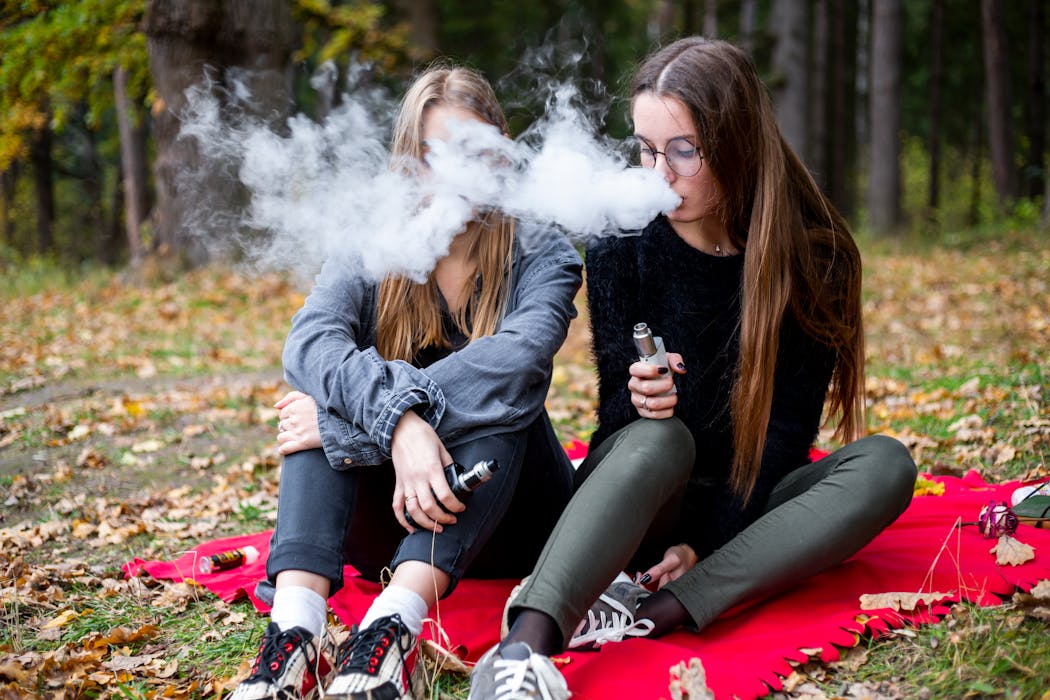
Aleksandr Yu/Shutterstock

Vaping among teenagers is a growing global health problem.

In the UK, schools are reporting a surge in young people struggling with dependence, including cases of students needing medical attention after vaping in class. In the Netherlands, researchers have found that many teenagers wake up at night specifically to vape, a sign of growing nicotine addiction in adolescents.

And in New Zealand, a widely shared image of a teenager’s blackened, shrivelled lung after three years of vaping renewed fears about the speed at which harm can develop.

These stories show how far vaping has drifted from its original purpose. Once introduced as a safer alternative to cigarettes, it is now embedded in youth culture, driven as much by social influence as by nicotine itself.

E-cigarettes have now become a lifestyle accessory: sleek, flavoured and often perceived as harmless. But behind the clouds of “strawberry ice” and “blueberry burst” vapour lies a powerful lesson in how misinformation shapes behaviour, based less on chemistry than on psychology.

Understanding why vaping feels safe, appealing and difficult to quit requires looking not only at the device but at how our minds process risk, reward and social cues.

Psychology shows that people rarely process health information in nuanced ways. Faced with complex or uncertain evidence, including emerging research on vaping, our brains reduce it to simple categories, such as safe or unsafe.

This mental shortcut helps us make quick decisions without examining every detail. When people hear that vaping is less harmful than cigarettes, many take it to mean harmless, because judging relative risk feels complicated. Brightly coloured devices, sweet flavours and wellness-focused marketing reinforce the perception that vaping is good or safe, even without long-term evidence.

This simplification helps explain why misinformation spreads easily. Once a behaviour is mentally categorised as safe or desirable, people are less likely to question it or seek contradicting evidence. Our natural tendency to think in binaries leaves complex health messages open to distortion, strengthening the influence of marketing and social cues.

Social influence then amplifies the effect. When friends, peers and influencers post vaping content online, the behaviour becomes not just visible but celebrated, making it feel socially normal and desirable. Social proof encourages experimentation and reinforces the idea that quitting would mean losing belonging, identity or enjoyment.

Social media platforms magnify these cues, circulating anecdotes, trends and endorsements. The result is one million people in England vaping despite never having smoked regularly, under the illusion of safety.

Vaping took off not only because people were misinformed, but because their brains had reasons to keep believing it was safe. Loss aversion, the tendency to feel losses more intensely than gains, explains part of this.

When vaping seems harmless, the perceived losses of quitting, such as stress relief, enjoyable flavours, social connection and identity, feel immediate and real, while the long-term risks seem distant or unlikely. People hold on to vaping not just because they underestimate the dangers, but because stopping feels like giving up something valuable.


Read more:
Two of the best stop smoking medications have been available in the UK since 2024 – so why is no one using them?


Together, these forces create a self-reinforcing cycle. Binary thinking simplifies risk, social proof builds desirability and loss aversion makes quitting feel costly. Misinformation does not just mislead. It reshapes how people think, turning a harm-reduction tool into a socially embedded, hard-to-quit habit.

The rise of vaping reveals a deeper issue in how health information spreads. In the digital age, public understanding changes faster than scientific consensus. Online trends and anecdotes often outrun the slow, careful process of research, and young people are particularly susceptible. Once misinformation takes hold, it is difficult to reverse. One in ten UK secondary school pupils currently vape, even though the NHS warns that long-term effects remain uncertain.

If misinformation helped drive the vaping boom by exaggerating its benefits, reversing the trend requires changing what people believe they stand to gain. Improving media literacy is a start, helping people spot when relatable content is actually advertising, when trends are engineered or when claims are overstated.

Public health messages also need to meet people where they are, using short, engaging content that feels native to social media. When influencers and peers highlight the real costs of vaping, such as money, energy and lung capacity, and expose the marketing behind its appeal, perceptions can shift. This taps into loss aversion by making continued vaping feel like the bigger loss.

Combining media literacy with relatable, well-targeted content can change vaping perceptions, make psychological biases work in favour of health and help people resist misleading narratives.

Ultimately, addressing the vaping boom requires understanding the minds and social environments of those caught up in it, not just the science behind the device.

The Conversation

Andy Levy does not work for, consult, own shares in or receive funding from any company or organisation that would benefit from this article, and has disclosed no relevant affiliations beyond their academic appointment.

ref. Why teenagers won’t quit vaping, even when the risks are clear – a psychologist explains – https://theconversation.com/why-teenagers-wont-quit-vaping-even-when-the-risks-are-clear-a-psychologist-explains-269476

Donald Trump’s strikes against narcoterrorists are new but the logic behind them isn’t

Source: The Conversation – UK – By Elisabeth Schweiger, Lecturer in International Politics, University of Stirling

The Trump administration’s push to label drug traffickers as “narcoterrorists” and kill them at sea has generated global outrage. But the controversy risks missing the larger story.

Experts, non-governmental organisations and the UN have condemned the strikes as unlawful assassinations and Washington’s claim that it is acting in self-defence does not appear to hold up to legal analysis.

Yet these attacks are not a dramatic break. They extend a decades-long pattern of US “targeted killings”, from Yemen to Somalia to Syria. These attacks are almost always justified through controversial legal interpretations and have often been met with muted international opposition.

There’s a chance that the current narrative doesn’t address the deeper, more meaningful criticisms of the thinking behind it.

Recent escalations by the Trump administration in targeting what the White House describe as narcoterrorists in the Caribbean have sparked significant debate. The attacks against accused drug traffickers have been extensively reported and the UN High Commissioner for Human Rights has called on the US government to halt the “extrajudicial killing of people aboard these boats, whatever the criminal conduct alleged against them”.

The Trump administration has vaguely justified the attacks through the right to self-defence in an armed conflict against narcoterrorists. But that claim has been refuted by UN experts, who have pointed out that “international law does not permit the unilateral use of force abroad to fight terrorism or drug trafficking”.

Under international law, the use of force in self-defence can only be justified if an armed attack against a state has occurred first or is imminent. For a situation to be classed as an armed conflict, certain threshold requirements need to be reached. Simply declaring that you are in an armed conflict with a group does not make it so.

Furthermore, criminals are not combatants, no matter how politically and socially problematic they may be. As such, lethal actions against them infringe upon fundamental human rights obligations – such as the right to life and the right to a fair trial.

‘War on terror’

The assaults and their justifications undoubtedly represent a troubling new development in US military practices. Yet the focus on attacks against drug criminals in the Caribbean obscures the similarities to current military operations conducted by the US against people they have designated as terrorists in the Middle East and Africa.

These have received barely any attention in public debates even though hundreds of people have recently been killed in Yemen, as well as in attacks in Syria, Iraq and Somalia.

The current campaign in the Caribbean is part of a broader pattern. For more than two decades, successive US administrations have carried out targeted killings overseas under contested definitions of what combatants are and what constitutes an armed conflict during the so-called “war on terror”.

The US-led campaign against Islamic State killed thousands of people, with civilian deaths estimated between 8,000 and 13,000 between 2014 and 2019. US airstrikes in Somalia and Yemen continue. Strikes at the port of Ras Isa and Sadaa’s remand migration detention centre a few months ago appear to have killed at least 150 civilians and injuring 200 more.

A witness, interviewed by Amnesty International described the attack on the migration centre: “They said they woke up to find dismembered bodies around them. You could see the shock and horror on their faces.”

The first attack on a so-called ‘drug boat’ in the Caribbean, close to Venezuela, September 2 2025.

It is worth remembering that the UK and other European powers have often participated in and facilitated such attacks and rarely challenged their legality.

Many countries have been fearful of directly confronting the US and objecting to these infringements of international law. As I have showed elsewhere, the legality of targeted killing strikes of terrorists outside of armed conflict has been consistently rejected by the overwhelming majority of countries.

States have characterised such practices by Israel as extrajudicial executions and have indicated concern over US practices – but they have often stopped short of openly opposing a global superpower.

So the strikes in Venezuela follow a pattern used regularly by the US and others. The Trump administration may have justified its strikes by coming up with the new and deeply problematic category of narcoterrorists. But the underlying logic remains unchanged. The US claims the authority to execute any individual it deems a threat – wherever and whenever it chooses.

Normalising murder

The consequences of this pattern are hardly unforeseeable. Experts have long warned that normalising such practices risks undermining the prohibition on the use of force and of extrajudicial killings. This potentially sets a precedent for powerful states to use lethal force against anyone they deem inconvenient.

The risk is that the monstrosity of this logic becomes obscured and the idea of targeting non-combatant narcoterrorists is eventually normalised once the initial surge of outrage fades. Already, the discussion in some quarters is beginning to shift from whether such strikes should occur to how they should be conducted, focusing on issues like target identification.

And while the attacks on drug traffickers rightly attract scrutiny, comparatively little attention is paid to the continuing, systemic use of lethal operations in parts of Africa or the Middle East, which often takes place under similar legal rationales.

This relative silence is significant. As I argue in my forthcoming book Silent War, this lack of protest and media attention – and the silence in public debates – not only reflects orientalist assumptions and power asymmetries. It also effectively enables and legitimises such political aggression.

The Conversation

Elisabeth Schweiger does not work for, consult, own shares in or receive funding from any company or organisation that would benefit from this article, and has disclosed no relevant affiliations beyond their academic appointment.

ref. Donald Trump’s strikes against narcoterrorists are new but the logic behind them isn’t – https://theconversation.com/donald-trumps-strikes-against-narcoterrorists-are-new-but-the-logic-behind-them-isnt-271688

Lahore’s toxic winters: how smog is reshaping daily life in urban Pakistan

Source: The Conversation – UK – By Gulnaz Anjum, Assistant Professor of Climate Psychology, Centre for Social Issues Research, Department of Psychology, University of Limerick

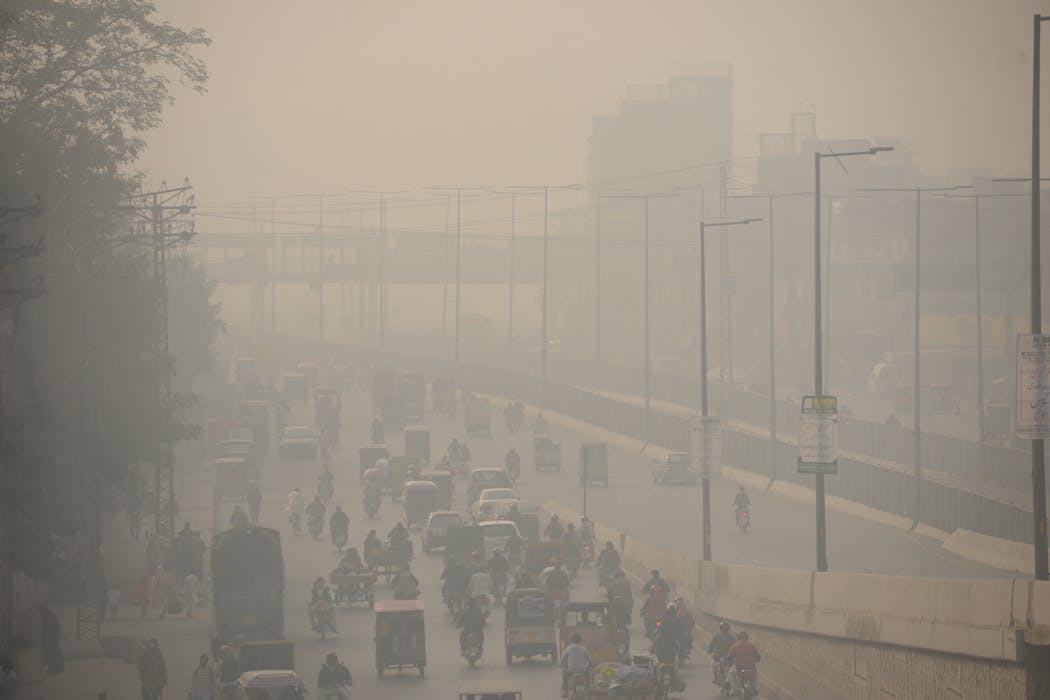
Commuters make their way along a road amid smoggy conditions in Lahore, Pakistan. Murtaza.Ali/Shutterstock

In November 2025, Lahore, the second-largest city in Pakistan, registered a “hazardous” air quality index of 509, according to IQAir, a global air quality monitoring organisation. The number speaks for itself. Eyes sting, throats burn and headlights blur into halos. In winter, the city feels as though it has slipped beneath a toxic sea.

Across Pakistan’s major cities, the shift into colder months no longer brings relief from heat or flooding. Winter has become smog season.

For weeks at a time, the sky turns grey-brown and the air tastes metallic before noon, a result of fine particles and acidic gases accumulating in the air and irritating the mouth and throat. These are not abstract environmental problems but daily, sensory realities. Smog now shapes routines, moods and the way people move through their day.

Lahore’s smog crisis is not new, but the numbers are becoming more alarming. The World Health Organization recommends that annual average levels of fine particulate matter should remain below five micrograms per cubic metre. According to a recent IQAir report, Lahore’s 2024 average was 102.

The burden of disease caused by air pollution is now estimated to be on a par with unhealthy diets and tobacco smoking. Global assessments place Pakistan among the countries with the highest mortality linked to air pollution, with particle concentrations far above recommended limits.

For residents of Pakistan’s cities, these statistics translate into physical and emotional strain. People describe waking with headaches after nights of coughing. Parents say the school run feels like walking through exhaust fumes.

Outdoor workers such as drivers, street vendors and construction labourers often report tasting metal in the air by late afternoon. Emerging research links smog episodes with spikes in respiratory illness, cardiovascular stress and hospital visits, especially among children and people with existing health conditions.

Winter in Lahore is sometimes described as “a lockdown without staying at home”. Public health advice on very polluted days often includes avoiding outdoor exercise, keeping windows closed and wearing masks when outside. Air quality apps now send real-time alerts to hundreds of thousands of users across the city.

But staying indoors is a luxury for many. Street vendors cannot sell food from their kitchens. Transport workers cannot drive rickshaws or buses from behind sealed windows. Families living in cramped, poorly ventilated housing do not breathe clean indoor air either; they breathe a mixture of outdoor pollution and indoor smoke from cooking or heating.


Read more:
Toxic air in the home is a global health emergency


The causes of this toxic winter mix are well documented. Older diesel trucks and buses emit large quantities of fine particles and nitrogen dioxide. Industrial zones and poorly regulated brick kilns burn low-quality fuel. Construction activity increases the amount of dust in the air. Seasonal burning of crop residues left behind after harvesting, such as stalks and straw, in Punjab and neighbouring regions worsens pollution even further.

Cold winter temperatures trap pollutants close to the ground. With little wind or rain to disperse them, a dense brown haze settles over Lahore and other urban areas. Recent analyses show that Lahore’s emissions remain high throughout the year, but peak during winter when weather conditions are least favourable.

Smog affects more than the lungs. It influences how people feel, behave and cope with daily life. Residents frequently report a sense of heaviness or irritability on high pollution days, difficulty concentrating or a “claustrophobic” feeling when visibility drops and the city seems to close in. Studies show that air pollution has negative effects on mental health. For families already dealing with crowded housing, unstable work and unreliable transport, smog adds another layer of psychological strain.

Smog’s uneven toll

These effects are not shared equally. Low-income communities in cities like Lahore and Karachi often live closer to industrial corridors, busy roads or burning waste sites, and have far less control over their exposure.

People who work outdoors breathe in more polluted air than those who can work remotely or retreat indoors. Women managing unpaid care work describe feeling exhausted by the constant monitoring of children’s coughs, many of whom also miss school.

For many households in Pakistan, air pollution interacts with other environmental threats such as extreme heat, flooding and water shortages. It is a pattern seen across developing countries, where climate change and pollution intensify existing inequalities and resilience depends not only on people’s physical wellbeing but also on collective capacity to support one another and withstand overlapping crises.

Recognising these psychological and social dimensions is essential for designing effective public health and environmental responses. When smog becomes seasonal – a regular feature of winter rather than an occasional occurrence – people adapt in ways that affect social life, work patterns, schooling and mental wellbeing.

Persistent exposure can lead to hopelessness, a sense that nothing can be done, which undermines motivation to participate in civic discussions or environmental initiatives. Others experience heightened worry about their children’s health, education and future, a form of “pollution anxiety”.

These emotional responses matter because they shape how communities understand risk, respond to public messaging and engage with policy measures.

No one can solve city-wide smog alone, yet waiting only for national reforms can feel too slow and too distant. Community-level action occupies the space in between. Neighbourhood clean-air campaigns, school-based monitoring, local tree planting, reporting of illegal burning and collaborations between residents, health workers and municipal staff can increase awareness and create political pressure for broader systemic change.

These efforts do not replace national policy; they make it more likely to succeed. And they give people a sense of agency in a context where pollution can otherwise feel overwhelming.


Don’t have time to read about climate change as much as you’d like?

Get a weekly roundup in your inbox instead. Every Wednesday, The Conversation’s environment editor writes Imagine, a short email that goes a little deeper into just one climate issue. Join the 47,000+ readers who’ve subscribed so far.


The Conversation

The authors do not work for, consult, own shares in or receive funding from any company or organisation that would benefit from this article, and have disclosed no relevant affiliations beyond their academic appointment.

ref. Lahore’s toxic winters: how smog is reshaping daily life in urban Pakistan – https://theconversation.com/lahores-toxic-winters-how-smog-is-reshaping-daily-life-in-urban-pakistan-270494