Why does chronic pain often lead to depression? Our research shows the answer is in the brain

Source: The Conversation – UK – By Barbara Jacquelyn Sahakian, Professor of Clinical Neuropsychology, University of Cambridge

Researchers have long wondered why some people with chronic pain develop depression. yourphotopie/ Shutterstock

Chronic pain has long been known to be associated with depression.

Among adults with chronic pain, around 40% exhibit clinical symptoms of depression. But why is it that only some people with chronic pain develop depression?

Researchers have long been wondering why this happens – and what goes on in the brain. If we can answer this question, we may be able to prevent depression from developing.

Our recent article, published in Science, suggests the answer to this question does indeed lie in the brain.

To conduct our study, we analysed neuroimaging brain scans from 14,462 participants from the UK Biobank cohort. We compared the following groups of participants: people with chronic pain for at least seven years who did not have symptoms of depression, and people with chronic pain who also developed depressive symptoms.

For the latter, the depressive symptoms were present either for the entire seven-year period, or they developed after two years or four years. This enabled an analysis of the development of depression associated with chronic pain, using brain imaging.

These neuroimaging analyses revealed something surprising was taking place in the brain – specifically in a structure called the hippocampus. The hippocampus has important functions in learning and memory.

In the participants who reported chronic pain without depressive symptoms, they showed modest increases in hippocampal volume and improved memory performance. This is consistent with the brain attempting to cope with the stress of the pain.

In contrast, people experiencing both chronic pain and depression exhibited reduced hippocampal volume and impaired cognitive performance. Further analyses of these scans suggested these changes developed progressively over time. This indicates that the hippocampus may initially adapt to persistent pain, but it gradually becomes vulnerable when pain continues over long periods.

Importantly, similar patterns were observed across multiple categories of chronic pain – including back, stomach, knee and hip pain, as well as headaches. This suggests that the findings were not specific to a single type of chronic pain condition.

We then studied how these brain changes unfolded in people with chronic pain by using rodent animal models. This research found that in animals there was a similar sequence of changes in the volume of the hippocampus, accompanied by increased neural activity. Moderate improvements in cognitive functioning occurred initially, but this was then followed by anxiety-like behaviour, which later transitioned to depressive-like symptoms and poorer memory.

The hippocampus has long been known to be involved in emotional memories and is highly susceptible to chronic stress. The hippocampus’s plasticity (the ability to form new nerve cells) is known to be involved in coping with chronic stress.
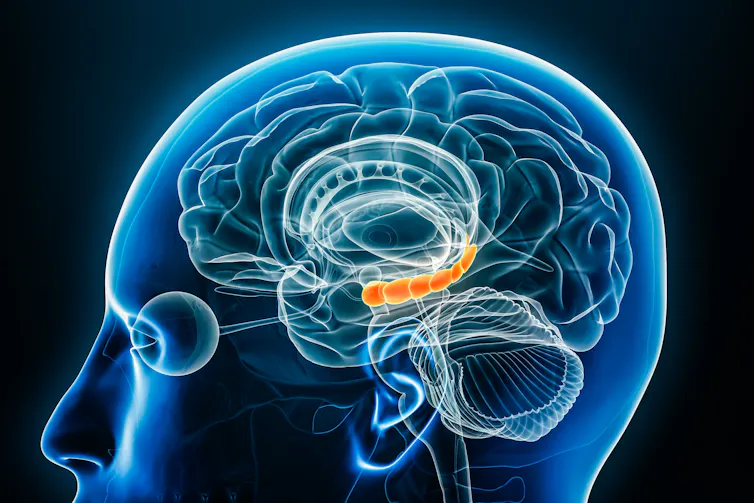
A digital drawing depicting the hippocampus, which is illuminated in orange.
The hippocampus was shown to be the key area involved in the link between chronic pain and depression.
MattL_Images/ Shutterstock

Chronic stress has also been implicated in exacerbating apoptosis (nerve cell death) and suppressing adult neurogenesis – the process of producing new nerve cells in the hippocampus.

We found that a region of the hippocampus known as the dentate gyrus – one of the few areas where new brain cells continue to form in adulthood – emerged as the critical regulatory hub and the pivot for the transition from chronic pain to depression.

Early in the pain process, newly generated neurons in the dentate gyrus showed increased activity – suggesting the brain initially mounts a protective response to persistent pain. Over time, however, immune cells, known as microglia, became abnormally activated and disrupted normal neural signalling in the hippocampus.

This abnormal microglial activation appeared to mark the tipping point at which the brain’s initially protective response to pain began to fail.

Importantly, an antibiotic treatment, minocycline, suppressed abnormal microglial activation and reduced depression-like behaviour in the animal models. This treatment also preserved the structure of the hippocampus and cognitive function.

Treating pain and depression

Our findings suggest that a treatment such as minocycline could help prevent depression in people living with persistent pain — particularly if treatment is introduced early.

Of course, other psychosocial, socio-economic and genetic factors play a role in the perception of pain. Therefore, it’s likely that in some people these factors will exacerbate chronic stress and the experience of pain.

However, there are other evidence-based ways to reduce the risk of depression. In another collaborative study between Fudan University and the University of Cambridge, it was shown that seven healthy lifestyle factors, including good sleep, exercise and diet, could reduce the risk of depression by 57%. Importantly, these lifestyle factors were also associated with increased hippocampal volume, consistent with our new study.

Mindfulness training may be another strategy. This focuses on being present in the moment and minimising distraction from competing thoughts and memories. The practice is shown to improve working memory and increase hippocampal density.


Read more:
How mindfulness therapy could help those left behind by depression treatment


A recent review showed that mindfulness meditation experts have increased brain grey matter, including the hippocampus. Mindfulness meditation training was also shown to lead to increased hippocampal volume.

Mindfulness practice has also been found to be beneficial for improving quality of life – not only when coping with chronic pain – and for reducing symptoms of stress and depression.

Our discovery has answered an important question that has long puzzled researchers. We showed the key role the brain’s hippocampus plays in why some chronic pain sufferers develop depression. This discovery also points to potential treatments that may prevent depression in people with chronic pain.

The brain’s coping mechanisms that we discovered may also apply more generally to other conditions where the brain has to cope with chronic stress – such as in psychological trauma.

The Conversation

Barbara Jacquelyn Sahakian receives funding from the Wellcome Trust and the Lundbeck Foundation. Her research work is conducted within the NIHR Cambridge Biomedical Research Centre (BRC) Mental Health and Neurodegeneration Themes. She receives Royalties from Cambridge University Press for Brain Boost: Healthy Habits for a Happier Life.

Jianfeng Feng receives funding from nsfc

Trevor Robbins he is a consultant for Cambridge Cognition, and Blandaris.

Xiao Xiao receives funding from 2030 China Brain Project.

ref. Why does chronic pain often lead to depression? Our research shows the answer is in the brain – https://theconversation.com/why-does-chronic-pain-often-lead-to-depression-our-research-shows-the-answer-is-in-the-brain-278697

One in three Scottish people dies with unmet palliative care needs – what that means for assisted dying

Source: The Conversation – UK – By Philip Broadbent, Wellcome Multimorbidity PhD Fellow & Public Health Registrar, University of Glasgow

By twelve votes, the Scottish parliament rejected the assisted dying for terminally ill adults bill on March 17.

The debate that preceded it was emotionally charged and, at moments, genuinely moving. MSPs spoke of parents, partners, faith and fear. Much of it turned on the contents of the bill – safeguards, eligibility criteria and conscience clauses. The structural conditions in which terminally ill people in Scotland actually make decisions received less attention, and what attention they did receive struggled to translate into demands that any future legislation must meet.

Scotland is an unequal place to live. In its most deprived communities, life expectancy has been falling since 2013; a gap of more than 13 years now separates the richest and the poorest. And the people at the bottom of that gap do not simply die younger.

A 2012 study of 1.72 million Scottish patients found that having multiple long-term conditions begins ten to 15 years earlier in the poorest communities than in the wealthiest. Among the most disadvantaged of our society, the diseases that lead to terminal illness arrive sooner, in greater number and are compounded by poverty.

Scotland is also, by the measures that matter most, a deeply unequal place to die. Around 6,400 terminally ill Scots spend their final months below the poverty line. One in five die in fuel poverty. The additional costs of dying (equipment, housing adaptations, heating, transport, care) amount to between £12,000 and £16,000 in the final year of life for many households at precisely the moment income collapses.

Simultaneously, new research finds that almost one in three people in Scotland die with unmet palliative care needs. Around 18,500 people a year. A separate 2024 Scottish government service mapping survey found that three NHS boards have no specialist palliative medicine doctor at all, that out-of-hours advice is unavailable in around half of Scotland’s health and social care partnerships and that over half of specialist palliative services depend on charitable rather than public funding.

Following the vote, former prime minister Gordon Brown described a “moral obligation” to make urgently needed improvements to end-of-life care, warning that the “postcode lottery” means high levels of hospice and community care are available in some areas but not others.

These are not footnotes to the assisted dying debate. They are its foundation.

When safeguards aren’t enough

The standard case for assisted dying rests on autonomy: people should be free to choose, provided they have mental capacity and are not being coerced. The Scottish bill included extensive safeguards: two independent doctors, reflection periods, requirements to discuss alternatives and enquiries into social conditions.

Safeguards are designed to detect individual coercion: the controlling relative, the financial pressure applied by a family member. What they cannot detect is a different kind of pressure. That of a person who requests an assisted death, not because dying is what they want, but because the system has left them nothing else they can bear.

The Equality and Human Rights Commission, which submitted evidence at every stage of the bill’s passage, put the problem precisely: “coercion or pressure is not always something applied directly by other individuals. People with disabilities may feel subtle coercion to end their lives prematurely due to attitudinal barriers as well as the lack of appropriate services and support.”

It is instructive to look at Canada, which has had legalised assisted dying since 2016. Consider Sean Tagert, a Canadian man with motor neurone disease, who chose medical assistance in dying after his local health authority refused to fund the full hours of home care his doctors said he needed. The shortfall cost £200 a day, which he could not afford. He said, explicitly, that his decision was shaped by the failure of care funding.

A female veteran with military service related mental health conditions reported being offered assisted dying when she asked for a wheelchair lift.

A woman in Ontario died after years of failing to find housing that didn’t worsen her chronic illness, four doctors wrote to the government describing their response as “unconscionable”.

In none of these cases did safeguards fail. The issue is that the safeguards were not designed to ask whether people were choosing death because every other option had been removed removed by systemic failure.

In the US, Oregon has had assisted dying since 1997. Its 27-year dataset (the longest-running of any jurisdiction) provides a further, troubling signal. The proportion of patients on government insurance – a strong proxy for lower income – has grown steadily over the law’s lifetime, reaching 77% in 2024. This is nearly double the state average.

Financial concerns stated as a reason for requesting assisted dying reached a record high that same year. Psychiatric evaluation, required in 27% of cases in 1998, now occurs in less than 1%. Oregon does not collect income data; it destroys case records annually. Patterns of inequality are difficult to find when nobody is looking for them.

I do see Scotland returning to this question (the bill failed by only twelve votes). When it does, the inequality argument must do more than determine how people vote. It must shape what is proposed.

Any future bill deserves scrutiny not just of its safeguards, but of the conditions those safeguards operate in: whether palliative care is genuinely available, whether dying people are financially supported, and whether the data exists to know, in real time, whether structural disadvantage is shaping who requests an assisted death and why.

A choice made because there is no other bearable option is not a free choice. In Scotland today, for thousands of people at the end of their lives, that is precisely the situation. The assisted dying debate has the wrong question at its centre. The right one is: what kind of dying does Scotland currently provide, and for whom?

The Conversation

Philip Broadbent receives funding from the Wellcome Trust Multimorbidity Doctoral Training Programme 223499/Z/21/Z

ref. One in three Scottish people dies with unmet palliative care needs – what that means for assisted dying – https://theconversation.com/one-in-three-scottish-people-dies-with-unmet-palliative-care-needs-what-that-means-for-assisted-dying-278700

Senegal stripped of title: Afcon ruling is lawful, but it puts Caf’s reputation at risk

Source: The Conversation – Africa – By Fabrice Lollia, Docteur en sciences de l’information et de la communication, chercheur associé laboratoire DICEN Ile de France, Université Gustave Eiffel

The appeals board of African football’s ruling body, the Confederation of African Football (Caf), on 17 March overturned the outcome of the 2025 Africa Cup of Nations (Afcon) final. Afcon is the continent’s biggest tournament.

On 18 January Senegal had won 1-0 in extra time against Morocco in Rabat. But two months down the road Caf declared a 3-0 score in favour of Morocco, citing violations of Articles 82 and 84 of its regulations. (Three points are the mandatory legal penalty.) Senegal has announced it will appeal to the Court of Arbitration for Sport.


Read more:
Afcon drama: what went wrong and what went right at the continent’s biggest football cup in Morocco


As a scholar of information and communication sciences, I have studied how social trust and symbolic mechanisms shape and influence organisational dynamics. In my view Caf’s decision to reassign the title to Morocco is not merely a matter of sports law. It also demonstrates how a regulatory decision can clash with the public narrative of an event and undermine a tournament’s image.

A final is not just a result. It is also a narrative, a memory, and a shared collective moment. When an institution later changes that, it destabilises an already established symbolic order.

A final isn’t just played on the field

Research in Information and Communication Sciences shows that an event never exists just as a raw fact. It exists through the channels that make it visible, tellable and shareable. A continental final involves images, commentary, ceremonial gestures, national emotions, digital reactions, and journalistic narratives.

The winner of a final is not merely determined by a rule or a scoreboard. They are also constructed through a chain of communication that publicly sets the event’s meaning. In this sense, victory is not just athletic; it is also narrative.

For the 2025 Africa Cup of Nations, the story had already settled. Senegal won on the field. The images, commentary and immediate memory of the event had begun to embed this outcome in the public consciousness. When Caf stepped in two months later to legally overturn the outcome, it did more than apply rules. It was altering a story that the public had already embraced.

Was it legal?

Let’s be clear. Caf acted within its laws. Its statement is clear that Senegal’s temporary withdrawal from the field (the players walked off for about 15 minutes to protest a penalty decision) justifies the forfeit.

A sports body cannot claim to uphold the integrity of its competition if it fails to enforce its own rules.

But the legitimacy of this kind of decision also depends on how clearly it can be read and understood by the public.

Caf’s reputation under strain

This is where an information communication perspective can help make sense of things. The crisis is about a mismatch between several competing forms of legitimacy, or “truth” – the law, the field outcome, the images of it and how people receive it.

Any sports governing body has to make its rules credible in the eyes of the public. When a decision comes after the symbolic end of the event, it creates confusion in meaning.

The question shifts to whether it can still align its message with what the public understands of the competition.

Research shows this matters deeply. An institution depends on its ability to make its decisions seem coherent and acceptable.

The Senegalese Football Federation’s announcement of an appeal adds fuel to the fire. The final no longer exists as a stable end point. It continues to exist as a controversy, an unresolved matter.

Afcon is not just a football tournament. It is a continental sports brand. Its value does not rest solely on the quality of the play or its audience reach. It is also about story. A major competition produces heroes, images, emotions, memories. It also promises a form of symbolic clarity: in the end, a winner should emerge in a way that is understood and shared.

Its symbolic certainty is a valuable resource in the attention economy.

The controversy does not erase Afcon’s value, but it reshapes it. It shifts the event from a celebration to a dispute. And this shift is never neutral for a sports brand that also thrives on prestige, collective memory and trust.

Business risk

The issue extends beyond sport. It speaks directly to business. Sponsors, broadcasters, investors and tourism stakeholders do not only seek visibility. They also look for a stable, trustworthy and predictable environment.

The Afcon drama sends mixed signals. It demonstrates Caf’s commitment to enforcing the rules. But it also shows that a major event can remain symbolically unstable after it seemed over. This doesn’t always scare business partners away. But it adds reputation risks. It undermines the trust needed to attract investors.

For host nation Morocco, the event brought good economic gains. Hosting such a major tournament is not just about logistics. It also projects the image of a reliable country, able to manage a complex international event.

On the technical side, the tournament strengthened this image, especially ahead of the country co-hosting the 2030 men’s Fifa World Cup.


Read more:
Morocco will co-host the 2030 World Cup – Palestine and Western Sahara will be burning issues


But the controversy serves as a reminder that a country can host well technically, yet lose some reputation gains due a crisis of meaning.

Bad for communication

In the age of viral images, instant controversies and reputation economies, legitimacy is not built by rules alone. It is also built on the public interpretations that arise.

A disconnect does not just affect a confederation or two national teams. It is an entire ecosystem of trust that is shaken. That includes the competition, its partners, and, indirectly, the host country as a credible organiser of major events.

The Conversation

Fabrice Lollia does not work for, consult, own shares in or receive funding from any company or organisation that would benefit from this article, and has disclosed no relevant affiliations beyond their academic appointment.

ref. Senegal stripped of title: Afcon ruling is lawful, but it puts Caf’s reputation at risk – https://theconversation.com/senegal-stripped-of-title-afcon-ruling-is-lawful-but-it-puts-cafs-reputation-at-risk-278855

Fink Haysom fought tirelessly for justice and reconciliation – in South Africa and on the global stage

Source: The Conversation – Africa (2) – By Hugh Corder, Professor Emeritus of Public Law, University of Cape Town

The preamble of the South African constitution of 1996 starts as follows:

We, the people of South Africa,

Recognise the injustices of our past,

Honour those who suffered for justice and freedom in our land,

Respect those who have worked to build and develop our country, and

Believe that South Africa belongs to all who live in it, united in our diversity.

It is fitting to start with this reminder, given the extent to which these phrases sum up and embody the life and work of Nicholas (Fink) Haysom, who died in New York City on Wednesday 18 March 2026, a month short of his 74th birthday.

Tributes have poured forth from a wide range of people and quarters, appropriately given the geographical reach and indefatigable energy which characterised Haysom’s life’s work.

This tribute is more limited in scope: given my own friendship and shared experiences with him, it focuses overwhelmingly on the first half of his working life, during the last two decades of apartheid South Africa and the transitional phase to the progressive and robust constitutional democracy that came with liberation.

Notwithstanding the significant impact of his work for the United Nations from the year 2000, the qualities forged in Haysom by his intense involvement in the struggle for democratic practices both in the workplace and wider society under the extreme hostility of the apartheid capitalist order shaped his approach to conflict and strife, wherever it occurred.

It would be remiss, however, not to note the main spheres to which he devoted so much of his life.

For the record, his full names were Nicholas Roland Leybourne Haysom. But he was universally known as Fink, to all comers, and most of us who knew him cannot think of calling him otherwise.

His early life

Haysom was educated at a privileged Anglican college in South Africa’s Natal province during the 1960s. He went on to study at the University of Natal in Durban, where he completed an honours degree in politics.

Durban in the early 1970s was the setting for the nurturing and development of a number of students who became significant activists in the anti-apartheid cause. Many were inspired by the views and mentoring of academics like Rick Turner, an academic activist who was shot and killed at his home by the apartheid regime in 1978.

Among them was a future partner in their law firm, Halton Cheadle. These students were involved in supporting the strike action by dock workers in Durban port in 1972/3, which signalled the revival of independent trade unionism among black workers.

Haysom then moved to the University of Cape Town to complete his LLB (law) degree in 1978. It was in these years that he rose in prominence among the ranks of anti-apartheid activists. The National Union of South African Students (Nusas) had long been a thorn in the side of the regime. But it was rocked to its foundations in 1972 following Steve Biko’s establishment of the South African Students Organisation, founded on black consciousness.

The apartheid regime simultaneously convened the Schlebusch Commission of Inquiry into four “radical” opposition movements, among them Nusas. By 1976, only two campuses remained affiliated to Nusas: the University of Cape Town and the University of the Witwatersrand (Wits).

At the annual congress, held at Wits in December 1976, Haysom was elected president, with the task of galvanising support for Nusas on campuses as well as in broader society, in the aftermath of the 1976 Soweto uprising (when protesting black school students were killed by police).

His leadership and energy, as well as his ability to engage meaningfully with people from very diverse backgrounds and ideologies, revived Nusas. The organisation was also able to forge links more broadly across other anti-apartheid organisations within the country.

Haysom was harassed and detained without trial – then and in the ensuing years.

After graduation, he entered the attorneys’ profession. In 1982 he became a founding partner, with Halton Cheadle and Clive Thompson, of the firm Cheadle Thompson & Haysom – still very much thriving today. During the 1980s it was one of the very few firms of “struggle” attorneys.

The firm worked closely with the emergent independent trade union movement among black workers, as well as other civil movements resisting the consolidation of apartheid in urban and rural areas.

Daily life was extremely tough, and it took its toll on him and those with whom he worked. He simultaneously held an appointment as an associate professor at Wits.

The creation of a democratic state

Haysom was a member of the constitutional committee of the African National Congress and played a critical role in the negotiations which led to the constitutional settlement of 1994.

Again, his human qualities of being able to relate patiently and empathetically to so many diverse groups of people, both among the oppressors and the oppressed, and his great capacity to enjoy good social occasions served him – and the cause of freedom and justice – very well.

Many today unjustifiably downplay the dire risks inherent in the negotiations process, and the possibility of a resort to scorched earth tactics by the apartheid regime. If it was not for a few key participants on all sides in the mould of Fink Haysom, such disastrous consequences would have been realised.

President Nelson Mandela’s assessment of the value of Haysom’s qualities and contributions was realised by his appointment as constitutional and legal counsel in the Office of the Presidency, until 1999. Others have written about the myriad ways in which Mandela relied on Haysom in the heady but often tortuous years of his presidency, during which the constitution was drafted and adopted.

The international stage

Haysom was not retained by President Thabo Mbeki. His professional skills and experience were then devoted to mediating conflict and endeavouring to bring peace to many areas in Asia and Africa, in the service of the office of the secretary general of the United Nations.

The list of his areas of engagement reads like a collection of the sites of major conflicts over the past 25 years: Burundi, Iraq, Afghanistan, Somalia, Sudan, southern Africa, South Sudan.

He served under three secretary generals of the UN, the formal title given to his last and incomplete engagement being the Special Representative and Head of UN Mission in South Sudan (from 2021 till his death).

In recognition of such exemplary service in the cause of human rights, constitutionalism and conflict resolution, both in South Africa and internationally, Haysom was awarded an honorary doctorate in law by his alma mater, the University of Cape Town, in 2012, matched in 2019 by the New York Law School.

Haysom was a gregarious, ebullient person, who enjoyed good food and drink and good company. Born to a privileged lifestyle, he responded not by accepting his status and its material rewards, but by devoting his life’s work to addressing conflict and improving the lives of the poorest sectors of humanity.

The burdens occasioned by the blocking of his efforts and the obstinate clinging to brutal power and the unjustifiable resort to brutality and greed by so many with whom he had to engage wore him down: anyone who looks at a photograph of him, even in middle age, and compares it with one taken in the past ten years will be shocked by the changes.

His responsibilities also took their toll on family life and other non-work pursuits. Most people would have been tempted to quit, faced by these odds.
Yet he remained in office, as a warrior for justice and reconciliation, until his death.

Especially now, humankind needs many more like him in positions of influence.

The Conversation

Hugh Corder has in the past received funding from the National Research Foundation of South Africa. He is a director of Freedom under Law (not for profit company) and a member of the Council for the Advancement of the South African Constitution (CASAC).

ref. Fink Haysom fought tirelessly for justice and reconciliation – in South Africa and on the global stage – https://theconversation.com/fink-haysom-fought-tirelessly-for-justice-and-reconciliation-in-south-africa-and-on-the-global-stage-278922

Syrian ex-colonel faces crimes against humanity charges in landmark case for UK – expert explains

Source: The Conversation – UK – By Rossella Pulvirenti, Senior Lecturer, School of Law, Manchester Metropolitan University

Andy Wasley/Shutterstock

A former colonel in Syria’s Air Force Intelligence Directorate appeared in court this month in a landmark crimes against humanity case.

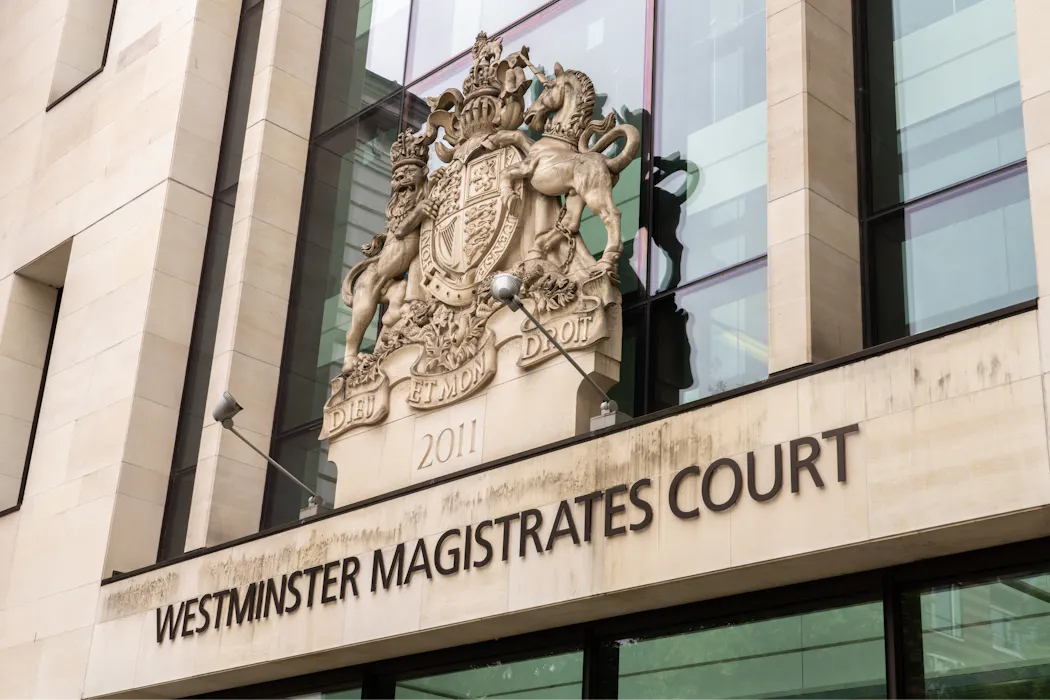
Salem Michel Al-Salem, 58, faces multiple charges, including murder as a crime against humanity and torture. The charges relate to his alleged participation in violent crackdowns on anti-government protests in Damascus in 2011. Al-Salem appeared at Westminster Magistrates Court in London earlier this month, where his case was sent to the Old Bailey. He has yet to enter pleas to the charges.

The court heard that Al-Salem had reportedly sought indefinite leave to remain in England.

This case is significant, not just because of the global effects of the Syrian conflict, which caused the deaths of more than 400,000 people and displaced 13 million. It is also the first case of prosecution in the UK for crimes against humanity allegedly committed by the defendant abroad.

For 25 years, the UK has had the power to prosecute individuals for crimes against humanity under the International Criminal Court Act 2001. It does not matter where in the world the alleged crimes took place, as long as the accused is a UK national or resident.

In recent years, there has been a wave of related prosecutions in Europe and beyond. In 2022, Germany sentenced a former Syrian intelligence colonel, Anwar Raslan, to life imprisonment for crimes against humanity. Similarly,France successfully convicted three Syrian senior officials to life imprisonment. Sweden held accountable a Swedish national who joined Islamic State in Syria, sentencing her to 12 years in prison for genocide, crimes against humanity and war crimes. Many other countries have carried out similar investigations.

These have all been under the principle of “universal jurisdiction”. This principle is recognised in customary international law – unwritten rules that arise from established practice. It gives criminal courts in any state the power to prosecute for serious crimes under international law, regardless of where they were committed.

Universal jurisdiction applies only to the most heinous crimes recognised as such by the international community: crimes against humanity, war crimes, genocide and torture, for example. It reflects the idea that such crimes harm the international community as a whole and cannot go unpunished.

The UK’s legal framework falls slightly short of universal jurisdiction, which is why it has – until now – been absent from the list of countries prosecuting for alleged crimes against humanity in Syria. The reason for this lies in the UK’s legal framework under the International Criminal Court Act 2001.

A limited legal approach

The 2001 Act was introduced by the Tony Blair government to enable the UK to ratify the Rome Statute, the founding treaty of the International Criminal Court. It made it an offence in England and Wales for any person to commit genocide, a crime against humanity or a war crime. It applies to offences committed after 2001, in England and Wales or abroad. However, for crimes committed outside the UK, prosecution is only possible if the alleged offender is a UK national or resident.

Before 2001, these crimes were not absent from UK law. Genocide and war crimes were prohibited under the 1969 Genocide Act and the Geneva Conventions Act 1957.

However, these did not allow for prosecution if the crime was committed abroad. Additionally, no UK law specifically criminalised crimes against humanity. Even if someone had committed an act identifiable as a crime against humanity, the UK courts had no power to charge them with that specific offence.

After 2001, the UK courts could finally prosecute crimes against humanity, but only if the alleged offender is a UK national or resident. This rule does not apply if the person is travelling through the UK or staying in the UK for a short period of time. The UK chose a minimalist approach for genocide and crimes against humanity.

In the UK, full universal jurisdiction is reserved only for crimes recognised by certain international treaties, like grave breaches of the Geneva Convention, or the UN Convention against Torture. For these crimes, it does not matter where the alleged perpetrator lives.

There is a reason for this limited approach. At the time it introduced the 2001 Act, the government did not want UK courts to assume a broad role as global enforcer. From a practical perspective, prosecuting foreign nationals for offences committed abroad requires costly investigations across multiple jurisdictions.

However, it does create loopholes for potential perpetrators. First, a suspect of these crimes can freely visit the UK without fear of prosecution, as they need to be either a resident or a citizen to be prosecuted. Second, the UK has no jurisdiction to prosecute crimes committed before 2001.

Before the Al-Salem case, the International Criminal Court Act 2001 had only been used once. In 2006, seven British soldiers were charged with war crimes following the death of Iraqi civilian Baha Mousa. Corporal Donald Payne, pleaded guilty to inhumane treatment, while the other six soldiers were acquitted.

The Al-Salem trial is a landmark moment, but it appears to be an exception, rather than a turning point. A single prosecution for crimes against humanity in 25 years reflects the UK’s limited commitment to accountability for mass atrocity crimes. Survivors from Syria, Ukraine, Darfur, Myanmar and Palestine have been directly affected by the UK’s inertia.

The UK legal framework needs structural reform. The International Criminal Court Act 2001 should be amended to allow prosecution regardless of the nationality, residence status or location of the alleged perpetrator – committing to true universal jurisdiction like so many other countries.

The Conversation

Rossella Pulvirenti does not work for, consult, own shares in or receive funding from any company or organisation that would benefit from this article, and has disclosed no relevant affiliations beyond their academic appointment.

ref. Syrian ex-colonel faces crimes against humanity charges in landmark case for UK – expert explains – https://theconversation.com/syrian-ex-colonel-faces-crimes-against-humanity-charges-in-landmark-case-for-uk-expert-explains-278699

A man used AI to help make a cancer vaccine for his dog – an oncologist urges caution

Source: The Conversation – UK – By Justin Stebbing, Professor of Biomedical Sciences, Anglia Ruskin University

Corona Borealis Studio/Shutterstock.com

An Australian tech entrepreneur has helped create what appears to be a made-to-measure cancer vaccine for his dog, Rosie, using artificial intelligence tools such as ChatGPT as part of the process.

The science behind this sounds intimidating – DNA sequencing, mRNA vaccines, “neoantigens” – but at its core, it is about reading the instructions inside a tumour and then writing a new set of instructions to help the immune system see it.

Rosie is an eight-year-old rescue Staffordshire bull terrier cross that developed aggressive mast cell cancer, a common skin cancer in dogs. She had surgery and chemotherapy, but the disease kept coming back and she ended up with large, ugly tumours on her leg.

Vets told her owner, Paul Conyngham, that she probably had only months to live. Instead of accepting that, he decided to use the tools he knew from his day job in tech – data analysis, AI and coding – and apply them to his dog’s cancer.

Decoding the tumour

The first step was to understand what made Rosie’s tumour different from her healthy cells.

Every cell in the body carries DNA – a long, chemical molecule that acts like a biological instruction manual. You can think of DNA as a very long string of letters written in a four-letter alphabet. Cancer happens when enough of those letters change, by chance or through damage, so that some cells start to grow and divide out of control.

Sequencing a tumour’s or normal cell’s DNA is essentially reading through that long string of letters and comparing it to the “normal” version to see where it has gone wrong. A lot of my own research has focused on this. Conyngham paid a university lab to sequence the DNA from Rosie’s tumour. That produced a huge file listing the mutations – the spelling mistakes in the cancer’s instruction manual – that set her tumour apart from her healthy tissues.

On their own, those files are just data. The question is what to do with them. This is where he turned to an AI chatbot. He asked it how scientists design personalised cancer vaccines and how he might go from a list of mutations to specific targets for a vaccine for Rosie.

A cancer vaccine in this context is different from the childhood vaccines we are used to. Traditional vaccines prevent infections: you give someone a harmless version or fragment of a virus or bacterium so their immune system can “learn” to recognise it in advance. A cancer vaccine, by contrast, is usually therapeutic rather than preventive. It is given to someone who already has cancer, with the aim of training their immune system to spot markers on the cancer cells that it has previously ignored and then attack them.

This is where mRNA comes in. If DNA is the master instruction book, mRNA (messenger RNA) is more like a photocopied page that gets sent to the cell’s protein-making machinery – think of it as a short piece of code that carries a single command: “make this protein”.

Some of the COVID vaccines use mRNA: they deliver a strand of mRNA that tells our cells to make the spike protein from the coronavirus, so the immune system can practise on it. The body then breaks down the mRNA; it does not change your DNA.

For a personalised cancer vaccine, scientists choose small parts of proteins that are unique to a particular tumour – so-called neoantigens – and encode them in an mRNA sequence.

When this mRNA is injected, cells take it up and briefly make those tumour-linked protein fragments. The immune system can then see these fragments and, ideally, begins to treat any cell displaying them as abnormal and dangerous. In effect, it is using mRNA to give the immune system a “most wanted” poster for that individual cancer.

With help from AI tools, Conyngham sifted through Rosie’s tumour mutations to pick out candidates that might make good neoantigens. He also used protein structure prediction software to model how some of these mutated proteins would look, trying to guess which ones would be visible to her immune system.

Crucially, he did not manufacture a vaccine in his garage. Once he had a shortlist of targets, he approached researchers at the University of New South Wales, including experts in RNA technology, who reviewed the data and designed an mRNA construct based on it. Their team turned this digital design into a physical mRNA vaccine in the lab.

It was a one-off product, made just for Rosie, encoding several of the mutations in her tumour. She then received this experimental vaccine at a veterinary research centre, with booster doses over the following months.

Reports from her vets and owner suggest that several tumours shrank markedly, her overall tumour burden fell, and her energy and behaviour improved. One resistant tumour has prompted a second round of analysis and a follow-on vaccine targeting a different set of mutations.

Promising, but not a cure

It should be noted that this is a single dog, not a controlled study, and mast cell tumours can behave unpredictably. We cannot be sure how much of Rosie’s improvement is due to the vaccine, how long it will last, or whether the same approach would help other dogs, let alone humans.

The AI did not “cure cancer” by itself. It acted as an always-available guide and assistant, but qualified scientists still had to check its work and do the hard parts in the lab.

Even so, this case is a vivid example of several ideas coming together. DNA sequencing allows you to read the specific mutations in an individual cancer. mRNA technology lets you quickly write a custom set of instructions to show those mutations to the immune system.

AI systems make the complex biology more navigable for non-experts, suggesting possible targets and explaining concepts – though their outputs still require expert scrutiny. Put those together, and something that would once have required a major pharmaceutical programme – a bespoke cancer vaccine – can now be attempted, at least experimentally, for a single animal.

For the informed public, perhaps the most important point is not that AI has magically solved cancer, but that the basic ingredients of high-end personalised medicine are becoming more accessible. A motivated dog owner can now order tumour DNA sequencing, ask an AI to help interpret it, and partner with an academic lab to turn that interpretation into an mRNA vaccine.

A significant scientific and ethical challenge ahead is to develop methods for testing such approaches properly, protect patients and animals from false hope and unsafe experiments, and determine who should have access if they prove to be effective.

The Conversation

Justin Stebbing does not work for, consult, own shares in or receive funding from any company or organisation that would benefit from this article, and has disclosed no relevant affiliations beyond their academic appointment.

ref. A man used AI to help make a cancer vaccine for his dog – an oncologist urges caution – https://theconversation.com/a-man-used-ai-to-help-make-a-cancer-vaccine-for-his-dog-an-oncologist-urges-caution-278735

How active have Iran’s proxy groups been since the start of the war?

Source: The Conversation – UK – By Vincent Durac, Associate Professor, School Of Politics & International Relations, University College Dublin

One of the most notable aspects of the war in Iran so far has been the extent of Tehran’s isolation in the region. This has been exemplified not only by the widening divide between Iran and its Gulf Arab neighbours, but also by the highly variable responses to the conflict by Iran’s proxy groups.

Iran has relied on a network of proxies to protect and bolster its position in the region since the earliest days of the Islamic Republic in 1979. The most important elements in this network have been Hezbollah in Lebanon, Hamas in Gaza, Syria under the rule of the Assad family, Iran-aligned militias in Iraq and the Houthis in Yemen.

However, this network is in serious disarray as a result of various conflicts in the region since late 2023. Hamas has been devastated by the Israeli onslaught that followed the October 7 terrorist attacks in southern Israel, with a succession of its leadership killed during the conflict. This has left the group unable to play a part in the Iran war.

Hezbollah, on the other hand, entered the conflict early on. The group has launched rockets, missiles and drones at Israel since March 2 in response to the killing of the Iranian supreme leader, Ali Khamenei, in an Israeli airstrike days earlier. But Hezbollah finds itself damaged to the point it constitutes a far greater threat to Lebanese stability than it does to Israel.

Hezbollah was subjected to an Israeli military campaign after attacking Israel following the start of the war in Gaza. Its political and military leadership were targeted, culminating in the assassination of the group’s leader, Hassan Nasrallah, in 2024. Hezbollah’s capacity to launch missiles into Israel was also degraded.

The resumption of Hezbollah’s attacks on Israel now poses a very significant threat to Lebanon on political and humanitarian levels, while being largely ineffective in Israel to date. Lebanon’s health ministry says Israeli attacks have killed 968 people since March 2. No deaths have been reported in Israel, though two Israeli soldiers were killed in a Hezbollah ambush in southern Lebanon.

The Lebanese president, Joseph Aoun, announced on March 2 that Hezbollah’s actions were unlawful. He also demanded that the group hand over its weapons, and spoke of Lebanon’s willingness to engage in formal negotiations with Israel to avoid the Israeli military imposing new security arrangements on the country.

But the current conflict has exposed the Lebanese state’s limited capacity to control events in its own territory. Meanwhile, Israel has announced plans for an expanded ground campaign in southern Lebanon, fuelling fears of an extended occupation and the displacement of hundreds of thousands of people.

Like Hezbollah, Iran-aligned militias in Iraq joined the conflict soon after the US and Israeli assault on Iran began. They have targeted Israel, as well as US military bases in Jordan and Iraq, with drones and missiles. Iranian Kurdish groups in the semi-autonomous Kurdistan region of Iraq have also been attacked following reports that the US might arm them to fight the regime in Tehran.

In response, Iraqi militias have been targeted by US and Israeli airstrikes. As in Lebanon, a weak central government in Iraq is struggling to maintain a balance between domestic and external forces. Elections in November 2025 saw a coalition of Shia parties emerge as the largest bloc in the Iraqi parliament.

However, their nominee for prime minister, Nouri al-Maliki, has been rejected by the US. This is due to the widely-held perception that he stoked sectarian tensions when he was last in office from 2006 to 2014 and is too close to the regime in Tehran.

In the meantime, the caretaker government is struggling to contain the influence of pro-Iran militias while the war devastates Iraq’s oil sector. The Iraqi economy is heavily dependent on the sale of hydrocarbons, with oil revenues accounting for roughly 90% of government revenue. Oil production has reduced sharply since the start of the conflict.

Houthis in Yemen

The final Iranian ally of substance in the region, the Houthis, have been conspicuous by their absence from the fray. When the war in Gaza broke out in October 2023, the Houthis mounted a series of attacks on shipping in the Red Sea. The group also targeted Israel with long-range missile strikes, which were largely ineffective.

The outbreak of the current war with Iran has led to protests and declarations of condemnation in Yemen, with Houthi leadership warning on March 5 that their “fingers are on the trigger”. But, so far, this has not been followed with concrete action. There are a number of possible explanations for this apparent reluctance to offer support to the regime in Tehran.

Analysts such as Nadwa al-Dawsari of the US-based Middle East Institute have suggested that Iran may be holding any intervention by the Houthis in reserve. She argues that Tehran may be doing so on the basis that longer-range missile and drone attacks against the Gulf states and Israel will prove more effective later in the conflict.

But it is also possible that Houthi leadership are fearful of the impact of US and Israeli retaliation should they become directly involved in the conflict. Previously, in August 2025, Israeli attacks killed at least 12 senior members of the Houthi leadership ranks. This included Ahmed al-Rahawi, the prime minister of the Houthi-controlled government in the Yemeni capital of Sana’a.

However, whether the Houthi leadership has the capacity to withstand Iranian pressure to enter the conflict is doubtful. So they may ultimately be dragged in, if somewhat reluctantly.

The Conversation

Vincent Durac does not work for, consult, own shares in or receive funding from any company or organisation that would benefit from this article, and has disclosed no relevant affiliations beyond their academic appointment.

ref. How active have Iran’s proxy groups been since the start of the war? – https://theconversation.com/how-active-have-irans-proxy-groups-been-since-the-start-of-the-war-278355

Why ‘decoupling’ energy emissions from economic growth underpins the green transition

Source: The Conversation – UK – By Farooq Sher, Senior Lecturer, Department of Engineering, School of Science and Technology, Nottingham Trent University

Drax power station in North Yorkshire, England. btimagery/Shutterstock

When people talk about tackling climate change, the images are often solar panels, wind turbines and electric cars. But the bigger question is whether economies can grow without releasing more carbon. This hinges on “decoupling” – the idea that economic growth can be separated from greenhouse gas emissions.

At first glance, that sounds almost magical. How can a country expand without using more energy or producing more emissions? Yet decoupling is already happening. According to analysis from a thinktank called the Energy & Climate Intelligence Unit, economies responsible for roughly 92% of global GDP now show some form of decoupling. This means that emissions either rise more slowly than output or fall while GDP grows. So the historical link between growth and emissions can be weakened.

This is not abstract theory. In the UK, greenhouse gas emissions were around 54% lower in 2024 than in 1990 while the economy expanded. Falling emissions alongside rising GDP show that growth no longer always equals more pollution and that net zero targets could be achieved without forcing economic stagnation.

However, there is a distinction to make. This distinction is between relative decoupling and absolute decoupling. Relative decoupling is when growth slows relative to economic growth. Absolute decoupling, which is required to achieve net zero, is a reduction in emissions while economic growth increases. This is the only decoupling that can help achieve climate targets.

Earth systems scientist Mark Maslin explain the concept of net zero.

One way decoupling can occur is through a transformation in the energy sector. This is necessary to move towards renewable electricity sources. This is because there has been an increase in the use of clean energy sources relative to fossil fuels in some countries. However, this is not enough, as there is a need to make better use of clean energy through an improved grid system to avoid energy waste.

Energy efficiency is another major component. Across transport, buildings and industry, measures such as better insulation, efficient equipment and smarter process control can cut energy use for the same output. According to the International Energy Agency, energy intensity (the energy needed per unit of economic output) needs sustained declines of about 4% per year this decade to meet net zero goals. This shows that significant efficiency gains remain achievable.

Another important factor is technological innovation. For example, clean hydrogen, carbon capture, smart grids, and the electrification of transport can help an economy grow while emissions fall. However, it is only possible if it is integrated into the entire system, rather than being seen as a separate technology. It is similar to traffic flow. For example, building more roads is not a solution if traffic is a problem. Similarly, deploying renewables is not a solution if the entire energy system is not seen as a single system.

Zooming out and focusing in

Decoupling is not automatic. For example, sectors such as aviation, cement, steel, chemicals, electricity and heat are among the most carbon-intensive parts of industrial manufacturing. These are widely considered “hard-to-abate” sectors, as their emissions remain closely tied to high-temperature processes and fossil fuel use.

Even in easier-to-abate sectors, such as electricity generation and road transport, there can be a rebound effect. This means that efficiency gains or lower energy costs lead to increased overall demand. To overcome these challenges, it is critical to focus on the performance of the entire system.

The good news is that decoupling is becoming increasingly visible. There is evidence of this across many economies, including the UK, US, Germany and France, where emissions have declined while GDP has continued to grow. In the UK, emissions have fallen while GDP has grown. This indicates that growth and climate protection need not be in conflict, and that good engineering and system design can support both.

energy plant, green trees
Decoupling economic growth from reliance on fossil fuels is a major undertaking but must become the norm.
Quality Stock Arts/Shutterstock

To deliver net zero by 2050, absolute decoupling must become the norm. This means going beyond renewable targets and considering system design, infrastructure, flexibility, efficiency and integration across energy, transport and industry.

Combined with policy and investment approaches that reward lower carbon intensity, these strategies could substantially cut cumulative emissions. For example, if global energy intensity improves by around 4% per year through 2035 (meaning economies use less energy to produce the same level of output, such as through better building insulation, more efficient industrial equipment and electrification of transport) billions of tonnes of CO₂ could be avoided while GDP continues to grow.

Similarly, if countries achieve reductions comparable to the UK’s 54% cut in emissions since 1990 – which was driven largely by phasing out coal in power generation, expanding renewables, improving energy efficiency and shifting towards lower-carbon fuels – net zero pathways could become far more feasible. This makes decoupling a practical roadmap for the green transition.

The Conversation

Farooq Sher does not work for, consult, own shares in or receive funding from any company or organisation that would benefit from this article, and has disclosed no relevant affiliations beyond their academic appointment.

ref. Why ‘decoupling’ energy emissions from economic growth underpins the green transition – https://theconversation.com/why-decoupling-energy-emissions-from-economic-growth-underpins-the-green-transition-278568

Power outages in heat waves and storms can threaten the lives of medical device users – we looked at who is most at risk

Source: The Conversation – USA (3) – By Matthew D. Dean, Assistant Professor of Civil & Environmental Engineering, University of California, Irvine

Many older adults rely on electric-powered medical equipment, such as portable oxygen and nebulizers that help them breathe. Westend61 via Getty Images

When the power goes out and stays off for hours, the result can be more than just a hassle – for millions of Americans who rely on medical equipment, losing electricity can become a medical emergency.

Your neighbor might rely on an oxygen concentrator to breathe – a machine the size of a carry-on bag that hums quietly through the night. Or they might need a CPAP – continuous positive airway pressure – machine to keep them breathing safely in their sleep, or a ventilator.

Most home medical devices run on backup batteries that last only 3 to 8 hours. Yet people in over half of U.S. counties experienced at least one outage lasting more than eight hours between 2018 and 2021. Power outages are becoming more common in the U.S., too. They grew 9% more frequent and lasted 56% longer between 2014 and 2023, driven by severe weather, winter storms, hurricanes and wildfires linked to climate change.

Studies following major blackouts show an increase in disease-related deaths, including a 25% rise during a three-day blackout in New York City in August 2003. Emergency rooms can become overwhelmed with device users seeking backup power and medical care.

But not everyone with a medical device faces the same risks during a power outage. In a new study published in the journal Environmental Research: Health, we show which groups need the most help and who is slipping through the cracks in life-threatening ways.

Four very different realities

We analyzed data from more than 2,600 households reporting the use of medical devices, drawn from a nationally representative federal survey of nearly 18,500 American homes. Using statistical modeling, we identified four distinct groups, each facing a very different situation when the power goes out.

About 60% of medically dependent households are financially stable homeowners. They face outages, but they are the most likely group to have backup generators.

A second group, roughly 20%, are homeowners who struggle to pay their energy bills and sometimes skip medicine or meals to keep the lights on, but who also tend to have backup power sources. This group had the highest likelihood of experiencing dayslong power outages in the past year, but was also more likely to have a generator or access to solar power than the average American.

A third group is apartment renters who can afford their electricity bills but are typically unable to make long-term upgrades for more resilient power supplies. For example, they can’t install solar panels or add permanent backup power because those decisions belong to their landlord, not them.

A backpack-size machine with a tube to a breathing mask.
Oxygen machines can be portable, but when the power goes out for hours, users need to be able to find a place to recharge the batteries.
Chingyunsong/istock/Getty Images Plus

The fourth class is the smallest, roughly 7% of medical device households, and by far the most at risk. These are mostly low-income urban renters, and they face two compounding problems: They struggle to pay their electricity bills every month, and they have almost no backup resources when the power goes out.

Nearly 58% of these at-risk renters said they had received a disconnection notice from their utility within the previous year. One in eight had needed medical attention because their home got too hot or too cold. This group is also disproportionately Black or Hispanic.

Our findings confirm what researchers have long suspected: Energy insecurity among medical device users is deeply tied to income, housing type and race. Our study also shows the importance of understanding where people are both energy insecure and less likely to have access to backup power sources during outages.

What communities are doing today

Some communities are finding ways to tackle pieces of this problem.

Most utility companies maintain lists of households with medical devices, and they are supposed to notify customers ahead of power shutoffs and prioritize restoring power to their homes. However, studies show that these registries capture only a fraction of the people who qualify.

If medical device users were instead automatically enrolled during a doctor’s visit, or if landlords were required to notify new tenants of these registries, those steps could help reach more people.

Portable battery programs, like those run by California’s largest utilities, provide free or low-cost rechargeable batteries and a solar panel kit to homeowners and renters with medical devices who are most at risk of power shutoffs. Contractors can work with households to choose an appropriate battery to ensure it isn’t too heavy or difficult to transport if evacuating because of a wildfire or other disaster.

As climate change makes blackouts longer and more frequent – and as federal low-income energy assistance programs face cuts – providing help to residents falls increasingly on states and cities. Knowing which households face the greatest risks can make it easier to target aid to those in need.

The Conversation

The authors do not work for, consult, own shares in or receive funding from any company or organization that would benefit from this article, and have disclosed no relevant affiliations beyond their academic appointment.

ref. Power outages in heat waves and storms can threaten the lives of medical device users – we looked at who is most at risk – https://theconversation.com/power-outages-in-heat-waves-and-storms-can-threaten-the-lives-of-medical-device-users-we-looked-at-who-is-most-at-risk-276501

Overconfidence is how wars are lost − lessons from Vietnam, Afghanistan and Ukraine for the war in Iran were ignored

Source: The Conversation – USA – By Monica Duffy Toft, Professor of International Politics and Director of the Center for Strategic Studies, The Fletcher School, Tufts University

Plumes of smoke and fire rise after debris from an intercepted Iranian drone struck an oil facility, according to authorities, in Fujairah, United Arab Emirates, on March 14, 2026. AP Photo/Altaf Qadri

Wars are rarely lost first on the battlefield. They are lost in leaders’ minds − when leaders misread what they and their adversaries can do, when their confidence substitutes for comprehension, and when the last war is mistaken for the next one.

The Trump administration’s miscalculation of Iran is not an anomaly. It is the latest entry in one of the oldest and most lethal traditions in international politics: the catastrophic gap between what leaders believe going in and what war actually delivers.

I’m a scholar of international security, civil wars and U.S. foreign policy, and author of the book “Dying by the Sword,” which examines why the United States repeatedly reaches for military solutions and why such interventions rarely produce durable peace. The deeper problem with the U.S. war in Iran, as I see it, was overconfidence bred by recent success.

Dismissed concerns

Before the conflict involving Iran, Israel and the U.S. escalated, Energy Secretary Chris Wright dismissed concerns about oil market disruption, noting that prices had barely moved during the 12-day war in June 2025 between Israel and Iran. Other senior officials agreed.

What followed was significant: Iranian-aimed missile and drone barrages against U.S. bases, Arab capitals and Israeli population centers. Then Iran effectively closed the Strait of Hormuz, through which roughly 20% of the world’s oil supply passes daily − not with a naval blockade, not with mines or massed anti-ship missiles, but with cheap drones.

A few strikes in the vicinity of the strait were enough. Insurers and shipping companies decided the transit was unsafe. Tanker traffic dropped to zero, although the occasional ship has made it through recently. Analysts are calling it the biggest energy crisis since the 1970s oil embargo.

President Donald Trump expressed anger on March 17, 2026, at allies who did not agree to help the U.S. force the reopening of the Strait of Hormuz to tanker traffic.

Iran’s new supreme leader, Mojtaba Khamenei, has since vowed to keep the strait closed. U.S. Sen. Chris Murphy, a Connecticut Democrat, reported after a closed-door briefing that the administration had no plan for the strait and did not know how to get it safely back open.

With no embassy in Tehran since 1979, the U.S. relies heavily for intelligence on CIA networks of questionable quality and Israeli assets who have their own country’s interests in mind. So the U.S. did not anticipate that Iran had rebuilt and dispersed significant military capacity since June 2025, nor that it would strike neighbors across the region, including Azerbaijan, widening the conflict well beyond the Persian Gulf.

The war has since reached the Indian Ocean, where a U.S. submarine sank an Iranian frigate 2,000 miles from the theater of war, off the coast of Sri Lanka – just days after the ship had participated in Indian navy exercises alongside 74 nations, including the U.S.

The diplomatic damage to Washington’s relationships with India and Sri Lanka, two countries whose cooperation is increasingly important as the United States seeks partners to manage and mitigate Iran’s blockade, was entirely foreseeable. Washington has put them in a difficult position, with India choosing diplomacy with Iran to secure passage for its vessels and Sri Lanka opting to retain its neutrality, underscoring its vulnerable position.

But U.S. planners didn’t foresee any of this.

The wrong lesson from Venezuela

The swift military intervention by the U.S. in Venezuela in January 2026 produced rapid results with minimal blowback − appearing to validate the administration’s faith in coercive action.

But clean victories are dangerous teachers.

They inflate what I call in my teaching the “hubris/humility index” − the more a leadership overestimates its own abilities, underestimates the adversary’s and dismisses uncertainty, the higher the score and the more likely disaster will ensue. Clean victories inflate the index precisely when skepticism is most needed, because they suggest the next adversary will be as manageable as the last.

Political scientist Robert Jervis demonstrated decades ago that misperceptions in international relations are not random but follow patterns. Leaders tend to project their own cost-benefit logic onto opponents who do not share it. They also fall into “availability bias,” allowing the most recent operation to stand in for the next.

The higher the hubris/humility index, the less likely there is to be the kind of strategic empathy that might ask: How does Tehran see this? What does a regime that believes its survival is at stake actually do? History shows that such a regime escalates, improvises and takes risks that appear irrational from an outside perspective but are entirely rational from within.

Recent cases reveal this unmistakable pattern.

The United States in Vietnam, 1965–1968

American war planners believed material superiority would force the communists in Hanoi to surrender.

It didn’t.

American firepower alone didn’t lead to military defeat, much less political control. The Tet Offensive in 1968 – when North Vietnamese and Viet Cong forces launched coordinated attacks across South Vietnam – shattered the official U.S. narrative that the war was nearly won and that there was “light at the end of the tunnel.”

Athough the U.S. and South Vietnamese forces ultimately repelled the attacks, their scale and surprise caused the public not to trust official statements, accelerating the erosion of public trust and decisively turning American opinion against the war.

The U.S. loss in Vietnam didn’t occur on a single battlefield, but through strategic and political unraveling. Despite overwhelming superiority, Washington was incapable of building a stable, legitimate South Vietnamese government or recognizing the grit and resilience of the North Vietnamese forces. Eventually, with mounting casualties and large-scale protests at home, U.S. forces withdrew, ceding control of Saigon to North Vietnamese forces in 1975.

A helicopter taking off from the roof of a building.
In this April 29, 1975, file photo, a helicopter lifts off from the U.S. Embassy in Saigon, South Vietnam, during a last-minute evacuation of authorized personnel and civilians.
AP Photo.

The U.S. failure was conceptual and cultural, not informational. American analysts simply couldn’t picture the war from their opponent’s perspective.

Afghanistan: Deadly assumptions

The Soviet Union in Afghanistan in 1979 and the United States in Afghanistan after 2001 conducted two different wars but held the same deadly assumption: that external military force can quickly impose political order in a fractured society strongly resistant to foreign control.

In both cases, great powers believed their abilities would outweigh local complexities. In both cases, the war evolved faster − and lasted far longer − than their strategies could adapt.

Russia, Ukraine and the Strait of Hormuz

This is the case that should most haunt Washington.

Ukraine demonstrated that a materially weaker defender can impose huge costs on a stronger attacker through battlefield innovation: cheap drones, decentralized adaptation, real-time intelligence, and the creative use of terrain and chokepoints to find asymmetrical advantages. The U.S. watched it all unfold in real time for four years and helped pay for it.

Iran was also watching − and the Strait of Hormuz is the proof.

Iran didn’t need a navy to close the world’s most important energy chokepoint. It needed drones, the same cheap, asymmetric technology Ukraine has used to blunt Russia’s onslaught, deployed not on a land front but against the insurance calculus of the global shipping industry.

Washington, which had underwritten much of that playbook in Ukraine, apparently never asked the obvious question: What happens when the other side has been taking notes? That is not a failure of U.S. intelligence. It is a failure of strategic imagination − exactly what the hubris/humility index is designed to highlight.

Iran does not need to defeat the U.S. conventionally. It needs only to raise costs, exploit chokepoints and wait for a fracture among U.S. allies and domestic political opposition to force a fake U.S. declaration of victory or a genuine U.S. withdrawal.

Notably, Iran has kept the strait selectively open to Turkish, Indian and Saudi vessels, rewarding neutral countries and punishing U.S. allies, driving wedges through the coalition.

Historian Geoffrey Blainey famously argued that wars start when both sides hold incompatible beliefs about power and only end when reality forces those beliefs to align.

That alignment is now happening, at great cost, in the Persian Gulf and beyond. The Trump administration scored high on the hubris index at exactly the moment when it most needed humility.

The Conversation

Monica Duffy Toft does not work for, consult, own shares in or receive funding from any company or organization that would benefit from this article, and has disclosed no relevant affiliations beyond their academic appointment.

ref. Overconfidence is how wars are lost − lessons from Vietnam, Afghanistan and Ukraine for the war in Iran were ignored – https://theconversation.com/overconfidence-is-how-wars-are-lost-lessons-from-vietnam-afghanistan-and-ukraine-for-the-war-in-iran-were-ignored-278604