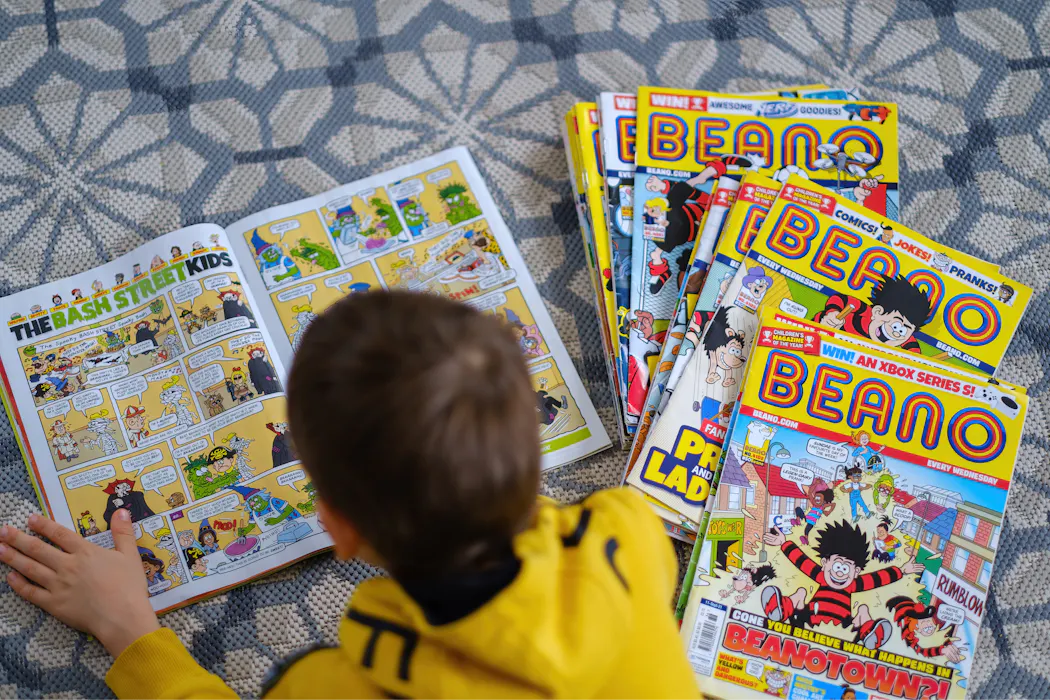
For 75 years, Dennis the Menace – wearing his signature red-and-black striped shirt and joined by his scruffy sidekick Gnasher – has been delighting children with his unapologetic mischief.
Dennis the Menace debuted in the Beano comic for children in March 1951 and quickly became a favourite with readers. His name derives from the music hall song Dennis the Menace from Venice, and his distinctive silhouette (very like that of his “Abyssinian wire-haired tripe hound” Gnasher) was first drawn on a cigarette pack in a pub in the Scottish town of St Andrews.
Coincidentally, on the other side of the Atlantic, another “naughty” boy called Dennis made his first appearance a syndicated newspaper comic strip on the same day as British Dennis. In contrast to his British namesake, American Dennis is a blond five year old, with a round face, blue and black striped t-shirt and red dungarees. American Dennis’s mischief comes from his misguided attempts to be helpful, rather than British Dennis’s deliberate misbehaviour.
The appearance of Dennis the Menace has changed somewhat over time, in his height, length of his legs and his possession of a catapult. But his spiked hair, red and black striped jumper, black shorts, knobbly knees and oversized boots have remained.
Like his predecessor William Brown of the Just William books, Dennis has a nemesis – Walter the Softy. Walter has some similarities to William’s enemy Hubert Lane. Both Walter and Hubert are depicted as cowardly, prim and opposed to fun. But, as researchers have explored, there is a somewhat homophobic element to the depiction of Dennis’s menacing of Walter. Walter is portrayed through ballet dancing in a tutu, sewing, playing with dolls and caring for his dog, named Foo-Foo. Dennis’s attitude to Walter was modified in 2012 to limit accusations of homophobia related to his interests in pursuits that are stereotypically considered feminine. He was renamed Walter Brown.
Another thing to have changed with time is the way the strips end. Generally in the 1970s, they’d close with Dennis lying over his father’s knee and getting beaten with a slipper. With the ending of corporal punishment in English state schools in 1986 (independent schools ended it much later, in 1999), teachers beating the Bash Street Kids or Dennis the Menace with a cane was no longer a likely outcome of misbehaviour.
The appeal of ‘naughty’ characters
So what is the appeal of “naughty” characters for children? Researchers have found that different age groups find different things funny. They characterise two types of humour evident in The Beano – disparaging, such as making fun of people, and slapstick. However, despite concerns about the impact of popular reading on the morals of young people that have been evident since the 19th century there is very little evidence of children being led astray by reading about rule-breaking characters.
Instead, comedy can be used to undermine power hierarchies through upending of social status – or, in children’s media, by making fun of adults.
The comeuppance of naughty characters at the end of a story is rarely permanent. For example, in Beatrix Potter’s stories, Peter Rabbit may end up in bed with a cold after disobeying his mother while his well-behaved sisters eat the blackberries they picked, but a few books later, he is back having adventures with his cousin, Benjamin Bunny.
Humorous stories about naughty children provide an imaginative space to be a rule breaker and laugh at powerful adults, to accept the punishment, but to enjoy another day of mischief. Like Peter, Dennis’s irrepressible mischief has made children laugh for generations. Long may he continue to do so.
Alison Baker does not work for, consult, own shares in or receive funding from any company or organisation that would benefit from this article, and has disclosed no relevant affiliations beyond their academic appointment.
The snow drought was evident in Park City, Utah, on Feb. 9, 2026. This golf course is normally used for cross-country skiing in winter.Mario Tama/Getty Images
Across much of the Western United States, winter 2026 was the year the snow never came. Many ski resorts got by with snowmaking but shut down their winter operations early. Fire officials and water supply managers are worried about summer.
Where I live in Boise, Idaho, temperatures hit the low 80s Fahrenheit (high-20s Celsius) in mid-March. The same heat dome sent temperatures soaring to 105 F (40 C) in Phoenix.
Ordinarily, water managers and hydrologists like me who study the Western U.S. expect the mountain snowpacks to be at their fullest around April 1. Snowpacks are natural reservoirs of water that farms and communities depend on through the hot, dry summer. Their snow water equivalent, meaning the amount of liquid water in the snowpack, is seen as a bellwether for water supplies.
But the 2026 water year has been anything but ordinary. In fact, its snow drought has few historical analogs.
Data from the U.S. Department of Agriculture’s Natural Resources Conservation Service shows that out of approximately 70 river basins across the Western U.S., only five are at or above the 1991-2020 median snow water equivalent for this time of year. Most of those are clustered around the Yellowstone region of western Wyoming and eastern Idaho.
By contrast, 11 basins have less than 25% of the 1991-2020 median, and more than half are below 50%. The headwaters of critically important rivers, including the Colorado, the Columbia and the Missouri, are peppered with basins that are far below historical averages.
Just because the Western U.S. is in a snow drought doesn’t mean it isn’t getting precipitation. Temperatures have been high enough since the start of the water year in October that a lot of what normally would have fallen as snow fell as rain instead.
The West experienced a very warm December at all but the highest elevations, but strong storms also drenched large parts of the region. Washington state was swamped with rain that triggered flooding and melted the existing snowpack.
The total area of the Western U.S. with snow cover has been exceptionally low compared to the years 2001 to 2025. National Snow and Ice Data Center
Temperatures in January were less extreme but still warmer than historical averages. However, precipitation in January was far below the 1991-2020 average throughout much of the region. February brought precipitation conditions closer to historical averages, but temperatures were much warmer than normal.
The Western U.S., therefore, got a triple whammy: Two of the three critical snow-accumulation months were too warm, and the third was too dry.
Water worries ahead
So what does this mean for water supplies and river flows?
Water managers in Wyoming and Washington are already signaling that some water rights holders – cities, irrigation districts, individual farms and industries can take limited amounts of water from rivers, canals and aquifers – can expect to receive less than their full allotment of water in 2026. It’s not unreasonable to expect other states to soon follow suit.
Throughout the Western U.S., water rights are administered according to the Doctrine of Prior Appropriation – those who hold the oldest legitimate claims to water from a river, reservoir or aquifer are entitled to receive their allotments first.
Junior water rights holders who may be at risk of receiving less than their full allotment of water likely have difficult decisions ahead related to the planting and management of their crops. The challenges are compounded by the likelihood of increases in fertilizer and transportation costs associated with the ongoing war in Iran.
Another big concern is whether the historic snow drought is setting up the West for a bad fire season. That’s still an open question.
Rain has meant moisture is available now for plants to grow, but the lack of snowpack that normally keeps meltwater flowing through summer raises concerns about whether those plants will dry out, leaving them ready to burn.
Fire is a historically important feature of the forest and rangeland ecosystems of the West, and these ecosystems are to some degree adapted to large swings in conditions from year to year and season to season.
Because precipitation across much of the West is close to historical averages, there is snow in some of the highest-elevation mountains. And at lower elevations, some of the precipitation that fell as rain likely remains in the soils.
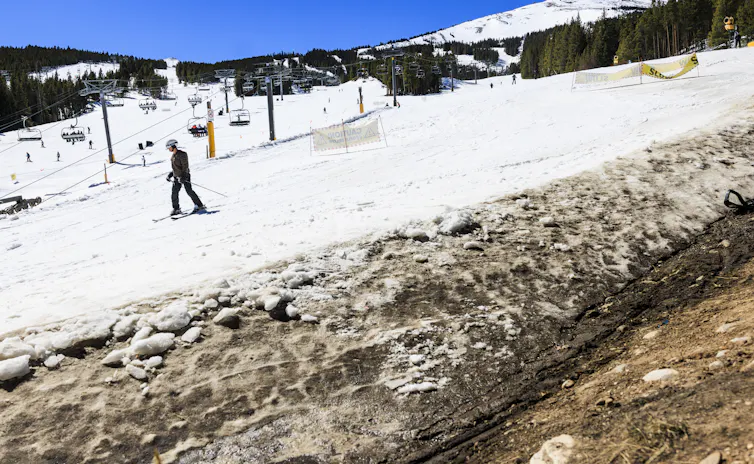
Snowmaking kept slopes skiable amid high temperatures in March 2026 in Breckenridge, Colo., but it wasn’t hard to find dry, exposed land nearby. Michael Ciaglo/Getty Images
Weather conditions in the late spring and summer – how much rain falls and how hot and dry conditions become – will play critical roles in determining the shape forests and rangelands will be in for fire season.
What this winter suggests about the future
The record-low snowpack may be a harbinger of what a warmer future will look like in the region. Many researchers have investigated how climate change will influence snowpacks and water supply throughout the Western U.S., but questions and critical challenges remain.
Source: The Conversation – UK – By Keith Godfrey, Professor of Epidemiology and Human Development, University of Southampton
A father’s health can affect both pregnancy outcomes and the infant’s health.muse studio/ Shutterstock
When we think about preparing for a healthy pregnancy and baby, most advice focuses on women. Such advice might include good nutrition, taking dietary supplements, avoiding alcohol or smoking and managing their medications and health conditions. But growing evidence shows that men’s health also plays a vitally important role in pregnancy and child development.
In a new review of research on health before pregnancy and parenthood (referred to as “preconception health”), we found that the health and life experiences of boys and men can have important influences on pregnancy outcomes and the wellbeing of future children in several ways.
To understand the role of men’s preconception health, we reviewed studies published from 2000 to 2025 from fields including medicine, biology, psychology and social science. Rather than focusing only on the period just before pregnancy, we looked at research examining how men’s health and experiences throughout their lives – from their own time in the womb through to adolescence and adulthood – can affect families later on.
The research explored factors such as men’s physical health, their health-related behaviour, mental health, environmental exposures and social conditions. This included how fathers influence their partner’s health and the family environment their children grow up in.
This broader perspective shows that men’s influence on pregnancy and child outcomes goes far beyond simply providing half of the baby’s genetic inheritance.
The affect of men’s health
As set out in our review, one important pathway through which a father’s health can affect both pregnancy outcomes and the infant’s health is through sperm health.
Factors such as age, the father’s nutrition, whether he smokes, is overweight or obese, has an unhealthy alcohol intake, experiences stress and his level of exposure to pollution or chemicals can all influence so-called non-coding nucleic acid (RNA) signals carried in sperm. These signals can affect how genes act in the early stages of the baby’s development, which can subsequently impact long-term health outcomes in children.
For example, one study of over 500,000 couples found higher odds of birth defects (including cleft lip, digestive tract anomalies and congenital heart disease) when fathers reported drinking alcohol before pregnancy.
Older father’s age (particularly those who conceived a child after the age of 35) is also linked with both risk of birth complications as well as a child’s likelihood of being diagnosed with autism spectrum disorder. These links are stronger than those seen with a mother’s age.
Research involving millions of fathers and children has additionally shown that depression in fathers is linked with higher risks of depression in their children.
Some research even suggests that experiences earlier in life may play a role. For example, studies have linked nutrition and environmental exposures such as food shortage or abundance during boys’ pre-teen years with health outcomes in the next generation.
But biology is only part of the picture, as described in our review.
Men also influence pregnancy through their relationships with their partners. Supportive partners are consistently linked with healthier pregnancies. Women who feel supported are more likely to attend antenatal appointments, avoid smoking or alcohol, maintain healthier diets and experience lower levels of stress and depression during pregnancy.
Another pathway is through parenting. A father’s mental health, stress levels and childhood experiences can influence how he interacts with his children after birth.
For example, men who experienced adversity growing up – such as poverty, neglect or trauma – are more likely to experience anxiety or depression later in life. This can affect family relationships and parenting.
This means that experiences during a boy’s childhood can have ripple effects decades later, shaping the environment his own children grow up in.
What this means for families
Taken together, the evidence from our review shows the importance of shared responsibility for pregnancy and parenthood.
Improving men’s health before pregnancy benefits not only men themselves but also their partners and future children. Yet most health advice about preparing for pregnancy still focuses almost entirely on women. In many countries, there is little information or support available for men who want to prepare for fatherhood.
Raising awareness is an important first step. Research shows that many men want to be involved in planning for pregnancy and supporting their partners – but they often don’t realise how their own health may influence outcomes.
For men who hope to become fathers, general health guidance needs to be followed: avoid smoking, limit alcohol, maintain a healthy weight, manage stress and seek medical advice for ongoing health conditions. Just as important, strong and supportive relationships between partners can help create healthier environments for future parenthood.
Our review suggests it’s time to rethink how we approach preparing for pregnancy. Instead of focusing only on women before pregnancy, a more effective approach should involve supporting the health and wellbeing of both boys and girls throughout their lives.
This includes addressing wider social factors such as education, mental health support, economic stability and childhood adversity. Experiences early in life shape later health behaviour and relationships, influencing the next generation.
Most healthcare systems are also simply not designed to support father’s involvement in preparation for pregnancy and parenthood. But men need to be included in conversations about reproductive health and couples should be supported to approach pregnancy preparation together.
More research is still needed to better understand the biological and social pathways linking men’s health to pregnancy and child outcomes. But our review makes one message clear: the health of the next generation does not begin with pregnancy – it begins much earlier, in the early lives and wellbeing of both parents.
Keith Godfrey receives funding from the National Institute for Health and Care Research (NIHR Senior Investigator (NF-SI-0515-10042) and NIHR Southampton Biomedical Research Centre (NIHR203319)) and the Wessex Medical Trust, Gerald Kerkut Charitable Trust and Rosetrees Trust.
Danielle Schoenaker receives funding from the National Institute for Health and Care Research (NIHR) through an NIHR Advanced Fellowship (NIHR302955) and the NIHR Southampton Biomedical Research Centre (NIHR203319).
Gold has long enjoyed a reputation as a financial “safe haven” during stormy times. But over the past few months of geopolitical chaos and market panic, the precious metal has moved more like a roller coaster than a steady ship at anchor.
In late January, the gold price surged to an all-time high near US$5,600 per ounce – effectively double what it was a year earlier. It’s lost about 20% since then, sliding sharply while major conflict broke out in the Middle East.
To be clear, gold is still at lofty heights by historical standards, up almost 300% over the past decade. Much of this surge has been driven by “financialisation”.
Put simply, more ways of investing in gold on paper – with complex financial products called derivatives and funds that track its price – have seen a boom in speculation by institutional and retail investors.
But this year’s wild swings in price should shatter any remaining illusion that gold is always a safe haven. To understand why, we need to look at how modern financial markets work – and in particular, why an oil shock is different to other crises.
Umbrellas and storm shelters
To protect their wealth, investors often seek assets that are either “hedges” or “safe havens”.
A hedge is an investment that generally moves in the opposite direction to the rest of the market on average over a normal, long-term period.
Think of a hedge like holding an umbrella above your head every single day. You’ll stay drier than everyone else when it rains, but you’ll also block out on some of the sunshine (potential gains) when it doesn’t.
Hedging can reduce risks – but limit potential gains for an investor. Suresh tamang/Pexels
A safe haven, on the other hand, is an investment that generally moves in the opposite direction to the rest of the market only during sudden periods of extreme stress or crashes.
It’s like a storm shelter you only run to during a hurricane.
Where does gold fit?
In a 2016 research study, colleagues and I found gold had some of the qualities of a safe haven, particularly for share markets in Australia, the United States, Germany and France.
During the 2008 global financial crisis, gold was the most stable commodity among the precious metals we studied. Its price did drop, but it avoided the catastrophic losses seen in other precious metals.
It had similar safe haven qualities in 2011, when ratings agency Standard & Poor’s (S&P) downgraded the US’ AAA credit rating to AA+ for the first time in history and many global stock markets fell.
Importantly, those market shocks came out of the financial system itself (a banking system failure and a credit downgrade).
Today, the world faces something fundamentally different: a massive energy shock due to interrupted oil supplies and major damage to oil and gas facilities in the Middle East.
Why an oil shock is different
Traditional finance textbooks will tell you that when a war breaks out, inflation spikes or stock markets crash, investors typically engage in what’s called a “flight to quality” – fleeing riskier assets and moving their money somewhere seen to be safer (such as gold).
In a 2025 research paper, colleagues and I offer a more nuanced view. Crucially, we incorporated data from more recent periods of stock market turbulence, including the COVID pandemic, where gold’s safe haven properties were more muted.
We found gold is still a go-to choice for investors moving out of riskier investments. But it is not an untouchable storm shelter.
Instead of standing completely separate from the panic during a crisis, gold absorbs some of the volatility from both the stock market and energy markets, which can cause its price to fall.
Gold isn’t always a safety net. Market chaos can drag its price down. Marko Ivanov/Unsplash
Ripple effects
Why? For one, market chaos means some large investors may be forced to sell gold to cover other losses or meet financial obligations, such as margin calls (where a lender demands funds to cover the falling value of an asset).
For other large investors, the recent price rally may have created an opportunity to sell high and take profits, or rebalance their investment portfolios.
But there is also the fact gold does not have as much essential intrinsic value as something like oil. There is not much industrial demand for it compared to other commodities.
In a severe crisis, forced to chose between a commodity like oil and gold, what does global industry really need? Oil.
Rock, paper, gold
The different ways people are investing in gold is another important factor. Over several decades, gold has become increasingly “financialised”.
Now, it can be bought and sold with ease on “paper” via speculative, complex financial instruments called derivatives, or in increasingly popular exchange traded funds which track the price of gold.
With these funds, you aren’t buying gold itself. You’re buying an asset whose price is designed to track the price of gold in some way.
Today, a massive rise in speculative investment means that commodity prices depend on far more than real-world supply and demand.
Because global investors now hold gold derivatives and conventional stocks at the same time, the risk of exposure to common market shocks has drastically increased.
Rand Low does not work for, consult, own shares in or receive funding from any company or organisation that would benefit from this article, and has disclosed no relevant affiliations beyond their academic appointment.
On October 6 1973, the Yom Kippur War – mainly involving Egypt, Syria and Israel –triggered one of the biggest energy crises of the 20th century. Eleven days later, several Arab members of the Organization of the Petroleum Exporting Countries (OPEC) announced they would stop selling oil to countries supporting Israel and would cut production.
The effect was immediate. Within a few months, global oil prices quadrupled.
After decades of price stability, the world faced a severe shortage. Petrol stations ran dry, with some displaying a red flag to signal empty pumps; drivers queued for hours.
In parts of the US, fuel was rationed by licence plate number. By March 1974, time spent waiting in line had raised the cost of petrol by around 50%, because drivers were also “paying” through lost time — hours that could otherwise have been spent working.
Across Europe, governments imposed fuel-saving measures. The Netherlands and West Germany introduced car-free Sundays, while Britain cut speed limits to reduce petrol consumption.
Today, as the United States and Israel continue a widening war against Iran, energy markets have again reacted: disruptions in the Strait of Hormuz, a key artery for global oil, have pushed prices above US$100 per barrel, echoing the supply shocks of the 1970s.
These pressures make it timely to revisit 1973 and why its effects were so economically severe.
When OPEC gained influence
The scale and persistence of the 1973 oil shock reflected not just the embargo itself, but how it interacted with the economic system at the time.
One important shift was that the US stopped being the world’s main “backup supplier” of oil. For decades, American production had been large enough that output could increase when global supply tightened, but production peaked around 1972.
Without this buffer, markets became far more sensitive to disruptions. At the same time, oil-producing countries in the Middle East gained political leverage by coordinating production through OPEC, strengthening their influence over prices.
Moreover, the international monetary system that had kept postwar inflation under control had collapsed in 1971. This agreement, known as Bretton Woods, had tied currencies to the US dollar. The result was that oil prices, like most commodity prices, were already rising before the embargo began.
Inflation surged, and so did wages
Higher oil prices pushed up the cost of almost everything. Transport became more expensive. Electricity bills increased. Businesses faced higher production costs and passed these costs onto consumers.
Inflation surged across many advanced economies. Workers tried to protect their living standards by asking for higher pay. In many countries, strong labour unions negotiated big wage increases to keep up with rising prices.
Expectations made the shock worse: fearing shortages, firms and households stocked up, reducing available supply and pushing prices even higher.
The economic consequence of this shock was a decade of stagflation: high inflation amid stagnating growth.
Governments tried several ways to respond. Some countries, such as the US, introduced price controls to limit how much petrol companies could charge. Others, such as the UK and France, imposed rationing rules to manage shortages.
Trouble for central banks
Central banks also faced difficult choices: raising interest rates could reduce inflation by slowing borrowing and spending. But higher rates also risked pushing the economy deeper into recession.
During the 1970s, many central banks including the US Federal Reserve struggled to strike the right balance. The Fed kept cutting interest rates to support the economy, but this only added to inflation.
The result was an “inflationary psychology” where expectations of higher prices become self-fulfilling.
The world today has stronger defences against an oil shock. Central banks now have clear mandates to keep inflation low and the credibility to act quickly. Research suggests the economic impact of oil price shocks has declined over time because wages adjust faster, central banks act decisively to keep inflation in check, and oil now makes up a smaller share of the economy.
Recent shocks confirm this transformation: the Russian invasion of Ukraine pushed up energy prices and inflation, but did not trigger a deep recession.
There is another difference as well. Today, high oil prices may encourage investment in renewable energy, and have the potential to accelerate the shift toward cleaner energy sources.
Modern economies are better prepared
The events of 1973 still offer an important lesson.
The damage caused by an energy shock depends not only on the size of the disruption but also on the economic environment in which it occurs. In the 1970s, heavy dependence on oil, rigid wage systems and uncertain economic policy amplified the crisis.
Modern economies are better prepared. Constraints on energy supply, however, remain real and the disruption to the Strait of Hormuz highlights this uncertainty. The duration and objectives of the current conflict remain unclear, and uncertainty itself is costly to businesses and the economy.
History is therefore less useful for prediction than for perspective. The size of a supply shock is only one piece of the puzzle; what matters is the system it hits, how long the shock persists and how it affects expectations.
Laura Panza does not work for, consult, own shares in or receive funding from any company or organisation that would benefit from this article, and has disclosed no relevant affiliations beyond their academic appointment.
Social media platforms Instagram and YouTube have a design defect which means they are addictive, a jury in the United States has ruled.
The Los Angeles jury took nearly nine days to reach its verdict in the landmark case brought by a woman known as KGM against social media platforms. It awarded US$3 million (A$4.3 million) in damages, with Meta (owner of Instagram) being 70% responsible and Google (owner of YouTube) 30%. The jury later awarded a further US$3 million in punitive damages.
This is Meta’s second big loss in the US courts this week, with a New Mexico jury finding the company guilty on March 24 of concealing information about the risks of child sexual exploitation and the harmful effects of its platforms on children’s mental health.
KGM’s case is the first of its kind, but won’t be the last: it is one of more than 20 “bellwether” trials due to go to court soon. These are essentially test cases used to gauge juries’ reactions and set a legal precedent.
As such, the verdict is set to have far reaching ripple effects. It could be big tech’s big tobacco moment, with thousands more similar cases waiting in the wings.
Machines designed to addict
KGM – now 20 years old – said she began using YouTube at age six and Instagram at age nine, and allegedly developed compulsive use patterns, including up to 16 hours in a single day on Instagram. The platforms’ design features, she argued, contributed to her anxiety, depression, body dysmorphia, and suicidal ideation.
Her case argued that Meta and YouTube made deliberate design choices – for example, “infinite scroll” – to make their platforms more addictive to children in order to boost profits. It alleged the companies borrowed heavily from the behavioural and neurobiological techniques used by poker machines and exploited by the cigarette industry to maximise youth engagement and drive advertising revenue.
These companies built machines designed to addict the brains of children, and they did it on purpose.
Lanier cited an internal Meta study called “Project Myst”. This allegedly found that children who had experienced “adverse effects” were most likely to get addicted to Instagram, and that parents were powerless to stop the addiction.
The moment [KGM] was locked into the machine, her mom was locked out.
The jury heard that Meta’s internal communications compared the platform’s effects to pushing drugs and gambling. The jury found this internal awareness was the kind of corporate knowledge that supports liability.
In addition, a YouTube memo reportedly described “viewer addiction” as a goal, and an Instagram employee wrote the company was staffed by “basically pushers”.
Mark Lanier drew a direct parallel to tobacco litigation, arguing that where there is corporate knowledge, deliberate targeting, and public denial, liability follows.
Pointing the finger at the family
Meta argued KGM faced significant challenges before she ever used social media, and that the evidence did not support reducing a lifetime of hardship to a single factor.
Meta’s lawyer highlighted KGM’s family dynamics as responsible for her mental health struggles, and argued social media may have actually provided a healthy outlet for her when she faced difficulties at home.
In closing arguments, YouTube’s lawyer argued there was not a single mention of an addiction to YouTube in KGM’s medical records.
The companies centred part of their defence on Section 230 protections, arguing they cannot be held liable for content posted on their platforms.
However, the judge instructed the jury that the way content is delivered is a separate consideration to what the content is. This limited Meta and Google’s ability to rely on Section 230 protections.
This was one of the first cases against big tech which was a jury trial – something companies have previously been keen to avoid.
For example, in June 2024, a few months ahead of a scheduled jury trial in the Department of Justice’s challenge to Google’s advertising technology monopoly, Google paid more than US$2 million (A$2.8 million) to the Department of Justice.
This was treble the damages claimed, plus interest.
In the US, a jury trial is only required when monetary damages are at stake. By paying the full damages amount upfront in that case, Google eliminated the damages claim and with it, the right to a jury.
Until now, US courts have largely denied motions that focused on design.
This includes infinite scroll and notification systems. The distinction between “platform design” and “content curation” has been central to how courts have analysed First Amendment arguments in this litigation.
The effect of the jury’s verdict in KGM’s case is to demonstrate the limitations of the Section 230 protection.
The first – but not the last
This is the first big tech case, on a global basis, that has examined addiction as a cause of damage. Other cases have focused on breaches of law.
For example, in the case in New Mexico against Meta, the jury concluded the company made false or misleading statements and engaged in “unconscionable” trade practices that exploited children’s vulnerability and inexperience. It identified thousands of individual violations, resulting in a total penalty of US$375 million (A$539 million).
KGM’s case paves the way for the many other actions seeking damages from social media platforms for the effects of addiction.
There is logic for these cases to be heard concurrently in a class action in the US. The verdict could also be used as the basis for both class actions and individual actions on a global basis.
Meta and Google have said separately they plan to appeal the verdict.
Rob Nicholls is a part of the University of Sydney Centre for AI, Trust, and Governance and receives funding from the Australian Research Council.
Source: The Conversation – USA (3) – By Carolina Rossini, Professor of Practice and Director for Program, Public Interest Technology Initiative, UMass Amherst
Is the social media platform she’s using, rather than the content she’s viewing, a threat to her well-being?Fiordaliso/Moment via Getty Images
The verdict in a Los Angeles courtroom on March 25, 2026, may become one of the most consequential legal challenges that Big Tech has ever faced.
This is an inflection point in the global debate over Big Tech liability: For the first time, an American jury had been asked to decide whether platform design itself can give rise to product liability – not because of what users post on them, but because of how they were built. The jury found that Meta and Google knew the design or operation of Instagram and YouTube was or was likely to be dangerous when used by a minor, and that the platforms failed to adequately warn of that danger.
As a technology policy and law scholar, I believe that the decision will likely generate a powerful domino effect in the United States and across jurisdictions worldwide.
The jury awarded the plaintiff US$3 million in damages and recommended to the court an additional $3 million in punitive damages. The jury split responsibility for the award between the companies: 70% from Meta and 30% from Google. A Meta spokesman stated that the company disagrees with the verdict and is evaluating its legal options.
Separately, a jury in New Mexico on March 24 found that Meta knowingly harmed children’s mental health and concealed what it knew about child sexual exploitation on its platforms.
The case
The plaintiff in the Los Angeles case is a 20-year-old California woman identified by her initials, K.G.M. She said she began using YouTube around age 6 and created an Instagram account at age 9. Her lawsuit and testimony alleged that the platforms’ design features, which include likes, algorithmic recommendation engines, infinite scroll, autoplay and deliberately unpredictable rewards, got her addicted. The suit alleges that her addiction fueled depression, anxiety, body dysmorphia – when someone see themselves as ugly or disfigured when they aren’t – and suicidal thoughts.
TikTok and Snapchat settled with K.G.M. before trial for undisclosed sums, leaving Meta and Google as the remaining defendants. Meta CEO Mark Zuckerberg testified before the jury on Feb. 18.
Meta CEO Mark Zuckerberg testified in court in a lawsuit alleging that Instagram is addictive by design.
The stakes extend far beyond one plaintiff. K.G.M.’s case is a bellwether trial, meaning the court chose it as a representative test case to help determine verdicts across all connected cases. Those cases involve approximately 1,600 plaintiffs, including more than 350 families and over 250 school districts. Their claims have been consolidated in a California Judicial Council Coordination Proceeding, No. 5255. This means potential awards could run into the billions of dollars.
The K.G.M. litigation used a different legal strategy: negligence-based product liability. The plaintiff argued that the harm arises not from third-party content but from the platforms’ own engineering and design decisions, the “informational architecture” and features that shape users’ experience of content. Infinite scrolling, autoplay, notifications calibrated to heighten anxiety and variable-reward systems operate on the same behavioral principles as slot machines.
Judge Carolyn Kuhl of the California Superior Court agreed that these claims warranted a jury trial. In her Nov. 5, 2025, ruling denying Meta’s motion for summary judgment, she distinguished between features related to content publishing, which Section 230 might protect, and features like notification timing, engagement loops and the absence of meaningful parental controls, which it might not.
Here, Kuhl established that the conduct-versus-content distinction – treating algorithmic design choices as the company’s own conduct rather than as the protected publication of third-party speech – was a viable legal theory for a jury to evaluate. This fine-grained approach, evaluating each design feature individually and recognizing the increased complexities of technology products’ design, represents a potential road map for courts nationwide.
Internal communications disclosed in the K.G.M. proceedings have included exchanges among Meta employees comparing the platform’s effects to pushing drugs and gambling. Whether this internal awareness constitutes the kind of corporate knowledge that supports liability is a central factual question for the jury to decide.
Tobacco companies were eventually held to account because what they knew – and hid – about the addictiveness of their products came to light. Ray Lustig/The Washington Post via Getty Images
There is a clear analogy to tobacco litigation. In the 1990s, plaintiffs succeeded against tobacco companies by proving they had concealed evidence about the addictive and deadly nature of their products. In K.G.M., the plaintiff here is making the same core argument: Where there is corporate knowledge, deliberate targeting and public denial, liability follows.
K.G.M.’s lead trial attorney, Mark Lanier, is the same lawyer who won multibillion-dollar verdicts in the Johnson & Johnson baby powder litigation, signaling the scale of accountability they are pursuing.
The science: Contested but consequential
The scientific evidence on social media and youth mental health is real but genuinely complex. The Diagnostic and Statistical Manual of Mental Disorders (DSM-5) does not classify social media use as an addictive disorder. Researchers like Amy Orben have found that large-scale studies show small average associations between social media use and reduced well-being.
Yet Orben herself has cautioned that these averages might mask severe harms experienced by a subset of vulnerable young users, particularly girls ages 12 to 15. The legal question under the negligence theory is not whether social media harms everyone equally, but whether platform designers had an obligation to account for foreseeable interactions between their design features and the vulnerabilities of developing minds, especially when internal evidence suggested they were aware of the risks.
First, a manufacturer has a duty to exercise reasonable care in designing its product, and that duty extends to harms that are reasonably foreseeable. Second, the plaintiff must show that the type of injury suffered was a foreseeable consequence of the design choice. The manufacturer doesn’t need to have foreseen the exact injury to the exact plaintiff, but the general category of harm must have been within the range of what a reasonable designer would anticipate.
This is why the Facebook Papers and internal Meta research are so legally significant in K.G.M.’s case: They go directly to establishing that the company’s own researchers identified the specific categories of harm – depression, body dysmorphia, compulsive use patterns among adolescent girls – that the plaintiff alleges she suffered. If the company’s own data flagged these risks and leadership continued on the same design trajectory, that would considerably strengthen the foreseeability element.
Why it matters
Even if the science is unsettled, the legal and policy landscape is shifting fast. In 2025 alone, 20 states in the U.S. enacted new laws governing children’s social media use. And this wave is not only in the U.S.; countries such as the U.K., Australia, Denmark, France and Brazil are also moving forward with specific legislation, including mandates banning social media for those under 16.
The K.G.M. trial represents something more fundamental: the proposition that algorithmic design decisions are product decisions, carrying real obligations of safety and accountability. If this verdict causes that framework to take hold, every platform will need to reconsider not just what content appears, but why and how it is delivered.
This is an updated version of an article originally published on March 6, 2026. It was updated to include the jury’s verdict.
I was staff at organizations including the Electronic Frontier Foundation, Public Knowledge, and the Harvard Berkman Klein Center, which were funded by various foundations and companies. Refer to their websites for disclosures. I was a staff member in the connectivity policy team at Facebook (2016-2018). I am an advisory board member of non-profits, including Internet Lab (Brazil) and Derechos Digitales (Chile). I am a senior advisor (without any honorarium) at the Datasphere Initiative and Portulans Institute. More details at https://www.carolinarossini.net/bio
I study global supply chains and how they interconnect and depend on each other around the world. There are several ways in which U.S. consumers will begin to feel the pinch of the war. Some of those effects have to do with domestic commerce, and some are a result of the interwoven nature of global trade, where raw materials from one place are shipped somewhere they are manufactured into specific items that are then transported to consumers.
Many products are shipped by truck in the U.S., and diesel fuel is more expensive now. Justin Sullivan/Getty Images
Rising costs in the US
There are three main categories in which costs will begin to rise.
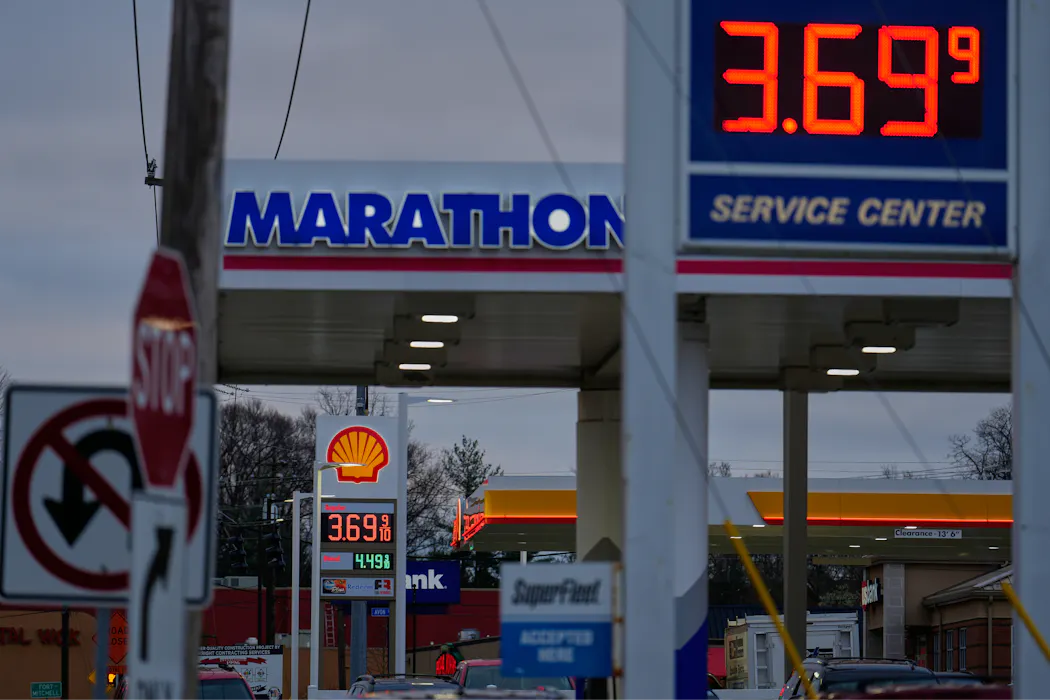
Fuel shortages and freight surcharges: From March 2-16, 2026, the average nationwide price of U.S. regular gasoline rose from US$3.01 to $3.96 per gallon, while diesel fuel rose from $3.89 to $5.37. Diesel prices matter to consumer costs because diesel engines power trucks, farm machines, construction equipment, fishing vessels and many of the vehicles that carry domestic freight. When items become more expensive to harvest, build and ship, diesel costs spread quickly into grocery, household and building material prices.
Factory slowdowns abroad: When shipping slows and energy costs rise, factories abroad face higher operating costs. As a result they ration production, diverting energy supplies to producing a narrow range of high-value products that can absorb these costs. Diversions of shipment traffic and fewer transportation routes lead to delivery delays. Economic research shows that shipping-cost increases also raise import prices, producer costs and consumer inflation.
About 80% of the oil and 90% of the LNG moving through the Strait of Hormuz, between the Persian Gulf and the Gulf of Oman, is destined for Asian markets. With strait shipments stopped, consumer electronics and manufacturing hubs in China, Japan, Taiwan and South Korea are drawing on their energy reserves and inventories. But those supplies will run out in a few months. Reduced manufacturing capacity can be expected to cause shortages and higher costs for textiles, chemicals, consumer goods, electronics, appliances, auto parts and fertilizer-intensive industries.
Europe is less directly dependent than Asia on Hormuz shipments, but it is still vulnerable to high LNG prices, increased shipping costs and diesel fuel shortages. Europe has also already faced shortages of heating oil and other fuels as a result of Russia’s war on Ukraine. The strait carried about 7% of Europe’s LNG inflows in 2025, and higher costs for energy, ship fuel, freight and insurance can ripple through global trade. For the U.S., that matters because Europe supplies industrial equipment, precision components, medical technology and specialty chemicals sold to businesses and directly to consumers.
African economies are especially exposed to fuel and fertilizer shocks. Large volumes of fertilizer pass through Hormuz, and higher energy and fertilizer prices threaten crop yields and food systems across most of Africa. As a result, U.S. prices can rise for coffee and chocolate – much of which originates in Africa – as well as critical minerals for electric vehicles, energy storage and high-tech equipment.
This war is not a distant geopolitical shock for U.S. households. It reaches everyday life through fuel, freight, fertilizer, petrochemicals and global supply chains through factories that produce consumer goods.
Some mitigation is possible: 32 nations will be releasing more than 400 million barrels of oil to the global market over the next few months. There are pipelines and alternative ports in Saudi Arabia and the United Arab Emirates that, if they remain undamaged and uninterrupted, can handle potentially 40% of the 20 billion barrels per day that was passing through the Strait of Hormuz. Combined with a temporary easing of sanctions on Russian oil, limited shipments to India and China through the Strait of Hormuz and the March 23 announcement of a five-day pause on U.S. and Israeli strikes on Iran, it is possible to head off the worst-case scenario.
But these measures cannot fully replace the strait’s normal oil and LNG shipment volume. And if oil production, refining and shipment locations continue to be targeted, recovery can be expected to stretch into many months. The likely result is broader inflation, prolonged shortages and longer waits for goods of all sorts, including food and packaging as well as electronics and appliances.
Vidya Mani has received funding from LMI. She is a Senior Research Fellow with the Mexico Program and Inter-American Dialogue and an Expert Advisor on Critical Minerals, Emerging Technologies, and Supply Chain Resilience at the Public Spend Forum.
Source: The Conversation – UK – By Jessica Newberry Le Vay, Senior Researcher in Climate Change and Health, University of Oxford
The mental health effects of climate change are receiving growing attention, including how children and young people are uniquely affected. Supporting young people to build and sustain good mental health and wellbeing, and to feel prepared for life and work in an uncertain world, has never been more urgent. However, action is still lagging behind need – including in education.
My colleagues and I at the Compass Project, coordinated by the Climate Cares Centre at the University of Oxford and Imperial College London, are exploring how combining climate change education with consideration of mental health and wellbeing can better equip young people for their futures.
We wanted to know how students and educators experience climate change education now, and what they want to see change. Through focus groups and a survey, we heard from over 200 students aged 16-29 and their educators in schools, further education and sixth form colleges and universities in England. They told us why and how emotional resilience – the social and emotional skills to build and sustain good mental health and wellbeing in the face of challenges – should be part of climate change education.
Status quo: disconnected and disempowered
For many young people, climate change education is disconnected from solutions, and from what they see as helpful to everyday life and enjoy learning about. Students report lacking agency, meaning they don’t feel they have the ability to make change. These are not only barriers to meaningful climate change education. Our study highlights this is also driving both distress and disengagement, and missing opportunities to protect and promote mental health and wellbeing.
Students described a wide range of emotions associated with climate change, including worry, fear, guilt, anger and powerlessness. We heard that education can exacerbate these feelings. One university student said:
[My education] increases my worry because despite being a biology course, and many of my modules being based around ecosystems, the environment, animal behaviour, climate change is not a central theme or something brought up regularly in my learning.
What surprised me was just how much students spoke of climate denial and disengagement, mental health stigma, and stigma around engaging with climate action. Students highlighted these as barriers to discussion and community building. One said:
There seems to be a passive feeling amongst my age cohort and, despite most accepting the truth of climate change, they feel removed and disempowered. This is obviously quite demoralising.
Educators spoke of feeling unsupported and lacking time and resources when it came to teaching about climate change and navigating diverse emotional responses. “We want to teach about climate change,” one said, “but there’s anxiety for the educator to say, what if I set some sort of chain reaction of concern amongst these children, how do I deal with that?”
Such experiences have been reflected through a film by the Climate Majority Project, highlighting the emotional reality of climate change education through the eyes of a teacher.
The Hardest Lesson, a film by the Climate Majority Project.
Change is possible, and already underway
Students and educators had clear, aligned, views on action to better prepare young people for a climate-changed future. This included strengthening connection with nature and curriculum reform to include psychologically informed climate change education in every subject.
Students wanted support to cope with their emotions, and opportunities to take part in meaningful and collective climate action. More time, funding, training and support for educators underpins these actions. A school student said:
It gets to a point where it’s like, this statistic, this statistic. These animals are dying. This country’s just had a flood. If you give [young people] concrete ways, more opportunities to do things that genuinely would help a lot of people, and it also does help the environment, but it takes away that powerlessness and frustration and fear.
I was struck by examples students and educators gave of initiatives that did anecdotally support climate change education and build emotional resilience, but hadn’t been designed this way. Inter-school climate action competitions built community, agency and joy. General peer support systems for university assignments led to discussions about climate emotions.
Insufficient attention on the links between climate change education and mental health and wellbeing may mean wider, perhaps unintended, benefits of what schools, colleges and universities are already doing are missed. Particularly given scarce resources and overburdened educators, learning about and investing in how to enable these positive ripple effects – and consistently embed such practices across the education system – is a crucial opportunity.
The transformational societal changes that the climate crisis demands can only take place by considering the emotions, thoughts and beliefs that shape our actions, including support to minimise burnout. Our actions, in turn, shape our emotions and can influence our health and wellbeing. Recognising and resourcing these connections in education systems is critical to truly equip young people for life and work in a changing climate.
Jessica Newberry Le Vay leads the Compass Project, which is funded by the Robert H. N. Ho Family Foundation Global. She works for the Climate Cares Centre based at the University of Oxford and Imperial College London.
Editor’s note: The UK’s Food Standards Authority and Health Security Agency both advise against eating clay, soil or earth. Links to their guidance are included in this article.
When I ask people if they have ever eaten soil before, they tend to give me a strange look. But geophagy – the deliberate ingestion of any kind of soil – is a practice that archaeological evidence from Kalambo Falls in Zambia suggests has been part of human history for at least 2 million years.
British archaeologist John Desmond Clark reported that Homo habilis, a species of human who lived between 2.2 and 1.6 million years ago, was digging into the earth to mine clays from below the topsoil. This led to the inference that the oldest evidence of geophagy by humans was at that prehistoric site on the border of Zambia and Tanzania.
More recently, anecdotal evidence suggests a prisoner condemned to death in 16th-century Hohenlohe (now part of Germany) was allowed a last request of consuming a small clay tablet after receiving his supposedly lethal dose of mercury. The tablet was reputedly a piece of terra sigillata – clay traditionally mined from the Greek island of Lemnos. To the amazement of the court, the convict survived the mercury poisoning and was merely banished instead.
Geophagy is still practised widely around the globe, including by some women experiencing food cravings during pregnancy. But it should not be confused with the eating disorder pica.
In my research on geophagy practices in the UK, clays appear to be the most popular types of soil consumed. But these are only a sliver of the many types of soil people are known to eat.
In Amsterdam’s Museum of Edible Earth, researcher and artist masharu has brought together more than 600 soils used in geophagy. These include melt-in-the-mouth pemba from Surinam and montmorillonite green clay from France, which is claimed to be an anti-ageing treatment.
The museum is now in the UK for the first time. Adult visitors to Somerset House in London are being invited to sample a “tasting menu” of its soils, and even contribute their own tasting notes.
For many people, eating soil carries deep symbolic meaning. Soil is a common theme in genesis stories that describe how a people originated, including Adam in the Bible’s Old Testament.
Among the Luo people in Kenya, women who practice geophagy during pregnancy prefer eating red clays due to the links between soil, fertility and blood. These clays are understood to replenish the blood lost during pregnancy to the unborn foetus, which is referred to as remo ma ichweyogo nyathi (the blood you form the child of).
In the 20th century, eating soil was sometimes used to determine guilt in Java. If a crime was committed with no witnesses and the cross-examination failed, suspects would ingest a small amount of soil from their ancestors’ graves and call upon them as witnesses to their innocence. If one of the suspects grew ill or died over the next few months, they would be found guilty.
Today, thinly sliced clay from Java is still eaten as a snack known as ampo.
Soil’s growing appeal
The benefits and risks of eating soil have been highlighted amid recent social media interest in geophagy, such as the trend for filming soil taste tests on TikTok.
A collaboration between researchers at the universities of Glasgow, Strathclyde and Crete suggests clays from Lemnos may have wider health benefits, such as preventing the progression of inflammatory diseases (although, so far, only shown in mice).
Bentonite, which is also used in cosmetic face masks, was mentioned as a favourite edible clay by some customers of a London health-food shop I spoke to.
One reason clays such as bentonite appear to be a popular choice is that they can host Streptomyces, a genus of bacteria that, alongside being a useful source of antibiotics, produce geosmin. This chemical emits the pleasant smell associated with dry earth after rainfall – and also contributes to a pleasantly “earthy” taste.
Video: NewsNation.
But any kind of soil should always be consumed with caution. In 2013, Public Health England identified calabash chalk as a particular risk for pregnant women. Its warning was triggered by widespread consumption of this chalk within some Asian and African communities in London, as a nutritional supplement or morning sickness antidote, and the potential threat posed by lead present in some of these soils.
The UK Food Standards Authority has also warned about the presence of lead and other toxic chemicals in commercially available clays.
Some soils may contain hidden dangers such as heavy metals pollutants, parasitic worms and cancer-causing moulds. Additionally, faecal contamination of soils may introduce bacteria such as E coli, which can cause food poisoning.
While these health risks do not apply to all soils, and some of these concerns can be addressed through the way clays are processed, it is advised that anyone interested in practising geophagy should seek careful guidance first.
The exhibition of edible soils by masharu, on show in London until April 26, seeks to challenge the stigma and negative perceptions around eating clay by focusing on the often-overlooked sensations of soil. From environmental science to health research, soil is no longer being treated like dirt.
Zander Simpson receives funding for his research from the Economic and Social Research Council in the form of a PhD Studentship.