What does China’s host bid mean for the High Seas Treaty?

Source: The Conversation – Canada – By Philippe Le Billon, Professor, Geography Department and School of Public Policy & Global Affairs, University of British Columbia

Delegates are meeting in New York for the third session of the preparatory commission (PrepCom 3) on the Agreement on Marine Biological Diversity of Areas beyond National Jurisdiction (BBNJ), also known as the High Seas Treaty.

After nearly 20 years of negotiations, United Nations member states adopted the treaty in June 2023. When it opened for signatures that September, 67 countries signed immediately. In January 2026, Morocco and Sierra Leone then became the 60th and 61st states to ratify, triggering the treaty’s entry into force.

The treaty is now international law. At the time of writing, 145 countries have signed and 85 have ratified.

The third session of the preparatory commission must now work through how the treaty will actually function. A key question in corridor conversations is: who should host the secretariat?

Every international treaty needs an institutional home. The High Seas Treaty is no different. It requires a secretariat to co-ordinate between parties, service meetings and manage information.

For months, Belgium and Chile were the only contenders, their bids quietly taking shape in the background of treaty negotiations. Then, in January 2026, China submitted a formal bid with Xiamen as the proposed host city. That announcement changed the optics of the negotiations.

The geography of diplomacy

A city with highrises and other buildings near a bay
Valparaíso in Chile is one of the three cities being considered to host the High Seas Treaty’s secretariat.
(Roz Lawson), CC BY-NC-ND

Where that secretariat sits may be seen as an administrative question, a matter of office space and convenience. It is not.

The location of secretariats, and diplomatic venues in general, shapes how they function in practice. It influences who gravitates toward the institution and which delegations can afford to attend. It sways what issues get quietly elevated and what institutional culture takes root. Location is a form of proximity and proximity is a form of influence.

Belgium has put forward Brussels, pointing to its dense ecosystem of international organizations and more than 300 diplomatic missions.

Chile has offered Valparaíso on an equity argument: Latin America has never hosted a universal-membership environmental secretariat and the Global South deserves a seat at the table.

China’s late entry adds a strong contender to the process.

Concerns about China’s influence

China has more at stake in how the high seas are governed than almost any other state. It has the world’s largest distant-water fishing fleet and has faced sustained international criticism over illegal, unreported and unregulated fishing. It also holds more deep-sea mineral exploration contracts through the International Seabed Authority than any other nation.

It has been among the most assertive in defending its maritime claims, even when those claims have been rejected by international courts, including through declaring a “nature reserve” on the disputed Scarborough Shoal in the South China Sea.

Though fishing controversially remains largely outside its scope, the BBNJ agreement intervenes in key pressure points, most notably through enforceable marine protected areas and new environmental standards for activities that have historically escaped meaningful oversight.

For some observers, that combination makes the secretariat bid difficult to reconcile. Lyn Goldsworthy, a veteran Southern Ocean researcher at the University of Tasmania, has pointed to China’s reluctance over the creation of marine protected areas in the Antarctic high seas. “If they are in that influential [position],” she told Dialogue Earth, “they can slow things down.”

Analysts at India’s National Maritime Foundation have raised the further risk of what they call procedural drift, the idea that formally neutral administrative practices can quietly embed particular governance norms over time.

However, the case is less clear-cut than it looks.

Giving China a stake in the treaty’s success

A coastal cityscape with tall glass buildings and smaller structures
China has proposed the city of Xiamen in Fujian Province as a potential host city for the High Seas Treaty secretariat.
(Unsplash/Letian Zhang)

Skepticism about China’s bid is understandable, but the case against it is weaker than it first appears. Begin with the international picture. Li Shuo, director of the China Climate Hub at the Asia Society Policy Institute, has described the bid as a “significant escalation” in China’s engagement with global governance, one that signals the Chinese want to play an active role in shaping international rules.

If China’s institutional credibility is visibly tied to BBNJ’s success, it has more reasons to want the treaty to function. China has ratified the agreement. It joined the Port State Measures Agreement, the principal instrument targeting illegal fishing, despite late accession and uneven implementation.

Its navy is the fastest-growing maritime force in the world. Its financial, infrastructural and human capacity to run a serious international institution is not in question.

There is possibly an even more important dimension. Scholars focused on Chinese fisheries governance have documented the persistent tension between central government policy and the behaviour of provincial authorities and distant-water operators, a gap that domestic regulation has struggled to close.


Read more:
China is struggling to control its provinces as they expand distant-water fishing


International treaty commitments can, in principle, function as a mechanism for central governments to exert leverage that internal channels cannot easily provide. Whether the BBNJ treaty might operate that way for China is an open question, but it is one worth taking seriously.

A China genuinely embedded in the framework may behave differently within it than a China left on the outside. The UN’s 30-by-30 target to protect 30 per cent of the world’s oceans by 2030 depends heavily on what happens in the high seas. So does any serious effort to crack down on illegal fishing or establish enforceable marine protected areas in international waters.

None of this is a straightforward argument for or against China hosting. It is a narrower claim: that the case against it is weaker than it first appears because it assumes that Chinese involvement would inevitably hollow out the treaty’s environmental ambition. That assumption is not obviously correct.

What conditions that would make the treaty work rather than fail are not mysterious. The secretariat would need genuine independence in its leadership. Governance structures would need to be transparent and enforceable. The treaty culture would need to be robust enough to resist pressure from the host state and to be responsive to all parties. These are demanding conditions. They are also conditions being negotiated right now.

What is actually at stake

The formal decision on where to locate the secretariat will be taken at the first Conference of the Parties, expected in early 2027. The institutional architecture being built at PrepCom 3 will shape what kind of institution the secretariat becomes before that vote is ever taken.

The governance rules and independence provisions being drafted now will determine whether the hosting question is a story about institutional capture or about the diligent implementation of a treaty that covers nearly half the planet.

The BBNJ agreement is a test of something larger than ocean governance. It is a test of whether international institutions can still function as common ground as the United States withdraws from international organizations and treaties.

Where the secretariat sits is not a technicality. It is about whether the high seas remain a global common in practice, not just in name, through an institution operating with independence, credibility and authority.

The Conversation

The authors do not work for, consult, own shares in or receive funding from any company or organisation that would benefit from this article, and have disclosed no relevant affiliations beyond their academic appointment.

ref. What does China’s host bid mean for the High Seas Treaty? – https://theconversation.com/what-does-chinas-host-bid-mean-for-the-high-seas-treaty-279317

‘I didn’t come here to get rich’: new research on the lives of Ukrainian women in Georgia’s surrogacy boom

Source: The Conversation – Global Perspectives – By Olga Oleinikova, Associate Professor and Director of the SITADHub (Social Impact Technologies and Democracy Research Hub) in the School of Communication, University of Technology Sydney

Jonas Gratzer/LightRocket via Getty Images

“I didn’t come here to get rich. I came because I had no other way to keep my son safe and care for my displaced family”.

Anna is a 28-year-old woman from eastern Ukraine. She fled the country in 2023 after Russian troops invaded. Two years later, she agreed to become a surrogate in Georgia for wealthy foreign couples.

We met Anna, who was already pregnant, in a quiet apartment that had been rented for her by a surrogacy agency on the outskirts of the capital, Tbilisi.

Our multidisciplinary team was in Georgia to conduct a pilot research project examining the small country’s rapidly expanding surrogacy industry.

We conducted in-depth interviews with Ukrainian women to better understand their motivations for entering surrogacy arrangements, their experiences within the system, and the social, economic, and legal factors shaping their decision-making and wellbeing.

We also analysed publicly available policy and regulatory documents from the government to examine how the sector operates. We paid particular attention to emerging regulatory challenges, gaps in oversight and the state’s efforts to balance economic opportunity with ethical and human rights considerations.

The shifting geography of surrogacy

Surrogacy laws vary widely around the world. Some countries, including Australia, prohibit commercial surrogacy. Others allow it under specific conditions. These differences create cross-border markets, where intended parents travel abroad to access services that are restricted, expensive or unavailable at home.

Before Russia’s full-scale invasion in 2022, Ukraine was one of the world’s largest commercial surrogacy hubs. Estimates suggest between 2,000 and 2,500 babies were born each year through surrogacy arrangements.

War disrupted the industry. Clinics closed or relocated. Travel became dangerous. Media outlets reported on intended parents struggling to reach newborns and surrogates displaced by fighting. Georgia became a safe alternative.

The Beta Fertility clinic run by the New Life Georgia surrogacy agency in Tbilisi in November 2023.
Photo by Marie Audinet / Hans Lucas via AFP

International surrogacy has been legal in Georgia since 1997. That’s when the country adopted legislation allowing both gestational (a woman carrying an embryo not genetically related to her) and traditional surrogacy (a woman carrying an embryo for another couple using her own egg). The first children were born through gestational surrogacy around 2007.

The country’s clear legal framework – recognising intended parents as the child’s legal guardians from birth and granting no parental rights to the surrogate – has been a key factor in its appeal.

Costs are also significantly lower than in the United States. As independent international surrogacy consultant Olga Pysana told us:

In the last year, surrogacy in Georgia cost approximately US$55,000 to $85,000 (A$78,000 to A$120,000), whereas surrogacy in the United States can cost as much as US$250,000 (A$350,000).

With international demand surging in the 2010s, Georgia (a small country of 3.7 million people) quickly became unable to meet the needs of so many parents with local women alone. So clinics began recruiting potential surrogates from abroad, including from Ukraine, Central Asian countries, Russia, Belarus, Thailand and the Philippines.

Mobile surrogates

Several of the women we interviewed had previously worked with Ukrainian agencies. After the invasion, recruiters contacted them again – this time offering placements in Georgia.

Displacement has produced a new and economically vulnerable workforce. We describe these women as “mobile surrogates”: women who move across borders to provide reproductive labour in response to war, economic crises or changing surrogacy laws. “If there was no war, I would never have left,” Anna told us.

Most of the women we interviewed had lost homes, jobs or partners. Many were supporting children and extended family members across borders. Anna had worked in a shop before the war, then cleaned houses in Poland. “Surrogacy in Georgia pays in nine months what I would earn in years,” she said.

Our research found that surrogates are typically paid around US$20,000 (A$35,500) in instalments. For families displaced by war, this amount of money can cover rent, relocation costs and schooling.

A surrogate undergoes an ultrasound scan at the Beta Fertility Clinic in Tbilisi, Georgia, in November 2023.
Marie Audinet/Hans Lucas/AFP/Getty images

But the arrangements come with strict contractual conditions. Women may face limits on travel, their diets and daily routines. Some live in shared apartments organised by agencies.

Independent legal advice is rare. Anna signed a contract in a language she did not fully understand, but felt she had little alternative: “I just needed something stable. I couldn’t keep moving from place to place”.

Georgia’s legal framework says little about labour standards, housing conditions or long-term health support for surrogates after birth. The result is an imbalance: strong protections for intended parents, and weaker safeguards for the women carrying babies.

A draft bill was introduced in 2023 aimed at curbing paid surrogacy for foreigners, due to growing concerns about the commercialisation of the industry and potential exploitation of surrogate mothers. However, it is still pending. As of early 2026, surrogacy remains legal in Georgia for foreign heterosexual couples.

Three trends we are seeing

First, reproductive markets are highly responsive to crises. When Ukraine’s industry became unstable, demand shifted rapidly to Georgia. Global fertility markets operate like other transnational industries: when one site contracts, another expands.

Second, economic inequality shapes who participates. Displacement and financial insecurity increase women’s willingness to enter demanding reproductive arrangements.

Third, the surrogates bear the brunt of regulatory ambiguities and associated risks and challenges. This includes dealing with contracts and medical procedures in languages they don’t understand.

Reform is needed

In Georgia, clearer labour protections are essential: minimum housing standards, transparent payment schedules, and mandatory, independent legal advice in a language surrogates understand. Health coverage for the women should also extend beyond birth.

The major markets for surrogacy services, including China, the US, Australia, Israel, Germany and others, should also review how their citizens engage in overseas surrogacy. This includes stronger regulation of agencies marketing abroad and clearer ethical guidance for intended parents.

Finally, greater international coordination is needed. Shared standards for cross-border surrogacy would improve transparency and accountability in a rapidly expanding and loosely regulated global market.

As demand grows, the central question is not whether cross-border surrogacy will continue, but whether it can be governed in ways that safeguard fairness, transparency and the rights of the women whose bodies sustain it.

The Conversation

Nothing to disclose.

Olga Oleinikova and Polina Vlasenko do not work for, consult, own shares in or receive funding from any company or organisation that would benefit from this article, and have disclosed no relevant affiliations beyond their academic appointment.

ref. ‘I didn’t come here to get rich’: new research on the lives of Ukrainian women in Georgia’s surrogacy boom – https://theconversation.com/i-didnt-come-here-to-get-rich-new-research-on-the-lives-of-ukrainian-women-in-georgias-surrogacy-boom-276173

Trump is remaking the US media in his own image – and smashing accountability with it

Source: The Conversation – Global Perspectives – By Rodney Tiffen, Emeritus Professor, Department of Government and International Relations, University of Sydney

This is the point of absurdity we have reached: on March 15, US President Donald Trump, in a Truth Social post, asserted that American news organisations were running AI-generated Iranian propaganda, and should be charged with treason for the dissemination of false information. One of the instances he cited was coverage of Iranians at a rally to support new Supreme Leader Mojtaba Khamenei, which he said was totally AI-generated, and the event never took place, despite abundant evidence to the contrary.

The most powerful man in the world is making large and important claims, one palpably false, the others without offering any evidence, and it seems few if any people take him seriously. Then he blithely threatens to charge unnamed people with treason, which in the United States is potentially a capital offence, and again it is not clear anyone takes him seriously. Despite the all-but-universal dismissal of his statements, he will probably suffer no political consequences. It is just another drop in an ocean of unaccountability.

One reason it will pass with negligible consequences is that these accusations have become so commonplace. Republicans have long railed against the “liberal” news media, but the Trump administration has brought such attacks to a new level of intensity.

In 2017, his first year in office, Trump denounced “fake news” and called the media the enemy of the American people. He said he had a “running war” with the media, and described journalists as “among the most dishonest human beings on Earth”.

Trump’s standard response to a question he doesn’t want to answer is to call the reporter (especially female reporters) a nasty person, or to denounce the organisation they work for. Recently his response to a US ABC reporter’s question was that her employer “may be the most corrupt news organisation on the planet. I think they’re terrible.”

As the war with Iran threatened to become more politically contentious, the administration has trained its rhetorical sights on the media. Trump endorsed Federal Communications Commission Chairman Brendan Carr’s threat to revoke broadcast licences of “the corrupt and highly unpatriotic media”:

They get billions of Dollars of FREE American airwaves, and use it to perpetuate LIES, both in news and almost all of their shows, including the Late Night Morons, who get gigantic Salaries for horrible Ratings.

Far more than any of his predecessors, Trump concerns himself with individuals and media organisations. For example, he thought Netflix should dismiss one of its board members who had worked for his Democrat predecessors Barack Obama and Joe Biden: “Netflix should fire, racist, Trump deranged Susan Rice IMMEDIATELY.”

A history of legal action

Trump has gone beyond rhetorical denunciations, however. He is the first US president, in recent times at least, to sue a news organisation. His targets so far have included the Pulitzer Prize Board, the Des Moines Register and its pollster Ann Selzer, the Wall St Journal, the New York Times, Penguin Random House and the BBC.

Without exception, his writs have no legal merit. (He has already lost suits against the New York Times, Washington Post and CNN). They are a means of harassment or perhaps just a threat: Trump sued CBS in 2024 over the editing of a 60 Minutes interview with Kamala Harris. Initially CBS said the case had no merit. However, in July 2025 it agreed to settle for $16 million.

The agreement came amid CBS parent company Paramount’s $8.4 billion merger with Skydance, which received regulatory approval weeks later. Stephen Colbert, host of its top-rating night show, called it “a big fat bribe”. Three days later Colbert’s show was cancelled, which the network said was purely a financial decision.

Trump congratulated himself in a post on his Truth Social site under the headline “President Trump is reshaping the media”. He listed 12 media organisations and individuals who are “gone”, such as CNN reporter Jim Acosta and Colbert. Then he listed a dozen “reforms”, such as CNN having new ownership. He finished the post with the word “Winning”.

Apart from the president, the most enthusiastic member of the cabinet in harassing the media is former Fox News presenter, now secretary of war, Pete Hegseth. Last year he announced that journalists who solicited unauthorised military information would have their access revoked and be deemed a security risk. Fifty-five out of 56 accredited journalists refused to sign the new agreement. In March a judge ruled the policy was unconstitutional but the government has said it will appeal.

Recently, Hegseth thought photos of him were “unflattering”, so photographers were banned from his next two briefings.

So it is not surprising Hegseth has been a vocal critic of media coverage. He finished one recent tirade by saying: “The sooner David Ellison takes over [CNN], the better.”

Ellison at the wheel

What is new and alarming about this is the reference to Ellison. It follows one of the biggest corporate takeovers in history. Ellison’s company, Paramount Skydance, has just succeeded in taking over Warner Bros Discovery. CNN is part of the package Ellison has acquired.

David is the son of Larry Ellison, the sixth-richest person in the world, who founded Oracle, a wildly successful software company. After Trump became president, the Ellisons moved into media in a big way.

The family first attracted public prominence when it was a central part of Trump choreographing the formation of a US TikTok company. Biden, with the approval of Congress, had sought to ban the popular video-sharing platform because of worries about security with the Chinese company ByteDance. Instead, Trump, on his first day of this second term, started a process to make it US-based, to remove the security risk.

In the end, Ellison’s Oracle, Silver Lake and MGX became the three managing investors, each holding a 15% share in the new company. The Chinese company ByteDance retained 19.9% of the joint venture. Oracle would also handle all the software aspects. All up, a very Trump-friendly outcome.

The Ellisons next attracted attention in July 2025, when their niche media company Skydance merged with Paramount to form Paramount Plus. This made them the owner not only of one of the biggest film studios but also of TV network CBS. The consequences for CBS news have already been far-reaching.

Ellison began by pledging to end the company’s “diversity equity and inclusion” initiatives. He appointed as ombudsman the former head of a conservative think tank and named Bari Weiss, a centre-right advocate, as editor-in-chief of CBS News.

An early controversy hit with a CBS 60 Minutes episode on a notorious prison in El Salvador, where the US government is sending migrant detainees. Although it was cleared through all the normal internal processes, the story was blocked at the last minute in what the reporter called an act of censorship. It was shown four weeks later.

Six out of 20 evening news producers have left CBS, with one, Alicia Hastey, saying the kind of work she came to do was increasingly impossible, as stories were now evaluated not just on their journalistic merit but on whether they conform to a shifting set of ideological expectations.

In a missive to the newsroom, Weiss declared “we love America” should be the guiding principle for the relaunch of CBS Evening News. Putting this into practice, the new anchor of the evening news, Tony Dokoupil, finished one program by saying “[Secretary of State] Marco Rubio, we salute you”.

Ellison’s early acquisitions were dwarfed by the recent battle between Paramount Plus and Netflix to take over Warner Bros Discovery, which Paramount finally won in February 2026. Paramount’s final, winning offer valued the company at US$111 billion (A$159 billion), paying US$31 (A$44) per share. Months earlier, Netflix’s original offer was US$19 (A$27) per share. Assuming the deal goes through, Paramount will carry an estimated US$90 billion (A$128.6 billion) of debt, but it will also have a conglomerate of media-related holdings like no other company in history.

Despite the size of the takeover, which has several implications for reduced competition, commentators are confident it will achieve regulatory approval. This is principally because in the Trump era there is a strong, shall we say, transactional flavour about when regulation is enforced and when not. Trump has described the Ellisons as “two great people”. “They’re friends of mine. They’re big supporters of mine. And they’ll do the right thing.”

Media monsters

In the 1950s, looking at the way Australian newspaper companies came to control the new commercial radio and television stations, journalist Colin Bednall referred to “media monsters”. Around 1990, British media commentator Anthony Smith wrote a book titled The Age of Behemoths, looking especially at the way large corporations such as News Corp had gone international.

But both were talking about media pygmies compared with the new mega-corporation owned by the Ellisons. Apart from their software business and extensive real estate holdings, they now have a central player, TikTok, in social media. They own two of the biggest five US movie studios, they have two of the biggest five streaming services, they have large entertainment producing corporations in Discovery, Warner Bros and CBS, and they own two of the most important TV news services – CBS and CNN.

This gives them the usual commercial advantages over smaller newcomers trying to break in. It also means the news services are owned by a conglomerate that has many other interests, including some that demand negotiation with the government.

In trying to understand the moment we are living through, it is often difficult to disentangle what is of momentary significance and what of lasting importance. What are egomaniacal histrionics that will fade into history with Trump? And which signal ongoing threats to the fabric of democratic institutions?

The unprecedented media empire built by the Ellisons will not disappear, no matter who wins the next election.

The Conversation

Rodney Tiffen does not work for, consult, own shares in or receive funding from any company or organisation that would benefit from this article, and has disclosed no relevant affiliations beyond their academic appointment.

ref. Trump is remaking the US media in his own image – and smashing accountability with it – https://theconversation.com/trump-is-remaking-the-us-media-in-his-own-image-and-smashing-accountability-with-it-279107

A Bible Belt track without a pulse – it’s no surprise fans hate the 2026 FIFA World Cup song Lighter

Source: The Conversation – Global Perspectives – By Brent Keogh, Lecturer in the School of Communications, University of Technology Sydney

The release of the first FIFA World Cup 2026 song Lighter by American country artist Jelly Roll, Mexican singer Carín León and Canadian producer Cirkut, has left an odd taste in the mouth of fans, like waking up in the back of a Chevy truck after accidentally downing a bottle of bargain-bin bourbon.

As the United States, Canada and Mexico prepare to host the World Cup in June, the change in genre from “world-infused” pop to Bible Belt-style country-rock reflects the awkwardness of the tournament being hosted in an increasingly isolationist America.

Themes of unity and diversity

Since the early 1990s, FIFA World Cup songs and anthems have usually reflected something of the local flavour of the host country while simultaneously promoting the ideals of global unity.

For example, the 2022 song Hayya Hayya promotes the ideal that “we are better together”. It vibrates with the rhythmic complexity of North African folk traditions, before moving into a more commercial reggae groove.

Jennifer Lopez and Pitbull’s 2014 song, We are One, incorporates Brazilian inflections in an otherwise characteristically in-your-face Pitbull dance track. Nevertheless, the global sentiment remains: “it’s your world, my world, our world today, and we invite the whole world, whole world to play”.

Similarly, Jason Derulo’s 2018 World Cup track Colors (also a Coca Cola promotional song), celebrates national pride – “I’m going to wave my flag” – while also declaring “there’s beauty in the unity we’ve found”.

Where is the excitement?

Though Lighter is a collaboration between the three host countries, it marks a significant musical shift from the characteristic European, Latino and “World” inflected pop of previous songs.

There have been other stylistic shifts in the past. The 2006 World Cup track was Time of Our Lives, a slow operatic pop ballad by Il Divo and Toni Braxton.

But Lighter isn’t another example of this. It isn’t a ballad – yet it still lacks the high energy buzz of fan favourites such as Shakira’s Waka Waka (2010 South Africa World Cup), Santana’s Dar Um Jeito (We Will Find a Way) (2014 Brazil World Cup) and Ricky Martin’s The Cup of Life (1998 France World Cup).

The usual rhythmic vitality of a World Cup song is stripped back to a country-rock dirge with an odd, almost tokenistic Spanish bridge – an offering that might more appropriately feature in a Trolls World Tour. Fans are not having it.

As one user in the YouTube comments asks: “La emoción, la pasión y el ritmo mundialista, dónde está todo eso?” (“The excitement, the passion and the World Cup rhythm, where is all that?”).

Roll between the Lord and the Devil

Lighter has also been criticised for its religious allusions. One listener bemoans: “It’s a football tournament, but let’s make a song about church choirs, Chevy trucks, chains and muddy boots”.

Although past World Cup songs have contained religious allusions, Lighter’s odd sense of the sacred is more like trying to pass off a Lord Elrond action figure as a statue of Saint Anthony.

The song is replete with the forced language of a sinner’s conversion (“chains don’t rattle no more”, “lay my burdens down”), as analogous to the flow-state of a footballer, free from whatever personal or collective trials that might have been holding them back.

As in many a good country song, the protagonist is involved in a cosmic battle for his soul.

Jelly Roll is “praying [his] way out of […] hell”. He even has a run in with the Devil, although he doesn’t trade his soul for musical talent. Rather, he escapes the Devil’s attempts to “catch” him as his boots have left the ground.

You could be forgiven for questioning whether this song was about football at all, or whether it is more reflective of Jelly Roll’s own personal conversion story (he has recently been open in proclaiming his faith in Jesus).

In Lighter, the collective “we” of previous World Cup songs has been replaced with the individualistic “I” – the local taking precedence over the global.

The elephant in the room

Now, to be fair, there are some aspects of Lighter that align with the values of its predecessors. One key theme of the song is the sense of the fight, of overcoming obstacles, and gaining individual freedom. This aligns with FIFA’s stated purpose of the song, which it says was “created for the most inclusive FIFA World Cup in history”.

However, with ICE agents likely to be haunting football stadiums like dementors – and strained relationships between the US and neighbours such as Venezuela, Mexico, Canada and Cuba (not to mention Iran) – it is questionable whether FIFA’s goals of inclusivity will be felt and realised.

Instead, Jelly Roll and Carín León’s country-rock tune seems to more accurately reflect the current US administration’s isolationist approach to global foreign policy: we know we’re in the world, but we’d rather not be.

Perhaps the next World Cup song in 2030 will bring back the excitement, passion and rhythm that fans love, and reiterate the globalist ideals of the game. For now, Lighter remains a missed penalty shot.

The Conversation

Brent Keogh does not work for, consult, own shares in or receive funding from any company or organisation that would benefit from this article, and has disclosed no relevant affiliations beyond their academic appointment.

ref. A Bible Belt track without a pulse – it’s no surprise fans hate the 2026 FIFA World Cup song Lighter – https://theconversation.com/a-bible-belt-track-without-a-pulse-its-no-surprise-fans-hate-the-2026-fifa-world-cup-song-lighter-279111

I went to CPAC and found Trump supporters unhappy about Iran, Epstein files and the economy, even while the fans at the MAGA conference celebrate his immigration policies

Source: The Conversation – USA – By Alex Hinton, Distinguished Professor of Anthropology; Director, Center for the Study of Genocide and Human Rights, Rutgers University – Newark

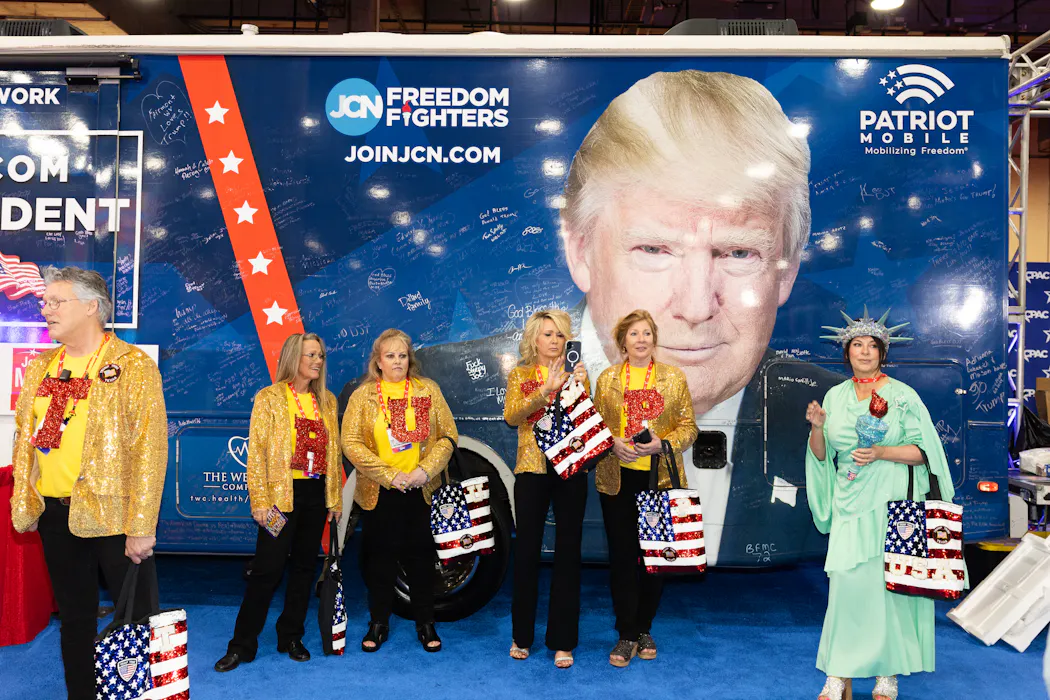
Attendees wearing MAGA merch stand next to an image of Trump at the Conservative Political Action Conference in Grapevine, Texas, on March 25, 2026. Leandro Lozada AFP/Getty Images

There is a pall over the Make America Great Again, or MAGA, movement. Donald Trump overpromised. His public support has fallen. Some “America First” die-hards now openly criticize him.

Amid war, economic challenges, democratic backsliding, the Epstein files and Americans shot dead in the street by government agents, Trump’s support is softening and his vow to bring a “golden age of America” is looking more like a political winter for Trump and his MAGA movement.

This is my big takeaway from this year’s annual Conservative Political Action Conference, or CPAC. The event, organized by the American Conservative Union, launched with an international summit on March 25, 2026, and runs through March 28 in Grapevine, Texas.

Don’t get me wrong. The attendees are decked out in red, white and blue MAGA merch: sequined “Trump” purses and jackets, USA flag bags, ties and headbands, and, of course, iconic red MAGA caps. As always, they chant “USA,” even if not as often or as loudly as before.

Starting with the first talk by Rev. Franklin Graham, speakers here are still singing Trump’s praises. They underscore what they regard as major Trump 2.0 accomplishments: combating illegal immigration, cutting taxes, a budding economic boom, deregulation, U.S. gas and oil output surging, administrative state winnowing, pro-Christian policies and pulling the plug on the “woke” agenda.

These issues are foregrounded in sessions with titles like “Walls Work,” “Don’t Let Woke Marxists Raise Your Children,” “MAGA vs. Mullah Madness,” “Commies Go Home” and “Cancelling Satan.” In between, pro-Trump advertisements checklist Trump’s accomplishments.

This rose-tinted view is to be expected. After all, CPAC – a cross between a political rally, networking mixer and MAGA Comic-Con – is all about galvanizing the conservative base. Beneath the surface, however, MAGA is churning.

A man wearing a skullcap with a photo of Donald Trump on it stands at a table in a conference hall.
An attendee visits a stand at the Conservative Political Action Conference in Grapevine, Texas, on March 26, 2026.
Leandro Lozada/AFP via Getty Images

Major grievances

An anthropologist of American political culture and author of the book “It Can Happen Here,” I have been studying MAGA for years and attending CPAC since 2023. Attendees at last year’s CPAC, held a month after Trump’s inauguration, were jubilant, with nonstop talk of “the comeback kid” and “the golden age.”


Read more:
I went to CPAC as an anthropologist to see how Trump supporters are feeling − for them, a ‘golden age’ has begun


Why is the mood at this year’s CPAC more subdued?

Enthusiasm for Trump is dampened because some of his supporters feel he has betrayed America First principles, failed to fulfill key campaign promises and been unable to supercharge the economy. Here are their major grievances:

‘America First’ vs. ‘Israel First’

America First” is the guiding principle of MAGA. It encompasses border security, prioritizing the U.S. economy and ensuring rights such as free speech. It also means avoiding unnecessary wars.

This is why Trump’s support of the June 2025 “12-day war” on Iran led Tucker Carlson, Marjorie Taylor Greene and other MAGA influencers, who have tens of millions of followers, to criticize Trump. The conflict, they contend, served Israel’s interest – their phrase is “Israel First” – not those of the U.S.

Their criticisms became even more pronounced after the U.S. again began bombing Iran on Feb. 28, 2026. The criticism is part of a growing MAGA fissure with pro-Israel stalwarts such as conservative activists Mark Levin, Laura Loomer and Ben Shapiro, who support U.S. intervention in the Middle East. Things got so bad that after Levin called his fellow conservative media personality Megyn Kelly “unhinged, lewd and petulant,” she dubbed him “Micropenis Mark.”

A man casually dressed in a t-shirt, plaid shirt over that, a black baseball cap and sunglasses stands in a convention center room.
Former Proud Boys chairman Enrique Tarrio is seen at CPAC in Grapevine, Texas, on March 25, 2026.
Leandro Lozada/AFP via Getty Images

But the MAGA unease with the war extends well beyond the “America First” influencers.

It includes figures from the fringe far right such as provocateur Nick Fuentes, center-right “brocaster” Joe Rogan, and even the Trump administration itself – as illustrated by an intelligence officer whose resignation stated, “Iran posed no imminent threat to our nation, and it is clear that we started this war due to pressure from Israel and its powerful American lobby.”

Notably, none of the main Trump critics have been scheduled to speak at this year’s CPAC. Some now call it “TPAC,” or the Trump Political Action Conference.

The Epstein files

MAGA also has a strong populist and anti-elite streak of conspiracy thinking.

Large numbers of Trump supporters, for example, believe there is an elite plot to what they call “replace” the white population with nonwhites through mass immigration. Many also bought into the QAnon conspiracy theory, which centers on the idea that Trump is fighting Satanic, deep state elites who are running a child sex trafficking operation.

On the campaign trail, Trump vowed to take down political, deep state and global elites. He also promised to release the Jeffrey Epstein files, which QAnon conspiracists and others believe prove elite debauchery, including pedophilia.

Trump didn’t deliver. He backtracked and stonewalled on the release of the Epstein files, raising MAGA suspicion that Trump himself is implicated or is protecting elites. Remarkably, one recent poll found that roughly half of Americans, including a quarter of Republicans, believe the Iran war was partly meant to distract from the Epstein files.

Economy and immigration

Trump is also facing headwinds on the bread-and-butter issues of the 2024 election: the economy and immigration.

At CPAC, speakers have repeatedly given him kudos for shutting down the border. Acknowledging the MAGA in-fighting, conservative commentator Benny Johnson said he wanted to “white pill” – or buck up – the audience by reminding them that Trump had stopped an “invasion” and brought “criminal alien border crossings down to zero.”

As a photo of Trump’s bloodied face after the assassination attempt in Butler, Pennsylvania, on July 13, 2024, was displayed, Johnson claimed, “Our God saved President’s Trump’s life for this moment.”

But fewer Republicans approve of his handling of immigration compared with a year ago. Like many Americans, a growing number have misgivings about the strong-arm tactics used by government immigration enforcement agents in places such as Minnesota.

For many, the economy remains a serious worry. A recent poll, conducted before the Iran war, found that the vast majority of Americans, including large numbers of Republicans, are concerned about inflation, jobs and the cost of living. Health care, including the lost Obamacare subsidies, is also a source of consternation.

Few people believe the economy is “booming” – let alone that a “golden age” has arrived – as Trump and his allies often proclaim. The war with Iran, which has led to stock market declines and gas pump hikes, has only added to the unease.

MAGA ‘shattered’?

Amid the recent MAGA in-fighting about the Iran war, conservative podcaster Tim Pool proclaimed, “The MAGA coalition is shattered.”

Not exactly. Despite the many challenges Trump is facing, the vast majority of his MAGA base voters still support him – including almost 90% backing his war with Iran.

But Trump’s support has eased in several ways. First, even his hardcore supporters worry about the economy, and they want him to declare victory and exit the war. And second, Trump has lost support on the edges. Many people in the key groups with which he made crucial inroads in the last election – such as young men and nonwhite voters – have turned from him. The same is true for independents and other Trump voters who don’t identify as MAGA.

Trumpism isn’t dead, as the MAGA-merched crowds here at CPAC make clear. But Trump is struggling through a political winter that could signal the early stages of his MAGA movement’s decline.

The Conversation

Alex Hinton receives funding from Alex Hinton receives funding from the Rutgers-Newark Sheila Y. Oliver Center for Politics and Race in America, Rutgers Research Council, and Henry Frank Guggenheim Foundation.

ref. I went to CPAC and found Trump supporters unhappy about Iran, Epstein files and the economy, even while the fans at the MAGA conference celebrate his immigration policies – https://theconversation.com/i-went-to-cpac-and-found-trump-supporters-unhappy-about-iran-epstein-files-and-the-economy-even-while-the-fans-at-the-maga-conference-celebrate-his-immigration-policies-278856

Landmark lawsuit finds that social media addiction is a feature, not a bug

Source: The Conversation – UK – By Quynh Hoang, Lecturer in Marketing and Consumption, Department of Marketing and Strategy, University of Leicester

A Los Angeles jury has delivered a landmark verdict: Meta and YouTube were negligent in the design and operation of their platforms, causing a young woman known in court documents as Kaley, or KGM, to become addicted to social media.

The tech giants must now pay her a total of US$6 million in damages – $3 million compensatory and $3 million punitive.

She claimed the platforms’ design features got her addicted to the technology and exacerbated her depression, anxiety, body dysmorphia and suicidal thoughts.

The jury found that Meta bore 70% of the responsibility and YouTube 30%, meaning Meta will pay $4.2 million and Google’s YouTube $1.8 million. Both companies have said they will appeal.

The verdict came a day after a separate New Mexico jury ordered Meta to pay US$375 million for failing to protect children from predators on Instagram and Facebook.

Kaley filed her lawsuit in 2023, when she was 17. She claimed that she began using social media as a young child and alleged that features such as infinite scroll, autoplay, algorithmically timed notifications and beauty filters were addictive.

TikTok and Snap were originally named as defendants but settled before the trial began for undisclosed sums. Meta and YouTube proceeded to a seven-week trial in Los Angeles Superior Court.

The case is the first of three bellwether trials scheduled in the California state proceedings – test cases selected to gauge how juries respond to the core legal arguments – drawn from a pool of more than 1,600 plaintiffs, including over 350 families and 250 school districts.

The outcome of this first trial was always likely to have consequences far beyond one young woman’s case.

Bypassing big tech’s legal shield

The legal strategy that made this trial possible was a deliberate departure from previous attempts to sue social media companies. Historically, platforms have been shielded by Section 230 of the 1996 Communications Decency Act, which protects internet companies from liability for content posted by their users.

The plaintiff’s lawyers sidestepped this entirely by arguing that the harm arose not from what users posted, but from how the platforms were engineered – treating Instagram and YouTube as defective products rather than neutral publishers.

The jury heard internal Meta documents that proved damaging. One memo read: “If we wanna win big with teens, we must bring them in as tweens.” Another showed that 11-year-olds were four times as likely to keep returning to Instagram compared with competing apps, despite the platform’s own minimum age requirement of 13.

A former Meta engineering director turned whistleblower, Arturo Béjar, testified about how features like infinite scroll exploit the brain’s reward system. Meta CEO Mark Zuckerberg himself took the stand – his first jury testimony on child safety – and was questioned about his decision to retain beauty filters despite internal research flagging their impact on young girls’ body image.

The jury rejected the companies’ central defence: that Kaley’s struggles were primarily the result of a difficult home life and pre-existing conditions rather than platform design.

In finding that the companies had acted with “malice, oppression or fraud”, they opened the door to the additional punitive damages that brought the total to US$6 million.

Both companies will appeal, and the process could take years. In the meantime, a second important trial is scheduled for this summer, and a separate federal case in Oakland involving school districts is also advancing. The pressure on platforms to settle the thousands of remaining cases will grow considerably.

Long-term impact?

For users, the immediate practical picture is less clear. Meta and YouTube are unlikely to make significant changes to their platforms while the appeals process plays out. Any redesign – if it comes – is likely to be incremental and carefully managed to minimise disruption to the engagement model that drives their revenues.

But there is a harder question the verdict does not answer: will it actually change anything? Meta and YouTube are companies worth hundreds of billions of dollars. A US$6 million damages award is not going to restructure the attention- and surveillance-driven economy.

My research on digital overuse – based on in-depth interviews with digital users and studies of online communities discussing digital overuse and detox – shows that even people who are fully aware of the problem and genuinely want to reduce their screen time find it extraordinarily difficult to do so.

This is not because they lack willpower, but because the features driving compulsive use are not bugs in the system. They are the system, built to maximise engagement and advertising revenue.

For years, big tech has placed the burden of managing screen time squarely on individuals and parents – encouraging screen time limits, digital detoxes, and parental controls while continuing to engineer products specifically designed to defeat exactly that kind of self-regulation.

The jury has pushed back against that logic. Whether courts, regulators, and legislators will push hard enough to force genuine structural redesign remains to be seen. However, the European Commission has already made the preliminary finding that TikTok’s addictive design features are in breach of the EU’s Digital Services Act.

What this verdict does, at minimum, is shift the ground. For the first time, a jury has confirmed what researchers have argued for years: this is not a story of weak willpower or bad parenting. It is, at least in part, a story of deliberate product design. That matters – even if the real fight is still to come.

The Conversation

Quynh Hoang does not work for, consult, own shares in or receive funding from any company or organisation that would benefit from this article, and has disclosed no relevant affiliations beyond their academic appointment.

ref. Landmark lawsuit finds that social media addiction is a feature, not a bug – https://theconversation.com/landmark-lawsuit-finds-that-social-media-addiction-is-a-feature-not-a-bug-279390

Iran was always going to close the Strait of Hormuz

Source: The Conversation – UK – By Jonathan Este, Senior International Affairs Editor, Associate Editor, The Conversation

This is the text from The Conversation UK’s World Affairs Briefing email. Sign up here to receive weekly analysis of the latest developments in international relations, direct to your inbox.


The five-day deadline to open the Strait of Hormuz handed to Iran by Donald Trump on Monday expires some time tomorrow and the Islamic Republic needs to “get serious before it is too late” – or so the US president has announced on his TruthSocial platform.

You’ll recall that this deadline replaced another deadline which was due to expire on Monday night, after which the US and Israel would obliterate Iran’s power plants and plunge the country into darkness. Happily Trump pulled back from this plan, reporting that talks were progressing very well, so he would extend the deadline until March 27.

For their part, Iranian officials denied that negotiations were even underway, while US officials said contacts were at a very early stage. This has prompted speculation that the US president was seizing even the most informal of contacts as an “off ramp” to save face over not following through with his threat.

Certainly Trump’s oft-repeated assurance that the war in Iran has been won and that Iran’s senior officials (whoever remains after Israel’s highly successful campaign of assassinations) are “begging” the US to make a deal looks a rather optimistic assessment from the US president.

Far from collapsing in a heap after the death of the former supreme leader, Ali Khamenei, the regime is showing its resilience. Its targeting of US installations in the region are hurting the Gulf states and there are signs that Israel’s Iron Dome is fracturing in parts under the volume of Iranian missile attacks (this reportedly also happened during the 12-day war last year). Conservative estimates are that the war is costing the US and Israel more than US$1 billion £740 million) a day.


TruthSocial

But it has been Iran’s ability to shut down traffic through the Strait of Hormuz that has arguably turned this into a world war, despite the unwillingness of many of America’s allies, particularly in Europe, to get involved. An estimated 20% of the world’s gas and oil transit the strait each day along with other vital supplies. Or at least it did before the end of February. Now very little is getting through and the consequences are being felt globally.

It’s not as if the US and Israel couldn’t anticipate that Iran would react to their attacks by closing down the strait. Arshin Adib-Moghaddam, an expert in Iranian history at the SOAS, University of London, walks us through nearly five decades in which Iran responded to every crisis by threatening to close the strait. Is is, he argues, a key plan in Iran’s security policy.


Read more:
Iran has been threatening to close the Strait of Hormuz for years – it’s a key part of Tehran’s defence strategy


Meanwhile, it appears that the US is dusting off a 15-point peace plan it developed in May last year and which has already been rejected by Iran.

Critics say the chances of Iran acquiescing to the plan were negligible then and remain so now. It calls for Iran to give up all its uranium and agree to hand control of its civil nuclear programme to an outside panel. And, controversially, it seeks to control what Iran spends the money it gains if sanctions are relaxed.

This has prompted analysts to ask whether this plan was simply produced to give the US an explanation as to why it changed its mind over hitting Iran’s power plants. Bamo Nouri and Inderjeet Parmar, experts in international politics at City St George’s, University of London, think it the resurfacing of this plan is the strongest indication yet that Washington is beginning to fear that it has become embroiled in an unwinnable war.


Read more:
‘Girl math’ may not be smart financial advice, but it could help women feel more empowered with money


Certainly this conflict has not gone the way Trump and his Israeli counterpart Benjamin Netanyahu might have wanted. But – as with the closure of the Strait of Hormuz, this should have been predictable. Jason Reifler, a political scientist at the University of Southampton, asserts that the US in particular, has embarked on this conflict with no clear goals or thought-through strategy.

Map of Straits of Hormuz
The Strait of Hormuz is one of the world’s most important waterways, with 20% of the global trade in oil flowing through a narrow maritime channel.
Wikimedia Commons

Failing to ask for authorisation via the United Nations (and for America, the the US congress) was a bad start, meaning the war had a legitimacy deficit from the word go. The reason for launching the conflict has veered from halting Iran’s nuclear programme to regime change and back again. And the strategy of assassinating Iran’s leadership has produced a rally-round-the-flag effect that few had anticipated.

Add to that the devastatingly effective use of drones by Iran (which the war planners in the US and Israel must surely have picked up on from the experience in Ukraine), means that the two countries are often forced to counter munitions worth US$20,000 with missiles worth millions of dollars. Meanwhile, the pain from Iran’s closure of the closing the strait will only get worse.


Read more:
Iran war lacks strategy, goals, legitimacy and support – in the US and around the world


Holy war?

The US defense secretary, Pete Hegseth, held a religious service at the Pentagon yesterday, at which he called on god to “grant this task force clear and righteous targets for violence”. Hegseth appears to see this as a holy war in which he has clearly cast himself as a crusader, even sporting a tattoo reading, “Daus vult” (god wills it) – reportedly the rallying cry for the attempt to “liberate the Holy Land” in the 11th century.

Toby Matthiesen, senior lecturer in global religious studies at the University of Bristol observes here the way in which all parties to this conflict have used religion to garner support. Of course, claiming the approval of one’s chosen deity is a time-honoured tactic that even Nazi Germany tried. But it feels a little incongruous in the 21st century.

You could be forgiven for thinking that the sight of Donald Trump in the middle of a prayer huddle in the Oval Office was an amusing oddity. But Benjamin Netanyahu’s reference to the Old Testament story of the Amalekites, whom god told the children of Israel to annihilate, “men and women, children and infants, cattle and sheep, camels and donkeys” is frankly chilling. Parts of the Islamic world has flocked to Iran’s defence (although not with particular enthusiasm in the Sunni countries of the Gulf, which Iran is bombarding with ballistic missiles).


Read more:
God on their side: how the US, Israel and Iran are all using religion to garner support


Trang Chu and Tim Morris, meanwhile, believe that this conflict has been nearly five decades in the making. Just as Iran has always denied the right of Israel to exist as a Jewish state, many people in the US and Israel have long been committed to the destruction of Iran as a theocracy. Accordingly the way the two sides talk about each other has hardened over the years. Language on each side no longer reflects a criticism of their adversary’s behaviours, it has become a verdict on their moral character.

So to Iranians, the US is the “Great Satan”, while Iran is described in America as part of an “axis of evil”. Our experts believe that, this language “not only describes the enemy, but actively participates in creating it”. The observe that once you start to think these sorts of things about your adversaries, the idea of engaging in negotiation tends to become secondary to the desire to simply defeat or destroy them. Which is terribly dangerous, as we’re seeing.


Read more:
How the words that Iran and America use about each other paved the way for conflict


Sign up to receive our weekly World Affairs Briefing newsletter from The Conversation UK. Every Thursday we’ll bring you expert analysis of the big stories in international relations.


The Conversation

ref. Iran was always going to close the Strait of Hormuz – https://theconversation.com/iran-was-always-going-to-close-the-strait-of-hormuz-279371

Mosquitoes carrying malaria are evolving more quickly than insecticides can kill them – researchers pinpoint how

Source: The Conversation – USA – By Jacob A Tennessen, Research Scientist in Immunology and Infectious Diseases, Harvard University

_Anopheles darlingi_, a key carrier of malaria, is rapidly evolving resistance to insecticides. Romuald Carinci and Pascal Gaborit/Duchemin lab/Institut Pasteur de la Guyane, CC BY-SA

The fight against infectious disease is a race against evolution. Bacteria become resistant to antibiotics. Viruses adapt to spread more quickly. Diseases transmitted by insects present another evolutionary front: Insects themselves can evolve resistance to the poisons that people use to kill them.

In particular, the mosquito-borne disease malaria kills over 600,000 people annually. Since World War II, people have battled malaria with insecticides – chemical weapons intended to kill Anopheles mosquitoes infected with the Plasmodium parasites that cause the disease.

However, mosquitoes are quickly evolving counterstrategies that make these insecticides ineffective, putting millions of people at greater risk of deadly infection. My colleagues and I have newly published research showing how.

Insecticide resistance threatens public health

As an evolutionary geneticist, I study natural selection – the basis for adaptive evolution. Genetic variants that best promote survival can replace less advantageous versions, causing species to change. Anopheles mosquitoes are frustratingly adept at evolving.

In the mid-1990s, most African Anopheles were susceptible to pyrethroids, a popular type of insecticide originally derived from chrysanthemums. Anopheles control relies on two pyrethroid-based methods: insecticide-treated bed nets to protect sleepers, and indoor residual spraying of insecticide against the walls of homes. These two methods alone likely prevented over a half-billion cases of malaria between 2000 and 2015.

However, mosquitoes today from Ghana to Malawi are often able to survive insecticide concentrations 10 times the previously lethal dose. Along with Anopheles control efforts, agriculture also inadvertently exposes mosquitoes to pyrethroids and contributes to insecticide resistance.

In some African locales, Anopheles is already showing resistance to all four main classes of insecticide used for malaria control.

Close-up of mosquito on human skin with abdomen engorged with blood, a droplet extruding at its end
Anopheles mosquitoes are found all over the world.
Jim Gathany/CDC

Adaptation in Latin American mosquitoes

Anopheles mosquitoes and the malaria-causing Plasmodium also occur outside Africa, where insecticide resistance is less well-researched.

In much of South America, the main malaria vector is Anopheles darlingi. This mosquito species has diverged evolutionarily from the African vectors so extensively that it might be a different genus, Nyssorhynchus. Along with colleagues from eight countries, I analyzed over 1,000 Anopheles darlingi genomes to understand its genetic diversity, including any recent changes due to human activity. My collaborators collected these mosquitoes at 16 locations ranging from the Atlantic coast of Brazil to the Pacific side of the Andes in Colombia.

We found that, like its African counterparts, Anopheles darlingi shows extremely high genetic diversity – more than 20 times that of humans – indicating that very large populations of this insect exist. A species with such a vast gene pool is well poised to adapt to new challenges. The right mutation giving it the advantage it needs is more likely to pop up when there are so many individuals. And once that mutation starts to spread, it’s protected by numbers since it won’t be wiped out if a few mosquitoes die by chance.

In contrast, bald eagles in the contiguous U.S. were never able to evolve resistance against the insecticide DDT and approached extinction. Evolution is more efficient among millions of insects than mere thousands of birds. And indeed, we saw signals of adaptive evolution in the resistance-related genes of Anopheles darlingi occurring over the past few decades.

Mosquitoes evolve to detoxify poisons

Insecticides like pyrethroids and DDT share the same molecular target: channels in nerve cells that can open and close. When open, the nerve cell stimulates other cells. These insecticides force the channels to remain open and continuously fire, causing paralysis and death. However, insects can evolve resistance by changing the shape of the channel itself.

Earlier genetic scans performed by other researchers had not detected this type of resistance in Anopheles darlingi, and neither did ours. Instead, we found that resistance is evolving in another way: a group of genes encoding enzymes that break down toxic compounds. High activity of these enzymes, called P450, frequently underlies resistance to insecticides in other mosquitoes. The same cluster of P450 genes has changed independently at least seven times across South America since insecticide use began in the mid-20th century.

In French Guiana, a different set of P450 genes exhibits a similar evolutionary pattern, cementing the clear connection between these enzymes and adaptation. Moreover, when we exposed mosquitoes to pyrethroids in sealed bottles, differences among the P450 genes of individual mosquitoes were linked to the length of time they stayed alive.

Insecticide-heavy campaigns against malaria have been only sporadic in South America and may not be the main driver behind this evolution. Instead, it’s possible that mosquitoes are being exposed indirectly to agricultural insecticides. Intriguingly, we saw the strongest signs of evolution in places where farming is prevalent.

Diagram comparing Mendelian inheritance (50% chance of inheritance leads to slower spread) with gene drive inheritance (nearly 100% inheritance leads to rapid spread)
Gene drives can help a malaria-fighting mutation spread more quickly through a mosquito population than it would by chance alone.
Naidoo et al./Gene Therapy, CC BY-SA

Toward more sophisticated vector control

Despite new vaccines and other recent advances against malaria, mosquito control remains essential for reducing disease.

Some countries are launching trials of gene drives to control malaria, which involve forcing a genetic modification into a mosquito population to reduce their numbers or their tolerance for Plasmodium. Such prospects are exciting, though the relentless adaptability of mosquitoes could be an obstacle.

I and others are revising methods to efficiently test for emerging insecticide resistance. Genome-scale sequencing remains important to detect new or unexpected evolutionary responses. The risk of adaptation is highest under a continuous, strong selection pressure, so minimizing, switching and staggering pesticides can help thwart resistance.

Success in the fight against evolving resistance will require a coordinated effort of monitoring, and reacting accordingly. Unlike evolution, humans can think ahead.

The Conversation

Jacob A Tennessen receives funding from the National Institutes of Health via Harvard T.H. Chan School of Public Health and the Broad Institute.

ref. Mosquitoes carrying malaria are evolving more quickly than insecticides can kill them – researchers pinpoint how – https://theconversation.com/mosquitoes-carrying-malaria-are-evolving-more-quickly-than-insecticides-can-kill-them-researchers-pinpoint-how-275391

Could this energy crisis be worse for the global economy than COVID?

Source: The Conversation – UK – By Adi Imsirovic, Lecturer in Energy Systems, University of Oxford

Alex_An_Der/Shutterstock

Despite reports of negotiations between the US and the Iranian regime, the Strait of Hormuz remains effectively closed to most oil tankers, with only a small number of vessels being allowed to pass. The result is a loss of roughly 11 million barrels per day (mbd) of oil and petroleum liquids to the global market. This represents just over 10% of global supply.

At first glance, a 10% disruption may not sound catastrophic. But in oil markets, even a 10% imbalance between supply and demand can have very large economic effects.

To understand the scale of the disruption, it is useful to compare it with the height of the COVID pandemic in 2020. During global lockdowns, empty roads, grounded aircraft and deserted bus and railway stations became normal as travel and economic activity collapsed. At that time, global oil demand fell by about 8mbd, the largest demand shock in history.

Today’s situation is the opposite. Instead of a collapse in demand, the world is experiencing a large supply shock. But the impact on everyday life could end up looking similar: reduced travel, higher transport costs, slower economic activity and pressure on household budgets.

The reason is that both oil supply and oil demand are very inflexible in the short term. People still need to drive to work, goods still need to be transported and aircraft still need fuel. When supply falls suddenly, prices must rise significantly to force demand down.

For now, the release of emergency oil stocks is helping to cushion the initial impact, particularly in developed economies. Members of the International Energy Agency (IEA) are required to hold emergency stocks equivalent to at least 90 days of oil consumption, and several countries also maintain strategic petroleum reserves.


Read more:
These are shaky times for oil markets. An expert explains what a prolonged war will mean for prices


Countries such as the US, China and Japan can therefore offset supply disruptions for a limited period. However, these reserves are not a long-term solution. If the conflict continues for months rather than weeks, stockpiles will be depleted.

The situation is much more serious for developing countries. Many countries in Asia, Africa and South America hold very limited commercial reserves and are much more vulnerable to supply disruptions and price spikes. For these economies, elevated oil prices quickly translate into higher food prices, inflation and economic instability.

The first shortages would probably appear not in petrol, but in diesel and jet fuel. Gulf oil producers are major exporters of middle distillates, and their crude oil grades produce large quantities of diesel and jet fuel when refined.

airbus a380 coming in to land at heathrow airport in london over trees and landing lights.
Jet fuel could be one of the first commodities to be hit.
Benjamin_Barbe/Shutterstock

Diesel is particularly important because it fuels trucks, ships, construction equipment and agricultural machinery. So a diesel shortage affects food supply, construction, mining and global trade – not just transport. Petrol shortages would follow as crude oil supply tightens further, and eventually shortages would spread across all petroleum products.

Oil is not just used for transport fuel. It is also a key input into petrochemicals for the production of plastics, fertilisers, chemicals, synthetic materials and many industrial processes. This means the effects of a major oil supply disruption spread across the entire economy.

Shortages or price increases could affect everything from food production and packaging to electronics, construction materials and clothing. The economic effects of an oil shock are therefore much broader than simply higher petrol prices.

Protectionism could make everything worse

One of the biggest risks during a supply crisis is export restrictions and protectionism. Governments often try to protect domestic consumers by freezing prices and banning exports of fuel or crude oil, but this usually makes the global shortage worse.

Government price freezes only discourage production and supply, and encourage consumers to keep burning fuel. Protectionism is even worse. There are already signs of this happening – some countries (China, for example) are restricting exports of petroleum products such as diesel and jet fuel. When countries hoard fuel, global markets become tighter and prices rise even further.

The biggest risk would be if the US restricted oil exports in order to protect domestic consumers. The US is now the world’s largest oil producer, producing more than 20mbd of oil and petroleum liquids. But it is also one of the world’s largest consumers. However, it still exports significant volumes, particularly to Europe.

The US has banned oil exports before. In 1975, following the Arab oil embargo (when in 1973 Arab states refused to supply oil to countries, including the US, that had supported Israel in the Yom Kippur war), the US banned exports of crude oil. The ban was lifted only in 2015. If such a ban were introduced today, it would be likely to cause major supply shortages and price increases, especially in Europe.

If the Strait of Hormuz remains closed for a prolonged period, or if the conflict escalates further, global losses of exports from the Persian Gulf could approach the 20mbd of oil and petroleum products.

Under these circumstances, the economic and social effects could be severe. Transport could become more expensive and less frequent, air travel would be severely curtailed, inflation would rise and economic growth would slow significantly. In extreme scenarios, the disruption to daily economic life could resemble the COVID period (and probably worse). But this time it would be caused by a shortage of energy.

For now, markets are relying on emergency stock releases and hopes of a geopolitical de-escalation. But if not, the world economy could face an unprecedented energy shock, with far-reaching and unpredictable consequences.

The Conversation

Adi Imsirovic does not work for, consult, own shares in or receive funding from any company or organisation that would benefit from this article, and has disclosed no relevant affiliations beyond their academic appointment.

ref. Could this energy crisis be worse for the global economy than COVID? – https://theconversation.com/could-this-energy-crisis-be-worse-for-the-global-economy-than-covid-279284

How the war in Iran is already affecting UK farmers and food production

Source: The Conversation – UK – By Caroline Flanagan, Head of School, Agriculture, Anglia Ruskin University

The price of red diesel used by farmers is rising fast. Mark I Walker/Shutterstock

The conflict in Iran and the disruption to the strait of Hormuz are already starting to affect UK farmers. The closure of this vital shipping route threatens supplies of two essential agricultural necessities: fuel and fertiliser.

The immediate impact on farmers has been a sharp increase in the cost of red diesel – the rebated fuel widely used in agriculture – which has already risen by approximately 60%, far outpacing increases seen at retail fuel pumps for car owners.

Concerns for farmers include the cost of fertiliser, particularly nitrogen. As the key nutrient driving growth in two key crop groups grown extensively in the UK, cereals and oilseeds, nitrogen is essential for achieving high yields. A wheat crop may require over 200kg per hectare during the growing season, depending on soil conditions, weather, and yield expectations.

The UK imports around 60% of its nitrogen fertiliser. Although much of this supply does not originate directly from the Middle East, global market dynamics mean prices are highly sensitive to disruptions. Around one-third of the global fertiliser trade passes through the strait of Hormuz, contributing to price increases of approximately £50 per tonne, compared to early 2025, and is expected to rise more if the conflict continues.

UK fertiliser traders are finding prices are changing so fast that they can’t update their daily lists. The NFU president Tom Bradshaw has raised concerns about farmers not being given a confirmed price until stocks are delivered.

While most farmers buy fertiliser in bulk ahead of the growing season, the longer-term outlook is already a concern.

Much will depend on the duration of Middle Eastern tensions and whether the strait reopens in time for fertiliser purchasing decisions this autumn, ready for next year’s crops.

Unlike the 2022 fuel price shock following the invasion of Ukraine – which was partially offset by higher commodity prices – current market conditions offer little expectation of improved crop prices.

Difficult calculations

Farmers are, therefore, being forced into difficult calculations: weighing the cost of nitrogen against likely crop prices, reassessing how to balance the crop’s agrochemical inputs, including fertiliser, and awaiting clarity on the future of Environmental Land Management Schemes (Elms). Elms are government schemes in England aimed at supporting farmers to make environmentally beneficial changes to their land.


Read more:
How the Iran war could create a ‘fertiliser shock’ – an often ignored global risk to food prices and farming


Even before the current conflict started, industry bodies such as the National Farmers’ Union had raised concerns about the viability of arable farming under sustained cost pressures.

The government has also acknowledged these challenges, commissioning the Competition and Markets Authority (CMA) to investigate supply issues affecting fertiliser and agricultural fuel. The CMA has said it will monitor price rises caused by the current international conditions. In response to the crisis, the UK government has just announced proposals to support more varied types of fertiliser.

All these factors raise broader concerns for the UK, where food self-sufficiency stands at around 62% – a potentially precarious position in an increasingly uncertain global landscape.

Farming landscape

UK crops are currently looking generally robust, after a strong autumn with ideal conditions for sowing winter crops and a favourable start to spring. Early signs point to a promising 2026 harvest.

But optimism is tempered by ongoing economic pressure. Farm gate prices (the price if a customer bought direct from a farmer) remain stubbornly low, as UK farmers compete with imports produced under lower environmental and regulatory standards

Simultaneously, the transition away from legacy EU support payments has left a significant income gap. Replacement schemes under the Environmental Land Management Schemes were paused in 2025 and are only expected to resume later this year, creating further uncertainty.

The Department for Environment, Food and Rural Affairs (Defra) latest figures forecast average arable farm income fell to £17,000 in the year to February 2026 – the lowest level since 2004–05. The drop reflects a mix of difficult seasonal conditions and global oversupply in key crops such as cereals and oilseeds. Dairy farm income was much higher at £224,000 for the same period.

Fertiliser shortages are set to hit farmers around the world.

The industry is rapidly embracing innovation and the government is backing farmers with measures to strengthen fertiliser supply resilience. Together with rising costs, these shifts have helped drive a 50% reduction in nitrogen use over the past four decades.

Precision agriculture (which uses technology to refine decisions) has boosted efficiency further, enabling farmers to tailor fertiliser use to the needs of specific fields.

There are other potential innovations that could help. Tesco for example, is working with farmers and manufacturers to develop lower-carbon fertilisers made from food waste, algae, poultry manure, and industrial by-products.

Global fertiliser markets may be volatile, but in the short term shoppers are unlikely to see that uncertainty reflected in everyday food prices. A 2022 Sustain report, found that farmers often receive less than 1% of the profit from supermarket sales, meaning their tiny share leaves little room for fertiliser costs to influence the final price on the shelf. For now, any rise or fall in the price of bread, flour, cakes or biscuits is far more likely to come from supermarket pricing tactics or broader supply‑chain pressures than from shifts in global fertiliser markets.

That’s not to say fertiliser costs never filter through – a prolonged conflict could still nudge prices up for shoppers. Crops respond dramatically to fertiliser levels, so even modest reductions in nitrogen use can produce disproportionately large declines in yield. All that could translate into thousands of tonnes of lost crops, which would make food more expensive in the future.

The Conversation

The authors do not work for, consult, own shares in or receive funding from any company or organisation that would benefit from this article, and have disclosed no relevant affiliations beyond their academic appointment.

ref. How the war in Iran is already affecting UK farmers and food production – https://theconversation.com/how-the-war-in-iran-is-already-affecting-uk-farmers-and-food-production-279032