Why so many victims don’t realise they have been raped until later

Source: The Conversation – UK – By Andrea Hollomotz, Associate Professor in Sociology and Social Policy, University of Leeds

Farknot Architect/Shutterstock

MP Charlotte Nichols recently took the brave step to speak publicly about her rape trial experiences in parliament. Nichols endured a 1,088-day wait for her case to reach court. This experience led her to speak out, in a debate over the government’s plan to cut jury trials in England and Wales. Arguing that the proposals would only minimally reduce wait times, she called instead for the creation of special courts to hear rape cases.

Later, in an in-depth Guardian interview, Nichols disclosed that it took her 48 hours to mentally accept that what had happened to her was rape. This delay was used against her in court to undermine her credibility as a witness. Her case ended with a jury unanimously acquitting the man she accused of raping her. But this line of enquiry was based on outdated stereotypes of what “real” rape looks like.

Delayed realisation, when someone does not immediately name that what happened to them was rape, is extremely common. Most people imagine rape as an obvious crime: a stranger attack, force, threats or immediate fear. But the reality looks very different for many victims.

Back in 1988, Liz Kelly, a professor of sexualised violence, reported that around 60% of women she spoke to could not name assaults when they happened. More recent studies, including research led by criminologist Jennifer Brown, and my own research with disabled victims of sexual violence, continue to show this pattern.

Nichols disclosed that she had consensual “vanilla sex” during a one-night stand with a man: “We did have a really fun night actually where I was fully up for it.” This made what happened later that night harder to comprehend. She woke up to find him having sex with her again, biting her back, breasts and thighs.

Being betrayed in this way by someone you trusted and had positive feelings for can cause disassociation and shock. Nichols described feeling “outside my own body” and on “autopilot” in the hours after being raped. Many victims cope by rationalising or minimising what has happened. One of my respondents told herself: “No, it wasn’t that bad, it was all okay.”

Victims may use humour or detachment as coping strategies. Nichols did this when she sent her friend a joking text message the morning after the rape. Although the correspondence with this friend included later messages where she gradually began to acknowledge that what happened wasn’t right, this initial text message was used against her in the trial.

Many victims have internalised rape myths: widely-held attitudes about how rape happens that are generally false. These beliefs may hinder them from naming their experiences.

Although delayed realisation can happen to anyone, it is important to acknowledge that disabled women in our research faced additional barriers. Some had limited access to sex education. Some grew up being treated as childlike or passive, and others had been repeatedly disbelieved by professionals when they tried to report more mundane instances of maltreatment. These conditions make it even harder to understand or dare to name sexual violence.

How delayed realisation is used against victims

The criminal justice system often treats delayed realisation as suspicious. Nichols’ delayed realisation and outwardly calm behaviour in the immediate aftermath were presented as proof that the sex must have been consensual.

The emotional scars caused by rape led Nichols to developed post-traumatic stress disorder (PTSD). Emily Hunt, a former government rape adviser, claimed that 50% of sexual violence victims develop PTSD. On this ground alone, a large proportion of rape victims could be considered disabled and entitled to additional protections under the Equality Act.

Instead, rape victims’ trauma survival strategies, such as the “fawn response” – disassociation and masking one’s distress, as Nichols described – are exposed in court as evidence to undermine their credibility.

In my research this was especially common among neurodivergent women, who are generally well-versed at masking (mimicking neurotypical traits to fit into social situations).

Some respondents felt discriminated against because they expressed trauma differently from how they were expected to, for example by laughing when recalling uncomfortable events. Others were told they were “over-emotional” or “not emotional enough”. Several women said that their criminal justice experience made them feel that they were not the “right kind of victim”.

The current legal definition of rape requires that the perpetrator did “not reasonably believe” that the victim consented. Consequently, when Nichols’ case went to court, she was made to feel that she was on trial. The focus was on dissecting her behaviour in the aftermath of the rape to establish whether she had consented.

For most victims I spoke to, their cases were discontinued before they even reached court. Delayed realisation was routinely used to argue that it was not possible to “reasonably believe” that the victim had not consented.

The UK government’s ambition to increase rape convictions as part of the violence against women and girls strategy is commendable. However, low conviction rates will continue unless the law and how it is implemented are changed to reflect the reality that delayed realisation is a common trauma response for many rape victims.

Nichols’ courage in speaking publicly could open a national conversation about normalising delayed realisation. Her frank account is powerful, because it directly challenges many common rape myths, while highlighting how the presence of these views in the courtroom led to her feeling – and ultimately being – disbelieved.

The Conversation

Andrea Hollomotz has previously received funding from the Ministry of Justice for research about the formal support needs of disabled adult victim-survivors of sexual violence. The views expressed are those of the author and are not necessarily shared by the Ministry of Justice.

ref. Why so many victims don’t realise they have been raped until later – https://theconversation.com/why-so-many-victims-dont-realise-they-have-been-raped-until-later-279057

Ethical non-monogamy? New comedy Splitsville is more about two flawed couples getting messy

Source: The Conversation – UK – By Sarah Louise Smyth, Lecturer in Department of Literature Film and Theatre Studies, University of Essex

Is it by accident or design that Dakota Johnson has become the star for zeitgeisty sex and romance films? Johnson’s breakthrough role was as Anastasia Steele in the enormously popular Fifty Shades of Grey (2015). Adapted from the book series by E.L. James, it spawned a franchise that, for better or worse, has come to define BDSM in the mainstream cultural imagination.

In Celine Song’s recent film, The Materialists (2025), Johnson plays Lucy, a high-end matchmaker who enables wealthy individuals to bypass the random scrolling and swiping of dating apps and experience a hand-picked romantic match. Although in my review for The Conversation I suggest that the film is muddled in its message, The Materialists makes an effort to address the cynical business of marriage in our modern age – and the dangerous outcomes that can befall women when blind dating goes wrong.

Enter Splitsville, a new comedy film written by and starring Kyle Marvin and Michael Angelo Covino, with Covino also directing. This latest film is about open marriages.

While polyamory, ethical non-monogamy and private arrangements have existed for many years, these practises have recently come to the attention of the mainstream. This has happened alongside other identities, sexual orientations and practices that do not fit squarely into the rigid heterosexual monogamous norm.

Open relationships frequently attract everything from morbid curiosity to disbelief and ridicule in the media. Rarely, however, are they taken seriously. The time is ripe, then, for a film that explores open relationships as a legitimate lifestyle and practice.

How to be polyamorous (and flawed)

In Splitsville, Carey (Marvin) is married to Ashley (Adria Arjona). Ashley is unhappy in their marriage and is especially dissatisfied by their sex life. After Ashley announces that she wants a divorce, heartbroken Carey consoles himself in the company of his friends Julie (Johnson) and Paul (Covino).

Julie and Paul reveal to Carey that they are in an open marriage. Carey, while shocked, is also curious and asks about the rules of their arrangements: can they sleep with anybody, even someone they both know? “Yes,” Julie says, “there are no rules.”

Carey takes this proposition back to Ashley. Why go through the complications of a divorce when they could open up their relationship instead? The rest of the film follows the comedic fall-out of their sexual dalliances. But opening up their relationship doesn’t provide an easy solution to their problems.

Let’s return to our question. Does Splitsville take open relationships seriously? Well, no. The answer is easily found in Julie’s response to Carey’s question: there are no rules. Look at any guidance on open relationships and the best practice is clear: there must be agreed upon rules (or at least expectations), boundaries and communication between all parties.

The couples in Splitsville adhere to none of these things. Yes, this is not a didactic manual for how to be an ethnically non-monogamous couple. This is a fictionalised work about flawed couples whose bad practising of open relationships leads to trouble. But this is also another example of a film using a non-normative sexual practice as a metaphor for something else.

The aforementioned Fifty Shades of Grey isn’t really interested in BDSM. It uses BDSM (bondage, discipline, sadism, masochism) to symbolise Christian Grey’s childhood abuse and his warped sense of power – something practitioners of BDSM take issue with as it reinforces the idea that BDSM is a form of abuse. Similarly, Splitsville isn’t really about open marriages as it uses this as a plot device to allow the couples simply to get messy.

So what is the film interested in? Men getting into scrapes, maybe? After Carey sleeps with Julie (yes, of course this happens), Paul rages (even though technically this hasn’t broken any of his and Julie’s non-rules). Carey and Paul start fighting, which turns into an extended set piece.

Although this got laughs in my screening, I found it indulgent. The men destroy Paul and Julie’s house, kill the pet goldfish and singe off Carey’s eyebrows. Later, Paul becomes involved in some dodgy dealings, including taking out loans in the name of his son, Russ (Simon Webster). This ends badly for Paul and his family. Even Russ gets in on the bad behaviour, stealing a jet ski and breaking another kid’s arm.

And what about the beleaguered wives? They have some fun. Ashley has a string of partners who provide some laughs. But the women certainly don’t behave as badly as the men. I doubt they’d get away with a destroying a home, stripping their marriage of assets, or committing fraud. Although perhaps the real loser in all this is ethical non-monogamy.

The Conversation

Sarah Louise Smyth does not work for, consult, own shares in or receive funding from any company or organisation that would benefit from this article, and has disclosed no relevant affiliations beyond their academic appointment.

ref. Ethical non-monogamy? New comedy Splitsville is more about two flawed couples getting messy – https://theconversation.com/ethical-non-monogamy-new-comedy-splitsville-is-more-about-two-flawed-couples-getting-messy-279414

From ‘Project Hail Mary’ to Artemis II, spaceflight captures audiences when it centers on people because human space travel is hazardous

Source: The Conversation – USA – By Scott Solomon, Teaching Professor of BioSciences, Rice University

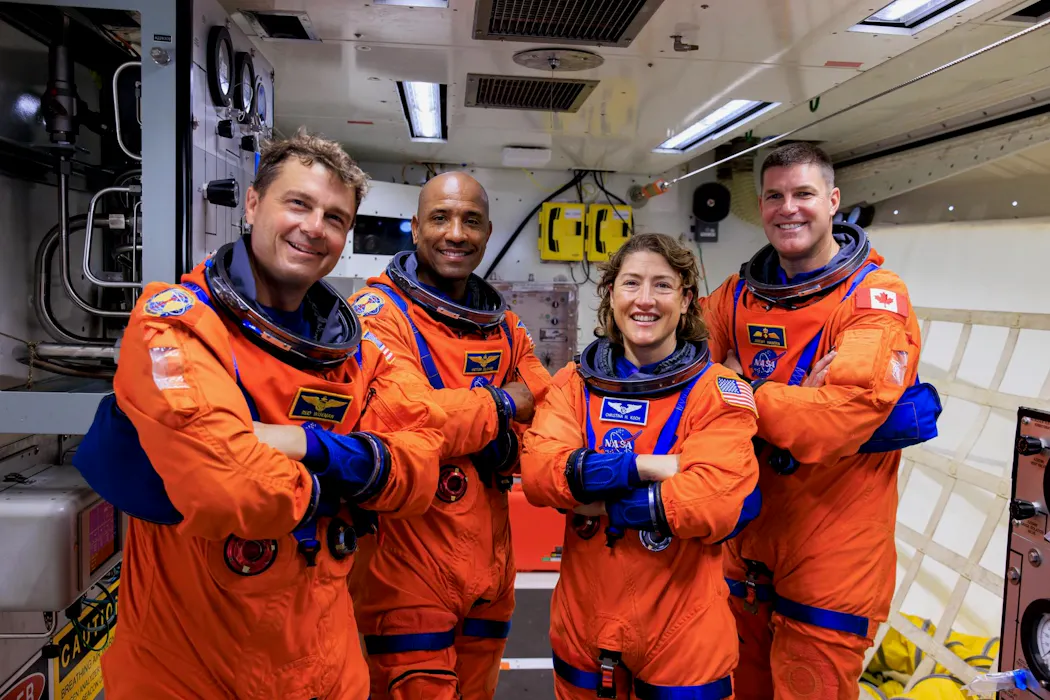
The Artemis II crew poses during a ground systems test ahead of launch. NASA/Frank Michaux

The central premise of the blockbuster film “Project Hail Mary” is a long-shot mission with a familiar goal: Save humanity from extinction. While the details of the threat facing humanity are new to this story, moviegoers are used to bingeing on popcorn while watching a heroic quest to save the Earth from certain doom. And like so many popular movies of this genre, from “Armageddon” to “Interstellar,” the hero’s journey involves a seemingly impossible mission into space.

The film’s release is well timed for the new era of space exploration. NASA’s Artemis II mission, scheduled to launch in early April, will send four astronauts around the Moon on a path that will take them deeper into space than any humans have ever traveled.

A rocket on a launchpad with a rising sun in the background
NASA’s Space Launch System rocket stands ready at the launchpad ahead of the Artemis II launch, planned for early April.
Gregg Newton/AFP via Getty Images

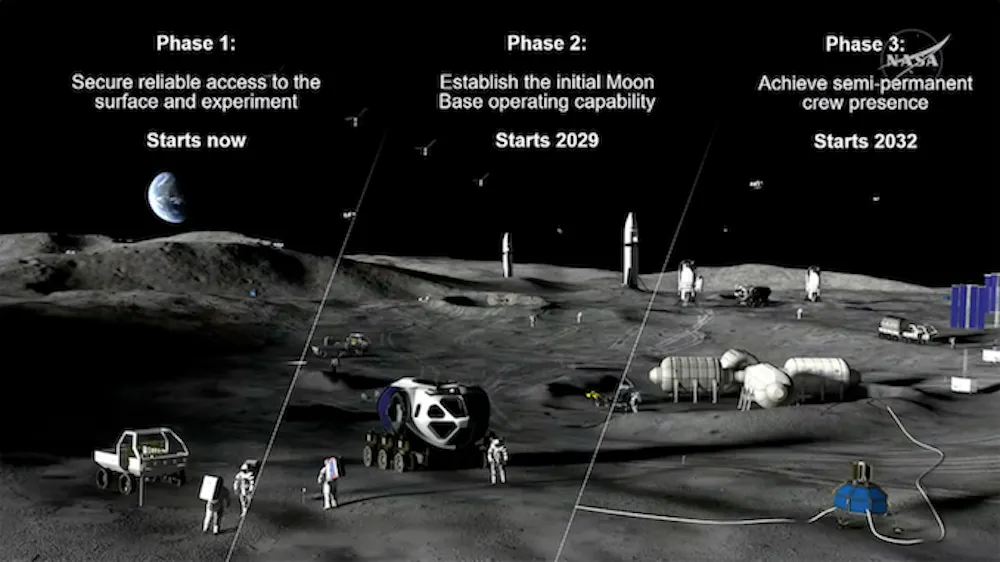
The flyby mission is primarily about testing equipment for a lunar landing in 2028. But the broader plan was outlined in detail in March 2026 by NASA officials: to establish a permanent base on the Moon.

NASA is not alone in its lunar ambitions. Private space companies SpaceX and Blue Origin are developing next-generation spacecraft, rovers and drones to facilitate the American Moon base. And other nations, notably China, are working toward their own lunar outposts.

These nations and corporations see the Moon as a stepping stone toward more ambitious goals: a major human migration into deep space, including Mars.

Given the moment, it’s worth reflecting on what those investing billions in human space exploration, whether tax dollars or private funds, are trying to accomplish. As a biologist, I recognize the limitations of humans as space explorers. As I explain in my book, “Becoming Martian: How Living in Space Will Change Our Bodies and Minds,” while biologists have learned a lot about how the conditions of space affect the human body and mind, sending people on longer missions deeper into space will expose people to unknown health risks.

Boldly going

Plans to send people to the Moon and beyond are accelerating. NASA’s new administrator, Jared Isaacman, has argued that beating China to the Moon is a matter of national security, calling the Moon “the ultimate high ground.” He has also promoted the economic benefits of establishing a space economy that includes mining and manufacturing on the Moon.

A diagram showing the three phases on NASA's lunar base plan, with phase 1 securing access, phase 2 establishing a base and phase 3 a semi-permanent crew presence
NASA’s Artemis program seeks to establish a long-term human presence on the lunar surface.
NASA TV

Subcommittees in both the House and Senate have passed bills to codify these initiatives into law – making the goal of creating a permanent base on the Moon official U.S. policy. They appear to have bipartisan support, and votes in both houses of Congress are expected soon.

The United States and China are targeting landing humans on Mars in the 2030s, with the intention of building infrastructure that enables long-term habitation.

In March 2026, NASA also announced that the agency intends to test nuclear propulsion during an uncrewed flight to Mars in 2028. Nuclear-powered rockets have the potential to substantially reduce the time it takes to reach Mars, which would make crewed flight to the red planet more feasible.

Humans or robots?

But why do people need to go to Mars? As with the Moon, the purported motivations for both the U.S. and China establishing a human presence on Mars are scientific, economic and geopolitical. Yet these are distinct objectives that are often conflated.

In terms of science, NASA has had dramatic success with its Mars rovers, including the discovery last year of a potential biosignature that could be the best evidence yet that the planet was once home to microbial life.

Robotic missions also have a lower price tag and a higher acceptable risk margin than human missions. While Isaacman remains publicly committed to the Artemis program and its human spaceflight goals, the agency’s plan also includes a suite of robotic missions to the Moon’s surface it hopes to develop in partnership with companies, universities and international partners.

Likewise, some economic objectives, such as establishing mining and manufacturing facilities, could be accomplished using AI-equipped robots, such as those Tesla is developing. Robots are a long way from being able to accomplish the full range of tasks that a human can do, but prioritizing robotic activities could lower the exposure that people have to the hazards of space.

If having people on the Moon and Mars is indeed necessary to achieve these objectives, let’s be clear about the risks that the people undertaking these missions will be assuming.

Space and the human body

While scientists have learned a lot about how space affects the body during the six decades of human spaceflight, there are still significant blind spots. Among them are the effects of deep-space radiation.

Astronauts need to exercise every day on the International Space Station to keep their muscles and bones strong, yet their bodies are still affected in various ways by the conditions of space.

The 24 Apollo astronauts who traveled to the Moon are the only people who have ever been past the Van Allen radiation belts, an area of space surrounding our planet formed by Earth’s magnetic field.

By trapping radiation from the Sun and from deep space, our planet’s magnetic field is part of what makes Earth habitable for us and other life forms. The Moon and Mars lack magnetic fields, so radiation levels on their surfaces are substantial. NASA researchers are now conducting experiments on rodents using simulated galactic cosmic rays, which are largely blocked by Earth’s magnetic fields. Preliminary results suggest that this type of radiation may impair cognitive abilities, but the actual effects on people are unknown.

Similarly, while medical researchers know that floating in a zero-g environment causes muscle atrophy and bone density loss during long stays on the International Space Station, they know relatively little about how partial gravity affects muscles and bones. The Moon has one-sixth the gravity of Earth, and Mars has a little over one-third.

Pilots on Earth can simulate partial gravity for up to 30 seconds at a time during parabolic flights, but only the 12 Apollo astronauts who walked on the Moon have ever experienced it for longer than that. The longest they stayed was about three days. Scientists can only speculate about whether prolonged exposure to the partial gravity of the Moon or Mars would have consequential health effects.

Human interest

Sending robots to space avoids having to deal with risks to human health. But there are downsides. Not only do robotic space missions have fewer capabilities than crewed missions, they often fail to capture interest and imagination and demonstrate national prestige in the same way that human missions can.

The four members of the Artemis crew will captivate people worldwide watching their daring mission around the Moon, much like moviegoers root for Ryan Gosling’s character in “Project Hail Mary” as he boldly seeks to save humanity from certain doom on the big screen.

That human interest is the common link that ties together public and private space ambitions worldwide. While robotic missions are more practical and cost effective, they simply don’t inspire the masses the way a human crew can. Beyond achieving any economic, political or scientific goals, space exploration is ultimately about people doing difficult things.

The Conversation

I am the author of the book Becoming Martian published by MIT Press

ref. From ‘Project Hail Mary’ to Artemis II, spaceflight captures audiences when it centers on people because human space travel is hazardous – https://theconversation.com/from-project-hail-mary-to-artemis-ii-spaceflight-captures-audiences-when-it-centers-on-people-because-human-space-travel-is-hazardous-279147

New study measures titanium in Apollo rock to uncover Moon’s early chemistry

Source: The Conversation – USA – By Advik D. Vira, Graduate Student in Physics, Georgia Institute of Technology

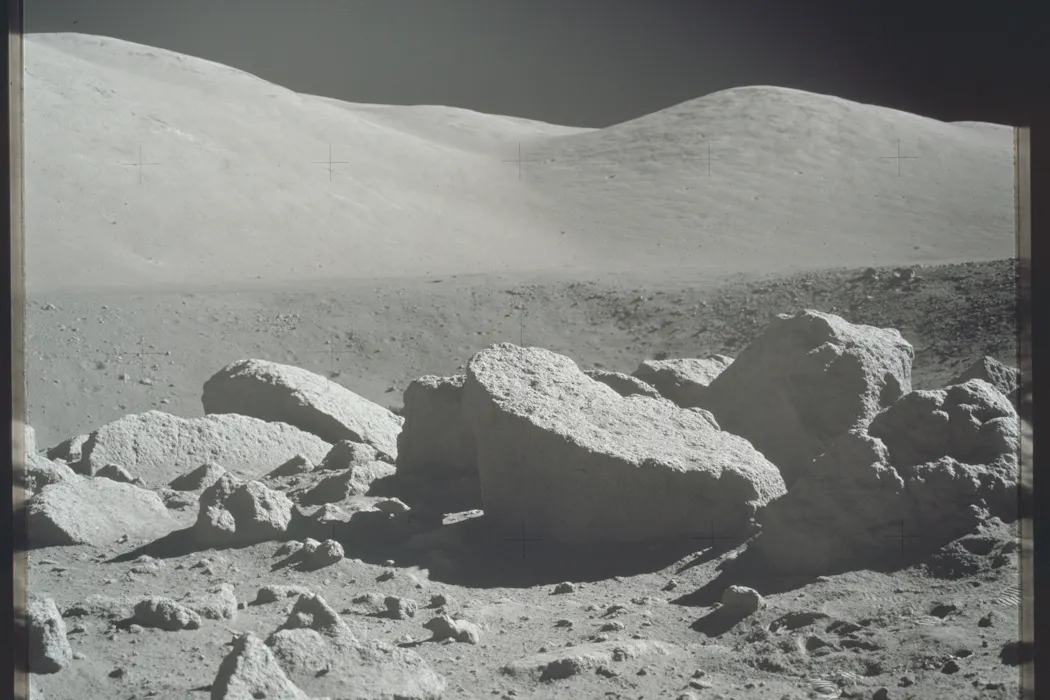
The Camelot crater in the Moon’s Taurus-Littrow Valley is where the sample containing trivalent titanium was found. NASA/Apollo 17: AS17-145-22159

The Earth and the Moon may look very different today, but they formed under similar conditions in space. In fact, a dominant hypothesis says that the early Earth was hit by a Mars-sized object, and it was this giant impact that spun off material to form the Moon. But unlike Earth, the Moon lacks plate tectonics and an atmosphere capable of reshaping its surface and recycling elements such as oxygen over billions of years.

As a result, the Moon preserves a record of the geological conditions that helped shape it and can give scientists insight into the world we live in today. Rocks that were formed during early volcanic activity on the Moon offer a window into events that occurred nearly 4 billion years ago. By uncovering the conditions under which the Moon’s rocks formed, scientists move closer to understanding the origins of our own planet.

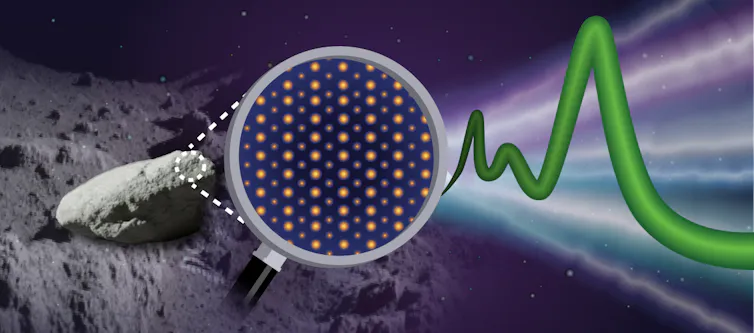
In a study published March 2026 in the journal Nature Communications, our team of physicists and geoscientists investigated ilmenite, a mineral composed of iron, titanium and oxygen, in a Moon rock crystallized from an ancient lunar magma. We used cutting-edge electron microscopy to probe the chemical signature of titanium in this ilmenite, finding that about 15% of the titanium carries less of an electrical charge than expected.

An illustration of the rock on the Moon, an atomic image of the sample, and of trivalent titanium chemical signature.
This illustration shows the rock on the Moon, as well as an atomic image of the sample’s crystal structure and a representation of the chemical signature of trivalent titanium.
August Davis

Implications of trivalent titanium

In ilmenite, an atom of titanium typically loses four electrons when bonding with oxygen, resulting in a positive charge of 4+, known as the atom’s oxidation number. From the sample we studied, a rock collected during the Apollo 17 mission, we found that some of the titanium in ilmenite actually has a charge of only 3+, referred to as trivalent titanium. Our measurement of trivalent titanium confirms what geologists had long suspected: that some titanium in lunar ilmenite exists in a lower charge state.

Trivalent titanium occurs only when the amount of oxygen available for chemical reactions is low. Thus, the abundance of trivalent titanium in ilmenite could tell us about the relative availability of oxygen in the Moon’s interior when the rock formed, around 3.8 billion years ago.

A link to the Moon’s early chemistry

Since it is the ilmenite, not the study, that contained trivalent titanium, I would recast the previous sentence as follows: “Our team has closely studied only one Moon rock so far, but from published studies we have identified more than 500 analyses of lunar ilmenite that could contain trivalent titanium. Studying these samples could reveal new details about how the Moon’s chemistry varies across different locations and time periods.

While our work highlights a link based on prior studies, the relationship between trivalent titanium in ilmenite and oxygen availability has not yet been quantified with targeted experimental data.

By conducting experiments that explore that link, ilmenite could reveal more details about the Moon’s interior. We also expect this relationship to apply to other planets and asteroids that don’t contain much chemically available oxygen, relative to Earth.

What’s next?

These methods can be used to study many Moon rocks collected during the Apollo missions over 50 years ago, as well as future samples from upcoming Artemis missions, or rocks collected from the far side of the Moon, returned in 2024 by China’s Chang’e-6 mission.

One of our team members plans to use their new experimental lab to explore how oxygen availability in magma affects the abundance of trivalent titanium in ilmenite. With experiments like this that build off our findings, we could potentially use ilmenite to reconstruct the history of ancient magmas from the Moon.

We believe future studies of lunar rocks using advanced scientific methods are essential for revealing the chemical conditions present on the ancient Moon. They could offer clues not only to its own history but also to the earliest chapters of Earth’s past – records that have since been erased from Earth.

The Conversation

Advik D. Vira receives funding from the NASA Solar System Exploration Research Virtual Institute (SSERVI) under cooperative agreement number NNH22ZDA020C (CLEVER, Grant number: 80NSSC23M022).

Emily First receives funding from the Heising-Simons Foundation (grant # 2023-4485) and from a Macalester College faculty start-up fund.

ref. New study measures titanium in Apollo rock to uncover Moon’s early chemistry – https://theconversation.com/new-study-measures-titanium-in-apollo-rock-to-uncover-moons-early-chemistry-278721

War in the Middle East made the case for renewables – what’s happening in each country tells a harder story

Source: The Conversation – USA (2) – By Ezgi Canpolat, Visiting Postdoctoral Scholar, Center for Middle Eastern Studies, Harvard University

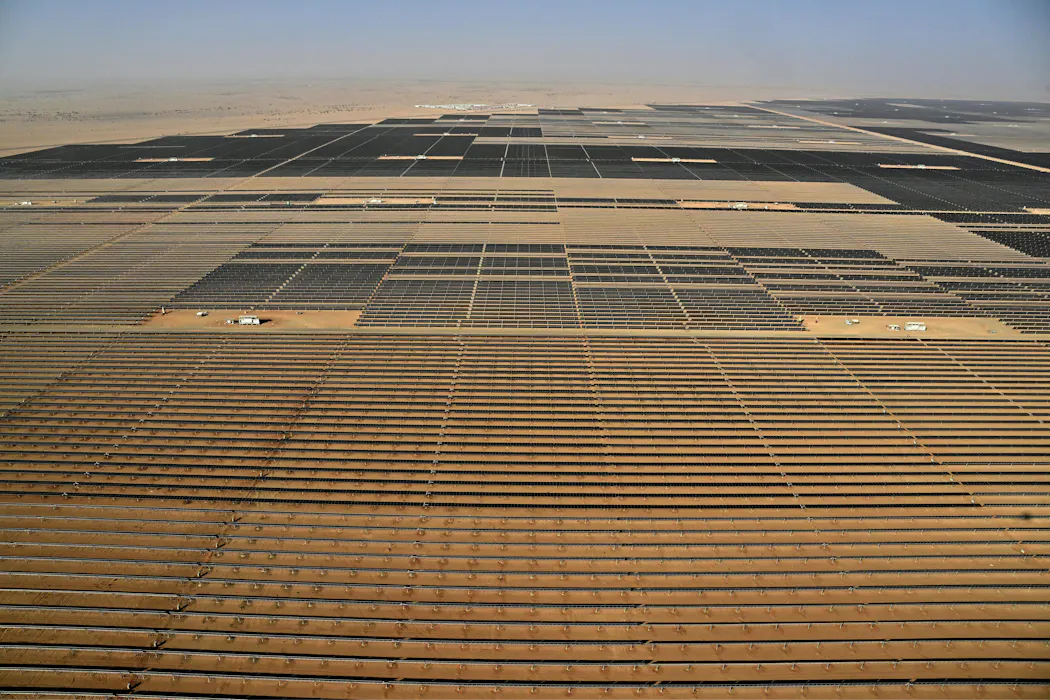
Saudi Arabia has built large solar power plants while continuing to invest heavily in fossil fuels. Giuseppe Cacace/AFP via Getty Images

The oil-dependent world is in crisis. Ship traffic in the Strait of Hormuz – through which more than a quarter of global seaborne oil trade and a fifth of the world’s liquefied natural gas flow – is at a virtual standstill. Oil prices have climbed, briefly topping US$119 a barrel.

The largest release of oil from countries’ strategic reserves in history is under way, in an effort to ease prices. But even so, billions of people are dealing with surging energy prices and spiking food and fertilizer costs. Governments are scrambling for alternatives, too. To reduce energy demand, Sri Lanka has declared every Wednesday a holiday for public officials, Myanmar is limiting private vehicle use to every other day, and Bangladeshi colleges have canceled classes.

Leaders of South Korea and the European Commission have used the current energy crisis to call for accelerating the shift away from fossil fuels and toward homegrown renewable sources. U.N. Secretary-General António Guterres put it plainly in a March 10, 2026, social media post: “There are no price spikes for sunlight and no embargoes on the wind.”

I grew up in a coal-mining town in Turkey. I now study energy transitions across the Middle East and North Africa in a research project I co-lead at Harvard University. I have seen that a country’s desire to increase renewable energy is not the same as a plan to do so.

The very region embroiled in this war reveals that there is not a linear shift from fossil fuels to renewable sources. Rather, there are distinct trajectories, driven by energy dependence, fiscal pressures, governance and stability. Disruption at the Strait of Hormuz does not mean the same thing in Riyadh, Saudi Arabia, as it does in Ankara, Turkey, or Baghdad, Iraq.

The petrostates hedging both sides

For Saudi Arabia, the United Arab Emirates and Qatar, this crisis is a warning dressed as a windfall.

Oil prices have surged, which in theory means higher revenues. But the very infrastructure that produces and delivers that wealth is under direct attack. Iran has targeted oil refineries and shipment centers across the Gulf. The Strait of Hormuz closure is simultaneously choking off their ability to get product to market, exposing how vulnerable the infrastructure of fossil fuel wealth can be.

All three countries have also committed to boosting renewable energy production. In Saudi Arabia, for example, the government aims for renewable energy sources to account for 50% of electricity generation by 2030, up from just 3% at the end of 2023.

Saudi Arabia’s biggest group of clean energy companies has pledged to spend $17 billion on solar and wind – across all their projects, spread out over several years.

But those efforts sit alongside vastly larger investments in fossil fuel production. In 2025 alone, the country’s nationally owned oil company, Saudi Aramco, spent $52.2 billion building new oil and gas infrastructure.

This is not a contradiction. It is a strategy built on the assumption that the world will keep buying fossil fuels for decades to come. The current crisis reinforces that assumption, but it also exposes its vulnerability: As war drives up oil prices, every oil-importing country is feeling the cost of continuing oil dependence. And every stranded export proves the energy transition can’t wait.

A large farm seen from the air, including a group of buildings with solar panels on their roofs.
Renewable energy helps drive this farm in Turkey.
Muhammed Enes Yildirim/Anadolu via Getty Images

Price shock and necessity

Energy-importing countries such as Jordan, Morocco and Turkey are investing in renewable energy for a different reason: Fossil fuel dependence is bankrupting them.

Turkey imports over 70% of its fossil fuels, including virtually all of its natural gas, 17% of which comes from Iran. Natural gas accounts for less than a fifth of electricity generation, but it is the backbone of the country’s heating and industrial sectors and a major concern if supply falters. Turkey’s energy import bill is climbing at a time when the economy is already under strain from rising borrowing costs and weakening currency value.

Jordan, which historically has imported over 90% of its energy, faces similar pressure.

But these countries would be in far worse positions had they not already been investing in alternatives.

More than half of Turkey’s installed electricity capacity now comes from renewable energy sources. Morocco built one of the world’s largest concentrated solar facilities, and renewable sources now supply 25% of the country’s electricity. Similarly, Jordan has gone from virtually no renewable electricity to renewable sources providing more than a quarter of its power in roughly a decade.

The current war has vindicated their investments in renewable energy – though the vindication has limits. The same crisis that proves the value of renewable energy investment also raises inflation, tightens credit and strains the very public finances these countries need to keep building.

Every kilowatt-hour generated by a Turkish wind turbine or a Moroccan solar panel is one that does not depend on a tanker passing through the Strait of Hormuz. But the financial pressure means building the next renewable generating project just got harder.

Crisis upon crisis

Then there are countries where this war lands on top of existing emergencies.

Iraq, the second-largest oil producer in the region and in the Organization of the Petroleum Exporting Countries, depends on Iranian gas imports to generate much of its electricity – a supply line now directly threatened by the war. Oil exports through the southern port of Basra, on the Persian Gulf, fund roughly 90% of Iraq’s government revenue. If those revenues are disrupted, the government may be unable to function. Iraq already suffers chronic electricity shortages and has virtually no renewable energy capacity to fall back on.

In Yemen, Libya and Syria, energy infrastructure has been damaged or destroyed by years of conflict. These countries import fuel at global prices to run generators and keep hospitals lit. Every dollar added to the price of oil makes that harder. For them, this war is not pointing out reasons to shift to renewable sources: It is threatening energy access itself.

A view down a dusty road, with wind turbines in the distance.
In war-torn Syria, renewable energy is a lifeline.
Ed Ram/Getty Images

An international challenge

In November 2026, the U.N.’s annual climate summit comes to the region at the center of this crisis, with Turkey as host.

The war in the Middle East has made a powerful case for the economic, political and humanitarian benefits of transitioning from fossil fuels to renewable energy sources. But it has also exposed something the global conversation consistently misses: Different countries are heading in different directions, based on their own circumstances, many of which predate this war.

Understanding those paths matters because it reveals what countries’ promises cannot: where the real barriers are, where the incentives already exist, and where support would make a difference – before the next disruption hits. In my view, this war has helped win the argument about whether to shift to renewable energy, but it has also highlighted a harder question: What does it actually take to build those sources, country by country?

The Conversation

Ezgi Canpolat received funding from The Salata Institute for Climate and Sustainability at Harvard University for the research referenced in this article. The findings, interpretations, and conclusions expressed herein are entirely those of the author and should not be attributed to any institution with which the author is or has been affiliated.

ref. War in the Middle East made the case for renewables – what’s happening in each country tells a harder story – https://theconversation.com/war-in-the-middle-east-made-the-case-for-renewables-whats-happening-in-each-country-tells-a-harder-story-278759

Birutė Galdikas: The last of the ‘angels’ in primatology’s most extraordinary chapter

Source: The Conversation – USA (2) – By Mireya Mayor, Director of Exploration and Science Communication, Florida International University

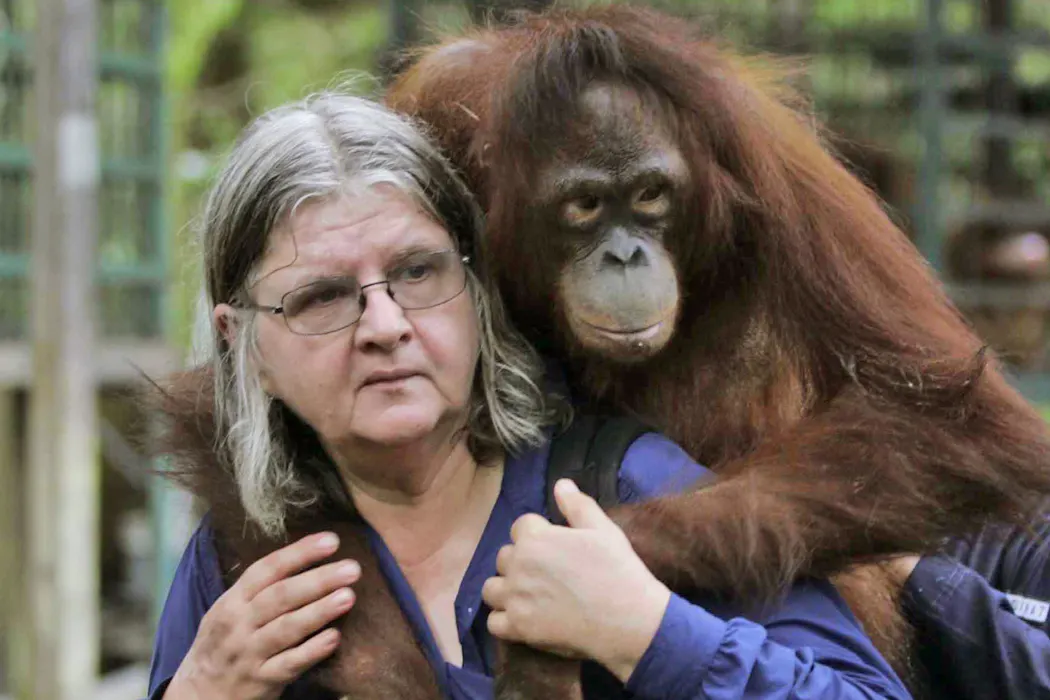
Birute Galdikas carries an orangutan named Isabel in Borneo, Indonesia. The 2011 film ‘Born To Be Wild 3D’ followed her work. AP Photo/Irwin Fedriansyah

Primatologist Birutė Galdikas died on March 24, 2026, and an era of science that began in the forests of Tanzania, Rwanda and Borneo studying humanity’s closest living relatives more than half a century ago is coming quietly to a close. Her passing marks more than the loss of a scientist – it’s the end of one of the most extraordinary chapters in modern science.

For more than half a century, primatology had three central figures: Jane Goodall, Dian Fossey and Galdikas — often called Leakey’s Angels, after their mentor — who transformed how we understand primates and, in many ways, how we understand ourselves.

A young woman sits with orangutans playing around her in the jungle.
Birutė Galdikas, shown in 1965.
Universal Archive/Universal Images Group via Getty Images

They were sent into the field by paleoanthropologist Louis Leakey, who believed that if we understood other primates, we might better understand human evolution and human nature. It was a radical idea at the time, not only scientifically but culturally. Leakey did not send large research teams or established professors. Instead, three young women went into forests, often alone, for years at a time.

What they discovered changed science and the public imagination.

Seeing chimpanzees and apes as individuals

Before the scientists’ work, primates were often described as creatures of instinct, their behavior explained largely through simple drives for food and reproduction. After their work, people began to talk about individuals with personalities, alliances, rivalries, friendships and grief.

Goodall, Fossey and Galdikas showed that chimpanzees make tools and wage political struggles, that gorillas live in complex family groups, and that orangutans raise their young with a patience and investment that rivals that of humans. The line between humans and other primates did not disappear, but it became harder to draw cleanly.

They also changed who could be a scientist.

Three women living for years in remote forests in the 1960s and ‘70s was not normal. By succeeding, they quietly expanded the boundaries of who could lead expeditions, run field sites, publish major research and become the public face of science. Many primatologists of my generation entered a field that these women forced open.

Birutė Galdikas talks about her career.

Each of these extraordinary women shaped my life in different ways. I never met Fossey, who died in Rwanda in 1985. But watching “Gorillas in the Mist,” a movie about her work, changed the course of my life and sent me toward primatology instead of law school. Years later, as a young primatologist studying lemurs, I met Goodall at a conference; she later wrote the foreword to my book and became a mentor and friend as I navigated my own path in conservation science. I met Galdikas, a scientist at Canada’s Simon Fraser University, professionally and immediately recognized a kindred spirit – another woman who had devoted her life to the study and protection of humans’ closest animal relatives.

With their deaths – Goodall died in 2025 – it falls to those of us who were inspired by them to continue and evolve their work at a time when it has never been more difficult or more important.

But the field today’s primatologists inherited is not the same one they began.

The next generation and primates’ struggle for survival

The first generation of field primatologists went into forests full of animals to discover how primates lived. They were explorers as much as scientists, and their work had the feel of discovery in the classic sense – new behaviors, new social structures, new understandings of intelligence and culture in animals.

Their research helped reshape anthropology, psychology and evolutionary biology. They helped answer one of the oldest questions humans ask about themselves: What makes us different from other species?

Birutė Galdikas talks about the documentary ‘Born to be Wild 3D’ and her work rescuing and returning orangutans to the wild.

By the time my generation began working in the field, many of those questions had already been answered. We knew primates used tools, formed political alliances, reconciled after fights and mourned their dead. We knew they had personalities and social strategies.

The question was no longer whether primates were like us, but whether they would survive us.

This is the quiet shift that defines modern primatology. My generation now goes into forests that are smaller, more fragmented and quieter, and the work is increasingly focused on making sure those animals are still there at all.

I have spent much of my career studying lemurs in Madagascar, where this shift is impossible to ignore. Lemurs are among the most endangered group of mammals on Earth, with more than 90% of species threatened with extinction. In many parts of Madagascar, forests now exist only as isolated fragments surrounded by agriculture and human settlement. Some lemur populations survive in forest patches so small that a single fire or logging operation could eliminate them entirely.

Conservation begins with caring

These primates that captured the world’s attention are also the species most like us. They have long childhoods, complex societies, intelligence, and emotional lives that feel familiar to us. Their similarity is what made people care. And that caring, in many cases, is what has kept them from disappearing entirely.

The great achievement of Leakey’s Angels was not only what they discovered, but that they made the world care about primates.

Before the three scientists’ work, chimpanzees, gorillas and orangutans were largely abstract animals to most people – zoo exhibits, textbook illustrations, evolutionary symbols. After their work, these creatures became individuals with names, families, histories and personalities. Each of the women’s work was celebrated in films and books, including the Morgan Freeman-narrated documentary “Born to Be Wild 3D” that followed Galdikas’ orangutan rescues.

Conservation begins with caring, and caring begins with stories. They gave the world those stories.

But caring is no longer enough. We are now in an era where the most important breakthroughs in primatology may not be new discoveries about behavior, but new ways to protect habitats, connect fragmented forests, preserve genetic diversity and help humans and primates survive on the same increasingly crowded landscapes.

The work has shifted from observation to intervention, from discovery to responsibility.

Every generation of scientists inherits a different world. The generation of Jane Goodall, Dian Fossey and Birutė Galdikas inherited a world full of primates we did not yet understand. My generation has inherited a world where we understand primates very well, but are in danger of losing them anyway.

The forests are quieter now than when these three young women went into them more than half a century ago. The responsibility, however, has only grown louder.

The central question of primatology is no longer what makes us human. It is whether a species intelligent enough to understand extinction will choose to prevent it in our closest living relatives.

The Conversation

Mireya Mayor does not work for, consult, own shares in or receive funding from any company or organization that would benefit from this article, and has disclosed no relevant affiliations beyond their academic appointment.

ref. Birutė Galdikas: The last of the ‘angels’ in primatology’s most extraordinary chapter – https://theconversation.com/birute-galdikas-the-last-of-the-angels-in-primatologys-most-extraordinary-chapter-279398

Cameras have quietly appeared in thousands of US cities – now, their integration with AI is sounding alarms

Source: The Conversation – USA (2) – By Jess Reia, Assistant Professor of Data Science, University of Virginia

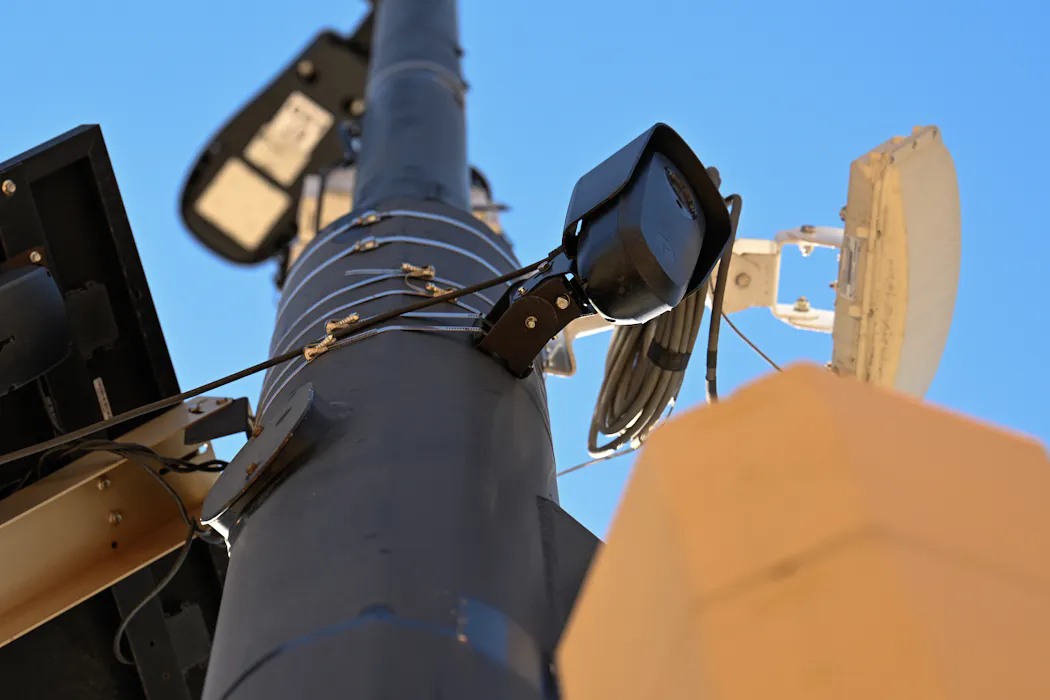
A small, black license plate recognition camera is mounted on a light pole in Boulder, Colo. Matthew Jonas/MediaNews Group/Boulder Daily Camera via Getty Images

For decades, cars dictated urban planning in the United States.

Few could have predicted that they would one day also double as nodes for surveillance.

In thousands of towns and cities across the U.S., automatic license plate readers have been installed at major intersections, bridges and highway off-ramps.

These camera-based systems capture the license plate data of passing vehicles, along with images of the vehicle and time stamps. More recently, these systems are using artificial intelligence to create a vast, searchable database that can be integrated with other law enforcement data repositories.

As a scholar of technology policy and data governance, I see the expansion of automatic license plate readers as a source of deep concern. It’s happening as government authorities are seeking ways to target immigrant and transgender communities, are already using AI to monitor protests, and are considering deploying AI systems for mass surveillance.

Eyes on the road

Using cameras to track license plates dates to the 1970s, when the U.K. was embroiled in a long-simmering conflict with the Irish Republican Army.

The Met, London’s police force, developed a system that used closed-circuit television cameras to monitor and record the license plates of vehicles entering and exiting major roads.

The system and its successors were seen as useful crime fighting tools. Over the next two decades, they expanded to other cities in the U.K. and around the world. In 1998, U.S. Customs and Border Protection implemented this technology. By the 21st century, it had started appearing in cities across the U.S.

There are different ways for a jurisdiction to implement these systems, but local governments usually sign contracts with private companies that provide the hardware and service.

These companies often entice authorities with free trials of surveillance equipment and promises of free access to their data in ways that bypass local oversight laws.

AI thrown into the mix

Recently, AI has been incorporated into these camera systems, significantly increasing their reach.

The vehicle information that’s captured is typically stored in the cloud, creating a massive web of data repositories. If a camera collects information from a suspect’s car or truck – say, one also listed in the National Crime Information Center – AI can flag it and send an instant alert to local law enforcement.

In fact, that’s a selling point of Flock Safety, one of the biggest providers of automatic license plate readers. The company uses infrared cameras to capture images of vehicles. AI then analyzes the data to identify subjects and quickly alert local authorities.

On the surface, automatic license plate readers seem like a logical way to fight crime. More information about the whereabouts of suspects can potentially help law enforcement. And why worry about cameras if you’re following the law?

But there are few peer-reviewed studies on their effectiveness. Those that exist find little evidence that they’ve led to reductions in violent crime rates, though they seem to be helpful in solving some crimes, like car thefts.

Furthermore, installation and maintenance are costly.

For example, Johnson City, Tennessee, signed a 10-year, US$8 million contract with Flock in 2025. Richmond, Virginia, paid over $1 million to the company between October 2024 and November 2025 and recently extended its contract, despite opposition from some residents.

The Conversation reached out to Flock for comment and did not hear back.

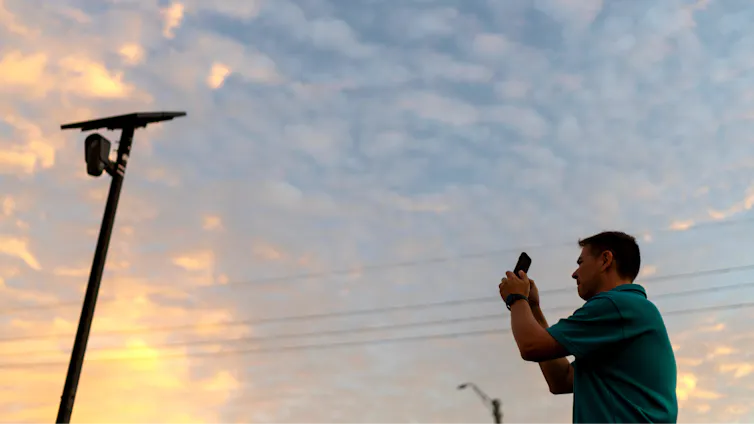
Young man wearing a polo shirt uses his smartphone to take a photograph of a camera affixed to a poll at dusk.
A Houston resident photographs a Flock license plate reader in his neighborhood in October 2025.
AP Photo/David Goldman

Erosion of civil liberties in plain sight

The technology seems to highlight the pitfalls of what scholars call “technosolutionism,” the belief that complex issues like crime, poverty and climate change can be solved by technology.

Even more disquieting, to me, is the fact that these camera systems have created a mass location tracking infrastructure knitted together by artificial intelligence.

The U.S. doesn’t have a federal law like the European Union’s General Data Protection Regulation that meaningfully limits the collection, retention, sale or sharing of location and mobility data.

As a result, data gathered through surveillance infrastructure in the U.S. can circulate with limited transparency or accountability.

License plate readers can easily be accessed or repurposed beyond their original goals of managing traffic, meting out fines or catching fugitives. All it takes is a shift in enforcement priorities – or a new definition of what counts as a crime – for the original purpose of these cameras to recede from view.

Civil liberties groups and digital rights organizations have been sounding the alarm about these cameras for over a decade.

In 2013, the American Civil Liberties Union published a report titled “You are Being Tracked: How License Plate Readers Are Being Used To Record Americans’ Movements.” And the Electronic Frontier Foundation has decried them as “street-level surveillance.”

A counter-camera movement emerges

The promise of these cameras was simple: more data, less crime.

But what followed has been murkier: more data, and a significant expansion of power over the public.

Without robust legal safeguards, this data can possibly be used to target political opposition, facilitate discriminatory policing or chill constitutionally protected activities.

This has already happened during the current administration’s aggressive deportation efforts. Automatic license plate reader databases were shared with federal immigration agencies to monitor immigrant communities. Recently, Customs and Border Protection was granted access to over 80,000 Flock cameras, which have also been used to surveil protests.

Then there’s reproductive health care. After the Supreme Court overturned Roe v. Wade in 2022, there were fears that people traveling across state lines to get an abortion could potentially be identified through automatic license plate reader databases. In Texas, authorities accessed Flock’s surveillance data as part of an abortion investigation in 2025.

Flock told NPR in February 2026 that cities control how this information is shared: “Each Flock customer has sole authority over if, when, and with whom information is shared.” The company noted that it has made efforts to “strengthen sharing controls, oversight and audit capabilities within the system.” But NPR also reported that many city officials around the U.S. didn’t realize how widely the data was being shared.

In response, some states have sought to regulate the technology.

Washington state lawmakers are deliberating the Driver Privacy Act. The legislation would prohibit agencies from using the surveillance technology for immigration investigations and enforcement, and from collecting data around certain health care facilities. Protests would also be shielded from surveillance.

Meanwhile, grassroots initiatives such as DeFlock have also emerged.

DeFlock’s online platform documents the spread of automatic license plate reader networks in order to help communities resist their deployment. The movement frames these systems not merely as traffic technologies, but also as linchpins of an expanding government data dragnet – one that demands stronger democratic oversight and community consent.

The Conversation

Jess Reia receives funding from the Carnegie Corporation of New York. They are affiliated with the UVA Digital Technology for Democracy Lab.

ref. Cameras have quietly appeared in thousands of US cities – now, their integration with AI is sounding alarms – https://theconversation.com/cameras-have-quietly-appeared-in-thousands-of-us-cities-now-their-integration-with-ai-is-sounding-alarms-276928

Why do some people treat the Magic Kingdom and Disney adults like cultural abominations?

Source: The Conversation – USA (2) – By Adam Kadlac, Teaching Professor of Philosophy, Wake Forest University

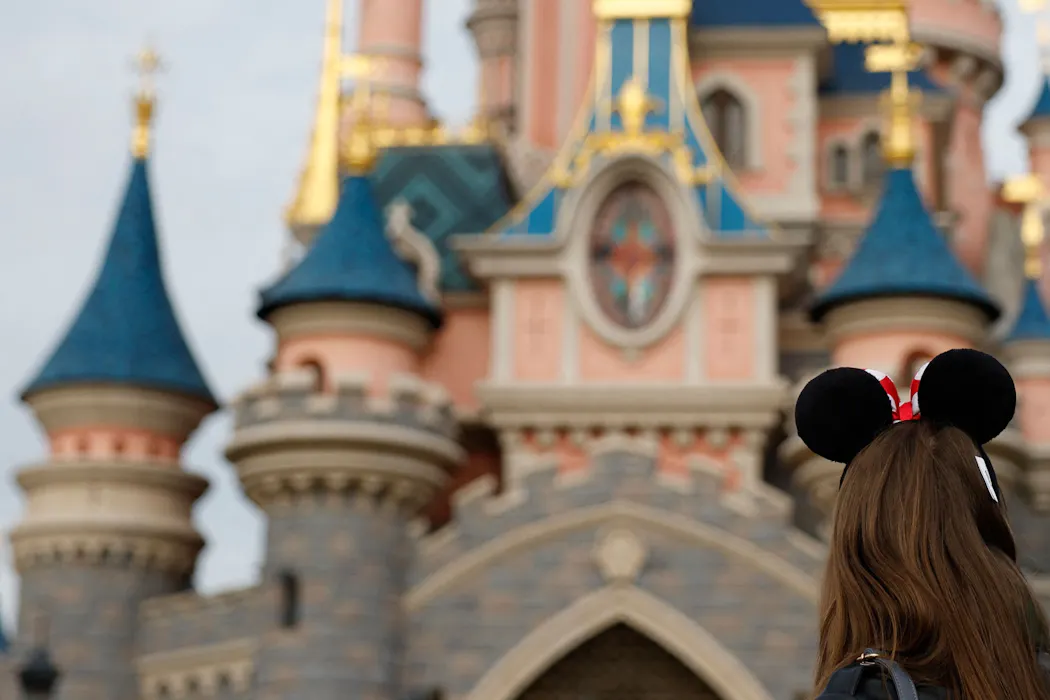
People railing against the phoniness of Disney World may be putting on a show of their own. Ian Langsdon/AFP via Getty Images

If you’ve ever expressed even a passing desire to visit Walt Disney World, you may have had friends who raised their eyebrows, groaned or even sneered.

The heart of their criticism isn’t just that they think Disney is for kids, or that it’s so expensive. It’s what I call the “authenticity objection” – the belief that there’s something fundamentally inferior about visits to theme parks like the Magic Kingdom because they occur in a wholly manufactured environment. The artificial mountains and rivers, the rides that provide nothing more than mindless distraction, the people dressed up as fictional characters …

It’s all so fake.

While people sometimes express this view in jest, others believe the fake environment borders on a cultural abomination. One online forum explicitly cites the manufactured nature of Disney World as a reason not to go, noting that the “smiling staff, the piped-in music, the perfect landscaping” can feel “creepy and overly controlled.”

Journalist EJ Dickson, herself a Disney fan, admits that visitors to Disney parks “willingly spend thousands of dollars on an authentic emotional experience that they know, at least on some level, isn’t really authentic at all.” And a representative Trip Advisor review dismisses Disney World as “a hot, commercialized, fake experience.”

If you’re anti-consumption and dislike warm weather, those criticisms of Disney World are fair enough: The weather in Florida is warm, and Disney is certainly trying to make money.

But as a philosopher who recently published a book, “The Magic Kingdom and the Meaning of Life,” I find criticisms of the parks as fake a bit more difficult to understand.

Disney isn’t shy about what it is

Marketing professors George Newman and Rosanna Smith note that philosophers have tended to think about authenticity through the lens of whether “entities are what they are purported to be.”

Apply that standard to Disney World: Does it represent itself as something other than a Disney-themed amusement park?

A group of men gathering around a model of a castle and chatting with one another.
Walt Disney, far left, discusses plans for Disneyland with a few of his company’s engineers – known as ‘imagineers.’
Earl Theisen/Getty Images

There are legitimate reasons to complain about the authenticity of some experiences. If you buy a ticket to a Van Gogh exhibition, you could rightfully complain if you discovered that only reproductions had been on display. The fact that you hadn’t been able to tell the difference while viewing the paintings wouldn’t matter – you hadn’t received the authentic experience of seeing Van Gogh’s original works.

By contrast, Disney attractions don’t pretend to be anything other than what they are.

When people at Disney’s Hollywood Studios ride Mickey and Minnie’s Runaway Railway, they know they are not actually on a runaway train being incompetently driven by a talking dog named Goofy. If Disney had marketed the attraction as something else – say, an Amtrak trip for kids – perhaps there would be grounds for complaining about its fakeness.

That clearly isn’t the expectation of anyone who waits in line for the experience. Riding the Runaway Railway might not be how you prefer to spend time, but there’s nothing fake about what it purports to be.

Who are you to judge?

If the initial form of the authenticity objection is relatively easy to handle, another concern lurks in the vicinity: the idea that Disney fans are somehow fake, due to their willingness to turn themselves over to the trappings of an artificial world.

The precise nature of this concern is a bit difficult to characterize. But it involves the belief that people who spend a lot of time in manufactured environments tend to delude themselves in ways that evade understanding and engaging with their true selves. Terms like “existential authenticity” or “self-authenticity” seem to capture what’s at stake.

Media scholar Idil Galip has pointed to the fact that the parks are highly “engineered and focus-grouped; there’s a whole lot of work that goes into selling this sort of experience.” This can, at a certain point, signal “a break from regular society or real life.”

This supposed connection between the fake world of Disney and the corruption of one’s authentic self is on full display in descriptions of so-called Disney Adults.

Dickson characterizes this view in her Rolling Stone article about Disney Adults: “Being a Disney fan in adulthood is to profess to being nothing less than an uncritical bubblehead ensconced in one’s own privilege, suspended in a state of permanent adolescence … refusing to acknowledge the grim reality that dreams really don’t come true.”

A large number of Disney cosplayers – dressed in outfits ranging from Buzz Lightyear to Captain Hook – pose for a group photo.
The internet loves to mock grown fans of Disney as unserious and inauthentic.
Daniel Knighton/FilmMagic via Getty Images

But I would strongly push back on the idea that a love of Disney World renders people fake or inauthentic in any meaningful way.

As journalist and blogger A.J. Wolfe argues in her 2025 book, “Disney Adults,” even the most passionate Disney devotees resist simple categorization. None of them, she explains, seem to be running from their true selves or even trying, in the slightest, to live in an imaginary world.

For example, Wolfe profiles Lady Chappelle, a British tattoo artist who relocated to San Diego, where she exclusively inks Disney-themed tattoos. Then there’s Brandon, a Hollywood drag queen who designed a Carousel of Progress-themed kitchen in honor of the attraction that now resides at Disney’s Magic Kingdom in Orlando, Florida.

These people are representative of pretty much all Disney Adults: They’re passionate about Disney, but they’re also passionate about tattooing and drag and myriad other pursuits.

For Disney Adults, Wolfe writes, an affection for Disney mostly adds “extra color and brightness – maybe definition, motivation, or inspiration if you’re lucky – to the complex and evolving masterpiece that is [their] life.”

And if that complexity applies to the most committed Disney fans, it’s that much harder to cast casual visitors in such a negative light.

The virtues of the Magic Kingdom

If theme parks aren’t your thing, that’s perfectly fine. You can have a wonderful life without setting foot in Epcot or the Animal Kingdom.

But as I point out in “The Magic Kingdom and the Meaning of Life,” Disney World has a number of virtues that its critics often miss.

I think it’s as good a place as any for people of all ages, backgrounds and abilities to come together and create valuable memories. When I ride Tiana’s Bayou Adventure with my wife and our intellectually disabled daughter, there is a little something for everyone: just enough thrill and storytelling for the adults, while not being overwhelming for my daughter. It’s a combination that can be difficult to find in many other places.

Moreover, because we are transported out of our daily routines, the parks can also present surprising opportunities for reflection. For example, I’ve thought a lot about cultural expectations around happiness while at Disney. Should I try to maximize my pleasure during this short trip? Or simply take each day as it comes? I’ve learned to embrace the latter.

I’ve also come to appreciate the value of anticipatory pleasure, which is the positive feeling you get from looking forward to something before it happens. This happened while reflecting on all the time people spend standing in line at theme parks.

Yes, there are many people who simply want to use the worlds of Disney – theme park, films or otherwise – to escape the grind of everyday life. But is seeking such an escape a greater threat to authenticity than checking out by playing video games, watching sports, reading smutty novels or using drugs and alcohol?

Is it possible for people to lose themselves in fantasy? Of course – just as it’s possible for anyone to lose themselves in their careers, relationships or hobbies. But in an age of curated social media accounts, influencer marketing and political doublespeak, the manufactured worlds of Disney might offer more authenticity than you would think.

The Conversation

Adam Kadlac does not work for, consult, own shares in or receive funding from any company or organization that would benefit from this article, and has disclosed no relevant affiliations beyond their academic appointment.

ref. Why do some people treat the Magic Kingdom and Disney adults like cultural abominations? – https://theconversation.com/why-do-some-people-treat-the-magic-kingdom-and-disney-adults-like-cultural-abominations-273191

American politicians talk about persecuted Christians abroad – but here’s what happens when those Christians migrate to the US

Source: The Conversation – USA (3) – By Candace Lukasik, Assistant Professor of Religion, Mississippi State University

Coptic Easter liturgy, East Brunswick, N.J., April 2017. Candace Lukasik, CC BY-SA

Two months ago, Terez Metry arrived at a Department of Homeland Security office in Nashville with her husband, a U.S. citizen, expecting a routine step in beginning her green card application. The couple had prepared documents for a Form I-130 petition and anticipated an interview about their marriage.

But the appointment took a different turn. Instead of leaving together, immigration officers detained Metry and transferred her to an immigration detention facility in Alabama.

Metry’s family had fled Egypt during the Arab Spring – the 2011 wave of uprisings across the Middle East and North Africa – and came to the United States when she was a teenager. Their asylum claim was denied, and Metry was unaware that a removal order had been issued when she was 13. She is now 28.

Metry is a Coptic Christian. Copts belong to one of the oldest Christian communities in the world and make up about 10% of Egypt’s population.

A majority of Coptic Christians live in Egypt. They face discrimination and periodic violence; they are often described in political, religious, and advocacy discourse as a persecuted minority. This framing has generated concern among many American Christians and spurred political mobilization on their behalf.

Yet, as Metry’s case reveals, such concern does not translate into preferential treatment: When these Christians arrive in the U.S., they are subject to the same immigration system that detains and deports other migrants.

I am an anthropologist of religion who has spent more than a decade studying Coptic Orthodox Christian migration between Egypt and the U.S. Between 2016 and 2022, I conducted fieldwork and interviews with Coptic migrants for my book, “Martyrs and Migrants.” I spoke with diversity visa applicants in rural Upper Egypt, asylum-seekers in New York courtrooms, and working-class communities in Nashville, Tennessee.

Across these sites, my research shows how two realities – the narrative of Christian persecution abroad and the suspicion surrounding migrants in the U.S. – collide in the lives of Copts themselves.

The global politics of persecution

Over the past two decades, attacks on churches and episodes of sectarian violence in Egypt have drawn international attention. These concerns intensified after the Arab Spring uprisings and escalated with the rise of militant organizations such as the Islamic State group.

In 2015, Islamic State group militants executed 21 Christian migrant workers – 20 Egyptian Copts and one Ghanaian man – on a beach in Libya. Images of their deaths quickly became potent symbols of Christian suffering across global media and church networks.

While Coptic Christians have long faced discrimination and intermittent violence in Egypt, attacks during this period intensified in both scale and public visibility.

People standing in the pews of a large cathedral with several coffins laid out in the front.
A funeral service in Cairo, Egypt, on Dec. 12, 2016, for victims of a bombing.
AP Photo/Nariman El-Mofty

In 2017 alone, the Islamic State group claimed responsibility for two bombings of churches in Egypt on Palm Sunday as well as the mass shooting of pilgrims traveling to a monastery in southern Egypt. Accounts of the victims circulated widely online and received international news coverage.

In the U.S., evangelical leaders, advocacy organizations and some politicians often talk about the “persecuted church” – a framework that became especially influential in American religious freedom activism from the 1990s onward. Churches, nonprofits and policy advocates highlighted violence against Christians abroad through media campaigns, prayer initiatives and political lobbying, presenting it as a global crisis requiring American attention.

At a 2017 summit in Washington, D.C., for example, evangelical leader Franklin Graham described violence against Christians in the Middle East and Africa as a “Christian genocide,” urging believers to recognize the scale of the threat and respond collectively.

In my research attending international religious freedom conferences in Washington D.C., I found that stories like these helped many American Christians feel a strong sense of connection to Christians in the Middle East, whose suffering was often understood as part of a broader global struggle facing Christianity.

Yet this powerful narrative sits uneasily alongside how Middle Eastern Christians are treated in the U.S., where they may encounter not protection but the everyday suspicions faced by migrants from the region.

When Coptic Christian migrate

In Egypt, Copts live as a religious minority in a Muslim-majority society, where they have long faced restrictions on building and repairing churches – often requiring state permits that are difficult to obtain. Additionally, they are underrepresented in state institutions such as the military, judiciary and senior government positions; they also face periodic episodes of sectarian violence.

Moving to the U.S., a country where Christianity is the majority religion, might seem like a natural refuge.

But migration often reveals a different reality.

In 2019, for example, Romany Erian Melek Hetta, a Coptic Christian asylum-seeker, visited the Museum of the Bible in Washington, D.C. According to media reports, while waiting for a friend outside the museum, security officers questioned him about his identity and later reported him to the FBI as a possible security threat. This triggered a counterterrorism investigation.

Cases like this echo patterns I encountered in my ethnographic research among Coptic migrants in the New York–New Jersey area, who frequently described being perceived as suspicious or potentially threatening in everyday encounters. Some altered their dress, names or public presentation to avoid being mistaken for Muslim or Arab. As one priest in my fieldwork recalled of the period after 9/11, “We had the wrong complexion … You felt like you were a target and it wasn’t your fault.”

In everyday life in the U.S., Coptic migrants like Hetta are often seen simply as people from the Middle East. As scholars of post-9/11 racialization have shown, people taken to be Arab or Middle Eastern were widely cast as potential security threats, regardless of their religious identity.

For example, Magdy Beshara was the Coptic owner of the St. George’s Shell gas station in Bayville, New Jersey. Shortly after 9/11, the FBI came to the family’s home in the middle of the night, asking Beshara whether Marwan al-Shehhi, one of the 9/11 hijackers, had worked at the gas station.

For my book I interviewed Beshara’s stepson, who described the aftermath of the initial FBI raid: “People would drive by and say ‘We’re going to kill you terrorists’ and throw a big liquor bottle at me and my sister.”

Under the USA Patriot Act – a law passed after 9/11 that expanded the federal government’s surveillance and search powers – agents confiscated items from the family’s gas station and home. According to Beshara’s stepson, their mail was opened, their phones were tapped and they were followed to school by federal agents. The family also reported receiving death threats and said that when they asked local police to intervene, their requests were not acted upon.

Beshara’s stepson told me the experience forced him to draw a distinction. “It made me feel weird to say out loud, but I always thought to myself, ‘I’m not a Muslim, I’m a Christian.’ I felt like I was putting them down to say, ‘Hey, look, I’m the good guy.’ I felt like we had to do anything to defend ourselves.”

At school, he was bullied and physically assaulted on dozens of occasions. At one point in the months following the raid, an unknown assailant set the family’s house on fire while he and his little sister were sleeping. All of this took place even after the FBI notified Beshara that he was no longer a subject of investigation, since al-Shehhi, in fact, did not work at the gas station.

Even though Beshara was a Christian, that did not shield him from suspicion or discrimination. Government surveillance tied to counterterrorism and prejudice from neighbors continued to shape how he was seen.

A grey-haired man in a grey suit and red tie walks beside another in a priestly robe and long flowing beard, with an entourage behind them.
Former U.S. President Jimmy Carter with Pope Shenuda III, patriarch of the Coptic Orthodox Church, on March 21, 1987, in Cairo, Egypt.
AP Photo/Paola Crociani

Between persecution and suspicion

These dynamics become especially visible in moments of enforcement, where the gap between political rhetoric and immigration policy comes into sharp relief.

In 2017, federal immigration raids detained Iraqi nationals across the U.S., many of them Chaldean Christians – an Eastern Catholic community from Iraq with ancient roots in Mesopotamia.

These arrests prompted a class action lawsuit on behalf of those detained in the Detroit area, which was later expanded to include roughly 1,400 Iraqi nationals nationwide with final deportation orders.

Such cases unfold even as American Christians continue to say Middle Eastern Christians are uniquely deserving of protection – a disconnect between advocacy for “persecuted Christians” abroad and the realities of immigration enforcement at home.

In my own work as an expert witness for Coptic asylum-seekers, I have observed similar patterns across a detention system stretching from New Jersey to Louisiana. Some migrants are released while their cases proceed; others remain in prolonged legal limbo.

What I have found is that in practice, the line between “persecuted Christian” and “suspect migrant” is not just blurred – it is continually being redrawn by the state and reproduced in everyday encounters.

The Conversation

Candace Lukasik received funding from the Social Science Research Council, the American Academy of Religion, the Louisville Institute, and the Orthodox Christian Studies Center at Fordham University.

ref. American politicians talk about persecuted Christians abroad – but here’s what happens when those Christians migrate to the US – https://theconversation.com/american-politicians-talk-about-persecuted-christians-abroad-but-heres-what-happens-when-those-christians-migrate-to-the-us-276186

Is it safe to eat cold leftovers?

Source: The Conversation – UK – By Primrose Freestone, Senior Lecturer in Clinical Microbiology, University of Leicester

Cold pizza, a favourite for many, could be risky if it hasn’t been stored properly. Monkey Business Images/ Shutterstock

There are few things better than a cold slice of pizza for breakfast. But as delicious as scarfing down cold pizza is, there’s also a risk of food poisoning if you aren’t careful.

Food poisoning is caused by eating food that has become contaminated with pathogenic bacteria, fungi or viruses. Although most people know that food poisoning can be caused by poorly cooked foods or risky food preparation habits, improperly stored leftovers are also a key cause. It’s therefore extremely important you take care when storing leftovers to avoid harming your health.

Here’s my advice as a microbiologist for staying safe when eating your favourite cold leftovers.

Leftover pizza

You can get food poisoning from cooked pizza in a number of ways. Whether that’s because some of the ingredients are raw, undercooked or spoiled, or if the pizza has touched a surface with germs on it (including being handled by someone who hasn’t washed their hands).

Surprisingly, the dried herbs and spices that people often sprinkle on their pizzas (such as basil, pepper and oregano) can also be susceptible to microbial contamination. This contamination can occur during the harvesting and production phases, or due to improper storage by consumers. Some of the foodborne pathogens that can potentially survive on dried herbs include bacteria that can cause food poisoning, including Salmonella, Bacillus cereus and Clostridium perfringens.

Even if these dried herbs have been sterilised by the heat of a freshly baked pizza, if left at room temperature for too long after cooking these or any of the other pizza toppings, can provide the perfect snack for potentially harmful germs.

So if you’re a cold pizza lover, the best way to reduce your risk of food poisoning is to ensure any leftovers are refrigerated within two hours of being delivered or cooked. This should mean the pizza is safe to have cold for breakfast.

Once in the fridge, the leftover pizza needs to be stored covered (to avoid contamination from airborne germs) and eaten within two days. Note that putting leftover food in the fridge only slows bacterial growth, which is why leftovers should be eaten within two days maximum.

If the pizza is left at room temperature for more than a few hours, germs will grow quickly. This can make the pizza unsafe to eat the next day – no matter how tasty it might still look or smell.

Leftover chicken

Cooked chicken is highly perishable once cooled. Its high water and nutrient content and low acidity favours the growth of food poisoning bacteria, especially if it isn’t stored correctly after cooking.

It’s also important you only save chicken for leftovers if it has been cooked properly. If there’s any trace of blood in the cooked chicken’s juices, do not eat it – and certainly don’t save it for later.

This is because raw chicken may be contaminated with the food poisoning germs Campylobacter, Salmonella or Clostridium perfringens, so thoroughly cooking your chicken is essential.

If even a tiny amount of the chicken under-cooked, food poisoning germs still present within the tissues can start growing even when the meat is stored in the fridge. These germs may not be detectable by smell or sight.

A person places a plastic tupperware container full of leftovers in the fridge next to three other containers of leftovers.
Leftovers should be covered and placed in the fridge within a couple of hours of cooking.
TatianaKim/ Shutterstock

To stay safe, once you’ve removed your cooked chicken from the oven or rotisserie packaging, any that you aren’t planning to immediately eat should be covered and refrigerated as soon as possible after cooling. Ideally, it should spend no more than two hours at room temperature.

Cooked chicken can be stored for up to three days in the fridge. But again, if you notice blood in any part of the chicken, you absolutely should not eat it – whether cold or reheated – as this indicates it has been under-cooked and may be contaminated with germs.

Leftover rice dishes

Leftover rice dishes of any kind – whether that’s fried rice, burritos or risotto – have a major food poisoning risk. This is because uncooked rice can contain spores of Bacillus cereus, a common food poisoning bacteria that prefers starchy foods.

Although Bacillus cells are killed by the heat of cooking, their spores are heat resistant and can survive. If a cooked rice dish is then left at room temperature for more than two hours, the Bacillus spores have time to develop into bacteria and multiply. These spores are also able to release toxins into the cooked rice, which can potentially cause severe vomiting and diarrhoea lasting up to 24 hours.

If cooked rice needs to be saved, it should be covered once cooked, cooled quickly, then refrigerated for no more than 24 hours.

Cooked rice can be eaten cold, but only if has been cooled quickly after cooking and stored as quickly as possible in the fridge. It’s also best to consume cold cooked rice within 24 hours as B cereus spores can germinate during longer storage periods.

Left over canned foods

To safely store canned leftovers, it’s essential they’re covered and refrigerated to avoid contamination from airborne germs.

It’s considered safe to store the food in the original can as this has been sterilised in processing. But for flavour reasons, you might want to transfer it to a covered plastic or glass container.

Highly acidic foods, such as canned tomatoes, can be stored refrigerated for five to seven days. Low acidity canned foods, such as meat, fish, fruit, vegetables and pasta, can only be stored for up to three days. Acidic foods last longer because the acid inhibits the growth of food poisoning bacteria.

Leftovers can be safe to eat cold. Just make sure you refrigerate them as quickly as possible after cooking and consume within a day or two.

The Conversation

Primrose Freestone does not work for, consult, own shares in or receive funding from any company or organisation that would benefit from this article, and has disclosed no relevant affiliations beyond their academic appointment.

ref. Is it safe to eat cold leftovers? – https://theconversation.com/is-it-safe-to-eat-cold-leftovers-278012