Our modern vision evolved from an ancient one-eyed worm creature

Source: The Conversation – UK – By George Kafetzis, Research Fellow in Neuroscience, University of Sussex

LuckyStep/Shutterstock

It’s easy to take our eyes for granted. But our recent research shows they took an incredible evolutionary journey to reach their current familiar form.

It has long been known that our (vertebrate) eyes differ fundamentally from the ones of our distant relatives (invertebrates), because of their cell composition and how they develop before birth. However, answers to why or how these differences first emerged long remained elusive.

Our study suggests that our eyes descend from a worm-like ancestor that was roaming the oceans 600 million years ago. The same also applies to all bilateral animals, meaning animals whose bodies can be divided into roughly mirror-image left and right halves.

As part of our study, we surveyed 36 major groups of living animals (covering nearly all bilateral animals) to see where their eyes and light-sensing cells are located and what they do.

A pattern emerged. We discovered that eyes and light-sensing cells are consistently found at two separate locations: paired on both sides of the face, and at the midline of the head, on top of the brain. Across the animals we looked at, cells in the paired position are used to steer movements, while their midline counterparts tell day from night and up from down.

We concluded that an ancient worm-like ancestor of all vertebrate animals lost the “steering” pair of eyes when it adopted a mostly stationary lifestyle 600 million years ago, burrowing into the seabed. In becoming a filter feeder with no need to move around, the energetically expensive type of paired eyes was rendered useless and costly.

However, this lifestyle change left the light-sensing cells in the middle of its head unscathed, because the animal still needed to sense the time of day and distinguish between up and down. Although the paired eyes were gone, the light-sensing cells in the midline developed into a small midline eye.

Close up of woman's face
Our eyes have a surprising history.
PeopleImages/Shutterstock

Possibly within a few million years, this animal changed lifestyle again. A return to swimming reintroduced the need to control steering and measure its own body motion for efficient filter-feeding (sifting food out of water) and avoiding predators.

This pushed evolution to develop the midline eye by forming small eye cups on each side. These eye cups later separated from the midline eye, moved out to the sides of the head and formed new paired eyes: our eyes.

The loss and regain of vision happened between 600 and 540 million years ago. Components of the midline eye remained and became the pineal organ in the brain, which produces and releases the sleep hormone melatonin.

In many vertebrates, the pineal organ receives light through a transparent (unpigmented) region in the middle of the head. However, in the mammalian lineage the pineal organ lost its light-sensing capacity – possibly because early mammals were active at night and hid during daytime. So the eyes, which were more sensitive, took over the light detection which drives melatonin release and sleep.

Eyes of all shapes and sizes

Those animals that did not lose the worm-like ancestor’s original paired light-sensing cells comprise most invertebrates around today, since they descended from a branch of the evolutionary tree that never adopted a static lifestyle. Such animals include crustaceans, insects, spiders, octopus, snails and many groups of worms. These animals still have modern versions of the original sets of light-sensing cells.

The paired eyes of insects and crustaceans are compound eyes, with an array of tiny and densely packed lenses per eye. Instead of compound eyes, octopus and snails have camera-type eyes with a single lens.

In fact, octopus and snails independently evolved the same eye design and visual performance as us vertebrates. However, our retina – the light sensitive layer at the back of our eyes – has over 100 types of neurons (mice have even more – 140), compared to a mere handful in octopus and snails. This makes it almost as complex as our cerebral cortex – the outer and largest part of our brain.

Scientists have thought that in the evolution of our eyes, this complexity emerged fairly late. Similarities between light-sensing cells in the brain and paired eyes informed earlier hypotheses about a simple, pineal organ-like eye early in its evolution. In our work, however, we argue that a lot of this complexity predates the retina.

As such, it is likely to have been present already in the “cyclops” ancestor eye. This has broad implications for the origin and wiring of neural circuits in our retina and brain alike.

For us vertebrates, the evolution of our eyes and brain is intimately linked. The emergence of new paired eyes is a fundamental part of this picture, since the eyes allowed for the complex behavior that call for cognition and large brains. Without the eyes, we would not just be humans without eyes; we would not exist at all, nor would any of the other vertebrates.

The Conversation

George Kafetzis receives funding from the European Research Council and the Leverhulme Trust.

Dan Nilsson receives funding from The Swedish Research Council, and The EU Horizons program.

ref. Our modern vision evolved from an ancient one-eyed worm creature – https://theconversation.com/our-modern-vision-evolved-from-an-ancient-one-eyed-worm-creature-278120
From Artemis II to ‘Project Hail Mary’, spaceflight captures audiences when it centers on people because human space travel is hazardous

Source: The Conversation – USA – By Scott Solomon, Teaching Professor of BioSciences, Rice University

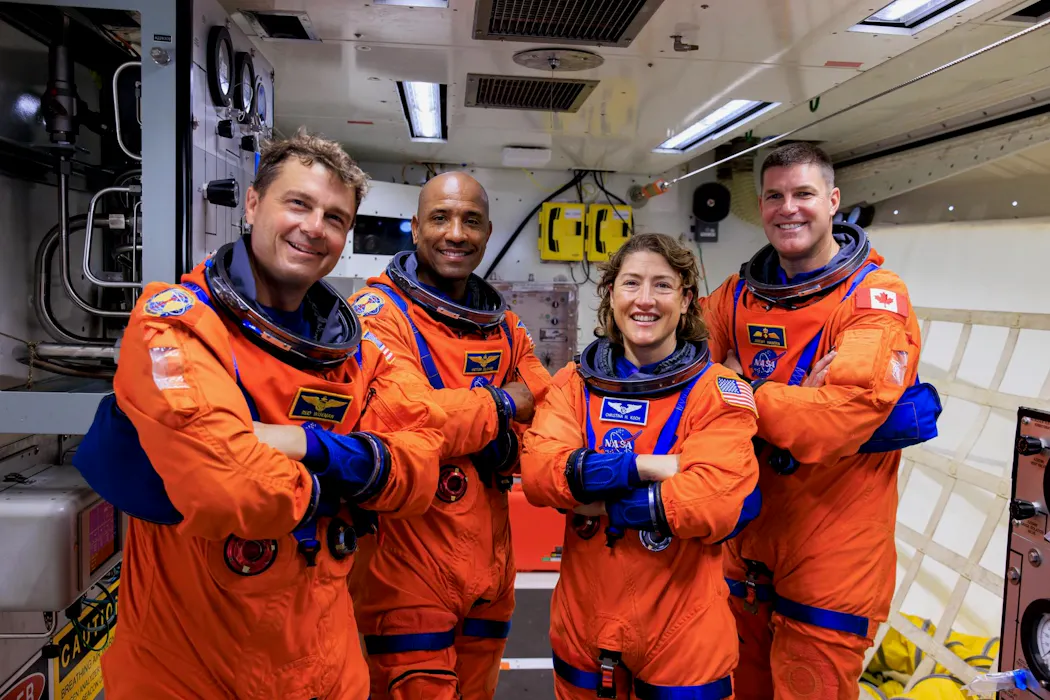
The Artemis II crew poses during a ground systems test ahead of launch. NASA/Frank Michaux

The central premise of the blockbuster film “Project Hail Mary” is a long-shot mission with a familiar goal: Save humanity from extinction. While the details of the threat facing humanity are new to this story, moviegoers are used to bingeing on popcorn while watching a heroic quest to save the Earth from certain doom. And like so many popular movies of this genre, from “Armageddon” to “Interstellar,” the hero’s journey involves a seemingly impossible mission into space.

The film’s release is well timed for the new era of space exploration. NASA’s Artemis II mission, which launched on April 1, 2026, is sending four astronauts around the Moon on a path that will take them deeper into space than any humans have ever traveled.

A rocket on a launchpad with a rising sun in the background
NASA’s Space Launch System rocket stands ready at the launchpad ahead of the Artemis II launch.
Gregg Newton/AFP via Getty Images

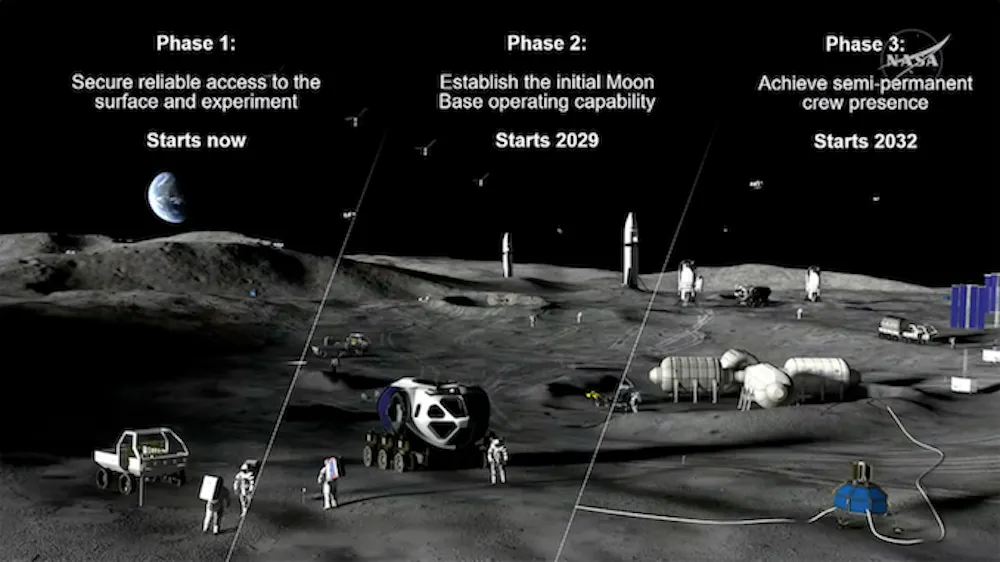
The flyby mission is primarily about testing equipment for a lunar landing in 2028. But the broader plan was outlined in detail in March 2026 by NASA officials: to establish a permanent base on the Moon.

NASA is not alone in its lunar ambitions. Private space companies SpaceX and Blue Origin are developing next-generation spacecraft, rovers and drones to facilitate the American Moon base. And other nations, notably China, are working toward their own lunar outposts.

These nations and corporations see the Moon as a stepping stone toward more ambitious goals: a major human migration into deep space, including Mars.

Given the moment, it’s worth reflecting on what those investing billions in human space exploration, whether tax dollars or private funds, are trying to accomplish. As a biologist, I recognize the limitations of humans as space explorers. As I explain in my book, “Becoming Martian: How Living in Space Will Change Our Bodies and Minds,” while biologists have learned a lot about how the conditions of space affect the human body and mind, sending people on longer missions deeper into space will expose people to unknown health risks.

Boldly going

Plans to send people to the Moon and beyond are accelerating. NASA’s new administrator, Jared Isaacman, has argued that beating China to the Moon is a matter of national security, calling the Moon “the ultimate high ground.” He has also promoted the economic benefits of establishing a space economy that includes mining and manufacturing on the Moon.

A diagram showing the three phases on NASA's lunar base plan, with phase 1 securing access, phase 2 establishing a base and phase 3 a semi-permanent crew presence
NASA’s Artemis program seeks to establish a long-term human presence on the lunar surface.
NASA TV

Subcommittees in both the House and Senate have passed bills to codify these initiatives into law – making the goal of creating a permanent base on the Moon official U.S. policy. They appear to have bipartisan support, and votes in both houses of Congress are expected soon.

The United States and China are targeting landing humans on Mars in the 2030s, with the intention of building infrastructure that enables long-term habitation.

In March 2026, NASA also announced that the agency intends to test nuclear propulsion during an uncrewed flight to Mars in 2028. Nuclear-powered rockets have the potential to substantially reduce the time it takes to reach Mars, which would make crewed flight to the red planet more feasible.

Humans or robots?

But why do people need to go to Mars? As with the Moon, the purported motivations for both the U.S. and China establishing a human presence on Mars are scientific, economic and geopolitical. Yet these are distinct objectives that are often conflated.

In terms of science, NASA has had dramatic success with its Mars rovers, including the discovery last year of a potential biosignature that could be the best evidence yet that the planet was once home to microbial life.

Robotic missions also have a lower price tag and a higher acceptable risk margin than human missions. While Isaacman remains publicly committed to the Artemis program and its human spaceflight goals, the agency’s plan also includes a suite of robotic missions to the Moon’s surface it hopes to develop in partnership with companies, universities and international partners.

Likewise, some economic objectives, such as establishing mining and manufacturing facilities, could be accomplished using AI-equipped robots, such as those Tesla is developing. Robots are a long way from being able to accomplish the full range of tasks that a human can do, but prioritizing robotic activities could lower the exposure that people have to the hazards of space.

If having people on the Moon and Mars is indeed necessary to achieve these objectives, let’s be clear about the risks that the people undertaking these missions will be assuming.

Space and the human body

While scientists have learned a lot about how space affects the body during the six decades of human spaceflight, there are still significant blind spots. Among them are the effects of deep-space radiation.

Astronauts need to exercise every day on the International Space Station to keep their muscles and bones strong, yet their bodies are still affected in various ways by the conditions of space.

The 24 Apollo astronauts who traveled to the Moon are the only people who have ever been past the Van Allen radiation belts, an area of space surrounding our planet formed by Earth’s magnetic field.

By trapping radiation from the Sun and from deep space, our planet’s magnetic field is part of what makes Earth habitable for us and other life forms. The Moon and Mars lack magnetic fields, so radiation levels on their surfaces are substantial. NASA researchers are now conducting experiments on rodents using simulated galactic cosmic rays, which are largely blocked by Earth’s magnetic fields. Preliminary results suggest that this type of radiation may impair cognitive abilities, but the actual effects on people are unknown.

Similarly, while medical researchers know that floating in a zero-g environment causes muscle atrophy and bone density loss during long stays on the International Space Station, they know relatively little about how partial gravity affects muscles and bones. The Moon has one-sixth the gravity of Earth, and Mars has a little over one-third.

Pilots on Earth can simulate partial gravity for up to 30 seconds at a time during parabolic flights, but only the 12 Apollo astronauts who walked on the Moon have ever experienced it for longer than that. The longest they stayed was about three days. Scientists can only speculate about whether prolonged exposure to the partial gravity of the Moon or Mars would have consequential health effects.

Human interest

Sending robots to space avoids having to deal with risks to human health. But there are downsides. Not only do robotic space missions have fewer capabilities than crewed missions, they often fail to capture interest and imagination and demonstrate national prestige in the same way that human missions can.

The four members of the Artemis crew will captivate people worldwide watching their daring mission around the Moon, much like moviegoers root for Ryan Gosling’s character in “Project Hail Mary” as he boldly seeks to save humanity from certain doom on the big screen.

That human interest is the common link that ties together public and private space ambitions worldwide. While robotic missions are more practical and cost effective, they simply don’t inspire the masses the way a human crew can. Beyond achieving any economic, political or scientific goals, space exploration is ultimately about people doing difficult things.

This article was updated with news of the launch of Artemis II.

The Conversation

I am the author of the book Becoming Martian published by MIT Press

ref. From Artemis II to ‘Project Hail Mary’, spaceflight captures audiences when it centers on people because human space travel is hazardous – https://theconversation.com/from-artemis-ii-to-project-hail-mary-spaceflight-captures-audiences-when-it-centers-on-people-because-human-space-travel-is-hazardous-279147

Pentecostal churches are a place of everyday care, not just bizarre spectacle: southern African study

Source: The Conversation – Africa – By Admire Thonje, Postdoctoral Research Fellow, University of Johannesburg

A growing brand of new Pentecostal churches in southern Africa is known to emphasise the prosperity gospel, deliverance, miracles and healing.

Miracles, including people apparently rising from the dead, are just one of the contentious issues swirling around these churches. Pastors have been the subject of sensational media headlines for spraying congregants with insecticide or making them eat grass, selfies taken in heaven, or claims of fraud and rape.

In response to these kinds of abuses, the South African government even established an independent cultural commission which created a special committee “to deal with issues in the religious sector”.


Read more:
Christianity is changing in South Africa as pentecostal and indigenous churches grow – what’s behind the trend


The concerns of government regulators are easy to understand, given Pentecostalism’s status as a rapidly growing arm of Christianity all around the world, including South Africa and other parts of the African continent.

But such spectacular events are less important in my research than finding out how most of these churches really work in everyday life. The complex reality of lived experience is far harder to regulate than the spectacular event.

Since 2019, my ongoing research has focused on a Zimbabwe-founded church whose growth followed migrants to South Africa, starting off in inner-city Johannesburg.

One of my key interests is to understand how church members navigate everyday Pentecostalism. To explore this, I use the social science idea of affect and emotion, which can be found in both regular church performance and during moments of spectacle.

I define affect as the raw physical buzz or charge felt during powerful church moments – before you even know what to call it. Emotion is when that feeling gets a name, like joy or sorrow, shaped by what culture and community have taught one to feel in those moments.

It is clear from my fieldwork that miracles and bizarre acts are not in the regular repertoires of the churches I studied. Instead, religious lives form around care, around forging friendships, relations, emotional support systems and events which bring members together, even as daily tensions arise within the church. Much religious activity happens in ordinary, everyday conduct that consists of simple activities, performances, rites and rituals.

These kind of environments are what scholars have called “affective economies”, where emotions like hope and security help a community to manage a precarious world.

This gives us a deeper understanding of the reasons behind the rise of new Pentecostalism, often missed when media or governments focus on the spectacle alone.

Everyday Pentecostalism

On almost any given Sunday in the churches I study, one sees grimaces on people’s faces; swaying of bodies during song; mumbling of words along with great physical gestures with hands and arms; tears flowing down faces. This is not because the members are sorrowful or in pain. Rather, it is the normal course of performing religion within Pentecostal settings.

After church on Sundays, prayer meetings on Tuesdays, in home groups on Wednesdays, prayer meetings on Fridays and at social events or preaching on the streets on Saturdays, members catch up on one another’s lives.


Read more:
Kenya’s wailing warriors: how women in Pentecostal churches claim their power


Prayer and teaching are part of the social mix. I have attended church soccer matches that start in prayer, are followed by a braai (barbecue) and end with biblical teachings.

Everyday churching is characterised by joy, compassion, sincerity, collegiality and care. This is particularly evident in the church groups that many join. As one member told me:

I’m in the music team so I go to practice every Saturday. That is when I socialise with church people. There are church people who become like friends as well as like very close friends … we visit each other, hang out, share life experiences, and so forth.

It is these feelings of connection that enable members to persist with their faiths. Such connections amount to what is called “affective solidarity” – a bond, or alliance that’s built on shared emotions. Congregants experience it differently, but it is how care is established in the church and even spread outside the church.

It also affects love. It’s not uncommon for church members, who spend so much time together, to fall in love and get married. In my study I explore how, within affective solidarity, love and marriage is negotiated in the church. It is one of the areas of church life that can also create discord.

Tensions

Relations in the church can, of course, be exploited by church leaders, who have more spiritual authority than ordinary members. Spiritual authority allows religious leaders to lay claim over abilities that unlock a better life – like access to economic and social capital. These are signs of upward mobility and, perhaps more importantly, divine blessing.

To tap into these networks, members will need to show respect, loyalty and submission to a pastor’s authority. Loyal members seek guidance from pastors on life decisions like whether to relocate for work or whether a potential partner is suitable to marry.


Read more:
God and Nollywood: how Pentecostal churches have shaped Nigerian film


But relations among ordinary members are less scripted. Disagreements are common. Some are affronted when leaders advise against their choice for marriage. Others are uneasy about finding love in a church where undesired suitors are the only ones available, yet pastors strongly encourage courtship and marriage within the church.

When bad conduct happens, like actual or rumoured financial wrongdoing by church leaders, some members leave while others will disagree and stay in the church and continue paying money to it. Tensions arise and wane in the ordinary course of churching.

It is in the ordinary where simple ideas and rationalisations like loyalty and submission become normalised. Unfortunately, it is also where opportunities for abuse exist, as many church leaders are aware.


Read more:
Prophets and profits: the art of the sell in Shepherd Bushiri’s YouTube sermons


These, I found, are the issues that characterise the Pentecostal churches I have studied. The big spectacle and the dubious miracle are few and far between.

Regulation

Real accountability for new Pentecostalism’s abuses requires understanding how these churches actually work. It also involves churches taking heed of the everyday dynamics which open opportunities for exploitation.

Until regulators and churches engage in dialogue, regulations will miss their mark, and churches will resist oversight that seems disconnected from their reality.

The Conversation

Admire Thonje received graduate research funding from the VW Foundation’s Humanities for Africa program. He is currently a GES funded postdoctoral fellow at the University of Johannesburg.

ref. Pentecostal churches are a place of everyday care, not just bizarre spectacle: southern African study – https://theconversation.com/pentecostal-churches-are-a-place-of-everyday-care-not-just-bizarre-spectacle-southern-african-study-278564

Donald Trump says the US doesn’t get much out of Nato membership – but is that true?

Source: The Conversation – UK – By Andrew Gawthorpe, Lecturer in History and International Studies, Leiden University

Following the reluctance of many traditional American allies to become involved in the war against Iran, Donald Trump is once again threatening to withdraw the US from Nato. “They haven’t been friends when we needed them,” he said in an interview with Reuters on April 1. “We’ve never asked them for much … it’s a one-way street.”

To be sure, membership in Nato does impose some costs on the US. Washington pays roughly US$750 million (£568 million) per year in direct costs to keep the organisation running, and a further US$4 billion or so towards the European Deterrence Initiative. This initiative rotates some US forces in and out of Europe to deter Russian aggression.

There are also other US forces stationed permanently in Germany and various other European countries, including the UK and Italy. The cost to the US of keeping these forces where they are is comparable to the cost of basing them at home.

For a global superpower which is finding it increasingly difficult to maintain a robust military presence in every region of the world, these costs are not negligible – particularly when some of them could be taken on by wealthy European countries themselves.

But, at the same time, it is hard to justify Trump’s belief that Nato is a “one-way street”. The US derives many benefits from the existence of Nato, which generations of American strategists, military officers and diplomats have viewed as worthwhile.

Following the first and second world wars, US presidents concluded that allowing Europe to be dominated either by recurrent cycles of conflict or a single hostile power was unacceptable. The American economy could not prosper without transatlantic trade and investment, and the US could not be secure if one of the great centres of global wealth and power was in hostile hands.

Founded in 1949, Nato was intended to be a stabilising force that avoided these outcomes. Its primary purpose is to deter aggression against any of its 32 member states, with Article 5 of the alliance stating that an armed attack against one Nato member shall be considered an attack against them all.

The world has changed since Nato’s founding, but the importance of European stability to the US economy remains. Europe is a key market for many American companies. In 2024, the US exported nearly US$295 billion in services and US$414 billion in goods to the EU – figures that are together equivalent to about 80% of the entire US defence budget that year.

By providing European countries with solid security guarantees, Nato remains vital to maintaining the stability which underpins this economic relationship. It deters Russia from military forays into eastern Europe and the Baltics and helps to prevent the catastrophic descent into European war that occurred so frequently in the centuries before the alliance was founded.

American defence guarantees also mean that most European allies do not feel the need to develop their own arsenal of nuclear weapons – a step that could unleash a dangerous arms race.

Defending US interests

These benefits may seem intangible because they mostly concern things that, since Nato’s formation, have not happened. But at the same time, the alliance provides plenty of direct, tangible benefits to the US as well. For instance, Nato provides the US with the means to defend its interests in other regions of the world.

Through the alliance, the US has access to a network of strategically located naval, air and ground force bases which can be used to project power into the Middle East, Africa and central Asia. For instance, the US has used RAF Fairford in the UK to support operations in the current conflict in Iran.

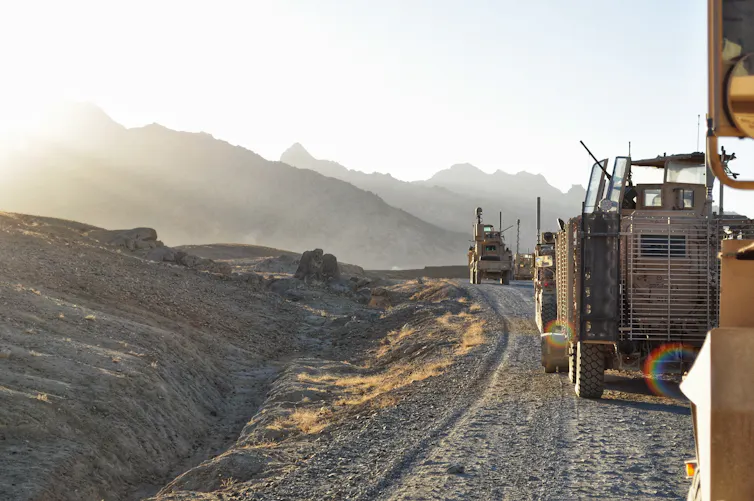
Nato allies frequently contribute capabilities to US military missions too, or carry out tasks that the US would have to perform if Europeans were not doing them. Tens of thousands of Nato soldiers fought in Afghanistan, for example, with over 1,000 of these people losing their lives. Nato sailors also patrol the Atlantic Ocean, keeping trade flowing.

A convoy of armoured vehicles patrol a mountainous area of Afghanistan.
Nato forces on patrol in the Ghazni province of Afghanistan in 2012.
Ryanzo W. Perez / Shutterstock

The US’s Nato partners are also stepping up their contributions to Arctic security, a key demand of the Trump administration. In addition, many Nato members have specialised capabilities in cyber warfare or intelligence collection, which the US would struggle to replicate.

Nato provides a unified and durable framework in which this cooperation can occur. The US does not have to renegotiate its defence relationship with each of the 31 other Nato states constantly. Instead, all members of the alliance invest in equipment and capabilities which are able to be integrated into one common battle plan.

Finally, Nato serves as a springboard for unified diplomacy. Countries that are aligned in their defence policies are likely to be aligned diplomatically, too. Thus, the US has a ready made stable of allies to draw on if tensions rise with any non-Nato country. And if the situation deteriorates to the point that conflict looks likely, the alliance provides the basis for coordinating increased defence spending and, ultimately, war-fighting.

None of this means that Nato will necessarily follow the US into every conflict. But to dismantle an alliance that brings such profound benefits to the US over one disagreement would be a shame. It would perhaps be better for Trump to appreciate one key virtue of close friends and allies – that they are willing to tell you when you are making a mistake.

The Conversation

Andrew Gawthorpe is affiliated with the Foreign Policy Centre.

ref. Donald Trump says the US doesn’t get much out of Nato membership – but is that true? – https://theconversation.com/donald-trump-says-the-us-doesnt-get-much-out-of-nato-membership-but-is-that-true-279798

The school you go to affects whether you become Neet – new research

Source: The Conversation – UK – By Robin Evans, Postgraduate Researcher, Leeds Institute for Data Analytics, University of Leeds

VaLiza/Shutterstock

Almost 1 million young people in the UK are not in education, employment or training. These so-called Neets – aged 16 to 24 – face a significantly higher risk of long-term unemployment, poor health and involvement in crime.

The proportion of 16- to 17-year-olds who are Neet is now higher than when the participation age was raised in 2014, requiring young people in England to stay in education or training until 18. The government has launched an inquiry into why so many are falling out of work and study.

Most research into this problem has focused on the characteristics of individual young people: low exam results, high absenteeism, socio-economic disadvantage. These factors matter, of course. But in our new research, we asked a different question: do the characteristics of the school itself make a difference to whether its leavers end up Neet?

The answer, it turns out, is yes – and it may have a lot to do with school culture and inclusivity.

We analysed publicly available data from over 3,000 secondary schools in England across three academic years, tracking how many of their school leavers dropped out of education or training within six months of finishing their GCSEs. Using statistical models, we controlled for factors like deprivation, special educational needs and prior attainment so we could isolate what the school environment itself was contributing.

Five school characteristics stood out. Schools with lower suspension rates, higher “Progress 8” scores (a government measure of how much academic progress students make during secondary school), and their own sixth form or post-16 provision all had a lower risk of students becoming Neet. Single-sex and faith schools also showed lower rates. Together with our control variables, these characteristics explained over 80% of the variation in dropout rates between schools.

We believe these characteristics may be markers of how inclusive a school is. Take suspensions. The rate at which schools suspend students varies enormously – in our sample, some schools barely used suspensions at all, while others issued the equivalent of nearly four per student per year.

Research shows that schools with the lowest suspension rates tend to have a more supportive culture, with clear strategies for keeping students connected rather than pushing them away. High suspension rates, by contrast, may signal an environment where some students feel they don’t belong.

Teacher talking to teenagers
Schools with lower suspension rates had more supportive cultures.
Rido/Shutterstock

Progress 8 tells a similar story. Schools where students make more progress than expected tend to be those investing in all their pupils, not just the high achievers. Research has linked high progress scores to a growth mindset among staff and effective professional development – hallmarks of a school that works hard for every student.

Previous research has found that many young people who become Neet feel lost and confused about what to do after their GCSEs. Having a sixth form on site may provide a default pathway – a familiar option for students who might otherwise drift away. Not every school can offer this, but strengthening partnerships between schools without sixth forms and local colleges could achieve something similar.

Faith and single-sex schools may benefit from a stronger sense of shared identity between students, staff and families, which research suggests fosters a feeling of belonging. That said, these schools can also have socio-economic advantages we couldn’t fully account for, so this finding should be interpreted with some caution.

Even after accounting for all the factors in our model, there was still meaningful variation between individual schools. Some had less than half the average rate of students becoming Neet; others had more than double. This tells us that something about individual schools – their ethos, their relationships, their everyday practices – is shaping young people’s futures in ways that go beyond what we can capture in published statistics.

Our study can’t prove that these school characteristics directly cause lower Neet rates. We are working with associations, not experiments. But the patterns are consistent, they hold up across three years of data covering the whole of England, and they align with a growing body of qualitative evidence about what makes schools effective.

The government has rightly made school inclusion a priority, and our findings support that direction. Rethinking zero-tolerance behaviour policies, investing in restorative approaches (which focus on building connections), and ensuring every young person has a clear and supported pathway after their GCSEs could all make a real difference. Nearly a million young lives hang in the balance – and schools have more power to help than we might have assumed.

The Conversation

Robin Evans receives funding from the Economic and Social Research Council (ESRC).

Matthew Warburton receives funding from an anonymous donation to the University of Leeds to investigate NEET.

Nick Malleson has received funding from the Economic and Social Research Council (ESRC) and the European Research Council (ERC)

ref. The school you go to affects whether you become Neet – new research – https://theconversation.com/the-school-you-go-to-affects-whether-you-become-neet-new-research-279365

Men’s wellbeing groups are growing – and helping fill gaps in mental health support

Source: The Conversation – UK – By Richard Gater, Research Assistant at the Centre for Adult Social Care Research, Cardiff University

Pressure on mental health services across the UK is leaving many men without timely support when they need it most.

Men in the UK die by suicide at more than three times the rate of women. There’s a link between poor mental health and suicide, which means men’s wellbeing needs urgent attention. Yet long NHS waiting lists for psychological support mean that many men are unable to access help when they need it.

In Wales, the mental health charity Mind Cymru reports that more than 2,000 people with moderate to severe mental health problems are waiting over six months for therapy in any given month. When men are unable or unwilling to seek support, they have historically been inclined to engage in alternative coping strategies, such as substance use.

As formal services come under increasing strain, informal men’s groups, including community-based peer support groups, continue to grow. These groups remain poorly understood. New research by my colleagues and I on these groups in Wales shows that they could help fill an important gap in mental health support.

We surveyed 30 men’s wellbeing groups across Wales and found that these initiatives are thriving despite limited resources. More than 80% reported rising attendance, drawing in men of all ages, which suggests they may be responding to unmet demand.

Most groups were volunteer-run and operated without public funding, which many highlighted as the biggest barrier to providing the group. Only 21% reported having any professionally qualified staff.

Yet these groups offer men a space where they can turn up and talk without fear of judgment. Their informal environments often appeal to men who feel uncomfortable with clinical structures, assessments, diagnoses and formal appointments. Community groups help remove barriers that can deter men from seeking support and can create a trusting environment perceived as more “male-friendly”.

From health by stealth to emotional openness

Traditionally, men’s wellbeing community initiatives, such as Men’s Sheds, have used “health by stealth” approaches. This means that by engaging in activities together, men are encouraged to communicate with one another. While 40% of groups still used these methods, the research showed a clear shift. Emotional expression is now central in many groups rather than incidental.

Talking about personal issues featured strongly in our survey responses, with nearly 80% of the groups saying they actively encouraged men to speak openly about personal difficulties. Activities used to allow for conversation included support groups, structured discussions and one-to-one conversations.

Emotional expression matters because traditional masculine norms, especially the expectations that men should be tough, reject weakness and hide vulnerability, have made it difficult for many men to talk openly about mental health. These challenges are intensified by long NHS waiting lists that can stretch into months and leave men without timely support.


Read more:
Why ‘toxic masculinity’ isn’t a useful term for understanding all of the ways to be a man


Against this backdrop, our research shows that community groups are especially important and could help fill an important gap in mental health support. These groups are creating spaces where men can be more emotionally open and talk about difficulties before they escalate. In doing so, they challenge traditional masculine norms and the idea that men simply will not talk about their problems.

Our evidence contributes to emerging research showing that when the environment feels safe, men do talk. This shift reflects a broader cultural moment in which more inclusive expressions of manhood are being promoted and widely accepted, and softer expressions of masculinity are becoming more common among men.

Close up of people in a group therapy session.
Most groups surveyed operated without public funding.
StockLab/Shutterstock

A quiet cultural shift

The growth of these community support groups signals a subtle but meaningful shift in how men are experiencing different types of masculinity. These groups are not only helping men cope with health difficulties, but also helping reshape the landscape of manhood.

Within these spaces, men are learning to express vulnerability without feeling that it undermines their identity or masculinity. This matters because these groups may be offering support at a time when demand for NHS mental health services is exceeding what is available.

But informal volunteer‑led services also come with their own challenges. Operating without qualified staff means limited regulation and uncertainty about the quality, standard and consistency of the support on offer.

Our research had a modest sample size, so we still do not know exactly how these groups operate in everyday practice or what they offer to different men. More detailed and in‑depth research would help build this understanding and provide clearer insight into how these groups might complement overstretched NHS services.

The Conversation

Richard Gater does not work for, consult, own shares in or receive funding from any company or organisation that would benefit from this article, and has disclosed no relevant affiliations beyond their academic appointment.

ref. Men’s wellbeing groups are growing – and helping fill gaps in mental health support – https://theconversation.com/mens-wellbeing-groups-are-growing-and-helping-fill-gaps-in-mental-health-support-276933

Irresponsible parental gun ownership could become a factor in custody disputes

Source: The Conversation – USA – By Marcia Zug, Professor of Family Law, University of South Carolina

Colin Gray enters the Barrow County courthouse on Sept. 6, 2024, in Winder, Ga. AP Photo/Brynn Anderson

The first parents convicted of involuntary manslaughter for a mass school shooting committed by their child were Jennifer and James Crumbley. The Crumbleys were convicted in 2024, after their 15-year-old son Ethan killed four students at Oxford High School in Michigan in 2021.

In March 2026, Colin Gray became the first parent convicted of murder for a mass shooting carried out by his child. His son, Colt, 14, killed two students and two teachers in 2024 at Apalachee High School in Georgia.

Critics of the Crumbley and Gray decisions worry that holding parents responsible for school shootings may lead to parental accountability for a broad range of children’s actions.

This is possible, but I believe it is unlikely.

That’s because parents already have long been held liable for the actions of their children, as Baylor law professor Dyllan Taxman notes. The previous failure to find parental liability for gun dangers was the exception.

But even if the Crumbley and Gray convictions do not portend the beginning of parental convictions for a new and wide-ranging category of parental actions, they do suggest a growing belief that parents who allow their children easy access to guns are dangerous and unfit.

As a family law scholar, I think this changing view about parental gun ownership may have significant ramifications for parents in other legal contexts, most notably custody determinations.

Guns and best interests

Child custody decisions in the U.S. are based on a court’s determination regarding the “best interest of the child.” Irresponsible gun ownership can be a factor in such conclusions, but historically such considerations have been rare.

This absence is shocking given the well-documented dangers that unsecured firearms pose. Since 2020, firearms have been the leading cause of death for children between the ages of 1 and 19. The statistic includes accidental shootings as well as homicides and suicides. The vast majority of child gun deaths occur at home. And more than 4.6 million children live in a home with at least one unlocked and loaded firearm.

The failure to routinely consider parental gun practices, including gun storage and children’s access, in custody determinations is notable – not just because unsecured guns pose a significant danger to children, but because other less substantial risks regularly factor into custody decisions.

Split screen of a man and a woman dressed in prison clothes.
James and Jennifer Crumbley were convicted of involuntary manslaughter for a mass school shooting committed by their son.
Oakland County Sheriff’s Office via AP, File

Perceived moral dangers, such as a child’s exposure to profanity or a parent’s nonmarital relationship, are common factors in custody determinations. Similarly, exposure to secondhand smoke or a child’s obesity are also frequent considerations.

Consequently, while the consideration of parental gun behaviors is not entirely absent from custody decisions, its relative rarity suggests a deliberate unwillingness to link them with parental fitness considerations.

The Crumbley and Gray convictions suggest this reluctance may be waning.

Loss of custody as a deterrent

School shootings are relatively rare, but custody disputes are not.

Consequently, if irresponsible gun ownership becomes a common consideration in custody decisions, the implications for gun safety could be substantial. That’s because this approach avoids the pitfalls of previous gun control attempts.

Unlike other gun safety measures, the consideration of gun ownership in custody cases largely avoids Second Amendment concerns regarding the constitutional right to bear arms. As William & Mary law professor James Dwyer notes, in child custody cases the state operates “outside the bounds of the (Constitution) … to the extent of being freed from the restrictions ordinarily generated by the constitutional rights of others.”

The result is that constitutionally protected behaviors are frequently considered in custody decisions.

In the 2011 South Carolina case Purser v. Owens, for instance, the family court considered the mother’s abortion in its best-interest analysis and held that having an abortion demonstrated the mother was irresponsible and thus unfit.

In the 2003 Virginia case Roberts v. Roberts, a father lost custody for his statements that women cannot do what men do.

And in the 1985 Colorado case In re Marriage of Short, a court affirmed parents’ religious beliefs are a relevant factor in custody determinations.

As these cases demonstrate, the fact that some harmful parental behaviors are also constitutional rights doesn’t mean they’re excluded from custody determinations.

A second benefit of raising gun ownership in a custody dispute is that the parent raising this issue does not need to be a gun control advocate. They don’t need to dislike guns, and they can even be a gun owner themselves.

For gun ownership to become relevant, a parent simply needs to argue that the other parent’s gun practices are irresponsible compared to their own. If this increases a parent’s custody prospects, it can be assumed many parents will make this argument.

A woman in court holds a posters with images on it.
During Colin Gray’s trial, Assistant District Attorney Patricia Brooks presents evidence of a school shooter shrine that was found in Colt Gray’s bedroom, in Winder, Ga., on March 2, 2026.
Abbey Cutrer/Atlanta Journal-Constitution via AP, Pool

Parents are paying attention

For parents facing accusations of irresponsible gun practices, the potential loss of custody should provide a strong incentive for modifying their gun behavior.

Case law demonstrates that parents routinely refrain from behaviors that could hurt their custody case. And there is every reason to expect the same result with gun ownership.

Importantly, the Gray case already proved that parents are paying attention to these trends. During his trial, it was revealed that about a week before the September 2024 shooting, Gray’s estranged wife – and Colin Gray’s mother – Marcee Gray, did an internet search for “school shooter parents charged with manslaughter.”

Then, after reading articles about the Crumbley cases’ convictions, she called Colin and asked him to secure his guns. Although Colin ignored his wife’s warning, the next parent might listen, especially when the warning is coming from a divorce attorney.

Should irresponsible gun ownership become a common factor in custody disputes, parents will be advised to secure their guns, and many will heed this advice, I believe. The Crumbley conviction almost prevented Colt Gray’s access to firearms.

The Conversation

Marcia Zug does not work for, consult, own shares in or receive funding from any company or organization that would benefit from this article, and has disclosed no relevant affiliations beyond their academic appointment.

ref. Irresponsible parental gun ownership could become a factor in custody disputes – https://theconversation.com/irresponsible-parental-gun-ownership-could-become-a-factor-in-custody-disputes-278251

75 years after she led a student strike that helped end school segregation, Barbara Rose Johns now stands in the US Capitol where Robert E. Lee once did

Source: The Conversation – USA – By Jonathan Entin, Professor Emeritus of Law and Adjunct Professor of Political Science, Case Western Reserve University

A statue of civil rights activist Barbara Rose Johns is unveiled in Emancipation Hall at the U.S. Capitol on Dec. 16, 2025, in Washington. Chip Somodevilla/Getty Images

The 250th anniversary of the Declaration of Independence isn’t the only important anniversary in 2026. This year also marks the 75th anniversary of an extraordinary case of student activism that helped lead to the Supreme Court’s decision outlawing segregated schools.

In April 1951, 16-year-old Barbara Rose Johns organized a student strike to protest the shabby conditions and inadequate education at her segregated Black high school in Prince Edward County, Virginia.

Prince Edward County is located about 65 miles southwest of Richmond and around 30 miles east of Appomattox, or 48 kilometers, in a part of Virginia known as Southside. African Americans constituted almost half the population, but they were largely prevented from voting before passage of the Voting Rights Act in 1965 and could not eat in local restaurants before passage of the Civil Rights Act of 1964. The public schools were segregated, and for decades there was no Black high school at all.

In 1939, following years of pressure by Black residents, the white authorities opened a high school for African Americans. That segregated institution was named for Robert Roosa Moton, who had been raised in Prince Edward County and served as an administrator at Hampton Institute in Virginia before being appointed as the second head of Tuskegee Institute following the death of Booker T. Washington.

The new building became severely overcrowded almost immediately. Although it was designed for a maximum enrollment of 180, attendance reached 219 the year after it opened and 377 in 1947.

The following year, the school board put up three temporary outbuildings to accommodate the overflow. Many Black residents scorned these buildings as “tar paper shacks” because of their covering and dilapidated condition. They had inefficient wood stoves that provided limited heating, and their thin walls often leaked when rain fell.

The shabbiness of these interim structures became a source of continuing tension, as negotiations between the Black community and white authorities for a more permanent facility dragged on inconclusively into early 1951.

Johns makes her move

As an 11th grader at Moton High School, Johns began talking with some of her fellow students about taking action to protest the shacks and improve their education.

On April 23, 1951, someone lured Moton’s principal, Boyd Jones, out of the building on the pretext that two students were in trouble elsewhere in town. After Jones left, Johns summoned the student body to the auditorium, where she exhorted her peers to walk out to protest the deplorable condition of their school.

Johns also sent a letter to Oliver W. Hill and Spottswood W. Robinson III, two Richmond civil rights lawyers who worked closely with the NAACP, asking for their legal assistance.

The strike went on for two weeks. During that time, Hill and Robinson met twice with hundreds of students and parents. The meetings grew out of the lawyers’ initial skepticism about litigating over school conditions in rural Prince Edward County, where they feared that plaintiffs would be subject to severe physical and economic retaliation.

Those meetings persuaded Hill and Robinson that the Black community broadly supported an effort to obtain desegregation rather than mere improvements in the separate Black schools. The lawyers therefore filed their lawsuit in the United States District Court for the Eastern District of Virginia on behalf of scores of Black students and parents, alleging that segregated schools violated the 14th Amendment.

Victory – and messy history

Johns’ initiative had both short- and long-term consequences.

In the immediate aftermath of the strike, the all-white school board fired Jones, whom they regarded as having put the students up to their activism despite his – and the students’ – insistence that the whole affair was a student initiative.

The lawsuit – and other similar suits filed in South Carolina, Delaware and Kansas – failed in the lower court. The plaintiffs appealed to the Supreme Court, which reversed those judgments and ruled in the consolidated case called Brown v. Board of Education that segregated public schools were unconstitutional.

A yellowed page from a legal decision with the name 'SUPREME COURT OF THE UNITED STATES' at the top.
The first page of the printed copy of the Supreme Court’s desegregation decision in Brown v. Board of Education, May 17, 1954.
Smithsonian National Museum of American History

Meanwhile, in the wake of the student strike at Moton, Johns’ family feared that she would be in physical danger if she remained in Prince Edward County for her senior year. They sent her to live with her uncle Vernon Johns, a minister and outspoken civil rights advocate, in Montgomery, Alabama.

Johns graduated from Drexel University and worked for many years as a public school librarian in Philadelphia before her death in 1991.

The post-Brown history of Prince Edward County is very complicated. White authorities closed the public schools for five years to avoid desegregation. For a long time afterward, virtually all the white children went to a private academy that opened when the public schools closed.

But that messy history cannot detract from the courage and impact of Barbara Johns.

In December 2025, her statue replaced that of Robert E. Lee as one of the two Virginians displayed in the U.S. Capitol. Johns is there – along with George Washington.

The Conversation

Jonathan Entin does not work for, consult, own shares in or receive funding from any company or organization that would benefit from this article, and has disclosed no relevant affiliations beyond their academic appointment.

ref. 75 years after she led a student strike that helped end school segregation, Barbara Rose Johns now stands in the US Capitol where Robert E. Lee once did – https://theconversation.com/75-years-after-she-led-a-student-strike-that-helped-end-school-segregation-barbara-rose-johns-now-stands-in-the-us-capitol-where-robert-e-lee-once-did-273531

Bypass the Strait of Hormuz with nuclear explosives? The US studied that in Panama and Colombia in the 1960s

Source: The Conversation – USA (2) – By Christine Keiner, Chair of the Department of Science, Technology, and Society, Rochester Institute of Technology

A nuclear bomb explodes at Bikini Atoll in the Pacific Ocean in 1946, one of several U.S. test explosions. Photo12/Universal Images Group via Getty Images

With the world struggling to get oil supplies moving from the Middle East, former House Speaker Newt Gingrich raised eyebrows with a social media post highlighting a radical idea: Use nuclear bombs to cut a new channel along a route that would avoid Iranian threats in the Strait of Hormuz.

Gingrich’s March 15, 2026, post linked to an article that labeled itself as satire. Gingrich has not clarified whether his endorsement was serious. But he is old enough to remember when ideas like this were not only taken seriously but actually pursued by the U.S. and Soviet governments.

As I discuss in my book, “Deep Cut: Science, Power, and the Unbuilt Interoceanic Canal,” the U.S. version of this project ended in 1977. At the time, Gingrich was launching his political career after working as a history and environmental studies professor.

Improving global trade and geopolitical influence

The idea for a new canal to move oil from the Middle East had emerged two decades earlier, in the context of another Middle East conflict, the Suez crisis. In 1956, Egypt seized the Suez Canal from British and French control. The canal’s prolonged closure caused the price of oil, tea and other commodities to spike for European consumers, who depended on the shipping shortcut for goods from Asia.

But what if nuclear energy could be harnessed to cut an alternative canal through “friendly territory”? That was the question asked by Edward Teller, the principal architect of the hydrogen bomb, and his fellow physicists at the Lawrence Radiation Laboratory in Livermore, California.

Partially sunken ships block a waterway.
Scuttled ships block one end of the Suez Canal in 1956, sparking an international outcry and conflict.
Horace Tonge/NCJ Archive/Mirrorpix via Getty Images

President Dwight D. Eisenhower’s administration had already begun promoting atomic energy to generate electricity and to power submarines. After the Suez crisis, the U.S. government expanded plans to harness “atoms for peace.”

Project Plowshare advocates, led by Teller, sought to use what they called “peaceful nuclear explosions” to reduce the costs of large-scale earthmoving projects and to promote national security. They envisioned a world in which nuclear explosives could help extract natural gas from underground reservoirs and build new canals, harbors and mountainside roads, with minimal radioactive effects.

To kick-start the program, Teller wanted to create an instant harbor by burying, and then detonating, five thermonuclear bombs in an Indigenous village in coastal northwestern Alaska. The plan, known as Project Chariot, generated intense debate, as well as a pioneering environmental study of Arctic food webs.

Teller and the Livermore physicists also worked with the Army Corps of Engineers to study the possibility of using nuclear explosions to build another waterway in Panama. Fearing that the aging Panama Canal and its narrow locks would soon be rendered obsolete, U.S. officials had called for building a wider, deeper channel that wouldn’t require any locks to raise and lower the ships along its route.

A sea-level canal would not only fit bigger vessels; it would also be simpler to operate than the lock-based system, which required thousands of employees. Since the early 1900s, U.S. canal workers and their families had lived in the Canal Zone, a large strip of land surrounding the waterway. Panamanians increasingly resented having their country split in two by the racially segregated, colony-like zone.

A group of people holding hand tools stand next to a large pile of soil.
Building the Panama Canal involved backbreaking manual labor.
Bettmann via Getty Images

Crossing Central America

Nuclear explosions appeared to make a new sea-level canal financially feasible. The greatest impetus for the so-called Panatomic Canal occurred in January 1964, when violent anti-U.S. protests erupted in Panama. President Lyndon B. Johnson responded to the crisis by agreeing to negotiate new political agreements with Panama.

Johnson appointed the Atlantic-Pacific Interoceanic Canal Study Commission to determine the best site to use nuclear explosions to blast a seaway between the two oceans. Funded by a $17.5 million congressional appropriation – the equivalent of around $185 million today – the five civilian commissioners focused on two routes: one in eastern Panama and the other in western Colombia.

The Panamanian route spanned forested river valleys of the Darién isthmus and reached 1,100 feet above sea level. To excavate this landscape, engineers proposed setting off 294 nuclear explosives along the route, in 14 separate detonations, using the explosive equivalent of 166.4 million tons of TNT.

This was a mind-blowing amount of energy: The most powerful nuclear weapon ever tested, the Soviet “Tsar Bomba” blast in 1961, released the energy equivalent to 50 million tons of TNT.

To avoid the radioactivity and ground shocks, planners estimated that approximately 30,000 people, half of them Indigenous, would have to be evacuated and resettled. The canal commission considered this a formidable but not impossible obstacle, writing in its final report, “The problems of public acceptance of nuclear canal excavation probably could be solved through diplomacy, public education, and compensating payments.”

In 2020, the Russian government declassified this footage of the “Tsar Bomba” test blast from 1961.

A not-so-hot idea, in retrospect

As explored in my book, marine and evolutionary biologists of the late 1960s sought to study the project’s less obvious environmental effects. Among other potential catastrophes, scientists warned that a sea-level canal could unleash “mutual invasions of Atlantic and Pacific organisms” by joining the oceans on either side of the isthmus for the first time in 3 million years.

Plans for the nuclear waterway ended by the early 1970s, not over concerns about marine invasive species but rather due to other complex issues. These included the difficulties of testing nuclear explosions for peaceful purposes without violating the Limited Nuclear Test Ban Treaty of 1963 and the huge budget deficits caused by the Vietnam War.

Despite the geopolitical and financial constraints, the sea-level canal studies employed hundreds of researchers who increased knowledge of the isthmus and its human and nonhuman inhabitants. Ironically, the studies revealed that wet clay shale rocks along the Darién route meant nuclear explosives might not work well there.

The cover of a bound book.
The cover of the final report of a commission that studied blasting a canal across Central America with ‘peaceful nuclear explosions.’
Atlantic-Pacific Interoceanic Canal Study Commission via University of Florida

But for Project Plowshare’s biggest proponents, atomic excavation remained a worthwhile goal. In 1970, in their final report, the canal commissioners predicted that “someday nuclear explosions will be used in a wide variety of massive earth-moving projects.” Teller shared their commitment, as he explained near the end of his life in the 2000 documentary “Nuclear Dynamite.”

Today, given widespread awareness of the severe environmental and health effects of radioactive fallout, it is hard to envision a time when using nuclear bombs to build canals seemed reasonable. Even before Gingrich’s post sparked ridicule, press accounts described Project Plowshare using words like “wacky,” “insane” and “crazy.”

However, as societies struggle with disruptive new technologies such as generative AI and cryptocurrency, it is worth remembering that many ideas that ended up discredited once seemed not only sensible but inevitable.

As historians of science and technology point out, technological and scientific developments cannot be separated from their cultural contexts. Moreover, the technologies that become part of people’s daily lives often do so not because they are inherently superior, but because powerful interests champion them.

It makes me wonder: Which of the high-tech trends being promoted by influencers today will amuse, shock and horrify our descendants?

The Conversation

Christine Keiner received funding from the National Endowment for the Humanities, Lyndon Baines Johnson Foundation, and Eisenhower Foundation for the initial stages of this research.

ref. Bypass the Strait of Hormuz with nuclear explosives? The US studied that in Panama and Colombia in the 1960s – https://theconversation.com/bypass-the-strait-of-hormuz-with-nuclear-explosives-the-us-studied-that-in-panama-and-colombia-in-the-1960s-278851

Better urban design could help save Florida’s threatened Big Cypress fox squirrel

Source: The Conversation – USA (2) – By Eve Bohnett, Assistant Research Scholar, Center for Landscape Conservation Planning, University of Florida

The Big Cypress fox squirrel has had to adapt as its preferred habitat becomes more fragmented. LagunaticPhoto/iStock via Getty Images Plus

Florida is home to a host of diverse wildlife you can’t find anywhere else. Most people know of manatees and Florida panthers. But you might never have heard of the Big Cypress fox squirrel, a subspecies found only in southwest Florida.

At up to 2 feet, 3 inches (68.5 centimeters) long, including its tail, and weighing roughly 3 pounds (1.36 kilograms), the Big Cypress fox squirrel is a heavyweight compared with its cousin, the eastern gray squirrel. But while gray squirrels can thrive across much of the eastern U.S. and Canada, the Big Cypress fox squirrel’s habitat is limited to five Florida counties south of the Caloosahatchee River.

This means every new road, canal and subdivision takes a bigger bite out of its world.

Because this squirrel is so shy and hard to spot, no one knows how many remain, which is one reason the state of Florida lists it as threatened. Historically, it moved through cypress swamps, pine savannas and hardwood forests. But these days, it often navigates a patchwork of golf courses, parks and low-density neighborhoods, crossing open lawns and scattered tree canopies to reach safe cover.

As the links between habitable areas disappear, Big Cypress fox squirrels are funneled into a few risky travel routes. This can cause their populations to become isolated from each other and more vulnerable to decline.

As a landscape conservation researcher, I study how wildlife moves through changing environments and how urban design can support that movement. My most recent research, in collaboration with colleagues from the University of Florida and Florida State University, focused on the Big Cypress fox squirrel. Our team asked one practical question: How can city planning and landscape design support wildlife movement as the region grows?

A new approach

What’s new about our work is that we paired connectivity modeling – a method that maps how easily animals can move across a landscape – with an approach to urban design that organizes landscapes along a gradient from dense urban areas to natural habitats. This approach helps planners match conservation strategies to each setting, or transect zone – urban, suburban, seminatural, such as parks and golf courses, and core habitat, or undisturbed areas.

Illustration showing urban, suburban, semi-natural and core habitat zones
This conceptual image of the author’s transect planning framework shows the different transect zones the Big Cypress fox squirrel inhabits.
Created by Eve Bohnett using NanoBanana

Our method is unique because it integrates wildlife connectivity data directly into actionable design solutions for each zone, rather than proposing a single corridor. This allows planners to design landscapes that support wildlife movement in ways that can be replicated anywhere. In suburban neighborhoods, for example, wildlife crossings and native plants provide safer movement options.

Importantly, this approach is not specific to preserving just this species of squirrel. Planners and conservationists can use it to maintain wildlife movement alongside development across Florida and beyond. This includes other priority areas along the Florida Wildlife Corridor where development constrains animal movement.

To develop our approach, we used habitat suitability models developed by the Florida Fish and Wildlife Conservation Commission using detailed land-cover data and verified squirrel observation records kept by Florida Natural Areas Inventory and universities in Florida and Arizona. Then we converted this data into what landscape conservationists call a resistance map, which shows how difficult it is for a Big Cypress fox squirrel to move across the landscape.

We applied the model across the squirrel’s known range in southwest Florida, with a focus on rapidly developing areas around Fort Myers and Naples. We then identified where movement is concentrated and where it gets squeezed into narrow pathways.

Two maps of the Big Cypress fox squirrel's habitat in southwest Florida
The map on the left identifies pinch points within remnant areas of highly suitable habitat for the Big Cypress fox squirrel. The map on the right shows current development since 2019 in gray, with Florida-managed conservation lands in green.
Created by Eve Bohnett using ArcGIS Pro

Squeezing through ‘pinch points’

Our model showed that the squirrel’s best habitat persists in a network of pinch points, bottlenecks where development and infrastructure funnel movement into a limited set of pathways.

In the broader southwestern Florida region, those bottlenecks show up near urbanizing areas such as Naples, Fort Myers and Bonita Springs. In Fort Myers, for example, squirrel movement was funneled into just a few narrow routes, such as urban parks in highly developed areas and less developed spaces such as golf courses and residential neighborhoods with tree cover. Movement was more diffuse near wetlands and along the Caloosahatchee River.

This means that even in built-up areas, a few connected strips of trees, water edges and open space make a big difference, because they may be the only workable routes left.

We also found that many important habitat patches and connections fall outside protected areas. Rather, they lie on private and intensively managed lands, such as residential yards, golf courses, agriculture and landscaped spaces that are regularly maintained. In fast-growing southwestern Florida, that means long-term conservation depends not only on preserves but also on how neighborhoods, road projects, parks, golf courses and vacant lots are planned and maintained.

Sign reading Endangered Key Deer Next 3 Miles
Signs that warn drivers about nearby wildlife can help prevent animals from getting hit by cars.
Jeff Greenberg/Universal Images Group via Getty Images

From wildlife science to real-world design

Instead of creating just one wildlife corridor, we design solutions for different types of landscapes along a city-to-nature gradient. From dense urban areas to natural habitats, this lets us keep the landscape connected using a network of green infrastructure while matching conservation actions to how the land is used and how squirrels are likely to move through it.

In urban and suburban areas, squirrels are using the remaining open spaces, such as parks and low-density residential areas, but these landscapes can function as ecological traps as well as population “sinks,” where risks such as vehicle collisions are higher.

Roads, highways and railroad tracks are major sources of habitat fragmentation and wildlife mortality, so one priority is to make it safer for wildlife to cross.

Our study proposes canopy bridges and other wildlife crossings. Other helpful measures include traffic-calming strategies, signage and “green street” design, which integrates vegetation, stormwater management and safer road layouts to reduce risks for both wildlife and people.

We also propose retrofitting existing infrastructure in urban areas with elements such as green roofs, living walls, bioswales – channels that help keep stormwater clean – rain gardens and permeable pavement. These features add vegetation, absorb stormwater and reduce heat, while also making urban areas easier for wildlife to navigate.

In suburban areas, priorities include planting native vegetation in yards, parks and roadside buffers and improving road crossings where animals are most at risk.

In seminatural areas such as golf courses, opportunities include restoring native vegetation and maintaining “stepping stone” habitats. These are small patches, such as tree clusters and bushes, that animals can use as safe stopovers while moving across developed landscapes.

This kind of green infrastructure can reduce flooding, improve water quality, lower urban temperatures and create recreational spaces – benefits that support both wildlife and the people who live alongside them.

The Conversation

Eve Bohnett does not work for, consult, own shares in or receive funding from any company or organization that would benefit from this article, and has disclosed no relevant affiliations beyond their academic appointment.

ref. Better urban design could help save Florida’s threatened Big Cypress fox squirrel – https://theconversation.com/better-urban-design-could-help-save-floridas-threatened-big-cypress-fox-squirrel-276827