Le raid de Donald Trump sur le Venezuela laisse présager un nouveau partage du monde entre les grandes puissances

Source: The Conversation – in French – By Stefan Wolff, Professor of International Security, University of Birmingham
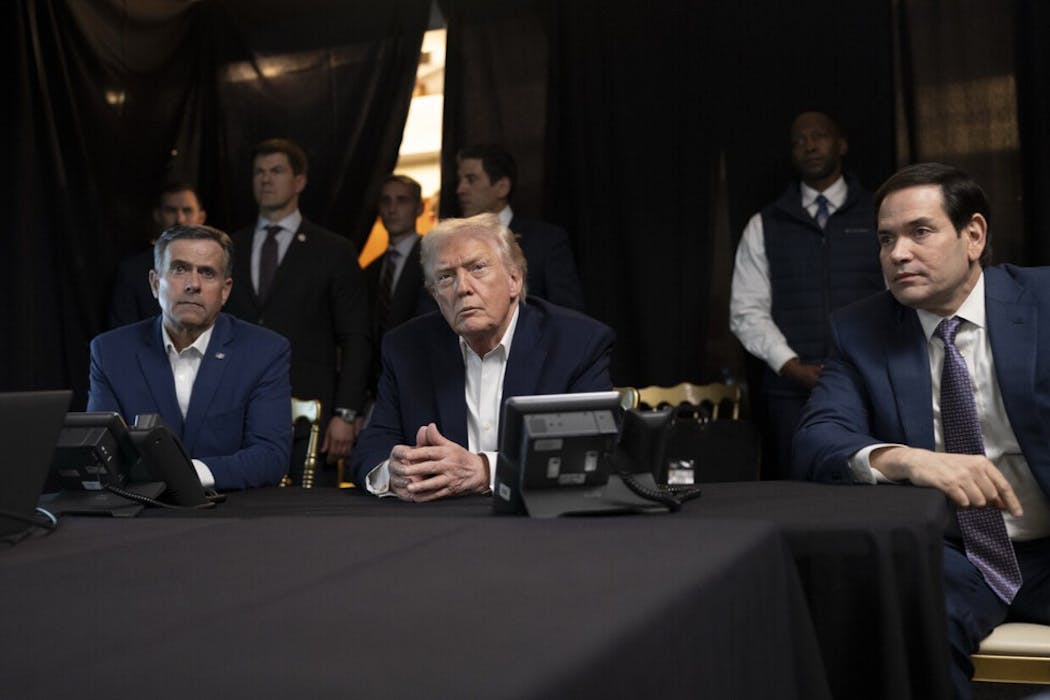
Donald Trump assiste à la capture du dirigeant vénézuélien Nicolas Maduro, entouré du directeur de la CIA John Ratcliffe (à gauche) et du secrétaire d’État Marco Rubio (Mar-a-Lago, Floride, nuit du 2 au 3 janvier 2026). Site officiel de la Maison Blanche

Donald Trump a célébré la nouvelle année en marquant son territoire et en ouvrant la porte à un nouveau partage du monde entre Washington, Moscou et Pékin. L’Europe, tétanisée, prend acte par son silence approbateur de la mort du droit international.

Donald Trump et les hauts responsables de son administration ont salué l’opération « Détermination absolue » – le raid sur Caracas et la capture et l’enlèvement du président vénézuélien Nicolas Maduro, le 3 janvier 2026 – comme un succès militaire exceptionnel. On peut tout aussi aisément affirmer qu’il s’agit d’une violation flagrante et éhontée du droit international, qui marque une nouvelle érosion de ce qui reste de l’ordre international.

Mais la tentation pour la Maison Blanche est désormais de crier victoire et de passer rapidement à d’autres cibles, alors que le monde est encore sous le choc de l’audace dont a fait preuve le président américain en kidnappant un dirigeant étranger en exercice. Les populations et les dirigeants de Cuba (depuis longtemps une obsession pour le secrétaire d’État de Trump Marco Rubio), de Colombie (le plus grand fournisseur de cocaïne des États-Unis) et du Mexique (la principale voie d’entrée du fentanyl aux États-Unis) ont des raisons de s’inquiéter sérieusement pour leur avenir dans un monde trumpien.

Il en va de même pour les Groenlandais, en particulier à la lumière des commentaires de Trump ce week-end selon lesquels les États-Unis « ont besoin du Groenland du point de vue de leur sécurité nationale ». Sans parler du tweet alarmant de Katie Miller, influente membre du mouvement MAGA et épouse de Stephen Miller, l’influent chef de cabinet adjoint de Trump, montrant une carte du Groenland aux couleurs du drapeau américain.

Et ce n’est pas la réaction timide de la plupart des responsables européens qui freinera le président américain dans son élan. Celle-ci est extrêmement déconcertante, car elle révèle que les plus ardents défenseurs du droit international semblent avoir renoncé à prétendre qu’il a encore de l’importance.

La cheffe de la politique étrangère de l’Union européenne (UE), Kaja Kallas a été la première à réagir, avec un message qui commençait par souligner le manque de légitimité de Maduro en tant que président et se terminait par l’expression de sa préoccupation pour les citoyens européens au Venezuela. Elle a du bout des lèvres réussi à ajouter que « les principes du droit international et de la charte des Nations unies doivent être respectés ». Cette dernière partie apparaissait comme une réflexion après coup, ce qui était probablement le cas.

La déclaration commune ultérieure de 26 États membres de l’UE (soit tous les États membres sauf la Hongrie) était tout aussi équivoque et ne condamnait pas explicitement la violation du droit international par Washington.

Le premier ministre britannique Keir Starmer a pour sa part axé sa déclaration sur le fait que « le Royaume-Uni soutient depuis longtemps une transition au Venezuela », qu’il « considère Maduro comme un président illégitime » et qu’il « ne versera pas de larmes sur la fin de son régime ». Avant de conclure en exprimant son souhait d’une « transition sûre et pacifique vers un gouvernement légitime qui reflète la volonté du peuple vénézuélien », l’ancien avocat spécialisé dans les droits humains a brièvement réitéré son « soutien au droit international ».

Le chancelier allemand Friedrich Merz remporte toutefois la palme. Tout en faisant des commentaires similaires sur le défaut de légitimité de Maduro et l’importance d’une transition au Venezuela, il a finalement souligné que l’évaluation juridique de l’opération américaine était complexe et que l’Allemagne « prendrait son temps » pour le faire.

Le point de vue de Moscou et Pékin

Alors que l’Amérique latine était partagée entre enthousiasme et inquiétude, les condamnations les plus virulentes sont venues de Moscou et de Pékin.

Le président russe Vladimir Poutine avait manifesté son soutien à Maduro dès le début du mois de décembre. Dans une déclaration publiée le 3 janvier, le ministère russe des affaires étrangères se contentait initialement d’apporter son soutien aux efforts visant à résoudre la crise « par le dialogue ». Dans des communiqués de presse ultérieurs, la Russie a adopté une position plus ferme, exigeant que Washington « libère le président légitimement élu d’un pays souverain ainsi que son épouse ».

La Chine a également exprimé son inquiétude quant à l’opération américaine, la qualifiant de « violation flagrante du droit international ». Un porte-parole du ministère des affaires étrangères a exhorté Washington à « garantir la sécurité personnelle du président Nicolas Maduro et de son épouse, à les libérer immédiatement, à cesser de renverser le gouvernement du Venezuela et à résoudre les problèmes par le dialogue et la négociation ».

La position de Moscou, en particulier, est bien sûr profondément hypocrite. Certes condamner l’opération américaine comme étant une « violation inacceptable de la souveraineté d’un État indépendant » est peut-être justifié. Mais cela n’est guère crédible au vu de la guerre que Moscou mène depuis dix ans contre l’Ukraine, qui s’est traduite par l’occupation illégale et l’annexion de près de 20 % du territoire ukrainien.

La Chine, quant à elle, peut désormais avoir le beurre et l’argent du beurre à Taïwan, qui, contrairement au Venezuela, n’est pas largement reconnu comme un État souverain et indépendant. Le changement de régime apparaissant de nouveau à l’ordre du jour international comme une entreprise politique légitime, il ne reste plus grand-chose, du point de vue de Pékin, qui pourrait s’opposer à la réunification, si nécessaire par la force.

Les actions de Trump contre le Venezuela n’ont peut-être pas accéléré les plans chinois de réunification par la force, mais elles n’ont guère contribué à les dissuader. Cet épisode va probablement encourager la Chine à montrer plus d’assurance en mer de Chine méridionale.

Le partage du monde

Tout cela laisse présager un nouveau glissement progressif des intérêts des grandes puissances américaine, chinoise et russe, qui souhaitent disposer de sphères d’influence dans lesquelles elles peuvent agir à leur guise. Car si la Chine et la Russie ne peuvent pas faire grand-chose pour leur allié Maduro, désormais destitué, c’est aussi parce qu’il n’existe aucun moyen simple de délimiter où commence une sphère d’influence et où finit une autre.

La perspective d’un partage du monde entre Washington, Moscou et Pékin explique aussi l’absence d’indignation européenne face à l’opération menée par Trump contre le Venezuela. Elle témoigne de sa prise de conscience que l’ère de l’ordre international libre et démocratique est bel et bien révolue. L’Europe n’est pas en position d’adopter une posture qui lui ferait risquer d’être abandonnée par Trump et assignée à la sphère d’influence de Poutine.

Au contraire, les dirigeants européens feront tout leur possible pour passer sous silence leurs divergences avec les États-Unis et tenteront de tirer parti d’une remarque presque anodine faite par Trump à la fin de sa conférence de presse samedi 3 janvier, selon laquelle il n’est « pas fan » de Poutine.

Ce qui importe désormais pour l’Europe, ce ne sont plus les subtilités des règles internationales. Il s’agit dorénavant de garder les États-Unis et leur président imprévisible de son côté, dans l’espoir de pouvoir défendre l’Ukraine et de dissuader la Russie de commettre de nouvelles agressions.

Ces efforts pour accommoder le président américain ne fonctionneront que dans une certaine mesure. La décision de Trump de réaffirmer son ambition d’annexer le Groenland, dont il convoite les vastes ressources minérales essentielles, s’inscrit dans sa vision d’une domination absolue dans l’hémisphère occidental.

Cette renaissance de la doctrine Monroe vieille de deux siècles (rebaptisée par Trump « doctrine Donroe ») a été exposée dans la nouvelle stratégie de sécurité nationale américaine en décembre 2025. Elle ne s’arrête clairement pas au changement de régime au Venezuela.

La stratégie vise à « rétablir les conditions d’une stabilité stratégique sur le continent eurasien » ou à « atténuer le risque de conflit entre la Russie et les États européens ». Mais déstabiliser davantage l’alliance transatlantique en menaçant l’intégrité territoriale du Danemark au sujet du Groenland et en abandonnant peut-être l’Europe et l’Ukraine aux desseins impériaux du Kremlin risque d’avoir l’effet inverse.

De même, si l’incursion au Venezuela encourage les revendications territoriales chinoises en mer de Chine méridionale et éventuellement une action contre Taïwan, elle ne permettra guère d’atteindre l’objectif américain, énoncé dans la stratégie de sécurité nationale, qui consiste à prévenir une confrontation militaire avec son rival géopolitique le plus important.

À l’instar des autres tentatives de changement de régime menées par les États-Unis depuis la fin de la guerre froide, l’action américaine au Venezuela risque d’être une initiative qui isolera le pays et se retournera contre lui. Elle marque le retour de la loi de la jungle, pour laquelle les États-Unis, et une grande partie du reste du monde, finiront par payer un lourd tribut.


La traduction en français de cet article a été assurée par le site Justice Info.

The Conversation

Stefan Wolff a bénéficié par le passé de subventions du Conseil britannique de recherche sur l’environnement naturel, de l’Institut américain pour la paix, du Conseil britannique de recherche économique et sociale, de la British Academy, du programme « Science pour la paix » de l’OTAN, des programmes-cadres 6 et 7 et Horizon 2020 de l’UE, ainsi que du programme Jean Monnet de l’UE. Il est administrateur et trésorier honoraire de la Political Studies Association du Royaume-Uni et chercheur principal au Foreign Policy Centre de Londres.

ref. Le raid de Donald Trump sur le Venezuela laisse présager un nouveau partage du monde entre les grandes puissances – https://theconversation.com/le-raid-de-donald-trump-sur-le-venezuela-laisse-presager-un-nouveau-partage-du-monde-entre-les-grandes-puissances-273026
George Washington’s foreign policy was built on respect for other nations and patient consideration of future burdens

Source: The Conversation – USA – By Maurizio Valsania, Professor of American History, Università di Torino

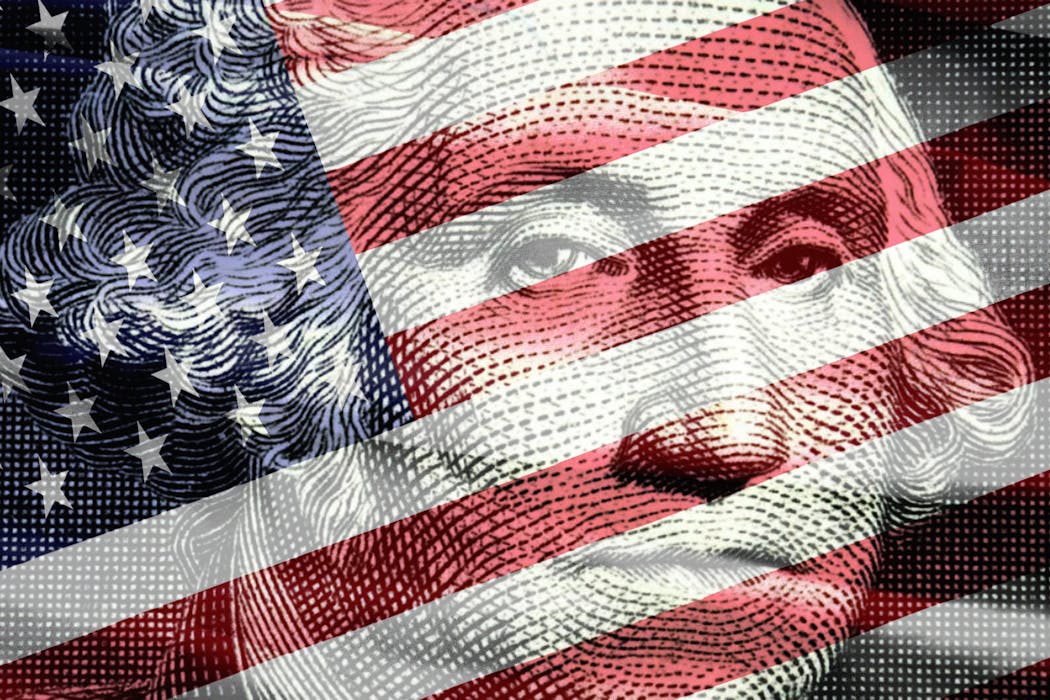
George Washington believed restraint was the truest measure of American national interest. Elizabeth Fernandez/Getty Images

Foreign policy is usually discussed as a matter of national interests – oil flows, borders, treaties, fleets. But there is a problem: “national interest” is an inherently ambiguous phrase. Although it is often presented as an expression of sheer force, its effectiveness ultimately rests on something softer – the manner in which a government performs moral authority and projects credibility to the world.

The style of that performance is part of the substance, not just its packaging. On Jan. 4, 2026, on ABC’s This Week, that style shifted abruptly for the U.S.

Anchor George Stephanopoulos pressed Secretary of State Marco Rubio to explain President Donald Trump’s declaration that “the United States is going to run Venezuela.” Under what authority, Stephanopoulos asked, could such a claim possibly stand?

Rubio dodged the question. He just said that the United States would enact “a quarantine on their oil.” Venezuela’s economy would remain frozen, unable “to move forward until the conditions that are in the national interest of the United States and the interests of the Venezuelan people are met.”

Rubio’s point presumed authority rather than pausing to justify it. It was a diplomacy of dominance – coercion dressed up as concern. The unspoken assumption was pure wishful thinking: that “national interest” would immediately prevail, flowing smoothly in all directions.

As a historian of the early republic and the author of a biography of George Washington, I’ve been reminded these days of how Washington – amid harsh storms unlike anything the country faces today – forged a vision that treated restraint, not self-justifying unilateralism, as the truest measure of American national interest.

ABC’s George Stephanopoulos interviewed Secretary of State Marco Rubio on Jan. 4, 2026.

Acknowledging burdens and consequences

In the 1790s, the United States faced a world ruled by corsairs and kings. The Atlantic was not yet an American lake. Spain blocked its western river, the Mississippi. Britain still held forts on U.S. soil. Revolutionary France tried to recruit American passions for European wars. And in North Africa, petty “Regencies,” as Europe politely called them, seized American ships at will.

The young nation was humiliated before it was strong. George Washington understood that humiliation intimately. Independence had freed America from Britain, but not from the world.

“Would to Heaven we had a navy,” he confessed to the Marquis de Lafayette in 1786, longing for ships “to reform those enemies to mankind, or crush them into nonexistence.” But such a fierce wish never became Washington’s foreign policy. Visibility invited peril; peril required composure.

In 1785, two American merchant vessels – the Maria of Boston and the Dauphin of Philadelphia – were captured by Algerian cruisers. Twenty-one sailors were chained, stripped and sold into slavery. Their families begged the government to pay ransom. Negotiators proposed paying tribute, a kind of protection-in-advance payment system. The price kept rising.

President Washington refused to be rushed by either pity or anger. Paying the extravagant sum, he warned his cabinet in 1789, “might establish a precedent which would always operate and be very burthensome if yielded to.”

Precedent mattered to Washington. A republic must measure not only what it can afford, but what it will be forced to feel tomorrow because of what it pays today.

The Trump administration’s approach to Venezuela demonstrates the opposite instinct. It represents a readiness to take unprecedented steps without pausing to acknowledge their burden and consequences.

Washington feared that habit of nearsightedness in foreign affairs precisely because he believed it corrupted empires – and could corrupt republics as well.

Neutrality as ‘emotional discipline’

The storms soon multiplied.

By 1793, Europe was already “pregnant with great events,” Washington wrote to Lafayette. The French Revolution, welcomed at first as a triumph of “The Rights of Man,” slid into terror and general war.

Citizen Genet, the French envoy to the United States, landed in Charleston, South Carolina, and proceeded to enlist American citizens’ help in France’s war with Britain by commissioning privateers in U.S. ports to prey on British ships. Genet did not request permission to do this from Washington.

Gratitude to France – indispensable ally during the Revolution, provider of fleets, soldiers and hard-to-forget loans – clashed with alarm at her new demands. A single misstep could have dragged the United States into another catastrophic conflict.

And yet, Washington responded to Genet not with rashness and bravado but with restraint made public law.

The 1793 Proclamation of Neutrality insisted that the “duty and interest of the United States” required “a conduct friendly and impartial toward the belligerent powers.” Neutrality was an emotional discipline – the only source of authority.

Friendliness: strategy, not concession

President Washington knew that the road to successful pursuit of national interests was paved with international credibility.

Washington wanted America “to be little heard of in the great world of Politics,” preferring instead “to exchange Commodities & live in peace & amity with all the inhabitants of the earth.”

The first president pitched the republic’s voice toward ordinary people rather than rival powers. He spoke of “inhabitants,” not foreign enemies. He treated restraint – not self-justifying unilateralism – as the truest measure of national interest.

An engraving of the head of an 18th century man in profile.
At his presidency’s end, George Washington wrote to fellow statesman Gouverneur Morris, ‘My policy has been, and will continue… to be upon friendly terms with, but independent of, all the nations of the earth.’
Library of Congress

Even when insulted or thwarted – by Spanish intrigues on the Florida frontier, by British seizures in the Caribbean, by pamphleteers accusing him of being a monarch in disguise – Washington’s tone remained measured.

On March 4, 1797, he would leave the presidency. His final creed was simple and devout: “My policy has been, and will continue … to be upon friendly terms with, but independent of, all the nations of the earth.”

For Washington, friendliness was a strategy, not a concession. The republic would treat other nations with civility precisely in order to remain independent of their appetites and quarrels.

Foreign policy as civic mirror

The statements from the Trump administration about Venezuela revive habits Washington once deplored: sovereignty managed through fear, pressure enforced by economic asphyxiation, domination smoothed over with promises of kindness. In this performance, U.S. interests function as a blank check, and restraint appears obsolete.

Yet foreign policy has never been only a ledger of advantage. It is also a civic mirror: the emotional register of a government that tells citizens what kind of nation is acting in their name, and whether it tries to balance national interest with responsibilities to others.

Washington believed America’s legitimacy abroad depended on patience and respect for the autonomy of others. The current approach to Caracas announces a different imagination: a power that boasts of quarantines, sets conditions – and calls the result partnership.

A republic must still defend its interests. But I believe it should also defend the temperament that made those interests compatible with independence in the first place. Washington’s America learned to stand among stronger powers without demanding to run them.

The question asked on “This Week,” then, is only the beginning.

The deeper question remains whether the United States will continue to perform power with the discipline of a constitutional republic – or surrender that discipline to the easy allure of what only seems to serve national interest, but fails to build credibility or relationships that endure.

The Conversation

Maurizio Valsania does not work for, consult, own shares in or receive funding from any company or organization that would benefit from this article, and has disclosed no relevant affiliations beyond their academic appointment.

ref. George Washington’s foreign policy was built on respect for other nations and patient consideration of future burdens – https://theconversation.com/george-washingtons-foreign-policy-was-built-on-respect-for-other-nations-and-patient-consideration-of-future-burdens-272934

The 6-7 craze offered a brief window into the hidden world of children

Source: The Conversation – USA (2) – By Rebekah Willett, Professor in the Information School, University of Wisconsin-Madison

There’s a long tradition of secret languages, playground games and nonsensical rituals among kids. Heritage Art/Heritage Images via Getty Image

Many adults are breathing a sigh of relief as the 6-7 meme fades away as one of the biggest kid-led global fads of 2025.

In case you managed to miss it, 6-7 is a slang term – spoken aloud as “six seven” – accompanied by an arm gesture that mimics someone weighing something in their hands.

It has no real meaning, but it spawned countless videos across various platforms and infiltrated schools and homes across the globe. Shouts of “6-7” disrupted classrooms and rained down at sporting events. Think pieces proliferated.

For the most part, adults responded with mild annoyance and confusion.

But as media scholars who study children’s culture, we didn’t view the meme with bewilderment or exasperation. Instead, we thought back to our own childhoods on three different continents – and all the secret languages we spoke.

There was Pig Latin. The cool “S” doodled on countless worksheets and bathroom stalls. Forming an L-shape with our thumb and index finger to insult someone. Remixing the words of hand-clapping games from previous generations.

6-7 is only the latest example of these long-standing practices – and though the gesture might not mean much to adults, it says a lot about children’s play, their social lives and their desire for power.

The irresistible allure of 6-7

You can see this longing for power in classic play like spying on adults and in games like “king of the hill.”

Vintage photograph of two young boys peering through a crack in a door.
Kids spend much of their days watched and controlled – and will jump at the chance to turn the tables.
H. Armstrong Roberts/ClassicStock/Getty Images

A typical school day involves a tight schedule of adult-directed activities; kids have little time or space for agency.

But during those in-between times when children are able to stealthily evade adult surveillance – on playgrounds, on the internet and even when stuck at home during the pandemic – children’s culture can thrive. In these spaces, they can make the rules. They set the terms. And if it confuses adults, all the better.

As 6-7 went viral, teachers complained that random outbursts by their students were interrupting their lessons. Some started avoiding asking any kind of question that might result in an answer of 67. The trend migrated from schools to sports arenas and restaurants: In-N-Out Burger ended up banning the number 67 from their ticket ordering system.

The meaninglessness of 6-7 made it easy to create a sense of inclusion and exclusion – and to annoy adults, who strained to decipher hidden meanings. In the U.S., siblings and friends dressed as the numbers 6-7 for Halloween. And in Australia, it was rumored that houses with 6-7 in their address were going for astronomical prices.

Remixing games and rhymes

Since before World War I, historians have documented children’s use of secret languages like “back slang,” which happens when words are phonetically spoken backwards. And nonsense words and phrases have long proliferated in children’s culture: Recent examples include “booyah,” “skibidi” and “talk to the hand.”

6-7 also coincides with a long history of children revising, adapting and remixing games and rhymes.

For example, in our three countries – the U.S., Australia and South Korea – we’ve encountered endless variations of the game of “tag.” Sometimes the chasers pretend to be the dementors from Harry Potter. Other times the chasers have pretended to be the COVID-19 virus. Or we’ll see them incorporate their immediate surroundings, like designating playground equipment as “home” or “safe.”

Similar games can spread among children around the world. In South Korea, “Mugunghwa kkochi pieotseumnida” – which roughly translates to “The rose of Sharon has bloomed,” a reference to South Korea’s national flower – is similar to the game “Red Light, Green Light” in English-speaking countries. In the game “Hwang-ma!,” South Korean children in the early aughts shouted the word and playfully struck a peer upon seeing a rare, gold-colored car, a game similar to “Punch Buggy” and “Slug Bug” in the U.S. and Australia.

A group of young children play a game in a field on an autumn day.
Variations of ‘Red Light, Green Light’ exist around the world.
Jarek Tuszyński/Wikimedia Commons, CC BY-SA

Historically, children have reworked rhymes and clapping games to draw on popular culture of the day. “Georgie Best, Superstar,” sung to the tune of “Jesus Christ Superstar,” was a popular chant on U.K. playgrounds in the 1970s that celebrated the legendary soccer player George Best. And a variation of the clapping game “I went to a Chinese Restaurant” included the lyrics “My name is, Elvis Presley, girls are sexy, Sitting on the back seat, drinking Pepsi.”

Making space for children’s culture

One reason 6-7 became so popular is the low barrier to entry: Saying “6-7” and doing the accompanying hand movement is easy to pick up and translate into different cultural contexts. The simplicity of the meme allowed young Korean children to repeat the phrase in English. And deaf children have participated by signing the meme.

Because the social worlds of children now exist across a range of online spaces, 6-7 has been able to seamlessly spread and evolve. On the gaming platform Roblox, for example, children can create avatars that resemble 6-7 and play games that feature the numbers.

The strange words, nonsensical games and creative play of your childhood might seem ridiculous today. But there’s real value in these hidden worlds.

With or without access to the internet, children will continue to transform language and games to suit their needs – which, yes, includes getting under the skin of adults.

A great deal of attention is given to the omnipresence of digital technologies in children’s lives, but we think it’s worth taking a moment to appreciate the way children are using these technologies to innovate and connect in ways both creative and mundane.

The Conversation

The authors do not work for, consult, own shares in or receive funding from any company or organization that would benefit from this article, and have disclosed no relevant affiliations beyond their academic appointment.

ref. The 6-7 craze offered a brief window into the hidden world of children – https://theconversation.com/the-6-7-craze-offered-a-brief-window-into-the-hidden-world-of-children-272327

The 17th-century Pueblo leader who fought for independence from colonial rule – long before the American Revolution

Source: The Conversation – USA (3) – By Peter C. Mancall, Andrew W. Mellon Professor of the Humanities, USC Dornsife College of Letters, Arts and Sciences

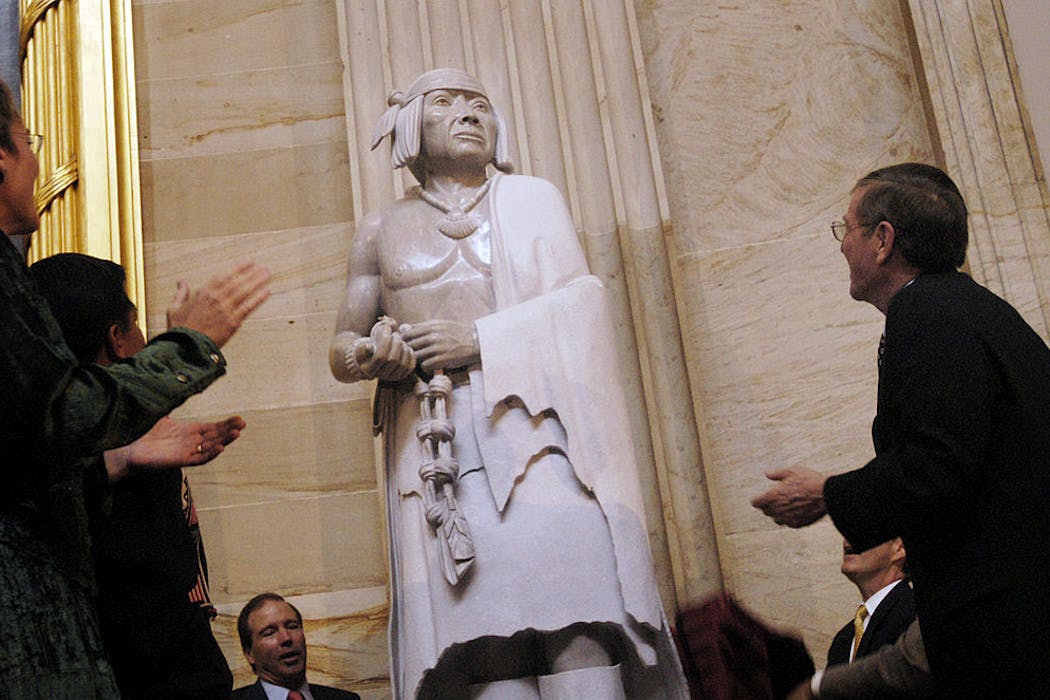
Po’pay’s statue in the U.S. Capitol, representing the state of New Mexico, was dedicated in 2005. Chris Maddaloni/Roll Call/Getty Images

The U.S. Capitol’s Statuary Hall Collection contains 100 sculptures: two luminaries from each state. They include many familiar figures, such as Helen Keller, Johnny Cash, Ronald Reagan and Amelia Earhart. There are a few from the Colonial era, including founders such as Samuel Adams and George Washington.

Some will also be represented in the Garden of American Heroes that the Trump administration plans to build. The monument will eventually have 250 statues, and the administration has proposed a list of names. Among the figures in the Capitol who did not make the cut is Po’pay, a 17th-century Native American leader from what is now New Mexico. The inscription on his statue in the Capitol identifies him as “Holy Man – Farmer – Defender.”

As a historian of early America, I see Po’pay’s absence in the to-be-built shrine as unfortunate – but not surprising. After all, he led the Pueblo Revolt of 1680: the most successful Indigenous rebellion against colonization in the history of what became the United States. He and his followers sought political independence and religious freedom, issues central to Americans’ sense of themselves.

Spanish conquest of New Mexico

Religious movements and figures played a central role in early American history. For example, as I have frequently written, Thanksgiving is linked to Protestant religious dissenters we call Pilgrims and Puritans. American myth tells us that those hearty souls braved an ocean crossing and a contest with the “wilderness,” in the words of the Plymouth colony’s governor, William Bradford. They did so, according to our legends, to pursue their faith – though the historical record reveals that economics also drove their decision to migrate.

Po’pay, a Tewa religious leader born around 1630, did not have to cross an ocean to prove his commitment to his faith. Instead, in the face of oppression, he wanted to restore the traditions and practices of his homeland: Ohkay Owingeh, which Spanish colonizers renamed San Juan Pueblo, in what is now New Mexico. The Tewa are one of many Pueblo peoples living in the Southwest.

Pueblo lands had witnessed spasms of brutal violence since Spanish colonizers arrived at the end of the 16th century. In 1598, a group of Spanish soldiers arrived in Acoma, a famous Pueblo city known to the Spanish through earlier reports from the explorer Francisco Coronado. The oldest settlement within the territorial boundaries of the United States, Acoma has been occupied almost continuously since the 12th century.

A photo shows a rocky mesa with a cluster of stone or adobe homes on top.
Acoma Pueblo has been inhabited for almost a millennium.
Scott Catron/Flickr via Wikimedia Commons, CC BY-SA

At the end of the 16th century, conflict erupted when residents of Acoma refused the soldiers’ demands for food. Locals killed the commander and around a dozen others. In response, the provincial governor, Juan de Oñate, consulted with Franciscan priests and then ordered a counterattack.

The Spanish killed at least 800 residents – 300 women and children and 500 men – and perhaps as many as 1,500. In a subsequent trial, the colonizers ruled that the people of Acoma had violated their “obligations” to the Spanish king. Judges sold almost 600 survivors into slavery and amputated one foot from each man 25 or over.

In the years that followed, Spanish soldiers captured Indigenous people across the Southwest and sold them into slavery, too. For Pueblos and other Indigenous peoples, the intertwined military, political and spiritual invasions threatened seemingly every aspect of their lives.

For crown and cross

The violence at Acoma did not dissuade Spaniards eager to migrate. Around 1608, horse- and oxen-drawn carriages traveled into the territory to build a new capital, which the Spanish called Santa Fe. In addition to ferrying soldiers and farming families, those wagons also carried Franciscan friars, crucifixes, Bibles and other items the brothers needed to promote Catholicism among those they deemed to be heathens.

Over the ensuing decades, periodic conflicts pitted Indigenous peoples of various pueblos against the colonizers. Nevertheless, Spaniards erected churches in Native communities, and Franciscans often claimed that many Indigenous people welcomed their presence.

Like other Christian missionaries in the Western Hemisphere, Franciscans of the day argued that Indigenous peoples needed to abandon their traditional religions as part of the process of conversion. But many in New Mexico retained older ways. They continued to pray in chambers known as “kivas” and communicate with their deities: Pos’e yemu, for example, whom Tewas believed had the power to bring rain.

A large wooden ladder with three poles, painted white, leans against an adobe wall under a bright blue sky.
A ladder in Acoma leads up to the entrance to a ‘kiva,’ a space often used for spiritual activities.
Ian McKeller/Flickr via Wikimedia Commons, CC BY-SA

In 1675, colonial authorities accused Indigenous religious leaders of killing Franciscans with sorcery. They rounded up suspects, executed three and beat others. They also destroyed kivas. Among those imprisoned and then released was Po’pay.

Pueblo Revolt

The sting of the lash scarred more than human flesh in Pueblo communities. It fed resentment against colonists. Many of the Pueblos focused their animosity on the clerical authorities who justified the brutality of the Spanish conquest.

As the decade came to a close, the region was gripped in a drought that reduced supplies of food and water, pushing Indigenous communities’ frustrations to a tipping point. Po’pay led a rebellion that reached across Pueblo communities, saying that he was following guidance from Pos’e yemu.

On Aug. 11, 1680, Po’pay and his followers unleashed a reign of terror against Spanish soldiers, colonial farmers and Catholic churches. They systematically destroyed religious buildings, whipped statues and crucifixes, abused priests before killing them, and rendered mission bells silent by removing their clappers or drowning them in water. Far outnumbering their opponents, the Pueblos chased the colonizers to Santa Fe and then drove them out of the region.

Po’pay, according to a Native witness named Josephe, reveled in the moment, saying, “Now the God of the Spaniards, who was their father, is dead.” Historians believe that the attack killed at least 400 colonists and soldiers, or about 1 in 6 Spaniards in New Mexico. There had been 33 friars in the province before the uprising. Only 12 survived.

Against kings and coercion

In the aftermath of the Pueblos’ military victory, Po’pay led an effort to eradicate the last vestiges of Catholicism in New Mexico. He ordered that Natives who had converted needed to scrub themselves with yucca branches to remove the stain of baptism. While some churches survived, including San Estevan del Rey Mission Church at Acoma, most of the Spanish friars who had led services in them lay dead.

A black and white photograph of a large adobe building with towers.
An Ansel Adams photograph, taken in the 1930s or ’40s, of the San Estevan del Rey Mission Church in Acoma.
U.S. National Archives and Records Administration via Wikimedia Commons

From 1675 to 1680, the European colonial project came under dire threat across North America. In New England, Metacom’s, or King Philip’s, War – waged between Indigenous groups and English settlers – destroyed scores of communities in one of the most destructive conflicts, measured on a per capita basis, in American history. In Virginia, a dissident hinterland landowner named Nathaniel Bacon led a revolt by aggrieved Colonists that torched the English provincial capital at Jamestown.

In this violent era, as I describe in a forthcoming book, Po’pay became one of the most consequential figures on the continent – and the embodiment of the American idea that people should be free from oppressive rulers and free, too, to practice their faith as they see fit.

Po’pay died in 1688. Four years later, Spanish colonizers returned to New Mexico and once again set out to bring the vast desert and its determined residents back under their control.

But they never erased the legacy of Po’pay, who remains a cultural hero for his defiant stand against king and cross.

The Conversation

Peter C. Mancall does not work for, consult, own shares in or receive funding from any company or organization that would benefit from this article, and has disclosed no relevant affiliations beyond their academic appointment.

ref. The 17th-century Pueblo leader who fought for independence from colonial rule – long before the American Revolution – https://theconversation.com/the-17th-century-pueblo-leader-who-fought-for-independence-from-colonial-rule-long-before-the-american-revolution-270361

Why the Pittsburgh Post-Gazette’s closure exposes a growing threat to democracy

Source: The Conversation – USA – By Victor Pickard, C. Edwin Baker Professor of Media Policy and Political Economy, University of Pennsylvania

The Pittsburgh Post-Gazette announced it will shut down on May 3. AP Photo/Gene J. Puskar

The Pittsburgh Post-Gazette announced on Jan. 7, 2026, that it will cease all operations effective May 3. The daily newspaper, founded in 1786, has been the city’s paper of record for nearly a century and is one of the oldest newspapers in the country.

Block Communications, the company that owns the Post-Gazette, says the paper has lost “hundreds of millions of dollars” during the past two decades. The shuttering of the Post-Gazette comes after a three-year strike by newspaper employees who were asking management for better wages and working conditions. The strike ended in November 2025 after an appellate court ruled in favor of the union workers. The Post-Gazette was found to have violated federal labor law by cutting health care benefits and failing to bargain in good faith. Then, on Jan. 7, the U.S. Supreme Court ruled against the paper, stating that the Post-Gazette was required to adjust its health insurance coverage for union members. Hours later, Block Communications announced that the paper would shut down.

Victor Pickard, an expert on the U.S. media and its role in democracy, was born and raised just outside Pittsburgh. He talked to Cassandra Stone, The Conversation U.S. Pittsburgh editor, about what the closing means for local journalism and democracy.

Newspapers have been in decline for decades. How significant is this closure?

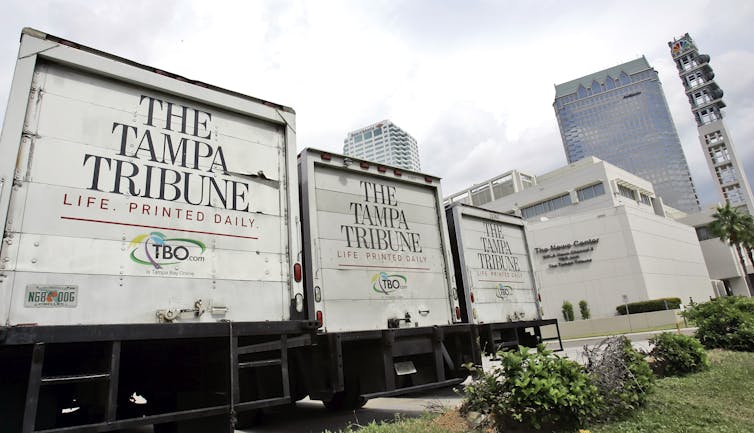
The Pittsburgh Post-Gazette has long been a vital part of the local community throughout western Pennsylvania. This would be the first major metropolitan newspaper closing since the Tampa Tribune shut its doors in 2016, and it’s a devastating blow to residents in that entire area of the state. Block Communications also closed down the Pittsburgh City Paper, which is an alt-weekly newspaper in Pittsburgh, in January 2026. The loss of the Post-Gazette will likely create a major gap in local news coverage.

Two women hug in foreground while people stand around desks in background
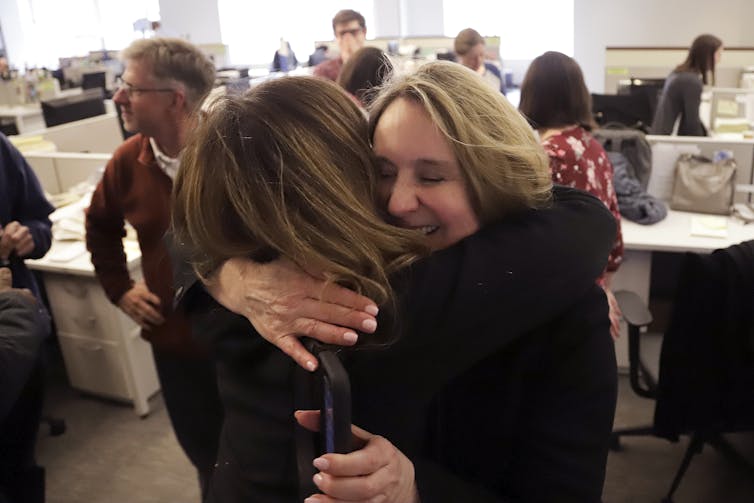
Pittsburgh Post-Gazette employees celebrate in 2019 after it was announced that the paper’s staff coverage of the shooting at the Tree of Life Synagogue was awarded the Pulitzer Prize for Breaking News Reporting.
AP Photo/Gene J. Puskar

How much did the labor strike from 2022-2025 affect the newspaper’s profitability?

I wouldn’t pin the Pittsburgh Post-Gazette’s loss of profitability on the strike – which was legitimate and did have a profound impact – as much as on the structural forces affecting nearly all local newspapers at this time.

Throughout the country, local journalism increasingly is no longer a profitable enterprise. The core business model of being reliant on advertising revenue has irreparably collapsed, and subscriptions rarely generate enough financial support.

Since the early 2000s, the U.S. has lost about 40% of its local newspapers and about 75% of the jobs in newspaper journalism, according to a 2025 report from the Medill School of Journalism at Northwestern University. A study published last year by Rebuild Local News and Muck Rack shows that in 2002, there were roughly 40 journalists per 100,000 people in the United States. Today, it’s down to about eight journalists.

This evisceration of local journalism leads to ever-expanding news deserts across the country, where tens of millions of Americans are living in areas with little or no local news media whatsoever.

How might this affect local civic engagement and democracy in Pittsburgh?

Democracy requires a free and functional press system. When a local newspaper closes, fewer people vote and get involved in local politics, and corruption and polarization increase.

Without local news outlets, people often turn to national news or even “pink slime” news sites. These sites masquerade as official local media institutions but in fact are often propagandistic outlets that amplify misinformation and disinformation.

With the retreat of newspapers, people are receiving less high-quality news and information. This means that people living in these areas are less knowledgeable about politics. They often don’t know who’s running for office in their communities, or what their political platforms are, and there’s just less civic engagement in general.

Backs of three trucks printed with 'The Tampa Tribune'
The Tampa Tribune closed abruptly on May 3, 2016, after covering the city for 123 years.
AP Photo/Chris O’Meara

Most Americans have 24/7 access to unlimited news and information through their social media feeds, including local news influencers. Does this counteract the loss of local reporting?

I think an important distinction needs to be made between carefully reported and fact-checked articles and what seems like a glut of information at our fingertips at all times. Beyond the surface-level appearance of countless news sites, social media reports offer relatively few new facts that have been borne out of rigorous reporting.

You could say that Americans are living in a new golden age of political discourse, where we constantly see a churn of social media-based forms of expression. But that’s not necessarily journalism.

When we’re talking about the collapse of newspapers and fewer newspaper journalists working their beats, it would be an entirely different story if that journalism were being replaced by other institutions, by influencers, by podcasters. But many of those outlets are amplifying opinion-based commentary and punditry.

That’s not the same thing as reporting that adheres to journalistic norms and introduces new information into the world. Losing this kind of knowledge production hurts communities everywhere – from small towns and rural areas to major cities like Pittsburgh.

The Conversation

Victor Pickard does not work for, consult, own shares in or receive funding from any company or organization that would benefit from this article, and has disclosed no relevant affiliations beyond their academic appointment.

ref. Why the Pittsburgh Post-Gazette’s closure exposes a growing threat to democracy – https://theconversation.com/why-the-pittsburgh-post-gazettes-closure-exposes-a-growing-threat-to-democracy-272992

Superheavy-lift rockets like SpaceX’s Starship could transform astronomy by making space telescopes cheaper

Source: The Conversation – USA – By Martin Elvis, Senior Astrophysicist, Smithsonian Institution

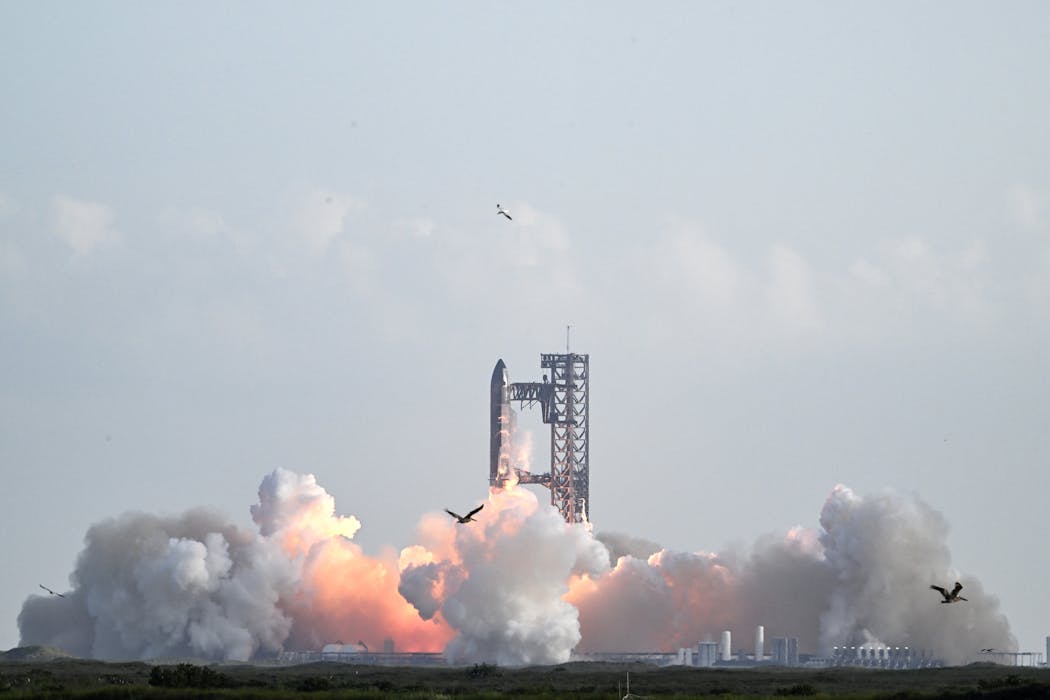
SpaceX’s Starship rocket launches in August 2025. Ronaldo Schemidt/AFP via Getty Images

After a string of dramatic failures, the huge Starship rocket from SpaceX had a fully successful test on Oct. 13, 2025. A couple more test flights, and SpaceX plans to launch it into orbit.

A month later, a rival rocket company, Blue Origin, flew its almost-as-large New Glenn rocket all the way to orbit and sent spacecraft on their way to Mars.

While these successful flights are exciting news for future missions to the Moon as well as other planets, I’ve argued for several years that these superheavy-lift rockets can also boost research in my own specialty, astronomy – the study of stars and galaxies far beyond our solar system – to new heights.

Comparing the sizes of the world’s rockets.

Taking the broad view

Why do I say that? Astronomy needs space. Getting above the atmosphere allows telescopes to detect vastly more of the electromagnetic spectrum than visible light alone. At these heights, telescopes can detect light at much longer and shorter wavelengths, which are otherwise blocked by Earth’s atmosphere.

To get an idea of how that has enriched astronomy, imagine listening to someone play the piano, but only in one octave. The music would sound much richer if they used the full keyboard.

With the broader spectrum in view, astronomers can see objects in the sky that are much colder than stars, but also objects that are far hotter.

How much cooler and hotter? The hottest stars you can see in visible light are about 10 times hotter than the coolest. With the whole infrared-to-X-ray spectrum, the temperatures that come into view can be 1,000 times colder or 1,000 times hotter than regular stars.

Scientists have had nearly 50 years of access to the full light spectrum with sets of increasingly powerful telescopes. Alas, this access has come at an ever-increasing cost, too. The newest telescope is the spectacular James Webb Space Telescope, which cost about US$10 billion and detects a portion of the infrared spectrum. At that forbidding price, NASA can’t afford to match Webb across the spectrum by building its full infrared and X-ray siblings.

A diagram showing the electromagnetic spectrum and which regions of it Hubble, the decomissioned Spitzer and Webb were designed to detect. Hubble detects some UV, visible and IR light, while Webb detects most of the IR spectrum and Spitzer detected about half of the IR spectrum
NASA’s Great Observatories were designed to detect different regions of the electromagnetic spectrum. Spitzer was decommissioned in 2020, a year before Webb launched.
NASA, ESA, CSA, Joseph Olmsted (STScI)

We’ll have to wait a long time even for one more. The estimated date to launch the next “Great Observatory” is a distant 2045 and may be later. The range of notes astronomers can play will shrink, along with our views of the universe.

Escaping the trap with heavy-lift vehicles

These new rockets give us a chance to escape this trap. For the same cost, they can send about 10 times more mass to orbit, and they have bodies about twice as wide, compared with the rockets that have been in use for decades.

Mass matters because telescopes contain heavy mirrors, and the bigger the mirror, the better they work. For example, building Webb’s large mirror meant finding a way to make a superb mirror that was 10 times lighter in weight per square meter than the already lightweight Hubble mirror. The engineers found a solution that was technically sweet but financially costly.

A diagram showing seven rockets lined up. The tallest are SpaceX's Starship and China's Long March 9.
Superheavy-lift rockets like SpaceX’s Starship and NASA’s Space Launch System can carry heavier payloads than smaller rockets, like SpaceX’s Falcon 9 and the European Space Agency’s Ariane V, the latter of which brought the Webb telescope into space.
Holly M. Dinkel and Jason K. Cornelius, CC BY-ND

Similarly, the size of the rocket’s body matters because to fit Webb’s 21-foot-diameter mirror (6.5 meters) into the 13-foot-diameter body (4 meters) of its ride, the Ariane V rocket, it had to fold up like origami for launch. Normally, space missions try to avoid any moving parts, but for Webb they had no choice.

Again, the result was a technical triumph, but the complexity introduced over 300 places where one mistake could have ended the mission. Each one of the over 300 locations had to be 300 times less likely to fail than if there had been only one, pumping up the design, manufacturing and testing requirements – and inflating the cost.

The larger, wider Starship and New Glenn rockets mean that building a Webb-like space telescope today could be done with none of the origami-like folding and unfolding, with their attendant risks, and so be much cheaper.

To deploy, the James Webb Space Telescope’s large, complex mirror had to unfold.

New ideas

This opportunity is being seized by at least three teams. First, a proposed deep infrared telescope called Origins would take advantage of superheavy lift. Scientists at Caltech are studying a potential smaller version called Prima.

Second, an X-ray telescope that can take pictures as sharp as Webb – with a sensitivity to match – would likely use thicker and heavier mirrors than imagined just a few years ago.

And third, a study published in 2025 proposes a very low-frequency radio telescope, GO-LoW, that also takes advantage of using more mass. GO-LoW would be made of 100,000 tiny telescopes, so mass production savings kick in too.

All three of these telescopes would be easily 100 times more sensitive than their predecessors and at least comparable to Webb in their own bands of the spectrum.

It would be ideal if engineers could get these telescopes down to half the cost of a large observatory like Webb. Then, for the same price, NASA could fly two new Great Observatories instead of resigning itself to building one. If it could get the cost down to a third, it could potentially fly a full spectrum-spanning set.

Big challenges, big payoff

Of course, a lot could go wrong. For one thing, these rockets may not perform as advertised, either in capability or cost. Still, investing in a few starting studies won’t cost much and will likely have a big payoff.

For another, like the poet Goethe on his deathbed, we astronomers will always be asking for “more light.” But if we call for yet bigger and more complex telescopes than the already awesome Great Observatories recommended by the National Academies 2020 Astronomy Survey, then we will bring back all the costly issues faced by the Webb designers.

Space agencies have the challenge of keeping the astronomers’ endless desires under strict control – building to cost must come first.

But if agencies can keep astronomers’ ambitions from becoming too astronomical, while taking full advantage of the new design space opened up by the superheavy-lift rockets, then our understanding of the universe could advance beyond imagination in just a decade or so.

The Conversation

Martin Elvis does not work for, consult, own shares in or receive funding from any company or organization that would benefit from this article, and has disclosed no relevant affiliations beyond their academic appointment.

ref. Superheavy-lift rockets like SpaceX’s Starship could transform astronomy by making space telescopes cheaper – https://theconversation.com/superheavy-lift-rockets-like-spacexs-starship-could-transform-astronomy-by-making-space-telescopes-cheaper-270001

Meth inflames and stimulates your brain through similar pathways – new research offers potential avenue to treat meth addiction

Source: The Conversation – USA – By Habibeh Khoshbouei, Professor of Neuroscience, University of Florida

Meth, also known as ice, is as addictive as it is damaging. FlashMovie/iStock via Getty Images Plus

Methamphetamine doesn’t just spike levels of the pleasure-inducing hormone dopamine in the reward pathways of the brain – it also provokes damaging brain inflammation through similar mechanisms.

Meth is addictive because it increases dopamine levels in the brain. While researchers know that meth triggers brain inflammation, whether the immune system also affects the brain’s reward system during drug use has been unclear.

Our work focuses on how dopamine is regulated in the body and the reward pathways of the brain. Dopamine shapes motivation, movement, learning and cognition, and its disruption is linked to a range of neurological and neuropsychiatric disorders, including substance use disorders, ADHD, autism and Parkinson’s disease.

By identifying that meth elevates levels of a key immune molecule that drives both neuroinflammation and dopamine release, our recent findings offer a potential target to treat meth addiction and reduce relapse.

Close-up of a pile of crystal meth
The pleasure of meth comes at a steep cost for body and brain.
James C Hooper/Moment via Getty Images

Dopamine and inflammation

To study how meth and the immune system interact and regulate dopamine levels, we measured the electrical and chemical activity of dopamine neurons in mouse brain specimens treated with either meth or an immune molecule called TNF-α. This molecule is known to induce inflammation in the body.

We found that meth and TNF‑α converge in a part of the brain called the ventral tegmental area, a key reward hub that produces dopamine. In this area of the mouse brain, TNF‑α increased dopamine levels and neuronal activity in similar ways as meth.

These effects depended on two proteins that act as gatekeepers to control the activity of dopamine neurons and dopamine levels. Blocking these gatekeepers disrupted the effects of TNF-α and meth on dopamine neurons.

Diagram of cross-section of brain, with the front area colored blue and two small middle segments colored purple and orange
The ventral tegmental area (orange, near the center of the brain) releases dopamine through multiple pathways.
Casey Henley/Foundations of Neuroscience, CC BY-NC-SA

Our team’s 2025 review of the research on this field adds broader context to our findings: Meth elevates TNF‑α in the brain and the body, and TNF‑α is known to weaken the blood‑brain barrier that regulates which substances can access the brain. If TNF‑α loosens the blood-brain barrier, inflammatory molecules from the blood – as well as disease-causing pathogens – may have increased access to the reward circuitry of the brain, potentially worsening neuronal damage and dysfunction over time.

Importantly, we found that blocking TNF‑α can reduce dopamine release and blunt meth’s effects on dopamine neurons.

Improving treatments for addiction

There is currently no medication for meth addiction that is approved by the Food and Drug Administration. Our findings highlight the role of the immune system in the brain’s reward circuitry, pointing to new drug targets that could potentially lead to better treatments.

This direction of research is especially compelling because multiple therapies targeting TNF‑α are already FDA‑approved for use to treat inflammatory diseases such as rheumatoid arthritis and Crohn’s disease. But these drugs can have serious side effects and require careful study before they can be repurposed for addiction.

It’s unclear whether modulating TNF-α levels can change drug-seeking, craving and relapse‑like behaviors. Further research on the molecular mechanisms behind how TNF-α affects dopamine and the immune system can offer new treatment strategies for meth addiction.

The Conversation

Habibeh Khoshbouei receives funding from NIH grants.

Marcelo Febo receives funding from NIH.

ref. Meth inflames and stimulates your brain through similar pathways – new research offers potential avenue to treat meth addiction – https://theconversation.com/meth-inflames-and-stimulates-your-brain-through-similar-pathways-new-research-offers-potential-avenue-to-treat-meth-addiction-272484

Americans have had their mail-in ballots counted after Election Day for generations − a Supreme Court ruling could end the practice

Source: The Conversation – USA – By Amanda Klekowski von Koppenfels, Honorary Reader in MIgration and Politics, University of Kent

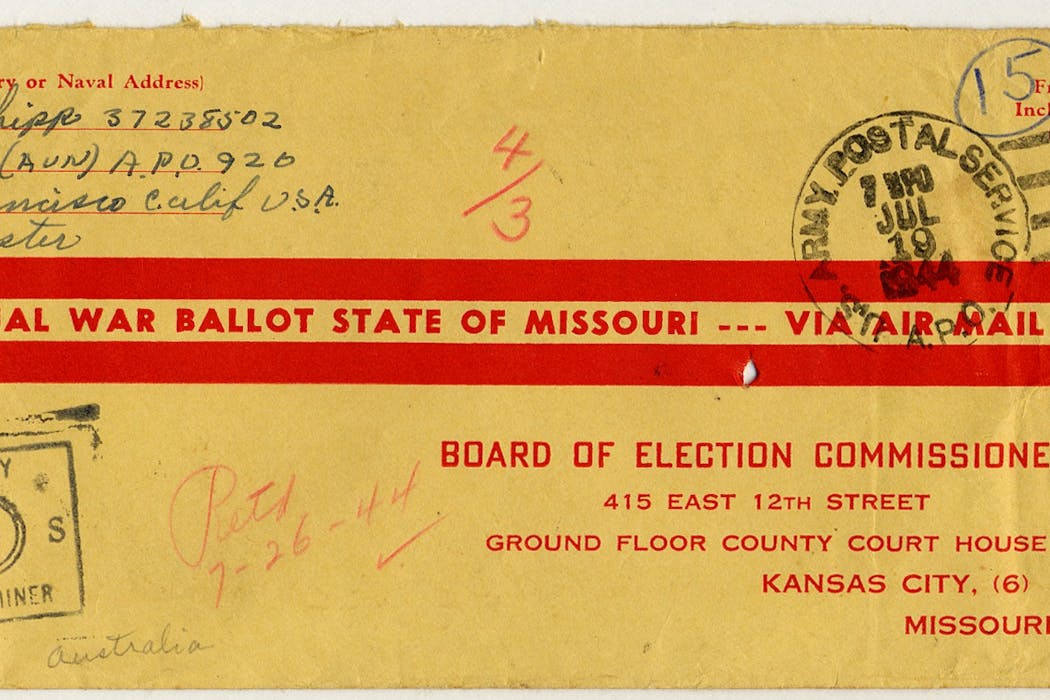
An active service member used this election war ballot cover to mail in a vote in the 1944 presidential election. National Postal Museum, Smithsonian Institution

What is an election and when is it completed?

That’s the legal question at the heart of Watson v. Republican National Committee, the mail-in ballot case the U.S. Supreme Court took up in November 2025. The court will most likely hand down a ruling before the midterm elections in 2026.

Mississippi law, similar to that of 15 other states, allows for mail-in ballots postmarked by Election Day to be received by election officials up to five days later, then counted.

But the Republican National Committee is arguing in the Watson case, which was brought against the state of Mississippi in January 2024, that this procedure is not legal. An election, the argument goes, includes the receipt of ballots; therefore, all ballots must be in hand at the close of Election Day – the congressionally established “Tuesday after the first Monday” in November.

President Donald Trump’s March 2025 executive rrder 14248 similarly calls for ballots to be received no later than Election Day if they are to be counted, saying that doing otherwise “is like allowing persons who arrive 3 days after Election Day, perhaps after a winner has been declared, to vote in person at a former voting precinct, which would be absurd.”

The Supreme Court’s decision on mail-in ballots could have major consequences for the 47.6 million Americans who voted by mail in 2024, as well as more than 900,000 overseas military and civilian voters covered under the Uniformed and Overseas Citizens Absentee Voting Act. More than 28 million of the 47.6 million domestic mail-in votes and nearly 800,000 of the 900,000 votes cast and counted under the uniformed and overseas citizens act were from states that allow for return of mail-in ballots after Election Day.

As a political scientist and scholar of migration, I have conducted research for over 20 years on military service members and civilian U.S. citizens living overseas.

Currently, 16 states plus the District of Columbia allow domestic absentee ballots that are postmarked by Election Day to be counted if they arrive after Election Day; 29 states extend that right to military and civilian voters living overseas, recognizing that international mail often delays ballot return.

According to the U.S Constitution, states administer elections. Under the equal protection clause, however, the federal government can pass legislation to prevent inequalities in access to voting. This includes facilitating the right to vote of military service members and civilian U.S. citizens living overseas.

The Supreme Court will decide whether federal law overrides state election administration in determining whether ballots that are postmarked by Election Day but arrive later can be counted.

A 250-year history

The history of absentee, or mail-in, ballots in U.S. elections stretches back 2½ centuries.

Soldiers first voted by mail during the American Revolution, when men from the town of Hollis, New Hampshire, wrote their town leaders asking to have votes counted in local elections.

Pennsylvania passed the first law allowing soldiers to vote absentee in the War of 1812, a right expanded in the Civil War when 19 Union and seven Confederate states allowed soldiers to vote absentee.

Yellowed postmarked envelope with state election and tally-sheet labels and a clerk-of-the-court address
Civil war soldiers who were away from their home state during the 1864 Ohio state election voted on tally sheets that were mailed in envelopes like this one.
National Postal Museum, Smithsonian Institution

Absentee voting for soldiers from all states was codified in federal law in 1942. A 1944 amendment specified that ballots that were postmarked by Election Day and arrived within two weeks after Election Day could be counted.

Some civilians residing overseas, including civilian government employees and spouses and dependents of military and civilian employees, gained absentee ballot voting rights with the 1955 Federal Voting Assistance Act. All overseas U.S. citizens were enfranchised with the 1975 Overseas Citizens Voting Act. The 1986 Uniformed and Overseas Citizens Absentee Voting Act consolidated military and civilian voting rules. Later laws addressed electronic communications.

Over 1,000 military service members requested an absentee ballot in Mississippi’s 2024 election, along with nearly 1,000 civilian overseas voters. Nationally, more than 900,000 people voted in 2024 under the uniformed and overseas citizens act.

Many of these U.S. citizens would be affected by a ballot receipt deadline on Election Day. Their votes, coming from around the world, are often not able to be counted because of late arrival.

Yellowed ballot titled Official Federal War Ballot with instructions and write-in boxes
The Official Federal War Ballot, issued in 1944, allowed U.S. armed forces members stationed outside the country to vote.
National Postal Museum, Smithsonian Institution

Under the magnifying glass in Florida

Overseas absentee military and civilian ballots came to widespread notice in Florida in the 2000 presidential election. That election – and ultimately the presidency — centered on state election law being waived by canvassing boards under pressure from the Republican Party to count military and civilian absentee ballots received after Election Day.

The Supreme Court decided in December 2000 to stop further counting of mail-in ballots received after Election Day because of tight certification deadlines, with the Electoral College meeting just six days later.

Congress was concerned about the unequal treatment of ballots at home and abroad in the 2000 election. To move toward addressing these concerns, Congress passed the Help America Vote Act in 2002, which includes measures to facilitate overseas voting.

Ensuring that everyone gets a vote

Increasing mail-in voting has been a question of making sure everyone who qualifies to vote can do so. Oregon was the first state, in 1998, to offer mail-in voting. Surveys have shown that more Democrats than Republicans voted by mail in 2020. Sending ballots to all voters reduces that gap.

By 2020, 33 states offered “no excuse” domestic absentee voting, with others expanding or facilitating mail-in voting during the COVID-19 pandemic that year.

The Federal Voting Assistance Program is charged with making it easier for overseas voters to vote. It continues to find obstacles, including problems in returning ballots on time. Meanwhile, Florida election supervisors in November 2025 requested that Florida officials reinstate a checkbox that was dropped from Florida absentee ballots in 2021. The checkbox allowed the voter to request an absentee ballot for the next election.

Mail-in ballot security

Following concerns about the security of mail-in ballots in the 2000 election in Florida, the 2002 Help America Vote Act required that all states have a minimum security requirement.

The multiple levels of scrutiny include signature comparison, ballot tracking and penalties for malfeasance from the moment of registration to ballot request, to ballot receipt. With these layers of security there were only an estimated four fraudulent votes cast for every 10 million mail-in ballots in the 2016, 2018, 2020 and 2022 U.S. general elections.

Mail-in voting elsewhere

The United States is one of 32 countries worldwide that allow mail-in voting for at least some of its citizens. These include the United Kingdom since 1945 and Germany since 1957.

In Germany’s federal elections in 2025, 37% of all voters, or 18.5 million citizens, cast a ballot by mail. German citizens who are eligible to vote automatically receive ballots. In the United Kingdom’s 2024 election, just under 5%, or nearly 1.3 million citizens, applied for mail-in ballots.

The bottom line

The Supreme Court case could reshape the voting landscape in the United States, potentially affecting 47 million people, including some 5 million military and civilian voters living abroad. Watson v. Republican National Committee could also affect laws in 29 states. The outcome of the case has the potential to make voting more difficult for millions of civilian and military voters at home and abroad.

The Conversation

Amanda Klekowski von Koppenfels does not work for, consult, own shares in or receive funding from any company or organization that would benefit from this article, and has disclosed no relevant affiliations beyond their academic appointment.

ref. Americans have had their mail-in ballots counted after Election Day for generations − a Supreme Court ruling could end the practice – https://theconversation.com/americans-have-had-their-mail-in-ballots-counted-after-election-day-for-generations-a-supreme-court-ruling-could-end-the-practice-267409

Live healthier in 2026 by breathing cleaner air at home

Source: The Conversation – USA (2) – By Katelyn Richard, Ph.D. Candidate in Analytical Chemistry, Colorado State University

It’s not hard to breathe easy at home. Milan Markovic/E+ via Getty Images

I have a health goal for the new year that doesn’t require me to get out of bed earlier or eat fewer cookies. I am an atmospheric chemist and will be committing to clean air at home.

People in the U.S. spend as much as 90% of their lives indoors. Overall, air pollution is responsible for approximately 135,000 premature deaths per year in the U.S. And levels of some chemicals can be two to five times higher in indoor air than outdoors.

Fortunately, there are some straightforward ways to improve your home’s air quality this year, in three major categories of activity.

Cooking

Cooking is a major source of indoor air pollution.

A person stirs vegetables in a frying pan on a gas stove.
It looks delicious, but what are you breathing?
Grace Cary/Moment via Getty Images

Not all chemicals that cooking produces are bad, but some react to form other chemicals that like to clump together to form particulate matter. When inhaled, these particles enter the lungs and can then pass into the bloodstream, increasing people’s risk of heart disease and decreasing lung function.

The amount of particulate matter produced from your cooking depends on the food type, oil used and cooking temperature. High-fat-content foods, such as cheese, pork and bacon, emit the most particles, especially when cooked at high temperatures. Sunflower oil produces the least amount of particulate matter, followed by vegetable oil and then olive oil.

Cooking with a gas stove produces more particulate matter than with an electric stove, and the gas stove also emits other hazardous chemicals such as nitrogen dioxide and benzene.

Two simple and effective measures to keep kitchen air clean and prevent particulate matter from spreading through the home are using your range hood fan and opening nearby windows while cooking. The suction will move harmful chemicals out of your home and away from your lungs, and the fresh air will dilute what remains.

Personal care

In large cities such as Los Angeles and New York City, there are enough volatile organic chemicals from consumer products – paints, adhesives and personal care products – in the outdoor air to rival those produced by traffic and industry. Many of those products are first used indoors before they escape outside.

A person takes clothes out of a washing machine and holds them to her face.
Are your laundry detergent and fabric softener helping pollute your home?
PonyWang/E+ via Getty Images

Government regulations limit the amount of chemicals allowed in some kinds of consumer products, such as adhesives and construction materials, because of their contribution to smog, but personal care products that contain fragrances remain largely unregulated.

Many common options for shampoo, conditioner, mousse, body wash, deodorant, lotion, laundry detergent and dryer sheets contain fragrance mixes composed of several chemicals, with the sole purpose of providing a pleasant aroma to consumer products. Fragrances release volatile organic compounds such as limonene, linalool, galaxolide, eugenol and diethyl phthalate that can react to form particulate matter. In addition to health risks from particulate matter formation, strong fragrances can trigger headaches, difficulty breathing, skin irritation and other physical responses that warrant concern.

I’m not suggesting you be smelly or live an unscented life. But consider whether you could choose perhaps three products that have your very favorite scents, and for the others buy fragrance-free versions when you need to resupply. That would reduce the volatile organic compounds and the ensuing potential for particulate matter formation without really changing how you smell.

Cleaning

Cleaning your home can improve indoor air quality by temporarily reducing the amount of chemicals on surfaces that can find their way back into the air. For example, oleic acid from cooking, squalene from human skin and bisphenol A from hard plastics can remain on surfaces for years if undisturbed.

A person wearing yellow gloves holds a bucket of cleaning supplies.
What’s in those bottles, and is it bad for your lungs?
Nanci Santos/iStock/Getty Images Plus

But there’s a caveat: Cleaners are made of strong chemicals, designed to disinfect, degrease and eliminate odors, that may do more harm for air quality than good. To that end, the healthiest option may be found by carefully choosing the right cleaner for the job. For less intensive tasks like dusting or cleaning crumbs off the counter, consider avoiding strong disinfectants like bleach, hydrogen peroxide and a category of chemicals called quaternary ammonium compounds that can often be found in disinfectants, hair products and fabric softeners.

However, if you are cleaning the bathroom or a forgotten, moldy leftovers container, you may prefer a stronger disinfecting product. Be aware that studies have found bleach cleaners can produce harmful chlorinated byproducts, such as chloroform and carbon tetrachloride, which are possible carcinogens and worth avoiding altogether.

Still, nearly all commercially available cleaning products contain volatile organic compounds – like limonene for citrus scent, lactic acid for limescale and bacteria removal, and 2-phenoxyethanol for product preservation – that will increase chemical and particulate matter concentrations in the immediate area.

In this case, dilution is key to limiting your exposure. Increase ventilation while using these products by running the bathroom fan, opening windows while you clean, and using only as much of a cleaning product as is really required to do the job.

Overall improvements

Opening windows is an effective and often overlooked solution to improve indoor air quality. Chemicals that may be harmful to you in a closed space, where they are more concentrated, become less harmful when they are diluted and spread throughout the massive outdoor atmosphere. But avoid opening windows when smog, ozone or wildfire smoke levels are high outside, which would create an opportunity for outdoor air pollution to come indoors.

Luckily, your city or your neighbors are likely collecting outdoor air quality data that is publicly available to you, so you can track whether to open your windows.

A box fan sits on top of a square of air filters.
A Corsi-Rosenthal box is an inexpensive and very effective homemade air filter.
Festucarubra via Wikimedia Commons, CC BY-SA

If air pollution is too high outside, an indoor air cleaner may be a better option. And you don’t have to shell out big bucks, either. Air quality engineers have shown that a homemade air cleaner using a box fan, four air filters and duct tape – all commonly available at hardware stores or online – can cost under $70 and be as effective at cleaning the air as factory-made appliances.

Overall, the best way to improve air quality is to put fewer harmful chemicals into the air in the first place. While scientists and policymakers can measure and regulate outdoor air quality, it’s up to us all to keep the air in our own homes clean and healthy.

The Conversation

Katelyn Richard does not work for, consult, own shares in or receive funding from any company or organization that would benefit from this article, and has disclosed no relevant affiliations beyond their academic appointment.

ref. Live healthier in 2026 by breathing cleaner air at home – https://theconversation.com/live-healthier-in-2026-by-breathing-cleaner-air-at-home-271474

‘Shared decision-making’ for childhood vaccines sounds empowering – but it may mean less access for families already stretched thin

Source: The Conversation – USA (3) – By Y. Tony Yang, Endowed Professor of Health Policy and Associate Dean, George Washington University

Pediatricians often spend at least 10 minutes of an already-short visit discussing vaccines. Heather Hazzan, SELF Magazine

When federal health officials announced on Jan. 5, 2026, that they were taking six out of 17 vaccines off the childhood immunization schedule, they argued that the move would give parents and caregivers more choice.

Instead of all U.S. children routinely receiving them, these six vaccines are now optional – available to families who request them after consulting a clinician, through a process called shared clinical decision-making, officials said. All six – hepatitis A, hepatitis B, influenza, rotavirus, meningococcal disease and COVID-19 – will still be covered by federal programs such as Medicaid and the Vaccines for Children program, and by private insurers, at least through 2026.

I’m a health policy researcher and the co-author of the book “Vaccine Law and Policy.” I’ve spent years studying how vaccine laws and regulations affect uptake – and who gets left behind when policies change.

Shared decision-making sounds straightforward: a patient and their doctor putting their heads together to make an informed choice. But when applied to routine childhood vaccines, the concept shifts the burden of deliberation onto already-stretched clinicians and parents.

What is shared decision-making?

Shared decision-making is an approach doctors use when there’s genuinely more than one reasonable choice – say, weighing two cancer treatments with different side effects – and the “right” answer depends on what matters most to the patient. The idea is that doctor and patient talk it through together to help make the decision that feels right for that patient.

The Centers for Disease Control and Prevention uses this term for vaccines that aren’t automatically recommended for everyone but that might make sense for some people after a conversation with their doctor.

The key difference is what happens if no conversation takes place. For routine vaccines, the default is yes. Children get the shot unless there’s a medical reason not to. For shared clinical decision-making vaccines, there’s no default. If the conversation doesn’t happen, neither does the vaccine.

That distinction matters because the federal vaccine advisory committee has historically reserved shared decision-making for narrow situations. One example is the HPV vaccine for adults 27 to 45. Most people in that age group have already been exposed to HPV, so the vaccine helps some individuals but won’t change infection rates overall. In that case, a conversation with your doctor makes sense: The benefit depends on your personal circumstances.

Childhood vaccines against rotavirus and hepatitis B are different. They’re not for a small subset of people who might benefit – they prevent tens of thousands of hospitalizations a year.

On Jan. 5, 2026, federal health officials cut six vaccines from the childhood immunization schedule.

When a vaccine is routine, it pops up as an alert in a child’s medical records and becomes part of the clinic’s standard workflow. The nurse draws it up, the doctor gives a heads-up to the parent, and the shot happens before the family leaves. Parents and other caregivers typically encounter it as part of normal pediatric care rather than as a separate decision to weigh.

That’s important because even in well-resourced practices, pediatricians already have limited time to cover many priorities – growth, feeding, sleep, development, safety and any questions the family may have. For lower-income families, who often face even shorter appointments and have fewer options for follow-up visits, that limitation can get magnified.

Studies have found that many low-income families do not receive all recommended care, in part because their time with the doctor during routine visits is so short.

What this looks like for a family coming in for a checkup

Even before this policy change, lower-income children in the U.S. were falling behind on vaccines. From 2011 to 2021, kids in higher-income families got more of their shots on time, while kids in lower-income families didn’t keep pace – and that gap kept widening.

Here’s how the new policy could make things harder:

A mother brings her 2-month-old to a clinic that serves mostly low-income families – the kind of practice that sees 25 or 30 kids a day for well-child visits. Under the old schedule, the visit runs on rails: The nurse pulls up the baby’s chart, sees that six vaccines are due, draws them up, and the doctor gives them during the exam. By the time Mom is buckling the car seat, the shots are done. The whole vaccine portion takes a few minutes.

Under the new policy, two of those vaccines – rotavirus and hepatitis B – are no longer automatic. Now, the doctor has to stop and have a conversation to explain what rotavirus and hepatitis B are, walk through the risks and benefits of each vaccine and ask what the parent wants to do.

That’s fine if there’s time. But this visit is 15 minutes long, and the doctor still has to check the baby’s growth, ask about their feeding and sleep habits and make sure development is on track. If the mother has questions or feels unsure, the clinic might ask her to come back or wait for a phone call. But she took two hours off her shift to get here and she doesn’t have paid leave. There may not be a next visit.

Now multiply that by every baby on the schedule that day. And this is just the 2-month visit. The same thing will happen at other ages when other vaccines that moved out of the “routine” category come due. Something has to give. Often, it’s the vaccines that no longer happen automatically.

Why more ‘choice’ can mean less access

Talking with families about vaccines already takes time. According to the American Academy of Pediatrics, more than half of pediatricians report spending from 10 to 19 minutes counseling parents about vaccines, and nearly 1 in 10 spend more than 20 minutes – often several times per day.

Shared decision-making takes even longer. When vaccines are routine, the system does most of the work. When they require shared decision-making, that work lands on the doctor and parent in an already-packed appointment. The doctor must walk through the disease and the vaccine’s benefits and risks, ask what concerns the parent has, make sure they understand, and then document the whole conversation.

That’s one more barrier to vaccination, and one that won’t fall evenly. Getting medical care can take more time for families with fewer resources. When a policy change adds steps, those families feel it most.

The data might end up showing that some parents “chose” not to vaccinate. But for many families, it won’t really be a choice – it will be a reflection of who had time to come back, and who didn’t.

The Conversation

Y. Tony Yang does not work for, consult, own shares in or receive funding from any company or organization that would benefit from this article, and has disclosed no relevant affiliations beyond their academic appointment.

ref. ‘Shared decision-making’ for childhood vaccines sounds empowering – but it may mean less access for families already stretched thin – https://theconversation.com/shared-decision-making-for-childhood-vaccines-sounds-empowering-but-it-may-mean-less-access-for-families-already-stretched-thin-272815