Prince Andrew didn’t really give up his titles, and truly removing them would be onerous

Source: The Conversation – Canada – By Justin Vovk, Adjunct Professor. History of the Royal Family, Redeemer University

Prince Andrew has announced he will “no longer use my title or the honours which have been conferred upon me.” Translation? Andrew is giving up his Duke of York title.

The decision comes as the Royal Family has faced calls to take action against Andrew over his friendship with Jeffrey Epstein, the notorious convicted sex offender and pedophile who died in prison in 2019.

The late Virginia Giuffre, one of Epstein’s victims, accused Andrew of sexually assaulting her on three occasions when she was 17, allegations he has repeatedly denied. In 2022, she settled a civil lawsuit against him in a Manhattan court for an undisclosed amount and a charitable donation.

PR disaster

Prince Andrew’s public image imploded after his now infamous 2019 interview with BBC’s Newsnight. Speaking to host Emily Maitlis, he presented an incredulous, implausible and, at times, baffling series of denials in an attempt to clear his name of any wrongdoing toward Giuffre when she was underage.

Andrew’s statements during the interview were met with “near universal condemnation” and were a public relations disaster for the prince. He was removed from public duties four days later.


Read more:
A Very Royal Scandal: of all the interviews that rocked the royal family’s brand – Prince Andrew’s might just be the worst


Within a week, he resigned from his role as patron of more than 200 charitable organizations. He was no longer a working member of the Royal Family, but a member he nonetheless remained.

These actions did little to improve public opinion of Andrew or his actions. In June 2020, Newsweek released a poll suggesting almost 60 per cent of Britons felt Andrew should not only be stripped of his titles, but also extradited to the United States to answer for his conduct with Epstein.

A case of déjà vu

The first major step taken by the Royal Family only came in January 2022 once a judge allowed Giuffre’s civil suit to proceed. Andrew was stripped of all his military appointments and honourary positions.

At the same time, Buckingham Palace announced Andrew would no longer be referred to as His Royal Highness. To date, there has been no formal decree stripping Andrew of HRH. It simply disappeared from his name.

That makes his recent announcement to give up his royal titles seem like a case of déjà vu.

Despite appearances to the contrary, he hasn’t actually been renounced or been stripped of those titles or honours. They have simply fallen into dormancy; an inactive limbo. Andrew is still a prince and is still in the line of succession to the British throne, at least for now.

The natural question that many people are now asking is why hasn’t Andrew been formally stripped of these titles? Why is he still a prince? To answer those question, it’s necessary to explain what these titles mean and the process to remove them, which is actually much more complicated than meets the eye.

Andrew’s titles

Let’s start with the prince. As a child of the late Queen Elizabeth, Andrew was born a prince of the United Kingdom. In 1917, King George V issued a royal decree known as Letters Patent. The document stated “that the children of any Sovereign …shall have and at all times hold and enjoy the style title or attribute of Royal Highness with their titular dignity of Prince or Princess.”

There is currently no mechanism for stripping a sovereign’s child of that princely title. But never say never.

In 1986, Queen Elizabeth granted Andrew the titles Duke of York, Earl of Inverness and Baron Killyleagh. These titles are known as peerages.

For centuries, it has been customary for sovereigns to bestow peerages on their sons and heirs. Prince William was made Duke of Cambridge on his wedding day in 2011. Prince Harry was similarly granted the title Duke of Sussex when he married Meghan Markle in 2018.

It has become tradition that certain peerages go to certain members of the Royal Family. Since 1474, for example, the title Duke of York has been bestowed on the sovereign’s second son.

An act of parliament

For nearly 40 years, this title has been synonymous with Prince Andrew. When it was recently announced that he would no longer use his peerage titles, news reports spread like wildfire with headlines declaring he had lost or relinquished his titles. Neither, in fact, has happened.

King Charles can’t simply revoke a peerage once it has been granted. Doing so would require an act of parliament under some pretty extreme circumstances. It has only happened twice in the last two centuries.

In 1798, parliament passed an Act of Attainder (or treason) against Lord Edward Fitzgerald for leading a rebellion in Ireland.

In 1917, parliament passed the Titles Deprivation Act during the First World War. Several German princes held British titles because they descended from Queen Victoria. The act provided parliament with a way to deprive enemy German princes of their “British dignities and titles” for fighting against Britain in the war.

Prince Andrew’s recent announcement has done little to deflect public fury away from him. This week, a group of British parliamentarians presented a motion to take legal steps to officially remove his peerages. As more Epstein revelations come to light, Andrew’s troubles are clearly far from over.

The Conversation

Justin Vovk has previously received funding from the Social Sciences and Humanities Council of Canada. He is an advisory board member of the Institute for the Study of the Crown in Canada.

ref. Prince Andrew didn’t really give up his titles, and truly removing them would be onerous – https://theconversation.com/prince-andrew-didnt-really-give-up-his-titles-and-truly-removing-them-would-be-onerous-267940
King, pope, Jedi, Superman: Trump’s social media images exclusively target his base and try to blur political reality

Source: The Conversation – USA – By Andrew Rojecki, Professor of Communication, University of Illinois Chicago

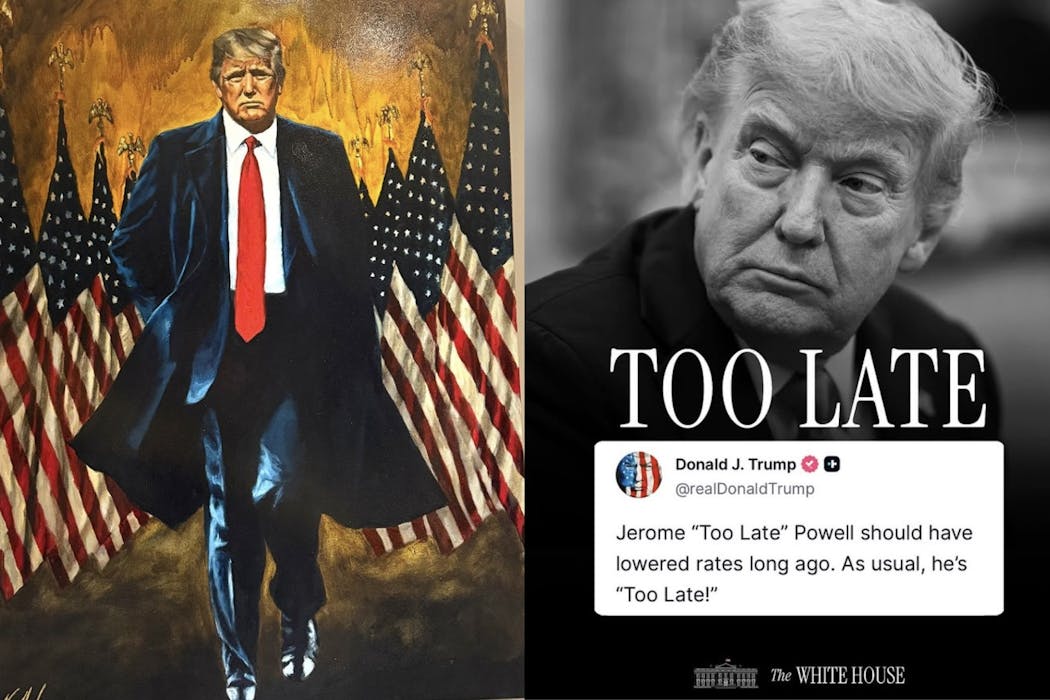
Two Instagram images put out by the White House. White House Instagram

A grim-faced President Donald J. Trump looks out at the reader,
under the headline “LAW AND ORDER.” Graffiti pictured in the corner of the White House Facebook post reads “Death to ICE.” Beneath that, a photo of protesters, choking on tear gas. And underneath it all, a smaller headline: “President Trump Deploys 2,000 National Guard After ICE Agents Attacked, No Mercy for Lawless Riots and Looters.”

The official communication from the White House appeared on Facebook in June 2025, after Trump sent in troops to quell protests against Immigration and Customs Enforcement agents in Los Angeles. Visually, it is melodramatic, almost campy, resembling a TV promotion.

A Facebook post with the words 'Law and Order' at the top, a photo of President Trump and messages about ICE.
A June 2025 Facebook post from the White House.
White House Facebook account

The post is not an outlier.

In the Trump administration, White House social media posts often blur the lines between politics and entertainment, and between reality and illusion.

The White House has released AI images of Trump as the pope, as Superman and as a Star Wars Jedi, ready to do battle with “Radical Left Lunatics” who would bring “Murderers, Drug Lords … & well-known MS-13 Gang Members” into the country.

Most recently, on the weekend of the No Kings protests, both Trump and the White House released a video of the president wearing a crown and piloting a fighter jet, from which he dispenses feces onto a crowd of protesters below.

Underpinning it all is a calculated political strategy: an appeal to Trump’s political base – largely white, working-class, rural or small-town, evangelical and culturally conservative.

As scholars who study communication in politics and the media, we believe the White House’s rhetoric and style is part of a broader global change often found in countries experiencing increased polarization and democratic backsliding.

Trump posted a video on the weekend of the No Kings protests of him dropping feces on a crowd of protesters.

White House style

In the past, national leaders generally favored a professional tone, whether on social or traditional media. Their language was neutral and polished, laced with political jargon.

While populist political communication has become more common along with the proliferation of social media, the communication norms are further altered in Trump White House social media posts.

They are partisan, theatrical and exaggerated. Their tone is almost circuslike. The process of governing is portrayed as a reality TV show, in which political roles are performed with little regard for real-world consequences. Vivid color schemes and stylized imagery convert political messaging into visual spectacle. The language is colloquial, down-to-earth.

Just as other influencers in a variety of domains might create an emotional bond by tailoring social media messages, content, products and services to the needs and likes of individual customers, the White House tailors its content to the beliefs, language and worldview of Trump’s political base.

In doing so, the White House echoes a broad, growing trend in political communication, portraying Trump as “a champion of the people” and using direct and informal communication that appeals to fear and resentment.

Trump White House social media makes no effort to promote social unity or constructive dialogue, or reduce polarization – and often heightens it. Undocumented immigrants, for example, are often portrayed as inherently evil. White House social media amplifies dramatic, emotionally charged content.

In one video, Trump recites a poem about a kind woman who takes in a snake, a stand-in for an immigrant who in reality is a dangerous serpent. “Instead of saying thanks, that snake gave her a vicious bite,” Trump recites.

Talking to the base

While some scholars have called the White House social media style “amateurish,” that hasn’t resulted in change.

The lack of response to negative feedback is partially explained by the strategic goal of these communications: to appeal to the frustrations of Trump’s deeply disaffected political base, which seems to revel in the White House social media style.

Scholars identify a large number of these voters as “the precariat,” a group whose once-stable, union-protected jobs have been outsourced or replaced with low-wage, insecure service work. These workers, many former Democrats, can no longer count on a regular paycheck, benefits or work they can identify with.

As a result, they are more likely to support political candidates whom they believe will respond to their economic instability.

In addition, many of these voters blame a breakdown in what they perceive as the racial pecking order for a loss of social status, especially when compared with more highly educated workers. Many of these workers distrust the media and other elite institutions they feel have failed them. Research shows that they are highly receptive to messages that confirm their grievances and that many regard Trump as their champion.

Trump and the White House social media play to this audience.

On social media, the president is free to violate norms that anger his critics but have little effect on his supporters, who view the current political system as flawed. One example: A White House Valentine’s Day communication that said “Roses are red, violets are blue, come here illegally, and we’ll deport you.”

In addition, Trump and the White House social media use the president’s status as a celebrity, coupled with comedy and spectacle, to immunize the administration from fallout, even among some of its critics.

Trump’s exaggerated gestures, over-the-top language, his lampooning of opponents and his use of caricature to ridicule whole categories of people – including Democrats, the disabled, Muslims, Mexicans and women – is read by his political base as a playful and entertaining take down of political correctness. It may form a sturdy pillar of his support.

But prioritizing entertainment over facts has long-term significance.

Trump’s communication strategies are already setting a global precedent, encouraging other politicians to adopt similar theatrical and polarizing tactics that distort or deny facts.

These methods may energize some audiences but risk alienating others. Informed political engagement is reduced, and democratic backsliding is increasingly a reality.

Although the communication style of the White House is playful and irreverent, it has a serious goal: the diffusion of ideological messages whose intent is to create a sense of strength and righteousness among its supporters.

In simple terms, this is propaganda designed to persuade citizens that the government is strong, its enemies evil and that fellow citizens – “real Americans” – think the same way.

Scholars observe that the White House projection of the often comical images of authority echoes the visual style of authoritarian governments. Both seek to be seen as in control of the social and political order and thereby to discourage dissent.

The chief difference between the two is that in a deeply polarized democracy such as the U.S., citizens interpret these displays of authority in sharply different ways: They build opposition among Trump opponents but support among supporters.

The rising intolerance that results erodes social cohesion, undermines support for democratic norms and weakens trust in institutions. And that opens the door to democratic backsliding.

The Conversation

The authors do not work for, consult, own shares in or receive funding from any company or organization that would benefit from this article, and have disclosed no relevant affiliations beyond their academic appointment.

ref. King, pope, Jedi, Superman: Trump’s social media images exclusively target his base and try to blur political reality – https://theconversation.com/king-pope-jedi-superman-trumps-social-media-images-exclusively-target-his-base-and-try-to-blur-political-reality-259950

Why Canada’s next big infrastructure investment should be in biomanufacturing

Source: The Conversation – Canada – By Megan Levings, Professor of Surgery and Biomedical Engineering, University of British Columbia

While Canada invests billions in infrastructure projects and national defence, a critical area of investment remains overlooked:
biomanufacturing.

Biomanufacturing is the production of biological products like vaccines and cell therapies at the scale and quality needed for human use. It encompasses everything needed to reliably produce and deliver safe, effective biological products from development to commercial-scale production.

This sector requires not only physical infrastructure like bioreactors, clean rooms and equipment, but also the availability of skilled personnel, robust supply chains and quality control — all operating under strict regulatory requirements.

Amid Canada’s ongoing tariff tensions with the United States, investing in domestic biomanufacturing is a way for Canada to strengthen its economic independence while securing critical health infrastructure.

A wake-up call for Canada

Canada once boasted world-class biomanufacturing capacity, particularly in vaccine production. Over the past few decades, however, domestic investment in this sector withered away.

Funding for research, training and infrastructure declined, and as a result, much of the industry migrated to the United States, where more start-up capital, larger markets and more extensive infrastructure supported its growth.

The COVID-19 pandemic made the consequences of this decline painfully clear. Billions of dollars were spent importing life-saving vaccines and therapeutics that could have been made here. While Canada’s dependence on foreign manufacturing predates the pandemic, the crisis highlighted the urgent need for domestic capacity.

Future pandemics are unpredictable, and new Canadian manufacturing infrastructure needs to be poised to act. This is especially important given ongoing vaccine skepticism and hesitancy.

If Canadians need a new vaccine, the country must be able to produce it domestically and support other countries lacking access.

Missed opportunities

Biomanufacturing has expanded beyond vaccines and monoclonal antibodies to include cell and gene therapies and new drug types, such as those based on RNA.

These advanced therapeutic products are highly innovative, but don’t fit neatly into traditional developmental pipelines or regulatory frameworks. Without the necessary manufacturing processes and infrastructure, countries can miss out on economic and health benefits and are vulnerable to future pandemics.

For example, the research to develop the lipid nanoparticle component of an mRNA vaccine was conducted in Canada. Yet when it came time to manufacture, test and distribute the vaccine, Canada lacked the infrastructure and had to rely on foreign suppliers.

Historically, Canada has excelled at research but has struggled to translate breakthroughs into domestic production. With the right investment, Canada could actually reap the benefits of its own innovations.

Recognizing this gap, the federal government has invested $2.3 billion since 2023 to build new facilities capable of manufacturing biologics at the speed and scale for future pandemic responses. These investments also aim to revitalize Canada’s capacity for producing other, more conventional drugs.


Read more:
Canada needs to invest more money into science innovation to help prevent the next global crisis


But more sustained investments are needed — ones on par with funding for other infrastructure projects and national defence. The biomanufacturing sector offers tremendous opportunity for economic growth, significant health benefits for Canadians, and pandemic-preparedness.

The biotech boom

Gaps in Canada’s biomanufacturing capacity spurred the creation of a new coalition led by the University of British Columbia. Known as Canada’s ImmunoEngineering and Biomanufacturing Hub, it brings together more than 50 organizations from the private, public, not-for-profit and academic sectors to strengthen life sciences and biomanufacturing capacity in B.C.

It aims to accelerate applied biomedical research, train highly skilled workers and expand domestic infrastructure.

It’s part of a broader $574 million federal commitment supporting 19 projects at 14 research institutions across Canada. Investing in new infrastructure is an important step toward rebuilding and bolstering domestic biomanufacturing in Canada.

We are part of the coalition’s research leadership group and the leads on its flagship infrastructure project, the Advanced Therapeutics Manufacturing Facility, which is being built on the UBC campus. This facility, spanning approximately 20,000 square feet, will support the production of advanced therapeutic products like vaccines, cell therapies and regenerative medicines.

It will accelerate the commercialization of Canadian innovations, enhance patient care and position Canada as a global epicentre of biomanufacturing while leveraging Vancouver’s biotech boom.

Construction of the facility has begun, with an estimate of March 2028 for opening operations. Projects will include modifying immune cells to fight cancer and protect against autoimmune disease and transplant rejection, as well as turning stem cells into therapies that heal or replace terminally damaged organs.

From research to market

Pandemic-prepared facilities have the potential to generate wide-ranging health benefits for Canada. A critical function of facilities like the Advanced Therapeutics Manufacturing Facility is moving innovative therapies from early-stage research to clinical trials and, ultimately, market approval.

In addition to their health benefits, advanced therapeutics can have significant economic impact. Their curative potential allows companies to benefit from premium pricing, with high upfront costs justified by reduced long-term health-care costs.

Subsequent generic versions of these biological products, termed biosimilars, can provide safe, effective and economical alternatives. Ultimately, domestic manufacturing allows greater pricing control and allows health-care dollars to stay in Canada.

The biomanufacturing industry also creates high-quality jobs, boosts national innovation ecosystems, attracts large-scale venture capital funding and supports pharmaceutical partnerships.

Canada’s bioeconomy is expected to need approximately 65,000 jobs by 2029, making workforce training a critical priority. State-of-the-art training facilities will produce a highly qualified workforce and ensure these skilled personnel remain in Canada.

Investing in domestic infrastructure also strengthens Canada’s export potential. Adding advanced therapeutic products into the country’s export portfolio will give it an important trade advantage and allow Canada to become a global player in biomanufacturing.

The Conversation

Megan Levings receives funding from the Canadian Foundation for Innovation and BC Knowledge Development Fund for the ATMF Project.

Robert A. Holt receives funding from the Canadian Foundation for Innovation and BC Knowledge Development Fund for the ATMF Project.

ref. Why Canada’s next big infrastructure investment should be in biomanufacturing – https://theconversation.com/why-canadas-next-big-infrastructure-investment-should-be-in-biomanufacturing-254377

Madagascar protests: how ousted president Andry Rajoelina’s urban agenda backfired

Source: The Conversation – Africa – By Fanny Voélin, PhD candidate in geography, University of Bern

The youth-led protests that eventually brought down Madagascar’s President Andry Rajoelina were sparked, in part, by his attempt to use large-scale urban infrastructure projects as a means of consolidating power.

Rajoelina’s government placed urban mega-projects at the centre of its strategy to assert power and legitimacy. These projects enabled him to create and channel rents to key allies, while anchoring his rule in Malagasy history and territory. They were also meant to transform the spatial and political imaginaries of the state through monumental visions of modernity and development. By spatial and political imaginaries, I mean the contested ways leaders and citizens imagine space and power, and what a modern city and a legitimate government should look like.

Yet these projects did little to meet the needs of most Malagasy citizens. Those that might have done so, such as social housing schemes, were left unfinished or poorly realised.

By the time Rajoelina, who came into power via a coup in 2009, was re-elected for a third term in late 2023, his legitimacy was already deeply contested. Months of daily power and water cuts in the capital city, Antananarivo, combined with the launch of a highly energy-consuming cable car, sparked protests that ultimately led to his overthrow.

After three weeks of intense protests in major cities, Rajoelina fled the country. The army seized power, suspended the constitution, and dissolved key political and judicial institutions. It announced a transitional period.

It is not the first time since independence in 1960 that the military has intervened. Rajoelina was ousted by the same elite unit, the CAPSAT, that helped him seize power in 2009.

For the past four years, I have conducted doctoral research on the politics of urban planning and urban development in Antananarivo. Drawing on this work, this article shows how the very urban strategies through which Rajoelina sought to consolidate power contributed to his downfall. Once it became clear that urban infrastructure projects weren’t going to meet pressing social needs, they quickly generated disillusionment and anger.


Read more:
Megaprojects in Addis Ababa raise questions about spatial justice


Both my research and the regime’s collapse highlight the pitfalls of relying on large-scale infrastructure projects to gain political authority in a highly unstable and competitive political system.

Building power and legitimacy through the capital

Tapping into youth disillusioned with the approach of his predecessor, President Marc Ravalomanana, Rajoelina rose to power in 2009 through a coup.

At only 35, Rajoelina, a former DJ and head of print and media companies, embodied renewal and the hopes of the Malagasy youth. He led a transitional government until 2013. He was then elected into office in 2018. The opposition boycotted the 2023 elections amid growing popular discontent.


Read more:
Madagascar’s next president must put public safety and job creation first


From the outset, Rajoelina placed large-scale infrastructure construction at the centre of his political agenda.

In Antananarivo, numerous “presidential projects” were launched. These included a cable car, an urban train, a new city, colosseums, stadiums and social housing. Most of them were painted in the regime’s orange colours. They were strategically located in highly visible areas of the capital and its periphery. In parallel, Rajoelina reworked the national history and territory by renaming key sites in the city.

As I have argued elsewhere, these initiatives played a crucial role in Rajoelina’s attempts to build political authority. Infrastructure development served as an important source of rents he used to secure the loyalty of key allies and further centralise power in the presidency.

The projects were also symbolic, combining elements of tradition and modernity. They were an opportunity for staging state spectacles that aimed at legitimising his increasingly authoritarian rule.

When symbols of power backfire

Yet the spectacle turned against its orchestrator. While some projects had long been contested, the disillusionment reached its peak in 2025. Presidential projects crystallised growing popular anger over the corruption of the regime and the deteriorating living conditions.

In February 2025, in the municipality of Imerintsiatosika, 30km west of the capital city, demonstrations erupted in response to the threat of land seizure and eviction. It is here that the new city of Tanamasoandro was planned to serve as a potential new capital.

In late August 2025, the cable car, finally put into operation for a few hours a day more than a year after its completion, reignited controversy over government spending priorities. The vast majority of the population can’t afford the cable car – 80% of the people live below the poverty line.

The cable car costs an estimated €162,000 (US$188,725) per month in electricity bills. This in a city where power cuts have become a daily occurrence.

Far from serving as a symbol of progress and modernity, the “longest cable car in Africa” came to embody Rajoelina’s disconnection from the needs of the population and the corruption of a regime perceived as serving only its elites.

The battle for urban space

The spark that ignited the current crisis was the violent arrest of opposition municipal councillors on 19 September. The councillors had demanded that the Senate address the water and electricity shortages and their severe impact on the population.

More than 50% of businesses reported electricity outages, with
6.3 outages in a typical month lasting an average of 3.9 hours each, costing firms an average of 24% of annual sales, according to a February 2025 World bank review of the country’s economy. About 20.5% of firms experienced an average of two water shortages a month. Power cuts lasted up to 12 hours a day over the weeks preceding the coup. Students, poor families, and street traders were hit hard as they could not afford generators.

Inspired by Gen Z uprisings around the globe, Malagasy youth took to the streets on 25 September. What began as protests over basic utilities quickly expanded into a broader contestation of Rajoelina’s regime. Artists, trade unions, civil society organisations and politicians joined the movement.

At the spatial heart of the protests were two of Antananarivo’s most politically symbolic squares. The garden of Ambohijatovo, renamed Democracy Square (Kianjan’ny demokrasia) by Rajoelina himself in 2009, had previously hosted 35,000 of his supporters against Ravalomanana. On 1 October, demonstrators managed to gain access to the square after confronting the police, marking an important symbolic victory for the movement.

Ten days later, on 11 October, protesters, now joined by elements of the army, took over 13 May Square (Kianjan’ny 13 mai), the symbolic centre of Malagasy political protests since the 1970s.

Rajoelina attempted to counter the movement. He called his supporters to gather at the Colosseum Antsonjombe, built during the transition (2009-2013). It was presented at the time as the “biggest socio-cultural venue in the Indian Ocean and in Africa”.

However, the colosseum, which was full at its inauguration in 2012, was now empty, illustrating the president’s isolation.

Protesters also targeted key symbols of the presidency. The headquarters of Rajoelina’s printing company was burned down. So were the cable car and the urban train stations. The urban trains had never been put into service.

What Rajoelina had intended as symbols of power and modernity had thus become symbols of failure. They exposed Rajoelina’s vanished legitimacy and the fragile foundations of a power largely built on representation.

The afterlife of urban infrastructures

Rajoelina’s case illustrates that infrastructure construction can be a double-edged strategy. It can be used to assert power in authoritarian contexts, but it risks backfiring when a regime lacks the means to realise its ambitions. Rajoelina’s urban projects initially captured the imagination of the youth and the wider population. But as they failed to meet pressing social needs, they quickly generated disillusionment and anger.

An official from the Antananarivo municipality told me in late 2022 the cable car, unilaterally imposed by the presidency, was a “thorn in the side” of municipal authorities and “risks becoming a white elephant”. The same could be said of all presidential infrastructure projects, inseparable from a regime that had fallen out of favour.

The case of Madagascar raises broader questions about the afterlife of urban infrastructure projects closely associated with fallen leaders. How will they be maintained, repurposed, or abandoned? What consequences will they have for urban and national governance, residents’ lives and hopes, and the imaginaries of power in the years ahead?

The Conversation

Fanny Voélin does not work for, consult, own shares in or receive funding from any company or organisation that would benefit from this article, and has disclosed no relevant affiliations beyond their academic appointment.

ref. Madagascar protests: how ousted president Andry Rajoelina’s urban agenda backfired – https://theconversation.com/madagascar-protests-how-ousted-president-andry-rajoelinas-urban-agenda-backfired-267654

Madagascar coup: why turning a blind eye to an unpopular president weakens regional bodies

Source: The Conversation – Africa (2) – By Jonathan Powell, Visiting assistant professor, University of Kentucky

What began in late September as Madagascar’s student demonstrations over crippling electricity outages and water shortages quickly evolved into broader demands for political reform. It became a call to dismantle a system widely seen as corrupt and unaccountable, and for President Andry Rajoelina to resign.

As demonstrations swelled across the country, the embattled president sought to restore order through curfews, the dismissal of his energy minister, and ultimately the dissolution of his government. To no avail.

Eventually, the elite CAPSAT unit – the same corps that had propelled Rajoelina to power during the 2009 coup – overthrew him. Once CAPSAT soldiers joined protesters, seized control of the armed forces and exchanged fire with loyalist troops, Rajoelina fled the country.

From abroad, he attempted to dissolve parliament in a bid to block impeachment proceedings. Mere hours later, CAPSAT announced it had seized power, dissolved most state institutions, and assumed control of the government.

Yet while Rajoelina’s domestic legitimacy faced severe challenges, he continued to enjoy regional recognition, most notably as the current chair of the Southern African Development Community (SADC). This suggests that leaders whose authority is widely contested at home can still receive regional and international validation.

Even as Malagasy citizens mobilised to demand accountability, institutions like the SADC repeatedly conferred legitimacy on a president with dubious democratic credentials. That’s despite their ostensible commitment to democratic governance and constitutional order.

As scholars who have published extensively on coups and political instability in Africa, we contend that this disconnect between regional endorsement and domestic opposition undermines the credibility of such organisations.

In turn, this limits their ability to deter antidemocratic behaviour, including coups, executive overreach, and the erosion of institutional checks and balances.

Elected, but illegitimate?

Questions over Rajoelina’s democratic legitimacy were far from new. In February 2009, then the mayor of Antananarivo, he attempted to declare himself president in the midst of mass demonstrations against the Marc Ravalomanana regime. He didn’t succeed but a subsequent military coup installed him as the interim leader.

That was widely condemned as an unconstitutional takeover. Madagascar was suspended from both the African Union and the SADC. His unwillingness to step down contributed to a stalled transition process that took nearly five years.

Rajoelina prevailed in the 2018 vote. While that election was widely regarded as legitimate, despite some irregularities, the 2023 electoral cycle was not. There were accusations of a pre-determined process, protests, a legal challenge to Rajoelina’s eligibility, limitations on opposition rallies and calls to delay until a more credible process could be organised.

In an especially revealing act, National Assembly president Christine Razanamahasoa – a prominent member of Rajoelina’s own party – made a public request for the SADC to push for a delay in the election and for pressure on Rajoelina to allow a freer process.

Such calls went unheeded. Rajoelina prevailed in a vote boycotted by the opposition and accompanied by historically low turnout.

Competing legitimacies

Though public confidence in the political system had plummeted, and frustration skyrocketed, international bodies that purport to defend democratic norms in the region welcomed Rajoelina.

Rajoelina was actively serving as chair of the SADC at the time of his removal. This was a shift from his previous status as a thorn in the organisation’s side in the 2009-2013 transition period.

The SADC refrained from criticising the flawed 2023 election and, in spite of the electoral issues, selected Rajoelina to serve as its chair.

Rajoelina’s case isn’t an exception. It illustrates a tendency in which leaders with dubious domestic credentials are welcomed internationally by supposedly democracy-promoting organisations. There’s also Zimbabwe’s Emmerson Mnangagwa, who rose to Zimbabwe’s presidency following the 2017 coup against Robert Mugabe.

Unlike Rajoelina, the SADC did not require Mnangagwa to take a sabbatical and he has retained power via flawed processes. Neither consistent allegations of electoral malpractice, nor rampant repression, deterred the regional body from selecting Mnangagwa as chair. Nor have such issues deterred the Common Market for Eastern and Southern Africa, which has selected Mnangagwa as its next chair.

Rajoelina’s ouster is the first time an SADC chair has been forced from power. If the organisation continues to endorse leaders who hold power through illegitimate means, it will not be the last.

The cost of legitimising illegitimacy

Accepting leaders with questionable democratic credentials deepens the damage on multiple fronts. Most directly, regional organisations can act as clubs of incumbents, with long-term negative consequences.

The 2023 Africa Governance Report on unconstitutional changes of government warned – in bold lettering – “instability may result if elections are not considered credible”.

Inconsistency on this front sends a clear signal to entrenched incumbents and would-be authoritarians: external validation may serve as a substitute for genuine domestic legitimacy. If leaders expect regional recognition despite their violations of constitutional order at home, they may feel they can ignore democratic norms, suppress dissent, or manipulate institutions.

But as Rajoelina’s fall from power shows, acceptance by regional and international bodies offers little protection when internal pressures finally erupt.

Beyond undermining domestic politics, such acts also undermine the credibility of regional organisations. When these same bodies later attempt to mediate political disputes or condemn unconstitutional actions, domestic audiences will be far less likely to see them as impartial or legitimate.

Recent developments in west Africa show how deeply this disillusionment can take root. Mass publics in Burkina Faso, Mali and Niger have rallied behind coup leaders while denouncing the Economic Community of West African States (Ecowas).

Seen in this light, the SADC’s condemnation of the coup against Rajoelina and its decision to send a fact-finding mission will likely ring hollow to many Malagasy.

The organisation’s refusal to speak up during the 2023 electoral crisis, despite a direct appeal from the National Assembly president, exposed its reluctance to challenge incumbents. Its sudden defence of constitutional order now seems reactive rather than principled.

Until such bodies apply their standards consistently, their efforts will do little to deter future power grabs – or to restore public confidence in the regional project of democratic governance.

The Conversation

The authors do not work for, consult, own shares in or receive funding from any company or organisation that would benefit from this article, and have disclosed no relevant affiliations beyond their academic appointment.

ref. Madagascar coup: why turning a blind eye to an unpopular president weakens regional bodies – https://theconversation.com/madagascar-coup-why-turning-a-blind-eye-to-an-unpopular-president-weakens-regional-bodies-267897

Turkey’s charm offensive in Senegal: migration scholar unpacks the relationship

Source: The Conversation – Africa (2) – By Papa Sow, Senior Researcher, The Nordic Africa Institute

Turkey has been trying to establish a stronghold in Africa, using the “Opening up to Africa” policy it adopted in 1998.

Its Africa Action Plan, based on humanitarian aid, politics and economic cooperation, has turned toward west Africa.

As a scholar of migration studies, I’ve analysed the forms of agencies, social networks and transnational e-commerce between Dakar and Istanbul. I also look at the people involved, including migrants, networks of traders and “gratis passengers” – people who use their baggage allowance to transport small packages between Istanbul and Dakar.

My study highlights active transnational trade and a circular, yet strategic, migration that is less visible. The interviews focused primarily on the back-and-forth of traders between Dakar and Istanbul, the gratis passengers (mainly Senegalese), and other Senegalese businessmen. Using the power of social media such as WhatsApp, TikTok, and Facebook, some of them regularly trade with Turkey while residing in Senegal. Others go back and forth between the two countries.

I conclude that the ease of people’s movement between Senegal and Turkey has enabled growth in the circulation of goods between Turkey and Senegal.

A number of factors have been responsible for this success. They include ease of getting Turkish visas and airline travel (and the discounts Turkish Airlines offers to the so-called gratis passengers). There are also historically rooted Muslim networks (Muridiyya and Tijaniya Sufi Muslims) in both countries.

In 2021, the volume of commercial, industrial and investment exchanges between the two countries reached more than US$540 million, compared with more than US$91 million in 2008. During the last visit of Senegalese prime minister Ousmane Sonko to Turkey in August 2025, both countries said they wanted to increase the bilateral trade to more than US$1 billion.

Historical ties

Cooperation and diplomatic relations between Senegal and Turkey go back to the early 1900s when an honorary consulate was opened in Dakar to preserve the contacts established with Istanbul. These early contacts are the beginnings of a Turkish diplomacy aimed at exploring the economic prospects of west Africa.

The first Turkish ambassador was posted to Senegal in 1963. The first Senegalese embassy opened in Turkey in 2006.

Senegal’s exports to Turkey include cotton, fishery resources, cereals, fruits and skins. It imports steel, furniture and spare parts.

This cooperation also extends to defence, security and culture. In 2020, the construction of a Turkish cultural centre was planned for Senegal in the coming years.

In 2017, Turkey regularised more than 1,400 Senegalese living in the country. The numbers of Senegalese in Turkey varies according to different sources. We estimate that several thousand Senegalese live in or have passed through Turkish territory since the mid-2000s.

Many Senegalese traders and social network entrepreneurs, especially women, have seized the opportunity in the last 15 years to take business trips to Istanbul and to promote trade exchanges without even leaving Senegal. This has changed the landscape of Senegalese migration to Europe and also allowed certain types of traders to specialise in Turkish imports.

These imports, and specifically the Turkish products, are commonly known as bagassu Turkii in Senegal. They include cosmetics, household accessories, clothing and technology.

Round-trip dynamics between Dakar and Istanbul

The traders interviewed said they had chosen İstanbul as a wholesale supply centre because of the high cost of travel to China and visa problems with China. In Istanbul, most of the Senegalese work as freight “shippers” or gratis passengers and, by extension, carriers of tax-free parcels to Senegal and other west African countries.

We differentiate them from the “kargo” migrants, who transport large quantities of goods and products from Turkey by sea freight to reach Senegal.

Gratis passengers, carrying smaller quantities, travel by plane. But they also often send the rest of their goods by boat or overland through kargo migrants.

The round-trip dynamics they have developed between Dakar and Istanbul rely on the fact that they benefit from preferential rates for plane tickets. They have set up a paid parcel transport system based on their baggage allowance.

Unlike normal passengers who cannot exceed the authorised 46kg, gratis passengers can carry up to 100kg per trip. This is often with 50% reductions on their fares because of travel offers and loyalty cards with companies such as Turkish Airlines and Air Algérie. Due to the often excessive luggage, it is still not possible for them to benefit from a normal import agreement, hence the use of preferential tariffs.

Gratis passengers also have the option of carrying additional baggage to be charged as cargo. They regularly take two or three return flights per month.

Steps forward

This work opens four avenues for further analysis.

Firstly, studies on the volume of goods shipped from Senegal to Turkey, and vice versa, who transports them, and how much they earn. Both states would then be better able to support them in various ways (data collection, access to appropriate services, platforms for exchange, skills and experience) in the creation of new jobs.

Secondly, the e-commerce sector deserves greater consideration. It has not only contributed to lowering the cost of goods in local markets for consumers but has also made bagassu Turkii more widely available in Senegal.

Thirdly, local artisans accuse the bagassu Turkii of undermining local textile production and creative skills. Several Senegalese artisans – shoemakers, jewelers, tailors – told us, for example, that Turkish products – shoes, leather bags and clothes, above all – are serious competition for certain local products. The more elaborate and refined bagassu Turkii sell easily in the Senegalese market because of their affordable prices, unlike local products that are handmade and often require many hours of work.

Fourthly, short-term circular migration can boost the economies of low-income countries and gradually allay the concerns that currently dominate the political debate over international migration.

The Conversation

Papa Sow does not work for, consult, own shares in or receive funding from any company or organisation that would benefit from this article, and has disclosed no relevant affiliations beyond their academic appointment.

ref. Turkey’s charm offensive in Senegal: migration scholar unpacks the relationship – https://theconversation.com/turkeys-charm-offensive-in-senegal-migration-scholar-unpacks-the-relationship-264420

Madagascar coup: how turning a blind eye to an unpopular president weakens regional bodies

Source: The Conversation – Africa (2) – By Jonathan Powell, Visiting assistant professor, University of Kentucky

What began in late September as Madagascar’s student demonstrations over crippling electricity outages and water shortages quickly evolved into broader demands for political reform. It became a call to dismantle a system widely seen as corrupt and unaccountable, and for President Andry Rajoelina to resign.

As demonstrations swelled across the country, the embattled president sought to restore order through curfews, the dismissal of his energy minister, and ultimately the dissolution of his government. To no avail.

Eventually, the elite CAPSAT unit – the same corps that had propelled Rajoelina to power during the 2009 coup – overthrew him. Once CAPSAT soldiers joined protesters, seized control of the armed forces and exchanged fire with loyalist troops, Rajoelina fled the country.

From abroad, he attempted to dissolve parliament in a bid to block impeachment proceedings. Mere hours later, CAPSAT announced it had seized power, dissolved most state institutions, and assumed control of the government.

Yet while Rajoelina’s domestic legitimacy faced severe challenges, he continued to enjoy regional recognition, most notably as the current chair of the Southern African Development Community (SADC). This suggests that leaders whose authority is widely contested at home can still receive regional and international validation.

Even as Malagasy citizens mobilised to demand accountability, institutions like the SADC repeatedly conferred legitimacy on a president with dubious democratic credentials. That’s despite their ostensible commitment to democratic governance and constitutional order.

As scholars who have published extensively on coups and political instability in Africa, we contend that this disconnect between regional endorsement and domestic opposition undermines the credibility of such organisations.

In turn, this limits their ability to deter antidemocratic behaviour, including coups, executive overreach, and the erosion of institutional checks and balances.

Elected, but illegitimate?

Questions over Rajoelina’s democratic legitimacy were far from new. In February 2009, then the mayor of Antananarivo, he attempted to declare himself president in the midst of mass demonstrations against the Marc Ravalomanana regime. He didn’t succeed but a subsequent military coup installed him as the interim leader.

That was widely condemned as an unconstitutional takeover. Madagascar was suspended from both the African Union and the SADC. His unwillingness to step down contributed to a stalled transition process that took nearly five years.

Rajoelina prevailed in the 2018 vote. While that election was widely regarded as legitimate, despite some irregularities, the 2023 electoral cycle was not. There were accusations of a pre-determined process, protests, a legal challenge to Rajoelina’s eligibility, limitations on opposition rallies and calls to delay until a more credible process could be organised.

In an especially revealing act, National Assembly president Christine Razanamahasoa – a prominent member of Rajoelina’s own party – made a public request for the SADC to push for a delay in the election and for pressure on Rajoelina to allow a freer process.

Such calls went unheeded. Rajoelina prevailed in a vote boycotted by the opposition and accompanied by historically low turnout.

Competing legitimacies

Though public confidence in the political system had plummeted, and frustration skyrocketed, international bodies that purport to defend democratic norms in the region welcomed Rajoelina.

Rajoelina was actively serving as chair of the SADC at the time of his removal. This was a shift from his previous status as a thorn in the organisation’s side in the 2009-2013 transition period.

The SADC refrained from criticising the flawed 2023 election and, in spite of the electoral issues, selected Rajoelina to serve as its chair.

Rajoelina’s case isn’t an exception. It illustrates a tendency in which leaders with dubious domestic credentials are welcomed internationally by supposedly democracy-promoting organisations. There’s also Zimbabwe’s Emmerson Mnangagwa, who rose to Zimbabwe’s presidency following the 2017 coup against Robert Mugabe.

Unlike Rajoelina, the SADC did not require Mnangagwa to take a sabbatical and he has retained power via flawed processes. Neither consistent allegations of electoral malpractice, nor rampant repression, deterred the regional body from selecting Mnangagwa as chair. Nor have such issues deterred the Common Market for Eastern and Southern Africa, which has selected Mnangagwa as its next chair.

Rajoelina’s ouster is the first time an SADC chair has been forced from power. If the organisation continues to endorse leaders who hold power through illegitimate means, it will not be the last.

The cost of legitimising illegitimacy

Accepting leaders with questionable democratic credentials deepens the damage on multiple fronts. Most directly, regional organisations can act as clubs of incumbents, with long-term negative consequences.

The 2023 Africa Governance Report on unconstitutional changes of government warned – in bold lettering – “instability may result if elections are not considered credible”.

Inconsistency on this front sends a clear signal to entrenched incumbents and would-be authoritarians: external validation may serve as a substitute for genuine domestic legitimacy. If leaders expect regional recognition despite their violations of constitutional order at home, they may feel they can ignore democratic norms, suppress dissent, or manipulate institutions.

But as Rajoelina’s fall from power shows, acceptance by regional and international bodies offers little protection when internal pressures finally erupt.

Beyond undermining domestic politics, such acts also undermine the credibility of regional organisations. When these same bodies later attempt to mediate political disputes or condemn unconstitutional actions, domestic audiences will be far less likely to see them as impartial or legitimate.

Recent developments in west Africa show how deeply this disillusionment can take root. Mass publics in Burkina Faso, Mali and Niger have rallied behind coup leaders while denouncing the Economic Community of West African States (Ecowas).

Seen in this light, the SADC’s condemnation of the coup against Rajoelina and its decision to send a fact-finding mission will likely ring hollow to many Malagasy.

The organisation’s refusal to speak up during the 2023 electoral crisis, despite a direct appeal from the National Assembly president, exposed its reluctance to challenge incumbents. Its sudden defence of constitutional order now seems reactive rather than principled.

Until such bodies apply their standards consistently, their efforts will do little to deter future power grabs – or to restore public confidence in the regional project of democratic governance.

The Conversation

The authors do not work for, consult, own shares in or receive funding from any company or organisation that would benefit from this article, and have disclosed no relevant affiliations beyond their academic appointment.

ref. Madagascar coup: how turning a blind eye to an unpopular president weakens regional bodies – https://theconversation.com/madagascar-coup-how-turning-a-blind-eye-to-an-unpopular-president-weakens-regional-bodies-267897

Agree to disagree: Why we fear conflict and what to do about it

Source: The Conversation – Canada – By Leda Stawnychko, Associate Professor of Strategy and Organizational Theory, Mount Royal University

In an era of heightened political polarization, merely longing for civility is no longer enough. Understanding just how to debate and respectfully disagree has become truly imperative, now more than ever and for a couple good reasons.

Humans are wired for connection. Our brains evolved for collaboration.

Sharing experiences with people who see the world as we do feels affirming. It makes collaboration possible. And in prehistoric times, our survival depended on it. Working together meant protection, food and belonging, while conflict risked exclusion or, worse, death.

But civility isn’t about avoiding conflict, it’s about choosing to see the other’s humanity all while fully disagreeing with them.

The weaponization of civility

Avoiding conflict for the sake of civility comes at a cost.

Societies move forward when people are willing to engage in honest disagreement, exposing blind spots and opening paths to progress. Yet too often, calls for civility are used as tools of oppression, privileging those already served by the status quo.

History is full of examples — from women’s suffrage to the civil rights movement — where demands for “politeness” were used to quiet those pushing for change.

When discomfort is mistaken for disrespect, dissidence is curtailed and legitimate anger invalidated. At such moments, civility ceases to be a virtue and becomes a mechanism of control.

This helps explain why reactions to “cancel culture” have been so strong — a response to the ways in which demands for consideration can be seen as silencing rather than inviting dialogue. Recent events from cancelled university lectures to the suspension of high-profile comedic television hosts reveal how fear of controversy increasingly constrains open expression.

Maintaining civility is a delicate balance. When disagreement turns uncivil, especially in the public sphere, people tend to withdraw altogether, eroding the very dialogue that civility is meant to protect.

Grounding civility in dignity

True civility begins with a disposition of the heart — a sincere recognition of the dignity of others.

From that foundation flow the actions and skills that make respectful engagement possible: listening with curiosity, showing courtesy and extending respect even in disagreement.

Civility, however, is not simply about being polite; it is about choosing to see others as moral equals, worthy of being heard and understood. In fact, civil disagreement is healthy and necessary.

In workplaces, teams that can debate ideas respectfully tend to be more innovative and make better decisions than those that avoid conflict altogether.

When grounded in dignity rather than deference, civility enables the kind of disagreement that strengthens communities rather than divides them. It reflects the diversity of our experiences, interests and values — fuelling the dialogue, learning and innovation that help societies grow stronger.

Some conversations feel unsafe

Certainly, some engagements feel riskier than others. Part of this comes down to our physiological makeup — factors largely beyond our control.

The balance of hormones and neurotransmitters in our bodies influences whether we are more prone to react impulsively or respond calmly in moments of tension. This biological wiring is continually shaped by our experiences, including how we’ve learned to navigate conflict and connection in the past.

When our bodies and minds are already operating near their stress limits — for example, while caring for a sick child, navigating a divorce or managing financial strain — our capacity to engage thoughtfully shrinks. In those moments, even minor disagreements can feel overwhelming, not because of the issue itself but because our systems are already overtaxed.

These personal limits are magnified by the social environments we inhabit. Social media, for instance, amplifies echo chambers and rewards outrage, reinforcing our tendency to interact only with those who share our views.

In such spaces, argument often becomes interest-driven rather than truth-oriented — more about winning than understanding.

When one or both sides see their position as morally correct, any deviation from it is framed as wrong, leading to emotionally charged, difficult-to-resolve conflicts. As soon as our moral convictions harden into absolutes, compromise becomes nearly impossible.

And without shared moral ground, we begin to justify the dehumanization of the “other,” treating those who disagree not as mistaken, but as immoral — and therefore unworthy of empathy.

How to have tough conversations

Productive disagreement begins with self-awareness.

Start by asking why a certain conversation feels risky. What emotions or experiences might be shaping your reaction? Then pause to decide whether this discussion is worth having, and with whom.

What are your motives for engaging? Are you entering a genuine exchange or simply entertaining debate for debate’s sake? Does this context or person matter to your learning, your work or your advocacy? Or are you engaging in discourse that reinforces division rather than insight?

Communication skills also matter because when we believe in our ability to communicate effectively and influence another person’s perspective, we feel safer and more confident entering a difficult conversation. People who see a disagreement as manageable — and themselves as capable of managing it — are more likely to engage constructively rather than withdraw in frustration or defensiveness.

Cultivating skills in listening, reflection and self-regulation, together with dispositions such as open-mindedness, tact, empathy and courage, creates the conditions for genuine and respectful dialogue — the kind that not only builds understanding but sustains relationships and strengthens communities over time.

Ultimately, civility is about engaging in debates with ethics, humility and humanity.

It asks us to create space for honest conversations — where discomfort signals growth, not danger, and where disagreement strengthens rather than fractures our society.

The Conversation

Leda Stawnychko has received funding from the Social Sciences and Humanities Research Council (SSHRC) and the Business Schools Association of Canada (BSAC).

Maryam Ashraf does not work for, consult, own shares in or receive funding from any company or organisation that would benefit from this article, and has disclosed no relevant affiliations beyond their academic appointment.

ref. Agree to disagree: Why we fear conflict and what to do about it – https://theconversation.com/agree-to-disagree-why-we-fear-conflict-and-what-to-do-about-it-267576

‘Trump said what?!’ — How satire helps us navigate disorienting politics

Source: The Conversation – Canada – By Pascal Michelberger, Postdoctoral Scholar, Western Academy for Advanced Research, Western University

In the context of the temporary suspension of Jimmy Kimmel’s late-night show on ABC, commentators have rightfully raised concerns about free speech, First Amendment rights and press freedom, linking them to the larger issue of American democracy in decline.

But it’s also important to consider how political satire helps defend democracy in ways that go beyond speaking truth to power.

For example, political satire can serve as a source of knowledge about current affairs and has even found its way into political-science classrooms. As a storytelling form, it can also equip citizens with the tools to navigate moments of crisis in real time.


Read more:
‘Pax Americana’ in Toronto: How speculative art can help us navigate threats


Multiple facets of political satire

To better understand the multifaceted power of satire in times of political turmoil, we can turn to the work of Sophia A. McClennen, professor of international affairs and comparative literature and an expert on the connections among satire, democracy and the public sphere.

In her 2023 book Trump Was a Joke: How Satire Made Sense of a President Who Didn’t, McClennen argues that while political satire offers citizens ways to critique those in power, it also helps to inform the public, encourages audiences to engage critically with the issues at stake and uses humour to lower audience barriers, especially in difficult or unpleasant contexts.

She also points to studies that suggest political satire can build community and even set the public and political agenda.

Satire in unprecedented times

According to McClennen, this variety of important functions allows satire to serve as an effective tool to make sense of unprecedented political times, such as the first Trump presidency from 2017 to 2021.

Trump and his grotesque public persona, notes McClennen, presented political satire with a considerable challenge when reality itself seemed like a bad joke.

As other commentators also noted, Trump already seemed a caricature of himself and therefore resistant to satire. For some, this problem raised questions about the genre’s effectiveness.


Read more:
How Trump’s America changed political satire – for both liberals and conservatives


The solution, McClennen explained, came in the form of overhauling the way satire works, essentially moving toward producing irony that made “the bizarre real while also revealing how bizarre reality had become.”

Split-screen video from The Washington Post: SNL vs. Reality | Trump emergency declaration vs. Alec Baldwin on SNL

As one particularly effective example of this new approach, McClennen cites Alec Baldwin’s acclaimed portrayal of Trump on Saturday Night Live. The character worked so well, she argues, precisely because it did not go far beyond the original.

Because of that, the portrayal effectively exposed both the performative nature of Trump’s persona and the anti-democratic features of his platform.

Canadian satire

McClennen’s book covers Trump’s first term; as we know, things have turned arguably even more absurd and unprecedented during his ongoing second term.

Faced with a trade war and recurring annexation threats, Canadians have now officially become part of this equation.

During these times, McClennen’s assertions about the power of political satire perhaps become even more apparent. In order to understand how, we can turn to Canadian political satire.

Take CBC’s This Hour Has 22 Minutes: in a segment from the show’s Jan. 28, 2025 episode, we witness two Canadian shoppers (played by Mark Critch and Chris Wilson) grappling with the new reality of tariff and annexation threats.

‘There’s only one winner in a trade war…’ ‘This Hour Has 22 Minutes’ sketch.

The skit acknowledges Canadians’ confusion and disorientation in the face of this new conflict, provides them with concrete and useful information that can help them navigate the current situation — and invites them to reflect on their own roles as citizens affected by conflict on a deeper level.

As The Globe and Mail TV critic, J. Kelly Nestruck, noted, the clip resonated with many Canadians and went viral, racking up 11 million Tik Tok views within a week. It’s also among the most popular This Hour YouTube videos uploaded in recent months.

A 22 Minutes segment aired only a few weeks after the grocery store sketch also has Critch in role as Ontario Premier Doug Ford. The sketch shows Critch’s Ford restock American liquor in an Ontario booze store, in the wake of a trade war “pause,” only to frantically remove it again.

‘Doug Ford restocks American booze! Wait… Trump said what?!’ This Hour Has 22 minutes sketch.

The sketch acknowledges the absurdly fast-moving and unpredictable trade war situation, but it also explains Ontario’s particular role in the conflict by pointing to the province’s purchasing power, while also touching on the province’s cancellation of an earlier deal made with Elon Musk’s Starlink.

Another 22 Minutes sketch from May portrays a self-help group where Canadians confess shopping at American chain stores or purchasing American products.

‘Canadians address their American shopping habits…”’ ‘This Hour Has 22 Minutes’ sketch.

The clip can be understood as a logical follow-up to the grocery store sketch, reinforcing how difficult and even confusing it can be to change buying habits during the ongoing trade war. But the sketch also informs viewers about potentially misleading grocery labelling practices, and it invokes a certain sense of community by emphasizing that Canadians are all in this together.

Deeper engagement

All of these examples underline that while satire is often thought of primarily as a stage for critical political commentary, it also has a vital function of informing the public and encouraging deeper engagement with the issues at stake.

In the Canadian context, satirical formats such as 22 Minutes are also part of distinct Canadian cultural and political commentary in a sea of voluminous American media.


Read more:
Should global media giants shape our cultural and media policy? Lessons from satellite radio


Political satire creates opportunities for public action and engagement that go far beyond speaking truth to power. It also enables citizens to navigate disorienting and fast-moving circumstances more effectively, which proves particularly useful in times of political turmoil.

Limiting the reach of satire by way of regulatory action would have consequences far greater than just the silencing of critical voices.

The Conversation

Pascal Michelberger does not work for, consult, own shares in or receive funding from any company or organisation that would benefit from this article, and has disclosed no relevant affiliations beyond their academic appointment.

ref. ‘Trump said what?!’ — How satire helps us navigate disorienting politics – https://theconversation.com/trump-said-what-how-satire-helps-us-navigate-disorienting-politics-266557

Trump’s National Guard deployments reignite 200-year-old legal debate over state vs. federal power

Source: The Conversation – USA – By Andrea Katz, Associate Professor of Law, Washington University in St. Louis

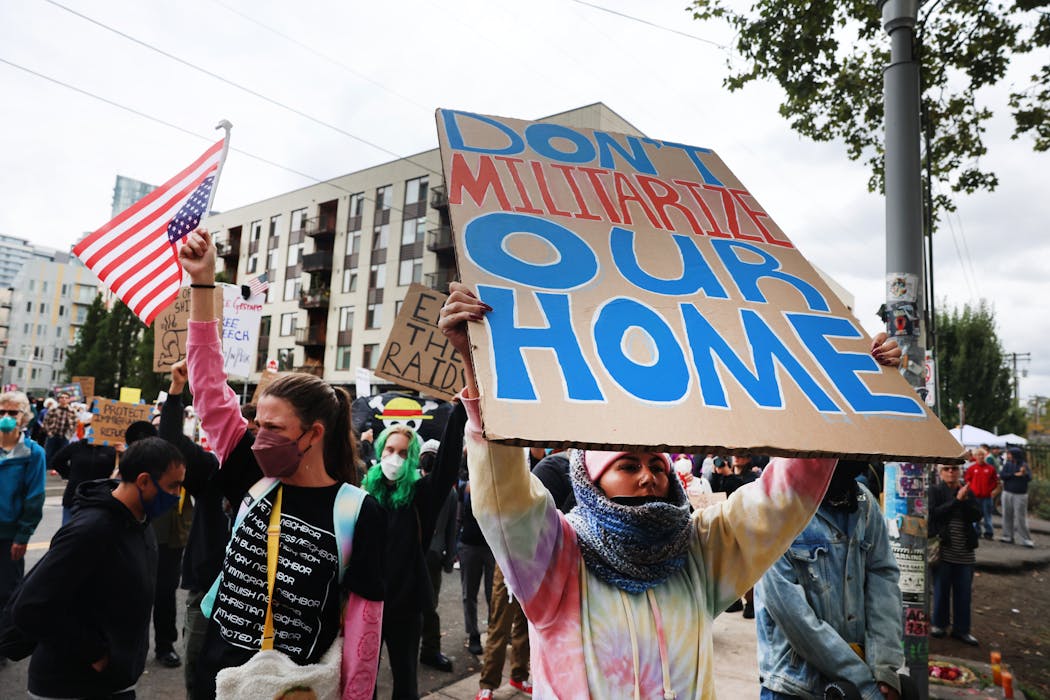
Demonstrators in Portland, Ore., protest on Oct. 4, 2025, against President Donald Trump’s plan to deploy the National Guard to the city. Spencer Platt/Getty Images

If you’re confused about what the law does and doesn’t allow the president to do with the National Guard, that’s understandable.

As National Guard troops landed in Portland, Oregon, in late September 2025, the state’s lawyers argued that the deployment was a “direct intrusion on its sovereign police power.”

Days before, President Donald Trump, calling the city “a war zone,” had invoked a federal law allowing the government to call up the Guard during national emergencies or when state authorities cannot maintain order.

The conflict throws into relief a question as old as the Constitution itself: Where does federal power end and state authority begin?

One answer seems to appear in the 10th Amendment’s straightforward language: “The powers not delegated to the United States by the Constitution, nor prohibited by it to the States, are reserved to the States respectively, or to the people.” This text is considered to be the constitutional “hook” for federalism in our democracy.

The founders, responding to anti-Federalist anxieties about an overbearing central government, added this language to emphasize that the new government possessed only limited powers. Everything else – including the broad “police power” to regulate health, safety, morals and general welfare – remained with the states.

Yet from the beginning, the text has generated plenty of confusion. Is the 10th Amendment merely a “truism,” as Justice Harlan Fiske Stone wrote in 1941 in United States v. Darby, restating the Constitution’s structure of limited powers? Or does it describe concrete powers held by the states?

Turns out, there’s no simple answer, not even from the nation’s highest court. Over the years, the Supreme Court has treated the 10th Amendment like the proverbial magician’s hat, sometimes pulling robust state powers from its depths, other times finding it empty.

The roofline with carvings on it of a large, white, pillared building.
Will the Supreme Court justices weigh in on the Trump administration’s attempts to deploy the National Guard?
Win McNamee/Getty Images

10th Amendment’s broad range

The arguments over the 10th Amendment for almost 200 years have applied not only to the National Guard but to questions about how the federal and state governments share powers over everything from taxation to government salaries, law enforcement and regulation of the economy.

For much of the 19th century, the 10th Amendment remained dormant. The federal government’s weakness and limited ambitions, especially on the slavery question, meant that boundaries were rarely tested before the courts.

The New Deal era brought this equilibrium crashing down.

The Supreme Court initially resisted the expansion of federal power, striking down laws banning child labor in Hammer v. Dagenhart in 1918, setting a federal minimum wage in 1923 in Adkins v. Children’s Hospital, and offering farmers subsidies in U.S. v. Butler in 1937. All these decisions were based on the 10th Amendment.

But this resistance wore down in the face of economic crisis and political pressure. By the time of the Darby case in 1941, which concerned the Fair Labor Standards Act and Congress’ power to regulate many aspects of employment, the court had relegated the 10th Amendment to “truism” status: The Amendment, wrote Stone, did nothing more than restate the relationship between the national and state governments as it had been established by the Constitution before the amendment.

The 1970s marked an unexpected revival. In the 1976 decision in National League of Cities v. Usery, a dispute over whether Congress could directly exercise control over minimum wage and overtime pay for state and local government employees, the court held that Congress could not use its commerce power to regulate state governments.

But that principle was abandoned nine years later, with the court doubling back on its position. Now, if the states wanted protection from federal overreach, they would have to seek it through the political process, not judicial intervention.

Yet less than a decade later, the court reversed course again. The modern federalism renaissance began in the ’90s with a pair of divided opinions stating that the federal government cannot force the states to enforce federal regulatory programs: this was the “anti-commandeering principle.”

The 10th Amendment’s meandering path

In recent decades, the court, led by Chief Justice John Roberts, has invoked the amendment to protect state power in varied, even surprising contexts: states’ entitlement to federal Medicaid spending; state authority over running elections, despite patterns of voter exclusion; even legalization of sports gambling.

On the other hand, in 2024, Colorado was barred by the court from excluding Trump from the presidential ballot as part of its power to administer elections.

That brings us back to the present, where Trump has deployed National Guard troops to Los Angeles to quell protests against immigration enforcement, and bids to send them to Portland and Chicago as well.

From the point of view of federalism, two factors lend this conflict some constitutional complexity.

One is the National Guard’s dual state-federal character. Most Guard mobilizations, including disaster relief, take place under Title 32 of the U.S. Code, which maintains state control of troops with federal funding.

By contrast, Title 10 allows the president to assert federal control over Guard units in case of “a rebellion or danger of a rebellion” against the government or where “the President is unable with the regular forces to execute the laws of the United States.”

The other factor is political.

Since World War II, the National Guard has been deployed only 10 times by presidents, mostly in support of racial desegregation and the protection of civil rights. All but one of these mobilizations came at the governor’s request – the lone exception, pre-Trump, being President Dwight Eisenhower’s 1957 mobilization of the Arkansas National Guard to desegregate schools in Little Rock over the wishes of Gov. Orval Faubus.

In sharp contrast, Trump has now attempted three times to send troops to large cities over the explicit objection of Democratic governors. Such is the case in Portland.

A man with sandy hair dressed in a blue jacket, white shirt and red tie.
President Donald Trump has faced lawsuits when deploying the National Guard to states with Democratic governors.
AP Photo/Evan Vucci

National Guard deployments and constitutional stakes

Oregon’s lawsuit argues that there is no national emergency in the city, and that deploying Guard troops to the state without Gov. Tina Kotek’s consent – indeed, over her explicit objection – and absent the extraordinary circumstances that might justify Title 10 federalization, is illegal. The National Guard, asserts the lawsuit, remains a state institution that federal authorities cannot commandeer.

The two deployments, in Oregon and Illinois, are making their way through the federal courts, and the Trump administration has asked the Supreme Court to intervene to authorize the deployments. What the court will do, if the cases reach it, is uncertain. Roberts has proved willing to invoke state sovereignty in some contexts while rejecting it in others.

For now, the court has upheld several Trump administration actions while constraining others, suggesting a jurisprudence driven more by specific contexts than categorical rules.

Whether Oregon’s challenge succeeds may depend less on the long and changing history of 10th Amendment doctrine than on how the court views immigration enforcement, presidential authority and the consequences of Trump’s frequent invocations of emergency power for American democracy.

The Conversation

Andrea Katz does not work for, consult, own shares in or receive funding from any company or organization that would benefit from this article, and has disclosed no relevant affiliations beyond their academic appointment.

ref. Trump’s National Guard deployments reignite 200-year-old legal debate over state vs. federal power – https://theconversation.com/trumps-national-guard-deployments-reignite-200-year-old-legal-debate-over-state-vs-federal-power-267259