Anatomía de una mente absorta: ‘flow’, hiperfoco y neurodiversidad

Source: The Conversation – (in Spanish) – By Iratxe Antonio-Agirre, Associate Professor in the Department of Developmental and Educational Psychology, Universidad del País Vasco / Euskal Herriko Unibertsitatea
Gaukhar Yerk/Shutterstock

¿Qué tienen en común un programador que escribe líneas de código durante horas sin pestañear, un niño superdotado que se olvida de comer por estar resolviendo acertijos, un atleta de élite en plena competición y una artista que siente cómo su cuerpo desaparece mientras pinta? Todos han entrado en un estado mental poco frecuente pero intensamente poderoso: un enfoque tan absoluto que el tiempo, el entorno y el yo desaparecen.

Este fenómeno se conoce como estado de flow, que en español puede traducirse como “flujo”. El psicólogo Mihály Csíkszentmihályi ya lo describió hace medio siglo como una experiencia óptima de conciencia. Se trata de un momento en el que mente y cuerpo se alinean con lo que estamos haciendo, sin esfuerzo aparente, en una danza perfecta entre desafío y habilidad.

El flow no es simple concentración. Es una absorción tan profunda que el sentido del tiempo se distorsiona y la acción parece fluir por sí sola. En sus estudios, Csíkszentmihályi y sus colegas observaron este fenómeno en atletas, músicos y científicos.

De la ejecución de habilidades al aprendizaje

Sin embargo, no todos lo viven igual. Los atletas y músicos suelen experimentar este estado mental durante la ejecución de habilidades que ya dominan, mientras que los investigadores lo viven en el proceso mismo de aprendizaje y descubrimiento. En este último caso, el flow está estrechamente ligado al aprendizaje autodirigido: la capacidad de explorar y aprender sin una guía externa, impulsado por la curiosidad y la motivación interna.

Otro estudio con más de 450 músicos y atletas de élite mostró que ambos grupos experimentaban flow con frecuencia, especialmente en contextos grupales, y que el equilibrio entre desafío y habilidad era el mejor predictor de bienestar y satisfacción vital. No se trata de trabajar más, sino de encontrar el punto exacto en el que la dificultad nos reta sin desbordarnos.

Flujo versus hiperfoco

Pero hay otro estado mental que, a primera vista, se le parece: el hiperfoco. También implica una atención extrema, distorsión del tiempo y una desconexión del entorno, pero su origen y su control son distintos. Mientras que el flujo es un estado voluntario y regulado, el hiperfoco es más automático y compulsivo. El cerebro se engancha profundamente con algo que despierta su interés (a veces útil, a veces no tanto) y resulta casi imposible soltarlo. Se olvida el mundo… y también comer, dormir o responder un mensaje.

La diferencia clave es el control. El flujo se cultiva; el hiperfoco te atrapa.

Imaginemos un estudiante que dedica una tarde entera a un proyecto de clase especialmente estimulante, avanzando más en unas horas que en días de estudio convencional; en cambio, ese mismo estudiante podría quedar atrapado durante horas perfeccionando un detalle menor de otro proyecto, ignorando plazos y prioridades más urgentes. Mientras que en la primera situación el hiperfoco potencia su rendimiento, en la segunda la intensidad de la concentración desplaza tareas esenciales y genera estrés.

El placer de concentrarse (a veces hasta el agotamiento)

Aunque muy diferentes entre sí, las personas en el espectro autista, con TDAH, altas capacidades o alta sensibilidad comparten una notable predisposición a sumergirse profundamente en aquello que les interesa. En todos estos casos puede aparecer una concentración tan intensa que el tiempo y el entorno parecen desdibujarse.

Sin embargo, el modo en que se manifiesta esa atención varía. En el espectro autista o el TDAH (de forma episódica y discontinua) es más común el hiperfoco, un estado absorbente y a menudo difícil de interrumpir, ligado a intereses específicos.

Las personas con altas capacidades o alta sensibilidad, aunque dependiendo de su perfil cognitivo y emocional, suelen acceder con mayor facilidad y más profundamente al estado de flujo, caracterizado por un equilibrio entre desafío y habilidad, disfrute y sensación de control. Pero también necesitan aprender a regular la intensidad. Es decir, saber cuándo frenar, cómo descansar, y qué condiciones facilitan (o sabotean) su bienestar mental.

Una intensidad mental poco común

Ese es, precisamente, otro aspecto que tienen en común estos perfiles: una mente que procesa el mundo con una intensidad poco común. Esa profundidad cognitiva y sensorial puede ser una fuente de creatividad y lucidez, pero también un terreno fértil para la saturación cuando los estímulos o las emociones se acumulan.

En las personas que están en el espectro autista o aquellas altamente sensibles, esa sobrecarga puede desembocar en un colapso sensorial, una especie de apagón interno que obliga al cuerpo y a la mente a desconectarse. En el TDAH, la consecuencia se manifiesta más como agotamiento atencional o emocional, mientras que en las altas capacidades adopta la forma de fatiga mental, fruto de una sobreestimulación constante.

En esta línea, investigaciones recientes introducen el concepto de “variabilidad de flujo” que es la oscilación entre días de altísima concentración y días de bloqueo o dispersión. Las personas con gran variabilidad de flujo tiende a mostrar menos creatividad y más fatiga mental, precisamente porque no logran mantener una estabilidad emocional y cognitiva en su rendimiento. El estado mental de flujo es frágil, depende de multiples factores como el contexto, la motivación, la energía, las emociones… y fluctúa fácilmente. Por eso, aprender a mantenerlo estable puede ser tan importante como aprender a alcanzarlo.

El entorno importa

A diferencia del mito del genio solitario o del talento que brilla sin ayuda, lo que permite que el flujo se vuelva una práctica sostenida para cualquier persona, y no solo un accidente feliz, es el diseño consciente del entorno y del propio ritmo de vida.

Los factores externos son decisivos: espacios silenciosos, tiempos sin interrupciones, objetivos bien definidos y una atmósfera que transmita propósito y claridad. Estos elementos no solo reducen la distracción, sino que crean las condiciones necesarias para que la mente pueda concentrarse con profundidad y fluidez.

No se trata de eliminar el ruido del mundo, sino de configurar un contexto que lo haga irrelevante. Diseñar rutinas que incluyan pausas reales, desconexión sensorial y descansos mentales no implica trabajar menos, sino trabajar mejor: dar espacio a la mente para que recupere su capacidad natural de enfoque y creatividad.

Reconciliar intensidad con equilibrio

Si el entorno es el escenario, la mente es el instrumento. El flujo surge cuando ambos se sincronizan. Sin embargo, para quienes poseen una mente especialmente intensa, ya sea por sensibilidad, talento o neurodivergencia, esa armonía exige un trabajo interno de autorregulación y autoconciencia.

Los factores internos que sostienen el flujo incluyen la motivación intrínseca, el sentido de propósito y un equilibrio adecuado entre desafío y habilidad. Pero también requieren la capacidad de reconocer cuándo la concentración profunda empieza a transformarse en sobreexcitación o hiperfoco, estados que pueden agotar más que nutrir.

Aprender a modular la propia intensidad no significa apagarla, sino dirigirla con precisión. La verdadera maestría consiste en mantener la energía sin perder el equilibrio. Es decier, fluir plenamente sin quemarse en el intento. Entre la estructura del entorno y la gestión del mundo interno se encuentra el arte de trabajar y vivir con profundidad.

The Conversation

Iratxe Antonio-Agirre no recibe salario, ni ejerce labores de consultoría, ni posee acciones, ni recibe financiación de ninguna compañía u organización que pueda obtener beneficio de este artículo, y ha declarado carecer de vínculos relevantes más allá del cargo académico citado.

ref. Anatomía de una mente absorta: ‘flow’, hiperfoco y neurodiversidad – https://theconversation.com/anatomia-de-una-mente-absorta-flow-hiperfoco-y-neurodiversidad-267702

Más allá del silicio: alternativas para mejorar el rendimiento de las celdas solares

Source: The Conversation – (in Spanish) – By Miquel Solà Puig, Catedrático de Química Física, Universitat de Girona

Actualmente, la mayoría de las celdas solares se fabrican con silicio, que requiere un alto consumo eléctrico. fuyu liu/Shutterstock

Aunque la Tierra recibe solo una milmillonésima parte de la colosal producción de energía del Sol, incluso esa pequeña fracción representa 120 000 billones de vatios. Y, para satisfacer la energía que se consume en el planeta, tan solo necesitaríamos recolectar menos del 0,02 %. Como un ejemplo entre la oferta y demanda energética actual, en solo 6 horas, los desiertos de todo el mundo reciben más energía solar que la que consumimos los humanos en un año.


Leer más:
¿Deberíamos convertir el desierto del Sahara en una inmensa planta solar?


Además de ser una fuente inagotable, la energía solar presenta al menos otra ventaja clave sobre otras renovables (biomasa, mareomotriz, geotérmica, hidráulica y eólica): la distribución global de la luz solar permite ubicar las instalaciones de producción de energía más cerca del lugar de consumo.

Desventajas del silicio

La energía del Sol se puede captar mediante celdas solares, pero la mayoría de ellas están basadas en silicio, que son costosas y pesadas. Su producción requiere, pues, un gran consumo energético, lo que genera una alta contaminación ambiental.

Por otro lado, aunque las celdas solares de silicio han alcanzado eficiencias de conversión de energía superiores al 26 %, la mejora adicional se limita a eficiencias de alrededor del 30 % debido al llamado límite de Shockley-Queisser Este límite marca la eficiencia teórica máxima de una celda solar de silicio en el 32 %, debido a pérdidas por recombinación radiativa en la celda.

Se calcula que para captar la energía que consume la población mundial necesitaríamos 51 000 millones de celdas solares de silicio, lo que supone
unas 6 o 7 por habitante del planeta. Un número que podríamos reducir si consiguiéramos mejorar su eficiencia. Si además fuéramos capaces de disminuir los costes de producción, sería más viable llegar a instalar el número necesario para satisfacer las necesidades energéticas de la humanidad.

Para abordar estos problemas, se están investigando dos alternativas principales: las celdas solares de perovskita y las celdas solares orgánicas.

Celdas solares de perovskita

En el primer caso, el material que transforma la luz en electricidad es un mineral descubierto por Gustav Rose en 1839 en los montes Urales (Rusia). Los compuestos de perovskita son relativamente fáciles y baratos de producir y tienen una gran capacidad de absorber la luz solar. Con estas celdas se han conseguido eficiencias del 27 % cuando solo las conforman perovskitas y del 30 % combinadas con silicio.

El principal problema que presentan es su escasa estabilidad. Debido a que la perovskita reacciona con oxígeno y agua, este material se degrada en un tiempo inferior a un año. El otro inconveniente es la existencia de defectos en su cristal, los cuales frenan la conducción eléctrica.

En la actualidad, existen numerosos grupos de investigación y empresas buscando soluciones que permitan en un futuro no lejano comercializar celdas solares de perovskita. Una de las propuestas consiste en añadir una capa de fullerenos en la superficie del material para que mejore su estabilidad frente al agua y, como consecuencia, también la conducción eléctrica.

La revolución de las moléculas orgánicas

Por otro lado, se están estudiando las celdas solares orgánicas, otra tecnología prometedora que utiliza moléculas orgánicas π-conjugadas, es decir, moléculas con enlaces simples y múltiples alternados (como, por ejemplo, H₂C=CH-CH=CH-CH=CH₂).

La energía fotovoltaica orgánica ofrece varias ventajas: las celdas solares son ligeras, económicas de fabricar, flexibles, transparentes y su síntesis tiene un bajo impacto ambiental. No obstante, su principal problema es la baja eficiencia que presentan, aunque se han publicado eficiencias de celdas solares fabricadas con materiales orgánicos que llegan al 19 %.

Existen empresas que ya fabrican celdas fotovoltaicas orgánicas y, según la consultora india Versha Vijay de Kings Research, se estima que el mercado de celdas solares orgánicas crecerá de 130,2 millones de dólares en 2023 a 326,6 millones en 2031.

Las celdas solares orgánicas pueden estar compuestas por materiales dadores y aceptores de electrones mezclados o por un solo material que contenga un grupo dador (D) y un grupo aceptor (A) en la misma molécula (D-A). Ambos grupos están enlazados por un enlace covalente.

La absorción de un fotón de la luz solar produce un estado de transferencia de carga D⁺-A⁻ que puede evolucionar para generar un excitón. Este dará lugar a una separación de las cargas positiva y negativa que viajan hacía el ánodo y el cátodo cerrando el circuito, con lo que se consigue generar electricidad a partir de la luz.

Una de las líneas de investigación que se siguen es la que involucra moléculas orgánicas que presentan fisión de singlete. En estas moléculas, por cada fotón absorbido se pueden generar dos excitones que a su vez generan dos pares electrón-agujero.

La principal diferencia respecto a las celdas orgánicas tradicionales es que éstas pueden generar como máximo un electrón por cada fotón, mientras que las celdas orgánicas con materiales que tienen fisión de singlete pueden generar dos electrones por cada fotón, con lo que se puede potencialmente doblar la eficiencia de la celda solar orgánica.

En el proceso de fisión de singlete un fotón puede llegar a generar dos excitones que a su vez pueden generar dos pares de electrón-agujero, potencialmente doblando la eficiencia de la celda solar orgánica.

Aunque todavía no se han alcanzado resultados comercializables, se está realizando mucha investigación en esta dirección. Esperamos que en un período de cinco a diez años podamos adquirir las revolucionarias celdas solares orgánicas.

The Conversation

Miquel Solà Puig recibe fondos del Ministerio de Ciencia, Innovación y Universidades (proyecto PID2023-147424NB-I00) y la Generalitat de Catalunya (proyecto 2021SGR623 e ICREA Academia 2024).

ref. Más allá del silicio: alternativas para mejorar el rendimiento de las celdas solares – https://theconversation.com/mas-alla-del-silicio-alternativas-para-mejorar-el-rendimiento-de-las-celdas-solares-255180

¿Qué efecto tiene decidir a quién se retrata (y a quién no)?

Source: The Conversation – (in Spanish) – By Óscar Díaz Chica, Profesor del Departamento de Ciencias Sociales, Universidad Europea Miguel de Cervantes

Fotografía de Dorothea Lange en la que se muestra a una familia originaria de Oklahoma, residente en ese momento en el campamento de trabajadores migrantes de la Administración de Seguridad Agrícola (FSA) en California, durante la Gran Depresión. Library of Congress’s Prints and Photographs division
Imagen de edificios en blanco y negro.
‘Vista desde la ventana en Le Gras’ de Joseph Nicéphore Niépce es la fotografía más antigua que se conserva.
Harry Ransom Center/Wikimedia Commons

Desde que en el año 1826 Joseph Nicéphore Niépce tomara la que se considera como imagen fotográfica más antigua conservada, la fotografía ha experimentado una gran expansión. Ya no solo porque gran parte de la población tenga constantemente una cámara a mano gracias al móvil, o porque las redes sociales hayan impulsado el protagonismo de la actual cultura de la imagen –sea estática o en movimiento–, sino también porque esta técnica se ha convertido en un elemento artístico con gran proyección.

Hablar hoy de fotos es mencionar un gesto cotidiano. Fotos que ya no suelen revelarse de forma analógica sino de manera digital. Para ello se utilizan programas informáticos con objeto de ajustar parámetros como, entre otros, el brillo, el contraste, la saturación y la nitidez.

Por contra, cuando el revelado es analógico se usan películas sensibles a la luz que capturan imágenes a través del objetivo de las cámaras. Se trata de exposiciones que quedan grabadas en el film y que posteriormente, a través de reacciones químicas, generan las fotografías en papel. Es lo que coloquialmente se denomina “revelar un carrete”, porque todas las exposiciones a la luz de una película quedan almacenadas en un carrete opaco de plástico que posteriormente se trata en un laboratorio.

El caso de las tarjetas Shirley

Las capturas fotográficas no siempre reflejan la realidad de manera fiel, lo que puede generar algún tipo de perjuicio. Un caso paradigmático se evidenció con las denominadas “Shirley Cards” o tarjetas Shirley de la marca Kodak.

Estas películas fotográficas calibraban sus ajustes de color e iluminación a través de una modelo blanca (conocida como “Shirley”), utilizada como estándar internacional. Como consecuencia, los tonos de piel más oscuros quedaban sobre o subexpuestos. El problema, que se presentó a mediados del siglo XX, no fue subsanado hasta que unas compañías de muebles y chocolates se quejaron a Kodak de la mala exposición de sus productos en las fotos.

Es decir, lo que generó el cambio no fue que la gente negra apareciera desfigurada en las fotografías, sino las necesidades de los clientes de piel blanca, que eran quienes dominaban el mercado. El problema se solucionó con el equivalente moderno de las tarjetas Shirley que, junto a los parches de color o la escala de grises, contemplaba la existencia de diferentes tonos de piel.

Dignidad y fotografía

La capacidad para ofrecer diferentes lecturas de la fotografía de una persona se ha explorado desde la semiótica. A fin de cuentas, las fotos no dejan de ser construcciones del lenguaje que permiten nombrar con corrección (o no) aquello que designan. Cuando la fotografía no representa con fidelidad la propia imagen puede llegar a generar problemas psicológicos y afectar a la dignidad e identidad personal.

En este sentido, la representación fotográfica supone una llamada a la responsabilidad social del fotógrafo. Un ejemplo de esta disposición sería el caso de la humanista Dorothea Lange, quien trató de sensibilizar a la opinión pública sobre las condiciones de vida de los más desfavorecidos.

Lange se unió a la Farm Security Administration (FSA) en la tercera década del siglo XX. Por entonces ese organismo, impulsor de un conjunto de reformas y subsidios para paliar los daños de la crisis económica de 1929 en Estados Unidos, reclutó a algunos de los mejores documentalistas de la época para crear un archivo fotográfico. Su objetivo era mostrar la dura realidad de las zonas rurales durante la Gran Depresión.

Imagen de Dorothea Lange en la que retrata a una familia con cinco niños caminando por la carretera
Imagen de Dorothea Lange en la que retrata a una familia con cinco niños caminando por la carretera, con destino a Krebs, Oklahoma (Estados Unidos). En 1936, el padre cultivaba tierras a cambio de una tercera y cuarta parte de la cosecha. Enfermó de neumonía y perdió la granja. No pudo conseguir trabajo en la Administración y le denegaron la ayuda del condado en el que había residido durante quince años debido a su residencia temporal en otro condado tras su enfermedad.
Library of Congress’s Prints and Photographs division

Para atender este cometido, Lange tuvo que documentar la pobreza y las difíciles condiciones de vida del colectivo rural norteamericano afectado por la crisis económica y social. En su realización se esforzó por captar la dignidad de las personas fotografiadas, así como provocar una respuesta emocional en el espectador. Su caso es particularmente interesante al ser una firme defensora de la fotografía directa, objetiva y carente de manipulación. Sus imágenes trataban de invitar a la reflexión, mostrar al ser humano y sus circunstancias sin alterar las situaciones.

Si me veo es que existo

Dentro de los múltiples usos de la fotografía se encuentra la inclusión social. Especialmente incentivada a través del lenguaje, también se ha estimulado mediante la incorporación en las fotos de determinadas personas o grupos sociales.

Así ocurre por ejemplo en el caso de algunas mujeres indígenas de Argentina a inicios del siglo XX. En relatos publicados de viajes de naturalistas a zonas periféricas de este país (como la Patagonia o Jujuy) aparecen fotografías que las retratan y reflejan sus condiciones de vida.

Es cierto que el montaje de algunas fotografías se orienta a reflejar las representaciones de temporalidad que los exploradores concebían respecto al mundo indígena. Aunque muchas respondían a esa mirada colonial, su posterior recuperación en archivos y museos ha permitido reconocerlas como parte de la historia visual del país y dar visibilidad a identidades antes marginadas.

Imagen en blanco y negro de unas mujeres indígenas.
Imagen tomada por Robert Lehmann-Nitsche en Latinoamérica a principios del siglo XX.
Instituto Ibero-Americano

Otras formas de revolución fotográfica

Incluso la lectura de fotografías ha facilitado la inclusión, como demuestra un estudio realizado con brasileños con discapacidad auditiva de 16 y 17 años.

La investigación se desarrolló a partir de la selección de fotografías de los principales periódicos de información generalista de Río de Janeiro. Las imágenes estaban relacionadas con el medio ambiente y con acontecimientos cercanos a los alumnos (como las ecobarreiras: barreras flotantes diseñadas para detener la basura antes de que llegara a bahías desbordadas después de fuertes lluvias). El lenguaje visual de la fotografía periodística ayudó a los alumnos a entender conceptos técnico-científicos de los investigadores y superar las barreras del lenguaje auditivo. Además, facilitó su comprensión de ideas ecológicas complejas y fomentó su inclusión en el debate ambiental.

Entre otros resultados puntuales destacados, se confirmó que la inclusión de metadatos (que describen el contenido, la calidad, la condición y otras características de la imagen) en las fotografías de medios de comunicación online facilita tres veces más la comprensión de estos jóvenes con discapacidad auditiva que las fotografías de medios impresos.

Por otra parte, también es posible estimular la inclusión al favorecer, por ejemplo, que grupos vulnerables con diversidad funcional se comuniquen con la sociedad gracias a sus capturas fotográficas.

Hasta la publicidad

Realmente, la fotografía no solo destaca por su capacidad para representar con fidelidad un fragmento de realidad, sino también por permitir que esa imagen pueda ser vista por otros. Este hecho de compartir una imagen es, en sí mismo, un acto de comunicación (etimológicamente vinculado a poner algo en común) que puede facilitar la integración de lo representado.

La fotografía de inclusión es un recurso que no solo tiene sentido en el ámbito del periodismo, la antropología o la documentación. Su potencial es realmente muy versátil y favorece que también sea valorado en otros campos como la publicidad.

Primeros planos de diferentes personas de diferentes procedencias y colores de piel.
Una de las campañas históricas de la marca United Colors of Benetton creada por Oliviero Toscani en 1998 apelaba al decimotercer artículo de la Declaración Universal de los Derechos Humanos para indicar que ‘todo el mundo tiene derecho a abandonar cualquier país, incluido el suyo, y a regresar a su país’.
United Colors of Benetton

En este ámbito se ha planteado como recurso tanto por su impacto emocional como por su capacidad para incluir minorías marginadas en los anuncios. Su mayor utilización también parece interesante en entornos como el digital, para contrarrestar en cierto modo alguno de los problemas asociados al uso de las redes sociales.

The Conversation

Las personas firmantes no son asalariadas, ni consultoras, ni poseen acciones, ni reciben financiación de ninguna compañía u organización que pueda obtener beneficio de este artículo, y han declarado carecer de vínculos relevantes más allá del cargo académico citado anteriormente.

ref. ¿Qué efecto tiene decidir a quién se retrata (y a quién no)? – https://theconversation.com/que-efecto-tiene-decidir-a-quien-se-retrata-y-a-quien-no-265920

¿Cómo enseñamos español de manera eficaz a la población migrante?

Source: The Conversation – (in Spanish) – By José Ángel Tejero López, Docente e investigador, Universidad Camilo José Cela

AnnaStills/Shutterstock

Cuando Keita llegó a España procedente de la República de Guinea apenas podía comunicarse. Hoy, siete años más tarde, está trabajando en Albacete.

La lengua es una herramienta fundamental para mejorar la integración de los migrantes no hispanohablantes, especialmente de quienes llegan en condiciones de vulnerabilidad. En España, el 13,4 % de la población tiene nacionalidad extranjera y el 18,2 % ha nacido fuera de España, según datos de 2024.

El desafío de la integración se incrementa cuando las procedencias no se corresponden con países hispanohablantes, como lo son muchas de las personas que solicitan protección internacional. No hablar la lengua del país de acogida impide que la población inmigrante tenga acceso a las mismas oportunidades.

El idioma como puerta de integración

La acogida es un reto económico, legislativo, político, sanitario, social y educativo. El idioma del país receptor se considera una llave de acceso a derechos básicos y a una consecuente vida más autónoma y digna.

Existen iniciativas que facilitan la integración lingüística a estos migrantes no hispanohablantes. Desde distintas universidades e instituciones europeas surgen iniciativas como INCLUDEED o REBUILD. Estos proyectos apuestan por facilitar la integración social y lingüística a través de la colaboración e innovación institucional. Nosotros también hemos diseñado una iniciativa pedagógica llamada ELIM con la que utilizar el conocimiento del idioma específicamente para superar situaciones de vulnerabilidad.

¿Qué sucede en el aula de español para inmigrantes?

Diría que ningún docente puede olvidar la experiencia de enseñar español por primera vez a inmigrantes. Los años de formación, la experiencia en la enseñanza de lenguas o los materiales y metodologías que siempre suelen funcionar apenas tienen importancia. Nadie nos prepara para un contexto lleno de tantas particularidades.

Estas aulas se caracterizan por una diversidad cultural y lingüística constante que obliga a replantear la forma de enseñar en cada momento. Es común tener estudiantes procedentes de países de habla árabe, como Marruecos, de Ucrania o Rusia, además de otras lenguas de países africanos: wolof, fulani o bambara, por ejemplo.

Los ritmos de aprendizaje son marcadamente heterogéneos. Por un lado, aparecen limitaciones de alfabetización y lectoescritura. Muchas personas nunca han ido a la escuela de manera regular. Por otra parte, hay personas con doctorados, que alcanzaron el máximo nivel académico o que eran profesionales asentados en sus países de origen.

A estos factores hay que añadir las experiencias traumáticas que vivieron antes de emigrar, durante el desplazamiento, o tras su reciente llegada a una nueva y diferente sociedad. Los testimonios no suelen ser sencillos de procesar. El duelo migratorio influye también en los estados anímicos, mentales y de motivación. Las habituales responsabilidades familiares, las limitaciones de salud o los trámites burocráticos suelen ser predominantes y afectan en el proceso de enseñanza y aprendizaje de la lengua.

Posibles pautas de actuación

Por lo tanto, el reto va más allá de la enseñanza del idioma. Centros y profesorado deberían tener en cuenta las siguientes recomendaciones:

  1. Analizar las necesidades reales del alumnado. No solo tiene importancia el nivel de lengua o la capacidad de lectoescritura, sino otros elementos más subjetivos como las motivaciones de aprendizaje, las experiencias previas o la importancia del factor psicológico por el duelo migratorio.

  2. Priorizar el aprendizaje funcional y promover un enfoque comunicativo extremo. Es conveniente contextualizar los contenidos y diseñar actividades adaptadas a las realidades sociales y culturales de inmersión. No sería propio tratar temas como las vacaciones de verano cuando muchos migrantes jamás han tenido unas. En cambio, los trámites burocráticos, las gestiones administrativas, la búsqueda de empleo o vivienda y el acceso a servicios básicos son elementos clave en su día día.

  3. Diseñar materiales y actividades adaptados a las realidades. Son escasos los manuales y materiales disponibles para la enseñanza de español a migrantes. Los centros y docentes hacen un gran trabajo de diseño y creación que desafortunadamente no suele compartirse con la comunidad.

  4. Tener en consideración la dimensión afectiva e intercultural, abrazar la alfabetización como un componente más y relegar la evaluación a un segundo plano.

Colaboración y apoyo institucional

No existe un marco estructurado de colaboraciones y apoyos institucionales con relación a la integración sociolingüística de los migrantes.

El primer paso sería estrechar lazos entre profesorado de español para inmigrantes. Asimismo, es de vital importancia fomentar la cooperación interinstitucional, involucrando no solo a oenegés y asociaciones, sino también alianzas con organismos públicos, universidades o el propio Instituto Cervantes. Solo así se comenzarán a combatir las barreras burocráticas y económicas, garantizando que estos elementos no limiten el acceso a la educación lingüística.

El reconocimiento de la profesión por parte de todos los organismos competentes es fundamental. La enseñanza de español a inmigrantes es mucho más que enseñar un idioma. Se trata de abrir puertas hacia la construcción de un futuro con más oportunidades y menos desigualdades.

En palabras de Keita: “Aprender español me ayudó muchísimo. Cuando llegué aquí no sabía ni decir ‘hola’, no podía comunicarme con la gente y así es imposible trabajar. Ahora soy maquinista y cada vez que lo pienso me siento muy feliz”.

The Conversation

José Ángel Tejero López no recibe salario, ni ejerce labores de consultoría, ni posee acciones, ni recibe financiación de ninguna compañía u organización que pueda obtener beneficio de este artículo, y ha declarado carecer de vínculos relevantes más allá del cargo académico citado.

ref. ¿Cómo enseñamos español de manera eficaz a la población migrante? – https://theconversation.com/como-ensenamos-espanol-de-manera-eficaz-a-la-poblacion-migrante-266192

Reality check: The Supreme Court actually did the right thing in its child pornography ruling

Source: The Conversation – Canada – By Meg D. Lonergan, Contract Instructor and Doctoral Candidate, Legal Studies, Carleton University

The Supreme Court of Canada’s decision in the Attorney General of Québec v. Senneville struck down one-year mandatory minimum sentences for accessing or possessing child pornography. Immediately, politicians and commentators denounced the ruling.

Conservative Leader Pierre Poilievre, Ontario Premier Doug Ford and Alberta Premier Danielle Smith have urged Ottawa to invoke Section 33, also known as the notwithstanding clause, of the Charter of Rights and Freedoms. The clause allows Parliament or provincial legislatures to override certain Charter rights for five years.

Their alarm fits a broader pattern of constitutional populism in which politicians move to sidestep court rulings and Charter protections whenever they obstruct political objectives — whether that’s targeting the unhoused, trans rights, labour rights or now criminal sentencing.

One media commentator accused the Supreme Court of trying to “help” sex offenders, while Manitoba Premier Wab Kinew declared offenders should be “buried underneath prisons.” His reaction echoes last year’s episode in which he apologized for his caucus’s move to expel Mark Wasyliw — a criminal defence lawyer and NDP member of provincial parliament — after Wasyliw’s colleague, Gerri Wiebe, represented convicted sex offender Peter Nygard.

What the court actually did

In her seminal 1984 essay “Thinking Sex,” queer theorist and scholar Gayle Rubin observed that few political tactics are as effective at generating moral panic as invoking the need to “protect children.”

That remains true today, in part because voices across the political spectrum are vulnerable to the same knee-jerk, sensationalized responses whenever sexual harm involving children is at issue.

While the furious response to Senneville shows Canada in the grip of a new moral panic, the Supreme Court’s decision to strike down mandatory minimums for child pornography offences reflects constitutional fidelity — not leniency.

The Canadian Charter of Rights and Freedoms must apply to everyone if it’s to have any meaning at all. Section 12 of the Charter, in fact, guarantees that everyone has the right not to be subjected to cruel or unusual punishment.

Generally, mandatory minimums are constitutionally suspect, since they remove judicial discretion in sentencing based on the evidence and the specific situation at hand, and infringe upon the legal doctrine of stare decisis that requires precedence be followed.

In Senneville, the court held that mandatory minimums violate Section 12 Charter rights because they prevent judges from imposing proportionate, individualized sentences based on the facts of the case. The court also noted that Section 12 acknowledges innate human dignity and the inherent worth of individuals.

Proportionality, the Supreme Court emphasized, is a constitutional limit on state punishment, not a discretionary preference. At no point did the court diminish the gravity of child exploitation; on the contrary, it devoted an entire section in its ruling to detailing the profound harm caused by these offences.

This is consistent with the similar R. v. Friesen ruling in 2020, when the Supreme Court reaffirmed that the seriousness of child pornography does not erase the need for principled, proportionate sentencing. To cast this careful reasoning as “helping” sex offenders is not only wrong, it distorts the role of sentencing in a constitutional democracy and diminishes justice and rehabilitation in favour of punishment for its own sake.

A ‘flimsy’ hypothetical isn’t flimsy at all

An overlooked part of the majority decision in Senneville is that the appellants (the Attorney General of Québec) did not argue that, if the mandatory minimums were found to infringe the Charter’s Section 12, those minimums could be saved by Section 1.

Section 1 of the Charter guarantees that rights and freedoms are protected, but allows for “reasonable limits” that can be demonstrably justified in a free and democratic society.

This section gives governments the power to override Charter rights and freedoms when they can justify limiting them — most often in the name of protecting the rights and freedoms of others. Historically, this is what has made obscenity and hate speech laws constitutionally valid.

Many commentators claimed the Supreme Court relied on a “flimsy” and “far-fetched” hypothetical of an 18-year-old who receives an intimate image of a 17-year-old girl from a friend as one example of why the mandatory minimum sentences violate Section 12 of the Charter.

But there is nothing flimsy about this scenario. Canadian criminal justice scholars ranging from Alexa Dodge to Lara Karaian and Dillon Brady have shown that peer-based image-sharing among youth is common, and that criminal law routinely miscasts such behaviour through the lens of child porn, casting ordinary sexual expression as exploitation.

Karaian, in particular, shows how moral panic over “sexting” has long cast teenagers — especially girls — as simultaneously lacking agency and being responsible. This framing has helped create a legal landscape in which consensual, near-age image sharing is reinterpreted as criminal behaviour.

Familiar outrage

Since their introduction in 1993, Canada’s child-pornography laws have been criticized as overly broad.

One of the first tests came in the Eli Langer case, when police raided a Toronto art gallery and seized works — an early alarm bell about the law’s sweeping reach and capacity to criminalize artistic expression unconnected to exploitation.

The Supreme Court confronted these issues directly in the 2001 case R. v. Sharpe _[2001], ruling that existing child-pornography laws ensnared materials that posed no realistic risk of harm, including fictional writings and drawings. The court also carved out narrow exceptions to prevent criminalizing constitutionally protected expression.


Read more:
Why Canada’s Supreme Court isn’t likely to go rogue like its U.S. counterpart


Canadian law professor Brenda Cossman observed that moral panic around child pornography shields the law “from any and all criticism” to the point that: “Nothing can be said. And if it is, the speaker is denounced as a pedophile.”

The Senneville case reflects the realities of life, not some abstraction — and definitely not the carceral mindset that sees harsh punishment as moral and treats empathy as a weakness.

To normalize overriding Charter rights using the notwithstanding clause erodes not only public trust in judicial independence, but also the very rights and freedoms it enshrines.

The outrage of Poilievre, Smith, Ford and Kinew serves to assert their own moral authority and to repeat a familiar message: only incarceration protects the innocent. But if Canada is serious about keeping children safe, it must also invest in the social services, education and community supports that prevent harm.

As the Supreme Court itself reminded us in its ruling: “Criminal justice responses alone cannot solve the problem of sexual violence against children.”

The Conversation

The authors do not work for, consult, own shares in or receive funding from any company or organisation that would benefit from this article, and have disclosed no relevant affiliations beyond their academic appointment.

ref. Reality check: The Supreme Court actually did the right thing in its child pornography ruling – https://theconversation.com/reality-check-the-supreme-court-actually-did-the-right-thing-in-its-child-pornography-ruling-270014

Weak infrastructure leaves Jamaican schools devastated in the aftermath of Hurricane Melissa

Source: The Conversation – Canada – By Giselle Thompson, Assistant Professor, Faculty of Education, University of Alberta

The devastation in Jamaica caused by Hurricane Melissa exposed a harsh reality that’s been hidden in plain sight for decades — most schools were not structurally sound enough to sustain high winds, heavy rainfall and storm-surge flooding.

Almost 800 government schools were designated as community shelters before Hurricane Melissa descended. More than 600 were damaged when the hurricane hit. Roofs were blown off. Walls collapsed. Windows broke. Debris scattered everywhere.

Citizens found themselves in “shelters” that could not protect them from the elements and for this reason have had to find alternative living arrangements.

As education researchers based in the Jamaican diaspora whose combined work has examined the Jamaican education system, we are deeply concerned about the future of Jamaica’s schools and their ability to not only serve students and teachers — but to be safe havens in natural disasters.

These thoughts came to mind as we watched reels of footage of Hurricane Melissa’s destruction on social media with feelings of helplessness and regret.

Personal exchanges with friends, research collaborators and family members — who are fortunate to have electricity, cellular service or access to WiFi — told us about harrowing experiences on the ground, especially in communities in western and southern parishes such as Hanover, Westmoreland, St. James and St. Elizabeth.

Principals raise red flags

Previous research carried out by Giselle Thompson, the lead author of this story, has examined education spending in Jamaica and how members of the Jamaican diaspora in Canada support schools “back home” through formal and informal fundraising initiatives.

This research was undertaken in partnership with a primary school community, including the principal, teachers, students, families and neighbours in Hanover. They welcomed Giselle to work with them as a supply teacher, recess monitor and in other supportive roles they needed in 2018.

Being immersed in their everyday, under-resourced environment and having one-on-one conversations with them forged lasting personal and professional bonds that form the foundation of current research. It also offered insight into the structural inequities and related vulnerabilities inherent in the Jamaican school system.

At a media briefing before Hurricane Melissa struck, Jamaica’s minister of local government and community development criticized schools that were designated emergency shelters for electing not to open to the public.

But in June 2025, the Jamaica Gleaner reported that some principals raised concerns about the schools, saying they lacked adequate sanitation facilities, weren’t furnished with items that people would need in a shelter or were in need of repair.

These issues were recently echoed in a conversation with a Jamaican principal and research collaborator on Giselle’s current research project, funded by Social Sciences and Humanities Council of Canada and Killam Trusts. The study involves three public primary schools in Hanover and Westmoreland and examines Afro-Jamaican women teachers’ care work in these rural areas.

The principal noted her concerns were ignored when she brought them to the attention of personnel from the Office of Disaster Preparedness and Emergency Management (ODPEM) when her school was assessed and put on the emergency shelter list before the hurricane. Ninety per cent of ODPEM-designated shelters were schools, and close to 78 per cent of them were destroyed.

She also said the expectations of school staff during sheltering periods were unclear, and she was worried about the implications of leaving schools with scant resources unlocked without oversight.

Given the extensive and likely irreparable damages to her school, her decision to keep its doors closed may have been a life-saving move.

An account like this stands in contrast with the Ministry of Education, Skills, Youth and Information’s announcement that it had “taken deliberate and comprehensive steps to ensure the resilience of the education sector” and that the school “facilities are prepared for what is forecast to be an active hurricane season.”

Structural vulnerabilities

Approximately $5.5 million (J$628 million) was spent to prepare 204 schools for hurricane season in the 2025-26 academic year after Hurricane Beryl, a Category 4 storm, damaged 101 institutions in 2024.

This injection of capital was part of a more than $50 million (J$5 billion) government infrastructure preparation project for Hurricane Melissa’s descent.

Although not all schools were damaged in the hurricane, the high percentage of those impacted is a cause for concern. But the structural vulnerability of many Jamaican schools to the effects of climate change is nothing new.


Read more:
COP30: Pacific leaders now have world court backing to call countries to account over climate risk


It is directly linked to decades of under-resourcing, particularly in the “era of structural adjustment” (1977 to present) as the state has had to adopt severe austerity measures imposed by the International Monetary Fund and other international financial institutions to reduce its spending on public goods such as education.

Such fiscal belt-tightening is meant to help Jamaica and other heavily indebted countries placate their debt to external creditors. But this economic growth formula is seldom associated with social development.

The cost of inflation and the forced devaluation of the Jamaican dollar — additional austerity measures required by international financial institutions — have reduced government capacity to adequately resource school infrastructure.

Jamaica Teachers’ Association advocacy

Since 1977, the year that structural adjustment programs took root in Jamaica, education spending has fluctuated between five and six per cent of the country’s GDP. However, many stakeholders, including the Jamaica Teachers’ Association (JTA), have been vocal about the negative implications of inadequate spending on education for several years.

In 2024, the JTA president said such low spending puts the nation “woefully” behind. Much needed physical infrastructure and maintenance (and, we might add, books and other learning materials, nutritional programs and transportation) have lagged as a result.

It’s therefore not difficult to comprehend why the scale of Hurricane Melissa’s assault on schools was so significant.

Casting a hopeful vision

Through our ongoing engagements in Jamaica as scholars, educators, activists and community members, we have borne witness to, and are involved in, ongoing efforts to support numerous aged, decrepit and crumbling school structures, which are the result of the state’s neglect and weather systems that are growing increasingly harsh.

We write with hope for the future, one that includes new ecologically resilient schools for teaching and learning and where community members can shelter safely when natural disasters hit. This is essential because Jamaica, and the wider Caribbean region, is susceptible not only to hurricanes, but also floods, landslides, earthquakes and other hazards.

Yet we are not optimistic that the state alone can effect necessary changes because of its heavily indebted status, and therefore, relatively weak capacity.


Read more:
4 urgent lessons for Jamaica from Puerto Rico’s troubled hurricane recovery – and how the Jamaican diaspora could help after Melissa


Although not an explicit admission, the creation of the National Education Trust in 2010 to raise funds and resources for schools, demonstrates this. The state has already begun its official solicitation of support from the international community.

But as members of the Jamaican diaspora in Canada, we urge others in our communities who are interested in supporting the reconstruction of schools in Jamaica to engage with principals, teachers, students and local community members directly so they are able to convey their institutions’ immediate and long-term needs.

This will increase the efficacy of our support and strengthen our ability to work together as Jamaicans at home and abroad.

The Conversation

Giselle Thompson received funding from the Social Science and Humanities Research Council of Canada (SSHRC) and the Killam Trusts. She is affiliated with the not-for-profit organization, World Class Jamaica.

Meshia Brown does not work for, consult, own shares in or receive funding from any company or organisation that would benefit from this article, and has disclosed no relevant affiliations beyond their academic appointment.

ref. Weak infrastructure leaves Jamaican schools devastated in the aftermath of Hurricane Melissa – https://theconversation.com/weak-infrastructure-leaves-jamaican-schools-devastated-in-the-aftermath-of-hurricane-melissa-269783

Motherhood changes how women spend, save and think about money

Source: The Conversation – Canada – By Oriane Couchoux, Assistant Professor of Accounting, Carleton University

Mothers aren’t just losing the income, promotions and career advancements that we’ve known about for quite some time. They’re also quietly spending their own money, absorbing more day-to-day costs and making financial sacrifices that place them at a long-term disadvantage.

We already knew about the impact of motherhood on women’s income. A 2015 study by Statistics Canada shows that mothers earn 85 cents for every dollar earned by fathers. Ten years after the birth of their first child, mothers’ earnings are still around 34.3 per cent lower than they would have been without children.

But our research also reveals that women’s relationship with money is rewired with motherhood and that having children changes their financial decisions and spending habits.

Study participants describe two competing narratives when discussing their personal finances. On the one hand, they view motherhood as a financial project they must manage independently, within the limits of budgets and cost-benefit considerations. On the other hand, they also see motherhood as a role that requires financial sacrifice, where children’s needs and well-being take priority over all financial considerations.

The true cost of motherhood

Motherhood comes with a price. Studies have shown that becoming a mother negatively affects women’s finances and career.

Some research suggests that among other changes, their colleagues might start to perceive their competence and commitment to their professional work less favourably. Mothers also face intensified work-life balance pressures, often leading to part-time employment.

Women are 19 times more likely than men to cite “caring for children” as the primary reason for working part-time.

But beyond the well-documented motherhood penalty — the name given by social scientists to this phenomenon of workplace disadvantages — and the impact of motherhood on women’s income, our qualitative study reveals that motherhood alters the relationship women have with money.

We interviewed mothers living in the Canadian province of Québec to better understand how they manage their finances after having children, and found that motherhood reshapes how mothers spend and think about money.

When asked about how they manage expenses related to their children, participants in our study said they feel they must navigate competing societal expectations that drive them to juggle two narratives — seeing the financial aspect of motherhood as, one, a project to manage, and, two, as a sacrifice to make for their children.

Taking on the role of financial strategist

Mothers, on one hand, strive to be autonomous financial managers capable of developing financial strategies and making decisions considered economically responsible for their families.

As a study participant described:

“Everything goes through my account, I manage everything. I like it that way too. I’m a very meticulous person […] I like to be in control of the budget.”

This leads them to create “baby budgets,” tracking and comparing the prices of different diaper brands in spreadsheets, or setting up savings strategies for their children’s potential future education.

This vision of themselves as independent financial managers, coupled with their desire to fully take on the financial responsibilities of having children, sometimes leads participants in our study to shoulder certain child-related expenses on their own without sharing full details with their co-parent or asking the co-parent to contribute to everyday costs such as food, clothing or family activities.

Another person in the study explained:

“I know that I buy more things for the children. I put them on my card so I know that there are more expenses that I incur as extras … But, at the same time, that’s what I like. I love shopping for them. It’s a gift for me too. But sometimes, I find it a little annoying. I really devote myself a lot to the family, buying things for the house, the family.”

The cultural script of maternal self-sacrifice

Mothers also see themselves as the primary caregivers responsible for making financial sacrifices for their children.

Within this narrative, participants in our study tend to believe that being a good mother means putting their children first, doing everything possible to ensure their happiness and well-being and not tracking the time and money they devote.

As another shared:

“That’s what being a good mom is all about […] you can’t count that. You don’t count the time, being present, taking care of them, the activities, the clothes, everything. You don’t count the expenses, you’re the person they go to.”

This can lead mothers, for example, to put their children’s future ahead of their own, prioritizing education savings or splurging on non-essential items they believe will make their children happy over their own retirement.

This view of motherhood that normalizes financial sacrifice also appears in mothers’ reluctance to calculate the full cost of raising their children and the overall impact of these expenses on their own financial situation, as if determining the amount of money spent on a child were somehow incompatible with the maternal ideal of selfless devotion.

Gender inequality’s long-term financial fallout

This shift in women’s financial perspective highlights some factors behind the persistent gaps between women’s and men’s personal finances. In Canada, the gender pension gap is at about 17 per cent, meaning that “for every dollar of retirement income men receive, women get only 83 cents”.

The additional mental load carried by mothers doesn’t just cost them time and energy, it takes a real toll on their budgets too.

In fact, financial burdens can fall unevenly within couples and between co-parents. Many participants said that they focus on shouldering the financial responsibilities of motherhood independently, no matter the impact on their finances or the contribution from the other parent.

Over time, all of this can contribute to reduced savings and lowered retirement security for mothers, reinforcing the disparities in wealth accumulation and the gender pension between men and women.

Our findings highlight that the true cost of motherhood goes beyond what meets the eye and the need for a broader recognition of the financial labour that mothers bear. We, as a society, must better support them.

The Conversation

Oriane Couchoux received funding from the Canadian Social Sciences and Humanities Research Council and the Centre for Research on Inclusion at Work (CRIW) at the Sprott School of Business, Carleton University, Canada.

Gabrielle Patry-Beaudoin received funding from the Canadian Social Sciences and Humanities Research Council and the Centre for Research on Inclusion at Work (CRIW) at the Sprott School of Business, Carleton University, Canada.

ref. Motherhood changes how women spend, save and think about money – https://theconversation.com/motherhood-changes-how-women-spend-save-and-think-about-money-268737

Worker honey bees can sense infections in their queen, leading to revolt

Source: The Conversation – Canada – By Alison McAfee, Postdoctoral Fellow, Applied Ecology, University of British Columbia; North Carolina State University

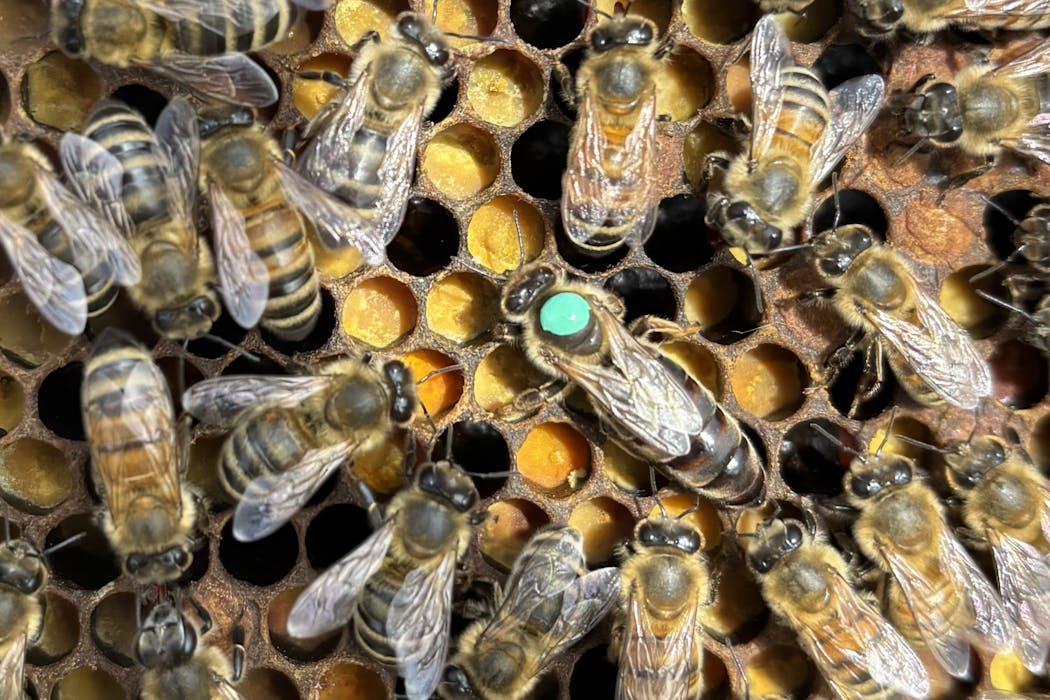
A queen honey bee (marked blue) surrounded by her workers. A typical queen bee lays thousands of eggs a day to keep the hive going. (Abigail Chapman)

When the results of the Canada’s national honey bee colony loss survey were published in July 2025, they came as no surprise. According to the Canadian Association of Professional Apiculturists, an estimated 36 per cent of Canada’s 830,000 honey bee colonies had perished over the winter.

These figures used to make headlines. But after almost two decades of the same story ― colonies dying in the winter, beekeepers struggling to rebuild, somewhat succeeding, rinse and repeat ― the sad statistics are no longer news, and we are still working out why the cycle persists.

Now, we might be having a light-bulb moment. My colleague Abigail Chapman and I recently found that queen honey bees are infected with viruses that compromise their fertility and may get them ousted from their colonies. And that’s meaningful, because “poor queens” is the top-ranked cause of colony losses reported by Canadian beekeepers.

The life of a queen

A typical honey bee colony has a single queen at the helm, and she is solely responsible for laying thousands of eggs per day ― more than her own body weight ― to grow and replenish the colony’s population for years.

A healthy, productive queen also secretes pheromones that, like a chemical bouquet, signal her quality to the workers (sterile females who make up most of the colony’s population).

The queen cannot afford to get sick. She already barely has time to sleep, and the colony depends on her to remain reproductive. But she may indeed become sick.

Queen “autopsies” point to viruses

Our surveys of queens from members of the British Columbia Bee Breeders’ Association showed that “failing” (poor quality, unproductive) queens had a higher viral burden than their healthy counterparts. That is, they were either infected with more viruses, had more intense infections, or both. The failing queens also had smaller ovaries, a sign they could be less fertile.

But this doesn’t necessarily mean that viruses were the culprit or that queens were sick, per se. They could have been failing for other reasons that also made them more susceptible to infection.

So, Chapman designed an experiment to take a closer look. She infected queens with two common honey bee viruses, then measured the queens’ egg-laying activity and the mass of their ovaries.

Not only did the infected queens lay fewer eggs per day, they were less likely to lay eggs at all when compared with controls, at least during the monitoring period, despite all queens laying normally before the experiment. When we saw that the infected queens also had shrunken ovaries, just like the queens supplied by B.C. beekeepers, we knew we were onto something.

In the apiary, too, infected queens had problems. The worse a queen’s infection was, the more likely her workers were to begin rearing a replacement ― a process known as “supersedure.” If the upcoming replacement queen reaches adulthood, she will normally duel any other queen to the death, mate and become the new conveyor of eggs.

The workers’ dilemma

Superseding colonies are over three times more likely to perish when compared with healthy colonies, in part because there is no guarantee that the new queen will successfully mate. But from the workers’ perspective, supersedure is a necessary risk. If the old queen is compromised, producing a new one is the colony’s best chance at survival.

Normally, the queen produces and secretes a retinue pheromone — a blend of at least nine different chemical components — that, among other functions, inhibits workers from replacing her if all is well. But if one or more of those cues is disrupted by a viral infection, that could act like a red flag, we reasoned, signalling to the workers that the queen can’t lay her weight.

Our new data shows that this is the very process underlying the workers’ drive to replace infected queens. The infections caused a deficiency in methyl oleate ― one flower in the queen’s bouquet. This change encourages the workers to begin raising a new queen.

bees moving along a hive
Normally, the queen produces and secretes a retinue pheromone that inhibits workers from replacing her, but a viral infection can disrupt those cues.
(Unsplash/Boba Jaglicic)

From beekeeper to queenkeeper

This validates beekeepers’ reports of having “queen issues” when infection levels are high and supports murmurs of queens not lasting as long as they used to. There are many other reasons why a queen may sputter, including pesticide exposure, extreme temperatures, poor mating and more. But viruses are a universal problem, and we did not previously understand the extent to which they could compromise queens.

Now that we do, colonies can be managed differently to better support the queen. There are currently no treatment options for honey bee viruses and there is a real need for commercial products, but luckily, there is still a way to act. Viruses are spread and sometimes amplified by varroa, a parasitic mite that can thankfully be controlled.


Read more:
Deadlier than varroa, a new honey-bee parasite is spreading around the world


Varroa treatments ― which must be conducted two to three times per year to keep colonies alive ― already keep beekeepers up at night. Some may want to surrender at the thought of needing to be even more diligent.

But until an antiviral is developed and brought to market, stepping up varroa control is likely the best defence for keeping queens healthy and bringing down colony losses. Pollination of our fruits, nuts and seeds will depend on it.

The Conversation

Alison McAfee receives funding from Project Apis m. She is affiliated with the Canadian Association of Professional Apiculturists and the British Columbia Honey Producers’ Association.

ref. Worker honey bees can sense infections in their queen, leading to revolt – https://theconversation.com/worker-honey-bees-can-sense-infections-in-their-queen-leading-to-revolt-269054

Comment l’IA peut nous aider à dresser le portrait de la population parisienne d’il y a 100 ans

Source: The Conversation – France (in French) – By Sandra Brée, Chargée de recherche CNRS – LARHRA, Centre national de la recherche scientifique (CNRS)

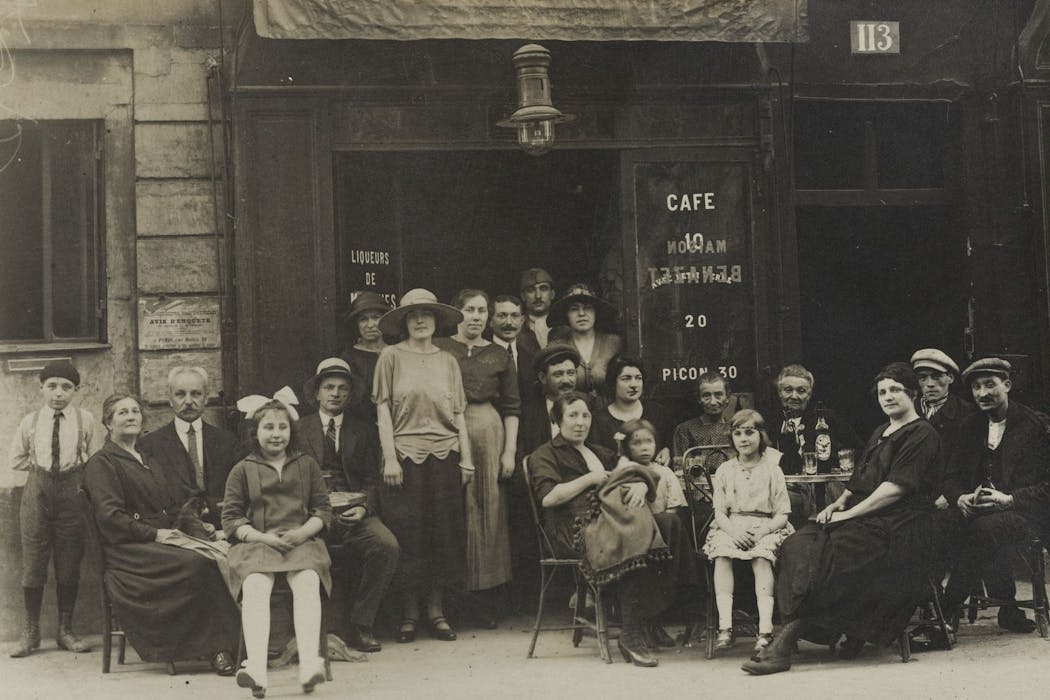
Au Réveil Matin, Maison Bénazet, café restaurant du 113 avenue Jean-Jaurès (XIX<sup>e</sup>), vers 1935.
Bibliothèque historique de la Ville de Paris

L’exposition « Les gens de Paris, 1926-1936. Dans le miroir des recensements de population », qui se tient actuellement, et jusqu’au 8 février 2026, au musée Carnavalet-Histoire de Paris, s’appuie sur les recensements de la population parisienne de 1926, de 1931 et de 1936, et contribue à renouveler le regard sur le peuple de la capitale dans l’entre-deux-guerres.


En France, des opérations de recensement sont organisées dès 1801, mais ce n’est qu’à partir de 1836 que des instructions spécifiques sont fournies pour procéder de manière uniforme dans toutes les communes du pays. Le recensement de la population est alors organisé tous les cinq ans, les années se terminant en 1 et en 6, jusqu’en 1946, à l’exception de celui de 1871 qui est reporté à l’année suivante en raison de la guerre franco-prussienne, et de ceux de 1916 et de 1941 qui ne sont pas organisés à cause des deux guerres mondiales.

Des données précieuses sur la population parisienne

Le premier but des recensements de la population est de connaître la taille des populations des communes pour l’application d’un certain nombre de lois. Ils permettent également de recueillir des informations sur l’ensemble des individus résidant dans le pays à un instant t pour en connaître la structure. Ces statistiques sont dressées à partir des bulletins individuels et/ou (selon les années) des feuilles de ménage (les feuilles de ménages récapitulent les individus vivant dans le même ménage et leurs liens au chef de ménage) remplies par les individus et publiées dans des publications spécifiques intitulées « résultats statistiques du recensement de la population ».

Liste nominative du recensement de la population de 1936, population de résidence habituelle, quartier Saint-Gervais (IVᵉ arrondissement).
Archives de Paris : Cote D2M8 553

En plus de ces statistiques, les maires doivent également dresser une liste nominative de la population de leur commune. Mais Paris avait obtenu le droit de ne pas dresser ces listes. C’est le chef du bureau de la statistique parisienne, M. Lambert, qui décide de revenir sur cette exception dès 1926. Les listes nominatives de 1926, de 1931 et de 1936 sont donc les seules, avec celle de 1946, à exister pour la population parisienne.

Si Paris avait obtenu le droit de ne pas dresser ces listes, c’est en raison du coût d’une telle opération pour une population si vaste. La population parisienne compte, en effet, déjà près de 1,7 million d’habitants en 1861, un million de plus en 1901 et atteint son pic en 1921 avec 2,9 millions d’individus. Les données contenues dans ces listes sont particulièrement intéressantes, car elles permettent d’affiner considérablement les statistiques dressées pendant l’entre-deux-guerres.

Une base de données conçue grâce à l’IA

Ces listes, conservées aux Archives de Paris et numérisées puis mises en ligne depuis une dizaine d’années, ont déjà intéressé des chercheurs qui se sont appuyés dessus, par exemple, pour comprendre l’évolution d’une rue ou d’un quartier, mais elles n’avaient jamais été utilisées dans leur ensemble en raison du volume qui rend impossible leur dépouillement pour un chercheur isolé. Voulant également travailler à partir de ces listes – au départ, pour travailler sur la structure des ménages et notamment sur les divorcés –, j’avais moi aussi débuté le dépouillement à la main de certains quartiers.

Registre d’une liste nominative de recensement conservée aux Archives de Paris et présentée dans l’exposition « Les gens de Paris, 1926-1936. Dans le miroir des recensements de population ».
Musée Carnavalet/Paris Musées/Pierre Antoine

La rencontre avec les informaticiens du Laboratoire d’informatique, de traitement de l’information et des systèmes (LITIS), Thierry Paquet, Thomas Constum, Pierrick Tranouez et Nicolas Kempf, spécialistes de l’intelligence artificielle, a changé la donne puisque nous avons entrepris de créer une base de données à partir de l’ensemble des listes nominatives de la population parisienne de 1926, de 1931 et de 1936 dans le cadre du projet POPP. Les 50 000 images, qui avaient déjà été numérisées par les Archives de Paris, ont été traitées par les outils d’apprentissage profond et de reconnaissance optique des caractères développés au LITIS pour créer une première base de données.

Les erreurs de cette première base « brute » étaient déjà très faibles, mais nous avons ensuite, avec l’équipe de sciences humaines et sociales – composée de Victor Gay (École d’économie de Toulouse, Université Toulouse Capitole), Marion Leturcq (Ined), Yoann Doignon (CNRS, Idées), Baptiste Coulmont (ENS Paris-Saclay), Mariia Buidze (CNRS, Progedo), Jean-Luc Pinol (ENS Lyon, Larhra) –, tout de même essayé de corriger au maximum les erreurs de lecture de la machine ou les décalages de colonnes. Ces corrections ont été effectuées de manière automatique, c’est-à-dire qu’elles ont été écrites dans un script informatique permettant leur reproductibilité. Ainsi, nous avons par exemple modifié les professions apparaissant comme « benne » en « bonne » ou bien les « fnène » en « frère ».

Adapter la base à l’analyse statistique

Il a ensuite fallu adapter la base à l’analyse statistique. Les listes nominatives n’avaient, en effet, pas pour vocation d’être utilisées pour des traitements statistiques puisque ces derniers avaient été établis directement à partir des bulletins individuels et des feuilles de ménage. Or, l’analyse statistique requiert que les mots signalant la même entité soient inscrits de la même façon. Cette difficulté est exacerbée dans le cas des listes nominatives : les agents avaient peu de place pour écrire, car les colonnes sont étroites. Ils utilisaient donc des abréviations, notamment pour les mots les plus longs comme les départements de naissance ou les professions.

Nous avons dû par conséquent uniformiser la manière d’écrire l’ensemble des professions, des départements ou des pays de naissance, des situations dans le ménage et des prénoms. Pour ce faire, nous nous sommes appuyés sur différents dictionnaires, c’est-à-dire des listes de mots correspondant à la variable traitée provenant de recherches antérieures ou d’autres bases de données. Ainsi, pour corriger les prénoms, Baptiste Coulmont, qui a travaillé sur cette partie de la base a utilisé les bases Insee des prénoms et des personnes décédées. Marion Leturcq et Victor Gay ont, par ailleurs, utilisé les listes des départements français, des colonies et des pays étrangers, tels qu’ils étaient appelés pendant l’entre-deux-guerres, ou encore la nomenclature des professions utilisées par la Statistique générale de la France (SGF).

Enfin, nous avons créé des variables qui manquaient pour l’analyse statistique que nous souhaitions mener, comme la variable « sexe » qui n’existe pas dans les listes nominatives (alors que le renseignement apparaît dans les fiches individuelles), ou encore délimiter les ménages afin d’en comprendre la composition. Ce travail de correction et d’adaptation de la base est encore en cours, car nous travaillons actuellement à l’ajout d’une nomenclature des professions – afin de permettre une analyse par groupes professionnels  –, ou encore à la création du système d’information géographique (SIG) de la base pour réaliser la géolocalisation de chaque immeuble dans la ville.

Retrouver des ancêtres

La base POPP ainsi créée a déjà été utilisée à différentes fins. Une partie de la base (comprenant les noms de famille – qui, eux, n’ont pas été corrigés –, les prénoms et les adresses) a été reversée aux Archives de Paris pour permettre la recherche nominative dans les images numérisées des listes nominatives. Ce nouvel outil mis en place au début du mois d’octobre 2025 – et également proposé en consultation au sein de l’exposition « Les gens de Paris, 1926-1936. Dans le miroir des recensements de population » – a déjà permis à de nombreuses personnes de retrouver leurs ancêtres.

Il nous a également été possible de fournir les premiers résultats tirés de la base POPP (confrontés aux résultats statistiques des recensements publiés) pour dresser des données de cadrage apparaissant sous forme d’infographies dans l’exposition (créées par Clara Dealberto et Jules Grandin). Ces résultats apparaissent également avec une perspective plus comparative dans une publication intitulée « Paris il y a 100 ans : une population plus nombreuse qu’aujourd’hui et déjà originaire d’ailleurs » (Ined, septembre 2025).

L’heure est maintenant à l’exploitation scientifique de la base POPP par l’équipe du projet dont le but est de dresser le portrait de la population parisienne à partir des données disponibles dans les listes nominatives des recensements de la population, en explorant les structures par sexe et âge, profession, état matrimonial, origine, ou encore la composition des ménages des différents quartiers de la ville.


L’autrice remercie les deux autres commissaires de l’exposition « Les gens de Paris, 1926-1936. Dans le miroir des recensements de population » Valérie Guillaume, directrice du musée Carnavalet – Histoire de Paris, et Hélène Ducaté, chargée de mission scientifique au musée Carnavalet – Histoire de Paris.

The Conversation

Sandra Brée a reçu des financements du CollEx-Persée, de Progedo, de l’humathèque du Campus-Condorcet et du CNRS.

ref. Comment l’IA peut nous aider à dresser le portrait de la population parisienne d’il y a 100 ans – https://theconversation.com/comment-lia-peut-nous-aider-a-dresser-le-portrait-de-la-population-parisienne-dil-y-a-100-ans-269624

Global inequality is as urgent as climate change: the world needs a panel of experts to steer solutions

Source: The Conversation – Africa – By Joseph E. Stiglitz, Professor, Columbia Business School, Columbia University

Given the escalating scale of inequality in the world, shouldn’t countries be banding together to set up an international panel on the issue, along the same lines as the Intergovernmental Panel on Climate Change (IPCC), the United Nations body set up to assess the science related to climate change? The idea of setting up an international panel on inequality has been recommended by the G20 Extraordinary Committee of Independent Experts on Global Inequality.

The thinking behind the panel is set out in a report delivered to the G20 by the experts on the inequality committee. They argue that the proposed inequality panel would “support governments and multilateral agencies with authoritative assessments and analyses of inequality”. It wouldn’t make any recommendations for countries. Rather it would offer a menu of policies that could be used to address inequality. Panel leader and Nobel laureaute Joseph E. Stiglitz explains what’s behind the idea.

What are the report’s main findings on inequality?

Our report looked at the research on the state of inequality – and the conclusion should alarm us all. Wealth inequality is far worse than income inequality and has intensified in most countries over the last 40 years.

The global increase in income and wealth at the upper end of the scale is particularly worrying. The very richest people are amassing fortunes while ordinary people’s lives stagnate. For every dollar of wealth created since the year 2000, 41 cents have gone to the richest 1% of people, while just one cent has gone to the bottom 50%.

This wealth brings huge influence over economies and politics, threatening economic performance and the very foundations of democracy.

What does the report recommend the G20 countries do to deal with inequality?

Inequality is a choice. There are policies that can reduce it. These include more progressive taxation, debt relief, rewriting global trade rules and curbing monopolies.


Read more:
Inequality in Africa: what drives it, how to end it and what some countries are getting right


Our committee found that there has been significant progress in tracking inequality’s scale, drivers and policy solutions. Nevertheless, policymakers still lack sufficient, dependable or accessible information on inequality.

There is a great institutional need for strong inequality analysis.

In 1988, governments set up the Intergovernmental Panel on Climate Change (IPCC) to assess the data and provide rigorous analyses to help governments tackle the climate emergency. Today, we are in an inequality emergency and need a similar global effort.

That is why our primary recommendation is to establish an International Panel on Inequality.

Drawing from the report, what do you recommend South Africa should do to reduce inequality?

South Africa has shown extraordinary leadership in focusing its G20 presidency on solidarity, equality and sustainability. This report is testament to that. We hope that South Africa will continue to champion our recommendations, particularly the establishment of an International Panel on Inequality.

Our committee chose not to comment on specific policies in specific countries. But our report contains a menu of policies which can tackle inequality. These include national measures like stronger competition laws, pro-worker regulation, investing in public services, and more progressive tax and expenditure policies.

The Conversation

Joseph E. Stiglitz is chair of the G20 Extraordinary Committee of Independent Experts on Global Inequality.

Imraan Valodia does not work for, consult, own shares in or receive funding from any company or organisation that would benefit from this article, and has disclosed no relevant affiliations beyond their academic appointment.

ref. Global inequality is as urgent as climate change: the world needs a panel of experts to steer solutions – https://theconversation.com/global-inequality-is-as-urgent-as-climate-change-the-world-needs-a-panel-of-experts-to-steer-solutions-270102