Trump wins again as ‘big beautiful bill’ passes the Senate. What are the lessons for the Democrats?

Source: The Conversation – UK – By Dafydd Townley, Teaching Fellow in US politics and international security, University of Portsmouth

Donald Trump is continuing his run of political wins after his keynote legislation, nicknamed the ‘big beautiful bill’, squeaked through the Senate.

While the bill, which includes major cuts in tax and government spending, must now go back to the House of Representatives for another vote, passing the upper house is highly significant. Trump lost the support of just three Republican senators, and with the help of a tie-breaking vote from Vice-President J.D. Vance managed to push the bill forward.

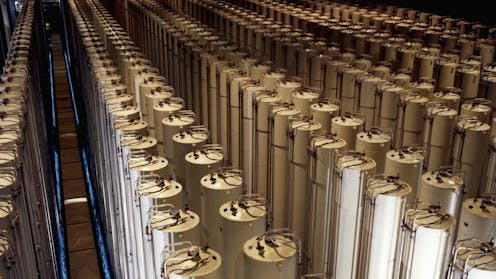
Democrats, the minority in both the House and Senate, have been unable to do anything but sit by and watch as Trump claims victory after victory. These include progress in his attempt to end birthright citizenship, the claimed destruction of significant Iranian nuclear sites (yet to be independently verified) and the convincing of Nato member states to increase defence spending to 5% of their GDP. Trump may even be getting closer to a peace deal between Israel and Hamas.

And now the Democrats have failed in their desperate attempts to stop this bill. In the Senate, it was felt that there could be enough Republican senators concerned about cuts to Medicaid (the US system that provides essential healthcare to those on low incomes), the closure or reduction of services at rural hospitals, and the increase in national debt to potentially hinder the bill’s progress. However, Democrats were unable to do anything apart from delaying the voting process, and the bill is progressing with some changes but not enough to be severely weakened.

It had seemed likely that the Democrats could work with the Maga-focused Freedom Caucus group of representatives, whose members include Marjorie Taylor Greene, in the early stages in the House to stop its initial passage. But Speaker Mike Johnson managed to calm most of their fears about the rise in the deficit to get the bill through the House.

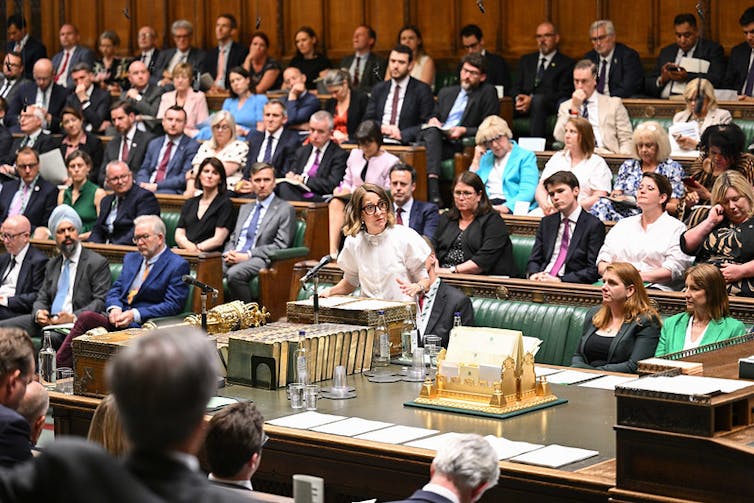
The lack of effective opposition from the Democrats reflects their congressional standing. The Republicans control the Senate 53-47, and they also have a majority of 220-212 in the House, with three vacancies.

While Democrat numbers in Congress is the primary issue in opposing this bill, their future congressional power will rely on strong leadership within the party and, more importantly, a clear set of policies with appeal that can attract more support at the ballot boxes. Failure to address this will probably allow Republicans to dominate Congress and shape American domestic and foreign policy any way they wish for longer.

Trump’s agenda has now passed the Senate.

What could Democrats do differently?

While Democrat Hakeem Jeffries has been a diligent minority leader in the House, he has attempted to operate as an obstacle to Republican policies with little success, rather than reaching across the political divide to create a consensus with dissenting Republicans.

Outside of Congress, California governor Gavin Newsom, widely touted as a potential candidate for the next presidential election, has offered some resistance to the Trump administration, particularly over Trump’s assumption of national command over the state-controlled National Guard to deal with protests in California against the Immigration and Customs Enforcement agency. However, Newsom’s reputation is still relatively regional, although it is on the rise.

Zohran Mamdani has won the Democratic nomination for New York mayor.

There will be jostling over the next couple of years for the Democratic presidential nomination, and this will have an impact on the platform that the party runs on. Party members and those voting for the next presidential nominee will need to decide whether to continue with the mainly centrist position that the party has adopted since the 1990s or adopt something more left-wing.

A more radical candidate, such as New York representative Alexandria Ocasio-Cortez, might offer a substantially different proposal that could seem attractive to Democratic voters and those Trump supporters who may feel dissatisfied with the current Republican administration.

However, democratic socialist Zohran Mamdani, recently selected as the Democratic nominee for the New York mayoral election, has already been vilified by some in the Republican party.

Concerns about such a supposedly “radical” candidate may concern many voters in red states in middle America. However, getting elected is one thing but implementing progressive, left-leaning policies is another thing entirely. They also need to deliver solutions to major issues, such as crime, at all levels, to show their abilities to solve problems.

It is not just the policies that matter for the Democrats, but who they want to represent. Last year’s election suggested that the Democrats had been ousted as the representatives of the working class. Some significant labour unions, a foundation of Democratic support for the majority of the 20th century, failed to endorse Kamala Harris.

Mamdani’s success in New York stemmed from the mobilisation of a grassroots campaign that used social media effectively. It targeted young working-class voters disenchanted with the Democratic party. He also resonated with voters in areas that had seen an increase in Republican voters in the 2024 election.

All this may offer some lessons to the Democrats. They need to reassess their policies, their image and their tactics, and show Americans that they can solve the problems that the public sees as most important, including the high cost of living. While they can expect to gain seats in the House in next year’s midterms, they need to look for a leader and policies that will capture the public’s hearts.

The Conversation

Dafydd Townley does not work for, consult, own shares in or receive funding from any company or organisation that would benefit from this article, and has disclosed no relevant affiliations beyond their academic appointment.

ref. Trump wins again as ‘big beautiful bill’ passes the Senate. What are the lessons for the Democrats? – https://theconversation.com/trump-wins-again-as-big-beautiful-bill-passes-the-senate-what-are-the-lessons-for-the-democrats-260038
UK may be on verge of triggering a ‘positive tipping point’ for tackling climate change

Source: The Conversation – UK – By Kai Greenlees, PhD Candidate, Sustainable Futures, University of Exeter

Nrqemi/Shutterstock

The UK is now more than halfway (50.4%) to achieving a net zero carbon economy, which means it has reduced its national emissions significantly compared to 1990.

We should even celebrate that 0.4%. Why? Because every tonne of carbon saved from the atmosphere and every fraction of a degree celsius of warming avoided saves lives and leaves more life-sustaining ecosystems intact for our children and grandchildren.

It also reduces the risk of triggering irreversible, devastating tipping points in the Earth system. We absolutely do not want to go there. Though, it may already be too late to save 90% of warm-water coral reefs, on which hundreds of millions of people depend for food and protection from storms.

Luckily, tipping points can also work in our favour. Researchers like us call them positive tipping points, which kickstart irreversible, self-propelling change towards a more sustainable future.


Get your news from actual experts, straight to your inbox. Sign up to our daily newsletter to receive all The Conversation UK’s latest coverage of news and research, from politics and business to the arts and sciences.


Solar energy has already crossed a tipping point, having become the cheapest source of power in most of the world. Because it is quick to deploy widely and in a variety of formats and settings, solar is expanding exponentially, including to the roughly 700 million people who don’t have electricity.

Electric vehicle sales have also crossed tipping points in China and several European markets, as evidenced by the abrupt acceleration of their shares in national vehicle fleets. The more people buy them, the cheaper and better they get, which makes even more people buy them – a self-propelling change towards a low-carbon road transport system.

Recent findings from the Climate Change Committee, independent advisers to the UK government on climate policy, show that the UK too may be on the cusp of a positive tipping point for electric vehicles (EVs), but that further work is needed to reach a tipping point for heat pumps.

EV sales are racing ahead

According to the CCC, more than half of the UK’s success in decarbonising its economy since 2008 can be attributed to the energy sector. Here, the transition from electricity generated by coal to gas and, increasingly, renewable sources like solar and wind, has occurred “behind the scenes”, without much disruption to daily life.

However, over 80% of the greenhouse gas emission cuts needed between now and 2030 (the UK aims to reduce emissions by 68% by 2030) need to come from other sectors that require the involvement and support of the public and businesses.

The adoption of low-carbon technologies by households, including the buying of EVs and installing of heat pumps, is a critical next step to determining the success or failure of the UK’s ability to achieve net zero. Cars account for about 15% of the UK’s emissions and home heating a further 18%.

Encouragingly, and despite concerted misinformation campaigns to discredit EVs, sales in the UK accounted for 19.6% of all new cars in 2024, which puts this sector close to the critical 20-25% range for triggering the phase of self-propelling adoption, according to positive tipping points theory.

This rise in EV sales is happening for two main reasons. First, the UK has a rule that bans the sale of new petrol and diesel cars from 2035, which gives carmakers and buyers a clear deadline to switch.

Second, they are becoming a better choice all round. They’re getting cheaper (some are expected to cost the same as petrol cars between 2026 and 2028), more appealing (with longer ranges and faster charging), and easier to use (thanks to more charging points and better infrastructure).

If this positive trend continues, emissions saved by EV adoption will be sufficient to achieve the UK road transport sector’s 2030 emissions target.

Where is the heat pump tipping point?

Heat pumps have been slower on the uptake in the UK, leading the CCC to identify their deployment as one of the biggest risks to achieving the 2030 emissions target.

Heat pumps use electricity to pump warmth from outside into a home (like a reverse refrigerator) and can be between three and five times more efficient than gas boilers, with approximate emissions savings of 70%.

The UK government has set a target of installing 600,000 heat pumps a year by 2028. But despite 90% of British homes being suitable for a heat pump, only 1% have one.

There are signs that installations are picking up pace, however. In 2024, 98,000 heat pumps were installed – an increase of 56% from 2023. Deployment will need to be increased more than six times its current rate over the next three years to reach the installation target. In other words, we urgently need to trigger a positive tipping point in this sector.

The triggering of self-propelling change depends on the relative strength of feedbacks that either resist change (damping or negative feedback) or drive it forward (positive feedback).

One important negative feedback highlighted by the CCC is the UK’s high electricity-to-gas price ratio, which increases the running costs of a heat pump on top of the high upfront cost of buying and installing one. Addressing this issue has been at the top of the CCC’s policy recommendations for the last two years.

One positive feedback that needs to be strengthened is the perception among installers of household demand for heat pumps. When installers perceive demand, they are more likely to invest in the training and certifications needed to meet it.

Two ways the CCC suggests the government could encourage installer confidence are to extend the boiler upgrade scheme (which provides grants to households to install heat pumps) and clean heat mechanism (which obliges manufacturers and installers to prioritise heat pumps) and to reinstate the 2035 phase-out rule for new fossil fuel boilers.

An understanding of positive tipping points helps us identify key leverage points where intervention can be most effective in tackling the remaining half of the UK’s emissions. When implemented as part of a coherent national strategy, positive change can be accomplished at the pace and scale required. There is no time to lose.


Don’t have time to read about climate change as much as you’d like?

Get a weekly roundup in your inbox instead. Every Wednesday, The Conversation’s environment editor writes Imagine, a short email that goes a little deeper into just one climate issue. Join the 45,000+ readers who’ve subscribed so far.


The Conversation

Kai Greenlees receives funding from the Economic Social Research Council, through the South West Doctoral Training Partnership.

Steven R. Smith does not work for, consult, own shares in or receive funding from any company or organisation that would benefit from this article, and has disclosed no relevant affiliations beyond their academic appointment.

ref. UK may be on verge of triggering a ‘positive tipping point’ for tackling climate change – https://theconversation.com/uk-may-be-on-verge-of-triggering-a-positive-tipping-point-for-tackling-climate-change-260212

Inteligencia artificial, ¿comida rápida intelectual?

Source: The Conversation – (in Spanish) – By Santiago Iñiguez de Onzoño, Presidente IE University, IE University

SvetaZi/Shutterstock

Aunque la inteligencia artificial ofrezca acceso inmediato a respuestas y pueda simular diálogos, claramente tiene limitaciones. Su uso exclusivo en el proceso de aprendizaje es una especie de comida rápida intelectual: conveniente y aparentemente satisfactoria, pero carente de la profundidad de una experiencia educativa bien elaborada.

En cambio, el aprendizaje real es un proceso lento, complejo y reflexivo, moldeado por la incertidumbre, el esfuerzo y el descubrimiento, que no puede ser totalmente externalizado ni acelerado. Aprender implica construir conocimiento mediante una participación directa, no consumir pasivamente contenido ya procesado.

El desarrollo de habilidades cognitivas como el pensamiento crítico, la introspección, el razonamiento lógico y la metacognición requiere de esfuerzo e intencionalidad. Estas son habilidades de orden superior que la IA no puede desarrollar por nosotros: deben ser cultivadas activamente por el estudiante. Aunque la IA puede apoyar este proceso, no puede reemplazar la disciplina mental ni la reflexión necesarias para un verdadero crecimiento intelectual.

El impacto de la IA en la educación

Investigaciones recientes muestran que las herramientas de IA influyen positivamente en el pensamiento creativo de los estudiantes, en particular al aumentar su autoconfianza y reducir la ansiedad. Estos hallazgos sugieren que, si se integran de manera reflexiva, las tecnologías de IA pueden potenciar tanto la innovación como el rendimiento académico.

En su libro Brave New Words (2024), Salman Khan presenta una visión fundamentada y optimista de cómo la IA puede mejorar la educación. Basándose en su experiencia con Khan Academy, el autor visualiza la IA como un socio que fomenta el diálogo socrático como herramienta para explorar ideas con curiosidad y creatividad. Según Khan, la IA puede personalizar la enseñanza, reducir la carga administrativa de los docentes y cerrar brechas educativas persistentes.

No obstante, también advierte sobre los peligros de su implementación sin control: riesgos relacionados con la privacidad de los datos, algoritmos sesgados e inequidad en el acceso. Khan propone una integración equilibrada y centrada en las personas, que promueva tanto la alfabetización en IA como una conciencia ética de su uso.

Riesgos cognitivos y necesidad de equilibrio

Más allá de las ventajas para el aprendizaje que ofrece la IA, un número creciente de investigaciones advierte sobre las consecuencias de su uso excesivo o exclusivo.

Un estudio publicado en 2024 destaca los peligros de la delegación cognitiva: la tendencia a sustituir el trabajo mental –como el razonamiento o la resolución de problemas– por el uso de la IA. Esta práctica, se argumenta, erosiona la implicación cognitiva profunda de los estudiantes y debilita el pensamiento crítico.

Una investigación publicada en 2023 mostró que los estudiantes que confiaron en resúmenes generados por IA obtuvieron resultados significativamente inferiores –hasta un 25 % menos– en pruebas de comprensión, en comparación con aquellos que estudiaron directamente de los materiales originales.

Se ha identificado también una tendencia hacia la pereza metacognitiva, pues las herramientas de IA reducen la motivación de los estudiantes para pensar de manera autónoma. Los expertos señalan que el uso pasivo de la IA debilita el aprendizaje controlado por el individuo y fomenta una participación superficial.

Estos resultados no invalidan el valor de la IA pero sí subrayan la importancia de una integración consciente y deliberada. La inteligencia artificial debe ser un andamiaje para el pensamiento, no un sustituto del mismo.

Las dimensiones sociales y humanas del aprendizaje

El aprendizaje no es solo un proceso cognitivo, también es profundamente social. En las universidades, buena parte del aprendizaje más significativo ocurre fuera del aula: en conversaciones informales con compañeros, en mentorías con profesores y en la búsqueda compartida de sentido, conocimiento y relaciones en las diversas comunidades que conforman la institución. Estas interacciones humanas son irremplazables. La IA puede simular respuestas, pero no puede replicar la empatía, la complejidad o el impacto transformador de una conexión humana real.

Aquí es donde el estudio de las humanidades desempeña un papel fundamental. Disciplinas como la filosofía, la historia, la literatura y las artes cultivan cualidades que las máquinas no pueden generar de forma original: juicio moral, creatividad, empatía y conciencia cívica.

Desde el comienzo de las universidades, las humanidades han sido esenciales para preparar a los estudiantes a vivir con sentido en un mundo diverso y complejo, a gestionar la incertidumbre y abordar preguntas no solo sobre lo que podemos hacer sino sobre lo que debemos ser. Una generación técnicamente competente pero éticamente desorientada no representa progreso.


Leer más:
Lo que las humanidades pueden hacer por la digitalización de la banca


Una integración centrada en la persona

La IA es una herramienta poderosa, pero el centro de la educación reside en la curiosidad humana, la investigación crítica y el coraje de enfrentar la complejidad. Estas son las cualidades que transforman la información en comprensión y el conocimiento en sabiduría.

Por eso se necesita una integración equilibrada e intencional de la IA en la educación. Una adopción pasiva o un entusiasmo ciego no producirá resultados satisfactorios en el aprendizaje, y los educadores hemos de reflexionar críticamente sobre qué papel debe desempeñar la IA en el proceso educativo.

Para que la inteligencia artificial cumpla verdaderamente su cometido debe estar alineada con los valores fundamentales de la educación: el pensamiento independiente, la reflexión ética y la conexión humana significativa. Solo entonces podrá amplificar el potencial humano en lugar de reemplazarlo.


Una versión de este artículo se publicón en LinkedIn.

The Conversation

Santiago Iñiguez de Onzoño no recibe salario, ni ejerce labores de consultoría, ni posee acciones, ni recibe financiación de ninguna compañía u organización que pueda obtener beneficio de este artículo, y ha declarado carecer de vínculos relevantes más allá del cargo académico citado.

ref. Inteligencia artificial, ¿comida rápida intelectual? – https://theconversation.com/inteligencia-artificial-comida-rapida-intelectual-260098

The US and Israel’s attack may have left Iran stronger

Source: The Conversation – UK – By Bamo Nouri, Honorary Research Fellow, City St George’s, University of London

Israel’s attack on Iran last month and the US bombing of the country’s nuclear facilities, the first-ever direct US attacks on Iranian soil, were meant to cripple Tehran’s strategic capabilities and reset the regional balance.

The strikes came after 18 months during which Israel had effectively dismantled Hamas in Gaza, dealt a devastating blow to Hezbollah in Lebanon, weakened the Houthis in Yemen, and seen the collapse of the Assad regime in Syria – a longstanding and key Iranian ally.

From a military standpoint, these were remarkable achievements. But they failed to deliver the strategic outcome Israeli and US leaders had long hoped for: the collapse of Iran’s influence and the weakening of its regime.

Instead, the confrontation exposed a deeper miscalculation. Iran’s power isn’t built on impulse or vulnerable proxies alone. It is decentralised, ideologically entrenched and designed to endure. While battered, the Islamic Republic did not fall. And now, it may be more determined – and more dangerous – than before.


Get your news from actual experts, straight to your inbox. Sign up to our daily newsletter to receive all The Conversation UK’s latest coverage of news and research, from politics and business to the arts and sciences.


Israel’s attack – dubbed “operation rising lion” – began with attacks on Iranian radar systems, followed by precision airstrikes on Iranian enrichment facilities and senior military officers and scientists. Israel spent roughly US$1.45 (£1.06 billion) billion in the first two days and in the first week of strikes on Iran, costs hit US$5 billion, with daily spending at US$725 million: US$593 million on offensive operations and US$132 million on defence and mobilization.

Iran’s response was swift. More than 1,000 drones and 550 ballistic missiles, including precision-guided and hypersonic variants. Israeli defences were breached. Civilian infrastructure was hit, ports closed, and the economy stalled

The day after the US strikes, the Israeli prime minister, Benjamin Netanyahu, spoke with Donald Trump about a ceasefire. He and his generals were reportedly keen to bring the conflict to a speedy end. Reports suggest that Netanyahu wanted to avoid a lengthy war of attrition that Israel could not sustain, and was already looking for an exit strategy.

Crucially, the Iranian regime remained intact. Rather than inciting revolt, the war rallied nationalist sentiment. Opposition movements remain fractured and lack a common platform or domestic legitimacy. Hopes of a popular uprising that might topple the regime expressed by both Trump and Netanyahu were misplaced.

In the aftermath, Iranian authorities launched a sweeping crackdown on suspected dissenters and what it referred to as “spies”. Former activists, reformists and loosely affiliated protest organisers were arrested or interrogated. What was meant to fracture the regime instead reinforced its grip on power.

Most notably, Iran’s parliament voted to suspend cooperation with the International Atomic Energy Agency (IAEA), ending inspections and giving Tehran the freedom to expand its nuclear programme – both civilian and potentially military – without oversight.

Perhaps the clearest misreading came from Israel and the US treating Syria as a template. The 2024 fall of Bashar al-Assad was hailed as a turning point. His successor, Ahmed al-Sharaa – a little-known opposition figure, former al-Qaeda insurgent and IS affiliate – was rebranded as a pragmatic reformer, who Trump praised as “attractive” and “tough”.

For western and Israeli strategists, Syria offered both a way to weaken Iran and a blueprint of how eventual regime change could play out: collapse the regime, install cooperative leadership in a swift reordering process. But this analogy was dangerously flawed. Iran’s stronger institutions, military depth, resistance-driven identity and existence made it a fundamentally different and more resilient state.

Tactical wins, strategic ambiguity

While Iran’s regional network has taken significant hits over the past year –Hamas dismantled, Hezbollah degraded, the Houthis depleted, and the Assad regime toppled – Tehran recalibrated. It deepened military cooperation with Russia and China, secured covert arms shipments, and accelerated its nuclear ambitions.

Both Israel and Iran, however, came away with new intelligence. Israel learned that its missile defences and economic resilience were not built for prolonged, multi-front warfare. Iran, meanwhile, gained valuable insight into how far its arsenal – drones, missiles and regional proxies – could reach, and where its limits lie.

Most of Iran’s drones and missiles were intercepted — up to 99% in the cases of drones — exposing critical weaknesses in accuracy, penetration, and survivability against modern air defenses. Yet the few that did break through caused significant damage in Tel Aviv, striking residential areas and critical infrastructure.

This war was not only a clash of weapons but a real-time stress test of each side’s strategic depth. Iran may now adjust its doctrine accordingly – prioritising survivability, mobility and precision in anticipation of future conflicts.

Israel’s vulnerabilities

Internally, Israel entered the war politically fractured and socially strained. Netanyahu’s far-right coalition was already under fire for attempting to weaken judicial independence. The war has temporarily united the country, but the economic and human toll have reignited deeper concerns.

Israel’s geographic and demographic constraints have become clear. Its high-tech economy, tightly integrated with global markets, could not weather prolonged instability. And critically, the damage inflicted by the US bombing was more limited than hoped for. While Washington joined in the initial strikes, it resisted deeper involvement, partly to avoid broader regional escalation and largely because of the lack of domestic appetite for war and high potential for energy inflation, if Iran was to close the Strait of Hormuz.

What happens now?

The war of 2025 did not produce peace. It produced recalibration. Israel emerges militarily capable but politically shaken and economically strained. Iran, though damaged, stands more unified, with fewer international constraints on its nuclear ambitions. Its crackdown on dissent, withdrawal from IAEA oversight, and deepening ties to rival powers suggest a regime preparing not for collapse, but for survival, perhaps even confrontation.

The broader lesson is sobering. Regime change cannot be engineered through precision strikes. Tactical brilliance does not guarantee strategic victory. And the assumption that Iran could unravel like Syria was not strategy, it was hubris.

Both sides now better understand each other’s strengths and limits, a clarity that could deter future war – or make the next one more dangerous. In a region shaped by trauma and shifting power, mistaking resistance for weakness or pause for peace remains the gravest miscalculation.

The Conversation

Bamo Nouri does not work for, consult, own shares in or receive funding from any company or organisation that would benefit from this article, and has disclosed no relevant affiliations beyond their academic appointment.

ref. The US and Israel’s attack may have left Iran stronger – https://theconversation.com/the-us-and-israels-attack-may-have-left-iran-stronger-260314

Cuando pensamos con el coche: las palabras que usamos influyen en cómo nos movemos por la ciudad

Source: The Conversation – (in Spanish) – By Lorena Pérez Hernández, Catedrática de Filología Inglesa. Lingüística cognitiva, Universidad de La Rioja

“Me costó toda una vida aprender a pintar como un niño”.

Pablo Picasso

A medida que cumplimos años, nuestra visión del mundo deja irremediablemente de ser nuestra. Liberarse de los filtros que se van interponiendo entre nosotros y la realidad es algo muy complejo. Los genios como Picasso son conscientes de ello; el resto normalmente no nos damos cuenta.

Una parte del mundo la vemos con los ojos, pero otra gran parte nos llega tamizada por el lenguaje y los procesos de socialización. Con frecuencia, resulta complicado identificar esta visión como parcial y sesgada. Así sucede también cuando observamos (y hablamos) de la movilidad urbana.

A menudo vemos coches aparcados encima de las aceras obstruyendo el paso. En ocasiones incluso en parques o paseos, aparcados de manera ilegal. En inglés la palabra carspreading describe la acción de estos conductores, haciendo un paralelismo con el término manspreading que designa el habitual despatarre masculino en los medios de transporte.

En español carecemos de una palabra que describa ese uso desconsiderado del espacio público. El vacío léxico dificulta la comunicación, y lo que no se puede nombrar pasa más desapercibido. Aquello de lo que no se habla difícilmente se puede evitar.

Un hombre con las piernas abiertas ocupando más espacio en el transporte público y un coche ocupando la acera.
El manspreading y el carspreading.
Eric Fischer/Wikimedia Commons-WNYC New York Public Radio/Flickr, CC BY-SA

Lo normal es el coche

La relación entre lengua y realidad es bidireccional. Los vacíos léxicos pueden venir determinados por modelos cognitivos –con frecuencia institucionalizados y dominantes– que nos hacen ver la realidad de manera sesgada. Uno de estos sesgos es la motonormatividad.

El pensamiento motonormativo enfatiza la conducción como forma de movilidad natural e impide juzgar como incívicos comportamientos al volante que en otros contextos identificaríamos casi como “antisociales”.

Esto se observa muy bien en los titulares de prensa que recogen accidentes automovilísticos y que a menudo utilizan diversas estrategias lingüísticas para silenciar la responsabilidad de los conductores.

La metonimia “coche” por “conductor”, por ejemplo, es una gran aliada de la motonormatividad. Titulares como “Un coche atropella a una joven” presentan automóviles que parecen tener vida propia. Curiosamente, la misma estrategia no suena natural cuando el vehículo es una bicicleta (“Una bicicleta atropella a un peatón”). En estos casos sí se suele hacer explícito el verdadero agente de la acción.

La voz pasiva también logra ocultar al responsable del atropello: “Herido grave un niño de 6 años tras ser atropellado”.

Si las estrategias anteriores no son suficientes para silenciar la responsabilidad de los conductores, siempre se puede echar la culpa a entes abstractos: “Los accidentes de tráfico se han cobrado la vida de 261 personas en lo que va de año” o “Un total de 1 755 personas fallecieron en las carreteras y calles españolas por culpa de un accidente de tráfico”.

La mentalidad motonormativa se extiende al uso de la cortesía verbal. A menudo los mensajes dirigidos a los conductores son más corteses (“Por favor, respeten los vados”) que los que damos a los niños (“Prohibido jugar al balón bajo sanción municipal”).

Un cartel de 'por favor respeten los vados' al lado de otro que dice 'prohibido jugar al balón menores de 4 años bajo sanción'.
Mensajes (educados) para los conductores y mensajes (categóricos) para los niños.
Facebook Ayto. de Alpera y Aragón noticias

Metáforas de movilidad

La motonormatividad es una forma de ver el mundo que forma parte de nuestro sistema conceptual y se plasma también en las metáforas que usamos para entender y hablar de la movilidad.

Hablamos metafóricamente de la movilidad como un sistema circulatorio en el que las calles son las venas y arterias de la ciudad, y los vehículos a motor la sangre que discurre por ellas. Los obstáculos a la movilidad motorizada ponen en peligro todo el sistema y la salud de la ciudad en su conjunto. Basta leer un artículo en el que se explica cómo la covid-19 consiguió “atacar” la esencia de las ciudades, “desconectando sus órganos” y “debilitando” el transporte público, entendido como “su sistema circulatorio”.

La metáfora de la ciudad como un cuerpo tiene una función instructiva, y nos permite entender cómo funciona la movilidad urbana.

Pero además de instructivas, las metáforas también legitiman distintas formas de ver el mundo. Por eso, diversos estudios enmarcados en la ecolingüística proponen desenmascarar las narrativas lingüísticas y metafóricas que silencian los problemas de una movilidad exclusivamente motorizada.

Resistir con metáforas

Las metáforas de resistencia son habituales en el discurso de los usuarios de nuevos tipos de movilidad urbana. Mediante su uso visibilizan los sesgos del lenguaje y el pensamiento motonormativo.

Algunas de estas metáforas se apoyan en narrativas institucionalizadas. Por ejemplo, parten de la visión común de la ciudad como un sistema circulatorio pero resaltan las consecuencias negativas de un modelo de movilidad exclusivamente motorizado. Así, los coches aparecen como el colesterol que causa el bloqueo de sus arterias poniendo en riesgo la salud de la ciudad en su conjunto.

También, apoyándose en las equiparaciones metonímicas entre conductor y tipo de vehículo, se señalan las consecuencias sanitarias negativas que la movilidad motorizada puede tener para sus usuarios (al facilitar la obesidad y el desembolso económico) y se comparan con otro tipo de movilidad activa.

Nuevas metáforas para una nueva movilidad

Sin embargo, las metáforas de resistencia no siempre se apoyan en marcos ya establecidos. Estudiar el lenguaje de los activistas por la movilidad ciclista permite identificar otros tipos.

Uno de ellos es la oposición explícita al pensamiento motonormativo y la crítica abierta al coche como el “dios” o “rey” de la ciudad. Como explica el arquitecto y urbanista Juan Carlos García de los Reyes, el reino de los peatones “no es de este mundo”. No hay lugar para los ciudadanos en ciudades que están completamente “sacrificadas al coche”.

Hay otras metáforas que encontramos en los discursos que abogan por una movilidad sostenible, con frecuencia equiparada a la movilidad ciclista o peatonal. Éstas sirven para implantar en el imaginario colectivo narrativas más compatibles con los objetivos de desarrollo sostenible.

Es el caso del reenmarcado de la ciudad que supone entenderla no como un trastero de coches sino como una casa habitable, promoviendo una reflexión sobre cómo repartimos el espacio urbano entre sus diferentes usuarios. A nadie se le ocurriría diseñar su hogar con el garaje en el centro y ocupando la mayor parte de la zona habitable de su vivienda. Sin embargo, eso es lo que ocurre en las calles, donde los coches ocupan la mayor parte del espacio transitable.

¿Cómo podemos cambiar la idea de circulación que tenemos actualmente?
Copenhague Design Co. (adaptado)

Particularmente alineadas con los postulados de la ecolingüística están aquellas que construyen la ciudad como un ecosistema urbano. Igual que en un ecosistema natural coexisten múltiples especies, en un sistema de movilidad autónomo urbano pueden convivir distintas formas de moverse, incluyendo también a peatones, ciclistas u otras formas de transporte alternativo.

Este tipo de metáforas están intentando promover un marco cognitivo diferente, equiparado a lo que se está empezando a conocer como “multiautoculturalismo”, o la reinterpretación de la ciudad como una sociedad en la que conviven distintas identidades vehiculares.

La motonormatividad lleva décadas usando el lenguaje como un mecanismo de dominación para imponer una forma de ver el mundo basada en el predominio del automóvil. Pero el lenguaje es también un potente instrumento de liberación. Las metáforas de resistencia nos ayudan a imaginar realidades alternativas. Lo que se puede imaginar habita en el umbral de lo posible.

Reformulando a Picasso, necesitamos reaprender a pensar (y hablar) sobre movilidad urbana si queremos construir modelos de ciudad más sostenibles.

The Conversation

Lorena Pérez Hernández es Investigadora Principal del proyecto OTRI “Research Project on Cognitive Models in Branding” (OTEM240725), investigadora en el proyecto “Partnership on University Plagiarism Prevention” (Social Sciences and Humanities Research Council of Canada #895-2021-1016) y miembro del Grupo GRISSU (Grupo Riojano de Investigación en Semántica, Sintaxis y Uso del Lenguaje; Universidad de La Rioja) y del Grupo de Acción ICON (Campus Iberus).

Laura Filardo-Llamas es investigadora principal del proyecto “Variación Semántica y Comunidades de Práctica en Redes Sociales” (SEMVARCOP) (Ministerio de Ciencia, Innovación y Universidades, PID2023-148324NB-I00). Coordina el Grupo de Investigación Reconocido en Estilística Cognitiva (UVA) y es miembro del Grupo de Acción ICON del Campus Íberus.

ref. Cuando pensamos con el coche: las palabras que usamos influyen en cómo nos movemos por la ciudad – https://theconversation.com/cuando-pensamos-con-el-coche-las-palabras-que-usamos-influyen-en-como-nos-movemos-por-la-ciudad-256283

Motion sickness drug linked to cases of robbery and assault – here’s what you need to know about ‘devil’s breath’

Source: The Conversation – UK – By Dipa Kamdar, Senior Lecturer in Pharmacy Practice, Kingston University

Scopolamine is extracted from brugmansia MaCross-Photography/Shutterstock

Scopolamine, more chillingly known as “devil’s breath,” is a drug with a dual identity. In medicine, it’s used to prevent motion sickness and nausea. But in the criminal underworld, particularly in parts of South America, it has gained a dark reputation as a substance that can erase memory, strip away free will and facilitate serious crimes. Now, its presence may be sparking fresh concerns in the UK.

While most reports of devil’s breath come from countries like Colombia, concerns about its use in Europe are not new. In 2015, three people were arrested in Paris for allegedly using the drug to rob victims, turning them into compliant “zombies”.

The UK’s first known murder linked to scopolamine was reported in 2019 when the Irish dancer Adrian Murphy was poisoned by thieves attempting to sell items stolen from him. In a more recent case in London, a woman reported symptoms consistent with scopolamine exposure after being targeted on public transport.


Get your news from actual experts, straight to your inbox. Sign up to our daily newsletter to receive all The Conversation UK’s latest coverage of news and research, from politics and business to the arts and sciences.


Scopolamine, also known as hycosine, is a tropane alkaloid, a type of plant-derived compound found in the nightshade family (Solanaceae). It has a long history: indigenous communities in South America traditionally used it for spiritual rituals due to its potent psychoactive effects.

In modern medicine, scopolamine (marketed in the UK as hyoscine hydrobromide) is prescribed to prevent motion sickness, nausea, vomiting and muscle spasms. It also reduces saliva production before surgery. Brand names include Kwells (tablets) and Scopoderm (patches).

As an anticholinergic drug, scopolamine blocks the neurotransmitter acetylcholine, which plays a vital role in memory, learning, and coordination. Blocking it helps reduce nausea by interrupting signals from the balance (vestibular) system to the brain. But it also comes with side effects, especially when used in high doses or outside a clinical setting.

How it affects the brain

Scopolamine disrupts the cholinergic system, which is central to memory formation and retrieval. As a result, it can cause temporary but severe memory loss: a key reason it’s been weaponised in crimes. Some studies also suggest it increases oxidative stress in the brain, compounding its effects on cognition.

The drug’s power to erase memory, sometimes described as “zombifying”, has made it a focus of forensic and criminal interest. Victims often describe confusion, hallucinations and a complete loss of control.

Uses and misuses

In clinical settings, scopolamine is sometimes used off-label for depression, excessive sweating, or even to help quit smoking. But outside these uses, it’s increasingly associated with danger.

Recreational users are drawn to its hallucinogenic effects – but the line between tripping and toxic is razor thin.

In Colombia and other parts of South America, scopolamine, also known as burundanga, has been implicated in countless robberies and sexual assaults. Victims describe feeling dreamlike, compliant, and unable to resist or recall events. That’s what makes it so sinister – it robs people of both agency and memory.

The drug is often administered surreptitiously. In its powdered form, it’s odourless and tasteless, making it easy to slip into drinks or blow into someone’s face, as some victims have reported. Online forums detail how to make teas or infusions from plant parts, seeds, roots, flowers – heightening the risk of DIY misuse.

Once ingested, the drug works quickly and exits the body within about 12 hours, making it hard to detect in routine drug screenings. For some people, even a dose under 10mg can be fatal.

Devil’s Breath documentary trailer, Journeyman Pictures.

Signs of scopolamine poisoning include rapid heartbeat and palpitations, dry mouth and flushed skin, blurred vision, confusion and disorientation, hallucinations and drowsiness.

If you experience any of these, especially after an unexpected drink or interaction, seek medical attention immediately.

The Conversation

Dipa Kamdar does not work for, consult, own shares in or receive funding from any company or organisation that would benefit from this article, and has disclosed no relevant affiliations beyond their academic appointment.

ref. Motion sickness drug linked to cases of robbery and assault – here’s what you need to know about ‘devil’s breath’ – https://theconversation.com/motion-sickness-drug-linked-to-cases-of-robbery-and-assault-heres-what-you-need-to-know-about-devils-breath-259720

Ghana and India: Narendra Modi’s visit rekindles historical ties

Source: The Conversation – Africa (2) – By Pius Siakwah, Senior Research Fellow, Institute of African Studies, University of Ghana

Narendra Modi’s trip to Ghana in July 2025, part of a five-nation visit, is the first by an Indian prime minister in over 30 years. The two countries’ relationship goes back more than half a century to when India helped the newly independent Ghana set up its intelligence agencies. Ghana is also home to several large Indian-owned manufacturing and trading companies. International relations scholar Pius Siakwah unpacks the context of the visit.

What is the background to Ghana and India’s relationship?

It can be traced to links between Kwame Nkrumah, Ghana’s first president, and his Indian counterpart, Prime Minister Jawaharlal Nehru, in 1957. It is not surprising that the Indian High Commission is located near the seat of the Ghana government, Jubilee House.

Nkrumah and Nehru were co-founders of the Non-Aligned Movement, a group of states not formally aligned with major power blocs during the cold war. Its principles focused on respect for sovereignty, neutrality, non-interference, and peaceful dispute resolution. It was also a strong voice against the neo-colonial ambitions of some of the large powers.

The movement emerged in the wave of decolonisation after the second world war. It held its first conference in 1961 under the leadership of Josip Bros Tito (Yugoslavia), Gamal Abdel Nasser (Egypt) and Sukarno (Indonesia) as well as Nehru and Nkrumah.

The relationship between Ghana and India seemingly went into decline after the overthrow of Nkrumah in 1966, coinciding with the decline of Indian presence in global geopolitics.

In 2002, President John Kufuor re-energised India-Ghana relations. This led to the Indian government’s financial support in the construction of Ghana’s seat of government in 2008.

Though the concept of the Non-Aligned Movement has faded this century, its principles have crystallised into south-south cooperation. This is the exchange of knowledge, skills, resources and technologies among regions in the developing world.

South-south cooperation has fuelled India-Ghana relations. Modi’s diplomatic efforts since 2014 have sought to relaunch India’s presence in Africa.

In recent times, India has engaged Africa through the India–Africa Forum Summit. The first summit was held in 2008 in New Delhi with 14 countries from Africa. The largest one was held in 2015, while the fourth was postponed in 2020 due to COVID-19. The summit has led to 50,000 scholarships, a focus on renewable energy through the International Solar Alliance and an expansion of the Pan-African e-Network to bridge healthcare and educational gaps. Development projects are financed through India’s EXIM Bank.

India is now one of Ghana’s major trading partners, importing primary products like minerals, while exporting manufactured products such as pharmaceuticals, transport and agricultural machinery. The Ghana-India Trade Advisory Chamber was established in 2018 for socio-economic exchange.

Modi’s visit supports the strengthening of economic and defence ties.

The bilateral trade between India and Ghana moved from US$1 billion in 2011-12 to US$4.5 billion in 2018-19. It then dipped to US$2.2 billion in 2020-21 due to COVID. By 2023, bilateral trade amounted to around US$3.3 billion, making India the third-largest export and import partner behind China and Switzerland.

Indian companies have invested in over 700 projects in Ghana. These include B5 Plus, a leading iron and steel manufacturer, and Melcom, Ghana’s largest supermarket chain.

India is also one of the leading sources of foreign direct investment to Ghana. Indian companies had invested over US$2 billion in Ghana by 2021, according to the Ghana Investment Promotion Center.

What are the key areas of interest?

The key areas of collaboration are economic, particularly:

  • energy

  • infrastructure (for example, construction of the Tema to Mpakadan railway line)

  • defence

  • technology

  • pharmaceuticals

  • agriculture (agro-processing, mechanisation and irrigation systems)

  • industrial (light manufacturing).

What’s the bigger picture?

Modi’s visit is part of a broader visit to strengthen bilateral ties and a follow-up to the Brics Summit, July 2025 in Brazil. Thus, whereas South Africa is often seen as the gateway to Africa, Ghana is becoming the opening to west Africa.

Modi’s visit can be viewed in several ways.

First, India as a neo-colonialist. Some commentators see India’s presence as just a continuation of exploitative relations. This manifests in financial and agricultural exploitation and land grabbing.

Second, India as smart influencer. This is where the country adopts a low profile but benefits from soft power, linguistic, cultural and historical advantages, and good relationships at various societal and governmental levels.

Third, India as a perennial underdog. India has less funds, underdeveloped communications, limited diplomatic capacity, little soft power advantage, and an underwhelming media presence compared to China. China is able to project its power in Africa through project financing and loans, visible diplomatic presence with visits and media coverage in Ghana. Some of the coverage of Chinese activities in Ghana is negative – illegal mining (galamsey) is an example. India benefits from limited negative media presence but its contributions in areas of pharmaceuticals and infrastructure don’t get attention.

Modi will want his visit to build on ideas of south-south cooperation, soft power and smart operating. He’ll want to refute notions that India is a perennial underdog or a neo-colonialist in a new scramble for Africa.

In 2025, Ghana has to navigate a complex geopolitical space.

The Conversation

Pius Siakwah does not work for, consult, own shares in or receive funding from any company or organisation that would benefit from this article, and has disclosed no relevant affiliations beyond their academic appointment.

ref. Ghana and India: Narendra Modi’s visit rekindles historical ties – https://theconversation.com/ghana-and-india-narendra-modis-visit-rekindles-historical-ties-260281

Irán podría volver a enriquecer uranio en pocos meses

Source: The Conversation – (in Spanish) – By J. Guillermo Sánchez León, Instituto Universitario de Física Fundamental y Matemáticas (IUFFyM), Universidad de Salamanca

Ultracentrifugadoras para obtener uranio enriquecido. Wikimedia Commons, CC BY

Desde la Revolución islámica de 1979, los líderes religiosos de Irán han manifestado en diversas ocasiones su intención de lograr la aniquilación de Israel. Estas amenazas han sido tomadas muy en serio por el Estado israelí, especialmente desde que, en agosto de 2002, se reveló que Irán, paralelamente a su programa nuclear civil, mantenía en secreto un programa de desarrollo de armas nucleares, violando así el Tratado de No Proliferación Nuclear (TNP), del cual es firmante.

Este tratado ha sido un pilar fundamental para limitar el desarrollo de la tecnología nuclear a fines pacíficos y, sobre todo, para evitar la proliferación de armas nucleares más allá de los países que ya las poseían antes de 1967. Sin embargo, no ha impedido que otras naciones no firmantes del tratado, como India, Pakistán, Israel y Corea del Norte, hayan desarrollado sus propios arsenales nucleares.

La vigilancia del cumplimiento del TNP recae en el Organismo Internacional de Energía Atómica (OIEA o IAEA), cuyos inspectores supervisan las instalaciones nucleares en todo el mundo, controlando en particular los inventarios y movimientos de materiales como el uranio y el plutonio.

¿Qué es el uranio enriquecido?

El uranio, en estado natural, esta básicamente formado por dos isótopos: U-238 y U-235. Para muchas aplicaciones civiles –como los reactores nucleares para generación de energía o la producción de isótopos para uso médico– es necesario enriquecer este elemento. Esto consiste en aumentar la proporción de U-235 por encima del 0,7 % que contiene el uranio natural.

El método más común para enriquecer es utilizar ultracentrifugadoras: cilindros de aproximadamente 10 centímetros de diámetro y 4 o 5 metros de altura. En estos cilindros, el uranio está en forma de hexafluoruro de uranio (UF₆) en estado gaseoso, lo cual requiere mantenerlo por encima de 56 ºC, ya que a temperatura ambiente es sólido. Las ultracentrifugadoras, que giran a altísimas velocidades, desplazan el U-235 hacia su centro, de donde es extraído.

El enriquecimiento necesario para usos civiles rara vez supera el 5 % de U-235, mientras que para la fabricación de armas nucleares se necesita que sea superior al 90 %. También puede emplearse plutonio-239, aunque su manejo y producción son tecnológicamente más complejos.

Instalaciones de riesgo en Irán

Muy pocos países posen la capacidad de enriquecer y este proceso se realiza en instalaciones civiles vigiladas por la OIEA, en ninguna de las cuales se obtiene uranio altamente enriquecido. De hecho, desde 1986, el número de ojivas nucleares en el mundo ha disminuido significativamente, aunque todavía persiste una cantidad capaz de provocar una catástrofe global.

Esta reducción generó un excedente de uranio y plutonio de uso militar, especialmente en EE. UU. y Rusia (anteriormente, Unión Soviética), lo que llevó a ambos países a deshacerse de una parte sustancial de sus reservas de uranio altamente enriquecido y plutonio.


Leer más:
La amenaza nuclear de Putin según la teoría de juegos


Una excepción es Irán, que ha utilizado su instalaciones de enriquecimiento para obtener uranio enriquecido por encima de lo justificable para fines civiles –energía, medicina, etc.–. En varias ocasiones, Israel ha atacado las instalaciones nucleares iraníes y, en una operación particularmente destacada, logró inutilizar sus ultracentrifugadoras mediante un sofisticado virus informático.

Tratado fallido

En 2015, bajo la iniciativa del presidente Barack Obama, se firmó un acuerdo nuclear entre Irán y las principales potencias mundiales. En él, Teherán se comprometía, entre otras cosas, a no enriquecer uranio-235 por encima del 4 %, bajo la supervisión del OIEA.

Desafortunadamente, en mayo de 2018, durante su primer mandato, el presidente Donald Trump decidió retirar a EE. UU. del acuerdo.

Aunque los inspectores del OIEA continuaron supervisando las instalaciones iraníes, ya no tenían autoridad para imponer restricciones al nivel de enriquecimiento, dado que el acuerdo dejó de estar en vigor. Su función se limitó a observar y documentar el uso de los materiales nucleares.

Imagen por satélite de las instalaciones nucleares de Natanz, antes de ser bombardeada por EE. UU. el 22 de junio de 2025.
Wikimedia Commons., CC BY

Los informes del OIEA indicaron que Irán poseía al menos 400 kg de uranio enriquecido al 60 %, justificado por Teherán como material para investigación. Supuestamente en respuesta a esta información, Israel bombardeó las instalaciones nucleares iraníes de Fordow, Natanz y Isfahán. Fordow y Natanz son instalaciones de enriquecimiento, mientras que Isfahán es un centro tecnológico con varios pequeños reactores nucleares de investigación.

Sin embargo, se sabe que muchas de estas instalaciones están protegidas bajo decenas de metros de tierra. Las propias autoridades israelíes reconocieron que con sus bombas no podían penetrar ese blindaje, por lo que solicitaron la intervención de EE. UU., que atacó las instalaciones con sus armas no nucleares de mayor potencia.

En las instalaciones de enriquecimiento, la liberación de sustancias nucleares es muy improbable y el riesgo para la población es escaso. No es así el caso de Isfahán, donde la destrucción de los reactores podría provocar al liberación de productos de fisión y, con ellos, una enorme cantidad de radiación.

Monumentos históricos en la ciudad iraní de Isfahán.
Wikimedia Commons., CC BY

Suficiente para tres bombas atómicas

Para las autoridades iraníes, este ataque era previsible y, aunque es posible que las instalaciones hayan sido destruidas, no hay garantía de que uranio altamente enriquecido no hubiera sido previamente trasladado. Los 400 kilos registrados por el OIEA puede almacenarse en tres o cuatro cilindros pequeños de UF₆, algo que es sencillo camuflar y transportar.

Esa cantidad bastaría para obtener, con relativa facilidad, unos 200 kg de uranio enriquecido al 95 %, suficiente para fabricar tres bombas atómicas rudimentarias similares a Little Boy, lanzada sobre Hiroshima en 1945.

Termonucleares, un peligro aun peor

Aunque Irán llegase a fabricar 2 o 3 bombas, es dudoso que las arrojase contra Israel o EE. UU. porque, probablemente, recibiría como respuesta unas decenas de bombas miles de veces más potentes que arrasarían su propio país. El peligro que se plantea es el grado de desarrollo tecnológico que dispone para fabricar sofisticadas bombas nucleares de segunda generación, las conocidas como termonucleares, mucho más destructivas.

Pequeñas cantidades de U-235 y/o Pu-239 pueden actuar como iniciadoras de la explosión termonuclear, recurriendo al efecto Ulm-Teller. Este consiste en el uso de una bomba atómica de fisión nuclear a modo de disparador, colocada cerca de una cantidad de combustible de fusión nuclear. El uso de la “implosión de la radiación” comprime el combustible de la fusión y consigue su encendido.

Con esa tecnología, que es la disponible por los países nucleares, 200 kg de uranio altamente enriquecido permitirían disponer de varias decenas de cabezas nucleares fácilmente transportables en misiles.

Hasta ahora teníamos, o creíamos tener, a través de las inspecciones de la OIEA, un conocimiento de las actividades nucleares que se realizaban en Irán. Rota esta vía, no es descartable que Irán busque seguir los pasos del Corea del Norte, que parece dispone de unas decenas de bombas atómicas funcionales, a costa de un gran aislamiento internacional.

Urge un compromiso internacional

En el momento de escribir estas líneas, Irán ha cortado las relaciones con la OIEA. Según Rafael Grossi, director general la OIEA, este país tendría capacidad para empezar a enriquecer uranio de nuevo en pocos meses.

En este escenario, es fundamental recuperar un control internacional de las armas nucleares, empezando por Estados Unidos y Rusia, que deben reducir sustancialmente sus arsenales como hicieron en el pasado. Por otro lado, algunas declaraciones del presidente Trump hacen dudar del compromiso que EE. UU. tiene en la defensa de los países europeos miembros de la OTAN frente a una amenaza nuclear rusa. Si no se dispone de esta garantía, la Unión Europea puede plantearse el desarrollo de una defensa nuclear propia.

De hecho, el presidente de Francia, único país de la UE con armas nucleares, se ha referido en alguna ocasión a la puesta a disposición de la UE de su arsenal. Es fundamental que EE. UU. disipe estas dudas. Si no, corremos el riesgo de entrar en un mundo donde las amenazas del uso de armas nucleares se multipliquen con los riesgos e incertidumbres que ello supondría.

The Conversation

J. Guillermo Sánchez León no recibe salario, ni ejerce labores de consultoría, ni posee acciones, ni recibe financiación de ninguna compañía u organización que pueda obtener beneficio de este artículo, y ha declarado carecer de vínculos relevantes más allá del cargo académico citado.

ref. Irán podría volver a enriquecer uranio en pocos meses – https://theconversation.com/iran-podria-volver-a-enriquecer-uranio-en-pocos-meses-260018

The mistakes Keir Starmer made over disability cuts – and how he can avoid future embarrassment

Source: The Conversation – UK – By Thomas Caygill, Senior Lecturer in Politics, Nottingham Trent University

Labour MPs have forced a major government climbdown over disability benefit cuts, in an embarrassing turn of events for Keir Starmer. The prime minister has blown a hole in his budget by agreeing to scrap plans to tighten eligibility criteria for disability benefits via the universal credit and personal independence payment bill.

In return, MPs passed what was left of the bill – although 49 of them still rebelled, voting against the government. The bruising encounter bodes poorly for the future. Starmer’s Number 10 operation has been shown to be unable to communicate effectively with MPs. The team was neither able to win MPs over when the bill was being developed, nor bring them into line when agreement could not be reached.

The question now must be whether Starmer will ever be able to push through any difficult legislation in the future. He now needs to give serious attention to his relationship with MPs.


Want more politics coverage from academic experts? Every week, we bring you informed analysis of developments in government and fact check the claims being made.

Sign up for our weekly politics newsletter, delivered every Friday.


The government has insisted that welfare costs are becoming unsustainable. Back in March, it unveiled plans to cut sickness and disability benefits in order to save £5 billion a year from the welfare budget by 2030. However, the government’s own figures suggested that 250,000 people could be pushed into poverty because of the changes, which led to criticism from many Labour MPs and disability charities.

The threat of rebellion forced a partial u-turn by the government which appeased the vast majority of rebels. Although the remaining rebels failed to pass their wrecking amendment in the end, the fact the government was continuing to negotiate and offer concessions well into the debate on the night of the vote shows that the whips still felt there was a prospect of defeat. This behaviour during the debate is highly unusual and could all have been prevented.

Labour MPs in the House of Commons.
Labour MPs on the night of the vote.
UK Parliament/Flickr, CC BY-NC-ND

Whenever there is disagreement between the government and its own backbench MPs, the role of the whips becomes even more vital. The whips have an important role in informing backbench MPs of which way the party leadership expects them to vote during divisions in the House of Commons.

However, this is in fact a two-way channel of communication. Whips are also responsible for reporting concerns and dissension among MPs to the chief whip, who then has a duty to report such issues to the prime minister and cabinet.

There has clearly been a breakdown in this two-way channel of communication in the case of the disability benefits cuts. Reports suggest that whips were warning that trouble was brewing to ministers but were being ignored.

How to avoid a repeat incident

A key complaint among Labour backbenchers was that they were not consulted on the proposals before they were announced. As the potential consequences of the changes became clearer, more MPs raised concerns about them.

A lesson for the government here is that adequate groundwork is needed to get MPs on side with policies. That might mean allowing select committees to have more insight into the government’s thinking. It’s notable that select committee chairs were leading figures in this rebellion.

It might also mean making greater use of departmental groups within the Parliamentary Labour Party to allow backbench MPs to feed into discussions at an earlier stage. Crucially, it also means more one-to-one, informal conversations.

All this helps MPs feel like they have a vested interest in the policy and have had their voices heard. If you implement such a safety valve early on, the need for views and frustrations to be expressed so publicly later on in the process is reduced. Instead, in this case, we’ve had Labour backbenchers revealing to the media that, a year into office, they’ve still never even met Starmer.

We have seen a trend in recent years of MPs becoming more focused on their constituency role. This, combined with the large rise in the number of MPs who hold marginal seats (meaning they are at greater risk of losing those seats at the next election) means that they prioritise constituents concerns over the party line. MPs who are worried about holding their seat at the next election have little to lose from threats about losing the whip.

Labour’s position in the polls over recent months has exacerbated this problem. An analysis by the Disability Poverty Campaign Group in April suggested that for dozens of Labour MPs, the number of people claiming the benefits that were to be cut in their constituencies was greater than the size of their majority. In other words, there was a direct line to be drawn between voting for the bill and election loss.

An additional factor that must be considered is that the sheer number of Labour MPs currently in parliament means that the usual incentives for loyalty don’t necessarily apply. Loyalty is often negotiated with promises of ministerial office in the future, but Starmer doesn’t turn over his team often and, in any case, there simply aren’t enough such carrots to dangle in front of everyone when a party has more than 400 MPs.

Labour would also have to win a second term for such promises to be meaningful and that is currently in jeopardy. All this means there are fewer incentives for MPs to play the long game.

What is clear is that Starmer’s approach to party management is not working. Given how the changing nature of politics in the UK, MPs are likely to get a taste for rebellion – particularly if, as happened in this case, rebellions deliver results. This is something any government should seek to avoid.

Clearly there is a need for more groundwork to give MPs a sense of ownership over policy. There is also an argument for the prime minister and senior members of the cabinet to spend more time doing the rounds in the House of Commons tearooms, speaking to the parliamentary party at large and listening to their concerns directly. This might improve parliamentary party relations and keep the lid on future rebellions.

The Conversation

Thomas Caygill is currently in receipt of a British Academy/Leverhulme Small Research Grant for research on post-legislative scrutiny in the Scottish Parliament and has previously received funding from the Economic and Social Research Council.

ref. The mistakes Keir Starmer made over disability cuts – and how he can avoid future embarrassment – https://theconversation.com/the-mistakes-keir-starmer-made-over-disability-cuts-and-how-he-can-avoid-future-embarrassment-260254

El tesoro químico oculto en el polvo de las calimas

Source: The Conversation – (in Spanish) – By Laura Collado Brunete, Investigadora Titular en foto(termo)catálisis, IMDEA ENERGÍA

Calima en la ciudad de Málaga en marzo de 2022. Eduardo Frederiksen/Shutterstock

A menudo lo percibimos solo como una molestia: cubre los coches, tiñe de ocre los cielos y deja una capa rojiza sobre las ciudades durante episodios de calima. Sin embargo, el polvo del desierto, ese visitante inesperado que llega impulsado por el viento desde tierras lejanas, podría estar contándonos una historia muy distinta si lo miramos con atención.

Bajo el microscopio, este polvo revela una composición rica en minerales, algunos con propiedades sorprendentes. ¿Y si lo que consideramos un residuo atmosférico fuera, en realidad, un recurso natural con potencial para generar energía limpia?

Mucho más que tierra en el aire

Cada año, especialmente durante el verano, miles de millones de toneladas de polvo son levantadas desde regiones áridas del planeta, formando gigantescas masas de aire cargadas de partículas en suspensión. Estas nubes, conocidas como calima, pueden recorrer miles de kilómetros y llegar a zonas tan diversas como el norte de Europa, Oriente Medio o incluso la selva del Amazonas.

Lejos de ser un fenómeno anecdótico, el polvo del desierto tiene efectos reales y de gran alcance: puede fertilizar suelos, modificar la formación de nubes, alterar los patrones de lluvia o incluso influir en el desarrollo de huracanes. También tiene un impacto directo sobre la salud humana, ya que las partículas finas que transporta pueden penetrar en el sistema respiratorio, aumentando el riesgo de enfermedades cardiovasculares y respiratorias.


Leer más:
Efectos de las partículas en la salud: no solo el tamaño importa


Pero más allá de estos efectos conocidos, hay un hecho menos evidente. Este polvo está compuesto por minerales que pueden absorber la luz del sol y activar reacciones químicas, es decir, puede actuar como un material fotocatalítico natural.

Imagen que muestra la península ibérica en tonos naranjas y marrones según la cantidad de polvo depositado.
Representación de la deposición total de polvo en Las Rozas (Madrid) el 15 de marzo de 2022, durante la tormenta Celia.
Datos de la Oficina de Modelización y Asimilación Global de la NASA (GMAO), CC BY-SA

Un cóctel mineral con propiedades ocultas

En un estudio reciente, hemos analizado muestras de polvo recogidas tras la tormenta de calima Celia, que afectó a buena parte de España en marzo de 2022. Descubrimos que este polvo proveniente del desierto del Sáhara está formado en su mayoría por minerales comunes como cuarzo, calcita, feldespato potásico y dolomita.

Estas partículas, tan ligeras y finas que el viento puede levantarlas con facilidad, son las responsables de las espectaculares nubes rojizas que cruzan el cielo durante los episodios de calima. Pero lo más interesante no está en lo que abunda, sino en lo que aparece en pequeñas dosis.

En torno al 1 % de la muestra contenía rutilo (una forma cristalina de dióxido de titanio, TiO₂) y minerales ricos en hierro como la hematita. Estos compuestos tienen propiedades fotoactivas, es decir, son capaces de absorber la luz del sol y activarse para desencadenar reacciones químicas. En otras palabras, el polvo del desierto contiene, de forma natural, los mismos ingredientes que usamos en el laboratorio para preparar fotocatalizadores activos para la producción de hidrógeno.

Tres imágenes, una de satélite y dos de una muestra de polvo donde aparecen distintos minerales con diferentes colores
(a) Imagen del satélite Aqua (NASA) y fotografía de una muestra del polvo. (b) Imagen de microscopio y (c) análisis químico: titanio (rojo), hierro (naranja), calcio/magnesio (verde), silicio (azul).
Laura Collado, CC BY-SA

Comparación con un fotocatalizador comercial

Para comprobar si este potencial se traducía en resultados reales, probamos el polvo como fotocatalizador en un reactor solar experimental. Al exponerlo a la luz del sol en presencia de vapor de agua y etanol, el material fue capaz de generar hidrógeno. Y además esta producción fue 250 veces mayor que la obtenida con el dióxido de titanio comercial usado como material de referencia, comparando la cantidad de titanio presente en ambas muestras.

Además, realizamos ensayos de reutilización y estabilidad, comprobando que el polvo mantenía su actividad tras varios ciclos de uso consecutivos. Los resultados confirmaron que el polvo mantenía su actividad fotocatalítica sin desactivarse, convirtiendo a este material en un candidato prometedor para futuras investigaciones, especialmente basadas en tecnologías solares y materiales naturales y abundantes.

Distintos gráficos que representan la producción de hidrógeno solar utilizando polvo sahariano como catalizador en diferentes condiciones
Producción de hidrógeno solar empleando polvo sahariano como fotocatalizador. (a) Fotoreactor solar de fase gaseosa a escala de planta semipiloto, equipado con colectores. (b) Producción de hidrógeno a partir de una mezcla de agua y etanol en función de la energía solar recibida. (c) Comparación de la producción acumulada de hidrógeno solar entre el polvo y el dióxido de titanio comercial usado como referencia. (d) Experimentos de reutilización con polvo sahariano lavado (ensayos durante 3 días) y comparación con una muestra de TiO₂ no reutilizada.
Laura Collado, CC BY-SA

De residuo a recurso

Nuestro estudio propone una forma de mirar al polvo del desierto no solo como un fenómeno molesto o un residuo atmosférico, sino también como un material con valor oculto. Inspirado en la naturaleza, el trabajo plantea una estrategia de aprovechamiento que encaja con los principios de sostenibilidad y economía circular, sacando partido a lo que ya tenemos, sin necesidad de grandes transformaciones ni costosos procesos industriales.

En un escenario global marcado por el cambio climático, la escasez de recursos y la expansión de las zonas áridas, repensar cómo gestionamos materiales abundantes y poco valorados, como el polvo en suspensión, cobra más sentido que nunca.

Más allá de su aplicación inmediata, esta investigación abre nuevas líneas para el desarrollo de tecnologías solares que apuesten por lo simple, lo natural y lo local. Y nos recuerda que, a veces, las soluciones más prometedoras pueden estar flotando literalmente en el aire.

The Conversation

Laura Collado Brunete no recibe salario, ni ejerce labores de consultoría, ni posee acciones, ni recibe financiación de ninguna compañía u organización que pueda obtener beneficio de este artículo, y ha declarado carecer de vínculos relevantes más allá del cargo académico citado.

ref. El tesoro químico oculto en el polvo de las calimas – https://theconversation.com/el-tesoro-quimico-oculto-en-el-polvo-de-las-calimas-254261