El nuevo anteproyecto de Ley de Consumo Sostenible obliga a reparar ciertos productos más allá del período de garantía

Source: The Conversation – (in Spanish) – By Arantxa Serrano Cañadas, Contratada investigadora predoctoral en área de Derecho Financiero y Tributario – Economía circular, Universidad de Castilla-La Mancha

ANATOLY Foto/Shutterstock

El anteproyecto de Ley de Consumo Sostenible, aprobado el pasado mes de julio por el Consejo de Ministros, supone el intento más ambicioso de los últimos años para reorientar el modelo de consumo en España hacia mayores estándares de durabilidad, transparencia e impacto ambiental reducido.

Se trata de una norma transversal que transpone las directivas de la Unión Europea (UE) 2024/825 y 2024/1799, centradas respectivamente en combatir las prácticas verdes engañosas y en promover el derecho a reparar. Su aprobación podría modificar de forma sustancial el modo en que los consumidores eligen productos, cómo los diseñan las empresas y cuáles son los incentivos económicos asociados a reparar en lugar de sustituir.

La norma, que entrará en vigor entre julio y septiembre de 2026, interviene sobre dos pilares del ordenamiento: la Ley de Competencia Desleal y el texto refundido de la Ley General para la Defensa de los Consumidores y Usuarios. Aunque este método de “injerto normativo” ha sido criticado por generar dispersión y falta de sistematicidad, constituye la vía que ha escogido el legislador para dar cumplimiento a las obligaciones europeas.

Más información, menos greenwashing

Una de las áreas con mayor impacto es la regulación de las alegaciones medioambientales. El anteproyecto incorpora la categoría de “ecoimpostura”, entendida como el uso de declaraciones ambientales vagas, no verificables o directamente engañosas. Esta figura deriva de la Directiva (UE) 2024/825, que busca evitar que el término “sostenible” se utilice como reclamo sin respaldo técnico.

En consecuencia, la publicidad que atribuya a un bien características verdes deberá basarse en certificaciones verificables, trazabilidad y criterios objetivos. La norma también prohíbe los distintivos ambientales poco transparentes y somete a especial escrutinio las menciones globales como “cero emisiones”, que pueden ocultar compensaciones externas o metodologías de cálculo discutibles.

Además, la ley resucita una prohibición clásica: la “publicidad del miedo”. Será ilícito promover servicios, especialmente en seguridad, mediante mensajes que exploten ansiedad o riesgo sin aportar datos verificables. Se trata de una respuesta a prácticas que combinan emocionalidad y opacidad, y que condicionan decisiones de compra alejadas de la racionalidad económica.


Leer más:
Los límites del miedo en la narrativa del cambio climático


Derecho a reparar: de la retórica a la obligación jurídica

El núcleo del texto se encuentra en el derecho a reparar. La Directiva (UE) 2024/1799 obliga a redefinir las relaciones entre consumidores, vendedores y fabricantes. Los fabricantes deberán reparar determinados bienes (por ejemplo: grandes electrodomésticos de uso doméstico y teléfonos móviles) más allá del período de garantía legal cuando estos productos cuenten con normas europeas que establezcan sus requisitos de reparabilidad.

Esta obligación se ve reforzada por tres instrumentos:

  1. Formulario europeo de información sobre la reparación: documento estandarizado que detalla precio, plazos y condiciones, y que permitirá comparar ofertas en un mercado que hasta ahora sufría una asimetría informativa estructural. Su uso garantiza el cumplimiento de los deberes de información precontractual por parte del reparador.

  2. Plataforma europea en línea de reparaciones: España contará con una sección nacional que incluirá reparadores, vendedores de bienes reacondicionados y entidades que participen en iniciativas comunitarias de reparación. Esta plataforma introduce competencia en un mercado históricamente atomizado, facilitando el acceso a reparadores y reduciendo costes de búsqueda.

  3. Sistema de financiación parcial de reparaciones: mecanismo novedoso en el derecho español por el que fabricantes, importadores o distribuidores cofinancian reparaciones una vez agotada la garantía legal. Su diseño es decreciente en el tiempo y solo se activará cuando no exista garantía comercial o esta sea más corta que el periodo previsto por la ley.

Este sistema pretende corregir el sesgo económico que empuja al reemplazo: cuando reparar es tan caro como comprar un bien nuevo, la decisión racional del consumidor se orienta hacia el reemplazo. El mecanismo busca invertir esa lógica.

Transparencia en precios y durabilidad

El anteproyecto aborda también la reduflación –la reducción de cantidades manteniendo precio– mediante nuevas exigencias informativas. Aunque la reduflación no es ilícita per se, sí puede resultar engañosa si el consumidor no percibe la reducción efectiva del contenido. La norma obliga a informar de forma clara y visible cuando se produzca este cambio, reforzando la comparabilidad de precios unitarios.

Asimismo, se introduce la “garantía comercial de durabilidad”, que permitirá señalar, mediante una etiqueta armonizada, si el producto cuenta con un compromiso de durabilidad superior al mínimo legal y sin coste adicional. Esta etiqueta aspira a crear un incentivo reputacional para los fabricantes de productos robustos y reparables, y a generar una señal fiable para el consumidor en un mercado saturado de información.


Leer más:
Nuevas normas de etiquetado de la UE para que las baterías duren más y no lleguen a los vertederos


Implicaciones económicas y sociales

Las obligaciones derivadas del anteproyecto pueden generar costes de adaptación relevantes para empresas, particularmente pymes del sector tecnológico y electrodoméstico. La disponibilidad de piezas de repuesto, la documentación técnica y la obligación posgarantía exigen reorganizar cadenas de suministro y, en algunos casos, rediseñar productos. Sin embargo, estos efectos deben analizarse a la luz de beneficios sistémicos: reducción de residuos, impulso a la economía circular y creación de negocios locales de reparación.

Para los consumidores, la norma incrementa la tutela jurídica y reduce incertidumbre: alargar la vida útil de bienes, ofrecer información fiable y evitar prácticas comerciales engañosas refuerza el comportamiento racional y disminuye costes a largo plazo.

Aplicable solo a algunos productos

Del análisis conjunto del anteproyecto y la doctrina se desprende un aspecto poco discutido: el riesgo de generar una asimetría regulatoria de reparabilidad. El derecho a reparar se aplicará solo a determinados productos designados por la Unión Europea. Esto puede incentivar a algunos fabricantes a desplazar su catálogo hacia productos no incluidos en la lista de reparabilidad para evitar obligaciones de reparación posgarantía.

Este efecto, aunque indirecto, es relevante y exige que el legislador monitorice la evolución del mercado para evitar distorsiones competitivas y garantizar que la transición ecológica no quede limitada por el perímetro de la regulación europea. La propia doctrina advierte de la necesidad de una ley autónoma de consumo sostenible que permita integrar coherentemente estas obligaciones y evitar vacíos sistémicos.

The Conversation

Arantxa Serrano Cañadas recibe fondos de un contrato predoctoral de investigación cofinanciado por el Ministerio de Ciencia, Innovación y Universidades, así como por la Unión Europea.

Gemma Patón García recibe fondos para proyectos de investigación del Ministerio de Ciencia, Innovación y Universidades (MICIU). Miembro del Consejo Asesor de Economía Circular del Ministerio de Transición Ecológica y Reto Demográfico (MITERD). Miembro de la Asociación para el Progreso y Sostenibilidad de las Sociedades (ASYPS).

ref. El nuevo anteproyecto de Ley de Consumo Sostenible obliga a reparar ciertos productos más allá del período de garantía – https://theconversation.com/el-nuevo-anteproyecto-de-ley-de-consumo-sostenible-obliga-a-reparar-ciertos-productos-mas-alla-del-periodo-de-garantia-269738
Historia del chavismo: de la insurrección de 1992 al tablero geopolítico de 2026

Source: The Conversation – (in Spanish) – By Benigno Alarcón, Director of the Center for Political Studies, Universidad Católica Andrés Bello

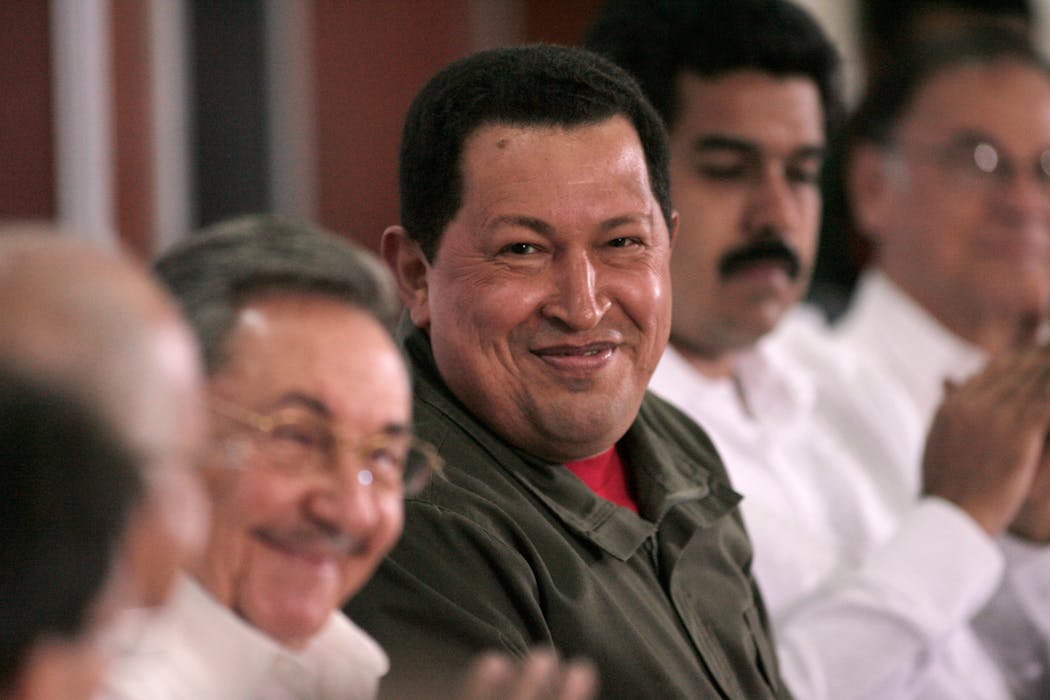
Hugo Chávez con el presidente cubano Raúl Castro y Nicolás Maduro, entonces ministro de Relaciones Exteriores, en abril de 2009. Harold Escalona/Shutterstock

El fenómeno político conocido como chavismo constituye uno de los procesos de reconfiguración estatal más profundos y controvertidos de la historia contemporánea de América Latina.

Definido como un movimiento cívico-militar de orientación socialista y bolivariana, ha gobernado Venezuela de forma ininterrumpida desde febrero de 1999. El chavismo logró trascender la figura de su fundador, Hugo Chávez, para convertirse en una estructura de poder hegemónica.

Su trayectoria se divide en etapas marcadas por el colapso del orden tradicional, la refundación institucional y una fase terminal de resistencia que ha desembocado en la crisis sistémica de enero de 2026.

Génesis y colapso del orden puntofijista

Para comprender el ascenso del chavismo es imperativo analizar el agotamiento del Pacto de Puntofijo, el acuerdo de gobernabilidad firmado entre los partidos Acción Democrática (socialdemócrata) y COPEI (demócratacristiano) en 1958, tras la caída de la dictadura militar del general Marcos Pérez Jiménez.

Con este pacto, se estableció un sistema bipartidista que durante años garantizó la estabilidad pero que acabó siendo un modelo excluyente. A finales de los años 80, la caída de los precios del petróleo y una deuda externa insostenible forzaron al presidente Carlos Andrés Pérez (socialdemócrata), nada más comenzar su segundo mandato, a implementar el Gran Viraje, un programa de ajustes supervisado por el FMI.

Este paquete económico fue la causa primordial de que, el 27 de febrero de 1989, se produjese el Caracazo, un estallido social masivo en la capital del país y sus zonas aledañas, que fue reprimido brutalmente por el ejército. Aunque el saldo oficial fue de 276 muertos, estimaciones extraoficiales hablan de más de 3 000.

Saqueos y disturbios en Caracas en febrero de 1989 tras las medidas impuestas por el gobierno venezolano a instancias del FMI.
Jose Angel Murillo V/Shutterstock

Este suceso actuó como un catalizador ético para un grupo de oficiales jóvenes, que sentían que el ejército era usado injustamente contra el pueblo. En este entorno, la logia militar MBR-200, fundada en 1982 bajo el Samán de Güere (un árbol histórico y tricentenario), aceleró sus planes de derrocamiento. La base ideológica del movimiento se llamó el árbol de las tres raíces. Así lo explicaba el propio Chávez en una entrevista concedida en 2005:

“Consiste en la raíz bolivariana (su planteamiento de igualdad y libertad, y su visión geopolítica de integración de América Latina); la raíz zamorana (por Ezequiel Zamora, el general del pueblo soberano y de la unidad cívico-militar) y la raíz robinsoniana (por Simón Rodríguez, el maestro de Bolívar, el Robinson, el sabio de la educación popular, la libertad y la igualdad). Este ’árbol de las tres raíces’ dio sustancia ideológica a nuestro movimiento…”.

La insurgencia de 1992 y el camino al poder

El 4 de febrero de 1992, el teniente coronel Hugo Chávez lideró un intento de golpe de Estado contra el presidente Pérez. Aunque fracasó militarmente, su asunción pública de la responsabilidad y su frase “por ahora” lo catapultaron como un mito político y una esperanza de cambio. Tras dos años en prisión, el presidente Rafael Caldera ordenó en 1994 el sobreseimiento de la causa contra él como parte de una política de pacificación del país.

Declaraciones de Chávez tras el fracaso de la intentona de golpe del 2 de febrero de 1992. Fuente: CENDES Venezuela.

Chávez abandonó la vía armada y fundó el Movimiento V República (MVR) para participar en las elecciones de 1998. Con una campaña centrada en la erradicación de la corrupción y la pobreza –que afectaba al 85 % de los hogares– ganó la presidencia el 6 de diciembre de 1998 con el 56,2 % de los votos. Su primer acto en el Gobierno fue convocar una Asamblea Nacional Constituyente, aprobada en 1999 por el 88 % de los votantes, para refundar el Estado bajo una nueva Constitución, que renombró al país como República Bolivariana de Venezuela.

Del chavismo carismático al régimen de supervivencia

La muerte de Chávez, en 2013, marcó un punto de inflexión. Nicolás Maduro heredó el poder sin el carisma ni la legitimidad de su antecesor. A partir de entonces, el chavismo dejó de ser un proyecto ideológico expansivo y se transformó en un régimen de supervivencia, cada vez más dependiente de la coerción y del control institucional.

El quiebre definitivo ocurrió en 2015, cuando la oposición, cohesionada bajo lo que se conoció como la Mesa de la Unidad Democrática (MUD), ganó la mayoría calificada (dos tercios) del Parlamento. La respuesta del gobierno fue desconocer el resultado electoral, vaciar de competencias al Parlamento y crear estructuras paralelas de poder con la elección amañada de una nueva Asamblea Constituyente, consolidando un autoritarismo cerrado que eliminó la competencia política real.

Desde entonces, las elecciones sin garantías, la persecución judicial, la represión sistemática y el uso del aparato estatal contra la disidencia se convirtieron en prácticas habituales.

Pese a ello, el 28 de julio de 2024, el régimen madurista recibió la estocada política final al perder de manera abrumadora, pese a a todo el ventajismo electoral, la elección presidencial contra Edmundo González Urrutia –el candidato apoyado por María Corina Machado, a quien no se le permitió competir–, que logró obtener el doble de votos que el oficialismo.

Los balances y contrapesos del poder chavista

Hoy, el chavismo no funciona como un partido político convencional sino como una coalición de intereses. El Partido Socialista Unido de Venezuela (PSUV) actúa principalmente como maquinaria de movilización y control social.

El poder real se sostiene en el equilibrio entre cuatro pilares fundamentales:

  1. La cúpula político civil, encabezada por Nicolás Maduro y, a partir los eventos del sábado 3 de enero de 2026, por quien era su vicepresidenta, Delcy Rodríguez, que administra el Estado y gestiona las relaciones internacionales, junto a su hermano, Jorge Rodriguez, quien controla el Parlamento y el sistema electoral.

  2. La Fuerza Armada, convertida en actor político y económico, con control directo sobre sectores estratégicos y empresas públicas, y liderada desde hace más de 10 años por el general Vladimir Padrino López.

  3. Redes opacas, vinculadas al petróleo, el oro, el contrabando y otras economías ilícitas, que financian la lealtad dentro del gobierno.

  4. Los aparatos de inteligencia y represión, responsables de neutralizar la disidencia política y social.

Este entramado le ha permitido sostenerse pese al colapso económico y a la pérdida casi total de legitimidad interna.

El tablero geopolítico en enero de 2026

El régimen chavista se insertó, desde muy temprano, en una geopolítica de antagonismo con los Estados Unidos y otras naciones democráticas. Cuba ha sido el aliado estructural más importante desde la llegada al poder de Chávez, quien consideraba a Fidel Castro su mentor, con especial apoyo en materia de inteligencia, control sociopolítico y diseño represivo.

A ello se suman las alianzas con Rusia, China e Irán, cada una con intereses estratégicos distintos: respaldo diplomático y militar, financiamiento e infraestructura, o cooperación tecnológica y de seguridad. Venezuela se ha convertido así en una pieza funcional dentro de una geopolítica de confrontación con Occidente.

Tras la muerte de Chávez, Maduro heredó un país en declive económico. Pese a que pocos le daban más de unos meses en el poder, no vio culminada su trayectoria política sino 11 años después, y de manera drástica el pasado 3 de enero con la operación militar estadounidense “Resolución Absoluta”.

Quiénes detentan el poder político en Venezuela

El ataque de la madrugada del 3 de enero resultó en la captura de Maduro y su esposa, Cilia Flores, quienes ahora enfrentan cargos por narcoterrorismo en Nueva York. Este evento ha reconfigurado (y continuará reconfigurando) el reparto del poder en Venezuela. Hoy por hoy lo conforman:

  • Delcy Rodríguez: designada presidenta interina por el Tribunal Supremo de Justicia tras la captura de Maduro y juramentada luego por su hermano en la Asamblea Nacional. Es hija de Jorge Antonio Rodríguez, que fue guerrilero y mártir de la izquierda, cuya muerte en manos de los servicios de inteligencia en 1976 marcó su ADN político. Al no figurar en las listas de recompensas de la DEA, se ha convertido en la interlocutora pragmática aceptada por Washington para gestionar una transición controlada.

  • Jorge Rodríguez: hermano de Delcy y presidente de la Asamblea Nacional. Es considerado el cerebro estratégico del régimen desde tiempos de Maduro, y controla el engranaje legislativo necesario para mantener la cohesión interna frente a las facciones radicales y los grupos paramilitares.

  • Donald Trump: con la incursión del 3 de enero, el mandatario estadounidense ha relanzado la doctrina Monroe. Ahora exige el control de los recursos energéticos venezolanos y condiciona al gobierno interino de Rodriguez a que rompa totalmente sus relaciones con China, Rusia, Irán y Cuba.

  • Vladimir Padrino López: como ministro de Defensa ha garantizado hasta ahora la lealtad de los militares. Su reconocimiento a Delcy Rodríguez ha evitado un colapso interno de la Fuerza Armada Nacional Bolivariana (FANB) tras la intervención externam.

  • Diosdado Cabello: ministro del Interior y Justicia, controla los aparatos policiales y de inteligencia. Representa el ala más radical; su subordinación a Rodríguez se considera incierta pero crítica para evitar un conflicto abierto en las filas del chavismo.

  • María Corina Machado y Edmundo González Urrutia: quienes constituyen el eje del liderazgo político de la oposición democrática y del gobierno electo en 2024. Son los actores que cuentan con la mayor legitimidad política y los llamados a gobernar una transición, en caso de que esta se concrete.

Y hoy, ¿qué es el chavismo?

El chavismo llega a 2026 en un estado de mutación forzada, intentando sobrevivir como una estructura administrativa bajo la sombra de una nueva hegemonía hemisférica que ha demostrado su disposición a imponerse por el uso de la fuerza.


Leer más:
Estados Unidos cruza la línea: Venezuela y el regreso del intervencionismo abierto en América Latina


Hace mucho que el chavismo dejó de ser una revolución o un movimiento popular expansivo para convertirse en un régimen autoritario pragmático, orientado a la preservación del poder mediante el control interno, la fragmentación social, el clientelismo político y económico, así como alianzas internacionales de conveniencia con otros regímenes autoritarios.

Comprender esta trayectoria –de promesa de redención social a sistema cerrado de poder– es clave para entender por qué el caso venezolano no es solo un evento local sino un problema político global. Con una estrategia relativamente exitosa, no ha sido posible derrotar el chavismo domésticamente pese a la amplia mayoría política que se le opone. Si las democracias no aprendemos a lidiar con fenómenos como el chavismo-madurismo venezolano continuaremos viendo cómo se repite este mismo patrón en otros gobiernos con vocación autoritaria.

The Conversation

Benigno Alarcón no recibe salario, ni ejerce labores de consultoría, ni posee acciones, ni recibe financiación de ninguna compañía u organización que pueda obtener beneficio de este artículo, y ha declarado carecer de vínculos relevantes más allá del cargo académico citado.

ref. Historia del chavismo: de la insurrección de 1992 al tablero geopolítico de 2026 – https://theconversation.com/historia-del-chavismo-de-la-insurreccion-de-1992-al-tablero-geopolitico-de-2026-273030

A Man on the Inside: Netflix comedy offers a timely defence of higher education

Source: The Conversation – Canada – By Barbara K Seeber, Professor, English Language & Literature, Brock University

Season 2 of Netflix’s A Man on the Inside finds Charles Nieuwendyk, private investigator and retired engineering professor (played by Ted Danson), undercover at Wheeler College.

The mission: recover the college president’s laptop. This might not seem juicy, but said laptop contains sensitive information about a $400 million donation by a tech multibillionaire, Brad Vinick.

As someone who has lived and studied academic life, I find the series created by Michael Schur (also behind The Good Place starring Ted Danson, among other hit series) is both funny and uncomfortable because it hits close to home.

Budgets trimmed to the bone

The P.I. is thrilled by his university case, calling it something “I can really sink my teeth into.”

Wheeler College, founded in 1883, has seen better days. It is struggling financially and its leadership is unpopular. The board of trustees hired a president who trims department budgets to the bone, cuts student aid and embraces corporate sponsorship — as well as the bonus he receives with every major donation.

These measures are not enough. Enter Vinick.

‘A Man on the Inside’ Season 2 trailer.

Vinick’s secret plan — “Project Aurora” — is to fire half the professors, exclude faculty from decision-making and close what he considers “non-essential departments,” leaving “three tracks of study — biotechnology, economics and computer science to prepare young adults for life in the modern world.”

President Jack Beringer knows Vinick’s intentions but does not want anyone to know he knows. Faculty uprisings would not help his bid for a higher-paying university job in Dallas, where he ate the best steak ever.

Language of efficiency, innovation

Any campus stroll reveals that Wheeler’s “Pepsi T-Mobile Covered Garage brought to you by Sephora” (Episode 4) is only a slight exaggeration.

Vinick’s language of efficiency and innovation dominates in real life. Universities are run increasingly on a corporate model, as numerous studies have demonstrated, including my collaboration with Maggie Berg in our book The Slow Professor: Challenging the Culture of Speed in the Academy.

Budgets and programs are being slashed, and in the guise of economic necessity, principles of higher education are undermined.

Professors also satirized

While Beringer and Vinick are the villains of the piece, there are, of course, some digs at the professors. (I admit we are an easy target).

The musicologist, for example, will abandon any conversation mid-sentence when inspiration hits.

In Episode 4, we see the chair of the English department is a snob about books you can buy at airports.

However, the show resists indulging in nutty, overpaid professor stereotypes because it recognizes, in the words of Dr. Benjamin Cole, head of the English department, “these are not the best of times.” The show focuses on staff and faculty efforts in an era of budget cuts and attacks on what the billionaire investor calls “pointless subjects” like art history and philosophy.

Holly Bodgemark, the provost, is so overworked she swallows nicotine gum (“It works faster if it goes right to the stomach”) and mixes her own “Peptocoffee.”

The musicologist may be flaky, but she buys used instruments out of her own pocket for students who can’t afford them. Money is tight for students. Student Claire Chung works a dozen jobs to pay tuition and housing. “When do you sleep?” Nieuwendyk asks. “In class,” she replies.

Defending higher education

To defend higher education, the show calls in the big guns: Ozymandias, a sonnet by 19th- century Romantic writer Percy Bysshe Shelley. It’s mentioned in one of Cole’s lectures, where he recites some of its lines and comments on its continued relevance: “Money, fame, power do not last. But ideas … can endure.”

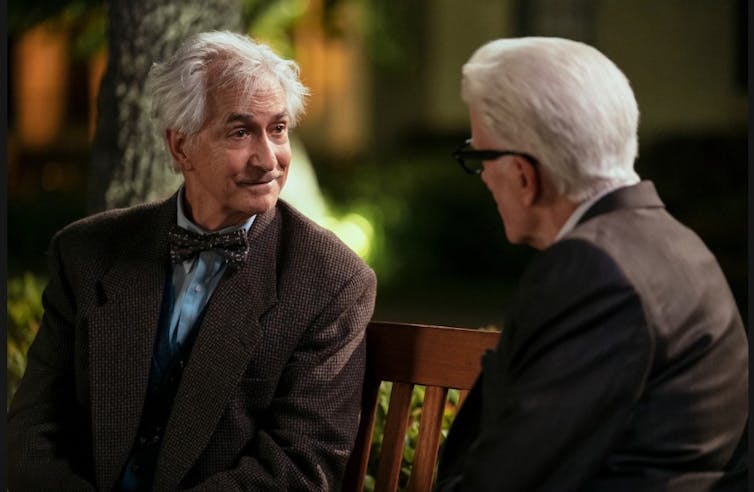
Two men in discussion on a bench.
Literature professor Dr. Cole tells his students: ‘ideas … can endure.’
(Netflix)

Published in 1818, Ozymandias speaks of a “traveller from an antique land.” The traveller comes across the remains of a sculpture with an inscription that reads:

“‘My name is Ozymandias, King of Kings,

Look on my Works ye Mighty, and despair!’”

The rest of the sculpture is a “colossal Wreck,” and the king’s boast has dwindled into unintentional irony.

Given that the show is American, the literary allusion might be a veiled reference to the No Kings protests.

Making sense of the present

The series seems to side with philosophers like Martha Nussbaum, who argues that a liberal arts education can help us make sense of the present and read it critically.

Vinick is a modern Ozymandias. He wants to be immortal, literally (he undergoes longevity treatments) and figuratively (he commissions oil portraits of himself). As the professor of fine arts notes in the first episode of Season 2: “Newsflash: the billionaire is a narcissist.”

Not to give away the mystery, but a crisis is averted. Wheeler is safe … for now. It might go under, but, as the provost says, “better to end on our own terms.”

And those terms are: education is not a business; it cannot be reduced to the delivery of quantifiable outcomes. The book What Are Universities For?, by Stefan Collini, professor emeritus of intellectual history and English literature, makes this case in a particularly compelling (and at times laugh-out-loud) way.

Higher education is a public good because it teaches critical thinking and civil debate and prepares engaged citizens.

Community

Good satire like A Man on the Inside points out the problems as well as possible remedies. Vinick mocks the notion of community, but the show values it above all because, without it, resistance is impossible. Wheeler College’s faculty and staff celebrate each other and band together across disciplinary divides.

In the words of the provost in the last episode of the season, they are committed to protecting “community and knowledge for the sake of knowledge.”

Schur’s comedy offers a timely defence of higher education and is notable for bridging the gap between academics and the general public.

The Conversation

Barbara K Seeber received a Social Sciences and Humanities Research Council Institutional Grant at Brock University.

ref. A Man on the Inside: Netflix comedy offers a timely defence of higher education – https://theconversation.com/a-man-on-the-inside-netflix-comedy-offers-a-timely-defence-of-higher-education-270934

Why America hasn’t become great again

Source: The Conversation – Canada – By Robert Chernomas, Professor Of Economics, University of Manitoba

United States President Donald Trump and his MAGA base are often portrayed as a break from past political norms. While that is certainly true, it overlooks the long and predictable path that led to his rise.

The slogan “Make America Great Again” (MAGA) became the movement’s rallying cry, tapping into a nostalgic vision of a past era of economic prosperity and social dominance and appealing to voters who feel left behind by demographic and economic change.

Trump is the predictable result of the deteriorating economic conditions in the U.S. since the 1980s and the political machinations that brought those economic conditions about. In our recent book Why America Didn’t Become Great Again, we explore how the U.S. has set itself on a path toward self-destruction.

The rise of corporate power

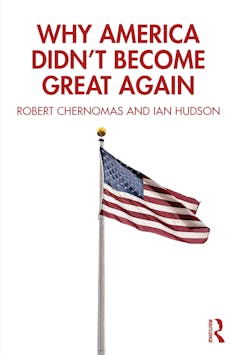
Book cover of Why America Didn't Become Great Again by Robert Chernomas and Ian Hudson.
‘Why America Didn’t Become Great Again’ by Robert Chernomas and Ian Hudson.
(Taylor & Francis)

In the 1970s, higher taxes and regulation, a growing “rights-conscious revolution” around the environment, gender and race, demand for rising wages and increasing foreign competition threatened corporate power. In response, American business embarked on what billionaire Warren Buffett described as “class warfare.”

To transfer wealth and power from the many to the few, institutions had to be organized, government policies reoriented and economists, journalists and politicians recruited, funded and promoted.

Corporate lobbying skyrocketed. In 1971, only 175 firms had registered lobbyists in Washington, D.C.,; by 1982, 2,445 did. The number of corporate political action committees (PACs) rose from fewer than 300 in 1976 to more than 1,200 by the mid-1980s.

Business lobbying organizations advocated for policies like corporate tax cuts, deregulation, free trade, anti-worker legislation and more permissive rules on corporate political donations. Between 1998 and 2022, the U.S. Chamber of Commerce spent US$1.8 billion on lobbying activities, making it the single largest spender in the nation.

The role of wealthy individuals

Individual business owners also chipped in. Figures like Charles and David Koch funded organizations that aligned with their desire to create a U.S. free from government regulation, taxation, redistribution or public services. During the 2016 election cycle, Koch-backed PACs spent just under US$900 million.

Many of these organizations, like the Tea Party, also helped put into the mainstream an evangelical creationism that distrusted science and expert opinion, supported a patriarchal animosity to women’s rights, opposed policies to further racial equality and expressed xenophobic opinions.

The flood of corporate money shifted the political centre, making Democrats more conservative. No progressive economic policy has been passed in the United States since the 1970, with the tepid exception of the Affordable Care Act, which is friendly to the health insurance industry.

The strategy proved remarkably successful. According to political scientists Martin Gilens and Benjamin Page, when wealthy Americans strongly support a policy, it’s about twice as likely to be adopted. But strong support from the middle class has “essentially no effect.”

How does this happen in a working democracy?

Business leaders cannot win elections on their own — they need allies. One particularly large group was easy to convince. Since the 1960s, no Democratic presidential candidate has won the majority of white voters.

Between the 1960-64 and 1968-72 election cycle, support for Democratic candidates among less-educated white voters fell from 55 to 35 per cent. With the exception of the 1992 and 1996 elections when their votes were more evenly split, this gap has held to the present day.

Although their share of the population is declining, less-educated white voters still made up just under 50 per cent of the electorate nationally in 2018. College-educated white voters have tended to split their votes more evenly or provide a small edge to Republicans.

If Democrats have branded themselves as the party of inclusion — of different races, genders, ethnicities and sexualities — the Republican Party has defended what they euphemistically term “traditional values.”

In a Faustian bargain to advance a pro-business agenda, the Republican Party successfully appealed to less-educated white voters, whose historical economic and social advantages have been diminishing. They earn less and die younger than they used to and their advantages over other groups in society are diminishing.

The Republican Party seized on this group’s discontent and actively channelled it against African Americans and immigrants. As early as the 1960s, the Republican’s Southern strategy promoted racism, successfully shifting white voters to their party and shifting the political spectrum to the right. That strategy continued through Ronald Reagan, George W. Bush, the Tea Party and Trump.

Importantly, this shift in voting preferences occurred well before the advent of the so-called “Rust Belt.” According to Pew Research, manufacturing jobs peaked in 1979.

Faced with declining standards of living, less-educated white voters could have chosen solidarity with all other workers and forced concessions from the elite of the business community to make the lives of all working-class people better. Instead, they voted to maintain the relative advantage of being white.

Rising inequality

The redistribution of income and wealth was detrimental to most Americans. Between 1973 and 2000, the average income of the bottom 90 per cent of U.S. taxpayers fell by seven per cent. Incomes of the top one per cent rose by 148 per cent, the top 0.1 per cent by 343 per cent, and the top 0.01 per cent rose by 599 per cent.

If the income distribution had remained unchanged from the mid-1970s, by 2018, the median income would be 58 per cent higher ($21,000 more a year). The decline in profits was halted, but at the expense of working families. Stagnant wages, massive debt and ever longer working hours became their fate.

Income stagnation is not the only quality of life indicator that suffered. In 1980, life expectancy in the U.S. was about average for an affluent nation. By the 2020s, it dropped to the lowest among wealthy countries, even behind China or Chile, largely due to the stagnation of life expectancy for working-class people.

The paradox of “red state” support

Less-educated white voters have historically supported politicians (mainly Republicans) who support cutting taxes for the rich and cutting social programs that they significantly benefit from.

In 2023, the Republican Gov. Sarah Huckabee Sanders of Arkansas vowed to get the “bureaucratic tyrants” of the federal government “out of your wallets.” Yet the numbers tell a different story.

In 2019, the federal government collected only half as much in taxes as it spent in the state, amounting to about US$5,500 per person in Arkansas. Similar patterns hold in many other regions.

Republican Kentucky is the largest destination of federal transfers, receiving US$14,000 per resident, approximately 30 per cent of its entire gross domestic product.

The electoral preferences of red states don’t result in good outcomes. States won by Trump in the 2016 presidential election had lower average scores (similar to Russia) on the American Human Development Index — which measures income, education and health — than states won by Democrats, which are similar to the Netherlands.

The modern Republican agenda

For decades, the alliance between less-educated white voters and business worked very well for business. Trump’s MAGA still delivers longstanding pro-business policies, from deregulation to antagonism to workers’ rights and massive tax cuts for the rich.

Today, however, the Republican Party now also promotes policies that business has long fostered, if not supported, including a distrust of facts and science, the ethnic cleansing of the labour force, racism, a vengeance for justice and a hodgepodge of crony, incompetent economic priorities and policies.

This combination has created a more unstable and unpredictable political, economic and social environment, leaving a significant majority of CEOs yearning for the stable Republican Party of a bygone era.

The Conversation

Robert Chernomas is a Professor of Economics at the University of Manitoba and a member of Elbows Up: A Practical Program for Canadian Sovereignty. I am not affiliated with a political party or industry association but I am politically active.

Ian Hudson receives funding from SSHRC.
Ian Hudson is a Research Associate for the Canadian Centre for Policy Alternatives.

ref. Why America hasn’t become great again – https://theconversation.com/why-america-hasnt-become-great-again-272778

Why Donald Trump is telling such obvious lies on the ICE Minneapolis killing

Source: The Conversation – Canada – By Jennifer Saul, Chair in Social and Political Philosophy of Language, University of Waterloo

By now, many of us have probably seen the video of a Minneapolis woman whose last words were a calm “It’s fine, dude; I’m not mad at you,” before she was shot three times in the head as she turned her car to drive away from an Immigration and Customs Enforcement (ICE) agent.

U.S. President Donald Trump claimed that Renee Good “violently, willfully, and viciously ran over the ICE Officer, who seems to have shot her in self defense.

Vice-President JD Vance declared “the reason this woman is dead is because she tried to ram somebody with her car… You have a woman who aimed her car at a law enforcement officer and pressed on the accelerator. Nobody debates that.”

These statements, and others that doubled down on them, were made even as videos showing they were clearly false were in wide circulation.

It’s puzzling. Why lie in a situation like this? Who can you hope to deceive, when evidence falsifying your statements is freely available?

Seeing is not believing?

Our work on authoritarian public discourse stresses that there are multiple answers to this question, partly because there are many different audiences of mass communication. We need to come to grips with the multiple functions of obvious falsehoods like these to understand why they are made so often and so prominently, and how they serve authoritarian leaders.

First, something that seems obvious to you can be credible to others. How? Because in an era of algorithmic news feeds, we are not all getting the same news. Those with a newsfeed of nothing but MAGA influencers are in a different epistemic bubble from other people.

And they may well be in an echo chamber, in which opposing voices are so discredited that when an alternative narrative reaches them, it’s immediately dismissed.

Millions of people may not have seen the videos of the incident at all, or may have seen versions with instructions on how to interpret the visuals: she’s not turning around, she’s backing up in preparation to ram into the shooter; she’s not calmly indicating that she isn’t a threat, she’s refusing to comply with orders.

Videos of police using force often have this dual nature: they can document and prove wrongdoing; but they can also be used to train citizens to see threats where there are none.

Footage of the last moments of Renee Good’s life. (The Canadian Press)

Authoritarian tactics

Some people will find the lies too obvious to be plausible attempts at deception. Yet bald-faced lies are important in strongman politics.

Authoritarians can display their power by asserting obvious falsehoods, showing that they cannot be held to account. They also play to their base by showing contempt for a shared enemy, while demanding displays of loyalty and compliance from underlings.

Officials are forced to engage in the humiliating ritual of repeating what we call compliance lies. Think here of White House press secretary Sean Spicer at the start of Trump’s first term, forced to defend absurd lies about Trump’s and Obama’s inauguration crowds.

At the time, this may have seemed merely buffoonish. What’s happened since illustrates how dangerous this can be as the subject of the lies has changed to matters concerning life and death.

Other people may simply become confused by obvious lies. The competing interpretations of the Minneapolis video are diametrically opposed. Once news sites and social media feeds are sufficiently populated by these opposing views, it can feel like an overwhelming task to discern what’s really true.

And exposing a lie still doesn’t end its influence. It is easier to create an opinion with a lie than to undo that opinion when the lie is debunked, something known to psychologists as the continued influence effect.

Filling social media feeds with falsehoods to create confusion is a crucial part of the strategy that Steve Bannon, a Republican strategist and former Trump adviser, called “flooding the zone with shit.” This can leave people unsure of who to trust, what to believe, or even what the issue really is.

‘Both sides’ reporting

Relatively savvy and good-faith entities can be used as instruments of this strategy. In the name of neutrality and balance, centrist news media can fall back on a “both sides” model that frames stories mainly in terms of what each side is saying.

When one side commits to obvious lies, this approach obligingly repeats those lies while outsourcing the fact-checking to the opposing side, as if it were merely a partisan dispute.


Read more:
Why Donald Trump is such a relentless bullshitter


These duelling narratives can then become the story. The strategy to lie shifts focus away from the shooting itself, in this incident, and onto the alleged controversy.

In other words, obvious lies aren’t necessarily failed lies. They can confuse, distract, excite and intimidate a range of audiences. They can also be believed, no matter how obviously false they seem.

To treat them as mere indications of shamelessness or incompetence on the part of the liar is to overlook the serious harm they can do and the appeal they have in authoritarian politics.

The Conversation

Jennifer Saul is a member of Democrats Abroad.

Tim Kenyon has received funding from the Social Sciences and Humanities Research Council of Canada.

ref. Why Donald Trump is telling such obvious lies on the ICE Minneapolis killing – https://theconversation.com/why-donald-trump-is-telling-such-obvious-lies-on-the-ice-minneapolis-killing-273200

La selección: intervencionismo, expansionismo, imperialismo en el siglo XXI

Source: The Conversation – (in Spanish) – By Elba Astorga, Editora de Economía, The Conversation

Libin Jose/Shutterstock

Que a nadie extrañe la vuelta estadounidense a una nueva versión de la doctrina Monroe, a la manera de Trump, puesta en evidencia hace justo una semana con la captura del presidente venezolano Nicolás Maduro y su esposa, Cilia Flores.

La doctrina Monroe ha sido la base teórica de una política internacional con sus vecinos de continente caracterizada por el expansionismo, el intervencionismo y el imperialismo, una política que ha permitido a Estados Unidos expandir sus intereses económicos en América Latina (en Centroamérica, la fruta; en Panamá, la construcción del Canal; en Venezuela, el petróleo) y que ahora busca extenderse hacia los gélidos territorios groenlandeses.

La doctrina Monroe nació dos siglos atrás, en 1823, en el fragor de las luchas independentistas de los países americanos. La frase del presidente Monroe “América para los americanos” era, de origen, idealista, y planteaba la necesidad de que el destino de las jóvenes repúblicas americanas quedase fuera de cualquier injerencia europea.

La doctrina Monroe fue un manifiesto de emancipación geopolítica: la participación europea en los procesos independentistas hispanoamericanos implicaba para Estados Unidos un ataque a su propia seguridad. Para el nuevo país, la posibilidad de que surgiesen monarquías en América implicaba un riesgo de desestabilización. Por eso, para los estadounidenses, la libertad americana tenía que ser republicana.

Años después, en 1898, esta doctrina servirá al presidente William McKinley para reivindicar el derecho natural de Estados Unidos para obrar y disponer en los países latinoamericanos y del Caribe.

El primer gran ensayo de la propuesta de McKinley fue la guerra de independencia cubana, en 1898. En 1903, Estados Unidos apoyó que Panamá se separase de Colombia, tras el triunfo de los conservadores en la Guerra de los Mil Días, lo que favorecería los intereses de EE. UU. para la construcción del Canal de Panamá (1904-1914).

Luego, a lo largo del siglo XX, y bajo la excusa de sofocar movimientos insurgentes o evitar la instauración del comunismo en la región, vendría la presencia de tropas estadounidenses en República Dominicana, Haití, Nicaragua, Guatemala y la infructuosa incursión en la cubana Bahía de Cochinos (1961), en un intento de derrocar el régimen castrista.

En el Cono Sur participó veladamente, a través de operaciones de la CIA, en la instauración de dictaduras militares en Argentina, Bolivia, Chile, Paraguay y Uruguay, aunque luego se sumarían Brasil, Ecuador y Perú.

El siglo XX cierra con la invasión de la isla caribeña de Granada (1983) por el auge del marxismo, y la de Panamá (1989) para derrocar al dictador y antiguo aliado Manuel Noriega, acusado de narcotráfico.

Lo que el 1 de septiembre de 205 empezó como una gran operación de lucha contra el narcotráfico en aguas del Caribe, acabó, el 3 de enero de 2026, con la captura y traslado a Nueva York de Maduro y su mujer para ser juzgados por narcoterrorismo. Esta vuelta sin ambages a la doctrina Monroe queda claramente reflejada en en el documento sobre la estrategia de seguridad nacional presentada ante el Congreso de los Estados Unidos en diciembre de 2025.

La incursión estadounidense en territorio venezolano dibuja una estrella de cinco puntas, cinco vertientes geopolíticas que ganan importancia en 2026:

  1. El poder presidencial estadounidense busca expandirse y volverse imperial.

  2. Surge la doctrina Donroe: América para los estadounidenses.

  3. El objetivo, más que controlar ideologías, es dominar los recursos.

  4. Consecuencias geopolíticas: ¿cómo cambia el panorama en otras regiones? Pensemos en los casos China-Taiwán o Rusia-Ucrania.

  5. El peso y la importancia de los valores democráticos, el Estado de derecho o el libre comercio se desvanecen ante el resurgir del imperialismo estadounidense.

Esto no acaba aquí. El presidente Trump ha dejado claro su interés en ganar el control sobre otros territorios geoestratégicos: “Necesitamos a Groenlandia por motivos de seguridad nacional”. Y las alarmas han saltado en Europa.

The Conversation

ref. La selección: intervencionismo, expansionismo, imperialismo en el siglo XXI – https://theconversation.com/la-seleccion-intervencionismo-expansionismo-imperialismo-en-el-siglo-xxi-273113

Los líderes cubanos acaban de perder un aliado clave en Maduro

Source: The Conversation – (in Spanish) – By Joseph J. Gonzalez, Associate Professor of Global Studies, Appalachian State University

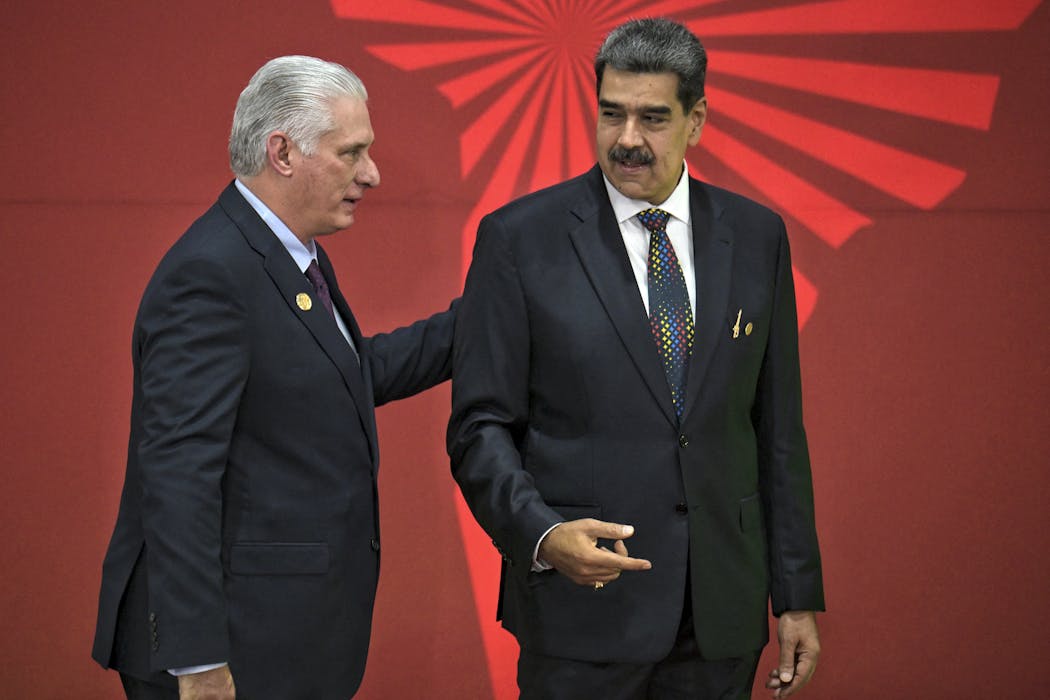
«¿Después de usted, presidente Maduro?». Una frase preocupante para el presidente de Cuba, Miguel Díaz-Canel. Juan Barreto/AFP via Getty Images

Las imágenes de Nicolás Maduro esposado y siendo escoltado a un centro de detención de Brooklyn sin duda habrán incomodado a los líderes políticos de La Habana.

“Cuba va a ser algo de lo que acabaremos hablando”, afirmó el presidente Donald Trump pocas horas después de la operación del 3 de enero de 2026 para capturar al presidente venezolano. El secretario de Estado, Marco Rubio, se hizo eco de la advertencia de Trump: “Si viviera en La Habana y estuviera en el Gobierno, estaría preocupado”.

Como historiador de Estados Unidos y Cuba, creo que las relaciones de Washington con La Habana han entrado en una nueva fase bajo la administración Trump. Atrás quedaron el “deshielo cubano” de Barack Obama y las sanciones menos restrictivas de Joe Biden. En su lugar, la administración Trump aparentemente ha adoptado una política de cambio de régimen mediante la máxima presión.

Si esta administración se sale con la suya, 2026 será el último año del régimen comunista en Cuba, y pretende lograrlo sin la intervención de las fuerzas armadas estadounidenses.

“No creo que necesitemos (tomar) ninguna medida”, dijo Trump el 4 de enero. Y añadió: “Cuba parece estar lista para caer”.

El amigo con derecho a roce de Cuba

Puede que Trump tenga razón. La captura de Maduro ha supuesto la pérdida efectiva del aliado más cercano de Cuba. El predecesor y mentor de Maduro, Hugo Chávez, era un admirador declarado del líder revolucionario cubano Fidel Castro.

Poco después de asumir el poder en 1999, el Gobierno de Chávez comenzó a suministrar petróleo en condiciones favorables a Cuba a cambio de médicos y, finalmente, la formación de las fuerzas de seguridad de Venezuela. No fue una coincidencia que 32 de los agentes de seguridad muertos mientras defendían a Maduro del avance de las fuerzas estadounidenses fueran cubanos.

Maduro sucedió a Chávez como presidente en 2013 y continuó con el apoyo del país a Cuba. En 2022, un miembro de la oposición venezolana afirmó que Caracas contribuyó con 60 000 millones de dólares estadounidenses a la economía cubana entre 2002 y 2022.

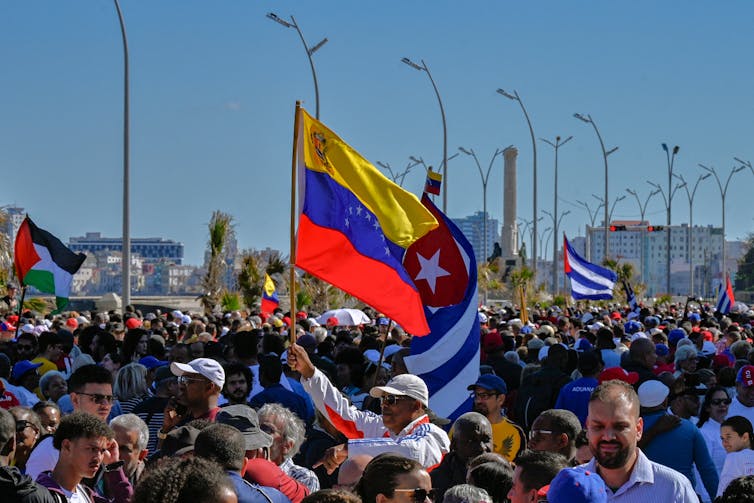
Una multitud sostiene banderas en alto.
Cubanos se reúnen en apoyo al líder venezolano Nicolás Maduro en La Habana el 3 de enero de 2026.
Adalberto Roque/AFP vía Getty Images

La generosidad de Maduro resultó insostenible. A principios de la década de 2010, Venezuela entró en una grave crisis provocada por la mala gestión económica, una dependencia excesiva del petróleo y las sanciones de Estados Unidos.

El apoyo de Venezuela a Cuba se redujo a un goteo en 2016. No obstante, el Gobierno de Maduro ha seguido suministrando petróleo a Cuba en secreto, eludiendo las sanciones estadounidenses, en cantidades muy inferiores a las necesidades de Cuba.

Tiempos difíciles en Cuba

La penuria de Venezuela y la presión de Estados Unidos hacen que los cubanos estén sufriendo privaciones a un nivel no visto desde el “período especial” de crisis económica que vivió el país entre 1991 y 1995, provocado por el colapso de la Unión Soviética y el fin de las generosas subvenciones del bloque.

Desde 2020, el PIB de Cuba se ha reducido en un 11 %, mientras que el valor del peso cubano sigue cayendo.

Los cubanos ya no tienen electricidad fiable ni acceso al agua. Las enfermedades transmitidas por mosquitos, que antes eran poco frecuentes, ahora están muy extendidas porque el gobierno no puede permitirse rociar pesticidas.

Para colmo, el sistema sanitario solo proporciona la atención más básica, y los hospitales tienen pocos o ningún medicamento.

Mientras tanto, las producciones industrial y agrícola han disminuido drásticamente, al igual que las importaciones de alimentos. Y aunque todavía no se ha producido una hambruna, la inseguridad alimentaria ha aumentado, con la mayoría de los cubanos sometidos a una dieta limitada y saltándose comidas. La delincuencia también se ha vuelto habitual en las calles de Cuba, que antes eran seguras.

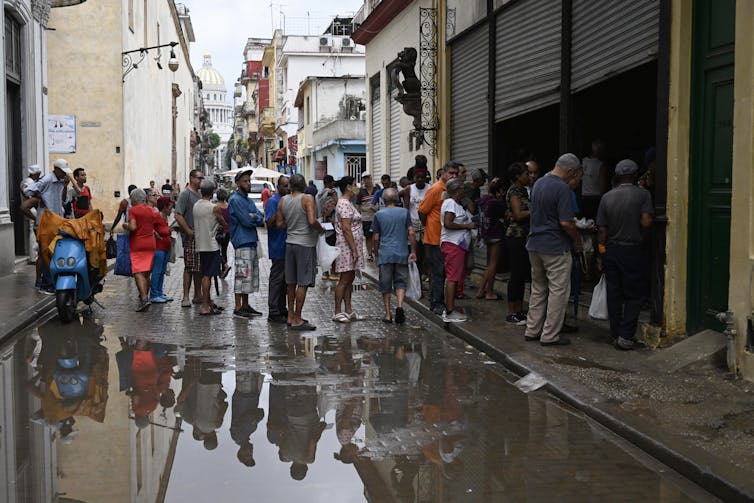
Un grupo de personas en la calle
Cubanos hacen cola para comprar comida durante un corte de electricidad en La Habana el 3 de diciembre de 2025.
Yamil Lage/AFP via Getty Images

Desde que tomó el poder Maduro, la administración estadounidense ha esbozado políticas que parecen destinadas a aumentar la presión económica sobre Cuba y provocar un cambio de régimen. Por ejemplo, Estados Unidos ha dejado claro que ya no permitirá que Venezuela suministre petróleo a Cuba.

Al parecer, el Gobierno espera que, sin petróleo, el Gobierno cubano simplemente se derrumbe. O tal vez Trump espera que los cubanos, tan frustrados como están, derroquen a sus amos comunistas sin la ayuda de Estados Unidos.

Un régimen sin apoyo popular

En cualquier caso, el razonamiento de la administración tiene un posible fallo: los comunistas cubanos han sobrevivido a crisis como estas durante más de 60 años. Sin embargo, hay pruebas de que, a medida que la economía cubana se deteriora, también lo hace el apoyo al régimen.

Desde 2020, más de un millón de cubanos han abandonado el país, principalmente hacia Estados Unidos y países de habla hispana. Un colega cubano con acceso a investigaciones del Gobierno me dijo recientemente que la cifra se acerca más a los dos millones.

Y los que se quedaron tampoco están más satisfechos.

Cuba protesta en las calles

En una encuesta de opinión pública de 2024, una abrumadora mayoría de cubanos expresó su profunda insatisfacción con el Partido Comunista Cubano y el liderazgo del presidente Miguel Díaz-Canel.

Los cubanos también han llevado sus quejas a las calles. En julio de 2021, estallaron protestas en toda Cuba, exigiendo más libertad y un mejor nivel de vida. El Gobierno encarceló rápidamente a los manifestantes y los condenó a largas penas de prisión.

No obstante, las protestas esporádicas han continuado, a menudo de forma rápida y sin previo aviso, provocando una dura represión. En particular, el movimiento San Isidro, formado en 2018 para protestar contra las restricciones a la expresión artística, cuenta con un fuerte apoyo entre los jóvenes cubanos.

Cambio de actitud hacia Estados Unidos

A medida que los cubanos se han ido volviendo en contra de su Gobierno, se han vuelto más receptivos a Estados Unidos.

Durante mi primera visita en 1996, los cubanos culpaban al embargo estadounidense, en vigor desde principios de la década de 1960, de las privaciones que sufrían durante el “período especial”. Sin embargo, en la última década, he oído a los cubanos –al menos a los menores de 50 años– expresar más ira hacia su Gobierno que hacia el embargo estadounidense.

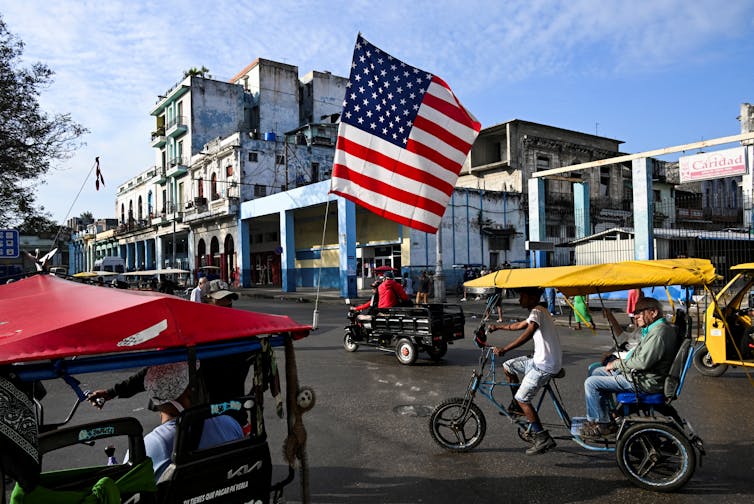
Una gran bandera estadounidense ondea sobre la calle.
Un triciclo utilizado como taxi está decorado con la bandera estadounidense en La Habana.
Yamil Lage/AFP vía Getty Images

No nos equivoquemos: los cubanos quieren que termine el embargo estadounidense. Pero ya no creen en el intento de su Gobierno de culpar a Washington de todos los problemas económicos y políticos de Cuba.

Parte de este cambio se debe a la extraordinaria emigración de cubanos: todos los cubanos que conozco tienen un familiar o un amigo en Estados Unidos. Internet también ha ayudado: ahora los cubanos pueden leer noticias extranjeras en sus teléfonos.

¿Liberadores bienvenidos?

Desde la captura de Maduro, he enviado mensajes a amigos en Cuba para evaluar el estado de ánimo. Todos menos uno de los seis amigos cubanos con los que logré contactar me dijeron que estaban receptivos a la intervención de Estados Unidos en Cuba, siempre y cuando eliminara el régimen que les hace la vida imposible.

Un amigo dijo: “Si los yanquis aparecieran hoy, la mayoría de nosotros probablemente los recibiríamos como libertadores”.

Es cierto que mi muestra es pequeña. Pero estas reacciones, procedentes de cubanos relativamente privilegiados que trabajan tanto en el sector privado como en el público, no pueden ser buenas noticias para lo que queda del régimen de Castro.

The Conversation

Joseph J. Gonzalez no recibe salario, ni ejerce labores de consultoría, ni posee acciones, ni recibe financiación de ninguna compañía u organización que pueda obtener beneficio de este artículo, y ha declarado carecer de vínculos relevantes más allá del cargo académico citado.

ref. Los líderes cubanos acaban de perder un aliado clave en Maduro – https://theconversation.com/los-lideres-cubanos-acaban-de-perder-un-aliado-clave-en-maduro-273261

What Mark Carney’s China trip could mean for the future of Canadian-Chinese relations

Source: The Conversation – Canada – By Ye Xue, Research Fellow, China Institute, University of Alberta

It has been more than three years since China’s Xi Jinping told Canada’s Justin Trudeau to “create the conditions first” before the two countries could work together constructively during their awkward private exchange at the 2022 G20 summit.

Despite occasional diplomatic engagement since then, the conditions for genuine co-operation between Canada and China failed to materialize, and the relationship remained overshadowed by the Meng Wanzhou affair, the ordeal of the “Two Michaels” and disputes over foreign interference.


Read more:
Meng and the two Michaels: Why China’s hostage diplomacy failed


Threats by United States President Donald Trump to make Canada a 51st state, combined with his disruptive trade policies, have forced Ottawa to re-examine the risks of excessive economic dependence on its closest ally and articulate an ambition to double Canada’s non-U.S. exports over the next decade.

As Prime Minister Mark Carney recently put it: “Never have all your eggs in one basket. We have too many eggs in the American basket.” At the same time, China has signalled a willingness to stabilize strained relations following Carney’s election win last year.

Canada-China tariffs

Foreign Minister Anita Anand’s visit to Beijing, together with Carney and Xi’s informal meeting on the margins of the APEC summit last October, suggests that the groundwork now exists for a serious stabilization of Canada–China relations.

Carney’s visit to China this week builds on this emerging momentum.

While the visit could be positive, Canadian expectations should be realistic, since the trip marks a stabilizing process rather than a symbol of stabilized relationship.

Trade will be at the top of Carney’s agenda, particularly the Canadian push for China to lift anti-dumping duties on Canadian canola oil. Yet few should expect an immediate breakthrough. Economic sanctions are rarely undone in a single high-level meeting; more often, such visits lay the groundwork for the harder, more technical negotiations that follow.

Australia’s experience offers a reality check. China did not lift restrictions on Australian coal and review anti-dumping duties on barley during high-level visits; those steps came months later, following sustained diplomatic engagement after Foreign Minister Penny Wong’s trip to Beijing in late 2022.

Nor did Prime Minister Anthony Albanese’s state visit in November 2023 trigger the immediate removal of remaining tariffs on exports such as wine, red meat and live lobsters. Progress came gradually — through patience, process and persistent diplomacy.


Read more:
Vital Signs: Australian barley growers are the victims of weaponised trade rules


The canola dispute is different. China’s tariffs were a direct response to Ottawa’s duties on Chinese electric vehicles. In a relationship governed by reciprocity, China is unlikely to move first without a signal from Canada.

Rather than expecting immediate, tangible outcomes, this state visit is best understood as an ice-breaking moment to encourage governments at different levels and across sectors to resume or establish dialogue. Over time, such channels can normalize working relationships and foster bilateral co-operation.

More diplomacy, no security concessions

The high-profile shift in Ottawa’s China policy places the Carney government under closer domestic scrutiny. Canadians will want to know whether this approach can advance economic interests while safeguarding national security while remaining consistent with Canada’s identity as a liberal democracy.

China, for its part, will expect Ottawa to demonstrate a sustained commitment to stabilization. All of this will unfold under the continued pressure of the American China strategy, which will continue to shape the boundaries of Canada’s policy choices.

Maintaining a balance among competing national interests has become increasingly difficult for middle powers like Canada. Yet Australia’s China policy over the past three years, characterized by “pragmatic engagement without strategic concession,” suggests such a balance is possible.

But it will require Canada to invest more heavily in effective diplomacy, rather than relying on inflammatory or performative rhetoric for domestic political gain.

It means favouring neutral, precise language over emotive labelling when responding to Chinese actions. It also demands strong leadership from Carney: centralizing message discipline, enforcing cabinet coherence on China policy and reducing the risk that domestic political point-scoring spills into the diplomatic realm.

Ottawa should also use re-established communication channels as the primary venue for managing disagreements. These mechanisms can support incremental, negotiated solutions to specific disputes, rather than an over-reliance on public pressure and symbolic gestures.

‘Stabilization with continuity’

A shift in diplomatic approach does not imply a retreat from Canada’s core strategic commitments. The Carney government can and should reaffirm that stabilizing its relationship with China is compatible with maintaining robust national security and democratic values.

This requires embedding China policy within Canada’s broader Indo-Pacific strategy rather than treating it as a bilateral exception. It also involves deepening security co-operation with regional partners to help foster an environment where states are not forced to choose between either the United States or China.

At home, Canada should continue to strengthen institutional safeguards against foreign interference, pairing them with transparent public communication that demonstrates the government’s confidence in institutions and avoids doubling down on any public anxiety about China.

Ultimately, Canada’s China policy after Carney’s visit should be one of stabilization with continuity, making clear that engagement is being pursued from a position of institutional strength, not strategic accommodation.

The Conversation

Ye Xue does not work for, consult, own shares in or receive funding from any company or organisation that would benefit from this article, and has disclosed no relevant affiliations beyond their academic appointment.

ref. What Mark Carney’s China trip could mean for the future of Canadian-Chinese relations – https://theconversation.com/what-mark-carneys-china-trip-could-mean-for-the-future-of-canadian-chinese-relations-273202

Lessons from Palestine: Understanding the resistance of educators and students in times of crisis

Source: The Conversation – Canada – By Emmanuelle Khoury, Associate professor, School of Social Work, Université de Montréal

Many educators and students living through war and displacement carry difficult emotions into classrooms, but they can also transform them into acts of care and resistance. To understand this, we need to understand their emotional states at a granular level.

Since January 2024, we have been collaborating on a project with the dean and professors at the School of Nursing and Midwifery at Ibn Sina College in Nablus, Palestine, with support from Université de Montréal International.

Our aim is to learn how professors and students talk about their emotions in a region marked by occupation, violence, forced displacement and chronic uncertainty.

From January 2024 to September 2025, we met every two months with five professors and the dean of nursing and midwifery at Ibn Sina College.

Palestinian university professors told us they need to be present and emotionally available for their students while grappling with the impacts of Israel’s military occupation and what many experts have labelled a genocide in Gaza, and they’re looking for tools to help them do that.

Our exchange with Palestinian educators and students led to the development of an intervention tool, CARE (Connection, Action, Resistance, Empowerment), co-designed to address two central emotional states: resistance fatigue and qahr.


Read more:
For Palestinian children living in Masafer Yatta, going to school is an act of resistance


What is qahr?

Resistance fatigue speaks to a pervasive loss of control over our days, choices and even our inner world. This emotional exhaustion is not only personal, but it is also shaped by political structures of exclusion and dispossession, which includes forced displacement, navigating checkpoints and restricted movement.

However, we witnessed another emotion salient in Arabic-speaking countries that we believe underpins resistance fatigue: qahr.

Qahr is a concept that is necessary to grasp in order to truly understand what Palestinians and others living through colonial violence in southwest Asia and north Africa are feeling.

In Arabic, the word qahr evokes an emotion that blends powerlessness, grief and an acute sense of injustice and being overwhelmed by forces larger than ourselves. More than anger and deeper than grief, qahr speaks to the suffocating weight of injustice, the pain of being silenced, muzzled, diminished, trivialized and made invisible.

Qahr is a complex emotion that also holds the potential for transformation — for naming, sharing and reimagining how to live and care for each other. It is a specific emotion shaped by oppression, perpetuated violence and historical trauma that non-Arabic languages often fail to capture.

What we have learned is that qahr is more than a feeling. It is also an action born of the Palestinian determination not to disappear. It is carried through stories, graffiti, songs and through everyday acts of resistance that push against military occupation and attempts at erasure.

Qahr might feel like rage and grief mixed into one, but it often looks like actions that serve as counter-narratives. These actions are deep forms of care, for ourselves, our communities and one’s history and ancestry. They are also political tools that reclaim space, time and dignity.

Hope and care

Our previous work with teachers in Lebanon has shown that educators and students alike carry the emotional trauma into the classroom from collective crises such as economic collapse, war and displacement. The Lebanese teachers we spoke to discussed losses, suffering, injustice, death, violence, unstable living conditions, but also feelings of hope and resistance.

Likewise, during the early days of the genocide in Gaza, many teachers expressed their profound sense of oppression and how they managed to transform it into hope and even moments of joy.

Their commitment to developing educational initiatives for their students stands as powerful evidence of this resistance. As Asma, a teacher from Gaza, explained: “People in the Gaza Strip have become experts in creating alternative life plans.”

In this way, spaces of suffering also become sites of hope and care. Our research on exploring emotion work, on valuing the role of emotions and on dialogue allowed us to turn toward specific emotions experienced by many of our project partners.

The CARE intervention

Inspired by our research findings about fathering amid political violence in occupied Palestine, we were interested in analyzing our discussions with colleagues at Ibn Sina College in terms of emotions and resilience.

Through our understanding of qahr, we created CARE (Connection, Action, Resistance, Empowerment), a culturally adapted intervention, with professors and students at Ibn Sina College. During a series of online dialogues, we reflected on the lived experience of teaching under occupation, talking about loss, and staying committed to teaching and training.

CARE builds on this insight, offering an adaptation of acceptance and commitment therapy with situated and culturally grounded strategies for educators and students to collectively hold space for their emotions and their actions.

What began as a project to support the psychosocial needs of health-care professionals in crisis turned into the co-creation of a training module on trauma and mental health. Our discussions revealed a common thread in our Ibn Sina colleagues’ objectives: a desire to share their own complex emotions to better support others, in particular their students.

As our collaborations evolve, we continue to explore how emotional concepts can inform pedagogical, political and relational practices. Qahr offers a lens through which to understand not only suffering and hope, but also the actions of resistance and reparation under conditions of war and displacement.

This is how our colleagues in Palestine began to share their complex, often opposing, feelings that arise in these circumstances, including resistance fatigue and qahr.

Together we identified key goals for the meetings, with a focus on developing psychosocial and mental health interventions and training sessions that recognize and validate these emotions. CARE emphasizes practical strategies for educators and students to individually and collectively hold space for strong emotions.

CARE was integrated into a guidebook and was first delivered to a cohort of nursing instructors and academics, who tested it with students and in professional circles in the fall of 2025. This initiative underscores the transformative strength of collaboration, and the importance of diving deep into learning about context and culturally specific emotion concepts for responsive care.

Qahr is a legitimate feeling. CARE offers a stepping stone to accompany teachers and professors in this experience, helping them to channel it in their own way, according to their resources and context. In this process, it is essential to mention that we also have much to learn from those who feel qahr. Their experiences invite us to question our own understandings and reflections of loss, anger and injustice.

The Conversation

The authors do not work for, consult, own shares in or receive funding from any company or organisation that would benefit from this article, and have disclosed no relevant affiliations beyond their academic appointment.

ref. Lessons from Palestine: Understanding the resistance of educators and students in times of crisis – https://theconversation.com/lessons-from-palestine-understanding-the-resistance-of-educators-and-students-in-times-of-crisis-269578

« Blue Monday » est un mythe, mais la déprime saisonnière est bien réelle. Voici comment traverser les mois d’hiver

Source: The Conversation – in French – By Joanna Pozzulo, Chancellor’s Professor, Psychology, Carleton University

En 2005, le psychologue Cliff Arnall a créé le terme Blue Monday dans le cadre d’une campagne publicitaire d’une agence de voyages britannique visant à encourager les gens à partir en vacances en hiver. À l’aide d’une formule pseudo-scientifique, il a désigné le troisième lundi de janvier comme le jour le plus déprimant de l’année marqué par la tristesse, le manque d’énergie et l’isolement social.

Bien que le concept du lundi de la déprime ait été réfuté, les émotions négatives associées à la saison froide sont bien réelles.

Le trouble affectif saisonnier (TAS) est une forme de dépression reconnue, liée aux variations saisonnières. Ses symptômes comprennent de la fatigue, de l’irritabilité, des changements d’appétit, une perte d’intérêt pour les activités agréables et un sentiment de désespoir. Selon la Société canadienne de psychologie, environ 15 % des Canadiens déclarent ressentir des symptômes de ce trouble.


À lire aussi :
Quatre méthodes pour combattre la déprime hivernale, selon la science


On pense que le TAS pourrait être lié à un manque d’exposition au soleil, ce qui perturbe l’horloge interne, ou rythme circadien, qui régule les processus biologiques tels que le sommeil et la production d’hormones.

Si l’on ne peut pas contrôler la lumière du soleil, il existe toutefois plusieurs stratégies scientifiquement prouvées pour mieux traverser l’hiver. Par exemple, en aménageant un coin lecture confortable où on peut s’installer avec une bonne couverture, un chocolat chaud et un livre, on crée un espace dédié au bien-être et à la détente. Cela permet également de favoriser la pleine conscience, qui consiste à porter son attention sur l’instant présent et à accepter ses pensées et ses sentiments sans les juger.

De l’importance de l’état d’esprit et des attentes

Selon Kari Leibowitz, psychologue et auteure de How to Winter : Harness Your Mindset to Thrive on Cold, Dark Days, la clé pour mieux traverser l’hiver consiste à faire du recadrage, c’est-à-dire à modifier sa perspective afin de trouver une interprétation plus positive, constructive ou libératrice de la situation.

Dans les cultures où l’on apprécie l’hiver, on s’y prépare et on le considère comme important. Le fait d’attendre l’hiver avec impatience peut améliorer le moral.

Essayez de remplacer les propos qui décrivent l’hiver comme quelque chose qu’on doit redouter ou endurer par une image plus positive. Ainsi, l’hiver peut être l’occasion de se reposer et de se ressourcer. Adopter un état d’esprit positif permet d’augmenter son bien-être.

Les bienfaits des activités extérieures

Le fait de sortir peut remonter le moral et donner de l’énergie. Même si les heures d’ensoleillement sont plus courtes l’hiver, il est important d’en profiter. Prenez le temps de sortir en fin de matinée et en début d’après-midi, lorsque la lumière naturelle est à son maximum.

Les conditions météorologiques hivernales peuvent rendre les activités de plein air peu attrayantes. Le froid et la glace peuvent même être dangereux pour la santé. Ainsi, le froid peut accroître les risques d’accident cardiovasculaire en contractant les vaisseaux sanguins et en augmentant la tension artérielle.


À lire aussi :
Bien se couvrir et s’hydrater : comment faire de l’exercice l’hiver en toute sécurité


Pour profiter de l’extérieur en toute sécurité, investissez dans des vêtements adaptés à la température. Par temps très froid, pratiquez une activité légère, comme la marche, et limitez la durée de vos sorties (environ 15 minutes).

Ralentir grâce au hygge

Le terme hygge, d’origine danoise et norvégienne, date du XIXe siècle et désigne le fait de vivre avec lenteur tout en tissant des liens avec les personnes qui nous sont chères.

Le hygge évoque l’idée d’un environnement agréable, avec des bougies ou un feu de cheminée, qui alimente la positivité.

Quand vous êtes à l’intérieur, installez-vous près d’une fenêtre pour travailler ou lire. Pensez également à augmenter la luminosité de l’éclairage. Optez pour des ampoules « lumière du jour » et ajoutez de l’éclairage au plafond. Cela peut accroître la production de sérotonine, une hormone qui améliore l’humeur et régule le rythme circadien, et ainsi augmenter la qualité du sommeil, l’énergie et la concentration.

Les activités de type hygge, telles que le tricot, le coloriage ou les jeux de société, peuvent favoriser le bien-être. Savourer un repas simple en bonne compagnie ou passer un moment seul dans la nature sont également des moyens de profiter pleinement de l’hiver.

Suivre les saisons et prendre soin de soi

L’hiver est naturellement une période de ralentissement, de repos et de rétablissement, comme en témoignent les ours qui hibernent et les bourdons qui s’enfouissent sous terre pour survivre. C’est le moment idéal pour vous préparer aux saisons plus actives qui le suivent.


Déjà des milliers d’abonnés à l’infolettre de La Conversation. Et vous ? Abonnez-vous gratuitement à notre infolettre pour mieux comprendre les grands enjeux contemporains.


Pour profiter du rythme plus lent de la saison, évitez de surcharger votre emploi du temps. Adaptez vos habitudes de sommeil à vos besoins personnels. Profitez de soirées calmes et couchez-vous tôt. Acceptez le fait que votre niveau d’énergie soit plus bas en hiver et que cette saison vous offre l’occasion de ralentir sans culpabiliser.

En passant plus de temps à l’intérieur en hiver, vous pourrez vous replonger dans les loisirs et les activités qui vous ont procuré du plaisir par le passé. Faire des casse-têtes, par exemple, permet de s’éloigner des écrans et de réduire le stress. La lecture d’un bon livre offre une occasion de s’évader et de se déconnecter de ses soucis. Les activités créatives, comme la pâtisserie, peuvent apporter un sentiment d’utilité.

Pratiquer des activités agréables et enrichissantes est le meilleur moyen d’améliorer son sentiment de bien-être. Pour découvrir des recommandations de livres et des stratégies fondées sur des preuves, inscrivez-vous à mon club de lecture « Reading for Well-Being Community Book Club », qui vise à promouvoir le bien-être.

La Conversation Canada

Joanna Pozzulo a reçu des financements du Conseil de recherches en sciences humaines.

ref. « Blue Monday » est un mythe, mais la déprime saisonnière est bien réelle. Voici comment traverser les mois d’hiver – https://theconversation.com/blue-monday-est-un-mythe-mais-la-deprime-saisonniere-est-bien-reelle-voici-comment-traverser-les-mois-dhiver-273156