Are there thunderstorms on Mars? A planetary scientist explains the red planet’s dry, dusty storms

Source: The Conversation – USA – By Nilton O. Rennó, Professor of Climate and Space Sciences Engineering, University of Michigan

Mars doesn’t get rain like Earth does, but dust storms are common on the red planet. NASA/JPL-Caltech/Univ. of Arizona

Curious Kids is a series for children of all ages. If you have a question you’d like an expert to answer, send it to CuriousKidsUS@theconversation.com.


Are there thunderstorms on Mars? – Cade, age 7, Houston, Texas

Mars is a very dry planet with very little water in its atmosphere and hardly any clouds, so you might not expect it to have storms. Yet, there is lightning and thunder on Mars – although not with rain, nor with the same gusto as weather on Earth.

More than 10 years ago, my planetary science colleagues and I found the first evidence for lightning strikes on Mars. In the following decade, other researchers have continued to study what lightning might be like on the red planet. In November 2025, a Mars rover first captured the spectacular sounds of lightning sparking on the Martian surface.

A large cone of dust rising out of a desert.
Mars dust storms are many times larger and taller than this large terrestrial dust devil photographed in a valley near Las Vegas.
Fernando Saca, University of Michigan

Lightning on Mars

On Earth, lightning is an electric discharge that begins inside big clouds.

But because Mars is so dry, it doesn’t have clouds of water – instead, it has clouds of dust. With little water to weigh down dirt on Mars, dust clouds can quickly grow into huge, windy dust storms a few times taller than Earth’s tallest thunderstorms.

When smaller dust particles and larger sand particles collide with each other while being whipped around by these storms, they pick up a static charge. Smaller dust particles take on a positive charge, while larger sand particles become negative. The smaller dust particles are lighter and will float higher, while the heavier sand tends to fall closer to the ground.

Because oppositely charged particles don’t like to be apart, eventually the energy building between the negative charges higher up in the dust storm and the positive charges closer to the ground becomes too great and is released as electricity – similar to lightning.

The air around the electricity rapidly warms up and expands – on Earth, this creates the shock waves that you hear as thunder.

Nobody has seen a flash of lightning on Mars, but we suspect it’s more like the glow from a neon light rather than a powerful lightning bolt. The atmosphere near the surface of Mars is about 100 times less dense than on Earth: It’s much more similar to the air inside neon lights.

An overhead photo of a storm moving across the Martian surface, trailing a dark line.
The dust devil shown creates a dark track as it lifts the small and brighter dust particles.
Mars Global Surveyor/NASA/JPL/Malin Space Science Systems

Releasing radio waves

Besides shock waves and visible light, lightning also produces other types of waves that the human eye can’t see: X-ray and radio waves. The ground and the top of the atmosphere both conduct electricity well, so they guide these radio waves and cause them to produce signals with specific radio frequencies. It’s kind of like how you might tune into specific radio channels for news or music, but instead of different channels, scientists can identify the radio waves coming from lightning.

While nobody has ever seen visible light from Martian lightning, we have heard something similar to the radio waves created by lightning on Earth. That’s the noise that the Perseverance rover reported at the end of 2025. They sound like electric sparks do on Earth. The rover recorded these signals on a microphone as small, sandy tornadoes passed by.

a gif of a tall, thin column of dust moving across a rocky landscape.
A dust devil travels across the Martian landscape.
NASA/JPL-Caltech, CC BY

Searching for Martian lightning

When my colleagues and I went hunting for lightning on Mars a decade ago, we knew the red planet emitted more radio waves during dust storm seasons. So, we searched for modest increases in radio signals from Mars using the large radio dishes that NASA uses to talk to its spacecraft. The dishes function like big ears that listen for faint radio signals from spacecraft far from Earth.

We spent from five to eight hours every day listening to Mars for three weeks. Eventually, we found the signals we were looking for: radio bursts with frequencies that matched up with the radio waves that lightning on Earth can create.

An illustration of a dark cloud crossing a desert.
Artistic impression of a glowing dust devil on Mars. Instead of lightning, electric discharges on Mars dust storms are expected to produce a glow-like discharge like that illustrated in the bottom of this dust devil.
Nilton Renno, University of Michigan

To find the particular source of these lightning-like signals, we searched for dust storms in pictures taken by spacecraft orbiting Mars. We matched a dust storm nearly 25 miles (40 kilometers) tall to the time when we’d heard the radio signals.

Learning about lightning on Mars helps scientists understand whether the planet could have once hosted extraterrestrial life. Lightning may have helped create life on Earth by converting molecules of nitrogen and carbon dioxide in the atmosphere into amino acids. Amino acids make up proteins, tens of thousands of which are found in a human body.

So, Mars does have storms, but they’re far drier and dustier than the thunderstorms on Earth. Scientists are continually studying lightning on Mars to better understand the geology of the red planet and its potential to host living organisms.


Hello, curious kids! Do you have a question you’d like an expert to answer? Ask an adult to send your question to CuriousKidsUS@theconversation.com. Please tell us your name, age and the city where you live.

And since curiosity has no age limit – adults, let us know what you’re wondering, too. We won’t be able to answer every question, but we will do our best.

The Conversation

Nilton O. Rennó receives funding from NASA, JPL, DARPA, and IARPA.

ref. Are there thunderstorms on Mars? A planetary scientist explains the red planet’s dry, dusty storms – https://theconversation.com/are-there-thunderstorms-on-mars-a-planetary-scientist-explains-the-red-planets-dry-dusty-storms-271364

An ultrathin coating for electronics looked like a miracle insulator − but a hidden leak fooled researchers for over a decade

Source: The Conversation – USA – By Mahesh Nepal, Ph.D. Student in Electrical Engineering, Binghamton University, State University of New York

Tiny insulating layers inside electronics help store charge so computers can run smoothly. bee32/iStock via Getty Images

When your winter jacket slows heat escaping your body or the cardboard sleeve on your coffee keeps heat from reaching your hand, you’re seeing insulation in action. In both cases, the idea is the same: keep heat from flowing where you don’t want it. But this physics principle isn’t limited to heat.

Electronics use it too, but with electricity. An electrical insulator stops current from flowing where it shouldn’t. That’s why power cords are wrapped in plastic. The plastic keeps electricity in the wire, not in your hand.

A hand holding a takeaway coffee cup with a cardboard sleeve and a bundle of copper wires covered in plastic coating.
From coffee sleeves to wire coatings, insulators slow unwanted flow. In daily life, that’s heat flow. In electronics, it’s the flow of electricity.
Joe Christensen/iStock via Getty Images; Jose A. Bernat Bacete/Moment via Getty Images

Inside electronics, insulators do more than keep the user safe. They also help devices store charge in a controlled way. In that role, engineers often call them dielectrics. These insulating layers sit at the heart of capacitors and transistors. A capacitor is a charge-storing component – think of it as a tiny battery, albeit one that fills up and empties much faster than a battery. A transistor is a tiny electrical switch. It can turn current on or off, or control how much current flows.

Together, capacitors and transistors make modern electronics work. They help phones store information, and they help computers process it. They help today’s AI hardware move huge amounts of data at high speed.

What surprises most people is how thin these insulating, current-quelling dielectrics are. In modern microchips, key dielectric layers can be only a few nanometers thick. That’s tens of thousands of times thinner than a human hair. A modern phone can contain billions of transistors, so at that scale, slimming them down by even 1 nanometer can make a difference.

As an electrical and material scientist, I work with my adviser, Tara P. Dhakal, at Binghamton University to understand how to make these insulating layers as thin as possible while preserving their reliability.

Thinner dielectrics don’t just shrink devices. They can also help store more charge. But at such scale, electronics get finicky. Sometimes what looks like a breakthrough isn’t quite what it seems. That’s why our focus is not just making dielectrics thin. It’s making them both thin and trustworthy.

What makes one dielectric better than another?

In both capacitors and transistors, the basic structure is simple: They contain two conductors separated by a thin insulator. If you bring the conductors closer, more charge can build up. It’s like two strong magnets with a sheet between them – the thinner the sheet, the stronger the pull.

But thinning has a limit. In transistors, the classic insulator silicon dioxide loses its ability to insulate at about 1.2 nanometers. At that scale, electrons can sneak through a shortcut called quantum tunneling. Enough charge leaks through that the device is no longer practical.

When materials are so thin that they start to leak, engineers have another lever. They can switch to an insulator that stores more charge without being made extremely thin. That ability is described by a metric called the dielectric constant, written as k. Higher-k materials can achieve that storage with a thicker layer, which makes it much harder for electrons to slip through.

For example, silicon dioxide has k of about 3.9, and aluminum oxide has k of about 8, twice as high. If a 1.2-nanometer silicon dioxide layer leaks too much, you can switch to a 2.4-nanometer aluminum oxide layer and get roughly the same charge storage. Because the film is physically thicker, it won’t leak as much.

The breakthrough that wasn’t

In 2010, a team of researchers at Argonne National Laboratory reported something that sounded almost impossible: They’d made an ultrathin coating that apparently had a giant dielectric constant, near 1,000. The material wasn’t a single new compound. It was a nanolaminate – a microscopic layer cake. In nanolaminates, you stack two materials in repeating A-B-A-B layers, hoping their interfaces create properties neither material has on its own.

A diagram showing a microscope shot of alternating thin layers and a photo of a layer cake with alternating layers of cake and frosting.
An electron microscope view shows the repeating layers in a nanolaminate coating. It’s a bit like a cake – thin layers stacked on top of each other.
Mahesh Nepal and Dmytro Hrushchenko/iStock via Getty Images

In that work, the stack alternated aluminum oxide, with a k of about 8, and titanium oxide, with a k of about 40. The researchers built the stack by growing one molecular layer at a time, which is ideal for building and controlling the nanometer-scale layers in a nanolaminate.

When the team made each sublayer less than a nanometer, it found that the entire material was able to hold an incredible amount of charge – thus, the giant k.

The result triggered years of follow-up work and similar reports in other stacks of oxides.

But there’s a twist. In our recent study of the aluminum oxide/titanium oxide nanolaminate system, we found that the apparent giant k value was a measurement error.

In our study, the nanolaminate wasn’t acting like a clean insulator, and it was leaking enough to inflate the k value. Think of a bucket with a hairline crack: You keep pouring, and it seems like the bucket holds a lot, even though the water won’t stay inside.

Once we figured that a leak was behind the giant k result, we set out to solve the larger puzzle. We wanted to know what makes the nanolaminate leak, and what process change could make it truly insulating.

The culprit

We first looked for an obvious culprit: a visible defect. If a film stack leaks, you expect pinholes or cracks. But the nanolaminate looked smooth and continuous under the microscope. So why would a stack that looks solid fail?

The answer wasn’t in the shape, it was in the chemistry. The earliest aluminum oxide sublayers didn’t contain enough aluminum. That meant the film looked continuous, yet was still incomplete at the atomic scale. Electrons could find connected paths and escape through it. It was physically continuous but electrically leaky.

Our process to create these films, called atomic layer deposition, uses tiny, repeatable cycles. You add in two chemicals, one after the other. Each pair is one cycle. For aluminum oxide, the pair is often trimethylaluminium (TMA), which is the aluminum source, and water, which is the oxygen source. Together, they create the aluminum oxide, and one cycle adds roughly a single layer of material – about one-tenth of a nanometer. By repeating the cycles, you can grow the film to the thickness you need: about 10 cycles for 1 nanometer, 25 cycles for 2.5 nanometers, and so on.

But there’s a catch. When you deposit aluminum oxide on top of titanium oxide, the first chemical for aluminum oxide – TMA – can steal oxygen from the titanium oxide layer below. This issue removes some of the sites the aluminum source normally reacts with on the layer’s surface. So, the first aluminum oxide layer doesn’t grow evenly and ends up with less aluminum than it should have.

That problem leaves tiny weak spots where electrons can slip through and cause leakage. Once the aluminum oxide becomes thick enough – around 2 nanometers – it forms a more complete barrier, and those leakage paths are effectively sealed off.

One small change flipped the outcome. We kept the same aluminum source, TMA, but swapped the oxygen source. Instead of water, we used ozone. Ozone is a stronger oxygen source, so it can replace oxygen that gets pulled out during the TMA step. That shut down leakage paths. The aluminum oxide then behaved like a real barrier, even when it was thinner than a nanometer. With the ozone fix, the nanolaminate acted like a true insulator.

The takeaway is simple: When you’re down to a few atomic layers, chemistry can matter as much as thickness. The types of chemical compounds you use can decide whether those early layers become a real barrier or leave behind leakage paths.

The Conversation

Mahesh Nepal does not work for, consult, own shares in or receive funding from any company or organization that would benefit from this article, and has disclosed no relevant affiliations beyond their academic appointment.

ref. An ultrathin coating for electronics looked like a miracle insulator − but a hidden leak fooled researchers for over a decade – https://theconversation.com/an-ultrathin-coating-for-electronics-looked-like-a-miracle-insulator-but-a-hidden-leak-fooled-researchers-for-over-a-decade-272009

For 80 years, the president’s party has almost always lost House seats in midterm elections, a pattern that makes the 2026 congressional outlook clear

Source: The Conversation – USA – By Robert A. Strong, Senior Fellow, Miller Center, University of Virginia

Who will be in the majority in Congress after the midterm elections? Douglas Rissing/iStock/Getty Images Plus

Now that the 2026 midterm elections are less than a year away, public interest in where things stand is on the rise. Of course, in a democracy no one knows the outcome of an election before it takes place, despite what the pollsters may predict.

Nevertheless, it is common for commentators and citizens to revisit old elections to learn what might be coming in the ones that lie ahead.

The historical lessons from modern midterm congressional elections are not favorable for Republicans today.

Most of the students I taught in American government classes for over 40 years knew that the party in control of the White House was likely to encounter setbacks in midterms. They usually did not know just how settled and solid that pattern was.

Since 1946, there have been 20 midterm elections. In 18 of them, the president’s party lost seats in the House of Representatives. That’s 90% of the midterm elections in the past 80 years.

Measured against that pattern, the odds that the Republicans will hold their slim House majority in 2026 are small. Another factor makes them smaller. When the sitting president is “underwater” – below 50% – in job approval polls, the likelihood of a bad midterm election result becomes a certainty. All the presidents since Harry S. Truman whose job approval was below 50% in the month before a midterm election lost seats in the House. All of them.

Even popular presidents – Dwight D. Eisenhower, in both of his terms; John F. Kennedy; Richard Nixon; Gerald Ford; Ronald Reagan in 1986; and George H. W. Bush – lost seats in midterm elections.

The list of unpopular presidents who lost House seats is even longer – Truman in 1946 and 1950, Lyndon B. Johnson in 1966, Jimmy Carter in 1978, Reagan in 1982, Bill Clinton in 1994, George W. Bush in 2006, Barack Obama in both 2010 and 2014, Donald Trump in 2018 and Joe Biden in 2022.

Exceptions are rare

There are only two cases in the past 80 years where the party of a sitting president won midterm seats in the House. Both involved special circumstances.

In 1998, Clinton was in the sixth year of his presidency and had good numbers for economic growth, declining interest rates and low unemployment. His average approval rating, according to Gallup, in his second term was 60.6%, the highest average achieved by any second-term president from Truman to Biden.

Moreover, the 1998 midterm elections took place in the midst of Clinton’s impeachment, when most Americans were simultaneously critical of the president’s personal behavior and convinced that that behavior did not merit removal from office. Good economic metrics and widespread concern that Republican impeachers were going too far led to modest gains for the Democrats in the 1998 midterm elections. The Democrats picked up five House seats.

The other exception to the rule of thumb that presidents suffer midterm losses was George W. Bush in 2002. Bush, narrowly elected in 2000, had a dramatic rise in popularity after the Sept. 11 attacks on the World Trade Center and the Pentagon. The nation rallied around the flag and the president, and Republicans won eight House seats in the 2002 midterm elections.

Those were the rare cases when a popular sitting president got positive House results in a midterm election. And the positive results were small.

An electronic vote tally with a close vote of 217 to 214 to pass a bill.
The final – and close – tally of the House of Representatives’ vote on President Donald Trump’s tax bill on July 3, 2025.
Alex Wroblewski / AFP via Getty Images

Midterms matter

In the 20 midterm elections between 1946 and 2022, small changes in the House – a shift of less than 10 seats – occurred six times. Modest changes – between 11 and 39 seats – took place seven times. Big changes, so-called “wave elections” involving more than 40 seats, have happened seven times.

In every midterm election since 1946, at least five seats flipped from one party to the other. If the net result of the midterm elections in 2026 moved five seats from Republicans to Democrats, that would be enough to make Democrats the majority in the House.

In an era of close elections and narrow margins on Capitol Hill, midterms make a difference. The past five presidents – Clinton, Bush, Obama, Trump and Biden – entered office with their party in control of both houses of Congress. All five lost their party majority in the House or the Senate in their first two years in office.

Will that happen again in 2026?

The obvious prediction would be yes. But nothing in politics is set in stone. Between now and November 2026, redistricting will move the boundaries of a yet-to-be-determined number of congressional districts. That could make it harder to predict the likely results in 2026.

Unexpected events, or good performance in office, could move Trump’s job approval numbers above 50%. Republicans would still be likely to lose House seats in the 2026 midterms, but a popular president would raise the chances that they could hold their narrow majority.

And there are other possibilities. Perhaps 2026 will involve issues like those in recent presidential elections.

Close results could be followed by raucous recounts and court controversies of the kind that made Florida the focal point in the 2000 presidential election. Prominent public challenges to voting tallies and procedures, like those that followed Trump’s unsubstantiated claims of victory in 2020, would make matters worse.

The forthcoming midterms may not be like anything seen in recent congressional election cycles.

Democracy is never easy, and elections matter more than ever. Examining long-established patterns in midterm party performance makes citizens clear-eyed about what is likely to happen in the 2026 congressional elections. Thinking ahead about unusual challenges that might arise in close and consequential contests makes everyone better prepared for the hard work of maintaining a healthy democratic republic.

The Conversation

Robert A. Strong does not work for, consult, own shares in or receive funding from any company or organization that would benefit from this article, and has disclosed no relevant affiliations beyond their academic appointment.

ref. For 80 years, the president’s party has almost always lost House seats in midterm elections, a pattern that makes the 2026 congressional outlook clear – https://theconversation.com/for-80-years-the-presidents-party-has-almost-always-lost-house-seats-in-midterm-elections-a-pattern-that-makes-the-2026-congressional-outlook-clear-271605

Nigeria’s former election umpire has been appointed an ambassador: why this is a red flag

Source: The Conversation – Africa (2) – By Onyedikachi Madueke, Teaching Assistant, University of Aberdeen

The Nigerian Senate confirmed the appointment of the immediate past chairman of the Independent National Electoral Commission (INEC) as an ambassador in December 2025. This has resurfaced concerns about electoral integrity in the country.

Mahmood Yakubu stepped down as head of the electoral commission just three months prior to the ambassadorial appointment.

As a political scientist with published research on the electoral commission and electoral integrity in Nigeria, I argue that even though the president has a right to make the appointment under Section 171 of the constitution, it is still troubling. There are a number of reasons.

Firstly, it raises questions about institutional neutrality and public trust. It looks like a reward for the way elections were administered.

Yakubu’s tenure as chairman included the controversial 2023 general elections. Questions were raised about the commission’s credibility following logistical failures, technological breakdowns and delayed transmission of results. Though the courts ultimately upheld the declared outcomes, the election’s legitimacy remains hotly debated among citizens, civil society and scholars.

The same electoral umpire has been appointed to a prestigious diplomatic role less than three years after conducting an election that returned the appointing authority to power.

Secondly, it undermines public confidence at a time of rising political disengagement. Nigeria’s democracy is facing a legitimacy challenge driven by civic disillusionment, youth disengagement, and declining trust in institutions. Voter turnout in the 2023 presidential election, roughly 26% of registered voters, was one of the lowest in the country’s democratic history.

Thirdly, it reflects a weakening of institutional checks and legislative oversight. Despite widespread objections, the Senate approved the nomination with minimal dissent. A weak or compliant legislature reduces the institutional safeguards that protect elections from political capture.

Nigeria must strengthen electoral governance. This should include cooling off periods for electoral commission officials, stronger Senate oversight, protected institutional autonomy, and sustained civic re-engagement.

Impartiality and the perception of political reward

Electoral commissions thrive on perceived impartiality as much as on legal independence.

In a region where democratic norms are weakening as seen in Mali, Niger, Burkina Faso, Guinea and others, the perception that electoral officials may receive political rewards, especially if they manipulate the electoral institution to favour a candidate, can further erode trust. It sends a signal, intended or not, that electoral umpires can swiftly take on political roles.

This may influence future behaviour within the electoral commission. It becomes harder to preserve the principle of neutrality.

Ebbing trust in elections

Many Nigerians already believe that the electoral umpire is compromised. A 2023 report revealed that some senior electoral officials were politically affiliated with the ruling party.

A 2023 Afrobarometer report showed that 76% of Nigerians expressed a lack of trust in the commission.

In a recent paper, my colleague and I identified constraints on the commission. These included corruption, lack of adherence to its rules, and lack of independence.

Yakubu’s appointment risks deepening cynicism and feeding narratives of elite collusion.

For a democracy already struggling with fractured trust, where young people question whether voting makes a difference, this symbolic gesture may accelerate disengagement. When citizens lose faith in elections, they may turn to protest or apathy. Worse, they might support anti-democratic alternatives such as military intervention. It’s a trend already visible in Mali, Burkina Faso, Guinea and Niger.

Weakening checks and balances

The Senate’s role in the affair raises equally troubling concerns.

Rather than exercising its constitutional role as a check on executive appointments, the Senate appeared to align seamlessly with the president’s preferences. Most of the nominees were only asked by the Senate to bow and go.

This pattern of legislative passivity, common in Nigeria across all tiers of government, mirrors broader regional trends. Parliaments, whether in Togo, Benin or Senegal, have gradually ceded oversight functions to executives.

When political institutions become less independent, electoral oversight becomes more fragile.

A weak or compliant legislature reduces the institutional safeguards that protect elections from political capture.

The confirmation thus symbolises a gradual erosion of institutional balance. It’s a worrying sign in a region where democratic backsliding is accelerating.

What should be done

Reforms are essential.

In the US and Australia, revolving door laws exist to prevent former senior officials who occupied critical positions of trust from using their positions for political gains. They typically observe a cooling-off period before moving into a role that may risk a conflict of interest.

This norm exists to insulate institutional decisions from the prospect of political favour.

Nigeria currently lacks such a safeguard. Introducing a four- to six-year interval before former electoral commission chairs and commissioners could accept political or diplomatic appointments would bring Nigeria in line with international best practice.

Secondly, politically affiliated individuals must not be appointed to any position in the commission. This reform would protect both the individuals and the institution from allegations of political alignment.

Third, the Senate must reassert its constitutional role. It must subject sensitive appointments to genuine debate, ethical screening, and public interest review.

A credible, independent review, focusing on election logistics, technological failures, communication lapses and institutional pressures, would demonstrate a commitment to learning from past shortcomings. Transparency is the antidote to suspicion.

Preserving electoral integrity requires not only laws but also norms, perceptions and trust.

Across west African states, contested electoral processes and the fear that election administrators may align with political incumbents are increasingly widespread.

Nigeria, often viewed as a democratic anchor, cannot afford to reinforce this troubling pattern.

The Conversation

Onyedikachi Madueke does not work for, consult, own shares in or receive funding from any company or organisation that would benefit from this article, and has disclosed no relevant affiliations beyond their academic appointment.

ref. Nigeria’s former election umpire has been appointed an ambassador: why this is a red flag – https://theconversation.com/nigerias-former-election-umpire-has-been-appointed-an-ambassador-why-this-is-a-red-flag-273529

Ethiopian women and safety: why some switch their ethnic identity when they start working

Source: The Conversation – Africa (2) – By Monica Beeder, Lecturer, University of Southampton

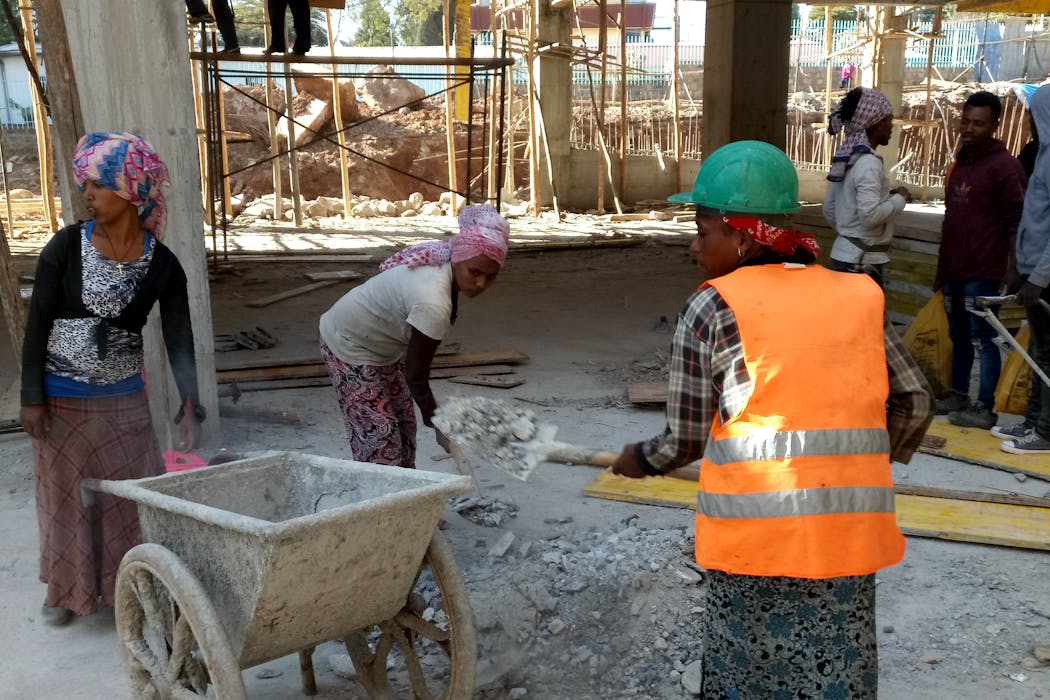
For women entering the formal labour market in Ethiopia, taking a job can expose them to new public spaces and risks. Wikimedia Commons, CC BY

For many women in Ethiopia, getting their first formal job doesn’t just change their income; it can change how they describe who they are in everyday public interactions.

In a country where ethnicity shapes access to opportunities, safety and political rights, this shift is far from small.

That is the provocative finding of our recent study: formal employment can cause women to switch their self-reported ethnicity. We are a team of political scientists and development economists who study labour markets, gender and ethnic identity in Ethiopia. We studied this issue in a recent research project.

We used data from a unique field experiment with 27 firms across five Ethiopian regions, where job offers were randomised among qualified female applicants. This means the firms had more qualified applicants than positions, so eligible women were selected through a lottery system for job offers. We then tracked both women who received a job offer and those who didn’t over multiple survey rounds spanning roughly three years, collecting information on their employment status, earnings, working conditions, daily mobility and commuting patterns, household characteristics, and how they reported their ethnic identity.

What we found was striking. In our full sample of 891 women, around 8% changed their stated ethnicity at some point over the time we followed them. While this may sound like a small share, switching ethnic identity is rare and socially consequential, making this level of change substantial in context.

Women who received a job offer were 4.3 percentage points more likely to switch their stated ethnicity than those who did not. In the comparison group – women who were not offered a job – about 6% changed their stated ethnicity over time. Among women offered a job, this figure rose to around 10%. When we account for who actually took up the job, the effect is even larger.

To some readers, this may sound like a technical result. But in a country where ethnicity shapes politics, social opportunity and daily survival, it is explosive.

Changing one’s ethnic label is not a trivial act. It carries implications for family, community and belonging.

So, why would a job make someone change something so fundamental?

For women entering the formal labour market in Ethiopia, even at low wages, taking a job can reshape their daily routines and expose them to new public spaces and risks. These shifts in mobility and visibility create pressures that women who stay at home may never face.

As they navigate these new environments, some find themselves adjusting not just their schedules, but also how they present and even report their ethnic identity.

By showing that formal employment can lead to ethnic reidentification, our study reveals identity as a living, shifting facet of social life rather than a fixed badge.

As Ethiopia and other African countries pursue industrialisation, labour-market expansion and social mobility, we must pay attention: economic transformation may come with unexpected, and deeply personal, consequences.

Being vulnerable

Our in-depth interviews with women in the two cities with the highest switching in our sample – Dire Dawa in east-central Ethiopia and Hawassa in the southern region – reveal a striking mechanism.

Employment meant commuting through areas where ethnic and, in some cases, ethno-religious tensions were high.

Women told us they felt far more vulnerable on the road than at home, especially if their own ethnicity placed them on the “wrong” side of a local conflict.

As one respondent explained, the decision to switch was driven by practical concerns about personal safety rather than a deeper change in how they saw themselves.

Some women did not adopt the local majority’s identity but switched to a third, more neutral group, one not involved in conflict.

Whether this was possible depended on their appearance, religion and language skills. As several women explained, speaking the correct language allowed them to “pass”, meaning they were perceived as belonging to a safer group while out in public. We cannot say how common this strategy was across all women in our study, but the interviews confirm patterns we also observe in our quantitative data of women switching to a third, neutral ethnicity to navigate local conflicts.

This makes sense in a country experiencing repeated waves of violence. In 2022, more than 40% of all conflict-related deaths worldwide occurred in Ethiopia.

In this kind of context, identity is not static; it becomes a resource.

Our findings challenge common assumptions across economics, the social sciences, and policy. While scholars have long recognised that ethnic identity can be fluid, it is often still treated as something relatively stable in practice, rooted in ancestry or birth.

What our evidence shows is the strategic side of this fluidity. Ethnicity can be consciously adjusted in response to economic conditions, mobility and the risks women face in public spaces.

In other words, identity is not only socially constructed. It can also shift in response to the pressures and incentives created by the work environment.

The protections needed

This raises uncomfortable questions about the global garment industry, which has progressively shifted production from Europe to Asia and is now beginning to extend manufacturing activities to parts of Africa as global value chains are reconfigured in search of lower production costs. Ethiopia has encouraged this growth by developing large industrial parks.

But unlike in long-established manufacturing hubs, there are few safety nets, transport protections or policies designed around local ethnic dynamics.

When women must alter their identity to feel safe on the commute to a low-wage job, something is clearly missing.

Our findings show that when these global industries arrive without adapting to local realities, the burden falls disproportionately on women.

It is not a sign of progress when a woman has to change her identity, even temporarily, to commute safely to a low-paid job. If anything, it calls for a more honest debate about what industrialisation should look like, and what protections are needed for the workers it relies on.

This also raises more profound questions about belonging and dignity. Is changing your ethnic identity an act of personal agency – or a sign of social pressure and insecurity? What does it say about everyday life when your safety depends on how you present yourself while travelling to work?

Imagine having to change the language you speak on the bus – or even the surname you give when introducing yourself – just to avoid trouble on your way to work.

While not all women faced situations this extreme, the very possibility of needing such strategies illustrates the pressures created by moving through tense public spaces.

The Conversation

The research team received funding from the Norwegian Research Council to collect data for this study.

ref. Ethiopian women and safety: why some switch their ethnic identity when they start working – https://theconversation.com/ethiopian-women-and-safety-why-some-switch-their-ethnic-identity-when-they-start-working-271325

Getting into university is only the first hurdle for students from rural South Africa. Here’s what comes next

Source: The Conversation – Africa – By Hellen Agumba, Senior lecturer, University of Johannesburg

As universities in South Africa prepare to admit a new group of students, thousands of young people from rural parts of the country hope for a life-changing opportunity.

In 2023, public universities enrolled 258,778 first-time students. Demand is intense; for example, the University of Johannesburg received 358,992 applications for just 10,500 first-year spaces in 2025.

A substantial proportion of these new students come from economically disadvantaged backgrounds. The National Student Financial Aid Scheme (NSFAS) is often the only key to unlocking post-school education. The scheme supports students from families earning less than R350,000 a year (about US$21,000) and has a target of 850,000 students. It is supposed to cover fees, accommodation, a living allowance, transport and learning materials.

Yet for many rural students, this key fails to turn the lock.

The number of students from rural areas who secure university placements cannot be determined. Neither the Council on Higher Education nor the Department of Higher Education systematically tracks students’ geographic origins. But what research does show is that students from rural areas face challenges beyond financial constraints.


Read more:
How place of birth shapes chances of going to university: evidence from 7 African countries


My research on higher education access and learning experiences, particularly among marginalised students, has explored the reasons and consequences.

The conversation around financial aid rightly focuses on administrative crises: devastating payment delays and operational failures that erode trust. These are human catastrophes. But I’ve found that for rural students, these problems are only the tip of the iceberg. Beneath lies a deeper web of challenges.

Financial aid is crucial but it cannot compensate for systemic disadvantages that begin long before students reach campus and persist throughout their studies.

My research, involving in-depth interviews with rural students, shows the “hidden costs” they bear. Their struggle begins with limited access to information. This constrains their educational choices. Then they may not feel really comfortable to participate in the classroom and make social connections. And their financial situation influences both academic performance and social belonging.

Even when rural students graduate, many describe feeling they have survived higher education rather than thrived in it.

The experiences they shared with me reveal how these challenges interconnect throughout their university journey. Their stories also point to ways of improving rural students’ participation in higher education.

Listening to rural students

My qualitative study consisted of in-depth interviews and focus group discussions with 18 rural students (10 of them female), aged 19-25 at a university in Johannesburg. All participants came from former homeland areas across four provinces – the Eastern Cape, KwaZulu-Natal, Limpopo and Mpumalanga – a pattern reflecting apartheid’s enduring geographic legacy. They were studying fields ranging from education to engineering; 13 of the 18 were first-generation university students, and all were Black African. Their demographic profile was typical of deeply rural students accessing higher education through programmes like NSFAS.

The deliberate selection criteria and consistency of their experiences reveals systemic patterns.

One of the participants, Philip (all names have been changed) from Limpopo, described the sheer physical distance of his home from university:

I pass Polokwane (a city 320km from Johannesburg) and go deep to the rural villages until Giyani (a small town over 150km further on) … then from Giyani I have to catch a taxi to my village … you are far away from universities.

While urban students attend open days to learn about the courses on offer and careers, those in remote villages are left in the dark. As one participant, Terry, observed:

During open day for UJ (University of Johannesburg) … it’s mostly model C schools.“ (These are better resourced high schools which were reserved for white learners during apartheid.) I have never seen someone (there) from rural background.

This isolation limits career awareness to visible rural professions like teaching and nursing.

Sef’s story is telling:

I didn’t know anything about the courses offered … I only know teaching and these professions that you see in the village.

After a costly false start, she found her path to engineering only through a chance family conversation.

In South Africa, many students scrape together a registration fee, gambling that full funding will materialise. And without guidance on accommodation deadlines, they might arrive in the city to find university residences full and be forced into expensive or unsafe private housing.

Jane explained:

We will come and look for accommodation in February … When we get there, we find that the residence is already full.

While universities technically provide accommodation information, it is often buried in lengthy online registration documents that assume students have reliable internet access and familiarity with university processes.


Read more:
South African students still don’t feel safe on campus: how protection can be stepped up


The result is a financial strain from day one. For students like Kate, who was mugged commuting from distant, off-campus housing, the consequences are academic and psychological:

At the end of the year, I didn’t pass that well and as a result I lost my sponsor.

Upon arrival, they face a second battle: cultural and geographic alienation. They enter a space privileging urban, middle-class norms. Participants spoke of being teased for their accents and dress.


Read more:
How class and social capital affect university students


As Ann from the Eastern Cape put it:

Nobody cares … you get to know people from other tribes, people from other races … some of things they do you don’t understand.

Language becomes a profound barrier to participation. Philip shared:

I would want to participate … but eish! English … I’m not confident enough.

The curriculum itself can feel alienating, with examples drawn from unfamiliar urban contexts. Terry, an engineering student, noted:

Sometimes they teach about some events you have never heard of … that’s where they kill us.


Read more:
Universities need to take note of the gap between expectations and experience


It takes more than cash

This brings us back to NSFAS. Its administrative failures hit rural students hardest.

For a student who barely registered, a delayed allowance is a crisis. It means missing lectures, relying on food parcels, and impossible choices between education and supporting families.


Read more:
South Africa’s university students face a crisis: nearly a third go hungry


Ann described the strain:

Since January we’re still waiting … Sometimes I don’t have money to come to school. I have to miss lectures.

The funding, when it comes, doesn’t cover the true cost. It ignores higher travel costs, expensive data to compensate for remoteness, and the burden of unexpected private accommodation.


Read more:
Distance learning changes lives, but comes with its own challenges


The higher education system has focused too long on the narrow goal of access: getting students through the gate. True equity is about ensuring they can thrive as peers inside. The current student financing model is a blunt remedy: it provides cash but leaves the underlying structures of exclusion untouched.

How to change it

My research suggests some steps that could help rural students.

Fix the fundamentals with rural students in mind: Students need a competent, reliable financial aid scheme. Payment timelines must be guaranteed, with emergency support for rural students during delays.


Read more:
South Africa’s student debt trap: two options that could help resolve the problem


Early outreach: Universities and government must take information to deep rural areas through mobile career services and application support long before final high school exams that determine university entrance.

Fund the full experience: Bursary calculations must be nuanced to cover the real, higher costs borne by rural students, including travel, data and safe accommodation.

Create culturally inclusive campuses: Universities must actively combat assumptions that rural students are “underprepared” or “lacking” essential skills. They can do this through staff training, peer mentorship, and curricula that value different kinds of knowledge.


Read more:
We asked university students to tell their own stories in photos: here’s why


The dreams of rural students are stifled by a system blind to their reality. Ensuring timely funding is the bare minimum. They need a system that doesn’t just let them in but truly welcomes them and sets them up for success.

The Conversation

Hellen Agumba received funding from the National Research Fund (NRF). The grant was awarded for her PhD Studies.

ref. Getting into university is only the first hurdle for students from rural South Africa. Here’s what comes next – https://theconversation.com/getting-into-university-is-only-the-first-hurdle-for-students-from-rural-south-africa-heres-what-comes-next-271532

La conversación docente: enseñar a estudiar eficazmente

Source: The Conversation – (in Spanish) – By Eva Catalán, Editora de Educación, The Conversation

Kyryk Ivan/shutterstock, CC BY

Una de las frases más escuchadas en un aula podría ser: “¿Esto entra en el examen?”. La mayor preocupación de los estudiantes, desde el día “uno”, son las notas. Pero mientras los docentes y las clases se orientan a dar el contenido que “entra” en el examen, pocas veces se dedica tiempo a enseñar cómo aprenderlo.

Esto deja a muchos estudiantes perdidos, dedicando horas a tareas poco útiles o sencillamente contraproducentes. ¿Cuántas veces hemos sentido, o hemos oído aquello de “es que no me entra”? ¿Por qué a veces por más que lo intentemos no podemos aprendernos algo? La capacidad de concentración, por desgracia, no se enciende con un interruptor ni depende solo de la voluntad.

Noelia Valle, experta y divulgadora de la Universidad Francisco de Vitoria, lo explica con el siguiente ejemplo: “Imagine intentar llenar una botella de agua con una manguera de bomberos a máxima potencia. La mayor parte del agua se derramaría y la botella seguiría medio vacía. Algo muy similar ocurre en nuestro cerebro cuando intentamos aprender por acumulación y por eso todos nos hemos descubierto alguna vez leyendo un texto una y otra vez sin ser capaz de retener nada.”

La frustración de hacer mal un examen, después de pasar muchas horas delante de unos apuntes o un libro, con la falsa impresión de haberlo “entendido” y aprendido todo, es una experiencia común a muchos estudiantes. Para enseñarles a estudiar, necesitamos entender cómo funciona el cerebro, cómo conseguimos acceder a contenido que hemos memorizado, de qué manera lograr que ese contenido no se olvide inmediatamente y esté accesible no sólo en el momento de “vomitarlo” en una hoja de examen, sino mucho después.

No se trata de pasar muchas horas delante de los apuntes. “El cerebro humano no aprende por acumulación, sino por integración”, nos explica esta investigadora y docente, en su interesantísimo artículo sobre la “carga cognitiva” y su papel en el funcionamiento de la memoria de trabajo, verdadera clave del éxito académico. Los docentes tienen un papel fundamental tanto en el material que presentan a sus alumnos como en la manera de ofrecérselo.

Otro fallo común es la “ilusión de conocimiento”: ese exceso de confianza que nos convence de que nos sabemos algo porque lo hemos escuchado en clase o lo hemos leído y lo hemos entendido. ¿A quién no le ha pasado alguna vez? ¿Y quién no ha escuchado a un docente desesperarse porque sus alumnos lo miran explicar pero no apuntan nada? “Total, está en los apuntes virtuales o en el libro”, ¿no?“ Pues no: tomar apuntes, especialmente a mano, es la base fundamental sobre la que construir ese estudio eficaz. No de cualquier forma, claro: la toma de apuntes también es una ciencia.

Otros factores influyen en la eficacia a la hora de estudiar: cuestiones fisiológicas (la disciplina, los descansos, la alimentación y el sueño) y emocionales: la sensación de autoeficiencia, la motivación, la perseverancia… Pero casi nada de esto se explica en clase. Dejamos que espontáneamente los estudiantes vayan descubriendo qué métodos les funcionan mejor, con el resultado que a menudo hasta en la educación superior muchos están todavía dedicando horas y horas a “hincar los codos” cuando podrían usar su cerebro de manera más eficiente.

The Conversation

ref. La conversación docente: enseñar a estudiar eficazmente – https://theconversation.com/la-conversacion-docente-ensenar-a-estudiar-eficazmente-273824

Trump 2.1 : quel bilan économique réel ?

Source: The Conversation – in French – By Thérèse Rebière, Professeur des Universités en économie, Conservatoire national des arts et métiers (CNAM)

Derrière les annonces tonitruantes sur les « prix qui baissent énormément » et « les emplois et les usines » qui « vont revenir en force », la réalité de l’économie états-unienne un an après l’investiture de Donald Trump n’est pas si flamboyante.


Alors que le président Trump se félicite de son bilan annuel, et assure sortir l’économie des États-Unis du désastre hérité de son prédécesseur tout en promettant que le meilleur est à venir, la réalité est bien plus contrastée. Qu’il s’agisse du marché du travail ou des prix à la consommation, quel bilan économique peut-on véritablement faire de cette première année de mandat ?

Les investissements concentrés dans le domaine de l’intelligence artificielle (IA) et les bons résultats de Wall Street ne semblent pas bénéficier à l’emploi. L’augmentation chaotique des droits de douane s’est traduite par une forte incertitude qui provoque l’attentisme des entreprises et inquiète les consommateurs, alors même que la vie n’est pas moins chère qu’avant. Et plusieurs des secteurs d’activités mis en avant par Donald Trump au cours de sa campagne (manufacturier, pétro-gazier et agricole) sont à la peine.

La hausse des prix se poursuit sur un rythme semblable à 2024

Après un pic à 9 % sur un an en juin 2022, l’inflation a été – avec l’immigration – au cœur de la campagne présidentielle de 2024. Les électeurs américains ont été sensibles à la promesse du candidat Trump de faire baisser les prix. Beaucoup s’interrogent désormais.

Après un an de mandat, le président s’est attribué le mérite de quelques baisses ponctuelles, comme sur le prix des œufs ou de l’essence, sans que ces baisses ne puissent lui être clairement attribuées.

Plus généralement, non seulement les prix n’ont pas baissé fin 2025, mais l’inflation (2,7 %), toujours supérieure à l’objectif de 2 % de la Réserve fédérale (Fed), est comparable à celle de fin 2024 (2,9 %). Elle est même nettement plus élevée pour certains postes de dépenses énergétiques qui impactent fortement les plus modestes, comme l’électricité qui augmente de 6,7 % entre décembre 2024 et décembre 2025.

Une guerre commerciale aux effets ambigus

Le 2 avril 2025, jour proclamé « Liberation Day », Donald Trump annonce les droits de douane les plus élevés imposés par les États-Unis à leurs partenaires commerciaux depuis les années 1930.


À lire aussi :
Après l’échec des droits de douane de Trump 1, pourquoi cela serait-il un succès sous Trump 2 ?


Il en retarde l’application quelques jours plus tard face à la chute de la Bourse et à la hausse des taux sur la dette fédérale. Initialement, ce report exclut la Chine qui s’est lancée dans un bras de fer avec les États-Unis, chaque pays répliquant aux hausses de droits de douane de l’autre par de nouvelles hausses. Cette surenchère avec Pékin et les déclarations chaotiques sur les négociations avec d’autres partenaires créent un climat très incertain et entraînent, plusieurs mois durant, un fort attentisme des entreprises américaines en matière d’investissements et de création de nouveaux emplois.

Alors que le président affirmait que le choc tarifaire serait absorbé par les pays étrangers, la plupart des économistes prévoyaient que son poids pèserait sur les entreprises et les consommateurs américains. Même si les faits semblent plutôt leur donner raison, le bilan des droits de douane sur 2025 n’est pas simple à dresser.

Tout d’abord, les importateurs américains se sont empressés de constituer des stocks avant l’application des droits de douane, ce qui a accru les importations en début d’année, puis les a réduits les mois suivants. Mais, d’autres facteurs ont pu contribuer à la baisse spectaculaire du déficit commercial observée fin 2025 : la baisse du dollar relativement à d’autres monnaies, dont l’euro, a amélioré la compétitivité des produits américains ; et la baisse des prix du transport maritime a diminué le coût des produits entrant aux États-Unis.

Ensuite, il est difficile de mesurer les droits de douane effectivement appliqués en 2025 en raison des reports, des négociations bilatérales, des exemptions notamment sur des produits relevant de l’accord de libre-échange entre États-Unis, Mexique et Canada (ACEUM), ou d’autres exemptions ponctuelles sur divers produits essentiels aux consommateurs ou aux entreprises. Un document de travail du National Bureau of Economic Research (NBER) publié par deux économistes américains montre que les droits de douane moyens effectivement appliqués étaient de 14,1 % fin septembre 2025, soit environ la moitié de ceux annoncés par l’administration (27,4 %).

Des secteurs traditionnels en difficulté

L’un des principaux arguments de Trump pour augmenter les droits de douane était de sauver le secteur manufacturier américain et les emplois qui y sont liés. Pourtant, ces mesures n’ont pas suffi à enrayer les baisses d’emplois qui s’opèrent dans ce secteur depuis 2023. En 2025, le secteur a perdu autour de 58 000 emplois.

Dans le secteur pétro-gazier cher au président, le taux de chômage a bondi de 1,9 % en novembre 2024 à 9 % un an plus tard. En réalité, l’emploi dans ce secteur est très dépendant de sa rentabilité, qui elle-même dépend des cours mondiaux du pétrole. Autour de 60 à 70 dollars (51 à 60 euros) le baril, la rentabilité de l’extraction des pétroles de schiste est à peine garantie. Or, en novembre 2025, le baril de West Texas Intermediate (WTI, le pétrole de référence sur le marché américain) s’établissait à 60 dollars, du fait de l’augmentation de la production aux États-Unis et plus encore au sein de l’Opep, ce qui a modéré les cours du pétrole. En la matière, les objectifs de Trump sont contradictoires : d’un côté, les prix bas du pétrole réduisent les prix à la pompe pour les consommateurs, mais, de l’autre, ils limitent la réalisation de nouveaux forages parmi les plus coûteux.

Le secteur agricole, important dans beaucoup d’États républicains, pâtit de la guerre commerciale – c’est en particulier le cas des producteurs de soja boycottés par la Chine. Dans le même temps, le secteur voit sa rentabilité affectée par l’augmentation du coût du travail et les difficultés de recrutement liées au durcissement de la politique migratoire alors que l’agriculture est particulièrement dépendante de travailleurs d’origine étrangère (70 %) dont beaucoup sont en situation irrégulière (environ 40 %). En réponse aux difficultés du secteur, Trump a annoncé 12 milliards de dollars (soit 10,3 milliards d’euros) d’aides directes aux agriculteurs, dont 11 milliards de dollars (soit 9,4 milliards d’euros) consacrés aux grandes cultures (soja, maïs, blé, coton, riz, etc.).

Des investissements massifs dans le secteur de l’IA, peu générateur d’emplois

Les droits de douane avaient non seulement pour but de sauver l’industrie américaine, mais ils devaient également conduire à l’implantation d’usines supplémentaires et à la création des emplois associés, en supposant que nombre d’entreprises feraient le choix de venir ou de revenir produire aux États-Unis pour y échapper. Il est trop tôt pour juger des résultats de cette politique.

Certes, le site web de la Maison Blanche communique sur un boom massif d’investissements qui s’établiraient à 9 600 milliards de dollars (8 200 milliards d’euros). Cependant, selon une étude Bloomberg, les véritables promesses d’investissements seraient moindres (7 000 milliards de dollars, soit 6 020 milliards d’euros), dont une partie correspond à des projets déjà existants, et d’autres à des engagements flous ou non contraignants. En fait, 2 900 milliards de dollars (2 494 milliards d’euros) de ces investissements se concentreraient sur le secteur de l’IA et la construction de data centers peu générateurs d’emplois.

Un marché du travail qui patine

Malgré les trois baisses du taux de la Fed opérées en 2025 pour soutenir l’activité économique, le marché du travail montre des signes préoccupants.

Tout d’abord, le taux de chômage a augmenté de 0,4 points de pourcentage, atteignant 4,4 % en fin d’année. La baisse de l’emploi fédéral (277 000 postes détruits, soit environ 10 % des effectifs fédéraux, agences indépendantes incluses) à la suite des coupes décidées par le « département » de l’efficacité gouvernementale (DOGE), piloté par Elon Musk, n’explique qu’une partie de la hausse du chômage.

Ensuite, les jeunes entrants sont particulièrement affectés, notamment par le développement de l’IA. Le taux de chômage des 16-19 ans s’est accru de plus de 3 points de pourcentage, atteignant les 15,7 %. Enfin, les temps partiels subis ont explosé (+ 980 000).

Une confiance en chute libre

La consommation des ménages s’est maintenue en 2025 à un niveau comparable à celui de 2024, ce qui a largement contribué à porter l’activité économique, et notamment la reprise des deuxième et troisième trimestres après la contraction du produit intérieur brut (PIB) au premier trimestre. Pourtant, l’indice de confiance des consommateurs établi par l’Université du Michigan a chuté de près de 28,5 % sur l’année, traduisant l’inquiétude croissante d’une partie des Américains face à la situation économique, une défiance qui s’est traduite par plusieurs revers électoraux emblématiques pour le camp républicain.

De nombreux citoyens, des plus modestes aux classes moyennes, dont beaucoup ont voté Trump en 2024, s’inquiètent désormais. Alors que l’inflation continue de grever leur pouvoir d’achat, les réductions d’impôt pérennisées par la loi de finance pour 2026, « The Big Beautiful Bill Act », bénéficient avant tout aux plus riches tout en durcissant les conditions d’accès au programme d’aide alimentaire (SNAP) et au programme de santé public Medicaid, qui couvre les frais médicaux des personnes à faibles revenus, soit un Américain sur cinq.

De même, la non-prolongation par le Congrès des subventions à l’assurance santé dite Obamacare fait exploser le prix de l’adhésion à un système de santé pour plus de 20 millions d’Américains début 2026.

Pour éviter que la grogne ne s’installe dans son électorat, Donald Trump met en avant la baisse des prix à venir des médicaments au terme des accords qu’il a passés avec les grands groupes pharmaceutiques, et la perspective de distribuer des chèques de 2 000 dollars (1 720 euros) à une grande partie des ménages américains à partir des 190 milliards de dollars (163 milliards d’euros) de recettes supplémentaires générées par la hausse des droits de douane, oubliant un peu vite que c’est le Congrès et non l’exécutif qui a la main sur les dépenses.

The Conversation

Les auteurs ne travaillent pas, ne conseillent pas, ne possèdent pas de parts, ne reçoivent pas de fonds d’une organisation qui pourrait tirer profit de cet article, et n’ont déclaré aucune autre affiliation que leur organisme de recherche.

ref. Trump 2.1 : quel bilan économique réel ? – https://theconversation.com/trump-2-1-quel-bilan-economique-reel-273597

Ouvrir, fermer, recomposer : cadres intermédiaires et « frontières » professionnelles

Source: The Conversation – France (in French) – By Ricardo Azambuja, Professeur associé en management, EDHEC Business School

C’est une dimension souterraine du travail des managers : établir des frontières dans l’organisation et décider de ce qui peut ou non circuler. Pourtant, la prise en compte de cette dimension amène à revoir complètement leur rôle réel et leurs missions.


Le travail des cadres consiste en grande partie à travailler au-delà des « frontières » organisationnelles, hiérarchiques, et même symboliques. Pour mettre en œuvre une stratégie et communiquer les besoins et le savoir-faire des employés, les cadres doivent composer avec ces frontières, représentant et traduisant les expériences de différents acteurs, y compris eux-mêmes.

Les chercheurs s’intéressent de plus en plus à ces frontières – contestées ou admises – que les cadres respectent, contournent et, en fin de compte, remodèlent activement pour remplir leur rôle.

Dans un récent article, nous tentons de nuancer et d’enrichir ces analyses en posant la question suivante : comment les cadres intermédiaires utilisent-ils le travail sur les frontières pour façonner leurs actions quotidiennes ? Notre observation principale est que ce travail ne se contente pas de renforcer ou d’affaiblir les frontières, que ce soit en termes d’ancienneté, d’expertise ou de hiérarchie, mais les configure de manière sélective afin de les rendre plus ou moins visibles et/ou poreuses.

Une position hybride

Les études sur les cadres intermédiaires ont mis en évidence leur position hybride et leur capacité à naviguer habilement entre les ambiguïtés et les malentendus, ainsi que les différences entre divers groupes.


À lire aussi :
Télétravail : Managers intermédiaires, jeunes… ces salariés ravis de l’assouplissement des règles


L’idée de travailler les frontières attire de plus en plus l’attention des chercheurs, en particulier lorsque ces frontières sont en mutation ou contestées. Dans de telles situations, elles ne peuvent être considérées comme acquises et deviennent un élément du rôle professionnel. Cependant, ces frontières professionnelles ont généralement été étudiées sous l’angle de leur renforcement ou de leur renversement dans le but de protéger les groupes ou de permettre leur collaboration.

Une activité hautement politique

Afin de mieux comprendre le travail de gestion des frontières, nous avons examiné de manière ethnographique un cabinet d’audit brésilien via des observations et des entretiens afin de comprendre l’expérience quotidienne et les motivations des managers.

Nous avons observé que la création de frontières est une activité hautement politique, constituant une source importante d’action managériale, car les cadres intermédiaires sont en mesure de filtrer et de traduire les idées de la hiérarchie et d’établir des espaces à partir desquels l’action est possible.

Ils peuvent « fermer ou ouvrir » ces espaces de manière à consolider leur position et à influencer l’organisation « depuis le milieu ». Ils peuvent promouvoir de manière sélective les interactions sociales et les identifications entre différentes unités ou différents rangs, ou inversement, éloigner les acteurs les uns des autres.

Barricade ou façade ?

Nous avons identifié quatre stratégies relatives aux frontières :

  • La technique des « frontières barricades » – Les barricades sont des frontières faciles à voir et difficiles à franchir. Les cadres intermédiaires les ont érigées pour mettre en évidence et légitimer leurs propres positions, se posant ainsi en gardiens indispensables des pratiques organisationnelles. Se positionnant comme les porte-paroles de la direction auprès de leurs employés et inversement, ils mettent l’accent sur l’autonomie et l’autorité. En allant jusqu’à adopter des pratiques propres à leurs services, ils les rendent indéchiffrables pour les autres, créant ainsi des sphères d’action parallèles où ils peuvent exercer un contrôle unique.

  • La mise en place des « frontières façades » – Les façades donnent l’impression de frontières solides, mais qui sont en réalité poreuses et inconsistantes. Les cadres intermédiaires s’engagent dans un travail de façade lorsqu’ils souhaitent marquer symboliquement les différences entre des groupes qui, dans la pratique, collaborent et ont des échanges continus. Cela leur permet de réguler les échanges à des moments clés et de maintenir un équilibre entre autonomie et travail en réseau. Ici, les cadres peuvent exercer de facto leur pouvoir sans remettre en cause les hiérarchies organisationnelles établies, une stratégie qui leur offre une certaine flexibilité opérationnelle.

  • Le travail sur des « frontières taboues » – Les frontières taboues sont celles qui ne doivent pas être mentionnées, bien qu’elles soient opérantes. Le travail managerial sur cette frontière existe principalement entre pairs, où cultiver un esprit de collégialité et de coopération exige de fermer les yeux sur les différences de pouvoir établies ou sur les intérêts divergents. Alors que les façades impliquent de rendre publiques les différences tout en établissant des liens, les frontières taboues maintiennent des différences cachées tout en conservant une apparence d’unité. Une grande partie de ce qui est « tabou » concerne la concurrence pour des ressources rares ou le statut entre managers. Dans ce cas, rendre cette concurrence visible peut compromettre la capacité à s’appuyer les uns sur les autres pour obtenir des ressources et des compétences essentielles.

  • La gestion des « frontières fantômes » – Les frontières fantômes, les plus insaisissables, ont une existence éthérée et peuvent être franchies, mais elles hantent le travail quotidien de manière « spectrale ». À la différence d’une situation d’absence de frontières, les managers ignorent ou contournent de manière sélective les frontières formelles afin d’établir des liens où « le faire malgré tout » est considéré comme faisant partie de l’établissement de relations. De cette manière, les frontières fantômes impliquent une présence dans l’absence : la connaissance de leur franchissement fait partie du fonctionnement interactionnel du franchissement.

Les managers, des douaniers ?

Dans l’ensemble, les managers ne se contentent pas de créer ou de détruire des frontières, mais ils travaillent sur la composition des frontières elles-mêmes, les rendant visibles ou invisibles et modifient la mesure dans laquelle elles peuvent être franchies… et par qui.

Xerfi Canal, 2022.

Cela donne une image du travail des cadres intermédiaires comme fondement de la constitution de l’organisation elle-même, car les pratiques d’« enfermement et d’exclusion » des cadres constituent un travail d’organisation continu, distinct et moins visible que l’élaboration de stratégies par la direction. Travailler sur les frontières implique également que la vie quotidienne des cadres est essentielle pour comprendre le fonctionnement des organisations et la manière dont les stratégies sont mises en œuvre.

Notre article suggère que les futurs programmes de recherche devraient se concentrer sur la manière dont les pratiques quotidiennes de travail sur les frontières façonnent les espaces d’action au sein de l’organisation, ce qui a donc de fortes implications « politiques ». Nous notons toutefois que ces pratiques sont perçues comme une forme de travail des cadres non reconnue, et qu’elles sont souvent subjectivement épuisantes.

Changer en changeant les autres

En effet, en modifiant les frontières qui définissent les rayons d’action des autres – et d’eux-mêmes – les cadres intermédiaires changent effectivement leur propre identité dans leur vie quotidienne, et ces pratiques peuvent entraîner une confusion et un fardeau personnel. Le travail de délimitation fait des managers ce que les managers font des frontières, et l’organisation qui en résulte n’est pas toujours prévisible à l’avance.

Notre étude suggère donc que nous devrions accorder davantage d’attention non seulement à la manière dont les managers existent au sein des organisations, dont ils créent eux-mêmes des formes d’organisation, mais aussi dont ils se construisent à travers leur action sur ces organisations.

The Conversation

Les auteurs ne travaillent pas, ne conseillent pas, ne possèdent pas de parts, ne reçoivent pas de fonds d’une organisation qui pourrait tirer profit de cet article, et n’ont déclaré aucune autre affiliation que leur organisme de recherche.

ref. Ouvrir, fermer, recomposer : cadres intermédiaires et « frontières » professionnelles – https://theconversation.com/ouvrir-fermer-recomposer-cadres-intermediaires-et-frontieres-professionnelles-271329

Entretien annuel : le danger du marketing de soi-même

Source: The Conversation – France (in French) – By George Kassar, Full-time Faculty, Research Associate, Ascencia Business School

L’effet Dunning-Kruger caractérise cette tendance : les moins compétents surestiment leurs capacités tandis que les plus compétents se montrent plus prudents dans leur jugement. StockHolm/Shutterstock

Nous sommes bel et bien en janvier. Le mois du blanc est surtout celui du grand théâtre des entretiens d’évaluation individuelle de performance dans bien des entreprises. Alors, comment les cadrer au mieux pour distinguer les salariés qui se mettent en scène de ceux qui créent réellement de la valeur, mais sous-estiment leur capacités ?


L’entretien annuel de performance est devenu un passage obligé dans la plupart des organisations. Il ne s’agit pas d’une simple discussion informelle, mais d’un moment qui pèse sur les primes, les promotions ou les opportunités de carrière. Très différent des entretiens de parcours professionnels qui sont une obligation légale, les salariés y voient un verdict sur leur année ; les managers doivent trancher, classer, justifier. La pression est forte des deux côtés de la table.

Dans ce contexte tendu, le collaborateur entre, armé de son powerpoint mental avec ses objectifs atteints, ses initiatives personnelles ou son leadership exemplaire. Le manager, lui, soucieux de préserver l’éthique dans ce processus, coche des cases, écoute poliment et note des mots-clés : confiance, dynamisme, vision, etc. Tout semble sérieux, objectif, quantifié. En réalité, la scène tient parfois plus du théâtre qu’une vraie application scientifique de la gestion de la performance.

De ce fait, ces entretiens, pourtant censés évaluer les résultats concrets, finissent souvent par mesurer autre chose, celle de la capacité à se vendre. Ce glissement ne serait qu’un détail s’il n’avait pas de conséquences bien réelles sur la motivation et la rétention des « talents ».

Quand la confiance se déguise en compétence

Durant le mois de janvier, un paradoxe managérial devient presque une tradition. Ceux qui maîtrisent tout juste leur sujet arrivent sûrs d’eux, brandissant leurs « grandes réussites » et occupent l’espace. Les vrais compétents, eux, minimisent leurs exploits, soulignent ce qui reste à améliorer… et passent sous le radar. Résultat : on récompense ceux qui parlent le plus fort, pas forcément ceux qui contribuent le plus. On s’étonne ensuite de voir les meilleurs partir.

Le phénomène a un nom : l’effet Dunning-Kruger. Décrit dès 1999 par les psychologues David Dunning et Justin Kruger, il désigne la tendance des moins compétents à surestimer leurs capacités tandis que les plus compétents se montrent plus prudents dans leur jugement.

Les études contemporaines confirment que ce biais ne s’arrête pas à la salle de classe, au laboratoire ou même sur le champ. Transposé au bureau, ce syndrome donne une situation paradoxale : plus on est limité, plus on risque de se croire excellent, plus on est bon, plus on doute et plus on voit ce qui pourrait être mieux.

Marketing de soi-même

Si le manager ne s’appuie que sur le discours tenu pendant l’entretien, sans preuves solides, il a toutes les chances de se laisser influencer par cette confiance parfois mal placée. L’aisance orale, la capacité à « vendre » un projet ou à reformuler ses tâches en succès stratégiques deviennent des critères implicites d’évaluation.

Cette surestimation omniprésente pourrait entraîner de graves atteintes au bon jugement professionnel. Elle déforme la perception des compétences réelles et favorisent une culture d’apparence plutôt qu’une culture de résultats.

Les vrais performants, souvent modestes, finissent par comprendre que la reconnaissance interne ne récompense pas les résultats et l’impact de leur travail, mais le récit qu’on en fait et la capacité à se mettre en scène.

Ces derniers peuvent ressentir un décalage entre ce qu’ils apportent réellement et ce que l’organisation valorise. Leur engagement s’érode, leur créativité aussi. Ce qui est un facteur bien documenté de démotivation et de départ.

Le plus ironique ? Ceux qui doutent d’eux-mêmes sont souvent ceux qu’on aimerait garder. Les études sur la métacognition montrent que la capacité à se remettre en question est un signe de compétence. À l’inverse, les plus sûrs n’évoluent pas. Persuadés d’avoir déjà tout compris, ils s’enferment dans leur propre suffisance durable.

L’entreprise perd, dans le silence, celles et ceux qui faisaient avancer les projets les plus exigeants et les plus sensibles. Elle garde ceux qui savent surtout parler de leurs succès.

Cadrer l’évaluation sur des faits

La bonne nouvelle est qu’il est possible de corriger cette dérive. Les pistes sont connues mais rarement appliquées.

Tout commence par un bon cadre pour la mise en place de l’évaluation de la performance. Une formation adaptée aux managers, évaluateurs et collaborateurs est encouragée, avec un système de revue fréquente de la performance, un dispositif de mesure clairement défini et un groupe d’évaluateurs multiples.


À lire aussi :
Parler salaires, un tabou en France ? Vraiment ?


Il est important de fonder les évaluations sur des faits en revenant à des concepts fondamentaux tels que le management by objectives (MBO). L’enjeu : définir des objectifs clairs, mesurables, ambitieux mais réalistes, suivi à l’aide d’indicateurs alignés sur l’impact réel, avec une stratégie de mesure fondée sur les données pour évaluer des résultats concrets, et pas seulement le récit de la personne évaluée.

L’avis d’un seul manager ne devrait pas suffire à juger la performance d’une personne qui travaille en équipe. Il faut regarder sa contribution au collectif.

Les dispositifs de « feed-back à 360° » permettent de diversifier les retours
– collègues, clients, revues de projets, etc. Quand plusieurs personnes confirment la contribution d’un collaborateur discret, il devient plus difficile de l’ignorer. À l’inverse, un profil très visible mais peu fiable sera plus vite repéré.

Distinguer assurance et compétence

Il est important de garder à l’esprit que la gestion de la performance est un processus social. Les recherches montrent que le feed-back formel, donné lors de l’entretien annuel, est bien plus efficace lorsqu’il est soutenu par un feed-back informel et des échanges réguliers. Ces discussions spontanées renforcent la confiance et créent le contexte nécessaire pour que l’évaluation finale soit juste, non biaisée, acceptée et réellement utile.

Il est essentiel de former les managers à mieux reconnaître et anticiper les biais cognitifs, en particulier ceux du jugement, dont le fameux décalage entre confiance affichée et compétence réelle. Comprendre que l’assurance n’est pas une preuve en soi, et que la prudence peut être le signe d’une réelle expertise, change la manière de conduire un entretien.

Tant que les entreprises confondront assurance et compétence, elles continueront à promouvoir les plus confiants et à perdre, peu à peu, leurs meilleurs éléments.

Dans un marché où les talents ont le choix, ce biais n’est pas qu’un détail psychologique : mais un véritable risque stratégique. Après tout, ceux qui parlent le plus fort ne sont pas toujours ceux qu’il faudrait écouter !

The Conversation

George Kassar ne travaille pas, ne conseille pas, ne possède pas de parts, ne reçoit pas de fonds d’une organisation qui pourrait tirer profit de cet article, et n’a déclaré aucune autre affiliation que son organisme de recherche.

ref. Entretien annuel : le danger du marketing de soi-même – https://theconversation.com/entretien-annuel-le-danger-du-marketing-de-soi-meme-271897