Reprendre contact avec de vieux amis : un geste difficile, mais gratifiant

Source: The Conversation – in French – By Kristina K. Castaneto, Ph.D. Candidate in Social Psychology, Simon Fraser University

Imaginez : un matin, en buvant votre café, vous pensez à un vieil ami. Vous n’avez pas parlé à cette personne depuis longtemps, mais vous y pensez avec affection et vous vous demandez comment elle va. Vous commencez à taper « bonjour ! », puis effacez le message avant de l’envoyer. Vous est-il déjà arrivé quelque chose de similaire ? Si oui, vous n’êtes pas seul.

Des recherches menées dans notre laboratoire ont montré que jusqu’à 90 % des personnes interrogées déclarent avoir un « vieil ami », c’est-à-dire un ami qui leur est cher, mais avec lequel elles ont perdu contact. Si la plupart aimeraient renouer, seulement 30 % le font réellement, même lorsque la relation s’est bien terminée et que les coordonnées sont disponibles.

Cette réticence à reprendre contact avec d’anciens amis est surprenante, car de nombreuses recherches démontrent que les relations sociales sont un facteur prédictif important de la santé et du bonheur. En effet, le fait d’avoir un réseau social plus vaste et plus diversifié est associé à un plus grand bien-être.

Écrire des messages

Alors, qu’est-ce qui incite une personne à reprendre contact avec un vieil ami ?

Dans notre nouvelle étude, nous avons analysé le contenu des messages de prise de contact envoyés à un vieil ami, pour voir si certains types de messages influencent la probabilité qu’ils soient envoyés. Par exemple, les gens sont-ils plus susceptibles d’envoyer une note axée sur le passé, le présent ou l’avenir ?

Pour le savoir, nous avons analysé plus de 850 messages recueillis lors d’études précédentes. Chaque participant a rédigé un message destiné à un ancien ami spécifique et pouvait choisir de l’envoyer ou non. Cela nous a permis de comparer le contenu des messages envoyés à celui de ceux qui n’ont pas été transmis.

Chaque message a été analysé selon plus de 20 critères, comme la longueur, les émotions exprimées ou la présence de souvenirs personnels. Douze de ces critères ont été étudiés à l’aide d’un logiciel informatique, Linguistic Inquiry Word Count (LIWC), qui mesure automatiquement des éléments comme le nombre de mots, l’orientation temporelle (passé, présent ou futur) et l’intensité des émotions positives et négatives.

En complément, une équipe de codeurs humains a évalué chaque message sur 13 aspects plus subjectifs et complexes, difficiles à détecter pour un logiciel. Ils ont notamment vérifié si l’auteur partageait des souvenirs précis avec son vieil ami ou reconnaissait sa part de responsabilité dans la relation qui s’était distendue.

un homme regarde son téléphone intélligent
Prendre contact avec un vieil ami peut contribuer à renforcer son réseau social.
(Sarah Brown/Unsplash), CC BY

Révéler des informations

Malgré tout ce codage, nous ne pouvions toujours pas prédire quels messages seraient envoyés. En revanche, notre analyse a révélé des tendances intéressantes : les messages destinés à de vieux amis étaient souvent positifs et centrés sur le présent.

Nous avons utilisé des régressions statistiques pour relier les caractéristiques des messages au comportement de prise de contact : seules six variables se sont révélées significatives, mais leurs effets étaient faibles et incohérents entre nos deux échantillons.

Cela suggère que le contenu d’un message ne permet pas de prédire qui choisira d’envoyer son message et qui ne le fera pas.

Qui prend contact ?

Comme le contenu des messages de prise de contact ne nous a pas apporté beaucoup d’informations, nous avons réorienté notre attention vers la question suivante : qui est le plus susceptible de prendre contact avec un vieil ami ?

Pour explorer cette question, nous avons recruté 312 participants sur le campus et dans des espaces publics de la ville afin de leur faire remplir un questionnaire. Le questionnaire commençait par demander aux participants d’identifier un vieil ami. Ce vieil ami était une personne à laquelle les participants tenaient, mais à laquelle ils n’avaient pas parlé depuis longtemps, qui, selon eux, aimerait avoir de leurs nouvelles et dont ils avaient les coordonnées.

Les participants ont ensuite répondu à une série de questions les concernant, notamment sur leur bonheur, leur solitude, leur personnalité, leur satisfaction en matière d’amitié et leurs convictions en la matière.

Vers la fin du sondage, nous avons demandé aux participants s’ils étaient prêts à contacter leur vieil ami, puis nous leur avons donné deux minutes pour rédiger un petit mot à l’intention de l’ami qu’ils avaient identifié précédemment. Une fois les deux minutes écoulées, nous avons demandé aux participants s’ils avaient envoyé le message à leur vieil ami.


Déjà des milliers d’abonnés à l’infolettre de La Conversation. Et vous ? Abonnez-vous gratuitement à notre infolettre pour mieux comprendre les grands enjeux contemporains.


Comme dans les recherches précédentes, 34,2 % des participants ont choisi de contacter leur vieil ami. Et si certaines dimensions de la personnalité et d’autres variables permettent de savoir qui sera le plus susceptible de répondre, une seule variable, la « résilience de l’amitié », permettait de prédire si les participants avaient envoyé leur message à leur vieil ami.

Le concept de résilience de l’amitié fait référence à la conviction que les amitiés peuvent perdurer même après de longues périodes de faible interaction. C’est un sujet que nous étudions actuellement dans notre laboratoire.

deux hommes âgés s’étreignent
La résilience de l’amitié est la conviction que les amitiés peuvent perdurer, même après de longues périodes de faible interaction.
(Erika Giraud/Unsplash), CC BY

Faites le grand saut

Si l’idée de reprendre contact avec un vieil ami vous traverse à nouveau l’esprit, ne cherchez pas le message parfait, lancez-vous !

Par exemple, vous pouvez écrire lorsque vous entendez une chanson que vous aimiez tous les deux, tombez sur un mème qui vous rappelle cette personne, ou simplement pour dire : « Salut, ça fait longtemps ! Comment vas-tu ? »

Nos conclusions montrent que la réticence à contacter d’anciens amis n’est pas le fait d’un seul type de personne, et que les messages envoyés ne suivent pas un modèle unique.

L’hésitation à contacter un ancien ami est courante, mais la plupart des gens en sont capables s’ils décident de se lancer. Prendre conscience de cela peut encourager à renouer le contact.

La Conversation Canada

Les auteurs ne travaillent pas, ne conseillent pas, ne possèdent pas de parts, ne reçoivent pas de fonds d’une organisation qui pourrait tirer profit de cet article, et n’ont déclaré aucune autre affiliation que leur organisme de recherche.

ref. Reprendre contact avec de vieux amis : un geste difficile, mais gratifiant – https://theconversation.com/reprendre-contact-avec-de-vieux-amis-un-geste-difficile-mais-gratifiant-264552

Astrology’s appeal in uncertain times

Source: The Conversation – USA (2) – By Shiri Noy, Associate Professor of Sociology, Denison University

Women, younger adults and LGBTQ+ people are most likely to look to the stars for guidance. We Are/DigitalVision via Getty Images

Scroll through TikTok, browse dating profiles or sit at a cafe, and you’ll often hear people reference their astrological sign. Someone might proudly claim their Leo energy; others joke that they would never date a Scorpio.

Even in modern societies shaped by science, technology and universities — what sociologists sometimes call “disenchantment” — many people are still looking to astrology for meaning.

Its widespread popularity sits alongside skepticism, with surveys suggesting that astrology can be popular even among those who don’t fully “believe” in it and use it “for fun.”

In a new study published in the sociology journal Social Currents, we examined who consults astrology, how they use it and why they’re drawn to it.

Drawing on nationally representative surveys, interviews with Americans and conversations with professional astrologers, we found that astrology is less about predicting the future and more about making sense of the self in an uncertain world.

Astrology’s deep roots

Astrology – the idea that the positions and movements of the Sun, Moon, planets and stars influence events on Earth – has a long history.

For centuries, it was closely linked with astronomy. Early astronomers were also astrologers, charting the stars to measure time and interpret their influence on human life. The familiar 12-sign zodiac dates back to the fifth century B.C.E., and astrology was taught in medieval universities.

Graphic of Sun surrounded by four moons of various shades, which are encircled by 12 drawings that include a crab, bull and scorpion.
In 1660, Dutch-German cartographer Andreas Cellarius created a star atlas featuring the 12 signs of the zodiac.
Buyenlarge/Getty Images

Astronomy and astrology began to diverge in the 17th century. As astronomy embraced mathematics and observation during the Scientific Revolution, astrology increasingly lost its scholarly legitimacy and was pushed to the margins.

By the 19th century, science itself became professionalized. Universities and academies formalized disciplines, research careers and standards of evidence. With astronomy firmly established as a science, astrology was relegated to the realm of the occult or pseudoscience.

Astrology entered mainstream culture in the 1930s with daily newspaper horoscopes and spread widely, before experiencing renewed popularity in the 1960s and 1970s thanks to the New Age movement.

Astrology’s current digital resurgence echoes these earlier waves, showing how it has repeatedly adapted to cultural shifts. Among Gen Zers, downloads of astrology apps have spiked in recent years, and industry reports project the global astrology market will top US$22 billion by 2031.

Who’s turning to astrology

Astrology today is far from fringe.

Roughly one-quarter of Americans say they believe in astrology, according to a June 2025 Gallup survey. A May 2025 Pew Research poll found that close to one-third of Americans say they’ve consulted horoscopes or similar tools.

In our analysis, just under half of Americans reported ever having consulted a horoscope. We also found that women, younger adults and LGBTQ+ people were especially likely to look to the stars for guidance.

More than half of women said they had read a horoscope, compared with slightly more than one-third of men. About 60% of sexual minorities reported doing so, compared with just under half of heterosexuals. Younger adults were consistently more likely than older adults to read or consult astrology.

Its popularity reflects broader cultural shifts: Younger generations are less tied to organized religion but continue to seek out spirituality or find meaning in other places.

In our study, we draw on data from interviews with 31 Americans, who shared that they saw astrology as a form of entertainment or as a window into someone’s personality.

Many respondents could name their zodiac sign or sun sign, and some described how it seemed to “fit” their personality. Few saw astrology as literally predictive. Instead, they used it as one more way to understand the self, comparable to tools such as the Myers-Briggs personality test or the enneagram.

Our co-author, independent researcher Avantaea Siefke, interviewed professional astrologers and their clients, who framed astrology differently. For them, it was less about labels and more about spirituality and decision-making. They described astrology as a way to time major choices, gain confidence or reflect on relationships. One astrologer likened it to therapy: not deterministic, but a source of guidance and assurance.

Astrology in uncertain times

Why does astrology resonate now?

Some analysts have described the current moment as an “age of polycrisis,” with overlapping economic, political and environmental challenges. At the same time, identity categories have become more fluid, and traditional sources of authority — religion, education, government — are more likely to be contested or distrusted.

Astrology may offer people tools for navigating these uncertainties.

It provides a language for identity, giving people shorthand to describe themselves and others. It offers a measure of control by giving people frameworks for thinking about choices and timing. And it creates community, particularly for LGBTQ+ people. Scholars have noted that astrology is a way for queer communities to cope with everyday struggles and imagine alternatives to mainstream forms of care and healing.

Critics often dismiss astrology as irrational or pseudoscientific, and it’s true that astrology is not a science. But rather than asking whether astrology is “real,” it may be more useful to ask what its popularity says about contemporary life.

From a sociological perspective, astrology is fascinating precisely because it straddles categories. Rather than a set of cosmic beliefs, many people treat astrology as a tool — part spirituality, part cultural practice, part entertainment and part language for understanding themselves and others.

It is probably no coincidence that astrology often surges during unsettled times.

Just as earlier generations might have turned to prayer or ritual, many people today turn to the stars. And while astrology may not predict the future, its popularity says a great deal about how Americans are navigating the present.

Independent researcher Avantaea Siefke is a contributing author of this article.

The Conversation

Shiri Noy has received funding from the National Science Foundation and from sub-grants funded by the Templeton Religion Trust and the Issachar Fund.

Christopher P. Scheitle receives funding from the National Science Foundation and the John Templeton Foundation. The research discussed in this article was supported by a grant from the Science and Religion: Identity and Belief Formation grant initiative spearheaded by the Religion and Public Life Program at Rice University and the University of California-San Diego and provided by the Templeton Religion Trust via The Issachar Fund.

Katie E. Corcoran receives funding from the National Science Foundation, the John Templeton Foundation, and the Patient-Centered Outcomes Research Institute. The research discussed in this article was supported by a grant from the Science and Religion: Identity and Belief Formation grant initiative spearheaded by the Religion and Public Life Program at Rice University and the University of California-San Diego and provided by the Templeton Religion Trust via The Issachar Fund.

ref. Astrology’s appeal in uncertain times – https://theconversation.com/astrologys-appeal-in-uncertain-times-264174

Infant mortality rises in states with restrictive abortion laws – new research

Source: The Conversation – USA (3) – By Brad Greenwood, Professor of Business, George Mason University

Three years after Roe v. Wade was overturned, abortion-limiting laws are leading to unintended outcomes. Maki Nakamura/DigitalVision via Getty Images

Infant mortality has risen in states that enacted tighter abortion restrictions in the wake of the June 2022 Dobbs v. Jackson Women’s Health decision. This occurs for newborns – those less than a day old – as well as older infants – those 1 month to 1 year old.

In addition, states with new restrictions that include health exceptions, which permit an abortion to be performed to save the life of the mother or in the case of life-limiting fetal abnormality, experience a similar increase in infant deaths. These are the key takeaways of our team’s August 2025 study published in the American Journal of Public Health.

For our research, we drew data from the Centers for Disease Control and Prevention to determine how many infants died in each state between 2018 and 2023.

We then looked at changes in the number of infant deaths before a state introduced a new abortion restriction versus after, contrasting those changes with states that had not implemented new restrictions. In economic parlance, we estimated the “difference in differences.”

On average, states with abortion restrictions enacted after Dobbs saw a 7.2% increase in infant deaths – an increase of roughly 30 deaths per year in children up to age 1. These deaths did not exclusively occur among newborns in their first day of life. Instead, much of the disparity was concentrated among infants between 1 month and 1 year old, who suffered a 9.3% increase in excess deaths.

We observed no significant change in the number of infant deaths when state legislatures included health exceptions for the mother or the fetus. In other words, our data showed that despite such exceptions, infant deaths increased at the same rate as states without the exceptions.

An examination room in an abortion clinic shows an exam table and ultrasound machine.
An exam room in a Jacksonville, Fla., abortion clinic. Florida is one of the states with the most restrictive abortion laws.
Joe Raedle via Getty Images

Why it matters

Three years after Roe was overturned, the abortion rights landscape in the U.S. is still contested terrain.

In effect, the Dobbs decision returned control of abortion regulation to the states. Since that time, legislators in more than 20 states have instituted abortion restrictions that would not have been permissible under the previous Roe v. Wade standard.

Still, other states have taken steps to protect access to the procedure, including Arizona, Colorado, Maryland, Missouri, Montana and New York.

Within this fragmented legal environment, we and others are working to rigorously examine public health outcomes so policymakers, legislators and voters can make informed decisions.

This examination did not start with us. For example, prior researchers found that infant deaths in Texas rose nearly 13% after the passage of Texas Senate Bill 8 in 2021. Our paper suggests that, unfortunately, the Texas study was not a fluke. The same pattern holds nationally in states that enacted abortion restrictions in the wake of Roe being overturned.

The lack of significant difference in the number of infant deaths in states where abortion restrictions have health exceptions also suggests that medical professionals may be unsure when they can lean on such exceptions when treating patients. And if health exceptions are going to have the desired effect, state legislatures will need to define what constitutes “serious risk” and “irreversible impairment,” as well as other broad terms that are included in such statutory language.

What still isn’t known

Although our study makes it clear that infant mortality has risen in abortion-restricting states, future research is needed to explain precisely how the restrictions contributed to these deaths.

Indeed, our paper finds that the rise in mortality was not solely due to perinatal or congenital issues and the time of birth. Increases also occurred in the catch-all category of “other causes” that may affect infants up to the second year of life. This murkiness deepens the mystery around how, exactly, abortion restrictions are putting infants at risk.

Further, due to data availability, we have little insight into how the patchwork of abortion laws is affecting people from different groups, such as race and socioeconomic class.

It is likely that economic, as well as public-health approaches, will be needed to address a problem that is reaching tragic proportions.

The Research Brief is a short take on interesting academic work.

The Conversation

The authors do not work for, consult, own shares in or receive funding from any company or organization that would benefit from this article, and have disclosed no relevant affiliations beyond their academic appointment.

ref. Infant mortality rises in states with restrictive abortion laws – new research – https://theconversation.com/infant-mortality-rises-in-states-with-restrictive-abortion-laws-new-research-263707

Colorado has one of the nation’s highest suicide rates − an ER doctor explains how to bring it down

Source: The Conversation – USA (3) – By Emmy Betz, Professor of Emergency Medicine, University of Colorado Anschutz Medical Campus

Safe gun storage helps prevent suicide and accidental shooting deaths of children. UCG via Getty Images

Colorado has one of the highest suicide rates in the nation, at 20.9 per 100,000 in 2023. Of the state’s 940 gun deaths that year, nearly 72% were by suicide.

Nationally, firearms are the leading cause of death for American youth ages 1 to 17. More than 1 in 4 youth firearm deaths nationwide are due to suicide, with a parent’s firearm most often the weapon used.

Firearm-related injuries and suicide both are highly sensitive and stigmatized topics that many people are reluctant to talk about, yet both are major public health concerns with solutions for prevention.

Lifesaving conversations

As an emergency room physician in Denver, I’ve learned how to talk to my patients about firearms and suicides. On every single shift, I care for adults with suicide risk. I always talk with them and their families about reducing access to firearms at home, such as giving control of the locking device to a family member or temporarily storing guns away from homes.

Research shows that these conversations may reduce suicide risk and that patients are open to them.

Working in the emergency room has shown me that everyone goes through tough times. Unfortunately, even though there’s no shame in asking for help, people may be reluctant to share what they’re going through or to seek mental health or medical care.

A recent article about adults who died by suicide found that those who used a firearm were less likely to have used mental health care services in the year before death. Based on research like this, and my two decades in the ER, I firmly believe that we can’t leave firearm suicide prevention to clinicians alone. Rather, firearm suicide prevention efforts need to happen in nonclinical spaces with “trusted messengers” from the firearms or local community. This might be particularly useful for men, who traditionally have been less likely to seek mental health help.

The community’s role in firearm suicide prevention

In addition to seeing patients, I’m also a suicide prevention researcher and the founding director of the Firearm Injury Prevention Initiative at the University of Colorado, where we use research, education and collaboration to bring evidence-based solutions to communities.

Firearm suicide deaths are preventable, and the National Shooting Sports Foundation and American Foundation for Suicide Prevention emphasize that anyone can learn to “have a brave conversation” about firearms and suicide. To be clear: This approach isn’t advocating for firearm confiscation. And it’s not about implying that firearms cause suicide, or that people with suicide risk don’t need access to effective help for mental illness, substance use or social stressors. But there’s no harm caused by asking a person if they’re struggling, and it might help.

A TedX talk by the author about guns and suicide prevention.

Simple actions can help someone get through a time of high risk of suicide and get the support they need. No one – young, old, urban, rural, gun owner or not, with any political affiliation – wants to lose a loved one to suicide. That’s something agreed on by the firearm industry, health care and public health organizations and academia.

Firearm suicide is preventable

Suicide, particularly by firearm, is often preventable for a few reasons.

First, while many suicide attempts occur within the context of mental illness, short-term crises usually precipitate the attempt – things such as the breakup of a romantic relationship, job loss, financial stressors or bullying.

Second, studies show that the time from deciding to attempt suicide to actually taking action can be as little as minutes to hours – and also that, among people who survive an attempt, the majority do not go on to die by suicide.

This mix of impulsivity and ambivalence highlights why a safe environment – without access to firearms or other lethal methods – can be the difference between life and death for someone in crisis. Firearms are a particular concern because they are so deadly – up to 90% of suicide attempts involving firearms end in death.

If a firearm isn’t available, even if a person substitutes a different method – and most don’t – they’re more likely to survive than if they’d used the firearm. And while a prior suicide attempt is a risk factor for future suicide, only about 10% of those who survive an attempt later die by suicide.

Simple steps for firearm suicide prevention

What does this mean for clinicians, families, friends or community leaders?

It’s simple: Reduce firearm access for people with suicide risk. This can mean secure, locked firearm storage, which limits unauthorized or unsupervised firearm access. When the firearm owner is the one with suicide risk, they can hand over the key or PIN to the locking device to a family member or friend.

Many types of firearm locking devices are available, so there’s something for every home situation. Firearms can also be temporarily and voluntarily stored away from home at local gun shops during a time of risk, or for other reasons, such as home renovation, military deployment or travel.

A hand gun with a lock is in a safe box.
There are many ways to safely store guns, including in safes and lockboxes.
iStock/Getty Images Plus

In Colorado, there are multiple suicide awareness walks taking place in the fall of 2025. At the CU medical campus, our team provides workshops to train leaders from varied fields and from across the state how to build firearm suicide prevention programs that work for their communities.

I often say, “We all have a role in preventing firearm injury.” Mine is working in clinical, research and community settings on evidence-based firearm suicide prevention programs.
What’s yours?

For a person who’s struggling with their mental health – or for anyone worried about them – the national 988 hotline provides 24/7 free guidance by phone, text or web chat.

Read more of our stories about Colorado.

The Conversation

Emmy Betz receives research funding from the National Institutes of Health and the Department of Defense.

ref. Colorado has one of the nation’s highest suicide rates − an ER doctor explains how to bring it down – https://theconversation.com/colorado-has-one-of-the-nations-highest-suicide-rates-an-er-doctor-explains-how-to-bring-it-down-263408

3 states push to put the Ten Commandments back in school – banking on new guidance at the Supreme Court

Source: The Conversation – USA (3) – By Charles J. Russo, Joseph Panzer Chair in Education and Research Professor of Law, University of Dayton

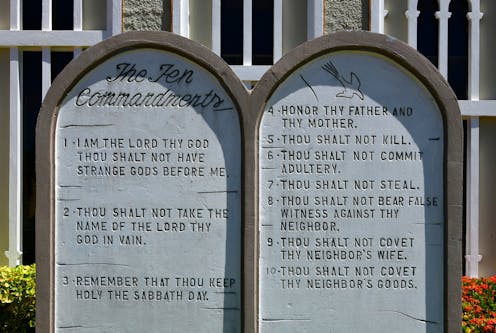
Louisiana, Arkansas and Texas have all passed laws — now on hold — to mandate the biblical laws’ display in classrooms. mtcurado/iStock via Getty Images Plus

As disputes rage on over religion’s place in public schools, the Ten Commandments have become a focal point. At least a dozen states have considered proposals that would require classrooms to post the biblical laws, and three passed laws mandating their display in 2024-2025: Louisiana, Arkansas and Texas.

All three laws have been at least partially blocked – most recently Texas’ law – after federal trial court rulings. But the ongoing cases seem aimed at overturning a 45-year-old U.S. Supreme Court precedent prohibiting the posting of the Ten Commandments in public schools.

As religion and education law researchers, we believe this situation is especially noteworthy because of its timing. The Supreme Court has been using a new standard to assess religious freedom cases – and its judgments on religion’s role in public education are perhaps the most religion-friendly they have ever been.

The Ten Commandments and the courts

Litigation over the Ten Commandments is not new. More than a dozen early cases generally upheld laws and policies mandating their recitation in schools. These enactments survived because the Supreme Court did not extend the First Amendment to the states until 1940.

However, the issue of posting the commandments in schools first surfaced in 1980. In a case called Stone v. Graham, the Supreme Court struck down a Kentucky statute requiring displays of the Ten Commandments in classrooms. The court reasoned that the law violated the First Amendment’s establishment clause: “Congress shall make no law respecting an establishment of religion.”

At the time, the court used three criteria, known as the “Lemon test,” to evaluate whether a government action violated the establishment clause. According to this test – which developed from a 1971 Supreme Court decision – governmental actions must have a secular legislative purpose, and their main effect may neither advance nor inhibit religion. In addition, they must avoid excessive entanglement with religion.

When Kentucky’s case came before the court, justices rejected its argument that the displays served a secular educational purpose. The majority did not think that a small notation on posters describing the Ten Commandments as the “fundamental legal code of Western Civilization and the Common Law of the United States” was sufficient, and wrote that the posters were “plainly religious in nature.”

Twenty-five years later, in 2005, disputes over public displays of the Ten Commandments reached the Supreme Court once more. This time, the displays were not in schools. But the first controversy arose, again, in Kentucky.

Officials in two counties had erected displays at courthouses that included the Ten Commandments, Magna Carta and the Declaration of Independence. The justices limited their order to one dispute, in McCreary County, invalidating the display for violating the establishment clause – largely because it lacked a secular legislative purpose.

On the same day, though, the Supreme Court reached the opposite result in another case, Van Orden v. Perry. The court permitted a display including the Ten Commandments to remain on the grounds of the Texas Capitol in Austin, where it was one of 17 monuments and 21 historical markers.

Two women walk by an ornately carved stone monument, with a building with a large rotunda in the background.
A Ten Commandments monument on the grounds of the Texas Capitol in Austin.
AP Photo/Eric Gay

Unlike the fairly new displays in Kentucky, the long-standing one in Texas, with the first monument erected in 1891, was built using private funds. The court left the Ten Commandments monument in place because it was a more passive display. The Capitol grounds are spread out over 22 acres, meaning the display was not as readily apparent as if it had been posted in classrooms for children to see every day.

‘Follow God’s law’

In 2024, a federal trial court in Louisiana blocked a state law mandating that the Ten Commandments be posted in public schools. Undeterred, Arkansas and Texas passed similar legislation the following year.

A large room, seen from above, with rows of desks encircling a central podium.
Arkansas representatives convene in the House chamber at the state Capitol in Little Rock on June 17, 2024.
AP Photo/Andrew DeMillo

Arkansas Act 573, signed into law in April 2025, obligated officials to display a “durable poster or framed copy” of the Ten Commandments in all state and local government buildings, including public school and college classrooms.

Republican Rep. Alyssa Brown, one of the Arkansas bill’s sponsors, described it as an effort to educate students on how the United States was founded and how the founders framed the Constitution.

“We’re not telling every student they have to believe in this God,” she told a legislative committee, “but we are upholding what those historical documents mean and that historical national motto.”

Texas, meanwhile, adopted a similar law in June 2025.

“It is incumbent on all of us to follow God’s law, and I think we would all be better off if we did,” the bill’s sponsor in the Texas House, Republican Rep. Candy Noble, said during debate.

Shift at SCOTUS

Supporters of these laws have claimed that they are constitutional because of an important shift at the Supreme Court. In 2022, the court adopted a new “history and tradition test” to assess religion in public places, including classrooms.

The “history and tradition test” originated in Kennedy v. Bremerton School District, a case about a public high school football coach who prayed on the field at the end of games. The Supreme Court ruled in 2022 that school officials could not prevent him from doing so, because it was personal religious observance protected by the First Amendment’s other religion clause: that the government shall not prohibit the “free exercise” of religion.

Kennedy charted a new course on religion’s place in public life. Acknowledging that it “long ago abandoned Lemon and its endorsement test offshoot,” the justices explained that “the Establishment Clause must be interpreted by ‘reference to historical practices and understandings.‘” It remains to be seen how this vague standard plays out in later cases.

Blocked – for now

Opponents quickly challenged Arkansas’ law. Seven families from various religious traditions filed suit, arguing that it was a direct violation of both the establishment and free exercise clauses of the First Amendment.

On Aug. 4, a federal trial court judge ruled in the families’ favor. The court found that the required display would have “forced [students] to engage with” the Ten Commandments, and “perhaps to venerate and obey” them. The trial court also applied the new historical practices and understandings test, holding that there was no evidence of a tradition to display the Ten Commandments in public schools permanently.

The court thus temporarily barred school boards from enforcing Act 573, pending any further appeals.

Two weeks later, a federal trial court in Texas temporarily blocked the law on the ground that it likely violated the First Amendment, though the judge’s order only applies to 11 districts.

Religion’s role

Controversy over the Ten Commandments continues to raise larger questions over the role of religion in public education.

Supporters of such bills seemingly fail to recognize that they cannot impose their religious values in the public sphere. At the same time, some opponents – including Jewish, Christian, Unitarian Universalist, Hindu and nonreligious plaintiffs – do not necessarily wish to remove religion entirely from educational institutions.

These critics want to uphold the principle, as the Supreme Court announced, that the government must demonstrate “neutrality between religion and religion, and between religion and nonreligion.” In other words, critics do not want one religion or religion generally to dominate.

Today’s challenge is to find the balance in public life. We believe the courts and legislatures must avoid sending the message that religion has no place in a free and open society – just as they must not permit one set of values to dominate, as the bills in Arkansas and Texas seem to aspire to do.

How the courts and legislatures balance the rights of the majority and minority in these disputes over the place of the Ten Commandments in public life may go a long way toward shaping the future of religious freedom in American public education.

The Conversation

The authors do not work for, consult, own shares in or receive funding from any company or organization that would benefit from this article, and have disclosed no relevant affiliations beyond their academic appointment.

ref. 3 states push to put the Ten Commandments back in school – banking on new guidance at the Supreme Court – https://theconversation.com/3-states-push-to-put-the-ten-commandments-back-in-school-banking-on-new-guidance-at-the-supreme-court-264423

Helping teens navigate online racism − study shows which parenting strategy works best

Source: The Conversation – USA – By Alvin Thomas, Associate Professor of Human Development and Family Studies, University of Wisconsin-Madison

Talking over teens’ experiences with online racism helps protect them without curbing their autonomy. NickyLloyd/E+ via Getty Images

Parents struggle to help teens deal with online racism. Online racism is different from in-person racism because the people behaving that way usually hide behind fake names, making it hard to stop them. Studies found that teens of color see more untargeted racism – memes, jokes, comments – and racism targeting others online than racism targeted directly at them. But vicarious racism hurts, too.

Teens are deeply immersed in the online world, and online spaces are quickly emerging as critical places where teens socialize and learn the rules and norms of their society. A survey in 2024 found that nearly half of U.S. teens ages 13 to 17 reported being online “almost constantly.” The rates were even higher among Black teens (53%) and Hispanic teens (58%).

Online spaces offer opportunities and risks. Black and Hispanic adolescents, in particular, face heightened exposure to online racial discrimination and harassment, which can seriously harm their emotional well-being.

Good parenting can help protect kids from racism’s harmful effects, but what works in person might not work online. Some parenting ideas such as talking openly about race and teaching kids to be proud of their culture seem helpful. However, teens who see or experience racism on social media are more likely to feel sad or use drugs and alcohol. This threat means parents need to understand the best ways to go beyond offline tactics to help their teens stay safe online.

We are researchers of human development and family studies. We studied Black and Hispanic teens’ experiences with online racial discrimination and found that the most common and effective strategy that parents used to help their teens was active guidance – talking about internet use – rather than monitoring their internet use. Black and Hispanic teens reported fewer symptoms of depression if their parents used this strategy more frequently.

What teens are saying

In our study, we surveyed 356 Black and Hispanic teens between the ages of 12 and 18 across the United States. We asked about their own online experiences as well as those they witnessed of people from their racial group being racially discriminated against. We also asked the teens about their mental health and the strategies parents used to interrupt or manage their internet use.

We found that parents more often employed active guidance to help their teens deal with online racial discrimination. Black and Hispanic teens reported fewer symptoms of depression if their parents used active guidance more frequently.

Parents who use this strategy navigate the appropriate use of social media together with their children. They may offer help when problems arise or initiate open conversations about internet use.

At the core of the success of active guidance might be its support of digital literacy and cultivation of responsible social media behaviors. This empowering parenting practice may also help teens develop autonomy and independence. Importantly, it might also make teens feel connected to and supported by their parents.

Another common strategy is monitoring, and it includes practices such as checking children’s browsing history, messages and social media contacts. Yet, we found that this strategy was not helpful when it came to teens’ mental health. Instead, adolescents in this study who received more parental monitoring suffered more anxiety symptoms. Even more concerning, parental monitoring appeared to exacerbate teens’ depression symptoms from online racial discrimination.

a Black woman stands behind a black teen girl seated at a table using a laptop
Close monitoring of teens’ internet use can have adverse effects.
VioletaStoimenova/E+ via Getty Images

How to help teens

Our work helps inform parents, educators and others involved in teen well-being about approaches they can take to support Black and Hispanic teens in navigating social media.

Parents can start conversations with their teens about healthy internet use. Parents can encourage teens to share positive and negative online experiences without judgment and reassure them that they can come to their parents if they run into trouble.

At the same time, parents can avoid excessive monitoring, especially if their child feels their autonomy is being invaded. If you believe monitoring is necessary, explain your reasoning clearly and work with your child on establishing a monitoring plan.

Educators can offer seminars on digital literacy for parents and children, equipping families with tools to navigate online spaces more safely. Mental health professionals can consider clients’ online experiences as part of their assessments and treatments, and they can also develop family-based interventions that promote adolescent well-being while counteracting online racism. Educators and professionals could collaborate to establish school and community support groups for teens.

Policymakers can recognize the particular online risks faced by adolescents of color and work to strengthen antidiscrimination policies and enhance protections for children online.

Researchers can investigate coping strategies and resources that empower Black and Hispanic teens and their parents, and evaluate their effectiveness in supporting adolescent well-being.

Next steps

We plan to explore how social media affects Black and Hispanic teens in three main ways. First, we want to see how online discrimination actually reaches and hurts minority teenagers. We want to understand how unfair treatment online, such as targeted harassment and biased algorithms, makes existing problems worse for these young people.

Second, it would be interesting to follow students over time to see how online experiences affect their grades, mental health, well-being and friendships in the long run.

And third, we want to know what policies at the school and national level might help make online spaces a safe and productive space for youth to gather and grow. This research is important because it will help parents learn specific ways to support their teens online while also showing how discrimination on social media affects minority youth differently. The goal is to give families real tools to help their teenagers stay safe and healthy in digital spaces.

The Conversation

Alvin Thomas is affiliated with
National Academies of Sciences, Engineering and Medicine (Forum for Children’s Well-Being), Scholars’ Action Network

Yeqing Li does not work for, consult, own shares in or receive funding from any company or organization that would benefit from this article, and has disclosed no relevant affiliations beyond their academic appointment.

ref. Helping teens navigate online racism − study shows which parenting strategy works best – https://theconversation.com/helping-teens-navigate-online-racism-study-shows-which-parenting-strategy-works-best-264021

Jury trials, a critical part of democracy, are disappearing

Source: The Conversation – USA – By Valerie P. Hans, Charles F. Rechlin Professor of Law, Cornell Law School, Cornell University

When jurors aren’t involved, rulings are less public − and private interests have more influence over outcomes. ftwitty/E+ via Getty Images

The right to trial by jury in criminal and civil cases is enshrined in the U.S. Constitution. It’s also a critically important way in which citizens can participate in democracy.

The French thinker Alexis de Tocqueville observed early American juries at work. He noted in “Democracy in America” in 1831 that trial by jury “places the real direction of society in the hands of the governed, or of a portion of the governed, instead of leaving it under the authority of the Government.”

Yet, in a change with profound implications, juries now decide only a tiny fraction of criminal and civil cases in the U.S. The decline over time has been dramatic, triggering warnings from scholars since at least the 1920s. In 1962, when federal judicial statistics became reliable enough to track the trend, juries decided about 6% of civil cases; today that share is less then 1%.

In a recent article we wrote with our colleague Robert Peck, we described how in the 1960s a federal judge would typically preside each year over 10 or more civil jury trials – legal disputes between private parties. In 2024, the average federal judge heard only one or two civil jury trials per year.

Criminal cases, in which a defendant is accused of a crime, show a similar pattern. The average federal judge presided over roughly two jury trials in 2024.

In state courts, jury trials have likewise declined over the past decade. In most states, juries now decide just 1% to 2% of criminal and civil cases that come before the courts.

We study how juries work in practice and the jury’s institutional role in the constitutional structure. Both of us have observed how legal and policy shifts in the United States have limited the role juries, and thus citizens, play as a vital democratic check on government power.

Trials make disputes public, and jury trials allow citizens to debate the issues and return verdicts that reflect their community. That visibility and participation make the legal system more accountable and legitimate.

Replacing juries

The U.S. Founding Fathers’ long list of grievances against King George III in the Declaration of Independence included “depriving us in many cases, of the benefits of Trial by Jury.” In drafting the U.S. Constitution, they embedded juries throughout the new federal framework, for both civil and criminal cases. State constitutions likewise entrenched robust jury rights.

Early Americans thus saw jury service not merely as a procedural safeguard against overreaching government authority, but as a way to distribute the power granted by the Constitution, ensuring that ordinary citizens played an important role.

Black-and-white photo of ten men sitting around a table and one standing at the head, addressing the group.
The 1957 film ‘12 Angry Men’ reflects democratic ideas about the role of juries and the importance of jury service.
Silver Screen Collection via Getty Images

But over time, state and private actors have chipped away at that authority.

In criminal cases, the main mechanism that has diminished juries’ influence has been private bargains between prosecutors and defendants. Guilty pleas now resolve more than 90% of criminal cases nationwide, according to a 2023 American Bar Association report.

In “Punishment without Trial: Why Plea Bargaining is a Bad Deal,” legal scholar Carissa Byrne Hessick describes how defendants are pressured to plead guilty by the all-too-real threat of longer sentences if they exercise their right to a jury trial rather than accepting an offer from prosecutors. This so-called “trial penalty” has produced what some scholars refer to as an innocence problem, in which even factually innocent people rationally plead guilty.

Efficiency has a role in clearing crowded court dockets. But when almost all cases end in pleas, the legal system loses transparency and public checks on police and prosecutors’ work.

The same trend emerges in civil cases. Mandatory arbitration in consumer and employment contracts, along with legislatively imposed limits on the size of damage awards, have displaced jury determinations of liability and awards.

Jury service dates back to medieval England. Throughout their history in the United States, juries have become more diverse and inclusive.

Procedural shifts since the 1980s also steer cases away from juries at the start. Federal and state rules of procedure are structured so that a civil jury trial is waived by default and must be affirmatively demanded.

The rise of what legal scholar Judith Resnik called “managerial judging,” where judges take a more activist role in supervising cases, channels cases toward private settlements where details are not divulged, even for those who prefer public resolution. Certain expanded pretrial procedures have also given judges the power to displace juries and terminate cases in light of their own “judicial experience and common sense,” as the U.S. Supreme Court put it in a 2008 opinion.

Although many of these changes were done in the name of efficiency, legal scholar Suja Thomas argues in her book “The Missing American Jury” that they also benefit political and economic elites by wresting away some of the power that formerly belonged to juries. The cumulative effect is fewer community judgments and more private, judicial and legislative control over outcomes.

How juries support democracy

In our view, restoring the jury to its original place within the constitutional structure would help revitalize the justice system’s democratic character.

As legal scholar Alexandra Lahav argues in her book “In Praise of Litigation,” trials make disputes public. Jurors hear evidence in open court, deliberate with other citizens about the issues and return verdicts that reflect community standards, in ways that backroom deals and private arbitration cannot.

Jury service also widens the circle of people invested in courts that work and that operate honestly. Although many people are initially dismayed when they are summoned to jury duty, most jurors become more favorable toward the courts once they serve.

These effects can reach beyond the courthouse. Some legal experts assert that restoring the jury could also spark broader democratic renewal at a time when civil society in the U.S. is under enormous strain.

This was evident in a set of studies by political scientist John Gastil and his colleagues that explored the connection between jury service and other forms of civic engagement. Examining jurors’ voting history before and after the period of jury service in seven states, they discovered that jury participation increased the likelihood of voting.

The presence of citizen participation in legal decision-making encourages civic engagement, fosters public trust and reanimates the participatory ideals on which the American republic was founded. John Adams put it well in 1774, when the British Parliament placed the judicial system of Massachusetts under royal control.

“Representative government and trial by jury are the heart and lungs of liberty,” Adams argued. “Without them we have no other fortification against being ridden like horses, fleeced like sheep, worked like cattle, and fed and clothed like swine and hounds.”

The Conversation

Valerie P. Hans is a member of the Board of Advisors of the Civil Justice Research Initiative. Her research on juries has been funded by the National Science Foundation, National Institute of Justice, State Justice Institute, and Cornell University.

Richard Lorren Jolly is a senior fellow with the Civil Justice Research Initiative.

ref. Jury trials, a critical part of democracy, are disappearing – https://theconversation.com/jury-trials-a-critical-part-of-democracy-are-disappearing-262471

An Arkansas group’s effort to build a white ethnostate forms part of a wider US movement inspired by white supremacy

Source: The Conversation – USA – By Paul J. Becker, Associate Professor of Sociology, University of Dayton

The group Return to the Land wants to build several whites-only sites in Arkansas and Appalachia. brazzo/iStock/Getty Images Plus

In October 2023, a group calling itself Return to the Land established its first “Whites only community” in the Ozark Mountains of Arkansas. They followed that with a second enclave nearby in 2025.

The group, which describes itself as a “private membership association” that helps groups form “European heritage communities,” plans to build four more sites, including another location in the Ozarks and two in Appalachia.

Return to the Land believes that by calling themselves a private membership association they can create a white ethnostate – a type of state in which residence is limited to white people – and legally exclude people based on race, religion and sexual orientation.

If you read the words of Eric Orwoll, the group’s co-founder, its mission is clear: “You want a white nation? Build a white town … it can be done. We’re doing it.”

As a scholar of right-wing extremism, I have examined several groups calling for a white homeland in America. The creation of a white ethnostate is often seen as an ultimate goal of such white nationalism, which argues that white people form part of a genetically and culturally superior race deserving of protection and preservation. While Return to the Land doesn’t identify as white nationalists, their statements often align with the ideology.

White ethnostates, big and small

One of the best-known plans for a white ethnostate is the Northwest Imperative, popularized by white nationalists during the 1970s and ’80s. The plan involved certain citizens taking 10% of the United States – the states of Washington, Oregon, Idaho, Wyoming and Montana – and excluding all nonwhite people from living there.

Proponents of the plan argued that these states were already majority white and contained large tracts of undeveloped land, making the territory ideal for white-only settlement. High-profile extremists of the time such as Richard Butler, Robert Mathews and David Lane supported the plan.

Still today, groups such as the Northwest Front, a white nationalist group founded in 2009 and located in the Pacific Northwest, continue to promote variations of this idea.

While the Pacific Northwest has a long history with right-wing extremist organizing, the proponents of whites-only communities have also targeted areas of the Northeast as possible locations for a white ethnostate.

In 2018, for example, Tom Kawczynski, town manager of Jackman, Maine, was fired when his views came to light, including views that have been characterized as “pro-white.”

A man dressed in a blue shirt and white baseball cap stands in front of a wood house.
White supremacist Craig Cobb stands in an empty lot he owns in Leith, N.D., on Aug. 26, 2013. Cobb tried unsuccessfully to turn the town into an all-white enclave.
AP Photo/Kevin Cederstrom

More recently, in 2023, the People’s Initiative of New England, a splinter group of the neo-Nazi organization National Socialist Club-131, introduced themselves on the online platform Substack. There, the group laid out its goal of establishing the six states of New England – Connecticut, Maine, Massachusetts, New Hampshire, Rhode Island and Vermont – as white-only.

The goal of gaining control of multiple states is unrealistic, of course, at least peacefully. Therefore, a popular alternative, along the lines of Return to the Land’s actions, is to establish smaller all-white communities.

In 2013, media outlets reported that neo-Nazi Craig Cobb was buying land in the small town of Leith, North Dakota, to build a white nationalist community. The town rallied to oppose this attempt.

Later that year, Cobb was charged with seven felonies related to confronting residents with a gun. He was sentenced to probation for four years and deeded the property back to the town in 2014.

And in 2021, leaked Telegram chats revealed that Christopher Pohlhaus, a former U.S. Marine and founder of the neo-Nazi group Blood Tribe, wanted to establish a whites-only community in Springfield, Maine. Pohlhaus was developing a military training facility as part of these efforts when media coverage led him to sell the property and move out of state.

The danger of a white ethnostate

These various attempts to develop a white ethnostate are not simply individual, isolated cases. They form part of a larger movement toward achieving white nationalism.

A major part of white nationalism today is focused on anti-immigrant hatred. That has spurred major acts of extreme violence such as the 2019 murders of 23 people in El Paso, Texas, the majority of whom were Hispanic.

A woman dressed in a black dress speaks outdoors in front of a podium.
U.S. Rep. Pramila Jayapal, D-Wash., with Rep. Brian Higgins, D-N.Y., speaks about a resolution condemning the great replacement theory in Washington, D.C., on June 8, 2022.
AP Photo/Manuel Balce Ceneta

The “great replacement theory,” a conspiracy theory popular among white nationalists, argues that various policies are leading to the destruction of the white race. This theory inspired the 2022 mass killing of 10 Black Americans in a supermarket in Buffalo, New York.

The shooter selected the supermarket because of its location in a predominantly Black neighborhood and left behind a white supremacy manifesto.

Communities across the U.S. have successfully resisted the establishment of white ethnostates.

The residents of Leith, North Dakota, did this by creating a website informing people about what was happening in their community. Public outcry also met Pohlhaus in Maine.

As for Return to the Land, Arkansas Attorney General Tim Griffin said in July 2025 that his office is reviewing the group’s actions and whether they violate the law.

“Racism has no place in a free society,” he said, “but from a legal perspective, we have not seen anything that would indicate any state or federal laws have been broken.”

The Conversation

Paul J. Becker does not work for, consult, own shares in or receive funding from any company or organization that would benefit from this article, and has disclosed no relevant affiliations beyond their academic appointment.

ref. An Arkansas group’s effort to build a white ethnostate forms part of a wider US movement inspired by white supremacy – https://theconversation.com/an-arkansas-groups-effort-to-build-a-white-ethnostate-forms-part-of-a-wider-us-movement-inspired-by-white-supremacy-261999

Federal judges are frustrated by defiance from the Trump administration and fuzziness from the Supreme Court

Source: The Conversation – USA – By John E. Jones III, President, Dickinson College

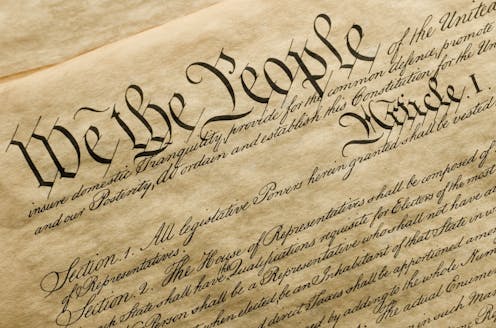
The U.S. Constitution’s first three articles are getting a lot of attention these days. giftlegacy, iStock/Getty Images Plus

In an emergency hearing before Judge Sparkle Sooknanan on Aug. 31, 2025, lawyers for a group of unaccompanied migrant children from Guatemala asked her to stop the Trump administration’s deportation of hundreds of them back to Guatemala. Concerned that the Trump administration might not follow her order to stop, the judge emphatically repeated her order that temporarily barred the deportations. And then she said something unusual:

“I am trying to do the best I can to fulfill my obligation as an Article 3 judge …

The Conversation’s senior politics editor, Naomi Schalit, talked with former federal judge John E. Jones III, now president of Dickinson College, about the meaning of the term “Article 3 judge,” why Sooknanan might have used it, and why recent discussions of politics and law in the news have included notably more references to “Article 1,” “Article 2” and “Article 3,” normally terms reserved for discussions of constitutional law.

What is the ‘Article 3’ that Judge Sooknanen referred to?

The meaning is not something that a lay person can necessarily intuit.

It’s quite clear that the course that the Trump administration has taken in the many lawsuits against its policies is to say, “We will obey the Supreme Court of the United States, but we’re going to pick and choose the lower court opinions that we deign to follow.” And of course, Judge Sooknanan’s comment invoking the phrase “Article 3” was meant to say that, the same as a Supreme Court justice, she is a fully vetted and confirmed jurist chosen by the president and confirmed by the Senate. That’s what’s known as an Article 3 judge, authorized under Article 3 of the Constitution.

So, inferentially, what she’s saying is, “I mean what I say, your administration can’t ignore it as you appear to have done with federal Judge James Boasberg, whose order you appear to have defied to return immigrants you deported. I’m going to do belt and suspenders and be very clear about this and not give you wiggle room because it is not an option for you to disobey the order of an Article 3 judge.”

A large, modern building covered in glass that sits on the waterfront.
The John Joseph Moakley United States Courthouse in Boston, which houses the U.S. Court of Appeals for the 1st Circuit and the U.S. District Court for the District of Massachusetts.
Douglas Sacha/Getty Images

OK, you’ve described Article 3. Tell us about articles 1 and 2.

Article 1 of the Constitution creates the United States Congress.

Article 2 creates the presidency and the executive branch. It’s somewhat light on details.

And Article 3, notably, creates the Supreme Court, but left it up to Congress to develop and create, as the article says, “such inferior courts.” I don’t love the word inferior; we tend to say “lower courts.”

Because of the caseload at the founding, the Supreme Court handled everything. The Supreme Court justices did what was called “riding the circuit.” They acted, in effect, as lower court federal judges, until business and commerce and the law burgeoned. Congress was then compelled to create district court judgeships and circuit court judgeships to relieve the Supreme Court of the burden of being everything to everybody in the federal courts.

That’s a helpful civics lesson.

I worked with Supreme Court Justice Sandra Day O’Connor, who had a real predilection for civics education. One of her comments always resonates for me, that civics is something that has to be learned and relearned because it’s not stamped on our DNA.

In a recent NBC story headlined ‘Some Republicans object to Trump’s move to cancel spending, warning of a shutdown,’ Sen. Kevin Cramer from North Dakota said he wants spending decided not by the president but by Congress in a bipartisan appropriations process. ‘I think that Congress has every right to defend its Article 1 role,’ he said.

Constitutionally and by custom, Congress has the power of the purse. The president can propose a budget, but it has to be passed by Congress. And it’s quite clear that, in this Trump administration, Congress is abdicating its Article 1 powers, being compliant and dormant in allowing the president to cancel otherwise-allocated funds repeatedly. If Congress would flex its muscles under Article 1, this wouldn’t be happening.

And back to Article 3 news: There’s been some charged back-and-forth between federal judges and two Supreme Court justices over criticism of lower court judges. And 10 federal judges criticized – anonymously – the Supreme Court’s handling of the Trump cases in the so-called ‘shadow docket’ because the rulings were so brief they couldn’t take direction from them. Is this all normal?

There’s rank frustration on the part of lower court judges. The Supreme Court is forcing lower court judges to decipher meaning from Supreme Court decisions as if they’re the Rosetta stone. They are so abbreviated and less than clear that it’s maddening. Having toiled in the lower courts, the worst situation you could have is a lack of guidance from higher courts, and then you have to guess. When you have to guess, you make mistakes, and that’s the frustration you see.

I think there is a duty on the U.S. Supreme Court to not rubber-stamp lower court judges, of course, but also to have some comity with lower court judges who are struggling through this plethora of cases that have arisen because of the Trump administration flooding the zone.

What does this conflict over courts and judges mean to the average person?

The integrity of our system of justice and the judicial system is based on the trust that people place in the jurists that populate that branch, the third branch of government. And as Alexander Hamilton said, the judiciary has neither the sword nor the purse, so it is the credibility of the judiciary that, at the end of the day, carries weight.

And when the president and highly ranked officials in his administration vilify lower court judges the way they have, and if the president says that he can pick and choose among lower court opinions, then I think you know, necessarily, his followers may think that they can do the same. That is not helpful to the rule of law and to our democracy. In fact, it tears at the fabric of our system.

The Conversation

John E. Jones III is affiliated with Keep Our Republic’s Article Three Coalition.

ref. Federal judges are frustrated by defiance from the Trump administration and fuzziness from the Supreme Court – https://theconversation.com/federal-judges-are-frustrated-by-defiance-from-the-trump-administration-and-fuzziness-from-the-supreme-court-264616

Al sistema inmune también le salen ‘arrugas’: ¿qué ocurre cuando nuestras defensas envejecen?

Source: The Conversation – (in Spanish) – By Daniel Miranda Prieto, Investigador Predoctoral de Inmunología, Universidad de Oviedo

El envejecimiento supone un gran desafío económico y sanitario para las sociedades occidentales. En España, por ejemplo, un tercio de la población será mayor de 65 años en 2055. Estas cifras apuntan a un incremento de casos de patologías asociadas a la edad como las enfermedades cardiovasculares o el cáncer, sin olvidar el aumento de las personas susceptibles a enfermedades infecciosas y autoinmunes.

Para prevenir o ralentizar esas consecuencias, resulta esencial comprender los cambios que experimenta nuestro cuerpo con el paso del tiempo. Es fácil entender qué ocurre en los huesos, el cerebro o las hormonas, pero ¿de qué manera afecta el envejecimiento a nuestras defensas?

Como veremos más adelante, nuevos hallazgos sobre la naturaleza de las enfermedades autoinmunes (cuando el sistema inmune ataca por error a nuestro propio cuerpo) nos están proporcionando pistas valiosas al respecto.

Los achaques del sistema inmunitario

El sistema inmunitario se puede dividir en dos ramas: la innata y la adaptativa. La primera responde rápidamente ante cualquier amenaza y avisa a la adaptativa. En ella participan, entre otros, dos tipos de glóbulos blancos: los monocitos y los neutrófilos. Estas células inician la inflamación, que nos ayuda a luchar contra las amenazas a las que nos enfrentamos. Sin embargo, las respuestas inflamatorias deben ser cortas y precisas, ya que si no el sistema inmunitario se agota manteniendo la inflamación y disminuye su capacidad para protegernos.


Leer más:
Enfermedades autoinmunes: ¿de verdad nuestro cuerpo se destruye a sí mismo?


La inmunidad adaptativa tarda varios días en desarrollarse porque actúa específicamente contra el microorganismo o célula cancerígena que nos amenaza. Está constituida por otro tipo de glóbulos blancos: los linfocitos T y B. Los primeros interaccionan con la inmunidad innata, eliminan células infectadas y activan a los segundos, que producen anticuerpos. Ambos generan células de memoria que recuerdan a los enemigos a los que nos hemos enfrentado para que, si vuelven a atacarnos, actuemos de forma más rápida y efectiva.

Lo que ocurre es que, con el paso del tiempo, nuestras células del sistema inmunitario también envejecen en un proceso llamado inmunosenescencia o immunoaging. En primer lugar, los neutrófilos y monocitos experimentan una reducción en su capacidad de moverse y de eliminar patógenos eficazmente. Y en lo que se refiere a la inmunidad adaptativa, la generación de nuevos linfocitos disminuye, lo que dificulta hacer frente a nuevos patógenos. Aunque se acumulan las células de memoria, su activación se ve limitada.

Esta nueva composición del sistema inmunitario favorece una inflamación constante y respuestas más débiles y desordenadas ante las amenazas. Nuestras defensas envejecidas se vuelven torpes y un poco más lentas. Todo ello contribuye a una mayor desprotección frente a infecciones, un mayor daño en nuestro organismo y, en consecuencia, al desarrollo de patologías asociadas a la edad.

Autoinmunidad: un envejecimiento prematuro

Pero, a veces, el envejecimiento del sistema inmune no se corresponde con la fecha de nacimiento. Es lo que ocurre con los pacientes de algunas enfermedades autoinmunes como la artritis o el lupus.

Recientemente, se ha descubierto un nuevo tipo de linfocitos B –las llamadas células B asociadas a edad o células ABC– cuyo número aumenta de manera natural al cumplir años. No obstante, su abundancia puede dispararse en otras situaciones.

Aunque inicialmente se pensaba que su función era únicamente producir anticuerpos frente a la presencia de patógenos, se ha comprobado que también juegan un papel central en la autoinmunidad. Es decir, estas células producen anticuerpos contra partes de nuestro propio organismo y activan a otros linfocitos, lo que contribuye a generar inflamación sostenida en el tiempo.

En esta situación, la inflamación agrava la enfermedad, afectando a diferentes tejidos; entre ellos, los vasos sanguíneos. Y es aquí donde encontramos una conexión entre las dolencias autoinmunes y ciertos achaques propios de la tercera edad.

Enfermedades cardiovasculares: el enemigo número uno

La primera causa de muerte en el mundo son las enfermedades cardiovasculares, y la edad es uno de los principales factores de riesgo. Pero además, muchos pacientes con enfermedades autoinmunes tienen una mayor probabilidad de padecer patologías del corazón respecto a la población sana de su misma edad y sexo.

Un evento clave que precede a muchas enfermedades cardiovasculares es la formación de placas de colesterol. Este proceso se ve favorecido por la inflamación, que daña las células de los vasos sanguíneos, favorece los depósitos de ese lípido e impide su eliminación por los macrófagos, aumentando así el tamaño de las placas. De ese modo, los cambios que alteran el funcionamiento de nuestras defensas pueden favorecer el crecimiento de las placas de colesterol y, con ello, el riesgo de enfermedades cardiovasculares.


Leer más:
Las mujeres tienen un sistema inmune más robusto, pero eso también puede pasarles factura


Ya que todos estos cambios se van acumulando, es fácil comprender que el riesgo se incrementará con el paso de los años, aunque no siempre es así. En ocasiones, nuestro sistema inmunitario sufre un envejecimiento prematuro, lo que explica que aparezcan dolencias asociadas a la edad en personas jóvenes, mucho antes de lo esperable. De hecho, se ha visto que las células ABC tienen un papel en las enfermedades cardiovasculares que no se puede explicar por la fecha de nacimiento de los individuos. En este caso, es más importante la edad de las defensas que la que figura en el DNI.

Este tipo de descubrimientos podrían abrir nuevos horizontes para ralentizar el envejecimiento del sistema inmunitario, mejorar la calidad de vida de los mayores y ayudar a encontrar soluciones a diversas patologías. La relación entre las dolencias autoinmunes y las enfermedades cardiovasculares podría ser una clave para aumentar nuestra longevidad. Quizá el sistema inmunitario albergue la fuente de la eterna juventud.

The Conversation

Daniel Miranda Prieto recibe fondos del Instituto de Salud Carlos III como investigador predoctoral con un Contrato Predoctoral de Formación en Investigación en Salud (PFIS) (ISCIII:FI22/00148, convocatoria en concurrencia competitiva).

Javier Rodríguez-Carrio recibe fondos en convocatorias competitivas como Investigador Principal del Instituto de Salud Carlos III para sus líneas de investigación en artritis reumatoide.

ref. Al sistema inmune también le salen ‘arrugas’: ¿qué ocurre cuando nuestras defensas envejecen? – https://theconversation.com/al-sistema-inmune-tambien-le-salen-arrugas-que-ocurre-cuando-nuestras-defensas-envejecen-261816