Although they weren’t the first in history to do so, they crafted a revolutionary style of social networking — not for the sake of fame, but as a means to break down systemic barriers and challenge the gender norms that dominated the English art world.
A historical framework for success
Historians David Doughan and Peter Gordon have documented the rise of women’s clubs in Britain, and feminist art historians Maria Quirk and Zoë Thomas have emphasized how these networks enabled women artists to professionalize and promote their work.
This article explores how the frameworks of authenticity, trust and mutual support established by these women laid a strong foundation for their professional success — a strategy that remains strikingly relevant today.
Exclusion and the art world
During the Victorian era, the art world operated like an exclusive “old boys’ club” that kept female talent at bay. Prestigious institutions like the Royal Academy largely excluded women, denying them entry for many years.
It wasn’t until 1860 that the first female member, Laura Herford, gained acceptance by submitting her application under the ambiguous name “L. Herford.” Once her true identity was revealed, the embarrassed academicians had no choice but to reconsider their policies.
Despite this landmark achievement, crucial training opportunities, such as life drawing, remained inaccessible to female students. Women were sidelined from major exhibitions organized by their male counterparts and excluded from influential social clubs where valuable connections and potential patronage were often made.
The few artworks they managed to sell were generally limited to themes like flowers or still lifes, which fetched much lower prices compared to the grand historical paintings that propelled their male colleagues to stardom.
Members of the press and art critics, predominantly male, dismissed their efforts as mere “amateur” pursuits — a label that served to undermine their professional credibility. In this stifling environment, the system was designed to ensure women artists were never given a fair chance.
The rise of women’s art clubs
Confronted with a system that marginalized them, determined women artists formed their own women’s clubs aimed at overcoming institutional barriers.
In late 19th and early 20th-century London, several prominent women’s art organizations emerged, including the Society of Women Artists, the Women’s Guild of Arts, the Women’s International Art Club, the Pioneer Club and the Lyceum Club.
Each of these groups was founded on a commitment to professional development, mutual support and the essential need for a united voice.
My emerging research explores the dynamics of women’s networks by closely analyzing letters, documents, exhibition catalogues and contemporary newspapers related to these organizations, and so far has identified three vital functions:
1. Fostering artistic development
At a time when formal networking opportunities were scarce for women, organizations like the Pioneer Club (1892) and the Lyceum Club (1903) emerged as crucial, supportive environments. These clubs began with the ambitious vision of creating a space for personal and artistic growth and also provided venues for connection and collaboration.
They also offered the rare chance for members to stay overnight, giving women the freedom to travel for their work without a chaperone.
Founded in 1907, the Women’s Guild of Arts became a dynamic hub where members could learn, showcase their art, receive constructive criticism and hone their skills. These networks fostered mentorship and empowered women artists to refine their craft within a supportive community.
2. Creating independent exhibition opportunities
In the face of exclusion from male-only exhibitions, women artists established their own platforms. They launched their own venues to bypass the gatekeepers of the art world and connect directly with their audiences.
A striking example is the Society of Women Artists, founded in 1855, which has hosted annual “women-only” exhibitions that not only sparked public conversation but also created a lasting space for visibility.
Women’s clubs emerged as the original networking hubs, similar to modern meetups. For those often labelled “amateurs,” joining organizations like the Society of Women Artists, Women’s International Art Club or Women’s Guild of Art offered a pathway to professional development and recognition.
These social networks fostered a supportive environment where members could share advice and provide emotional backing as they navigated careers filled with systemic challenges. This ecosystem highlighted how working together was crucial in driving individual successes.
Their enduring legacy
The story of early women’s art clubs highlights a crucial chapter in the history of creative entrepreneurship. These women both created their own professional opportunities and worked to change societal perceptions of women in the arts.
The strategies they used to navigate a restrictive environment still resonate today.
In a digital landscape filled with fleeting followers and superficial likes, their legacy prompts us to reflect on the fundamental need for human connection, and the extent to which true success still hinges on building a community rather than simply amassing a following.
Triveni Srikaran’s research is funded by McMaster University, the Ontario Graduate Scholarship, and the Paul Mellon Centre for Studies in British Art at Yale University.
Source: The Conversation – Canada – By Alexandra Flynn, Associate Professor, Peter A. Allard School of Law, University of British Columbia
Imagine if every time a hospital was built, it came with an expiry date. Twenty-five years later, it would be sold to the highest bidder and patients would be told to find care elsewhere.
This is unthinkable in health care, yet this is precisely how we treat affordable housing in Canada. Government programs provide funding for the construction of affordable housing, but without long-term commitments to ensure those same housing units remain affordable.
As the federal government puts the finishing touches on planning its new housing programs, we must ensure that affordable housing stays affordable for generations.
Governments pour billions into new housing programs, but the homes that are built aren’t required to remain affordable over the long term, meaning they often slip back into the speculative market after just a few decades.
Government programs subsidize the capital costs of housing construction, with rent affordability guaranteed for a limited period (usually 10-20 years). A recent study found that Canada lost 10 affordable housing units for every new one built over a decade.
The implication is that land is a tradeable asset as governments forget it’s also the foundation for homes, communities and stability. If governments are serious about solving the housing crisis, they must change that.
Canada has done it before. In the 1970s and ’80s, governments invested heavily in co-operative housing, creating tens of thousands of permanently affordable homes that continue to serve communities today. Those investments prove what’s possible when land and housing are treated as long-term public goods rather than short-term commodities.
Community land trusts (CLTs) are the next generation of that vision. They extend the principle of permanence to a wider range of housing types, neighbourhoods and community uses, ensuring that affordability and stability are not just won but protected for generations.
A new report by my UBC colleague, Kuni Kamizaki, entitled A Case for Community Land Trusts in Canada: Promising Community Practices and Public Policy Options, shows how CLTs can reframe the housing conversation in creating a long-term, affordable housing stock. It’s not simply about how many homes we build, but who controls the land beneath them.
This means that the land is removed from speculative markets, stewarded democratically and the housing is locked in as affordable, often for 99 years or more. Unlike situations where properties are sold and affordability disappears after 10 to 25 years, CLTs preserve it permanently.
This is not a distant dream. Kamizaki identifies roughly 45 CLTs operating or forming across Canada, more than 60 per cent of them launched in the last five years. They range from the Community Land Trust Foundation of BC to Toronto’s Parkdale Neighbourhood Land Trust, each committed to collective ownership, community governance and significant affordability.
Meeting local needs
CLTs flip the switch on the usual policy logic. Too often, publicly owned land is sold to private developers, representing — as Kamizaki puts it — “a long-term loss of public good and a lost opportunity to build non-market housing with deep affordability.”
Once sold, the land is gone, along with the chance to secure permanent affordability. CLTs keep that land in community hands, using it to meet local needs rather than feed speculative demand.
The benefits go beyond economics. CLTs can advance reconciliation and racial justice by challenging the real estate practices that have displaced racialized communities for decades. This treats land as a relationship rather than a commodity, an understanding rooted in stewardship, responsibility and belonging. In other words: turning housing into homes.
Vancouver’s Hogan’s Alley Society shows this potential in action. Once home to a thriving Black community, the neighbourhood was demolished in the 1970s in the name of urban renewal. The organization is now working to reclaim that land through a CLT, rebuilding a Black cultural hub grounded in long-term stewardship and land-back principles. This is housing justice intertwined with cultural restoration.
But CLTs cannot expand on good will alone. The National Housing Strategy Act recognizes housing as a human right, yet Canadian policies still treat it as a market commodity first and a necessity second.
Market-based “solutions” inevitably recreate the same conditions — speculation, gentrification, displacement — that produced the crisis.
Kamizaki’s report outlines several steps governments can take to make CLTs a central part of Canada’s housing strategy, including the following:
Prioritize permanent affordability over short-term targets;
Support CLTs led by racialized and marginalized communities as acts of reparation;
Transfer public land into community hands;
Create legal frameworks tailored to CLTs;
Provide stable funding and technical support through a national CLT hub.
These are structural commitments that address the core questions: Who owns land? Who decides how it’s used? Who benefits from public investment?
CLTs answer these questions by matching the permanence of the right to housing with the permanence of land stewardship. They take the volatility of the market out of the equation and put democratic decision-making into the hands of the people who live in and care for their communities.
Many studies reinforce the conclusion that CLTs deliver lasting affordability, protect against displacement, and strengthen community ties. The real question is whether Canada has the political will to embrace them.
The housing crisis is urgent, and so is the opportunity. We can keep funding market Band-aids that expire in a generation, or we can take land off the speculative market, put it in community hands and make houses into homes. For good.
Alexandra Flynn receives funding from SSHRC and CMHC.
Across Canada, massive fires and hazardous smoke have forced tens of thousands of people to evacuate from northern and remote communities to shelters and hotels in large cities. For many, their homes, businesses, trap lines and the ecosystems that nourish them are at risk of burning down, or already have.
Indigenous Peoples are disproportionately affected by the negative impacts of climate change and disasters like wildfires and floods. First Nations in Saskatchewan, Alberta and Manitoba are those most often evacuated, with many facing long-term displacement from their home communities.
Our ongoing research on Indigenous evacuation experiences includes interviews with more than 100 First Nations and Métis evacuees, firefighters, emergency managers and community organizers, as well as non-Indigenous frontline evacuee workers, and provincial and federal employees.
We worked with an Indigenous Circle of Aunties and youth leaders in designing safe evacuation spaces and processes. We explored solutions for improving evacuation outcomes for First Nations and Métis communities by understanding inequitable impacts, distinct experiences and by focusing on supporting families throughout the displacement.
Family separation, overlapping disasters
We’ve learned from our previous research that wildfire is not the only disaster facing evacuees. Inadequate response and unsafe conditions during the evacuation and while sheltering have left long-lasting scars on individuals, families and communities.
A lack of self-determination in disaster response results in externally imposed and culturally unsafe practices, further deepening pre-existing marginalization and trauma within Indigenous communities. Not everyone can pay for food, transportation or shelter during an evacuation.
Community and family structure, and cultural and socio-economic realities, produce key distinctions between Indigenous and non-Indigenous evacuation experiences. These include family separation, racism, recurring evacuations and extended periods of displacement.
Following the devastating 2021 fires, floods and landslides in British Columbia, Indigenous evacuees were more likely to experience longer displacement. Indigenous communities had a higher percentage of peoples with disability experiencing disasters, and experienced greater challenges related to displacement.
Family members were separated and dispersed to different shelter sites, while many had difficulty accessing health care, accommodation, housing and healthy food.
This is because evacuations are often phased. The first phase includes pregnant women, the elderly and people with medical conditions, while subsequent phases include those with lower risk. This phasing can mean elderly grandparents are evacuated first to shelters hundreds of kilometres away from grandchildren in their care.
Such phased evacuations can leave youth alone in unfamiliar places. Shelters fill up quickly, and that can mean there is no room left for family members evacuated in subsequent phases to join relatives evacuated in the first phase. So, grandchildren end up in different shelters in different cities from their grandparents.
In the initial evacuation, evacuees are often housed in congregate shelters, such as large arenas or community centres. The Aunties and the youth we spoke with explained how the noise and chaos of congregated sheltering creates a stressful environment for families that make it impossible to feel safe, and sometimes, to sleep.
For residential school survivors, being forced from their homes and communities, sleeping in rows of cots in arenas with bright institutional lights, and standing in line for food was a triggering and traumatic experience.
Once the immediate chaos of early evacuation days pass, people need to be moved from congregate shelters into more family-friendly accommodations, such as hotel rooms. Providing accommodations for multi-generational families and spaces for ceremony can significantly reduce suffering and improve well-being during evacuation.
Additional supports for Elders, people with chronic medical needs, single mothers, children and youth are required. The Aunties and youth’s recommendations are depicted in the medicine wheel, and organized as spaces, supports, safety and services. At the centre of all the recommendations is a focus on displaced families.
Evacuations do not impact everyone the same way, and Indigenous evacuees can be re-traumatized and treated poorly. Indigenous emergency managers must be given control when and where possible, and a focus on self-determination is essential for ensuring that this trauma can be addressed by creating Indigenous-led spaces for healing and resilience.
Ultimately, Indigenous-built and operated evacuation centres are needed to acknowledge sovereignty. Emergency management in general, and evacuations in particular, are precisely the opportunities where Indigenous leadership, agency and sovereignty are most needed for their communities, with the greatest return on investment.
Lily Yumagulova received funding from the Banting Postdoctoral Fellowship and TD Bank’s Ready Challenge Fund to research wildfire and flood evacuations at the University of Saskatchewan. She is the Program Director for Preparing Our Home.
Simon Lambert received funding from TD Bank’s Ready Challenge Fund to research wildfire and flood evacuations. He is affiliated with Te Tira Whakamātaki, a Māori environmental not-for-profit organisation based in Aotearoa New Zealand.
Warrick Baijius received funding from TD Bank’s Ready Challenge Fund to research wildfire and flood evacuations at the University of Saskatchewan. He is a project manager in the Indigenous Studies department and lecturer in Geography and Planning at the University of Saskatchewan.
Conservative activist Charlie Kirk was assassinated on Sept. 10, 2025, at the start of a college campus tour that centered on Kirk discussing politics – and education – with students.
A large part of Kirk’s political activism centered on what education should look like. Amy Lieberman, The Conversation’s education editor, spoke with Daniel Ruggles, a scholar of conservative youth activism, to better understand the beliefs about education that influenced Kirk and the connection he tried to make with young people.
What is most important to understand about Charlie Kirk’s views on education?
Charlie Kirk’s education philosophy was founded upon the idea of not being on the left. One of the problems with that approach is that it’s harder to explain your ideas and values in a positive way instead of just being “anti” left.
Conservatives, well before Kirk’s time, have been trying to reclaim education from liberals whom they view as valuing equity and belonging instead of timeless values of order and traditional values in society. This philosophy overall focuses on reclaiming education from liberals.
There is a lot of alignment with Kirk’s education philosophy and the Make America Great Again movement, but his approach predates Donald Trump’s rise. It is focused on returning to what conservatives call Western and “traditional” values. This means rolling back the clock to an idealized time when men and women had set gender roles in society and life was more harmonious and wholesome. At its best, this education philosophy can be valuable – teaching what society views as virtuous behavior, ethics and tradition – but it can also prioritize tradition and privilege over justice and equity.
This philosophy also has to do with not feeling a need to apologize for one’s identity. A big divide between liberals and conservatives is how they explain disadvantage. Conservatives like Kirk believe they should not have to apologize for their identities, and other people’s identities should not be a reason for special treatment.
This philosophy is not so much about making education more effective as much as it is about not being “woke.” De-woking the classroom is usually the overall goal. This involves ridding the classroom of what is known as grievance politics – meaning someone believes they have been marginalized because of their identity, race, gender or sexuality.
How far back can you trace this educational philosophy?
The 1960s had an explosion of progressive activism amid the New Left and antiwar movements as young adults realized that they could now demand certain rights. At the same time, there were a lot of young conservatives on campuses who felt fine with the way things were or who were concerned about some of the more radical ideas promoted by the New Left.
Universities became more inclusive in the 1960s, too. Generally, there were not any gender studies programs at American universities until the 1960s and 1970s, nor were there any race and ethnicity programs. Some conservatives pushed back on the emergence of these programs, saying that if there is an African American studies department, they want to see a conservative studies department, too.
After the 1960s, conservative education fights died down. Conservatives still wanted their voices heard on campus, but their merit-only based education philosophy seemed less relevant when left-wing campus protests had declined significantly.
How did Charlie Kirk capitalize on the conservative feelings regarding education?
Kirk founded his political nonprofit, Turning Point USA, in 2012. Kirk didn’t originally support Trump, but he became friends with Donald Trump Jr., and eventually became close with the president. Like Trump, Kirk saw academia as the source of a plethora of problems in American society. His goal was to make college campuses more friendly to conservative students by making conservative ideas like free market economics and traditional gender roles more popular.
There was a lot of foundation laying over time for Kirk’s conservative education philosophy. Hamas’ Oct. 7, 2023, attack in Israel, as well as the subsequent war in Gaza and Palestinian rights protests in the U.S., offered a moment for conservatives like Kirk to brand progressives at schools as this huge threat.
What was Kirk’s tour focused on accomplishing?
Kirk and others in the conservative youth movement want their followers to have a close relationship with them. This helps conservatives influence government and society, using college campuses to recruit young adults as conservative voters and activists, making the university appear less progressive in the process. Let’s say progressive college kids have Bernie Sanders or Che Guevara posters hanging in their dorm rooms. Conservatives like Kirk have built an all-encompassing, alternative world for young conservatives to become involved in, where they have proximity to political and thought leaders, including Kirk. Turning Point has used flashy slogans, signs and bumper stickers to help make conservatism cool on campus.
Kirk’s tour had just begun, but he had planned to make stops at universities in Colorado, Utah, Minnesota, Montana and other states. It was important that Kirk himself was in the room with young people, and that they could ask him questions and talk with him. He was considered approachable in a way that most politicians would not be.
Conservatives have used this strategy for a long time. My own research shows how college students would write to conservative leaders like Ronald Reagan and William F. Buckley in the 1960s and 1970s and these figures would write back. This kind of proximity between leaders and young supporters isn’t seen on the left. The goal is to cultivate a conservative movement community. Many of those conservative college students later worked for the government. Kirk’s tour was about continuing that kind of direct relationship between conservative leaders and young people.
Conservatives have a pipeline – meaning, let’s say you’re in high school and you discover conservative ideas by watching Charlie Kirk on YouTube. In college, you can go to Turning Point events and meet conservative leaders. After you graduate, you can even get a job with a conservative group through websites like ConservativeJobs.com. The point of the pipeline is to always give young conservatives a next step to becoming more involved in politics. While not everyone follows this pipeline, it helps the conservative movement cultivate new generations of talent. I think Kirk had a lot he was trying to accomplish, including building up a reservoir of young talent through Turning Point.
How is Turning Point distinct from the Republican Party and MAGA?
Turning Point isn’t the same as the Republican Party, but it’s helping to push the party further to the right. Turning Point has alienated other members of the conservative movement in certain ways. In 2018, the conservative youth group Young America’s Foundation accused Turning Point of taking over the conservative youth movement and crowding out other groups. Turning Point’s total revenue has grown considerably in the last few years, topping US$85 million in 2024 – that matters because money and attention help Turning Point push out other conservative voices.
Kirk and Trump agreed on a lot of policy issues. Kirk used Turning Point to define conservatism on his terms and to defend Trump. Education is the bulk of Turning Point’s work, a continuation of what has historically also been been the most important cultural issue on the right since the 1960s.
Daniel Ruggles does not work for, consult, own shares in or receive funding from any company or organization that would benefit from this article, and has disclosed no relevant affiliations beyond their academic appointment.
Malgré d’intenses pressions internes (venant des partisans du président déchu) et externes (exercées par Donald Trump), la justice brésilienne a condamné Jair Bolsonaro à 27 ans de prison pour son rôle dans la tentative de coup d’État du 8 janvier 2023. Bien d’autres pays où les processus électoraux, et même la démocratie au sens large, sont menacés, peuvent trouver dans l’inflexibilité des institutions judiciaires du Brésil une source d’inspiration.
Ce jugement marque un tournant dans l’histoire démocratique du pays et offre au monde des leçons importantes sur la manière de freiner les dérives autoritaires et de renforcer les institutions démocratiques.
Le 8 janvier 2023, illustration du rejet de l’alternance par l’extrême droite
L’épisode le plus emblématique des actions putschistes pour lesquelles Bolsonaro a été jugé a eu lieu le 8 janvier 2023, comme je l’ai analysé dans mon article précédent publié sur The Conversation France, au moment où ces événements se déroulaient.
Ce jour-là, des milliers de partisans de Bolsonaro, qui avait été vaincu par le candidat de gauche Lula au second tour de la présidentielle tenu le 30 octobre précédent et dont le mandat avait pris fin le 1er janvier, ont marché vers la Place des Trois-Pouvoirs, à Brasilia. Ils ont envahi et vandalisé le bâtiment du Congrès national, le siège de la Cour suprême et le palais présidentiel. À ce moment-là, il existait des indices, mais pas encore de preuves concrètes, de l’implication directe de Bolsonaro.
Dans mon précédent article, j’ai montré comment les attaques contre les institutions, menées par l’extrême droite, aggravaient les divisions au sein de la société brésilienne. Elles représentaient un défi non seulement pour le nouveau gouvernement de Lula, mais surtout pour le pouvoir judiciaire. Une question demeurait en suspens : les institutions seraient-elles capables de garantir que la volonté exprimée dans les urnes prévaudrait et que la démocratie tiendrait bon ?
Tentative de renversement de l’ordre démocratique
Après près un peu plus de deux ans d’enquête, le procès s’est donc achevé cette semaine. Dans son vote rendu ce mardi 9 septembre, le juge instructeur de l’affaire au sein de la Cour suprême, Alexandre de Moraes, a estimé que les attaques survenues peu après l’investiture de Lula ne constituaient qu’un élément d’un plan plus vaste, bien coordonné et dirigé par Bolsonaro et son entourage politique d’extrême droite (plusieurs de ses proches ont également été condamnés à des peines de prison ferme).
Les enquêtes menées par la police fédérale et le parquet général du Brésil ont révélé les preuves d’une implication directe de l’ex-président et de ses alliés dans une tentative de renversement de l’ordre démocratique, qui a culminé avec le 8 janvier, mais dont certains des faits les plus graves se seraient produits auparavant.
La conclusion du procès, qui survient dans un contexte de fortes tensions internes et internationales, met en lumière la résilience des institutions démocratiques brésiliennes. Face à la possibilité réelle de condamnation de son père, le député fédéral Eduardo Bolsonaro est parti en mars 2025 aux États-Unis pour solliciter un soutien politique de l’administration Trump. Pendant ce séjour (qui continue aujourd’hui encore), il a rencontré des membres du gouvernement états-unien,dénoncé la « persécution politique » visant son père au Brésil (termes qu’il a répétés une fois la condamnation de son père prononcée) et appelé à des sanctions contre le juge Alexandre de Moraes.
Ces démarches ont conduit à des mesures concrètes : Washington a ordonné des droits de douane de 50 % sur les produits brésiliens et des sanctions contre Moraes dans le cadre du Global Magnitsky Act (une loi qui « autorise le président à imposer des sanctions économiques et à refuser l’entrée aux États-Unis aux ressortissants étrangers identifiés comme se livrant à des violations des droits de l’homme ou à des actes de corruption »).
La condamnation de Bolsonaro pourrait constituer un précédent historique dans la responsabilisation des dirigeants élus au Brésil et ailleurs dans le monde lorsqu’ils attentent à l’ordre démocratique. Pour la France, qui connaît elle aussi une montée de mouvements nourris par la désinformation numérique, le cas brésilien fournit des éléments de réflexion utiles sur la manière de protéger la légitimité électorale et l’indépendance des institutions. Le bon fonctionnement démocratique repose sur un équilibre institutionnel. C’est sans doute la raison pour laquelle ces institutions deviennent des cibles privilégiées des populistes autoritaires.
La fermeté de la Cour suprême brésilienne dans la conduite du procès, malgré les pressions internes et externes, illustre l’importance pour un État de disposer d’institutions autonomes, capables de résister aux menaces diplomatiques ou aux pressions autoritaires.
Une autre leçon essentielle est que les systèmes démocratiques peuvent répondre à des crises institutionnelles sans rompre avec l’État de droit. Le cas brésilien montre qu’il est possible de juger des personnalités politiques puissantes sur la base de preuves solides, en respectant les procédures et la transparence. Cela contraste avec d’autres démocraties fragilisées, où les institutions reculent face à la peur de l’instabilité, comme on l’a vu aux États-Unis ou dans d’autres pays confrontés à la montée du populisme autoritaire. Le Brésil démontre que la stabilité démocratique repose sur la responsabilisation de ses dirigeants, aussi populaires soient-ils, lorsqu’ils s’attaquent à l’ordre républicain.
Fait intéressant : le soutien de Trump à Bolsonaro semble avoir eu l’effet inverse de celui escompté. Les sondages indiquent un renforcement politique de Lula, donné favori pour la prochaine élection présidentielle, qui aura lieu en 2026.
De plus, plus de la moitié des Brésiliens soutiennent l’emprisonnement de Bolsonaro, et une majorité estiment qu’Alexandre de Moraes agit dans le respect de la Constitution. Sur le plan économique, les efforts du gouvernement Lula pour diversifier les marchés d’exportation et réduire la dépendance aux États-Unis commencent à porter leurs fruits, réduisant l’impact des nouvelles taxes promulguées par Washington. Le Mexique, notamment, s’impose comme un partenaire stratégique, capable non seulement d’absorber une part croissante des exportations brésiliennes, mais aussi de servir d’intermédiaire grâce à ses habilitations pour vendre vers des marchés exigeants comme le Japon et la Corée du Sud.
La Une d’un grand journal brésilien, proclamant à l’issue du procès « La démocratie avant tout », est devenue virale sur les réseaux. Le titre détourne le slogan bolsonariste « Le Brésil avant tout, Dieu au-dessus de tous », étroitement lié à la mouvance évangélique. Dans la foulée de la condamnation, des citoyens progressistes ont transformé les rues de Rio de Janeiro en un carnaval hors saison, symbole de célébration et de résistance démocratique.
Les implications du procès de Jair Bolsonaro dépassent donc le seul Brésil : lorsque les institutions démocratiques sont solides et bien conçues, elles peuvent faire barrage aux avancées autoritaires. Avec son passé autoritaire récent (le pays a été gouverné par une junte de 1964 à 1985) et son présent marqué par une résistance institutionnelle, le Brésil montre qu’il est possible de faire face aux pressions et de préserver la démocratie quand elle est attaquée.
Jorge Jacob ne travaille pas, ne conseille pas, ne possède pas de parts, ne reçoit pas de fonds d’une organisation qui pourrait tirer profit de cet article, et n’a déclaré aucune autre affiliation que son organisme de recherche.
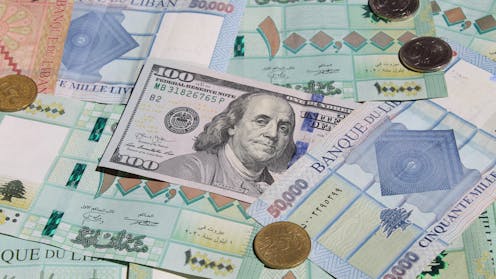
À partir du 1<sup>er</sup> août 1966, plusieurs banques libanaises et étrangères retirent de leurs comptes à l’Intra-Bank environ 18 millions de livres libanaises. Les petits épargnants suivent : 52 millions de livres sont retirés entre le 3 et le 14 octobre 1966.Mohaymen Abk/Shutterstock
En 1966, deux événements se produisent simultanément : un choc de crédit aux États-Unis et une crise bancaire au Liban, avec pour conséquence la faillite de la banque Intra (ou Intra Bank). L’origine ? L’intégration de la « Suisse du Moyen-Orient » à l’économie mondiale. Mais comment ces évènements sont-ils liés ? Qui en est à l’origine ? Qui en a le plus pâti ?
Connaissez-vous l’effet papillon, cette théorie selon laquelle le battement d’ailes d’un papillon au Brésil peut provoquer une tornade au Texas ? En économie, s’il n’existe pas en tant que tel, une crise de crédit aux États-Unis peut tout à fait être une des causes d’une faillite bancaire au Liban.
C’est ce qui s’est passé en 1966. La plupart des analyses attribuent la crise libanaise à la faillite de la banque Intra cet automne-là, ou à un échec systémique, motivé par la cupidité, les luttes de pouvoir et les intérêts acquis d’une élite, sans approfondir davantage.
Notre étude montre pourtant que cette faillite découle largement du choc récessif états-unien, qui a entraîné une hausse des taux d’intérêt internationaux. Elle remet en cause l’idée que la seule faillite de la banque Intra ait provoqué la crise de liquidité. C’est même l’inverse qui s’est produit : la crise, déclenchée par le choc états-unien, a mené à la faillite d’Intra et d’autres banques, en poussant les taux d’intérêt internationaux à la hausse.
Crise de crédit bancaire aux États-Unis
En 1966, les États-Unis connaissent une baisse inattendue de l’offre de crédit bancaire, provoquée par la décision surprise de la Réserve fédérale, la banque centrale, de limiter la création monétaire et limiter l’offre de crédits. Ce choc de crédit états-unien fut l’un des plus marquants de l’après-guerre. En novembre 1966, les taux d’intérêt états-uniens atteignent un pic de 5,75 %.
En réponse, les entreprises se tournent vers l’émission d’effets de commerce. Ces titres de créance à court terme sont émis par les entreprises pour se financer directement auprès des investisseurs, sans passer par les banques. Ils sont remboursés à l’échéance au montant de leur valeur nominale (fixée dès l’émission).
Le taux de croissance annuel des effets de commerce passe de 7,8 % en 1965 à 46,6 % en 1966. Cette augmentation s’explique par la contraction monétaire, une baisse générale des cours boursiers, et, dans une moindre mesure, par le financement de la guerre du Vietnam.
Âge d’or du Liban
Le choc monétaire de 1966 n’a pas seulement touché l’économie des États-Unis, mais s’est aussi transmis à celle du Liban, à la fois petite, ouverte et fonctionnant sous un régime de change flottant en vigueur depuis 1948. Concrètement, alors que la majorité des pays adoptent un régime de change fixe dans les années 1950-1960, les autorités monétaires libanaises interviennent seulement de temps en temps sur le marché des changes. Le taux de change est largement déterminé par le marché réservé aux banques, qui s’échangent entre elles des actifs de gré à gré.
Des années 1950 aux années 1970, le Liban est présenté comme la « Suisse du Moyen-Orient », du fait de la présence de nombreuses banques. Wikimediacommons
Le Liban connaît une forte croissance dans les années 1950, autour de 8 %. Malgré les restrictions dans les autres pays, les capitaux circulent librement au Liban. Les pétrodollars s’y installent, attirant étudiants, professionnels et entreprises. Beyrouth devient un hub financier, intellectuel et touristique. La loi sur le secret bancaire de 1956 renforce encore sa place financière. Les années 1960 prolongent cette dynamique : création de la Banque centrale en 1964, développement du secteur bancaire, afflux de capitaux et d’investissements.
C’est dans ce contexte porteur que survient le choc de mai 1966.
De 11 banques en 1950 à 79 en 1964
En raison de l’importance de l’économie des États-Unis, la hausse des taux d’intérêt du pays de l’Oncle Sam fait grimper les taux mondiaux, y compris au Liban. Les taux libanais commencent à monter dès juin 1966, un mois après le choc de mai, en passant de 5,62 % à 5,82 % en juin et à 6,07 % en juillet. La hausse des taux d’intérêt au Liban est d’abord limitée, en raison de l’excès de liquidités dans les banques. Toutefois, cet excédent devait rapidement s’amenuiser sous l’effet de la fuite des capitaux.
Dans les années 1960, le système financier libanais se caractérise par une forte dispersion des dépôts bancaires. Entre 1950 et 1964, le nombre de banques passe de 11 à 79, limitant les dépôts par institution.
Seule la banque Intra fait exception : en 1965, elle détient à elle seule un quart des dépôts au Liban. Entre 1955 et 1965, ses dépôts croissent à plus de 40 % par an, contre 26 % pour les autres banques. Intra-Bank atteint 756 millions de livres libanaises de dépôts en 1965. Ne pouvant investir localement à hauteur de ses ressources, elle se tourne vers les marchés étrangers et devint la banque privilégiée des investisseurs du Proche-Orient, notamment du Golfe.
« Hot money » et fuite des capitaux
À l’époque, les flux de capitaux sont sensibles aux taux d’intérêt (« hot money »). Ces flux d’un pays à un autre permettent de réaliser un profit à court terme sur les différences de taux d’intérêt et/ou les variations anticipées des taux de change.
De facto, la hausse des taux d’intérêt aux États-Unis, puis au Royaume-Uni provoque une fuite des capitaux du Liban vers ces deux marchés plus rentables, déclenchant la crise de liquidité de 1966. La Banque centrale libanaise, sans outils adéquats – peu de réserves, pas d’opérations d’open market (achats ou ventes de titres publics par la banque centrale sur le marché afin de réguler la liquidité et influencer les taux d’intérêt) –, ne peut relever les taux d’intérêt locaux pour endiguer la fuite.
La situation se dégrade en octobre 1966 quand la banque Intra suspend ses paiements. Les agents économiques, comparant les taux étrangers à ceux du Liban, transfèrent leurs fonds vers l’étranger. Cela accentue la crise, affaiblit la liquidité locale et exerce des pressions sur la livre libanaise. Entre 1966 et 1970, le nombre de banques baisse de 94 à 74.
Plus de retraits que de dépôts
À partir du 1er août 1966, les retraits quotidiens à la banque Intra dépassent les dépôts. Cette tendance est accentuée quelques semaines plus tard par des rumeurs de crise. Plusieurs banques locales et étrangères retirent environ 18 millions de livres libanaises. Les petits épargnants suivent, retirant 52 millions entre le 3 et le 14 octobre 1966.
Parallèlement, dans un contexte de hausse des taux d’intérêt à l’étranger, les clients des banques libanaises commencent à transférer une partie de leurs avoirs vers des établissements à l’étranger. Étant la principale banque du pays et la cible persistante de rumeurs, Intra-Bank subit des retraits supérieurs à ceux enregistrés dans les autres banques.
Le 6 octobre 1966, la direction d’Intra sollicite l’aide de la Banque centrale du Liban, qui lui accorde un prêt d’un an de 15 millions de livres à un taux de 7 %, contre garanties réelles.
File d’attente devant la banque Intra, en 1966. Fourni par l’auteur
Grâce à ce soutien, la banque Intra reprend les paiements à ses déposants, mais les fonds sont rapidement épuisés. La banque demande une rallonge de 8 millions, refusée par la Banque du Liban. Ce refus s’explique avant tout par le fait que celle-ci était encore trop jeune et dépourvue de moyens suffisants pour jouer pleinement son rôle de prêteur en dernier ressort. L’absence de consensus politique autour du patron de l’Intra-Bank Youssef Beidas, d’origine palestinienne et sans vrai ancrage communautaire au Liban, combinée à l’opposition des élites financières, qui cherchaient à redistribuer ses actifs vers d’autres banques, ainsi que le poids systémique d’Intra, qui aurait impliqué de mobiliser des ressources énormes, ont scellé la faillite.
Entre-temps, la direction de la banque tente de rapatrier des dépôts de New York vers Beyrouth. Avec la poursuite de la hausse des taux d’intérêt aux États-Unis, les grands déposants institutionnels états-uniens ont déjà retiré l’essentiel de leurs avoirs pour les placer ailleurs.
Intra-Bank se retrouve en grande difficulté et annonce la cessation de ses paiements, le samedi 15 octobre 1966. La crise touche d’autres banques, les déposants accélérant leurs retraits après l’annonce d’Intra.
Réaction de la livre libanaise par rapport au dollar
À la suite du choc monétaire états-unien restrictif de 1966 et comme la Banque centrale du Liban ne dispose ni des moyens ni de la volonté d’intervenir sur le marché des changes pour soutenir la monnaie nationale, la livre libanaise se déprécie. Le taux de change passe de 3,11 £ pour un dollar fin avril 1966 à 3,20 £ en septembre. En un an, le taux moyen est passé de 3,07 £ en 1965 à 3,13 £ en 1966.
Taux de change de la livre libanaise de 1964 à 1968. Fourni par l’auteur
En somme, le choc de 1966 a perturbé la croissance pendant plusieurs mois. Il a déclenché une crise de liquidité, contribué à la faillite de la plus grande banque du pays (et à la panique bancaire qui s’en est suivie), et modifié la structure des échanges commerciaux. Il a également entraîné une hausse des taux d’intérêt, une sortie de capitaux et une forte volatilité du taux de change.
Mais le Liban trouve une issue à la crise. Les dépôts reviennent en passant de 2,6 millions en 1967 à 2,9 millions en 1968. La balance commerciale s’améliore en passant de -1,7 million en 1967 à 176,3 millions de livres libanaises en 1968. Le revenu national se rétablit en enregistrant une croissance notable de 12 % en 1968. Les crédits au secteur privé reprennent en passant de 2,3 millions en 1967 à 2,4 millions en 1968. La crise est passée.
Charbel Cordahi ne travaille pas, ne conseille pas, ne possède pas de parts, ne reçoit pas de fonds d’une organisation qui pourrait tirer profit de cet article, et n’a déclaré aucune autre affiliation que son organisme de recherche.
Food insecurity is associated with worse academic outcomes.PxHere
The spectre of food insecurity unfortunately haunts many households in South Africa.
Food security is commonly understood as having sufficient and nutritious food to live a healthy, active life. Access to sufficient food is a basic human right and is enshrined in the South African constitution.
Estimates from Statistics South Africa show that the proportion of households experiencing some form of food insecurity rose between 2019 and 2023 from 15.8% to 19.7%. Many households still seem to be feeling the pressure of slow economic growth and consumer price inflation. And a third of South Africans are unemployed.
The South African higher education sector has made great strides in making tertiary education more accessible. While the National Student Financial Aid Scheme (NSFAS) was established to broaden access to post-school education, by providing for fees, accommodation and a stipend, levels of food insecurity among university students remain high.
It’s hard to say just how high. Sometimes students seek assistance discreetly due to stigma. What we do know is that while the 2025 NSFAS research report talks about a 5% increase in funding, Statistics South Africa figures show inflation rates higher than that for basic food items.
Education researchers are interested in this because food insecurity is associated with worse academic outcomes among university students. It’s linked to lower class attendance and lower academic performance, among other indicators, which then affects their psychological wellbeing.
However, most of this research is based on traditional (full-time) university students. Students in open, distance and e-learning institutions are under-researched when it comes to food insecurity. Distance learning students form a third of all tertiary education students enrolled in South African universities: 371,592 students, according to 2023 audited figures.
My research interests are in how students learn, cope and succeed. My aim is to help university management and academics understand the issues that students face. One of these is food insecurity.
In a study conducted on 7,494 students from a South African distance learning institution, I found that only 27.9% of those surveyed were food secure and 71.7% (5,380 individuals) were moderately to severely food insecure.
The finding is worrying when considered along with the negative impact that food insecurity has on academic outcomes, physical and psychological well-being.
Food insecurity among this group of students cannot be ignored. I recommend that a system of food grants should be considered.
Which students were the most food insecure
The sample of students was drawn from a South African public open, distance and e-learning institution with approximately 370,000 students. These students were from all walks of life. The majority of respondents (5,670) were female; 23% were male (1,705). The institution as a whole has a 70:30 female-to-male ratio.
About 61% (4,573) of respondents were the first in their immediate family to attend tertiary education. About 12% (896) were members of the LGBTI+ community. It was important to consider this group as some research shows they are disproportionately affected by food insecurity.
Only one in five of respondents were working full time and 14% were studying full time. The biggest group (26%) were unemployed and looking for work; 21% were not looking for work. The remainder were engaged in various forms of employment and study.
The majority (43%) indicated that they were dependent on some form of government grant as their main income, followed by 26% who relied on salaries or wages, 10% who were reliant on their parents and 12% who had no form of income. In terms of household income, 40% earned up to R1,200 (about US$68) per month.
When this data was broken down further, stark patterns of food access emerged.
those who identified as Black Africans reported the highest levels of food insecurity (42%)
43.8% of first generation students reported severe food insecurity (compared with 27% of other students who were not first generation students)
members of the LGBTQ+ community were also found to be more at risk of severe food insecurity than the total response population.
Impact of food insecurity on students
Food insecurity has a negative impact on academic outcomes and on physical and psychological wellbeing.
Students may repurpose funds intended for study purposes to buy food, leaving them without the necessary materials to participate effectively in their education.
Psychological impacts of food insecurity can include increased rates of depression and anxiety associated with concerns around obtaining sufficient food.
Students may consume poor, more affordable food, higher in energy density but lower in nutrients.
Food pantries and grants
Open, distance and e-learning institutions face a challenge when it comes to addressing food insecurity. Students are geographically dispersed and may be enrolled in large numbers. The food pantry programmes found in contact institutions are simply not viable as the infrastructure required is large and costly.
Food pantry programmes are one of the most widely used interventions to combat food insecurity at universities globally. Common barriers to use are the stigma associated with using them, high rate of volunteer staff turnover, location of the programmes and complexity of eligibility criteria, among others.
Given the findings, I suggest that food grants for distance education students are necessary. Public-private partnerships could be explored, too, to address the issue of distance education student hunger.
Angelo Fynn does not work for, consult, own shares in or receive funding from any company or organisation that would benefit from this article, and has disclosed no relevant affiliations beyond their academic appointment.
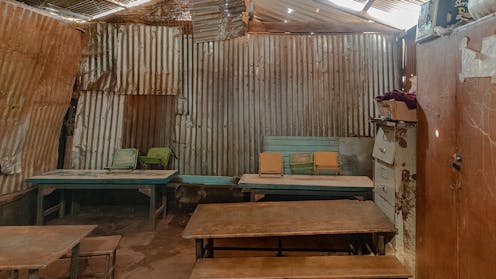
School room in Kibagare, Nairobi, Kenya.Ninara, via Flickr, CC BY
Access to school is considered to be better for children who live in urban areas than in rural areas in countries such as Kenya. But research shows that this access doesn’t translate into children doing better at school if the setting is an informal settlement. Despite being able to attend school, some children don’t fully enjoy their right to education, because the urban advantage seems to have dwindled in these contexts in recent years.
Some years ago, our team of researchers at the African Population & Health Research Center in Kenya examined the enrolment patterns in slums and non-slum communities in Nairobi. Our study found that pupils living in non-slum areas had higher rates of primary school completion (92%) than their counterparts in urban informal settlements (76%). And the pupils outside slums were more likely (76%) to go on to secondary school than the pupils in slums were (46%).
The programme consisted of homework support, mentoring in life skills (including relationship skills and responsible decision making), parental counselling and transition subsidies. In phase 2, we added a leadership component and boys into the programme. In phase 3 we added motivational talks, service learning and digital literacy.
Parents were encouraged to support their children and peers to learn from each other. Children were encouraged to think about careers.
ALOT Change aimed to contribute to a better future for boys and girls aged 12-19 in informal settlements. We implemented this intervention in two Nairobi settlements, Korogocho and Viwandani. Korogocho is reported to be more stable but to have worse health and socio-economic outcomes, while Viwandani is more transient, with a youthful, migrant population.
Once the intervention had run its course, we wanted to know whether it had made a positive impact on pupils’ literacy and numeracy scores. We analysed data from 577 pupils at baseline and 392 at endline during phase 3.
Our endline report showed modest improvements in literacy and numeracy, better self-confidence and aspirations, stronger parental involvement, and reduced delinquent behaviour among participants.
We found that the programme was particularly useful for follow-up cohorts who had been engaged in earlier phases.
Generally, the intervention had more impact among boys than girls, for pupils aged 12-13, and among pupils from least poor households. Numeracy improved more in Korogocho than in Viwandani.
These findings point to some adjustments that could be made to future interventions.
Evaluation of impact on numeracy and literacy achievement
Our evaluation compared two cohorts of boys and girls. The “follow-up cohort” were followed from primary school (2016-2018) into secondary schools. The “new cohort” started the programme in 2019 and were followed for three years.
The research questions were:
Did the intervention improve literacy and numeracy scores?
How did those scores vary?
Were there any differences between boys and girls?
In our analysis we chose to look at five groups, defined by their performance in literacy and numeracy tests. We explored the relationships between their performance and the students’ characteristics (age and gender) and household factors (like household head age, availability of reading materials at home, and household size).
the intervention had a strong impact on numeracy among higher achievers
reading at home had a notable benefit for lower and middle achievers
girls tended to perform better than boys in literacy
boys scored better in numeracy than girls
the effects of the intervention on literacy and numeracy were sustained one year into secondary school
numeracy and literacy scores reduced in older age groups, as in other studies.
The follow-up cohort had been exposed to the intervention for three years (in phase 2) by the time we started assessing their performance. They performed better than the new cohort.
Gender differences in performance were evident at both lower and higher achievement levels. This finding mirrors those of other studies that speak to the need to encourage boys to enjoy reading to improve their reading abilities. But some studies explain this lag in reading by boys to the likelihood that boys are more inclined towards science, technology, engineering, and mathematics, which takes them away from the focus of reading competency.
Recommendations
The study points to the need to pay more attention to boys during the literacy sessions and to girls in the numeracy sessions during the implementation of the intervention programmes.
The reduction in scores at older ages suggests a need to adjust the programme to suit younger and older adolescents.
Programmes may need to further adapt interventions for older adolescents. Continuing with the same components of the intervention may not be feasible for older adolescents.
Benta A. Abuya works for APHRC. She does not receive funding from any organisation
Weeks of protests in July 2025 in Angola left 30 dead and hundreds imprisoned. Sparked by a hike in fuel prices, the outcome of a governmental effort to reduce subsidies, the unrest quickly spread across the country.
This escalation, along with the government’s uncompromising reaction, is symptomatic of two things: the country’s dire economic conditions, and mounting discontent over disappointed expectations of change in President João Lourenço’s Angola.
After 38 years of rule by José Eduardo dos Santos, Lourenço’s 2017 inauguration briefly had “many Angolans dreaming again”. Those dreams, however, have since been shattered.
One repeatedly broken promise recently slipped by almost unnoticed when, two weeks after the protests, Angola’s parliament quietly wrapped up the legislative year. While Angola’s MPs have begun to pave the way for the 2027 national elections through adjustments to electoral statutes, there was nothing on the agenda about the country’s long-promised local elections.
Over the past 15 years, Angolans have grown accustomed to delays and postponements of what was once hailed as a building block for a more democratic country. Back in 2010, the ruling MPLA had prominently recommitted to the election of local governments – the autarquias – in the country’s constitution.
This promise of decentralisation initially captured the imagination of civil society and international organisations. But it has given way to disillusionment after delays and lukewarm excuses. Justifications alternate between insufficient infrastructure, unresolved legislative issues, or the COVID-19 pandemic.
I am an interdisciplinary social scientist, and for my PhD I studied Angola’s cities and the country’s highly centralised system of local governance.
My research leads me to conclude that Angola’s government has no real interest in establishing the autarquias – at least not anymore. What’s got in the way of the ruling power’s decentralisation strategy has been an astoundingly rapid transformation of Angola’s traditional political geography.
This transformation of demography and party affiliation has increasingly deprived the ruling party, the MPLA, of the urban electorate that it once believed to be its core support group. This helps explain why hopes for systematic change in post-war Angola have mostly faltered.
The reversal of Angola’s political geography
In 2002, Angola emerged from decades of civil war as an autocratic one-party state. In the following years, the MPLA government under Dos Santos cautiously introduced reforms. These included the first peacetime multi-party elections in 2008 and the easing of repression. And with the 2010 constitution, the government recommitted to decentralisation.
After a sweeping 2008 victory, the MPLA stood at the height of its power. It had secured more than 80% of the national vote (the vast majority in all provinces) and Unita, its former war adversary, was weak and discredited. Flush with abundant oil revenues and Chinese credit lines, Angola’s government could feel fairly confident in its grip on power.
It also opted for the idea of “gradualism”. This meant restricting local elections to the party’s traditional city strongholds where it felt most secure in its electoral support.
However, the rise of Unita as the opposition party soon upended the government’s power calculus. Rooted in the Ovimbundu communities of the Angolan highlands, Unita had, during the years of war, often been described and framed as the rural counterpart to the supposedly more modern and urban MPLA. But soon after the war’s end in 2002, the party turned into a serious contender and managed to expand its support base.
It has also emerged as a viable alternative for a young and politically alienated urban electorate in Angola’s cities. For them, Unita offers a potential break with a political system in which they have lost faith.
The electoral results are unambiguous evidence of that. In each national election since 2008, the MPLA lost around 10% of the vote. This dynamic was most pronounced in the capital, Luanda, which Unita officially won for the first time in 2022.
This power shift in Luanda strikes at the very foundation of the MPLA system.
The imperative to control Luanda
Angola is dominated by its capital city – a system that I have elsewhere analysed as “metropolitan bias”. Around 40% of Angolan city dwellers live in the capital. It also generates and absorbs the vast majority of economic and financial resources in the country.
These riches underpin what other researchers have described as a type of urban “political settlement”. This means that the patronage structures and corruption characteristic of post-war Angola fundamentally depend on the financial capital attracted to the oil-fuelled real estate and construction sectors of Luanda.
An oppositional capital would be all but unacceptable to the ruling MPLA.
Over the years the kleptocratic dynamics of Angola’s elite-controlled system have been laid bare by research on Angola’s political economy and the type of investigative journalism that produced the infamous Luanda Leaks. These have shown how the intertwining of the party-state with the petro-economy has facilitated the blatant self-enrichment of Angola’s ruling class.
In contrast, almost every second Angolan lives on less than US$3.65 a day. For their part, those close to the inner circle of power have largely distributed the country’s oil wealth among themselves.
From promises to manipulation
Judged against its own promises of decentralisation and faced with the emergence of a decidedly urban Unita electorate, the MPLA has a dilemma. For the last 15 years its solution has been to opt for a permanent delay.
Oppositional and civil society groups like the “Jovens pelas autarquias” (Youth for Local Government) have long denounced what’s occurred.
The latest chapter in the Angolan decentralisation saga came in 2025 with a new administrative structure. The number of local government units has been more than doubled and the capital splintered into 16 units.
This reform will allow the MPLA to blame delays on insufficient infrastructure for the foreseeable future. It will also ensure that, should autarquias be established at some point, local governments will remain relatively weak.
This is a well-worn anti-democratic strategy of manipulating decentralisation – tried and tested in countries such as Ethiopia, Malawi and Uganda.
There can be little doubt that the early enthusiasm that greeted Lourenço’s inauguration in 2017 has faded and that the current outlook for local democracy in Angola does not appear much brighter than under his predecessor.
One may therefore reasonably doubt that Angolans will see local elections taking place any time soon.
The most important question ahead is how the MPLA will respond to the type of escalating grievances that have recently erupted in the streets of Luanda. And to what extent it will allow these popular sentiments to find free and fair expression in the 2027 national elections.
Daniel Tjarks has received funding from ‘Fundação para a Ciência e a Tecnologia’ (FCT) under scholarship 2022.12544.BD.
Dans l’imaginaire collectif français, un repas de fête se passe difficilement de viande, perçue comme la pièce centrale sans laquelle le plat apparaît incomplet. À l’heure où les impératifs climatiques nous invitent à réduire notre consommation carnée, il est temps de montrer que le végétal aussi peut être le cœur de la gastronomie.
Les Français comptent parmi les plus gros consommateurs de viande au monde. Cette réalité peut sembler surprenante. D’abord, parce que le nombre de flexitariens augmente. Ensuite, parce que les enjeux sanitaires dûs à une consommation excessive de viande ne sont plus ignorés. Enfin, parce que cette habitude semble relativement nouvelle.
Comme le rapportent les historiens de l’alimentation, la tradition culinaire française s’est longtemps appuyée sur les céréales, sur les légumes secs et sur les soupes, la viande restant réservée aux grandes occasions. Nous en consommons en moyenne deux fois plus aujourd’hui qu’en 1920.
Pour mesurer l’influence encore limitée des politiques publiques sur les pratiques alimentaires, il est particulièrement instructif de pencher sur un objet culturel emblématique : le repas gastronomique des Français, traditionnellement centré sur la viande. Incarnation de l’art de vivre à la française, ce repas structuré et codifié a été inscrit sur la liste du patrimoine culturel immatériel de l’Organisation des Nations unies pour l’éducation, la science et la culture (Unesco) en 2010. Selon la définition de cette dernière, le patrimoine culturel immatériel est
« traditionnel, contemporain et vivant à la fois : il ne comprend pas seulement les traditions héritées du passé, mais également les pratiques rurales et urbaines contemporaines, propres à divers groupes culturels ».
Autrement dit, le repas gastronomique, en tant que pratique vivante, peut lui aussi évoluer face aux enjeux de transition alimentaire.
Cette évolution est d’autant plus nécessaire que la gastronomie joue un rôle central dans la transmission des normes alimentaires. C’est souvent à travers ces repas que les enfants apprennent ce qu’est un « vrai bon repas ».
La définition même du repas gastronomique des Français insiste sur cette fonction éducative :
« Des personnes reconnues comme étant des gastronomes, qui possèdent une connaissance approfondie de la tradition et en préservent la mémoire, veillent à la pratique vivante des rites et contribuent ainsi à leur transmission orale et/ou écrite, aux jeunes générations en particulier. »
Dès lors, la diminution globale de la consommation de viande touche-t-elle également ces repas gastronomiques ? Que transmet-on aujourd’hui, implicitement, lors de ces moments qui continuent de structurer l’apprentissage culinaire des plus jeunes ?
Le repas gastronomique, moment de partage résolument carné
Mariage, communion, anniversaire… dès qu’un événement prend une dimension gastronomique, la viande (et en particulier la viande rouge) reste le point d’orgue du repas. Notre étude des représentations sociales, menée auprès de 424 mangeurs, confirme que la viande occupe une place centrale dans l’imaginaire collectif du repas gastronomique.
Sur le terrain, nous avons également observé plus de 18 000 mangeurs lors de 226 repas de mariage. Les chiffres sont éloquents : plus de deux convives sur trois choisissent une viande rouge, principalement du bœuf, qui, à lui seul, pèse presque autant que toutes les autres options réunies. Le poisson additionné aux plats végétariens ne représentent qu’un dixième des choix, tandis que la volaille et le veau assurent une transition limitée. La demande pour les plats végétariens, l’agneau ou le porc demeure marginale, voire inexistante.
Ces constats soulèvent une question centrale : si les moments symboliques de partage sont systématiquement centrés sur la viande, peut-on réellement transmettre à nos enfants une culture alimentaire plus végétale ?
Textures et saveurs de petits pois. Bruno Cardinale, Fourni par l’auteur
Il faut transformer durablement les représentations sociales, en agissant notamment sur le noyau central. Celui-ci désigne les éléments cognitifs les plus stables, les plus partagés et les moins questionnés. Ces idées perçues comme évidentes structurent notre manière de penser ce qu’est, par exemple, un « vrai repas ».
Selon la théorie des représentations sociales, agir sur les éléments les plus visibles et les plus partagés permet de modifier en profondeur les ancrages collectifs.
En tant que modèle normatif à forte valeur symbolique, le repas gastronomique constitue donc un levier stratégique. En transformant ce moment d’exception, on peut potentiellement influencer les pratiques du quotidien.
Dès lors, comment végétaliser davantage le menu gastronomique ?
Pour répondre à cette question, nous avons analysé les cartes de 43 restaurants aux positionnements divers, allant du fast-food au restaurant gastronomique. Notre étude fait émerger sept stratégies mobilisées au sein de diverses formules de restauration et directement transposables au repas gastronomique.
L’imitation
L’une des approches consiste à supprimer les produits animaux normalement présents dans la recette, par exemple le chili sin carne, ou d’en proposer une version pescétarienne, par exemple le cassoulet de poisson), afin de préserver un visuel proche du plat original.
Le cuisinier peut aussi utiliser des substituts très proches de la viande en apparence. Certaines marques, comme Redefine Meat, développent des « viandes végétales » appelées new meats, déjà implantées dans des chaînes comme Hippopotamus. Sur le site de Redefine Meat, la rubrique « Trouver un restaurant » illustre le déploiement de ces alternatives végétales.
Illusion d’un foie gras. Bruno Cardinale, Fourni par l’auteur
Dans un cadre gastronomique, l’imitation peut prendre des formes plus artisanales, par exemple la création d’un foie gras végétal à partir de produits bruts.
L’expérience
Ici, l’objectif n’est pas de copier la viande, mais de proposer une expérience culinaire végétarienne esthétique et narrative capable de séduire par son originalité et sa mise en scène. Il s’agit, la plupart du temps, d’une stratégie particulièrement prisée des chefs de la restauration gastronomique.
Soupe au pistou. Bruno Cardinale, Fourni par l’auteur
Des établissements comme Culina Hortus ou des recettes comme le célèbre gargouillou de Michel Bras incarnent l’expérience gastronomique végétale, dans une logique d’auteur, artistique, éthique et sensorielle.
La reconversion
Cette stratégie consiste à puiser dans la mémoire culinaire collective, en mobilisant des hors-d’œuvre ou des accompagnements traditionnellement végétariens, comme plats principaux.
On peut par exemple proposer en guise de plat, des ravioles de Royan par essence végétales, une soupe au pistou ou des légumes rôtis.
Légumes rôtis. Bruno Cardinale, Fourni par l’auteur
Dans cette logique de reconversion, il est aussi question d’inverser la proportion de légumes et de viandes dans une recette, comme chez Datil, restaurant étoilé au guide Michelin, où « l’assiette met en valeur le végétal avant tout (fruits et légumes à égalité), agrémenté d’un soupçon de protéines animales ».
La coproduction
Cette méthode repose sur des options de personnalisation, laissant au client la liberté de composer lui-même un plat végétarien selon ses préférences. Elle s’appuie sur un besoin de flexibilité et d’adaptation aux mangeurs dits « combinatoires ».
Tacos végétariens à réaliser soi-même. Bruno Cardinale, Fourni par l’auteur
Ces derniers naviguent entre différents régimes alimentaires (omnivore, flexitarien, végétarien) et souhaitent ajuster leur choix au gré des occasions. Cette approche est largement développée dans de nombreux modèles de restauration : pizzerias, crêperies, bars à tacos, cafétérias ou chaînes de fast-food comme Subway…
Dans ces formats, les clients peuvent librement sélectionner leurs ingrédients, sans nuire à l’organisation du service.
En restauration gastronomique, on pourrait imaginer un service sur chariot, présentant une sélection d’éléments à combiner soi-même, à l’image du traditionnel plateau de fromages.
La coexistence
Il s’agit d’incorporer des alternatives végétariennes dans un menu traditionnellement carné, sans modifier l’identité globale de la marque ni son positionnement historique.
C’est une approche courante dans des enseignes comme Hard Rock Café, Léon ou La Criée, dans lesquelles les propositions végétariennes existent, mais sont souvent diluées dans la carte.
Elles sont généralement intégrées sans rubrique spécifique ni signalétique particulière, et occupent une place marginale dans l’offre globale. Parfois, ces alternatives ne figurent même pas : le convive peut simplement demander la suppression de la viande ou du poisson dans la recette.
Ce type d’adaptation est également fréquent en restauration gastronomique où les menus sont adaptés selon les régimes des mangeurs.
Mais, selon un constat empirique issu de nos observations de terrain, cette pratique reste souvent insatisfaisante. De nombreux végétariens font état de leur frustration lorsqu’on leur sert uniquement les accompagnements des plats carnés, aboutissant à des assiettes peu équilibrées et perçues comme une solution de second choix.
L’engagement
Cette stratégie consiste à faire du végétal un pilier identitaire de la marque, en l’affichant comme une preuve d’engagement éthique.
Ici, le végétal n’est pas une option marginale : il devient une valeur centrale revendiquée. L’enseigne s’adresse directement aux mangeurs militants, soucieux de l’environnement, de leur santé et du bien-être animal. Il s’agit d’une rupture assumée, marquant une position forte en matière de responsabilité sociale.
Des enseignes comme Cojean illustrent bien cette approche, avec plus de 60 % de leur carte consacrée à des plats végétariens ou végétaliens. On retrouve également des propositions engagées chez Paul, qui communique sur le développement d’une offre végétale.
Certains restaurants gastronomiques se positionnent aujourd’hui avec cette stratégie, comme Culina Hortus ou encore Racines.
L’importation
« Importer » consiste à proposer une expérience gastronomique complète, codifiée et légitime, mais issue d’une autre culture que la tradition occidentale. Plutôt que de transformer les plats habituels, elle s’appuie sur des cuisines où la place du végétal est historiquement centrale et socialement valorisée.
Thali. Bruno Cardinale, Fourni par l’auteur
On retrouve cette approche dans les thalis indiens, les bibimbaps coréens, la cuisine macrobiotique japonaise ou encore les mezzés méditerranéens. Ces modèles offrent des repas complets, structurés et socialement reconnus, sans que la viande en soit nécessairement l’élément principal.
Ils permettent finalement de déléguer la légitimité à une culture alimentaire valorisée, et d’éviter aux mangeurs une dissonance cognitive.
En restauration gastronomique, ces plats importés peuvent être sublimés et laisser libre cours à la créativité des chefs.
Des stratégies complémentaires
Ces sept stratégies ne s’excluent pas : elles peuvent coexister et se combiner au sein d’une même offre, d’un même restaurant, voire d’un même repas gastronomique.
L’imitation, l’expérience, la reconversion, la coproduction, la coexistence, l’engagement et l’importation ne sont pas des chemins parallèles, mais des leviers complémentaires que les chefs et les restaurateurs peuvent mobiliser avec créativité et cohérence.
En mélangeant ces approches, il devient possible d’ancrer progressivement de nouvelles représentations sociales, de végétaliser les pratiques sans brusquer les traditions, et surtout de transmettre aux jeunes générations une autre façon de penser le « vrai bon repas ».
Au-delà des enjeux culturels et environnementaux, la dimension économique mérite aussi d’être soulignée. Pour les chefs engagés, l’offre végétale peut devenir un signe distinctif et renforcer leur image auprès d’un public soucieux d’éthique, de nutrition et d’environnement. Pour les grandes enseignes, elle représente un levier de différenciation commerciale et un moyen d’attirer une clientèle plus large.
Enfin, dans un contexte où la viande reste coûteuse, la rentabilité des plats peut être améliorée sans perte de qualité, grâce à l’acte culinaire du chef, qui mobilise son savoir-faire pour valoriser les ingrédients végétaux. Dans les écoles hôtelières, inspecteurs, proviseurs et enseignants, sensibles à la végétalisation, conduisent déjà des actions de formation, organisent des événements et réforment les programmes pour accompagner cette transition.
Bruno Cardinale ne travaille pas, ne conseille pas, ne possède pas de parts, ne reçoit pas de fonds d’une organisation qui pourrait tirer profit de cet article, et n’a déclaré aucune autre affiliation que son organisme de recherche.