What Native-held lands in California can teach about resilience and the future of wildfire

Source: The Conversation – USA (2) – By Nina Fontana, Researcher in Native American Studies, University of California, Davis

Blue oak woodlands in California offer beauty and opportunities to sustain traditional knowledge and ecological resilience. Nina Fontana, CC BY-NC-ND

It took decades, stacks of legal paperwork and countless phone calls, but, in the spring of 2025, a California Chuckchansi Native American woman and her daughter walked onto a 5-acre parcel of land, shaded by oaks and pines, for the first time.

This land near the foothills of the Sierra National Forest is part of an unusual category of land that has been largely left alone for more than a century. The parcel, like roughly 400 other parcels across the state totaling 16,000 acres in area, is held in trust by the federal government for the benefit of specific Indigenous people – such as a family member of the woman visiting the land with her daughter.

Largely inaccessible for more than a century, and therefore so far of little actual benefit to those it is meant for, this land provides an opportunity for Indigenous people to not only have recognized land rights but also to care for their land in traditional ways that could help reduce the threat of intensifying wildfires as part of a changing climate.

In collaboration with families who have long been connected to this land, our research team at the University of California, Davis is working to clarify ownership records, document ecological conditions and share information to help allottees access and use their allotments.

California’s unique historical situation

As European nations colonized the area that became the United States, they entered into treaties with Native nations. These treaties established tribal reservations and secured some Indigenous rights to resources and land.

Just after California became a state in 1850, the federal government negotiated 18 treaties with 134 tribes, reserving about 7.5 million acres, roughly 7.5% of the state, for tribes’ exclusive use.

However, land speculators and early state politicians considered the land too valuable to give away, so the U.S. Senate refused to ratify the treaties – while allowing the tribes to think they were valid and legally binding. As a result, most California Native Americans were left landless and subject to violent, state-sanctioned removals by incoming miners and settlers.

Then, in 1887, Congress passed the Dawes Act, which allowed Native people across the U.S. to be assigned or apply for land individually. Though it called the seized land – their former tribal homelands – the “public domain,” the Dawes Act presented a significant opportunity for the landless Native people in California to secure land rights that would be recognized by the government.

These land parcels, called allotments, are not private land, public land or reservation land – rather, they are individual parcels held in trust by the federal government for the benefit of allottees and their descendants.

A map of California showing different habitat regions and marking allotments with black dots, next to a chart showing how many acres of allotments are in each type of habitat.
Allotments are in a wide range of ecosystems, though more are in blue oak woodlands than any other single type of habitat.
Images created by James Thorne, Ryan Boynton, Allan Hollander and Dave Waetjan.

Many of these allotments were remote – ecologically rich, yet hard to access. They were carved out of ancestral territories but often lacked access to infrastructure like roads, water or electricity. In some cases, allotments were separated from traditional village sites, ceremonial areas or vital water resources, cutting them off from broader ecosystems and community networks.

Federal officials often drew rough or incorrect maps and even lost track of which parcels had been allotted and to whom, especially as original allottees passed away. As a result, many allotments were claimed and occupied by others, coming into private hands without the full knowledge or consent of the Native families they were held in trust for.

There were once 2,522 public domain allotments in California totaling 336,409 acres. In 2025, approximately 400 of these allotments remain, encompassing just over 16,000 acres. They are some of the only remaining, legally recognized tracts of land where California Native American families can maintain ties to place, which make them uniquely significant for cultural survival, sovereignty and ecological stewardship.

The allotments today

Because of their remoteness, many of these lands remained relatively undisturbed by human activity and are home to diverse habitats, native plants and traditional gathering places. And because they are held in trust for Native people, they present an opportunity to exercise Indigenous practices of land and resource management, which have sustained people and ecosystems through millennia of climate shifts.

We and our UC Davis research team partner with allottee families; legal advocates including California Indian Legal Services, a Native-led legal nonprofit; and California Public Domain Allottee Association, an allottee-led nonprofit that supports allottees to access and care for their lands. Together, we are studying various aspects of the remaining allotments, including seeking to understand how vulnerable they are to wildfire and drought, and identifying options for managing the land to reduce those vulnerabilities.

A map of California showing different fire risk regions and marking allotments with black dots, alongside a chart showing how many acres of allotments are in different categories of fire risk.
Allotments have a range of fire risk, though many are in very-high-risk areas.
Images created by James Thorne, Ryan Boynton, Allan Hollander and Dave Waetjan.

An opportunity for learning

So far, our surveys of the vegetation on these lands suggest that they could serve as places that sustain both flora and fauna as the climate changes.

Many of these parcels are located in remote, less-developed foothills or steep terrain where they have remained relatively intact, retaining more native species and diverse habitats than surrounding lands. Many of these parcels have elements like oak woodlands, meadows, brooks and rivers that create cooler, wetter areas that help plants and animals endure wildfires or periods of extreme heat or drought.

Allotment lands also offer the potential for the return of stewardship methods that – before European colonization – sustained and improved these lands for generations. For example, Indigenous communities have long used fire to tend plants, reduce overgrowth, restore water tables and generally keep ecosystems healthy.

Guided by Indigenous knowledge and rooted in the specific cultures and ecologies of place, this practice, often called cultural burning, reduces dry materials that could fuel future wildfires, making landscapes more fire-resilient and lowering both ecological and economic damage when wildfires occur. At the same time, it brings back plants for food, medicine, fiber and basketry for California Native communities.

Challenges on allotments

The Chuckchansi family who reached their land for the first time in the spring of 2025 would like to move onto the land. However, the parcel is surrounded by private property, and they need to seek permission from neighboring landowners to even walk onto their own parcel.

In addition, a small number of employees at the Bureau of Indian Affairs are responsible for allotments, and they must also deal with issues on larger reservations and other tribal lands.

Further, because the lands are held in federal trust, allottees’ ability to engage in traditional management practices like cultural burning often face more stringent federal permitting processes than state or private landowners – including restrictions under the Clean Air Act and the National Environmental Policy Act.

To our knowledge, no fire management plans have been approved by the Bureau of Indian Affairs on California Native American public domain allotments. Nonetheless, many families are interested in following traditional practices to manage their land. These efforts were a key topic at the most recent California Public Domain Allottees Conference, which included about 100 participants, including many allottee families.

A group of people are assembled in a meeting room.
People gather at the second annual California Public Domain Allottees Conference in May 2025.
Nina Fontana, CC BY-NC-ND

Why it matters

As California searches for ideas to help its people adapt to climate change, the allotment lands offer what we believe is a meaningful opportunity to elevate Indigenous leadership in climate adaptation. Indigenous land stewardship strategies have shown they can reduce wildfire risk, restoring ecosystems and sustaining culturally important plants and foods. Though the parcels are small, the practices applied there – such as cultural burning, selective gathering and water stewardship – are often low-cost, community-based and potentially adaptable to larger parcels elsewhere around the state.

One option could be to shift some of the regulatory authority from the Bureau of Indian Affairs to the allottees themselves. Shifting authority to Indigenous peoples has improved forest health elsewhere, as found in a collaborative study between University of California Extension foresters and Hoopa Tribal Forestry. That research found that when the Hoopa Tribe gained control of forestry on their reservation along the Klamath River basin in northern California, tribal members moved away from large-scale clear-cutting. They decreased allowable logging amounts, created buffers around streams and protected species that were culturally important, while still reducing the buildup of downed or dead wood that can fuel wildfires.

At a time when California faces record-breaking wildfires and intensifying climate extremes, allotments offer rare pockets of intact habitat with the potential to be managed with cultural knowledge and ecological care. They show that adapting to change is not just about infrastructure or technology, but also about relationships – between people and place, culture and ecology, past and future.

Kristin Ruppel from Montana State University, author of “Unearthing Indian Land, and Jay Petersen from California Indian Legal Services also contributed to the drafting of this article.

The Conversation

This research was funded by the California Climate Action Seed Grant (#R02CP7261: Planning Landscape Resilience for California Indian Allotment Lands) and the United States Geological Survey (G22AC00076-00, Indigenous-Led Climate Adaptation Strategies: Integrating Landscape Condition, Monitoring, and Cultural Fire with the North Fork Mono Tribe, and G23AC00682-00, Future of Fire Phase II: Learning by Doing with Cultural Fire Practitioners).

This research was funded by the Climate Action Grant (California Climate Action Seed Grant #R02CP7261: Planning Landscape Resilience for California Indian Allotment Lands) and the United States Geological Survey (G22AC00076-00, Indigenous-Led Climate Adaptation Strategies: Integrating Landscape Condition, Monitoring, and Cultural Fire with the North Fork Mono Tribe, and G23AC00682-00, Future of Fire Phase II: Learning by Doing with Cultural Fire Practitioners).

ref. What Native-held lands in California can teach about resilience and the future of wildfire – https://theconversation.com/what-native-held-lands-in-california-can-teach-about-resilience-and-the-future-of-wildfire-260859
Solving the world’s microplastics problem: 4 solutions cities and states are trying after global treaty talks collapsed

Source: The Conversation – USA (2) – By Sarah J. Morath, Professor of Law and Associate Dean for International Affairs, Wake Forest University

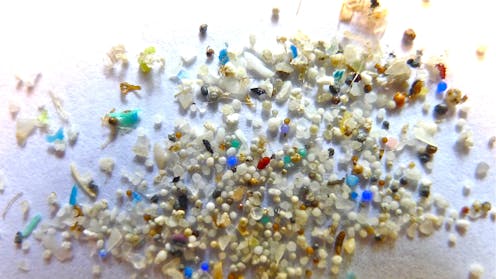
Microplastics are a growing concern in marine environments. As they break down, the particles can become microscopic. Oregon State University via Wikimedia Commons, CC BY-SA

Microplastics seem to be everywhere – in the air we breathe, the water we drink, the food we eat. They have turned up in human organs, blood, testicles, placentas and even brains.

While the full health consequences of that exposure are not yet known, researchers are exploring potential links between microplastics and negative health effects such as male infertility, inflammation, liver disease and other metabolic problems, and heart attack or stroke.

Countries have tried for the past few years to write a global plastics treaty that might reduce human exposure to plastic particles and their harm to wildlife and ecosystems, but the latest negotiations collapsed in August 2025. Most plastics are made with chemicals from fossil fuels, and oil-producing countries, including the U.S., have opposed efforts that might limit plastics production.

While U.S. and global solutions seem far off, policies to limit harm from microplastics are gaining traction at the state and local levels.

A person holds a petri dish with microplastics and uses tweezers to pick them apart.
Marine animals ingest microplastics from the water and as they’re eating. These were found in marine animals at the Hellenic Centre for Marine Research near Athens, Greece, in 2025.
Milos Bicanski/Getty Images

As an environmental lawyer and author of the book “Our Plastic Problem and How to Solve It,” I see four promising policy strategies.

Banning added microplastics: Glitter, confetti and turf

Some microplastics are deliberately manufactured to be small and added to products. Think glitter in cosmetics, confetti released at celebrations and plastic pellet infill, used between the blades in turf fields to provide cushion and stability.

These tiny plastics inevitably end up in the environment, making their way into the air, water and soil, where they can be inhaled or ingested by humans and other organisms.

California has proposed banning plastic glitter in personal care products. No other state has pursued glitter, however some cities, such as Boca Raton, Florida, have restricted plastic confetti. In 2023, the European Union passed a ban on all nonbiodegradable plastic glitter as well as microplastics intentionally added to products.

A young woman with heavy, glittery makeup on her eyes and cheeks.
Personal care products, particularly makeup, have added glitter in recent years. However, when that makeup is washed off, it often goes down drains and into wastewater, adding to plastics in the environment.
Rich Fury/Invision/AP

Artificial turf has also come under scrutiny. Although turf is popular for its low maintenance, these artificial fields shed microplastics.

European regulators targeted turf infill through the same law for glitter, and municipalities in Connecticut and Massachusetts are considering local bans.

A cloud of tiny particles rises from the turf from where a soccer player just jumped.
Infill flies up from artificial turf as a high school soccer player kicks the ball in 2022.
Isaac Wasserman for The Washington Post via Getty Images

Rhode Island’s proposed law, which would ban all intentionally added microplastics by 2029, is broad enough to include glitter, turf and confetti.

Reducing secondary microplastics: Textiles and tires

Most microplastics don’t start small; rather, they break off from larger items. Two of the biggest culprits of secondary microplastics are synthetic clothing and vehicle tires.

A study in 2019 estimated that textiles accounted for 35% of all microplastics entering the ocean – shed from polyester, nylon or acrylic clothing when washed. Microplastics can carry chemicals and other pollutants, which can bioaccumulate up the food chain.

In an effort to capture the fibers before they are released, France will require filters in all new washing machines by 2029.

A man looks at a jar in the light. Tiny black filaments are visible at the bottom.
A scientist holds a sample showing microfibers captured during a washing machine cycle.
Owen Humphreys/PA Images via Getty Images

Several U.S. states, including Oregon, Illinois, New York, New Jersey and Pennsylvania, are considering similar legislation. California came close in 2023, passing legislation to require microfiber filters for washing machines, but it was ultimately vetoed due to concerns about the cost of adding the filters. Even so, data submitted in support of the bill showed that such filters could cut microplastic releases from laundry by nearly 80%.

Some states, such as California and New York, are considering warnings on clothing made with synthetic fibers that would alert consumers to the shedding of microplastics.

Tires are another large source of microplastics. As they wear down, tires release millions of tons of particles annually, many of which end up in rivers and oceans. These particles include 6PPD-quinone, a chemical linked to mass die-offs of salmon in the Pacific Northwest.

A closeup of an SUV tire on a dirt road.
Synthetic rubber in vehicle tires shed particles into the environment as the tires wear down.
Wenson Wei/Wikimedia Commons, CC BY

One approach would be to redesign the product to include safer alternatives. California’s Department of Toxic Substances Control recently added 6PPD-quinone to its priority product list, requiring manufacturers to explain how they will either redesign their product or remove it from the market.

Regulating disposal

Microplastics can also be dealt with at the disposal stage.

Disposable wipes, for example, contain plastic fibers but are still flushed down toilets, clogging pipes and releasing microplastics. States such as New York, California and Michigan have passed “no-flush” labeling laws requiring clear warnings on packaging, alerting consumers to dispose of these wipes another way.

Construction sites also contribute to local microplastic pollution. Towns along the New Jersey shore have enacted ordinances that require builders to prevent microplastics from entering storm drains that can carry them to waterways and the ocean. Such methods include using saws and drills with vacuums to reduce the release of microplastics and cleaning worksites each day.

Oregon and Colorado have new producer responsibility laws that require manufacturers that sell products in plastic packaging to fund recycling programs. California requires manufacturers of expanded polystyrene plastic products to ensure increasing levels of recycling of their products.

Statewide strategies and disclosure laws

Some states are experimenting with broader, statewide strategies based on research.

California’s statewide microplastic strategy, eg: link error. adopted in 2022, is the first of its kind. It requires standardized testing for microplastics in drinking water and sets out a multiyear road map for reducing pollution from textiles, tires and other sources.

California has also begun treating microplastics themselves as a “chemical of concern.” That shifts disclosure and risk assessment obligations to manufacturers, rather than leaving the burden on consumers or local governments.

Other states are pursuing statewide strategies. Virginia, New Jersey and Illinois have considered bills to monitor microplastics in drinking water. A Minnesota bill would study microplastics in meat and poultry, and the findings and recommendations could influence future consumer safety regulations in the state.

State and local initiatives in the U.S. and abroad – be they bans, labels, disclosures or studies – can help keep microplastics out of our environment and lay the foundation for future large-scale regulation.

Federal ripple effects

These state-level initiatives are starting to influence policymakers in Washington.

In June 2025, the U.S. House passed the bipartisan WIPPES Act, modeled on state “no-flush” laws, and sent it to the Senate for consideration.

Another bipartisan bill was introduced in July 2025, the Microplastic Safety Act, which would direct the FDA to research microplastics’ human health impacts, particularly on children and reproductive systems.

Proposals to require microfiber filters in washing machines, first tested at the state level, are also being considered at the federal level.

This pattern is not new. A decade ago, state bans on wash-off cosmetic microbeads paved the way for the Microbead-Free Waters Act of 2015, the only federal law to date that directly bans a type of microplastic. That history suggests today’s state and local actions could again catalyze broader national reform.

Small steps with big impact

Microplastics are a daunting challenge: They come from many sources, are hard to clean up once released, and pose risks to our health and the environment.

While global treaties and sweeping federal legislation remain out of reach, local and state governments are showing a path forward. These microsolutions may not eliminate microplastics, but they can reduce pollution in immediate and measurable ways, creating momentum for larger reforms.

The Conversation

Sarah J. Morath is affiliated with the Global Council for Science and the Environment.

ref. Solving the world’s microplastics problem: 4 solutions cities and states are trying after global treaty talks collapsed – https://theconversation.com/solving-the-worlds-microplastics-problem-4-solutions-cities-and-states-are-trying-after-global-treaty-talks-collapsed-263782

Even professional economists can’t escape political bias

Source: The Conversation – USA (2) – By Aeimit Lakdawala, Associate Professor of Economics, Wake Forest University

Republican-leaning economists tend to predict stronger economic growth when a Republican is president than Democrats do – and because of this partisan optimism, their forecasts end up being less accurate.

I’m an economist, and my colleagues and I found this by analyzing nearly 40 years of responses to The Wall Street Journal’s Economic Forecasting Survey. Unlike most such surveys, the Journal publishes each forecaster’s name, allowing us to link their predictions to their political affiliations.

The respondents were professional economists at major banks, consulting firms and universities whose forecasts help guide financial markets and business decisions. Out of more than 300 economists in our sample, we could identify the political affiliations of 122. We did this by looking at the forecasters’ political donation records, voter registration data and work histories with partisan groups.

The pattern was striking: Republican forecasters systematically predicted higher gross domestic product growth when their party controlled the presidency, representing roughly 10% to 15% of average growth rates during our study period.

When we examined forecast accuracy using real-time GDP data, Republican forecasters made larger errors when their preferred party held office. This suggests partisan optimism makes their professional judgment worse.

What makes this finding particularly notable is its asymmetry. The partisan gap emerged specifically during Republican presidencies. Under Democratic Presidents Bill Clinton, Barack Obama and Joe Biden, Republican and Democratic forecasters made virtually identical predictions. That wasn’t the case when George W. Bush, and later Donald Trump, occupied the White House.

Interestingly, this bias appears only in GDP forecasts. When we analyzed predictions for inflation, unemployment and interest rates, we found no systematic differences between Republican and Democratic forecasters.

That makes sense, because GDP forecasts are inherently more uncertain than other economic predictions. Professional forecasters tend to disagree more and make more mistakes when predicting GDP compared to inflation or unemployment rates. This creates opportunities for partisan ideologies to sneak in.

We traced the bias to different views about the effectiveness of tax policies. Using Google Trends data to measure when tax cuts were in the news, we found Republican forecasters become systematically more optimistic precisely when tax policy discussions heat up.

Why it matters

Previous research has found that most people have a strong partisan bias when they make economic predictions. Our work is the first to show that professional economists can also succumb to such influences – despite their training and market incentives to be accurate.

Their errors can come at a high price. Financial markets, policymakers and businesses rely on economists’ forecasts to make major decisions. When the Federal Reserve sets interest rates, when companies plan investments and when investors allocate portfolios, they often reference these professional consensus forecasts.

Our research challenges a common assumption in economics: that aggregating diverse expert forecasts eliminates individual biases and improves accuracy.

This doesn’t mean professional forecasters are incompetent or dishonest. These are highly trained economists with strong financial incentives for accuracy. Rather, our findings reveal how even experts with the best intentions can be unconsciously influenced by their own ideological beliefs – especially when dealing with inherently uncertain data.

What still isn’t known

Several important questions remain unanswered. It’s unclear how this bias might be reduced. Would making forecasters more aware of their political leanings help reduce the effect? Or would developing new forecasting methods that weight predictions based on historical accuracy during different political regimes improve consensus forecasts?

We’re also curious whether institutional factors matter. Might forecasters at institutions with explicit political diversity policies show less bias? How do international forecasters viewing the U.S. economy compare to domestic ones?

Finally, our research focuses on U.S. forecasters during a period of increasing political polarization. Whether similar patterns emerge in other countries with different political systems, or during less polarized times, remains an open question.

The Research Brief is a short take on interesting academic work.

The Conversation

Aeimit Lakdawala has previously received funding from NSF.

ref. Even professional economists can’t escape political bias – https://theconversation.com/even-professional-economists-cant-escape-political-bias-263153

Harm-reduction vending machines offer free naloxone, pregnancy tests and hygiene kits

Source: The Conversation – USA (3) – By Alice Zhang, Assistant Professor of Family and Community Medicine, Penn State

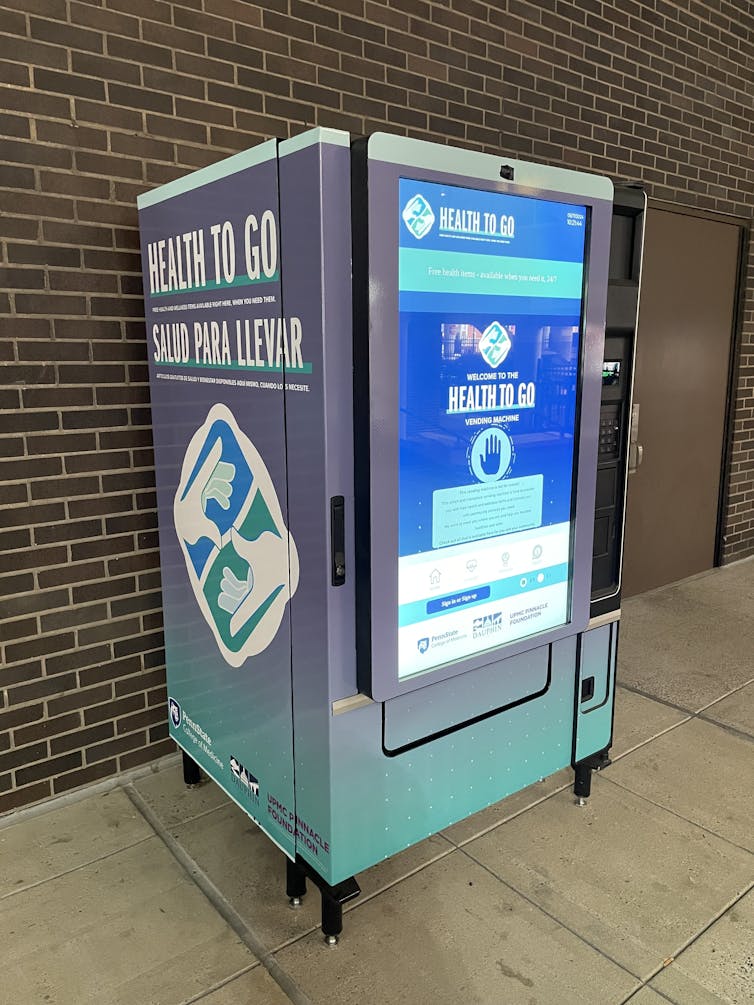
A vending machine dispenses Narcan nasal spray, a medication that reverses opioid overdose, and other items. Penn State College of Medicine

In the lobby of the YMCA in Reading, Pennsylvania, stands a row of vending machines – but one machine is different from the rest.

Instead of stocking chips or soda, this vending machine has drug-testing strips, hygiene kits, socks, soap, wound care supplies and naloxone, a medication also known by its brand name Narcan that is used to reverse opioid overdoses – all completely free.

The Health To Go vending machine has been in the Reading YMCA for over a year. Another one is in Harrisburg, outside of the UPMC Harrisburg Emergency Department. The machines list the names of resources such as mental health care, food banks, housing assistance and substance use disorder treatment on the screen and provide contact information and a QR code to scan for more info.

We are a physician and assistant professor of family and community medicine and a criminal justice professor at Penn State University and have been part of a collective effort to put these two Health To Go vending machines in place. The vending machines are part of a growing movement in the United States to provide easy access to harm-reduction resources.

Naloxone, wound care kits and more

Harm-reduction vending machines became popular in cities across the U.S. during the COVID-19 pandemic, when people could not easily access in-person services and when drug overdose deaths also rose dramatically.

Most machines dispense naloxone nasal spray to reverse overdoses and other items such as syringes and fentanyl test strips. Some, like the Health To Go machines, also offer general health and hygiene items such as soap, toothpaste and toothbrushes, and pregnancy tests. If a person is seen at the machine, they could be getting a toothbrush and socks or they could be getting naloxone – no one watching would necessarily know. Also, the nature of the vending machine means the people using them don’t need to interact with a person to obtain Narcan or drug-checking strips, as many people with substance use disorder feel stigma or embarrassment about their addiction.

The Health To Go vending machines are interactive, with a large touch screen in the front. The vending machine is connected to WiFi and cellular data and is able to capture anonymous information on how people are using the machine. The machine can also ask users survey questions to get their feedback, such as whether there are other items they would like to see in the machine or whether they think the machine is having an impact on reducing stigma on substance use.

These machines in Pennsylvania, where over 3,300 people died of drug overdose in 2024, down from over 5,300 in 2021, are funded by grants from Penn State College of Medicine, the National Institute on Drug Abuse, UPMC Pinnacle Foundation and opioid settlement funds from Dauphin and Berks counties.

All of this data helps the team know how to improve the machine to better serve people with opioid addiction, as well as people experiencing homelessness and having trouble affording basic needs. The touch screen is also able to play videos, such as a quick explainer on how to use fentanyl testing strips and testimonials from people in recovery, and display local community resources and services where people can get help.

A teal and grey vending machine that says 'Health To Go' with large digital touchscreen on front
Large touch screens prompt users to sign in to get free items and learn about other community services.
Alice Zhang/Penn State College of Medicine

Over the past year, the two Health To Go vending machines in Reading and Harrisburg have dispensed more than 11,000 items. The most popular items are the hygiene kits, with over 3,300 dispensed. The kits contain toothbrushes, toothpaste, socks, combs, nail clippers, ChapStick, mouthwash, soap and towels. The machines also have dispensed nearly 1,900 doses of naloxone, 1,700 wound care kits, and over 1,500 safer sex kits.

We interviewed 10 vending machine users in Reading in the winter and spring of 2025. “I was homeless and I didn’t have any money,” one woman shared with us. “It sounded too good to be true, and then I got here and got all that stuff for free. … Just having a clean pair of socks, that’s awesome.”

More than 2,300 distinct usernames were registered to the two machines in the past year. The usernames are the person’s birth year, a color and a nature or animal icon. This allows us to track individuals anonymously over time as they use the machine and get info as they answer survey questions. Nearly 40% of users reported being unemployed, and almost a quarter said they are experiencing homelessness or housing insecurity.

Out of those surveyed, 4 in 5 said they had trouble paying for basic needs, and over a third had not seen a health care provider in the past year.

A judgment-free alternative

Health To Go vending machine users reported that they used the machines because the supplies were free, available 24/7, and they could get what they needed easily and without facing judgment.

For people who feel uncomfortable in traditional health care settings or talking to someone in person, these vending machines offer a judgment-free alternative.

“You don’t have no one looking over your shoulder, you have no one condemning you for, you know, getting an HIV kit or getting a pregnancy test kit or getting a wound kit,” a vending machine user we surveyed told us. “There’s no one there behind you, just like, ‘Oh my God, you have HIV.’”

“Nobody wants to walk up to somebody and say, ‘Hey, excuse me, can I get a Narcan kit, or can I get a fentanyl test strip?’” another vending machine user said. “It just makes you feel … like not whole. I don’t want other people to know that I’m in an addiction.”

We think that putting naloxone and drug-checking strips alongside other health and hygiene items helps to normalize them. We also believe calling it Health To Go puts the focus on health, not just on substance use.

The team plans to install at least two more machines in central Pennsylvania within the next year. By removing barriers such as cost, hours of operation and potential stigma, the Health To Go vending machines are able to reach people who may otherwise fall through the cracks of traditional health care.

As one machine user explained, “They are saving people from STDs and stuff like that. They’re saving people from overdosing. They’re saving people from dying.”

Read more of our stories about Philadelphia and Pennsylvania.

The Conversation

Alice Zhang receives funding from National Institute on Drug Abuse, UPMC Pinnacle Foundation, Dauphin County, Berks County, York County, and Penn State College of Medicine.

Jennifer Murphy does not work for, consult, own shares in or receive funding from any company or organization that would benefit from this article, and has disclosed no relevant affiliations beyond their academic appointment.

ref. Harm-reduction vending machines offer free naloxone, pregnancy tests and hygiene kits – https://theconversation.com/harm-reduction-vending-machines-offer-free-naloxone-pregnancy-tests-and-hygiene-kits-263159

The Moon is getting slightly farther away from the Earth each year − a physicist explains why

Source: The Conversation – USA – By Stephen DiKerby, Postdoctoral Researcher in Physics and Astronomy, Michigan State University

Earth rises over the Moon, as seen by the Apollo 8 astronauts. Bill Anders/NASA

Curious Kids is a series for children of all ages. If you have a question you’d like an expert to answer, send it to CuriousKidsUS@theconversation.com.


“Is the Moon getting farther away from Earth?” – Judah, 9, Broken Arrow, Oklahoma


The Moon is getting 1½ inches (3.8 centimeters) farther away from the Earth every year.

Scientists measure the distance to the Moon by bouncing lasers off mirrors placed there by space probes and astronauts.

By measuring the amount of time it takes light to travel to the Moon and back, scientists can very precisely measure the distance to the Moon and how the distance changes.

The distance to the Moon actually changes over a single month as it goes around the Earth. The Moon is typically 239,000 miles (385,000 km) away from the Earth, but its orbit is not a perfect circle and changes by about 12,400 miles (20,000 km) as it orbits the Earth. This change is why some full moons are a bit bigger than others; these are called supermoons.

As an astrophysics researcher, I’m interested in the motion and interaction of objects such as planets, stars and galaxies. The motions of the Earth and Moon have many interesting consequences, and studying how they move over time can help researchers better understand how each has changed over the 4½ billion years since the Earth and Moon formed.

Tidal forces

So, why is the Moon getting farther away? It’s all because of tides.

Tides come from a difference in gravity across an object. The force of gravity exerted by the Moon is about 4% stronger on the side of Earth that faces toward the Moon, compared to the opposite side of the Earth facing away, because gravity gets weaker with distance.

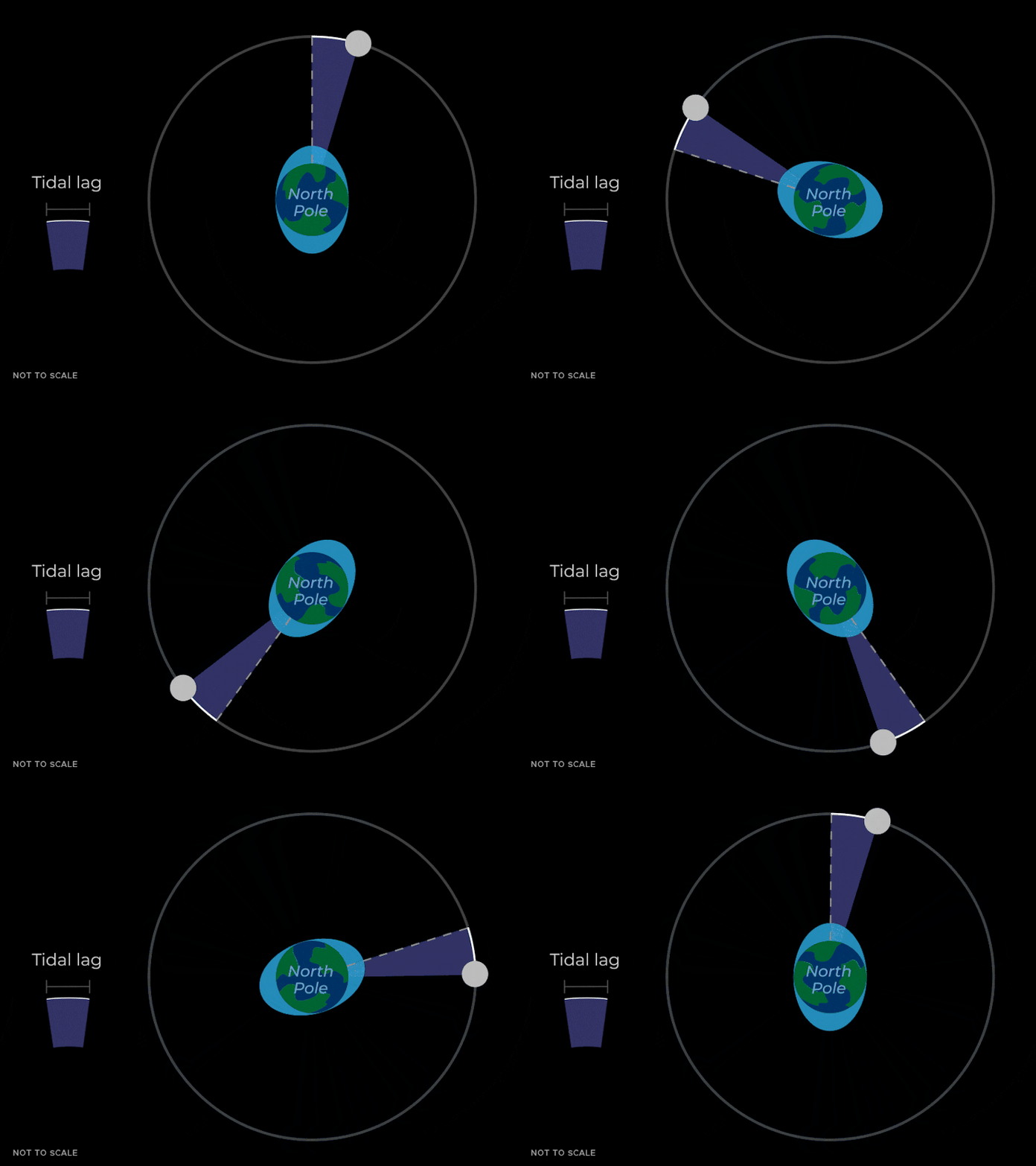
This tidal force causes the oceans to slosh around in two bulges that point toward and away from the Moon. They do this because the gravitational force pulling on Earth by the Moon isn’t just an average force that’s the same strength everywhere. The Moon’s gravity is strongest on the closer side of the Earth, creating a bulge of water pointing toward the Moon. It’s weaker on the opposite side of the Earth, which leaves another bulge of water that lags behind the rest of the Earth.

An animation showing the formation of tides
A NASA animation, not to scale, shows how the Moon creates tides on the Earth. The water in the oceans sloshes toward and away from the Moon.
NASA/Vi Nguyen

As the Earth rotates, these bulges move around and keep pointing at the Moon because of its gravitational pull. In New York City or Los Angeles, the water level can change by about 5 feet due to these tidal bulges.

These liquid bulges do not quite line up with the Moon – they “lead” it a little bit because the Earth is rotating and dragging them forward. These bulges also exert a gravitational pull back on the Moon. The bulge closer to the Moon isn’t just pulling the Moon toward the center of the Earth, but also a little bit ahead in its orbit – like the boost a sports car gets as it goes around a curve.

An animation of the moon orbiting the Earth, with two bulges growing and ebbing away
As the Moon orbits the Earth, the tidal bulges do not exactly point toward the Moon, but instead a little bit ahead of it because of friction between the bulges and the rotating Earth.
NASA/Vi Nguyen

This forward pull from the closer tidal bulge causes the Moon to speed up, which causes the size of its orbit to increase. Think of a baseball player hitting a home run. If the player hits the ball faster at home plate, it’ll zoom higher up into the sky.

So the bottom line is that the gravity of the closer tidal bulge on the Earth is pulling the Moon forward, which increases the size of the Moon’s orbit. This means that the Moon gets slightly farther away from the Earth. This effect is very gradual and only detectable on average over years.

Does the Moon’s increasing distance affect Earth?

The Moon gains momentum as its orbit gets bigger. Think about spinning a weight attached to a string. The longer the string, the more momentum the weight has, and the harder it is to stop.

Because the Earth is doing the work of increasing the Moon’s momentum, the Earth’s rotation slows down in turn, as its momentum goes to the Moon. To put it another way, as the Moon’s orbital momentum increases, the Earth’s rotational momentum decreases in exchange. This exchange makes a day get very slightly longer.

But don’t worry, these effects are so small: 1.5 inches per year compared to a distance of 239,000 miles (384,000 km) is just 0.00000001% per year. We’ll keep having eclipses, tides and days that last 24 hours for millions of years.

Was the Moon closer to us in the past?

The Earth’s days were shorter in the past.

The Moon probably formed around 4.5 billion years ago, when a young Earth was hit by a Mars-size protoplanet, causing a lot of material to get knocked off into space.

Eventually, that material formed the Moon, and it was initially much closer to the Earth. Back then, you’d see the Moon much bigger in the sky.

A NASA simulation of the collision between early Earth and a now-destroyed protoplanet that likely created the Moon.

By examining fossilized clam shells for material showing their daily growth patterns, paleontologists found evidence that 70 million years ago – near the end of the time of dinosaurs – the day was only 23.5 hours long, just as predicted by astronomical data.

What will happen in the future?

So, will the Moon eventually escape from the Earth’s gravitational pull as it moves away?

If we fast-forward tens of billions of years into the future, eventually the Earth’s rotation could slow down until it is tidally locked with the Moon. That means that it would take just as long for the Earth to rotate as the Moon does to orbit. At this point, the Moon would stop getting more distant, and you would see the Moon only from one side of the Earth.

A NASA video shows how the Sun might appear as a red giant billions of years in the future.

But two things will stop that from happening. First, in a billion years or so, the Sun will get brighter and boil away the oceans. Then, there won’t be large tidal bulges of water to cause the Moon to get more distant. A few billion years later, the Sun will expand into a red giant, probably destroying the Earth and the Moon.

But these events are so far in the future that you don’t need to worry about them. You just get to enjoy tides on the beach, solar eclipses and our beautiful Moon.


Hello, curious kids! Do you have a question you’d like an expert to answer? Ask an adult to send your question to CuriousKidsUS@theconversation.com. Please tell us your name, age and the city where you live.

And since curiosity has no age limit – adults, let us know what you’re wondering, too. We won’t be able to answer every question, but we will do our best.

The Conversation

Stephen DiKerby receives funding from NASA and NSF grants, as well as from Michigan State University.

ref. The Moon is getting slightly farther away from the Earth each year − a physicist explains why – https://theconversation.com/the-moon-is-getting-slightly-farther-away-from-the-earth-each-year-a-physicist-explains-why-262106

Transgender policies struggle to balance fairness with inclusion in women’s college sports

Source: The Conversation – USA – By Amanda Siegrist, Associate Professor of Recreation and Sport Management, Coastal Carolina University

Lia Thomas, second from left, stands on the starting blocks during the 500-yard freestyle finals at the NCAA swimming and diving championships in Atlanta on March 17, 2022. Rich von Biberstein/Icon Sportswire via Getty Images

With two executive orders related to school sports, President Donald Trump recently tried to settle the growing legal conflict over the right of transgender students to participate in school sports.

That conflict, which the Biden administration tried to address and is now taking place in states, lower federal courts and the Department of Education, will reach the U.S. Supreme Court in its upcoming term.

Supporters of transgender athlete participation argue that gender is a social construct, shaped by societal norms and cultural beliefs more so than by biology. They say that people should have the right to self-identify. And they argue that there is no significant threat to fairness, safety or opportunity in student sports.

Opponents say that sex and gender identity are distinct from each other. They argue that including biologically born male athletes in women’s sports subverts fairness and threatens the impact of Title IX in women’s sports.

As a professor of sport management with a law degree, I believe the progress in equity, access and participation made by women in sport since the passage of Title IX is at risk if U.S. institutions and legislators depart from the federal law’s original intent: to ensure equal opportunities for women in education settings.

Inclusion versus fairness

Women’s sports are experiencing unprecedented success. In 2024, the NCAA women’s basketball championship final drew a larger TV audience than the men’s final for the first time ever. Sponsorship deals for women’s pro sports have witnessed double-digit growth year over year the past two athletic seasons.

The 2023-2024 academic year saw 235,735 student-athletes participate in NCAA women’s sports. That’s a record high.

When Congress passed Title IX in 1972, the goal was simple: make sure women have the same educational opportunities as men in school, including in sports programs.

For decades, it worked. Thousands of new teams and opportunities for women emerged, and participation skyrocketed. Before 1972, only about 30,000 women had participated in college sports. Today, 220,000 female athletes compete in NCAA sports.

But while Title IX was expanding access for women athletes in schools, the boundaries of women’s sports were being tested in professional leagues.

A transgender woman plays tennis on a clay court.
Renée Richards plays in the women’s 1977 U.S. Open tennis championships in New York.
Focus on Sport/Getty Images

In 1977, Renée Richards, a transgender tennis player, successfully challenged the United States Tennis Association’s eligibility rules and was allowed to compete in women’s tennis after undergoing sex reassignment surgery.

She played in the 1977 women’s U.S. Open and competed on the women’s professional tour, where she played for four more years before retiring.

Richards was hailed as a pioneer for transgender athletes. But her perspective has shifted over time. In February 2025, Richards said: “I believe that having gone through male puberty disqualifies transgender women from the female category in sports.”

Richards’ perspective underscores the tension between the inclusion of transgender people and maintaining fairness in competition and opportunities for women – a tension that remains at the center of legal debates today.

Court challenges

Courts across the country are now confronting a new wave of challenges to policies on transgender athlete participation from K-12 through college.

In 2021, Becky Pepper-Jackson, a transgender girl, sued the West Virginia Board of Education in federal court over the state’s “Save Women’s Sports Act,” which requires that sport participation in schools must be based on biological sex at birth. Pepper-Jackson argued that the act violated Title IX and the equal protection clause of the Fourteenth Amendment that requires states to treat people in similar situations equally.

A lower court struck down West Virginia’s law as unconstitutional, and in July 2025, the Supreme Court agreed to hear the case.

Four people stand together to be photographed.
Becky Pepper-Jackson, second from left, attends the Lambda Legal Liberty Awards on June 8, 2023, in New York.
Roy Rochlin/Getty Images for Lambda Legal

In 2024, several college athletes filed a lawsuit against the NCAA and participating universities. The suit claims the organization violated the athletes’ Title IX rights by allowing transgender swimmer Lia Thomas at the University of Pennsylvania to compete at the national championships in 2022. The plaintiffs argued that competing against athletes who had undergone male puberty created unfair conditions in women’s sports.

The suit has not been resolved. But in April 2025, the Department of Education concluded that the University of Pennsylvania violated Title IX by allowing Thomas to swim on the women’s team during the 2021-2022 season. As part of a resolution agreement with the Education Department, the university was required to restore to female athletes all individual Division I swimming records broken by biologically born male athletes competing in women’s categories. Per the agreement, the university also issued an apology to the affected athletes and adopted biology-based eligibility standards.

These collegiate cases form part of a larger picture. From high school track meets to NCAA championships, the participation of transgender women in female sports has, in the opinion of some, altered outcomes, raised safety concerns and challenged the principle of fair play.

Studies show that males have strength and size advantages over women. Those differences translate to advantages in sport, even after hormone suppression. To introduce competitive disadvantages in women’s sport threatens the premise of Title IX: to provide women with equal opportunity.

As these court cases unfold, their resolutions will help define standards for transgender participation in women’s sports across educational levels.
They underscore the ongoing challenge for institutions and governing bodies to balance inclusion, competitive fairness and compliance with Title IX.

The Conversation

Amanda Siegrist does not work for, consult, own shares in or receive funding from any company or organization that would benefit from this article, and has disclosed no relevant affiliations beyond their academic appointment.

ref. Transgender policies struggle to balance fairness with inclusion in women’s college sports – https://theconversation.com/transgender-policies-struggle-to-balance-fairness-with-inclusion-in-womens-college-sports-262082

Les leçons marketing d’un chef-d’œuvre télévisuel, « Mad Men »

Source: The Conversation – in French – By Albéric Tellier, Professeur Agrégé des Universités en sciences de gestion, Université Paris Dauphine – PSL

Le surnom « _mad men_ » était donné aux dirigeants et créatifs des agences de publicité situées sur Madison Avenue à New York. Dans la série, les pérégrinations des personnages féminins mettent en évidence les permanences et les transformations des rapports entre femmes et hommes au cours des années 1960. AMC/Arte

Si vous ne l’avez vu, vous pouvez découvrir gratuitement sur Arte une série majeure de la dernière décennie : « Mad Men ». Ses personnages évoluent dans une agence de publicité new-yorkaise dans les années 1960. Au-delà de la fiction, que nous dit cette série sur le monde de la publicité et du marketing ?


Depuis la rentrée, Arte propose gratuitement l’intégrale de la série Mad Men. L’occasion idéale de (re)voir une série acclamée par la critique et d’en apprendre beaucoup sur l’histoire du marketing, ses évolutions et ses dérives.

Créée par Matthew Weiner, Mad Men propose aux spectateurs de suivre les destins croisés des membres de l’agence de publicité new-yorkaise Sterling Cooper et de leurs proches, tous confrontés aux transformations profondes, rapides et parfois brutales de la société américaine. Les 92 épisodes, regroupés en sept saisons, offrent une véritable plongée dans une décennie marquante pour les États-Unis : la séquence inaugurale nous emmène dans un bar de Manhattan en mars 1960, tandis que celle qui clôture la saga se déroule à la fin de l’année 1970 sur les hauteurs d’une falaise californienne. Entre ces deux dates, les personnages devront faire face à de nombreux changements politiques, sociaux, technologiques et culturels, impactant à la fois leurs situations personnelles et leurs activités professionnelles.

Au-delà de ses indéniables qualités qui ont fait l’objet de nombreuses analyses, cette immersion dans l’univers des professionnels chargés de vendre le rêve américain, notamment le directeur de la création Don Draper et la rédactrice-conceptrice Peggy Olson, nous offre une occasion idéale de comprendre l’essor du marketing, ses évolutions récentes et ses travers. Pour cela, les concepteurs se sont appuyés sur des faits et des cas réels, ou tout au moins crédibles. Tout au long des épisodes, les membres de Sterling Cooper travaillent pour des marques comme Chevrolet, Heineken, Heinz, Honda, Kodak, Lucky Strike, Playtex, etc.

Une saga pour comprendre l’essor du marketing…

La décennie couverte par Mad Men est une période charnière pour le marketing, celle où il s’impose définitivement comme une discipline sophistiquée qui doit impérativement être enseignée, et une fonction centrale dans l’entreprise au même titre que la production ou la finance. On assiste ainsi au fil des saisons à la transformation d’un domaine essentiellement pratique, largement nourri des expériences de terrain et des expérimentations des directions commerciales, à un corps de connaissances formalisées, enrichi de travaux de recherche dédiés et des apports d’autres sciences sociales comme la psychologie, la sociologie ou l’économie.


À lire aussi :
L’art du marketing selon « Mad Men »


Dans ce contexte, les agences de publicité ne peuvent plus se contenter de concevoir des campagnes et de vendre des espaces publicitaires. Elles doivent se convertir en agences « à service complet », capables de prendre à leur compte des activités d’études de marché et de tests de produits afin de mettre au jour les attentes, freins et motivations d’un consommateur qui n’est pas toujours rationnel. Mais chez Sterling Cooper, la transformation n’est pas aisée car ses responsables ont débuté leur carrière au moment où la communication était avant tout affaire d’intuition et de « génie créatif ».

… et ses transformations

Bien entendu, depuis les années soixante, le marketing a connu d’importantes transformations, avec des contraintes qui s’additionnent, et qui peuvent être résumées en trois grandes périodes :

  • le marketing transactionnel (1950-1980)

  • le marketing relationnel (1980-2000)

  • le marketing expérientiel (2000-…).

Au sein de Sterling Cooper, l’accent est essentiellement mis sur la transaction. Il faut multiplier les ventes en maximisant la valeur de la prestation que le client obtiendra dans l’échange. Dans les années 1980 cependant, les priorités changent. La transaction reste déterminante, mais on cherche à construire des relations durables avec les clients et à conserver leur confiance sur le long terme. Enfin, au début des années 2000, le marketing devient « expérientiel ». Le consommateur est désormais plus individualiste et volatile. Il veut se sentir accompagné, voire choyé, tout au long du processus qui va le mener à l’achat et attend de la consommation qu’elle soit une activité agréable, divertissante mais aussi cohérente avec ses valeurs.

À la lecture de ce découpage chronologique, une question vient immédiatement à l’esprit : la série Mad Men se déroulant dans les années 1960, peut-on l’utiliser pour cerner les évolutions les plus récentes du marketing ?


À lire aussi :
Le Moyen Âge a‑t‑il inventé la publicité ?


Des anachronismes bien utiles pour cerner les pratiques du marketing contemporain…

La série a été unanimement saluée pour l’exceptionnelle qualité de sa restitution de l’Amérique des sixties. Pour autant, les concepts et méthodes de marketing qui sont évoqués sont souvent plus en phase avec les connaissances et pratiques actuelles. Paradoxalement, ces anachronismes ajoutent un intérêt supplémentaire à la série.

Les personnages de Mad Men raisonnent et agissent souvent comme le feraient aujourd’hui de nombreux responsables marketing. Dans le dernier épisode de la première saison, Don Draper s’appuie sur le sentiment de nostalgie pour concevoir une campagne de communication, une approche très rare à l’époque mais désormais courante. Plus tard (saison 6, épisodes 1 et 2), il se montrera très en avance sur son temps en proposant aux responsables d’une chaîne hôtelière une approche typique du marketing expérientiel que nous évoquions plus haut :

« Ce que j’ai vécu était très différent des [vacances habituelles]. On ne doit pas vendre une destination géographique. On va vendre une expérience »

Un projet tellement novateur qu’il ne sera pas retenu… Sous la houlette de ce directeur de la création à la fois fascinant et détestable, les équipes de Sterling Cooper seront également amenées à travailler dans des contextes de plus en plus variés et à imaginer des actions inédites pour l’époque mais habituelles aujourd’hui. C’est ainsi que la série Mad Men permet d’aborder le marketing de l’innovation, le marketing social, le marketing public et territorial ou le marketing viral, alors qu’ils n’existaient qu’à un état embryonnaire dans les années 1960.

… mais aussi ses dérives

Loin d’être des « génies » du marketing, les membres de l’agence font parfois des erreurs, n’utilisent pas très bien les méthodes à leur disposition, et sont même parfois guidés par des intentions fort discutables. Quand nous faisons connaissance avec Don Draper, il est à la recherche des moyens qui permettraient au cigarettier Lucky Strike d’éviter une législation jugée trop contraignante et ne semble avoir aucun scrupule à manipuler les clients. Quand nous le retrouvons dans la quatrième saison, en train de tenir un discours engagé et percutant devant les membres d’une association de lutte contre le tabac, nous comprenons rapidement que son intention véritable est de trouver de nouveaux clients au moment où l’agence vit une période bien délicate.

Ainsi, la série Mad Men est un formidable support pour montrer la puissance du marketing mais aussi ses dérives. Celles-ci ne doivent pas être relativisées. Cependant, qu’on veuille critiquer les finalités et pratiques du marketing, les mettre à profit, ou les renouveler pour participer à l’essor d’un marketing responsable, il est nécessaire dans tous les cas de les comprendre. Un objectif que le visionnage de l’intégralité de Mad Men permet d’atteindre.

The Conversation

Les auteurs ne travaillent pas, ne conseillent pas, ne possèdent pas de parts, ne reçoivent pas de fonds d’une organisation qui pourrait tirer profit de cet article, et n’ont déclaré aucune autre affiliation que leur organisme de recherche.

ref. Les leçons marketing d’un chef-d’œuvre télévisuel, « Mad Men » – https://theconversation.com/les-lecons-marketing-dun-chef-doeuvre-televisuel-mad-men-265031

Quand Dexter inspire Shein : comment les antihéros transforment la publicité

Source: The Conversation – in French – By Frédéric Aubrun, Enseignant-chercheur en Marketing digital & Communication au BBA INSEEC – École de Commerce Européenne, INSEEC Grande École

L’ambiguïté d’un personnage comme Dexter pose des problèmes quand elle devient un moteur de la publicité.

C’était fatal : le succès de séries mettant en avant des antihéros amoraux infuse dans la communication des entreprises, et notamment dans la publicité. Mais ce qui peut être accepté dans une série mettant en exergue l’ambiguïté humaine peut-il être acceptable quand il est manipulé par des publicitaires ?


Dexter Morgan (Dexter, 2006-2013), le tueur en série « éthique », Walter White (Breaking Bad, 2008-2013), le professeur devenu baron de la drogue, ou Joe Goldberg (You, 2018-2025), le stalker (harceleur) romantique… Ces personnages fascinent les téléspectateurs depuis deux décennies. Mais leur influence dépasse aujourd’hui l’écran : elle transforme les codes publicitaires.

« Je ne suis pas en danger, Skyler. Je suis le danger »

Cette réplique de Walter White dans Breaking Bad illustre parfaitement le succès des antihéros sériels : des personnages moralement ambigus qui franchissent les lignes rouges : ils tuent, trafiquent, harcèlent. Leur particularité ? Ils se présentent comme des justiciers suivant leur propre code moral – distinct des règles sociales et religieuses traditionnelles – tout en nous faisant éprouver de l’empathie pour eux. Désormais, cette nouvelle grammaire narrative inspire aussi certaines marques.

L’art de la transgression assumée

Un des exemples frappants est celui de Shein en 2025. Face aux critiques sur la fast-fashion et à un projet de loi français pénalisant sa promotion, la marque n’a pas choisi la discrétion. Sa campagne « La mode est un droit, pas un privilège » transforme la contrainte en opportunité narrative, se présentant comme victime d’une élite voulant priver les classes populaires d’accès à la mode.

Cette stratégie rappelle directement celle de Dexter Morgan et son fameux « code » : une ligne de conduite personnelle qui justifie ses meurtres en ne s’attaquant qu’aux méchants. Comme Shein avec sa défense de la démocratisation de la mode, Dexter se présente comme un justicier suivant des règles éthiques strictes.


À lire aussi :
L’IA dans la publicité : l’humour comme stratégie de légitimation


Mais le parallèle va plus loin. Dexter, malgré son code, cause régulièrement des « dommages collatéraux » – des victimes innocentes qui échappent à sa logique initiale. De même, Shein brandit son éthique de l’accessibilité tout en générant des externalités négatives : pollution, conditions de travail précaires, surconsommation.

Les réactions sur les réseaux sociaux à la campagne Shein illustrent cette tension. L’analyste digitale Audrey Lunique (ATaudreylunique) a décortiqué cette stratégie sur X :

Détourner l’attention au nom d’un pseudo-code moral

Cette analyse révèle exactement le mécanisme de l’antihéros : utiliser un code moral (démocratisation de la mode) pour détourner l’attention des « dommages collatéraux » (exploitation, pollution). Comme Dexter qui justifie ses meurtres par sa lutte contre les « méchants », Shein présente ses pratiques destructrices pour l’environnement et les conditions de travail comme un combat pour la justice sociale.

D’autres marques adoptent ce genre de posture transgressive, comme, par exemple, Balenciaga, qui s’était approprié des codes de l’antihéros avec ses campagnes controversées de 2022. La maison de luxe avait provoqué un tollé en diffusant des photographies montrant des enfants tenant des sacs en forme d’ours équipés d’accessoires BDSM.

Attaquer puis se victimiser

Face aux accusations de sexualisation de mineurs, le directeur artistique Demna s’est d’abord défendu :

« Si j’ai voulu parfois provoquer à travers mon travail, je n’ai jamais eu l’intention de le faire avec un sujet aussi horrible que la maltraitance des enfants. »

Cette défense révèle le même schéma narratif : d’abord revendiquer un « code » artistique supérieur, puis admettre les dégâts quand la pression devient trop forte. Comme les antihéros de fiction, Balenciaga s’est positionné en incomprise, victime d’une société incapable de saisir sa vision créative.

Burger King illustre une version plus subtile de cette logique avec sa campagne « Moldy Whopper » (2020), qui montre délibérément un burger en décomposition. Comme Dexter qui expose la vérité crue de ses victimes, Burger King révèle la réalité de son produit sans conservateurs artificiels. La marque assume la laideur apparente (moisissure) pour revendiquer une supériorité éthique (naturalité).

Trois mécanismes de transfert culturel

Cette appropriation des codes de l’antihéros s’explique par trois phénomènes.

La saturation culturelle d’abord. Les plateformes de streaming ont démocratisé l’accès aux séries, créant un référentiel culturel partagé. Les publicitaires puisent dans ce répertoire pour créer une connivence immédiate avec leurs audiences.

La fatigue de l’authenticité performée ensuite. Après des années de communication corporate lisse, les consommateurs se méfient des discours trop parfaits. L’antihéros publicitaire apparaît paradoxalement plus crédible parce qu’il assume ses défauts. Ce phénomène s’inscrit dans une évolution plus large de la publicité face aux nouvelles technologies, où les marques cherchent constamment de nouveaux codes pour maintenir l’attention.

La légitimation par association culturelle enfin. En adoptant les codes d’œuvres « de prestige », les marques opèrent un transfert de légitimité. Si Walter White peut être fascinant malgré ses crimes, pourquoi Shein ne pourrait-elle pas être acceptable malgré ses controverses ?

L’empathie trouble au service du commerce

Le psychologue Jason Mittell a théorisé la notion d’« empathie trouble » que nous développons envers ces personnages complexes. Cette « empathie trouble »désigne notre capacité à nous attacher à des personnages (ou ici des marques) dont nous désapprouvons les actes. Nous savons que Walter White détruit sa famille, mais nous comprenons ses motivations initiales. Cette ambivalence émotionnelle, fascinante en fiction, devient manipulatoire quand elle sert des intérêts commerciaux dans la réalité.

Le succès durable de Dexter en témoigne : huit saisons initiales, puis New Blood (2021), Original Sin (2024) et Resurrection (2025).

Cette multiplication s’étend aux séries anthologiques comme Monsters (2022-2025), explorant les psychés de tueurs historiques.

Mais cette empathie devient problématique quand elle s’applique aux marques. La fiction nous apprend à suspendre notre jugement moral ; la publicité exploite cette suspension.

Vers un marketing de la transgression ?

Cette tendance soulève des questions cruciales pour l’avenir de la communication commerciale. La normalisation de la transgression publicitaire risque de déplacer les limites de l’acceptable, créant une spirale de surenchère provocatrice.

Les professionnels du marketing doivent développer une réflexivité critique. L’efficacité à court terme d’une campagne provocante doit être mise en balance avec ses externalités sociales : normalisation de comportements problématiques, érosion de la confiance, contribution à un climat de transgression généralisée.

Les séries nous ont appris à accepter la complexité morale. Mais quand cette leçon s’applique aux marques, elle peut devenir un outil de manipulation redoutable. À l’heure où 71 % des consommateurs attendent des marques qu’elles s’engagent sur des sujets de société, cette fascination pour la transgression interroge notre rapport à l’éthique commerciale.

The Conversation

Frédéric Aubrun ne travaille pas, ne conseille pas, ne possède pas de parts, ne reçoit pas de fonds d’une organisation qui pourrait tirer profit de cet article, et n’a déclaré aucune autre affiliation que son organisme de recherche.

ref. Quand Dexter inspire Shein : comment les antihéros transforment la publicité – https://theconversation.com/quand-dexter-inspire-shein-comment-les-antiheros-transforment-la-publicite-264504

Concilier rentabilité et émission de carbone, c’est possible

Source: The Conversation – in French – By Ethan Eslahi, Professeur de finance, spécialisé en économie et finance de l’énergie et de l’environnement, et en modélisation prédictive, IÉSEG School of Management

Un marché de quotas carbone est un système d’échange de droits d’émissions de gaz à effet de serre, de crédits carbone et de quotas carbone. AndriiYalanskyi/Shutterstock

Pour que le prix du carbone, et le principe du « pollueur-payeur », soient pleinement efficaces, il ne suffit pas d’agir sur le marché lui-même, mais sur la manière dont les entreprises définissent la notion même de performance… environnementale, financière ou les deux.


Le système d’échange de quotas d’émission de l’Union européenne (SEQE-UE), fondé sur le principe « pollueur-payeur », vise à inciter les entreprises à réduire leurs émissions de gaz à effet de serre en augmentant le coût de ces émissions. Dès 2005, ce mécanisme a constitué le cœur de la stratégie climatique de l’Union européenne.

Pour les entreprises, le prix du carbone a un double visage : il peut encourager les investissements verts, mais il alourdit aussi la facture des plus gros émetteurs. Alors, les entreprises réagissent-elles toutes pareillement à ce signal-prix ?

Dans notre étude, nous montrons que l’effet concret de ce signal dépend de la manière dont la performance est définie en interne – c’est-à-dire selon que l’on accorde plus ou moins de poids aux résultats financiers, environnementaux, ou à une combinaison des deux.

Définir sa performance

Les entreprises sont de plus en plus appelées à évaluer leur exposition aux risques liés au climat, par exemple via un prix interne du carbone utilisé dans leur planification stratégique. La manière dont elles définissent leur performance conditionne leur capacité à anticiper les coûts futurs du carbone et à ajuster leurs décisions en conséquence.

Cet enjeu de définition de la performance se traduit déjà dans certaines pratiques. En avril 2023, Getlink (ex-groupe Eurotunnel) a introduit une « marge de décarbonation ». Cet indicateur financier mesure la capacité de l’entreprise à s’adapter à la hausse des coûts carbone en soustrayant les coûts futurs d’émissions au résultat opérationnel (EBITDA).

Cette initiative illustre l’importance croissante de relier directement les dimensions financière et environnementale.

Rentabilité et émissions

Notre étude porte sur environ 3 800 entreprises soumises au SEQE-UE dans 28 pays européens, sur la période 2008–2022. Il s’agit d’un échantillon représentatif des entreprises couvertes par ce système, issues de secteurs comme l’énergie, l’acier, le ciment, la chimie, la papeterie ou l’aviation, qui déclarent chaque année leurs émissions vérifiées. À partir de ces données, nous construisons pour chaque entreprise un indicateur composite de performance combinant deux dimensions : la rentabilité opérationnelle (mesurée par la marge d’EBITDA) et les émissions de gaz à effet de serre.


À lire aussi :
Le prix interne du carbone : un outil puissant pour les entreprises


Nous proposons un cadre d’analyse multidimensionnel : au lieu de traiter la performance financière et la performance environnementale comme des dimensions distinctes ou opposées, nous les combinons dans un indice unique. Nous faisons varier le poids relatif accordé à chacune des deux dimensions pour générer plusieurs profils types d’entreprises, allant d’une vision 100 % financière à une vision 100 % environnementale de la performance.

Nous analysons ensuite, à l’aide d’une modélisation prédictive, alimentée par le Stochastic Extreme Gradient Boosting, un outil avancé d’apprentissage automatique, dans quelle mesure le prix moyen du quota carbone d’une année peut prédire l’évolution de cette performance composite l’année suivante. Cela nous permet d’évaluer si – et pour quels profils – le signal-prix du carbone est effectivement pris en compte par les entreprises dans leurs décisions stratégiques.

Performance conditionnelle au prix du carbone

Nos résultats montrent que l’effet du prix du carbone dépend fortement de la pondération accordée aux deux dimensions de performance. Lorsque la performance est définie principalement selon la rentabilité financière, une hausse du prix du carbone a un effet négatif significatif sur la performance globale. Cela s’explique par le fait que les coûts supplémentaires induits par les quotas érodent la marge opérationnelle.

À l’inverse, lorsque la performance est définie en mettant davantage l’accent sur la réduction des émissions, le lien entre le prix du carbone et la performance devient beaucoup plus faible, voire inexistante. Ce résultat suggère que les entreprises ayant déjà intégré une logique de réduction des émissions peuvent être moins sensibles aux variations du prix du carbone – soit parce qu’elles ont déjà accompli l’essentiel des efforts, soit parce qu’elles réagissent davantage à d’autres types d’incitations (réglementaires, normatives ou réputationnelles).

Incitations alignées

Les investisseurs financiers peuvent intégrer ce type d’indice composite financier environnemental dans leur évaluation des entreprises. Cela leur permettrait d’identifier celles qui sont les plus vulnérables à une hausse du prix du carbone, ou au contraire les plus aptes à aligner performance économique et objectifs climatiques.

Pour les régulateurs du système d’échanges de quotas d’émissions (SEQE-UE), nos résultats confirment l’importance d’accompagner le signal-prix d’un cadre plus structurant : publication obligatoire d’indicateurs intégrés dans le cadre de la directive européenne Corporate Sustainability Reporting Directive (CSRD), mise en place de corridors de prix pour assurer la prévisibilité du marché, ou encore le soutien ciblé aux entreprises qui prennent des risques environnementaux sans retour immédiat sur la rentabilité.

Les citoyens peuvent également jouer un rôle actif en soutenant les initiatives qui rendent visibles les compromis entre rentabilité et réduction des émissions. Par exemple, ils peuvent exiger que les entreprises publient des indicateurs combinés permettant de suivre simultanément leur performance financière et environnementale.

The Conversation

Ethan Eslahi ne travaille pas, ne conseille pas, ne possède pas de parts, ne reçoit pas de fonds d’une organisation qui pourrait tirer profit de cet article, et n’a déclaré aucune autre affiliation que son organisme de recherche.

ref. Concilier rentabilité et émission de carbone, c’est possible – https://theconversation.com/concilier-rentabilite-et-emission-de-carbone-cest-possible-258423

Pourquoi la construction des villages JO de Paris 2024 fut une réussite

Source: The Conversation – in French – By Geneviève Zembri-Mary, Professeure en Urbanisme et Aménagement, CY Cergy Paris Université

La construction des villages et du centre aquatique olympique ainsi que les aménagements urbains ont coûté 4,5 milliards d’euros, dont 2 milliards apportés par le secteur privé. AntoninAlbert/Shutterstock

Le village des athlètes et le village des médias ont été livrés à temps. Ils trouvent aujourd’hui une seconde vie avec des habitations, des commerces et des entreprises. Comment l’expliquer ? En partie grâce à la loi de 2018 relative à l’organisation des Jeux olympiques et paralympiques. Ce sont également des bâtiments bas carbone et étudiés pour être réversibles, en particulier dans le cas du village des athlètes.


Le contrat de ville hôte signé entre Paris 2024 et le Comité international olympique (CIO) pour accueillir les Jeux olympiques et paralympiques (JOP) a prévu de réaliser seulement trois ouvrages nouveaux : le village des médias, le village des athlètes et le centre aquatique olympique. Ces constructions devaient être durables, avec une empreinte carbone réduite, et faire partie de l’héritage des JOP.

Les Jeux olympiques et paralympiques ont pu être critiqués par des mouvements citoyens en raison de leur coût, de l’absence de garantie gouvernementale sur les risques des projets ou de leur empreinte carbone liée aux déplacements des visiteurs et à la construction de nouvelles infrastructures. Le CIO a donc établi des recommandations pour limiter le nombre de nouveaux sites olympiques et leur empreinte carbone avec l’agenda olympique.

Cela implique pour la ville hôte d’agir dans deux domaines :

  • Faire en sorte que la réalisation des infrastructures et des projets urbains rencontre le moins d’incertitudes pour être livrée à temps.

  • Construire des infrastructures sportives et des projets urbains durables avec une empreinte carbone réduite pour la phase « Héritage ».

Pour quel bilan de ces ouvrages olympiques ? Avec quelles innovations ? Dans notre étude, nous analysons tout particulièrement les nouveautés juridiques du droit de l’urbanisme mises en œuvre pour les JOP de Paris et la réversibilité des ouvrages olympiques.

Livrer à temps

Le contrat de ville hôte oblige à livrer le centre aquatique olympique, le village des athlètes et le village des médias pour la date des JOP. La Société de livraison des ouvrages olympiques (Solideo) a été en charge de cette mission.

Les JOP bénéficiant d’une couverture médiatique mondiale, les enjeux financiers liés aux droits de retransmission télévisés perçus par le CIO sont particulièrement importants. Ces droits ont atteint 3,107 milliards de dollars pour Tokyo 2020. Une ville hôte cherche quant à elle à se mettre en valeur à l’échelle internationale, en étant sensible à tout risque réputationnel. Livrer à temps était une nécessité pour la SOLIDEO et les acteurs privés impliqués dans la construction.

L’organisme public a dû faire face aux incertitudes liées à ces projets d’infrastructures. Le village des médias a fait l’objet de deux recours par deux associations locales pour des raisons environnementales. La construction des ouvrages a été exposée à l’arrêt et au ralentissement de l’activité pendant la pandémie de Covid-19. D’autres incertitudes pouvaient impacter le planning, comme des délais allongés pour obtenir les permis de construire ou exproprier.

Mégaprojets urbains

Le village des athlètes de Saint-Denis, de Saint-Ouen et de l’Île-Saint-Denis, et le village des médias de Dugny, en Seine-Saint-Denis, sont les deux projets urbains des JOP. Le village des athlètes a pu accueillir 15 000 athlètes. Le village des médias a pu loger 1 500 journalistes et techniciens.

Les bâtiments deviennent aujourd’hui des logements, bureaux, services et commerces. Ils sont considérés comme des mégaprojets urbains. La zone d’aménagement concerté du village des athlètes a une surface de 52 hectares et accueillera 6 000 nouveaux habitants et 6 000 salariés, une fois l’ensemble des travaux de transformation terminés en 2025, et en fonction du rythme de vente. Les ventes sont en cours.

La zone d’aménagement concerté du village des médias compte 70 hectares, et 1 400 logements à terme. Elle est desservie par la gare du tramway T11 de Dugny-La Courneuve et le RER B du Bourget. Elle bénéficiera, comme le village des athlètes, de la desserte des futures lignes 16 et 17 du Grand Paris Express. Des parcs, des commerces, des équipements publics sont aussi réalisés. La construction des villages et du centre aquatique olympique, ainsi que les aménagements urbains ont coûté 4,5 milliards d’euros, dont 2 milliards apportés par le secteur privé.

Loi olympique et paralympique de 2018

Aussi pour faire face aux incertitudes pouvant affecter habituellement la réalisation des projets urbains et les livrer à temps, la Solideo a intégré par anticipation une marge au planning. La réalisation des villages et du centre aquatique olympiques a également bénéficié d’une loi olympique et paralympique votée en 2018. Elle a permis de réduire les délais et de sécuriser juridiquement la réalisation des projets pour la date des JOP par rapport aux procédures habituelles du code de l’urbanisme. Ont été mis en place :

  • Une procédure d’expropriation d’extrême urgence, qui a permis à la Solideo d’exproprier plus rapidement que la procédure classique, les propriétaires des terrains et immeubles des zones de construction des équipements olympiques. Les expropriations essentiellement faites pour le village des médias et le village des athlètes ont été peu nombreuses.

  • Des consultations publiques par voie électronique dans le cadre de la concertation. Ces consultations électroniques ont supprimé de fait les réunions publiques de discussion sur le projet, plus longues à mettre en place dans le cadre d’une concertation classique.

  • L’innovation juridique du permis de construire à double état. En une seule fois, il confie au maire le droit de donner un permis de construire pour les deux usages des bâtiments des villages : (i) la construction des logements des athlètes et des logements des journalistes de la phase Jeux et (ii) leur transformation en quartier d’habitations, de bureaux et de commerces classique lors de la phase Héritage des JOP.

  • La cour administrative de Paris, censée être plus rapide pour statuer, devait juger les éventuels recours contre les trois projets, en remplacement du tribunal administratif. Cela évitait que la réalisation des équipements olympiques ne prenne de retard par rapport à la date des JOP. La Cour administrative d’appel de Paris a eu notamment à statuer sur les deux recours contre le village des médias en avril 2021. Ces recours ont occasionné un retard d’un mois du début de la construction du projet.

Réversibilité bas carbone

La réversibilité consiste à concevoir un bâtiment pour que son usage puisse changer plusieurs fois dans le temps. Par exemple, le village des athlètes a été conçu pour :

  • Intégrer des chambres et des sanitaires lors de la phase Jeux pour les athlètes.

  • Transformer les espaces en logements familiaux lors de la phase Héritage. Par exemple, les réseaux d’arrivée d’eau et d’électricité pour les futures cuisines des logements ont été prévus lors de la construction, ainsi que la modification des cloisons.

Le village des médias, le village des athlètes et le centre aquatique olympique ont été conçus avec des principes de construction circulaire et bas carbone pour limiter leur impact environnemental. La construction circulaire permet par exemple de récupérer une partie des matériaux pour les réutiliser pour d’autres constructions après la phase Jeux.

Les sites olympiques devaient aussi avoir une empreinte carbone réduite. Dans le cas de Paris 2024, celle-ci est divisée par deux grâce à une conception bioclimatique des bâtiments, une bonne isolation, des protections solaires, la récupération d’énergie, le réemploi des matériaux, la construction bois et béton bas carbone, le transport fluvial des matériaux, le recyclage de ces derniers.

La réversibilité est en cours d’achèvement au village des athlètes où elle est la plus importante par rapport au village des médias. La vente des appartements, des bureaux et des commerces est en cours. Elle connaît cependant un ralentissement et une baisse des prix de vente au village des athlètes liée en partie au ralentissement plus général du marché.

The Conversation

Geneviève Zembri-Mary a reçu des financements de Cergy Paris université pour cette recherche.

ref. Pourquoi la construction des villages JO de Paris 2024 fut une réussite – https://theconversation.com/pourquoi-la-construction-des-villages-jo-de-paris-2024-fut-une-reussite-257414