Necesitamos científicos más comprometidos y gobernantes mejor informados

Source: The Conversation – (in Spanish) – By Luis Felipe Reyes, Profesor de muy alto prestigio en Enfermedades Infecciosas, Universidad de La Sabana

La política y la ciencia deben caminar juntas para afrontar las muchas crisis interconectadas que asolan al planeta. Markus Spikse / Unsplash., CC BY

La ciencia nunca ha sido completamente neutral. Desde la definición de prioridades de investigación hasta la distribución de fondos, la política siempre ha marcado el rumbo del conocimiento.

Con la llegada de Donald Trump al poder, quedó en evidencia lo frágil que puede ser la relación entre ambos mundos. En 2020, Estados Unidos notificó su retiro de la Organización Mundial de la Salud, decisión que fue revertida por Joe Biden en 2021. Sin embargo, en 2025, la administración Trump volvió a presentar una solicitud formal de retiro, que será efectiva en 2026. Este hecho simboliza no solo una decisión política, sino también un rechazo directo a la cooperación científica global en plena era de crisis interconectadas.

En este contexto, la pregunta de si la ciencia debería ser política pierde sentido. Lo más pertinente es preguntarnos cómo la política puede ser más científica.

Bajo ataques y amenazas

Desde la Inquisición a nuestros tiempos, los ataques a la ciencia no son un fenómeno nuevo. En la actualidad, temas como el cambio climático, la salud sexual y reproductiva o las vacunas han sido objeto de campañas de desinformación y presiones políticas en distintos países.

La percepción de que la ciencia es “neutral” se desmorona cuando gobiernos o movimientos ideológicos deciden suprimir datos incómodos o desacreditar a investigadores. Según un artículo reciente publicado en la revista Science, “la cuestión de si la ciencia debería ser política ya es irrelevante, porque la ciencia siempre ha sido política y hoy lo es más que nunca”.

Diplomacia científica en tiempos de crisis

La diplomacia científica (es decir, el uso de la ciencia como puente en las relaciones internacionales) surgió como una estrategia optimista para enfrentar problemas globales. Sin embargo, un informe de 2025 de la Royal Society y la Asociación Americana para el Avance de la Ciencia (AAAS) reconoce que ese optimismo ha dado paso al realismo: la ciencia por sí sola no puede resolver conflictos armados, pandemias o la crisis climática.

El informe subraya que la relación entre ciencia y política es bidireccional. Esto refleja una realidad incómoda: la producción de conocimiento está moldeada por intereses geopolíticos, desigualdades estructurales y presiones económicas. Ignorar este hecho perpetúa asimetrías, especialmente entre el Norte y el Sur global.

El dilema de la neutralidad

Un caso reciente lo ejemplifica: el debate interno en la Royal Society del Reino Unido sobre si debía sancionar a Elon Musk por conductas que, según varios científicos, dañan la credibilidad de la institución. Algunos alegaron que expulsarlo sería un gesto político y pondría en riesgo la supuesta neutralidad de la academia; otros insistieron en que no actuar socavaría su misión de defender la ciencia.

Este dilema ilustra un punto clave: cuando las instituciones científicas eligen no intervenir, también están tomando una posición política. La inacción puede interpretarse como complicidad o indiferencia frente a los ataques a la evidencia.

Cuestión de responsabilidad social

El pensador chileno Humberto Maturana sostenía que la ciencia no puede desligarse de la sociedad, pues siempre está impregnada de valores, visiones del mundo y consecuencias prácticas. La pandemia mostró que la forma en que comunicamos la ciencia es tan importante como los datos en sí.
Como señala la académica Jane Gregory, no basta con que los científicos “se politicen” solo en tiempos de crisis. La participación debe ser constante, anticipatoria y basada en una comunicación clara y empática. De lo contrario, corremos el riesgo de que la ciencia se convierta en un recurso reactivo, en lugar de una herramienta para la toma de decisiones informadas.

¿Qué significa ser político sin perder legitimidad?

No se trata de que los científicos se conviertan en militantes partidistas. Más bien, debemos reconocer que toda investigación se desarrolla en un entramado de intereses y que tenemos la responsabilidad de defender la evidencia frente a la manipulación.

Esto implica participar activamente en el debate público, explicando hallazgos con un lenguaje accesible. Asimismo, es importante formar parte de espacios de decisión política, para asegurar que la evidencia oriente las políticas públicas.
De igual manera, necesitamos construir puentes con la sociedad, entendiendo que la confianza se gana a través de la transparencia y la rendición de cuentas.

La ciencia debe dejar que los datos hablen por sí solos, pero no basta con producirla: hay que traducirla, contextualizarla y transmitirla de forma que los responsables políticos puedan tomar decisiones más racionales y justas.

En definitiva, más que reclamar la neutralidad de la ciencia, lo que necesitamos es que la política adopte un enfoque más científico. Esto significa evaluar políticas con base en datos, medir sus impactos, corregir errores y reconocer incertidumbres.

La historia demuestra que los países que integran la ciencia en la política de manera sistemática son los que mejor enfrentan crisis sanitarias, climáticas y sociales. Y, también, que la marginación de la ciencia en la toma de decisiones trae consecuencias costosas: desde respuestas ineficaces a pandemias hasta la profundización de desigualdades globales.

Una invitación a la acción

La relación entre ciencia y política no es sencilla ni lineal, pero sí inevitable. En un mundo de crisis económicas, guerras, pandemias, contaminación química y cambio climático, los científicos no podemos permanecer en silencio ni al margen. La verdadera pregunta es qué tipo de política queremos construir con la ciencia como aliada.

Los datos pueden iluminar el camino, pero solo si quienes los generan asumen su rol social con valentía y compromiso. En última instancia, la política será más efectiva y la ciencia será más relevante, cuando ambas reconozcan que su destino está entrelazado.

The Conversation

Luis Felipe Reyes no recibe salario, ni ejerce labores de consultoría, ni posee acciones, ni recibe financiación de ninguna compañía u organización que pueda obtener beneficio de este artículo, y ha declarado carecer de vínculos relevantes más allá del cargo académico citado.

ref. Necesitamos científicos más comprometidos y gobernantes mejor informados – https://theconversation.com/necesitamos-cientificos-mas-comprometidos-y-gobernantes-mejor-informados-265205

Adoptar a un mayor de edad para dejarle la herencia: el fraude para no pagar impuestos

Source: The Conversation – (in Spanish) – By Juan Carlos Velasco-Perdigones, Profesor Dr. de Derecho Civil. Investigador del Instituto para el Desarrollo Social Sostenible. Magistrado Suplente de la Audiencia Provincial de Cádiz, Universidad de Cádiz

BearFotos/Shutterstock

La adopción de personas mayores de edad es más frecuente de lo que podríamos pensar. Una de las razones para llevarlo a cabo no tiene nada que ver con lazos emocionales o afectivos sino con cuestiones más prácticas y pecuniarias: el ahorro fiscal.

La adopción de un mayor de edad en muchas ocasiones tiene por finalidad el ahorro fiscal en el momento de la sucesión del adoptante, ya que el adoptado se beneficiaría de una carga impositiva muy exigua a la hora de recibir la herencia de sus adoptantes. Al fallecer el adoptante o adoptantes, la hija o el hijo adoptivo puede heredar con importantes reducciones fiscales, dependiendo de cada región. Porque para el fisco no es lo mismo que los herederos sean descendientes a que no tengan vínculos con el fallecido o sean parientes más lejanos, como los sobrinos.

Recientemente se ha desarrollado una investigación sobre el fraude de ley en el proceso de adopción del mayor de edad, poniendo de relieve la situación fraudulenta con la normativa actual y las posibles soluciones.

El ordenamiento jurídico vigente habilita a la adopción de mayores de edad de forma simplificada, con menos trámites que cuando se trata de un menor. Pero queda configurada por el ordenamiento como algo excepcional y solo cuando, inmediatamente antes de la mayoría de edad, la persona candidata a la adopción haya vivido acogida en la familia de los adoptantes o haya existido una convivencia estable con ellos de, al menos, un año.

El acogimiento previo tiene su sentido si se tiene en cuenta que el entonces menor ha participado en la vida familiar de la futura familia adoptante. El problema se plantea con la acreditación de esa previa convivencia estable del mayor de edad, en la que los promotores del expediente pretenden acreditar una apariencia de convivencia cuando realmente no trasciende más allá de los lazos normales entre los candidatos a adoptante y adoptado.

La distinta carga impositiva

Pongamos un ejemplo: un sobrino cercano a los 40 años –con buena relación con sus padres, todavía vivos– pretende ser adoptado por su tía de 70, soltera y sin hijos. Cuando la señora muere, el sobrino convertido en hijo adoptivo hereda su patrimonio con una carga impositiva menor al encontrarse en el grupo de descendientes y adoptados, y no en los grados de parentesco más distantes como sería el de tío-sobrino.

Porque la tributación del impuesto de sucesiones se establece en virtud de la relación de la persona heredera o legataria, es decir, una relación de parentesco más cercana con el causante (descendientes o adoptados) tendrá menos carga fiscal que una relación más lejana (tío-sobrino o tercero extraño).

Una persona adoptada que herede se considera como un descendiente (Grupo I y II), y en ese caso el impuesto de sucesiones está reducido o bonificado en una gran mayoría de comunidades autónomas (Madrid, Andalucía, Murcia, Galicia, Castilla y León, Extremadura, Canarias). Así, la cuota tributaria a pagar quedará reducida al mínimo, en algunos casos, a cero euros.

Al estar transferido el Impuesto de Sucesiones y Donaciones, cada comunidad autónoma (en materia sucesoria) aplica su propio régimen impositivo y de reducciones fiscales. Por ejemplo, en Andalucía, en el supuesto de herencias o legados a descendientes y adoptados valoradas en hasta un millón de euros, los herederos directos quedarían exentos del pago del impuesto.

Por el contrario, las herencias o legados recibidos por parientes colaterales, como puede ser un sobrino respecto de su tío, solo suponen una reducción fiscal de 10 000 euros, y los extraños –sin relación de parentesco– no tienen reducción alguna. Es decir, cuando no existe tal vínculo adoptivo y la relación es de tío-sobrino, en un caudal hereditario de un millón de euros, el impuesto podría rondar los 500 000 euros, dependiendo de las reducciones fiscales de cada comunidad.

En países con una carga fiscal importante, como España, la adopción de mayores de edad puede servir para transferir bienes y derechos entre individuos de una forma menos costosa desde el punto de vista fiscal. Mientras que otros países de la Unión Europea han apostado por la supresión del impuesto de sucesiones, España se convierte en uno de los lugares en los que sale más caro heredar

Cómo evitar este fraude

Con la regulación actual del art. 175 del Código Civil es fácil constituir una relación adoptiva simulada, ya que sólo se precisa acreditar una convivencia estable de al menos un año del candidato a la adopción con los eventuales adoptantes. Incluso, en caso de denegación de la adopción, el adoptante podría volver a solicitarla ante un tribunal distinto si cambia de domicilio, ya que no produce efectos de cosa juzgada y el Ministerio Fiscal, que es quien vela por la legalidad, es muy probable que sea distinto y desconozca del proceso fraudulento previo.

La solución a este problema pasa necesariamente por una reforma legal en la que se reformule la adopción del mayor de edad y se establezcan unos presupuestos claros que pongan coto a este tipo de fraudes.

Podría sustanciarse en la recuperación del artículo 175 del Código Civil, previo a la reforma del 2015, cuya redacción solo preveía la adopción del mayor de edad cuando hubiese existido una situación acreditada de acogimiento o convivencia ininterrumpida, iniciada antes de que el adoptando hubiese cumplido catorce años de edad. A ello habría que añadir una limitación a determinados supuestos.

Ahora, como ya se ha mencionado, solo se exige la prueba de la situación de acogimiento con los futuros adoptantes o de convivencia estable con ellos de, al menos, un año.

The Conversation

Juan Carlos Velasco-Perdigones no recibe salario, ni ejerce labores de consultoría, ni posee acciones, ni recibe financiación de ninguna compañía u organización que pueda obtener beneficio de este artículo, y ha declarado carecer de vínculos relevantes más allá del cargo académico citado.

ref. Adoptar a un mayor de edad para dejarle la herencia: el fraude para no pagar impuestos – https://theconversation.com/adoptar-a-un-mayor-de-edad-para-dejarle-la-herencia-el-fraude-para-no-pagar-impuestos-243321

La ‘variante Frankenstein’ del covid: ¿amenaza real o exageración mediática?

Source: The Conversation – (in Spanish) – By Daniel Sepúlveda Crespo, Investigador Miguel Servet, Instituto de Salud Carlos III

Desde hace unas semanas, la llamada “variante Frankenstein” del SARS-CoV-2 ocupa titulares en periódicos y televisiones. La imagen es potente: un virus que mezcla fragmentos de otros para escapar a nuestro sistema inmunitario. ¿Hay razones para la alarma? Desde la investigación, lo esencial es separar la evidencia de la especulación. A continuación, aclararemos qué sabemos y qué dudas persisten.

¿Qué es la variante XFG?

El nombre científico de la llamada variante Frankenstein es XFG, también conocida como Stratus. Es un linaje recombinante: surge cuando dos variantes coinciden en un mismo huésped y combinan parte de su material genético.

En este caso, XFG proviene de la mezcla de dos sublinajes de ómicron: LF.7 y LP.8.1.2. La Organización Mundial de la Salud (OMS) la incorporó como variante bajo monitoreo el 25 de junio de 2025, tras detectarse la primera muestra en enero de 2025. Esto significa que requiere vigilancia, pero no hay pruebas concluyentes de que represente un mayor riesgo.

Lo que sabemos hasta ahora

  1. Presencia global, impacto desigual. Según la OMS, XFG se ha identificado en más de 35 países. No obstante, su distribución es desigual: en muchos lugares sigue siendo minoritaria. En España, Andalucía confirmó sus primeros casos en julio, y en Madrid continúa la vigilancia activa en hospitales y laboratorios.

  2. Ventaja de crecimiento moderada. La OMS estima que XFG podría transmitirse algo más rápido que otras variantes, pero esto no implica automáticamente más gravedad o ingresos hospitalarios. Una publicación reciente apoya esta observación con matices: aunque sus mutaciones le dan cierta ventaja frente al sistema inmunitario, su unión al receptor ACE2 (la “puerta de entrada” a nuestras células) parece menos eficiente.

  3. Síntomas. Algunos medios han destacado un posible signo diferencial: la ronquera o voz áspera. No obstante, esta observación procede de reportes clínicos aislados. Los estudios publicados en The Lancet Infectious Diseases e Infectious diseases, así como un estudio en fase de prepublicación, coinciden en que no se han identificado síntomas diferentes a los de variantes recientes. De momento, no hay evidencia científica robusta que respalde un patrón clínico característico.

  4. Vacunas y protección. Los datos preliminares indican que las vacunas actuales, especialmente las basadas en JN.1 (la subvariante de ómicron dominante en 2024), siguen protegiendo frente a XFG: aunque muestran que la neutralización por anticuerpos se reduce moderadamente (aproximadamente a la mitad), esta no desaparece. Incluso en vacunados recientes con preparados de ARN mensajero, el riesgo de hospitalización continúa siendo bajo.

Lo que todavía no sabemos

La variante Frankenstein plantea varias preguntas que guiarán la investigación en los próximos meses:

  1. ¿Qué ventaja real de transmisión tiene frente a otras variantes?

  2. ¿Hasta qué punto escapa a la inmunidad previa por vacunas o infecciones?

  3. ¿Provoca más complicaciones en grupos de riesgo?

  4. ¿Es la ronquera un síntoma fiable o solo una coincidencia?

  5. ¿Seguirá predominando o será reemplazada por nuevas variantes?

  6. ¿Podría originar linajes aún más complejos?

Responder a estas preguntas requiere más secuenciación genómica, estudios de neutralización y registros clínicos. Sin embargo, la vigilancia ha disminuido en muchos países, lo que genera “puntos ciegos” justo cuando más datos necesitamos.

Más ciencia, menos Frankenstein

El apodo “Frankenstein” cumple su función de atraer atención, pero también puede inducir miedo innecesario. Los coronavirus llevan millones de años recombinando su genoma; lo que ocurre con XFG no es tan excepcional.

La diferencia es que hoy podemos detectar esas recombinaciones casi en tiempo real gracias a la secuenciación masiva y compartirlas en bases de datos globales. Eso permite vigilar, comparar y anticipar.


Leer más:
Cinco años después, ¿estamos mejor preparados para una pandemia?


De hecho, XFG no es el primer recombinante observado. Variantes como XE, XD o XF aparecieron en años anteriores y no llegaron a ser dominantes globalmente. La historia sugiere prudencia: no todas las recombinaciones generan amenazas mayores.

Por qué sí importa investigarla

Aunque no debamos alarmarnos en exceso, hay razones de peso para estudiar a XFG: no solo refuerza la vigilancia internacional y la capacidad de reaccionar ante cambios potencialmente críticos, sino que también ayuda a validar la eficacia de las vacunas actuales y a decidir si conviene actualizarlas. Además, mejora la comunicación pública, distinguiendo entre variantes con impacto real y aquellas que solo generan titulares inquietantes.

En otras palabras, XFG recuerda que el virus sigue evolucionando y que nuestra mejor defensa no es el miedo, sino la ciencia.

Aunque la llamada “variante Frankenstein” es real, no es un monstruo. Hasta ahora no hay evidencias de que cause enfermedad más grave ni de que supere la inmunidad de forma preocupante. Lo que sí ofrece es una oportunidad para aprender: mejorar la vigilancia, compartir datos y reforzar la investigación.

La mejor forma de convivir con titulares llamativos no es dejarnos arrastrar por ellos, sino transformarlos en conocimiento útil que nos prepare para lo que pueda venir.

The Conversation

Las personas firmantes no son asalariadas, ni consultoras, ni poseen acciones, ni reciben financiación de ninguna compañía u organización que pueda obtener beneficio de este artículo, y han declarado carecer de vínculos relevantes más allá del cargo académico citado anteriormente.

ref. La ‘variante Frankenstein’ del covid: ¿amenaza real o exageración mediática? – https://theconversation.com/la-variante-frankenstein-del-covid-amenaza-real-o-exageracion-mediatica-266390

La neurociencia revela que los músicos sienten el dolor de forma diferente

Source: The Conversation – (in Spanish) – By Anna M. Zamorano, Assistant Professor, Aarhus University

Irek Pod/Shutterstock.com

Es bien sabido que aprender a tocar un instrumento puede reportar beneficios que van más allá de la simple habilidad musical. De hecho, las investigaciones demuestran que es una actividad excelente para el cerebro y que puede mejorar nuestras habilidades motoras finas, la adquisición del lenguaje, el habla y la memoria. Incluso puede ayudar a mantener nuestro cerebro más joven.

Después de trabajar durante años con músicos y ser testigo de cómo siguen ensayando a pesar del dolor que les causa realizar miles de movimientos repetitivos, empecé a preguntarme: si la formación musical puede remodelar el cerebro de tantas maneras, ¿también puede cambiar la forma en que los músicos sienten el dolor? Para responder la pregunta, mis colegas y yo hemos realizado un estudio.

Así nos cambia el dolor

Los científicos sabemos que el dolor activa varias reacciones en el cuerpo y el cerebro, modificando nuestra capacidad de atención y los pensamientos, así como nuestra forma de movernos y comportarnos. Si tocamos una sartén caliente, por ejemplo, el dolor nos hace retirar la mano antes de que nos quememos gravemente.

También cambia nuestra actividad cerebral. De hecho, suele reducir la actividad en la corteza motora, el área que controla los movimientos, lo que ayuda a evitar que utilicemos en exceso una parte del cuerpo lesionada.

Estas reacciones contribuyen a prevenir daños mayores si sufrimos una lesión. Pero si la molestia continúa durante más tiempo y el cerebro sigue enviando las señales de “no te muevas” durante demasiado tiempo, las cosas pueden salir mal.

Por ejemplo, si nos torcemos el tobillo y dejamos de usarlo durante semanas, eso puede disminuir nuestra movilidad y alterar la actividad cerebral en las regiones relacionadas con el control del dolor, lo cual puede aumentar el sufrimiento a largo plazo.

Las investigaciones también han descubierto que el dolor persistente puede reducir lo que se conoce como el “mapa corporal”, que es desde donde el cerebro envía órdenes sobre qué músculos mover y cuándo. Y esta merma, a su vez, está relacionada con un aumento del dolor.

Pero, aunque está claro que algunas personas experimentan más dolor cuando se reduce su mapa corporal, no todo el mundo se ve afectado de la misma manera. Algunas personas soportan mejor el dolor y sus cerebros son menos sensibles a él. Los científicos aún no comprenden del todo por qué ocurre esto.

Los músicos y el dolor

En nuestro estudio, queríamos analizar si la formación musical y todos los cambios cerebrales que provoca podrían influir en cómo los músicos sienten y afrontan el dolor. Para ello, se lo provocamos deliberadamente en las manos durante varios días tanto a músicos como a no músicos para ver si había alguna diferencia en cómo respondían.

Para imitar de forma segura las molestias musculares, utilizamos un compuesto llamado factor de crecimiento nervioso. Se trata de una proteína que normalmente mantiene los nervios sanos, pero cuando se inyecta en los músculos de la mano, provoca dolor durante varios días, especialmente al moverla. Es segura, temporal y no causa ningún daño.

Luego utilizamos una técnica llamada estimulación magnética transcraneal (EMT) para medir la actividad cerebral. La EMT envía pequeños pulsos magnéticos al cerebro que utilizamos para crear el mapa cerebral de la mano en cada participante del estudio.

Creamos estos mapas antes de la inyección y luego los medimos de nuevo dos días después y ocho días después, para ver si el dolor cambiaba el funcionamiento del cerebro.

Un hombre recibiendo terapia de estimulación magnética transcraneal.
La estimulación magnética transcraneal consiste en enviar pequeños pulsos eléctricos al cerebro.
Yiistocking/Shutterstock.com

Una diferencia sorprendente

Cuando comparamos los cerebros de los músicos y los no músicos, las diferencias fueron sorprendentes. Incluso antes de inducir el dolor, los primeros mostraban un mapa de la mano más preciso en el cerebro. Cuanto más tiempo habían dedicado a practicar, más refinado resultaba ese mapa.

Después de inducir el dolor, los músicos informaron de que sentían menos molestias que los no músicos. Y mientras que el mapa de la mano en los cerebros de los no músicos se redujo dos días después de sufrir el dolor, los de los músicos permanecieron sin cambios; sorprendentemente, cuantas más horas habían entrenado, menos dolor sentían.

Aunque en el estudio participaron solo 40 personas, los resultados mostraron claramente que los cerebros de los músicos respondían de forma diferente al dolor. Su entrenamiento parece haberles proporcionado una especie de amortiguador contra los efectos negativos habituales, tanto en la intensidad de las molestias que sentían como en la reacción de las áreas motoras de su cerebro.

Por supuesto, no implica que la música sea una cura para el dolor crónico, pero sí nos muestra que el entrenamiento y la experiencia a largo plazo pueden moldear la forma en que percibimos el dolor. Esto podría ayudarnos a comprender por qué algunas personas son más resistentes al dolor que otras, además de cómo podemos diseñar nuevos tratamientos para quienes viven con él.

Nuestro equipo está llevando a cabo más investigaciones para determinar si el entrenamiento musical también puede protegernos de la alteración de la atención y la cognición durante el dolor crónico. A partir de ahí, esperamos poder diseñar nuevas terapias que “reentrenen” el cerebro de las personas que sufren ese dolor persistente.

Para mí, esta es la parte más emocionante: la idea de que, como músico, lo que aprendes y practicas cada día no solo hace mejorar una habilidad, sino que puede, literalmente, reconfigurar nuestro cerebro de manera que cambie nuestra forma de experimentar el mundo, incluso algo tan fundamental como el dolor.

The Conversation

Anna M. Zamorano ha recibido financiación de la Fundación Lundbeck y de la Fundación Nacional Danesa para la Investigación a través del Centro para la Neuroplasticidad y el Dolor (CNAP).

ref. La neurociencia revela que los músicos sienten el dolor de forma diferente – https://theconversation.com/la-neurociencia-revela-que-los-musicos-sienten-el-dolor-de-forma-diferente-266495

Why a quick compromise to the first government shutdown in nearly 7 years seems unlikely

Source: The Conversation – USA – By Charlie Hunt, Associate Professor of Political Science, Boise State University

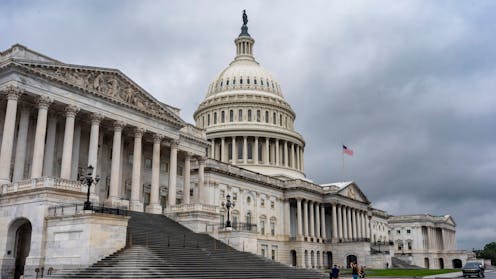
The Capitol is seen in Washington, D.C., on Sept. 25, 2025. AP Photo/J. Scott Applewhite

Congress failed to meet an Oct. 1 deadline to adopt a spending measure and keep the federal government open, resulting in the first government shutdown in nearly seven years. With both Democrats and Republicans seemingly prepared for a long fight, Alfonso Serrano, a politics editor at The Conversation, interviewed Charlie Hunt, a congressional expert at Boise State University, about the prospects of a compromise and what’s at stake for both parties.

Both sides appear to be dug in. Do you see a path to a quick compromise?

Not at this point. The Democrats have made clear at least what their stated sticking point is: these health care subsidies that are set to expire at the end of this year that were part of the Obamacare legislation. Politically speaking, this is part of a larger tactic of pushing back broadly and finally having some point of leverage against the Trump administration. The Democrats are going to use this moment to draw attention to what they see as abuses in the administration.

There have been a number of incidents like the spectacle at the Department of Defense (on Sept. 30), the use of the military in cities, and a lot of the other uses or abuses of the Justice Department or the Trump administration. Even though those all are technically separate from the shutdown issue, it’s impossible to talk about the Democrats’ strategy without making reference to those as things that a lot of folks of the left are really upset about. And this is a vehicle by which the Democrats can push back politically and actually use some of their power to stop momentum and draw attention to what the administration is doing.

But on the Republican side of things, they have a pretty simple argument, which is they want to continue funding the government at current levels and the Democrats do not. Until those dynamics change, or until enough Democratic senators get nervous about the optics of what is going on, no, I don’t see a pathway out.

How does the White House’s power over government spending, in the form of impoundment, affect negotiations?

The process of impoundment is basically the executive branch declining to spend money that Congress has appropriated. Technically speaking, that is not legal under the Impoundment Act that was passed following Richard Nixon practicing this method in the 1970s. If you’re the Democrats and you’re trying to negotiate for some kind of spending, for instance on these health care subsidies, and say you win a concession from the Republicans, then the Democrats might rightfully say, “Why would we even agree to this when we think there’s a chance that you’re either going to impound these funds that we’re appropriating for these subsidies, or you’re just going to have another rescissions package and the Republican-led Congress, with a simple majority, is just going to take these funds back? And then we haven’t won any concessions.”

Who are key players and groups of senators and representative who might decide how long this shutdown lasts?

You have people like GOP Sen. Rand Paul who are sort of the Tea Party or Freedom Caucus wing of the party, who want to see less government spending overall, and on principal tend to oppose these continuing resolutions. He was the only Republican who voted against the GOP bill last night. I have the feeling that if Republicans like the Senate Majority Leader John Thune manage to peel off a few more Democrats, and Rand Paul ends up being the deciding vote, they might be able to get him on board to pass this package.

In terms of the Senate, the real sticking points are the Democrats. You’ve got a shrinking number of moderate Democrats who could end up joining the Republicans on future votes to pass their spending bill. (You have) John Fetterman of Pennsylvania, who has been a bit of a wild card for the Democrats ever since he took office in 2023. Then you’ve got other more moderate Democrats from middle-of-the-road states. People like Catherine Cortez Masto in Nevada and others from states like Arizona or Pennsylvania, or maybe Wisconsin. But, for the most part, the Democrats have held the line.

To me, at the end of the day it’s a question of how much leadership in these two parties can hold together their caucus. I think both Chuck Schumer and Hakeem Jeffries, the Democratic leaders in the Senate and House, respectively, have faced a ton of blowback from Democratic voters, who have made it really clear that their strategy last time was not something the left supported. So I think there’s a lot more political pressure on them this time. And (Schumer and Jeffries) are going to sort of use that pressure a lot more with their caucus members than they did last time.

The dome of the U.S. Capitol is seen surrounded by U.S. flags.
The dome of the U.S. Capitol is seen before dawn on Wednesday, Oct. 1, 2025, in Washington.
AP Photo/Mark Schiefelbein

Which party stands to lose more from the political backlash of the shutdown?

It’s perfectly possible that we end up having this fight and there are no winners. A lot of times in these negotiations it ends up being who can save the most face. Who can get away from the fight without having lost the respect of their own supporters.

I have the feeling that most Democratic senators understand that Republicans are not going to suddenly give in on these health care subsidies, or that Donald Trump is going to suddenly say, “You know what, you’re right. We shouldn’t use the military in American cities.” Or that (Director of the Office of Management and Budget) Russell Vought is suddenly going to say, “You’re right. The executive branch should really stop impounding funds and we’re just going to give you what you want.” The Democrats understand that, but they are trying to demonstrate to their voters that they are going to do some kind of fighting and use whatever small leverage they do have.

I think there is more on a policy basis for the Democrats to lose just based on their ideological principles. There are plenty of Republicans that, frankly, are happy to see the government shut down, to demonstrate to the American people that “hey, look, you don’t need this much government, you can get away with less, this is a good opportunity maybe to cut a bunch of government programs, do mass firings of federal workers, as the OMB director has suggested.” Whereas the Democrats favor more robust social safety net programs and more government spending to achieve their goals.

So the longer the government stays shut down, the less funding those programs are going to get. In that sense, the Democrats have more to lose. On the other hand, the Republicans can lose a lot in terms of public relations because of who is leading their party.

I think Donald Trump demonstrated in the last shutdown, back in 2018-2019, that he has a great deal of difficulty not making these fights all about him, at least from a public perspective. That doesn’t tend to go well for him because he’s a pretty unpopular president, because he tends to bite off more than he can chew in fights like these. And that’s something the Democrats can use to their advantage from a public relations or communications perspective, in terms of talking to their voters.

But the question is going to be: How much of that is worth the losses that are going to be incurred if we’re talking about a government that is shut down for weeks or even months? That’s going to be a lot of pain for Americans. Then it just turns to who ends up getting the blame. And I don’t think we know enough yet.

The Conversation

Charlie Hunt does not work for, consult, own shares in or receive funding from any company or organization that would benefit from this article, and has disclosed no relevant affiliations beyond their academic appointment.

ref. Why a quick compromise to the first government shutdown in nearly 7 years seems unlikely – https://theconversation.com/why-a-quick-compromise-to-the-first-government-shutdown-in-nearly-7-years-seems-unlikely-266450

Cellphones in schools – more states are taking action to reduce student distraction without eliminating tech access

Source: The Conversation – USA (2) – By Kui Xie, Dean of College of Education and Human Development, University of Missouri-Columbia

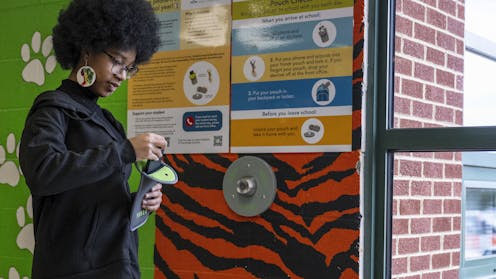
States including Michigan and Colorado are restricting the ways students can use digital devices in school. Jim Watson/AFP via Getty Images

Across the United States, more schools are implementing policies restricting cellphones as concerns about digital distraction, mental health and academic performance rise.

The scale of the issue is significant. According to a 2023 report from Common Sense Media, 97% of students between the ages of 11 and 17 use their cellphones at least once during the school day. These students spend a median of 43 minutes online each day during school hours. Social media, YouTube and gaming were the students’ top cellphone uses.

Schools have already begun taking action. Data from the National Center for Education Statistics published in 2025 shows that 77% of public schools ban cellphones during classes. Thirty-eight percent of schools have cellphone policies that restrict use outside of class as well – including during free periods, between classes or during extracurricular activities.

Policymakers in different states and educators in school districts across the country are putting into place a variety of solutions. Some rely on partial restrictions, while others enforce complete bans.

Many are still searching for the balance between technology access and minimizing distraction.

What is clear, however, is that cellphones have become one of the central issues shaping today’s classroom environment.

The role of technology in the classroom

As researchers and professors who study the integration of technology for teaching and learning – and who are also parents of school-aged children – we firmly believe that digital technologies are no longer optional add-ons. They have become indispensable in modern classrooms, acting as versatile instruments for instruction, collaboration and student engagement.

Take, for example, the ongoing shift from traditional paper textbooks to digital ones. This transformation has broadened access and created new opportunities for interactive, personalized learning. Abundant evidence demonstrates the positive effects of technology in supporting students’ engagement in class and their academic performance.

Students’ access to digital devices has improved significantly as schools across the United States continue investing in technology infrastructure. A 2023 report from the National Center for Education Statisitics indicates that 94% to 95% of public schools now provide devices to students who need them – although disparities exist between states.

A growing number of districts are adopting 1:1 initiatives, ensuring that every student has access to a personal device such as a laptop or tablet. These initiatives accelerated after the COVID-19 pandemic made clear the need for reliable access to learning technologies in schools for all students. They highlight the central role technology now plays in shaping everyday classroom instruction.

These technologies hold great educational potential. Yet, when not integrated thoughtfully and regulated effectively, they can inadvertently reduce focus and undermine learning.

Our recent systematic review on digital distraction in classrooms, which synthesized 26 empirical studies, finds three main drivers of distraction among students:

  • Technology-related factors included constant social networking, texting and cellphone addiction. These accounted for over half of the reported distractions.

  • Personal needs, such as entertainment, made up more than one-third.

  • Instructional environment, including classroom instruction that isn’t engaging, poor classroom management and difficult course content, accounted for the rest.

To address these challenges, the authors of the papers we reviewed suggested strategies such as teaching students how to control their own behavior and focus, silencing notifications, issuing clear device policies or banning devices.

The studies in our review also drew a clear distinction between school-provided and personally owned mobile devices. Devices provided by schools are typically equipped for instructional purposes, enhanced with stronger security and designed to restrict distracting uses. Personal devices are far less regulated and more prone to off-task use.

As schools increasingly provide devices designed for learning, the role of personal cellphones in classrooms becomes harder to justify as they present more risks of distraction than educational benefits.

Laws and policies regarding cellphone use

Several states in the U.S. have passed laws banning or restricting cellphone use in schools, with some notable differences.

States vary in how they define wireless communication devices. In Michigan, Senate Bill 234, passed in May 2025, describes a wireless communication device as an “electronic device capable of, but not limited to, text messaging, voice communication, entertainment, navigation, accessing the internet, or producing email.”

While most of the states have several technology types listed under wireless communication devices, a Colorado bill passed in May 2025 clearly identified that laptops and tablets did not fall under the list of restricted wireless communication devices.

A white teen sits outside absorbed in her phone. She is wearing black clothing, glasses and headphones.
A high school student in Lafayette, Colo., checks her phone.
Hyoung Chang/The Denver Post via Getty Images

Most state laws don’t specify whether the bans apply to both personally owned devices and school-owned devices. One exception is the bill Missouri passed in July 2025, which clearly specifies its ban refers only to personal devices.

North Carolina made exceptions in a bill approved in July 2025, allowing students to use wireless communication devices for instructional purposes. Other exceptions in the North Carolina bill include an emergency, when students’ individual education programs call for it, and a documented medical condition.

In their bills, most states provide recommendations for school districts to create cellphone use policy for their students. To take one typical example, the policy for Wake County in North Carolina, one of the state’s largest school districts, specifically refers to personal wireless communication devices. For elementary and middle school students, they must be silenced and put away between morning and afternoon bells, either in a backpack or locker. For high school students, teachers may allow them to be used for lessons, but they must otherwise be silenced and put away during instructional time. They can be used on school buses with low volume and headphones.

The Conversation

The authors do not work for, consult, own shares in or receive funding from any company or organization that would benefit from this article, and have disclosed no relevant affiliations beyond their academic appointment.

ref. Cellphones in schools – more states are taking action to reduce student distraction without eliminating tech access – https://theconversation.com/cellphones-in-schools-more-states-are-taking-action-to-reduce-student-distraction-without-eliminating-tech-access-256968

Jane Goodall, the gentle disrupter whose research on chimpanzees redefined what it meant to be human

Source: The Conversation – USA (2) – By Mireya Mayor, Director of Exploration and Science Communication, Florida International University

Jane Goodall appears on stage at 92NY in New York on Oct. 1, 2023. Charles Sykes/Invision/AP

Anyone proposing to offer a master class on changing the world for the better, without becoming negative, cynical, angry or narrow-minded in the process, could model their advice on the life and work of pioneering animal behavior scholar Jane Goodall.

Goodall’s life journey stretches from marveling at the somewhat unremarkable creatures – though she would never call them that – in her English backyard as a wide-eyed little girl in the 1930s to challenging the very definition of what it means to be human through her research on chimpanzees in Tanzania. From there, she went on to become a global icon and a United Nations Messenger of Peace.

Until her death at age 91, Goodall retained a charm, open-mindedness, optimism and wide-eyed wonder that are more typical of children. I know this because I have been fortunate to spend time with her and to share insights from my own scientific career. To the public, she was a world-renowned scientist and icon. To me, she was Jane – my inspiring mentor and friend.

Despite the massive changes Goodall wrought in the world of science, upending the study of animal behavior, she was always cheerful, encouraging and inspiring. I think of her as a gentle disrupter. One of her greatest gifts was her ability to make everyone, at any age, feel that they have the power to change the world.

Jane Goodall documented that chimpanzees not only used tools but make them – an insight that altered thinking about animals and humans.

Discovering tool use in animals

In her pioneering studies in the lush rainforest of Tanzania’s Gombe Stream Game Reserve, now a national park, Goodall noted that the most successful chimp leaders were gentle, caring and familial. Males that tried to rule by asserting their dominance through violence, tyranny and threat did not last.

I also am a primatologist, and Goodall’s groundbreaking observations of chimpanzees at Gombe were part of my preliminary studies. She famously recorded chimps taking long pieces of grass and inserting them into termite nests to “fish” for the insects to eat, something no one else had previously observed.

It was the first time an animal had been seen using a tool, a discovery that altered how scientists differentiated between humanity and the rest of the animal kingdom.

Renowned anthropologist Louis Leakey chose Goodall to do this work precisely because she was not formally trained. When she turned up in Leakey’s office in Tanzania in 1957, at age 23, Leakey initially hired her as his secretary, but he soon spotted her potential and encouraged her to study chimpanzees. Leakey wanted someone with a completely open mind, something he believed most scientists lost over the course of their formal training.

Because chimps are humans’ closest living relatives, Leakey hoped that understanding the animals would provide insights into early humans. In a predominantly male field, he also thought a woman would be more patient and insightful than a male observer. He wasn’t wrong.

Six months in, when Goodall wrote up her observations of chimps using tools, Leakey wrote, “Now we must redefine tool, redefine Man, or accept chimpanzees as human.”

Goodall spoke of animals as having emotions and cultures, and in the case of chimps, communities that were almost tribal. She also named the chimps she observed, an unheard-of practice at the time, garnering ridicule from scientists who had traditionally numbered their research subjects.

One of her most remarkable observations became known as the Gombe Chimp War. It was a four-year-long conflict in which eight adult males from one community killed all six males of another community, taking over their territory, only to lose it to another, bigger community with even more males.

Confidence in her path

Goodall was persuasive, powerful and determined, and she often advised me not to succumb to people’s criticisms. Her path to groundbreaking discoveries did not involve stepping on people or elbowing competitors aside.

Rather, her journey to Africa was motivated by her wonder, her love of animals and a powerful imagination. As a little girl, she was entranced by Edgar Rice Burroughs’ 1912 story “Tarzan of the Apes,” and she loved to joke that Tarzan married the wrong Jane.

When I was a 23-year-old former NFL cheerleader, with no scientific background at that time, and looked at Goodall’s work, I imagined that I, too, could be like her. In large part because of her, I became a primatologist, co-discovered a new species of lemur in Madagascar and have had an amazing life and career, in science and on TV, as a National Geographic explorer.
When it came time to write my own story, I asked Goodall to contribute the introduction. She wrote:

“Mireya Mayor reminds me a little of myself. Like me she loved being with animals when she was a child. And like me she followed her dream until it became a reality.”

In a 2023 interview, Jane Goodall answers TV host Jimmy Kimmel’s questions about chimpanzee behavior.

Storyteller and teacher

Goodall was an incredible storyteller and saw it as the most successful way to help people understand the true nature of animals. With compelling imagery, she shared extraordinary stories about the intelligence of animals, from apes and dolphins to rats and birds, and, of course, the octopus. She inspired me to become a wildlife correspondent for National Geographic so that I could share the stories and plights of endangered animals around the world.

Goodall inspired and advised world leaders, celebrities, scientists and conservationists. She also touched the lives of millions of children.

Two women face each other, smiling and holding a book
Jane Goodall and primatologist Mireya Mayor with Mayor’s book ‘Just Wild Enough,’ a memoir aimed at young readers.
Mireya Mayor, CC BY-ND

Through the Jane Goodall Institute, which works to engage people around the world in conservation, she launched Roots & Shoots, a global youth program that operates in more than 60 countries. The program teaches children about connections between people, animals and the environment, and ways to engage locally to help all three.

Along with Goodall’s warmth, friendship and wonderful stories, I treasure this comment from her: “The greatest danger to our future is our apathy. Each one of us must take responsibility for our own lives, and above all, show respect and love for living things around us, especially each other.”

It’s a radical notion from a one-of-a-kind scientist.

The Conversation

Mireya Mayor does not work for, consult, own shares in or receive funding from any company or organization that would benefit from this article, and has disclosed no relevant affiliations beyond their academic appointment.

ref. Jane Goodall, the gentle disrupter whose research on chimpanzees redefined what it meant to be human – https://theconversation.com/jane-goodall-the-gentle-disrupter-whose-research-on-chimpanzees-redefined-what-it-meant-to-be-human-205909

Childhood wealth and social status can help people get leadership roles in adulthood

Source: The Conversation – Canada – By Steve Granger, Assistant Professor, John Molson School of Business, Concordia University

Consider two teenagers searching for summer work. One is offered an opportunity to assist a project manager at their uncle’s construction company. The other submits a dozen retail applications, hoping for a call back. Who is more likely to hold a formal leadership position in their 20s?

Stories like this play out across families of different economic backgrounds every day. Our recent research shows that pathways to leadership often begin much earlier than many assume, and are shaped by social capital that accumulates throughout childhood and adolescence.

We studied more than 6,700 people born in the same week in April 1970 across Great Britain, tracked from birth to age 26 through the British Cohort Study.

Rather than measuring socioeconomic status at just one point in time, we were able to capture it repeatedly: at birth, and ages 5, 10 and 16. This gave us a rare opportunity to see how persistent exposure to either wealth or adversity shaped who went on to take up formal leadership roles as young adults and who did not.

Affluence versus adversity

Our findings revealed a striking pattern. Children who grew up in persistent wealth — whose parents consistently held managerial or professional occupations — were more likely to occupy leadership roles by their mid-20s.

Conversely, those who grew up in persistent adversity — whose parents consistently worked in lower-skilled or semi-skilled occupations, such as routine service, manual or support roles as defined in the U.K. National Statistics Socio-economic Classification — were less likely to hold similar leadership positions.

But what makes these findings particularly revealing is that persistent exposure to wealth or adversity isn’t simply being on opposite ends of one continuum. Instead, they represent two very different paths that result in distinct socialization experiences.

On one hand, persistent wealth creates cumulative benefits by providing repeated access to resources, enriching experiences and better-connected social networks. On the other hand, persistent adversity can compound barriers, limiting opportunities for skill development, access to quality education and early exposure to professional environments.

Both paths land young people at very different career starting points that either open or close doors to leadership opportunities.

Pathways through social networks

For children from affluent families, leadership pathways often run through social networks. Access to what we call “nepotistic opportunities” — job connections through family and friends — partially explained why these children were more likely to emerge as leaders later on.

This isn’t always blatant favouritism. Instead, it reflects how affluent families more easily provide access to “weak ties” — the kinds of looser connections that open doors to new information and opportunities.

Consider again the teenager whose uncle arranges a summer job on a construction site. They don’t just earn money; they also learn about co-ordinating teams in professional environments and they form relationships. These encounters build social capital that can shape their path to leadership.

Not just a lack of connections

By contrast, we expected that children from disadvantaged backgrounds would show the mirror image of this pattern: that missing out on opportunities to build their social network would explain their lower odds of becoming leaders.

But our data told a different story.

Persistent early life adversity was linked to fewer leadership roles in adulthood, but not simply because of missed social opportunities. The teenager cold-applying to retail jobs does indeed face barriers to later leadership, but more complex and deeper-rooted factors are likely at play.

The disadvantages of growing up in persistent adversity may be rooted in other factors not measured in our study, such as reduced access to non-parental mentors, lower quality schooling or the toll of long-term economic stress on well-being.

What organizations can do

Addressing disadvantage requires tackling the deeper, systemic ways persistent economic wealth and adversity shape development. Employers can help level the playing field.

Acknowledging that social class differences exist in organizations is a crucial first step. This lays the groundwork for reducing bias in leadership recruitment, selection, retention efforts and improving access to leadership development.

Recruiting more widely through non-traditional networks and providing employer-sponsored preparation opportunities can make pathways into formal leadership positions more accessible. Dispelling myths about social class, for example through training, can also help reduce bias in selection and improve retention.

Finally, creating developmental networks and mentorship programs can provide the kind of career guidance and connections that affluent families often provide informally.

Leadership isn’t predetermined

The influence of childhood conditions can have lasting effects on career trajectories. In our study, the effects of early socioeconomic status conditions were still visible when participants reached their mid-20s, long after they had finished school and entered the workforce.

Addressing leadership diversity requires not just workplace interventions, but also early investment in supporting childhood development across all socioeconomic backgrounds.

Investments in quality education, mentorship programs and opportunities for young people to build professional networks is crucial for creating more equitable pathways to leadership.

While our findings highlight advantages for affluent youth and barriers for disadvantaged youth, they don’t dictate destiny. Among those who experienced at least some persistent adversity, 34 per cent still rose to leadership positions (compared to 46 per cent of those who experienced at least some persistent wealth).

What our research identifies is how socioeconomic status advantages and disadvantages compound over time, widening the disparity in social experiences that generate leadership opportunities.

Recognizing the distinction between these cumulative effects can help motivate us to create more equitable family and organizational systems where leadership potential is nurtured no matter where you start.

The Conversation

Steve Granger receives funding from the Social Sciences and Humanities Research Council of Canada.

Julian Barling receives funding from the Social Sciences and Humanities Research Council of Canada and the Borden Chair of Leadership.

Nick Turner receives research funding from Cenovus Energy Inc., Haskayne School of Business’s Future Fund, Mitacs, and the Social Sciences and Humanities Research Council of Canada (SSHRC).

ref. Childhood wealth and social status can help people get leadership roles in adulthood – https://theconversation.com/childhood-wealth-and-social-status-can-help-people-get-leadership-roles-in-adulthood-265457

Une agriculture 100% bio en France est-elle possible ?

Source: The Conversation – in French – By Michel Duru, Directeur de recherche honoraire, UMR AGIR (Agroécologie, innovations et territoires), Inrae

Les mangeurs bio étant moins exposés aux pesticides, il s’en suit une réduction du risque de développer des maladies chroniques non-transmissibles via l’alimentation. C’est particulièrement démontré pour le cancer du sein chez la femme ménopausée. Elina Mark, CC BY

Une agriculture française 100 % bio serait meilleure pour notre santé et celle de l’environnement. On pourrait arriver à cette généralisation du bio si l’on réduisait notre consommation de viande. Ce qui aurait également des effets bénéfiques pour notre santé.


Pour notre santé comme pour celle des écosystèmes, l’agriculture biologique apporte des bienfaits qui ne sont plus à prouver. Ses détracteurs aiment cependant dire qu’il serait impossible de la généraliser, car sa production par hectare étant souvent moindre, notre dépendance aux importations s’accroîtrait, assurent-ils.

C’est une vision parcellaire de notre système alimentaire. En effet, des études observationnelles, tout comme des scénarios de systèmes alimentaires, montrent qu’une généralisation de l’agriculture biologique serait possible si l’on réduisait en même temps notre consommation de produits animaux. Cela permettrait, d’une part, de libérer des terres arables pouvant compenser ces rendements moindres et, d’autre part, de produire ce dont notre alimentation manque cruellement pour notre santé et que, de plus, nous importons : fruits, légumes et légumineuses. Notre santé comme notre environnement s’en porteraient mieux.

Santé et environnement : des enjeux cruciaux et interdépendants

Commençons par un constat : notre système alimentaire actuel est fort coûteux. Il présente notamment une série de dépenses bien souvent invisibles pour le consommateur. On parle de coûts cachés. Il s’agit des dépenses faites ou qu’il faudrait faire pour corriger les conséquences sanitaires et environnementales de pratiques inadaptées comme :

  • l’utilisation excessive d’engrais azotés et de pesticides de synthèse, qui rendent la France très dépendante des importations et qui, du moins pour ce qui concerne la plupart des pesticides, sont nocifs pour la santé humaine et celle de l’environnement ;

  • la surconsommation de produits ultra-transformés et de produits animaux, en particulier de viande rouge et de charcuterie, qui contribuent au développement de maladies chroniques ;

  • le développement d’élevages très intensifs en intrants, souvent concentrés géographiquement, nécessitant beaucoup d’achats d’aliments pour nourrir les animaux, avec comme conséquences des nuisances graves sur les écosystèmes, comme le montre, par exemple, le problème des algues vertes en Bretagne.

Mises bout à bout, toutes ces dépenses équivalent presque aujourd’hui au prix total des denrées alimentaires consommées en France, soit 170 milliards d’euros.

La bonne nouvelle, c’est que l’agriculture et l’alimentation bio permettraient de réduire ces dépenses, car elles n’utilisent pas d’intrants de synthèse, sont plus exigeantes pour les modes d’élevage et plus restrictives quant aux additifs autorisés dans la fabrication des aliments. En outre, le bio comporte de nombreux bienfaits qui plaident en faveur de sa généralisation.

Meilleure pour la santé

L’alimentation bio est, avant tout, meilleure pour la santé. Ainsi, les produits biologiques ont en moyenne des teneurs un peu supérieures en micronutriments d’intérêt pour la santé, notamment des antioxydants, mais leur atout principal est de contenir bien moins de résidus de pesticides, à l’exception du spinosad, un insecticide naturel. Les mangeurs bio étant moins exposés aux pesticides, il s’en suit une réduction du risque de développer des maladies chroniques non transmissibles par l’alimentation, comme l’ont montré des études épidémiologiques et quelques études cliniques. C’est particulièrement démontré pour le cancer du sein chez la femme ménopausée.

Des effets contrastés sur l’environnement

L’agriculture bio a également nombre d’atouts pour le sol et pour la biodiversité qui sont bien documentés. En élevage, les vaches utilisent peu de terres labourables et elles pâturent dès que les conditions le permettent, si bien que leur alimentation entre peu en compétition avec la nôtre. Les achats de fourrages et de compléments sont également limités.

Les élevages de porcs et de volailles ont une moindre densité d’animaux par mètre carré et ont accès à des parcours, ce qui est mieux pour le bien-être animal. La plus faible densité d’animaux permet aussi d’utiliser les fumiers avec moins de risque de pollution, car plus d’hectares sont disponibles pour leur épandage. Toutes ces caractéristiques font qu’on parle d’élevage « avec lien au sol ».

Les émissions de gaz à effet de serre qui contribuent au réchauffement climatique, bien que très variables selon les études, sont, lorsqu’exprimées par kilogramme de produit, en moyenne un peu plus élevées en bio si les rendements des cultures sont plus faibles et les temps d’élevage sont plus longs. Il en est de même des pertes de nitrates à l’origine, par exemple du problème des algues vertes en Bretagne. Un autre point négatif parfois pointé est celui du cuivre et du soufre qu’utilisent certains vignerons ou maraîchers bio pour lutter contre les maladies et qui ne sont pas sans impact sur les sols.

Mais la principale faiblesse de l’agriculture bio provient des rendements de cultures moindres qu’en agriculture conventionnelle d’environ 25 % en moyenne ; les différences les plus fortes étant observées pour les céréales et pour les pommes de terre (jusqu’à 35 %) et les plus faibles pour le tournesol, pour les fruits et légumes (20 %). Pour les productions animales, les différences moyennes sont de 15 %.

De façon générale, il faut plus de surfaces pour obtenir une même quantité de produits. C’est d’ailleurs la raison pour laquelle il a été montré par modélisation au Royaume-Uni qu’une généralisation de l’alimentation bio n’est pas possible.

En France, une agriculture totalement bio est encore loin d’advenir, vu que l’agriculture conventionnelle représente aujourd’hui 90 % des terres agricoles et qu’elle reste à l’origine de 94 % des dépenses alimentaires des ménages.

De ce fait, cela peut sembler ironique quand on entend les craintes de dépendance aux importations que soulèvent les sceptiques du bio, car l’agriculture française est déjà aujourd’hui très dépendante des produits importés, avec 2 millions de tonnes d’engrais azotés de synthèse et 3,5 millions de tonnes de tourteaux de soja pour l’agriculture conventionnelle, auxquels il faut ajouter l’équivalent de 680 000 hectares de fruits et légumes.

D’où la question : est-il possible de consommer plus de produits bio, globalement bénéfiques pour la santé et pour l’environnement, malgré des productions agricoles plus faibles ?

Diminuer la viande dans l’assiette pour généraliser le bio

La réponse est oui, si l’on diminue notre consommation de produits animaux, et donc la surface agricole réservée à l’élevage pour en consacrer plus aux productions végétales. Pour évaluer quelle diminution serait bénéfique à la fois pour la santé et pour l’environnement, commençons par regarder quelles sont les recommandations sur la part de protéines végétales et animales que l’on devrait avoir dans notre alimentation.

Notre consommation moyenne de protéines totales (1,4 g/jour de protéines par kilogramme de poids corporel) excède aujourd’hui les recommandations d’environ 30 % et les besoins de 70 % (0,83 g/jour de protéines par kilogramme de poids corporel). Un régime plus végétalisé demeure meilleur pour la santé. Il serait même possible d’utiliser jusqu’à 80 % de protéines végétales tout en assurant nos besoins en micronutriments essentiels, comme la vitamine B12, pour apporter suffisamment de protéines, à condition d’associer des céréales aux légumineuses de façon à avoir un apport équilibré en acides aminés.

Ces données scientifiques permettent de définir un ordre de grandeur pour une baisse sans risque de la consommation de produits carnés, qui serait de l’ordre de 50 % en moyenne pour respecter les limites planétaires, notamment pour le climat et pour l’azote, sans augmenter la dépendance aux importations.

Moins manger de viande n’est d’ailleurs pas aberrant du tout d’un point de vue historique, car, si certains associent un régime très carné à des traditions culturelles, les Français mangeaient en réalité moitié moins de viande il y a cent ans.

Les produits laitiers sont également surconsommés aujourd’hui, au regard des recommandations nutritionnelles, avec une consommation moyenne de 70 grammes de fromage par jour lorsqu’il est conseillé de ne pas dépasser 40 grammes.

Une alimentation plus bio est donc possible en végétalisant l’assiette, car diminuer la consommation de produits animaux réduirait bien plus la surface pour se nourrir que la généralisation d’une alimentation bio ne l’augmenterait.

Ainsi, réduire la consommation de produits animaux permet de diviser par deux cette surface (de 8,3 m²/jour pour ceux qui mangent moins de 50 grammes de viande par jour à 16,8 m²/j pour ceux qui en mangent plus de 100 grammes par jour), alors que consommer bio ne l’augmenterait que de 30 %. De cette façon, il serait possible de libérer au moins 4 millions d’hectares de cultures utilisées par l’élevage et de les affecter à des productions végétales cultivées en bio, compensant ainsi des rendements inférieurs, notamment pour les céréales.

Quel type d’élevage favoriser ?

Reste la question de savoir quels types d’élevage il faudrait en priorité diminuer et ceux qui, au contraire, sont à favoriser.

Les élevages de ruminants (bovins, ovins) à soutenir sont ceux où l’alimentation des animaux provient principalement des prairies pâturées ou récoltées. De tels élevages sont plus faciles à mettre en œuvre en bio. Ils sont meilleurs pour l’environnement car ils génèrent moins de pollutions azotées et utilisent bien moins ou pas de pesticides. En outre, le lait et la viande sont plus riches en acides gras insaturés à fonction anti-inflammatoire.

En conséquence, la réduction des productions animales devrait surtout concerner les élevages les plus intensifs en intrants de synthèse, et/ou concentrés géographiquement, qui utilisent le plus de terres labourables et sont le plus dépendants d’importations de concentrés (soja) pour l’alimentation des animaux. Une partie des terres labourables – 3,8 millions d’hectares pour l’élevage des ruminants et 3,9 millions d’hectares pour les porcs et les volailles – serait alors utilisée pour des productions végétales en bio.

Les scénarios conçus à l’échelle de l’Union européenne et de la France montrent que la mise en œuvre de pratiques agroécologiques ne permet pas à elle seule d’atteindre les objectifs de politiques publiques en matière de climat et d’émissions d’azote. Cela nécessite donc de végétaliser l’assiette, en complément du développement massif des légumineuses, qui ont l’immense intérêt de ne pas exiger d’apport en engrais azotés, de réduire de moitié le gaspillage alimentaire, et de recycler une partie de nos urines naturellement riches en azote. En effet, un point faible de l’agriculture biologique est souvent le manque d’azote, nécessaire à la croissance des plantes.

La bio étant une forme emblématique, mais perfectible, de l’agroécologie, le progrès des connaissances pour développer une agriculture, dite biorégénératrice, fondée sur les processus écologiques permettrait de réduire les différences de production avec l’agriculture conventionnelle. Cela suppose d’activer de nombreux leviers agronomiques : la diversification végétale, les pratiques améliorant la santé du sol ainsi que des modes d’alimentation des animaux fondés sur l’herbe pour les ruminants et sur la complémentation en lin pour les monogastriques.

Ignorant ces données scientifiques quant à nos besoins en protéines animales et leurs impacts sur l’environnement, le débat sur le bio est souvent mal posé.

The Conversation

Membre du Conseil scientifique de PADV (Pour une Agriculture du Vivant)

ref. Une agriculture 100% bio en France est-elle possible ? – https://theconversation.com/une-agriculture-100-bio-en-france-est-elle-possible-263394

Dams for development? Unpacking tensions in the World Bank’s hydropower policies

Source: The Conversation – Africa – By Barnaby Joseph Dye, Lecturer, King’s College London

Dams have been emblematic of the World Bank’s approach to development for many decades. From the bank’s early years in the 1960s and 1970s, large-scale infrastructure projects such as dams, power plants and transport networks were central to its strategy for economic growth and poverty reduction. This reflected a top-down modernisation paradigm.

But the controversial social, economic and environmental impacts of dams sparked widespread criticism. This prompted internal scrutiny and a reduction in funding by the 1990s. Notable examples included the bank’s withdrawal from India’s Narmada Dam and Nepal’s Arun III hydropower project. Both followed large-scale protests.

From 2007, the bank’s support for dams began to rise again, reflected in an increasing portfolio of projects. There were two main drivers. Hydropower gained renewed appeal as a low-carbon energy source. And infrastructure-led economic growth regained prominence in development policy. Yet, earlier debates were not erased: questions about social, environmental and political consequences continued to influence decision-making.

This begs the question of whether anything has changed. Does the World Bank approach dams differently today? Did past protests and policy reforms have a longer-lasting effect?

We are researchers examining the politics of development, with a focus on dam decision-making in Africa and South Asia. In a recent book chapter we show that debates over dams are far from settled. Reforms have strengthened planning, impact assessment and mitigation. But change has been gradual, contested and layered, reflecting the deeply political nature of large-scale infrastructure projects.

In the book chapter we trace how the World Bank’s approach to dams has shifted over decades. We ask whether reforms have genuinely altered how dams are built and their impacts.

The answer is nuanced. Reforms have improved planning, impact assessment and mitigation. These changes have indeed reduced negative social and environmental effects. But they have been introduced gradually, in layers, without fully replacing older practices.

Some negative impacts continue to be overlooked, and compensation schemes are often inadequate. The balance of trade-offs has shifted. Yet decades of reform have not resolved the tensions surrounding dam-building. These remain hotly debated both within and outside the bank.

This reveals the World Bank as a dynamic institution, shaped by debates and contestations. These take place within the organisation and from governments, communities and civil society. Policy-making and implementation are inherently contested processes. Both require careful negotiation, oversight and engagement.

Our findings highlight the importance of critical engagement and independent research to influence how large-scale infrastructure projects are planned and executed. And to bring alternative perspectives into institutional decision-making.

The evolution of dam-building

In the mid- to late 20th century, the World Bank championed large dam projects as engines of economic growth. The bank supported hydropower and irrigation infrastructure across Asia, Africa and Latin America. These projects often prioritised technical and financial feasibility over social and environmental issues.

The consequences were significant: widespread displacement, ecological damage and resistance from affected communities and advocacy groups.

Civil society, academic research and internal bank discussions increasingly criticised this approach. By the 1990s, development thinking began to shift. Greater emphasis was placed on participation, environmental safeguards, and social inclusion. Concepts such as sustainable livelihoods, social capital, and community-driven development gained traction. Participatory development approaches became more prominent.

The bank increasingly positioned itself as a “knowledge bank”. It began to emphasise data collection and local consultation alongside financing.

New mechanisms were introduced to embed participation and safeguard considerations. These included social and environmental impact assessments and stakeholder consultations. Yet these processes often operated within existing frameworks that continued to prioritise economic and engineering objectives. The result was that technical and financial considerations largely remained central.

Participation or performance?

In theory, local consultation and stakeholder engagement have become integral to the World Bank’s approach to dam development. In practice, however, these processes often serve more as legitimising tools than as genuine mechanisms for power redistribution.

For example, in Nepal, the World Bank’s subsidiary, the International Finance Corporation, promotes sustainable hydropower through stakeholder-based discussions and training programmes. Yet these initiatives frequently exclude key local actors. The focus instead remains on government agencies, industry representatives and international donors.

Similarly, at the Rusumo Falls Dam in Tanzania, resettlement action committees comprising affected communities were established to liaise with project authorities and advise on compensation. The committees provided a formal avenue for local input. But they had limited power to challenge national governments or alter major financial and infrastructural decisions.

In essence the bank co-opts critical voices while proceeding with its own priorities. Local communities can voice concerns. But their influence over the trajectory of development projects remains constrained.

Where change comes from

Scholars have often attributed shifts in World Bank policy to external pressures. These include civil society advocacy, intellectual debates on development and evolving global norms.

These factors certainly play a role. But our research highlights the importance of internal dynamics within the institution.

Competing factions within the bank generate tensions that drive both reform and continuity. For example, financiers focus on lending targets. Engineers prioritise large-scale infrastructure. Others advocate for social and environmental protections.

This internal contestation helps explain why new World Bank dam policies often fail to produce the expected outcomes. Policy evolution is gradual. New priorities layered onto existing frameworks. The result is a mixture of change and continuity.

Far from being a monolith, the World Bank is an institution shaped by ongoing internal debate. Different interests, factions and ideas rise and fall in influence over time.

Rethinking participation

Dams are a microcosm of broader development debates. They demand political choices and trade-offs between infrastructure needs, financing, environmental sustainability, social equity and economic impact.

The World Bank reflects these tensions internally, with competing priorities and factions shaping how decisions are made.

For those interested in meaningful reform, the challenge is to embed more inclusive governance and decision-making. Participation must go beyond token consultation. It should involve genuine power-sharing with affected communities, stronger accountability mechanisms and real influence over project outcomes.

The Conversation

Barnaby Joseph Dye has received multilple grants and a scholarship from the UK’s Research Councils (mainly Economic and Social Science Research Council) and the British Academy. He is a member of the British Labour Party.

Udisha Saklani received funding from the UK Research and Innovation Economic and Social Research Council (ESRC) under grant number ES/P011373/1, as part of the Global Challenges Research Fund. She also acknowledges support from the Margaret Anstee Studentship awarded by Newnham College, University of Cambridge.

ref. Dams for development? Unpacking tensions in the World Bank’s hydropower policies – https://theconversation.com/dams-for-development-unpacking-tensions-in-the-world-banks-hydropower-policies-260947