Marine protected areas aren’t in the right places to safeguard dolphins and whales in the South Atlantic

Source: The Conversation – USA (2) – By Guilherme Maricato, Pós-doutorando no Programa de Pós-Graduação em Ecologia, UFRJ

Whales have become increasingly common in regions such as the northern coast of São Paulo, which also has heavy ship traffic. Julio Cardoso/Projeto Baleia à Vista

The ocean is under increasing pressure. Everyday human activities, from shipping to oil and gas exploration to urban pollution, are affecting the marine environment. Extensive research shows how this combination of stressors represents one of the greatest threats to marine wildlife, potentially affecting biodiversity on a global scale.

To protect the ocean, one of the primary tools we have is marine protected areas. But are they truly protecting species in the most critical locations?

In an attempt to answer this question in Brazil, we conducted a comprehensive study focusing on two key species: the Bryde’s whale, a nonmigratory species, and the bottlenose dolphin, found in coastal and oceanic waters around the world. We chose these species because they do not migrate and stay in the same areas all year long, where they are exposed to harmful human activities.

bottlenose dolphins swim with a ship in the background.
Bottlenose dolphins swim off the coast of Rio de Janeiro, an area with intense maritime activity.
Guilherme Maricato

The news is unfortunately not good: Our findings, recently published in Marine Pollution Bulletin, show that the areas critical for these species’ survival are also the most threatened.

Where whales and dolphins eat and play

Through spatial analysis, specifically species distribution models, we uncovered these animals’ preferences. We cross-referenced thousands of occurrence records for Bryde’s whales and bottlenose dolphins with environmental data that can influence their presence. This included factors such as water temperature, depth and even food availability.

Two Bryde's whales swimming.
Two Bryde’s whales off the coast of Cabo Frio, Rio de Janeiro.
Israel Maciel

From this data, we created a map showing the most suitable habitats for these species. The results strongly indicated that southeastern Brazil is their “preferred area.” On the continental shelf, these areas are located in shallower waters rich in nutrients, often associated with colder waters and steep seabed slopes that bring food to the surface.

The problem with overlap

The preferred areas we identified, however, are not exclusive to whales and dolphins. Southeastern Brazil is also an economically vital marine region for the country, driven by activities in the Santos and Campos basins, where a new oil reserve was recently discovered.

In the second stage of our research, we overlaid our map of the most suitable habitats for these species with a map of human activity. This included the presence of ports, areas of oil and gas exploration, and various shipping routes.

The result is a near-perfect overlap. The areas where Bryde’s whales and bottlenose dolphins are most frequently found coincide exactly with where human activity is most intense.

Why protected areas aren’t helping them

Brazil has expanded its conservation coverage in recent years by creating four large marine protected areas, which we think is excellent news. However, the crux of the matter lies in the quality of that protection.

In 2024, we also participated in a global collaborative effort to evaluate marine protected area effectiveness, the results of which were published in Marine Policy. The findings revealed that the vast majority of Brazil’s designated protected areas actually permit activities that are incompatible with biodiversity conservation.

This quality gap was also evident in our study. Most marine protected areas in southeastern Brazil, even the most effective ones, are coastal. They do not encompass the suitable habitats for Bryde’s whales and bottlenose dolphins, which are more heavily affected by oil and gas exploration.

And what about the oceanic protected areas Brazil created?

For the most part, they are located in areas that are either not the most suitable for these two species or lack significant conflicts with human activity. There is an ongoing debate about whether governments are protecting the right places or leaving the most critical biodiversity hot spots and conflict zones unprotected.

The real impacts of the conflict

The risk of ship strikes is constant. Whales and dolphins must come to the surface to breathe, and in areas of heavy traffic such as southeastern Brazil, the risk of being hit by vessels is high. Meanwhile, constant noise – from both ship engines and oil and gas exploration – interferes with the navigation, communication and foraging of these animals.

Additionally, there is the risk of entanglement in fishing nets, particularly in areas with intense fishing activity, resulting in bycatch, the incidental capture of nontarget species. Finally, pollution from ports along with potential spills can degrade the health of these animals and weaken their immune systems.

a map of Brazil shows lots of overlap between offshore animal habitats and human activity, particularly in the south and southwest
How the preferred habitats of Bryde’s whales, left, and bottlenose dolphins, right, overlap with human activity. Dark colors indicate a higher exposure index.
Guilherme Maricato

A road map for the future

Our findings serve as a critical warning: Simply creating marine protected areas is not enough. They must be placed in the right locations, protecting species where they are most vulnerable. We have shown that there is an urgent need to rethink conservation strategies in Brazil.

In addition to strengthening the network of marine protected areas, our findings suggest the need for specific management actions to reduce conflicts. While reducing ship speeds can protect whales from collisions, establishing fishing exclusion zones and using acoustic deterrents can prevent dolphins from becoming entangled in nets.

Most importantly, however, we believe these actions must be applied in the areas of highest exposure for conservation to be truly effective. Protecting biodiversity while maintaining economic activity is a complex challenge, but we now have a map to begin this conversation.


This project was funded by the Foundation for Research Support of the State of Rio de Janeiro (Faperj), Brazilian Federal Agency for Support and Evaluation of Graduate Education (Capes) and the National Council for Scientific and Technological Development (CNPq). We also acknowledge the support of the Marine Ecology and Conservation Lab (ECoMAR-UFRJ), Brazilian Humpback Whale Project, Ilhas do Rio Project, Cetacean Monitoring Project, Marine Mammal Monitoring Support System, Marine Conservation Institute and Coral Vivo Project. The publication of this article was also supported by Capes.

The Conversation

Maria Alice S. Alves receives research funding from the National Council for Scientific and Technological Development and the Carlos Chagas Filho Foundation for Research Support of the State of Rio de Janeiro.

Rodrigo Tardin receives funding from the Young Scientist of Our State program of FAPERJ.

Clinton N. Jenkins and Guilherme Maricato do not work for, consult, own shares in or receive funding from any company or organization that would benefit from this article, and have disclosed no relevant affiliations beyond their academic appointment.

ref. Marine protected areas aren’t in the right places to safeguard dolphins and whales in the South Atlantic – https://theconversation.com/marine-protected-areas-arent-in-the-right-places-to-safeguard-dolphins-and-whales-in-the-south-atlantic-274256
A more complete Latin American history, including centuries of US influence, helps students understand the complexities surrounding Nicolás Maduro’s arrest

Source: The Conversation – USA (2) – By Lightning Jay, Assistant Professor of Teaching, Learning and Educational Leadership, Binghamton University, State University of New York

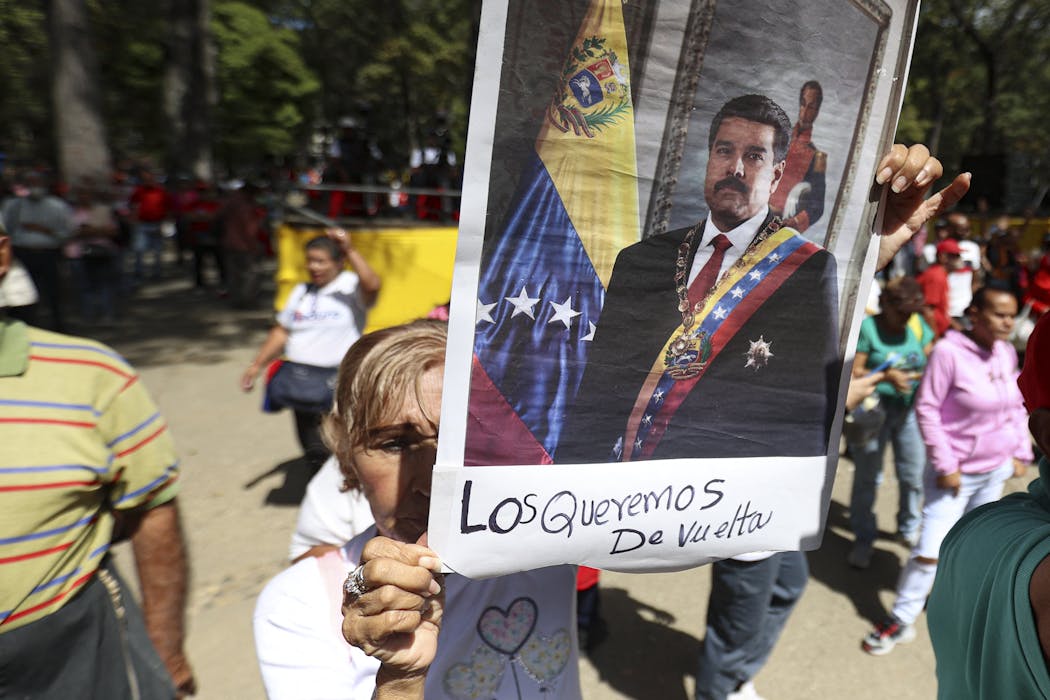
A woman shows a portrait of ousted Venezuelan President Nicolás Maduro during a demonstration in Caracas on Jan. 21, 2026. Pedro Mattey/AFP via Getty Images

Many of our college freshman students will have seen and read about the Jan. 3, 2026, U.S. military operation in Venezuela that culminated in the arrest of its leader, Nicolás Maduro, and his wife, Cilia Flores. The U.S. has charged Maduro and Flores with conspiracy and drug trafficking. Maduro and Flores are imprisoned in New York City, awaiting trial.

Some freshmen this semester will likely say Maduro’s unusual arrest violates international law. Others may view it as a decisive step in the U.S.’s fight against narco-terrorism.

That’s in part because the U.S has no national curriculum, and high school history courses often rely on teachers’ discretion, even more so than in other content areas. This results in history being taught a lot of different ways across schools.

As scholars of Latin American history and history education in the U.S., we know that most American high school students learn about the ancient civilizations in Latin America and a few other key flash points in history.

But few, we suspect, will understand Maduro’s arrest as part of a long history of the U.S.’s interventions in Latin America, stretching back to the Monroe Doctrine in the 1800s. President James Monroe introduced this foreign policy in an 1823 speech, saying that the U.S. would not allow European colonization or interference in the Western Hemisphere.

A man wearing a beige outfit is held on either arm by two men in uniform, while a woman behind him is held by the arm by one man. They walk near a grey river.
Nicolás Maduro and his wife, Cilia Flores, are seen in handcuffs after landing at a Manhattan helipad on Jan. 5, 2026.
XNY/Star Max/Contributor via Getty Images

A partial, skewed history

In high school world history courses, teachers in the U.S. often rely on case studies and examples to indicate historical trends.

High school students are likely to learn about the Inca, Maya and Aztec civilizations as representatives of pre-Columbian Latin America. They read about Spanish conquistadors such as Hernán Cortés, who overthrew the Aztec empire, and Francisco Pizarro, who conquered the Incas in the early 1500s.

They will learn about how most Latin American countries, including Mexico, Argentina, Colombia and Guatemala, gained independence in the early 1800s.

Often, students learn about these countries’ fights for independence, with the case example of the Haitian Revolution. They may learn about Simón Bolívar, the grand Venezuelan military officer and liberator who played a decisive role in the independence movements of countries including Venezuela, Colombia and Bolivia.

Students also often learn about more recent eras, including the Cuban missile crisis, a dangerous tipping point between the U.S. and the Soviet Union that brought the world close to nuclear war in 1962.

But overall, in U.S. history courses the U.S. is typically the main character and Latin America is treated as a place where the U.S. exerts power.

An example of this narrative includes the U.S.’s failed attempt to overthrow the Cuban government in 1961, during the Bay of Pigs invasion.

What US high school students miss

It is no surprise that students who learned this version of Latin American history in high school would have many questions about Maduro’s recent arrest – including who the longtime leader is.

A fuller exposure to Latin American history would include, among other things, lessons about neoliberal capitalism, which has long shaped the politics, economies and societies of Latin America. This is a U.S.-government supported policy that promotes less internal government intervention and more free-market capitalism.

Even though most Latin American countries achieved independence just 30 to 40 years after the U.S., not all presidential administrations in the U.S. fully accepted these nations’ freedom.

In 1904, Theodore Roosevelt added an additional text called a corollary to the Monroe Doctrine, stating that the U.S. could intervene in the internal affairs of any Latin American country in cases of wrongdoing.

By the late 1800s, the U.S. had conquered more than half of Mexico’s territory and annexed Puerto Rico. It also began occupying Cuba in 1898, after Spain lost the Spanish-American War and control over the island.

The U.S. militarily and politically then backed a 1903 revolution that gave Panama independence from Colombia. Panama’s independence led to a treaty that let the U.S. build and control the Panama Canal for nearly a century.

A cartoon shows a man wearing a red and white shirt, blue pants with stars and a hat riding a bicycle that has two globes for wheels down a dirt path with a horse behind it.
A political cartoon from 1898 criticizing American foreign policy shows Uncle Sam riding a bicycle with globes of the western and eastern hemispheres for wheels.
Bettmann/Contributor via Getty Images

A strong influence

Overall, the U.S. intervened in Latin America more than 40 times from 1898 to the mid-1990s.

Some of these interventions involved coups against democratically elected officials – including Jacobo Árbenz Guzmán in Guatemala in 1954 and Salvador Allende in Chile in 1973. These coups often led to civil wars or enduring military regimes that the U.S. claimed were necessary to fight the spread of communism.

Chile was then among the countries – including Argentina and Uruguay – that implemented economic policies in the 1970s that kept markets open to foreign businesses and governments, fostering dependence on wealthier nations.

Some Latin American countries, including Mexico and Brazil, struggled financially in the 1990s.

The U.S. and international financial institutions gave conditional loans that promoted austerity – meaning raising taxes and cutting public spending – and market liberalization, which reduces governmental restrictions over an economy. These loans stabilized some economies in the short term, but also made other problems, such as inequality and debt, worse.

In the early 2000s, several countries, including Brazil, Ecuador and Bolivia, elected left-leaning leaders who advocated for alternatives to this U.S.-backed economic policy. Ultimately, though, their reforms were often limited and not politically stable.

A more complete history

During a Jan. 4, 2026, press conference, President Donald Trump used a new term, the “Donroe Doctrine,” to describe his administration’s plans to claim dominance in the Western Hemisphere.

One day later, Vice President JD Vance doubled down: “This is in our neighborhood,” he said in an interview about Maduro’s capture. “In our neighborhood, the United States calls the shots. That’s the way it has always been. That’s the way it is again under the president’s leadership.”

Learning a more complete version of Latin American history in high school won’t prevent our college students from bringing questions to class about the U.S.’s capture of Maduro, and why Trump has said the U.S. will “run” Venezuela.

But this knowledge might help our students ask more complex, nuanced questions, such as whom national security strategies actually benefit the most.

Understanding Latin America is not merely a requirement for interpreting headlines about Venezuela but a prerequisite for Americans to understand themselves and their place in the world.

The Conversation

The authors do not work for, consult, own shares in or receive funding from any company or organization that would benefit from this article, and have disclosed no relevant affiliations beyond their academic appointment.

ref. A more complete Latin American history, including centuries of US influence, helps students understand the complexities surrounding Nicolás Maduro’s arrest – https://theconversation.com/a-more-complete-latin-american-history-including-centuries-of-us-influence-helps-students-understand-the-complexities-surrounding-nicolas-maduros-arrest-272984

Ending tax refunds by check will speed payments, but risks sidelining people who don’t have bank accounts

Source: The Conversation – USA (2) – By Beverly Moran, Professor Emerita of Law, Vanderbilt University

More than 6 million Americans receive paper tax refund checks annually. Often, those refunds go to purchase groceries or pay the bills. But this year, those taxpayers may be surprised to learn that the paper check they’re waiting for no longer exists.

That’s because of executive order 14247, which President Donald Trump signed in 2025. It directed the Treasury Department to stop issuing paper checks for tax refunds.

The executive order has its fans. Nacha, the organization that runs the network that electronically moves money between financial institutions, says the new rules could save the government US$68 million each year. The American Bankers Association is also excited, predicting the move will help people save on check-cashing fees. Other supporters argue the change will prevent mail theft and check fraud.

But what about the 6 million Americans without bank accounts – the so-called “unbanked”? Watchdogs warn that they will suffer if exceptions and outreach fall short.

As a professor who specializes in tax law, I think those concerns are valid.

Reform could leave the unbanked behind

Shifting to electronic payments is a classic modernization effort. So how could that be bad?

The problem is that a sizable number of Americans have no bank account. Twenty-three percent of people who earn under $25,000 were unbanked in 2023. Only 1% of people earning over $100,000 in 2023 lacked a bank account.

Black and Hispanic Americans, young adults, and people with disabilities are more likely to be unbanked than other people, and 1 in 5 unbanked households include someone with a disability.

Low-income families often use their refunds to pay for basics such as food and rent. And under the status quo, unbanked people already lose a large slice of those refunds to fees. Check cashers, for example, can charge up to 1.5% for government checks in New York, up to 3% in California, and even more in other states.

But the unbanked might find that they’re paying even higher fees in a post-check world. They might, for example, use paid tax preparation services to access refund loans. The federal courts and investigative journalists have discussed ways that prepaid tax preparers engage in false advertising and overpriced services.

Or they might forgo their tax refunds entirely.

Geography, race and the digital-banking divide

Where people live affects their access to banking.

Gaps in broadband coverage and lack of public transportation to reach libraries make computer access a problem for poor and rural people.

In so-called “banking deserts” – communities with few or no bank branches – people are more likely to use costly alternatives such as payday lenders and check-cashing services. Black-majority communities face distinct banking desert challenges, for both poor and middle class Black families. That’s because a middle-income Black family is more likely to live in a low-income neighborhood than a low-income white family.

Taken together, these barriers mean that many Americans who are legally entitled to tax refunds could soon struggle to receive them.

What should government do now?

The government is aware of the problem. The IRS promises that “limited exceptions” will be available to people who don’t have bank accounts, and that more guidance is on the way.

In the meantime, the agency stepped up on the day after Thanksgiving to urge people without bank accounts to open them, or to check whether their digital wallets can accept direct deposits, while the Bureau of the Fiscal Service has provided a website with all sorts of information for people who need to get up to speed on electronic payments.

For the moment, it’s unclear just how effective these efforts will be. Perhaps this is why the American Bar Association is urging Treasury to keep issuing paper refund checks unless Congress passes a law rather than relying on an executive order.

Consumer groups have urged the Treasury Department to fund robust exceptions, plain-language help lines and no-fee default payment options while also banning junk fees on refund- related cards and mandating easy access to cash-out at banks or retailers.

The problem is that the Treasury Department has lost over 30,000 employees and $20.2 billion in funding since January 2025. Add in the lingering effects of the last government shutdown, adopting a new system for tax filing and refunds might be too much to expect for the 2026 tax season.

The Conversation

Beverly Moran does not work for, consult, own shares in or receive funding from any company or organization that would benefit from this article, and has disclosed no relevant affiliations beyond their academic appointment.

ref. Ending tax refunds by check will speed payments, but risks sidelining people who don’t have bank accounts – https://theconversation.com/ending-tax-refunds-by-check-will-speed-payments-but-risks-sidelining-people-who-dont-have-bank-accounts-266562

US hospitality and tourism professors don’t reflect the diversity of the industry they serve

Source: The Conversation – USA (2) – By Michael D. Caligiuri, Assistant Professor of Organizational Behavior, California State Polytechnic University, Pomona

Tourists are diverse. Are tourism professors? Grant Baldwin/Getty Images

White and male professors continue to dominate U.S. hospitality and tourism education programs, our new research has found, even as the industry is growing increasingly diverse. This imbalance raises questions about who shapes the future of hospitality and whose voices are left out of the conversation.

Our analysis of 862 faculty members across 57 of the top U.S. college hospitality programs found that nearly three-quarters of these professors were white, and more than half were male. White men alone represented 43.5% of all faculty, showing persistent overrepresentation.

By comparison, only 3.7% of faculty identified as Black, far below the 14.4% share of the U.S. population that identifies as Black. Asian faculty accounted for 22.5% – significantly more than the Asian share of the U.S. population, with slightly more Asian women than men represented.

Because publicly available data did not allow us to reliably identify faculty from Hispanic or Indigenous backgrounds, our analysis focuses on representation among Black and Asian professors.

Our findings are based on a review of online faculty directories for every U.S. hospitality and tourism program included in the Academic Ranking of World Universities for 2020. We coded each faculty member by gender, race and academic rank using publicly available information gathered through university websites, LinkedIn and other professional profiles.

While this approach cannot capture the full complexity of individual identity, it reflects how representation is typically perceived by students and prospective faculty. For example, when a student browses a university’s website or sits in a classroom, they notice who looks like them and who does not.

Our results point to a stark imbalance. The people teaching, researching and preparing the next generation of hospitality leaders do not mirror the demographics of either the workforce or the student population.

Despite growing institutional attention to fairness and belonging across higher education, the tourism and hospitality field has been slow to evolve.

Why it matters

Representation in higher education isn’t just a matter of fairness. It affects student outcomes and the long-term sustainability of the field. Researchers have found that when students see role models who share their racial or ethnic identity, they report stronger connections to their academic community, higher retention rates and greater academic confidence.

For hospitality programs, which emphasize service, empathy and cultural understanding, these effects are especially meaningful. The hospitality workforce is one of the most diverse in the United States, spanning global hotels, restaurants, events and tourism operations. Yet the lack of variety among those teaching hospitality sends a conflicting message. Diversity is valued in the workforce, but it remains underrepresented in the classrooms training future leaders.

Major employers such as Marriott, Hyatt and IHG have invested heavily in programs that promote access and belonging, creating leadership pipelines for underrepresented groups. Meanwhile, academic programs that prepare these future leaders have not made comparable progress.

The absence of representation among hospitality and tourism academia also shapes the kinds of research questions that get asked. When faculty from underrepresented backgrounds are missing, issues such as racialized guest experiences, workplace bias and equitable career advancement may be overlooked.

What still isn’t known

Our study provides a snapshot, rather than a complete picture of faculty representation in U.S. hospitality and tourism programs. Because the sample focused on research-intensive universities, it excluded many historically Black universities and teaching-focused institutions, which may have more professors of color.

The research also relied on publicly available photographs and institutional profiles to identify race and gender. While this method mirrors how students visually perceive representation, it cannot fully capture multiethnic or intersectional identities.

We believe that future studies should track how faculty composition evolves over time and explore the lived experiences of educators from underrepresented backgrounds. Understanding the barriers that prevent these scholars from entering or staying in academia is essential for creating environments where all faculty can thrive.

The Research Brief is a short take on interesting academic work. Abigail Foster, admissions specialist at the University of the District of Columbia’s David A. Clarke School of Law, contributed to this article.

The Conversation

The authors do not work for, consult, own shares in or receive funding from any company or organization that would benefit from this article, and have disclosed no relevant affiliations beyond their academic appointment.

ref. US hospitality and tourism professors don’t reflect the diversity of the industry they serve – https://theconversation.com/us-hospitality-and-tourism-professors-dont-reflect-the-diversity-of-the-industry-they-serve-273345

Political polarization in Pittsburgh communities is rooted in economic neglect − not extremism

Source: The Conversation – USA (2) – By Ilia Murtazashvili, Professor of Public Policy, University of Pittsburgh

Pittsburgh is a city where your politics often depend on how your community and neighborhood are doing. Rebecca Droke/AFP Collection via Getty Images

When it comes to political polarization in the United States, the Pittsburgh region offers a useful window into what communities can do about it.

Pittsburgh is a “comeback city.” The once-prosperous steel industry may have declined, but universities, hospitals and technology are driving reinvention and a new emphasis on manufacturing.

It’s also a city where people’s economic situation and political orientation often depend on where they live and how their community and neighborhood are doing. Different neighborhoods experience different levels of safety, school quality, housing stability and responsiveness from public services. In the region’s hardest-hit communities, this shows up not only in frustration with local institutions, but in shifting voting patterns and growing openness to populist messages of renewal.

Protestors block intersection in the East Liberty neighborhood of Pittsburgh.
Pittsburgh’s political polarization is often less about ideology and more about whether people think local institutions still work for them.
Gene J. Puskar/AP

Our research at the University of Pittsburgh’s Center for Governance and Markets examines Rust Belt revitalization and how economic decline reshapes civic life and political conflict in communities such as Pittsburgh and its surrounding mill towns.

It also shows how local government performance shapes trust and political conflict in distressed communities across the Pittsburgh region.

We’ve found that the region’s polarization is often less about culture war debates and political ideology and more about whether people think local institutions still work for them. It also grows out of economic despair, eroding trust and the feeling that the rules of the game no longer produce a future worth believing in.

This polarization plays out most visibly in practical disputes about safety, housing, schools and basic public services. Residents split between calls for tougher law enforcement and demands for alternative approaches to criminal justice; between building more housing and regulating affordability; between consolidating schools and maintaining neighborhood anchors; and between higher spending on basic services such as construction costs and frustration over government’s ability to deliver.

National politics do matter here, but local conflicts are where politics become tangible and where trust rises or falls based on performance. Those decisions happen locally through city departments, school boards, neighborhood meetings and county agencies.

Not just ‘blue city, red suburbs’

At its core, Pittsburgh is really about the differences in the neighborhoods and communities. This shapes how communities perceive fairness and whether they trust that the government is capable of solving problems.

In some neighborhoods, civic institutions are strong and residents feel empowered in public life. In others, decades of disinvestment have weakened the foundations of everyday governance.

Man holding
A sign reads ‘No Place For Hate’ at a vigil held for the Tree of Life synagogue victims.
SOPA Images/Contributor/Getty Images

Squirrel Hill is one of Pittsburgh’s most civically vibrant neighborhoods. It is affluent and educated, and it has a number of synagogues, bookstores, immigrant service organizations and active civic groups. When political conflict emerged in the aftermath of the Tree of Life synagogue mass shooting, residents had networks to absorb disagreement rather than let it spiral into hostility.

Now shift to the South Side, where gentrification shapes politics differently. The South Side Flats evolved from a blue-collar neighborhood into a place with many renters and younger residents. People are civic-minded, though local debates often revolve around nightlife, public safety, rising costs and development.

Carrick remains politically mixed, reflecting tensions in a working- and middle-class community navigating demographic change and uncertainty about the future. Local concerns include schools, traffic, infrastructure and neighborhood stability, but national polarization shapes how issues are interpreted. Potholes become a service complaint and a symbol of being left behind. Housing projects become flash points for who belongs.

Homewood is a historically Black neighborhood shaped by decades of disinvestment. Deep challenges include poverty, blight and long-standing concerns about safety. Yet it also shows civic resilience through churches, nonprofits, health centers and grassroots leaders who have kept public life intact even when government capacity falls short. Even in heavily democratic neighborhoods like Homewood, citizens feel a sense of being overlooked.

Different neighborhoods experience “Pittsburgh” through different governing realities. The suburbs and mill towns are part of the story, too.

Braddock sign lit up across from steel building
Braddock has suffered economically after the collapse of the steel economy.
Jeff Swensen/Getty Images

In Braddock, where U.S. Sen. John Fetterman once served as mayor, the collapse of the steel economy severely damaged the tax base and weakened local capacity to provide reliable services. When municipal governments are forced to govern with fewer resources, politics become a battle over shortages of basic services, such as trash collection. Civic participation declines, and frustration is unabating.

In Aliquippa, the closure of major steel employers contributed to long-term economic contraction and political realignment. Communities once firmly Democratic have become more open to conservative populism, including among working-class and minority voters attracted to messages of economic renewal. This shift often involves less dramatic ideological conversation than a search for a political language that takes economic loss seriously.

Young girls celebrate Kamala Harris visiting their Aliquippa, PA neighborhood
Young supporters of U.S. Vice President Kamala Harris celebrate as her motorcade departs from Aliquippa High School during her 2024 presidential campaign .
Anna Moneymaker/Getty Images

And in McKeesport, a former manufacturing hub, economic distress combines with infrastructure decay and opioid addiction. Yet McKeesport also shows that polarization does not erase cooperation. Community organizations build partnerships around practical concerns, such as youth programming, small-business support and downtown development.

The Pittsburgh region is not “blue city, red suburbs.” Deindustrialization did more than eliminate jobs: It reduced mobility, strained families, shrank tax bases, weakened local civic institutions and made daily life feel less stable.

A lesson from Pittsburgh’s new mayor

Corey O’Connor, Pittsburgh’s new mayor, has emphasized economic revitalization, but also has argued what many officials forget or ignore: Residents judge government first by whether it delivers basic competence.

For many Pittsburghers, a government that cannot clear streets after a storm, fill potholes or maintain a functional snow removal fleet does not feel capable of managing large-scale economic revitalization or building civic trust. Snow removal and filling potholes aren’t trivial issues, but a test of whether public authority is reliable and fair.

When basic services cannot be provided in real time, mistrust becomes almost inevitable.

Rebuilding legitimacy from the bottom up

Escaping polarization requires a long-term strategy to rebuild opportunity, restore institutional credibility and strengthen civic infrastructure.

For Pittsburgh and its region, this depends on fostering frameworks for civic participation by expanding job training programs and delivering public services effectively, including through municipalities helping each other out to provide them.

Research shows that competence in the everyday work of government is a significant way to rebuild trust in public institutions. Starting with the basics in local government demonstrates that cooperation is possible and institutions can solve problems.

The lesson of Pittsburgh is that economic stability is civic stability. When it collapses, politics become less about disagreement than respect and recognition. Polarization is a consequence of people not feeling seen, heard or treated fairly by the institutions that govern them. Communities cannot wait for Washington to solve problems that are experienced – and addressed – locally.

The Conversation

Ilia Murtazashvili does not work for, consult, own shares in or receive funding from any company or organization that would benefit from this article, and has disclosed no relevant affiliations beyond their academic appointment.

ref. Political polarization in Pittsburgh communities is rooted in economic neglect − not extremism – https://theconversation.com/political-polarization-in-pittsburgh-communities-is-rooted-in-economic-neglect-not-extremism-273175

Malaria researchers are getting closer to outsmarting the world’s deadliest parasite

Source: The Conversation – USA (3) – By Kwesi Akonu Adom Mensah Forson, PhD. Candidate in Biology, University of Virginia

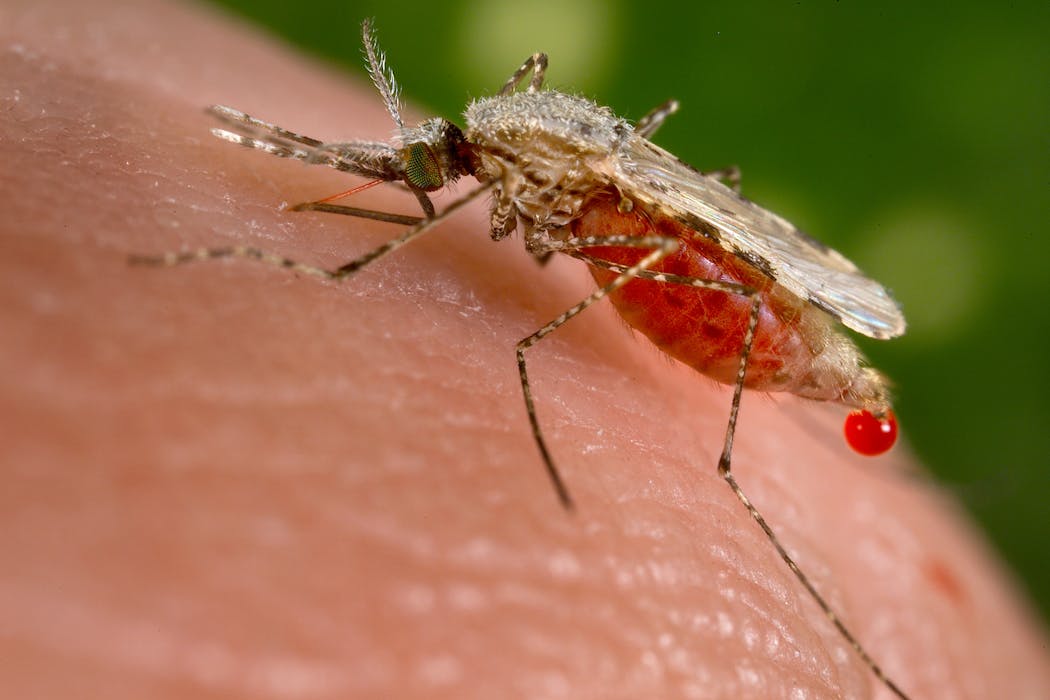
Malaria is transmitted to people by mosquitoes infected with a parasite from the _Plasmodium_ family. Jim Gathany via CDC/Dr. William Collins

Every year, malaria kills more than 600,000 people worldwide. Most of them are children under 5 in sub-Saharan Africa. But the disease isn’t confined to poor, rural areas – it’s a global threat that travels with people across borders.

For decades, the fight against malaria has felt like running in place. Bed nets and drugs save lives, but the family of parasites that cause malaria, called Plasmodium, keeps evolving new ways to survive. These parasites transmitted to humans through the bites of infected mosquitoes.

But something is shifting. As a malaria researcher working on my Ph.D., I study how the malaria parasite develops resistance to drugs. I know what malaria feels like. I’ve had it, and I’ve lost a family member to it. That experience drove me into this field.

When I started this work in 2023, few good options existed for protecting the youngest children – the group most likely to die from malaria. Now, for the first time in my career, I’m watching real breakthroughs happen simultaneously: new vaccines, powerful antibodies and genetic surveillance tools that can predict resistance before it spreads.

2 new vaccines for children

In 2023, the World Health Organization approved two malaria vaccines for children: one called RTS,S/AS01, also known as Mosquirix, and another referred to as R21/Matrix-M. Given in four doses starting around 5 months of age, they’re the first vaccines ever shown to prevent severe malaria.

These vaccines don’t provide perfect protection. They reduce the incidence of clinical malaria cases in vaccinated children by about 75% in the first year after receiving the primary dose, and the protection they offer fades over time. But when combined with bed nets and preventive drugs, they’re already preventing thousands of deaths. As of late 2025, about 20 countries, primarily in Africa where malaria burden is highest, have introduced these vaccines into childhood immunization programs.

A baby receiving a vaccine at a hospital.
In the past two years, two malaria vaccines have become available for babies starting at 5 months of age.
ER Productions Limited/DigitalVision via Getty Images

This matters enormously because children under 5 years old do not have fully developed immune systems and haven’t built up any natural resistance to malaria. A single infection can turn deadly within hours.

The vaccine is effective because it contains a molecule that mimics a key protein on the parasite’s surface, called circumsporozoite protein. This molecule trains the immune system to recognize the parasite upon infection after a mosquito bite, before the parasite can hide inside human cells.

Discovering a parasite’s hidden weak spot

In January 2025, researchers found something surprising about how the malaria parasite invades cells.

To invade liver cells, the parasite must shed a dense surface protein that acts as a protective shield. This briefly exposes specific hidden spots of proteins, called epitopes, that were previously invisible. That momentary unmasking could give the immune system a chance to recognize the parasite and stop the invasion.

Because this vulnerability is exposed only for a split second, most immune responses miss it. However, scientists discovered an antibody called MAD21-101 that is precise enough to catch it.

An antibody is essentially a microscopic security tag produced by the immune system that can stick to invaders. While standard antibodies fail to latch because of the parasite’s protein shield, MAD21-101 waits for the unmasking moment and locks directly onto the exposed spot.

In lab tests, this action blocked the parasite from entering liver cells, stopping the infection completely. Scientists envision turning this antibody into a treatment that prevents infections in high-risk infants, potentially to be used alongside existing vaccines to strengthen protection against malaria.

A laboratory technician examines samples in a research laboratory.
By exploiting vulnerabilities in the malaria parasite’s defense system, researchers hope to develop a treatment that blocks the parasite from entering cells.
wilpunt/E+ via Getty Images

Protecting and treating the youngest patients

Because of their undeveloped immune systems, infants have historically faced a double gap: limited ways to prevent malaria, and almost no safe treatments formulated for their tiny bodies when they inevitably got sick.

In 2022, the WHO began recommending a malaria prevention strategy called perennial malaria chemoprevention for babies starting at 2 months. Infants receive a full dose of a standard antimalarial medication, such as sulfadoxine-pyrimethamine, during their routine vaccination checkups. The treatment clears out parasites and provides temporary prevention, regardless of whether the child has a fever or other symptoms.

A new treatment has recently become available. Coartem Baby, approved by Swiss regulators in 2025, is the first malaria treatment designed specifically for infants weighing as little as 4.4 pounds. Unlike older drugs, this formula safely accounts for a baby’s immature metabolism. It contains one ingredient, artemether, which acts fast to reduce the parasite count immediately, and a second ingredient, lumefantrine, which stays in the blood longer to mop up any survivors.

Tracking parasite evolution around the globe

The malaria parasite has an uncanny ability to rewrite its genetic code under pressure, allowing it to adapt and withstand the very medicines designed to destroy it. This adaptability is now threatening the drug artemisinin, the backbone of global malaria treatment, which is starting to fail in parts of Africa and Southeast Asia. But researchers like me are getting a clearer picture of how resistance develops and how it might be interrupted.

One of the parasite’s tricks is to make extra copies of the genes that help it survive antimalarial drug treatment. In my research, I use a high-precision technique that counts the number of genes to estimate a sort of resistance score: A parasite with more copies is far better equipped to survive treatment than a parasite with only one.

Scientists around the world are using molecular scanning tools to hunt for specific mutations – single-letter changes in the parasite’s DNA – that make the parasite more resistant to the drug. For example, researchers in my lab are working to pin down the parasite’s genetic code as it’s in the act of changing, in order to catch dangerous mutations while they’re still rare. That would give researchers time to deploy alternative treatments before children start dying from drug-resistant infections.

These tracking tools allow epidemiologists to create early warning systems that can identify where drug resistance is emerging and predict where it might spread next, as the pathogen hitchhikes across continents in travelers’ bloodstreams. Based on those warnings, health officials can switch treatment strategies before a drug fails completely. What’s more, knowing exactly which genes the parasite modifies may enable researchers to block those changes to prevent resistance from emerging.

Malaria research is entering a new era where, although the parasite adapts, scientists like me can now adapt faster. A malaria-free childhood isn’t guaranteed yet, but for the first time in my career, it feels like a realistic goal rather than a distant dream.

The Conversation

Kwesi Akonu Adom Mensah Forson receives no funding, compensation or financial support from any companies or organizations related to malaria vaccines, drugs or diagnostic technologies. His research on malaria parasite genetics is conducted as part of Ph.D. project at the University of Virginia, supported by university and academic research funds.

ref. Malaria researchers are getting closer to outsmarting the world’s deadliest parasite – https://theconversation.com/malaria-researchers-are-getting-closer-to-outsmarting-the-worlds-deadliest-parasite-268316

What we get wrong about forgiveness – a counseling professor unpacks the difference between letting go and making up

Source: The Conversation – USA (3) – By Richard Balkin, Distinguished Professor of Counselor Education, University of Mississippi

Take stock of your feelings, and the other person’s, before you decide what kind of forgiveness to offer. Jacob Wackerhausen/iStock via Getty Images Plus

Two in five Americans have fought with a family member about politics, according to a 2024 study by the American Psychiatric Association. One in five have become estranged over controversial issues, and the same percentage has “blocked a family member on social media or skipped a family event” due to disagreements.

Difficulty working through conflict with those close to us can cause irreparable harm to families and relationships. What’s more, inability to heal these relationships can be detrimental to physical and emotional well-being, and even longevity.

Healing relationships often involves forgiveness – and sometimes we have the ability to truly reconcile. But as a professor and licensed professional counselor who researches forgiveness, I believe the process is often misunderstood.

In my 2021 book, “Practicing Forgiveness: A Path Toward Healing,” I talk about how we often feel pressure to forgive and that forgiveness can feel like a moral mandate. Consider 18th-century poet Alexander Pope’s famous phrase: “To err is human; to forgive, divine” – as though doing so makes us better people. The reality is that reconciling a relationship is not just difficult, but sometimes inadvisable or dangerous, especially in cases involving harm or trauma.

I often remind people that forgiveness does not have to mean a reconciliation. At its core, forgiveness is internal: a way of laying down ill will and our emotional burden, so we can heal. It should be seen as a separate process from reconciliation, and deciding whether to renegotiate a relationship.

But either form of forgiveness is difficult – and here may be some insights as to why:

Forgiveness, karma and revenge

In 2025, I conducted a study with my colleagues Alex Hodges and Jason Vannest to explore emotions people may experience around forgiveness, and how those emotions differ from when they experience karma or revenge.

We defined forgiveness as relinquishing feelings of ill will toward someone who engaged in a harmful action or behavior toward you. “Karma” refers to a situation where someone who wronged you got what they deserved without any action from you. “Revenge,” on the other hand, happens when you retaliate.

First, we prompted participants to share memories of three events related to offering forgiveness, witnessing karma and taking revenge. After sharing each event, they completed a questionnaire indicating what emotions they experienced as they retold their story.

A hand holding a car key traces it along the side of a beige-colored car to leave a scratch.
Revenge can feel easier than forgiveness, which often brings sadness or anxiety.
nattul/iStock via Getty Images Plus

We found that most people say they aspire to forgive the person who hurt them. To be specific, participants were about 1.5 times more likely to desire forgiveness than karma or revenge.

Most admitted, though, that karma made them happier than offering forgiveness.

Working toward forgiveness tended to make people sad and anxious. In fact, participants were about 1.5 times more likely to experience sadness during forgiveness than during karma or revenge. Pursuing forgiveness was more stressful, and harder work, because it forces people to confront feelings that may often be perceived as negative, such as stress, anger or sadness.

Two different processes

Forgiveness is also confusing, thanks to the way it is typically conflated with reconciliation.

Forgiveness researchers tie reconciliation to “interpersonal forgiveness,” in which the relationship is renegotiated or even healed. However, at times, reconciliation should not occur – perhaps due to a toxic or unsafe relationship. Other times, it simply cannot occur, such as when the offender has died, or is a stranger.

But not all forgiveness depends on whether a broken relationship has been repaired. Even when reconciliation is impossible, we can still relinquish feelings of ill-will toward an offender, engaging in “intrapersonal forgiveness.”

Not all forgiveness has to involve renegotiating a relationship with the person who hurt you.

I used to practice counseling in a hospital’s adolescent unit, in which all the teens I worked with were considered a danger to themselves or others. Many of them had suffered abuse. When I pictured what “success” could look like for them, I hoped that, in adulthood, my clients would not be focused on their past trauma – that they could experience safety, health, belonging and peace.

Most often, such an outcome was not dependent upon reconciling with the offender. In fact, reconciliation was often ill-advised, especially if offenders had not expressed remorse or commitment to any type of meaningful change. Even if they had, there are times when the victim chooses not to renegotiate the relationship, especially when working through trauma.

Still, working toward intrapersonal forgiveness could help some of these young people begin each day without the burden of trauma, anger and fear. In effect, the client could say, “What I wanted from this person I did not get, and I no longer expect it.” Removing expectations from people by identifying that we are not likely to get what we want can ease the burden of past transgressions. Eventually, you decide whether to continue to expend the emotional energy it takes to stay angry with someone.

Relinquishing feelings of ill will toward someone who has caused you harm can be difficult. It may require patience, time and hard work. When we recognize that we are not going to get what we wanted from someone – trust, safety, love – it can feel a lot like grief. Someone may pass through the same stages, including denial, anger, bargaining and depression, before they can accept and forgive within themselves, without the burden of reconciliation.

Taking stock

With this in mind, I offer four steps to evaluate where you are on your forgiveness journey. A simple tool I developed, the Forgiveness Reconciliation Inventory, looks at each of these steps in more depth.

  1. Talk to someone. You can talk to a friend, mentor, counselor, grandma – someone you trust. Talking makes the unmentionable mentionable. It can reduce pain and help you gain perspective on the person or event that left you hurt.

  2. Examine if reconciliation is beneficial. Sometimes there are benefits to reconciliation. Broken relationships can be healed, and even strengthened. This is especially more likely when the offender expresses remorse and changes behavior – something the victim has no control over.

  3. In some cases, however, there are no benefits, or the benefits are outweighed by the offender’s lack of remorse and change. In this case, you might have to come to terms with processing an emotional – or even tangible – debt that will not be repaid.

  4. Consider your feelings toward the offender, the benefits and consequences of reconciliation, and whether they’ve shown any remorse and change. If you want to forgive them, determine whether it will be interpersonal – talking to them and trying to renegotiate the relationship – or intrapersonal, in which you reconcile your feelings and expectations within yourself.

Either way, forgiveness comes when we relinquish feelings of ill will toward another.

The Conversation

Richard Balkin does not work for, consult, own shares in or receive funding from any company or organization that would benefit from this article, and has disclosed no relevant affiliations beyond their academic appointment.

ref. What we get wrong about forgiveness – a counseling professor unpacks the difference between letting go and making up – https://theconversation.com/what-we-get-wrong-about-forgiveness-a-counseling-professor-unpacks-the-difference-between-letting-go-and-making-up-273317

How Trump’s Greenland threats amount to an implicit rejection of the legal principles of Nuremberg

Source: The Conversation – USA (3) – By Michael Blake, Professor of Philosophy, Public Policy and Governance, University of Washington

Daily life on a street at sunset in Nuuk, Greenland, on Jan. 21, 2026. AP Photo/Evgeniy Maloletka

U.S. President Donald Trump has, for the moment, indicated a willingness to abandon his threat to take over Greenland through military force – saying that he prefers negotiation to invasion. He is, however, continuing to assert that the United States ought to acquire ownership of the self-governing territory.

Trump has repeatedly raised the possibility of using military action, against both Greenland and Canada.

These threats were often taken as fanciful. The fact that he has, successfully, used military force to remove Venezuelan President Nicolas Maduro from power has lent some plausibility to these threats.

Crucially, these military possibilities have been justified almost exclusively with reference to what Trump’s administration sees as America’s national interests. Anything short of ownership in the case of Greenland, the president has emphasized, would fail to adequately protect American interests.

As a political philosopher concerned with the moral analysis of international relations, I am deeply troubled by this vision of warfare – and by the moral justifications used to legitimize the making of war.

This view of warfare is radically different from the one championed by the U.S. for much of the 20th century. Most notably, it repudiates the legal principle that informed the Nuremberg trials: that military force cannot be justified on the basis of national self-interest alone.

Those trials, set up after World War II to prosecute the leaders of the Nazi regime, were foundational for modern international law; Trump, however, seems to disregard or reject the legal ideas the Nuremberg tribunal sought to establish.

Aggressive war as international crime

The use of warfare as a means by which states might seek political and economic advantage was declared illegal by 1928’s Kellogg-Briand Pact – an international instrument by which many nations, including both Germany and the U.S., agreed to abandon warfare as a tool for national self-interests.

After 1928, invading another country in the name of advancing national interests was formally defined as a crime, rather than a legitimate policy option.

The existence of this pact did not prevent the German military actions that led to World War II. The prosecution for the International Military Tribunal at Nuremberg, accordingly, took two aims as central: reaffirming that aggressive warfare was illegal, and imposing punishment on those who had chosen to use military force against neighboring states.

The first charge laid against the Nazi leadership at Nuremberg was therefore the initiation of a “war of aggression” – a war chosen by a state for its own national interests.

The chief prosecutor in Nuremberg was Robert H. Jackson, who at the time also served as a justice on the U.S. Supreme Court. Jackson began his description of the crime by saying that Germany, in concert with other nations, had bound itself in 1928 to “seek the settlement of disputes only by pacific means.”

More particularly, Jackson noted, Germany had justified its invasion of neighboring countries with reference to “Lebensraum” – living room, or, more generally, space for German citizens – which marked those invasions out as illegal.

A courtroom scene shows several people seated in three rows, with national flags displayed behind them and additional rows of seated attendees visible in front.
Nuremberg trial, Dec. 4, 1945.
Sepia Times/ Universal Images Group via Getty Images

Germany used its own national interests as sufficient reason to initiate deadly force against other nations. In so doing, said Jackson, it engaged in a crime for which individual criminal punishment was an appropriate response.

In the course of this crime, Jackson noted, Germany had shown a willingness to ignore both international law and its own previous commitments – and had given itself “a reputation for duplicity that will handicap it for years.”

Jackson asserted, further, that the extraordinary violence of the 20th century required the building of some legal tools, by which the plague of warfare and violence might be constrained.

If such principles were not codified in law, and respected by nations, then the world might well see, in Jackson’s phrase, the “doom of civilization.” Nuremberg’s task, for Jackson, was nothing less than ensuring that aggressive war was forever to be understood as a criminal act – a proposition backed, crucially, by the U.S. as party to the Nuremberg trials.

The morality of warfare

It is fair to say that the U.S, like other nations, has had a mixed record of living up to the legal principles articulated at Nuremberg, given its record of military intervention in places like Vietnam and Iraq.

President Donald Trump, wearing a blue suit and red tie, is seated in front of the American flag, with the NATO flag displayed beside it.
President Donald Trump at the World Economic Forum in Davos, Switzerland, on Jan. 21, 2026.
AP Photo/Evan Vucci

Trump’s prior statements about Greenland, however, hint at something more extreme: They represent an abandonment of the principle that aggressive war is a criminal act, in favor of the idea that the U.S. can use its military as it wishes, to advance its own national interests.

Previous presidents have perhaps been guilty of paying too little attention to the moral importance of such international principles. Trump, in contrast, has announced that such principles do not bind him in the least.

In a recent interview with The New York Times, Trump asserted that he did not “need international law” to know what to do. He would, instead, be limited only by “his own morality” and “his own mind.”

European leaders, for their part, have increasingly decried Trump’s willingness to go back on his word, or abandon previously insisted-upon principles, if such revisions seem to provide him with some particular advantage.

Trump’s statements, however, imply that his administration has adopted a position strikingly similar to that decried by Justice Jackson: The U.S., on this vision, can simply decide that its own moral interests are more important than those of other countries, and can initiate violence against those countries on its own discretion. It can do this, moreover, regardless of either the content of international law or of previously undertaken political commitments.

This vision, finally, is being undertaken in a world in which the available tools of destruction are even more complex – and more deadly – than those available during the Second World War.

It is, indeed, a historic irony that the U.S. of today has so roundly repudiated the moral values it both helped developed and championed globally during the 20th century.

The Conversation

Michael Blake receives funding from the National Endowment for the Humanities.

ref. How Trump’s Greenland threats amount to an implicit rejection of the legal principles of Nuremberg – https://theconversation.com/how-trumps-greenland-threats-amount-to-an-implicit-rejection-of-the-legal-principles-of-nuremberg-274018

L’agriculture verticale peut-elle nourrir les villes ? Comment dépasser le mirage technologique

Source: The Conversation – France (in French) – By Marie Asma Ben-Othmen, Enseignante-chercheuse en Economie de l’environnement & Agroéconomie, Responsable du Master of Science Urban Agriculture & Green Cities, UniLaSalle

L’agriculture verticale a longtemps été présentée comme une solution miracle pour nourrir les mégapoles tout en réduisant leur empreinte environnementale. Mais derrière les promesses high-tech, la réalité est contrastée. Entre des succès spectaculaires en Asie et des faillites retentissantes en Europe et aux États-Unis, le modèle cherche encore sa voie.


L’agriculture verticale repose sur une idée simple : produire en intérieur et hors-sol, dans des milieux totalement contrôlés, y compris la lumière, la température, l’humidité et les nutriments, sur de vastes étagères en hauteur, au cœur des villes. À première vue, ses avantages paraissent irrésistibles. Sans pesticides, ce mode de culture consomme jusqu’à 90 % d’eau en moins grâce au recyclage – notamment l’hydroponie – et peut fonctionner 365 jours par an, avec un rendement élevé, sans dépendre des caprices du climat. Il offre ainsi la promesse d’une production fraîche et locale, directement connectée aux circuits courts.

Cet horizon a suscité un engouement mondial. Le Japon, avec la société Spread, a automatisé la production de salades indoor sur de vastes étagères, dans des univers aseptisés, à l’échelle industrielle. Singapour a inscrit les fermes verticales au cœur de son objectif « 30 by 30 », visant à couvrir localement 30 % de ses besoins alimentaires d’ici à 2030. Les pays du Golfe, comme les Émirats arabes unis et le Koweït, confrontés à la rareté des terres arables, y voient un outil stratégique alors que, aux États-Unis, des start-up ont levé des centaines de millions de dollars sur la base d’une vision d’un futur alimentaire ultratechnologique. Mais des échecs cuisants mettent aussi en évidence les limites du modèle, qui peu à peu tente de se réinventer pour y répondre.

Les ingrédients du succès

Les fermes verticales qui fonctionnent vraiment partagent un point commun : elles naissent dans des contextes où elles répondent à un besoin structurel. Dans les régions où la terre est rare, chère ou aride, la production en hauteur – ou à la verticale – répond efficacement aux contraintes géographiques.

À Singapour ou à Dubaï, par exemple, l’État joue un rôle déterminant en soutenant financièrement les infrastructures, en réduisant les risques d’investissement et en intégrant ces technologies dans les stratégies alimentaires nationales.

La réussite de ces modèles tient aussi à leur insertion dans les dynamiques locales. En effet, à Dubaï, les fermes verticales ne se contentent pas de produire, mais contribuent également à la sécurité alimentaire, à la formation technique, à l’emploi qualifié et à la sensibilisation des citoyens.

L’île-ville de Singapour s’appuie par ailleurs sur des technologies hydroponiques et aéroponiques avancées, avec des tours agricoles intégrés au bâti urbain. Ceci illustre l’adaptation de l’agriculture aux contraintes foncières et urbaines. Les progrès technologiques, notamment l’éclairage LED à haut rendement, l’automatisation poussée et l’IA permettant d’optimiser la croissance des plantes, améliorent la performance des modèles les mieux conçus.

Malgré des défis (coûts énergétiques, fragilité économique), ces fermes continuent aujourd’hui d’être considérées comme un « modèle d’avenir » pour des villes-États densément peuplées, ce qui montre que l’initiative s’inscrit dans une politique de long terme plutôt qu’à titre de simple effet de mode.

Coût, énergie et dépendance au capital-risque

Malgré ces succès, de nombreux projets ont échoué et révélé les fragilités d’un modèle bien moins robuste qu’il y paraît.

Le premier obstacle est énergétique. Éclairer, climatiser et faire fonctionner une installation entièrement contrôlée demande une quantité importante d’électricité, ce qui rend l’activité coûteuse et parfois peu écologique lorsque l’énergie n’est pas décarbonée.

Le second obstacle est économique : les marges sur les herbes aromatiques ou les salades sont faibles, et le modèle dépend souvent du capital-risque plutôt que de revenus stables. C’est ce qui a précipité les difficultés d’Infarm en Europe et d’AeroFarms aux États-Unis.

Certaines fermes se sont également retrouvées déconnectées des besoins alimentaires locaux, produisant des volumes ou des produits qui ne répondaient pas aux attentes des territoires. Le modèle, mal ancré localement, devient alors vulnérable à la moindre fluctuation des marchés financiers ou énergétiques.

De nouveaux modèles en développement

Face à ces limites, une nouvelle génération de projets émerge, cherchant à combiner technologie, intégration et demande urbaine au moyen de modèles de microfermes verticales adossées à des supermarchés, garantissant la fraîcheur, la visibilité et une réduction des coûts logistiques.

D’autres initiatives explorent les synergies énergétiques, en couplant production alimentaire et récupération de chaleur de data centers, en développant des serres photovoltaïques ou en utilisant des réseaux de chaleur urbains.

Les fermes verticales évoluent aussi vers des fonctions plus pédagogiques et démonstratives : même après sa faillite, une partie du modèle Infarm continue d’inspirer des fermes urbaines où la production sert autant à sensibiliser les citoyens qu’à fournir des produits frais. Ces approches hybrides témoignent d’une maturité croissante du secteur, qui privilégie moins la production de masse que la pertinence territoriale.

Vers une agriculture verticale plus durable ?

Pour devenir un levier crédible de la transition alimentaire, l’agriculture verticale doit clarifier sa finalité. Produire davantage ne suffit pas : il s’agit de contribuer à la résilience alimentaire des villes, d’offrir une complémentarité avec les agricultures urbaines plus « horizontales », telles que les toits productifs, les ceintures maraîchères ou les jardins partagés, et de s’inscrire dans les politiques alimentaires territoriales.

En particulier, les projets alimentaires territoriaux (PAT) peuvent, par leur ambition, fédérer les différents acteurs du territoire autour de l’alimentation. Ils jouent un rôle clé pour intégrer ces dispositifs de manière cohérente, en les articulant avec les enjeux de nutrition, d’accessibilité, de distribution et d’éducation. L’agriculture verticale ne deviendra durable que si elle est pensée dans une logique systémique, sobre sur le plan énergétique, ancrée localement et compatible avec les objectifs climatiques.

Loin d’être la panacée, elle est en revanche un laboratoire d’innovation. Là où elle réussit, c’est parce qu’elle s’inscrit dans une vision systémique de la transition alimentaire, combinant technologie, gouvernance territoriale et sobriété énergétique. Son avenir dépendra moins de la hauteur des tours que de la manière dont elle s’imbrique dans les territoires et contribue à renforcer la capacité des villes à se nourrir face aux crises climatiques et géopolitiques.

The Conversation

Marie Asma Ben-Othmen ne travaille pas, ne conseille pas, ne possède pas de parts, ne reçoit pas de fonds d’une organisation qui pourrait tirer profit de cet article, et n’a déclaré aucune autre affiliation que son organisme de recherche.

ref. L’agriculture verticale peut-elle nourrir les villes ? Comment dépasser le mirage technologique – https://theconversation.com/lagriculture-verticale-peut-elle-nourrir-les-villes-comment-depasser-le-mirage-technologique-270890

Artificial metacognition: Giving an AI the ability to ‘think’ about its ‘thinking’

Source: The Conversation – USA – By Ricky J. Sethi, Professor of Computer Science, Fitchburg State University; Worcester Polytechnic Institute

AIs could use some self-reflection. davincidig/iStock via Getty Images

Have you ever had the experience of rereading a sentence multiple times only to realize you still don’t understand it? As taught to scores of incoming college freshmen, when you realize you’re spinning your wheels, it’s time to change your approach.

This process, becoming aware of something not working and then changing what you’re doing, is the essence of metacognition, or thinking about thinking.

It’s your brain monitoring its own thinking, recognizing a problem, and controlling or adjusting your approach. In fact, metacognition is fundamental to human intelligence and, until recently, has been understudied in artificial intelligence systems.

My colleagues Charles Courchaine, Hefei Qiu and Joshua Iacoboni and I are working to change that. We’ve developed a mathematical framework designed to allow generative AI systems, specifically large language models like ChatGPT or Claude, to monitor and regulate their own internal “cognitive” processes. In some sense, you can think of it as giving generative AI an inner monologue, a way to assess its own confidence, detect confusion and decide when to think harder about a problem.

Why machines need self-awareness

Today’s generative AI systems are remarkably capable but fundamentally unaware. They generate responses without genuinely knowing how confident or confused their response might be, whether it contains conflicting information, or whether a problem deserves extra attention. This limitation becomes critical when generative AI’s inability to recognize its own uncertainty can have serious consequences, particularly in high-stakes applications such as medical diagnosis, financial advice and autonomous vehicle decision-making.

For example, consider a medical generative AI system analyzing symptoms. It might confidently suggest a diagnosis without any mechanism to recognize situations where it might be more appropriate to pause and reflect, like “These symptoms contradict each other” or “This is unusual, I should think more carefully.”

Developing such a capacity would require metacognition, which involves both the ability to monitor one’s own reasoning through self-awareness and to control the response through self-regulation.

Inspired by neurobiology, our framework aims to give generative AI a semblance of these capabilities by using what we call a metacognitive state vector, which is essentially a quantified measure of the generative AI’s internal “cognitive” state across five dimensions.

5 dimensions of machine self-awareness

One way to think about these five dimensions is to imagine giving a generative AI system five different sensors for its own thinking.

  • Emotional awareness, to help it track emotionally charged content, which might be important for preventing harmful outputs.
  • Correctness evaluation, which measures how confident the large language model is about the validity of its response.
  • Experience matching, where it checks whether the situation resembles something it has previously encountered.
  • Conflict detection, so it can identify contradictory information requiring resolution.
  • Problem importance, to help it assess stakes and urgency to prioritize resources.

We quantify each of these concepts within an overall mathematical framework to create the metacognitive state vector and use it to control ensembles of large language models. In essence, the metacognitive state vector converts a large language model’s qualitative self-assessments into quantitative signals that it can use to control its responses.

For example, when a large language model’s confidence in a response drops below a certain threshold, or the conflicts in the response exceed some acceptable levels, it might shift from fast, intuitive processing to slow, deliberative reasoning. This is analogous to what psychologists call System 1 and System 2 thinking in humans.

A diagram with five rectangles surrounding an oval with arrows connecting them
This conceptual diagram shows the basic idea for giving a set of large language models an awareness of the state of its processing.
Ricky J. Sethi

Conducting an orchestra

Imagine a large language model ensemble as an orchestra where each musician – an individual large language model – comes in at certain times based on the cues received from the conductor. The metacognitive state vector acts as the conductor’s awareness, constantly monitoring whether the orchestra is in harmony, whether someone is out of tune, or whether a particularly difficult passage requires extra attention.

When performing a familiar, well-rehearsed piece, like a simple folk melody, the orchestra easily plays in quick, efficient unison with minimal coordination needed. This is the System 1 mode. Each musician knows their part, the harmonies are straightforward, and the ensemble operates almost automatically.

But when the orchestra encounters a complex jazz composition with conflicting time signatures, dissonant harmonies or sections requiring improvisation, the musicians need greater coordination. The conductor directs the musicians to shift roles: Some become section leaders, others provide rhythmic anchoring, and soloists emerge for specific passages.

This is the kind of system we’re hoping to create in a computational context by implementing our framework, orchestrating ensembles of large language models. The metacognitive state vector informs a control system that acts as the conductor, telling it to switch modes to System 2. It can then tell each large language model to assume different roles – for example, critic or expert – and coordinate their complex interactions based on the metacognitive assessment of the situation.

a woman in a long black dress conducts an orchestra
Metacognition is like an orchestra conductor monitoring and directing an ensemble of musicians.
AP Photo/Vahid Salemi

Impact and transparency

The implications extend far beyond making generative AI slightly smarter. In health care, a metacognitive generative AI system could recognize when symptoms don’t match typical patterns and escalate the problem to human experts rather than risking misdiagnosis. In education, it could adapt teaching strategies when it detects student confusion. In content moderation, it could identify nuanced situations requiring human judgment rather than applying rigid rules.

Perhaps most importantly, our framework makes generative AI decision-making more transparent. Instead of a black box that simply produces answers, we get systems that can explain their confidence levels, identify their uncertainties, and show why they chose particular reasoning strategies.

This interpretability and explainability is crucial for building trust in AI systems, especially in regulated industries or safety-critical applications.

The road ahead

Our framework does not give machines consciousness or true self-awareness in the human sense. Instead, our hope is to provide a computational architecture for allocating resources and improving responses that also serves as a first step toward more sophisticated approaches for full artificial metacognition.

The next phase in our work involves validating the framework with extensive testing, measuring how metacognitive monitoring improves performance across diverse tasks, and extending the framework to start reasoning about reasoning, or metareasoning. We’re particularly interested in scenarios where recognizing uncertainty is crucial, such as in medical diagnoses, legal reasoning and generating scientific hypotheses.

Our ultimate vision is generative AI systems that don’t just process information but understand their cognitive limitations and strengths. This means systems that know when to be confident and when to be cautious, when to think fast and when to slow down, and when they’re qualified to answer and when they should defer to others.

The Conversation

Ricky J. Sethi has received funding from the National Science Foundation, Google and Amazon.

ref. Artificial metacognition: Giving an AI the ability to ‘think’ about its ‘thinking’ – https://theconversation.com/artificial-metacognition-giving-an-ai-the-ability-to-think-about-its-thinking-270026