Allegheny County, Pennsylvania, is experimenting with a policy that has drawn national attention and local skepticism: providing cash compensation to people confined in the Allegheny County Jail in the city of Pittsburgh. The funds include monthly disbursements to all those incarcerated and additional pay tied to work assignments and participation in educational programming.
At first glance, the policy may sound counterintuitive. Why pay people who are in jail, especially when many law‑abiding residents are struggling to afford housing, food and transportation? That reaction is understandable. But it often reflects a misunderstanding about who is held in the Allegheny County Jail, the amount of the disbursements and what the county is trying to accomplish.
Allegheny County Jail is experimenting with a new policy that compensates incarcerated people. AP Photo/Gene J. Puskar
Over the course of two decades, I have partnered with Allegheny County on policy relevant to justice research and served on the advisory board of the Allegheny County Jail Collaborative, a nationally recognized initiative launched in 2000 to better coordinate jail, health and community-based services. Long before many places began using data to rethink criminal justice, Allegheny County was already analyzing data from multiple sources to develop and test new approaches. With that history in mind, this policy may come as less of a surprise – though it still deserves scrutiny.
Most people in jail haven’t been convicted
Understanding the county’s rationale for compensating people in jail begins with understanding the jail population itself. Jail confinement is primarily about custody and court processing, not punishment after being convicted of wrongdoing.
According to county data, only about 8% of people housed in the jail have been convicted and sentenced to jail time. These individuals are serving a maximum incarceration term of less than two years for misdemeanor or lower-level felony convictions. Roughly half of those incarcerated at the Allegheny County Jail, or 46%, are awaiting trial and have not been convicted of a crime. Another 36% are detained based on an alleged probation violation. The remaining 10% are either on a legal hold placed by an outside agency – such as federal authorities or a correctional facility in another state – are awaiting transfer to a different facility or are ordered to be incarcerated for allegedly violating family court orders.
While jails provide food, clothing and basic hygiene items, those provisions often fall short of what people actually need. Commissary purchases make up the gap, yet many people in jail have little to no money. When even basic necessities, such as ramen noodles, toothpaste and tampons, become scarce, bartering can take place. Commissary items become currency. Debt, theft, intimidation and power imbalances emerge, leading to conflicts that can cause serious or fatal injury. Staff must manage these threats, sometimes at risk to their personal safety.
The county’s compensation policy addresses this reality in concrete ways. Since 2022, the Allegheny County Jail Oversight Board has approved monthly payments of about US$100 to every person housed in the jail through the Incarcerated Individuals Welfare Fund. The fund is financed by proceeds from jail commissary, phone and tablet contracts. These funds can be used for commissary items, phone access, fees, or to accrue savings for post-release needs.
$5 a day – and the research behind it
In addition, in March 2026 the county began compensating people confined in jail approximately $5 per day for voluntary work assignments, as well as for participation in some types of vocational and educational programming. Some of this compensated work is labor that keeps the jail running – including cooking, cleaning and maintenance – and benefits the institution directly. Some of it includes education and vocational training. Paying for it signals some level of fairness and respect. It is also pragmatic: When people perceive systems as legitimate, they are more likely to follow rules and less likely to engage in misconduct.
Offering compensation for education may also boost enrollment, much like how earned credits toward early release encourage participation in federal programs through the First Step Act. This may better prepare them for reentry into society while also reducing idle time, which is linked to misconduct.
Another reason for compensation comes at the point of release. People often leave jail with no cash and limited access to transportation. Providing even limited financial resources can help people make better choices during a well-documented critical transition period that can make or break successful reentry intro society.
Still experimenting
None of this means the policy will work as intended. Increased access to resources could shift, rather than eliminate, forms of conflict among those incarcerated. And the financial incentives may not meaningfully change behavior for everyone.
This makes rigorous, transparent evaluation essential. Research should measure both intended and unintended effects of this policy, including on institutional safety, program participation, reentry outcomes and overall cost effectiveness.
Paying people in jail is not about rewarding crime. In Allegheny County, it is a pragmatic experiment grounded in local data, institutional realities and a clear-eyed commitment to public safety. Whether it ultimately improves safety inside the jail or stability after release remains to be seen. But asking the question and measuring the answer is exactly what evidence-based justice policy should look like.
Nancy La Vigne does not work for, consult, own shares in or receive funding from any company or organization that would benefit from this article, and has disclosed no relevant affiliations beyond their academic appointment.
As someone who has designed and evaluated a wide range of building energy efficiency technologies, including integrated photovoltaic systems, I know that other options are available elsewhere in the world – and are becoming available in the U.S. Plug-in solar systems, also referred to as balcony solar systems, are alternatives to rooftop panels that still generate electricity from sunlight, but without complex and expensive installations.
Plug-in solar systems are designed to be used without requiring specialized technicians, construction permits or permission from electricity utility companies. A typical system consists of small photovoltaic panels that can be placed on a balcony, in a backyard or on a deck or roof area. They are connected to the home’s electrical system by simply plugging them into a regular power outlet.
European popularity
In Europe, systems like this have been legal for more than a decade. They are wildly popular, especially for renters who do not have permission to install permanent solar panels on their buildings.
Germans can buy plug-in solar kits in local retail stores and set them up quickly at home, with no help or oversight from technicians or utility companies. Estimates find that with current electricity prices in Germany, the systems generate enough power to pay for themselves in less than three years.
Legal changes afoot in the US
In the U.S., the main barrier to widespread availability and adoption of plug-in solar systems is that current laws and regulations do not distinguish them from larger rooftop panel systems.
In most cases, solar panels on buildings that are connected to the power grid must be installed by professionals, because they typically require additional equipment that prevents too much of the home-generated power from entering the grid. This process also requires a permit from a state or local government.
For balcony solar systems, the grid-protection equipment is built in to what consumers buy at the store. But in most states, the laws don’t recognize a difference and still require permits and professional installation for any solar panels at all.
In addition, in early 2026, UL Solutions, an independent safety certification company, announced a new standard for plug-in solar systems in the U.S., which can help consumers feel confident they are buying something that is safe for them to use in their homes.
Costs and benefits
The potential benefits of balcony solar systems vary primarily with the local cost of electricity. Buying these systems can cost between US$1,200 and $2,000, but they can generate enough power to save several hundred dollars in electric bills each year.
They can’t power a whole home, but they can power relatively low loads, like refrigerators, LED lights, laptop computers, phone chargers, televisions and fans, even when a grid power outage occurs.
Depending on their configurations, balcony solar systems can offer additional benefits. Mounting them to movable bases that track the Sun’s path through the sky can boost power generation. Mounting the panels on overhangs can create shade, reducing the need for air conditioning, especially in hot climates.
Adding battery storage to balcony solar systems can also help households store extra energy from the daytime and use it at night, further lowering their utility bills, though buying batteries would raise the costs.
I expect U.S. demand for balcony solar systems to be significant, especially in places with lots of sunlight and high electricity prices. Householders will still need to select their equipment and its location carefully to maximize their power generation and cost savings.
Moncef Krarti does not work for, consult, own shares in or receive funding from any company or organization that would benefit from this article, and has disclosed no relevant affiliations beyond their academic appointment.
Most bullying research focuses on children’s individual traits, such as whether they display signs of aggressiveness or whether their parents physically punish them at home. Children who experience non-physical but harsh or punitive discipline at home may also be more likely to engage in bullying.
New research I conducted with colleagues at the University at Albany and other schools finds that classroom environments play an important role in bullying. Children have a slightly higher risk of being bullied when they are in classrooms that are frequently disrupted by student misbehavior, or are chaotic – even after considering individual factors, like a child’s personality and family experiences.
Our findings show that bullying is not only influenced by who children are, but by the environments they are exposed to at school.
Evaluating classroom environments
We analyzed teacher and student surveys collected by the U.S. Department of Education’s National Center for Education Statistics from 2014 through 2016. This nationwide data looked at teachers and children who were in the third, fourth and fifth grades.
Teachers evaluated whether their classroom environment was disruptive by reporting how many students struggled to pay attention, behave appropriately or follow instructions. They also gave an overall rating of classroom misbehavior. Students reported how frequently they were bullied, including being teased, called names, intentionally excluded from play or subjected to physical aggression like pushing and hitting.
To make sure the findings reflected a real pattern and not a coincidence, we used a statistical method that tests whether the same students reported more or less bullying when they were in more or less disruptive or chaotic classrooms across different grades.
In other words, we looked at how changes in a child’s classroom environment were linked to changes in their own experiences of bullying. This approach helps separate the effects of a classroom environment from differences between children’s personal characteristics and experiences at home.
Traditionally, anti-bullying efforts target individual students’ behaviors or family dynamics. Interventions might include teaching social skills or giving parents more support and training in responding to their kids’ behavior.
Our findings suggest that reducing classroom chaos is a viable path toward decreasing bullying. The effects we observed are small but consistent, meaning the pattern held even under strict tests. We think awareness of this connection could help make a meaningful difference across a classroom.
Teachers reporting that classrooms are disruptive reflects both students’ behavior and the challenges teachers face in overseeing a classroom full of students. These challenges include keeping students focused, encouraging appropriate behavior and ensuring that students follow instruction.
In more chaotic classrooms, students may be talking over one another, leaving their seats or struggling to stay on task. This creates an environment where it is harder to maintain order and can lead to a “spillover effect,” in which negative behaviors spread. As a result, aggression can become more common and even be reinforced within the peer group, increasing the likelihood of bullying.
Managing a chaotic classroom can also be demanding and emotionally exhausting for teachers. They must spend more time handling disruptions and keeping students on task. This can limit not only the time and energy they have to prevent or respond to bullying but also their ability to notice it in the first place.
At the same time, it is important to recognize that chaotic or disruptive classrooms often reflect broader challenges, such as large class sizes, limited school funding and students dealing with difficulties outside of school, such as poverty, housing instability or trauma.
The impact of classroom chaos also intersects with broader social inequalities.
Previous studies show that students from low-income families, racial and ethnic minority backgrounds and those with disabilities face higher risks of being bullied. Our study helps explain why: These students are more likely to be in chaotic classrooms.
This is not because they are deliberately placed in such environments, but because they are more likely to attend schools with low budgets that might have large class sizes, fewer experienced staff and less specialized kinds of support for students.
Next steps
Bullying is a serious issue that often occurs in elementary schools, making prevention an urgent priority. Our findings shift the focus from students’ individual characteristics and backgrounds to the broader classroom environment.
Our findings suggest that reducing classroom chaos may be one promising approach to addressing bullying. Further research is needed to identify additional classroom factors that capture the complexity of classroom dynamics and how they contribute to bullying.
Qingqing Yang receives funding from Spencer Foundation.
Children play at Copenhagen’s Superkilen Park. In Denmark, parents generally give their kids wide latitude to explore, use tools and push boundaries.Lorie Shaull/Wikimedia Commons, CC BY-SA
Much has been written about Denmark’s consistently high scoresin global happiness rankings, so it might not come as a surprise that Denmark is also rated the best place to raise children, according to U.S. News and World Report. The small Scandinavian nation also scores near the top for child well-being, a measure of physical health, mental health, education and social relationships.
But another factor could be contributing to Danish children’s well-being: They’re often encouraged to take part in risky, unstructured play.
This might seem at odds with a parent’s desire to do what they can to keep their kids safe. But as a native of Denmark and a psychologist, I’ve explored how the country’s hands-off parenting style may be one key to raising more resilient, self-reliant kids.
The benefits of unstructured play
Danes have two words for the English word “play.” There’s “leg,” which refers to unstructured play; and “spille,” which is used for games or activities with pre-established rules, such as playing soccer, chess or the violin.
Each type of play has benefits. But studies have shown that unstructured, spontaneous play requires more compromise and creativity, since kids have the freedom to change or make up the rules. Children learn to take turns and work through problems – skills that are harder to develop when adults step in or when the rules are predetermined.
Then there’s risky play, a form of unstructured play that involves exciting activities with a possibility of physical injury. On a playground, this might mean climbing tall towers, going headfirst down a slide or roughhousing. Off the playground it might involve building a fire, swimming, biking or using tools like saws, hammers and knives.
Norwegian early childhood education researcher Ellen Beate Hansen Sandseter
pioneered the study of risky play. She’s explored its evolutionary functions – specifically, how it helps children become competent, independent adults. Other researchers have shown that risky play boosts mental health by teaching children to be more resilient and manage their emotions.
On a playground, a positive risk is a challenge that a child can recognize and decide to take. They can weigh if they want to try a zip line, or determine when they’ve reached their limit while ascending a climbing net for the first time. The goal is for the child to explore boundaries and learn to manage emotions like fear and anxiety. Sure, there’s the risk of scrapes and bumps. But success can breed more self-confidence.
A negative risk, on the other hand, is a danger that the child does not have the experience or knowledge to foresee. Using playground equipment that has rotted wood, wielding a tool like a drill without proper instruction or swimming in rapids could lead to serious accidents without any learning benefits.
Many playgrounds in Denmark are designed to encourage positive risks. The country has become known for its junk playgrounds, the first of which was created during World War II. These are play areas built with discarded tires, boards and ropes instead of fixed equipment. Kids are often given access to tools so they can build structures and remake the space on their own terms.
The point ultimately isn’t to put kids in harm’s way. It’s to let them explore on their own, test their limits and try new things.
The competent child
Of course, no parent wants to see their child get injured. But research suggests that Danish parents and American parents have distinct perceptions of risk – and different thresholds for what they consider dangerous.
One study compared U.S. and Danish mothers’ reactions to pictures showing a child engaged in 30 different types of play, such as sledding, biking, using a saw to cut wood and climbing a tall tree. It found that Danish mothers, on average, were more likely to say that they would be comfortable with their own child in these situations. In subsequent interviews, Danish mothers were also more likely to talk about practicing risky activities with their kids, such as how to use tools. (One described how she showed her 5-year-old to use an axe to chop wood.)
In fact, Danish daycares often teach children how to use a sharp knife, with some handing out knife diplomas once children have learned the skill. Learning how to ride a bike, meanwhile, can be practiced on what are known as “traffic playgrounds,” which have child-sized streets, bike lanes, traffic lights and signs.
This difference in risk tolerance could stem from differences in parenting approaches. Danish parents see their children as innately competent, meaning they trust their ability to navigate risks and challenges. Adults, in turn, try to create environments for these natural competencies to flourish; they work to encourage cooperation instead of using control.
In contrast, American parents are more likely to see kids as vulnerable and in need of protection. Mental health is a major concern, with 40% of American parents extremely or very worried that their child will suffer from anxiety or depression at some point, according to a 2023 Pew Research Survey. Somewhat ironically, kids who have less independence are more likely to have mental health challenges.
A Danish kindergarten where days are spent exploring the forest.
When permissiveness goes too far
Letting kids take the lead can work well, but sometimes they can’t see or anticipate certain risks.
Danish youth, for example, drink more alcohol than their European peers. A recent survey showed that almost 7 out of 10 Danish ninth grade students had consumed alcohol in the last month, and 1 out of 3 had been drunk in the past month. One study found that Danish parents who are stricter about alcohol consumption are less likely to have teens who frequently drink. Danish culture, overall, has a very permissive attitude toward drinking alcohol, so those parents are few and far between.
But these statistics don’t relate to risky play, which even emergency physicians and nurses champion. Instead, they show how permissive parenting styles can sometimes have negative effects.
The benefits of risky play – like learning to tolerate failure, distress and uncertainty – aren’t just important parts of being a kid. They’re important parts of being human.
Marie Helweg-Larsen has received funding from the National Institutes of Health.
Source: The Conversation – USA (3) – By Christian Franck, Bjorn Borgen Professor of Mechanical Engineering and Director of the Center for Traumatic Brain Injury, University of Wisconsin-Madison
Why do you have to wear a helmet when you’re skateboarding? – Artie, age 13, Queens, New York
Back when I was 13, I was an avid skateboarder – the kickflip was my go-to trick. And I didn’t see why I needed to strap on a helmet before practicing my ollies.
But now, doing the work I do, I get it.
My research is centered on understanding how physical forces cause brain injury and how to best protect against it. So I spend a lot of time thinking about how the brain gets hurt and how to improve helmets. This includes work focusing on protecting members of the United States military in training and active combat zones.
So why is it so important to wear a helmet when skateboarding, and also riding your bike, and really any sport or activity where your head could get hurt?
Your very own supercomputer
Inside your head sits probably your most amazing organ – your brain. It allows you to do everything you love, such as tasting ice cream, watching movies, listening to music and, of course, skateboarding.
Your brain is the world’s mightiest supercomputer. Everything it does requires billions of tiny brain cells, called neurons, working together in unison. These cells send messages to the rest of your body that regulate everything from body processes you’re not even aware of – such as your heartbeat – to moving your muscles, to helping you think and talk.
Some researchers estimate that humans have about 86 billion neurons, although scientists are still working on finding the exact number. That’s more than 10 times the number of all the people living on earth. And they’re all crammed inside a space the size of a melon, working together tirelessly, day in and day out.
Of course, your brain is not just made up of neurons. There are a lot of other cells supporting the neurons, including astrocytes and microglia, which are important helper cells to the neurons.
But as busy as your brain cells are, they are also incredibly soft and squishy. In fact, your brain has the consistency of jello. And like jello, it is very vulnerable, especially to physical forces, such as a fall or a sudden jolt.
The physical forces of a fall
Now, you might be thinking, doesn’t my skull protect my brain? And, yes, it does offer some protection. But your skull is a layer of cortical bone only about .28 inches (7 millimeters) thick, making it a useful barrier that prevents dirt and other objects from getting into your brain, but it’s too thin and too stiff to keep your brain safe in case of a fall while skateboarding.
Why is that? It helps to break down what happens when your unprotected head hits the pavement: Upon impact, your skull deforms, or changes shape, and often rotates. But your skull is not capable of fully absorbing that impact. So the remaining energy is transferred through the hard bone of your skull and absorbed by your soft, squishy brain.
Imagine squeezing and wiggling a block of jello to change its shape. This is similar to what happens to your brain: Like the block of jello, when your skull deforms, your brain can be compressed and change shape. This can cause your neurons to stretch and move in ways they aren’t designed to, causing damage.
This is why wearing a helmet is so important. If you look at your helmet, you will see that it has two parts – an outer shell that is usually hard and an inner shell liner, usually made from stiff foam. The shell is meant to protect your brain from penetrating objects. It also holds the liner, which is there to absorb most of the energy from an impact so it doesn’t reach your brain.
Road rash is curable, but brain injuries don’t heal easily – or sometimes at all. miljko/E+ via Getty Images
Recovering from a brain injury
If you fall off your skateboard and you’re not wearing knee and wrist pads, you might skin your knee or break your wrist. But unlike your skin and bones, your brain doesn’t tend to heal easily.
Without a helmet, much of the energy from your fall gets absorbed by your brain. Depending on the amount of energy that enters your brain, your brain cells can be injured. Even a mild traumatic brain injury, such as a concussion, can cause significant damage to the cells inside your brain. This could mean that you lose some of those brain cells or that they won’t work properly anymore.
When you lose brain cells, the remaining cells have to work extra hard to keep your brain function intact. While modern medicine has gotten really good at repairing most of the tissues and organs in your body, the brain is still a major challenge for researchers.
This is why researchers like me spend so much time trying to find ways to protect the brain from trauma: A protected brain doesn’t need to be healed. In fact, according to one study of bicyclists, those who wear helmets are 65% to 88% less likely to get a brain injury.
So next time you step onto your skateboard, remember that you need your brain to do all the amazing things it does for you, and do what you can to protect it. Helmet on!
Hello, curious kids! Do you have a question you’d like an expert to answer? Ask an adult to send your question to CuriousKidsUS@theconversation.com. Please tell us your name, age and the city where you live.
And since curiosity has no age limit – adults, let us know what you’re wondering, too. We won’t be able to answer every question, but we will do our best.
Christian Franck is director of the Office of Naval Research sponsored PANTHER program through which his research group at UW-Madison receives funding.
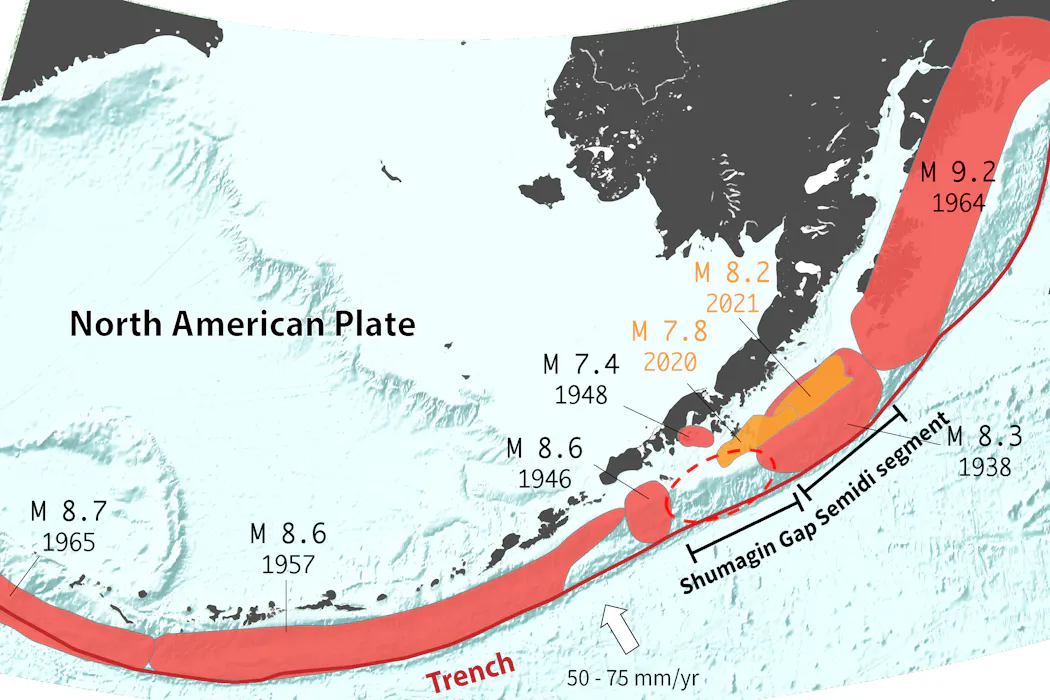
Large earthquakes have been common along the Alaska-Aleutian subduction zone, except at the Shumagin Gap. Yinchu Li
Not all earthquake faults behave the same. Some stick and snap, causing earthquakes. Others move slowly over time.
For years, the leading explanation for slow-moving faults has been that high-pressure fluids along the fault lubricate it, allowing the slabs to slide steadily rather than building up stress until that stress is eventually released in a large, destructive earthquake.
But in a new study of the Shumagin Gap, a quiet section of the Alaska-Aleutian subduction zone – the area where one tectonic plate dives below another – my colleagues and I found that the fault does not contain enough fluid to explain why it slides slowly. Scientists may need to rethink this assumption about subduction zones around the world.
Pinning down why faults creep matters for how scientists build models of the world’s most powerful earthquake zones to assess long-term earthquake and tsunami hazards, from Alaska to Japan to the Pacific Northwest. Knowing how earthquakes are likely to behave is essential for helping communities decide where and how to build homes and other infrastructure so they can withstand an earthquake and tsunami.
A topographic map of the Alaska-Aleutian subduction zone highlights the Shumagin Gap. The magnitude 7.8 earthquake in 2020 occurred at its inland edge, and a magnitude 8.2 earthquakes in 2021 struck nearby. Other large earthquakes are shown from 1938, 1946 and 1964. Yinchu Li, et al., 2026
How earthquakes happen along faults
An earthquake fault is a break in Earth’s outer rock layer where two blocks of rock slide past each other. The way they slide determines what kind of shaking, if any, reaches the surface.
Some faults are “locked.” They do not budge until stress builds to a breaking point, then they release it all at once in a sudden rupture. This is what happens during most damaging earthquakes. Other faults “creep.” They glide past each other steadily, releasing stress gradually.
Deep underground, fault behavior is hard to see directly, especially offshore where faults often sit beneath kilometers of seawater and sediment.
Scientists rely on measurements from GPS stations, seismometers and seafloor sensors, and then build computer models of what must be happening below. For decades, the leading explanation for creeping faults has been that high-pressure fluids along the fault reduce friction, the way a film of water causes tires to hydroplane.
Scientists often describe subduction faults as either locked or creeping. Locked patches, top right, stick as stress builds, then rupture suddenly in earthquakes. Creeping patches slide more gradually. One common explanation has been that high-pressure fluids help keep them weak and slippery, lower right. But new research questions that fluid-based explanation. At the Shumagin Gap, we found too little fluid pressure for fluid alone to explain the slow, consistent slide. Yinchu Li, et al., 2026
Testing that idea requires seeing the fluids, and that’s where our team came in.
We use marine electromagnetic imaging, a method that maps how easily underground materials conduct electricity. A ship tows an instrument close to the seafloor, sending electromagnetic signals into the rocks below, while other instruments on the seabed record the response. Different materials beneath the seafloor conduct electricity differently, and that shows up in the measurements. Because salty water conducts electricity very well, the method is especially good at mapping where fluids are and where they aren’t.
Researchers deploy marine electromagnetic instruments off Alaska to image fluids and rock structure beneath the seafloor. EMAGE team/Kerry Key
We surveyed a 75-mile (120-kilometer) stretch of seafloor across the Shumagin Gap, a section of the Alaska-Aleutian subduction zone that has been creeping for more than a century. The Shumagin Gap had long been considered a quiet part of the margin, even though neighboring segments have produced magnitude 8 and larger earthquakes.
To our surprise, the fault at the Shumagin Gap was not as fluid-rich as the leading explanation would predict.
Our images show that the shallow part of the fault, closest to the ocean, has little open space in the rock for fluid to occupy. And the fluid that is there is under roughly normal pressure, not the high pressure that the “slippery fluid” model predicts.
The fault surface is bumpy and rugged. The upper plate appears to be a patchwork of stronger and weaker material, and we found possible pathways where fluids may drain into the rock above the fault.
In other words, this quiet fault isn’t quiet because it’s well lubricated. Something else is keeping it stable, most likely a combination of rough fault surface, varying rock strength and, in some places, fluid.
A cross-sectional illustration of the Shumagin Gap shows a rough plate interface and limited fluid. Yinchu Li, et al., 2026
What this means for assessing earthquake risks
Our findings about this fault have consequences for assessing earthquake and tsunami hazards more broadly.
Many models lean on the idea that fluid pressure helps determine whether a subduction fault slips suddenly or creeps. If fluid isn’t the main control keeping the Shumagin Gap quiet, other quiet faults might similarly lack fluid, raising questions about how stable those faults really are.
Understanding these mechanisms matters for assessing coastal communities’ earthquake and tsunami risks. A shallow slip near a trench is what drives the most destructive tsunamis. Tsunamis from Alaska–Aleutian earthquakes have reached distant coasts before. Large earthquakes in 1946, 1957 and 1964 generated tsunamis that damaged the coasts of Hawaii and California.
As our results show, there isn’t a single, simple story explaining slow-sliding faults. More and better offshore data will help scientists more accurately assess earthquake and tsunami hazards around the world and help communities well beyond Alaska prepare.
This research was funded by the National Science Foundation under grants OCE-1654652 and OCE-1654619.
Imagine receiving a test result that tells you your body is biologically five years older than your chronological age. You exercise regularly, get good sleep, eat healthy meals and have a happy personal life. What have you been doing wrong? Can this test be trusted?
Dozens of companies are marketing products that promise to reveal a person’s “true” biological age – that is, how well your body is functioning – for a price ranging from around US$30 to over $1,000. These products are based on epigenetic aging clocks, which are research tools that estimate age based on a person’s DNA. These clocks are reshaping how scientists study aging and how the public thinks about it.
But while epigenetic clocks are highly effective research tools to study aging at the population level, they aren’t designed to make claims about the health of individuals.
We arebiobehavioral healthscientists who study how early development and environmental factors across the lifespan shape biological aging, influencing health and disease decades later. As researchers who use epigenetic clocks in our work, we have found them to be highly informative tools when studying large numbers of people. But these clocks can provide faulty results at the individual level, and they do not meet the standards required of common medical tests.
What are epigenetic clocks?
Measuring reversible chemical changes to DNA, known as epigenetic marks, can provide information about how your body is aging.
Using DNA obtained from routine blood draws, researchers can measure millions of these epigenetic marks in an individual. Running statistical algorithms on this information can produce a single value that represents that person’s epigenetic age, analogous to chronological age.
Epigenetic clocks work because the chemical marks on DNA can shift over time and are influenced by lifestyle, stress and the environment. These changes capture aspects of aging that chronological age alone may not reflect.
In this way, epigenetic clocks help scientists identify the experiences, exposures and behaviors that may accelerate or slow biological aging.
Your experiences and environment change your DNA.
Not for individual health decisions
Why can’t epigenetic clocks provide reliable results about biological age for individual people?
First, there are dozens of different types of epigenetic clocks, each designed for a specific purpose. Some are used to predict a person’s age, while others are used to predict how fast someone is aging or how many years until they die. These different clocks do not always agree with one another, even when used on the same person.
Second, epigenetic changes are dynamic, making age predictions sensitive to short-term fluctuations in diet, environmental exposures, illness, time of day and other transient factors. As a result, estimated age could vary substantially depending on when someone is tested.
Third, constructing epigenetic clocks is technically challenging, and there is no established gold-standard method for generating clocks across laboratories. For example, testing epigenetic age in saliva versus blood samples can yield substantially different results for the same person. The technologies used to measure epigenetic marks have also evolved over time and will likely continue to improve. As these methods change, the original algorithms designed for specific measurement platforms may not perform the same way.
Fourth, scientists do not universally agree on what aging means, in part because it is a very complex process. Reducing that complexity to a single number, such as an epigenetic age, can be misleading.
Finally, epigenetic clocks are influenced by a person’s history of trauma, discrimination and early life adversity. This makes their use at the individual level potentially problematic. On average, marginalized communities tend to show signs of accelerated aging when assessed with epigenetic clocks. If insurance companies began using epigenetic age estimates to set premiums, many people could face higher costs for biological differences shaped by circumstances beyond their control, potentially deepening existing health disparities.
Epigenetic clocks can also help test new drug therapies aimed at slowing down specific aging processes. For example, researchers have shown that rapamycin, a drug connected to various aging processes, can reduce the epigenetic age of human skin cells. There is also some evidence that a treatment designed to regenerate the thymus may slow or even reverse epigenetic aging after one year of treatment. However, researchers have seen these effects only when looking at groups rather than individuals.
Epigenetic clocks are helping scientists advance scientific research on the aging processes, but they aren’t medical tests to measure individual health. In the future, epigenetic measurements may play a useful role in guiding personal health decisions. But for now, epigenetic clocks sold as biological age tests are best used and refined by researchers who are studying populations rather than individual people.
Idan Shalev receives funding from The National Institutes of Health.
Abner Apsley receives funding from the National Institutes of Health and the National Science Foundation.
À l’occasion de l’anniversaire de la création du FLNC il y a 50 ans, retour sur la trajectoire singulière d’un mouvement clandestin qui a profondément marqué la vie politique corse. Entre revendication anticoloniale, structuration armée et recompositions internes, son histoire éclaire les transformations contemporaines du nationalisme insulaire.
En Corse, la première action violente contre l’État date de février 1973. Elle est revendiquée par le Front Paysan Corse de Libération (FPCL). Composé d’agriculteurs, de commerçants et d’étudiants, ses credo sont la reconnaissance de la Nation et de la langue Corse, l’exclusion des colons, la corsisation des emplois, et le rapatriement des Corses de l’extérieur.
Puis, dès l’année 1974, apparait une seconde organisation clandestine : la Ghjustizia Paolina (GP), constituée de jeunes militants pour la plupart étudiants. Elle revendique des attentats d’envergures contre des cibles définies comme colonialistes.
Le 24 avril 1974, le FPCL annonce sa fusion avec la GP et en mai 1974, ils diffusent un manifeste qui officialise un passage à la lutte de libération nationale et donc à la création d’un Front de libération de type mouvement de décolonisation. C’est dans ce contexte, suite à une vague de 22 attentats, durant la nuit de 05 mai 1976, qu’apparait le FLNC.
Une inscription parmi les luttes anticoloniales
Dans sa première conférence de presse en juillet 1976, le FLNC menace directement l’État au nom du peuple corse et rappelle que ses membres « n’ont pas d’attachement ni avec l’extrême droite ni avec les socialistes et autres révolutionnaires de gauche : ses membres sont, avant toute chose, nationalistes corses ». Ainsi, le FLNC expose un projet d’indépendance dont le point nodal est le choix des Corses à déterminer par la voie référendaire la souveraineté de l’île. Très critique envers les actions des autonomistes, il rappelle aussi que seule une lutte armée contre l’État dit colonial permettrait « de sauvegarder ce qui reste du peuple corse ». Le FLNC propose également l’extension du domaine de la revendication anticoloniale à la lutte de libération nationale :
« Corses, reprenons la voie de nos ancêtres, le fusil à la main, pour libérer notre patrie. Nous n’avons plus le choix ».
S’inspirant des situations des autres luttes de décolonisation, il précise que seule « cette période de désaliénation permettra [au] peuple de choisir démocratiquement son destin avec ou sans la France ».
Sur le plan de la production de la violence contre l’État, à l’inverse de ses homologues européens (ETA ou IRA), le FLNC propose alors une violence ciblée et mesurée, pour ne pas dire contrôlée. Pour les insulaires ses actions sont perçues comme légitimes tant qu’elles restent au service de la défense et de la sauvegarde des intérêts des Corses.
Le manifeste de 1977 du FLNC « La liberté ou la mort » propose un programme d’actions « de légitime défense » du peuple corse contre un État jugé « comme colonial », car « d’occupation ». Il s’articule autour de cinq points :
La destruction de tous les instruments du colonialisme français : armée, administrations, etc.
L’instauration d’un pouvoir populaire démocratique, expression de tous les patriotes corses.
La confiscation des grandes propriétés coloniales et des trusts touristiques.
La réalisation d’un pouvoir agraire pour assurer les aspirations des paysans, des ouvriers, des intellectuels et débarrasser le pays de toutes les formes d’exploitation.
Le droit à l’autodétermination après une période transitoire de trois ans, durant laquelle l’administration se fera à égalité entre forces nationalistes et forces d’occupation.
Phénomène classique des bras armés européens, le FLNC a en réalité un caractère plus pragmatique que révolutionnaire. Des stratégies personnelles traversent le mouvement, en faisant une organisation floue aux dérives parfois affairistes. Mais le FLNC cherche à soigner son image et à occuper l’espace public. Au-delà d’une présence dans chaque secteur de l’île, dès 1980, il crée une vitrine publique, la CCN (A Cunsulta di i Cumitati Nazionalisti : littéralement Rassemblement ou Assemblée des comités nationalistes), qui endosse le rôle symbolique de porte-parole de la lutte de libération nationale du peuple corse. Son discours tourné sur l’indépendance (mais aussi la révolution et le marxisme) parle à une jeunesse qui ne se retrouve pas dans le projet d’autonomie proposé par les autonomistes depuis les années 1960 (des compétences et pouvoirs élargis pour la Corse, tout en restant au sein de l’État français qui conserve le régalien).
L’interdiction de l’indépendantisme corse
Le FLNC est néanmoins dissout par les pouvoirs publics le 5 janvier 1983. À partir de cette date, le front et ses officines sont assimilés à des organisations illégales et terroristes.
Le 28 septembre 1983, la CCN est également dissoute par le gouvernement, qui empêche ainsi l’indépendantisme corse d’exister légalement.
Néanmoins, ces dissolutions entraînent auprès de l’opinion locale un soutien populaire qui pousse le FLNC à s’engager sur la voie de la légalité, le 3 octobre 1983, en créant un parti politique, le Mouvement Corse pour l’Autodétermination (MCA) qui entend être plus proche de la société civile. Avant le MCA, seuls les autonomistes proposaient une opposition politique (par exemple en participant aux élections locales). Avec le MCA comme vitrine politique, le FLNC peut désormais prétendre concurrencer dans l’espace public les partis politiques autonomistes. Il assoit ainsi sur le plan idéologique et doctrinal un discours reliant le combat anticolonial à l’action institutionnelle. Mais en janvier 1986, en raison d’une trop grande proximité idéologique avec l’officine clandestine, le MCA se voit interdit à son tour.
Les guerres fratricides
Paradoxalement, cette période se traduit par une rupture de l’unicité de la lutte armée et fragmentera, en 1989-91, le FLNC en trois nébuleuses distinctes mais très proches sur le plan idéologique : le Canal Historique, le Canal Habituel et Resistenza.
Ces FLNC(s) se plongent alors à corps perdu dans une guerre fratricide de légitimité, sorte d’indépendantisme anthropophage, qui se soldera par une vingtaine de morts et une perte de sens idéologique pour les militants de base. En effet, de 1989 à 1997, ces trois nébuleuses produisent des actions violentes, mais celle-ci représentent des surmarquages territoriaux plus qu’une réelle volonté politique. Subséquemment, elles poussent les activistes de l’époque à suivre des voies contradictoires avec l’idéologie de base du FLNC originel.
En 1997, le Canal Habituel s’autodissout, Reisistenza se met en sommeil et le Canal Historique, tout en étant considérablement affaibli, sort vainqueur de cette quête pour la légitimité de la lutte de libération nationale. Néanmoins, on observe également l’apparition de nouvelles nébuleuses dissidentes agissant comme un moyen de pression au Canal Historique au sein ou à l’extérieur de celui-ci. Certaines ont des origines troubles à l’image du Sans Sigle (commando à l’origine de l’assassinat du Préfet Claude Erignac en février 1998).
Par la suite, de 1997 à 2014 la lutte de libération nationale semble n’être plus du tout au service de la cause indépendantiste. La guerre fratricide pour la quête de la légitimité de la lutte armée fait que la cloison entre violence politique et organisation criminelle est devenue très mince. Les deux phénomènes semblent s’imbriquer l’un dans l’autre, au point que cette évolution de la violence conduira inexorablement le FLNC à se démilitariser en juin 2014.
Aujourd’hui, l’imaginaire collectif est toujours imprégné d’une vision de la Corse comme lieu de violence endémique. Pourtant, la démilitarisation du FLNC a permis un rapprochement des forces partisanes autonomistes et indépendantistes. En décembre 2015, cela a donné lieu pour la première fois dans l’histoire politique de l’île à la victoire à l’élection régionale d’une alliance entre autonomistes et indépendantistes, ouvrant sur une solution politique et une probable évolution du statut de l’île. Plusieurs cadres du FLNC sont désormais des membres importants de la société civile sur le plan économique, social ou politique (élus, collectifs et association d’anciens prisonniers).
Néanmoins, l’esprit du FLNC prédémilitarisation plane encore en partie sur la société insulaire : des néo-groupuscules se revendiquent héritiers de la structure et quelques jeunes activistes rêvent d’un retour de la lutte armée. Objectif ? Obtenir l’indépendance de l’île et, surtout, bénéficier d’un capital guerrier.
Thierry Dominici ne travaille pas, ne conseille pas, ne possède pas de parts, ne reçoit pas de fonds d’une organisation qui pourrait tirer profit de cet article, et n’a déclaré aucune autre affiliation que son organisme de recherche.
En annonçant qu’ils quittaient l’Organisation des pays exportateurs de pétrole, Opep, les Émirats arabes unis ont-ils porté le coup de grâce à cette structure née en septembre 1960 ? Ou n’ont-ils fait qu’entériner un changement de cadre géopolitique, rendant ce cartel moins efficient que par le passé ? Cette décision intervient dans un contexte où le marché pétrolier est ébranlé par les attaques des États-Unis et d’Israël sur l’Iran, et où la circulation par le détroit d’Ormuz reste incertaine…
Le 28 avril 2026, les Émirats arabes unis (EAU) ont annoncé leur retrait de l’Organisation des pays exportateurs de pétrole (Opep) avec effet dès le 1er mai. Ce départ est le plus lourd de conséquences depuis la création du cartel en 1960. Cette décision invite aussi à creuser une problématique qui monte en intensité depuis une décennie : l’Opep est-elle encore viable comme instrument de régulation collective du marché pétrolier mondial ?
Membres de l’Opep depuis 1967, les Émirats ont longtemps compté parmi les piliers de l’organisation. En annonçant leur retrait, les autorités émiriennes ont invoqué une vision de long terme et l’évolution de leur profil énergétique.
Le résultat d’années de friction
Derrière cette justification se lit cependant une frustration ancienne, nourrie par des années de frictions sur la marge de manœuvre laissée à Abou Dhabi dans sa politique pétrolière. Cette tension tient au décalage entre les capacités de production des EAU et les contraintes imposées par le cartel. Les Émirats ont massivement investi dans l’amont afin de porter leur capacité de production de 4 à 5 millions de barils par jour d’ici à 2027. Or, l’Opep a continué à privilégier les coupes, limitant la capacité du pays à valoriser pleinement ces investissements. Du point de vue émirien, la sortie de l’Opep vise donc à réaligne donc les intérêts économiques nationaux en redonnant au pays la liberté de mobiliser pleinement ses capacités.
La guerre au Moyen-Orient, déclenchée au début de 2026, a servi de détonateur à une rupture que la logique économique préparait depuis longtemps. Les EAU nourrissaient déjà un ressentiment envers leurs partenaires régionaux, jugés trop passifs au moment où Abou Dhabi supportait l’essentiel du choc provoqué par les attaques iraniennes et pro-iraniennes, dans le prolongement d’épisodes intervenus dès 2022. Cette séquence a mis en lumière l’écart entre les discours de solidarité et la faiblesse du soutien apporté par les États arabes et du Golfe.
Les fondements du cartel
Pour mesurer la portée du départ des EAU, il faut revenir aux fondements économiques du cartel. L’Opep vise à maximiser la rente collective en régulant l’offre mondiale, afin de maintenir les prix à un niveau supérieur à celui qui résulterait d’une concurrence non coordonnée. Deux conditions sont nécessaires à cet objectif :
des capacités de production excédentaires mobilisables, les spare capacities,
et l’acceptation, par les membres, de sacrifices de court terme au profit de recettes plus prévisibles à moyen terme.
Sur le plan technique, les Émirats faisaient partie, avec l’Arabie saoudite, des très rares membres disposant de capacités excédentaires substantielles. Leur départ affaiblit donc mécaniquement la crédibilité opérationnelle de l’Opep. Libéré de la contrainte des quotas, Abou Dhabi pourra désormais se comporter comme n’importe quel producteur hors Opep, en maximisant son extraction. Cette production supplémentaire, potentiellement de 500 000 à 800 000 barils par jour à moyen terme, pourrait peser sur les prix et contraindre les membres restants à des arbitrages encore plus délicats entre discipline collective et intérêts nationaux.
Un atout nommé oléoduc de Habshan-Fujairah
Le contexte géopolitique rend cette défection plus problématique encore. Le conflit déclenché fin février 2026 entre Israël, les États-Unis et l’Iran a partiellement fermé le détroit d’Ormuz, par lequel transitaient habituellement près de 20 % des flux mondiaux de pétrole (et par ailleurs de gaz naturel liquéfié). Cela a mécaniquement accru la valeur stratégique des approvisionnements capables de contourner ce goulot d’étranglement.
Dans ce contexte, les Émirats disposent d’un atout important avec l’oléoduc Habshan-Fujairah, qui permet d’exporter une partie substantielle de leur brut hors Ormuz via le port de Fujairah, sur le golfe d’Oman. La demande en brut exportable sans astreinte à un passage via le détroit s’en trouve renforcée, ce qui rend d’autant plus attractif, pour Abou Dhabi, le choix d’une production libérée des astreintes de l’Opep. Cet avantage pourrait d’ailleurs perdurer au-delà du conflit, si une prime de risque durable continuait de peser sur le golfe Persique.
La fin d’une emprise de l’Opep
Il serait toutefois inexact de voir dans le retrait des EAU l’événement fondateur d’une crise entièrement nouvelle. La fragilisation de l’Opep est un processus ancien, perceptible depuis le contre-choc pétrolier du milieu des années 1980 et accéléré dans les années 2010 par la révolution du pétrole de schiste américain.
Au fil de la dernière décennie, les États-Unis sont devenus le premier producteur mondial de pétrole, devant l’Arabie saoudite et la Russie, portant leur production à plus de 13 millions de barils par jour en 2025. Cette évolution a réduit la capacité de l’Opep à contrôler les prix, car toute baisse de production du cartel peut être partiellement compensée par une hausse de l’offre américaine, non soumise à quotas. C’est précisément pourquoi l’organisation a dû former en 2016, avec la Russie et neuf autres pays, une alliance élargie, qualifiée d’Opep+, actant qu’elle ne disposait plus d’une emprise suffisante sur le marché, à elle seule.
La série des défections intervenues depuis confirme toutefois une érosion : Qatar en 2019, Équateur en 2020, puis Angola en 2024. À chaque départ, l’organisation a conservé sa structure formelle, mais sa capacité effective de coordination s’est réduite. En outre, sur les vingt-deux membres de l’Opep+, trois (l’Iran, le Venezuela et la Libye) étaient déjà exemptés de quotas en raison de leurs contraintes géopolitiques, ce qui limitait encore la portée des règles communes.
La variable Trump et la recomposition des alliances
À ces facteurs économiques et structurels s’ajoute une pression politique américaine renouvelée. Donald Trump, revenu à la Maison-Blanche en janvier 2025, a activement cherché à fragiliser l’Opep par une stratégie combinant rhétorique anti-cartel et conditionnalité sécuritaire. La logique affichée par Trump dès son retour était simple : puisque les États-Unis assurent le parapluie militaire des monarchies du Golfe, celles-ci devraient en retour adopter une politique pétrolière favorable aux consommateurs américains, c’est-à-dire des prix bas.
Cette équation géopolitique résonne particulièrement aux Émirats. Le retrait de l’Opep peut ainsi être lu comme un signal adressé à Washington : Abou Dhabi choisit le camp de ses partenaires stratégiques plutôt que la solidarité du cartel sous leadership saoudien. Ce départ peut, de ce point de vue, être interprété comme une victoire diplomatique pour l’administration Trump dans sa guerre d’intimidation contre l’Opep. Donald Trump n’a d’ailleurs pas manqué de saluer cette décision sur Truth Social.
Cette recomposition reflète aussi la profondeur des frictions entre Mohammed ben Zayed, (président des Émirats arabes unis et émir d’Abou Dhabi) et Mohammed ben Salmane (prince héritier et premier ministre d’Arabie saoudite). Les désaccords se sont accumulés depuis 2019 sur la guerre au Yémen, la normalisation avec Israël, les stratégies de diversification économique et le rapport à Téhéran.
Que reste-t-il de l’Opep ?
Après le départ des EAU, l’Opep ne compte plus que onze membres. Son poids dans la production mondiale a fortement décliné, passant de 55 % dans les années 1970 à environ 30 % aujourd’hui. Même si l’Opep+ constitue un cénacle élargi et conserve une cohésion formelle, la crédibilité de ses engagements dépend désormais plus encore de la capacité et de la volonté de l’Arabie saoudite à assumer seule le rôle de swing producer. Ce qui constitue une charge considérable pour un pays dont les besoins budgétaires ont été relevés à mesure que s’affirmaient les ambitions de Vision 2030 et qui ne sortira pas indemne du choc du conflit en cours.
Si d’autres membres suivaient l’exemple des Émirats, la structure de l’Opep pourrait s’affaiblir au point de perdre une grande partie de sa pertinence opérationnelle. Le regard se tourne notamment vers le Koweït et l’Irak, qui pourraient à leur tour s’interroger sur les bénéfices de leur participation.
Il serait néanmoins prématuré d’annoncer la disparition du cartel. L’Opep a montré, à plusieurs reprises, une capacité de résilience que les observateurs ont souvent sous-estimée. Chaque grande crise a jusqu’ici débouché sur une adaptation plutôt que sur une dissolution. Pour ses membres africains (Nigeria, Libye, Gabon, Congo, Guinée équatoriale) sa valeur n’est d’ailleurs pas seulement économique. L’organisation leur offre aussi une visibilité internationale, un accès partagé aux données de marché et une plate-forme de coordination diplomatique qu’aucun autre forum ne pourrait aisément remplacer.
Vers un marché post-cartel ?
Le véritable enjeu dépasse la seule survie institutionnelle de l’Opep. Il concerne la gouvernance du marché pétrolier dans un monde plus fracturé, plus conflictuel et placé sous la pression de la transition énergétique. Dans un marché post-cartel, les prix seraient davantage déterminés par les fondamentaux de l’offre et de la demande, mais aussi par les décisions souveraines de grands producteurs non coordonnés comme les États-Unis, le Canada ou le Brésil, rejoints par les Émirats arabes unis.
Lumni, 2025.
Cela ouvrirait sur un marché plus volatil, marqué par des cycles d’investissement plus heurtés et une vulnérabilité accrue aux chocs. Cette volatilité aurait des effets asymétriques. À court terme, elle pourrait être favorable à certains producteurs hors cartel et à certains consommateurs industriels, tout en déstabilisant les économies les plus dépendantes des revenus pétroliers, c’est-à-dire le cœur résiduel de l’Opep.
Quel avenir à l’ère de la décarbonation ?
Dans un monde qui vise la neutralité carbone à l’horizon 2050, chaque producteur est incité à valoriser ses réserves avant qu’elles ne soient déclassées par la montée des renouvelables et de l’électromobilité. Les Émirats inscrivent aussi leur retrait dans cette logique : produire davantage aujourd’hui, tout en accélérant les investissements dans le solaire, le nucléaire et l’hydrogène décarboné. Cette course à la valorisation des actifs fossiles, sorte de paradoxe vert, est structurellement peu compatible avec une logique de restriction collective de la production.
Si l’Opep n’est pas morte le 28 avril 2026, le retrait des Émirats arabes unis marque une inflexion décisive dans l’histoire d’une organisation fondée à Bagdad en 1960 pour permettre aux pays du Sud de reprendre le contrôle de leurs ressources. Soumise aux pressions géopolitiques américaines, minée par les divergences d’intérêts entre ses membres et de moins en moins capable de discipliner les producteurs les plus ambitieux, elle entre dans une phase de vulnérabilité accrue.
L’institution d’un monde ancien ?
Dans un monde où chaque grand producteur est tenté de maximiser sa rente pétrolière avant que la transition énergétique n’en réduise la valeur, l’idée même d’une discipline collective paraît de plus en plus fragile. Cette fragilité est d’autant plus visible que le désordre stratégique entretenu par Donald Trump, par ses guerres commerciales, ses pressions sur ses partenaires et son imprévisibilité, accélère la recomposition du système international au lieu de le stabiliser.
Or, cette recomposition ne profite pas seulement aux producteurs désireux de s’affranchir des cadres collectifs : elle favorise aussi la Chine, vers laquelle de nombreux États se tournent davantage à mesure qu’ils recherchent des débouchés, des partenaires et des règles du jeu plus prévisibles, des sources énergétiques moins hystérisées que les hydrocarbures, face à l’instabilité américaine.
Dans ce nouvel environnement, l’Opep n’apparaît plus comme l’instrument central d’un Sud pétrolier organisé, mais comme une structure défensive, contestée de l’intérieur et débordée par une redistribution plus large des rapports de force économiques et géopolitiques. Elle n’est donc pas encore morte, mais elle risque de devenir, plus vite que prévu, l’institution d’un monde ancien.
Patrice Geoffron est membre fondateur de l’Alliance pour la Décarbonation de la Route. Il siège dans différents conseils scientifiques: CEA, CRE, Engie.
Source: The Conversation – in French – By Christian Abadioko Sambou, Dr en Sciences Politiques, spécialiste en paix & sécurité, Université Numérique Cheikh Hamidou Kane
Les attaques simultanées du 25 avril 2026 contre plusieurs villes du Mali rappellent une réalité persistante : malgré cinq années de transition, la situation sécuritaire y demeure critique. Par leur coordination, leur extension géographique et leur capacité à atteindre des centres urbains majeurs tels que Bamako, Kati, Sévaré, Gao, Kidal, ces offensives marquent une nouvelle phase du conflit.
Comment, en effet, expliquer que la situation sécuritaire continue de se dégrader malgré un renforcement militaire réel ?
En tant que chercheur, spécialiste du Sahel, j’analyse depuis plusieurs années les dynamiques sécuritaires en Afrique de l’Ouest et du Centre, notamment les conflits, les transformations politiques des régimes. L’évolution des conflictualités au Mali constitue un enjeu majeur de sécurité régionale et internationale.
Ces dernières années, les Forces armées maliennes (FAMa) ont connu une montée en puissance notable. Le Mali se positionne aujourd’hui parmi les armées les plus structurées et les plus puissantes de la sous-région, selon le rapport 2026 du Global Firepower qui le classe deuxième armée de la sous-région, après le Nigéria.
La création de l’Alliance des Etats du Sahel (AES) et l’opérationnalisation progressive d’une force conjointe, adossée à la charte du Liptako-Gourma, témoignent également d’une volonté de mutualiser les capacités sécuritaires entre le Mali, le Burkina Faso et le Niger. Cette dynamique s’est traduite par une intensification des opérations militaires, une amélioration des capacités logistiques et une diversification des partenariats.
Cependant, ces évolutions ne suffisent pas à enrayer la dynamique du conflit. Les attaques récentes traduisent moins une simple intensification de la violence qu’une transformation stratégique. Le Groupe de soutien à l’islam et aux musulmans (JNIM, proche d’al-Qaida) et le Front de libération de l’Azawad (qui revendique l’indépendance du nord du Mali) ont ciblé des espaces hautement symboliques du pouvoir. Kidal incarne la souveraineté militaire revendiquée par le régime militaire après sa reconquête en 2023. Kati représente le cœur du pouvoir militaire malien d’où sont partis la plupart des coups d’État militaire dont celui d’août 2020.
En s’attaquant à ces lieux, les assaillants contestent directement la capacité de l’État à stabiliser durablement le territoire.
Le message est double. Militaire, d’abord : conquérir n’est pas gouverner. Politique, ensuite : une stratégie de reconquête sans compromis politique peut favoriser la convergence d’acteurs aux idéologies de lutte différentes tels que les mouvements indépendantistes et ceux djihadistes.
Ainsi, le Mali fait face moins à une insurrection qu’à une reconfiguration du conflit où le politique s’exprime par les armes. Cette séquence invite à dépasser une lecture strictement sécuritaire : l’insécurité apparaît avant tout comme le symptôme d’un déficit de légitimité et de cohésion nationale.
Une détérioration sécuritaire
Depuis les coups d’État de 2020 et 2021, les autorités de transition maliennes ont engagé un tournant souverainiste marqué par la rupture avec plusieurs partenaires internationaux et la redéfinition des alliances sécuritaires.
Cette réorientation s’est notamment traduite par la remise en cause de l’Accord d’Alger de 2015, pourtant central dans la régulation du conflit au Nord. Malgré ses limites (lenteur de mise en œuvre, défiance entre parties), cet accord constituait un cadre politique essentiel. Sa remise en cause par le régime militaire en janvier 2024 a contribué à durcir les positions, notamment au sein de la rébellion touareg, et à réactiver des logiques de confrontation.
Parallèlement, les mécanismes locaux de gestion de la sécurité ont été profondément fragilisés. Dans les régions septentrionales, ces mécanismes relevaient de formes de « sécurité hybride », combinant acteurs étatiques, communautaires et armés. L’engagement croissant de supplétifs russes dans la lutte contre les groupes terroristes a perturbé ces arrangements, accentuant la militarisation des rapports sociaux et affaiblissant les capacités d’auto-régulation locale. Cette évolution alimente les tensions intercommunautaires et délégitime une action étatique perçue comme imposée plutôt que négociée.
À l’échelle régionale, la création de l’AES illustre une volonté de coordination entre régimes militaires. Mais cette dynamique, essentiellement sécuritaire, ne traite pas les causes structurelles des conflits.
Dans le même temps, la dégradation des relations avec l’Algérie affaiblit un acteur clé de la médiation. L’implication croissante de la Russie, à travers Africa Corps, répond à une logique d’appui militaire sans nécessairement apporter des solutions politiques durables.
Cette reconfiguration a néanmoins permis au Mali de retrouver une capacité d’initiative stratégique et de réduire certaines formes de dépendance vis-à-vis de partenaires internationaux classiques tels que la France.
Il demeure qu’au cœur de cette crise persiste une question centrale : celle de la légitimité. L’absence de mandat électoral renouvelé (il n’y a pas eu d’élection depuis les législatives contestées de mars-avril 2020), la centralisation du pouvoir et la restriction des espaces politiques ne fragilisent-elles pas le contrat social ? Or, c’est précisément dans ces contextes d’État contesté que prospèrent les groupes armés, prolongeant une insécurité que la seule réponse militaire ne peut résoudre.
D’un point de vue sécuritaire, ACLED (Armed Conflict Location & Event Data, une organisation qui recueille des données sur les conflits violents et les manifestations) classe le Mali à la 27ème place des 50 conflits les plus sévères au monde.
Comment comprendre l’entente entre groupes armés ?
La dynamique actuelle entre le JNIM et les mouvements de l’Azawad doit être interprétée avec prudence. Elle s’apparente plus à une « alliance opportuniste » qu’à une fusion idéologique. D’un côté, le Front de libération de l’Azawad portent une revendication politico-territoriale centrée sur le Nord du Mali. De l’autre, le JNIM s’inscrit dans un projet djihadiste transnational affilié à Al-Qaïda, visant l’instauration d’une gouvernance islamique à l’échelle régionale. Ce décalage doctrinal suggère que l’entente observée relève davantage d’une coordination circonstancielle que d’une alliance stratégique durable.
Une configuration similaire est apparue en 2012 avec Ansar Dine (aujourd’hui le JNIM dirigé par Iyad Ag Ghali) et le MNLA de Bilal Ag Chérif. Cette situation a conduit à l’intervention de l’Opération Serval en 2013. Elle brouille la distinction entre rébellion et djihadisme, renforce la rhétorique étatique assimilant toute opposition armée au terrorisme et favorise l’ancrage local du JNIM.
Cette recomposition intervient dans un contexte profondément transformé. La fin de l’accord d’Alger en janvier 2024 a supprimé un cadre de dialogue essentiel, même imparfait, avec les groupes du Nord. Le retrait de la force de l’ONU au Mali, la MINUSMA, fin 2023 et la sortie de le CEDEAO en 2024, réduisent les capacités de médiation.
Par ailleurs, la reconquête de Kidal par l’armée malienne en 2023, présentée comme une victoire militaire, n’a pas résolu les enjeux politiques sous-jacents, alimentant des logiques de revanche.
Dans ce contexte, l’éventuelle négociation du retrait des forces russes de Kidal par des groupes armés soulève la question de la souveraineté réelle et montre les limites de l’externalisation sécuritaire. Les partenaires extérieurs peuvent appuyer militairement, mais ne remplacent pas un règlement politique durable du conflit.
La reconquête de Kidal, bien que stratégique, n’a pas résolu les causes profondes et a parfois ravivé tensions et violences intercommunautaires.
La lutte contre le terrorisme ne peut donc être réduite à une réponse strictement militaire. Elle repose sur une capacité plus fondamentale : celle de l’État à incarner une communauté politique reconnue, légitime et inclusive. Dans les contextes sahéliens, les groupes armés terroristes ne progressent pas uniquement par leur force opérationnelle, mais surtout en exploitant les failles de gouvernance, les injustices perçues et les fractures sociales. Dès lors, la réponse la plus structurante ne réside pas uniquement dans la coercition, mais dans la construction d’un État-nation inclusif et légitime.
Les opérations militaires récentes ont permis un retour partiel de la présence de l’État dans des localités comme Gao, Kidal et Mopti. Mais sans dialogue politique crédible ni élections transparentes et inclusives, ces avancées sécuritaires risquent de rester fragiles et insuffisantes pour refonder le contrat social.
Par ailleurs, le renforcement de la cohésion sociale implique la reconstruction des mécanismes locaux de régulation des conflits, longtemps au cœur des équilibres sahéliens. Sans ces médiations, l’action de l’État risque d’être perçue comme imposée plutôt que négociée. Les opérations militaires doivent ainsi être articulées à une stratégie politique cohérente, sous peine de produire des effets contre-productifs.
Les conflits prolongés évoluent dès lors qu’une offre politique crédible est proposée. Les dynamiques récentes au Mali illustrent un conflit qui s’adapte et prospère sur les fragilités structurelles de l’État. Si le régime de transition a renforcé les capacités militaires et affirmé une souveraineté stratégique, ces acquis restent insuffisants sans cadre politique inclusif.
La région ouest-africaine se trouve ainsi à un tournant : persister dans une approche sécuritaire risque d’alimenter la violence, tandis qu’une réouverture politique, appuyée notamment par la Communauté économique des État de l’Afrique de l’Ouest (Cedeao), pourrait créer les conditions d’une stabilisation durable fondée sur une gouvernance légitime.
Christian Abadioko Sambou does not work for, consult, own shares in or receive funding from any company or organisation that would benefit from this article, and has disclosed no relevant affiliations beyond their academic appointment.