Les cigognes et les goélands transportent des centaines de kilos de plastique depuis les décharges jusqu’aux zones humides d’Andalousie

Source: The Conversation – in French – By Julián Cano Povedano, PhD student, Estación Biológica de Doñana (EBD-CSIC)

Cigognes et goélands se nourrissant dans une décharge. Enrique García Muñoz (FotoConCiencia), CC BY-ND

Le plastique ne se déplace pas seulement par le vent ou la mer. En Andalousie, des milliers d’oiseaux en deviennent les livreurs involontaires, reliant les décharges humaines aux zones naturelles protégées.


L’image d’oiseaux envahissant les décharges et se nourrissant de nos déchets suscite des inquiétudes quant à ce qu’ils mangent réellement. On sait, par exemple, que ces animaux peuvent mourir après avoir ingéré du plastique. Mais ce qui est moins connu, c’est ce qu’il advient ensuite de ces plastiques avalés et comment ils peuvent affecter d’autres organismes partageant le même écosystème.

Notre groupe de recherche étudie depuis plusieurs années le transport de graines et d’invertébrés par les oiseaux aquatiques. Cependant, nous trouvions souvent du plastique, du verre et d’autres produits d’origine anthropique dans les pelotes de réjection – des boules rejetées contenant des restes organiques non digestibles – et dans les fientes que nous analysions. Nous nous sommes donc demandé : et s’ils transportaient aussi du plastique ?

La pollution plastique est l’une des menaces auxquelles notre société est confrontée. Si elle a été largement étudiée dans les écosystèmes marins, les informations sur la provenance et l’impact du plastique dans les zones humides, comme les lacs ou les marais, restent limitées.

Comment les oiseaux transportent-ils les plastiques ?

Dans de nombreux endroits, des oiseaux comme les cigognes, les goélands ou les hérons garde-bœufs effectuent chaque jour le même trajet. Ils se nourrissent dans les décharges puis se déplacent vers les zones humides pour se reposer. Là, ces espèces régurgitent des pelotes contenant le matériel impossible à digérer, comme les plastiques. Elles agissent ainsi comme des vecteurs biologiques, et leur comportement entraîne une accumulation de plastiques dans les zones humides utilisées pour le repos.

Mais quelle est l’ampleur de ce phénomène ?

Pour répondre à cette question, nous nous sommes concentrés sur trois espèces d’oiseaux courantes dans les décharges andalouses : le goéland brun, le goéland leucophée et la cigogne blanche. Nous avons suivi des individus équipés de GPS et prélevé des pelotes de réjection dans les zones humides reliées aux décharges par leurs déplacements.

Après avoir quantifié le plastique en laboratoire, nous avons finalement combiné les données GPS, les recensements des espèces et l’analyse des pelotes de réjection afin d’estimer la quantité de plastique transportée par l’ensemble de la population. Le travail et le traitement des échantillons réalisés dans le cadre du projet ont été présentés dans un documentaire consacré au transport de plastique par les oiseaux vers les zones humides aquatiques.

Des centaines de kilos de plastique chaque année

La lagune de Fuente de Piedra, à Málaga, est célèbre pour sa colonie de flamants roses. Il s’agit d’une lagune endoréique, c’est-à-dire que l’eau y entre par des ruisseaux mais n’en sort pas, ce qui entraîne une concentration de sels et de tout polluant qui y pénètre, y compris les plastiques.

En hiver, des milliers de goélands bruns venus se reproduire dans le nord de l’Europe s’y rassemblent. Nous estimons que cette population importe en moyenne 400 kg de plastique par an vers cette zone humide classée Ramsar, provenant des décharges des provinces de Málaga, Séville et Cordoue.

Une autre étude récente menée dans le Parc naturel de la baie de Cadix nous a permis de comparer les trois espèces mentionnées, qui fréquentent les mêmes décharges et partagent le parc naturel comme zone de repos. Au total, nous avons constaté que ces espèces transportaient environ 530 kg de plastique par an vers les marais de la baie de Cadix, mais chacune le faisait d’une manière légèrement différente.

Différences entre cigognes et goélands

La cigogne, plus grande, transporte davantage de plastique par individu que les goélands, car ses pelotes de réjection sont plus volumineuses. Cependant, le facteur le plus déterminant pour évaluer l’impact de chaque espèce reste le nombre d’individus effectuant le trajet entre la décharge et la zone humide. Dans notre étude, c’est encore une fois le goéland brun qui déplaçait le plus de plastique (285 kg par an), en raison de son abondance durant l’hiver.

La corrélation directe entre la fréquence des visites aux décharges et la distance à celles-ci est évidente, tant chez les goélands que chez les cigognes. Les écosystèmes situés à proximité des décharges sont donc les plus exposés à ce problème.

Notre étude montre également que les différences spatio-temporelles propres à chaque espèce se traduisent dans leur manière de transporter le plastique. Par exemple, nous avons observé que la zone de la baie de Cadix la plus exposée aux plastiques provenant du goéland leucophée se situe autour de ses colonies de reproduction. De plus, cette espèce transportait du plastique tout au long de l’année, tandis que les deux autres ne le faisaient qu’en lien avec leur passage migratoire.

Enfin, nous avons relevé certaines différences dans les types de plastiques transportés : la cigogne était la seule espèce à rapporter des morceaux de silicone depuis les décharges, pour des raisons encore inconnues.

Goélands et cigognes sur le sol terreux d’une décharge
Goélands et cigognes dans une décharge.
Enrique García Muñoz, CC BY-ND

Impact et solutions

Les plastiques et leurs additifs peuvent causer de nombreux problèmes, non seulement pour les oiseaux eux-mêmes, mais aussi pour les organismes avec lesquels ils partagent leur écosystème – que ce soient des plantes ou d’autres oiseaux. Par exemple, les plastiques de grande taille peuvent provoquer des étranglements ou obstruer leurs systèmes digestifs.

Les effets des plastiques plus petits, ainsi que ceux de leurs additifs et des contaminants qui s’y fixent, passent souvent plus inaperçus : ils agissent notamment comme des perturbateurs endocriniens et entraînent des troubles métaboliques et reproductifs. De plus, ils peuvent entrer dans la chaîne alimentaire – passant d’un organisme à celui qui le consomme – et s’y accumuler progressivement à mesure qu’on en gravit les niveaux, affectant ainsi divers maillons de l’écosystème.

Résoudre ce problème n’est pas simple. Une directive européenne (1999/31/CE) prévoit l’utilisation de mesures dissuasives visant à limiter la fréquentation des décharges par ces oiseaux. Cependant, un débat persiste quant à leurs effets possibles sur les populations aviaires.

D’un autre côté, il existe une solution à notre portée, qui n’implique pas les oiseaux et que chacun peut appliquer : celle des célèbres trois « R » – réutiliser, réduire et recycler les plastiques que nous utilisons.

The Conversation

Julián Cano Povedano a reçu un financement du ministère espagnol de la Science, de l’Innovation et des Universités (bourse FPU). Les travaux réalisés ont également reçu le soutien financier de la Junta de Andalucía dans le cadre du projet de R&D+i GUANOPLASTIC (réf. PY20_00756).

Andrew J. Green a été le chercheur principal du projet « Aves acuáticas como vectores de plásticos y nutrientes entre vertederos y humedales andaluces : GuanoPlastic », financé par la Junta de Andalucía (réf. PY20_00756), mené d’octobre 2021 à mars 2023.

ref. Les cigognes et les goélands transportent des centaines de kilos de plastique depuis les décharges jusqu’aux zones humides d’Andalousie – https://theconversation.com/les-cigognes-et-les-goelands-transportent-des-centaines-de-kilos-de-plastique-depuis-les-decharges-jusquaux-zones-humides-dandalousie-269304

Avec son nouveau plan quinquennal, la Chine prend un pari très risqué

Source: The Conversation – in French – By Shaoyu Yuan, Adjunct Professor, New York University; Rutgers University

En adoptant en octobre le quinzième plan quinquennal du pays, Xi Jinping renforce le modèle dirigé par l’État, misant sur la technologie et la défense plutôt que sur la consommation des ménages. Un pari à haut risque…*


A intervalle régulier, depuis 1953, le gouvernement chinois dévoile une nouvelle stratégie directrice pour son économie : le très important plan quinquennal. Dans l’ensemble, ces feuilles de route ont eu pour objectif de stimuler la croissance et l’unité du pays alors qu’il se transformait d’une économie rurale et agricole en une puissance urbaine et développée.

La tâche à laquelle les dirigeants chinois étaient confrontés lorsqu’ils se sont réunis début octobre 2025 pour élaborer leur quinzième plan de ce type se heurtait cette fois à deux difficultés majeures : la faiblesse de la croissance intérieure et l’intensification des rivalités géopolitiques.

Leur solution ? Miser sur les mêmes recettes. En promettant d’assurer un « développement de haute qualité » grâce à l’autonomie technologique, à la modernisation industrielle et à l’expansion de la demande intérieure, Pékin renforce son pari sur un modèle dirigé par l’État, celui-là même qui a alimenté son essor ces dernières années. Le président Xi Jinping et les autres responsables ayant finalisé le plan 2026-2030 parient sur le fait qu’une croissance industrielle tirée par l’innovation pourrait garantir l’avenir de la Chine, même si des interrogations persistent sur la faiblesse des dépenses de consommation et sur les risques économiques croissants.

En tant qu’expert de l’économie politique de la Chine, je considère le nouveau plan quinquennal chinois autant comme un instrument de pouvoir que comme un outil économique. En réalité, il s’agit avant tout d’une feuille de route destinée à naviguer dans une nouvelle ère de compétition. Ce faisant, il risque toutefois de ne pas s’attaquer au fossé grandissant entre une capacité industrielle en plein essor et une demande intérieure atone.

Des rêves high-tech

Au cœur du nouveau plan on trouve des orientations plaçant l’industrie et l’innovation technologique au premier plan. Concrètement, cela signifie moderniser les usines traditionnelles, automatiser et « verdir » l’industrie lourde, tout en favorisant l’émergence de « secteurs d’avenir » tels que l’aérospatiale, les énergies renouvelables ou l’informatique quantique.

En faisant migrer l’économie vers le haut de la chaîne de valeur, Pékin espère échapper au piège du revenu intermédiaire et consolider son statut de superpuissance technologique autosuffisante. Pour protéger la Chine des contrôles à l’exportation instaurés par d’autres pays afin de freiner son ascension, Pékin redouble d’efforts pour « internaliser » les technologies critiques, en injectant massivement des fonds dans les entreprises nationales tout en réduisant la dépendance envers les fournisseurs étrangers.

Cette quête d’autosuffisance ne relève pas uniquement de considérations économiques : elle est explicitement liée à la sécurité nationale. Sous la direction de Xi Jinping, la Chine a poursuivi avec détermination ce que le Parti communiste chinois appelle la « fusion militaro-civile », c’est-à-dire l’intégration de l’innovation civile aux besoins militaires. Le nouveau plan quinquennal devrait institutionnaliser cette fusion comme principal levier de modernisation de la défense, garantissant que toute avancée dans l’intelligence artificielle ou la puissance de calcul civiles profite automatiquement à l’Armée populaire de libération.

Restructurer le commerce mondial

L’offensive chinoise, pilotée par l’État, dans les industries de haute technologie porte déjà ses fruits, et le nouveau plan quinquennal vise à prolonger cette dynamique. Au cours de la dernière décennie, la Chine s’est hissée au rang de leader mondial des technologies vertes – panneaux solaires, batteries et véhicules électriques – grâce à un soutien massif du gouvernement. Pékin entend désormais reproduire ce succès dans les semi-conducteurs, les machines de pointe, la biotechnologie et l’informatique quantique.

Une telle ambition, si elle se concrétise, pourrait redessiner les chaînes d’approvisionnement mondiales et les normes industrielles à l’échelle planétaire.

Mais cette stratégie accroît également les enjeux de la rivalité économique qui oppose la Chine aux économies avancées. La maîtrise chinoise de chaînes d’approvisionnement complètes a poussé les États-Unis et l’Europe à évoquer une réindustrialisation afin d’éviter toute dépendance excessive vis-à-vis de Pékin.

En promettant de bâtir « un système industriel moderne fondé sur une industrie manufacturière de pointe » et d’accélérer « l’autosuffisance scientifique et technologique de haut niveau », le nouveau plan indique clairement que la Chine ne renoncera pas à sa quête de domination technologique.

Un rééquilibrage insaisissable

Ce à quoi le plan accorde en revanche une attention relativement limitée, c’est au manque de dynamisme de la demande intérieure. Le renforcement de la consommation et des conditions de vie ne reçoit guère plus qu’un assentiment de principe dans le communiqué publié à l’issue du plénum au cours duquel le plan quinquennal a été élaboré.

Les dirigeants chinois ont bien promis de « stimuler vigoureusement la consommation » et de bâtir « un marché intérieur solide », tout en améliorant l’éducation, la santé et la protection sociale. Mais ces objectifs n’apparaissent qu’après les appels à la modernisation industrielle et à l’autosuffisance technologique – signe que les priorités anciennes continuent de dominer.

Et cela ne manquera pas de décevoir les économistes qui appellent depuis longtemps Pékin à passer d’un modèle ouvertement tourné vers les exportations à un modèle de croissance davantage porté par la consommation des ménages.

La consommation des ménages ne représente encore qu’environ 40 % du produit intérieur brut, bien en deçà des standards des économies avancées. En réalité, les ménages chinois se remettent difficilement d’une série de chocs économiques récents : les confinements liés au Covid-19 qui ont ébranlé la confiance des consommateurs, l’effondrement du marché immobilier qui a anéanti des milliers de milliards de richesse, et la montée du chômage des jeunes, qui a atteint un niveau record avant que les autorités n’en suspendent la publication.

Avec des gouvernements locaux enchevêtrés dans la dette et confrontés à de fortes tensions budgétaires, le scepticisme est de mise quant à la possibilité de voir émerger prochainement des politiques sociales ambitieuses ou des réformes favorables à la consommation.

Puisque Pékin renforce son appareil manufacturier tandis que la demande intérieure demeure faible, il est probable que l’excédent de production soit écoulé à l’étranger – notamment dans les secteurs des véhicules électriques, des batteries et des technologies solaires – plutôt qu’absorbé par le marché domestique.

Le nouveau plan reconnaît la nécessité de maintenir une base industrielle solide, en particulier dans des secteurs industriels en difficulté et d’autres, anciens, peinant à rester à flot. Cette approche peut ainsi éviter, à court terme, des réductions d’effectifs douloureuses, mais elle retarde le rééquilibrage vers les services et la consommation que de nombreux économistes jugent nécessaire à la Chine.

Effets en cascade

Pékin a toujours présenté ses plans quinquennaux comme une bénédiction non seulement pour la Chine, mais aussi pour le reste du monde. Le récit officiel, relayé par les médias d’État, met en avant l’idée qu’une Chine stable et en croissance demeure un « moteur » de la croissance mondiale et un « stabilisateur » dans un contexte d’incertitude globale. Le nouveau plan appelle d’ailleurs à un « grand niveau d’ouverture », en conformité avec les règles du commerce international, à l’expansion des zones de libre-échange et à l’encouragement des investissements étrangers – tout en poursuivant la voie de l’autosuffisance.

Pourtant, la volonté de la Chine de gravir l’échelle technologique et de soutenir ses industries risque d’intensifier la concurrence sur les marchés mondiaux – potentiellement au détriment des fabricants d’autres pays. Ces dernières années, les exportations chinoises ont atteint des niveaux record. Cet afflux de produits chinois à bas prix a mis sous pression les industriels des pays partenaires, du Mexique à l’Europe, qui commencent à envisager des mesures de protection. Si Pékin redouble aujourd’hui de soutien financier à la fois pour ses secteurs de pointe et ses industries traditionnelles, le résultat pourrait être une surabondance encore plus forte de produits chinois à l’échelle mondiale, aggravant les tensions commerciales.

Autrement dit, le monde pourrait ressentir davantage la puissance industrielle de la Chine, sans pour autant bénéficier suffisamment de son pouvoir d’achat – une combinaison susceptible de mettre à rude épreuve les relations économiques internationales.

Un pari risqué sur l’avenir

Avec le quinzième plan quinquennal de la Chine, Xi Jinping mise sur une vision stratégique à long terme. Il ne fait aucun doute que le plan est ambitieux et global. Et s’il réussit, il pourrait propulser la Chine vers des sommets technologiques et renforcer ses prétentions au statut de grande puissance.

Mais ce plan révèle aussi la réticence de Pékin à s’écarter d’une formule qui a certes généré de la croissance, mais au prix de déséquilibres ayant pénalisé de nombreux ménages à travers le vaste territoire chinois.

Plutôt que d’opérer un véritable changement de cap, la Chine tente de tout concilier à la fois : rechercher l’autosuffisance tout en poursuivant son intégration mondiale, proclamer son ouverture tout en se fortifiant, et promettre la prospérité au peuple tout en concentrant ses ressources sur l’industrie et la défense.

Mais les citoyens chinois, dont le bien-être est censé être au cœur du plan, jugeront en fin de compte de son succès à l’aune de la progression de leurs revenus et de l’amélioration de leurs conditions de vie d’ici 2030. Et ce pari s’annonce difficile à tenir.

The Conversation

Shaoyu Yuan ne travaille pas, ne conseille pas, ne possède pas de parts, ne reçoit pas de fonds d’une organisation qui pourrait tirer profit de cet article, et n’a déclaré aucune autre affiliation que son organisme de recherche.

ref. Avec son nouveau plan quinquennal, la Chine prend un pari très risqué – https://theconversation.com/avec-son-nouveau-plan-quinquennal-la-chine-prend-un-pari-tres-risque-269422

How Nigeria’s grazing law also shapes land divisions and violence

Source: The Conversation – Africa (2) – By Victor Onyilor Achem, Researcher, University of Ibadan

When Nigeria’s Benue State Anti‑Open Grazing Law was passed in 2017, it brought hope that pastoralist herders would move to ranches, farmers would gain peace, and violent conflict between herders and farmers would ease.

The law banned the open grazing of livestock and required herders to establish ranches instead. It introduced fines, jail terms, and a livestock-guard task force to monitor compliance, shifting livestock management from communal routes to fenced ranches.

For decades, tensions between farming and herding communities across Nigeria’s Middle Belt have erupted into deadly violence.

As farmland shrinks and grazing routes disappear, competition over land, water and survival has intensified. Thousands have been killed, and more than two million people have been displaced. These conflicts are not just about cattle or crops; they are about identity, belonging and the struggle for power in a nation where religion and ethnicity often overlap with politics.

I study these dynamics as a sociologist whose work cuts through identity-driven conflicts and local peacebuilding. In a recently published study I show that the outcome of the Benue State Anti‑Open Grazing Law has been far more complicated than envisaged.

My research involved 40 interviews and focus groups in Benue’s most affected districts. It found that while the law against open grazing reduced crop destruction, it also deepened mistrust and exclusion. Farmers saw it as protection; herders saw it as punishment.

Based on my findings, I argue that the crisis is a governance failure amplified by politicised faith narratives and elite opportunism. A local land-use dispute has been reimagined internationally as evidence that Nigeria is fracturing along religious lines. Unless policy becomes more inclusive, this perception could grow, risking new waves of division and violence.

Why the law faltered

The anti-open grazing law in Benue was intended to curb the roaming of cattle across farmlands, reduce conflict, and protect sedentary farming communities. But the design overlooked key issues: it expected herders – many of them nomadic, landless and low-capital – to invest in ranches with minimal support.

Meanwhile, the enforcement architecture exhibited weakness. Livestock guards lacked resources, and coordination between Benue state government and the federal government broke down, leading to a strained relationship between levels of government.

The challenge is that agriculture and policing fall under shared jurisdiction in Nigeria. The state could legislate but not easily enforce without federal backing. The federal government, led at the time by a Fulani president, saw the law as discriminatory, while Benue leaders viewed federal hesitation as betrayal. The standoff left the law largely unenforced.

Even when enforced, the law punished mobility but offered scant alternatives. My field data showed herders feeling criminalised, farmers feeling abandoned, and both sides interpreting the law through existential lenses. Both farmers and herders saw it as a struggle for survival, one group fighting to defend ancestral land, the other to preserve livelihood and identity.

When land becomes identity

In contexts like central Nigeria, land is more than soil: it is identity, history and power. Farmers, mostly Christian crop growers, view the grazing law as an instrument of protection. Herders, often Fulani and Muslim, perceive it as a threat to their way of life. The herders have followed transhumant grazing routes for centuries, moving with the seasons. Their mobility predates Nigeria’s borders and remains vital to their culture and economy.

When open grazing is punished, and when governance fails to bridge the divide, disputes over pasture and farmland become charged with religious and ethnic meaning.

In this terrain, the narrative of a “religious genocide” gains traction, a narrative that coincides with the US designation of Nigeria as a country that fails to protect religious freedom. US president Donald Trump threatened military action unless Nigeria “stops the killing of Christians”.

But the truth on the ground is more nuanced. Analysts point out that both Christian and Muslim communities have suffered repeated attacks across different regions. Conflict over land, pastoral mobility and weak governance often overlap with religious fault lines, but are driven by deeper forces like land scarcity, climate stress, and weak governance. Religion explains the rhetoric, not the root cause.

How grazing policy and faith conflict connect

The grazing law’s failure matters because it becomes part of the faith conflict story. When the state is seen to favour one set of communities, the other sees exclusion.

When violence between farmers and herders is portrayed in religious terms, such as “Christians under siege” and “Muslim herders as invaders”, the law meant to protect becomes a symbol of division.

In other words, the anti-grazing law was never only about cattle. It became a law about belonging, rights, who gets to claim the land, and whose identity is recognised.

The US reaction exacerbates this division by implying that one group is the victim and the other is the perpetrator. That framing may help some voices gain global attention, but it can also harden local fault lines.

What must change

If Nigeria and its states are to prevent this conflict from becoming a faith-war, several things must shift:

  • Inclusive policy-making: Pastoralists must be genuinely part of policy design, not just regulated. Mobility, traditional rights and modern ranching must be reconciled.

  • Stronger federal-state cooperation: Nigeria’s constitution splits agricultural and policing powers. States can legislate but depend on federal agencies for enforcement. Clearer coordination and funding are essential.

  • Narrative formation: Policymakers, media and international actors must avoid reducing complex land and livelihood struggles into simple faith wars. Accurate data, inclusive language and community voices matter.

  • Trust building at the local level: Mechanisms such as locally led peace committees, shared grazing agreements and conflict-sensitive land-use planning have to be empowered.

Why it matters globally

Nigeria is Africa’s most populous country, a multi-faith, multi-ethnic democracy, and a test case for how modern states negotiate change, tradition and identity.

The US decision to label Nigeria a “country of particular concern” has grabbed headlines, but the core of the issue lies in how Nigerians farm, herd, travel, claim land, and build peace.

If Nigeria fails to turn its land and livelihood fault lines into inclusive governance, then the risk is not simply more violence, it is a deeper fracture in which laws become weapons of identity, and international declarations feed local fears.

Conflict won’t stop because rhetoric picks up speed; it will stop when policy, law and identity converge in a way that recognises everyone’s belonging.

In the end, the question is not simply whether more laws are passed or whether the US sanctions Nigeria. It is whether communities in Nigeria feel protected or whether laws and external pressure leave them feeling excluded.

The Conversation

Victor Onyilor Achem does not work for, consult, own shares in or receive funding from any company or organisation that would benefit from this article, and has disclosed no relevant affiliations beyond their academic appointment.

ref. How Nigeria’s grazing law also shapes land divisions and violence – https://theconversation.com/how-nigerias-grazing-law-also-shapes-land-divisions-and-violence-268923

Who speaks for the dead? Rethinking consent in ancient DNA research

Source: The Conversation – Africa (2) – By Victoria Gibbon, Professor in Biological Anthropology, Division of Clinical Anatomy and Biological Anthropology, University of Cape Town

Would you choose to have a part of your body live on after you died? How might your choice affect your relatives – or even your entire community?

The first is a question people face when they donate organs. The second comes up when they participate in genetic research. This is because DNA from even a single individual can reveal a web of relationships, even helping law enforcement to solve crimes committed by distant relatives they have never met. And as you continue to go back in time, the web becomes ever more tangled.

DNA is the unique genetic material of every living being on the planet. It can be “immortalised” for an unforeseeably long time in digital genetic libraries which contain the genomic information not only of that person, but also their ancestors and descendants.

Ancient DNA (referred to as aDNA) involves the study of genetic material from organisms that lived long ago, including humans. Geneticists, archaeologists, anthropologists and historians are using aDNA research to gain unprecedented insights into human history, but the knowledge benefits different groups of people unevenly. Also, it can be destructive because aDNA is normally extracted from small samples of bones or teeth. And who can give permission on behalf of people who lived many generations in the past? Once spoken for, what measures can be used to ensure their wishes continue to be honoured?

Africa is the ancient origin of all humans, as evidenced by having the highest human genetic diversity of any continent or region found today. In other words, all humans carry DNA from deeply rooted shared African ancestry. This makes African DNA (ancient and modern) a rich resource to draw on to understand what makes us human. However, understanding human variation and our origins involves research embedded within living communities and communities are the solution to conservation and the future of work in our disciplines.

Once it is decoded, the genetic information can last forever, so it could be used by anyone, for any purpose, for generations to come. Companies in the pharmaceutical industry, for example, could use it. As this science advances at an astonishing pace, ethical and legal frameworks guiding it struggle to keep up. No country has standards applying specifically to the field of aDNA. Therefore, ethical guidelines appropriate for this work need to protect past, present and future generations.

Consent is not yet universally mandated nor typically obtained in aDNA research, despite growing awareness of its importance over the past two decades. What is more, the concept of “informed consent” as developed in the clinical medical world is deeply rooted in a western idea of individual autonomy. It assumes that most medical decision-making occurs by individuals, rather than communities. And there are challenges applying it to people who are no longer alive.

That’s why, in our recent paper, we argue for using “informed proxy consent” or “relational autonomy consent” in human aDNA research. This is when living people through relation and/or relationship to a deceased person or people can make decisions and provide consent on their behalf, as a proxy or stand-in. The relationship could be through gender, race, religion, sociopolitical or sociocultural identities, or biological. DNA is also susceptible to data mining, machine learning and statistical analysis to uncover patterns and other valuable information. The deceased may be represented by living people who are affected by the research.

Different social, political, cultural and economic contexts make it impossible to create a universal set of specific guidelines. But four principles can apply: honesty, accountability, professionalism, and stewardship.

In our paper, we outline a set of considerations for obtaining proxy informed consent for the long deceased. A system of consent could enrich research by using it in potent new ways, empowering people affected by research, protecting researchers from ethical breaches and building long-term, equitable partnerships.

The solution

We propose that consent for the use of human aDNA in research should be a community-driven process. Instead of individuals signing off on behalf of the deceased, living people connected to the deceased persons, whether through ancestry, geography, cultural knowledge, or custodianship, act as representatives. This recognises that people are part of communities, and that authority to consent must reflect social and cultural context, not just individual choice.

This kind of approach was applied in South Africa’s Sutherland Nine Restitution, when nine San and Khoekhoe ancestors were taken from their graves in the 1920s and sent to the University of Cape Town for medical education and research. Almost 100 years later, they were finally brought home to their community.

In the Malawi Ancient Lifeways and Peoples Project, one way archaeological research results are communicated to community members is through site visits such as the one below, which included traditional authorities, local and national government officials, academics and students. Community consultation became so normalised through this work that some traditional leaders began to ask researchers how aDNA might aid their own goals of restitution and historical reconstruction.

How it would work

One major lesson from studying the past is that things can change a lot. We do not expect that there will be clear cultural or biological continuity in every place or every time. And identifying appropriate descendant communities and determining who has the authority to consent can be complex. But local communities are often invested in research results, and they have a right to high-quality information about its consequences. Consent should be treated as a process, not a one-off event.

This begins in the planning stage, with researchers sharing a draft proposal and revising it based on community input. They must be transparent about who is funding the project, what techniques will be used and what the possible risks and benefits are. This is not only for science, but for the people connected to the deceased persons.

Clear communication is vital, and information should be provided in local languages and formats that are easy to understand. Communities should be given time to reflect without researchers present. Feedback must be taken seriously, and projects adapted accordingly. Crucially, communities need retain control over how data is stored, used and shared.

Finally, engagement should continue throughout the life of the project. Researchers should share findings before publication and return for fresh consent if using data in new ways.

We recognise that the process is demanding. It requires time and financial resources for pre-research consultation and ongoing engagement, which can be slower than academic expectations for rapid publication. But funders and research institutions need to understand that the time taken to build community partnerships with living descendant communities is an essential and enriching foundation for ethical research.

The Conversation

Victoria Gibbon receives funding from the South African National Research Foundation.

Jessica Thompson has received funding from the U.S. National Science Foundation, Leakey Foundation, Wenner-Gren Foundation, and National Geographic Society.

Sianne Alves does not work for, consult, own shares in or receive funding from any company or organisation that would benefit from this article, and has disclosed no relevant affiliations beyond their academic appointment.

ref. Who speaks for the dead? Rethinking consent in ancient DNA research – https://theconversation.com/who-speaks-for-the-dead-rethinking-consent-in-ancient-dna-research-265539

To survive today’s economy, university students are using circus-like tactics

Source: The Conversation – Canada – By Alison Taylor, Professor, Department of Educational Studies, University of British Columbia

The skills “every student needs” for the 21st century include competencies in technology, problem solving and communication — and character qualities like adaptability and grit.

This is according to the World Economic Forum, but by now, we should be familiar with this kind of rhetoric. Think tanks, employers and policymakers amplify similar ideas around what graduates need to get good jobs and contribute to economic growth.

Such discourse and policy put pressure on universities to be more responsive to a labour market that is more precarious than the one faced by previous generations.

In turn, university students feel pressure to make the best decisions. It’s small wonder that more students are adjusting their study and career plans in efforts to secure their futures.

My recent book, Juggling Rhythms, frames university students’ diverse tactics (and survival skills) as “circus arts.” This way of examining student experiences is deeply informed by what I heard in interviews with students, and reveals aspects of their experiences that would not otherwise be apparent.

Working while studying full-time

I gained insight into these questions during a research study that I led between 2018 and 2023, which focused on undergraduate students who work while studying full-time at two research-intensive universities in Canada.

We approached this research aware of the plethora of advice for students to make themselves employable. We wondered: What do students themselves think? How are they feeling about their future careers — excited and eager, anxious and pessimistic or somewhere in between?

More than half of undergraduates engage in term-time work while studying and many pursue other forms of work-integrated learning as well.

Undergraduates are recognizing the importance of 21st century “circus arts” as they labour to learn in today’s economy, characterized by extreme wealth inequality, globalization and the dominance of multinational corporations.

Circus arts metaphors

The “circus arts” metaphors were sparked by qualitative research with 57 students at one university between 2020 and 2022. Our methods included focus group interviews, life maps, audio diaries and one-on-one follow-up interviews.

Of these 57 students, 39 identified as female, 40 were racialized, 16 were international and 17 were first-generation Canadian. They were enrolled in a range of programs across campus, many in the largest faculties of arts and science.

In my book, I consider how students are concerned with:

• How to manipulate different “objects” (juggling)

• How to adjust and recalibrate their activities and expectations (high-wire walking)

• How to learn their limits and bend in ways that don’t compromise care for self and others (contortion); and

• How to expend energy instrumentally and avoid burnout (sword swallowing).

Varying degrees of freedom and ease

Different students take up these “circus arts” in varied ways and degrees of freedom and ease. For instance, many students juggle more than paid work and studies.

Women are more likely to juggle volunteer work required for admission into feminized professional programs as well as care work in families. International students add the labour of acclimatizating to a new country with employment to offset disproportionately high tuition.

I observe that the art of high-wire walking tends to be less challenging for students who enter university with varied experiences and who have strong safety nets provided by families.

In contrast, financially insecure students, especially those who are racialized or live with disabilities, navigate more cautiously as they try to anticipate obstacles.

For example, one interviewee, Lucy, relayed how her disability required her to adjust studies and work when she was close to the point of burning out. First-generation student, Michael, had little room for error as he lived “paycheque to paycheque” on earnings from his retail job while pursuing full-time studies.

Costs of contortion and competition

Dominant discourses frame youth as autonomous, independent decision-makers who exhibit Gumby-like capacities to stretch and compress themselves into education and employment systems.

However, I observe that the “art of contortion” also involves discovering the costs of hyper-flexibility and limits on the ability to stretch in different directions.

For example, Kay came “pretty close to dropping out” because of mental health issues that were exacerbated by the competitive climate on campus. Fortunately, support from her parents and a sympathetic employer on campus helped her persevere.

Similarly, Janice, a racialized international student, compared her cohort to a “herd of lions trying to kill each other.” Her perception of steep competition for work placements coupled with her challenges to “fit in” to Canadian systems led to her realization that “there’s only so much we can take” and “you don’t have to take the path that every other person takes.”


Read more:
International students’ stories are vital in shaping Canada’s future


Sword swallowing

Students learn their limits as they bump up against the rigidity of demanding education and employment systems and as they navigate family expectations.

Pressure to take on too much can be irresistible in a context where a bachelor’s credential is no longer seen as sufficient and the smorgasbord of extra-credential activities is dizzying.

The dangers of sword swallowing — which involves suppressing one’s natural defence mechanisms — are reflected in students’ comments about burnout, exhaustion and poor mental health.

For example, Helena’s disability meant that she was always playing “catch up” despite the long hours she put into her studies. When combined with a retail employer who wasn’t accommodating, she reflected, “my mental health isn’t that great” and “my personal battery is dead.”

Erosion of familiar pathways

Participants in the study perceived an imperative to be planful, employable and productive (what I call “PEP talk”) because of the erosion of familiar institutional pathways and institutional safety nets coupled with the uncertain value of university credentials.

What could universities do to reduce the time pressure on students who experience the most precarity? There are calls to tie universities even more closely to job markets: mandating work-integrated learning, adding micro-credentials and packing more into programs.

I’m not convinced these approaches will do the trick. Instead, I think we need to move away from universities trying to meet the demands of constantly shifting global labour markets by producing graduates who can “hit the ground running.”

Paradigm shift needed

A paradigm shift is needed for three main reasons. First, the timescale of universities is (and should be) longer than the economic quarter. Innovation and responsiveness to communities does not mean reacting to every report on business.

Second, everything is not up to universities. Employers must take more responsibility for creating rewarding and sustainable entry-level positions with training. This does not mean adding more unpaid internships.

Finally, more institutional supports are needed to create the space and time for students to decide who they aspire to be, explore possible directions for work and career and discover what they value (including things beyond economic returns on educational investments.

This could mean lower tuition, more financial support for financially insecure students and the equitable distribution of work opportunities on campus.

It also means instructors and researchers modelling the kind of patient and careful scholarship that will help us see our way forward in a complex and crisis-prone world.

The Conversation

Alison Taylor received funding from the Social Sciences and Humanities Research Council of Canada.

ref. To survive today’s economy, university students are using circus-like tactics – https://theconversation.com/to-survive-todays-economy-university-students-are-using-circus-like-tactics-264839

How number systems shape our thinking, and what this means for learning, language and culture

Source: The Conversation – Canada – By Jean-Charles Pelland, Postdoctoral Researcher, Department of Psychosocial Science, University of Bergen

Most of us have little trouble working out how many millilitres are in 2.4 litres of water (it’s 2,400). But the same can’t be said when we’re asked how many minutes are in 2.4 hours (it’s 144).

That’s because the Indo-Arabic numerals we often use to represent numbers are base-10, while the system we often use to measure time is base-60.

Expressing time in decimal notation leads to an interaction between these two bases, which can have implications at both the cognitive and cultural level.

Such base interactions and their consequences are among the important topics covered in a new issue of the Philosophical Transactions of the Royal Society journal, which I co-edited with colleagues Andrea Bender (University of Bergen), Mary Walworth (French National Centre for Scientific Research) and Simon J. Greenhill (University of Auckland).

The themed issue brings together work from anthropology, linguistics, philosophy and psychology to examine how humans conceptualize numbers and the numeral systems we build around them.

What are bases, and why do they matter?

Despite using numeral bases on a daily basis, few of us have reflected on the nature of these cognitive tools. As I explain in my contribution to the issue, bases are special numbers in the numeral systems we use.

Because our memories aren’t unlimited, we can’t represent each number with its own unique label. Instead, we use a small set of numerals to build larger ones, like “three hundred forty-two.”

That’s why most numeral systems are structured around a compositional anchor — a special number with a name that serves as a building block to form names for other numbers. Bases are anchors that exploit powers of a special number to form complex numerical expressions.

The English language, for example, uses a decimal system, meaning it uses the powers of 10 to compose numerals. So we compose “three hundred and forty-two” using three times the second power of 10 (100), four times the first power of 10 (10) and two times the zeroth power of 10 (one).

This base structure allows us to represent numbers of all sizes without overloading our cognitive resources.

Languages affect how we count

Despite the abstract nature of numbers, the degree to which numeral systems transparently reflect their bases has very concrete implications — and not just when we tell time. Languages with less transparent rules will take longer to learn, longer to process and can lead to more calculation and dictation errors.

Take French numerals, for example. While languages like French, English and Mandarin all share the same base of 10, most dialects of French have what could politely be called a quirky way of representing numbers in the 70-99 range.


Read more:
How counting by 10 helps children learn about the meaning of numbers


Seventy is soixante-dix in French, meaning “six times 10 plus 10,” while 80 uses 20 as an anchor and becomes quatre-vingts, meaning “four twenties” (or “four twenty,” depending on the context). And 90 is quatre vingt dix, meaning “four twenty ten.”

French is far from being alone in being quirky with its numerals. In German, numbers from 10 to 99 are expressed with the ones before the tens, but numbers over 100 switch back to saying the largest unit first.

Even in English, the fact that “twelve” is said instead of “ten two” hides the decimal rules at play. Such irregularities spread far beyond languages.

How bases shape learning and thought

Base-related oddities are spread out across the globe and have very real implications for how easily children learn what numbers are and how they interact with objects such as blocks, and for how efficiently adults manipulate notations.

For example, one study found that lack of base transparency slows down the acquisition of some numerical abilities in children, while another found similar negative effects on how quickly they learn how to count.

Another study found that children from base-transparent languages were quicker to use large blocks worth 10 units to represent larger numbers (for example, expressing 32 using three large blocs and two small ones) than children with base-related irregularities.

While Mandarin’s perfectly transparent decimal structure can simplify learning, a new research method suggests that children may find it easier to learn what numbers are if they are exposed to systems with compositional anchors that are smaller than 10.

In general, how we represent bases has very concrete cognitive implications, including how easily we can learn number systems and which types of systems will tend to be used in which contexts.

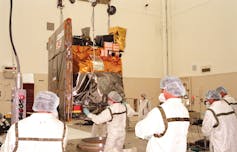
A group of people in white protective suits and head protectors stand in front of a robotic spacecraft
Technicians lower the Mars Climate Orbiter onto its work stand in the Spacecraft Assembly and Encapsulation Facility-2 in 1998.
(NASA)

At a cultural level, base representation influences our ability to collaborate with scientists across disciplines and across cultures. This was starkly illustrated by the infamous Mars Climate Orbiter incident, when a mix-up between metric and imperial units caused a $327 million spacecraft to crash into Mars in 1999.

Why understanding bases matters

Numeracy — the ability to understand and use numbers — is a crucial part of our modern lives. It has implications for our quality of life and for our ability to make informed decisions in domains like health and finances.

For example, being more familiar with numbers will influence how easily we can choose between retirement plans, how we consider trade-offs between side-effects and benefits when choosing between medications or how well we understand how probabilities apply to our investments.

And yet many struggle to learn what numbers are, with millions suffering from math anxiety. Developing better methods for helping people learn how to manipulate numbers can therefore help millions of people improve their lives.

Research on the cognitive and cultural implications of bases collected in the Philosophical Transactions of the Royal Society journal can help make progress towards our understanding of how we think about numbers, marking an important step towards making numbers more accessible to everyone.

The Conversation

Jean-Charles Pelland’s work has been made possible by financial support from the ‘QUANTA: Evolution of Cognitive Tools for Quantification’ project, which has received funding from the European Research Council (ERC) under the European Union’s Horizon 2020 research and innovation programme (grant agreement No 951388).

ref. How number systems shape our thinking, and what this means for learning, language and culture – https://theconversation.com/how-number-systems-shape-our-thinking-and-what-this-means-for-learning-language-and-culture-268168

Star-shaped cells make a molecule that can ‘rewire’ the brains of mice with Down syndrome – understanding how could lead to new treatments

Source: The Conversation – USA – By Ashley Brandebura, Assistant Professor of Neuroscience, University of Virginia

Astrocytes (red) are vital to forming neural connections. Jeffrey C. Smith Lab, National Institute of Neurological Disorders and Stroke/NIH

Delivering a connection-building protein to star-shaped cells in the brain could reverse changes to neural circuits seen in Down syndrome, according to new research my colleagues and I published in the journal Cell Reports.

Down syndrome is caused by an error in cell division during development. Individuals receive three copies of chromosome 21 instead of the typical two copies, resulting in duplicates of the genes encoded on chromosome 21. This trisomy leads to a multitude of changes to heart and immune function as well as neurodevelopmental impairments.

Changes to the structure of neurons in people with Down syndrome alter how they connect with each other. One major type of brain cell called astrocytes helps form connections between neurons. These star-shaped cells have many thin arms that extend into the spaces between neurons. They also secrete various proteins that are vital to forming the proper neural connections necessary for brain function.

Researchers have found that mouse models of several neurodevelopmental disorders, including Down syndrome, have altered levels of astrocyte proteins during development. My colleagues and I hypothesized that these changes might contribute to the changes in neural connections seen in Down syndrome. Could restoring the proper levels of some of these astrocyte proteins “rewire” the brain?

Identifying an astrocyte protein

First, we needed to pick a candidate astrocyte protein to test our hypothesis. A previous study had identified a list of astrocyte proteins that were altered in a mouse model of Down syndrome. We focused on proteins present in lower levels in Down syndrome astrocytes compared to astrocytes without the condition. We thought there might not be enough of these proteins available to help form neural connections.

Among the top 10 proteins we identified was a molecule called pleiotrophin, or Ptn. This protein is known to help guide axons – long extensions that neurons use to send information to each other – to their targets during development. So it made sense that it might also help neurons form the branching arms they use to receive information.

We found that mice unable to produce Ptn had neurons with fewer branching arms, similar to what we saw in mice with Down syndrome. This correlation implies that proper Ptn levels are necessary to affect neuron branching during brain development.

Restoring neurons in Down syndrome

Next, we wanted to know if delivering Ptn to astrocytes changes neural connections in mice with Down syndrome.

To answer that question, we packaged the gene for Ptn into a small virus with its replication genes removed. Called adeno-associated viruses, these tools allow researchers to deliver genetic material to specific targets in the body and are used for applications like gene therapy. We delivered the Ptn gene into astrocytes throughout the entire brain of adult mice with Down syndrome so we could evaluate its effects.

We focused on the visual cortex and the hippocampus, areas of the brain involved in vision and memory that are both critically affected in Down syndrome. After enhancing the ability of astrocytes to produce Ptn, we found that both regions recovered levels of neural branching density similar to those of mice without Down syndrome.

Two children sitting at a table coloring, one holding glasses aloft
Down syndrome can cause visual impairment.
yacobchuk/iStock via Getty Images Plus

Finally, we wanted to see if we could actually restore electrical activity levels in the hippocampus by increasing astrocyte Ptn levels. Measuring electrical activity can indicate whether neurons are functioning properly. After delivering the Ptn gene to the astrocytes of mice with Down syndrome, we found the electrical activity of their hippocampus restored to levels no different from mice without Down syndrome.

Together, our findings show that delivering Ptn to the astrocytes of mice can reverse changes to neuron structure and function seen in Down syndrome. While our findings are far from ready to be used in the clinic, more research could help us understand whether and how Ptn could help improve the health of human patients.

Rewiring the brain

More broadly, our findings suggest that astrocyte proteins have the potential to rewire the brain in other neurodevelopmental conditions.

Typically, adult brains have low plasticity, meaning they have a decreased capacity to form new connections between neurons. This means it can be difficult to change neural circuits in adults. Our hope is that further exploration on how astrocyte proteins can alter the adult brain could lead to new treatments for neurodevelopmental disorders like Fragile X syndrome or Rett syndrome, or to neurodegenerative diseases like Parkinson’s disease.

The Conversation

Ashley Brandebura receives funding from NIH NINDS and NIA.

ref. Star-shaped cells make a molecule that can ‘rewire’ the brains of mice with Down syndrome – understanding how could lead to new treatments – https://theconversation.com/star-shaped-cells-make-a-molecule-that-can-rewire-the-brains-of-mice-with-down-syndrome-understanding-how-could-lead-to-new-treatments-268739

Students of color are at greater risk for reading difficulties – even in kindergarten

Source: The Conversation – USA (3) – By Paul L. Morgan, Director, Institute for Social and Health Equity, University at Albany, State University of New York

The achievement gap for young readers is stark, even in kindergarten. andresr/E+ via Getty Images

Black, Hispanic and Native American students are more likely than white or Asian students to struggle with reading – and that gap emerges early, according to our new research. During kindergarten, they are more likely to score in the lowest 10% on assessments measuring skills such as letter recognition, vocabulary and recognizing common sight words. Large racial and ethnic differences in the risks for reading difficulties continue as students move through elementary school – a pattern largely explained by family income and early academic skills.

Our study, published online in November 2025 in the Journal of School Psychology, finds that about 15% of Black, Hispanic and Native American kindergartners score in the lowest 10% of reading scores, compared to 6% and 8% of white and Asian students, respectively. By fifth grade, 18%, 16% and 10% of Black, Hispanic and Native American students are struggling. The contrasting rate for white and Asian students is about 5%.

We analyzed data collected by the U.S. Department of Education’s National Center for Education Statistics from 2010-2016. This data includes direct academic assessments as well as surveys of the students and their parents, teachers and school administrators.

We used standard statistical methods to explore how a wide range of factors across homes and schools – measured during kindergarten – helped explain whether students later experienced reading difficulties. A key factor, according to our analysis, is the family’s socioeconomic status: a measure including household income and parental education levels and occupations.

Kindergartners who struggled with initial reading, math and science skills, as well as more general learning abilities such as working memory, were also at higher risk for reading difficulties throughout elementary school.

Why it matters

U.S. elementary students’ reading achievement has been declining in recent years. The gap between the highest- and lowest-scoring readers is increasing too.

Supporting these children is important. Students who wrestle with reading are more likely to later experience anxiety and depression. Adults with reading difficulties are also more likely to be incarcerated and unemployed. In one study, for example, about half of Texas prisoners were poor readers.

Because our findings suggest Black, Hispanic and Native American students are at higher risk for reading difficulties by kindergarten, students from these groups may have greater needs for early reading interventions that provide extra help with phonics, vocabulary and reading fluency. Some of these students may also have unrecognized learning disabilities.

Yet students of color are less likely to be identified with disabilities, including dyslexia – even when the students are experiencing early and significant reading difficulties.

What still isn’t known

How economic and educational policies and practices can best help lower the risks of reading difficulties is poorly understood. There is some evidence that cash transfers to financially struggling families may increase children’s later reading achievement. Poverty is also associated with lower exposure to age-appropriate books and other early literacy materials and fewer opportunities to acquire a larger vocabulary.

Our longitudinal research adds to the very limited understanding of the early economic, environmental, cognitive, academic and behavioral factors that help shape elementary students’ reading abilities. Most other studies have focused on a single grade and examined a limited set of specific skills – such as how children process sounds – instead of multiple grades and a more general set of risk factors.

More research is needed to identify the full range of reasons why elementary students begin to struggle in reading and what can be done to best help them.

The Research Brief is a short take on interesting academic work.

The Conversation

Paul L. Morgan receives funding from the National Science Foundation, the National Institute of Child Health and Human Development, and the Institute of Education Sciences.

Eric Hengyu Hu does not work for, consult, own shares in or receive funding from any company or organization that would benefit from this article, and has disclosed no relevant affiliations beyond their academic appointment.

ref. Students of color are at greater risk for reading difficulties – even in kindergarten – https://theconversation.com/students-of-color-are-at-greater-risk-for-reading-difficulties-even-in-kindergarten-249429

Remembrance Day: How the Canadian Armed Forces could help solve the youth employment crisis

Source: The Conversation – Canada – By Ilona Dougherty, Managing Director, Youth & Innovation Project, University of Waterloo

Every year on Remembrance Day, I think about my grandfathers — my American grandfather who flew his Stinson L-5 along the coast of Burma and my Hungarian grandfather who fought in the Second World War.

I also reflect upon my grandmothers, one of whom used her language skills to translate for army officers and the other who suffered the loss of her first child while her husband was overseas.

These stories are often shared in our family as remembrances of young people who served and sacrificed during difficult times.

Buried deep in the Liberal government’s recently released 2025 budget is a line that is worth paying attention to: “Modernizing the Canadian Armed Forces (CAF) enhances opportunities for youth to serve and lead.” With that one sentence, the federal government connected the dots between Canadian sovereignty, youth employment and youth service.

But if Canada hopes to see its current generation of young people thrive, it must ensure that youth employment and youth service programs are expanded.

The only way this will happen, given the investments outlined in the federal government’s budget, is if organizations dedicated to youth employment issues and youth service work closely together to ensure the Canadian Armed Forces (CAF) figures out how to recruit and meaningfully retain young Canadians.

Paltry investments

As outlined in the budget, there is a clear commitment from Mark Carney’s Liberals to rebuild and reinvest in the CAF to protect Canadians and lead internationally. This commitment includes an investment of more than $9 billion in 2025-2026.

An important part of this rebuilding will require recruiting and retaining new members, which is being facilitated by a significant pay increase for the lowest paid recruits.

But as young people in Canada face the worst job market in more than a decade, which is only projected to worsen with the widespread adoption of AI, it was troubling that funding related to tackling youth unemployment was limited in this year’s budget.

The investment in Canada Summer Job placements, while up from the investment made in the 2024, was only brought back to pre-pandemic funding levels, not actually increased.

The Youth Employment and Skills Strategy investment in the budget was up slightly from 2025-2026, but down significantly from 2024-2025 and far below investments made in 2019-2020.

The only significant increase came with the investment in the Student Work Placement Program, which increased by more than $100 million per year.

The most generous read of investments in youth employment-related programs in the 2025 budget would suggest the government is investing approximately $220 million more per year. But this pales in comparison to the $20.4 billion over five years that the government has committed to investing in recruiting and retaining “a strong fighting force” for the CAF.

When it comes to youth service, supporting young people who are struggling to enter the job market — and providing them with opportunities to serve their communities — can be achieved in part through the Youth Climate Corps and the Canada Service Corps. Combined, their budgets represent a moderate increase in spending of about $20 million per year.

But it’s unclear whether the Canada Service Corps will receive additional funding in the future, parallel to the Youth Climate Corps funding, or whether it will be phased out and replaced.

Despite it being touted as a budget containing generational investments, the government has made minimal investments to seriously tackle the youth employment crisis in the 2025 budget.

Recruitment challenges

It’s no secret that recruiting and retaining new members is a significant challenge for the CAF. A 2025 Auditor General of Canada’s report outlines how the CAF is not recruiting and training enough candidates to meet its operational needs.

To make matters worse, even when a recruit does join, a recently leaked internal report suggests that many leave in frustration shortly after joining due to their inability to get trained and to secure roles within the CAF that they’re interested in.

Adding to this is the CAF’s well-documented issues with radicalization and hate speech, racial discrimination and sexual harassment. As an external monitor outlined in a recent report, “a culture that is largely misogynistic has created an environment that allows and sometime encourages unprofessional conduct to persist.”


Read more:
Not just a few bad apples: The Canadian Armed Forces has a nagging far-right problem


Despite recent apologies and signs that things are changing for the better within the CAF, these issues make the institution unattractive for young Canadians even if they don’t feel as though they have any other employment options.

There is also the perception that joining the army means going into active combat. Around 65.2 per cent of CAF members ever deploy — and deploying doesn’t necessarily mean active combat. In fact, it can very often mean humanitarian missions either domestically or internationally.

Making the CAF attractive to youth

All of this presents a unique opportunity for Canadian policymakers.

There are many organizations in Canada working to tackle youth employment — and the CAF has just been given what can actually be called a generational investment. That investment could significantly enhance existing government initiatives aimed at addressing the youth employment crisis and preparing young people for the future of work.

For this to happen, youth employment and service organizations must leverage the government’s investment in the CAF to expand their impact. At the same time, the CAF will need to engage with civilian organizations that specialize in recruiting and supporting young people. CAF recruiters should adopt best practices in youth-focused recruitment, training and retention to ensure meaningful participation and long-term success.

Young people will only be attracted to and stay in the CAF if they feel valued, if they’re offered meaningful opportunities to contribute and if intergenerational collaboration is prioritized.

In a time of multiples crises, none of them can be viewed in isolation. Disparate groups need to work together to address their unique challenges.
Canadian young people have a lot to offer — they’re the most educated generation in Canadian history, they have the desire to make a difference, their brains are wired to be bold problem solvers and they have diverse and relevant lived experiences.

This is a generation Canada can’t afford to leave on the sidelines of its economy or in the fight for Canadian sovereignty.

The Conversation

Ilona Dougherty does not work for, consult, own shares in or receive funding from any company or organisation that would benefit from this article, and has disclosed no relevant affiliations beyond their academic appointment.

ref. Remembrance Day: How the Canadian Armed Forces could help solve the youth employment crisis – https://theconversation.com/remembrance-day-how-the-canadian-armed-forces-could-help-solve-the-youth-employment-crisis-268433

Feel like you can’t get a job? You’re not alone — but here’s how to work around it

Source: The Conversation – Canada – By Jason Walker, Program Director & Associate Professor Master of Psychology Health and Wellness & Master of Industrial-Organizational Psychology, Adler University

You did everything they told you to do. You earned the credentials, spent hours on your resume and revised multiple cover letters. You worked side gigs, volunteered, learned new software and perfected your LinkedIn profile. Yet, you can’t get a callback for an interview.

It’s as if your application vanished into the abyss of a company database, and the “thank you for applying” emails are piling up. So-called entry-level jobs now need years of experience, and junior roles expect postgraduate degrees.

You are likely wondering what you’re missing, but it’s not you — it’s the system. Across the United States, Canada and United Kingdom, automation now does the screening before a human ever has a look. Companies say they can’t find talent, yet many have stopped training people.

On paper, the labour market looks healthy, but in practice, it feels impossible to navigate. However, there are ways through it, backed by data and success stories. Here’s how to outsmart a system that seems to have forgotten the people part of hiring.


No one’s 20s and 30s look the same. You might be saving for a mortgage or just struggling to pay rent. You could be swiping dating apps, or trying to understand childcare. No matter your current challenges, our Quarter Life series has articles to share in the group chat, or just to remind you that you’re not alone.

Read more from Quarter Life:


A generation struggling to find work

Whether you’re in London, New York or Toronto, the pattern is the same: a generation of qualified people blocked from the job market, and companies insisting they can’t find talent.

In Canada, job vacancies have dropped by half from approximately 984,000 in 2022 to roughly 505,000 by mid-2025. Unemployment has skyrocketed to 7.1 per cent, the highest in the last four years.

In the U.S., a similar story rings true. Unemployment hovers around 4.1 per cent — what economists call “full employment,” but the reality behind the statistics is less than stable. Job openings have fallen dramatically since the post-pandemic peak from 12 million in 2022 to about 8.8 million this year. That means fewer employment opportunities and more qualified candidates competing for the same positions.

Among younger workers, unemployment stands at approximately 8.5 per cent, nearly double the national average. Over one-third of graduates are employed in jobs that don’t require their degree.

Across the Atlantic, approximately 12.5 per cent of young people in the U.K. are currently not in education, employment or training — the highest rate in more than a decade. The unemployment rate holds at 4.8 per cent.

The International Labour Organization estimates 262 million young people — nearly one in four — are outside both work and education. The jobs exist, but the access and opportunity don’t.

Entry-level jobs no longer exist

If it feels like getting hired is impossible, there’s a reason for that. The “entry-level job” is effectively dead — the bridge between education and work has literally vanished.

In the U.S., more than 65 per cent of employers are expecting “prior experience” for entry-level roles. Meanwhile, the OECD reports that corporate spending on education and training has stagnated across almost all advanced economies.

Employers want it all — the education, the certifications and the experience — but rarely invest in developing it. As I wrote recently in Forbes: “We’ve built a work culture that glorifies resilience while quietly producing exhaustion.”

That pressure now starts long before people even get an interview. Candidates are somehow expected to be flexible, adaptable and endlessly qualified even before they’ve earned their first paycheque.

The math doesn’t add up.

Automation has also made things worse. A recent Harvard Business School study found that 80 per cent of resumes are filtered out automatically before being read.

The National Bureau of Economic Research notes that time-to-hire has doubled since 2010, with most delays happening before human review. In other words, most candidates have lost before they ever enter the race.

5 ways to beat the modern job market

The new hiring landscape rewards strategy, not volume. Here are five evidence-based approaches that will increase your odds of breaking through the job search barriers:

1. Stop applying to everything, and start applying smarter.

Sending 100 resumes isn’t a strategy, nor is it productive. Refocus on 10 to 15 roles that align with your skills and expertise. Customization still matters: one study found tailored applications triple response rates.

2. Build proof, not promises.

Applications that provide real-world work examples are twice as likely to receive a callback for an interview, even if they don’t quite have all the competencies being asked for. You can achieve this by building a visible portfolio: think of a dashboard, a writing sample or anything that demonstrates what you can do.

3. Make the algorithm work for you.

Pay attention to the job descriptions, use the exact keywords, avoid columns and keep it simple — remember, AI isn’t looking for how fancy your resume looks. The same Harvard Business School report showed that formatting alone disqualifies thousands of strong applicants every day.

4. Bypass AI and talk to humans.

Your network will typically save you. Sixty to 70 per cent of hires happen through networking and direct referrals. Get on people’s radars by reaching out to peers and building your network.


Read more:
Networking doesn’t have to be a chore — here are 3 ways to make it more enjoyable and effective


5. Reframe career gaps.

Career breaks are not a risk nor an indicator of someone’s performance, but that’s often how employers see it. Flip the narrative by talking about the skills you gained during gaps, like a new certification or volunteering. Interestingly, non-linear career paths are the norm, not the exception, in every major economy today.

If you’re an employer, the way forward is also data-driven: start reinvesting in training, invest in mentorship and rethink what you need from a new employee.

OECD data shows that organizations offering early-career development gain measurable returns in productivity and retention within two years. The solution isn’t finding ready-made talent — it’s creating it.

We need to get back to being human. Many organizations are demanding to “do more with less” and complaining about lack of talent, but we have to remember that talent, like a fine wine, takes time.

The bottom line

The old rules — get the degree, work hard and wait your turn — no longer apply. Today, what actually matters isn’t how many jobs you apply to, but how clearly you can show your value and connect with people.

If you’re job hunting in 2025, don’t wait for a system to discover you. Instead, make it impossible to be ignored. Show your worth publicly, tangibly and confidently. Remember, although the screening process may be automated, hiring decisions are still made by humans.

The problem isn’t a lack of talent. It’s a lack of vision — from the systems that stopped looking for potential and started chasing perfection.

The Conversation

Jason Walker does not work for, consult, own shares in or receive funding from any company or organisation that would benefit from this article, and has disclosed no relevant affiliations beyond their academic appointment.

ref. Feel like you can’t get a job? You’re not alone — but here’s how to work around it – https://theconversation.com/feel-like-you-cant-get-a-job-youre-not-alone-but-heres-how-to-work-around-it-268355