Le retour du flip phone : se libérer de l’hyperconnexion

Source: The Conversation – in French – By Amélie Guèvremont, Professeur titulaire, Marketing, chercheure à l’Observatoire de la consommation responsable, Université du Québec à Montréal (UQAM)

Le phénomène intrigue : des adolescents et jeunes adultes troquent volontairement leur téléphone intelligent contre un à clapet, communément appelé flip phone. Pourquoi renoncer à l’objet technologique le plus central de notre quotidien ? En analysant plus de 10 000 commentaires publiés sur TikTok, YouTube et Reddit, nous avons constaté que ce mouvement, bien que minoritaire, révèle une fatigue profonde face à l’hyperconnexion. Derrière le geste, un besoin : retrouver du temps, de l’attention et une forme de liberté que le téléphone intelligent semble ôter.

« J’ai passé 11,5 heures sur TikTok cette semaine 🤮 », écrit un utilisateur sur Reddit. « Passé tout le weekend à scroller, me sens vide », confie un autre. Ces témoignages, parmi 10 697 commentaires récoltés sur les réseaux sociaux, illustrent un phénomène de plus en plus documenté : les effets néfastes des écrans, particulièrement du téléphone intelligent, l’hyperconnexion et la dépendance vécus par la société actuelle.


À lire aussi :
La génération Z devient rétro : retour fracassant des téléphones « idiots » à clapet


On passe en moyenne plus de cinq heures par jour sur notre téléphone. Notifications, FOMO (fear of missing out), défilement infini : l’hyperconnexion est devenue la norme, au point que l’Organisation mondiale de la santé considère désormais l’usage excessif des écrans comme un enjeu de santé publique. Les inquiétudes sont particulièrement fortes chez les jeunes, et des décisions comme l’interdiction du cellulaire en classe au Québec et en France montrent que la préoccupation est devenue collective.

C’est dans ce contexte qu’a émergé l’abandon du téléphone intelligent au profit… du flip phone. Ce petit appareil « à l’ancienne », sans applications ni notifications, séduit de plus en plus. Certains adolescents ont même surnommé l’été 2025 le « flip phone summer ». Le mouvement rejoint aussi des célébrités : des personnalités comme Léna Situations, influenceuse très connue notamment en France, a passé un mois sans écran en utilisant un téléphone de base. Et sur TikTok, YouTube ou Reddit, des milliers d’utilisateurs documentent désormais leur transition vers une vie numérique plus sobre.


À lire aussi :
Les marques veulent vous inciter à consommer moins et mieux… et ce n’est pas sans risque


Une prise de conscience douloureuse

Dans les commentaires analysés, un thème émerge : la prise de conscience des effets délétères de l’hyperconnexion. Les utilisateurs parlent d’« anxiété », de « fatigue mentale », de « FOMO » et même d’une impression d’avoir été « empoisonné » par un mode de vie dominé par le téléphone intelligent.

Notre analyse paralinguistique confirme l’intensité émotionnelle : emojis de détresse, répétitions, interjections. Une forme de fatalisme ressort, parfois incarnée par 💀 : « Ça m’a fait réaliser à quel point je suis anxieux sans mon téléphone 💀 ».

Plusieurs utilisateurs décrivent une véritable dépendance — « J’ai réalisé que l’addiction numérique est bien réelle et qu’elle ruinait ma vie » — tandis que d’autres la comparent à une drogue.

Pourquoi revenir au flip phone ?

Ce qui frappe dans les récits, c’est le contraste entre le ton désespéré associé au téléphone intelligent et le soulagement presque physique à l’idée de passer au flip phone : « J’ai besoin d’une pause 😢 », écrit un utilisateur. Un autre s’exprime : « Abandonner son smartphone pour un téléphone simple procure un sentiment de liberté et de libération »

Notre analyse paralinguistique montre que les commentaires relatifs au flip phone adoptent une tonalité plus sereine, plus posée, avec un lexique centré sur la reconstruction : « repos », « calme », « recharge mentale », « retour à l’essentiel ». Les emojis se tournent vers le positif (ex. ☺️,☀️). Cette utilisatrice résume : « C’est super — tout revient toujours à la base❤️ ». Le flip phone semble offrir du temps : « J’ai terminé trois livres en 30 jours » ou « j’ai pu porter attention à la vie ».

Il ne s’agit pas de rejeter la technologie, mais de garder l’utile et d’éliminer la dépendance. Une démarche qui s’apparente à la sobriété — « consommer moins, mais mieux ».

Un changement graduel

Notre analyse montre que la transition vers la sobriété numérique n’est pas un geste impulsif, mais un processus graduel, similaire aux autres trajectoires décrites par le modèle transthéorique du changement. Ce modèle, largement utilisé en santé et en marketing social, distingue cinq étapes de changement de comportement.

Lors de la précontemplation, les individus reconnaissent parfois leur excès, mais sans intention d’agir. Un utilisateur admet avoir fait des efforts, « POURTANT mon temps reste à 8+ heures🤡🤡🤡 ». Les émojis de cette phase (🤮, 😭, 🤡) résument le malaise : dégoût, tristesse, autodérision. Ils servent d’exutoire, mais ne s’accompagnent pas encore d’une véritable intention d’agir.

La phase de contemplation est marquée par l’ambivalence. Les utilisateurs reconnaissent l’impact de leur hyperconnexion : « J’ai réalisé que j’utilise trop les réseaux sociaux, ils m’empêchent de vivre chaque moment », mais l’hésitation persiste : « Je ne suis pas certaine d’être prêt pour un flip phone » Les emojis (👀, 😮) expriment une curiosité naissante pour le flip phone, sans que le passage à l’action soit assuré.

Dans la phase de préparation, le discours devient tourné vers l’action. Plusieurs ont acheté un appareil : « J’ai acheté un flip phone aujourd’hui… je l’ouvre. Je l’adore 🥰 ». Les marqueurs paralinguistiques — emojis enthousiastes (🥰,❤️), étirements (« trooooooooop cool »), majuscules (« WOOOOOOOW ») traduisent un engagement imminent.

Lors de l’action, les utilisateurs partagent des bénéfices, tels une concentration accrue (« Je ne me suis jamais senti autant concentré de ma vie ») et de nouvelles activités (« J’ai recommencé à lire »). Quelqu’un affirme même que « les vieux téléphones vont nous ramener en vie ». Les verbes d’action (« débuté », « aimé », « révolutionné ») illustrent une excitation liée aux premiers bénéfices ressentis.

Lors du maintien, une relation plus apaisée au numérique est décrite. Le ton est posé, centré sur la routine et les ajustements — planifier ses trajets, trouver des solutions pratiques — tout en affirmant la stabilité d’un mode de vie moins connecté : « Je ne retournerai jamais à un téléphone intelligent ».


À lire aussi :
En temps de crise, les marques doivent miser sur l’authenticité


Normaliser la déconnexion

Ce parcours personnel s’inscrit dans une dynamique beaucoup plus large. Depuis quelques années, plusieurs initiatives internationales encouragent la remise en question du rapport au numérique, normalisent la déconnexion et légitiment la sobriété numérique comme une pratique sociale émergente. Le « OFF Movement », né en Europe, encourage des périodes régulières sans connexion afin de rétablir un rapport plus sain aux technologies. Plus près d’ici, un défi récent, 24 heures sans écran de PAUSE, invite familles, écoles et organisations à relever un défi collectif de déconnexion.

Ces mouvements ne font pas que proposer des pauses : ils créent un cadre social, un vocabulaire commun et un sentiment d’appartenance. Nos résultats montrent justement que la transition vers un usage plus sobre du numérique n’émerge pas dans le vide : elle s’appuie sur des espaces, en ligne et hors ligne.

Un mouvement individuel… aux résonances collectives

Ainsi, la sobriété numérique dépasse le choix individuel : elle exprime un malaise collectif face à un environnement digital devenu trop envahissant et exigeant. Le téléphone intelligent n’est plus qu’un outil, mais le centre d’un écosystème social où disponibilité permanente, pression des réseaux et performance numérique s’alimentent mutuellement, au point que plusieurs utilisateurs analysés affirment qu’il leur serait impossible de changer seuls.


Déjà des milliers d’abonnés à l’infolettre de La Conversation. Et vous ? Abonnez-vous gratuitement à notre infolettre pour mieux comprendre les grands enjeux contemporains.


Des travaux montrent d’ailleurs une dépendance profondément collective : les individus sont beaucoup plus enclins à modifier leurs habitudes — voire à se déconnecter — lorsque leur entourage s’engage dans la même démarche.

Le flip phone n’est pas appelé à devenir la norme, mais il symbolise quelque chose de plus large : un désir de reprendre le contrôle, de récupérer du temps, de restaurer sa capacité d’attention.

En ce sens, le flip phone n’est pas une fin en soi, mais un révélateur : il montre que l’enjeu n’est pas de renoncer à la technologie, mais de trouver une manière de vivre avec elle, avec modération.

La Conversation Canada

Les auteurs ne travaillent pas, ne conseillent pas, ne possèdent pas de parts, ne reçoivent pas de fonds d’une organisation qui pourrait tirer profit de cet article, et n’ont déclaré aucune autre affiliation que leur organisme de recherche.

ref. Le retour du flip phone : se libérer de l’hyperconnexion – https://theconversation.com/le-retour-du-flip-phone-se-liberer-de-lhyperconnexion-270920
Empathy and reasoning aren’t rivals – new research shows they work together to drive people to help more

Source: The Conversation – USA (3) – By Kyle Fiore Law, Postdoctoral Research Scholar in Sustainability, Arizona State University

What motivates people to donate their time or money to make the world better? Alistair Berg/DigitalVision via Getty Images

For years, philosophers and psychologists have debated whether empathy helps or hinders the ways people decide how to help others. Critics of empathy argue that it makes people care too narrowly – focusing on individual stories rather than the broader needs of society – while careful reasoning enables more impartial, evidence-based choices.

Our new research, forthcoming in the academic journal PNAS Nexus, a flagship peer-reviewed journal of the National Academy of Sciences, suggests this “heart versus head” argument is too simple. Empathy and reasoning aren’t rivals – they work together. Each one on its own predicts more generous, far-reaching acts of assistance. And when they operate side by side, people tend to help in the fairest ways – not favoring some over others – and in ways that touch the most lives.

We studied two groups that regularly help others at personal cost. One consisted of living organ donors who gave kidneys to strangers. The other included “effective altruists,” who use evidence and logic to direct substantial portions of their income or careers toward causes that save the most lives per dollar, such as fighting extreme poverty or preventable illness.

All participants completed survey measures of empathy – essentially, how much they care about and are moved by others’ suffering. They also completed survey measures of reasoning. These assess how often people slow down, reflect and think through things before deciding what to do.

We also examined how these abilities related to a range of altruistic judgments and behaviors, from hypothetical choices – such as deciding whether to help a close friend or a distant stranger – to real-world donations.

On average, organ donors scored higher on empathy, and effective altruists scored higher on reflective reasoning – slowing down and thinking things through. But across all participants, both traits were linked to broader, more outward-looking helping. People with either an elevated heart or head, and especially those with both compared with average adults, tended to support distant others and focus on helping as many people as possible.

Even among organ donors, whose empathic ability is far above average adults’, empathy did not make them biased toward those who were close or familiar. When we measured their altruistic judgments and real-world donations, they were just as likely as average adults, and sometimes even more likely, to favor causes that saved the greatest number of lives.

These patterns challenge the assumption that empathy can narrow moral concern. In practice, we found, empathy can broaden it.

Why it matters

A Black woman in a red apron over a blue top walks with an older white woman holding food packets.
Relying on reason alone isn’t enough to inspire people to help strangers.
Jose Luis Pelaez Inc./Digital Vision via Getty Image

Many of today’s most urgent problems – poverty, climate change, global health – depend on motivating people to care about strangers and to use limited resources effectively.

Appeals to empathy alone may inspire giving but not necessarily the most effective giving. Appeals to reason alone can leave people unmoved, as often facts and numbers don’t stir anyone to care. Our findings suggest that the most powerful approach may be to pair empathy’s motivation with reasoning’s direction.

Empathy provides the emotional spark – a reminder that others’ suffering matters. Reasoning helps steer that motivation toward where help will have the greatest impact. Together, they encourage helping that is both compassionate and consequential.

What’s next

Future research needs to determine how empathy and reasoning can be strengthened in everyday decision-making. Could emotional stories paired with clear evidence about what works best help people choose actions that do the most good?

We also don’t yet know whether people who focus their giving beyond the boundaries of their immediate social circles, like effective altruists, pay any social cost for doing so – perhaps by inadvertently signaling less investment in close others. Promisingly, early evidence from organ donors shows that those who help strangers often maintain strong, stable relationships with their closest friends and family members.

Perhaps most importantly, researchers need to rethink how altruism is understood. Psychology lacks a clear framework for explaining how empathy and reasoning work together, for whom they work best, and the situations where they come apart.

Developing that kind of model would reshape how we think about helping – when helping expands, when it stalls, and why. While such core questions remain, the present findings offer reason for optimism.

The Research Brief is a short take on interesting academic work.

The Conversation

The research relevant to this article was funded by the John Templeton Foundation.

Stylianos Syropoulos does not work for, consult, own shares in or receive funding from any company or organization that would benefit from this article, and has disclosed no relevant affiliations beyond their academic appointment.

ref. Empathy and reasoning aren’t rivals – new research shows they work together to drive people to help more – https://theconversation.com/empathy-and-reasoning-arent-rivals-new-research-shows-they-work-together-to-drive-people-to-help-more-266913

The future of work — according to Generation Z — is purposeful, digital and flexible

Source: The Conversation – Canada – By Eddy Ng, Smith Professor of Equity and Inclusion in Business, Queen’s University, Ontario

As Generation Z — those born between 1997 and 2012 — enters the workforce in growing numbers, Canadian employers are encountering a cohort whose expectations and behaviours signal a fundamental shift from current norms.

Unlike previous generations, Gen Z brings pragmatic sensibilities shaped by the unique social, economic and technological landscapes of their upbringing.

Gen Z grew up amid economic uncertainty, technological upheaval and heightened social awareness. Unlike millennials, who entered the job market with “great expectations” for rapid promotions and pay raises, Gen Z is more pragmatic.

And so if Canadian organizations want to attract, engage with and retain this generation of talent, it’s essential to understand what makes them tick.

Purpose, values and why Gen Z stays

Recent research shows that this generation values job security, work-life balance and mental health above all else. These preferences are shaped by formative experiences, including observing their Gen X parents navigate dual-career households and witnessing economic disruptions and automation-driven restructuring.

For Gen Z, stability is seen as essential for their well-being at work.

This generation is ambitious, albeit in ways that diverge from traditional hierarchical advancement. Rather than prioritizing vertical mobility, they seek roles that provide flexibility, meaningful contribution and alignment with personal values.

Central to Gen Z’s workplace vision is a desire to work for organizations that prioritize diversity, inclusion and corporate social responsibility. This generation is the most racially diverse in Canadian history and has grown up in a more socially conscious environment. They tend to hold strong views around equal treatment and environmental sustainability, often expecting their employers to “walk the talk.”

One report suggests that Gen Z employees are significantly more likely to remain with organizations that offer purpose-driven work, with retention likelihood increasing by a factor of 3.6 when such alignment exists.

The rise of “conscious unbossing”

One notable trend within Gen Z is the preference for collaboration over authority.

A recent survey reveals that nearly half of Gen Z professionals favour promotions that do not entail supervisory responsibilities. This reluctance stems from the perceived drawbacks of traditional leadership roles, including heightened stress, rigid scheduling and diminished autonomy.

Some Gen Z workers even indicate a willingness to accept reduced compensation to avoid managerial obligations. This phenomenon, described as “conscious unbossing,” presents a structural challenge for organizations anticipating leadership gaps as baby boomers retire and millennials ascend to senior positions. This means a reconceptualization of leadership, emphasizing project-based authority, mentorship opportunities and expertise-driven influence rather than hierarchical control.

This generation is also the first to grow up entirely within a digital ecosystem, resulting in expectations for seamless technological integration across work processes. Gen Z actively leverages AI tools for skill development, yet formal organizational training often lags behind these self-directed practices. If organizations don’t offer structured, technnology-based learning, digital gaps among employees will grow.

Employers will need to invest in continuous learning opportunities such as micro-credentialing, AI-driven platforms and intergenerational mentorship that can enhance skill acquisition while respecting Gen Z’s preference for autonomy.

Flexible work arrangements also constitute an important characteristic of Gen Z workers’ employment preferences. Having studied and entered the workforce during the COVID-19 pandemic, they view remote and hybrid work arrangements as normal rather than an exception.

Flexible scheduling and outcome-based performance metrics are perceived as baseline expectations rather than discretionary benefits. Employers that adhere rigidly to traditional work structures risk attrition among Gen Z employees. Instead, employers should prioritize policies that emphasize results over physical presence.

How employers must adapt or risk losing talent

To attract and retain Gen Z talent, Canadian employers should adopt evidence-based strategies that include redefining career pathways by moving away from traditional linear models toward frameworks that emphasize lateral mobility, project leadership and skills-based advancement.

As AI and algorithmic HR systems become more prevalent, employers must consider how these tools align with Gen Z’s ways of working. They expect technology to enhance — but not replace — the human side of work.

While AI and automation can improve efficiency, Gen Z places a premium on trust and authentic relationships. Employers should ensure transparency in algorithmic decision-making and maintain opportunities for personal interaction, as these elements are critical to engagement and retention for this cohort that values connection as much as convenience.

Sustainability is another priority for Gen Z. For this generation, climate action is not a marketing slogan, but a moral imperative. Employers must move beyond superficial “greenwashing” and embed sustainability into employment practices, from eco-friendly benefits to green office policies.

These initiatives should be inclusive, ensuring that environmental efforts also advance equity and deliver tangible benefits for all employees. Gen Z expects organizations to demonstrate measurable progress on both ecological and social fronts. Likewise, diversity and inclusion will remain critical for Gen Z, even in politically polarized environments.

And because this generation values guidance but prefers collaborative, non-hierarchical relationships, mentorship must also evolve. Employers should expand mentoring programs to include underrepresented groups, creating pathways for career stability and growth.

Understanding Gen Z and taking the steps to meet these new professionals where they are will help employers create the necessary trust for meaningful growth.

The Conversation

Eddy Ng receives funding from the Social Sciences and Humanities Research Council of Canada.

ref. The future of work — according to Generation Z — is purposeful, digital and flexible – https://theconversation.com/the-future-of-work-according-to-generation-z-is-purposeful-digital-and-flexible-268951

From earthquakes to wildfires, Canada is woefully ill-prepared for disasters

Source: The Conversation – Canada – By Brodie Ramin, Assistant Professor, Faculty of Medicine, L’Université d’Ottawa/University of Ottawa

A fault line in Canada’s Yukon territory has stirred after more than 12,000 years of geological sleep. Researchers studying the Tintina Fault, which stretches 1,000 kilometres from northeast British Columbia into the Yukon and towards Alaska, have found evidence that the fault has built up at least six metres of unrelieved strain.

Like a loaded weapon, it may now be primed for a massive earthquake. To most Canadians, the news passed as a remote curiosity from the North, but the fault lies within a tectonic system that extends under Western Canada and hints at deeper vulnerabilities in eastern Ontario and beyond. Below the surface lies an uneasy truth: Canada is not immune to catastrophe.

A wildfire burned through the hills of Los Angeles in early 2025. Schools closed, emergency alerts buzzed across phones and emergency crews scrambled to get ahead of the flames as Southern California experienced one of its worst wildfire seasons on record, again.


Read more:
False alerts — like the one sent during the Greater Los Angeles wildfires — can undermine trust and provoke anxiety


Meanwhile, in Canada, smoke from record-breaking wildfires blanketed major cities, sending air quality plummeting in Ottawa, Toronto and Montréal.

These events may feel far apart, but they share one common feature: a failure to act before the crisis hits.

Ignoring early warning signs

A recent survey found that most Canadians don’t believe their communities are ready for a major disaster. And yet, outside of the occasional fire drill or emergency alert test, Canadians continue living as though preparedness is someone else’s job.

But readiness isn’t just about cramming bottled water into your basement or changing the batteries in your smoke alarms. It’s about how we think, and more importantly, what we choose to ignore.

As a writer and prevention-minded physician, I’ve spent years studying how disasters unfold and how they might have been prevented. My new book, Written in Blood: Lessons on Prevention from a Risky World, investigates tragedies like nuclear meltdowns, natural disasters and pandemics. In case after case, I found a pattern: early warning signs were ignored, systems failed to communicate and people trusted that “someone else” had it covered.

The real danger isn’t nature or technology, it’s complacency.

Responding to the last disaster, not the next one

In Canada, the year 2023 saw the most hectares burned in wildfire history. Yet only one in four Canadian households reported making any preparation for a weather-related emergency in the past year.

When we ignore the cracks in our systems, we normalize risk. It’s easy to imagine preparedness as the government’s job or the job of emergency responders. But the reality is more complex, and the responsibilities should be more widespread.

Cities continue using outdated flood-risk maps that underestimate current climate realities. Schools overlook basic upgrades to improve air quality or ventilation. Transit networks run on aging infrastructure.

Canada’s cyber-security agency recently warned that hostile entities are targeting internet-connected control systems across the country, including those that manage water supplies, energy infrastructure and agricultural operations.


Read more:
Silent cyber threats: How shadow AI could undermine Canada’s digital health defences


The lesson here isn’t that Canadians need to panic, it’s that they need to think differently. In sectors like aviation or nuclear energy, safety is baked into every process. These fields rely on layered safeguards, robust near-miss reporting and a culture of constant vigilance. They know safety isn’t a checkbox, it’s a mindset.

So why doesn’t that same mindset exist in other parts of our society, and how can Canadian officials ensure it does?

A prevention mindset

Instead of reacting to disasters once they happen, Canadians should be asking:

  • What could go wrong here?
  • What would I wish I had done if it does go wrong?

This approach — a prevention mindset — doesn’t mean living in fear. It means being proactive when the headlines are quiet. It means investing in safety when no crisis is visible and building defences before something breaks.

Take the Los Angeles wildfire as a case study. Fire crews had been warning about dry conditions for months. Urban expansion and outdated building codes exacerbated the damage.

At the same time, cities in Canada had barely updated evacuation plans or wildfire risk assessments, despite years of worsening climate conditions. Last summer, toxic wildfire smoke shut down outdoor events , harmed the lung health of a large proportion of Canadians and exposed major planning failures.

These are not just “acts of God.” They’re also policy choices, deferred upgrades and missing item lines in a budget. And they are repeated across sectors — from health care to cybersecurity, from education to urban planning.

Safety must be built

Disasters feel sudden, but their roots often stretch back years. In Written in Blood, I explore the slow buildup to catastrophes like the Fukushima nuclear meltdown in Japan, the Notre- Dame fire in Paris and the Beirut port explosion. These were not lightning strikes — they were failures of imagination, leadership and system design.

The next crisis, whether wildfire, data breach, infrastructure collapse or disease outbreak, is already somewhere on the horizon.

The question isn’t if it will happen. It’s whether we will meet it with surprise — or with a plan.

The Conversation

Brodie Ramin does not work for, consult, own shares in or receive funding from any company or organisation that would benefit from this article, and has disclosed no relevant affiliations beyond their academic appointment.

ref. From earthquakes to wildfires, Canada is woefully ill-prepared for disasters – https://theconversation.com/from-earthquakes-to-wildfires-canada-is-woefully-ill-prepared-for-disasters-270848

Ctrl-alt-defy: How Ukrainians have used memes to counter Russia’s propaganda machine

Source: The Conversation – Canada – By Michel Bouchard, Professor of Anthropology, University of Northern British Columbia

As Russian tanks rolled towards Kyiv in February 2022, a quick Russian victory seemed assured. But as Ukrainian soldiers fought off Russian invaders, Ukrainian netizens launched waves of memes to provide hope to a nation under existential threat.

These memes often mocked Russian hubris and incompetence, drawing upon news and online clips as fodder to attack Russian propaganda.

One early meme taunted Russia after Ukrainians changed road signs to confuse the military convoys. The memes show a road sign indicating that the invaders should go straight and “go fuck yourself,” turn left to “go fuck yourself again” and head “to Russia to go fuck yourself.”

Another meme involved the young Ukrainian Border Guard at Snake Island, assailed by the Russian battleship the Moskva. The final words radioed to the enemy were: “Russian warship, go fuck yourself.” This phrase quickly became a meme, a shirt, and — just a few weeks later — a commemorative stamp issued by the Ukrainian post office.

Memes and genes

The term “meme” was coined by evolutionary biologist Richard Dawkins in 1976 to describe “a unit of cultural transmission or a unit of imitation.”

He based it on the Greek word mimeme (something imitated). It was meant to parallel the biological concept of a gene — both the meme and the gene seek to replicate themselves and, if successful, are widely disseminated. They can also mutate, taking on new meanings as they evolve.

Memes came of age on social media platforms like Twitter, now X. They usually combine iconic images or short videos with pithy text to create humorous digital cultural creations circulated on social media. Much like the traditional editorial cartoons, they often offer social and political commentary on current events. Still, they are much more anarchic, as anyone can create and share memes, hoping they will go viral.

Memes are invariably highly symbolic and often draw in disparate elements from history and current events.

In one Ukrainian meme highlighting karmic retribution, a soldier and a dog watch the sinking Moskva as the dog cries out: “This is for my doghouse.” This meme refers to a photo circulated online that showed a doghouse perched on a Russian tank loaded with goods pillaged from Ukrainian households. The meme satirically highlighted Russian looting and tied it to the sinking of the Russian warship.

A meme shows a man and a dog watching a Russian warship sink as they stand next to a Ukrainian flag.
Mocking the sinking Russian warship Moskva, the dog calls out: ‘This is for my doghouse — in other words, karmic payback for Russian pillaging, looting and terror.
(Facebook)

Ukrainian meme crusaders aim to counter Russian propaganda that justified Russia’s invasion. These propaganda efforts include paid detractors in Russian troll factories, as well as Russian and foreign vatniks — jingoistic proponents of Russian propaganda parroting unquestioningly what is put forward by Russian political and military leaders.

The term dates back to the 1960s, when grey cotton-wool jackets were issued to Soviet soldiers. The modern-day vatnik has been depicted disparagingly by Russian artist Anton Chadski as a patched-up hand with a black eye, a red nose and missing teeth. The image circulated widely on Russian social media and became prominent during the preliminary Russian invasion of Crimea in 2014.

The role of NAFO

An image shows two dogs and says it's always morally correct to cyberbully Russian ambassadors.
A NAFO meme.
(NAFO)

One of the most prominent and high-profile online communities of pro-Ukrainian keyboard warriors is the North Atlantic Fella Organization (NAFO/OFAN). It’s an internet meme and social media movement dedicated to battling propaganda and disinformation about the 2022 Russian invasion of Ukraine. It floods the social media posts of Russian officials, propagandists and vatniks with memes.

NAFO “fellas” use avatars depicting Shiba Inu dogs in various dress and poses. It has grown to tens of thousands of fellas with no set leadership, but all guided by the catchphrase “see a fella, follow a fella.”

A black-and-white sketch of Putin in an outhouse.
A meme of Putin in an outhouse.
(Telegram)

Memes like those created and circulate by NAFO also serve to insult Russia, presenting the nation as an outhouse, the army as inept and the Russian soldier as “orcs,” a fictional race of brutal and aggressive humanoids famously depicted in J.R.R. Tolkien’s Middle Earth.

In one meme, a cloven-hooved, crowned Vladimir Putin rides an outhouse tank spewing filth. Above him, the Russian word paRasha is written, which means a prison outhouse seat and is also used to signify nonsense, or simply bullshit. The “Rasha” is capitalized, playing on the Russian pronunciation of the English word Russia.


Read more:
Why leaders who bullshit are more dangerous than those who lie


Latest memes

Ukraine-focused meme-making continues. Memes have emerged mocking U.S. President Donald Trump’s 28-point peace plan.

In one, there is a massive American flag and Trump in the background; the plan is presented as a 28-component Trojan horse for Ukraine.


Read more:
Peace in Ukraine? Believe it when you see it, especially if Russian demands are prioritized


Ukrainian aren’t just focused on Russia — they also challenge Ukrainian leaders and officials. In a recent meme, a pair of Ukrainian state operatives note: “And (Steve) Witkoff’s tapes are much more interesting than Mindich’s tapes…”

This is a double-barrelled jab. It refers to the 1,000-plus hours of secret recordings that were made during the explosive investigation of Ukrainian-Israeli entrepreneur Tymur Mindich’s alleged $100-million Ukrainian energy sector kick-backs, and revelations that Wirkoff, Trump’s envoy in peace talks, was advising Russian officials.

Ongoing Ukrainian memes are a testament to Ukraine’s continuing resistance to Russia, even when outsiders like Trump tell them they “have no cards” to play and that they should capitulate to Russia. They are a powerful force in contemporary Ukrainian nationalism.

Ukrainian scholar Daria Antsybor, a folklorist and anthropologist, co-authored this piece.

The Conversation

Michel Bouchard does not work for, consult, own shares in or receive funding from any company or organisation that would benefit from this article, and has disclosed no relevant affiliations beyond their academic appointment.

ref. Ctrl-alt-defy: How Ukrainians have used memes to counter Russia’s propaganda machine – https://theconversation.com/ctrl-alt-defy-how-ukrainians-have-used-memes-to-counter-russias-propaganda-machine-270767

Flat Earth, spirits and conspiracy theories – experience can shape even extraordinary beliefs

Source: The Conversation – USA – By Eli Elster, Doctoral Candidate in Evolutionary Anthropology, University of California, Davis

A belief in ghosts could be a way to explain a strange experience while asleep. ‘The Nightmare’ by Johann Heinrich Füssli/Wikimedia Commons

On Feb. 22, 2020, “Mad” Mike Hughes towed a homemade rocket to the Mojave Desert and launched himself into the sky. His goal? To view the flatness of the Earth from space. This was his third attempt, and tragically it was fatal. Hughes crashed shortly after takeoff and died.

Hughes’ nickname – Mad Mike – might strike you as apt. Is it not crazy to risk your life fighting for a theory that was disproven in ancient Greece?

But Hughes’ conviction, though striking, is not unique. Across all recorded cultures, people have held strong beliefs that seemed to lack evidence in their favor – one might refer to them as “extraordinary beliefs.”

For evolutionary anthropologists like me, the ubiquity of these kinds of beliefs is a puzzle. Human brains evolved to form accurate models of the world. Most of the time, we do a pretty good job. So why do people also often adopt and develop beliefs that lack strong supporting evidence?

In a new review in the journal Trends in Cognitive Sciences, I propose a simple answer. People come to believe in flat Earth, spirits and microchipped vaccines for the same reasons they come to believe in anything else. Their experiences lead them to think those beliefs are true.

Theories of extraordinary belief

Most social scientists have taken a different view on this subject. Supernatural beliefs, conspiracy theories and pseudoscience have struck researchers as totally impervious to contrary evidence. Consequently, they have assumed that experience is not relevant to the formation of those beliefs. Instead, they’ve focused on two other explanatory factors.

The first common explanation is cognitive biases. Many psychologists argue that humans possess mental shortcuts for reasoning about how the world works. For instance, people are quite prone to seeing intentions and intelligence behind random events. A bias of this kind might explain why people often believe that deities control phenomena such as weather or illness.

The second factor is social dynamics: People adopt certain beliefs not because they’re sure that they’re true but because other people hold those beliefs, or they want to signal something about themselves to others. For example, some conspiracy theorists may adopt strange beliefs because those beliefs come with a community of loyal and supportive co-believers.

Both of these approaches can partly explain how people come to hold extraordinary beliefs. But they discount three ways that experience, in tandem with the other two factors, can shape extraordinary beliefs.

vast grassy landscape with blue sky and white clouds
Science says one thing, but your eyes tell you the Earth looks pretty darn flat.
sharply_done/E+ via Getty Images

1. Experience as a filter

First, I propose that experience can act as a filter. It determines which extraordinary beliefs can successfully spread throughout a population.

Take the flat Earth theory as an example. We know with absolute certainty that it’s false, but it’s no more or less wrong than a theory that the Earth is shaped like a cone. So what makes flat Earth so much more successful than this equally incorrect alternative?

The answer is as obvious as it seems – the Earth looks flat when you’re standing on it, not cone-shaped. Visual evidence favors one extraordinary belief over the others. Of course, scientific evidence clearly shows that the Earth is round; but it’s not surprising that some people prefer to trust what their eyes are telling them.

2. Experience as a spark

My second argument is that experience acts as a spark for extraordinary beliefs. Strange experiences, such as auditory hallucinations, are difficult to explain and understand. So people do their best to explain them – and in doing so, they come up with beliefs that seem fittingly strange.

For this pathway, sleep paralysis is a good case study. Sleep paralysis happens in the space between sleeping and waking – you feel like you’re awake, but you can’t move or speak. It’s terrifying and quite common. And interestingly, sufferers usually feel like there’s a threatening agent sitting on their chest.

As a scientist, I interpret sleep paralysis as the result of neural confusion. But it’s not difficult to picture how someone without a scientific background – that is, nearly every human being in history – might interpret the experience as evidence of supernatural beings.

3. Experience as a tool

To me, the third potential route to extraordinary beliefs is especially intriguing. In many cases, people don’t just develop extraordinary beliefs; they develop immersive practices that make those beliefs feel true.

For instance, imagine that you’re a farmer living in the highlands of Lesotho in southern Africa, where I conduct ethnographic fieldwork. You suffer a series of miscarriages, and you want to know why. So you go to a traditional healer – she tells you that you can learn the answer from your ancestors by drinking a hallucinogenic brew. You drink the brew. Soon after, you begin to see spirits; they speak to you and explain your misfortune.

Shaman in colorful outfit and necklaces ladles from a clay pot
A shaman might administer a psychoactive substance that affects how you experience the world around you.
Luis Acosta/AFP via Getty Images

Clearly, an experience like this one might reinforce your belief in the existence of spirits. Such immersive practices – such as prayer, ritualistic dance and the religious use of psychoactive substances – create evidence that makes the associated beliefs feel true.

What’s next?

Extraordinary beliefs are not inherently good or bad. In particular, religious beliefs provide meaning, security and a sense of community for billions of people.

But some extraordinary beliefs are sources of serious concern: Misinformation about science and politics is rampant and immensely dangerous. By recognizing how those beliefs are shaped by experience, researchers can find better ways to combat their spread.

Just as importantly, though, my suggested perspective might encourage more compassion and kinship toward people who hold beliefs that seem very different from yours. They are not “mad” or insincere. Like any other human being, they think the evidence is on their side.

The Conversation

Eli Elster does not work for, consult, own shares in or receive funding from any company or organization that would benefit from this article, and has disclosed no relevant affiliations beyond their academic appointment.

ref. Flat Earth, spirits and conspiracy theories – experience can shape even extraordinary beliefs – https://theconversation.com/flat-earth-spirits-and-conspiracy-theories-experience-can-shape-even-extraordinary-beliefs-271145

Winter storms blanket the East, while the US West is wondering: Where’s the snow?

Source: The Conversation – USA (2) – By Adrienne Marshall, Assistant Professor of Geology and Geological Engineering, Colorado School of Mines

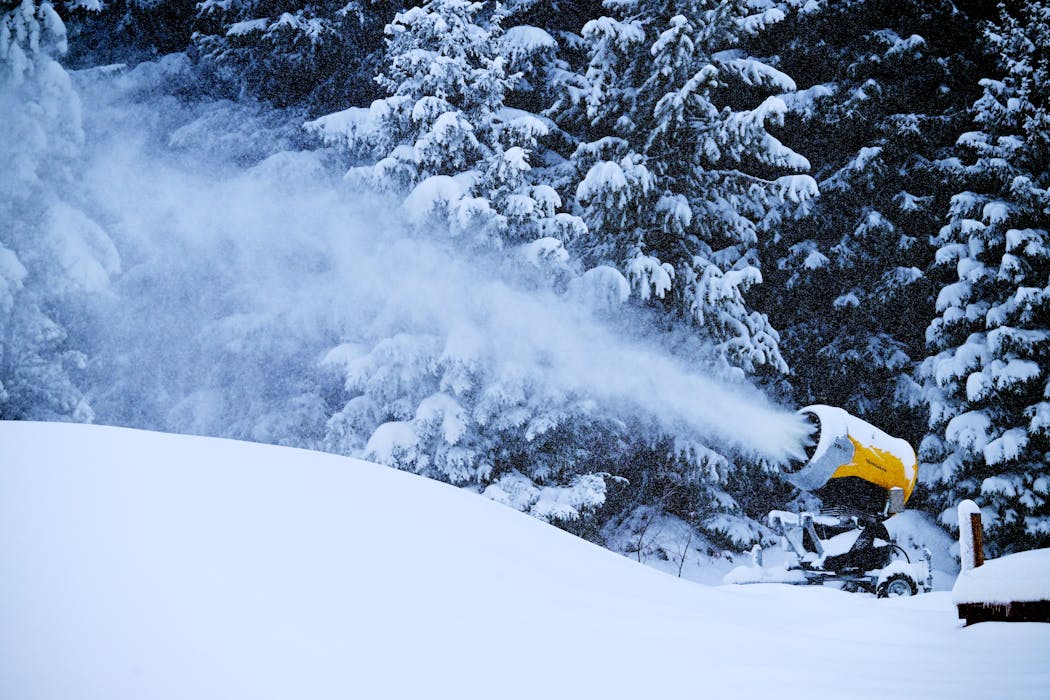
Much of the West has seen a slow start to the 2026 snow season. Hyoung Chang/The Denver Post

Ski season is here, but while the eastern half of the U.S. digs out from wintery storms, the western U.S. snow season has been off to a very slow start.

The snowpack was far below normal across most of the West on Dec. 1, 2025. Denver didn’t see its first measurable snowfall until Nov. 29 – more than a month past normal, and one of its latest first-snow dates on record.

But a late start isn’t necessarily reason to worry about the snow season ahead.

Adrienne Marshall, a hydrologist in Colorado who studies how snowfall is changing in the West, explains what forecasters are watching and how rising temperatures are affecting the future of the West’s beloved snow.

Weather map show precipitation outlook, with a strip across Colorado, Utah and up to Oregon in a band with equal chances of wetter or drier conditions.
The National Weather Service Climate Prediction Center’s seasonal outlook for January through March 2026 largely follows a typical La Niña pattern, with warmer and drier conditions to the south, and wetter and cooler conditions to the north.
NOAA

What are snow forecasters paying attention to right now?

It’s still early in the snow season, so there’s a lot of uncertainty in the forecasts. A late first snow doesn’t necessarily mean a low-snow year.

But there are some patterns that we know influence snowfall that forecasters are watching.

For example, the National Oceanic and Atmospheric Administration is forecasting La Niña conditions for this winter, possibly switching to neutral midway through. La Niña involves cooler-than-usual sea-surface temperatures in the Pacific Ocean along the equator west of South America. Cooler ocean temperatures in that region can influence weather patterns across the U.S., but so can several other factors.

La Niña – and its opposite, El Niño – don’t tell us what will happen for certain. Instead, they load the dice toward wetter or drier conditions, depending on where you are. La Niñas are generally associated with cooler, wetter conditions in the Pacific Northwest and a little bit warmer, drier conditions in the U.S. Southwest, but not always.

When we look at the consequences for snow, La Niña does tend to mean more snow in the Pacific Northwest and less in the Southwest, but, again, there’s a lot of variability.

A map show the snowpack in most of the West is more than 50% below normal.
Scientists often gauge snow conditions by snow-water equivalent, a measure of the amount of water stored in a snowpack. Most of the Western U.S. was far below normal on Nov. 30, 2025. Parts of the Southwest were above normal, but this early in the season, normal is very low to begin with in many of those areas.
USDA Natural Resources Conservation Service

Snow conditions also depend heavily on individual storms, and those are more random than the seasonal pattern indicated by La Niña.

If you look at NOAA’s seasonal outlook maps, most of Colorado and Utah are in the gap between the cooler and wetter pattern to the north and the warmer and drier pattern to the south expected during winter 2026. So, the outlook suggests roughly equal chances of more or less snow than normal and warmer or cooler weather across many major ski areas.

How is climate change affecting snowfall in the West?

In the West, snow measurements date back a century, so we can see some trends.

Starting in the 1920s, surveyors would go out into the mountains and measure the snowpack in March and April every year. Those records suggest snowfall has declined in most of the West. We also see evidence of more midwinter melting.

How much snow falls is driven by both temperature and precipitation, and temperature is warming

In the past few years, research has been able to directly attribute observed changes in the spring snowpack to human-caused climate change. Rising temperatures have led to decreases in snow, particularly in the Southwest. The effects of warming temperatures on overall precipitation are less clear, but the net effect in the western U.S. is a decrease in the spring snowpack.

When we look at climate change projections for the western U.S. in future years, we see with a high degree of confidence that we can expect less snow in warmer climates. In scenarios where the world produces more greenhouse gas emissions, that’s worse for snow seasons.

Should states be worried about water supplies?

This winter’s forecast isn’t extreme at this point, so the impact on the year’s water supplies is a pretty big question mark.

Snowpack – how much snow is on the ground in March or April – sums up the snowfall, minus the melt, for the year. The snowpack also affects water supplies for the rest of the year.

The West’s water infrastructure system was built assuming there would be a natural reservoir of snow in the mountains. California relies on the snowpack for about a third of its annual water supply.

However, rising temperatures are leading to earlier snowmelt in some areas. Evidence suggests that climate change is also expected to cause more rain-on-snow events at high elevations, which can cause very rapid snowmelt.

a man stands on a road that is flooded on both sides as far as the camera can see.  Trees are surrounded by flood water on one side.
When snow melts quickly, it can cause flooding. That happened in 2023 in California, when fast melting from a heavy snow season flooded wide areas of farmland and almond orchards covering what was once Tulare Lake.
Luis Sinco/Los Angeles Times via Getty Images

Both create challenges for water managers, who want to store as much snowmelt runoff as possible in reservoirs so it’s available through the summer, when states need it most for agriculture and for generating hydropower to meet high electricity demand. If the snow melts early, water resource managers face some tough decisions, because they also need to leave room in their reservoirs to manage flooding. Earlier snowmelt sometimes means they have to release stored water.

When we look at reservoir levels in the Colorado River basin, particularly the big reservoirs – Lake Powell and Lake Mead – we see a pattern of decline over time. They have had some very good snow and water years, and also particularly challenging ones, including a long-running drought. The long-term trends suggest an imbalance between supply and growing demand.

What else does snowfall affect, such as fire risk?

During low-snow years, the snowpack disappears sooner, and the soils dry out earlier in the year. That essentially leaves a longer summer dry period and more stress on trees.

There is evidence that we tend to have bigger fire seasons after low-snow winters. That can be because the forests are left with drier fuels, which sets the ecosystem up to burn. That’s obviously a major concern in the West.

Snow is also important to a lot of wildlife species that are adapted to it. One example is the wolverine, an endangered species that requires deep snow for denning over the winter.

What snow lessons should people take away from climate projections?

Overall, climate projections suggest our biggest snow years will be less snowy in anticipated warmer climates, and that very low snow years are expected to be more common.

But it’s important to remember that climate projections are based on scenarios of how much greenhouse gas might be emitted in the future – they are not predictions of the future. The world can still reduce its emissions to create a less risky scenario. In fact, while the most ambitious emissions reductions are looking less likely, the worst emissions scenarios are also less likely under current policies.

Understanding how choices can change climate projections can be empowering. Projections are saying: Here’s what we expect to happen if the world emits a lot of greenhouse gases, and here’s what we expect to happen if we emit fewer greenhouse gases based on recent trends.

The choices we make will affect our future snow seasons and the wider climate.

This article has been updated to correct the references to Denver, which saw one of its latest snowfalls on record.

The Conversation

Adrienne Marshall receives funding from the National Science Foundation, the National Oceanic and Atmospheric Administration, the United States Geological Survey, the Colorado Department of Transportation, and the Alfred P. Sloan Foundation, and has received previous funding from the Carnegie Institution of Washington.

ref. Winter storms blanket the East, while the US West is wondering: Where’s the snow? – https://theconversation.com/winter-storms-blanket-the-east-while-the-us-west-is-wondering-wheres-the-snow-270928

South Africa needs to rethink how it measures intellectual and developmental disabilities – what’s lacking

Source: The Conversation – Africa (2) – By Lieketseng Ned, Lecturer, Stellenbosch University

The effective planning and delivery of services for people with intellectual and developmental disabilities in South Africa is severely constrained by the lack of reliable data.

Intellectual disability is characterised by significant limitations in:

  • intellectual functioning (reasoning, learning, problem solving)

  • adaptive behaviour (a range of everyday social and practical skills)

which originate before the age of 22.

Developmental disabilities are a diverse group of chronic conditions due to an impairment in physical, learning, language, or behaviour areas. Intellectual disability, autism, cerebral palsy, Down syndrome and fetal alcohol syndrome are some of the conditions.

South Africa measures disability at population level using the Washington Group Short Set of six functional questions. This ensures international comparability. But it doesn’t adequately capture intellectual and development disabilities. This is because the questions only capture difficulties in doing basic activities. They don’t capture a diagnosis. It’s therefore difficult to know what diagnoses have led people to report difficulties.

This makes disaggregation by disability diagnosis difficult. Data disaggregation by disability types is key. It contributes to effective policy, resource allocation and budgeting as well as appropriate intervention and targeted services.

This article builds on our work researching disability in South Africa for over 10 years.

In it, we propose pragmatic steps to improve the ability to monitor the status of people with intellectual and developmental disabilities of all ages. South Africa can add to the evidence base by producing robust, actionable metrics that strengthen population data. In turn this will enhance planning and implementation.

Current measurement landscape

Disability measurement in South Africa rests on two main pillars.

The first is administrative records. These include:

These all provide useful service-level insights. But they only capture people already in contact with services. And they use different coding standards.

The second pillar is population-based surveys. These include Washington Group questions on disability. This generates internationally comparable prevalence estimates. But this measurement doesn’t include children under 5 years. The nature of the questions also means that a wide range of predominantly invisible disabilities are missed.

For children, the Washington Group/Unicef Child Functioning Module is internationally recognised as a valid measure for 2–17 year olds. It is available and recommended. But it’s still not widely implemented in South Africa.

As a result, the current system remains inadequate in reliably disaggregating data by disability type, age, severity or onset.

Measurement limitations

Population-based measures of functioning don’t provide a diagnosis. It is therefore difficult to identify people with intellectual and developmental disability within the data.

Additionally, the Washington Group does not ask about psychosocial functioning. An example of such a question could be: Do you have difficulty forming relationships?. Relying on it alone may undercount many people whose primary impairments are cognitive, adaptive or psychosocial.

Ideally, it would be beneficial to have both the diagnosis and the functional profile.

National reporting also leaves an important early-childhood blind spot. Infants and many toddlers (0–4 years) are not captured in the same way as older children and adults. Yet this is the period when early detection and intervention can have the most impact. The Washington Group/Unicef measure improves data for children from 2 to 4 years. But it isn’t embedded in the country’s data collection platforms.

Data on young children are further limited by uneven developmental surveillance and the narrow use of the Road to Health Booklet. The booklet serves as a comprehensive record of a child’s medical history, health status, growth and development.

Administrative records are also inconsistently coded and weakly linked. This makes them an unreliable source of data on type of disability. Single-item indicators (for example, “difficulty communicating”) risk misclassification unless analysed alongside onset and other related functioning.

What is possible?

The question that we asked in our recently completed country assessment in collaboration with Special Olympics South Africa is:

how does one use data on the functioning profile to understand diagnosis and vice versa?

Such a crosswalk would allow identification of people with intellectual and developmental disabilities in the data. As an initial step, we created and used a composite indicator. This could potentially assist in identifying people 5 years and older.

For each dataset, we used a combination of the already existing Washington Group Short Set variables to create the new “With intellectual and developmental disabilities” variable.

This was followed by running cross-tabulations of the “with possible intellectual and developmental disabilities” versus “without intellectual and developmental disabilities” with a number of other health-related variables. These cross-tabulations were used to identify gaps in accessing health care services.

We acknowledge that this is an imperfect measure. But it provides a starting point to try and understand the trends in access to health care.

Next steps

We recommend the following:

  • Amend survey instruments to include the Washington Group alongside diagnosis questions for those under five.

  • Do research to understand the functional profile of people with people with intellectual and developmental disabilities based on their responses to the Washington Group Short Set.

  • Expand training for field staff on the new modules. This should include interviewing techniques.

  • Ensure national and subnational coordination.

  • Publish detailed breakdowns by disability type, by age group (including under 5), and by region.

The Conversation

The authors do not work for, consult, own shares in or receive funding from any company or organisation that would benefit from this article, and have disclosed no relevant affiliations beyond their academic appointment.

ref. South Africa needs to rethink how it measures intellectual and developmental disabilities – what’s lacking – https://theconversation.com/south-africa-needs-to-rethink-how-it-measures-intellectual-and-developmental-disabilities-whats-lacking-268497

Islam : comment se fabrique l’inquiétude dans le débat public

Source: The Conversation – in French – By Ali Mostfa, Maître de conférences, HDR, en études sur le fait religieux en islam, UCLy (Lyon Catholic University)

Après la production d’un rapport gouvernemental sur l’« entrisme des Frères musulmans » dans la société française, une étude de l’institut Ifop met en avant une progression de la religiosité chez les musulmans de France et l’interprète comme un signe de l’influence islamiste. Or, les chiffres avancés renvoient surtout à des pratiques ordinaires du culte. Cette approche interroge sur la façon dont l’islam est problématisé dans le débat public.


L’institut Ifop a récemment enquêté sur l’évolution, en France, des pratiques des musulmans, et notamment des jeunes, mettant en avant une forte dynamique de « réislamisation » (87 % des 15–24 ans se disent religieux, 62 % prient quotidiennement, 83 % jeûnent tout le ramadan, 31 % portent le voile). Cette lecture s’inscrit dans la continuité du rapport « Frères musulmans et islamisme politique en France » publié par le ministère de l’intérieur en mai 2025. Alors que ce rapport situait l’enjeu de l’« entrisme islamiste » au niveau des organisations et des institutions, l’enquête de l’Ifop esquisse l’idée d’une base sociale de l’islamisme dans des comportements ordinaires.

Pour étayer sa thèse, l’Ifop mobilise un ensemble d’indicateurs allant de la prière au jeûne, des comportements interpersonnels (bise, mixité) au rapport à la science ou aux règles religieuses. Or plusieurs de ces mesures, présentées comme les signes d’une religiosité accrue, soulèvent des difficultés méthodologiques : un écart important apparaît entre ce que les indicateurs mesurent et l’interprétation qui en est faite. Cette approche interroge sur la façon dont l’islam est problématisé dans le débat public.

Intensification religieuse : une réalité qui ne dit pas ce qu’on croit

Les données relatives à la « fréquence de la prière » offrent une première illustration de ce décalage. En islam, la prière rituelle (ṣalāt) consiste en cinq actes quotidiens obligatoires, pouvant être regroupés lorsque les circonstances l’exigent ; elle ne se décline pas selon des fréquences variables. La question « À quelle fréquence vous arrive-t-il de prier ? » repose ainsi sur un modèle catégoriel inadapté, fondé sur des échelles – « une fois par semaine », « une à quatre fois par jour », etc. – qui ne correspondent à aucune réalité du rite musulman. De telles formulations conduisent moins à mesurer une pratique effective qu’à enregistrer l’effort des enquêtés pour ajuster un rituel strictement codifié à une grille de lecture inadéquate. L’opposition graphique entre « prient quotidiennement » et « ne prient pas quotidiennement » produit ainsi des profils distincts là où la véritable distinction se joue entre accomplissement – même regroupé – et omission répétée.

Le même mécanisme apparaît dans la mesure du jeûne. Affirmer que « 73 % des musulmans ont jeûné tout le ramadan » est présenté comme un signe de « rigidification », alors qu’il s’agit de l’accomplissement ordinaire d’un pilier défini précisément comme un mois complet d’observance. La gradation introduite – « tout le mois », « quelques jours », « pas jeûné » – est étrangère au rituel, transposant à l’islam un modèle séculier de pratique modulable. La stabilité des chiffres (73 % en 2025, 74 % en 2019) reflète des dynamiques démographiques davantage qu’un durcissement doctrinal.

Dans les deux cas, l’étude ne décrit pas une radicalisation, mais elle réinterprète des pratiques rituelles à travers des catégories inappropriées, produisant artificiellement des niveaux d’engagement et des seuils de rupture qui n’existent pas dans les données. La prière et le jeûne deviennent ainsi des signaux idéologiques supposés, alimentant l’idée d’une « réislamisation » problématique alors qu’ils relèvent d’abord d’une normativité religieuse ordinaire chez les musulmans pratiquants.

Au-delà des chiffres qu’elle présente, l’étude mobilise un ensemble de catégories – « réislamisation », « orthopraxie », « absolutisme religieux », « tension avec la République », « séparatisme du genre », « halo de l’islamisme » – qui orientent fortement la manière dont les attitudes musulmanes sont interprétées. Ces cadres produisent une lecture homogénéisante de comportements pourtant très divers, en réinscrivant des pratiques ordinaires dans des désignations alarmantes. Ce type de catégorisation s’inscrit dans un biais bien documenté en sociologie des religions : la tendance à privilégier les registres normatifs ou les intentions supposées au détriment de l’analyse des pratiques elles-mêmes.

De la religiosité vécue au soupçon idéologique : un glissement méthodologique

Les conclusions de l’étude reposent sur une confusion centrale : elle tend à associer mécaniquement une religiosité plus visible à un durcissement idéologique. Or l’intensité du croire et l’intransigeance normative constituent deux dimensions distinctes. On observe des pratiquants rigoureux ouverts à l’altérité, tout comme des individus très peu ou non pratiquants adoptant des positions rigides. Rien ne permet donc de déduire qu’un niveau élevé d’observance rituelle traduit, en soi, une orientation idéologique particulière.

C’est pourtant cette assimilation hâtive que prolonge l’enquête lorsqu’elle interprète des comportements situés – abstinence d’alcool, refus de la bise, distance à la mixité – comme des signes de « séparatisme » ou d’« islamisme ». Le raisonnement opère alors un glissement : des gestes de piété ou des habitudes culturelles – comme le fait de ne pas pratiquer la bise, peu usitée dans de nombreuses régions du monde arabe – sont déplacés vers le registre du soupçon idéologique, non en raison de leur sens propre, mais du cadre interprétatif dans lequel ils sont insérés.

Ce glissement apparaît également dans l’usage d’items censés mesurer des orientations idéologiques, alors qu’ils ne saisissent que des arbitrages intellectuels généraux. La question opposant « science » et « religion » pour expliquer l’origine du monde en est une illustration. En imposant une alternative binaire – soit la science, soit la religion –, elle ne peut en rien indiquer une inclination vers l’islamisme ; un tel choix concerne d’ailleurs des croyants de nombreuses traditions.

Surtout, cette formulation peut laisser entendre que répondre « religion » révélerait une moindre capacité à adhérer au savoir scientifique ou à réussir scolairement. Or les données disponibles montrent exactement l’inverse : les enfants d’immigrés réussissent souvent mieux à l’école que les autres, et le niveau d’éducation des familles immigrées progresse nettement sur trois générations. L’item « science vs religion » ne fournit pourtant aucune indication sur une orientation idéologique : il mesure seulement la préférence déclarée pour l’un des deux registres explicatifs lorsqu’ils sont présentés comme incompatibles. Autrement dit, l’opposition est imposée par la question et non révélée par les convictions des répondants.

Ces attitudes sont ensuite corrélées à des mesures de « sympathie » pour des courants présentés comme islamistes. Pourtant, l’usage d’un terme aussi indéterminé crée une confusion. Ce terme peut recouvrir une simple absence d’hostilité, une familiarité culturelle ou encore une adhésion doctrinale. L’ambiguïté est renforcée par le regroupement, sous une même catégorie, d’univers religieux sans lien entre eux : le Tabligh, le salafisme/wahhabisme, les Frères musulmans et le takfir. Sans clarification, cette « sympathie » agrégée suggère un continuum idéologique qui n’existe pas, produisant mécaniquement des taux élevés.

Ces chiffres contrastent fortement avec un résultat pourtant décisif du même rapport : 73 % des musulmans estiment qu’un musulman a le droit de rompre avec l’islam, contre 44 % en 1989. Un tel indicateur de libéralisation normative aurait dû structurer la lecture de l’enquête. Or il est resté largement inaperçu dans le débat public, éclipsé par des items plus compatibles avec le récit d’une « réislamisation ». L’évolution des trente dernières années montre pourtant une dynamique inverse, celui d’un élargissement de l’autonomie individuelle dans le rapport à la foi, difficilement compatible avec l’idée d’un raidissement idéologique généralisé.

Au terme de l’analyse, une conclusion s’impose : un sondage comme celui de l’Ifop contribue surtout à façonner une manière de regarder les musulmans. Par ses catégories, ses regroupements et ses oppositions binaires, il produit un récit d’inquiétude qui relève davantage du cadrage de l’enquête que des données elles-mêmes. Un tel dispositif oriente la perception publique, suggère des liens fragiles et peut influer sur des décisions politiques – au risque d’accentuer chez certains musulmans le sentiment d’être injustement visés.

The Conversation

Ali Mostfa est coordinateur scientifique du parcours de formation Mohammed Arkoun sur l’islamologie, en partenariat avec les établissements d’enseignement supérieur lyonnais, financé par le Bureau Central des Cultes du Ministère de l’Intérieur.

ref. Islam : comment se fabrique l’inquiétude dans le débat public – https://theconversation.com/islam-comment-se-fabrique-linquietude-dans-le-debat-public-270816

L’activité physique à partir de 45 ans peut réduire le risque de démence, selon une nouvelle étude

Source: The Conversation – in French – By Joyce Siette, Associate Professor | Deputy Director, The MARCS Institute for Brain, Behaviour and Development, Western Sydney University

Rester actif à partir de la quarantaine jouerait un rôle clé dans la prévention de la démence. Centre for Ageing Better/Unsplash

Bouger, c’est bon pour le corps… et pour le cerveau. Une étude états-unienne de grande ampleur montre que l’activité physique régulière, même débutée à partir de 45 ans, peut réduire significativement le risque de démence, y compris chez les personnes génétiquement prédisposées. Preuve supplémentaire que l’exercice reste l’un des meilleurs remèdes pour garder l’esprit vif en vieillissant.


Depuis des années, les scientifiques savent que bouger notre corps peut affûter notre esprit. En effet, l’activité physique stimule le flux sanguin vers le cerveau, améliore la neuroplasticité et réduit l’inflammation chronique. Ces processus sont considérés comme protecteurs face au déclin cognitif, y compris en ce qui concerne le risque de démence.

Pourtant, malgré des décennies de recherche, d’importantes questions demeurent. L’activité physique réduit-elle le risque de démence lorsqu’elle est pratiquée à tout âge ? Ou seulement lorsqu’on est jeune ? Et si l’on présente un risque génétique plus élevé, l’exercice physique peut-il encore faire la différence ?

Une nouvelle étude, tout juste publiée dans la revue médicale Jama Network Open, fournit certaines des réponses parmi les plus claires disponibles à ce jour. Fondée sur les données issues de l’étude épidémiologique au long cours Framingham Heart Study, menée aux États-Unis, ses conclusions confirment ce que de nombreux cliniciens affirmaient déjà à leurs patients : faire de l’exercice est bénéfique.

Ces travaux apportent aussi un éclairage nouveau sur l’effet potentiellement protecteur que confère la pratique d’une activité physique régulière dès 45 ans, même chez les personnes présentant une certaine prédisposition génétique à la démence. Décryptage.

En quoi cette étude a-t-elle consisté ?

Cette nouvelle recherche s’appuie sur les données de 4 290 membres de la cohorte Framingham Heart Study Offspring. Débutée en 1948, cette étude avait pour objectif d’étudier, sur le long terme, les facteurs de risque cardiovasculaires. À son lancement, les chercheurs ont recruté plus de 5 000 adultes de plus de 30 ans résidant à Framingham, dans le Massachusetts, aux États-Unis.

En 1971, une deuxième génération de participants (plus de 5 000 enfants de la cohorte initiale – devenus adultes – et leurs conjoints) a été recrutée, pour former la cohorte « Offspring » (« descendance », en anglais). La santé de cette génération a été suivie grâce à des examens de santé réguliers, menés tous les quatre à huit ans.

Dans le cadre des travaux publiés dans Jama Network Open, les participants ont auto-déclaré leur activité physique. Il s’agissait de documenter aussi bien certaines activités quotidiennes basiques, telles que le fait de monter des escaliers, que des exercices physiques plus intenses.

Les volontaires ont une première fois répondu au questionnaire durant l’année 1971, puis l’opération a été renouvelée plusieurs décennies durant. Selon l’âge qu’ils avaient au moment de leur première évaluation, les participants ont été répartis en trois catégories :

  • jeunes adultes (26-44 ans) : évalués à la fin des années 1970 ;

  • personnes d’âge mûr (45-64 ans) : évaluées à la fin des années 1980 et dans les années 1990 ;

  • personnes âgées (65 ans et plus) : évaluées à la fin des années 1990 et au début des années 2000.

Afin d’évaluer l’influence de l’activité physique sur le risque de démence, les chercheurs ont observé, au sein de chaque groupe d’âge, le nombre de personnes ayant développé une démence, et à quel âge le diagnostic avait été posé.

Ils ont ensuite comparé les schémas d’activité physique (faible, modérée, élevée) dans chacun des groupes d’âge, afin de déterminer si un lien pouvait être établi entre la quantité d’exercice et la survenue d’une démence.

Les auteurs de l’étude ont également identifié les personnes possédant l’allèle APOE ε4, lequel est connu pour être un facteur génétique de risque pour la maladie d’Alzheimer.

Homme pratiquant le crawl dans une piscine.
Les recherches ont depuis longtemps démontré que l’activité physique peut affûter non seulement notre corps, mais aussi notre esprit.
Jonathan Borba/Unsplash

Qu’ont découvert les scientifiques ?

Au cours de la période de suivi, 13,2 % (567) des 4 290 participants ont développé une démence. Les individus concernés appartenaient principalement au groupe de volontaires dont l’âge était le plus élevé.

Ce taux est relativement élevé au regard d’autres études longitudinales (autrement dit, de long terme) sur la démence ou des niveaux de risque de démence enregistrés en Australie (8,3 % des Australiens de plus de 65 ans sont actuellement atteints de démence, soit environ 1 personne sur 12).

En analysant les données, les chercheurs ont découvert une tendance frappante : les personnes qui déclaraient les niveaux d’activité les plus élevés à l’âge mûr et durant le grand âge avaient 41 à 45 % moins de risque de développer une démence que celles qui rapportaient les niveaux les plus faibles.

Cette association persistait même après prise en compte d’autres facteurs de risque, qu’ils soient démographiques (âge, éducation) ou médicaux (hypertension, diabète).

Il est intéressant de noter que le fait d’être physiquement actif au début de l’âge adulte n’avait aucune influence sur le risque de démence.

L’analyse de l’influence du facteur génétique APOE ε4, facteur de risque connu pour la maladie d’Alzheimer, constitue l’une des avancées majeures de cette étude. Elle a permis de mettre en évidence les points suivants :

  • à l’âge mûr, pratiquer une activité physique plus intense ne réduisait le risque de développer une démence que chez les personnes non porteuses de l’allèle ;

  • à un âge avancé, en revanche, le fait d’avoir une activité physique plus intense réduisait le risque aussi bien chez les porteurs de l’allèle que chez ceux qui ne le possédaient pas.

Autrement dit, pour les personnes génétiquement prédisposées à la démence, rester actives à un âge avancé pourrait continuer à offrir une protection significative.

Quelle est la portée de ces résultats ?

Ces conclusions viennent renforcer ce que les scientifiques savent déjà : l’exercice physique est bon pour le cerveau.

Cette étude se distingue non seulement par la taille importante de son échantillon, mais aussi par la durée exceptionnelle de son suivi ainsi que par le fait d’avoir mené une analyse génétique couvrant différentes périodes de la vie des participants.

Le fait d’avoir révélé que la pratique d’une activité physique à l’âge mûr peut avoir un effet différent selon le risque génétique, tandis que rester actif à un âge avancé profite à presque tout le monde, pourrait être utilisé pour enrichir les messages de santé publique.

Une étude qui présente quelques limites

Dans cette étude, le niveau estimé d’activité physique repose en grande partie sur une auto-déclaration. Il existe donc un risque de biais de rappel (les participants ont tendance à se souvenir de l’événement – ici leur pratique de l’activité physique – différemment de ce qu’il était en réalité, NDT). Par ailleurs, on ignore quels types d’exercice sont les plus bénéfiques.

Le nombre de cas de démence chez les plus jeunes participants étant bas, la portée des conclusions est plus limitée en ce qui concerne le début de l’âge adulte.

La cohorte choisie, constituée de participants qui descendent majoritairement de populations européennes et sont tous issus de la même ville, limite la généralisation des résultats à des populations plus diversifiées.

Ceci est particulièrement important, compte tenu du fait qu’il existe de fortes inégalités, au niveau mondial, face au risque de démence et au diagnostic de cette affection.

Quelle conclusion tirer de cette étude ?

À l’heure actuelle, les connaissances portant sur la démence et ses facteurs de risque restent encore faibles dans les groupes de composition ethnique diversifiée. Dans bon nombre d’endroits, elle est encore souvent perçue comme une « composante normale » du vieillissement.

La conclusion à tirer de cette étude tient, cependant, en deux phrases : bougez davantage, quel que soit votre âge. Les bénéfices que vous en retirerez surpassent clairement les risques.

The Conversation

Joyce Siette bénéficie d’un financement du Conseil national de la santé et de la recherche médicale.

ref. L’activité physique à partir de 45 ans peut réduire le risque de démence, selon une nouvelle étude – https://theconversation.com/lactivite-physique-a-partir-de-45-ans-peut-reduire-le-risque-de-demence-selon-une-nouvelle-etude-270834