Why you’re wise on Tuesday and foolish on Sunday: Practising wisdom in uncertain times

Source: The Conversation – Canada – By Igor Grossmann, Professor of Psychology, University of Waterloo

It’s that time of year when the internet turns into a giant group chat about self-improvement. New year, new you. Better habits. Better boundaries. A year older, and maybe wiser.

Right on cue, the wisdom hucksters appear. They are the “one weird trick” crowd — the gurus with a microphone, a smirk and a promise of instant ascendance if you just buy the book, sign up for the training program, use their AI tool or subscribe to their Substack.

But there is no “enlightenment pill” that works overnight and never wears off. The evidence points the other direction: wisdom isn’t a permanent halo you wear. It’s a set of mental processes you can practise — and lose — depending on whether it’s a calm Tuesday or a stressful Sunday.

To understand why we often fail to be wise when we need it most, we must stop treating wisdom like a fixed personality trait.

What is wisdom?

In modern psychology, wisdom isn’t an ethereal, mystical quality. It’s made of specific metacognitive skills — mental processes that help us navigate the crazy uncertain world we live in.
These include:

  • Intellectual humility: Admitting you could be wrong or that your knowledge is limited.

  • Recognition of uncertainty: Understanding that situations can unfold in many different ways.

  • Consideration of diverse viewpoints: The ability to see how a situation looks from another side.

  • Integration and compromise: Searching for solutions that balance competing interests rather than just scoring points.

These mental processes are ways of thinking that matter when life gets messy — whether dealing with interpersonal conflict, political disagreement or financial challenges. But here is where the “magic pill” story starts to collapse.

Wisdom isn’t a fixed personality trait

If you have ever successfully navigated a complex political disagreement at work on a Thursday, only to lose your temper over a broken dishwasher on a Sunday, you know that wisdom doesn’t work like a software update.

For a long time, psychologists treated wisdom as a stable personality trait, as something you have, like blue eyes or extraversion. The assumption is that if you measure a person once, you’ve basically captured who they are.

But major scientific advances, including a new yearlong study our team just conducted, suggest that this is exactly where the culture goes wrong.

We often use static snapshots to make big claims about how people change over time. This practice risks committing an “ecological fallacy,” which is the trap of assuming that what makes one person different from another (between-person differences) explains how a single person changes over time (within-person change).

Translation: Just because “wiser people” on average are doing better doesn’t mean each individual becomes wiser in the same way, on the same timeline or for the same reasons.

New research: Wisdom acts like a system

To test this idea, our team conducted a year-long, multi-wave study of nearly 500 North American adults. The results recently appeared in the Journal of Experimental Psychology: General.

We asked participants to reflect on real adversities — social conflicts, health scares, job losses — as they occurred over the course of a year.

Participants rated their use of four core wisdom features: intellectual humility, recognizing uncertainty and change, consideration of diverse viewpoints and searching for compromise.

The headline results are disruptive for anyone selling instant transformation.

First, wisdom fluctuates. While personality traits like extraversion or neuroticism remained stable, wisdom features fluctuated significantly from moment to moment. You can be wise on Thursday and a fool on Sunday.

Second, it’s a network, not a monolith. We found that wisdom is best modelled as a network of loosely interconnected skills rather than a single underlying “wisdom trait.”

Third, context matters. People were generally wiser when reflecting on social conflicts than when dealing with personal health issues or trauma.

Most importantly, we found that patterns between people didn’t match patterns within individuals over time. What predicts who is generally wiser doesn’t necessarily predict how individuals become wiser.

Therefore, if you’ve ever thought to yourself “I know what the wise thing is… why can’t I do it when I’m emotional?” — congratulations! Your lived experience is more scientifically accurate than half the pop-science advice market.

The good news about wisdom

If wisdom isn’t an update you install, is there anything you can actually do?

Yes. In our yearlong study, we found a specific predictor of growth. When people reported higher-than-usual self-distancing at one point in time, they reported higher levels of wisdom-related features three months later.

In other words, when people step back and view a difficult situation from a third-person perspective, they are more likely to reason wisely in the future, including by practising intellectual humility, searching for compromise and recognizing uncertainty and change.

That finding is correlational. But in a separate experiment published in Psychological Science, we tested whether training in distanced reflection changes wise reasoning.

For one month, participants kept a daily diary about the most important issues of the day. One group wrote typically (first-person), while the other group was trained to write about their daily challenges using the third-person (for example, asking “What did Chris feel?” rather than “What did I feel?”).

The result? The group trained in distanced reflection showed significant increases in wise reasoning about interpersonal challenges compared with the control group. This shift in language helped broaden their self-focus, breaking the egocentric cycle that often blocks wisdom.

How to practise wisdom (no app required)

So, what do you do practically when life gets heated? Based on this research, here’s a toolkit of repeatable practices for spiralling arguments, regrets or looming decisions in the year ahead:

1. Practise self-distancing. Instead of asking “Why am I like this?” try asking “What is [Your Name] missing right now?” It might feel awkward, but it helps with your mental geometry: you are widening the frame.

2. Ask the humility question. Ask yourself: “What would change my mind here?” If the answer is “nothing,” you aren’t reasoning but defending a position.

3. Allow two truths to coexist. Wisdom is rarely a knockout punch; it is usually an integration. Ask: “What is true on my side, and what might be true on theirs?”

Will this make you instantly wise forever? No. That’s the point. Wisdom is closer to physical fitness than a magic pill: it is trainable, context-dependent and annoyingly easy to lose when you’re tired, stressed or flooded with emotion.

The more evidence we gather, the clearer the message: if someone is promising enlightenment now, they aren’t teaching wisdom. They are selling false certainty. And certainty is often the opposite of what wisdom requires.

The Conversation

Igor Grossmann receives funding from Social Sciences and Humanities Research Council of Canada (Insight Grant 435-2014-0685), John Templeton Foundation (grant 62260), and Templeton World Charity Foundation (grant TWCF-2023-32568).

Jackson A. Smith receives funding from the Canadian Institutes of Health Research (CIHR) through the Vanier Canada Graduate Scholarship.

ref. Why you’re wise on Tuesday and foolish on Sunday: Practising wisdom in uncertain times – https://theconversation.com/why-youre-wise-on-tuesday-and-foolish-on-sunday-practising-wisdom-in-uncertain-times-272230

Feeling stuck at work as the New Year begins? It may be a sign of professional growth

Source: The Conversation – Canada – By Leda Stawnychko, Associate Professor of Strategy and Organizational Theory, Mount Royal University

As the new year starts, it’s natural to feel torn between gratitude and restlessness. December often disrupts routines: fewer meetings, quieter inboxes and a rare chance to take stock and reflect.

During this time, people may feel pride in how far they have come, alongside a growing sense that the path they are on no longer fits.

This discomfort is especially common at stages of life when professionals expect to feel more settled, yet instead feel stagnant. It’s easy to dismiss such feelings as impatience or a lack of commitment.

But research on adult learning and development suggests that feeling stuck is often a signal of growth. It’s evidence that our internal development has outpaced our external circumstances.

In educational research, this tension is often described as a disorienting dilemma: an experience that unsettles our assumptions and highlights a mismatch between how we see ourselves and the contexts we are in.

While these moments are often uncomfortable, they act as necessary catalysts for meaningful learning and change, motivating people to reassess their goals, values and direction. Seen this way, yearning for new beginnings is a rational response to growth.

Diagnosing the source of restlessness

If you’re ready for change but unsure of where to begin, a useful first step is clarifying what is driving the sense of restlessness. Is it the work itself, the people you work with or the broader organizational culture?

When organizations are generally supportive, growth doesn’t necessarily require leaving. Change may be possible within the same environment. In these cases, conversations with supervisors can reveal opportunities that are not immediately obvious, such as stretch assignments, special projects or support for further learning.

Research shows that people who stay with organizations over the long term often do so because of strong relationships, a good fit with their broader lives and what scholars call “job embeddedness” — the financial, social and psychological benefits of the position that make leaving costly.

But when the cost of staying is stifling your growth, it’s worth exploring how you might either renegotiate growth where you are or thoughtfully prepare to move on.

Re-evaluating what matters now

Whether you’re considering a shift within your organization or beyond it, taking time to reassess your needs, goals and values is essential. What mattered to you earlier in your career may not matter in the same way now. Income, learning, flexibility, stability and meaning all rise and fall in importance across life stages.

Clarifying your values does not mean choosing one priority forever. It simply provides a clearer map for evaluating opportunities.

Some people prioritize mentorship or employer-supported education. Others need predictable schedules, strong health benefits or flexibility to care for family members.

Understanding what matters most now helps narrow your options and reduces the paralysis that often accompanies big decisions.

Focusing on activities rather than titles

Another way to gain clarity is to imagine your ideal role without fixating on job titles.

Titles can be misleading and often mask the day-to-day reality of the work. Instead, focus on activities. How will you spend most of your time? What skills will you be using day to day?

One useful question is what activities you would gladly do without being paid. These often point to core strengths and motivations worth taking seriously. Organizational psychologists describe this as intrinsic motivation — the internal drive to engage in an activity because it is inherently satisfying.

For example, early in my career, I began to notice a pattern in my volunteer work. I was consistently drawn to supporting professionals through moments of career transition, conflict and change. Over time, that realization helped me recognize that mentoring and coaching were activities I already valued enough to do for free.

With that insight, I began targeting roles in my own career that rewarded those same activities, ensuring that my work consistently included elements that felt both meaningful and energizing.

Preparing for the next step

Once priorities and interests are clearer, look closely at the qualifications and experiences the roles you are drawn to actually require and begin developing them intentionally.

This can occur through low-risk avenues, including projects in your current job, entrepreneurial or side work, volunteer roles or targeted learning opportunities.

Consistently taking small, purposeful steps can help you systematically bridge the gap between your current capabilities and the demands of your next chapter. By actively cultivating these skills, you transform a period of restlessness into a constructive phase of professional readiness.

As you consider what comes next, use your network strategically to learn and ask questions. New beginnings unfold through conversations, experiments and choices made over time.

Also pay attention to the beliefs shaping your actions. Assumptions about what you can or cannot do can limit options more than skills ever do. Feeling stuck is an invitation to evolve and may mark the start of an exciting new chapter you can begin writing today.

The Conversation

Leda Stawnychko receives funding from SSHRC.

ref. Feeling stuck at work as the New Year begins? It may be a sign of professional growth – https://theconversation.com/feeling-stuck-at-work-as-the-new-year-begins-it-may-be-a-sign-of-professional-growth-270878

Ce que révèle une vaste enquête citoyenne sur la qualité de l’eau en France

Source: The Conversation – France in French (2) – By Nicolas Dietrich, Professeur des universités en génie des procédés, INSA Toulouse

Partout en France, des citoyens ont participé à la recherche scientifique en prélevant et testant la qualité de l’eau de leur région. Marielle Duclos/La Grande Synchr’Eau, Collectif Hodos, Fourni par l’auteur

En 2023, des milliers de citoyens ont pris part à un projet de recherche participative visant à cartographier la qualité de l’eau sur le territoire français. Une démarche qui en apprend beaucoup aux chercheurs et qui sensibilise les bénévoles.


Le 29 septembre 2023, partout en France, des milliers de personnes ont endossé, le temps d’un week-end, la casquette du chercheur. Armés de leur smartphone, d’une bandelette colorée et d’une fiche d’instructions, ils se sont lancés dans une expérience collective inédite : mesurer la qualité des eaux de France dans les rivières, les fontaines, les lacs, les puits et les flaques. En quelques jours, près de 800 échantillons ont été collectés et plus de 20 000 données ont été mesurées.

Carte de France indiquant où les mesures ont été effectuées
Localisation des mesures réalisées dans le cadre de la Grande Synchr’Eau.
La Grande Syncr’Eau, Fourni par l’auteur

Derrière ces chiffres impressionnants se cache une aventure humaine et scientifique : la Grande Synchr’Eau, une initiative massive de science participative récompensée par l’une des médailles de la médiation du CNRS en 2025 pour son originalité et son impact sur la société. Cette expérience participative inédite a permis de révéler la diversité chimique des eaux françaises.

Le principe est simple : tremper une bandelette dans l’eau, observer les pastilles se colorer, puis les comparer à une échelle. Ce geste, à la fois simple et ludique, cache en réalité des mesures précieuses : le pH (ou l’acidité), la concentration en nitrates issus des engrais, en chlore, ainsi qu’en métaux lourds tels que le cuivre ou le plomb. Pour beaucoup, l’expérience provoque un effet « waouh » : « On avait l’impression de jouer, mais en fait, on faisait de la vraie science », racontait une mère venue vivre l’expérience avec sa fille. C’est là toute la force de la science citoyenne : permettre à chacun de participer à la recherche, tout en produisant des données utiles aux scientifiques.

Quatre photographies de volontaires qui récoltent de l’eau, comprenant des enfants et des adultes dans des paysages différents, urbains ou ruraux
Des citoyens de tous âges à l’œuvre : mesurer, observer et comprendre l’eau partout en France.
La Grande Synchr’Eau, Fourni par l’auteur

Une mosaïque de réalités locales

Les résultats, compilés par les équipes de l’INSA Toulouse et du Toulouse Biotechnology Institute, révèlent une France de l’eau pleine de contrastes. En Bretagne et dans le Massif central, l’eau est plus acide, en raison des sols granitiques et volcaniques, car ces roches contiennent peu de minéraux capables de « tamponner » l’acidité. L’eau de pluie, naturellement légèrement acide, n’est donc pas neutralisée en traversant ces terrains, contrairement aux régions calcaires où les roches relarguent du carbonate qui remonte le pH. Dans les plaines agricoles de la Beauce et de la Champagne, les nitrates dépassent parfois 100 mg/L, témoins directs de l’usage intensif des engrais.

En ville, d’autres signaux apparaissent : à Lyon, Toulouse ou Marseille, les citoyens ont détecté du cuivre jusqu’à 6 mg/L, un niveau trois fois supérieur à la limite de qualité de l’eau potable (2 mg/L), généralement lié à la corrosion des vieilles canalisations en cuivre. Dans certaines zones rurales, le chlore est quasi absent, alors qu’en Île-de-France ou dans le Rhône, la concentration atteint des niveaux dix fois supérieurs à ceux observés dans les campagnes du Massif central. Cela reste compatible avec les normes, mais reflète une désinfection beaucoup plus marquée des grands réseaux urbains, expliquant parfois les goûts d’eau chlorée rapportés par certains usagers.

Autrement dit, il n’existe pas une eau française, mais une mosaïque d’eaux locales, chacune portant la marque de son sol, de ses usages et de ses infrastructures.

Des flaques chlorées et des puits ferrugineux

Parmi les échantillons, certaines eaux sortent franchement du lot. Si, globalement, le pH reste dans des valeurs normales (entre 6 et 7,6), la diversité chimique surprend. Le chlore total, c’est-à-dire à la fois le chlore libre (désinfectant actif) et le chlore combiné (qui a déjà réagi avec d’autres substances), atteint parfois 10 mg/L, soit cinq fois la concentration d’une piscine publique.

Certaines flaques urbaines semblent avoir reçu un traitement sanitaire involontaire : ruissellement des trottoirs, résidus de produits ménagers, lessivage des surfaces. Bref, si l’eau des flaques n’est pas potable, certaines sont surprenamment bien désinfectées !

La France de l’eau en un coup d’œil : six cartes citoyennes révélant la diversité chimique du territoire.
La Grande Synchr’Eau, Fourni par l’auteur

Certains puits battent tous les records de fer, avec des concentrations pouvant atteindre 25 mg/L, soit 500 fois la limite de potabilité. À ce stade, l’eau prend une teinte orangée et un goût métallique prononcé. Sur le millier de prélèvements effectués, 8,4 % des eaux ont été jugées brunes par les citoyens, un signe d’oxydation intense du fer dans les captages locaux. Ce phénomène, fréquent dans certaines zones rurales, n’est pas dangereux en soi, mais rend l’eau impropre à la consommation et peut entraîner des dépôts, des taches et un encrassement des installations domestiques. Il illustre la forte variabilité chimique des eaux locales et les enjeux propres aux puits non traités.

Autre découverte : l’ammonium, présent jusqu’à 40 mg/L dans certains échantillons. Ce composé, issu de la décomposition de la matière organique ou du ruissellement agricole, témoigne d’une activité biologique intense : en clair, une eau très vivante, mais pas forcément celle qu’on a envie de boire.

L’eau, miroir de nos modes de vie

Derrière les anecdotes et les chiffres, ces mesures citoyennes racontent une vérité simple : l’eau enregistre nos modes de vie. Elle circule, transporte et mémorise nos activités. Dans les villes, elle se charge de chlore, de cuivre et de résidus ménagers. Dans les campagnes, elle emporte du nitrate, de l’ammonium ou du fer. Et dans les zones naturelles, elle reste souvent plus équilibrée, mais jamais totalement vierge de l’empreinte humaine.

En plus des cartes, la Grande Synchr’Eau dessine une France curieuse et engagée. L’enquête menée auprès de 120 participants révèle une mobilisation intergénérationnelle : 22 % ont moins de 18 ans, 21 % sont entre 46 et 55 ans, et 45 classes de primaire et de collège ont participé à l’expérience. Les motivations sont variées : 54 % y voient une façon de protéger l’environnement, 43 % de contribuer à la recherche, 28 % pour apprendre et 25 % par curiosité. Autrement dit, mesurer devient un moyen de comprendre et d’agir.

Nourrir la recherche tout en sensibilisant les citoyens

Les effets de la démarche sur les volontaires sont marquants : 81 % des participants estiment que l’expérience a changé leur regard ou leurs comportements, et 82 % ont eu le sentiment de participer à la protection de l’environnement. Lorsqu’on leur demande les mots auxquels ils pensent pour qualifier l’eau, ceux qui reviennent le plus sont vie, vitale et précieuse, ce qui traduit un rapport sensible, presque affectif, à cette ressource commune.

Enfin, à la question « Qui doit agir pour préserver l’eau ? », 83 % citent l’État, 79 % les scientifiques, 71 % les associations et 54 %… eux-mêmes. La science n’est plus perçue comme un domaine réservé : elle devient un espace partagé, où la connaissance se construit à plusieurs et où chacun assume sa responsabilité sociétale.

Au final, peut-on boire l’eau des flaques d’eau ? Non, car elles contiennent parfois plus de chlore qu’une piscine. Mais on peut toujours les observer, les mesurer et les comparer. Ces expériences rappellent qu’il n’y a pas besoin d’un laboratoire pour faire de la science : un peu de curiosité, une bandelette colorée et l’envie de comprendre suffisent à faire émerger une connaissance collective. La Grande Synchr’Eau en est la preuve : la science peut jaillir de partout, même d’une simple flaque.

The Conversation

Nicolas Dietrich a reçu des financements dans le cadre du projet Grande Expérience Participative (2023), financé par l’initiative Nuit Européenne des Chercheur·e·s dans le cadre des Actions Marie Sklodowska-Curie. Un financement complémentaire a été obtenu dans le cadre du projet SMARTER, soutenu par le programme Horizon 2020 de l’Union européenne (Grant Agreement No. 772787)

Johanne Teychené et Nathalie Clergerie ne travaillent pas, ne conseillent pas, ne possèdent pas de parts, ne reçoivent pas de fonds d’une organisation qui pourrait tirer profit de cet article, et n’ont déclaré aucune autre affiliation que leur poste universitaire.

ref. Ce que révèle une vaste enquête citoyenne sur la qualité de l’eau en France – https://theconversation.com/ce-que-revele-une-vaste-enquete-citoyenne-sur-la-qualite-de-leau-en-france-271866

Los antecedentes en América Latina del ataque estadounidense a Venezuela

Source: The Conversation – (in Spanish) – By Manuel Torres Aguilar, Catedrático de Historia del Derecho y de las Instituciones y director de la Cátedra UNESCO de Resolución de Conflictos, Universidad de Córdoba

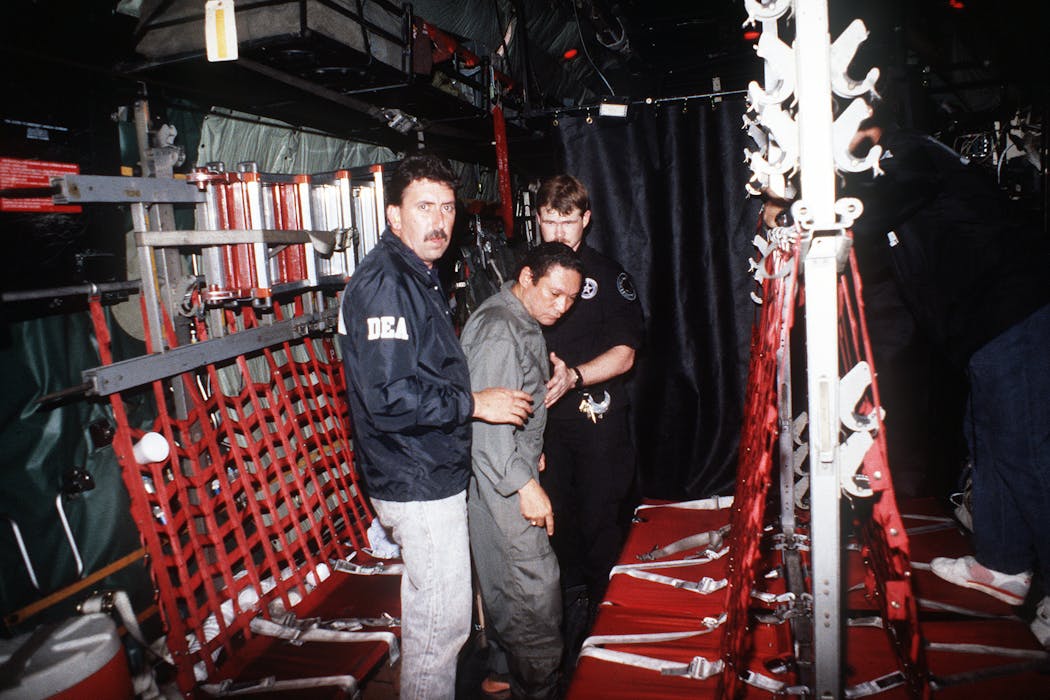
El general Eduardo Noriega, custodiado por agentes de la DEA tras su detención el 3 de enero de 1990, en el transcurso de la invasión estadounidense de Panamá (20 de diciembre de 1989-31 de enero de 1990). Wikimedia Commons, CC BY

Está de moda estos días escribir sobre la Doctrina Monroe, formulada en 1823 por James Monroe, el quinto presidente de los Estados Unidos, que advertía contra la colonización o intervención las nuevas naciones americanas y proclamaba: “América para los americanos”. Y hay motivos para ello.

La extracción del presidente venezolano Nicolás Maduro por parte de fuerzas especiales estadounidenses el 3 de enero de 2026 es una nueva fase de la vieja doctrina Monroe. Ahora, esta política exterior se enmarca en el reposicionamiento geoestratégico estadounidense para hacerse de nuevo con el control de su región y, sobre todo, para que el petróleo venezolano no siga fluyendo hacia Rusia y China.

Espíritu expansionista

Tras la independencia de sus trece colonias fundacionales, en 1770, Estados Unidos tuvo la necesidad de un espacio de influencia que garantizase el futuro expansionista de un proyecto político que iba más allá de la separación de Inglaterra.

Si en un principio no hubo un afán imperialista, poco después comenzó la ocupación de tierras para la agricultura, ganando territorios a los indígenas (y también a los colonizadores franceses). La acumulación de capital, la naciente industrialización y la doctrina del “Destino manifiesto” (que les faculta para ir ganando terreno al oeste de su territorio) fructifican y fortalecen un ideal de expansión constante.

Luego, la debilidad institucional, social y política de México permitió la colonización de Texas, California y otros territorios del antiguo virreinato de Nueva España por parte de Estados Unidos.

Imperialismo estadounidense en América

El relato imperialista de EE. UU. ha ido cambiando con el discurrir de la historia. Un argumento útil para expoliar a México a principios del XIX fue la defensa de los derechos de sus colonos y del libre comercio. El marco doctrinal formulado inicialmente por Monroe pretendía el “noble” objetivo de evitar que las potencias europeas mantuviesen su hegemonía en la región, una vez desaparecido el dominio colonial.

Nada más loable que dejar que los países americanos rigiesen su nuevo futuro. Pero, en ese escenario, las islas de Cuba, Puerto Rico y Filipinas seguían representando la presencia europea en lo que ya Estados Unidos consideraba su espacio vital.

La guerra hispano-estadounidense de 1898, a cuenta de la independencia de Cuba, marcó el fin del siglo XIX. Si ya entonces Estados Unidos se postulaba como candidato al dominio global, aún debía demostrar su control sobre su espacio circundante. La presunta independencia de Cuba fue un primer ejemplo de control político e institucional sobre un país a través de sus instituciones y de su propia Constitución.

Ocho años después del estallido de la guerra de independencia de Cuba, la situación política de la isla no era del todo favorable a las aspiraciones estadounidenses y por ello la ocuparon nuevamente. En ese mismo período, apoyaron que Panamá, entonces un departamento colombiano, se separase de Colombia. Así favorecieron la construcción del canal bajo su hegemonía.

En 1916, y hasta 1924, ocuparon militarmente la República Dominicana con el argumento del incumplimiento de pagos. El objetivo real era sofocar un movimiento insurgente que pretendía establecer un régimen fuera del control comercial y político de EE. UU. Los marines estadounidenses volverían en 1965, tras el asesinato del dictador Trujillo, para garantizar la estabilidad del país.

De nuevo la protección de sus intereses y ahuyentar la influencia europea sirvieron de excusa para ocupar militarmente Haití desde 1915 hasta 1934, y Nicaragua desde 1912 hasta 1933, con el objetivo de proteger un presunto proyecto de canal.

Tras este período de intenso intervencionismo militar en “la América para los americanos”, vino un cierto relajamiento ocasionado por la participación estadounidense en la Segunda Guerra Mundial.

Imperialismo en tiempos de Guerra Fría

La Guerra Fría abrió una nueva etapa en la que mostrar la hegemonía estadounidense en su “patio trasero”. En 1954, Jacobo Árbenz, presidente democráticamente elegido en Guatemala, propició una reforma agraria contraria a los intereses de la United Fruit Company. Ese fue motivo suficiente para declararlo comunista y apoyar un golpe de estado orquestado por la CIA.

En 1961, grupos de cubanos exiliados, armados por el gobierno de Estados Unidos, intentaron invadir la isla desembarcando en Bahía de Cochinos. Aunque fue un sonoro fracaso, la invasión supuso un nuevo empuje a la política intervencionista estadounidense en América Latina, con el argumento de proteger sus intereses y evitar el comunismo cerca de sus fronteras.

Cuatro años después (1965) se produjo una nueva invasión militar en República Dominicana para evitar el triunfo de la izquierda.

Sin necesidad de ocupación militar, pero con el apoyo estratégico de una parte del ejército de Chile, encabezado por el general Augusto Pinochet, en 1973 se puso fin al gobierno democrático de Salvador Allende. El argumento fue, de nuevo, el peligro del triunfo del marxismo en la región, aunque otro objetivo claro era la protección de los intereses sobre el cobre de las empresas mineras estadounidenses.

Diez años después, en 1983, de nuevo el riesgo del marxismo sirvió como argumento para invadir la isla caribeña de Granada.

El colofón del siglo XX lo marcó la invasión a Panamá (Operación Causa Justa, 1989) con el objetivo de acabar con el dictador Manuel Noriega, al que EE. UU. acusaba de favorecer el nacotráfico.

A estas intervenciones directas habría que añadir otras más taimadas, pero no menos evidentes: desde el apoyo a las dictaduras del Cono Sur en los setenta y los ochenta, al de los gobiernos autoritarios de Centroamérica durante sus guerras civiles en ese mismo periodo.

¿Por qué Venezuela ahora?

Cabe preguntarse por qué Estados Unidos ha tolerado un régimen dictatorial en Venezuela durante apenas un cuarto de siglo mientras que Cuba va ya para más de sesenta años de bloqueo sin una intervención militar directa. Podría decirse que durante la Guerra Fría no era posible. Pero ¿y después? La respuesta: Cuba no tiene petróleo.


Leer más:
Venezuela o la maldición de los recursos naturales


A estas alturas ya nadie cree que la defensa de la democracia y los derechos humanos sean el eje vertebrador de estas acciones. Si así fuera, hay muchos otros países con sus derechos mermados. Sin embargo, sus regímenes no solo son legitimados sino que, además, participan en acuerdos económicos, militares y políticos con los Estados Unidos de Norteamérica.

The Conversation

Manuel Torres Aguilar no recibe salario, ni ejerce labores de consultoría, ni posee acciones, ni recibe financiación de ninguna compañía u organización que pueda obtener beneficio de este artículo, y ha declarado carecer de vínculos relevantes más allá del cargo académico citado.

ref. Los antecedentes en América Latina del ataque estadounidense a Venezuela – https://theconversation.com/los-antecedentes-en-america-latina-del-ataque-estadounidense-a-venezuela-272662

¿Cuál es el futuro del poder en Venezuela?

Source: The Conversation – (in Spanish) – By Tulio Alberto Álvarez-Ramos, Profesor/Investigador Instituto de Investigaciones Jurídicas de la Universidad Católica Andrés Bello. Jefe de Cátedra de Derecho Constitucional de la Universidad Central de Venezuela, Universidad Católica Andrés Bello

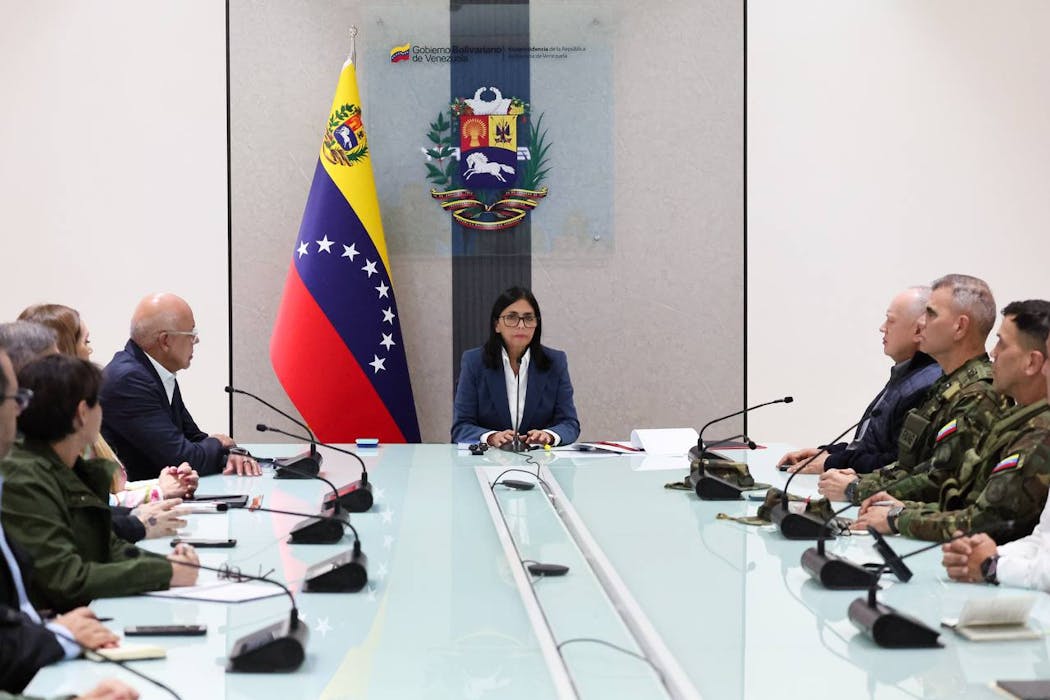
La vicepresidenta Delcy Rodríguez encabeza una “reunión de urgencia” tras el ataque estadounidense el 3 de enero de 2026. Prensa Presidencia de Venezuela

La captura de Nicolás Maduro por Estados Unidos marca un punto de inflexión en la historia contemporánea de Venezuela. El guion del ataque parte de los cargos que el Departamento de Justicia presentó por narcoterrorismo, conspiración para importar cocaína, posesión de armas de guerra y conspiración para poseer dispositivos destructivos, bajo la justificación de una orden judicial del Southern District of New York (SDNY), tribunal que adelanta la investigación desde 2020.

La acusación describe un entramado de corrupción que, durante más de dos décadas, vinculó a altos funcionarios venezolanos con las FARC, el Ejército de Liberación Nacional (ELN) y carteles como Sinaloa y Los Zetas. La captura no surge de la nada: es la culminación de un proceso judicial que ya había delineado la responsabilidad penal de Maduro y su círculo más cercano.

Además, la narrativa opositora se centra en que la detención abre una oportunidad inédita para la transición política, por lo que María Corina Machado añadió que “Maduro desde hoy enfrenta la justicia internacional por los crímenes atroces cometidos”.

Intervención ilegítima y responsabilidad internacional

La operación militar estadounidense plantea interrogantes fundamentales en el derecho internacional. Bajo la óptica del régimen venezolano, el ataque a sus instalaciones militares constituye un acto de guerra y una violación de la soberanía nacional. Desde la perspectiva de Washington, se trató de la ejecución de una orden judicial vinculada a delitos transnacionales y el uso de la fuerza fue presentado como una acción legítima para proteger a los funcionarios federales. Sin embargo, las declaraciones inmediatas de Donald Trump y del secretario de Estado Marco Rubio sugieren un objetivo político más amplio.

Rueda de prensa del gobierno estadounidense tras la captura del presidente venezolano Nicolás Maduro el 3 de enero de 2026. Fuente: The White House, YouTube.

Al principio de no intervención, consagrado en la Carta de la ONU, se contrapone la responsabilidad por narcoterrorismo. Estados Unidos justifica la operación bajo la necesidad de combatir amenazas directas a su seguridad nacional. En paralelo, instrumentos como la Convención de Viena sobre Relaciones Consulares y el Convenio de las Naciones Unidas contra el Tráfico Ilícito de Estupefacientes refuerzan la idea de que los Estados tienen deberes de cooperación en la persecución de delitos transnacionales. Esa cooperación se vuelve imposible cuando uno de los Estados es considerado “forajido”.

La tensión entre soberanía y seguridad internacional se convierte en el eje jurídico de la crisis: ¿puede un Estado intervenir militarmente para capturar al jefe de otro Estado acusado de narcoterrorismo? La respuesta no está escrita en tratados, pero sí en la práctica política y en la fuerza de los hechos.

¿Quién gobernará Venezuela?

La complejidad del escenario es máxima. Por un lado, el alegato sustantivo es que Nicolás Maduro cometió un fraude que revirtió el resultado del proceso electoral del 28 de julio de 2024, en el cual resultó electo Edmundo González con el apoyo de María Corina Machado y Corina Yoris, inhabilitadas por maniobras del Consejo Nacional Electoral. Esto implicaría la ilegitimidad de origen del Gobierno de Maduro.

Por otro lado, al juramentarse Maduro el 10 de enero de 2025, su captura genera una situación inédita que tratará de ser subsumida en el artículo 233 de la Constitución venezolana. La norma establece que la falta absoluta del presidente debe ser suplida por el vicepresidente ejecutivo –en este caso, Delcy Rodríguez–, lo que implicaría la continuidad política del régimen.

En paralelo, el ministro de Defensa venezolano, Vladimir Padrino, denuncia una agresión contra la soberanía nacional, aunque sin la compañía del alto mando militar como suele ser su costumbre. Por su parte, el ministro de Relaciones Interiores, Diosdado Cabello, apareció acompañado de cuerpos paramilitares, lo que constituye el mayor riesgo de violencia interna.

Un escrito apócrifo anunció el estado de excepción por conmoción externa, con el objetivo de centralizar el poder y proyectar la imagen de “control total de la situación”. Así, la gobernanza de Venezuela queda atrapada entre la legalidad constitucional y la lógica de facto de un régimen que intenta sobrevivir sin su líder principal.

El impacto regional

La connotación internacional del ataque contra instalaciones militares venezolanas y la captura de Maduro es indudable. En su rueda de prensa, Trump afirmó que Estados Unidos “gobernará Venezuela hasta que pueda llevarse a cabo una transición pacífica, adecuada y juiciosa”, y advirtió que una segunda oleada de ataques “mucho mayor” está lista, por si fuese necesaria. Además, señaló que la transición será liderada por un equipo integrado por su secretario de Estado, Marco Rubio, y el jefe del Pentágono, Peter Hegseth, en colaboración con la oposición venezolana.

Las declaraciones se extendieron hacia Colombia y Cuba. Trump advirtió que el presidente Gustavo Petro debía “cuidarse el trasero”, acusándolo de producir la cocaína que llega a Estados Unidos. Petro respondió a esta declaración calificando la operación como un “ataque a la soberanía” de América Latina y alertó sobre una crisis humanitaria aun mayor en Venezuela.

La captura de Maduro, por tanto, no solo redefine la política venezolana, sino que reconfigura la geopolítica regional, con tensiones directas entre Washington y Bogotá, y dejando en el aire la suerte de Cuba y Nicaragua.

Transición o violencia: el dilema de 2026

Los días inmediatamente siguientes a la captura serán críticos. Según la narrativa oficial estadounidense, la apertura hacia una transición democrática, forzada por la Administración Trump, no admite negociación, pero las formas pueden desencadenar un ciclo de violencia permanente. La neutralización de los grupos paramilitares y la posible fractura de la Fuerza Armada Nacional Bolivariana determinarán el desenlace.

La presión internacional es ambivalente: la mayoría de los gobiernos democráticos del mundo apoyan el resultado del 28-J y reconocen como presidente a González. Mientras, regímenes autoritarios como Cuba y Nicaragua, potencias globales como Rusia y China, y fundamentalismos como Irán y Corea del Norte, respaldan al régimen de Maduro.

Los factores democráticos insisten en que ésta es la oportunidad para la restauración democrática de Venezuela. Sin embargo, el riesgo de enfrentamientos internos y de una crisis humanitaria aún mayor es real. La gobernanza de Venezuela se encuentra en un terreno incierto, donde la legalidad constitucional se diluye y la fuerza de los hechos se entrelaza con la anarquía.

El desenlace aún no escrito

Venezuela entra en 2026 en la más absoluta incertidumbre. El tiempo del chavismo se agotó. No hay desenlace escrito, pero sí una certeza: el sistema autoritario no puede sostenerse y está bajo la amenaza de un segundo y definitivo ataque por parte de Estados Unidos. El desenlace ya implica una ruptura, aunque existen dos elementos indefinidos: el nivel de violencia y el grado del protectorado anunciado por Trump.

El problema no es si habrá cambio, sino cómo sucederá y a qué costo. La captura de Maduro abre una ventana inédita para la justicia internacional y la transición política, pero también expone al país a riesgos de violencia y fragmentación. La historia de Venezuela se redefine en tiempo real. Una tragedia que comenzó con el desmontaje institucional ejecutado por Hugo Chávez Frías, que utilizó contra la democracia los propios mecanismos democráticos.

The Conversation

Tulio Alberto Álvarez-Ramos no recibe salario, ni ejerce labores de consultoría, ni posee acciones, ni recibe financiación de ninguna compañía u organización que pueda obtener beneficio de este artículo, y ha declarado carecer de vínculos relevantes más allá del cargo académico citado.

ref. ¿Cuál es el futuro del poder en Venezuela? – https://theconversation.com/cual-es-el-futuro-del-poder-en-venezuela-272674

Political policing in Museveni’s Uganda: what it means for the 2026 elections

Source: The Conversation – Africa (2) – By Jude Kagoro, Postdoctoral Fellow, Institute for Intercultural and International Studies, Universität Bremen

Uganda’s police have long faced criticism for politically charged interventions. These include episodes in which lethal force has been used in ways that observers describe as excessive or indiscriminate. The main targets of restrictive or coercive tactics are supporters of the political opposition.

For example, in November 2020, weeks before the 2021 elections, protests at the arrest of the main opposition candidate escalated into nationwide unrest. More than 100 people died.

Under President Yoweri Museveni – in power since 1986 – the police have become a central pillar of the ruling party, the National Resistance Movement. In the campaigns for the January 2026 general election, police are critical in containing demonstrations, mobilising political support and enforcing loyalty. They can be seen ferrying ruling-party supporters and guarding their processions.

They are also active against the opposition. Party activities of Museveni’s main rival Robert Kyagulanyi, alias Bobi Wine, face routine obstruction, teargas and street confrontations. In November and early December 2025, police violently dispersed or blocked Bobi Wine’s caravans. The UN Human Rights chief condemned this.

I have published widely on themes of militarisation, security and policing, including the relationship between the Uganda police and the ruling party. It’s my conclusion that the role of the police in Uganda cannot be meaningfully analysed through a western-centric expectation of institutional neutrality.

Rather, policing has developed together with Uganda’s broader political direction of personalised authority and an ideology of cadreship that continues to shape expectations within the ruling NRM party. This has fostered, in my view, an ethos in which officers see themselves as active custodians of the existing political order. I’ve concluded that they don’t see themselves as being a neutral institution. They believe their job is to maintain the status quo.

My previous research challenges the common assumption that the police act only on direct orders to protect the regime or target the opposition. In reality, many officers believe that being visibly pro-ruling party defines them as “good officers”.

Based on my research, it’s clear that elections due in 2026 are likely to repeat these old patterns.

History of partisan policing

My extensive engagement with officers over more than 15 years, as both a researcher and a consultant, has given me a nuanced understanding of the attitudes and shared mentalities that shape policing culture. These beliefs are reflected not only in what officers say but also in their everyday behaviour.

For example, several commanders prominently display ruling party symbols or images of the president as their WhatsApp profile photos – clear signs of how pro-NRM attitudes influence officers’ conduct and become woven into police identity.

As a result, officers often take actions that favour the incumbent even without being told to. They want to signal allegiance and do what they think is expected of them as police.

This behaviour is rooted in a long relationship between political power and control of the security forces. Society expects the police to serve ruling elites rather than operate as an impartial institution. Consequently, the force today functions less as a neutral body and more as an extension of the ruling party.

Police in formation

Uganda’s police force played active roles in political policing and in supporting Britain’s colonial administration when it was established in 1906.

It continued to play the same role under the post-independence governments of Milton Obote, Idi Amin, the Tito Okello junta, Obote II, and now under the National Resistance Movement since 1986.

There have been changes in nuance and emphasis. For example, the force was initially sidelined in favour of military and intelligence agencies in the early years of Museveni’s reign. The turning point came in the early 2000s, with the appointment of senior military officers as police chiefs. This signalled a strategic fusion of military command culture with domestic policing.


Read more:
Why Uganda needs new laws to hold police in check, and accountable


Under General Kale Kayihura, appointed in 2005, the police expanded rapidly in size, budget and operational authority. He aligned the force with the ruling party by reshaping recruitment, sidelining older officers and elevating young and highly educated cadres loyal to the party.

By the mid-2010s, the police were firmly embedded within the political machinery and sustaining Museveni’s rule.

Going beyond the use of force and coercion is also credited to Kayihura’s legacy. Under the guise of community policing, he drafted millions of largely unemployed youth into a nationwide network of so-called crime preventers. Their presence at 2016 election rallies, in villages and on urban streets was decisive in boosting National Resistance Movement turnout.

Their presence also undercut opposition mobilisations.

By 2021, however, Kayihura’s apparatus had largely collapsed. Without his centralised coordination – and confronted by the rapid rise of Bobi Wine’s youth-driven movement – the state increasingly relied on coercion alone. The result was violent campaign scenes in the 2021 elections.

Heading into the 2026 elections, the National Resistance Movement appears to have rebuilt soft-power apparatus to go with strong-arm tactics. The police’s head of the Crime Intelligence department, Christopher Ddamulira, is now central to youth mobilisation. He is using outreach programmes and targeted incentives reminiscent of Kayihura’s tactics.


Read more:
How the Ugandan state outsources the use of violence to stay in power


They include the temporary integration of ghetto youth into the police intelligence networks, and funding small-scale business ventures. While these have been effective in diluting opposition support, it is the open use of force that dominates public debate.

Equipped with armoured carriers, high-capacity tear-gas launchers, water cannons and fast-response vehicles, security forces use their mobility and intelligence networks to disrupt opposition mobilisation.

It’s part of police strategy to restrict the mobility of opposition candidates. The candidates are especially restricted from densely populated urban areas where they could draw large crowds. Opposition candidates are often pushed onto back roads or sparsely populated routes. There they are less visible and less able to engage voters.

Police are also frequently deployed to bar candidates from being hosted by radio stations.

These police operations are reinforced by the Resident District Commissioners representing the presidency and backed by the military, which intervenes whenever political stakes rise. Together, they form a tightly coordinated apparatus of political control nationwide.

The constitution of Uganda establishes the police force under Article 211, requiring it to be national, patriotic, professional, disciplined, and composed of citizens of good character – standards that are incompatible with partisanship or the oppression of political opponents. Under Article 212, the police are mandated to protect life and property, preserve law and order, prevent and detect crime, and work cooperatively with civilian authorities, other security organs, and the public.

A familiar contradiction

Uganda’s 2026 elections will not simply test the popularity of competing political actors. They will again expose the fusion of policing and politics that has shaped the country for more than a century.

Police have consistently served as instruments of political order rather than neutral guardians of public security. Today’s officers operate within this inherited logic, in a political culture that has never experienced a peaceful transfer of power.


Read more:
Why Uganda needs new laws to hold police in check, and accountable


The campaign trail reveals a familiar contradiction: a security force constitutionally mandated to protect all citizens, yet increasingly functioning as a political arbiter – shaping who is heard in the public sphere.

The Conversation

Jude Kagoro does not work for, consult, own shares in or receive funding from any company or organisation that would benefit from this article, and has disclosed no relevant affiliations beyond their academic appointment.

ref. Political policing in Museveni’s Uganda: what it means for the 2026 elections – https://theconversation.com/political-policing-in-musevenis-uganda-what-it-means-for-the-2026-elections-271316

En quoi pourraient consister des sanctions économiques de l’UE contre Israël, et quels effets auraient-elles ?

Source: The Conversation – in French – By Mohamed Bahlali, Post-doctorant en économie, Aix-Marseille Université (AMU)

Un cessez-le-feu a été proclamé à Gaza, mais l’armée israélienne continue d’y mener des opérations meurtrières. En outre, la reconstruction de Gaza coûtera des dizaines de milliards de dollars, et Israël ne compte pas y contribuer. Adopter des sanctions à son encontre pourrait changer les choses, dans ces deux domaines.


Plus de 69 000 morts et 170 000 blessés, une famine généralisée, 90 % des habitations endommagées ou détruites : tel était le bilan, au moment de l’entrée en vigueur du cessez-le-feu à Gaza, le 10 octobre 2025, de plus de deux ans de massacres et de destructions. Gaza est dévastée.

« Le mérite premier de l’arrêt de la guerre d’extermination revient à la détermination de notre peuple à Gaza », avait alors déclaré Mustafa Barghouti, secrétaire général du mouvement de l’Initiative nationale palestinienne, un parti palestinien indépendant du Fatah et du Hamas. Si ces propos visaient d’abord à rendre hommage à la population palestinienne, ils résonnent néanmoins dans un contexte marqué par l’impunité générale des auteurs de ce que plusieurs organisations internationales de défense des droits humains, de même que la Commission chargée d’enquêter dans le Territoire palestinien occupé, qualifient de génocide, et par la complaisance des principaux partenaires militaires et commerciaux d’Israël, qui n’ont pris aucune sanction significative à son égard.

Un cessez-le-feu qui n’est pas respecté

Le chemin vers la liberté et l’autodétermination du peuple palestinien reste encore long. Le plan de cessez-le-feu proposé par Donald Trump, largement favorable à Israël, offre peu de garanties à long terme. Aucun représentant palestinien n’a été associé à sa rédaction, et le texte ne mentionne même pas la Cisjordanie, pourtant sous occupation israélienne depuis cinquante-huit ans. De plus, au moins 266 Palestiniens ont été tués et 634 blessés depuis l’instauration du cessez-le-feu. Dans un texte publié le 8 décembre, Amnesty International affirme ainsi qu’« Israël continue d’imposer sciemment des conditions de vie amenant à la destruction du peuple palestinien à Gaza, sans aucun signe que cette pratique ou l’intention sous-jacente ait changé. C’est cela, un génocide. »

Cet accord de cessez-le-feu ne saurait donc écarter la perspective de sanctions économiques. Le 10 septembre dernier, la Commission européenne avait proposé la suspension de l’accord d’association UE-Israël sur les questions liées au commerce. Cette proposition reste pourtant, à l’heure actuelle – et plus encore depuis la proclamation du cessez-le-feu – au stade de simple déclaration d’intention.

Dans une analyse publiée sur Yaani le 29 septembre dernier, nous examinions les effets potentiels de telles sanctions, selon les pays qui les appliqueraient et les secteurs économiques ciblés. Nous en avions tiré trois conclusions.

L’UE peut agir de façon ciblée

Tout d’abord, l’Union européenne a les moyens d’agir. Elle est le premier partenaire commercial d’Israël. Nous avions calculé qu’une simple hausse tarifaire de 20 % à l’import et à l’export pouvait réduire le PIB israélien de 1,1 %. Pour une hausse tarifaire de 50 %, la diminution serait de 1,6 %. Ces chiffres sont des estimations basses car le modèle utilisé pour les obtenir ne tient pas compte des effets à long terme des sanctions. D’un autre côté, l’effet sur l’UE de telles sanctions serait quasi nul. Israël est certes un pays développé, mais son influence sur la chaîne de valeur mondiale n’est pas importante. L’UE peut aisément réorienter ses échanges vers d’autres partenaires commerciaux sans subir de conséquences économiques perceptibles.

Deuxièmement, une coalition élargie de pays sanctionneurs aurait un impact plus élevé. Si, en plus de l’UE, tous les États ayant voté pour l’adhésion de la Palestine à l’ONU (143 pays dont les « BRICS » : Brésil, Russie, Inde, Chine, Afrique du Sud) décidaient également de sanctionner Israël, une hausse tarifaire de 20 % ferait chuter le PIB israélien de 3,1 %, et une hausse de 50 % engendrerait une diminution de 4,4 %.

Enfin, nous avions examiné les secteurs pour lesquels les sanctions seraient les plus efficaces. Pour des sanctions à l’export vers Israël, nous avions montré qu’il s’agissait de l’automobile, des minéraux et du commerce de gros, qui inclut tous les biens exportés via des intermédiaires. Pour des sanctions à l’import en provenance d’Israël, le secteur de la tech est sans surprise le plus déterminant. Le secteur technologique représente près de 20 % du PIB israélien, et quasiment la moitié des exportations israéliennes. C’est donc un secteur à forte valeur ajoutée et très intégré au commerce international. C’est donc logiquement celui pour lequel des sanctions à l’import seraient les plus efficaces.

Sunrise ou Phoenix ?

Plus de deux ans de bombardements incessants sur Gaza ont engendré des destructions considérables. Des experts de l’ONU estiment le coût de la reconstruction à plus de 70 milliards de dollars, dont 20 milliards pour les seules trois prochaines années.

Ce chiffre ne correspond qu’au montant minimal requis pour rétablir des conditions basiques d’existence : d’après le rapport, « accès à l’eau potable, emplois d’urgence, fournitures médicales, sécurisation des habitations et des espaces publics en déblayant les gravats pouvant cacher des munitions non explosées ou les milliers de Palestiniens disparus ».

L’indécent projet « Sunrise » proposé par l’administration Trump, visant à transformer Gaza en une destination touristique de luxe pour 112 milliards de dollars, ignore complètement la participation des Palestiniens en remodelant leur territoire selon des intérêts externes, au détriment de leur histoire et de leur identité. À l’inverse, le plan Phoenix, élaboré par un collectif pluridisciplinaire (architectes, ingénieurs, juristes, sociologues, médecins, entre autres) de Palestiniens, est actuellement le seul à considérer la population locale avec décence.

De plus, le projet de l’administration Trump n’envisage pas de faire contribuer Israël au financement de la reconstruction. Or, les responsables de la destruction de Gaza, en premier lieu l’État d’Israël, doivent être financièrement tenus pour compte.

Avec la possibilité d’instaurer des droits de douane sur les échanges avec Israël, l’UE dispose précisément d’un levier concret pour faire supporter à l’économie israélienne, et aux entreprises européennes qui commercent avec elle, une part de ce coût. D’une part, cette taxe permettrait de prélever directement sur l’économie israélienne et ses partenaires une manne financière substantielle, qui pourrait ensuite être redistribuée aux institutions palestiniennes. Un calcul simple permet d’en avoir une idée.

Les échanges annuels entre l’UE et Israël s’élèvent à environ 70 milliards d’euros. Avec une taxe de 20 % et en tenant compte de la réduction des quantités échangées dues à la taxe avec une élasticité de -5, les échanges bilatéraux UE-Israël tomberaient à environ 28 milliards, générant un revenu tarifaire de l’ordre de 5 milliards d’euros chaque année. Rappelons qu’Israël retient en ce moment même 4 milliards de dollars de recettes fiscales palestiniennes, fonds essentiels au fonctionnement de l’Autorité palestinienne et à la fourniture des services de base à la population.

D’autre part, ces sanctions constituent également un instrument de pression pour contraindre l’État d’Israël à respecter le droit international et à assumer sa responsabilité morale, politique et matérielle dans l’oppression des Palestiniens.

Renoncer aujourd’hui au levier que constituerait l’adoption de sanctions vis-à-vis d’Israël reviendrait à abandonner une fois de plus la population palestinienne. L’Union européenne va-t-elle rester spectatrice d’un drame humain qu’elle a les moyens d’infléchir ?

The Conversation

Mohamed Bahlali ne travaille pas, ne conseille pas, ne possède pas de parts, ne reçoit pas de fonds d’une organisation qui pourrait tirer profit de cet article, et n’a déclaré aucune autre affiliation que son organisme de recherche.

ref. En quoi pourraient consister des sanctions économiques de l’UE contre Israël, et quels effets auraient-elles ? – https://theconversation.com/en-quoi-pourraient-consister-des-sanctions-economiques-de-lue-contre-israel-et-quels-effets-auraient-elles-272535

Lo que era una operación contra el narcotráfico en el Caribe acaba con la captura de Maduro

Source: The Conversation – (in Spanish) – By Juan Diego Molina Méndez, Investigador del Instituto Cultura y Sociedad, Universidad de las Hespérides

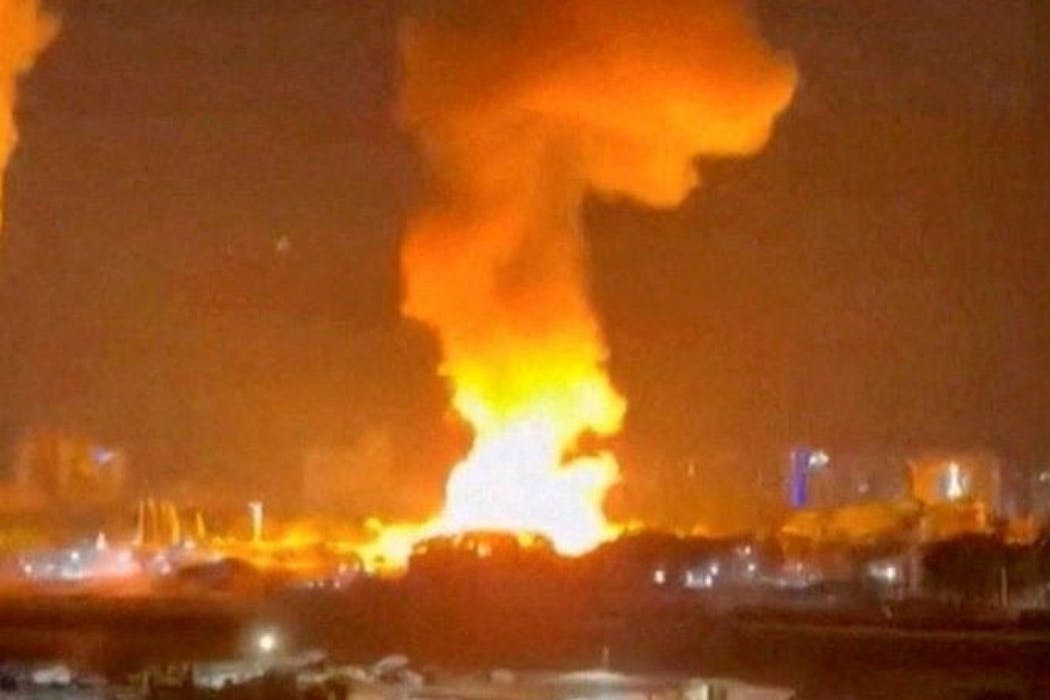
Imagen del ataque estadounidense a Caracas esta madrugada. RTVE

Desde que a finales del mes de octubre pasado el Gobierno estadounidense anunciara la Operación Lanza del Sur había gran expectativa sobre su resultado final. En teoría, el objetivo era detectar y acabar con las redes de tráfico de drogas por vía marítima; en la práctica, esto se traducía en la intervención contra lo que se conoce como el Cártel de los Soles en Venezuela.

Esto significaba tomar acciones directas contra líderes políticos y militares del régimen venezolano, quienes desde las instituciones han colaborado activamente en el tráfico de estupefacientes desde Venezuela y en colaboración con grupos criminales colombianos como el Ejército de Liberación Nacional (ELN).

Un Nobel a la oposición

A lo largo de estos dos últimos meses se movieron de manera simultánea diversas piezas que hacían presagiar un movimiento cuidadosamente orquestado. Uno de los eventos más llamativos fue el otorgamiento a María Corina Machado del Premio Nobel de la Paz, luego de su lucha por la recuperación de la democracia en Venezuela.


Leer más:
María Corina Machado, Nobel de la Paz 2025: la estrategia de la constancia


La historia de la líder opositora llegó a su culmen el 10 de diciembre pasado, cuando gracias a una cuidadosa extracción, consiguió escapar de la persecución y presentarse en Oslo para recoger el galardón. Esta jugada contribuyó a demostrar ante el mundo que la oposición estaba viva y contaba con numerosos apoyos internacionales, alejando los fantasmas de intentos pasados de liberación, como el dirigido por Juan Guaidó (2019-2023).

Acusado de narcoterrorismo

Ante la creciente presión internacional, Nicolás Maduro buscó comprar tiempo ofreciendo una salida pactada. Sin embargo, esta opción fue desechada por la diplomacia estadounidense ante la posibilidad de que el dictador violara el acuerdo, como ya ocurrió con los Acuerdos de Barbados de 2023. Después de que fallara la vía diplomática, el Gobierno estadounidense debió diseñar una operación que no recordara a las invasiones de Irak y Afganistán en 2003 y que derivaron en guerras interminables y de gran costo humano y económico.


Leer más:
¿Cómo afrontar el rompecabezas político venezolano?


El ataque lanzado en la madrugada del 3 de enero de 2026 por Estados Unidos contra los principales centros de poder del ejército venezolano se caracterizó por realizarse con la participación de funcionarios policiales estadounidenses, además de las fuerzas especiales, con el objetivo de hacer cumplir una orden de captura que pesaba sobre Nicolás Maduro desde 2020 por conspiración narcoterrorista. De esta manera, el gobierno de Estados Unidos evitó tener que hacer una declaración de guerra formal, para la que habría necesitado la aprobación del Congreso. Además, así pudo justificar la operación como la forma de hacer cumplir el mandato de las instituciones federales y no como un acto de guerra.

También hay que tener en cuenta la declaración lanzada por el secretario de Estado, Marco Rubio, quien, tras la operación, señaló que Maduro no es el presidente legítimo de Venezuela, subrayando así la acusación de narcotráfico y buscando aplacar las reacciones de la comunidad internacional.

Fotografía de Nicolás Maduro capturado, a bordo del buque estadounidense USS Iwo Jima.

Ahora que el dictador venezolano ha sido trasladado a Estados Unidos deberá hacer frente a un juicio en donde uno de los testigos más importantes puede ser Hugo el Pollo Carvajal, antiguo director de la inteligencia militar del régimen y quien desde su deserción ha venido colaborando con las investigaciones de la justicia estadounidense sobre el régimen bolivariano.

Las implicaciones de la caída de Maduro van más allá de las fronteras venezolanas. Venezuela era un socio clave para el sostenimiento de Cuba, Nicaragua e Irán (a cuyo régimen el régimen chavista ha financiado con casi 8 000 millones de dólares, contribuyendo al financiamiento de su controvertido programa nuclear), y una profusa red de aliados a lo largo y ancho de Europa y América Latina.


Leer más:
La sombra de Irán en América del Sur: la política exterior del régimen de los ayatolás en la región


Aunque Maduro haya sido arrestado, la transición democrática de Venezuela no está asegurada. Ahora llega el momento crítico en el que se debe pacificar un país en shock. A estas alturas es innegable que Edmundo González y María Corina Machado tienen los apoyos internacionales necesarios para reconstruir la democracia venezolana, y gozan también el apoyo de los ciudadanos que votaron mayoritariamente por su plataforma en las elecciones del 28 de julio de 2024.

No obstante, ahora deberán resolver rápidamente el vacío de poder que hay en el país, y llegar a consensos con los funcionarios, militares y ciudadanos que habían aprendido a vivir bajo la protección del régimen chavista.

De vuelta el patio trasero

En lo que a Estados Unidos se refiere, esta operación significa la aplicación sin paliativos de esa Doctrina Monroe que parecía una cosa del pasado y que, en la recién publicada Estrategia de Seguridad Nacional, el Gobierno de Trump prometió fortalecer. Washington retoma así su viejo interés en mantener su área vital fuera de la influencia de otras potencias y fomentar la colaboración estrecha con aquellos gobiernos que se alineen con las políticas estadounidenses, tal como ha dejado claro con el Gobierno de Javier Milei, en Argentina. De esta manera, Washington busca asegurar su supervivencia en términos políticos y de recursos naturales y energéticos.

Son muchas las piezas que quedan por encajar, y de momento no está claro el resultado del rompecabezas geopolítico y son más preguntas que respuestas las que hay sobre el tablero. Lo que sí está claro es que la caída de Maduro y el eclipse del Cártel de Los Soles traerá una nueva era en la geopolítica en donde Estados Unidos busca de nuevo un rol protagónico que garantice su estabilidad en un mundo cada vez más inestable

The Conversation

Juan Diego Molina Méndez no recibe salario, ni ejerce labores de consultoría, ni posee acciones, ni recibe financiación de ninguna compañía u organización que pueda obtener beneficio de este artículo, y ha declarado carecer de vínculos relevantes más allá del cargo académico citado.

ref. Lo que era una operación contra el narcotráfico en el Caribe acaba con la captura de Maduro – https://theconversation.com/lo-que-era-una-operacion-contra-el-narcotrafico-en-el-caribe-acaba-con-la-captura-de-maduro-272665

I wrote a book on the politics of war powers, and Trump’s attack on Venezuela reflects Congress surrendering its decision-making powers

Source: The Conversation – USA – By Sarah Burns, Associate Professor of Political Science, Rochester Institute of Technology

Explosions were seen across Caracas after the U.S. launched large-scale attacks on Venezuela and captured its leader and his wife.
AFP via Getty Images

Americans woke up on Jan. 3, 2025, to blaring headlines: “US CAPTURES MADURO, TRUMP SAYS,” declared The New York Times, using all capital letters. The U.S. had mounted an overnight military raid in Venezuela that immediately raised questions of procedure and legality. Prime among them was what role Congress had – or should have had – in the operation.

Politics editor Naomi Schalit interviewed political scientist Sarah Burns, author of the book “The Politics of War Powers” and an expert at Rochester Institute of Technology on the historical struggle between Congress and U.S. presidents over who has the power to authorize military action.

Is this a war?

I wouldn’t call it a war. This is regime change, and whether or not it has a positive impact on the United States, whether or not it has a positive impact on Venezuela, I think the likelihood is very low for both of those things being true.

How does Congress see its role in terms of military action initiated by the United States?

Congress has been, in my view, incredibly supine. But that’s not just my word. Having said that, it is true that Congress – in the House, predominantly – tried to pass a war powers act recently, saying that President Donald Trump was not allowed to do any action against Venezuela, and that failed on very close votes.

So you see some effort on the part of Congress to assert itself in the realm of war. But it failed predominantly on party lines, with Democrats saying we really don’t want to go into Venezuela. We really don’t want to have this action. Republicans predominantly were supporting the president and whatever it happens to be that he would like to do. Moderate Republicans and Republicans who are in less safe districts were and are more likely to at least stand up a little bit to the president, but there’s a very small number of them.

The Congress building in mid-December
Congress has been largely absent as President Donald Trump has escalated his verbal and military attacks on Venezuela.
AP Photo/J. Scott Applewhite

So there may be an institutional role for Congress, a constitutional role, a role that has been confirmed by legal opinion, but politics takes over in Congress when it comes to asserting its power in this realm?

That’s a perfect way of putting it. They have a legal, constitutional, one might even say moral, responsibility to assert themselves as a branch, right? This is from Federalist 51 where James Madison says “Ambition must be made to counteract ambition.” So it should be that as a branch, they assert themselves against the president and say, “We have a role here.”

In the 1940s, presidential scholar Edward Corwin said that in the realm of foreign policy, it is an invitation for Congress and the president to struggle. So it should be that Congress and the president are struggling against each other to assert, “I’m in charge.” “No, I’m in charge.” “No, I’m in charge,” in an effort to create a balance between the two branches and between the two things that each of the branches does well. What you want from Congress is slow deliberation and a variety of opinions. What you want from the president is energy and dispatch.

So certainly, if we have an attack like 9/11, you would want the president to be able to act quickly. And you know, conversely, in situations like the questions around what the U.S. is doing in Venezuela, you want slow deliberation because there is no emergency that requires energy and dispatch and speed. So the president shouldn’t be entirely in the driver’s seat here, and Congress should very much be trying very hard to restrain him.

What power does Congress have to restrain him?

They have to pass legislation. They aren’t particularly well suited right now to passing legislation, so effectively there is not a very clear way for them to restrain the president.

One of the things that members of Congress have attempted to do several times, with very little positive impact, is go to the courts and say, “Can you restrain the president?” And political scientist Jasmine Farrier has written that the courts have regularly said to members of Congress: “You have the power to stop the president, and you are ineffective at that. And so if you want to stop the president, you shouldn’t turn to us. You should work together to create legislation that would restrain the president.”

What would such legislation do? Cut off money for troops? Is it finger-wagging, or is it something really concrete?

There are a few different tiers. Joint resolutions are finger-wagging. They just say, “Bad, Mr. President, don’t do that.” But they have no effect in law.

The War Powers Resolution, first passed in 1973, is a legitimate way of trying to restrain the president. Congress intended to say to presidents, “You cannot start a war and continue a war without our authorization.” But what they said instead was “You could have a small war or a short war – of 60 to 90 days – without our authorization, and then you have to tell us about it.” That just sort of said to presidents the opposite of what they intended. So President Barack Obama took advantage of that with the military engagement in Libya, as well as Trump in his first administration.

This is not a partisan issue. It’s not Republican presidents who do it. It’s not Democratic presidents who do it. It’s every president since the War Powers Resolution was passed, and the only time that Congress has drawn down troops or drawn down money was the Vietnam War.

Other than that disastrous war, we have not seen Congress willing to put themselves on the politically negative side, which is taking money away from the troops. Because if you take away money right now, they’re going to be harmed.

a white man in a suit stands at a podium with the presidential seal, while several other men stand behind him
President Donald Trump and his national security team discuss the U.S. strikes on Venezuela at his Mar-a-Lago club in Palm Beach, Fla., on Jan. 3, 2026.
AP Photo/Alex Brandon)

What is the War Powers Resolution?

The War Powers Resolution from 1973, also known as the War Powers Act, was Congress – during the Vietnam War – saying definitively to President Richard Nixon, “You have overstepped your bounds.” They had explicitly said in law, you cannot go into Cambodia. And Nixon went into Cambodia.

So that was their way of trying to reassert themselves very aggressively; as I mentioned before, it didn’t work effectively. It worked insofar as presidents don’t unilaterally start wars that are large scale, the way that World War II was large scale. But they do have these smaller actions at varying levels.

Then we get to 9/11 and we see the 2001 authorization for the use of military force, and the 2002 authorization for the use of military force. The 2001 law authorized going after anyone in al-Qaida and associated with 9/11. The 2002 authorization was directly related to Iraq, saying “There is a problem with Iraq, we have to do something.” Both of them were extremely vague and broad, and that’s why we’ve seen four presidents, including Trump, using the 2001 and 2002 authorizations to carry out all sorts of operations that had very little to do with Saddam Hussein or al-Qaida.

In 2021, senators Mike Lee, Bernie Sanders and Chris Murphy collectively got together and tried to create a national security document that would restrain presidential unilateralism. It was a good effort on the part of members of Congress from a variety of different ideological views to attempt to restrain the president. It did not even sort-of pass – it barely got out on the floor.

Since that time, we haven’t seen a lot of efforts from members of Congress. They haven’t really reasserted themselves since the war in Korea, which began in 1950. It’s very clear that ambition is no longer checking ambition the way that it was meant to by the founders.

When you woke up this morning and saw the news, what was your first thought?

Here we go again. This is not a Republican or a Democratic issue. Lots of presidents have made this error, which is that they think if you do this smaller-scale action, you are going to get a positive result for the nation, for the region, for international stability. And very rarely is that the case.

The Conversation

Sarah Burns does not work for, consult, own shares in or receive funding from any company or organization that would benefit from this article, and has disclosed no relevant affiliations beyond their academic appointment.

ref. I wrote a book on the politics of war powers, and Trump’s attack on Venezuela reflects Congress surrendering its decision-making powers – https://theconversation.com/i-wrote-a-book-on-the-politics-of-war-powers-and-trumps-attack-on-venezuela-reflects-congress-surrendering-its-decision-making-powers-272668

El nuevo orden mundial trumpista comienza a tomar forma en Venezuela

Source: The Conversation – (in Spanish) – By Juan Luis Manfredi, Prince of Asturias Distinguished Professor @Georgetown, Universidad de Castilla-La Mancha

En el reverso del billete de dólar, la frase Novus Ordo Seclorum (nuevo orden secular) anticipa la clave de la nueva doctrina de seguridad estadounidense. El ataque contra Venezuela y la incierta captura del presidente Nicolás Maduro confirman el final del orden liberal, si es que alguna vez existió, y el desanclaje de los Estados Unidos de Trump del orden internacional basado en las normas.

El amanecer del nuevo orden internacional se construye hoy sobre el uso de la fuerza, el revisionismo y la seguridad en el continente. Apunto cinco consecuencias de la intervención militar, cinco dimensiones de análisis del nuevo orden.

1. Un poder presidencial expansivo

El ataque corona la nueva doctrina de un presidente imperial, que ejecuta órdenes sin esperar la aprobación del Congreso, la validación jurídica o la opinión de los medios. El double-check se diluye por el expansionismo del poder presidencial. La segunda administración Trump entiende el nuevo orden bajo una óptica de seguridad: una nación en guerra contra el narco (o las migraciones) y amenazada por las nuevas potencias, eufemismo de China, que no respeta los procedimientos ni los tiempos.

Trump se autoidentifica con presidentes estadounidenses históricos y fundacionales: George Washington (1789), Abraham Lincoln (1861) y Franklin Delano Roosevelt (1940). Los tres fueron presidentes carismáticos y el 250 aniversario de la república cuadra con esta narrativa cesarista.

La erosión del sistema político y jurídico es un hecho. El presidente ha aprobado un paquete extenso y variado de normas que abonan las ideas de poder de emergencia, estado de crisis permanente y ahogo de la oposición y el sistema judicial. El ataque a Venezuela es otro hito más en la reconfiguración de las relaciones de la presidencia con los brazos legislativo y judicial del poder, en línea con la tradición hamiltoniana de un poder ejecutivo fuerte y unificador.

2. ¿América para los estadounidenses?

En la esfera internacional, el ataque a Venezuela avanza un modo diplomático basado en la defensa del interés nacional en el hemisferio. Ha vuelto con fuerza la concepción de “América para los americanos(estadounidenses)”: Panamá, México o Canadá empujados a plegarse al mandato trumpista. Y EE. UU. reclamando la soberanía sobre Groenlandia.

En la región, mientras que Brasil y Colombia lideran la oposición regional, el nuevo Chile de Kast y la Argentina de Milei son aliados ideológicos. En el continente se anuncia un viraje hacia las derechas nacionalistas, identitarias y contrarias a la migración.

En Caracas, si la transición se alinea con estos valores, desaparecerá cualquier esperanza de unidad nacional y transición pacífica hacia una democracia plena.


Leer más:
Doctrina Monroe: más de dos siglos de “América para los americanos”


3. Dominar los recursos

El petróleo. Otra vez, pero por distintas causas. Las infraestructuras, los puertos o los minerales reflejan el cambio de la globalización hacia la geoeconomía. Estados Unidos quiere proyectar su poder en los mercados y la regulación de la energía.

El control del petróleo venezolano, más que suministrar recursos al mercado doméstico, tiene como objetivo imponer precios y dominar la oferta. Los nuevos Estados Unidos alinean soberanía energética, desarrollo tecnológico, comercio y seguridad.

El modelo de Pax Silica, la alianza internacional firmada a finales de 2025 y liderada por Estados Unidos para asegurar las cadenas de suministro de tecnologías críticas como los semiconductores y la IA, inaugura la era de la diplomacia transaccional, chips a cambio de minerales. A la nueva Venezuela, utilizar sus reservas de hidrocarburos le permitirá participar en el nuevo juego de poder.

4. Reacomodo geopolítico

La mirada estadounidense sobre los territorios alimenta una política exterior soberanista y revisionista como la de China, Israel o Rusia. Se impone el nomos schmittiano, propuesto a mediados del siglo pasado por el filósofo alemán Carl Schmitt y basado en la distinción país amigo-país enemigo y no en el pensamiento liberal, en el que prevalecen la cooperación, el derecho internacional, la democracia y el libre mercado.

Así, aparecen zonas de influencia, se reparten los recursos y se equilibran los bloques de poder. Sin oposición, China dominaría el escenario en el Sudeste asiático; Rusia enfriaría la guerra para ocupar el 20 % de Ucrania y controlar los recursos materiales y la energía; e Israel rediseñaría Oriente Medio y, más pronto que tarde, llegaría a acuerdos comerciales con los países vecinos.

5. Europa, democracia y Hobbes

Los valores democráticos, el Estado de derecho o el libre comercio se desvanecen. Sin capacidad efectiva, la Unión Europea sufre en este escenario. Como antes en Gaza, el proyecto europeo tiene un fuerte desacuerdo ideológico con las grandes potencias, pero no consigue hacerse respetar. El efecto de la intervención militar recupera a los hobbesianos y su realismo político, por el que se cede la libertad a un soberano absoluto a cambio de paz y seguridad. En el orden trumpista es la autoridad presidencial, no la verdad, la ley o los valores democráticos, la que hace la ley.

¿Qué dirán las urnas?

Una nota final en clave interna estadounidense. 2026 es año electoral. Desde marzo a noviembre, habrá 39 elecciones a gobernador y renovación de las cámaras. El trumpismo debate en Venezuela su modelo sucesorio. El capitaneado por J. D. Vance no quiere problemas en el exterior y quiere renovar el modelo económico industrial, mientras que el secretario de Estado Marco Rubio apuesta por la recomposición del orden internacional con unos EE. UU. fuertes y dominadores. El resultado de la operación venezolana puede ayudar a decantar la balanza y definir al favorito para suceder a Trump en las presidenciales de 2028.

En síntesis, el ataque a Venezuela no es solo una intervención en la región: también representa el cambio de era en el que vivimos. La narrativa trumpista, antes dislocada en lemas y eslóganes vacíos, parece haber encontrado el primer paso de su estrategia. Atrás quedan el poder blando, las relaciones transatlánticas o la zona de paz de la comunidad iberoamericana. Comienza el nuevo orden.

The Conversation

Juan Luis Manfredi no recibe salario, ni ejerce labores de consultoría, ni posee acciones, ni recibe financiación de ninguna compañía u organización que pueda obtener beneficio de este artículo, y ha declarado carecer de vínculos relevantes más allá del cargo académico citado.

ref. El nuevo orden mundial trumpista comienza a tomar forma en Venezuela – https://theconversation.com/el-nuevo-orden-mundial-trumpista-comienza-a-tomar-forma-en-venezuela-272663