The EU-India agreement is huge – and it illustrates the changing role of trade in a fractured world order

Source: The Conversation – UK – By Sangeeta Khorana, Professor of International Trade Policy, Aston University

The recently concluded EU-India free trade agreement is notable for the huge scale and ambition of the deal. Labelled the “mother of all deals” by European Commission President Ursula von der Leyen, it comes as India has overtaken Japan as the world’s fourth-largest economy.

Bilateral trade in goods and services between the EU and India is already worth €180 billion (£155 billion). The agreement aims to double EU exports to India by 2032 and create a free-trade area representing around a quarter of the world’s population (nearly two billion people). This would also cover about 25% of the world’s GDP.

At this point in history, the world’s multilateral trading system is under threat from tariffs and geopolitical tensions. But this agreement offers a clear example that the era of free trade is not over.

Rather, it demonstrates how countries are adapting to new global realities to liberalise trade (that is, remove barriers). Instead of steering away from free trade, countries are becoming selective and seeking bilateral arrangements with strategic partners. The UK signed its own trade agreement with India in July 2025.


Read more:
UK’s India trade deal offers wider access to a surging economy – and could make food imports cheaper


Traditionally, a free trade agreement would have a set of rules for how two or more countries must treat one another when importing, exporting, investing or doing any other business together.

But to view the EU-India trade agreement through the lens of classical free trade would be misleading. Trade agreements of the 1990s and early 2000s such as Nafta and the EU, were driven mainly by tariff reductions and efficiency gains. The EU-India deal on the other hand has been shaped by shifting geopolitical pressures and concerns about resilience in the face of trade shocks or other crises.

Long time in the making

Trade talks between the EU and India began in 2007 but negotiations gained momentum in 2025 amid renewed tariff threats from the United States under Donald Trump’s second administration.

This deepened trade imbalances between the EU and China due to Beijing’s drive to be more self-reliant and employ export controls. It also raised concerns about the resilience of global supply chains. The EU-India Trade and Technology Council was set up in 2023, modelled on the EU-US framework, and highlights how modern trade agreements can bundle economic, technological and strategic objectives together.

At a time when global trade has become increasingly protectionist and with geopolitical rivalry growing, this agreement provides an opportunity to recalibrate trade alignment. It is also a chance to reshape trade architecture while bolstering supply chain resilience across Asia, Europe and the Atlantic.

For the EU, the deal is a central pillar of its diversification strategy. There was an urgent need for the bloc to reach an agreement with India in order to be less dependent on China, its largest trade partner.

In 2024, more than 21% of the EU’s imports came from China. Meanwhile, China bought only 8.3% of the bloc’s exports. For the EU, this has resulted in a €304 billion (£264 billion) trade deficit with China.

So the EU-India deal provides an opportunity for the EU to reduce its excessive dependence on China. It’s also a chance to remove some of the risk from its supply chains and secure access to India’s fast-growing consumer market. This should offer European firms growth opportunities in Asia at a time when EU domestic demand is sluggish and flat.

The agreement will also make it easier for EU firms to source suppliers quickly and build alternative manufacturing bases when supply chains are threatened. India’s location in the Indo-Pacific is of strategic interest for the EU due to the growing interdependence and the importance of maritime supply chains. This also makes India a key partner against the uncertainty of the bloc’s future relations with the US.

For India, the agreement guarantees market access to Indian firms at a time of rising trade uncertainty – especially after its relations with the US were damaged following Trump’s threat of 500% tariffs.

male and female indian garment producers sitting working at their sewing machines in a factory.
The agreement should provide a reliable trading partner for Indian garment producers.
PradeepGaurs/Shutterstock

The EU-India deal will eliminate tariffs on textiles and apparel, and when it comes into force it will give Indian garment-producers a reliable trading partner. The deal will allow European brands, such as Zara and H&M, to diversify away from China towards Indian manufacturing hubs. It is estimated costs here could be lower as the deal will allow garments to be zero-tariff.

The pharmaceuticals sector also offers an opportunity for India. While EU tariffs are already low, the deal aims to simplify regulation and to achieve stronger intellectual property frameworks. This could integrate Indian generic drug producers into Europe’s healthcare supply chains.

The scope of the agreement extends well beyond goods, services and investment. Plans to co-operate on clean energy aligns Europe’s Green Deal (the bloc’s framework for achieving net zero) with India’s target of producing 500 gigawatts of renewable capacity by 2030. This should open up avenues for joint leadership in solar, wind, grids and green hydrogen.

The EU-India deal neither marks a return to the free trade orthodoxy of an earlier age nor signals the end of free trade in today’s fractured global order. Rather, it highlights how trade has evolved into a tool for achieving geopolitical objectives. The deal also shows that countries are opening their markets – selectively and after careful deliberations. Trade agreements are evolving: increasingly they are shaped not only by market access considerations, but also by economic security.

The Conversation

Sangeeta Khorana works on issues related to free trade agreements. She has received funding from the ESRC, Commonwealth Secretariat, EU projects, IADB, among others.

ref. The EU-India agreement is huge – and it illustrates the changing role of trade in a fractured world order – https://theconversation.com/the-eu-india-agreement-is-huge-and-it-illustrates-the-changing-role-of-trade-in-a-fractured-world-order-275136


What to do when your home is at risk of falling into the sea – the hard choices facing Britain’s storm-battered coasts

Source: The Conversation – UK – By Avidesh Seenath, Course Director, MSc Environmental Change and Management, University of Oxford

Recent storms washed away large sections of roads in the UK after sea defences were damaged. For residents, it was a shock. But for coastal scientists, it was not unexpected.

Parts of the A379 between Torcross and Slapton, in south Devon, collapsed leaving a 200-metre stretch of road broken apart and part of a nearby car park destroyed. Engineers say even steel-reinforced protection failed under repeated wave action.

The road runs along the crest of a shingle barrier beach, with the sea on one side and Slapton Ley, a freshwater lake, on the other. Recent monitoring shows the beach has become narrower and steeper as storms move sediment along and away from the shoreline.

With less material in front of it, waves now break closer to the road and can undercut the edge of the carriageway. In places like this, the problem is not a single extreme storm. Rather, it is the gradual loss and redistribution of beach material that leaves the road increasingly exposed.

Hard defences such as seawalls and rock armour are often the first response. They can hold the line for a while, but they do not remove the force of incoming waves. The energy simply moves elsewhere, often speeding up erosion further along the coast. The risk is diverted rather than resolved.

As sea levels rise and storms intensify, these defences simply cannot keep up. What they usually provide is time, not lasting protection.

Even the science used to inform coastal management decisions comes with caveats. Computer models help estimate how beaches might change in the future, but real coastlines are messy and constantly evolving. Small differences in the assumptions of these models can produce very different forecasts, which makes long-term planning difficult.

Natural ways to manage the coastline are increasingly put forward as alternatives. Restoring dunes, saltmarshes or wetlands can help absorb wave energy while supporting biodiversity and storing carbon. These natural landscapes can adapt, hard defences cannot.

However, they are not quick fixes. They take time and space to establish, and their protection varies. Studies show they can reduce wave energy, but often only modestly reduce flooding during extreme events.

Public expectations often pull the other way. In the UK, natural ways to manage the coastline are popular in principle, yet when storms threaten, people tend to favour hard defences because they offer immediate, visible protection, even if it does not last.

The economics add another layer.

Flood and erosion risks affect where people live and invest. When people see flood maps, they often look elsewhere and pay less for homes in exposed areas. Property prices and insurance costs reflect that. But these maps are usually treated as certain, even though they are not, so prices can fall suddenly after major storms.

In practice, that means money and development often remain concentrated in places that science suggests will become increasingly vulnerable.

A wake-up call

The situation at Slapton brings all of this into focus. Rebuilding the same stretch of road after every storm may not be physically or financially realistic.

Some shoreline plans already acknowledge this potential reality through policies such as managed realignment or “no active intervention”, allowing the coast to move inland and creating natural buffers such as mudflats and marshes. In some places, relocating development inland may simply be safer and cheaper than trying to defend an increasingly exposed shoreline.

But these decisions come with real trade-offs.

Roads may need to be rerouted. Farmland may flood more often. Homes and businesses may have to relocate. Existing habitats may be lost before new ones establish. In areas dominated by high-value waterfront properties or second homes, decisions about who receives protection, and who does not, quickly become political as well as practical.

The alternative is a costly cycle of damage, repair and rebuild, with less benefit each time.

Slapton is not simply an engineering failure. It is a reminder that coastlines are inherently dynamic and cannot always be pinned in place. Seawalls can buy time. Nature can help soften impacts. Better information can guide smarter decisions. But none of these removes risk altogether.

Long-term resilience means accepting how coasts really behave and being practical about where to defend, where to adapt and where it may be wiser to step back and let the shoreline reshape itself.


Don’t have time to read about climate change as much as you’d like?

Get a weekly roundup in your inbox instead. Every Wednesday, The Conversation’s environment editor writes Imagine, a short email that goes a little deeper into just one climate issue. Join the 47,000+ readers who’ve subscribed so far.


The Conversation

The authors do not work for, consult, own shares in or receive funding from any company or organisation that would benefit from this article, and have disclosed no relevant affiliations beyond their academic appointment.

ref. What to do when your home is at risk of falling into the sea – the hard choices facing Britain’s storm-battered coasts – https://theconversation.com/what-to-do-when-your-home-is-at-risk-of-falling-into-the-sea-the-hard-choices-facing-britains-storm-battered-coasts-275030

Female genital cutting: why Southeast Asia should follow Africa’s lead in challenging religious and cultural justifications

Source: The Conversation – Indonesia – By Nadira Irdiana, PhD Student, Monash University

Illustration of campaign against Female Genital Mutilation (FGM). Tunatura/Shutterstock

Female genital mutilation or cutting (FGM/C) remains a threat to the rights of women in Southeast Asia, often religiously and culturally justified. Yet, despite lasting physical and psychological impacts, governments have not mounted a coordinated regional effort to address it.

From about 4.1 million of FGM/C cases worldwide, which involves cutting tissue or the clitoris itself, more than one million cases occur in Asia.

The practice has been documented in Indonesia, Malaysia, Thailand, Singapore, the Philippines, and Brunei Darussalam. Reliable data in Southeast Asia is limited, but Indonesia is estimated to account for around 35% of reported cases globally.

FGM/C undermines women’s reproductive and sexual health. Studies link it to severe bleeding, infection, chronic pain, menstrual and urinary problems, and complications during childbirth.

WHO classifies the practice as a form of mutilation that violates human rights. But so far, countries in the region have yet to fully ban all forms of female genital mutilation.

Growing challenges in Southeast Asia

Governments across Southeast Asia are often reluctant to confront or ban all forms of FGM/C, partly because some religious authorities continue to justify it.

For example, Malaysia’s Department of Islamic Development considers it obligatory for Muslim girls, while Indonesia’s Ulema Council describes it as recommended. These positions have slowed efforts to protect the rights of women and girls.

Yet many Muslim scholars worldwide have condemned the practice because of its harmful impacts. In Indonesia, the Women’s Ulema Congress — a network of female Islamic scholars — has also called for an end to female genital cutting.

Beyond the religious debate, addressing FGM/C requires clear evidence.

Indonesia’s participation in the UNICEF-UNFPA Joint Programme, for instance, shows how data can help secure funding and shape policy. Indonesian government has set a target to reduce the practice from about 46% to 34% between 2024 and 2029 under its National Medium-Term Development Plan.

While this is a positive first step, Southeast Asia can learn from African nations, which have made ending FGM a regional priority through formal protocols.

Southeast Asian countries need a coordinated regional approach to end FGM/C in a way that upholds human rights and advances gender equality. Three key aspects should guide these efforts.

1. Explicit law and policies

The African Union’s Maputo Protocol shows the importance of addressing female genital mutilation directly within child protection and gender equality efforts.

Several African countries, including Chad, Côte d’Ivoire, Guinea, and Somalia, have written protections into their constitutions. About half of the protocol’s signatories now have national strategies to end the practice, and 20 countries have criminalised it through specific laws.

Even so, states can still enter reservations to protect sovereignty, highlighting the challenge of enforcing regional agreements.

While ASEAN (the Association of Southeast Asian Nations) has established a Gender Mainstreaming Strategic Framework, it does not yet treat FGM/C as an explicit priority.

The bloc’s long-standing tradition of non-interference often prevents it from addressing sensitive cultural or religious issues across borders. Advocacy is needed to ensure the issue is clearly included in regional human rights agendas.

2. Addressing medicalisation and cross-border practice

A recent study highlights that nurses, midwives, and doctors are increasingly performing FGM/C across Southeast Asia. Indonesia, Malaysia, and Singapore report some of the highest rates of medicalised procedures.

Medicalisation can create the false impression that the practice is safer, yet there is no scientific evidence that it reduces harm.

In Indonesia, prevalence is slightly higher in urban than rural areas, suggesting the trend may be linked to urbanisation.

As more countries move to ban FGM/C, cross-border procedures may also rise. East Africa offers a warning: the practice has become common in border areas, prompting the East African Community to draft a regional bill to address it. In countries such as Kenya, Tanzania, Uganda, Ethiopia, and Somalia, prevalence is often higher in border regions than national averages.

Learning from efforts in East Africa, Southeast Asian nations must collaborate to tackle the issue of cross-border FGM/C.

3. Changing beliefs that harm women

Laws alone are not enough. Resistance to women’s rights advocacy remains widespread, and the FGM/C reflects a deeper gender inequality by reinforcing harmful norms about women and girls.

Research suggests that shifting beliefs must be paired with broader efforts to drive real behavioural change.

Religious justifications often hinder the prevention of female genital mutilation in Southeast Asia.
Activists carry banners to commemorate International Women’s Day.
Toto Santiko Budi/Shutterstock

The African Union’s gender equality strategy includes a continent-wide campaign to end FGM/C. Southeast Asia needs a similar regional approach.

Rather than normalising medicalised procedures, countries should invest in support services for survivors and those at risk.

FGM/C is not tradition — it is violence. Southeast Asia has the tools to act, but action must come with urgency. A coordinated regional strategy — backed by strong legislation, accountability, and support for survivors — will be key to ending FGM/C and protecting future generations.


Adinda Ghinashalsabila Salman translated this article from Bahasa Indonesia.

The Conversation

Nadira Irdiana is affiliated with the ARC Centre of Excellence for the Elimination of Violence against Women (CEVAW). She is a recipient of the Australia Awards scholarship.

ref. Female genital cutting: why Southeast Asia should follow Africa’s lead in challenging religious and cultural justifications – https://theconversation.com/female-genital-cutting-why-southeast-asia-should-follow-africas-lead-in-challenging-religious-and-cultural-justifications-274541

Winter Olympics: the new video technology that could help push Britain’s skeleton team to gold

Source: The Conversation – UK – By Steffi Colyer, Senior Lecturer in Sports Biomechanics, Centre for Health and Injury and Illness Prevention in Sport,, University of Bath

Skeleton is an exhilarating Winter Olympic sport in which athletes race head-first down an ice track at speeds reaching over 80 miles per hour (130km/h). While the event can look basic at first glance, success relies heavily on highly engineered equipment and extensive wind‑tunnel testing – much like elite Olympic track cycling programmes.

Each run begins with the athlete pushing a sled (also known as a “tea tray”) explosively off the starting block, then sprinting rapidly for about 30 metres downhill. After diving on the sled, they ride the rest of the course with their head just a few inches above the ice. The sleds have no brakes, and riders wear only a thin suit and helmet for protection.

A powerful start is considered the defining component of skeleton performance. So, developing a skeleton athlete’s strength and power while refining their pushing technique is a central focus in the lead-up to competitions. The biggest of all these, the Winter Olympics, is being held in Milan and Cortina d’Ampezzo, Italy, this month. Skeleton events start on February 12.

While Britain does not tend to rank highly in Winter Olympic sports, in skeleton it has won a world-best nine Olympic medals, including three golds. Over the past ten years, my colleagues and I at the University of Bath have worked with Team GB skeleton athletes to help improve their starts, using a form of “markerless” motion capture technology.

But the applications of this technology extend far beyond the Winter Olympics. There is potential for it to replace traditional motion capture systems in the film, TV and gaming industries, and to be used in injury rehabilitation.

How motion analysis began

The origins of motion analysis can be traced back to the pioneering work of English photographer Eadweard Muybridge in the late 19th century. Muybridge developed early techniques for capturing sequences of images, including documenting equine gait.

Eadweard Muybridge developed pioneering motion capture techniques. Video: Cantor Arts Centre.

By manually annotating specific features across successive images, researchers have since been able to build a detailed picture of how a person or animal moves. But while this method was the standard for many decades, it was both time- and labour-intensive.

So, technological advances in cameras and computer processing led to the development of automated methods of motion analysis – notably, marker-based motion capture. This uses reflective markers placed on key parts of the body, which are automatically tracked by infra-red cameras as the person moves around.

In film, animation and gaming, this mean an actor’s body movements and facial expressions can be translated into to realistic CGI characters. Marker-based technology is currently the most widely used 3D motion analysis technique across the film, gaming and health sectors, with an estimated global market value of over US$300 million (£220 million).

However, this advanced technology has limitations too, including the need for specialist equipment, controlled laboratory environments, and lengthy preparation time to attach the markers. These can be problematic in sports and many other fields – particularly during live competitions and public performances.

As a result, the field of motion analysis has come almost full circle. Thanks to major advances in computer vision and artificial intelligence, biomechanists such like me are once again extracting detailed movement information directly from video images – but this time in an automated way.

The markerless motion capture systems we use rely on deep‑learning models that are trained on a huge number of images of people performing everyday activities. When applied to unseen images, the algorithms can then automatically detect the same body landmarks. By fusing multiple camera views, a simplified digital 3D skeleton can be extracted, from which the person’s movement across time can be modelled and analysed.

Video: CNN.

Analysing the optimum technique

Markerless motion capture makes it possible to unobtrusively measure athletes’ movements outside the lab, in training and even during competitions. Our recent research has demonstrated its value in many different sports, including badminton, tennis and Olympic weightlifting.

In skeleton, the unique, bent-over position at the start of each run, as the athlete sprints alongside the sled with one hand holding it, makes this form of biomechanical analysis particularly important.

Using markerless motion capture, we have explored the differing roles of an athlete’s limbs in the push-start performance, comparing these biomechanics with conventional sprinting. Importantly, we have also validated this markerless approach by comparing it with a traditional marker‑based system.

The optimum starting technique for each skeleton athlete is shaped by their physical characteristics, including factors such as relative limb lengths and flexibility. Analysing each athlete’s pushing technique, how it relates to their performance and how this evolves over time, can help give them a crucial competitive edge during this all-important first phase of each skeleton run.

Medals can be won and lost by hundredths of seconds as athletes sprint away from the starting block. In these first few seconds, we hope Britain’s athletes reap the benefit of our markerless motion capture technology.

The Conversation

Steffi Colyer receives funding via the Centre for the Analysis of Motion, Entertainment Research & Applications (CAMERA) from the UKRI’s Engineering and Physical Sciences Research Council.

ref. Winter Olympics: the new video technology that could help push Britain’s skeleton team to gold – https://theconversation.com/winter-olympics-the-new-video-technology-that-could-help-push-britains-skeleton-team-to-gold-274859

‘Less lethal’ crowd-control weapons still cause harm – 2 physicians explain what they are and their health effects

Source: The Conversation – USA – By Michele Heisler, Professor of Internal Medicine and Health Behavior and Health Equity, University of Michigan

A Border Patrol tactical unit agent dispenses pepper spray at a protester attempting to block an immigration officer’s vehicle. Alex Kormann/The Minnesota Star Tribune via Getty Images

Images and videos from Minneapolis, Chicago and other U.S. cities show masked Immigration and Customs Enforcement and Border Patrol agents in military-style gear pointing weapons at people protesting or observing immigration enforcement actions. These are not typical firearms; they are riot control agents, and they emit cascades of projectiles or plumes of smoke.

In other scenes unfolding in cities across the country, officers launch metal canisters that explode loudly and scatter blinding flashes of light. The people targeted are shown screaming, disoriented and in some cases bleeding after being struck at close range. Those enveloped by smoke frequently cough and gasp for air.

What exactly are these weapons? What do they do to the human body? Are there rules governing their use? And what are their short- and long-term health effects?

As physician-researchers who have investigated the health consequences of human rights violations for decades, including misuse of so-called less lethal weapons in multiple countries, including the United States, we have studied how these tools are deployed and the harms that can result.

What are less lethal weapons?

U.S. law enforcement and federal agents deploy four main categories of crowd-control weapons: chemical irritants, kinetic impact projectiles known as KIPs, disorientation devices and electronic control weapons.

These weapons have been dubbed “less lethal” compared with live ammunition. But “less lethal” does not mean harmless. They can cause pain, fear and physiological stress and can result in serious injury or death.

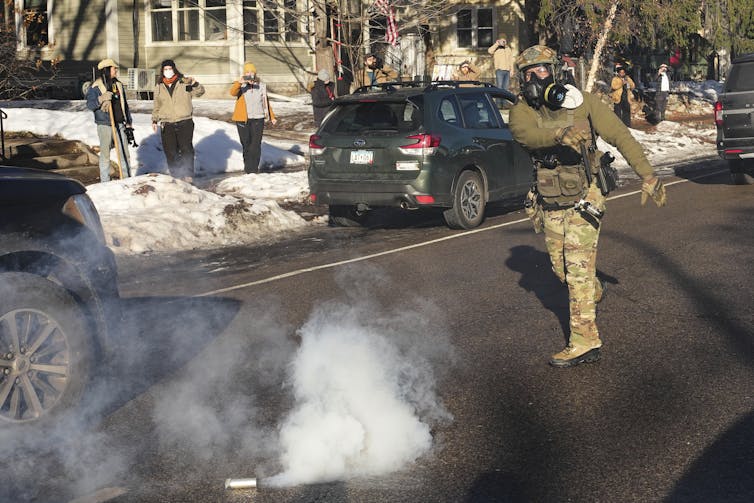
An agent dressed in tactical gear throws a canister emitting smoke on the road. In the background stand onlookers holding cameras.
An ICE agent deploys a canister of tear gas near protesters in Minneapolis.
AP Photo/Adam Gray

Chemical irritants, commonly called tear gas, cause intense pain and irritation of the eyes, skin and upper respiratory tract. They trigger coughing, breathing difficulty, disorientation, vomiting and panic. Delivered through sprays, pellets or canisters, they are inherently indiscriminate, affecting anyone in the area.

The most widely used agents in tear gas include chlorobenzylidene malononitrile, CS for short, and oleoresin capsicum, or OC, also called pepper spray. OC contains capsaicin, which is the compound that gives chiles their burning heat, at concentrations thousands of times stronger than those found in natural peppers. A synthetic version known as PAVA is also sometimes used. The amount, composition and concentration released can vary widely by manufacturer and country and remain largely unregulated. The spray can eject forcefully, reaching up to 20 feet depending on the canister design.

A diagram showing the chemistry, health effects and dispersal methods of tear gas.
Unlike pepper spray, CS gas – the key ingredient in tear gas – doesn’t contain capcaisin. CS is a solid that is dispersed as tiny particles when burned in a canister.
Andy Brunning/Compound Interest 2020, CC BY-NC-ND

Kinetic impact projectiles transfer energy from a moving object into the body. Often called rubber bullets, they may be made of rubber, plastic, metal, foam, wood or composite materials. Some are fired as single projectiles, while others are dispersed in multiple pellets. Injury risk depends on the projectile’s size, speed, material, direction and firing distance.

Flash-bang grenades, or stun grenades, are designed to disorient through a combination of deafening noise, blinding light, heat, fragmentation and pressure. Some devices produce sound levels above 170 decibels – far louder than most gunshots.

Electronic conduction devices, such as Tasers, have historically been used in individual arrests, but they are increasingly used in protest policing. Metal barbs from the device lodge in the skin and deliver high-voltage electrical current, causing intense pain and temporary loss of muscle control.

More recently, electrified shields and devices attached to an officer’s body or equipment – previously used inside prisons – have appeared at protests in some countries.

How are less lethal weapons supposed to be used?

In 2020 the United Nations issued detailed guidance on the use of less lethal weapons in law enforcement. In 2023 we worked with Physicians for Human Rights and the International Network of Civil Liberties Organizations to conduct updated analyses of these weapons.

The U.N. basic principles on the use of force and firearms specify that force should be used only as a last resort, and it should be proportionate to the threat. Officers using force should protect bystanders and vulnerable populations, such as children and older adults, and stop once the threat has ended.

Similar principles appear in use-of-force policies adopted by most U.S. police departments, though adherence is uneven. The Department of Homeland Security and specifically ICE have older published guidance. Recent ICE actions appear to breach that already vague language.

A 2021 Government Accountability Office report found that most ICE agents do not receive specialized training in the safe and appropriate use of crowd-control weapons, and training appears to be more limited now.

According to the U.N. guidelines, before deploying such weapons, well-trained officers are expected to assess whether a genuine threat exists, communicate with demonstration leadership when possible, consider alternative options and provide clear warnings. If officers use crowd-control weapons, they should be deployed to minimize injury and avoid indiscriminate harm.

Two police officers dressed in tactical gear aim gun-like weapons into the dark night, with a cloud of tear gas in the background.
Police aim weapons that shoot rubber bullets – a type of kinetic impact projectile – during protests in Portland, Ore., in 2020.
Allison Dinner/AFP via Getty Images

For proper deployment, the U.N. use of force guidelines stipulate that officers should not fire weapons directly at individuals, and they should avoid the head and face. They should communicate prior to deploying, use only the minimum amount necessary and maintain safe exit routes.

In practice, these safeguards can be difficult to implement in fast-moving, crowded environments

Potential health harms

Crowd-control weapons can cause severe and sometimes permanent injuries. Chemical irritants affect the eyes, skin and lungs first, causing scratches to the surface of the eye, painful skin reactions, breathing difficulties and acute psychological distress. Some people develop longer-term post-traumatic stress disorder.

Our global review of the medical literature documented more than 100,000 injuries from chemical irritants between 2016 and 2021, along with at least 14 deaths, all due to blunt trauma from canisters. Higher concentrations or prolonged exposure increase the risk of serious and permanent injuries, including open sores on the surface of the eye, chemical burns and chronic respiratory disease.

Kinetic impact projectiles can cause both blunt and penetrating injuries, with eye injuries among the most severe. Direct impact often results in permanent blindness and, in rare cases, penetration of the brain through the eye socket.

Blunt head trauma from these projectiles can cause concussions, internal bleeding, skull fractures and lasting neurological damage. Projectiles striking the chest, abdomen or genitalia can injure vital organs. Risk is highest when KIPs contain metal components, are fired at close range or disperse multiple projectiles.

Our global 2017 systematic review identified nearly 2,000 people injured by KIPs over 25 years, including 53 deaths and hundreds of permanent disabilities. Subsequent reviews documented thousands more injuries worldwide, many resulting in permanent disability or death.

Flash-bang grenades also pose significant risks. Investigative reporting and medical analyses have documented dozens of severe injuries and deaths linked to their use in the United States. These devices have caused deep burns, hearing loss and blast-related trauma, particularly when deployed in enclosed spaces or thrown directly at individuals. When fired toward a person, these devices can also act as kinetic projectiles, compounding the risk of serious injury.

Electronic conduction devices can cause dangerous heart rhythm problems and electrocution injuries. They also can rip the skin when barbs strike sensitive areas, such as the eyes or genitalia.

If you’re exposed to tear gas, do not touch your face or skin. Skip rinsing with milk, and try to get to fresh air.

In practice, the harm these “less lethal” weapons can cause depends less on what they’re called than on how, where and against whom they’re used. In the absence of clearer limits and oversight, people exercising their right to protest face real risks of injury.

From a medical perspective, people exposed to crowd-control weapons should move to fresh air, rinse exposed skin and eyes with clean water, and remove contaminated clothing as soon as possible.

Anyone struck by a projectile or exposed to a flash-bang should seek medical evaluation, even if they don’t have immediately obvious injuries. Internal injuries, eye damage, hearing loss or brain injury may not be apparent at first. Persistent eye pain, vision changes, breathing difficulty, chest symptoms, severe pain, or confusion warrant prompt medical care, particularly for children, older adults and people with underlying health conditions.

The Conversation

Michele Heisler is affiliated with Physicians for Human Rights, a non-partisan nongovernmental health and human rights organization that leverages medical, scientific, and public health evidence/research to document the health effects of human rights violations.

She currently has research funding from the NIDDK, NHLBI, American Diabetes Association and the Wellcome Trust but not for any research related to the topic of less-lethal weapons.

Rohini J Haar serves as a medical expert and consultant at Physicians for Human Rights, a non-partisan nongovernmental health and human rights organization that leverages medical, scientific, and public health evidence/research to document the health effects of human rights violations. She is not engaged in any partisan political activities as a volunteer or member.

ref. ‘Less lethal’ crowd-control weapons still cause harm – 2 physicians explain what they are and their health effects – https://theconversation.com/less-lethal-crowd-control-weapons-still-cause-harm-2-physicians-explain-what-they-are-and-their-health-effects-274809

The backlash to Bad Bunny’s halftime show reveals how MAGA defines who belongs in America

Source: The Conversation – Canada – By Gavin Furrey, PhD Student, Political Science, L’Université d’Ottawa/University of Ottawa

Benito Ocasio, better known as his stage name Bad Bunny, has challenged English dominance in music over the past few years. The streaming era has allowed the Puerto Rican artist to bypass traditional gatekeepers and he recently became Spotify’s most streamed artist globally for the fourth time in his career.

He also made history at the 2026 Grammy Awards, becoming the first artist to win album of the year for a record sung entirely in Spanish, DeBÍ TiRAR MáS FOToS.

Yet his selection to perform at this year’s Super Bowl halftime show has sparked controversy and backlash from President Donald Trump’s administration and its supporters in the United States.

The U.S. has a long history of excluding Latinos from its sense of national identity. In this current era of MAGA politics, Bad Bunny is exposing the many ways the American conservative right has narrowed its ideas about who truly “belongs” in America.

Borders around — and within — the U.S.

Borders have been central to MAGA politics, most clearly demonstrated by Trump’s hardline stance on immigration. So too has the subject of who can count themselves as part of “the people” — not simply who we agree with, but who is seen as deserving protection and belonging.

In MAGA’s political logic, citizenship status is only one factor of this. Race, language, sexual orientation, gender identity and political leanings have all emerged as markers of belonging or exclusion.

Conservative commentator Tomi Lahren’s insistence that Bad Bunny is “not an American artist,” U.S. Secretary of Homeland Security Kristi Noem’s threats to have ICE present at the halftime show and one Fox News host’s description of Ocasio as a “cross-dresser who doesn’t speak English” all reveal the importance of ethno-nationalist and populist border-making for the American right.

In this regard, history is repeating itself. In 1936, the U.S. forcibly removed up to two million people of Mexican descent from the country — up to 60 per cent of whom were American citizens. More recently, between January and October 2025, approximately 170 American citizens were detained by ICE, including young children and pregnant women.

Partly as a result of the Mexican-American war (1846-48), Latinos — and Mexicans in particular — were racialized in the U.S. in ways that positioned them not as internal “others,” but as “aliens” imagined to be external to the nation.

This logic resurfaced in Arizona’s ethnic studies ban, which targeted a Mexican-American studies program in Tucson between 2010 and 2016. Beyond territorial boundaries, this policy drew boundaries around the national story the country tells about itself.

Puerto Rico and second-class citizenship

Puerto Rico’s political status is another manifestation of Latino alienation in the U.S. As an unincorporated territory, Puerto Ricans have no voting representation in congress and cannot vote for president.

Puerto Ricans are arguably treated as second-class citizens in the U.S.. In 2017, nearly 3,000 Puerto Ricans died waiting for assistance after Hurricane Maria struck. In contrast, the number of direct and indirect deaths for hurricanes that struck Florida and Texas weeks earlier was 84 and 94 respectively.

Bad Bunny has been vocal about this neglect. He has regularly stood up for Puerto Rico, including cancelling his European tour in 2019 to protest the Puerto Rican governor’s sexist and homophobic comments.

He also excluded the dates on the continental U.S. during his most recent tour to avoid drawing ICE attention to his fans, and also spoke out against ICE at the recent Grammys, saying “ICE out.”

Despite not identifying as queer himself, Bad Bunny has also been a consistent ally of the LGBTQ+ community. In 2020, he wore a skirt on The Tonight Show Starring Jimmy Fallon to bring attention to the killing of a transgender woman in Puerto Rico.

Following the ICE slayings of Renee Good and Alex Pretti, demanding that authorities be held accountable appears to have joined the list of MAGA’s targetable offences. Bad Bunny’s embrace of people different from him may be yet another point of friction for the cult of national purity that the MAGA movement advocates for.

The dog-whistle of ‘family-friendly’

Turning Point USA is hosting an alternative “All American” Super Bowl halftime show “celebrating faith, family and freedom” — a description that reinforces right-wing ideas of nationhood and acts as a dog whistle for racial, sexual, linguistic and national purity.

One could argue the Turning Point show isn’t about race or exclusion, but it’s a difficult argument to sustain given the pattern of recent backlash.

Since 2019, Jay-Z’s company Roc Nation has collaborated with the NFL to rebuild the league’s image after its conflict with Colin Kaepernick, who was effectively pushed out of the league after kneeling during the national anthem to protest police violence and racial injustice.

The partnership has increased visibility for genres associated with resistance and resilience, including hip hop, rap and now reggaeton.

A more inclusive, somewhat diplomatic, selection process has pushed the halftime show into the realm of cultural relevancy, allowing the NFL to reach new communities. In America’s polarized climate, however, what counts as relevant is up for debate.

In 2020, complaints sent to the Federal Communications Commission about Shakira and Jennifer Lopez’s Super Bowl halftime show described it as “inappropriate.”

In 2022, complaints about Kendrick Lamar’s show revolved around alleged “anti-American” themes, inappropriate lyrics, an all-Black dance crew and moments when Lamar grabbed his crotch.

Concerns of “family friendly” content are evoked. Yet, they stand close to discourses of anti-Americanism and concerns about a lack of white representation. Turning Point USA doesn’t need to explicitly evoke race or language to signal it.

A political stage — whether we admit it or not

Many argue the NFL halftime show has become politicized. But in reality, it’s always been an inherently political event.

Who gets to be seen on a broadcast with hundreds of millions of viewers, who is considered a conventional choice and who is deemed provocative all involve questions about who really belongs — and who doesn’t.

The Super Bowl halftime show is just one manifestation of a larger conversation happening in the U.S. about the validity of a variety of expressions of the American experience.

The MAGA movement may have won the White House, but in terms of America’s cultural values and tastes, its borders aren’t stopping millions of Americans from getting excited about the show.

The Conversation

Gavin Furrey does not work for, consult, own shares in or receive funding from any company or organisation that would benefit from this article, and has disclosed no relevant affiliations beyond their academic appointment.

ref. The backlash to Bad Bunny’s halftime show reveals how MAGA defines who belongs in America – https://theconversation.com/the-backlash-to-bad-bunnys-halftime-show-reveals-how-maga-defines-who-belongs-in-america-274815

City skylines need an upgrade in the face of climate stress

Source: The Conversation – UK – By Mohamed Shaheen, Lecturer in Structural Engineering, Loughborough University

The downtown district of Hong Kong city. Lee Yiu Tung/Shutterstock

When structural engineers design a building, they aren’t just stacking floors; they are calculating how to win a complex battle against nature. Every building is built to withstand a specific “budget” of environmental stress – the weight of record snowfalls, the push of powerful winds and the expansion caused by summer heat.

To do this, engineers use hazard maps and safety codes. These are essentially rulebooks based on decades of historical weather data. They include safety margins to ensure that even if a small part of a building fails, the entire structure won’t come crashing down like a house of cards.

The problem is that these rulebooks are becoming obsolete. Most of our iconic high-rises were built in the 1970s and 80s – a world that was cooler, with more predictable tides and less violent storms. Today, that world no longer exists.

Climate change acts as a threat multiplier, making the consequences of environmental stress on buildings much worse. It rarely knocks a building down on its own. Instead, it finds the tiny cracks, rusting support beams and ageing foundations and pushes them toward a breaking point. It raises the intensity of every load and strain a building must weather.

To understand the challenge, I have been studying global hotspots where the environment is winning the battle against engineering.

The 2021 collapse of Champlain Towers South in Miami, Florida, killed 98 people. While the 12-storey building had original design issues, decades of rising sea levels and salty coastal air acted as a catalyst, allowing saltwater to seep into the basement and garage.

When salt reaches the steel rods inside concrete that provide structural strength (known as reinforcement), the metal rusts and expands. This creates massive internal pressure that cracks the concrete from the inside out — a process engineers call spalling. The lesson is clear: in a warming world, coastal basements are becoming corrosion chambers where minor maintenance gaps can escalate into catastrophic structural failure.

While the Miami case affected a single building, the historic coastal city of Alexandria, Egypt, is more widely at risk. Recent research shows that building collapses there have jumped from one per year to nearly 40 per year in the past few years.

Not only is the sea rising, the salt is liquefying the soft ground beneath the city foundations. As the water table rises, saltwater is pushed under the city, raising the groundwater level. This salty water doesn’t just rust the foundations of buildings; it changes the chemical and physical structure of soil. As a result, there are currently 7,000 buildings in Alexandria at high risk of collapse.

white sail boat on blue sea with city skyline in background
The historic city of Alexandria, Egypt, is widely affected by the retreating coastline.
muratart/Shutterstock

In Hong Kong during Super Typhoon Mangkhut in 2018, wind speeds hit a terrifying 180 miles per hour. When strong winds hit a wall of skyscrapers, they squeeze between the buildings and speed up — like water sprayed through a narrow garden hose.

This pressure turned hundreds of offices into wind tunnels, causing glass windows to pop out of their frames and raining broken glass onto the streets below. With 82 deaths and 15,000 homes destroyed across the region, skyscrapers became “debris machines”, even if they didn’t fully collapse.

Supercomputer simulations of Japan’s river systems show that in a world warmed by 2°C, floods of today’s “once in a century” magnitude could recur about every 45 years. With 4°C of warming, they could be every 23 years. These surges in water volume will expand flood zones into areas previously considered safe, potentially overflowing sea walls and flood defences. In a critical region like Osaka Bay, storm surges could rise by nearly 30%.

In the US, a study of 370 million property records from 1945 to 2015 found over half of all structures are in hazard hotspots. Nearly half are facing multiple threats like earthquakes, floods, hurricanes and tornadoes. In the UK, climate-driven weather claims hit £573 million in 2023, a 36% rise from 2022. Annual flood damage to non-residential properties in the UK is also projected to nearly double from £2 billion today to £3.9 billion by the 2080s.

Maintenance is our best defence

Much of the world’s building stock is therefore entering its middle age under environmental conditions it was never designed to face. Instead of panicking or tearing everything down, the solution is to adapt and treat building maintenance as a form of climate resilience – not as an optional extra.

Mid-life building upgrades can help protect our skylines for the next 50 years. Our hazard maps must look at future climate models — not just historical weather — to set new safety standards. Regular structural health monitoring is essential – by using sensors to track invisible stresses in foundations and frames before they become fatal, dangerous situations can be foreseen.

Buildings can stay strong by focusing retrofits on the weakest and most vulnerable parts. This includes glass facades, the underground drainage, the foundation piles and corrosion protection.

Climate change isn’t rewriting the laws of engineering, but it is rapidly eating away at our margins of safety. If we want our cities to remain standing, we must act now – before small, invisible stresses accumulate into irreversible failure.


Don’t have time to read about climate change as much as you’d like?

Get a weekly roundup in your inbox instead. Every Wednesday, The Conversation’s environment editor writes Imagine, a short email that goes a little deeper into just one climate issue. Join the 47,000+ readers who’ve subscribed so far.


The Conversation

Mohamed Shaheen does not work for, consult, own shares in or receive funding from any company or organisation that would benefit from this article, and has disclosed no relevant affiliations beyond their academic appointment.

ref. City skylines need an upgrade in the face of climate stress – https://theconversation.com/city-skylines-need-an-upgrade-in-the-face-of-climate-stress-267763

Winter Olympics: the new video technology that could help power Britain’s skeleton team to gold

Source: The Conversation – UK – By Steffi Colyer, Senior Lecturer in Sports Biomechanics, Centre for Health and Injury and Illness Prevention in Sport,, University of Bath

Skeleton is an exhilarating Winter Olympic sport in which athletes race head-first down an ice track at speeds reaching over 80 miles per hour (130km/h). While the event can look basic at first glance, success relies heavily on highly engineered equipment and extensive wind‑tunnel testing – much like elite Olympic track cycling programmes.

Each run begins with the athlete pushing a sled (also known as a “tea tray”) explosively off the starting block, then sprinting rapidly for about 30 metres downhill. After diving on the sled, they ride the rest of the course with their head just a few inches above the ice. The sleds have no brakes, and riders wear only a thin suit and helmet for protection.

A powerful start is considered the defining component of skeleton performance. So, developing a skeleton athlete’s strength and power while refining their pushing technique is a central focus in the lead-up to competitions. The biggest of all these, the Winter Olympics, is being held in Milan and Cortina d’Ampezzo, Italy, this month. Skeleton events start on February 12.

While Britain does not tend to rank highly in Winter Olympic sports, in skeleton it has won a world-best nine Olympic medals, including three golds. Over the past ten years, my colleagues and I at the University of Bath have worked with Team GB skeleton athletes to help improve their starts, using a form of “markerless” motion capture technology.

But the applications of this technology extend far beyond the Winter Olympics. There is potential for it to replace traditional motion capture systems in the film, TV and gaming industries, and to be used in injury rehabilitation.

How motion analysis began

The origins of motion analysis can be traced back to the pioneering work of English photographer Eadweard Muybridge in the late 19th century. Muybridge developed early techniques for capturing sequences of images, including documenting equine gait.

Eadweard Muybridge developed pioneering motion capture techniques. Video: Cantor Arts Centre.

By manually annotating specific features across successive images, researchers have since been able to build a detailed picture of how a person or animal moves. But while this method was the standard for many decades, it was both time- and labour-intensive.

So, technological advances in cameras and computer processing led to the development of automated methods of motion analysis – notably, marker-based motion capture. This uses reflective markers placed on key parts of the body, which are automatically tracked by infra-red cameras as the person moves around.

In film, animation and gaming, this mean an actor’s body movements and facial expressions can be translated into to realistic CGI characters. Marker-based technology is currently the most widely used 3D motion analysis technique across the film, gaming and health sectors, with an estimated global market value of over US$300 million (£220 million).

However, this advanced technology has limitations too, including the need for specialist equipment, controlled laboratory environments, and lengthy preparation time to attach the markers. These can be problematic in sports and many other fields – particularly during live competitions and public performances.

As a result, the field of motion analysis has come almost full circle. Thanks to major advances in computer vision and artificial intelligence, biomechanists such like me are once again extracting detailed movement information directly from video images – but this time in an automated way.

The markerless motion capture systems we use rely on deep‑learning models that are trained on a huge number of images of people performing everyday activities. When applied to unseen images, the algorithms can then automatically detect the same body landmarks. By fusing multiple camera views, a simplified digital 3D skeleton can be extracted, from which the person’s movement across time can be modelled and analysed.

Video: CNN.

Analysing the optimum technique

Markerless motion capture makes it possible to unobtrusively measure athletes’ movements outside the lab, in training and even during competitions. Our recent research has demonstrated its value in many different sports, including badminton, tennis and Olympic weightlifting.

In skeleton, the unique, bent-over position at the start of each run, as the athlete sprints alongside the sled with one hand holding it, makes this form of biomechanical analysis particularly important.

Using markerless motion capture, we have explored the differing roles of an athlete’s limbs in the push-start performance, comparing these biomechanics with conventional sprinting. Importantly, we have also validated this markerless approach by comparing it with a traditional marker‑based system.

The optimum starting technique for each skeleton athlete is shaped by their physical characteristics, including factors such as relative limb lengths and flexibility. Analysing each athlete’s pushing technique, how it relates to their performance and how this evolves over time, can help give them a crucial competitive edge during this all-important first phase of each skeleton run.

Medals can be won and lost by hundredths of seconds as athletes sprint away from the starting block. In these first few seconds, we hope Britain’s athletes reap the benefit of our markerless motion capture technology.

The Conversation

Steffi Colyer receives funding via the Centre for the Analysis of Motion, Entertainment Research & Applications (CAMERA) from the UKRI’s Engineering and Physical Sciences Research Council.

ref. Winter Olympics: the new video technology that could help power Britain’s skeleton team to gold – https://theconversation.com/winter-olympics-the-new-video-technology-that-could-help-power-britains-skeleton-team-to-gold-274859

The unanswered questions in the NHS’s new cancer plan

Source: The Conversation – UK – By Justin Stebbing, Professor of Biomedical Sciences, Anglia Ruskin University

Frame Stock Footage/Shutterstock.com

NHS England’s new national cancer plan focuses on catching cancer earlier and treating it faster. The government has also promised to meet all cancer waiting-time targets by 2029. This includes a long-missed target, namely that most patients should start treatment within 62 days of being referred by their GP.

Why does the UK lag behind comparable countries?

Cancer survival in England has improved, but it still trails behind countries such as Australia, Canada and Nordic nations for many common cancers.

For some of the deadliest cancers – lung, liver, oesophageal, pancreatic and stomach cancers – the UK ranks near the bottom of the league table among similar wealthy countries. Fewer patients are still alive five years after diagnosis compared to other nations.

No single cause explains this gap. A key factor is that people in the UK are more likely to be diagnosed when their cancer is already advanced. This makes it harder to cure and limits treatment options.

Getting to see a specialist can also be slow. Patients struggle to get GP appointments, symptoms may not seem urgent at first, and people often need multiple visits before getting referred to a specialist.

Once in the system, patients hit more delays. The NHS has fewer CT and MRI scanners per person than many comparable health systems, contributing to waits for imaging and other tests.

There are also longstanding workforce shortages, especially in radiology and oncology. This means fewer specialists to read scans, plan treatment and deliver radiotherapy and chemotherapy. Limited surgical capacity, operating theatre time and radiotherapy machines cause further delay treatment.

How countries record cancer survival accounts for some of the difference. But even when researchers adjust for this, the UK still lags behind the best-performing countries. The result is a system where many individual steps function under strain, and those small delays add up for patients.

What actually happens to a patient during the 62 days?

The 62-day target measures the journey from urgent referral for suspected cancer to starting treatment. In principle, a person referred urgently by their GP, a screening programme or a hospital doctor should have their diagnosis confirmed and their initial treatment underway within just over two months.

That sounds straightforward. But for patients, it’s a complex and emotionally draining experience.

The journey usually starts when someone notices a worrying symptom – a breast lump, unusual bleeding, a persistent cough or a change in their bowels – and gets a GP appointment. If the GP is concerned, they make an urgent referral to a specialist clinic. The patient then waits for their first hospital appointment, where they’ll have further assessment and tests: blood tests, X-rays, endoscopy, CT scans, MRI scans or ultrasound.

If scans show something suspicious, the next step is often a biopsy. This lets a pathologist confirm whether it is cancer and identify the type.

Modern pathology may also include molecular and genetic tests, which help decide which treatments are most likely to be effective.

All of this information is then brought to a multidisciplinary team meeting, where surgeons, oncologists, radiologists, pathologists and specialist nurses discuss the case and agree a plan.

Only after that can the first treatment be scheduled, whether that is surgery, radiotherapy, drug treatment or active monitoring. Delays can happen at every stage: getting the first appointment, accessing scans or endoscopy, receiving pathology results, convening the multidisciplinary team, and finding an operating theatre or radiotherapy slot. And the 62-day clock keeps ticking.

For patients, what appears as a single target number actually represents weeks of waiting, uncertainty and repeated encounters with an overstretched system.

Is early diagnosis always beneficial?

Catching cancer early has become a cornerstone of cancer policy. Cancers caught early are easier to treat and more likely to be cured.

A small, localised tumour can often be removed with surgery or treated effectively with radiotherapy or drugs. But cancers that have spread are harder to control.

This link between early detection and survival drives efforts to encourage people to seek help quickly, expand screening programmes and speed up diagnosis. But early diagnosis isn’t always beneficial for everyone or every type of cancer.

Screening can lead to overdiagnosis. This means detecting very slow-growing cancers or abnormalities that would never have caused symptoms or shortened someone’s life. People in this situation may live for years with a cancer label, alongside the physical and psychological consequences of surgery, radiotherapy or drugs that they might not have needed.

So-called “false positives” are another important issue. Tests sometimes flag abnormalities that aren’t cancer, but still trigger scans, biopsies and procedures, as well as significant anxiety for patients and families.

For some aggressive cancers, finding the disease a little earlier on a scan may not change the eventual outcome if available treatments remain limited. The challenge is to design programmes that catch the right cancers early, using accurate and targeted tests, while clearly explaining both benefits and risks so people can make informed decisions.

What does ‘9.5 million more tests and scans’ really mean?

One of the most eye-catching promises in the new plan is to deliver 9.5 million more tests and scans by 2029. Much of this extra activity is expected to take place in community diagnostic centres, which bring CT and MRI scanners, ultrasound, endoscopy and blood tests closer to where people live.

Extending opening hours into evenings and weekends should give patients more flexibility and, in theory, shorten waiting times for investigations and diagnosis.

But tests and machines are only part of the picture. Every scan needs a professional to interpret it, and every endoscopy list requires trained staff and recovery space.

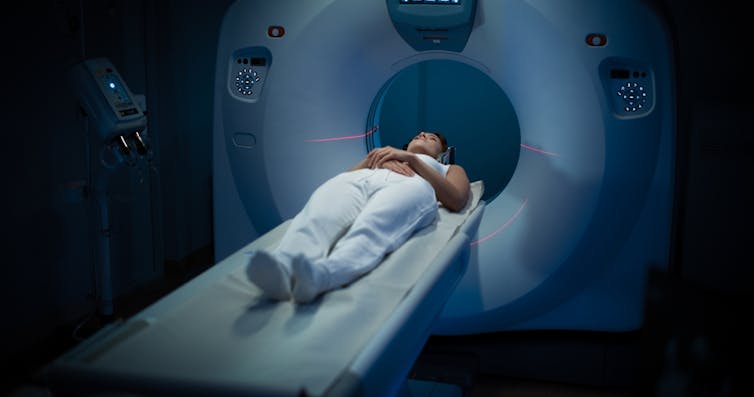
Patient entering an MRI scanner.
Gorodenkoff/Shutterstock.com

England already has a shortage of imaging specialists, and increasing the number of scans without increasing the number of people who can report them risks swapping one bottleneck for another.

Laboratories also need enough biomedical scientists and pathologists to process additional blood tests and tissue samples. If staffing does not keep pace, the promise of millions more tests could translate into longer queues for results and less time for doctors to explain findings and discuss options with patients.

New technologies, including artificial intelligence to support image reading and automated laboratory systems, may help to increase efficiency, but they still rely on human oversight and do not remove the need for a well-trained, reasonably staffed diagnostic workforce.

How realistic is the staffing fix?

The success of the plan depends heavily on people, not just equipment. Yet there are already substantial gaps in the cancer workforce, especially among radiologists, oncologists, pathologists, specialist nurses and radiographers.

Professional bodies have warned for several years that the shortfall in key specialties is growing, with services relying on overtime, outsourcing and temporary staff to keep up with demand. These pressures affect not only the speed of diagnosis and treatment, but also the time healthcare professionals can devote to communication, compassion and shared decision-making.

Training more specialists is essential but slow. From entry to medical school to becoming a consultant radiologist or oncologist typically takes well over a decade, meaning that decisions made now will only fully affect services in the 2030s.

Meanwhile, the NHS will keep relying on recruiting from abroad, the private sector, and new ways of working that expand what nurses and other non-doctor professionals can do.

The risk is that without serious attention to burnout, working conditions and retention, new trainees will simply replace experienced staff who leave because of workload and stress. Any realistic staffing fix will therefore need to combine expanded training with measures that make cancer services sustainable places to work: manageable rotas, protected time for training, supportive leadership and a sense that delays and shortages are being addressed rather than normalised.

Who benefits first – and who might miss out?

Cancer care in England is already unequal, and a national plan that ignores this risks making the gap worse. People in poorer areas are more likely to develop certain cancers, get diagnosed late, and die from them.

Access to primary care varies widely. Some communities face long waits for appointments or can’t see the same doctor regularly.

Rural patients may need to travel far for scans, endoscopy or radiotherapy, while some urban communities face language barriers, cultural differences or mistrust that make screening and early diagnosis programmes harder to access.

Expanding community diagnostic centres, mobile services and workplace partnerships could reduce some barriers – but only if they’re deliberately placed where they are needed most. But if new facilities go to already well-served areas, or if information campaigns and booking systems don’t reach marginalised groups, the extra capacity will mostly benefit people who already navigate the system easily.

Ensuring that the benefits of earlier diagnosis and faster treatment reach everyone will require careful use of data on stage at diagnosis, waiting times and outcomes, broken down by region, ethnicity and deprivation, and a willingness to direct extra resources where need is greatest, not just where uptake is easiest.

What does ‘success’ look like for patients after treatment?

Politically, the headline ambition is framed in terms of five-year survival, and improving that is undeniably important. From a patient’s perspective, though, success is more than being alive at a particular time point.

Many people live with the long-term consequences of treatment, including fatigue, pain, bowel or bladder changes, sexual difficulties, early menopause, cognitive effects and altered body image. These can disrupt work, relationships and everyday activities long after the end of chemotherapy or radiotherapy.

Anxiety about recurrence is common, and routine follow-up appointments can be both reassuring and a source of renewed fear.

A cancer plan that truly serves patients has to focus on how people are living, not just how long. That means investing in rehabilitation, psychological support, specialist nursing, social care and fair access to financial and employment advice.

It also means recognising that some patients will never be “finished” with cancer but will live for many years with incurable disease, requiring ongoing treatment and support to maintain the best possible quality of life.

When we judge whether the new targets have been met, we should therefore look beyond the headline numbers. Success would be a future in which more people are diagnosed early, treated promptly and supported to rebuild their lives, with fewer left waiting in pain or confusion, and fewer feeling abandoned once the last dose of treatment has been given.

The Conversation

Justin Stebbing does not work for, consult, own shares in or receive funding from any company or organisation that would benefit from this article, and has disclosed no relevant affiliations beyond their academic appointment.

ref. The unanswered questions in the NHS’s new cancer plan – https://theconversation.com/the-unanswered-questions-in-the-nhss-new-cancer-plan-275103

How politics, technology and the environmental crisis turned these movies into horror films in 2026

Source: The Conversation – UK – By Alexander Sergeant, Lecturer in Digital Media Production, University of Westminster

A famous expression, often wrongly attributed to Mark Twain, states that comedy is merely tragedy plus time. This theory highlights how our response to films can depend on the context in which we see them.

We tend to think of the genre of a film as something very fixed, decided by a combination of studio producers and marketers. But, in the right context, films can move across many different genres in the span of their lifetime, depending on the audiences that watch them.

To demonstrate this idea, here are five scary films for 2026. The twist, however, is that none of these films were ever intended to be horror films. Most on the list were satire or comedy when they were made. Instead, they have become horrific due to the way they touch on contemporary issues surrounding the global politics of President Donald Trump, impending environmental disaster, ever-accelerating technology and contemporary attitudes towards gender.

1. Duck Soup (1933)

The finest film produced by the famous Marx Brothers comedy troupe, Duck Soup is an anarchic political satire that tells the story of an unserious playboy president named Rufus T. Firefly. Beloved by film enthusiasts, the film showcases a series of mishaps and misdeeds caused by his selfish, erratic behaviour which inadvertently led his country of Freedonia into a war with its neighbours.

Duck Soup is considered a classic of Hollywood slapstick and quick-witted verbal comedy. But, in an era of a genuine unserious president, its central joke might not feel funny any more. Nor indeed is the idea that, nearly 100 years after its release, this biting satire on the politics of rising authoritarianism would be as timely now as it was then.

2. The Apartment (1960)

People often say “they don’t make them like they used to any more” when trying to articulate a nostalgia for the films of the past. That description can be aptly applied to Billy Wilder’s romantic comedy-drama The Apartment. They do not make films like this any more. But in this case, that’s a good thing.

Jack Lemmon’s “Buddy Boy” Baxter is the bachelor who routinely loans his apartment out to his bosses for them to conduct extra-marital affairs. Shirley MacLaine’s Fran is the loveable but down-on-her-luck elevator operator involved in a tawdry situation with Baxter’s boss. Their own romance emerges out of a suicide attempt, workplace harassment and abuses of power. It feels like the film is set not just in the past, but in some creepy alternative world.

To be fair to The Apartment, it hardly treats some of the more problematic behaviour of its characters as virtues we are supposed to admire. But it never quite attacks the deeply unpleasant nature of its central conceit either. Baxter is not just a loveable goof unaware of what he’s got himself mixed up in. He’s a complicit enabler. And Fran is not a ditsy but loveable woman mixed up with the wrong crowd. She’s a victim.

3. Idiocracy (2006)

Idiocracy was something of a box office bomb, given neither the marketing campaign nor the reviews it needed to ensure success. The fact it has since become a cult hit speaks to how startlingly prescient the film is for contemporary audiences now discovering the film in droves 20 years later.

Idiocracy tells the story of a young man put into suspended animation who wakes up 500 years in the future. The average intelligence of the population has severely decreased, to the extent that the world has become increasingly consumerist, vulgar, crass and prejudiced in its thinking. America has even elected a former pro wrestler and porn star, Dwayne “Mountain Dew” Camacho, as its leader.

Made in 2006 during the final year of George W. Bush’s presidency and set against the rise of Barack Obama, the film failed initially as a comedy. It now works perfectly as a terrifying exaggeration of what the world looks like in 2026.

4. Wall-E (2008)

Wall-E is part of a long history of animations with an interest in the environment, from Princess Mononoke (2001) to Ferngully: The Last Rainforest (1992). That part of its dystopic vision still stands up. The film’s vivid opening of Wall-E wandering around a silent world of trash is still its best moment.

The film’s vision of the humanity that has left the garbage-strewn world behind, however, has become increasingly concerning over time. Predicting a world of humans who are dumb, obese and screen-obsessed, it is increasingly difficult to watch Wall-E as a nostalgic childhood treat.

5. Her (2013)

The amazing feat pulled off by this absurdist romantic drama was to somehow get an audience to root for the idea of a romantic pairing between a lonely middle-aged man and an AI-enabled operating system. More than a decade later, Her’s open-minded approach to AI seems far more fraught.

As the romance develops between Theodore (Joaquin Phoenix) and Samantha (voiced by Scarlett Johansson), it is difficult not to imagine the fingerprints of powerful but not necessarily benign tech moguls turning the screws tighter, manipulating Theodore further into spurning human contact for his digital desires.

Equally, it is difficult not to wonder whose voice has been stolen to create her warm, affectionate tones, or to ask what the company might do with the recording of their conversations. The dangers in our current technological reality have once again spoilt a perfectly good film.


Looking for something good? Cut through the noise with a carefully curated selection of the latest releases, live events and exhibitions, straight to your inbox every fortnight, on Fridays. Sign up here.


The Conversation

Alexander Sergeant does not work for, consult, own shares in or receive funding from any company or organisation that would benefit from this article, and has disclosed no relevant affiliations beyond their academic appointment.

ref. How politics, technology and the environmental crisis turned these movies into horror films in 2026 – https://theconversation.com/how-politics-technology-and-the-environmental-crisis-turned-these-movies-into-horror-films-in-2026-268679