
Source: The Conversation – UK – By Krisztina Rudolf, PhD candidate , Liverpool John Moores University
Liverpool is not one of the “blue zones” – a term used for regions of the world where people tend to live unusually long lives, such as parts of Sardinia, Okinawa and Ikaria.
Healthy life expectancy in Liverpool is only about 56 years. However, overall life expectancy is much higher there, with many people living into their late 70s and beyond. This means many residents spend their final working years and a large part of retirement managing chronic illness or disability.
Ageing is inevitable but losing independence is not. As a PhD researcher studying muscle ageing, I work with adults in their 70s whose strength, mobility and resilience challenge common assumptions about later life – despite many of them living with long-term health conditions.
Jackie has three prolapsed discs in her spine and osteopenia, a condition where bone density is lower than normal and fracture risk is higher. Norma lives with a stoma following bowel cancer surgery. Mike jokes that his medical notes make him sound like “a wreck”.
But then you see the three of them train together five times a week.
During lockdown, when gyms closed and isolation threatened their health, they converted Mike’s garage into a makeshift training space so they could keep moving and stay independent. “We thought, we’ve got to do something,” Mike told me.
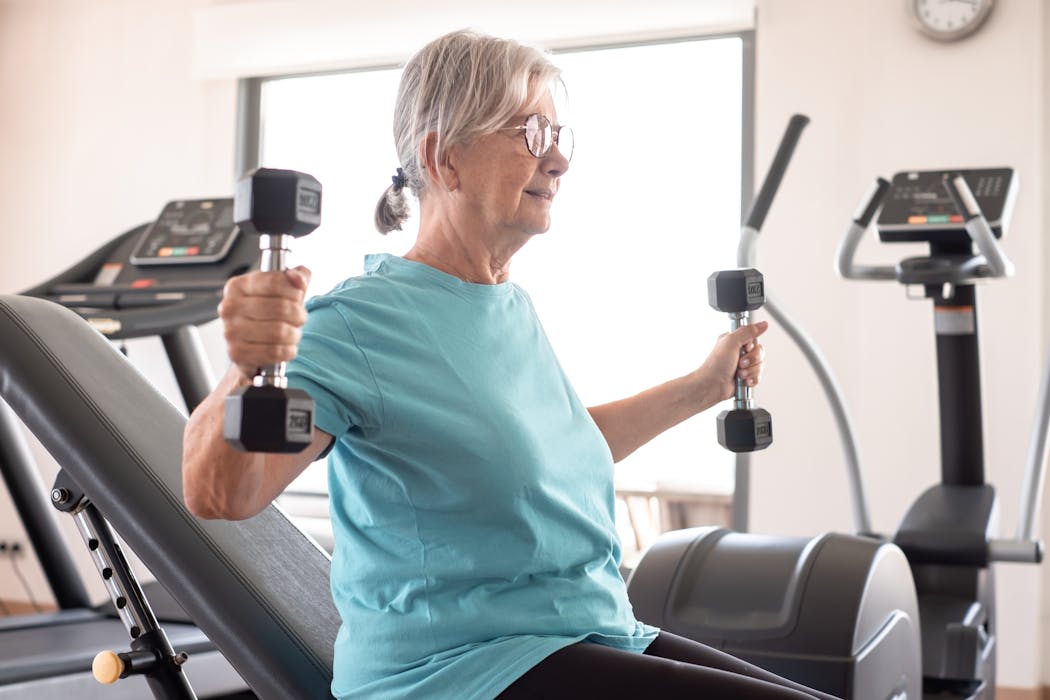
They embrace effort. They run parkrun, climb stairs deliberately, and value the feeling of being challenged – slightly breathless but capable. I think of them as Liverpool’s “blue people”. Their experience suggests that ageing well depends less on where you live, and more on how you live.
Read more:
Small improvements in sleep, physical activity and diet are linked with a longer life
I met them through Research Roasters, a science cafe connecting scientists and the public around health and ageing. They volunteered for studies on muscle health and physical function in later life, and helped shape how they were designed and delivered. They helped refine participant information and consent materials, introduced me to community groups and offered feedback on study design.
Their experiences reflect a core biological reality. Skeletal muscle is not just what helps us move. It is the body’s largest metabolic organ, essential for regulating blood sugar, maintaining body temperature and preserving independence.
Muscle maintenance
Muscle ageing starts earlier than many people realise. From our 30s, strength begins to decline – often faster than muscle size. People can look healthy while their muscle function is deteriorating.
One simple way to glimpse this is through movement. Try standing up from a chair and sitting back down five times as quickly as possible without using your hands. If it feels slow, difficult or unstable, it may signal reduced muscle quality.
Read more:
How low can you go (and still build muscle)? Why strength training matters at any age
This matters because muscle function predicts future health. Poor muscle quality increases fall risk, slows recovery and raises the likelihood of conditions such as type 2 diabetes.
At the microscopic level, muscle quality is shaped by proteins. These generate force, produce energy and repair damage. Unlike genes which remain relatively stable, proteins are constantly renewed. During physical activity, muscles rebuild and reorganise their protein machinery to meet demand. When muscles are not challenged, this renewal slows. The system becomes less responsive and function declines.
In my research, we use “dynamic proteome profiling” to track how thousands of muscle proteins are produced and renewed in older adults. This approach measures how quickly proteins are built, repaired and replaced inside muscle tissue.
Participants complete strength and mobility tests, wear activity monitors and provide small muscle samples, supported by a multidisciplinary team of researchers and clinicians. We analysed thousands of proteins and also grew their muscle stem cells in the lab, to understand how muscle adapts to activity.
The results do not show simple deterioration. Older muscle is different, but remains adaptable. Protein turnover may be slower and some repair processes less efficient, but muscles still respond to activity by building the proteins needed for strength, energy production and resilience.
Even later in life, muscles can adapt when they are used. This helps explain why our participants became stronger and more capable despite existing health conditions. Their experience highlights a crucial point. Ageing is strongly influenced by how muscles are used across the lifespan.
Blue people
Ray’s gym is a community fitness space in Liverpool where many of our participants train regularly. Not a formal research site, it is where the group work out, supporting each other and maintaining the strength and mobility that underpin their independence. The environment encourages effort, personal progress and accountability.
Members are not defined by their age. They are people working towards goals that matter to them – often, simply staying independent and in control of their lives.
This challenges common narratives about blue zones, which emphasise location, diet or lifestyle traditions as the main drivers of longevity. Those factors matter, but they can create the impression that healthy ageing is largely determined by where you live, rather than what you do. Liverpool’s “blue people” suggest something different.
Read more:
People in the world’s ‘blue zones’ live longer – their diet could hold the key to why
Their strength comes not from perfect health but ongoing adaptation. They challenge their muscles and stay engaged with their bodies. Muscle quality is not fixed – it reflects the demands placed on it.
The implications are significant. Healthy ageing does not require relocation to longevity hotspots or adherence to exotic diets. It begins with recognising muscle as the organ that underpins independence, and maintaining it through regular activity.
Research is helping us understand the biology behind this process. New studies and recruitment cycles reflect growing efforts to understand how muscle health can shape independence across the lifespan.
The people taking part are already showing what this looks like in practice. They are not reversing ageing, but they are maintaining capability. In doing so, they offer a realistic and accessible vision of growing older well.
Most of us can become a “blue person” by investing in the organ that most strongly shapes whether we age with independence as well as longevity: muscle.

Krisztina Rudolf does not work for, consult, own shares in or receive funding from any company or organisation that would benefit from this article, and has disclosed no relevant affiliations beyond their academic appointment.
– ref. Liverpool’s ‘blue people’: the older adults redefining what ageing looks like – https://theconversation.com/liverpools-blue-people-the-older-adults-redefining-what-ageing-looks-like-276023